Republican flyers on Northumberland Street, next to the ‘famous faces’/30th anniversary of the hunger strike mural (and to the right of that, a new Nelson Mandela mural which we’ll feature in a few days).
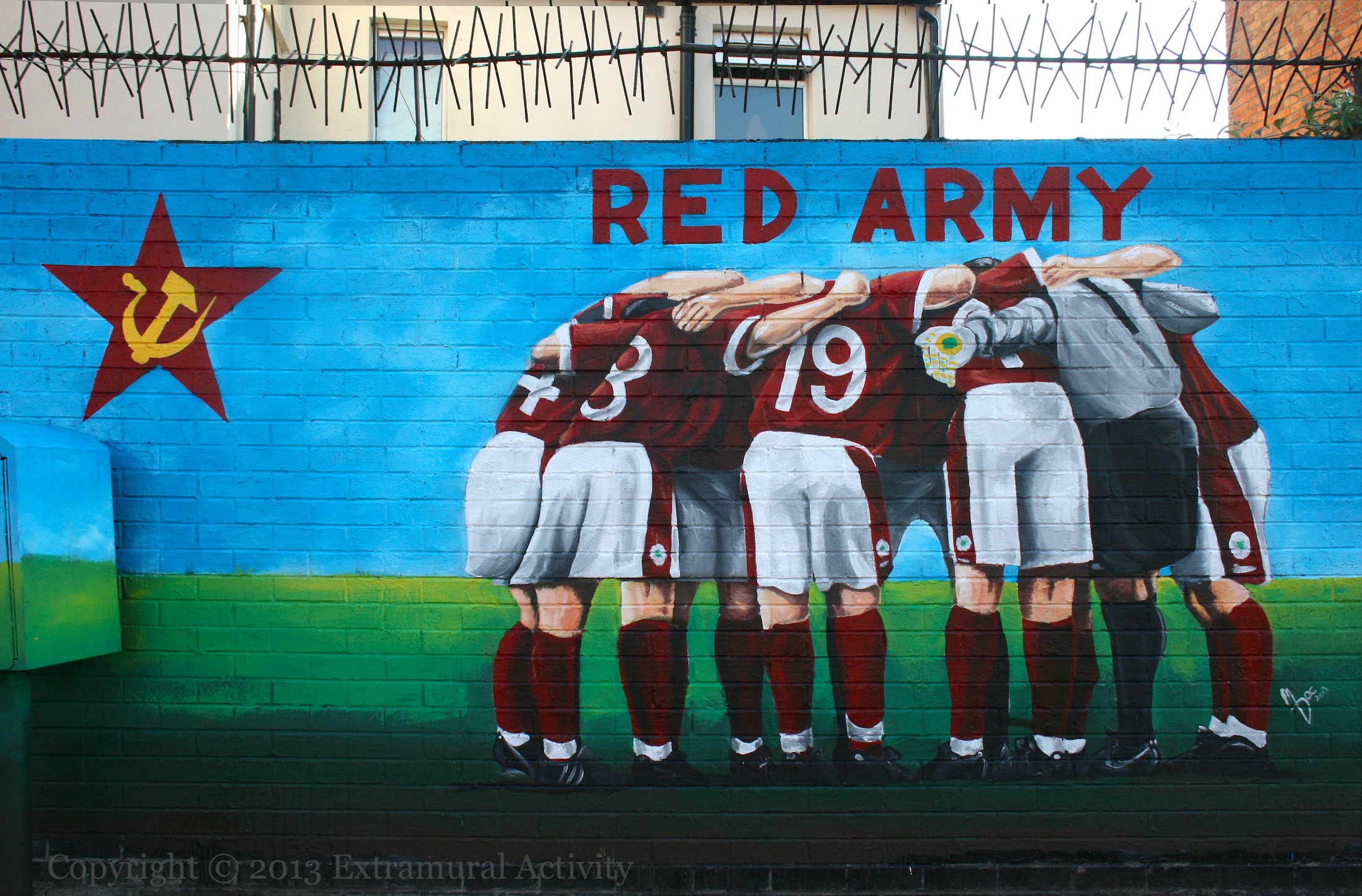
The Red Army are the supporters of Cliftonville football team which this past (2012-2013) season won both the Irish League Cup and the League Championship. The mural on the right had side, detailed below, looks in such good condition because it was touched up on July 17th —in time for that night’s Champions League match against Celtic — after being vandalized on the 16th.
There is a good summary of Cliftonville history (including their present-day successes), as well as a picture of the “Let’s All Do The Huddle” mural painted for the occasion of the Celtic visit, at the blog Four-Four-Two.
Members of local graffit artist crew TMN (whose names are listed in the lower left) have collaborated on this new anti-capitalist mural in College Court in the city centre, attacking The Sun (newspaper) and the recently deceased former Prime Minister, Margaret Thatcher, who is shown here with glowing eyes: “The Sun will make you blind life people say … cost you your sight as well as 30p a day.”
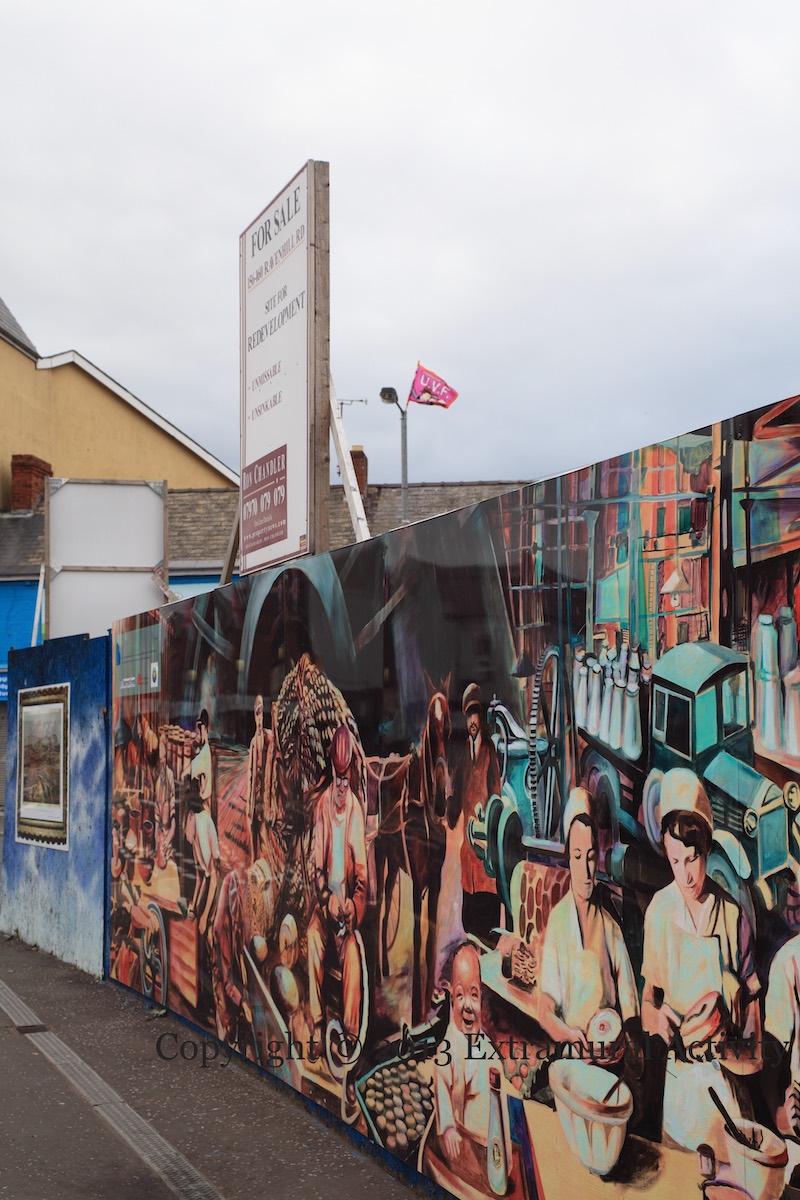
Various local industries of the past are named at the corner of My Lady’s Road and Ravenhill Road in east Belfast: Downshire Pottery [1787-1806], Ravenhill Iron Works [fl. 1910], Ridell And Sons [a grocer/trader in the 1800’s?], Tenants Textiles [probably the still-existing Tennants Textiles], Cromac Distillery [1776-1930], Belfast Vitriol Works [fl. 1852], Sydney Pentland [motor repair 1956-2005?]. An old (wooden) lamp-post in the foreground is painted in red-white-and-blue.
Other businesses, not pictured, include Lagan Engine Works, Charles Hurst, Spence Bryson Factory, Co-Op Bakery And Diary [Dairy], Jam Factory, Inglis, Hugh J. Scott, Devonshire Laundry, Royal Bakery.
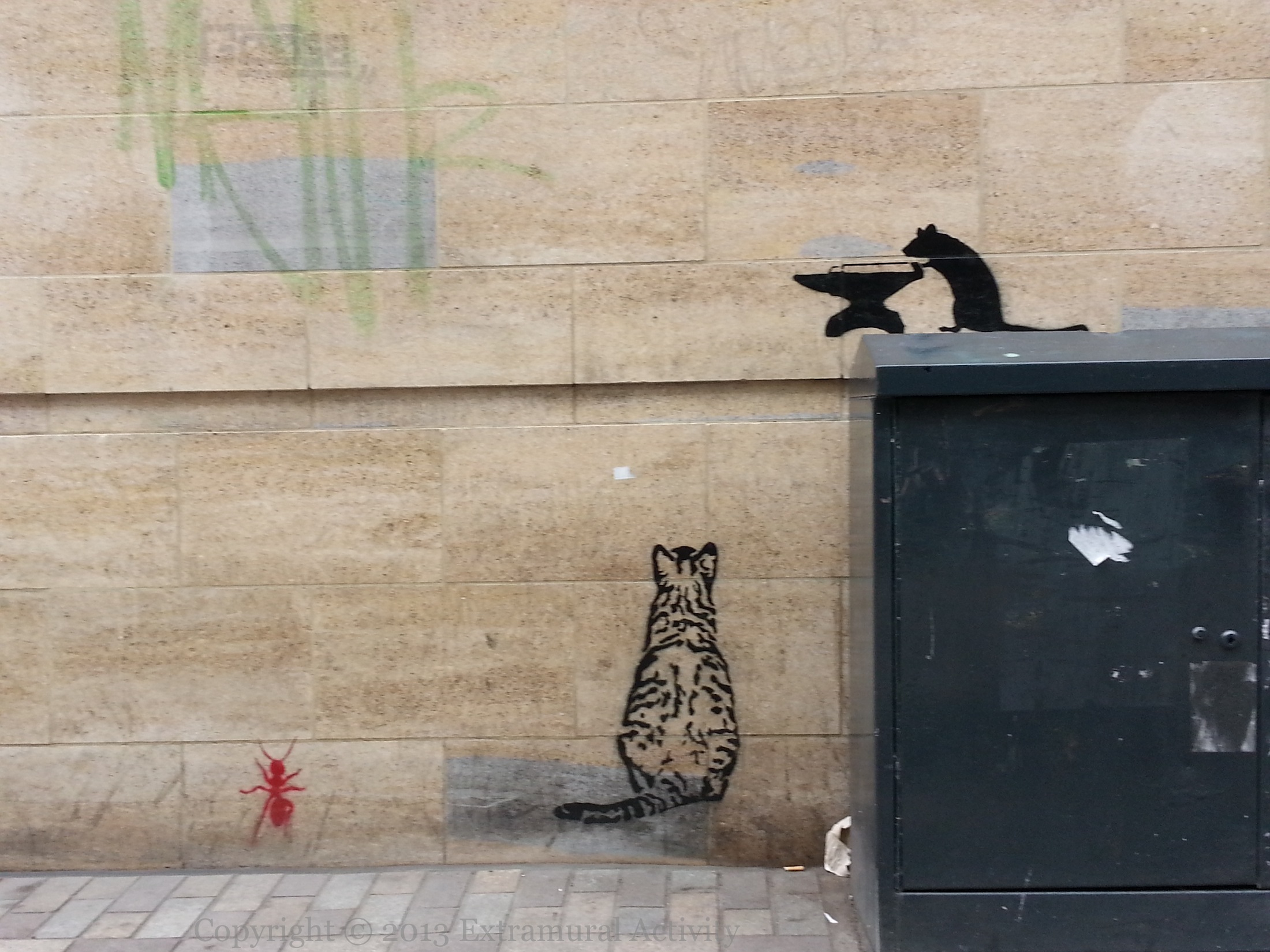
A cunning mouse is about to drop an anvil on an unsuspecting cat from the top of the electrical box at the south (city hall) end of Fountain Street in Belfast city centre. Red Ant looks on.
“This memorable [sic] plague [sic] is dedicated to the 1st victim of the present troubles, Sammy McLarnon, RIP, who was brutally murdered in his own home at 37 Herbert St by the RUC on 15th Aug., 1969.” For more, see this Irish Times article about a 1999 community inquest.
On the wider wall is the graffito “Cara don’t represent me”.
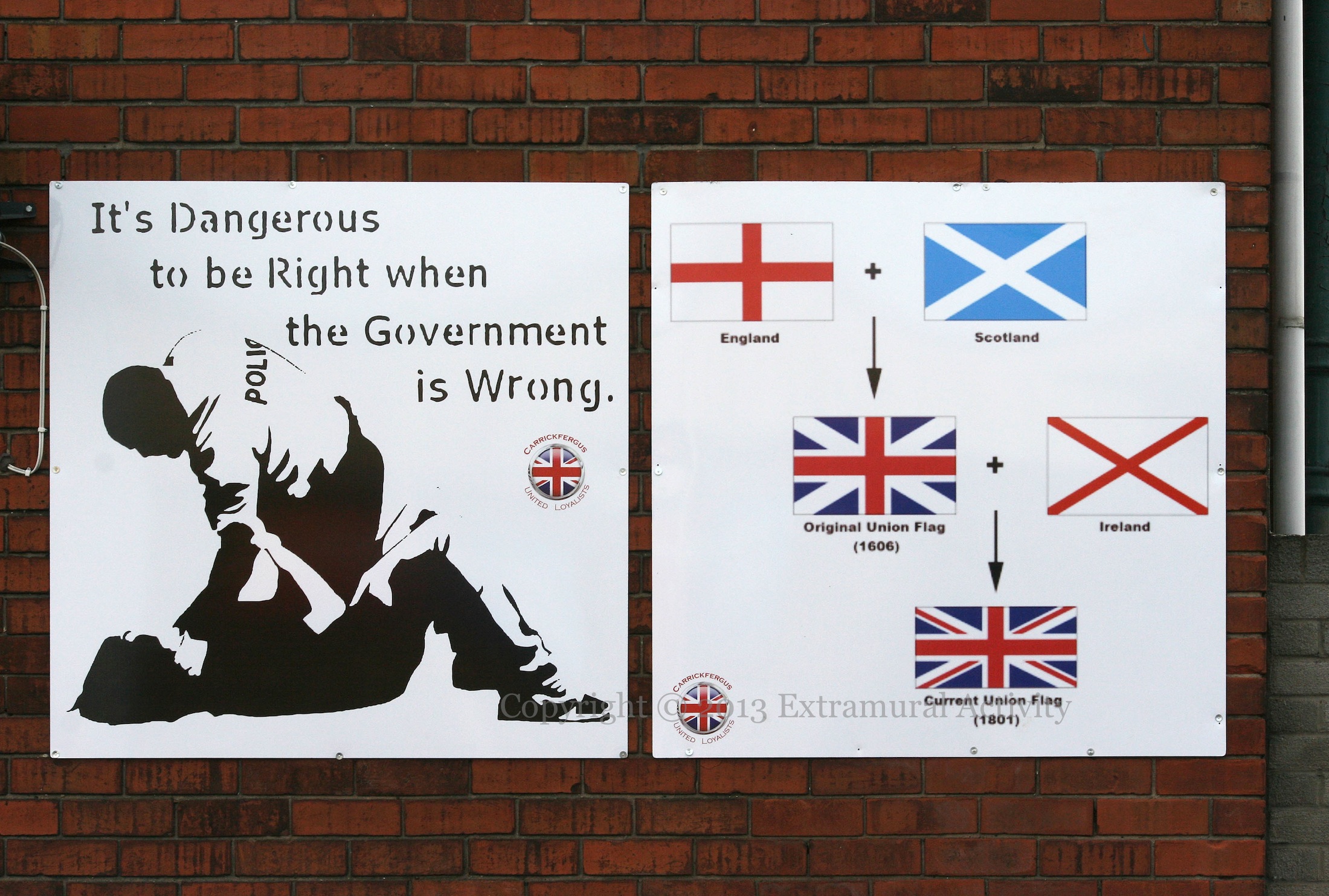
Two more of the panels next to the new UVF ‘Inclusion’ mural in Carrickfergus, one decrying the use of force against loyalists, the other explaining the composition of the union flag, involving the St. Patrick’s saltire.
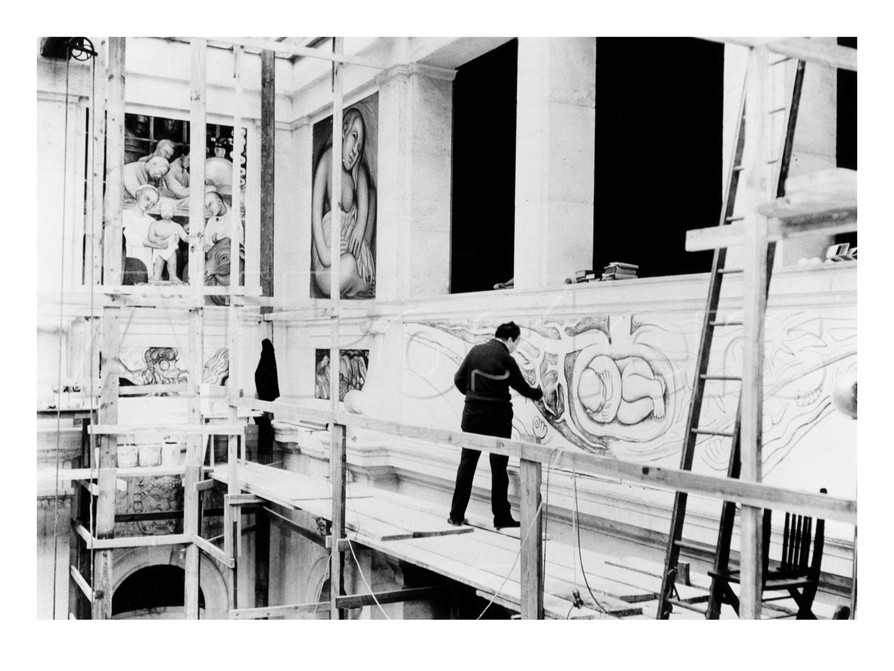
Here is the central portion of the east wall of Diego Rivera’s Detroit Industry frescoes in the Detroit Institute of Arts. Rivera’s wife, Frida Kahlo, had a miscarriage during their time in Detroit and the infant in the image is a tribute to that loss.
Rivera, a communist, was invited to paint the frescoes by Edsel Ford, of the Ford motor company. He painted four walls of a great hall in 1932-1933, celebrating industrial and medical progress while also portraying its deadly uses, and mixing Aztec, Mexican and Christian imagery. The east wall is the first in viewing order, just as in church liturgies.
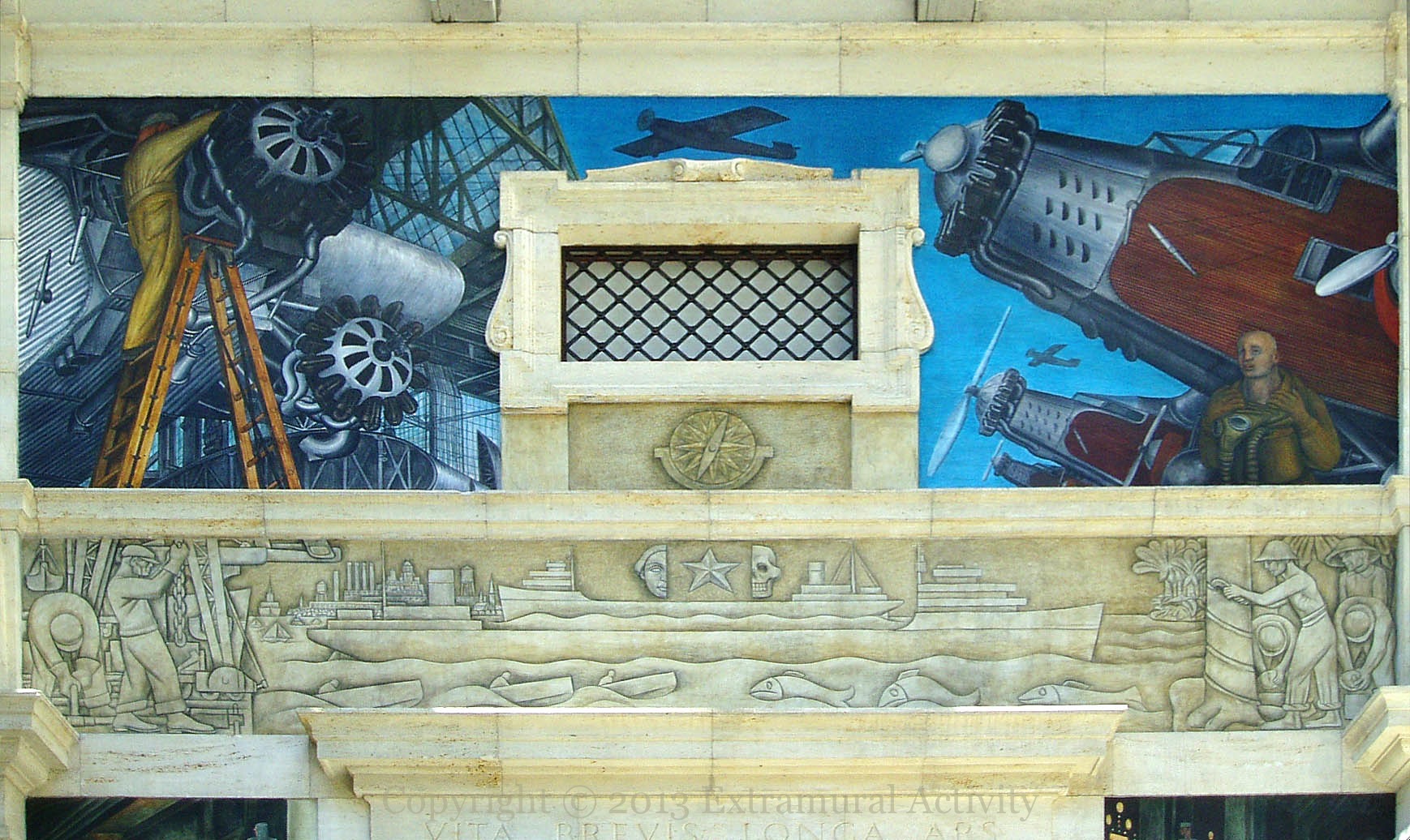
Above is a striking panel from the west wall of the Diego Rivera ‘Detroit Industry’ hall in the Detroit Institute of Arts. One of Rivera’s main themes was the dual use of technology, for both good and bad, and here he represents aviation both commercial and military. The bottom panel shows worldwide shipping and the extraction of natural resources by developed countries (on the right, you can see rubber trees being tapped).
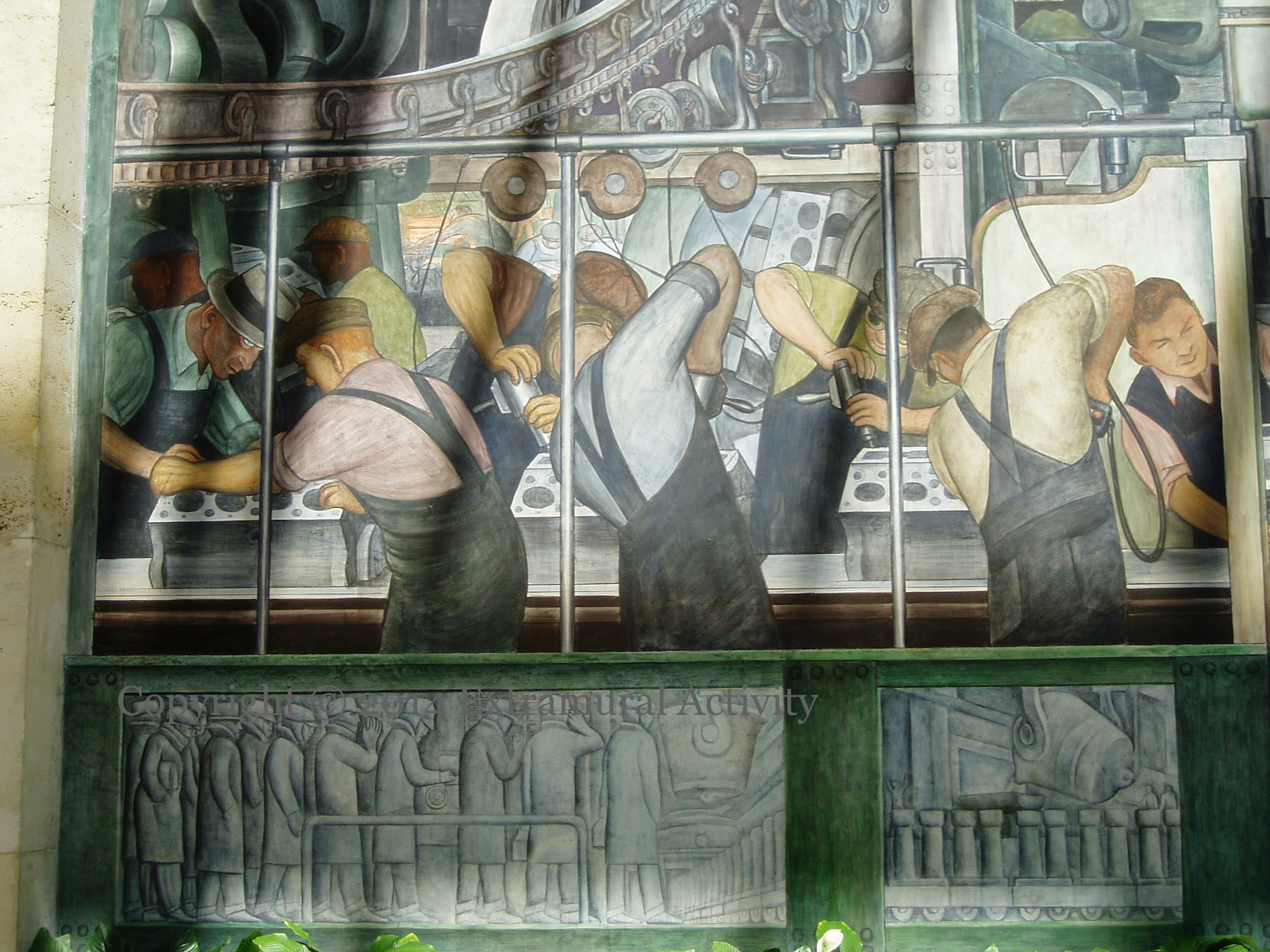
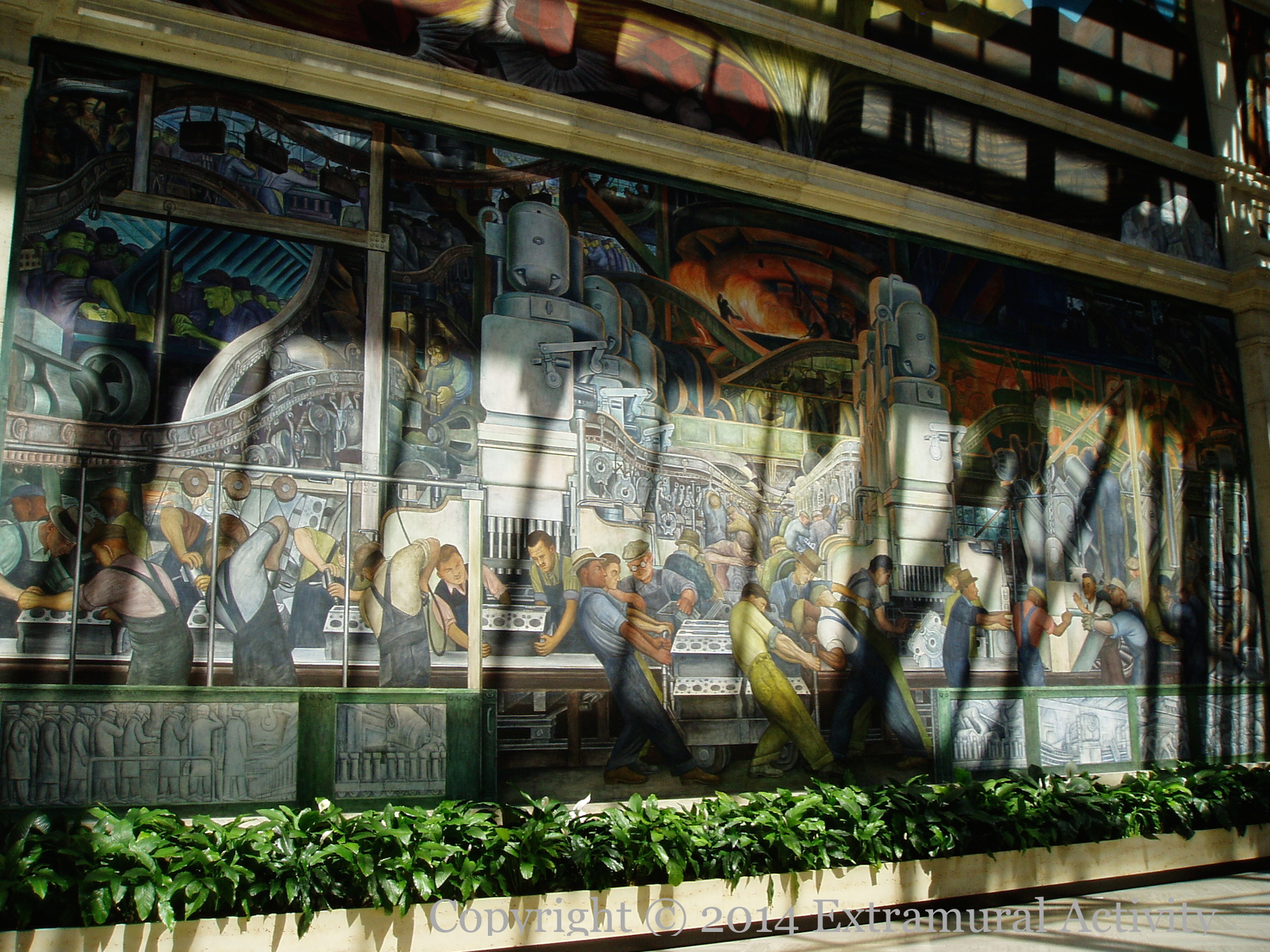
As can be seen from the final image below (showing the whole of the main panel), a bright sunlight was streaming through the glass ceiling on the day of our visit to Diego Rivera’s Detroit Industry frescoes in the Detroit Institute of Arts, making many of our images of the north wall unusable and degrading the quality of the few included here. They nonetheless show the stunning level of detail Rivera went to despite the massive size of the work. These are all of the main panel, the bottom third of which shows construction of the eight-cylinder engine for the Model B (probably).









 Extramural Activity