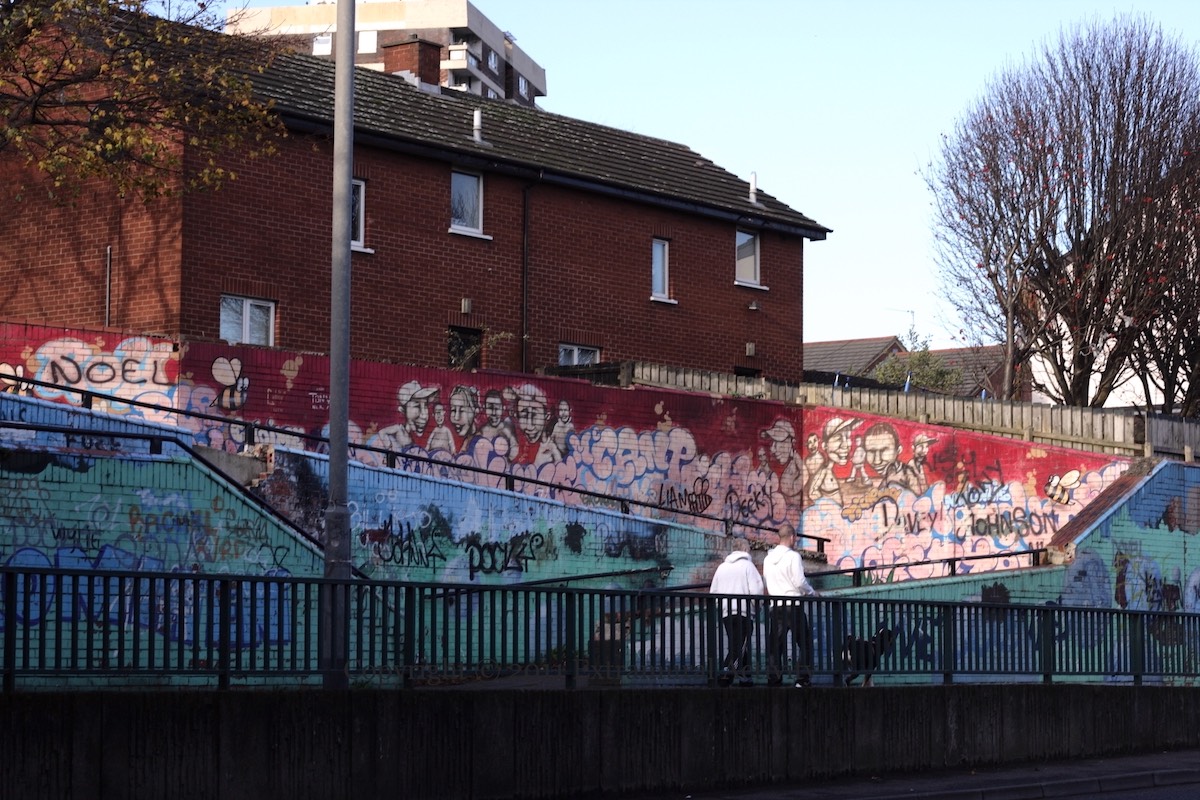
This is an end-of-life shot of the mural at the pedestrian entrance to the New Lodge. In the front is a landscape scene with “Welcome” in different languages; in the rear are street art figures and signatures; but graffiti covers all.
This is a companion piece to New Lodge 1900s. Life is now lived in colour, but suffers from underemployment, alcoholism, and suicide. The German bomber has been replaced by a British Army helicopter.
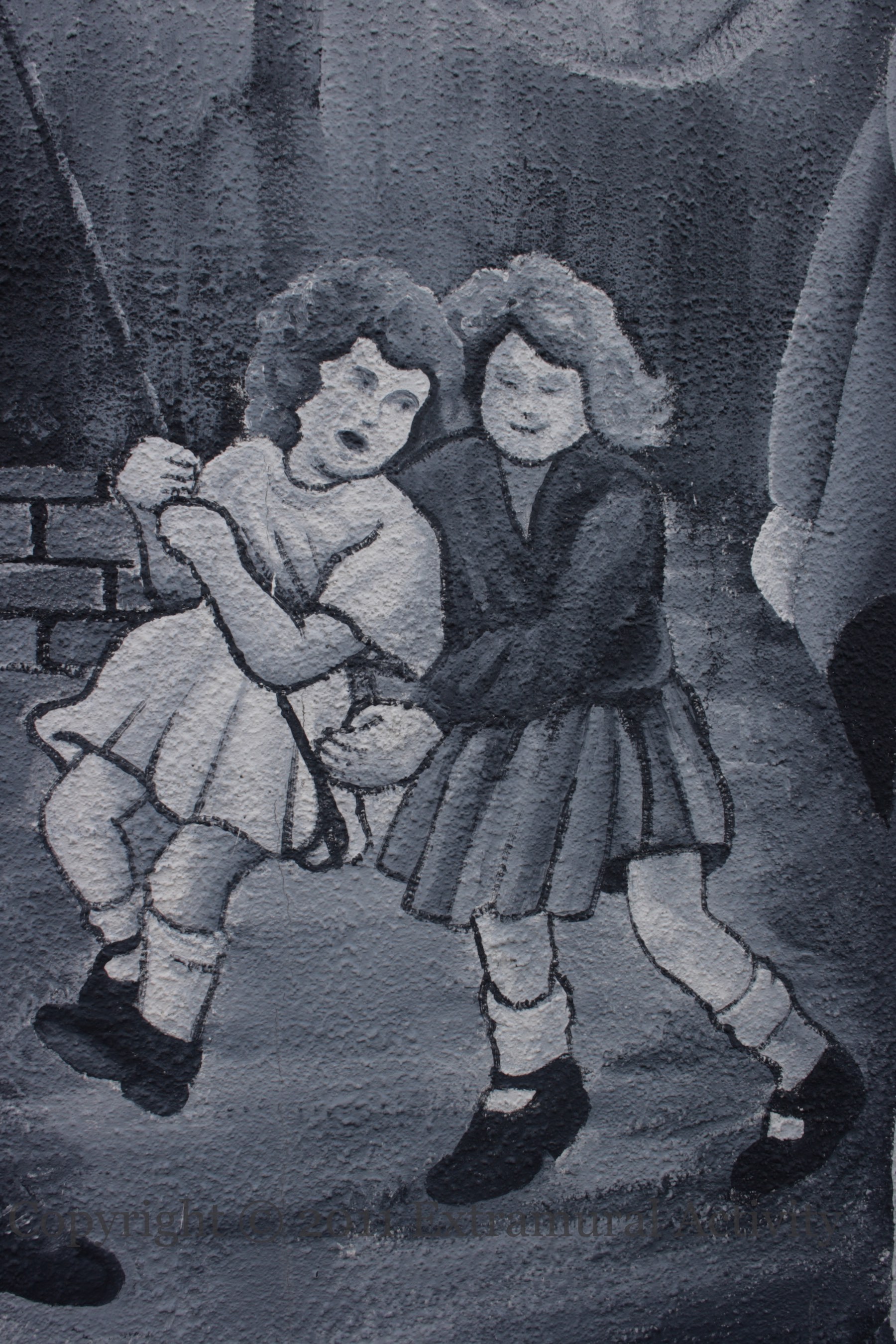
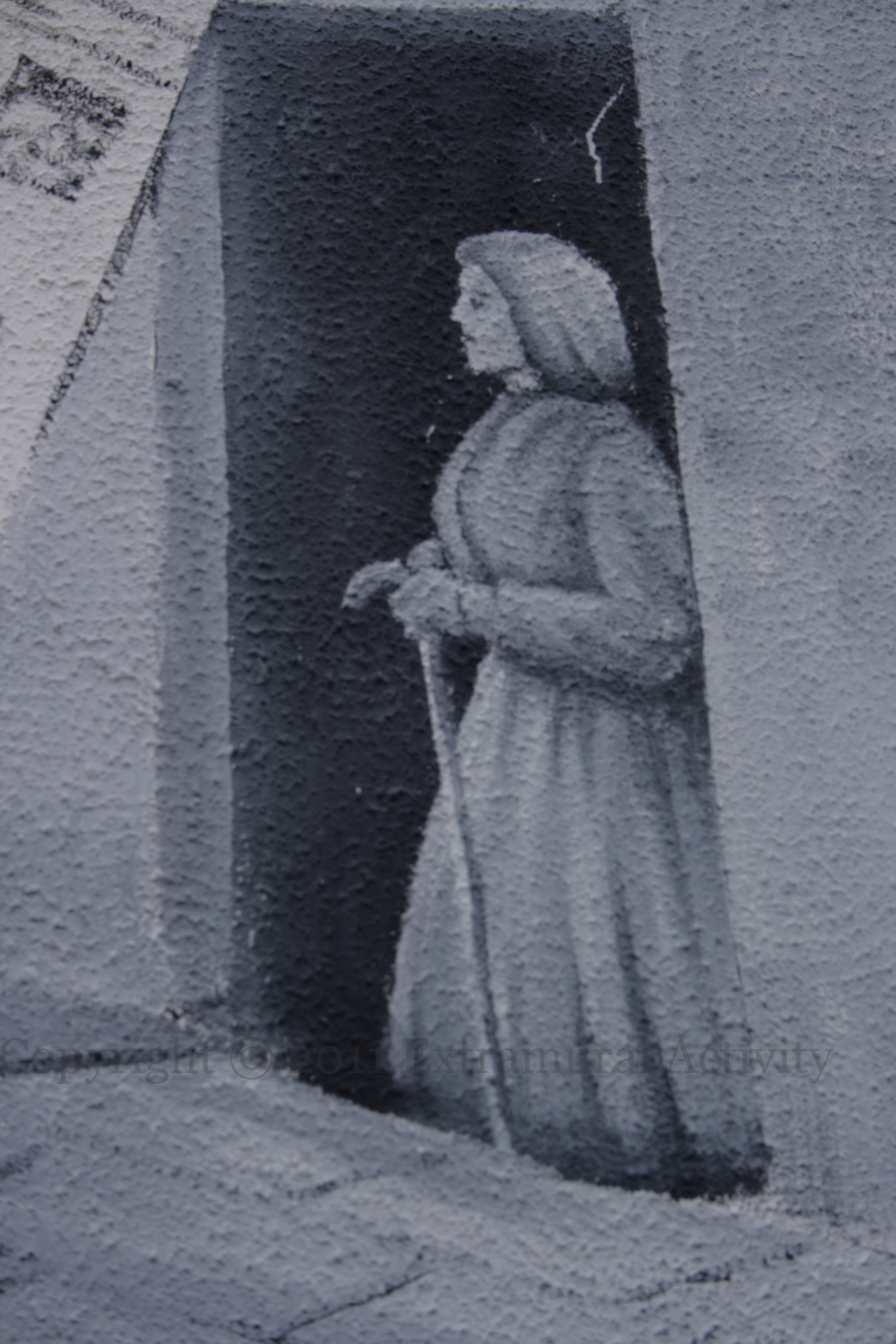
The trials of life in the 1900s are depicted in this New Lodge mural. People work and die in the mills. The Germans drop bombs. Children go barefoot. The black-and-white colouring adds to the depression. The ‘New Lodge 2000‘ mural further down the road is in full colour, though life is still beset with problems.
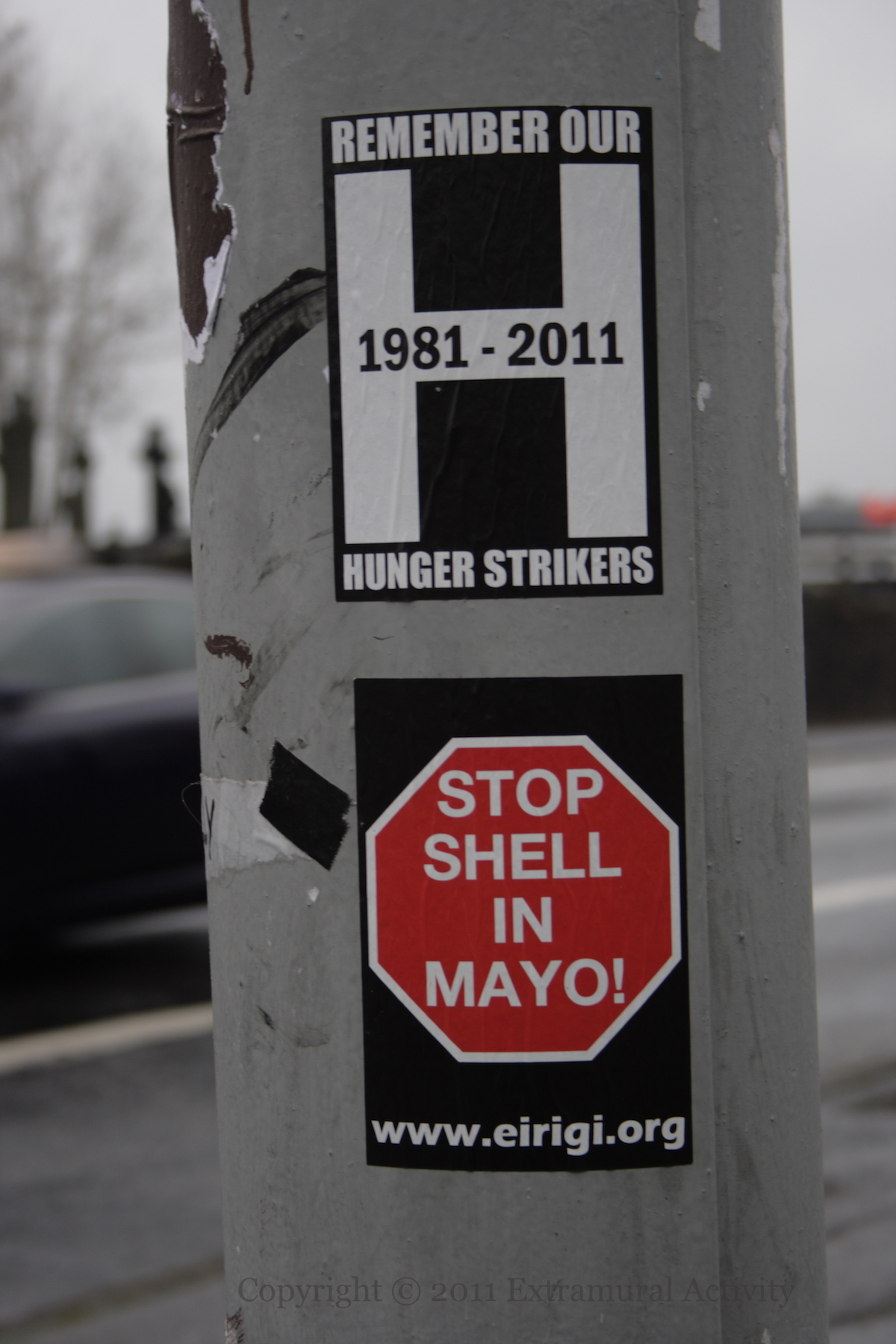
The éırígí sticker refers to the Corrib gas controversy, which has been raging since 2001. (See murals about the Rossport 5 in 2005: Belfast M02549 | Derry M02640 | M02643.) For background, see Workers Solidarity Movement and WP.
Sinn Féin’s Martin McGuinness was nominated by the party to stand for President Of Ireland. He garnered 13.7% of first preference votes and finished third to winner Michael D. Higgins (WP). For the hunger strikers metalwork, see M03118.
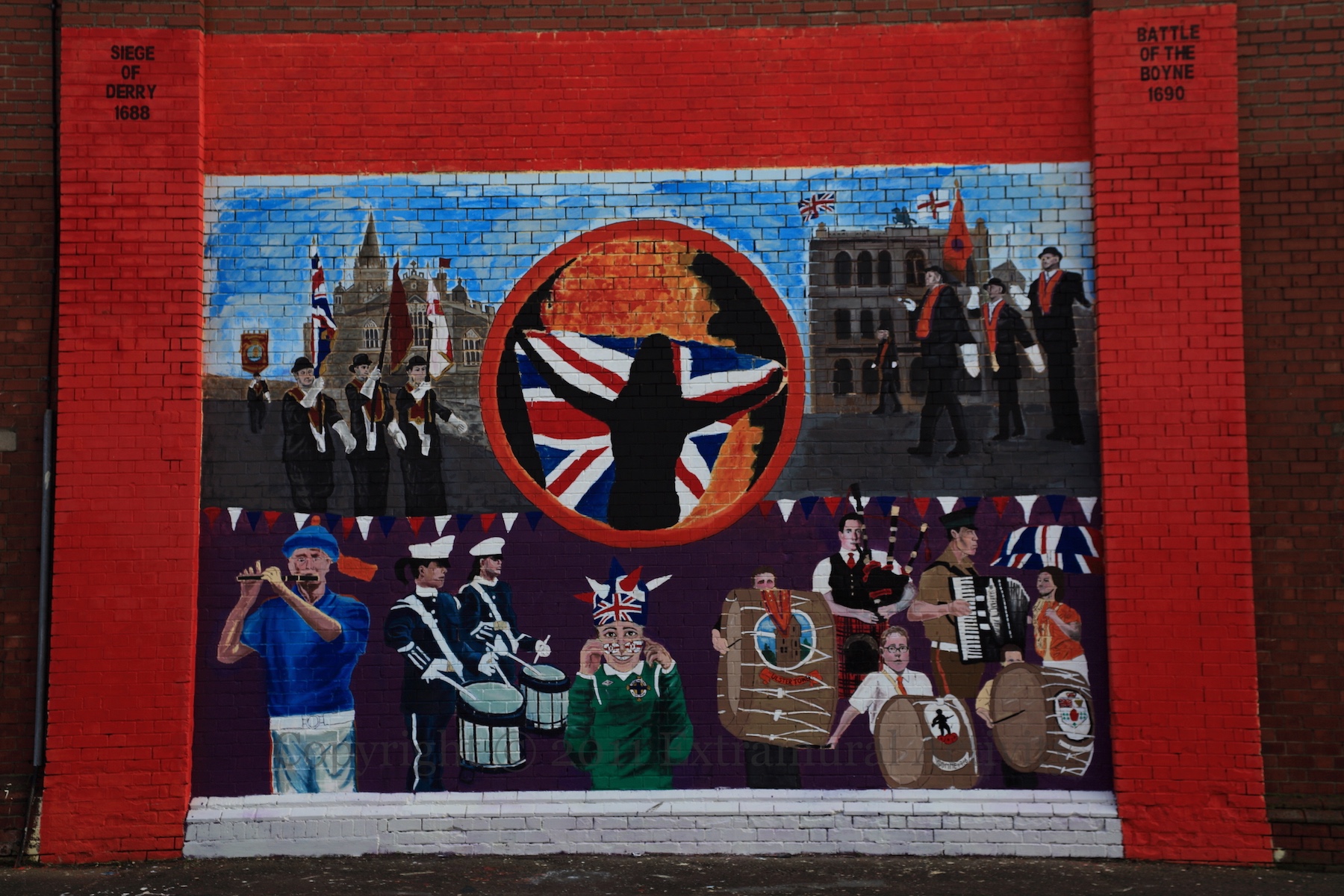
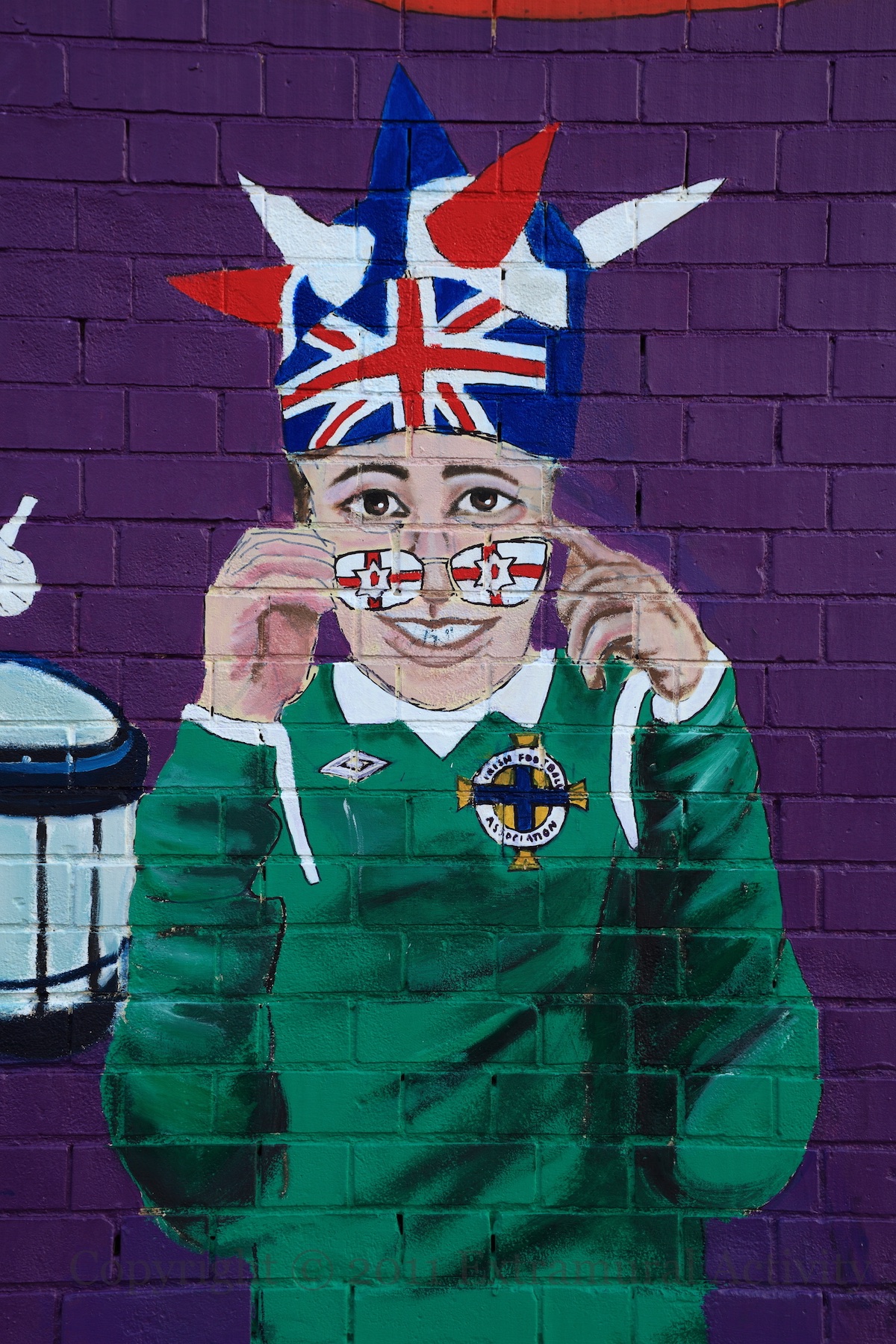
The ‘Civil and religious liberty for all’ mural in Cambrai street was ‘in progress’ for a long time. These images are from October 20th (first two) and November 7th (last two), 2011. The mural, showing parades, bonfires, and Northern Ireland football, would eventually be completed in 2012 – see M08228.
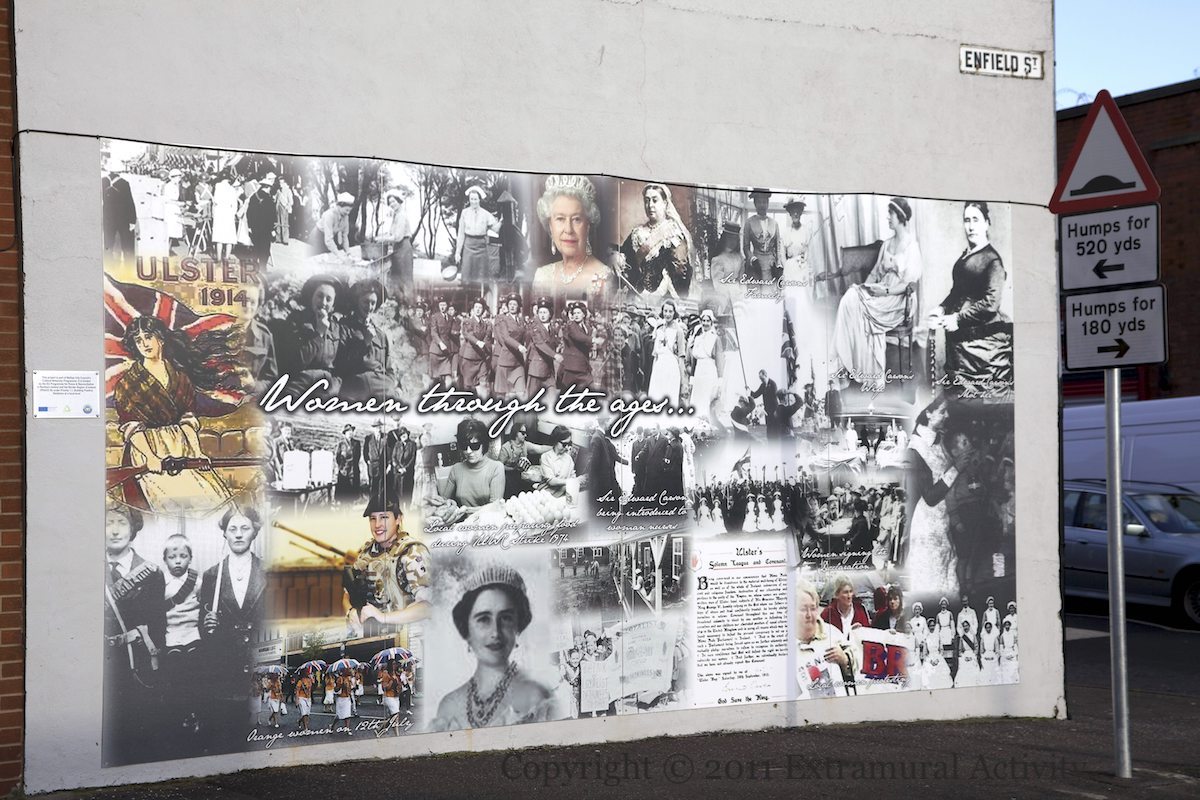
A good part of this Enfield Street, Belfast, mural is in fact dedicated to Edward Carson – in the top left are “Sir Edward Carson’s family”, “Sir Edward Carson’s wife”, and “Sir Edward Carson’s mother” and below them is a photograph of Carson presenting colours to the South Belfast Volunteers (see We Won’t Have Home Rule) and another (to the middle) of “Sir Edward Carson being introduced to woman nurses”. In the centre are “Local women preparaing food during UWC strike 1974”. Other images include English monarchs Victoria (Queen Of Ireland, Empress Of India) and Elizabeth, Ulster 1914, and the signing of the Ulster Covenant by women.
“This project is part of Belfast City Council’s Cultural Networks programme. It is funded by the EU Programme For Peace & Reconciliation In Northern Ireland And The Border Region Of Ireland (Peace III).”






 Extramural Activity