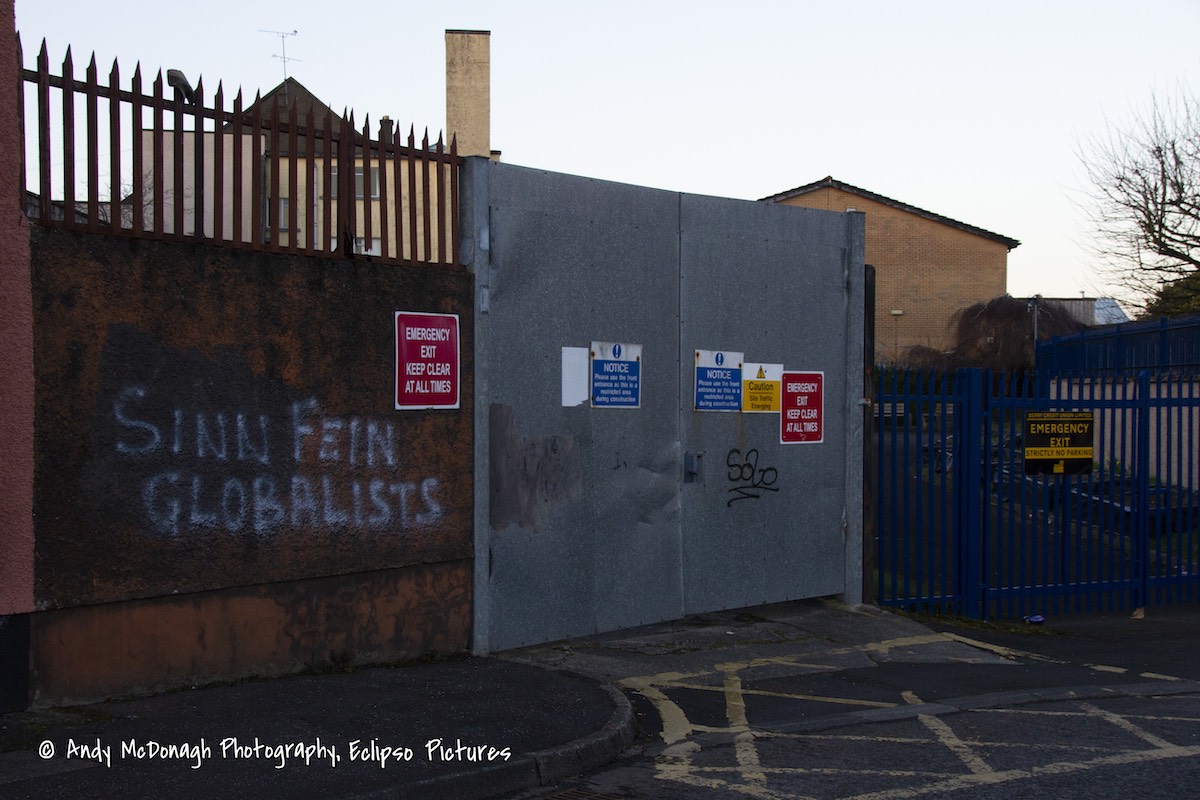
Two criticism of neoliberal globalism in Frederick Street, Derry: above, a rationale for the Russian invasion of Ukraine: “Fuck NATO – warmongers”; below, “Sinn Féin globalists” – criticism of Sinn Féin’s support of Ireland’s membership in the European community (which is possibly a critique from the far-right National Party (web), according to the Guardian).
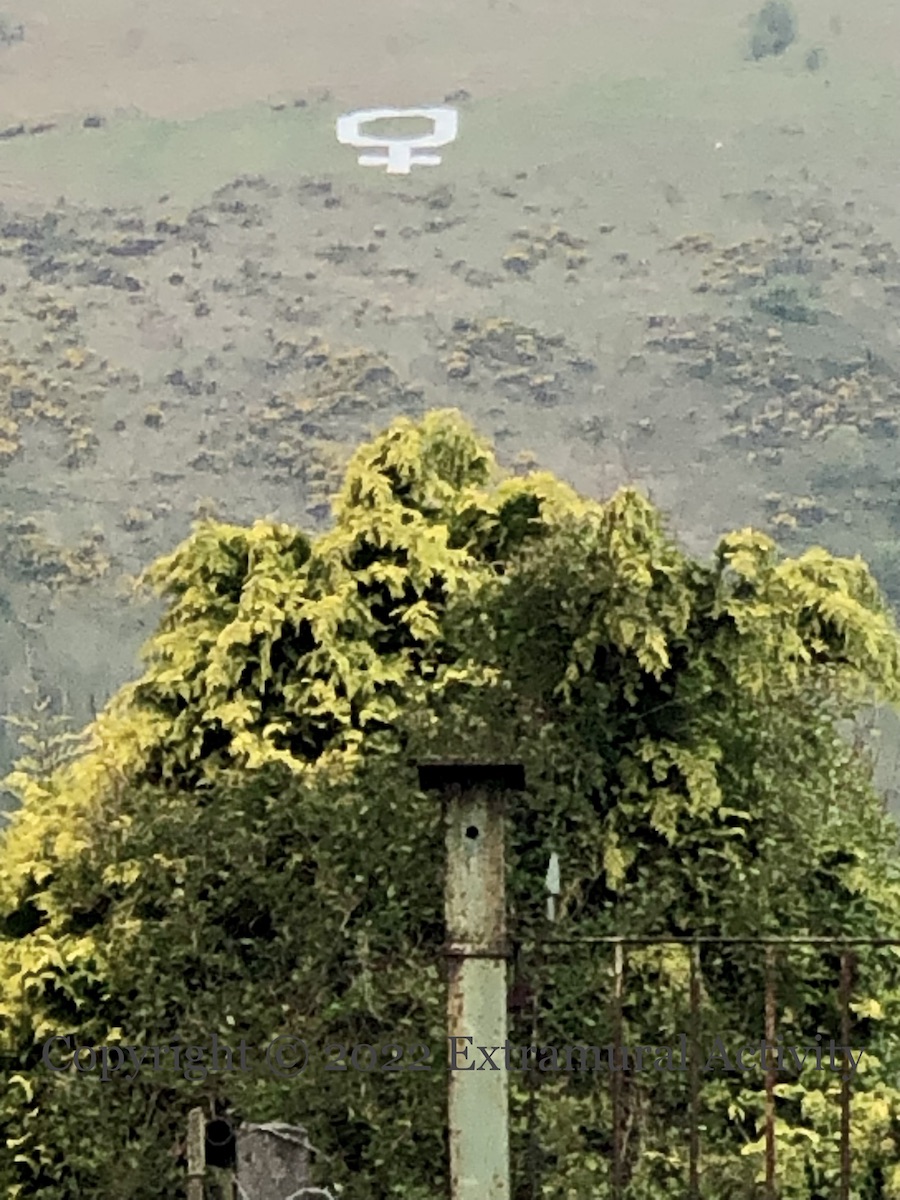
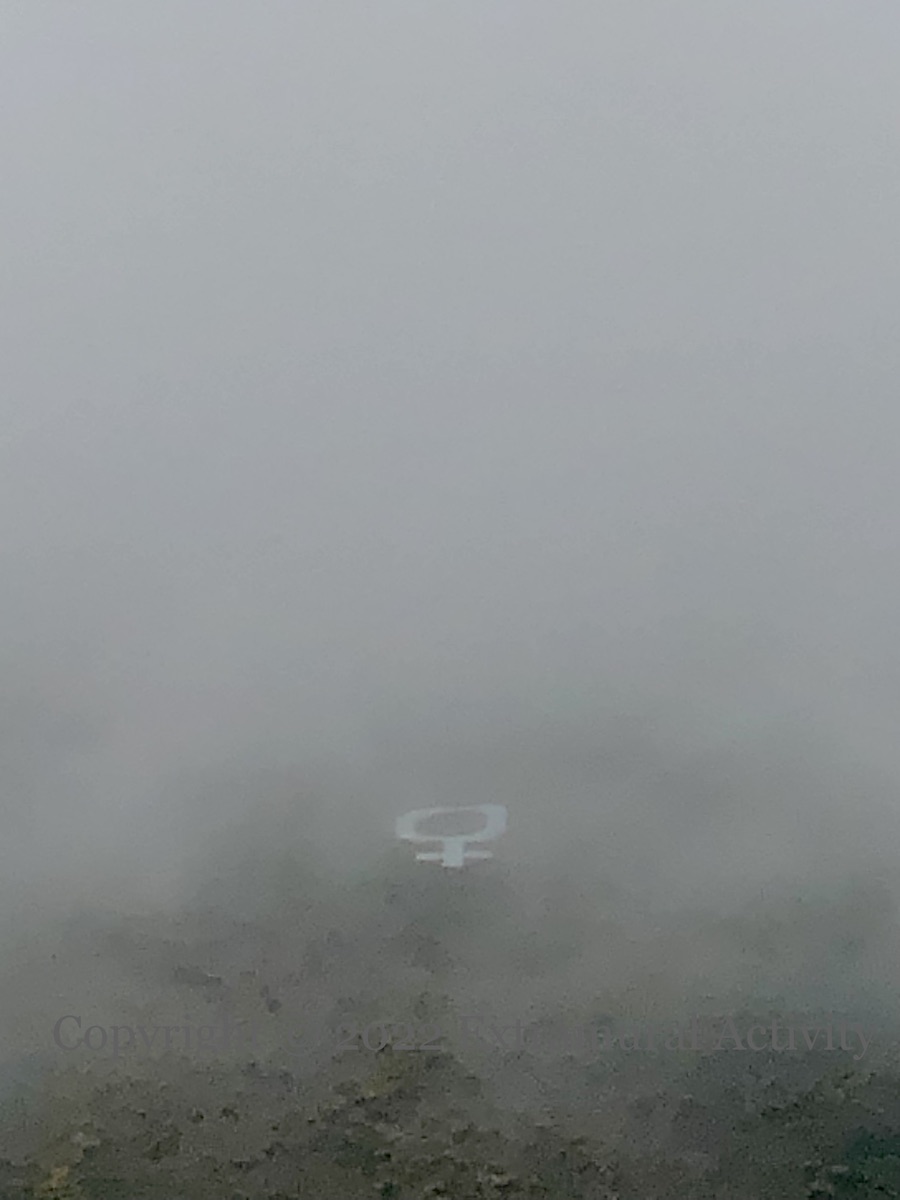
A draft of the up-coming decision by the US Supreme Court to overturn ‘Roe v. Wade’ was leaked by Politico magazine on Monday but this ‘Venus’ symbol for ‘female’ on Slıabh Dubh is a response to a decree by powers closer to home, namely the assertion by a west Belfast priest that Catholics should restrict themselves to Aontú or the DUP when choosing whom to vote for, because their platforms forbid abortion (Belfast Media | Sunday World).
“Men are from Earth, women are from Earth. Deal with it.” is attributed to comedian George Carlin.
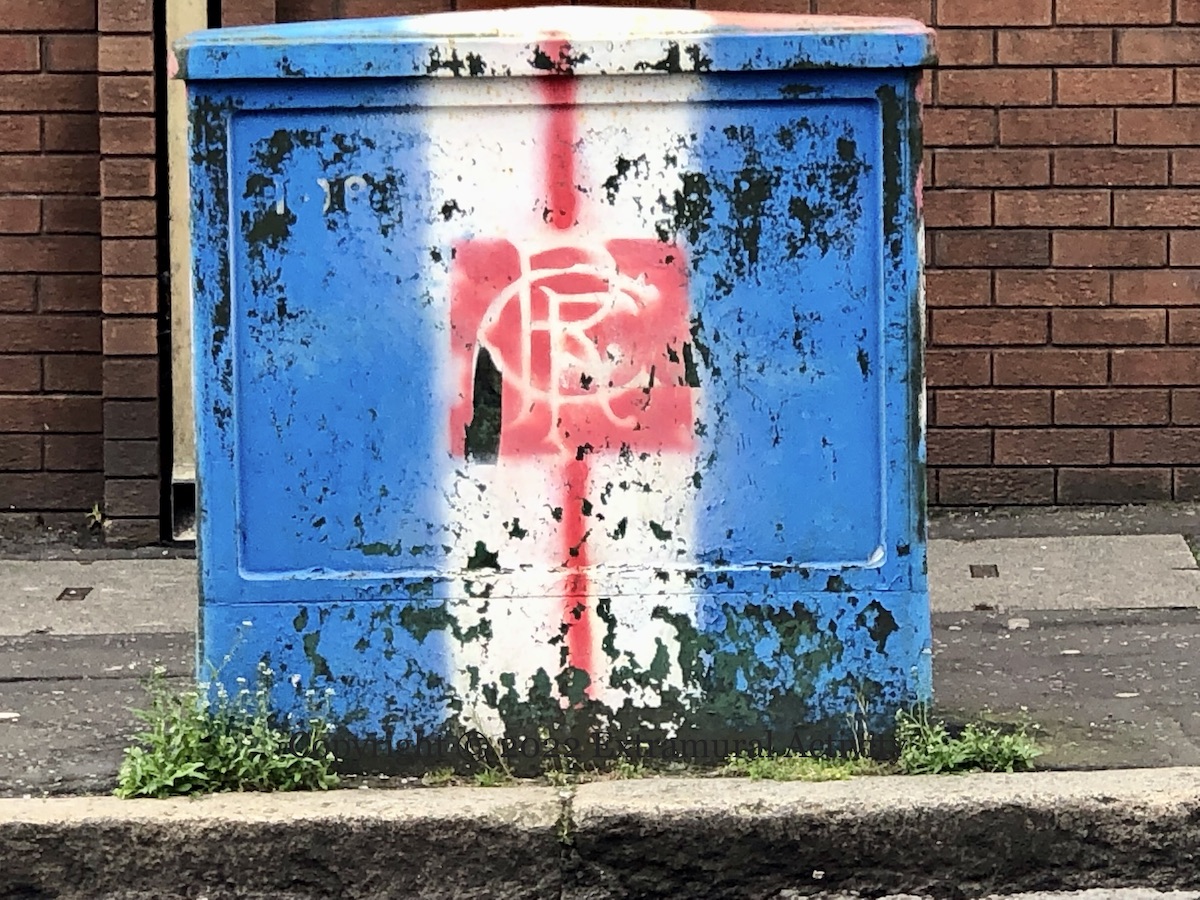
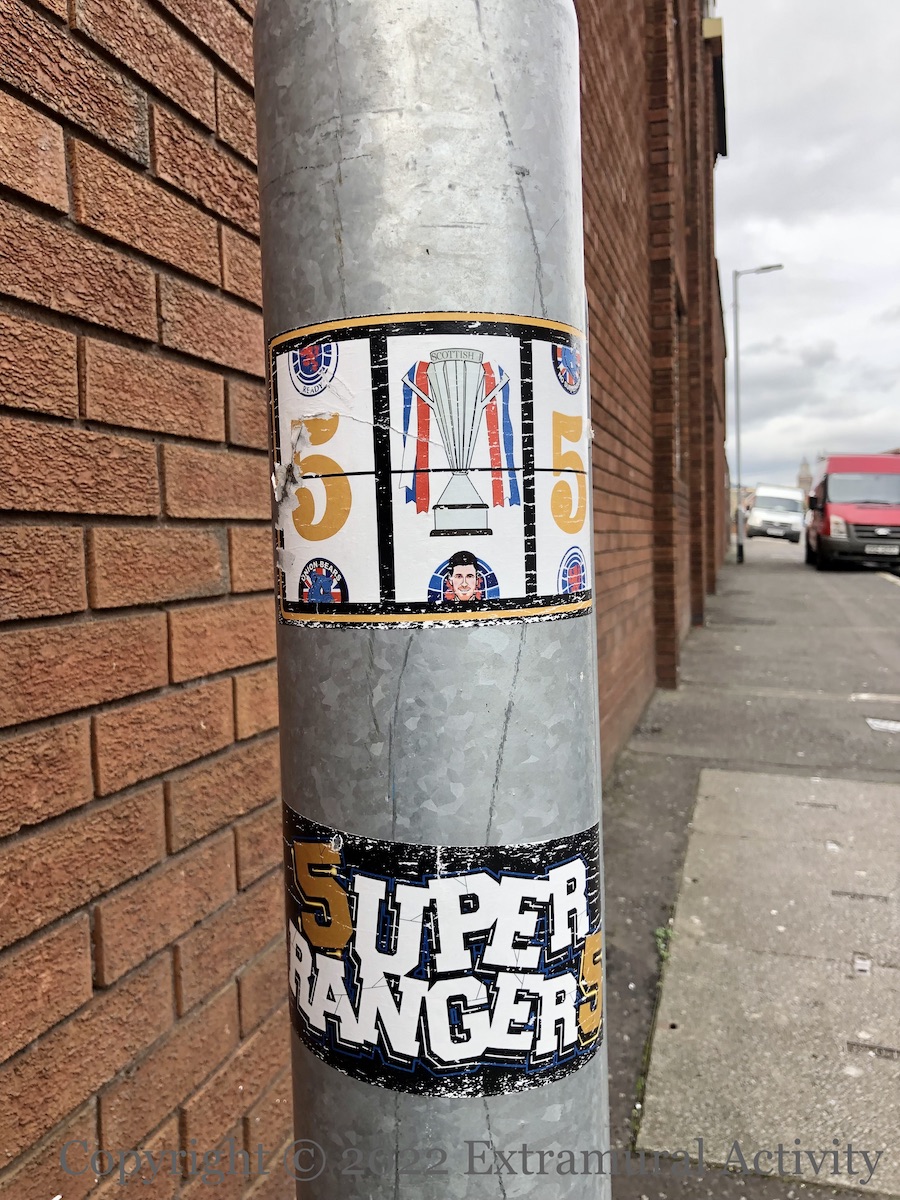
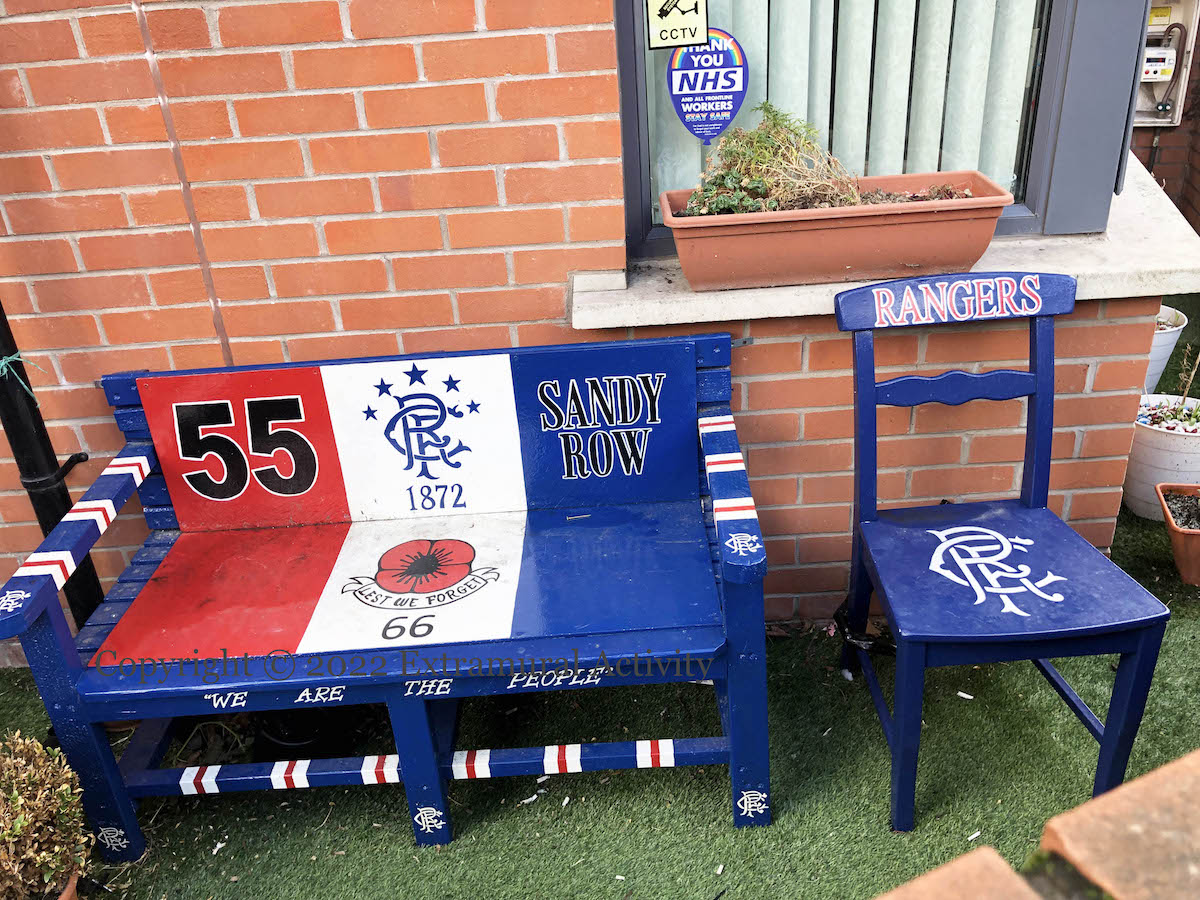
The slot machine last year came up with a 55 Scottish league title for Rangers and Rangers fans across Belfast celebrated with stickers and flags (Let Us Shout Joyfully | Order Restored | 55 | F*ck Your Ten In A Row | Blues Brothers | We’re Back | Legends Never Die) and also the stencilled electricity box from Berlin Street, west Belfast (above) and the furniture and barrel (below) from Sandy Row, south Belfast. This year is not looking so good, as they are six points down with three games to go (SkySports).
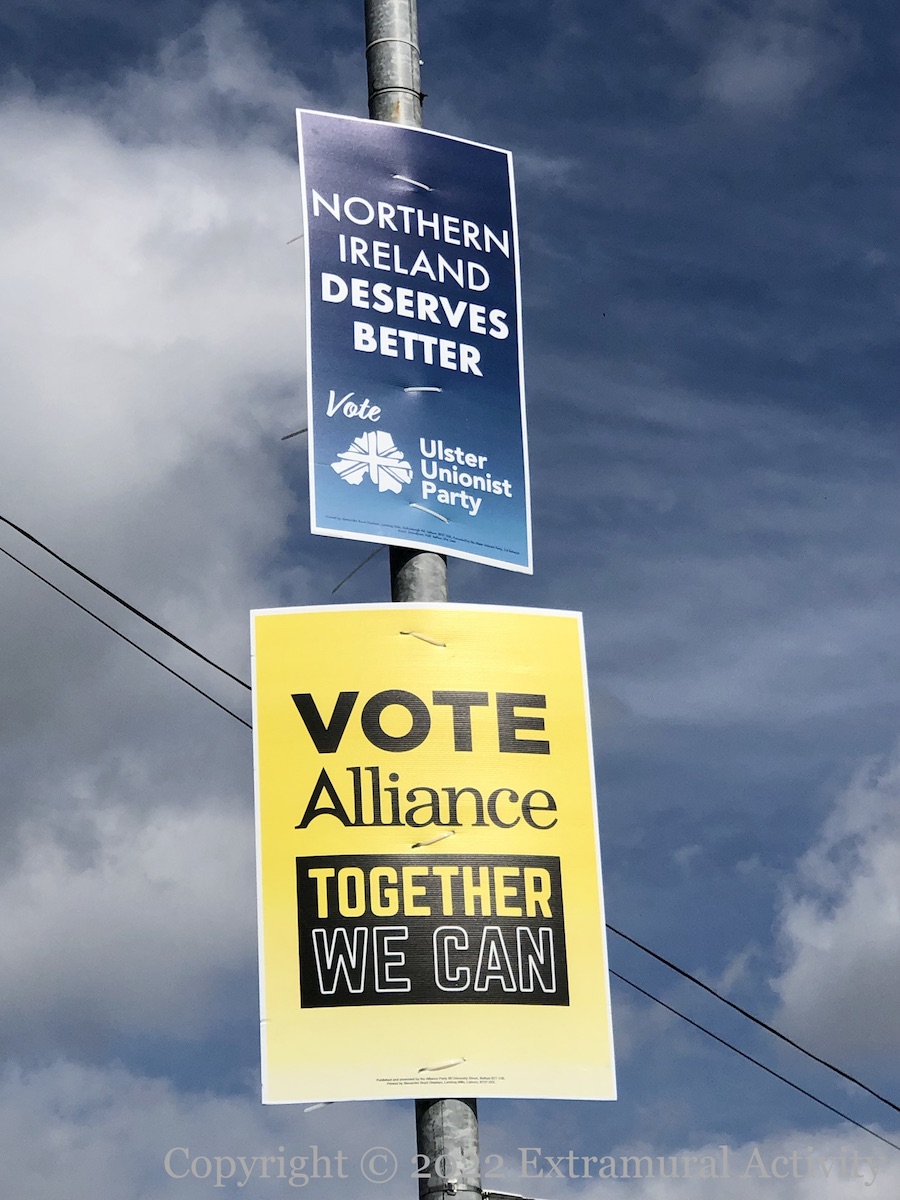
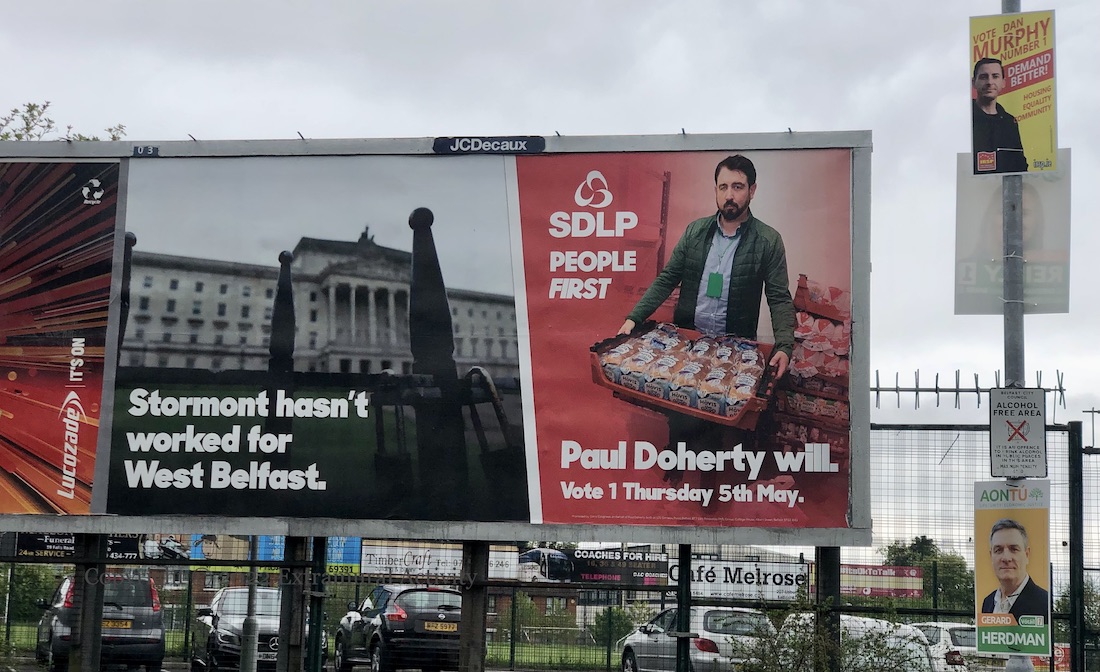
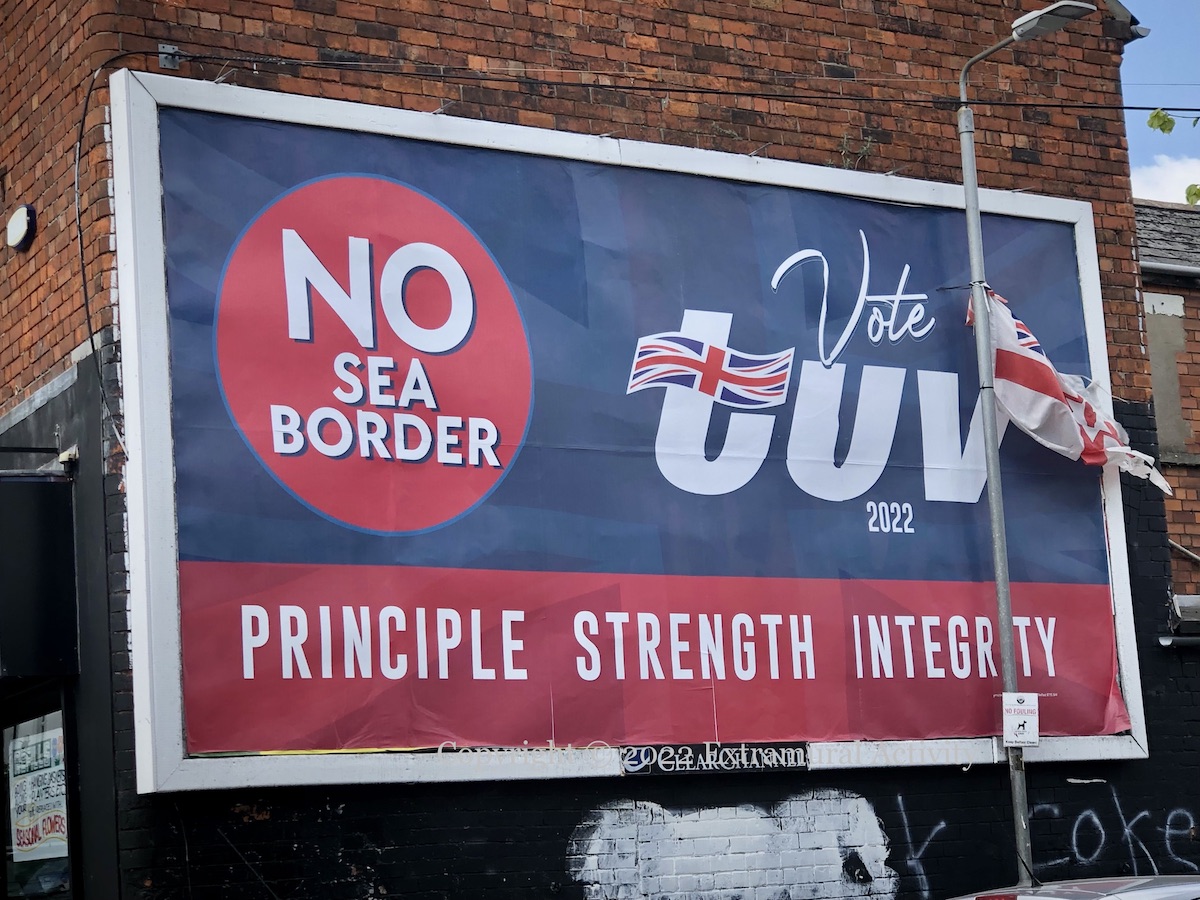
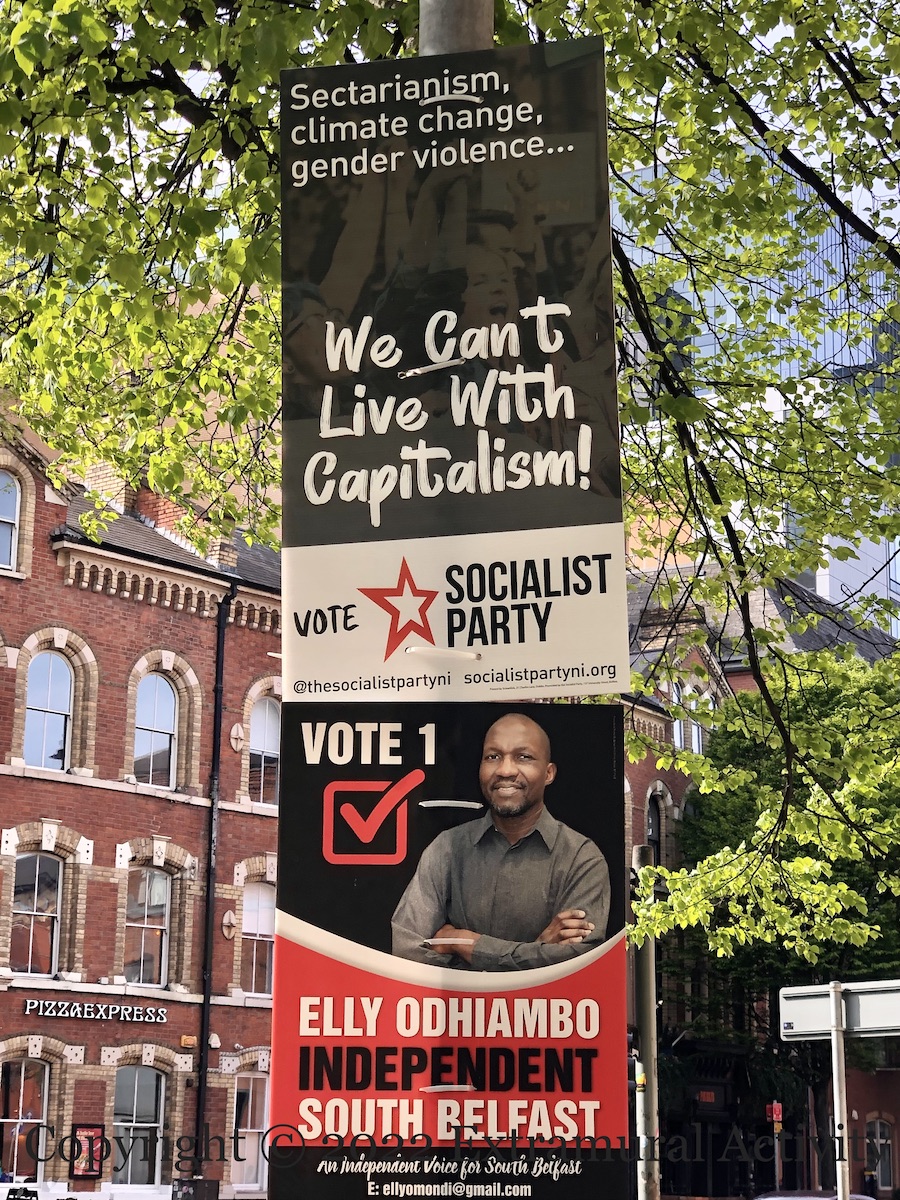
Voters go to the polls today for the NI Assembly elections, with the potential for significant changes compared to previous years: a CNR party – Sinn Féin – is predicted to win the most seats and votes for the first time in the 100-year history of Northern Ireland (LucidTalk). Here is a third and final batch of electoral hoardings and placards (previously: What Did You Do In The Election? | Had Enough?). Above: SDLP hoping to “deliver” a Tiny Life “miracle baby”; second: UUP‘s “Northern Ireland deserves better” and Alliance‘s “Together we can”; third, (Lucozade,) SDLP “working” for west Belfast, IRSP “Demand better”, and Aontú “Life, unity, economic justice”. in CNR west Belfast; fourth, TUV‘s “Principle, integrity, strength”; fifth, the Socialist Party’s “We can’t live with capitalism” along with independent Elly Odhiambo (occasional columnist in Belfast Media publications) in south Belfast. Not included here are Sinn Féin, People Before Profit, the Green Party, the PUP and the DUP.
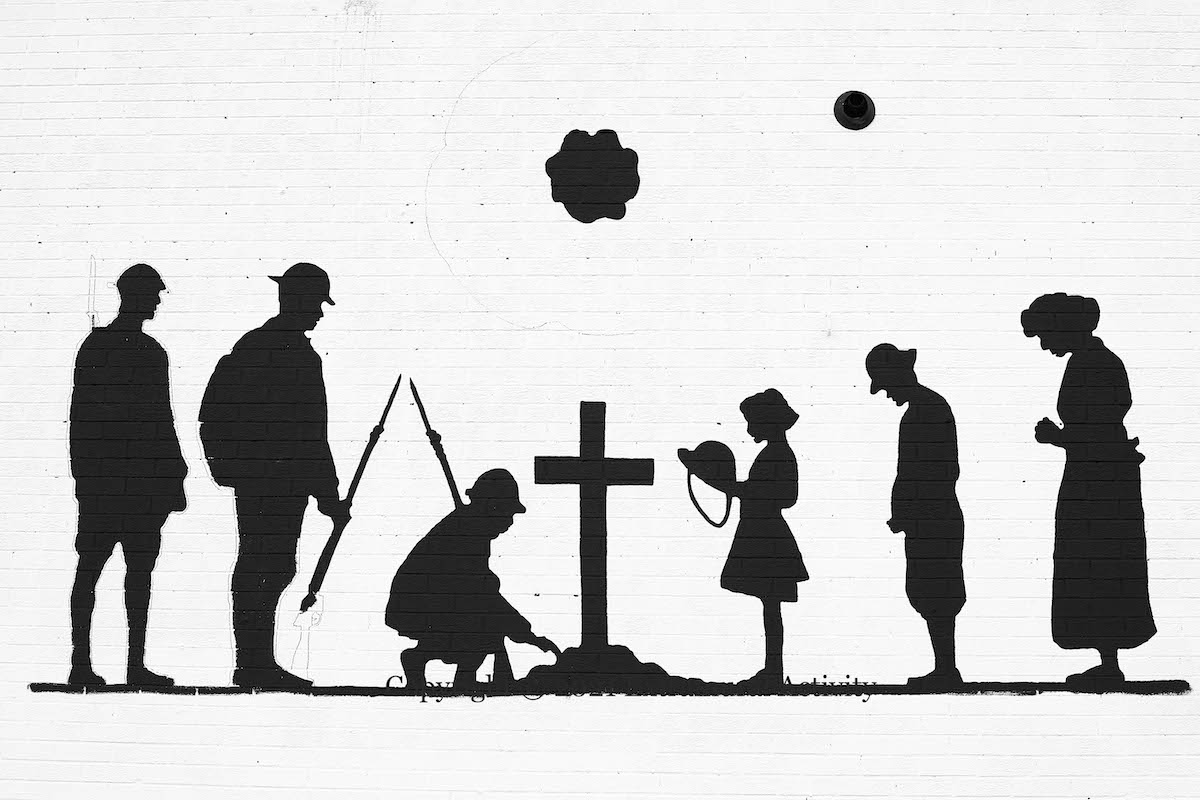
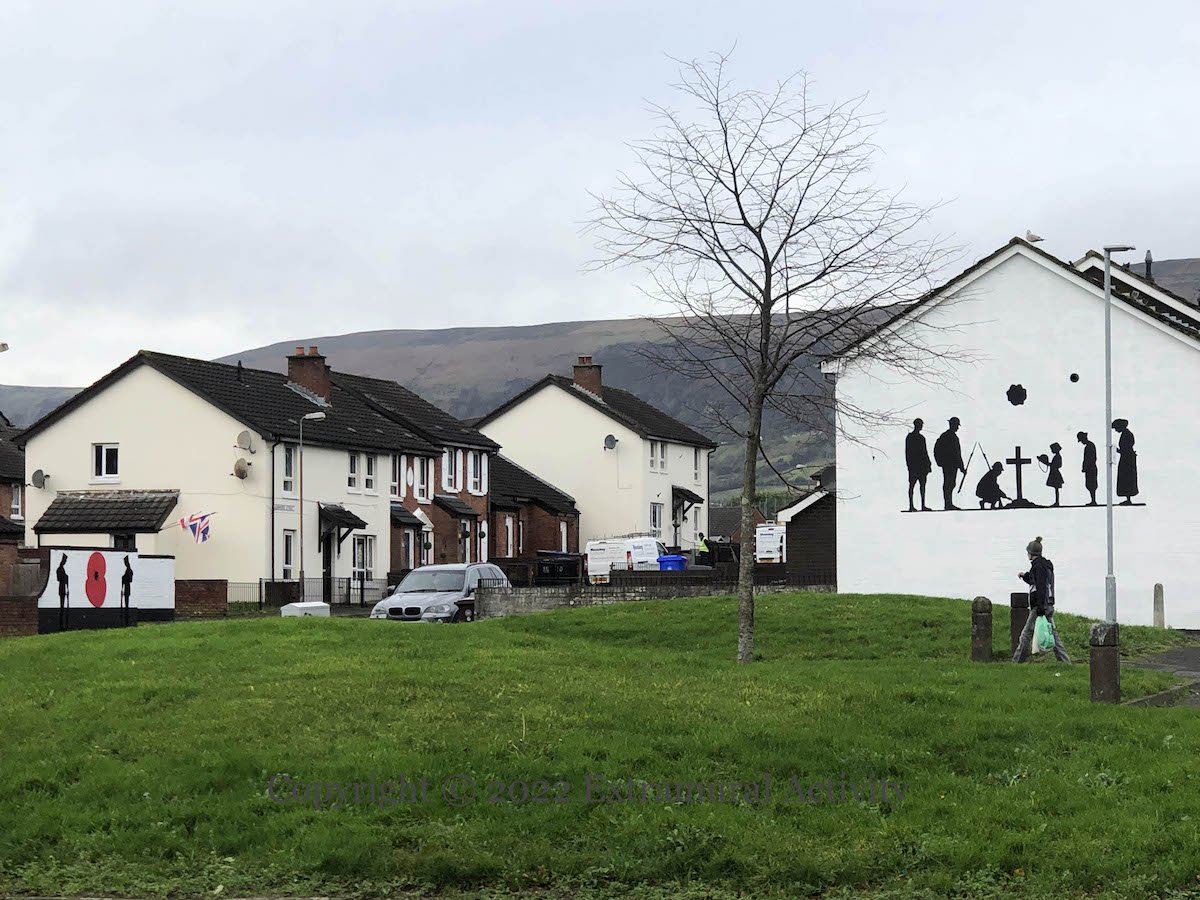
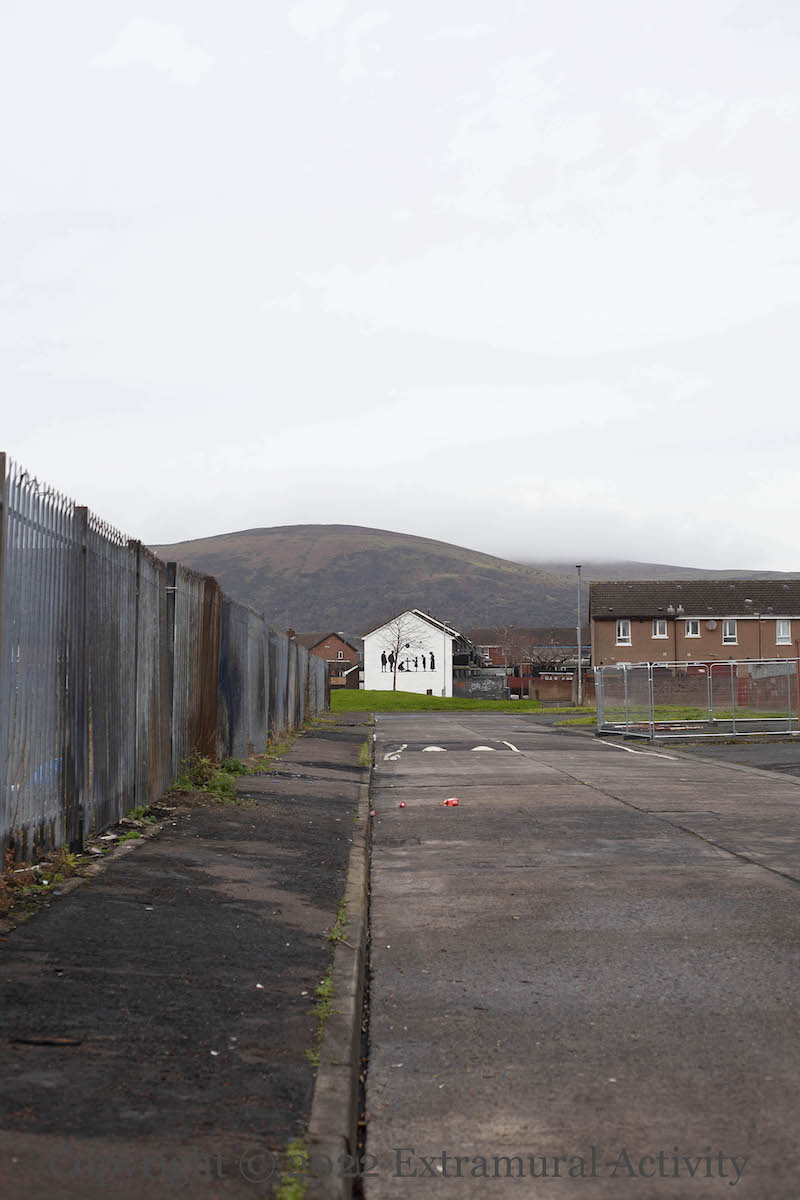
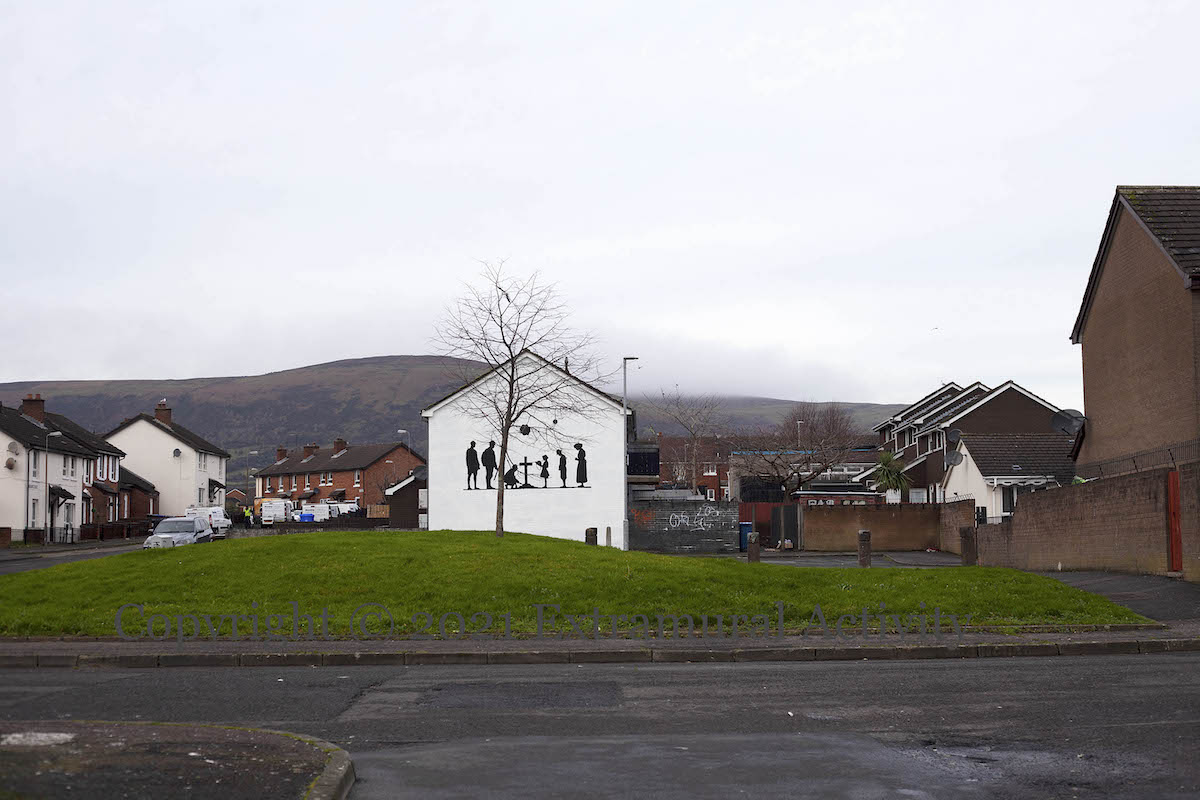
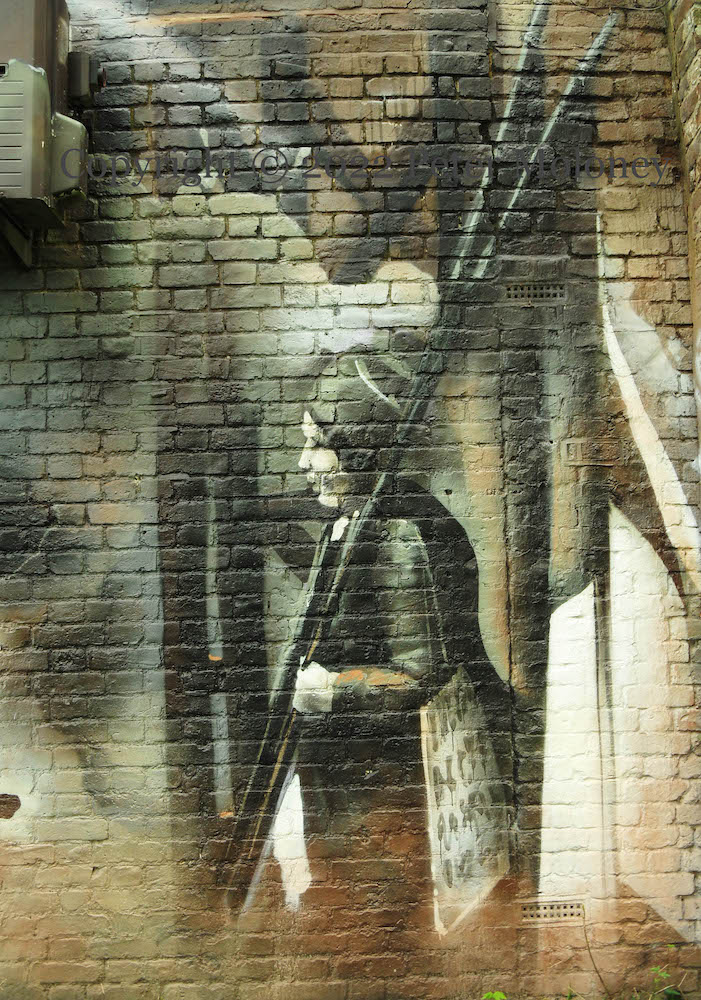
Two types of mourner at the grave of a fallen WWI soldier: on the left, comrades in arms; on the right, members of the family they left behind.
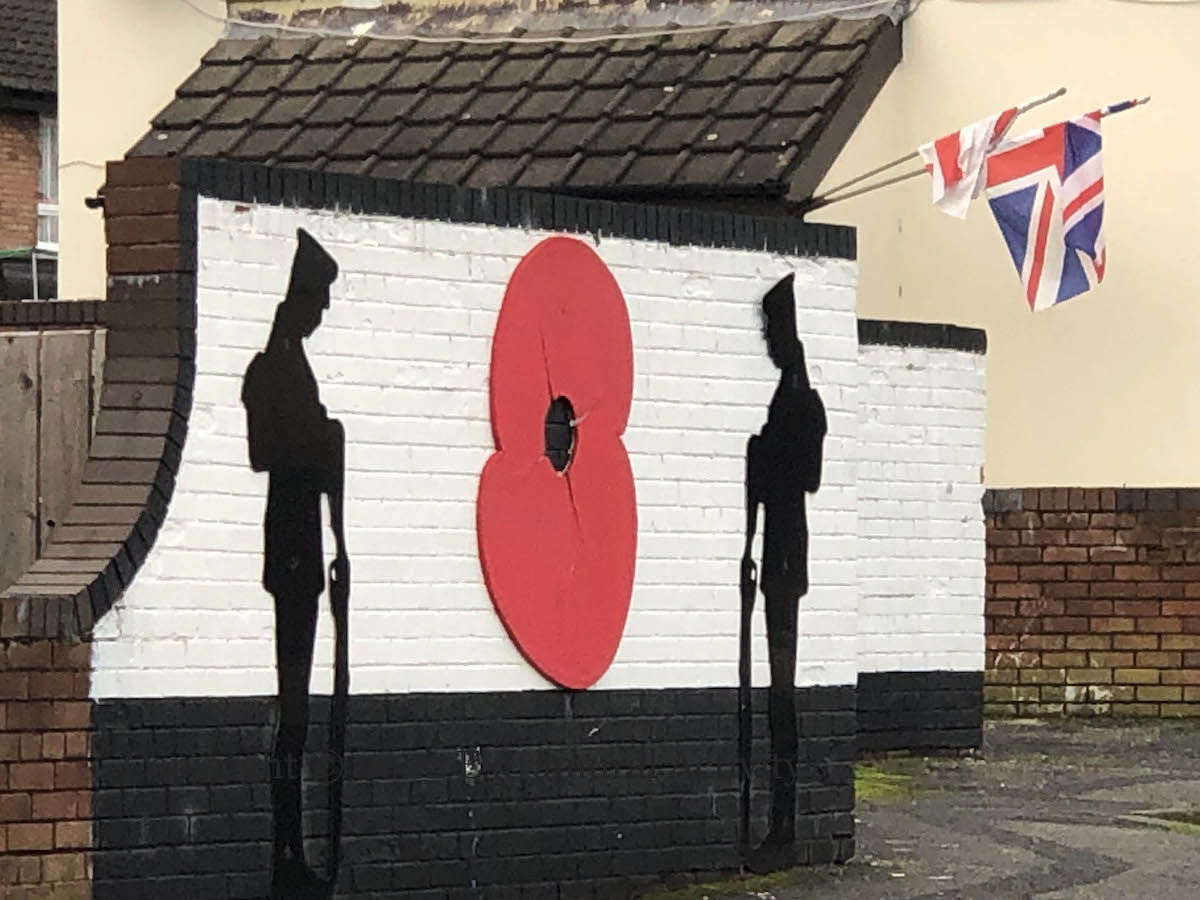
Work on the mural began in December, 2021, but progress seems to have stalled. One of the bayonets is in outline as is the giant poppy overheard. The effect is that the scene seems to be taking place under the stars.
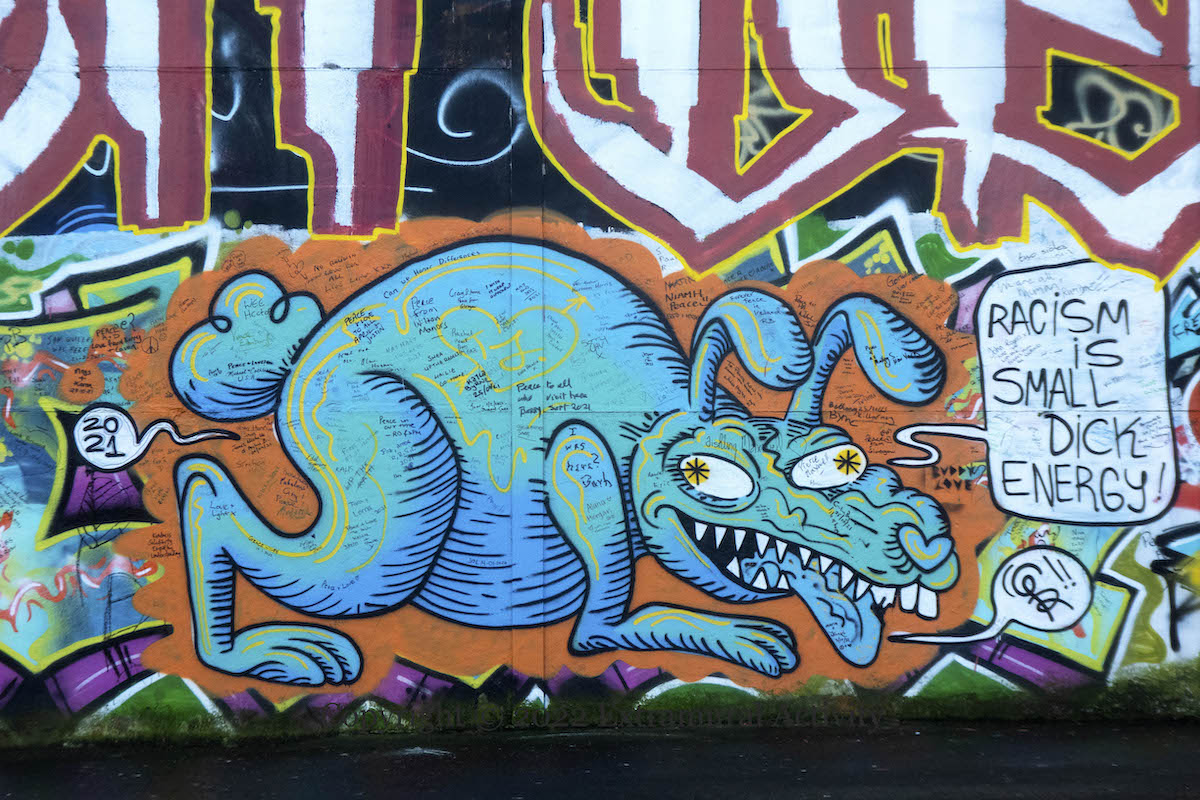
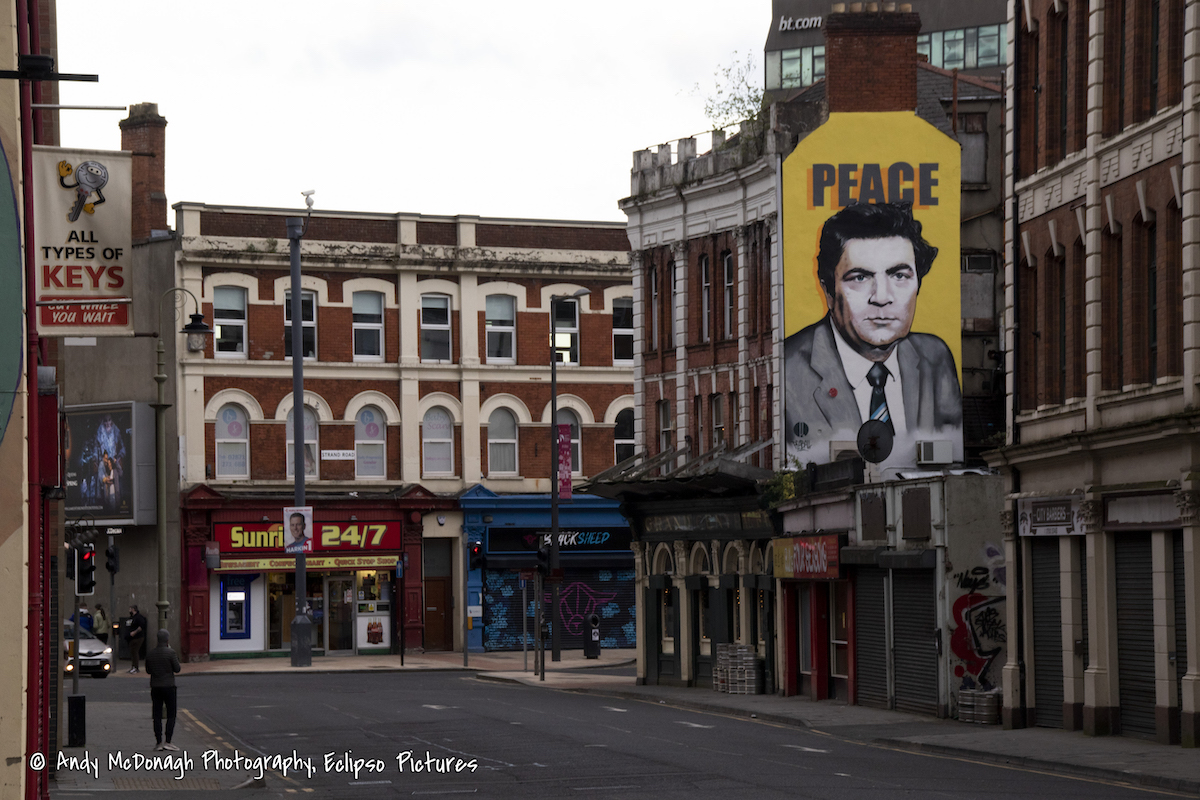
In his statement in response to the news of the Belfast (Good Friday) Agreement (11 April, 1998), John Hume said, “This process is not about the victory or defeat of nationalism or unionism. It is about something much greater. Today, as Fergal Keane said in relation to South Africa, we can take collective breath and begin to blow away the cobwebs of the past. We can begin to break the bondage of fear which has so damaged our people and our country, difficult and demanding though this will be in the coming days and weeks.” (CAIN)
Commissioned by the Grand Central bar (Derry Journal) in Great James Street (whose side-wall the mural is on) and painted by Peaball (ig) an art group (including Donal O’Doherty, formerly of UVArts – Belfast Live).
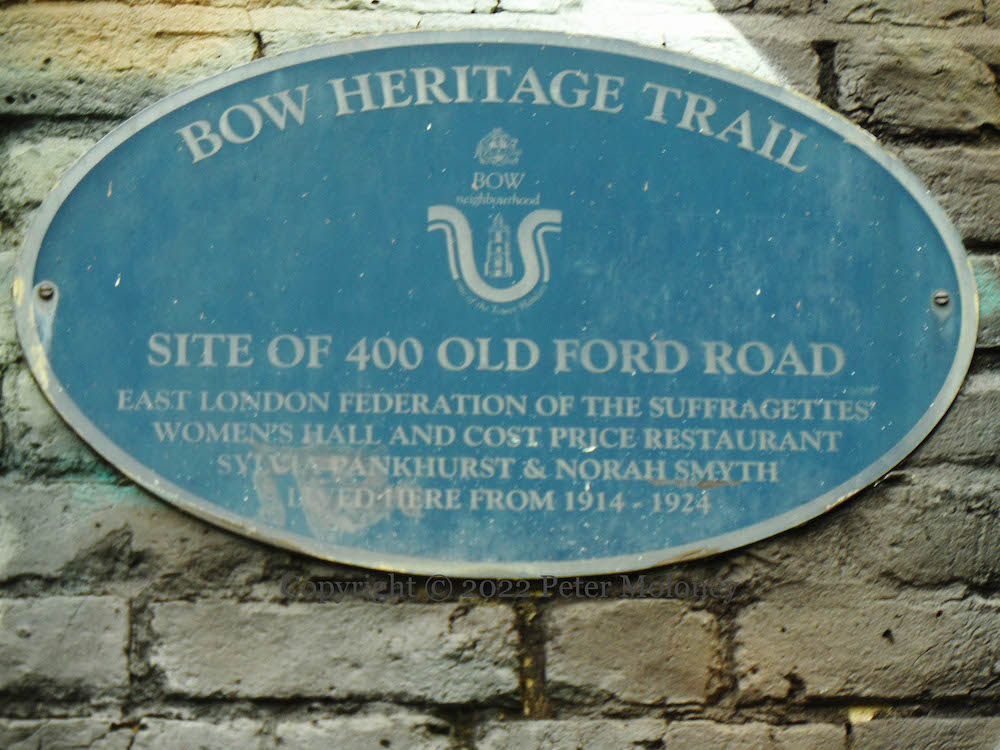
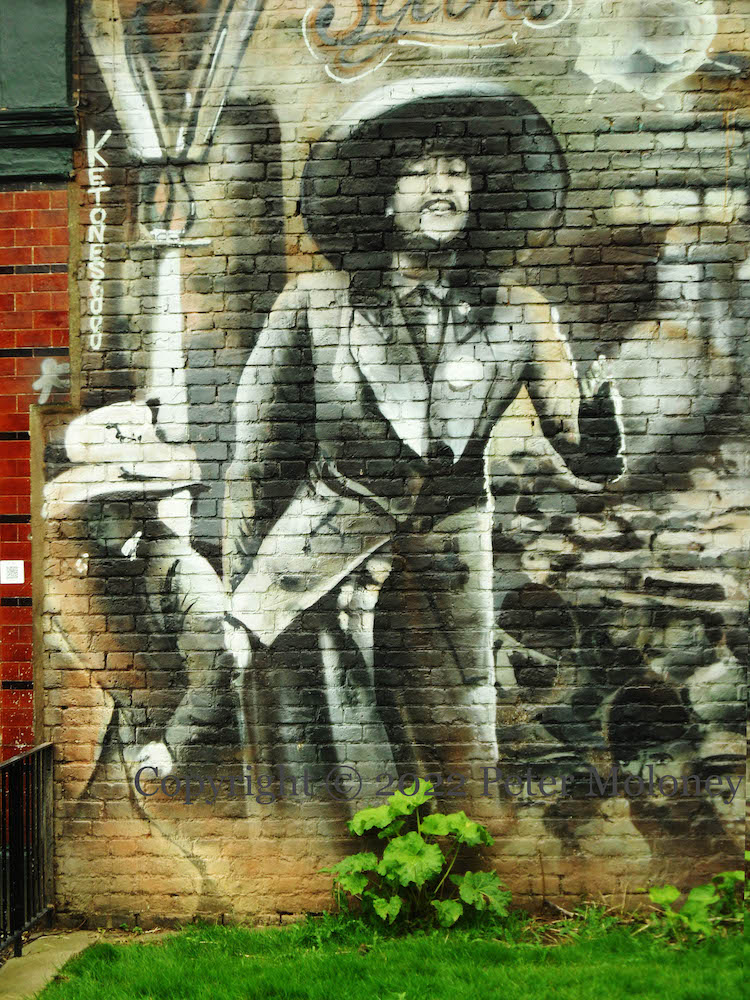
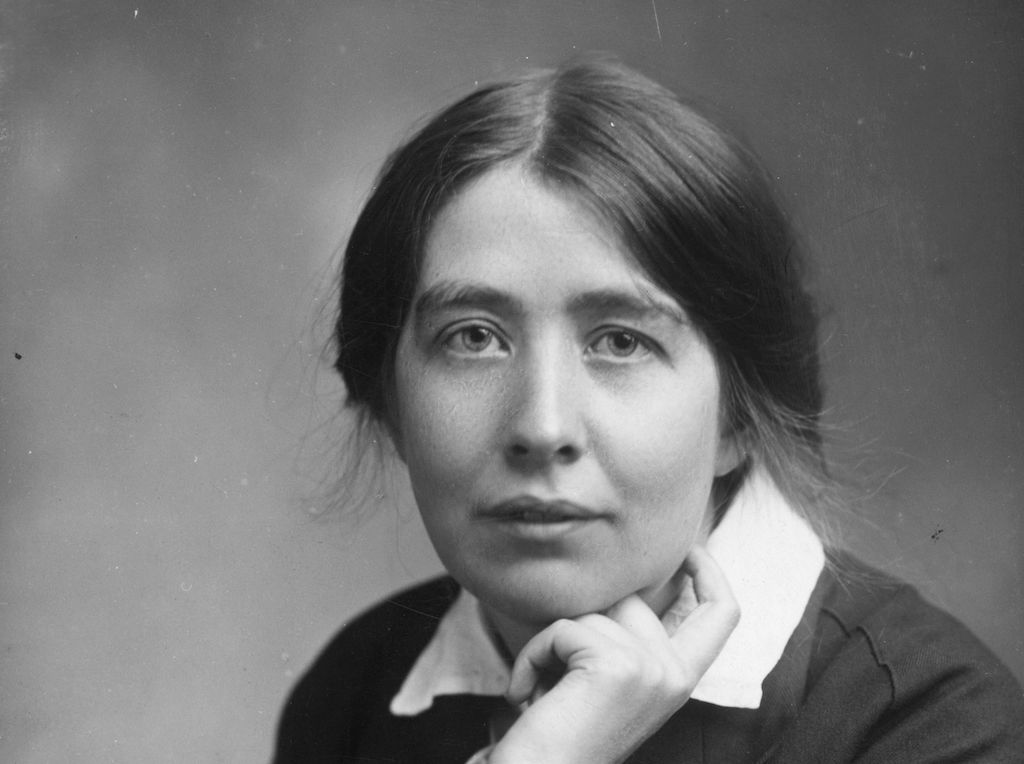
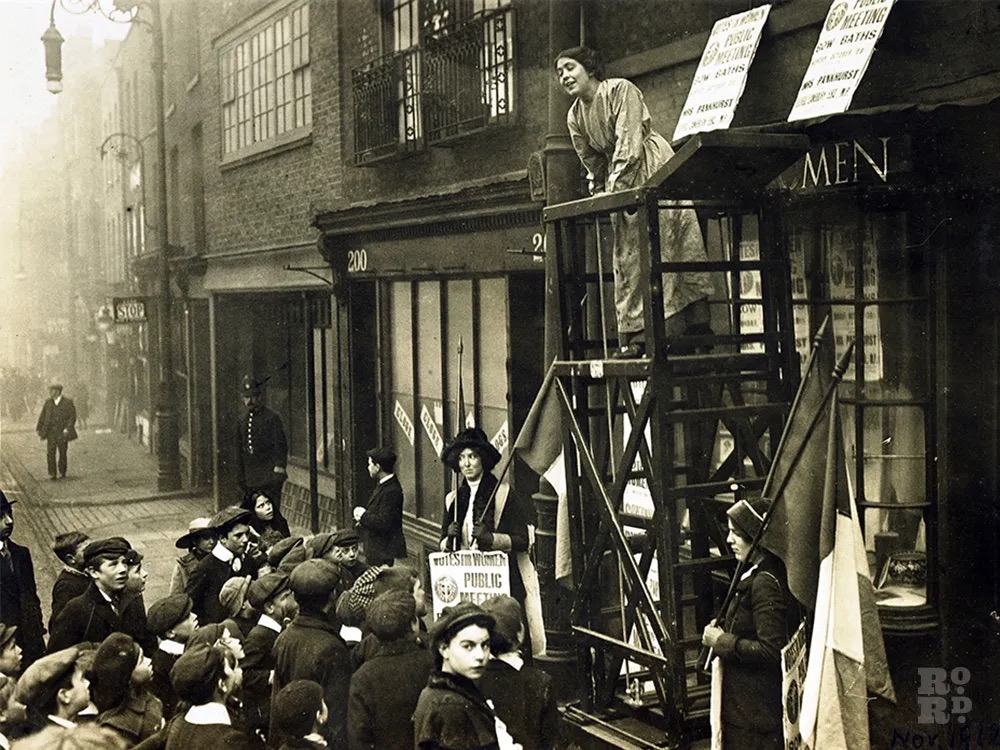
Eight-time hunger-striker Sylvia Pankhurst and the East London Federation Of The Suffragettes [ELFS] provided a cost-price restaurant to provide meals to the poor in the “Women’s Hall” at the back of the house at 400 Old Ford Road in response to the inflation in food prices at the onset of WWI (Inspiring City | East End Women’s Museum).
In the top left, with the “Votes For Women” sign, is Christabel Pankhurst, one of Sylvia’s sisters, a co-founder of the Women’s Social And Political Union – motto “Deeds, not words” – and editor of The Suffragette. (Charlotte Despard – featured previously – was also a member of the WSPU.)
(The third sister, Adela, was founder of the WSPU’s yet more radical sub-group the ‘Young Hot Bloods’ (WP). Their mother was Emmeline Pankhurst, who had founded the WSPU in 1903 (WP); she is featured in a mural on Belfast’s Donegall Road bridge – see Those Days Are Over.)
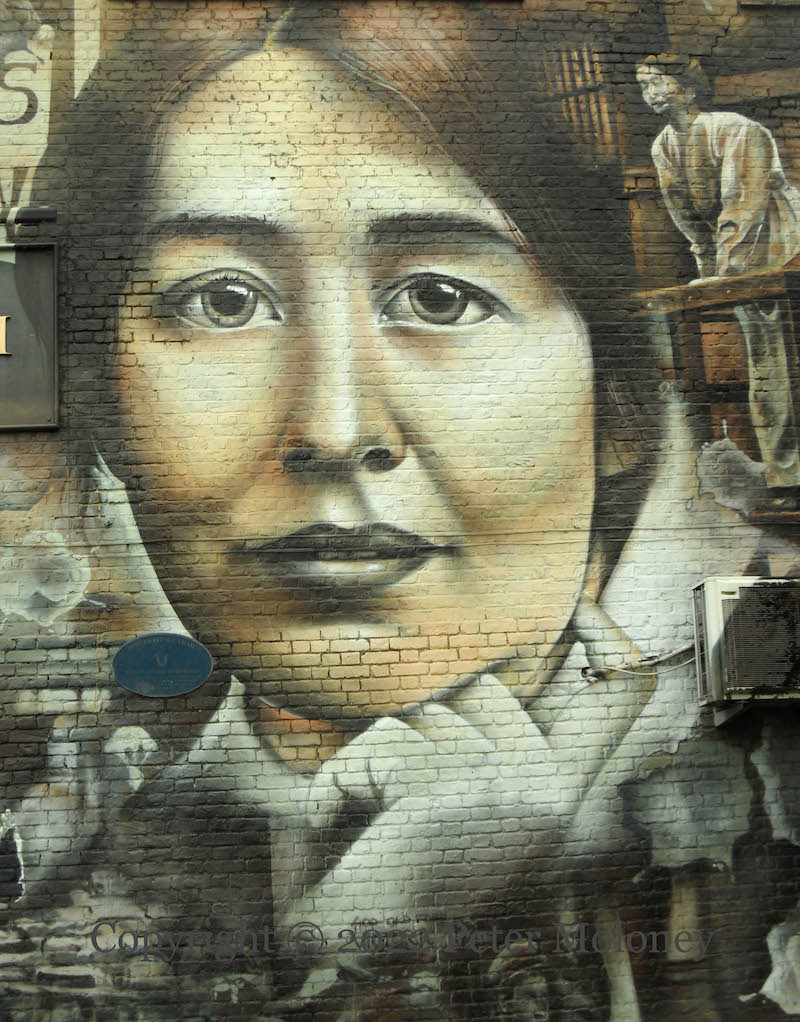
In the top right (shown in close-up in the third image), Sylvia speaks in 1912 from a small platform outside the WPSU office in Bow Road, before the WSPU and ELFS split in 1914.
The mural is by Ketones6000 (ig) in 2018 on the side of the Lord Morpeth pub which was frequented by Pankhurst and the east London suffragettes (web). The pub is at 402 Old Ford Road and the mural thus overlooks the site of the women’s hall.
The Military Medal (“MM”) “for gallantry in the field” was awarded to Rifleman Robert King of the 12th Royal Irish Rifles in the dispatches of July 12th for his actions on July 1st, the first day of the Battle Of The Somme. King was from Ronald Street in Larne (RIR 12th Fb; there is also a 12th batt RIR memorial association).
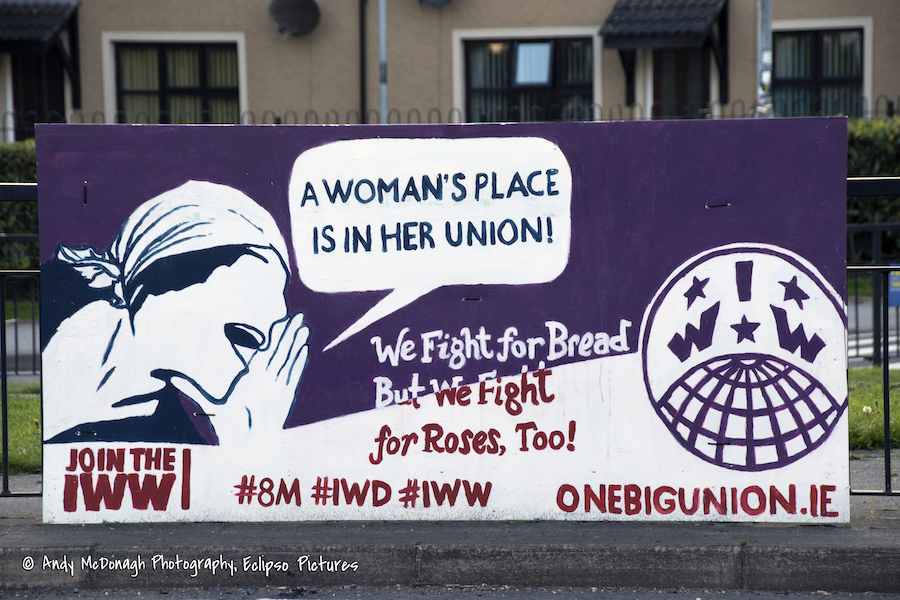
“A woman’s place is in her union! We fight for bread but we fight for roses, too. Join the IWW [Industrial Workers Of The World (web)] OneBigUnion.ie.” The titular phrase comes from a 1910 speech by American suffragist Helen Todd, who later explained that votes for women would mean “helping forward the time when life’s Bread, which is home, shelter and security, and the Roses of life, music, education, nature and books, shall be the heritage of every child that is born in the country” (American Magazine LXXII p. 611)













 Extramural Activity