This vintage nail-up is in Thames Street, next to the Red Devil urges people to join Sınn Féın Poblachtach, which split from (Provisional) Sınn Féın in 1986 over the decision to take seats in the Dáıl.
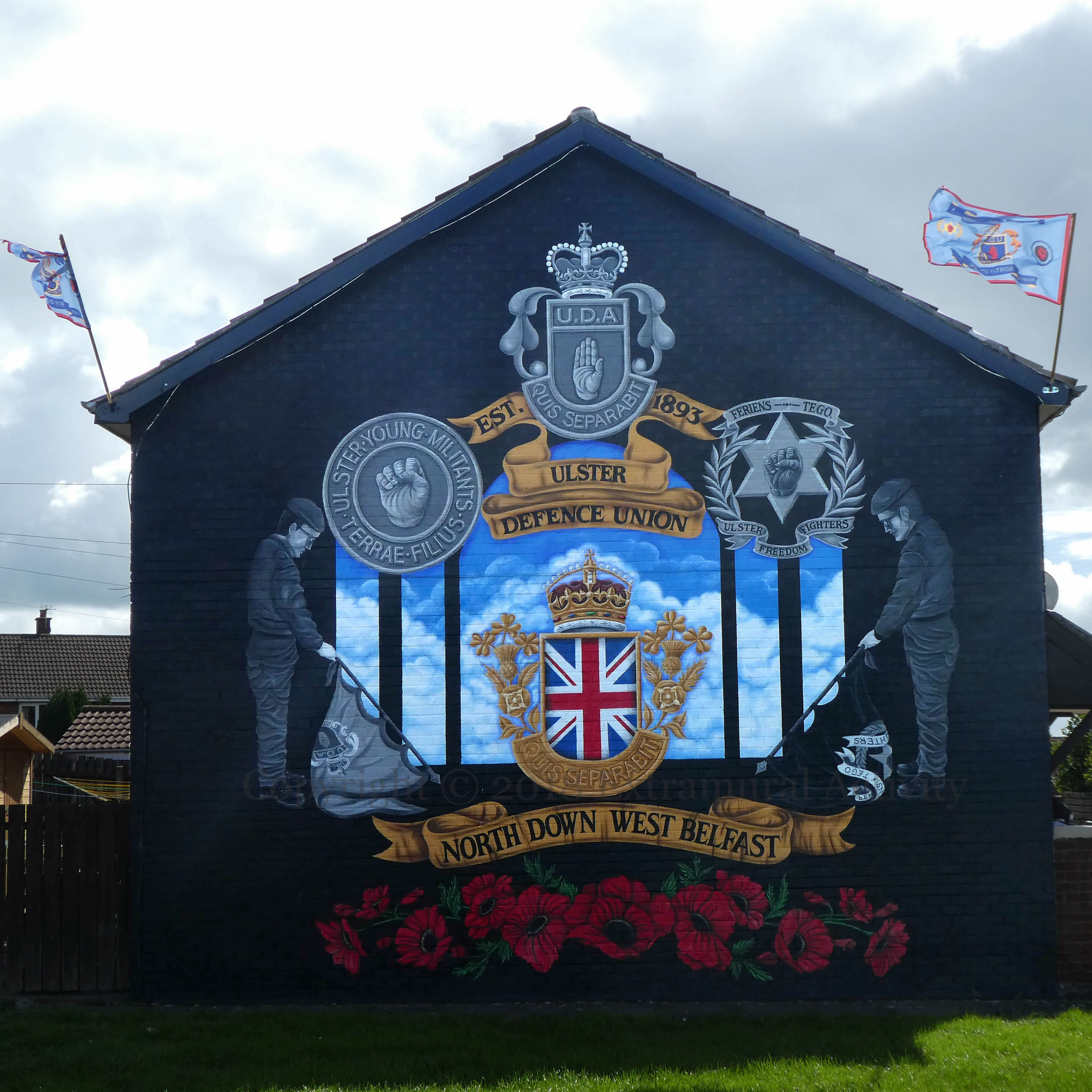
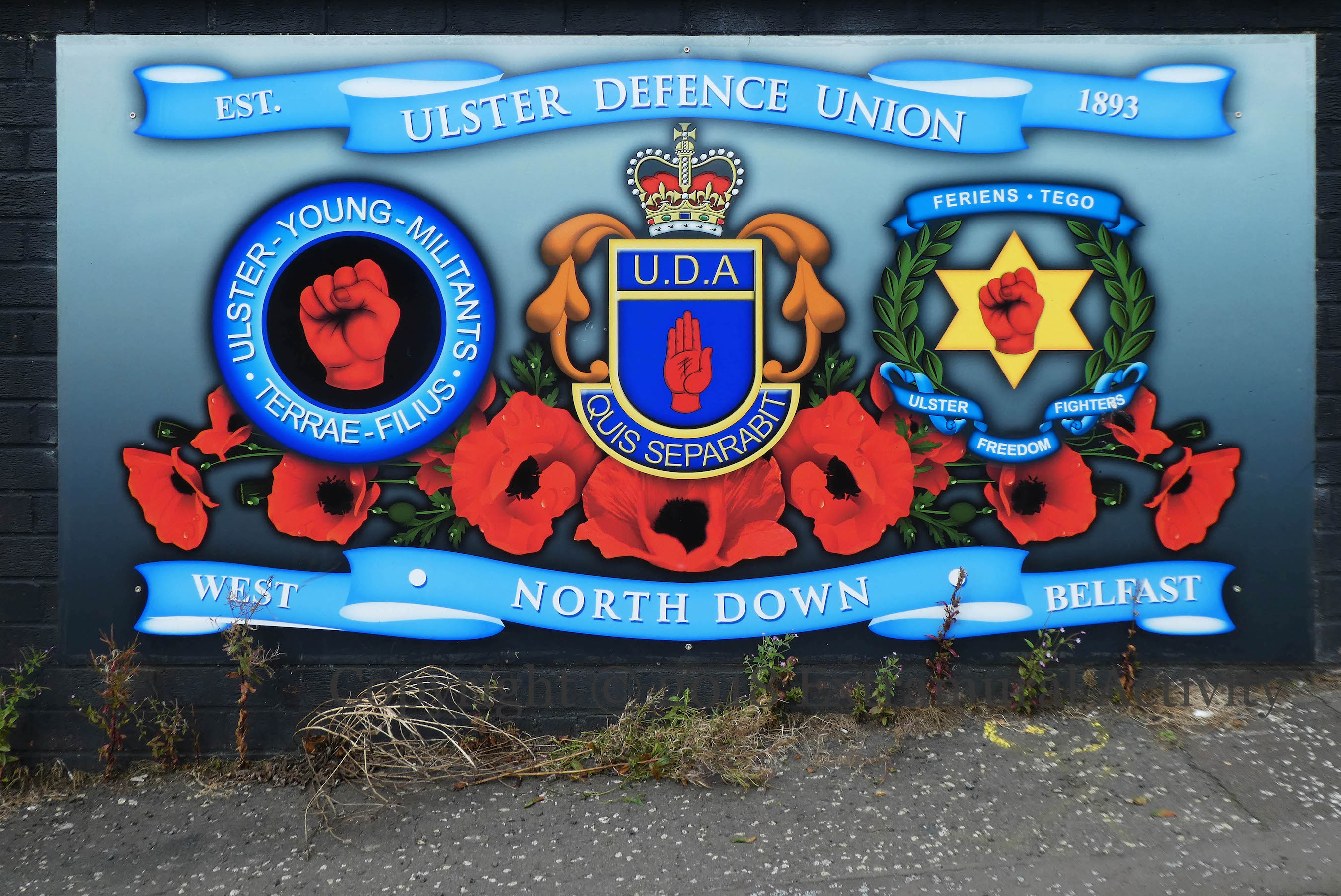
The poppy was used exclusively by the UVF (because of their shared named with the Ulster Volunteers, which became the 36th Division, which served on the western front in WWI, but in the last few years (2016-2018) it has been used frequently by the UDA in memorial murals (e.g. one | two | three), indicated here by the lowered flags and absence of weapons. (The first UDA poppy, however, dates back to the 2012 (if not earlier) tribute to Benson Kingsberry.) For background on the inclusion of “West Belfast” alongside “North Down” in a Newtownards mural, see Ulster Defence Unions, which also contains poppies (and which in turn links to information about the Ulster Defence Union of 1893). “UDU” seems to be used here to represent a desire for greater unity among (at least some parts) of the UDA.
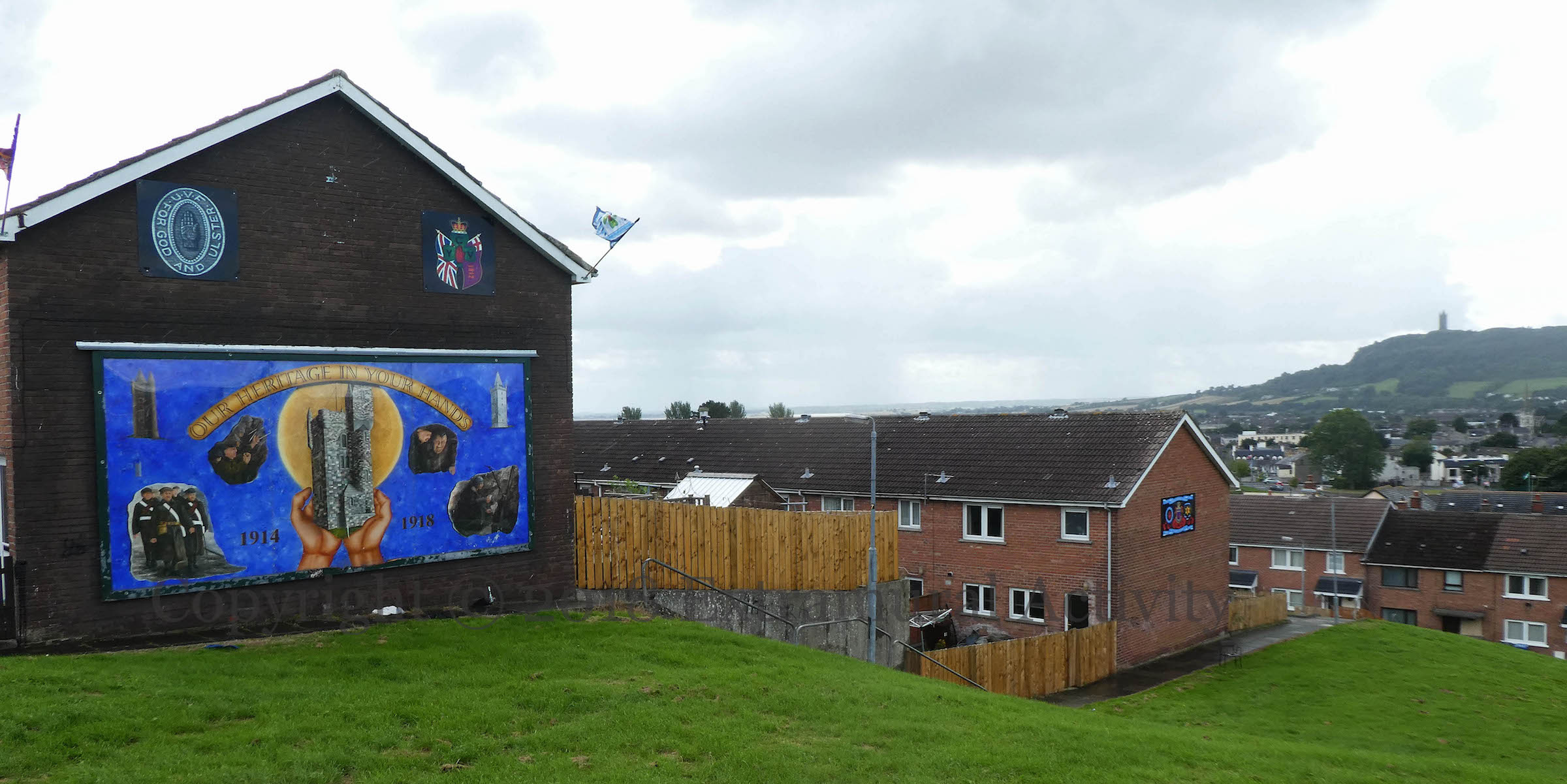
The Ulster Tower at Thiepval, France, is a replica of Helen’s Tower in Clandeboye, around which the 36th (Ulster) Brigade, formed in August 1914 from the Ulster Volunteers and Young Citizen Volunteers, began their training (see this gallery of images from North Down Museum at BBC-NI). After a year of training in Ireland and England, the Division was deployed to France in September 1915.
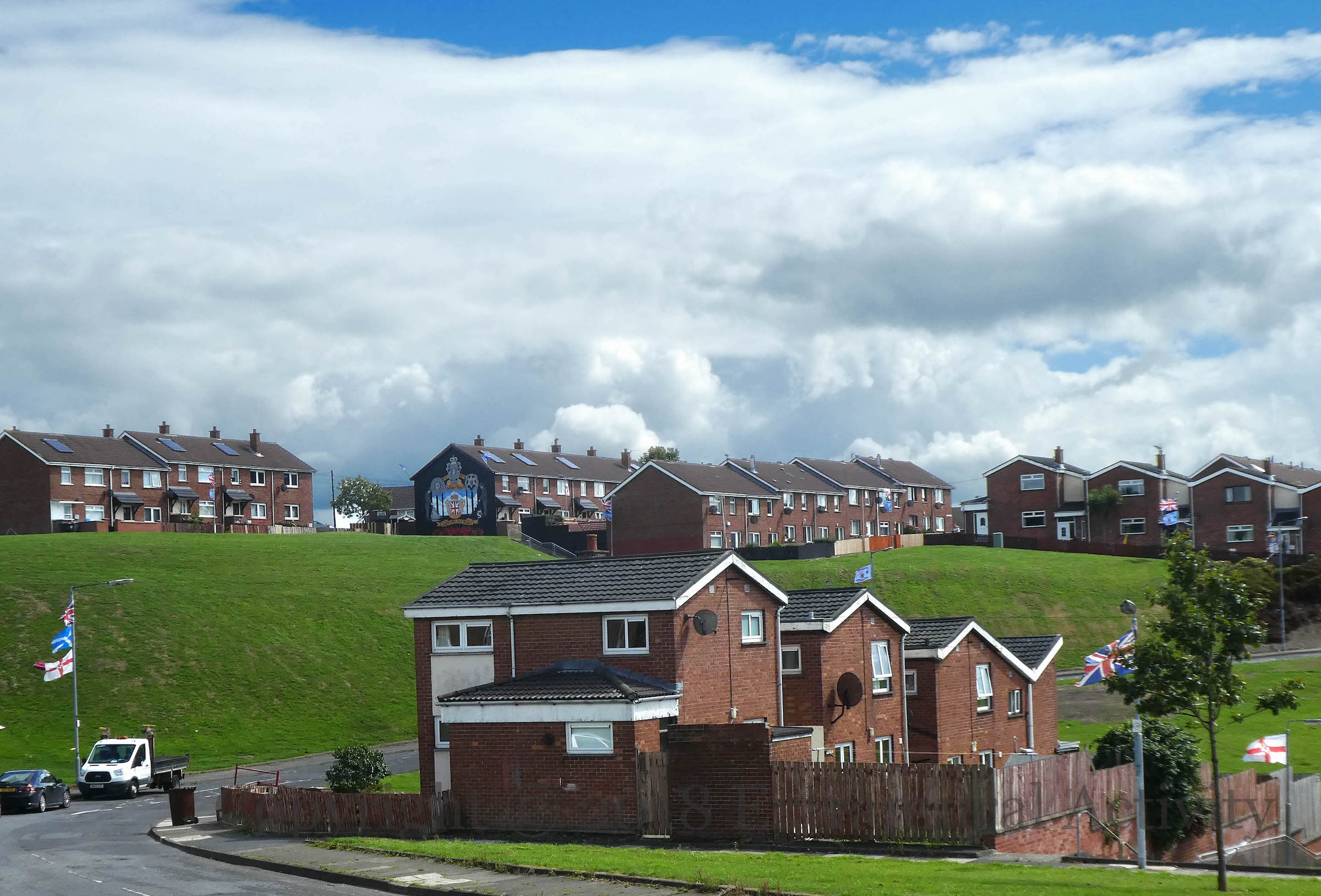
In the top corners are two views of the local Scrabo Tower, which can be seen to the right in the wide shot, below. Produced by muraltec.
The UDA/UFF in North Down is divided into two factions, led by Dicky Barry in Newtownards and Dee Stitt in Bangor. Barry’s group is affiliated with the Shankill (west Belfast) UDA and Stitt’s with the East Belfast UDA. According to this BelTel article, their respective numbers are 600 to 150, respectively. The Peter Moloney Collection of murals has a 2007 image of a ‘west Belfast’ board in Bangor. For the UDU reference see UDU-UFF-UDF.
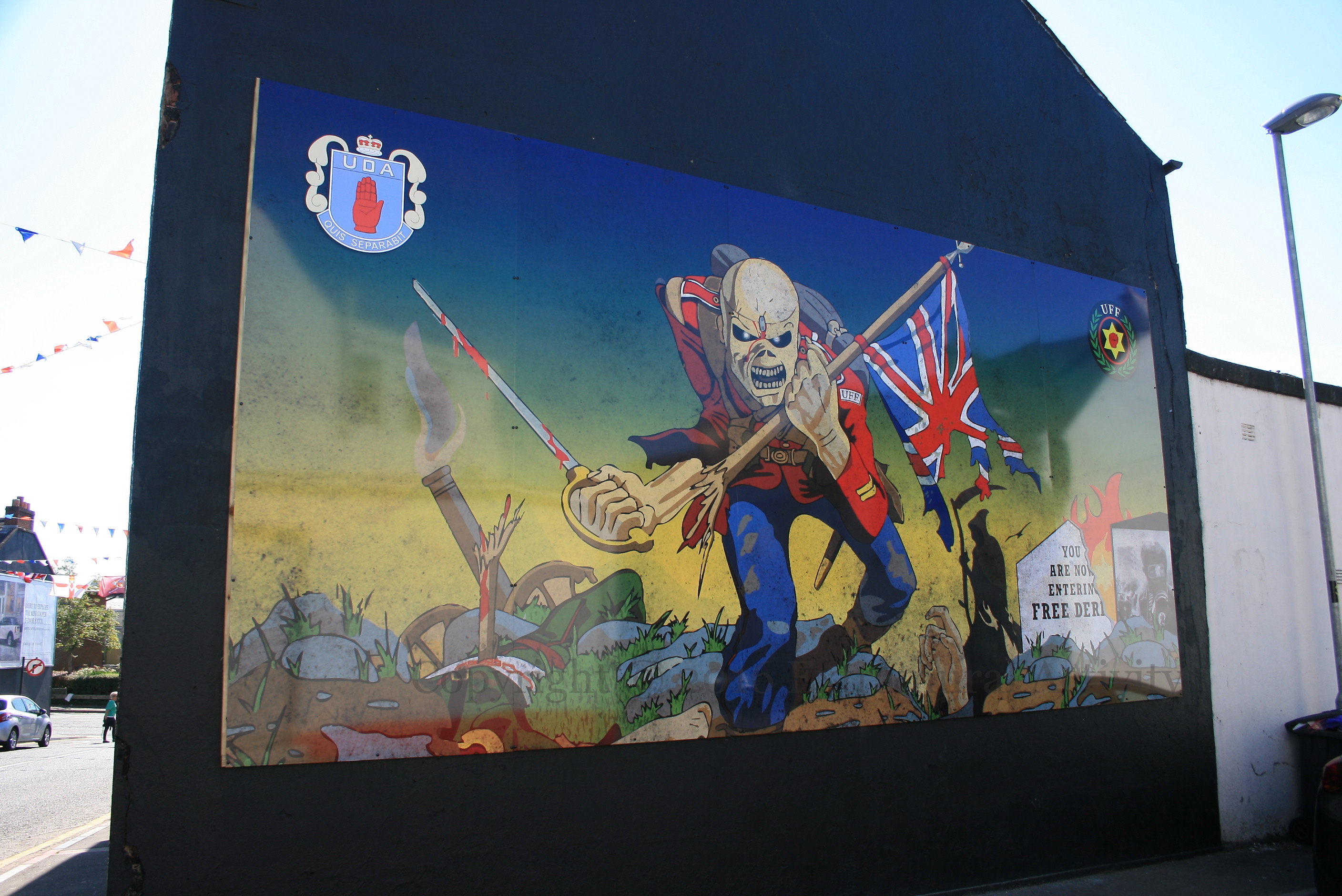
As a zombie skeleton, Eddie The Head (here in his guise as a Light Brigade ‘Trooper’) lived long enough to enter the digital age of muraling, with a cartoon-style version added at the site of the original Eddie mural – Ebrington Terrace, Londonderry, which can be seen on Eddie’s own Visual History page – in 2016. The mural, however, started falling apart immediately and is now entirely removed.
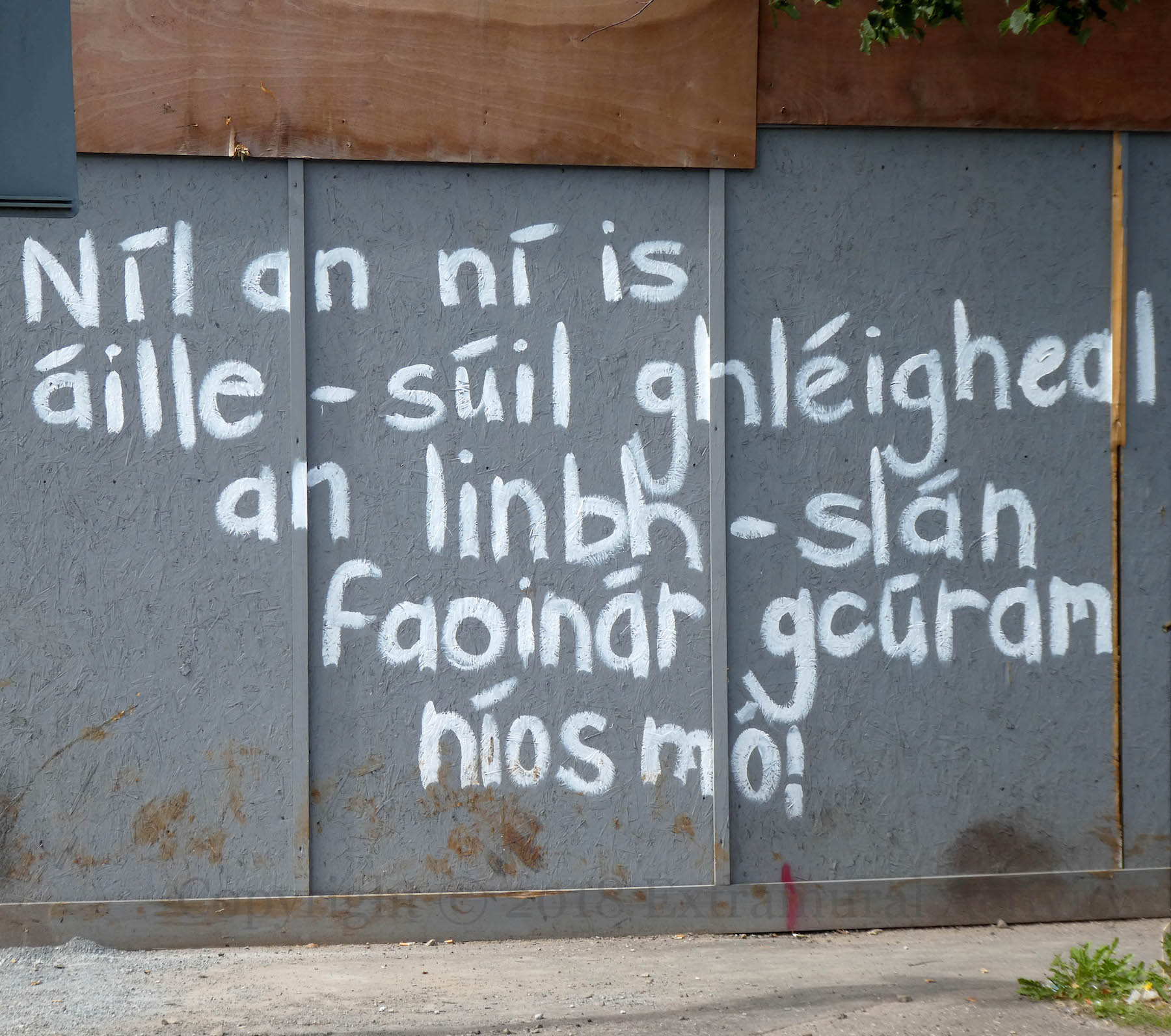
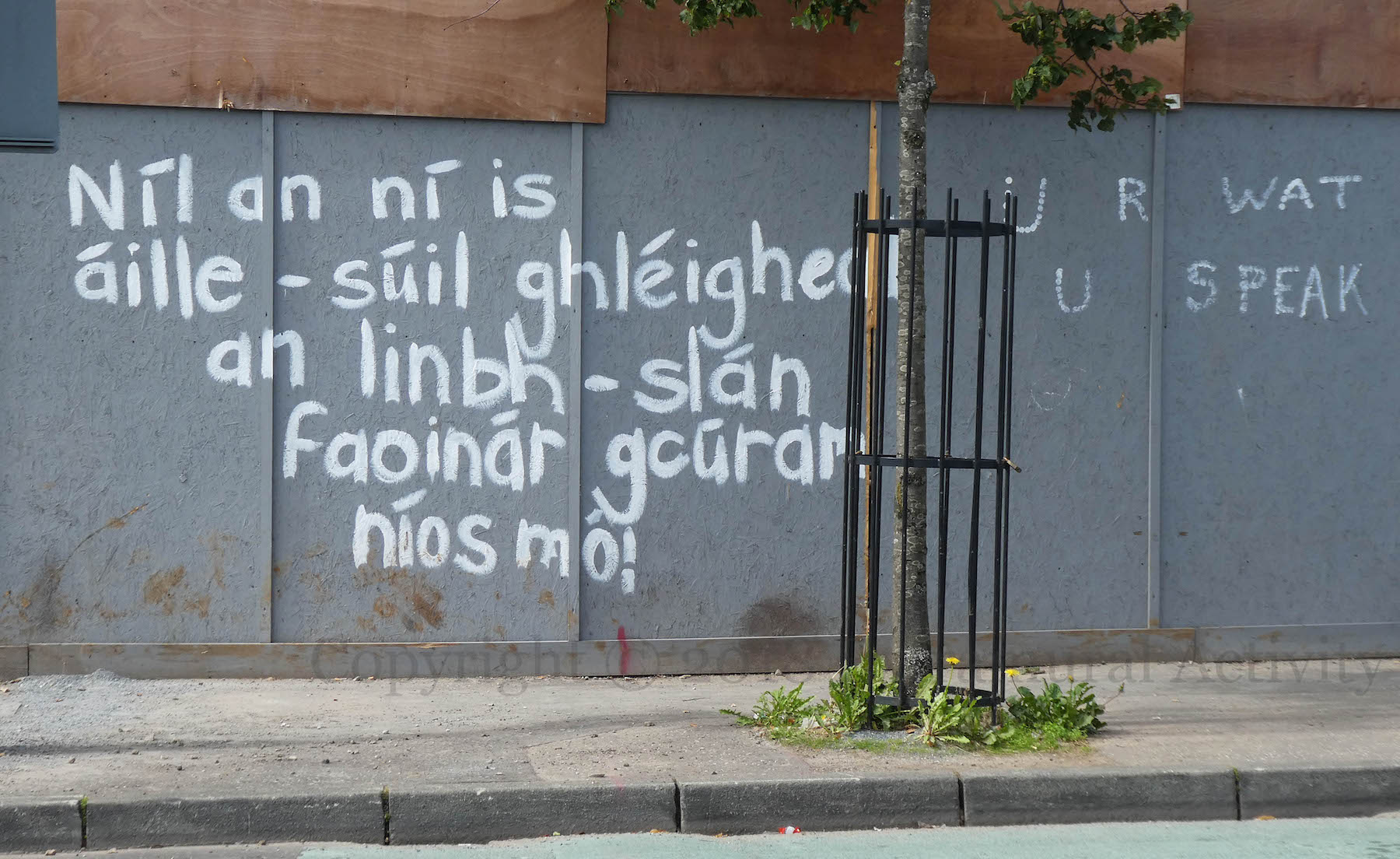
“Níl an ní is áılle – súıl ghléıgheal [sic] an lınbh – slán faoınár gcúram níos mó!” [The most beautiful thing – the sparkling eye of a child/the bright hope of a child – is no longer safe in our care!] This Bóthar Chluanaí/Springfield Road graffiti seems to be a response to the recent vote in the Republic Of Ireland removing the constitutional protection of unborn children (see Yes & No). There has previously been Irish-language graffiti in favour of abortion: Ceart Gınmhıllte Anoıs!
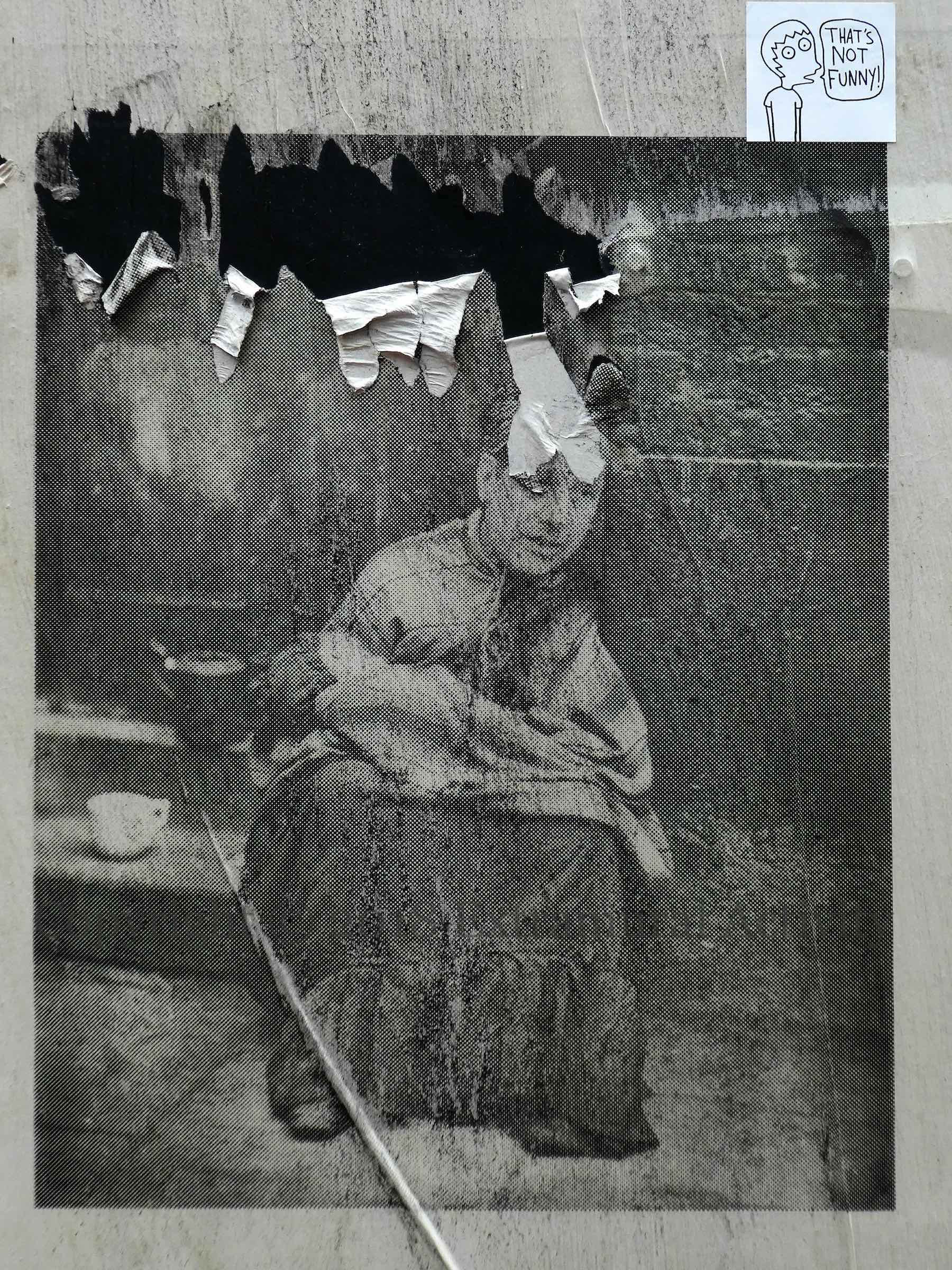
Adolphe Smith accompanied John Thomson as he travelled around Victorian London in the 1870s, interviewing the subjects in order to provide background for Thomson’s photographs, their combined efforts published as Street Life In London (pdf from LSE). The entry accompanying this image (in unmodified form) is entitled “The Crawlers“; Smith describes them as “old women reduced by vice and poverty to that degree of wretchedness which destroys even the energy to beg”. The DUP’s Ian Paisley Jr. was recently seen in the House Of Commons apologising for failing to disclose two all-expenses-paid holidays for him and his family to Sri Lanka (Irish Times). His colleagues suspended him for 30 days and withdrew his salary for a month for this failure and for acting as a paid advocate for Sri Lanka’s human rights record (Colombo Telegraph). If 7,543 of his constituents sign a recall petition, he will face re-election. The election poster combining the two is (presumably) by TLO.
Update: “That’s not funny!” above a vandalised version of the poster at the end of August.
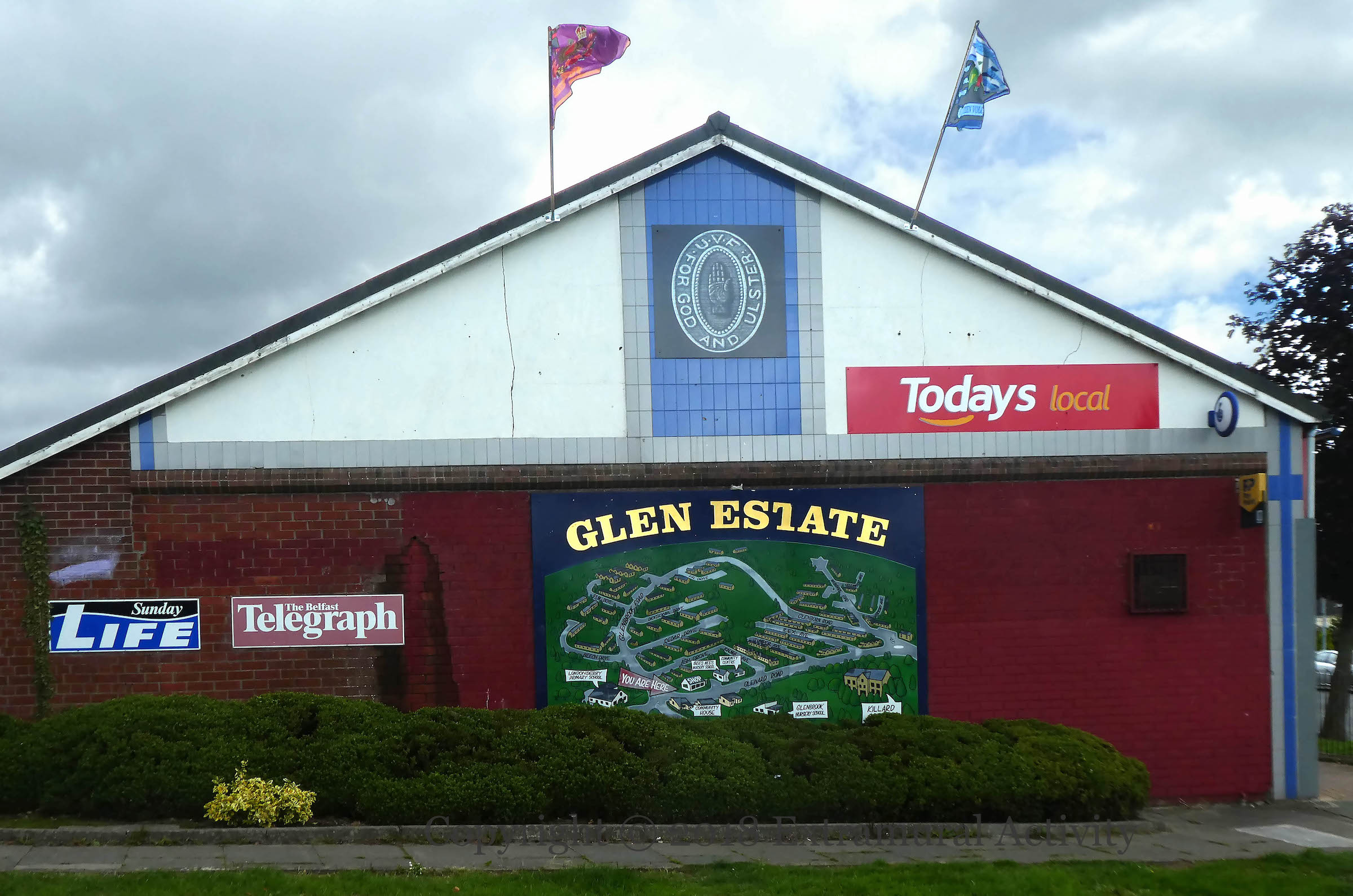
Ballymacash estate, now part of Lisburn, was once a village around the location of Drayne’s Farm, with a school at the junction of Glenavy, Brokerstown, Ballymacash, and Nettlehill roads. Lisburn.com has a history of the area. Today it is famous for its enormous 11th night bonfire (see Ballymacash Bonfire, as well as Skull & Crossbones | Death & Life).







 Extramural Activity