Kelly’s Bar

Kelly’s Bar at the top of the Rock was packed with punters watching a World Cup match between England and West Germany when a car bomb went off outside shortly after 5 p.m.. The bombing was followed by two nights of gun-battles, with loyalists firing from Springmartin, republicans (both PIRA and OIRA) from Ballymurphy, and British Army soldiers (the King’s Own and 1 Para) from Henry Taggart and other mobile locations. Within three hours following the explosion, barman Tommy McIlroy was killed in the gunfire from Springmartin as he helped with clean-up from the bomb, Alan Buckley of the King’s Own was killed by IRA fire, Michael Magee of Na Fıanna was killed by friendly fire, and Robert McMullan was killed by British Army fire. The next night (May 14th), John Pedlow was killed by British Army fire and Martha Campbell was shot by UVF fire from Springmartin (see her memorial plaque). (Lost Lives 352, 353, 354, 355, 358, 359 | Battle At Springmartin (WP))

As with the bombing of McGurk’s bar in north Belfast (see most recently Justice Delayed Is Justice Denied), the bombing was initially spun by the UK forces and government as an IRA attempt to stir up loyalists (An Phoblacht | Lost Lives 352). An inquest into Moran’s death (and thus into how the bombing was carried out) has been opened (BeTel | Independent).

The plaque dates back to 2004 (see M02243); the tarp was added for the 50th anniversary in 2022; the small mural is more recent.

Click image to enlarge
Copyright © 2023 Seosamh Mac Coılle
X12572 X12571 X12570
“This plaque marks the spot where Kellys Bar once stood and where on 13th May 1972 a no warning loyalist car bomb exploded. As a result 66 people were injured and three innocent members of staff of Kellys Bar lost their lives. They were Tommy McIlroy Died 13th May 1972; John Moran Died from his injuries 23rd May 1972; Gerard Clarke Died from his injuries 6th September 1989. Ar dheıs de go raıbh a namacha.”

Sráıd Clifton

It is a year since the new policy on bilingual street signs was made public; by September there had been 500 applications (Belfast Media) but by January of this year no new signs had been erected and 600 applications were awaiting decision (Belfast Live | Irish News from Feb). One new sign – shown here – was erected in February on Clifton Street (Belfast Media).

From 2016: Céıde Bhaıle Uí Mhurchú

Click and click again to enlarge (to 1000 x 750)
Copyright © 2023 Seosamh Mac Coılle
X12067

Far Dearer The Grave Or The Prison

“Far dearer the grave or the prison,
Illumed by one patriot name,
Than the trophies of all who have risen
On Liberty’s ruins to fame.”

Thomas Moore’s lyrics were written for the air The Lamentation of Aughrim, in honour of the Jacobites who died on 12 July, 1691, but they are applied here to Joe Malone of the IRA’s “Expeditionary Force”.

In January 1939 the IRA declared war against Britain and carried out a bombing campaign called the “sabotage plan” (WP S-Plan). Malone was arrested in May when a tear-gas bomb intended for the New Victoria cinema in London exploded prematurely in the cloakroom, injuring his arm and wrist (Belfast Battalion p. 103 | West Australian).
Malone and other prisoners refused to co-operate with prison authorities and began a hunger strike in January 1941; on day five of the strike, force-feeding began and Malone was injured and ordered off the strike by OC Conor McNessa; despite stomach surgery, he died a year later. (Belfast Battalion p. 126, 136)

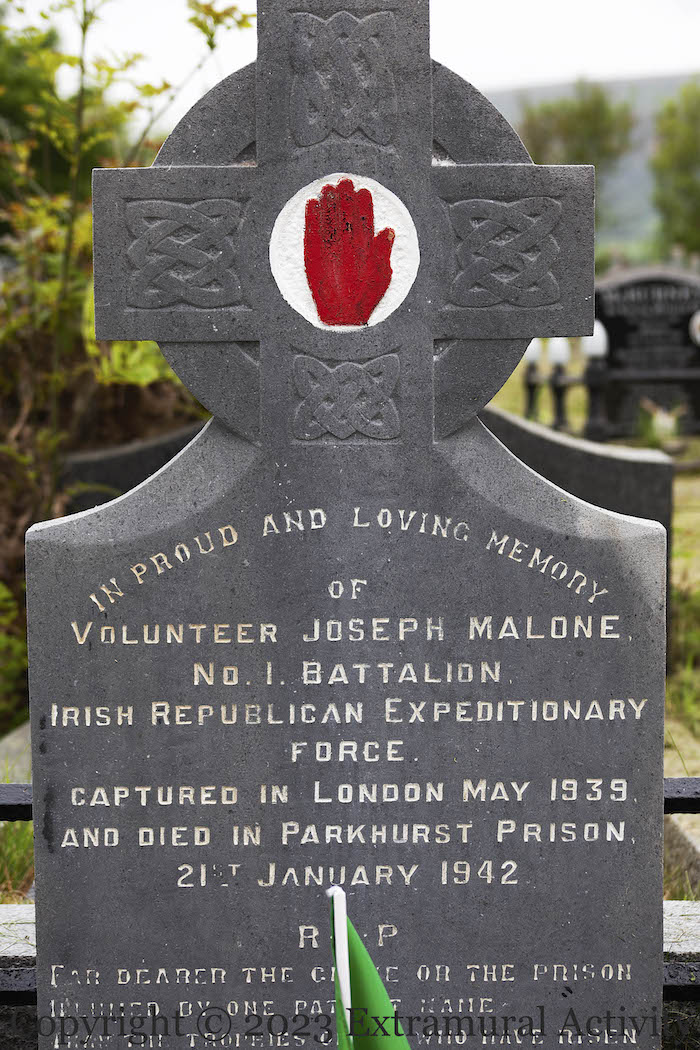
“In proud and loving memory of Volunteer Joseph Malone, No. 1 battalion, Irish Republican Expeditionary Force. Captured in London May 1939 and died in Parkhurst prison 21st January 1942. RIP.”

As the info board points out, the red hand is used to denote the graves in Milltown of volunteers from the 1920s to 1940s.

Click image to enlarge
Copyright © 2023 Seosamh Mac Coılle
X12396 [X12395] X12670 X12672

Jimmy Ferris

“1891-1949” are the dates of the operation of Belfast Celtic, not the dates of forward Jimmy Ferris, who lived from 1894 to 1932. Ferris played for the club for nine years, and for various British clubs during the pogroms. He quit playing in 1930 because of a heart condition and died two years later, at the age of 37. The Ferris family grave, shown in today’s images, is in Milltown Cemetery. (Belfast Celtic | WP)

“Jimmy Ferris, known as Belfast Celtic’s ‘brilliant schemer’, he was on the team, which won four Irish League titles in the 1920s, for the loss of only one match. Also played for Chelsea and Preston North End.” With funding from the “European Regional Development Fund”.

Click image to enlarge
Copyright © 2023 Seosamh Mac Coılle
X12397 X12398 X12399

Garden Walls

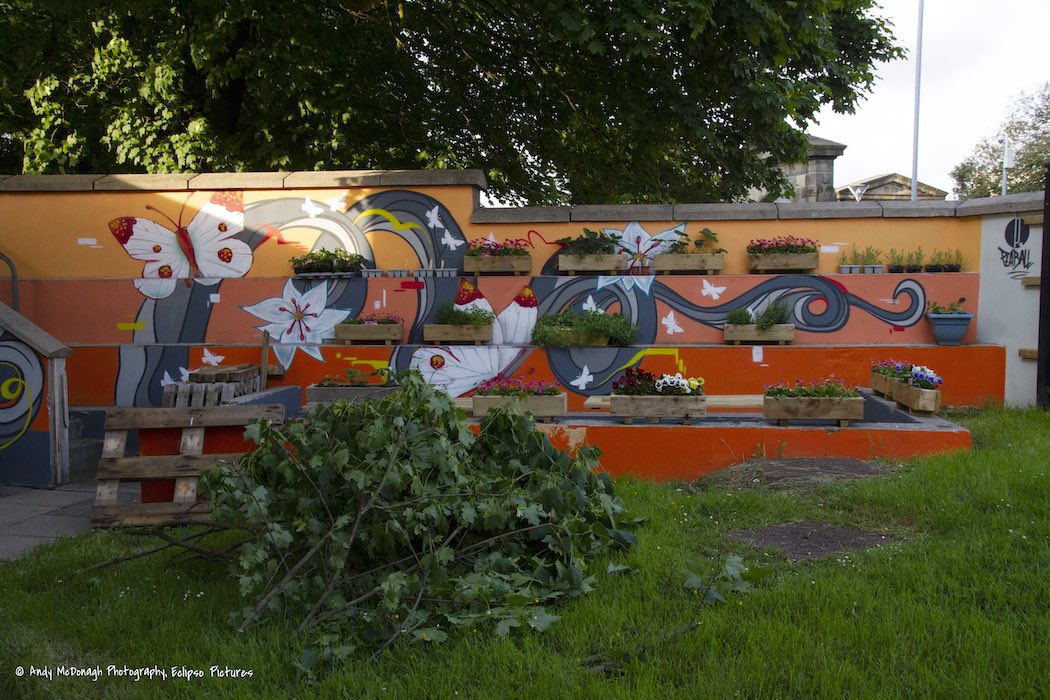
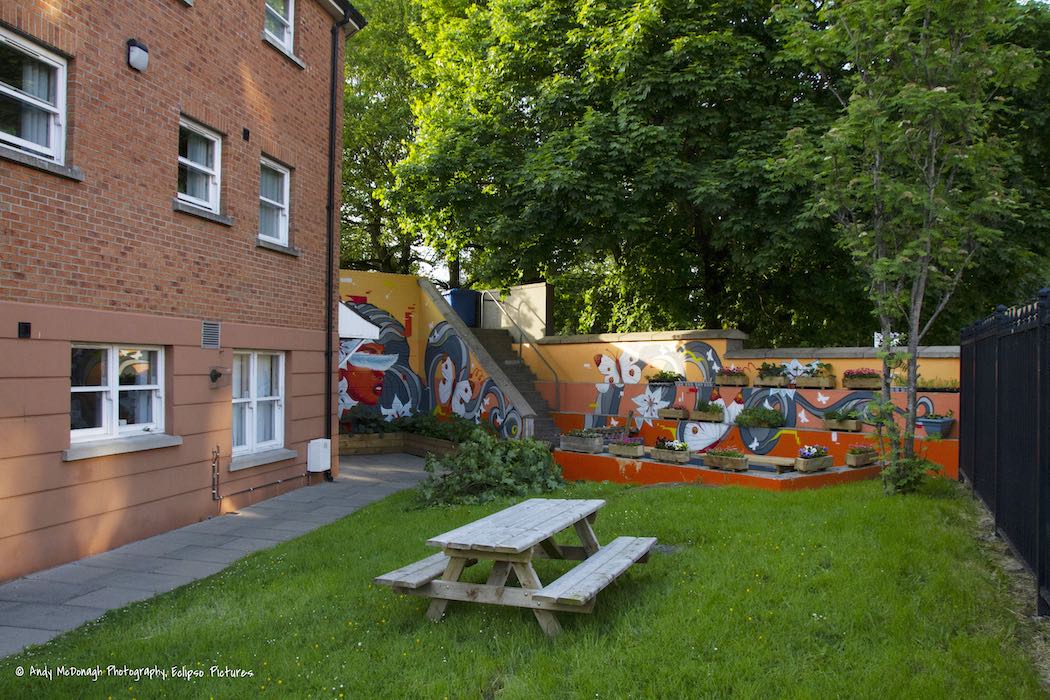
Garden walls by Peaball (ig) in the garden of Ashmore House, Derry.

Click image to enlarge
Copyright © 2023 Andy McDonagh/Eclipso Pictures (ig | Fb)
X12415 X12414 X12416

Strong

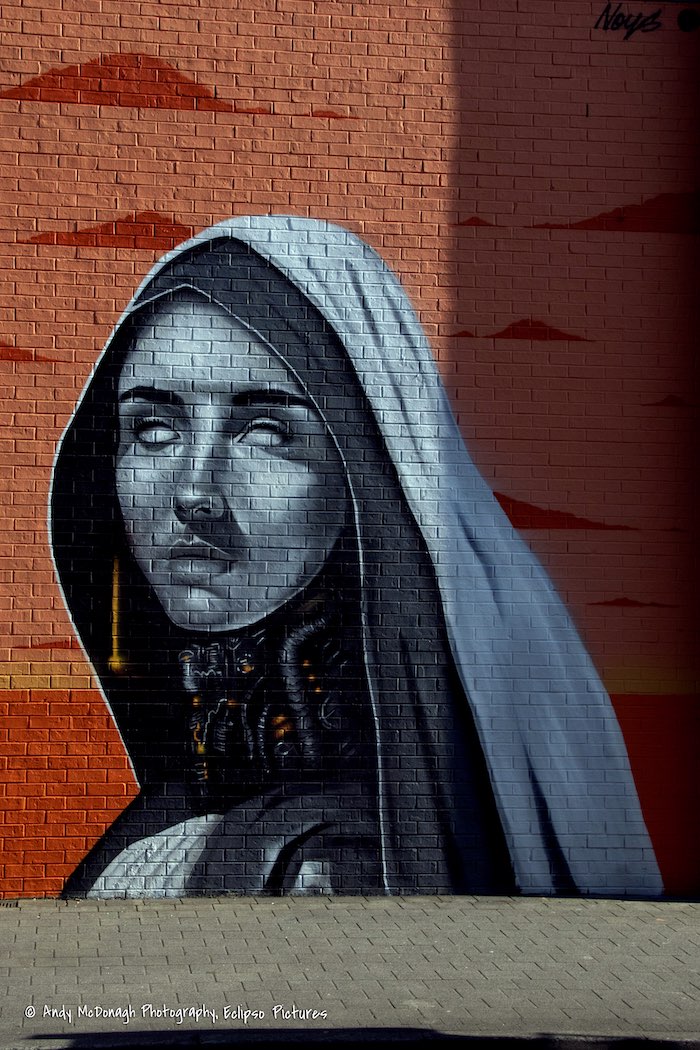
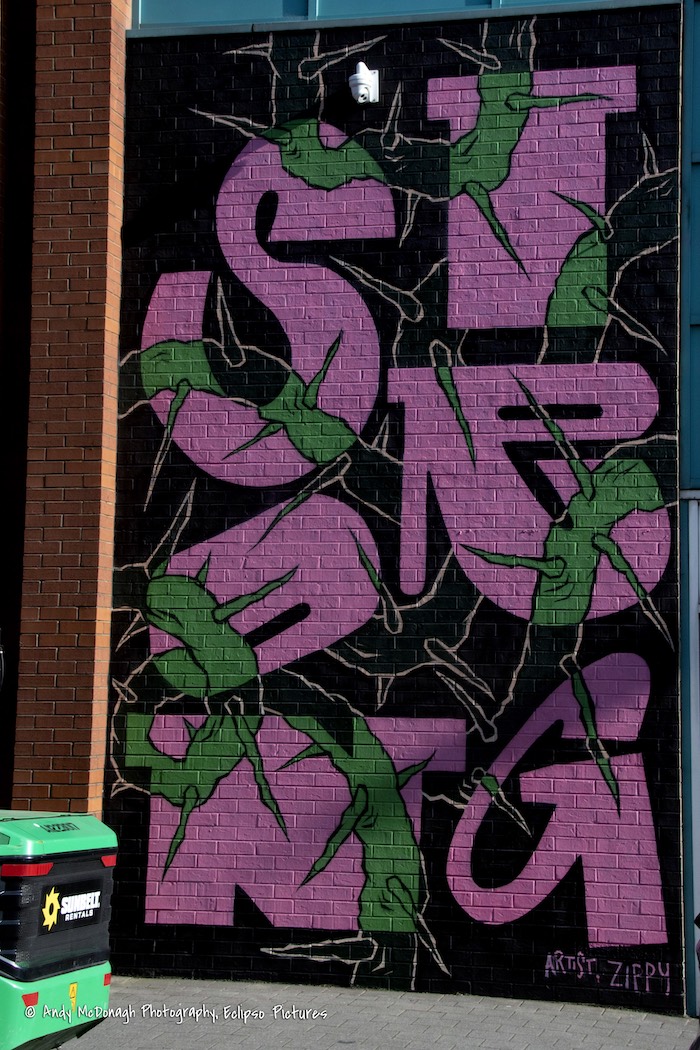
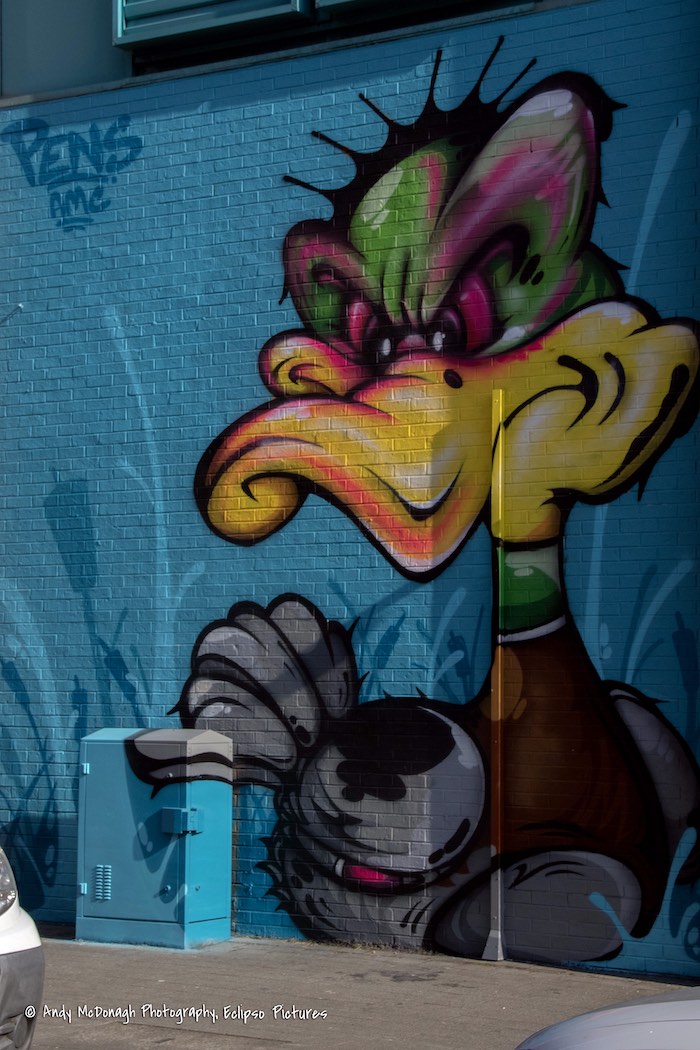
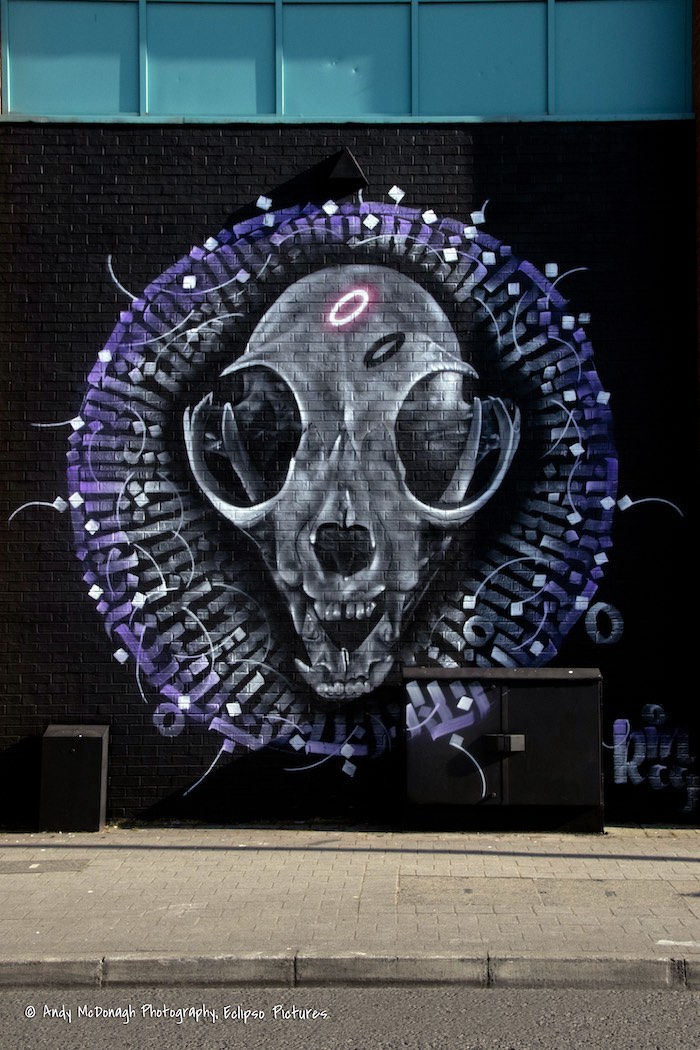
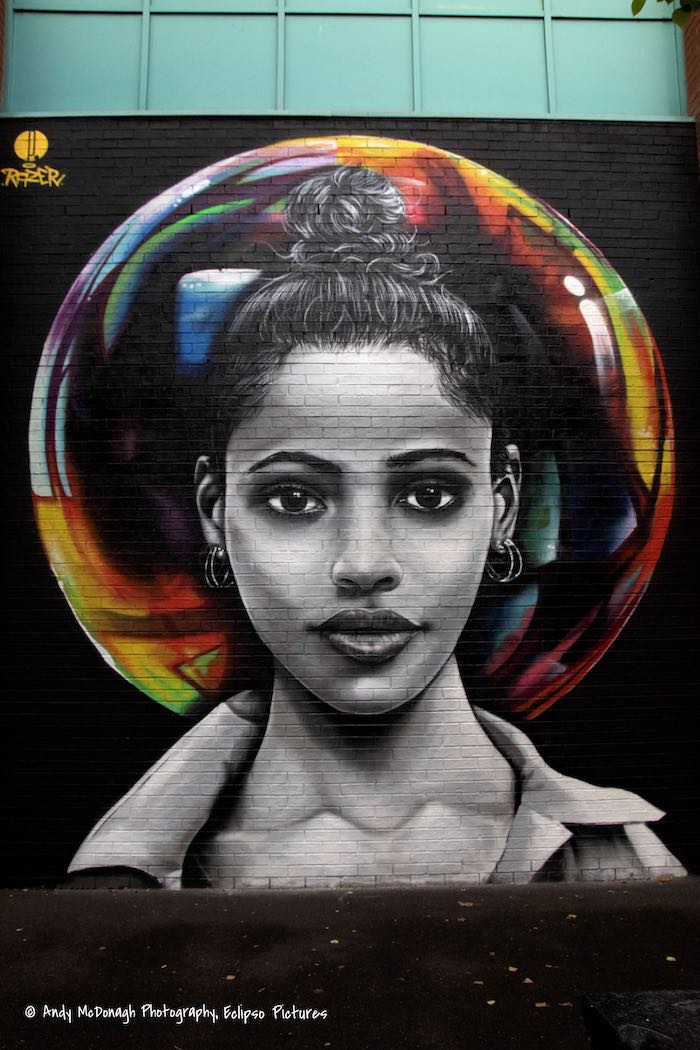
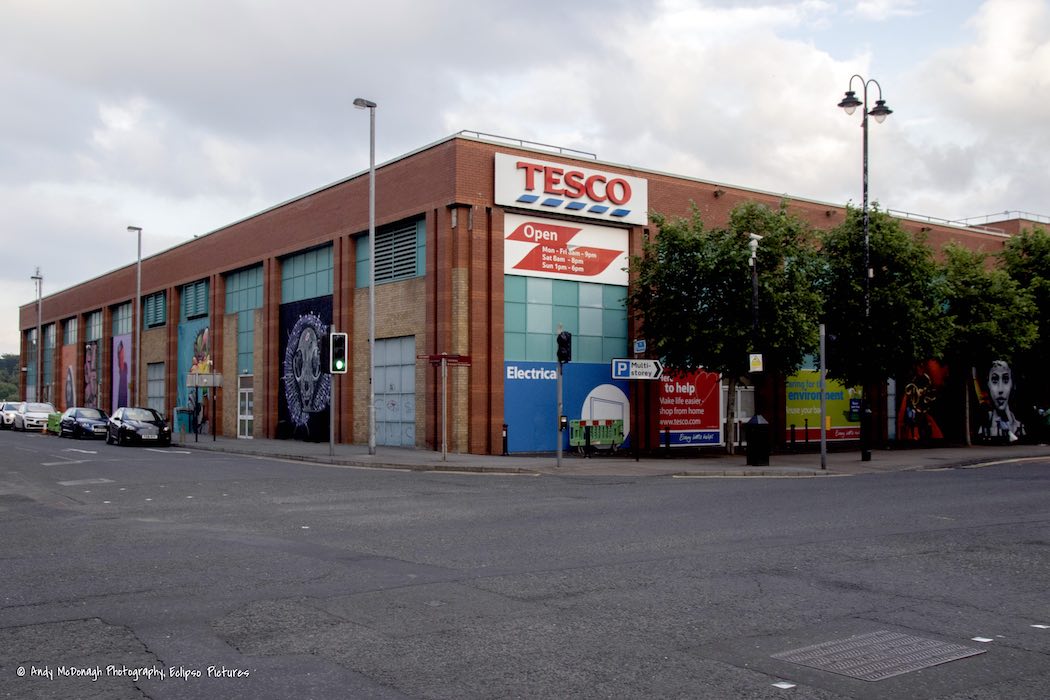
As part of the ‘Get Up Derry’ graffiti and street art jam, seven substantial panels were painted at the Tesco superstore in Quayside, including work by NOYS (ig), Zippy (ig), emic (ig), PENS (ig), Kyle McGinley (ig), Friz (ig), and Razer (ig).

See also: Crash Bandicoot | Liquid Chrome Shamrock

Click image to enlarge
Copyright © 2023 Andy McDonagh/Eclipso Pictures (ig | Fb)
X12628 X12629 X12630 X12631 X12632 X12633 X12634 X12635

Liquid Chrome Shamrock

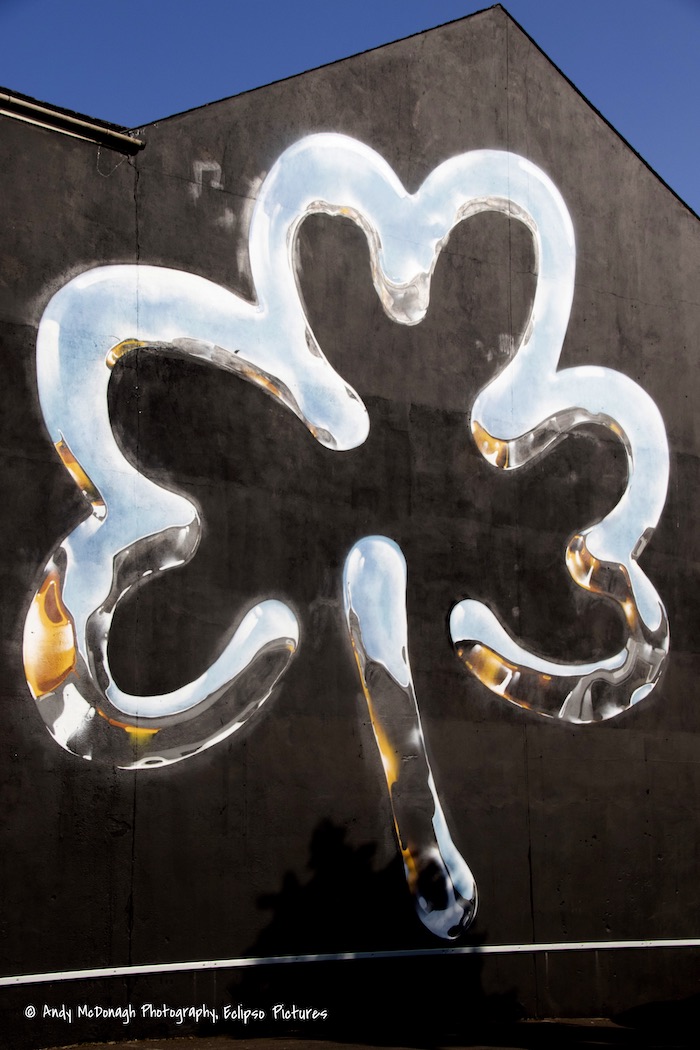
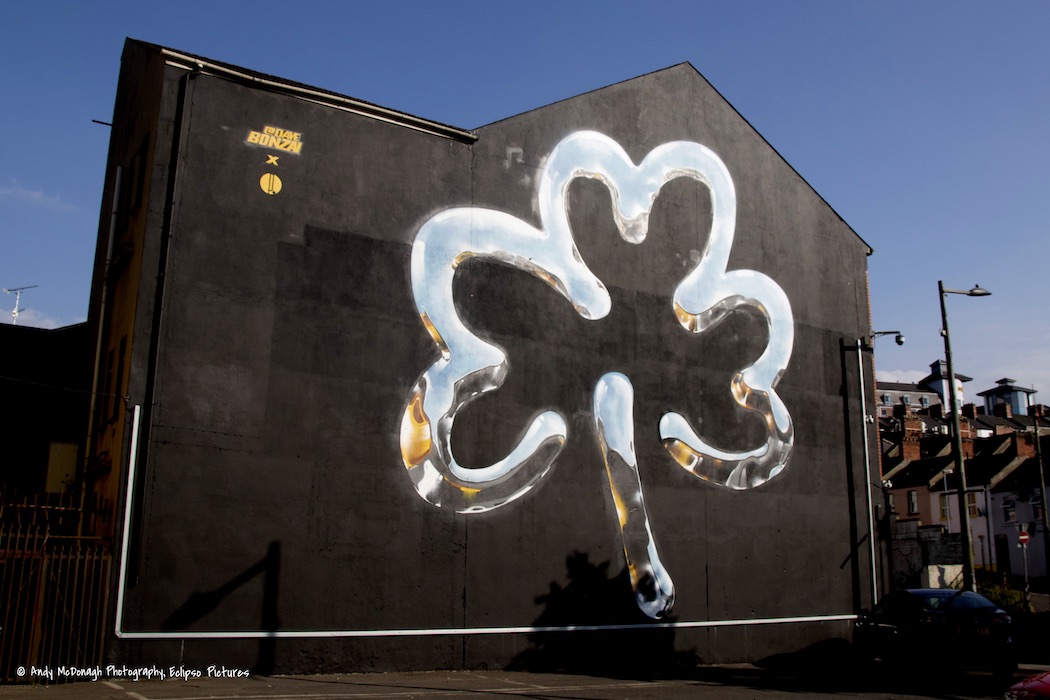
New work by Dave Bonzai (ig) William Street, Derry, part of the ‘Get Up Derry’ festival of graffiti and street art.

Previously by Bonzai (with Bodé) in Derry: Metalmorphosis.

Also from Get Up: Crash Bandicoot in Strand Road.

Replaces OMIN’s Great Hunger battering ram: Stars Look Down.

Click image to enlarge
Copyright © 2023 Andy McDonagh/Eclipso Pictures (ig | Fb)
X12627 X12626

Pobal Ag Fás

“Pobal ag foghlaım, pobal ag forbaırt, pobal ag fás” [a community learning, developing, growing]

Students from “Naíscoıl & Gaelscoıl An Lonnáın (Fb) bun[aithe] 1999″ [Nursery-school and Irish-language [primary] school of the loney, founded 1999] are shown playing Gaelic games, Irish dancing, and playing traditional instruments (and the guitar). On the left are representations from Irish mythology: the Children Of Lear and Setanta killing Culann’s hound (and taking the name Cú Chulaınn in taking its place), along with hedge-row school (see Hedge Row School).

The origin of the name is unclear; the nearest loney [lane] was the “Pound” loney, so-called because of the animal pen just outside Barrack Street, used to store livestock before moving on to the markets the following day (Rushlight | Uachtar Na bhFál). (The Pound Loney is included in the mural in Durham Street – see Et In Arcadia Ego.)

The other well-known loney in Belfast is the “buttermilk loney” which was either/both what is now Ballysillan Park (that is, connecting Olpark with the horsehoe bend) or the top part of the loney that connected Wheatfield (the top of Ardoyne) to the Ligoniel junction and on towards the old Ligoneil House (there are a mixture of usages in this Belfast Forum thread); this image from the 1930s might show the lane in (what was still at the time) the hills above Oldpark; a new housing-development towards the top of the Ballysillan Park is euphemistically called “Buttermilk Loney”. (It is also said to have been a prior name of Skegoniell Avenue (Belfast History).)

(The Uachtar Na bhFál page also mentions “Turf” loney, “Mountain” loney, and “Killoney”.)

The history of the Irish word “lonnán” is unclear. Uachtar na bhFál says the word is of Scots origin (perhaps as “loanin”). (See this BelTel article on the opening of the Ulster-Scots centre in 2014.) Spelled “lonnen”, it is also a Geordie word (Heslop’s Northumberland Words | wiktionary). The Irish News and Belfast Live, working from the same (uncited) press-release about Páırc An Lonnáın (which is along the Westlink below Raıdıó Fáılte), state that “loney” comes from the English word “loaning”. The Irish word “lonnán” does not appear in Dinneen 1904; Dinneen 1953 defines it (hyper-specifically) as “a grassy recess running up into high basaltic cliffs”.

For more ‘in-progress’ shots, see the Paddy Duffy collection.

May 19th:

Click image to enlarge
Copyright © 2023 Seosamh Mac Coılle
X12568
X12369 [X12388]
X12370
X12372 [X12373]
X12371 [X12389]
X12566 X12567 X12565 Marty Lyons
X12569

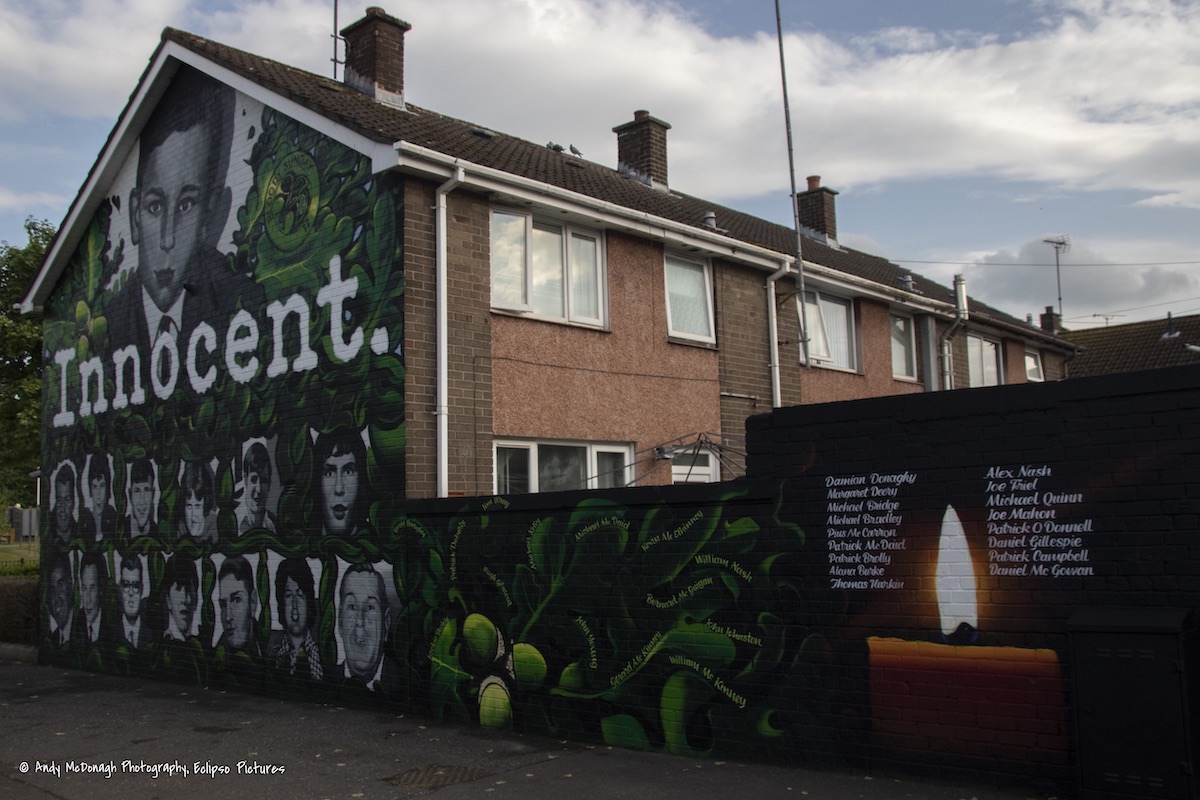
Innocent

On January 30th, 1972, the Parachute Regiment, 1st battalion (“1 Para”), opened fire on a civil rights march in Derry’s Bogside, hitting dozens of people of which fourteen ultimately died.

Seven of the dead were teenagers, including Gerald (“Gerard”) Donaghey/Donaghy, who is featured (in younger days) in the apex of this new mural commemorating the dead, none of whom were judged to be attacking Army soldiers when they were shot.

It was alleged, however, that Donaghey had nail bombs in his pockets. This judgment was upheld in the Saville Report, though most of the people who were with him and who handled his body – including the medical officer who pronounced him dead – did not see any bombs (WP | BelTel). The launch was on June 15th, the same date that the Saville Report was issued in 2010.

The ‘Bloody Sunday ’72’ emblem is to Donaghey’s right – see Bloody Sunday 72 | Domhnach Na Fola | Remember Bloody Sunday. The oak leaf is a symbol of Derry.

Painted by JMK (ig) in Fahan Street, Derry, (on the wall that was briefly home to the Mike Jackson “War Criminal” mural – see From The Top Down). The owner of the gable wall granted permission for the painting of the mural (see the video of the launch on the Museum Of Free Derry’s youtube channel).

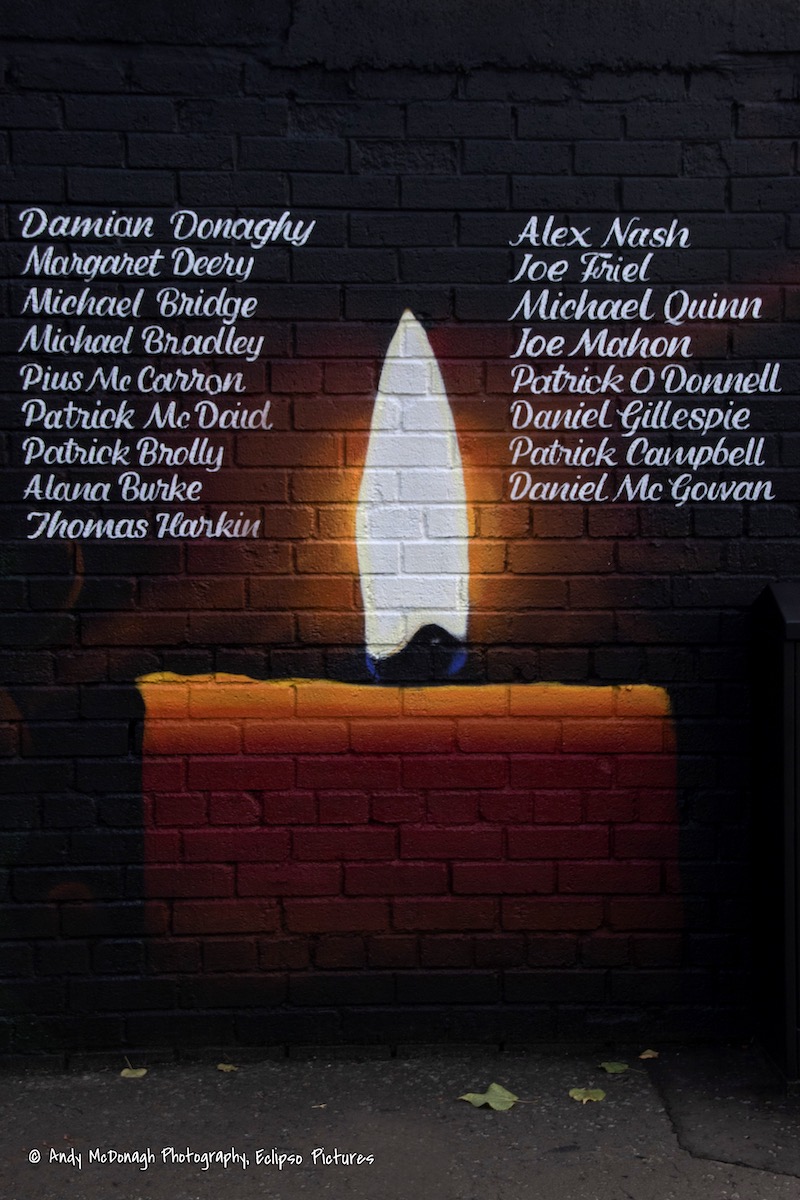
The names of the 14 dead and 17 injured on the side walls were painted by Paddy Nelis (tw). His previous work includes the 2013 Brıogáıd Dhoıre mural in Lecky Road and in 2022 (with Razer) the Bogisde mural to his brother, Donncha Mac Nıallaıs.

As a fıan, there is a plaque to Donaghey at the spot where he was killed in Glenfada Park (M09537) and he was included in the roll of honour in Shantallow (X02870).

Click image to enlarge
Copyright © 2023 Andy McDonagh/Eclipso Pictures (ig | Fb)
X12622 X12623 X12624 X12625 Gerald Donaghey, Patrick Doherty, Jim Wray, Hugh Gilmour, Michael Kelly, Michael McDaid, Kevin McElhinney, William Nash, Bernard McGuigan, John Johnston, William McKinney, Gerard McKinney, John Young, Jackie Duddy. Bloody Sunday Trust. Damian Donaghy, Margaret Derry, Michael Bridge, Michael Bradley, Pius McCarron, Patrick Brolly, Alana Burke, Thomas Harkin, Alex Nash, Joe Friel, Michael Quinn, Joe Mahon, Patrick O’Donnell, Daniel Gillespie, Patrick Campbell, Daniel McGovern

New Lodge Gardens

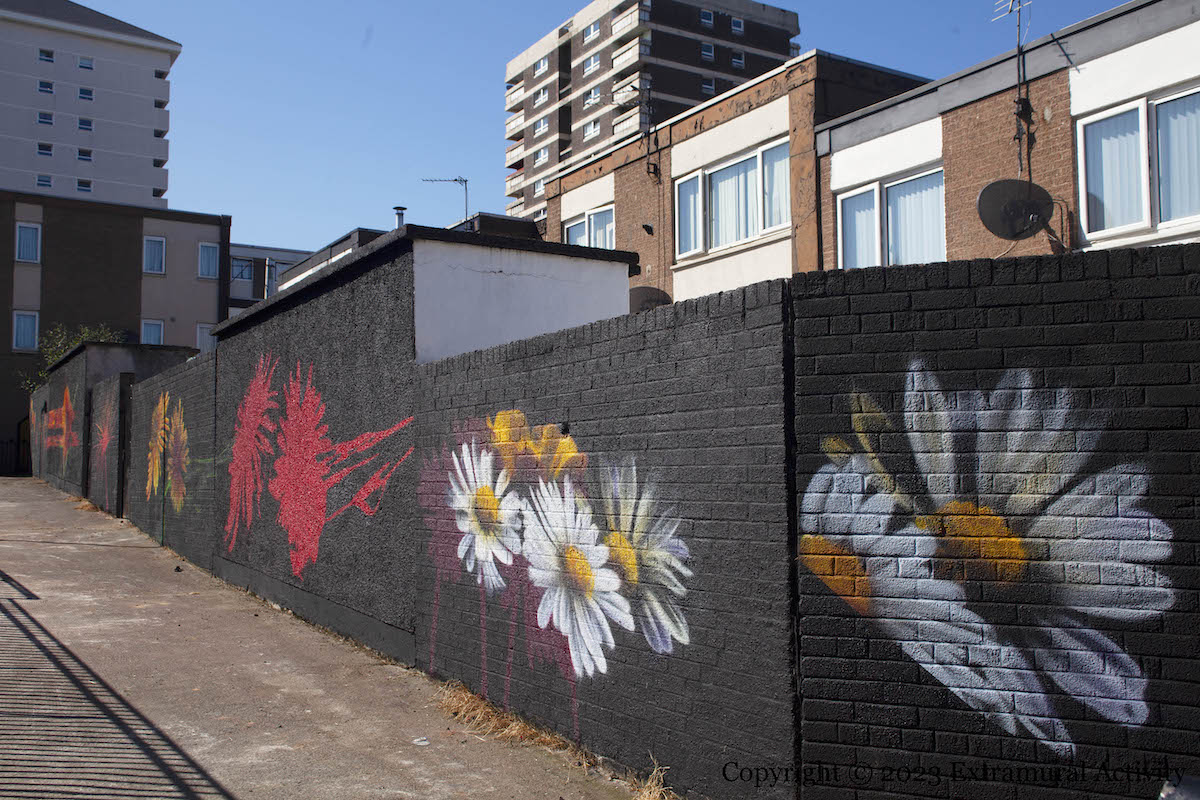
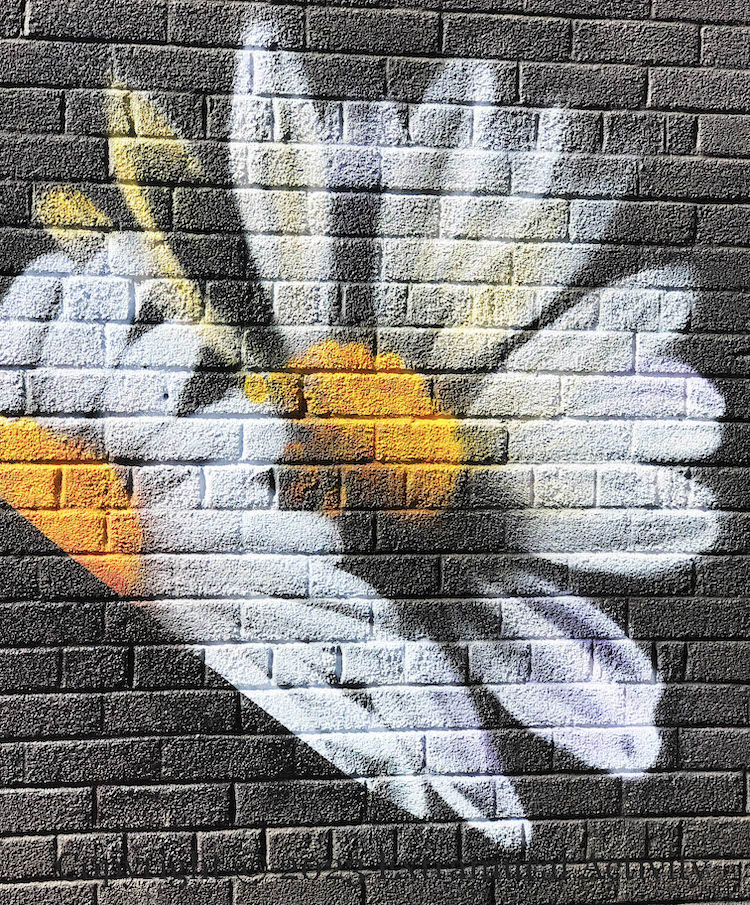
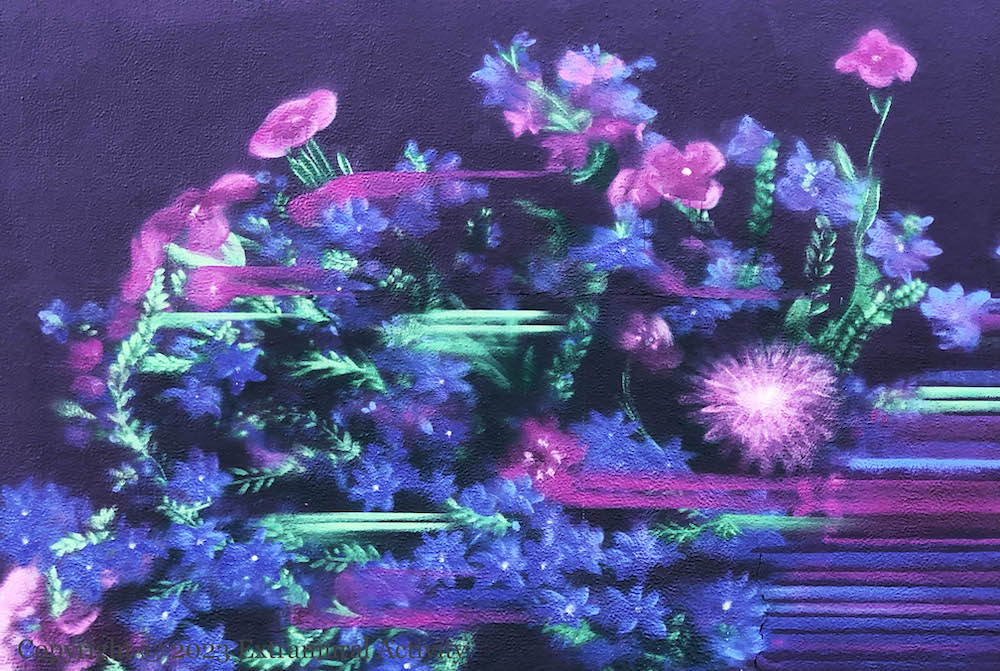
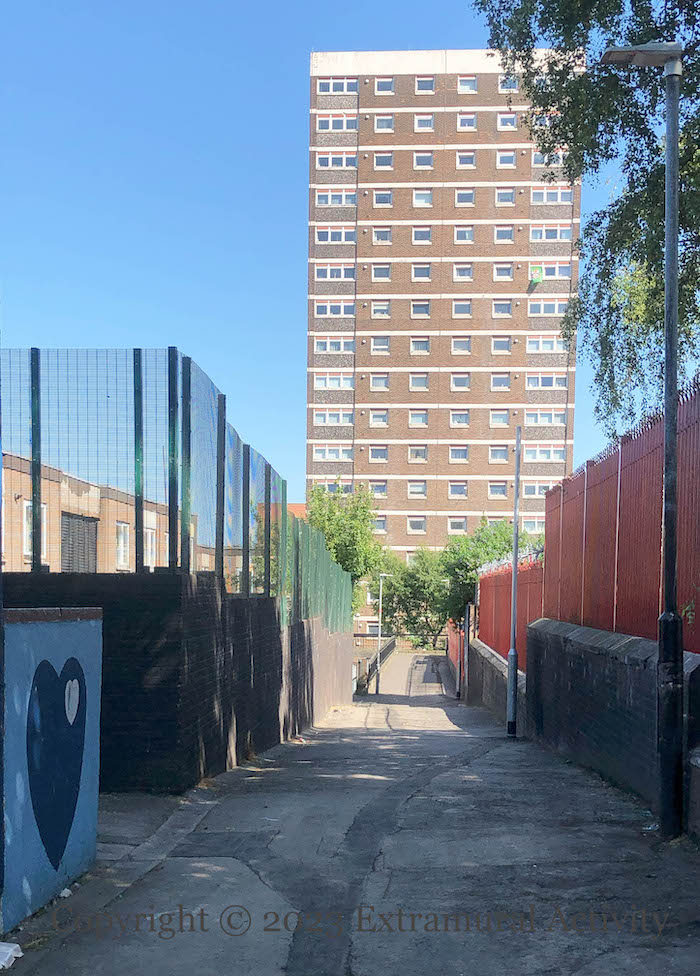
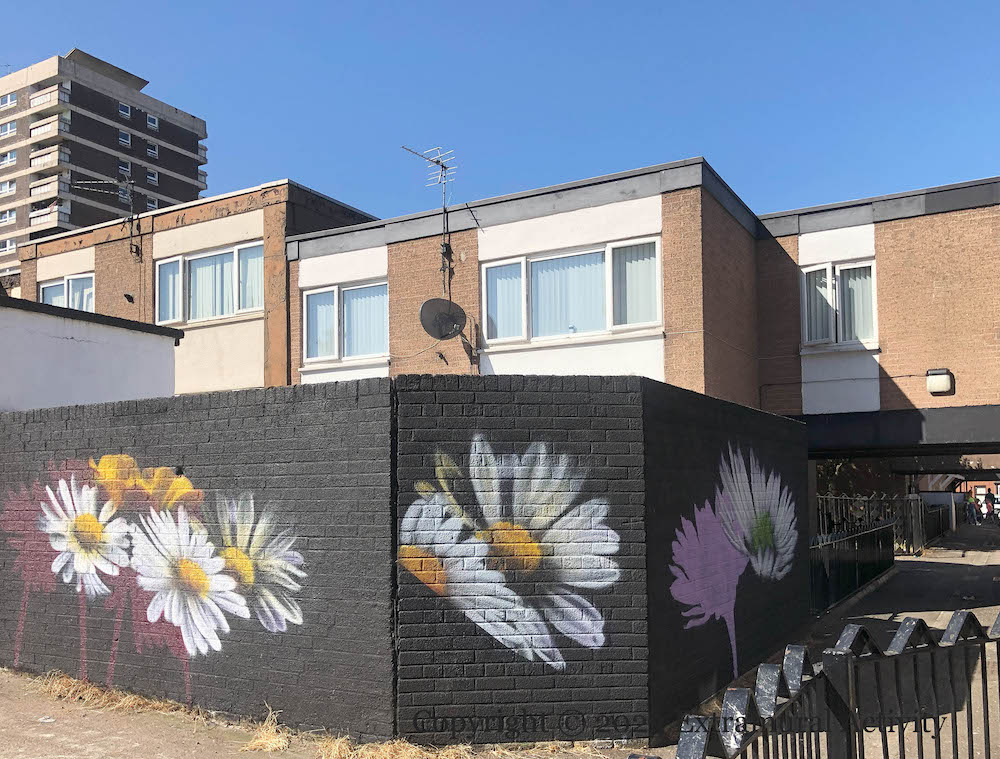
Here is a gallery of images from the new, multi-panel, floral mural in the middle of the New Lodge.

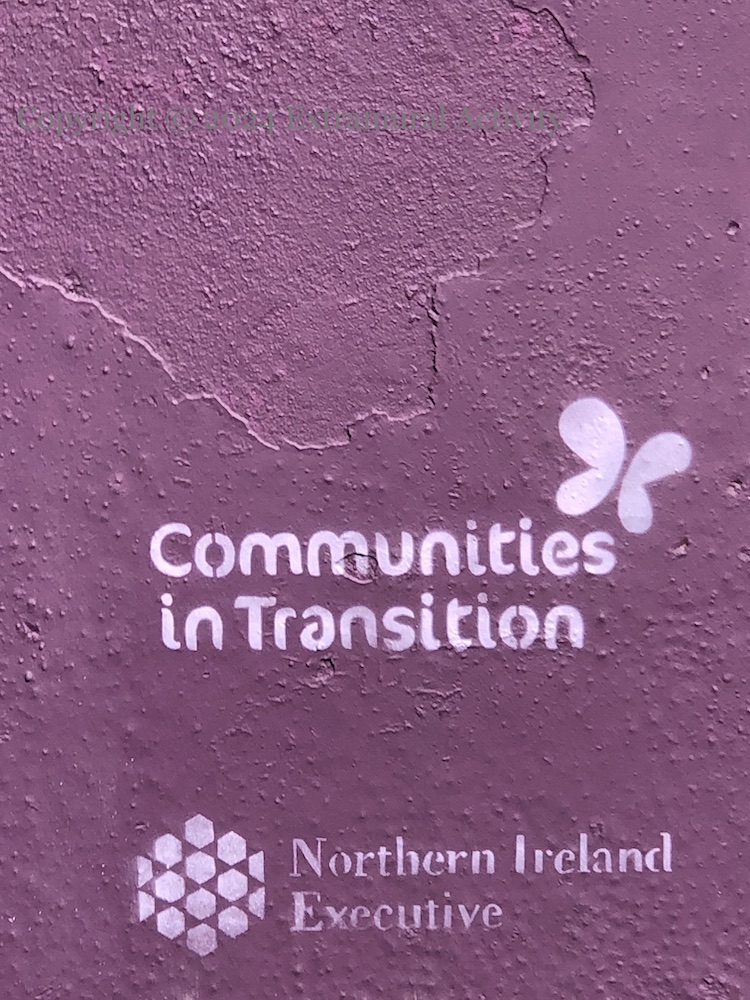
The mural was painted by emic (ig) with young people from the New Lodge Youth Centre, sponsored by Communities In Transition (a programme of the Executive Office) and organised by Community Restorative Justice Ireland (web).

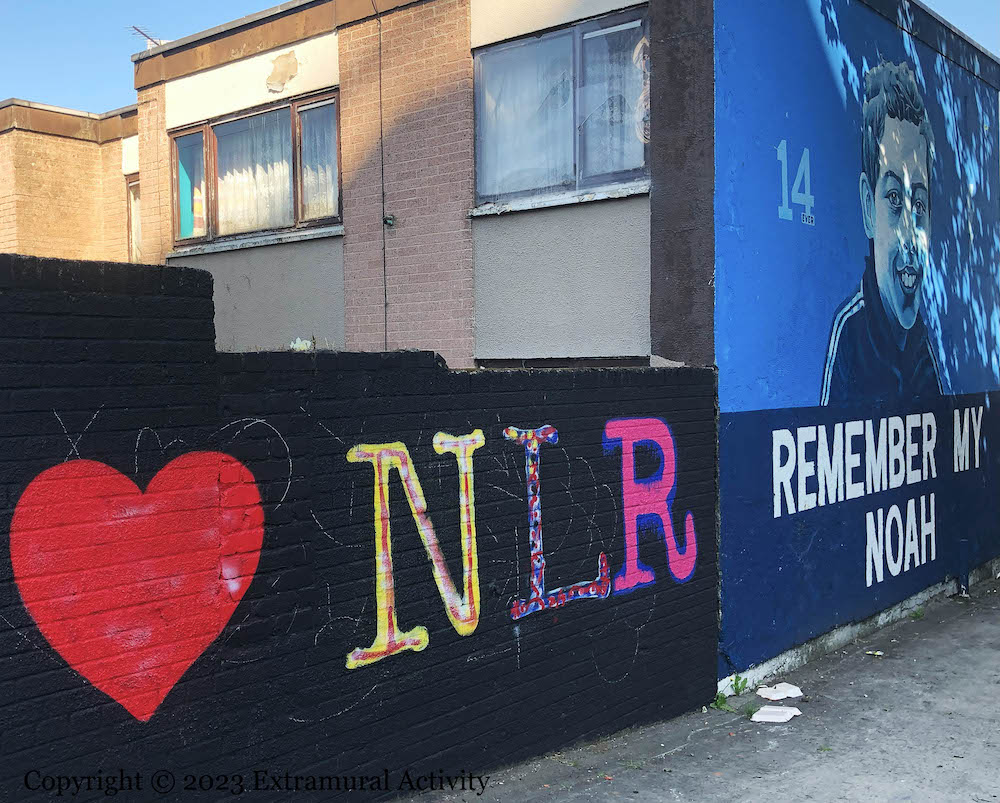
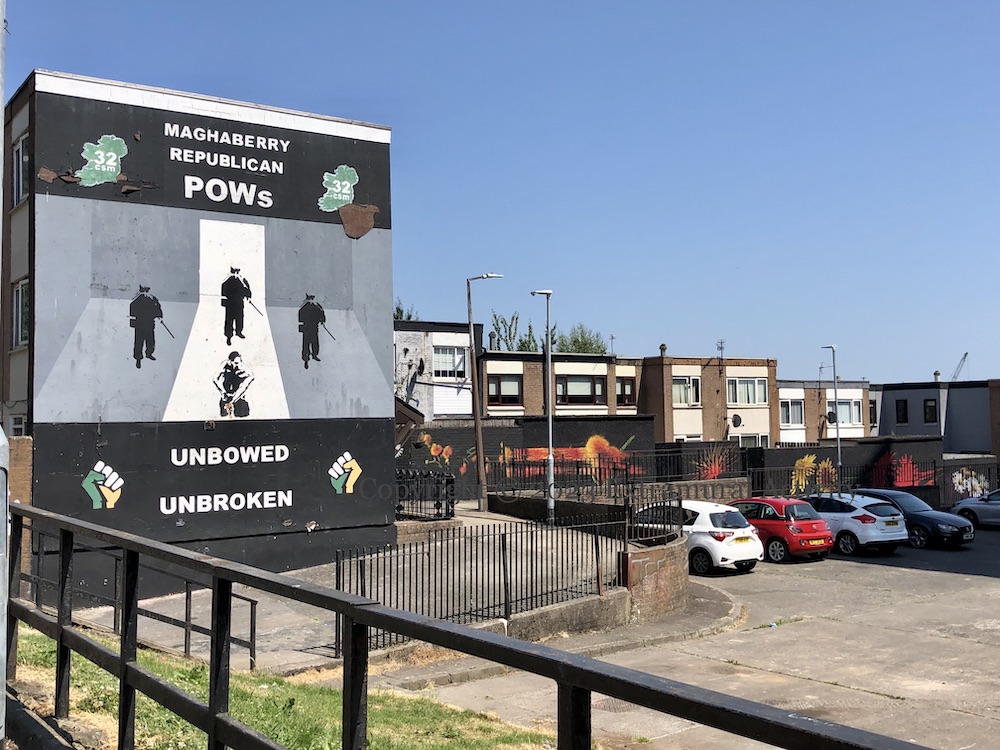
For the POW mural, see Unbowed, Unbroken; for the JFTC2 mural, see JFTC2; for the Noah Donohoe mural, see 14 4 Ever.

Click and click again to enlarge
Copyright © 2023 Seosamh Mac Coılle
[X12599] X12604
X12590
X12594 X12595 X12596
X12593
X12591 X14982
X12592 [X12589]
X12599
X12605 X12609 X12606
[X12597]