The Military History Of Ebrington Barracks

Between its construction in 1841 and decommissioning in 2003, Ebrington Barracks served as a home to many military units, including those whose emblems are at the bottom of the mural above (from left to right): the Royal Irish Rifles, Royal Inniskilling Fusiliers, Royal Irish Rangers, UDR, and the Royal Irish Regiment.

HMS Ferret and HMS Sea Eagle are not in fact ships but a part of Ebrington barracks given to the navy to serve as a “stone frigate” during (Ferret) and after (Sea Eagle) WWII. HMS Londonderry was an anti-submarine frigate but does not appear to have a particular connection to Ebrington (please comment if you know otherwise).

The Northern Ireland General Service medal – in the middle of the mural – was awarded to any soldier who served at least 30 days during Operation Banner, the deployment of British troops in Northern Ireland from 1969 onwards.

Click image to enlarge
Copyright © 2018 Seosamh Mac Coılle
X06331 Ebrington st lwr BSCA
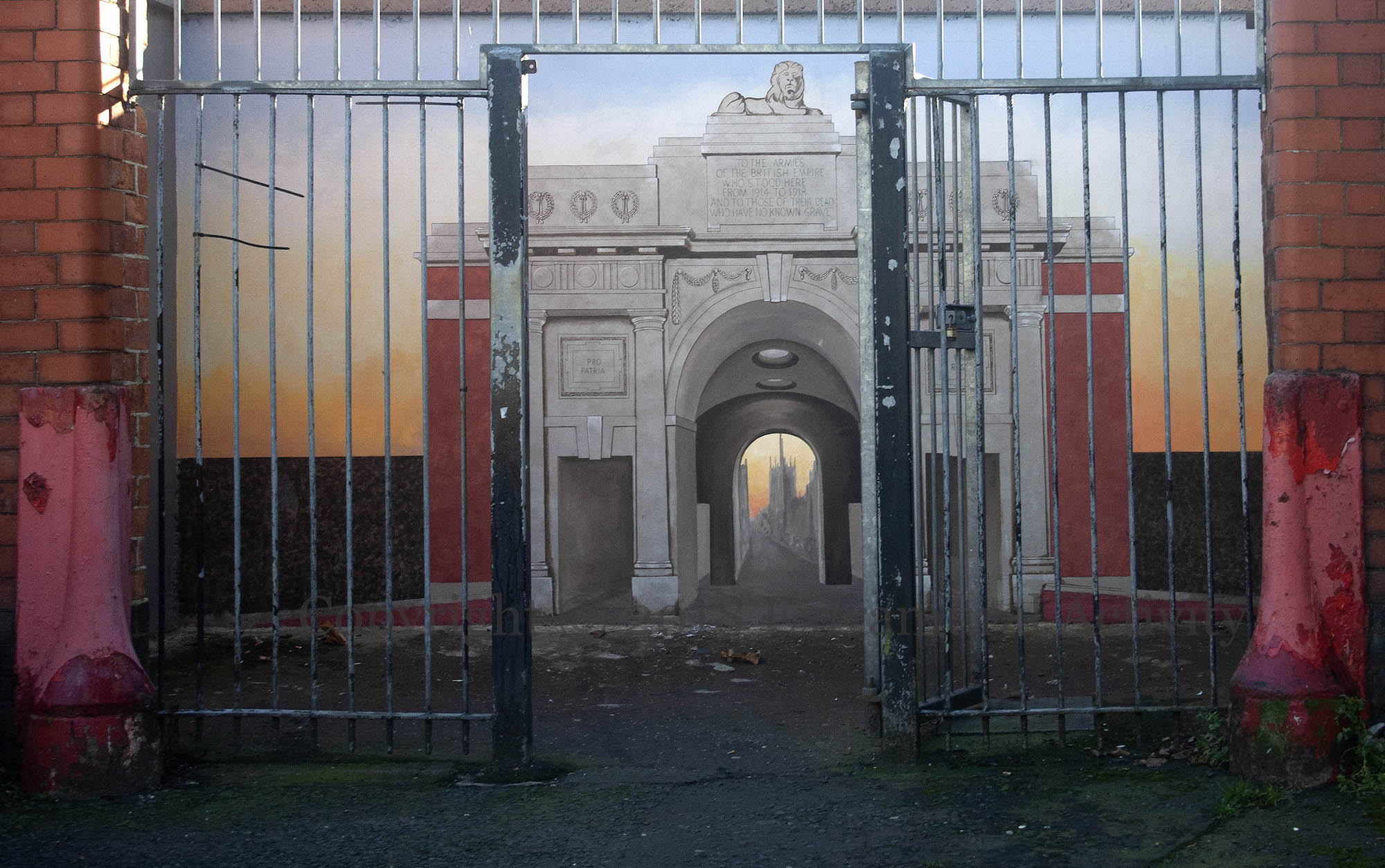
The Menin Gates

The Menin Gate memorial, at the eastern edge of Ypres, Belgium, commemorates 54,896 Commonwealth soldiers who died in the area during WWI and whose bodies were not recovered. “To the armies of the British Empire who stood here from 1914 to 1918 and to those of their dead who have no known grave.” The gates in the image above are off Bond’s Street, Londonderry, leading to the Ebrington Centre car park.

Click image to enlarge
Copyright © 2018 Seosamh Mac Coılle
X06335

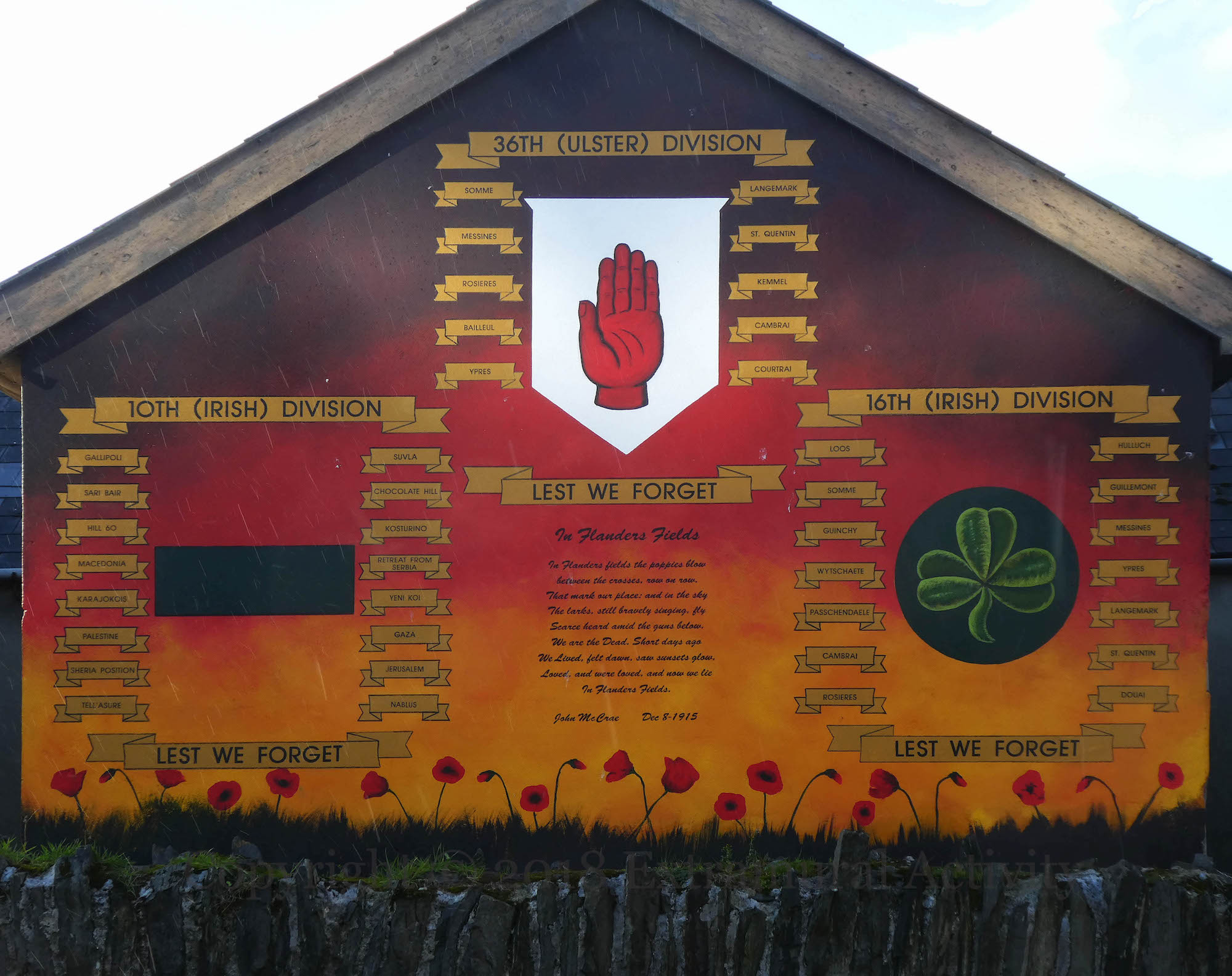
We Are The Dead

The 10th (Irish) Division fought only briefly “in Flanders fields”, towards the very end of the war, having spent most of its time in Gallipoli (in the Ottoman Empire), Macedonia, Egypt, and Palestine. The 16th took part in the Somme, especially at “Guinchy” [Ginchy] and Guillemont, while the 36th were deployed on the first day (the Battle Of Albert).

The poem in the middle is the first half of John McCrae’s In Flanders Fields: “In Flanders fields the poppies blow/Between the crosses, row on row/That mark our place, and in the sky/The larks, still bravely singing, fly/Scarce heard amid the guns below.//We are the dead; short days ago/We lived, felt dawn, saw sunset glow/Loved and were loved, and now we lie/In Flanders fields.”

Click image to enlarge
Copyright © 2018 Seosamh Mac Coılle
X06358 Ebrington Centre, Londonderry

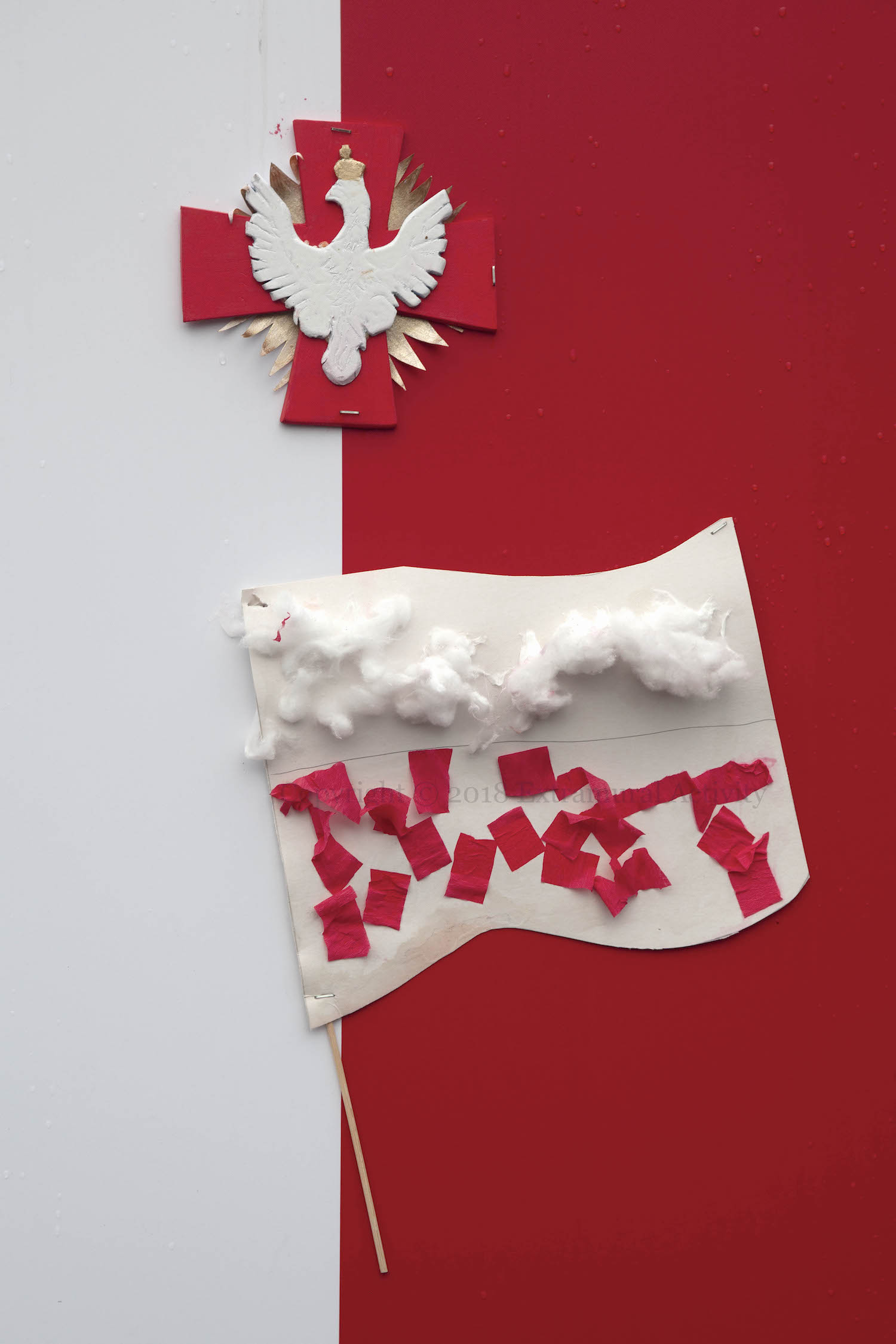
Dumnie Pamiętane I Nigdy Nie Zapomniane

“Proudly remembered and never forgotten.” The ‘Band Of Brothers’ mural, which celebrates the contribution of Polish airmen stationed in Northern Ireland to the Battle Of Britain in WWII, was partly covered over with a vertically aligned Polish flag, obscuring fire damage from August(?) seen in the third image. The wreath on the right-hand side interestingly combines poppies (perhaps for Armistice Day and the centenary of the end of WWI) and the Polish writing used as the title of this entry, along with the Polish WWII eagle (perhaps commemorating the end of the Battle Of Britain, which is marked (in the UK) on September 15th). The wreath of poppies is next to the Kitchener mural.

Click image to enlarge
Copyright © 2018 Seosamh Mac Coılle
X06324 X6325 X06112 X06323

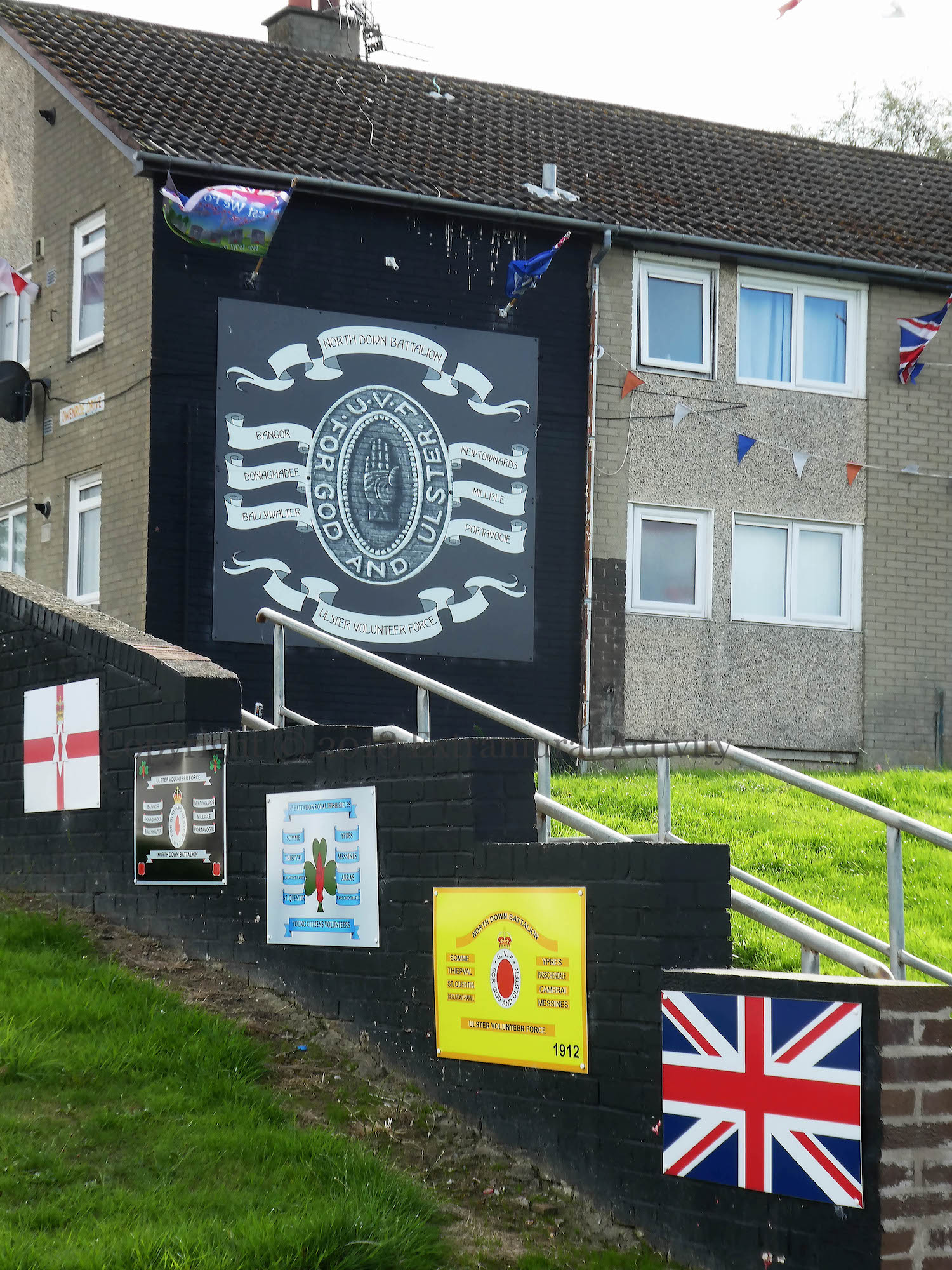
North Down Battalion

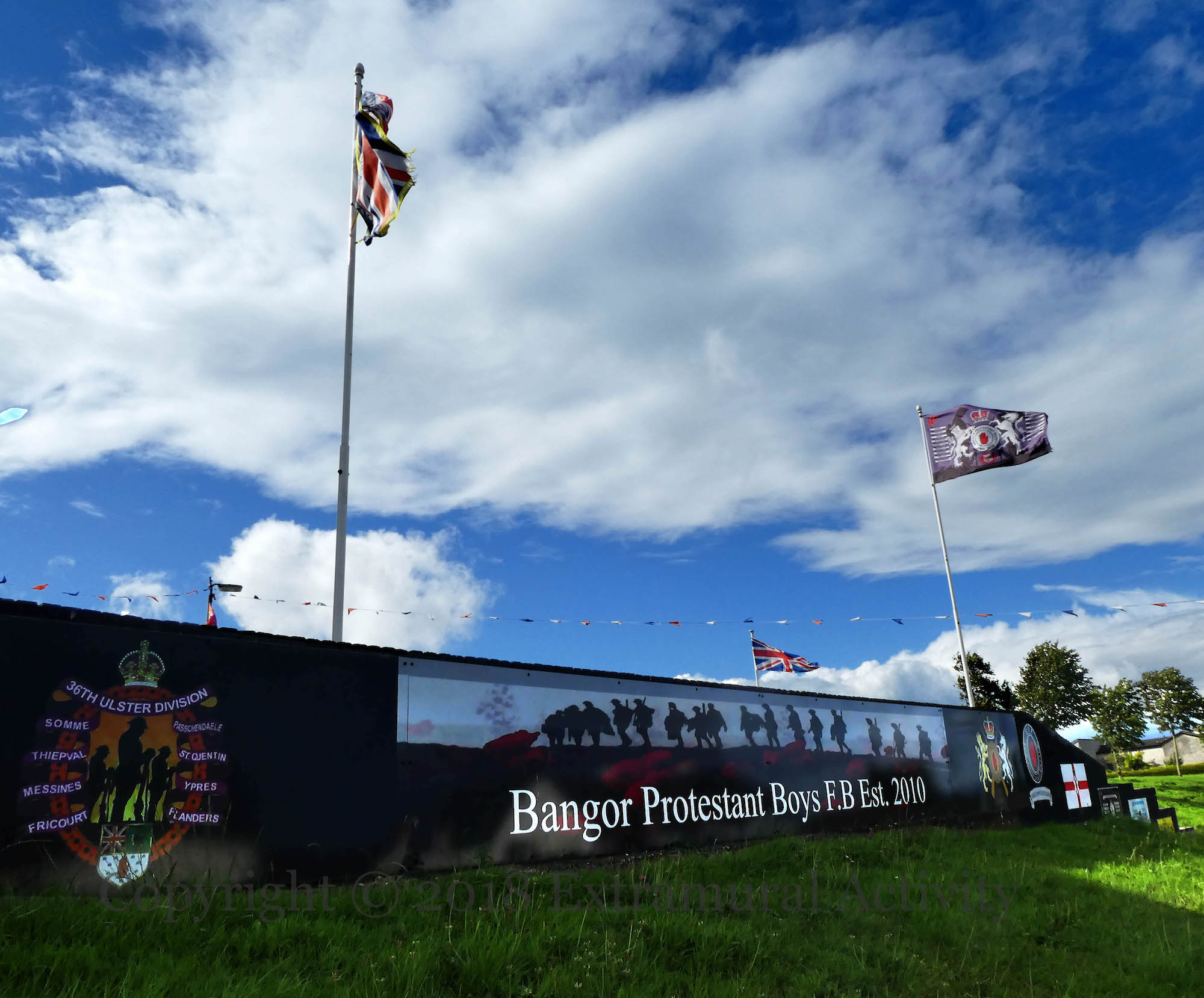
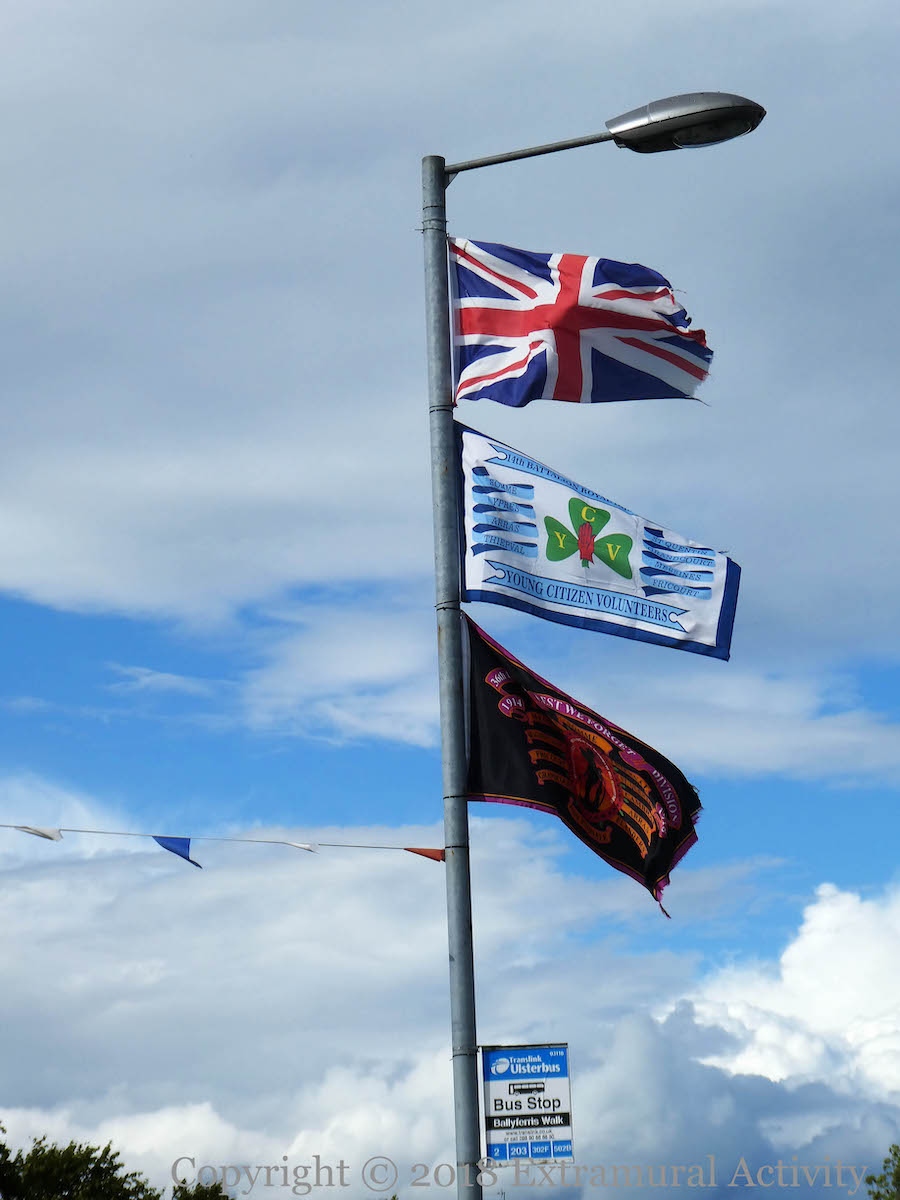
The yellow board in the foreground lists battles of the North Down Battalion in World War I (for a description of the battalion, see the previous 2017 post). Added to that since then is a large black-and-white board to the modern Ulster Volunteer Force and its divisions: Bangor, Donaghadee, Ballywalter, Newtownards, Millisle, and Portavogie. (It’s worth noting that although this is a board, the UVF emblem in the middle is depicted as having been painted on a brick wall, indicating a preference for old-school muraling.)

Below is a shot of the rest of the low wall, with Bangor Protestant Boys Flute Band (previously seen in 2017). Owenroe Drive, Bangor.

X06094 2018-08-29 flags+

Click image to enlarge
Copyright © 2018 Seosamh Mac Coılle
X06092 X06093 X06094

Catnapping

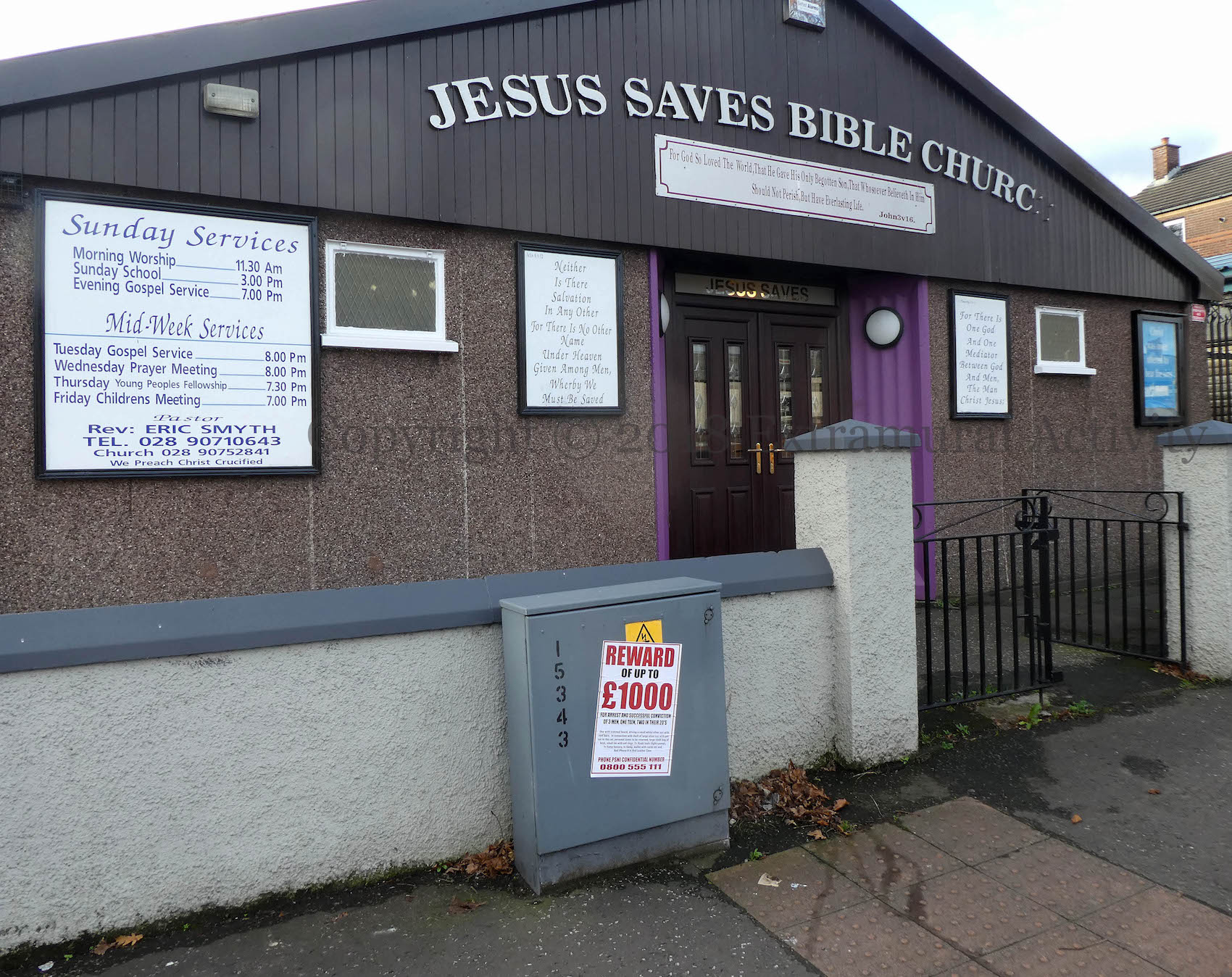
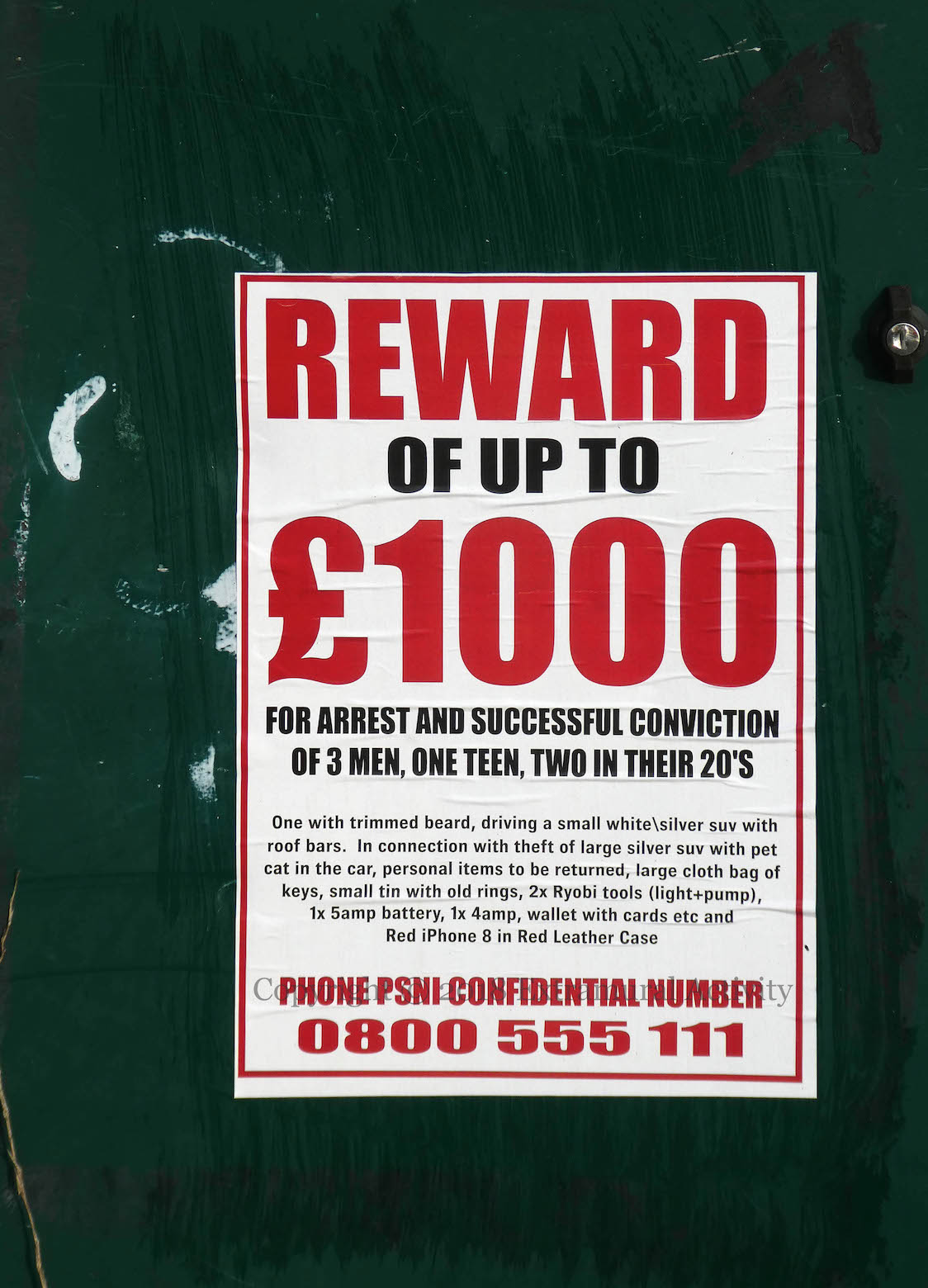
Owners of a silver SUV take their quest for justice to the north Belfast streets by plastering ‘reward’ posters all around seeking the return of wallet, iPhone, tools, and cat.

Click image to enlarge
Copyright © 2018 Seosamh Mac Coılle
X06343 X06342

Hand-Crafted

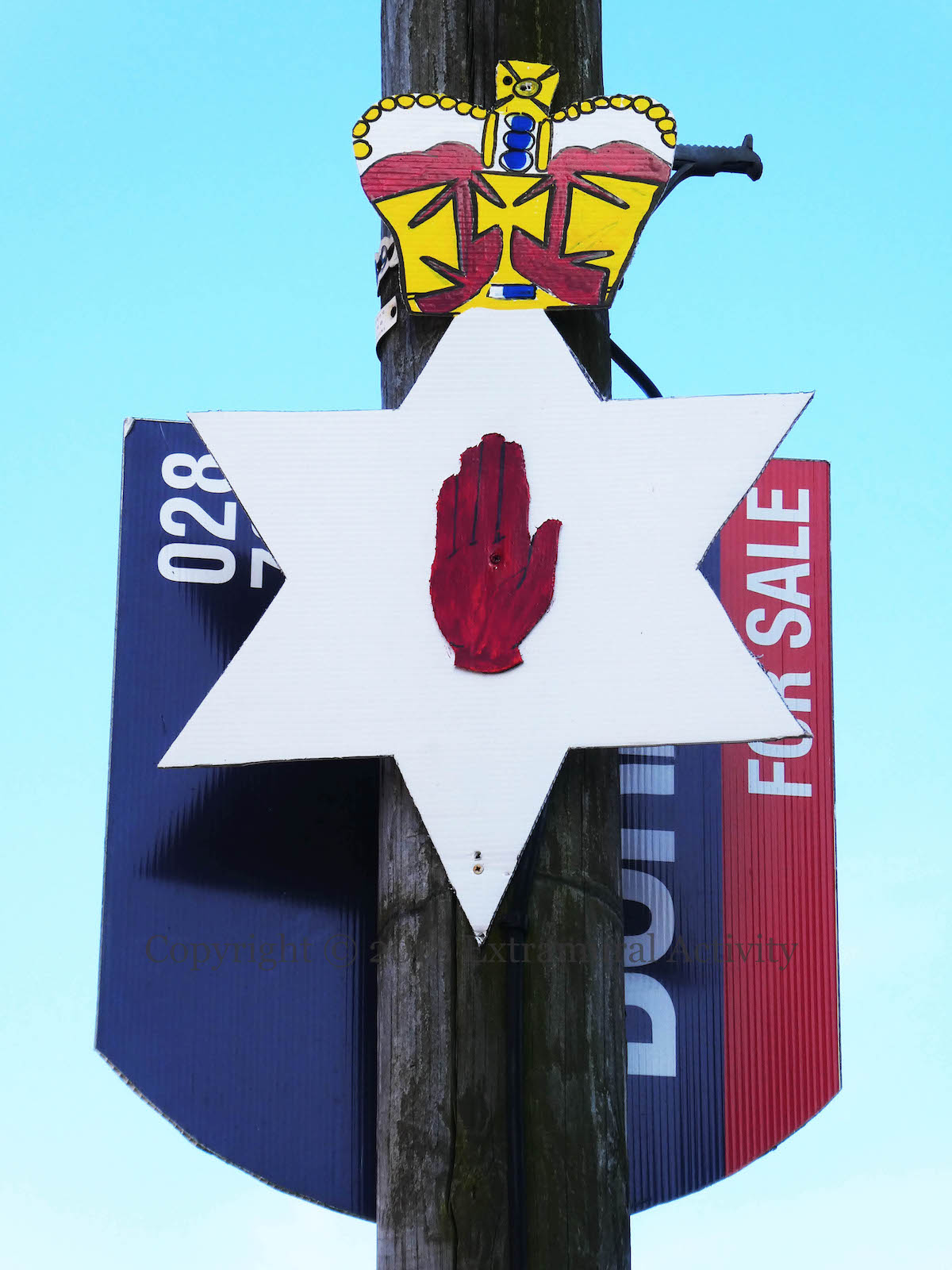
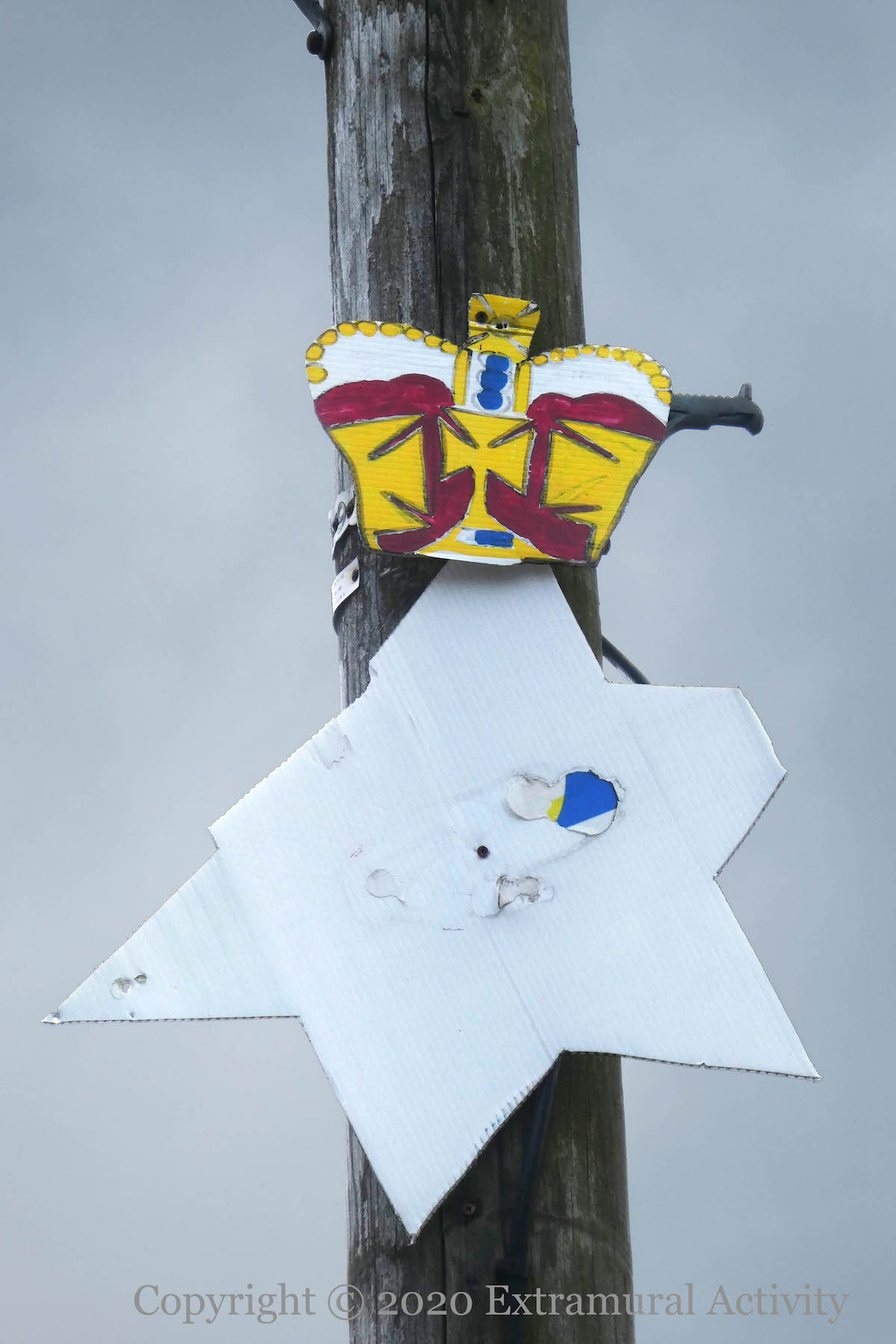
Use whatever you can find to express your identity: re-purpose the placards of capitalism, grab a pair of scissors and cut, draw the outline of your hand with a felt-tip pen.

Update: image from 2020-07

Click image to enlarge
Copyright © 2018 Seosamh Mac Coılle
X06219 Hallidays Road X07300

Armistice

John 15:13 reads “Greater love hath no man than this: to lay down his life for his friends.” Fighting in the Great War ceased at 11 a.m. on November 11th, 1918, after approximately 10 million military deaths, 10 million civilian deaths, and another 20 million injured.

Click image to enlarge
Copyright © 2018 Seosamh Mac Coılle
X06321

We Shall Defend Our Island

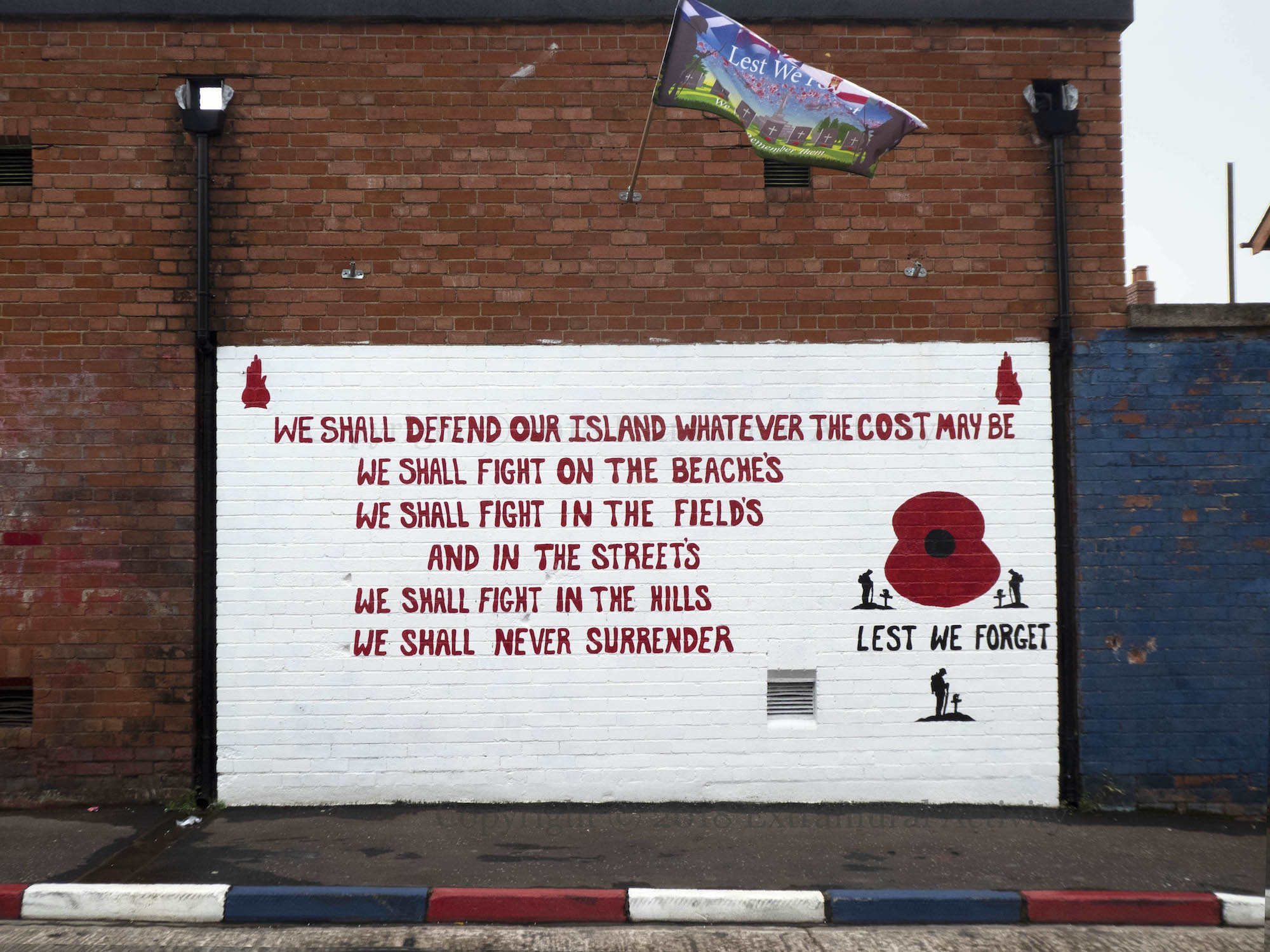
The mural in Castlereagh Parade has been repainted for the centenary of the end of WWI, but with some notable differences. Three flag-holders have been added above. On the right are now a poppy and mourning soldiers. The quote comes from a speech by Winston Churchill on 1940-06-04 – “We shall defend our island whatever the cost may be. We shall fight on the beaches. [We shall fight on the landing grounds.] We shall fight in the fields and in the streets. We shall fight in the hills. We shall never surrender.” – but the current first line was previously omitted in favour of another Churchill quote: “We have nothing to offer but blood, tears, and sweat.” See: Whatever The Cost May Be.

Click image to enlarge
Copyright © 2018 Seosamh Mac Coılle
[X06310] X06311 [X06312]