‘Let’s Talk Loyalism’ (Fb | Xitter) is an advocacy group established in May 2021 “to articulate loyalist perspectives” (News Letter). It produced a survey in September 2021 (Slugger) and is currently undertaking more research (BelTel). The tarp is hanging on the fence around the waste-ground at the top of Lanark Way, site of a #BuildShankill tarp.
See previously: No Vote, No Voice graffiti in Forthriver/Ballygomartin in 2014.
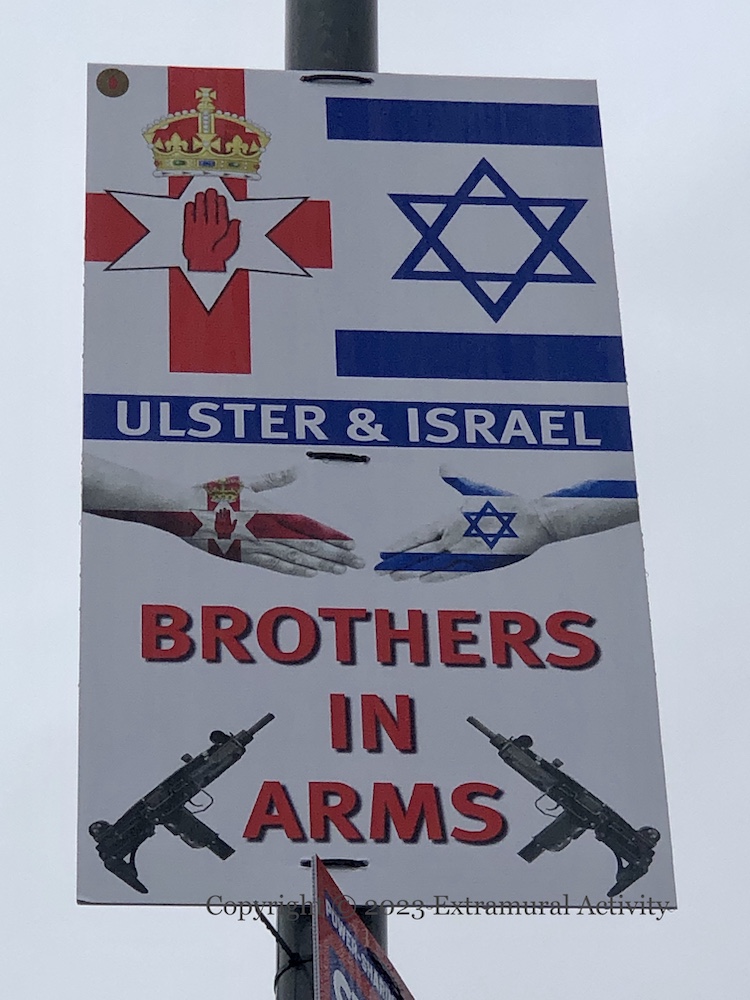
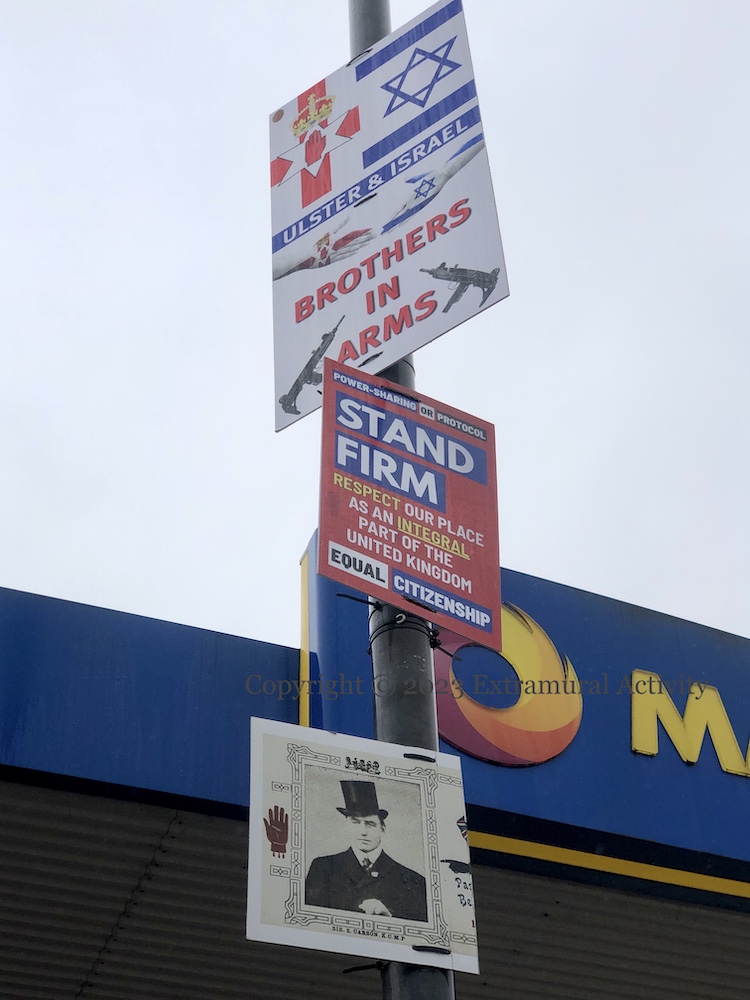
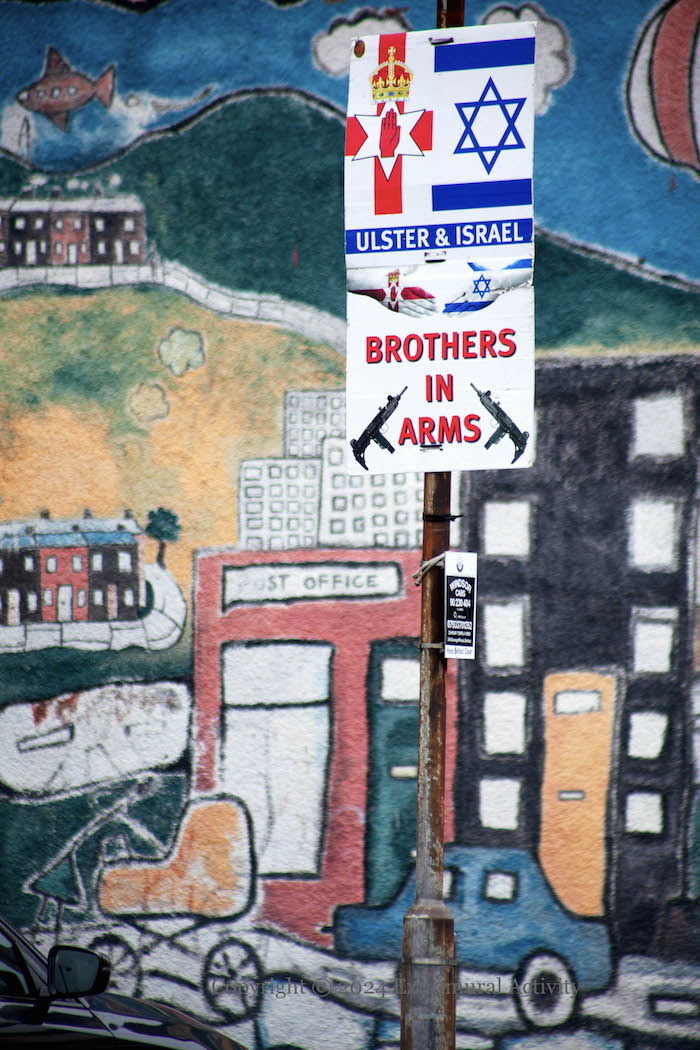
“Ulster & Israel – brothers in arms”. The Uzi was developed in Israel in the late 1940s and became a general-issue weapon in 1956 (WP). It was used (and copied) by loyalist paramilitaries in Northern Ireland (Balaclava Street has a comprehensive history of loyalist weaponry) and appeared in a both UDA and UVF murals and graffiti: The Elite | Ulster Says No! To The Politicians | Sandy Row 2nd Batt | UFF Uzi.
Tate’s Avenue, in the Village area of south #Belfast.
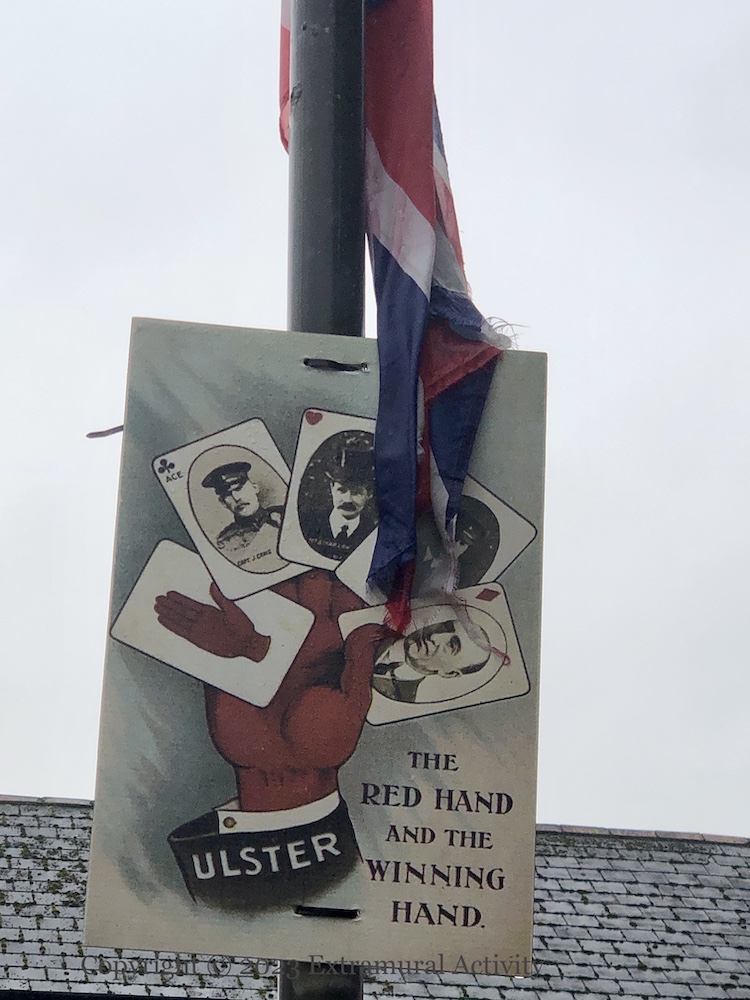
The placard in the middle, between Brothers In Arms and “Sir E. Carson K.C., M.P.” was discussed in Stand Firm. The Winning Hand was seen previously in The Red Hand And The Winning Hand.
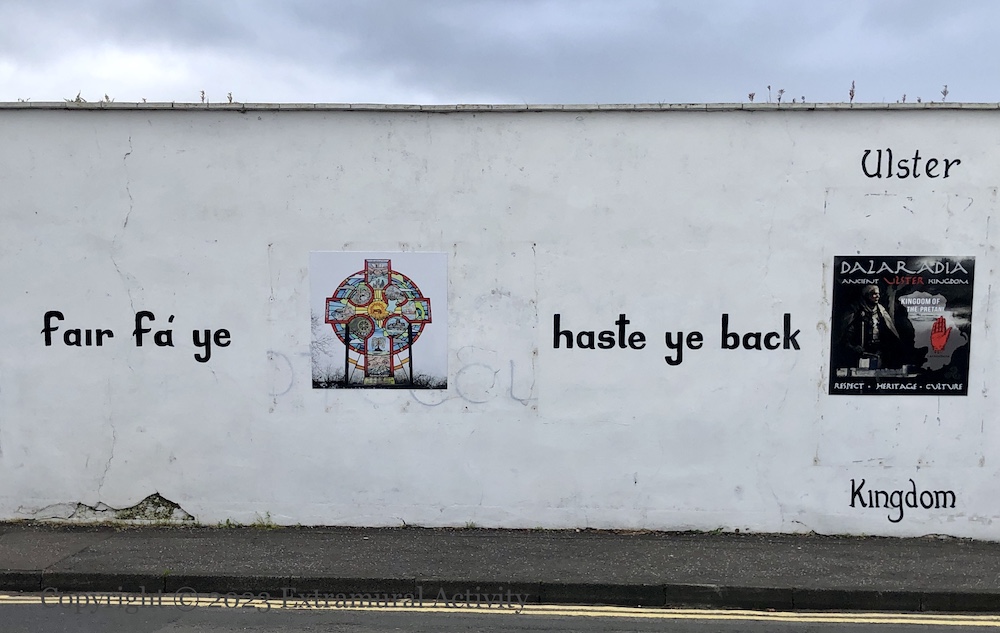
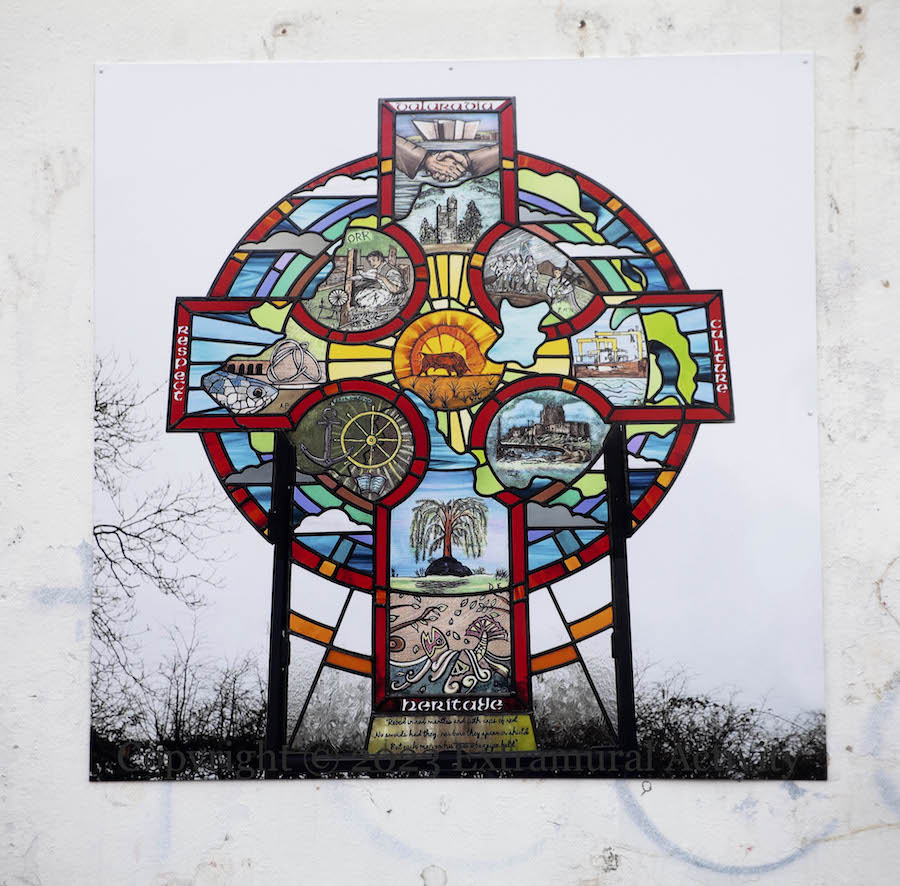
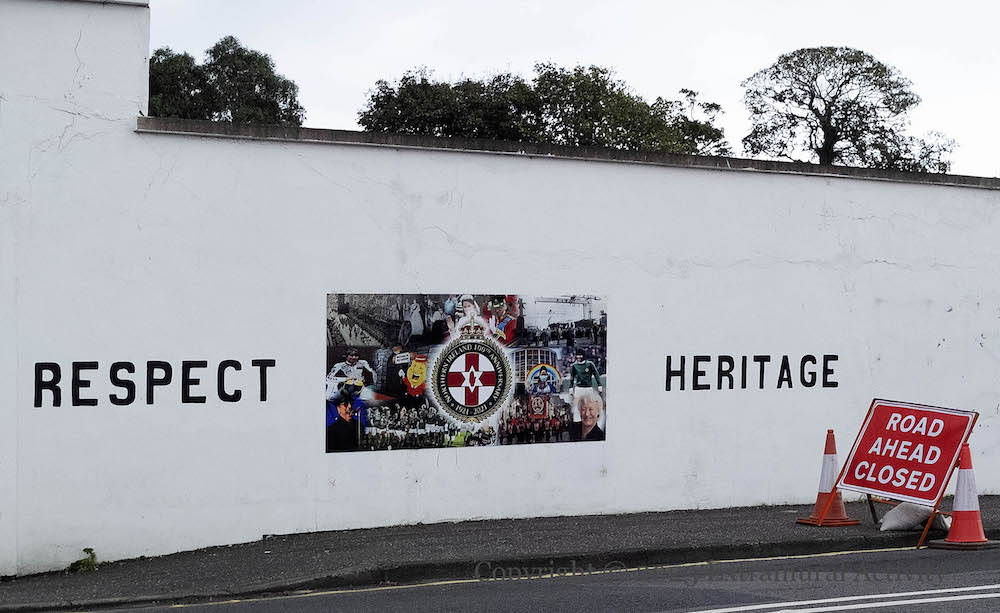
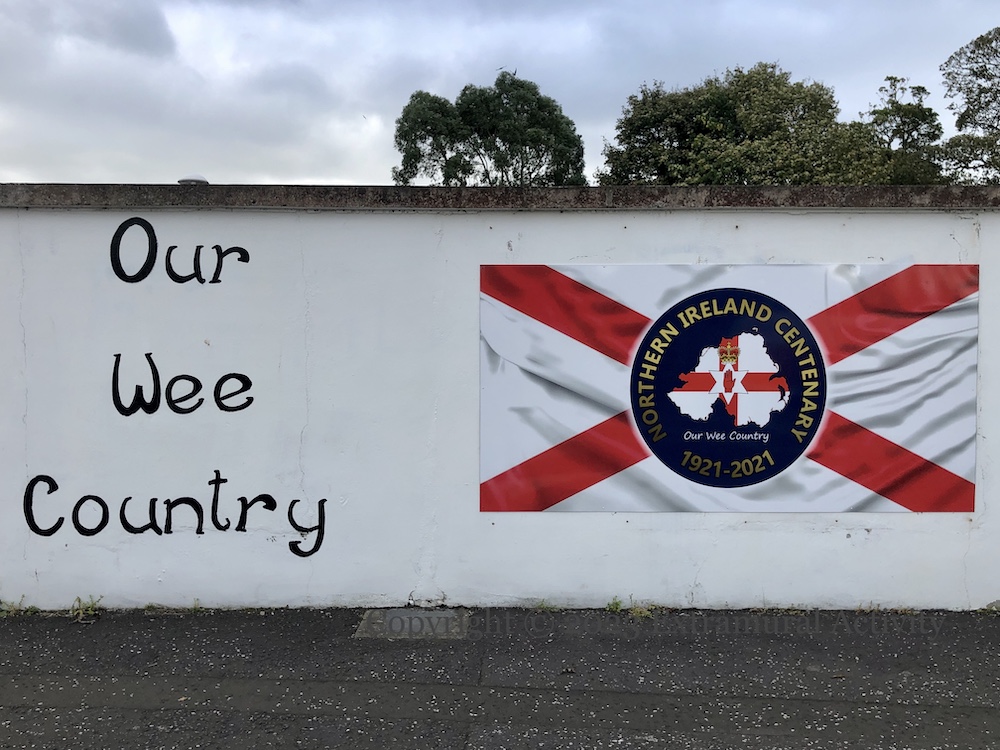
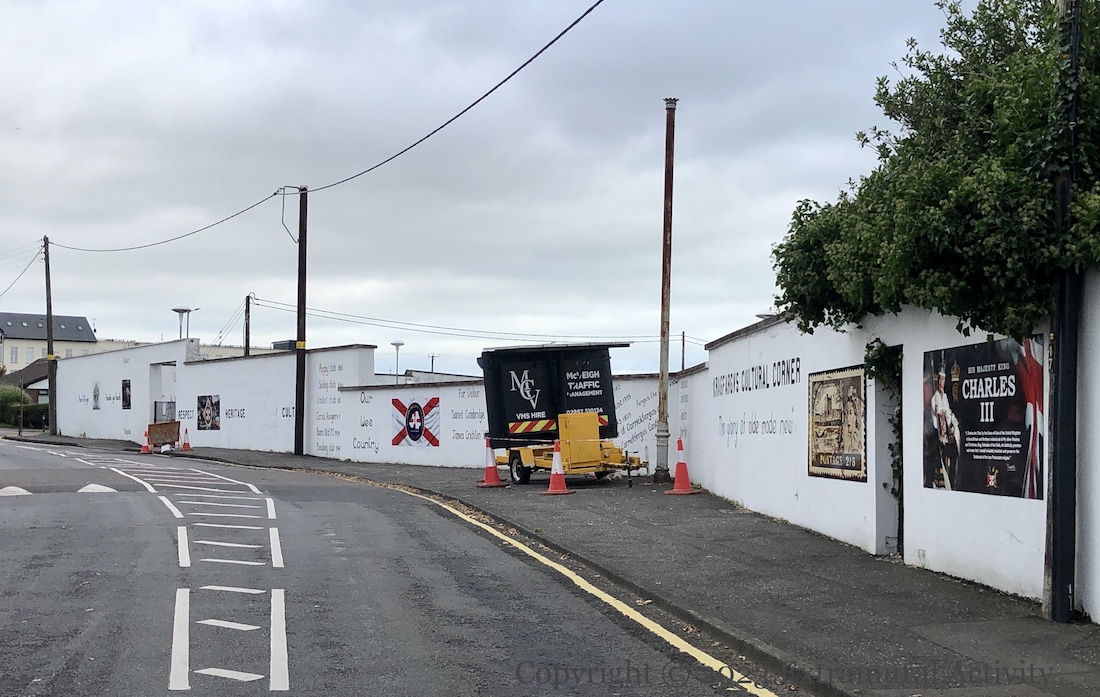
This is the second (at least) iteration of an installation along Taylor’s Avenue, Carrickfergus, showcasing the Ulster-Scots heritage of Carrickfergus and its later contributions to the United Kingdom.
The wall is 60 metres/200 feet in length and can be divided into about ten distinct panels – notes on the different panels are given below, following the order of presentation of images, which show the entire wall moving from left to right.
The original, as seen on Street View, included boards showing the Pretani Isles/British Isles, QEII, and Tom Moore. As seen here, there are now boards to King Charles III, a vintage postage stamp, ‘The Siege Of Carrickfergus’ in 1689, and ‘The Barn Mills Fallen’ of WWI.
James Orr, the ‘Bard Of Ballycarry’, was a contemporary of Robert Burns and a United Irishman. It does not appear that he wrote a poem with the line “I wish I was in Carrickfergus”.
Daniel Cambridge won his VC for service in the Crimean War (WP) and James Crichton for service in WWI (WP).
CarrickfergusHistory includes “the oldest know map of Carrickfergus” from 1560, employing the spelling “Kragfargus”.
The 2/6 postage stamp featuring Carrickfergus Castle was one of four in a “Castle series” in 1955 (WP).
A service was held yesterday in West Kirk Presbyterian to mark the thirtieth anniversary of the bombing of Frizzell’s fish shop on the Shankill Road. As part of the ceremony, wreaths were laid at the new memorial marking the spot on the Shankill where the bomb exploded, killing nine locals — hence the Arabic “9” among the Roman numerals on the clock face — and one of the bombers (ITv footage). The clock shows the date and time that the bomb went off: 1:06 pm on Saturday October 23rd, 1993.
The new ‘clock’ memorial replaces the three plaques seen in Frizzell’s (though the circular plaque might have been incorporated into this new memorial); the board of portraits served as the cover for the memorial in the days prior to unveiling and was placed over the credit union’s ATM.
West Kirk also contains a stone and bench to the victims of the Shankill bombing. Nine trees were also planted in their memory: John Frizzell, Sharon McBride Leanne Murray, Michael Morrison, Evelyn Baird, Michelle Baird, George Williamson, Gillian Williamson, Wilma McKee.
“We remember those who were killed, those who survived and those lives changed forever.”
“‘And God shall wipe away all tears from their eyes; and there shall be no more death, neither sorrow, nor crying, neither shall there be any more pain; for the former things are passed away’ Revelations 21 v4”
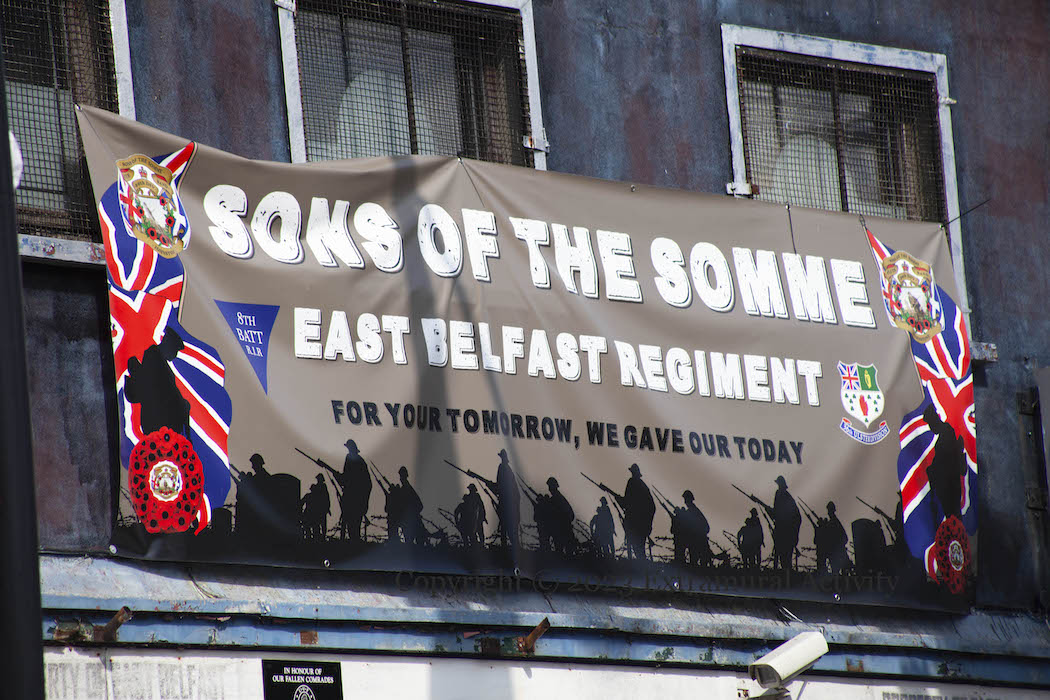
“For your tomorrow, we gave our today.” On either side of the central text are “8th battalion RIR” and the emblem of the 36th Division. The East Belfast regiment of the (1912) Ulster Volunteers became the 8th battalion of the Royal Irish Rifles and joined the 107th brigade in the 36th Division.
In the corners of the tarp above is the emblem of the Sons Of The Somme flute band, Johnstone (west of Glasgow) (Fb). The tarp is on the (closed) Belvoir Bar on the Newtownards Road. For the “property of East Belfast UVF” stencil and the plaque at the bottom, see Not For Sale.
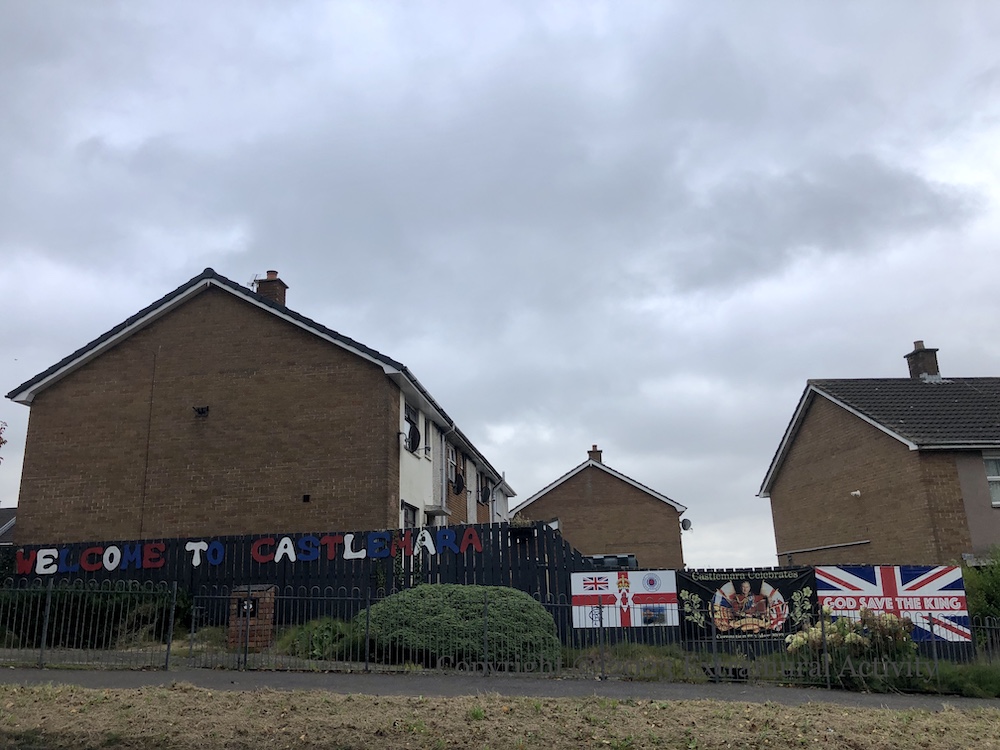
This Castlemara, Carrickfergus, board is notable for its background, which follows that of old coronation and jubilee portraits. These would show the royal couple (and sometimes immediate family) in plush surroundings and standing in front of chairs. This style of composition has been seen in murals of George V’s jubilee in 1935 and George VI’s coronation in 1937 — see Visual History 01. In this board, however, Philip and Elizabeth are portrayed in old age and are not in coronation gear; the chairs shown are from the Throne Room in Buckingham Palace.
Also notable is that the board replaces a UDA mural – see Joint Manoeuvres. The other UDA mural in the estate — Carrickfergus Eddie — has also been replaced.
For the UVF/YCV gunmen in the background of the wide shot, see Out Of The Trenches.
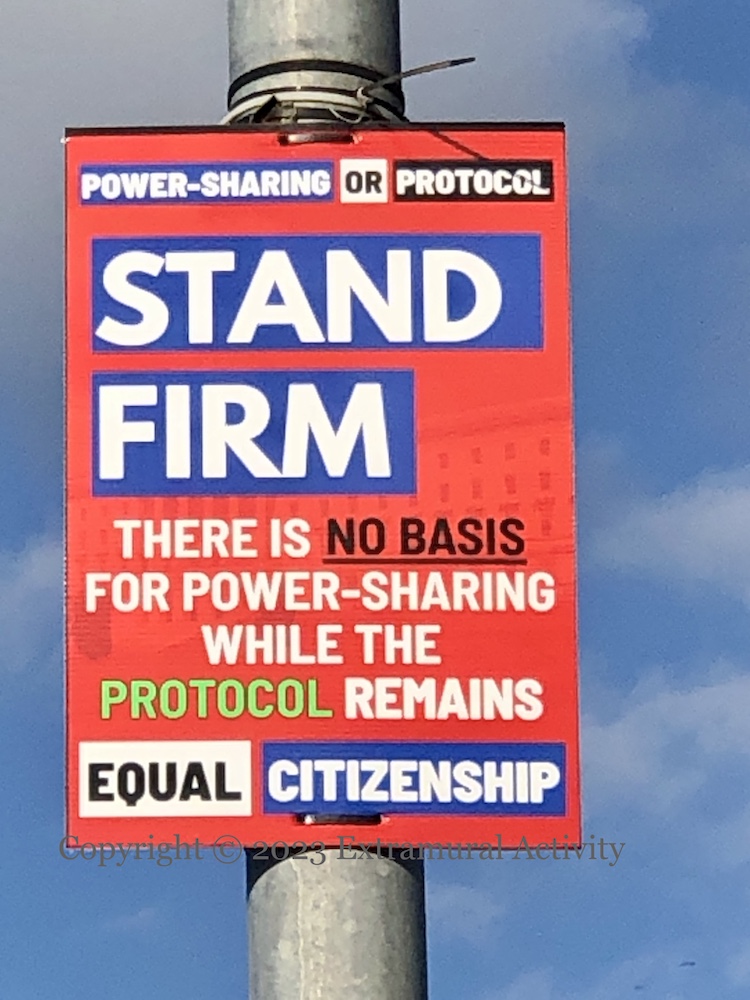
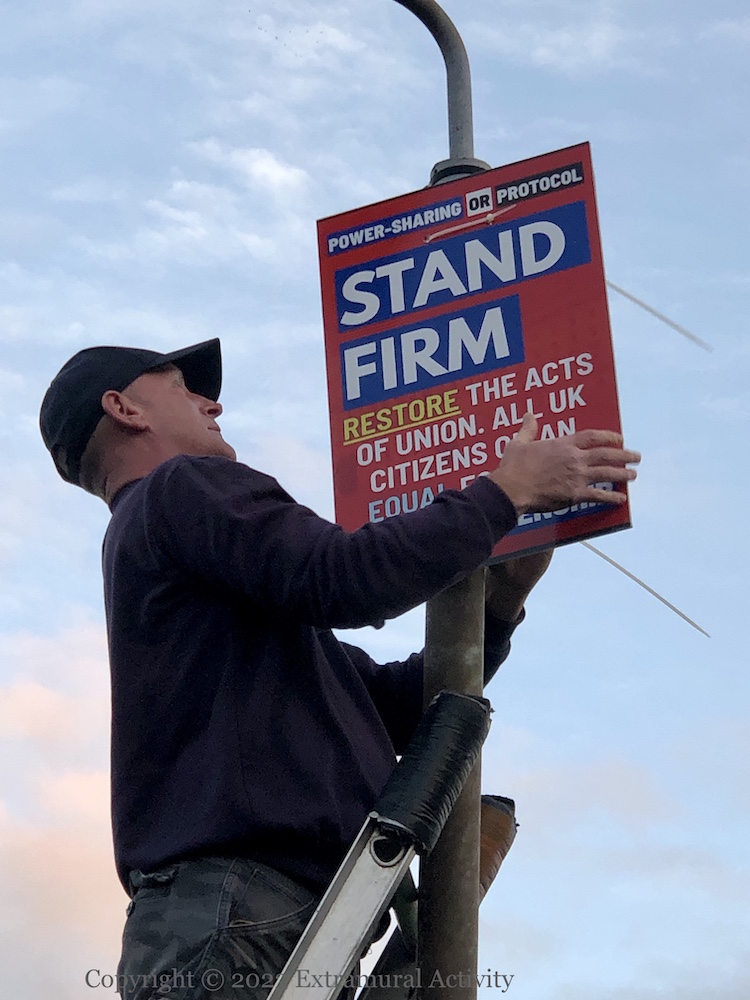
Two varieties of this “Stand Firm” placard are going up in PUL west Belfast: (above) “Power-sharing or protocol. Stand firm. There is no basis for power-sharing while the protocol remains. Equal citizenship.” and (below) “Power-sharing or protocol. Stand firm. Restore the acts of union. All UK citizens on an equal footing. Equal citizenship.” The context: Jeffrey Donaldson and the DUP have been making noises about a return to Stormont after a year of refusing to participate, which has led to criticism and the threat of “street protests” from hard-line unionists (BelTel).
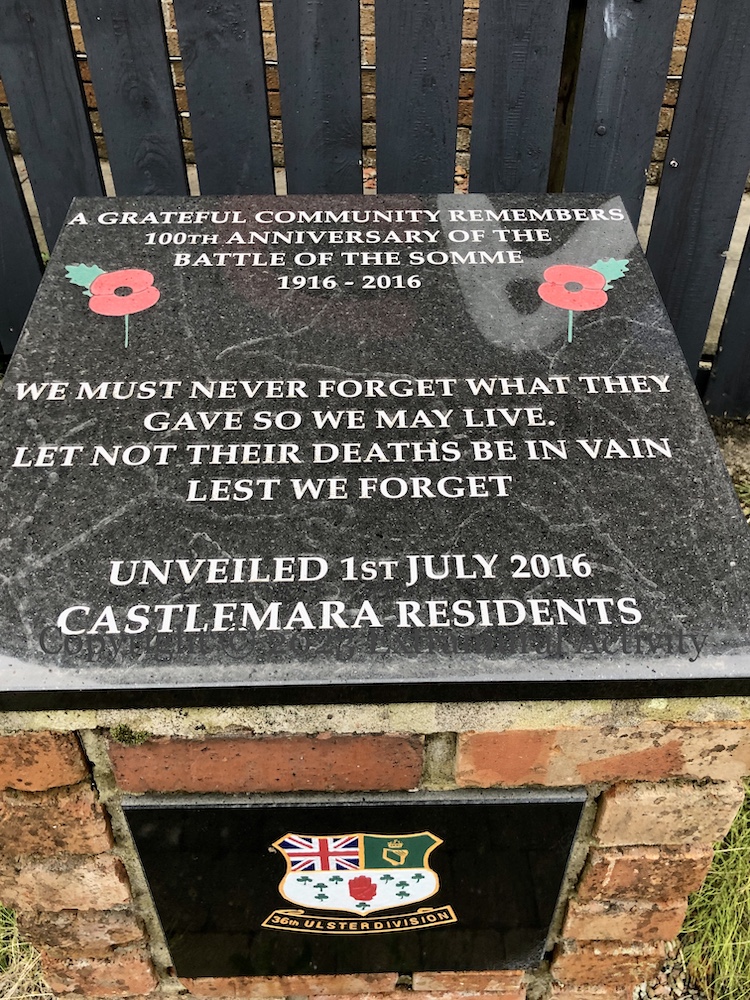
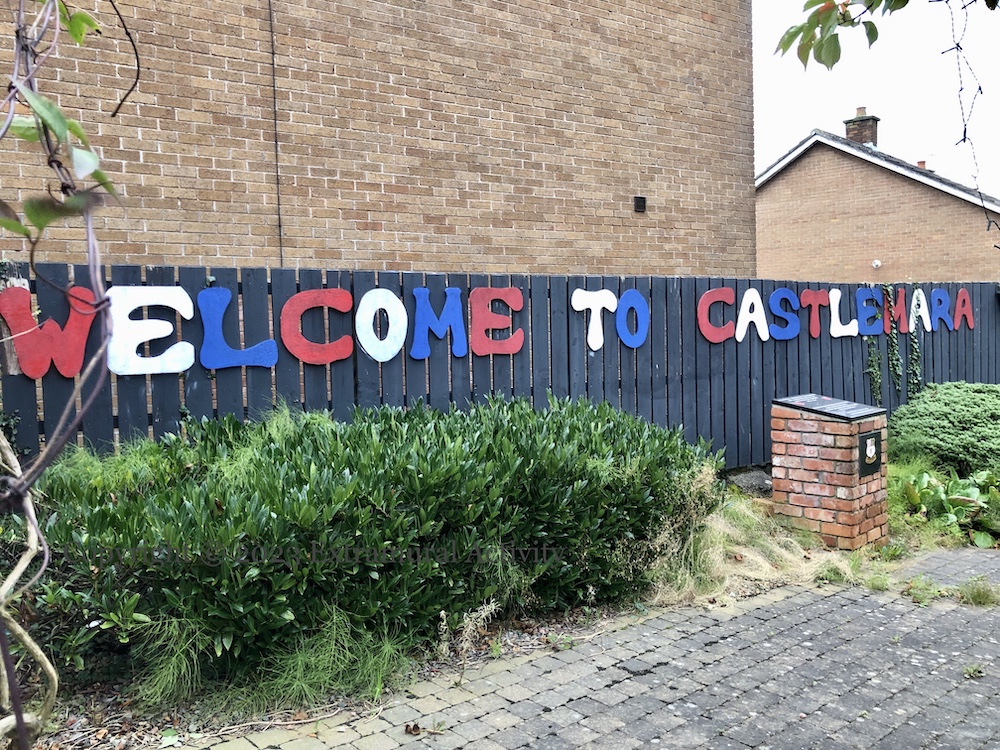
Castlemara residents’ various emotions are on display at the entrace to the estates: celebrating the jubilee of Elizabeth II, the coronation of Charles III, the creation of Northern Ireland in 1921, and Rangers’ 55th league title; saluting Tom Moore; commemorating Prince Philip, 1921-2021; and remembering with gratitude the “100th anniversary of the Battle Of The Somme”: “We must not forget what they gave so we may live. Let not their deaths be in vain. Lest we forget.”














 Extramural Activity