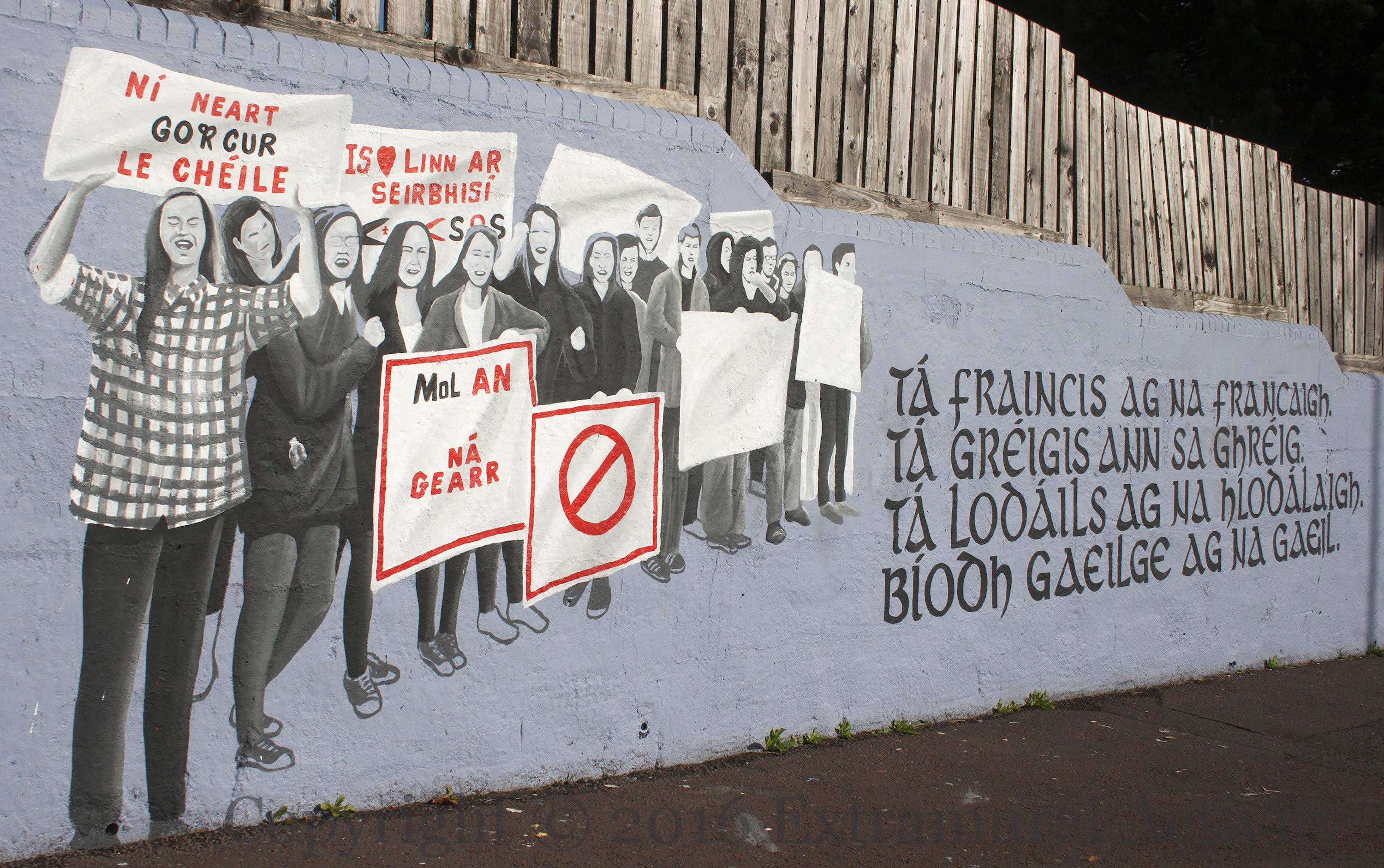
Above is a pro-Gaelic (Irish-language) mural on the Whiterock Road, with signs in Irish being held by young people protesting cuts to social services (on the left) and (on the right) a short poem: “Tá Fraıncıs ag na Francaıgh/Tá Gréıgıs ann sa Ghréıg/Tá Iodáıl[ı]s ag na hIodálaıgh/Bíodh Gaeılge ag na Gaeıl.” That is: the French have French, the Greeks Greek, the Italians Italian; let there be Irish for the Irish.
The mural has been in this (unfinished?) state since October, 2015. Loading? The third line in fact has initial “L”s rather than “I”, which suggests — if a fada is added over the “o”s and the final “s” removed from “Lodáıls” — “the loaders have loading”
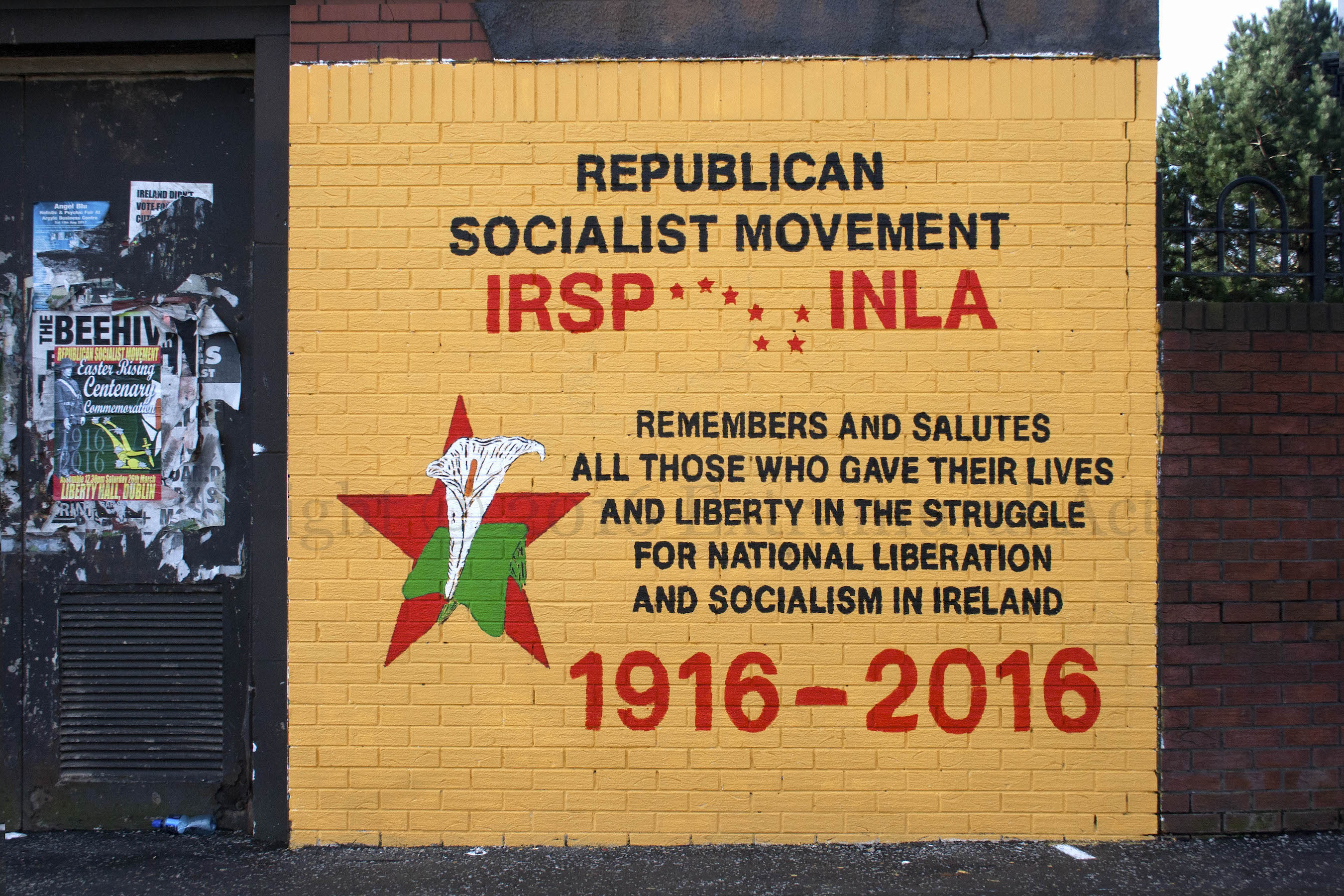
A 1916 centenary mural on Divis Street with the red star of socialism and the Easter lily of Irish nationalism: “Republican Socialist movement — IRSP INLA — remembers and salutes all those who gave their lives and liberty in the struggle for national liberation and socialism in Ireland.”
“Since 455 AD” is the claim of this historical board at the bottom of the modern Shankill Road, 455 being the date of a church of St. Patrick (which was taken over by the Church of Ireland in the plantation and eventually became St. Matthew’s). Whether this makes it older than Belfast depends on how one determines that a place was occupied. The were settlements in the area during the Bronze Age, though the village of Belfast (at the junction of the Lagan and the Farset) might date only to the 600s. For Belfast, see Tours In Ulster (at archive.org) and the WP page on the History of Belfast. Shankill: Newsletter | WP | PlacenamesNI
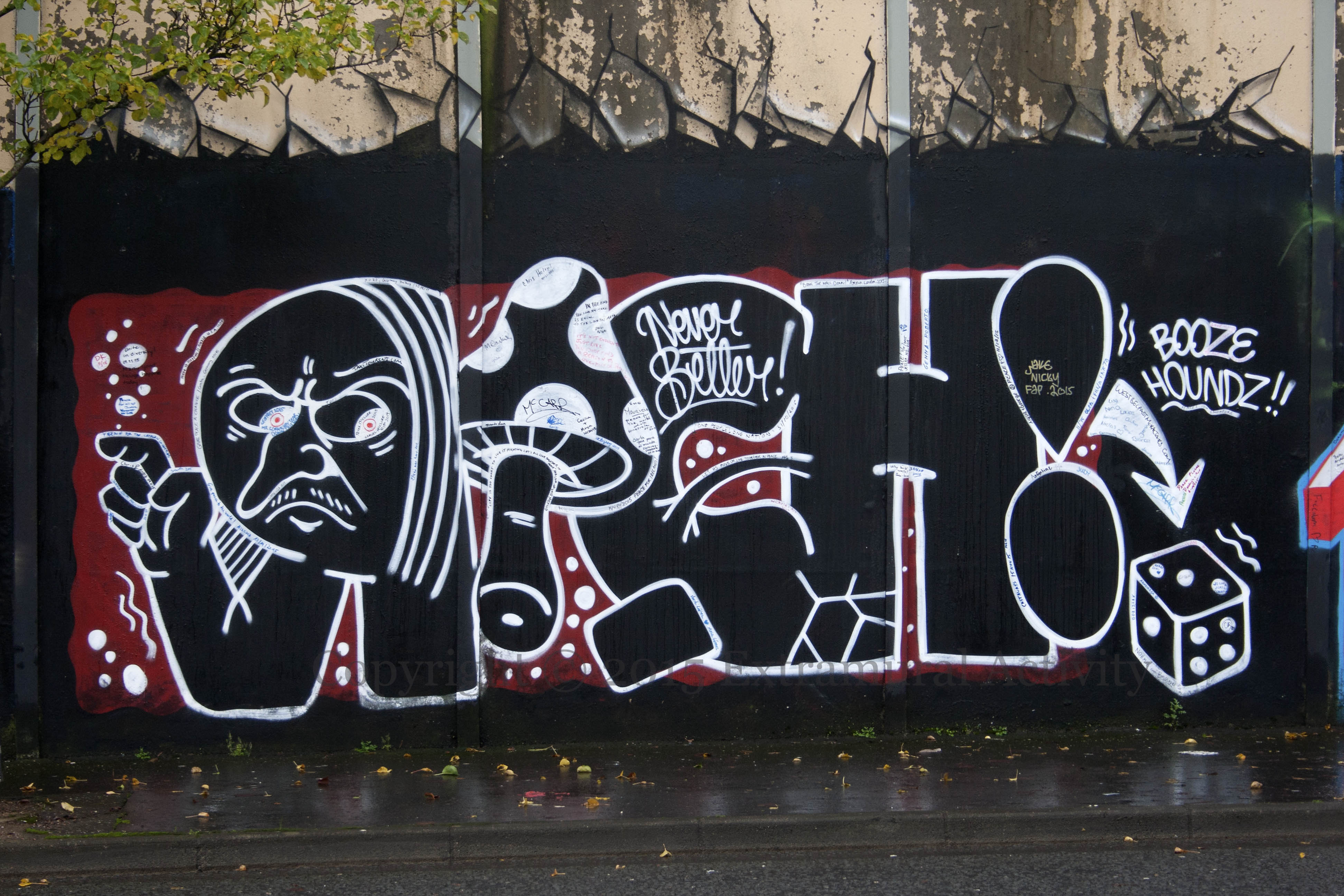
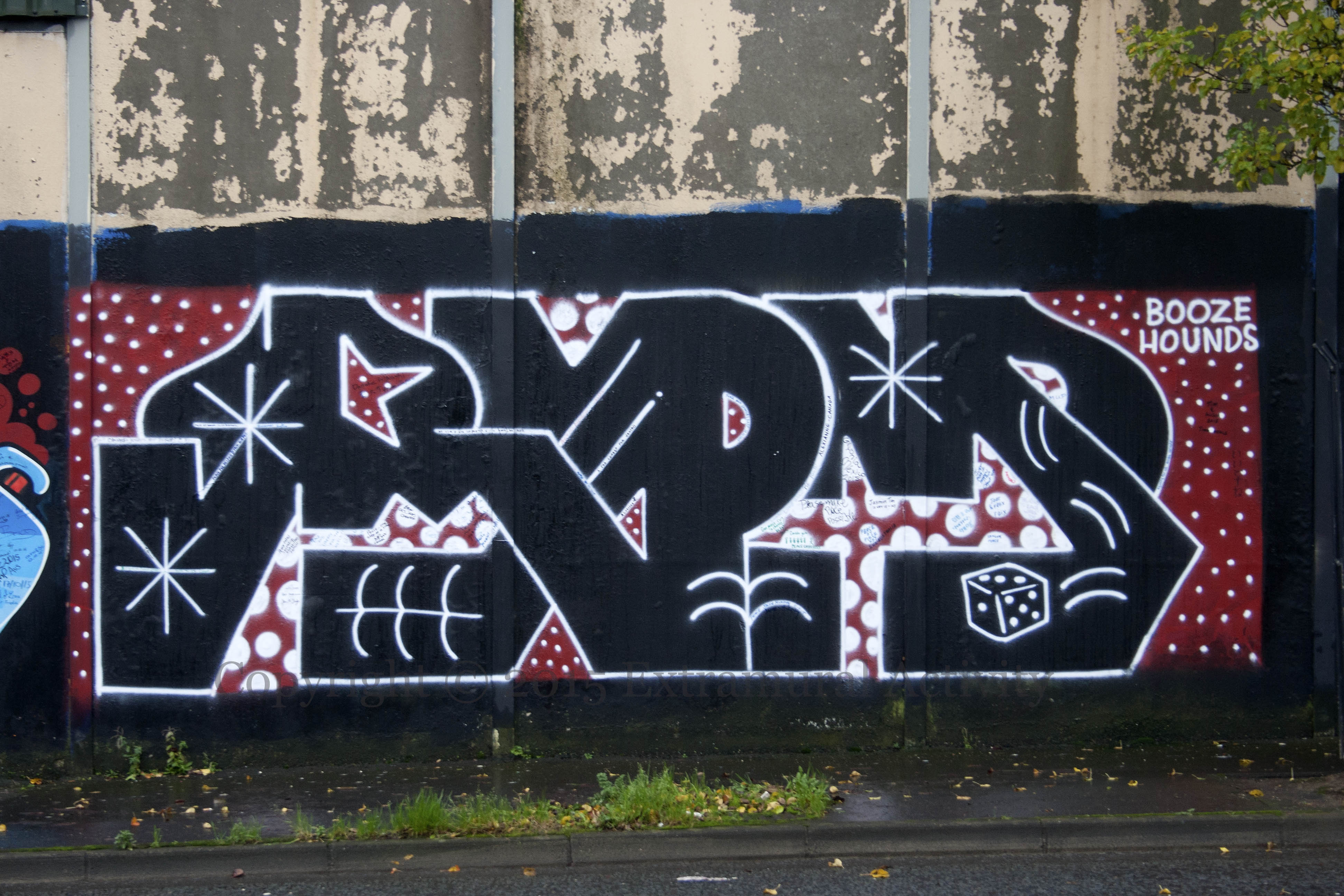
Two pieces by the Booze Houndz — Inkie, RichT, and 45RPM — on the Cupar Way “peace” line, done when they were in town for Culture Night last September.
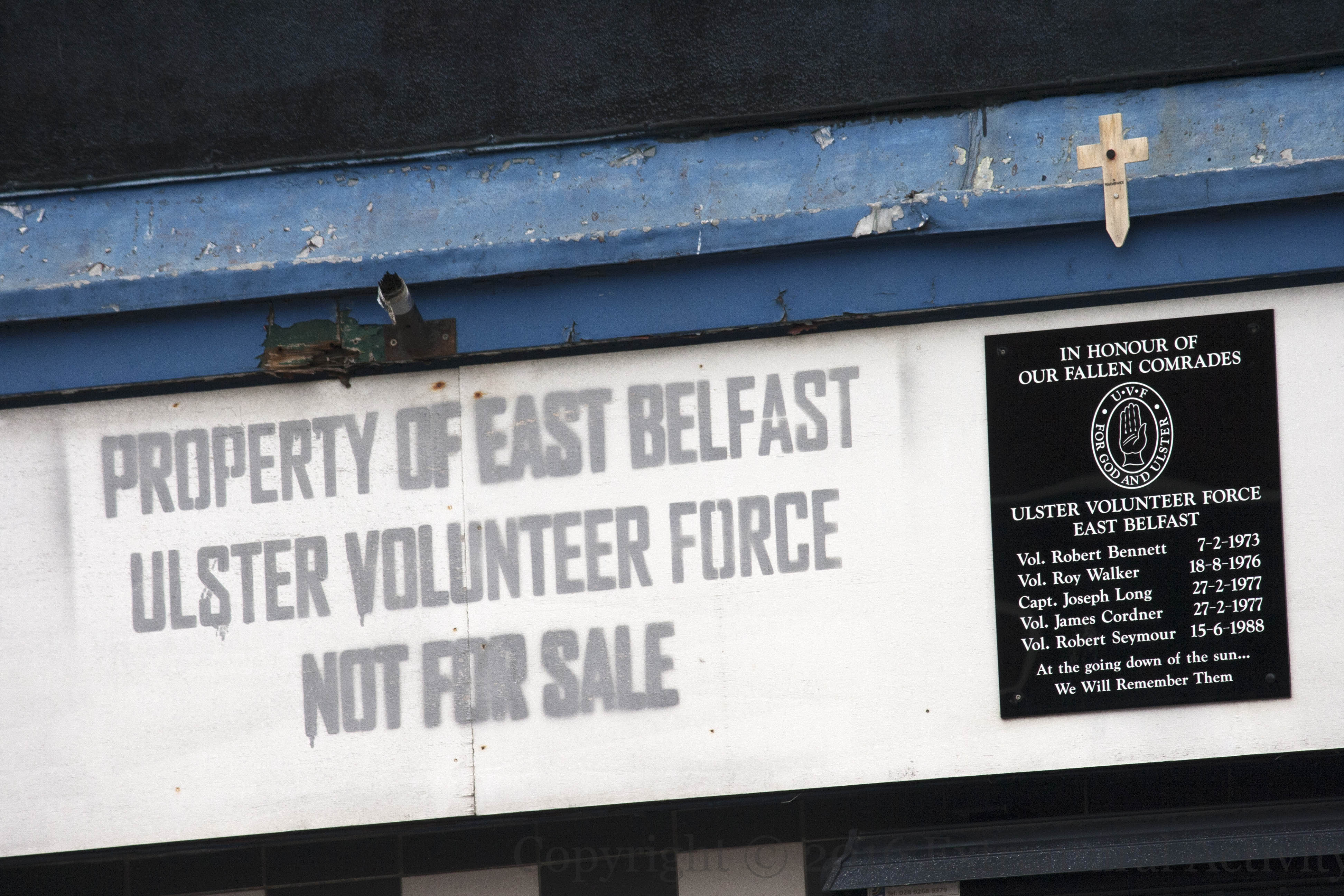
This notice is on the outside of the Belvoir Bar in east Belfast: “Property of east Belfast Ulster Volunteer Force – Not for sale” alongside a plaque to “fallen comrades” Robert Bennett, Roy Walker, Joseph Long, James Cordner, and Robert Seymour. It seems that the bar has been shuttered since 2011 (Belfast Telegraph | Irish Times).
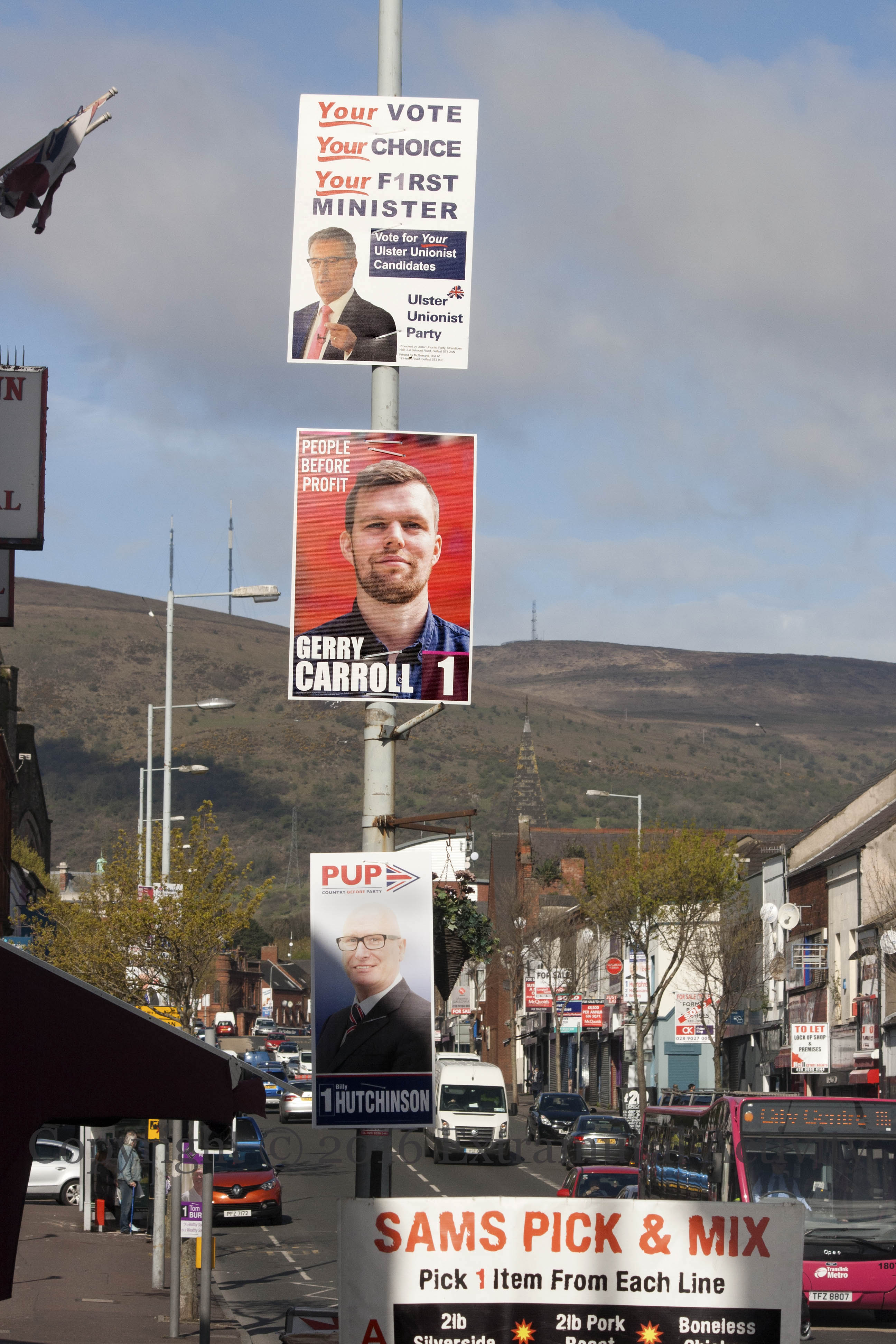
Voters went to the polls today in elections for the Northern Ireland Assembly. The ‘People Before’ candidate (and a current Belfast city councillor), Gerry Carroll, hopes to pick up some transfers from strategic voters on the Shankill.
Also from the current election season: Slippery Road.
Sinn Féin have been over-run by money and lost touch with the community, according to this Ardoyne banner: a boot arrayed with Euro and Sterling signs tramples on the Sinn Féin symbol. “Say No to budget cuts! Say No to welfare reform. Community.”
Stanislaw Sosabowski — who appears in the apex of this new mural in east Belfast — survived the first World War (fighting for Austria-Hungary), the occupation of Poland in 1939, and escaped from a prisoner-of-war camp before crossing Europe and taking command, in Britain, of the 1st Polish Paras. The unit fought in Operation Market Garden at the Battle Of Arnhem. (WP | Polish Heritage Society for a booklet of text and images)
His memoirs have been published as Freely I Servedand interviews about his service were collected for a film called A Debt Of Dishonour (youtube) – the title comes from the fact that Sosabowski was blamed for the failure of the Operation, perhaps as a bargaining tactic in negotiations between Britain, Russia, and Poland.
Across the middle of the mural are airmen from the 303 Polish Squadron, which was celebrated in a Shankill mural last year: Love Demands Sacrifice. In the foreground is a modern British paratrooper in field gear.
For images of the launch last week, see WWIIPolesNI.
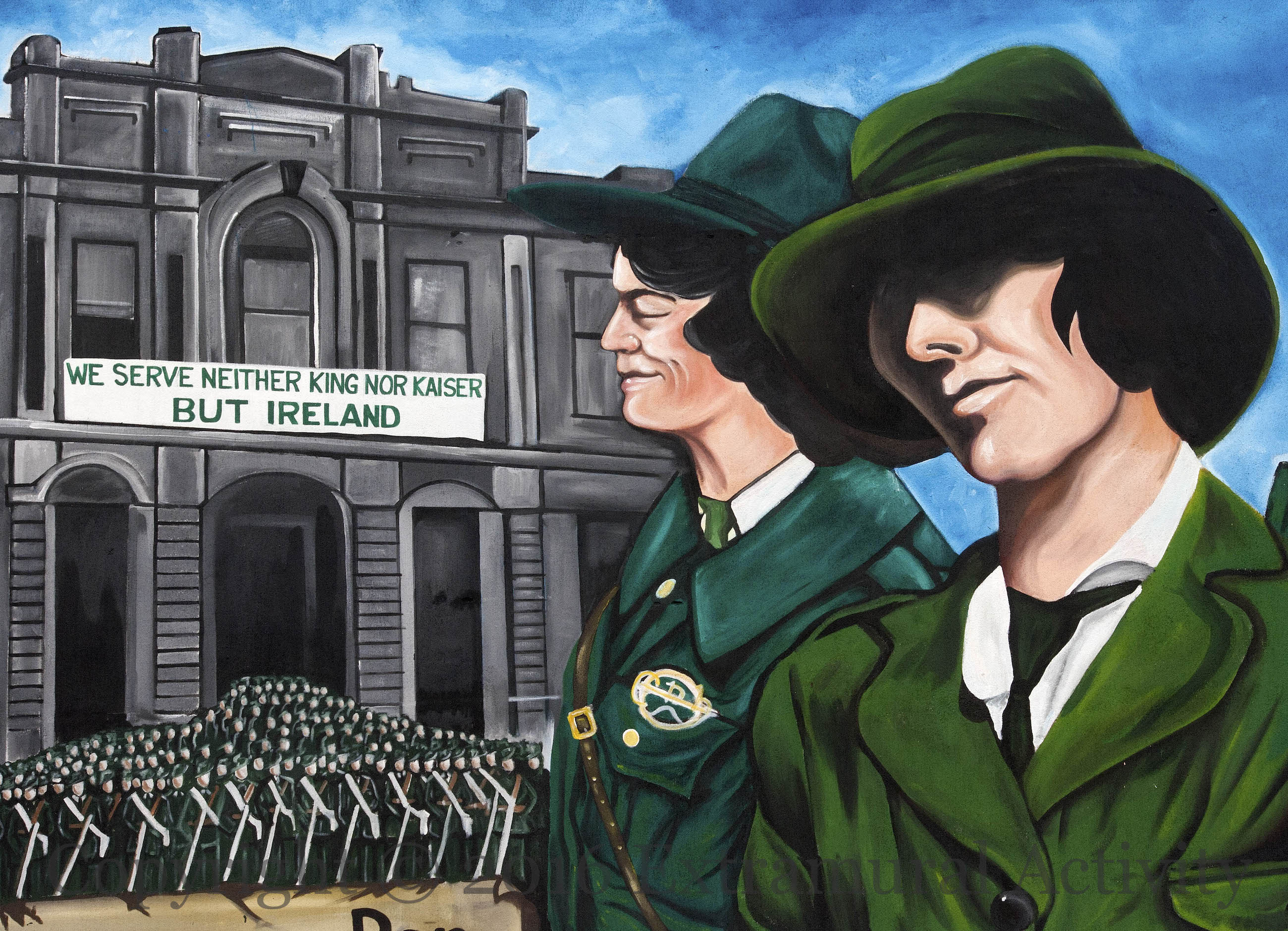
Nell (l) and Elizabeth (r) Corr from 107 Ormeau Road joined Cumann Na mBan in 1915 and travelled to Dublin in 1916 (with Nora Connolly, Ina Connolly, Bridie Farrell, Lizie Allen, Kathleen Murphy, and another girl called O’Neill (Treason Felony)) to serve as messengers in the preparations for April’s Easter Rising. They were in Liberty Hall (shown in the detail above) on the morning of the rising before heading north. Brother George, on the other hand, died at the Somme as a soldier in the Australian infantry, while another brother, Charles, fought in WWI with the Canadian Expeditionary Force. They are pictured on the left-hand side of the mural. (BBC | BBC video) There are two images of the work in-progress at the bottom of the post.








 Extramural Activity