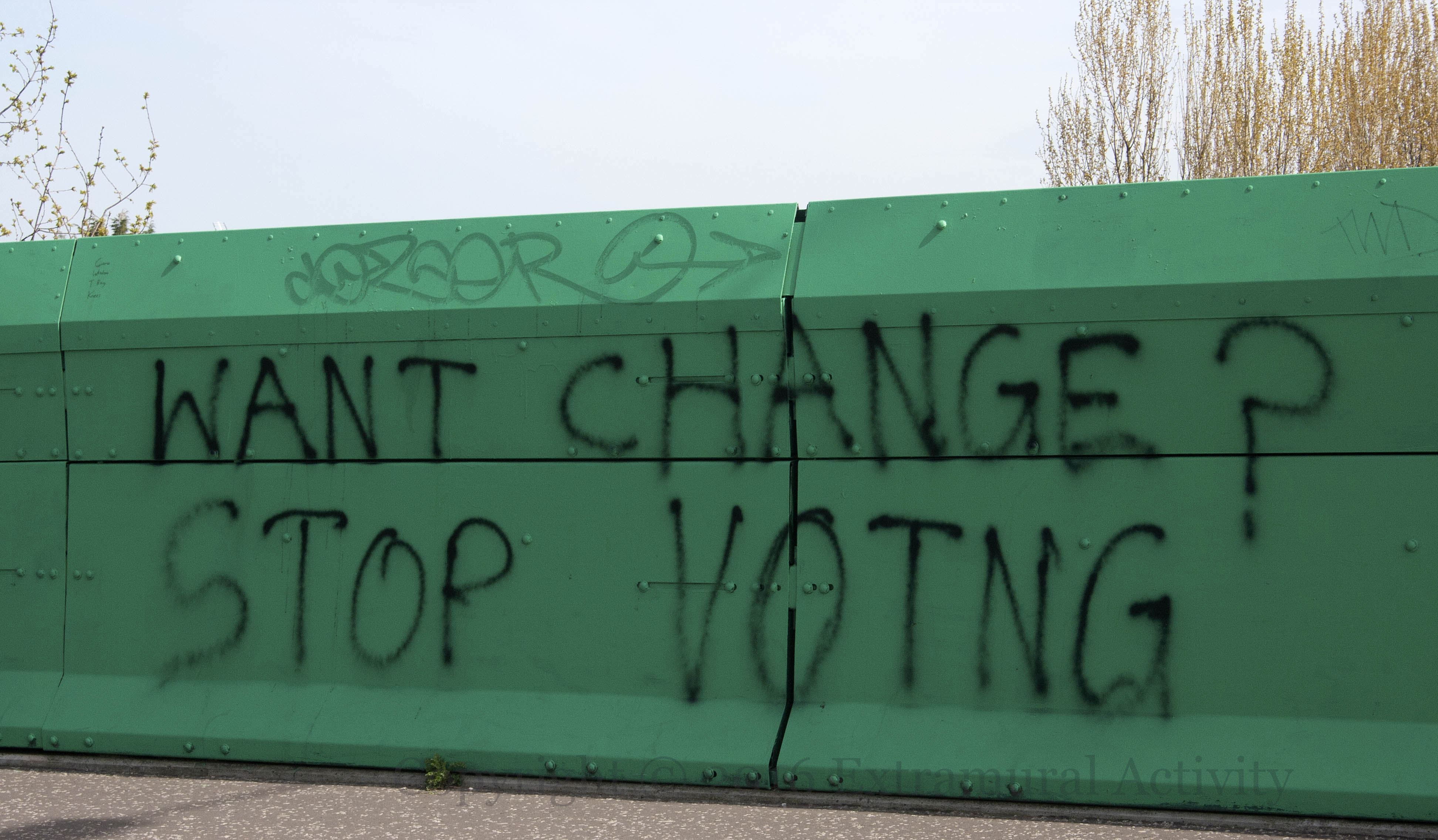
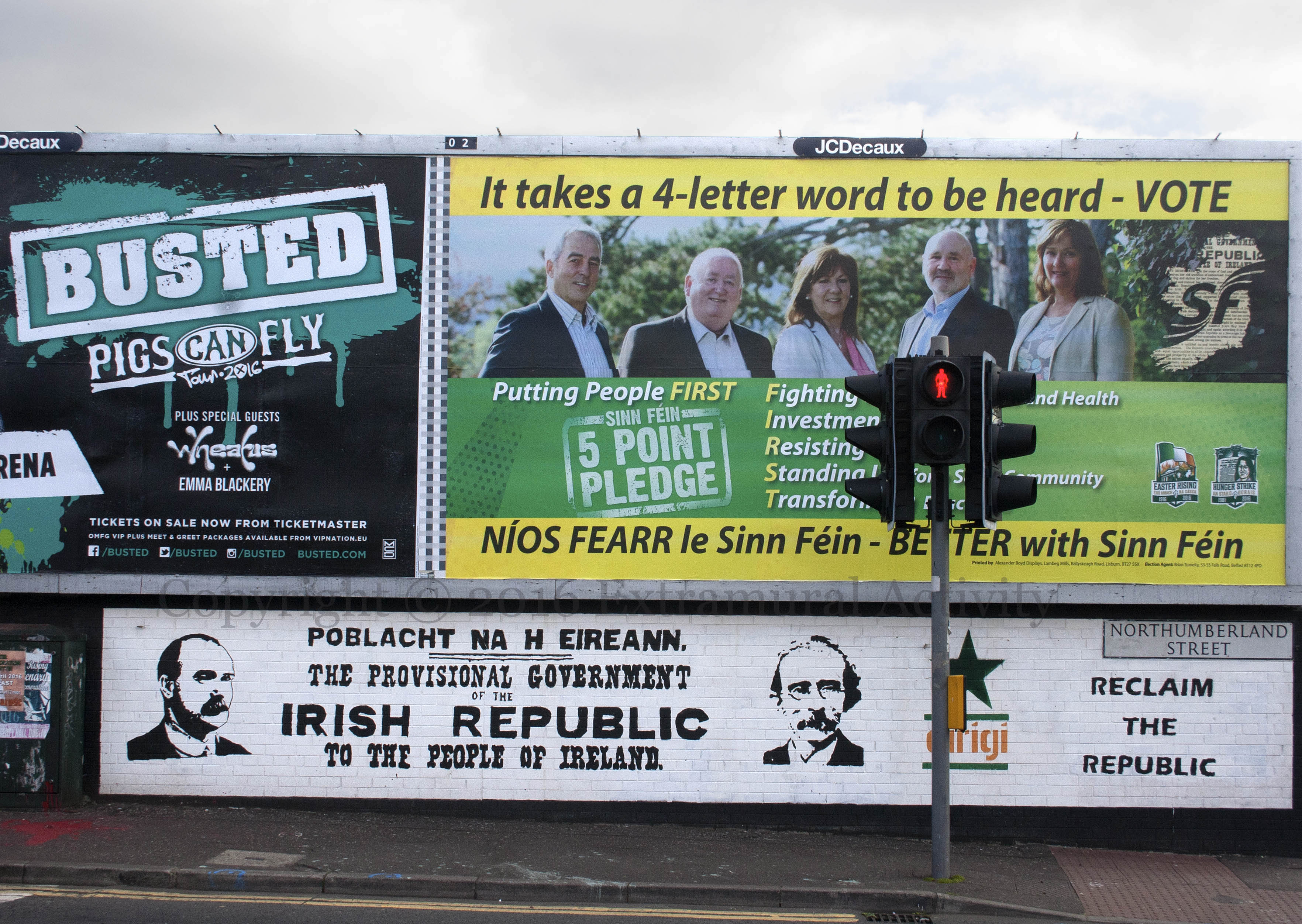
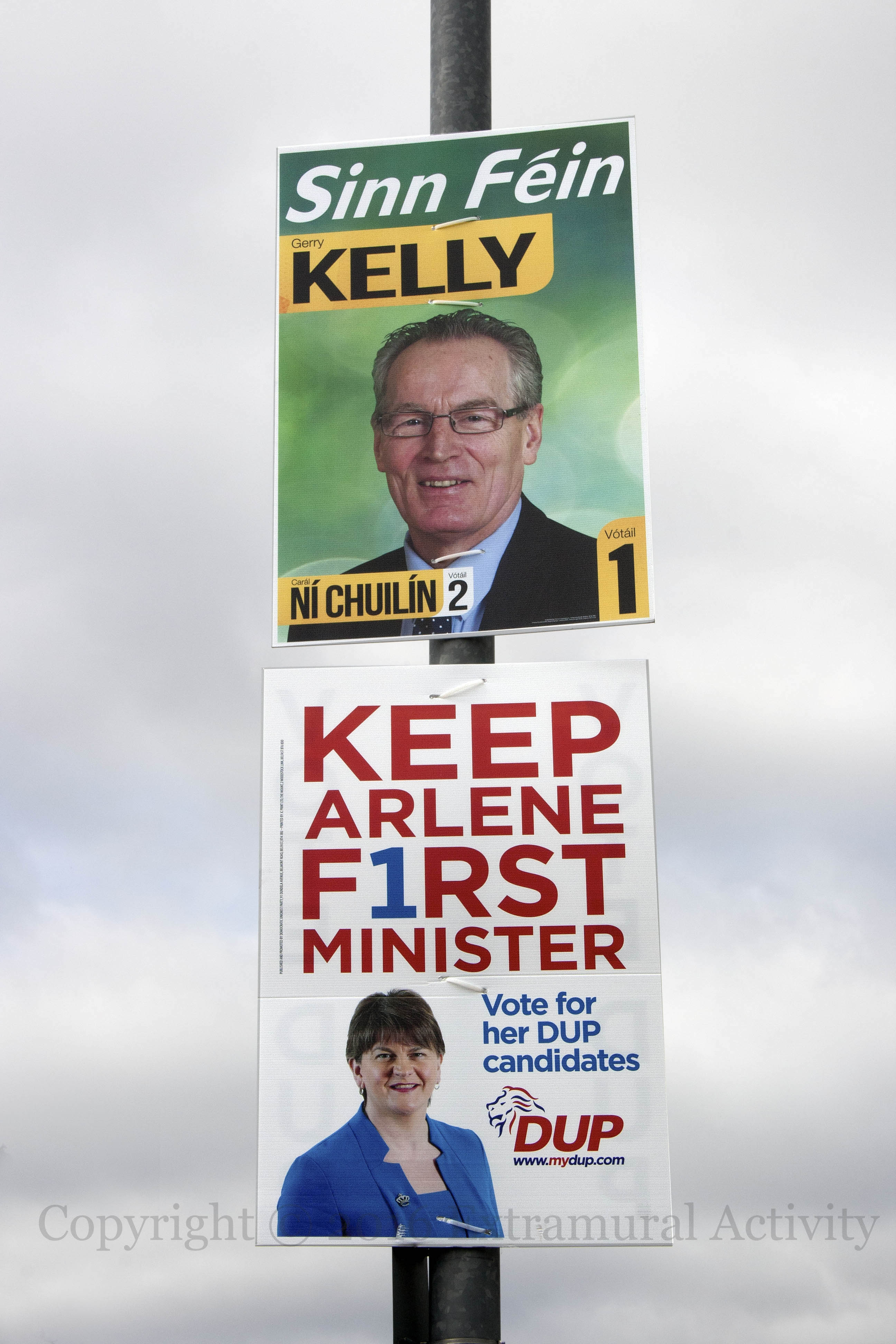
Three more images from the recent electoral season. Political parties were putting up hoardings and posters everywhere, such as Sınn Féın’s “Vote” ad (next to one for the rock-band Busted on their ‘Pigs Can Fly’ tour) and the DUP’s use of the spectre of a nationalist first minister as a reason to “keep” Arlene Foster and colleagues. Above, however, the watch-word is “stop”: “Want change? Stop vot[i]ng”.
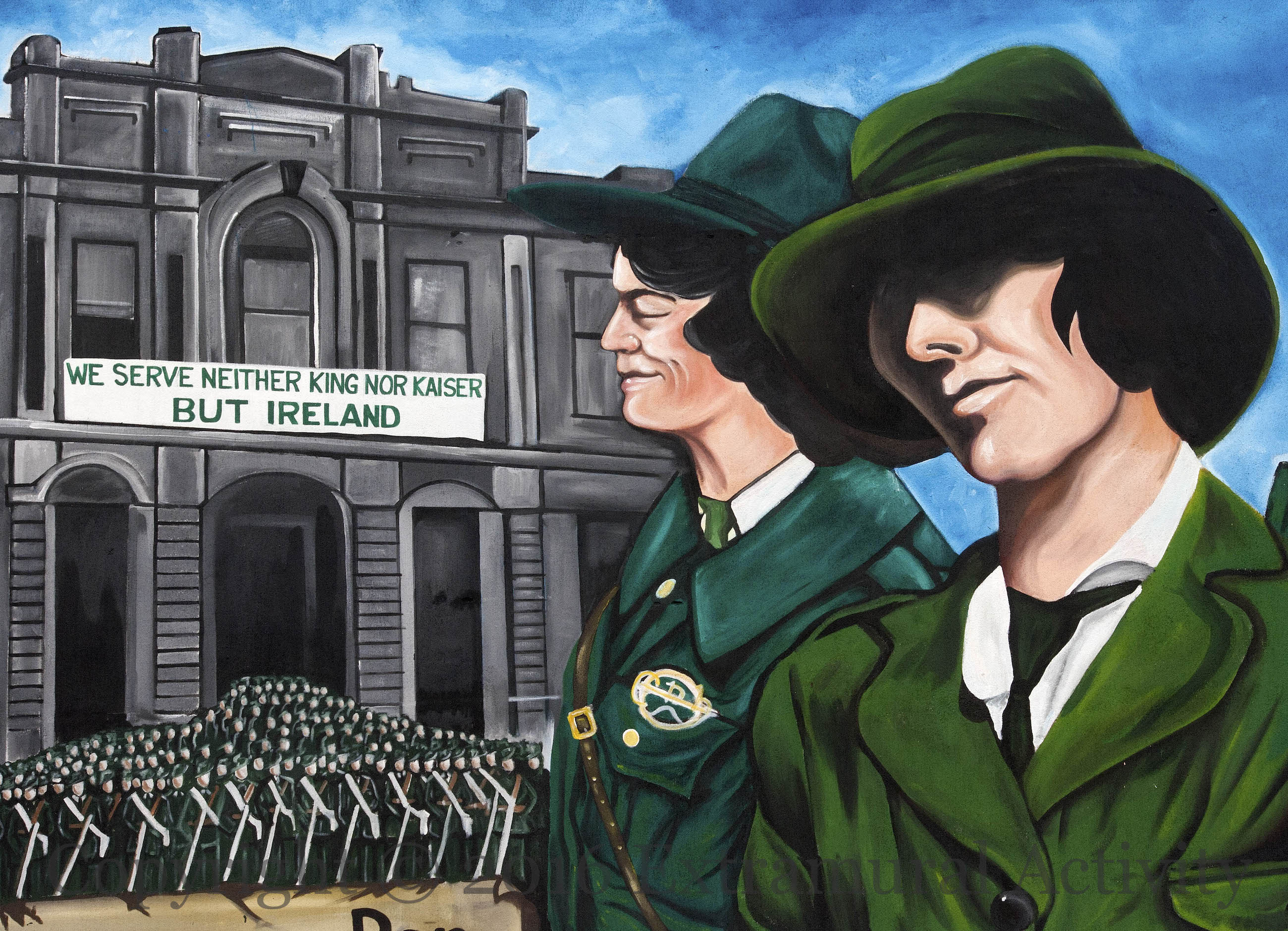
Nell (l) and Elizabeth (r) Corr from 107 Ormeau Road joined Cumann Na mBan in 1915 and travelled to Dublin in 1916 (with Nora Connolly, Ina Connolly, Bridie Farrell, Lizie Allen, Kathleen Murphy, and another girl called O’Neill (Treason Felony)) to serve as messengers in the preparations for April’s Easter Rising. They were in Liberty Hall (shown in the detail above) on the morning of the rising before heading north. Brother George, on the other hand, died at the Somme as a soldier in the Australian infantry, while another brother, Charles, fought in WWI with the Canadian Expeditionary Force. They are pictured on the left-hand side of the mural. (BBC | BBC video) There are two images of the work in-progress at the bottom of the post.
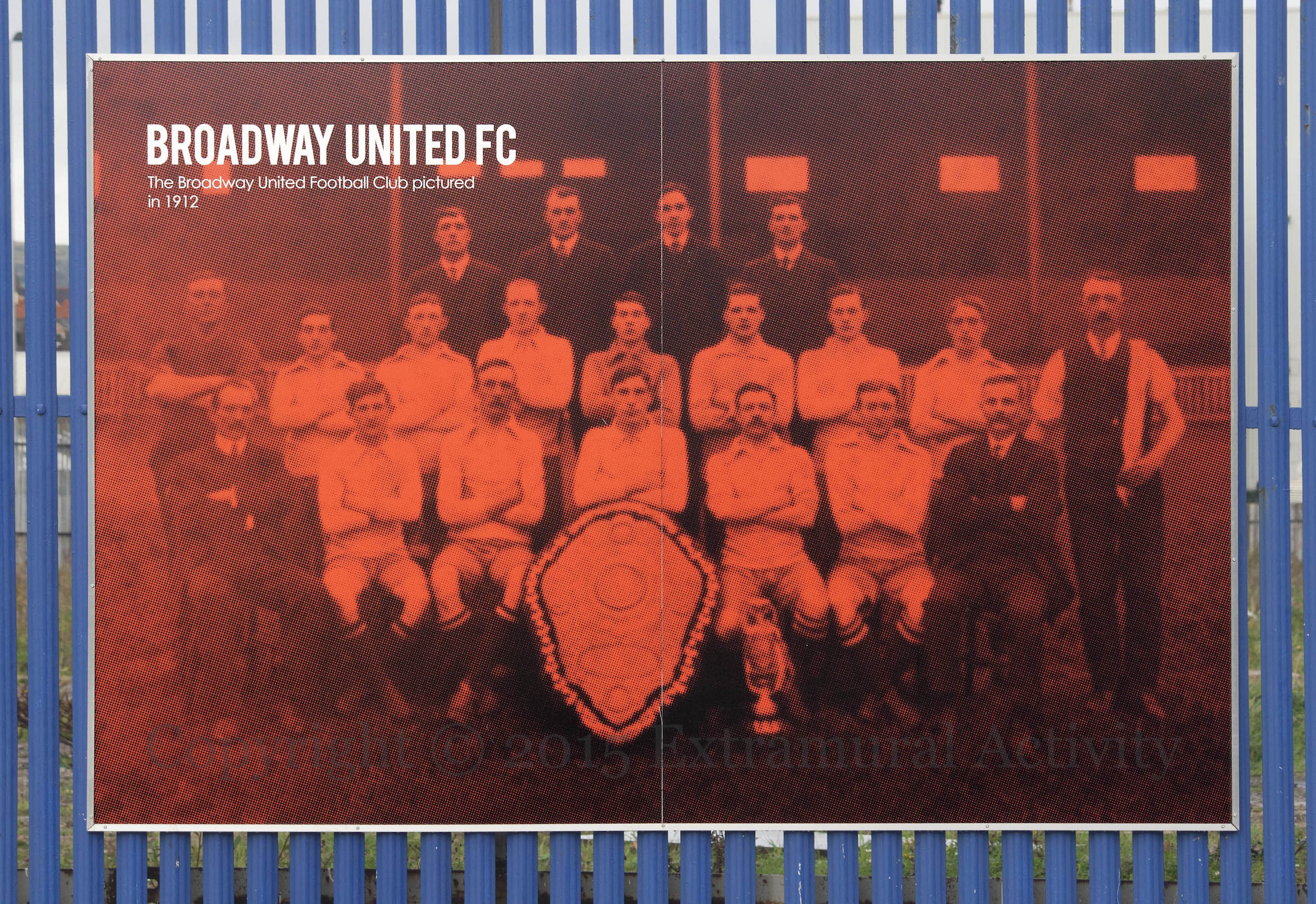
Information on-line is scarce concerning Broadway United FC. They might have been an intermediate team but are said to have won the junior Irish Cup in 1912 — the date of the image above in which the team poses with its trophies — beating Black Watch FC 1–0.
Liverpool’s longest serving player, goalkeeper Elisha Scott (WP), began his career at Broadway United, playing there for two years before making 402 appearances at Anfield and then going to Belfast Celtic as player and manager. The Irish Times has a profile of Elisha and his brother Billy, goalkeeper at Everton. (Thanks to John Duffin for these links.)
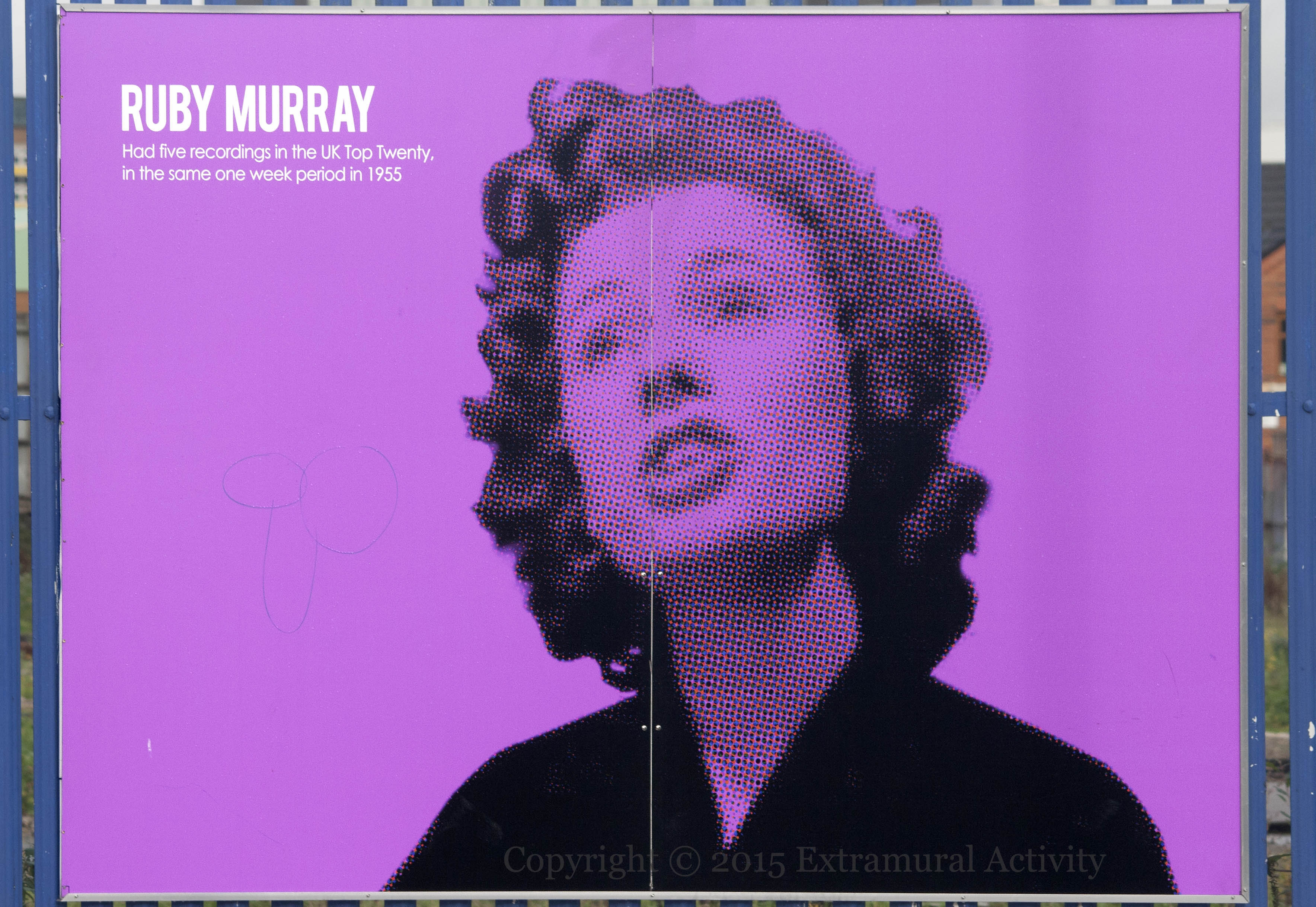
In 1955, Ruby Murray — who was born and raised on Donegall Road — had a #1 hit with Softly, Softly (youtube) and it stayed at the top for three weeks. She went on to have six other top-ten hits that year and in one week five of her songs were in the top twenty.
A woman standing in the sea befriends a giant salmon in this mural by Lesley Cherry (web | Fb) behind the Windsor Women’s Centre (Fb) on Broadway in south Belfast. “Trust – Knowledge – Grow – Teach – Play – Love”. Close-up of the left-hand side below.
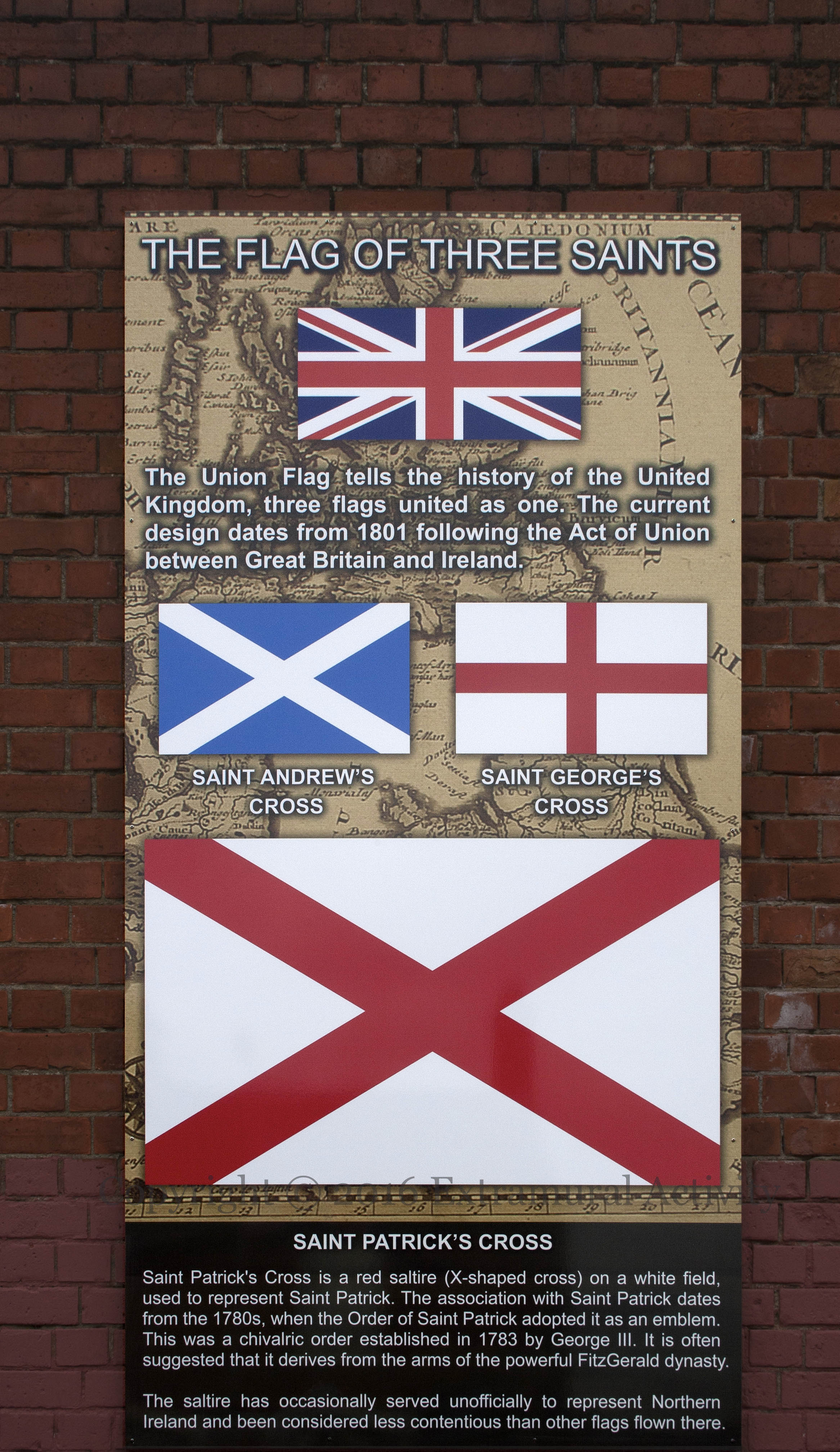
Here is the final board in the new “St Patrick” set on Tates Avenue (and a wide shot of them all, below). This one explains the composition of the Union flag as a combination of the saltire of Saint Andrew of Scotland, the cross of Saint George of England, and the saltire of Saint Patrick of Ireland. As the text notes, the saltire is much later than the saint: “The association with Saint Patrick dates from the 1780s, when the Order of Saint Patrick adopted it as an emblem. This was a chivalric order established in 1783 by George III. It is often suggested that it derives from the arms of the powerful FitzGerald dynasty [which dates to the 12th century].”
The text ends oddly: “The saltire has occasionally served unofficially to represent Northern Ireland and [has] been considered less contentious than other flags flown there.” Similar language is used on the symbols.com page for the Saltire.
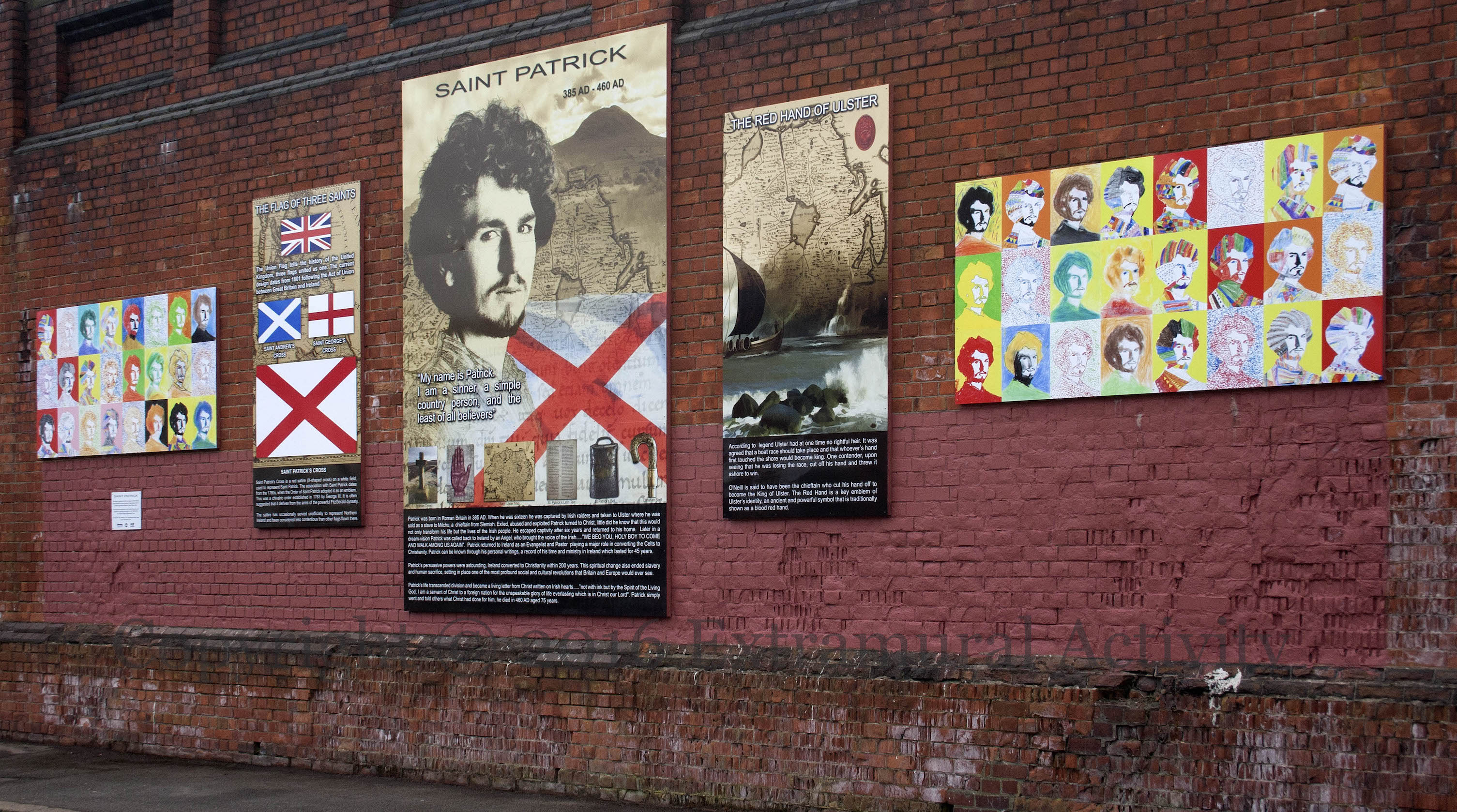
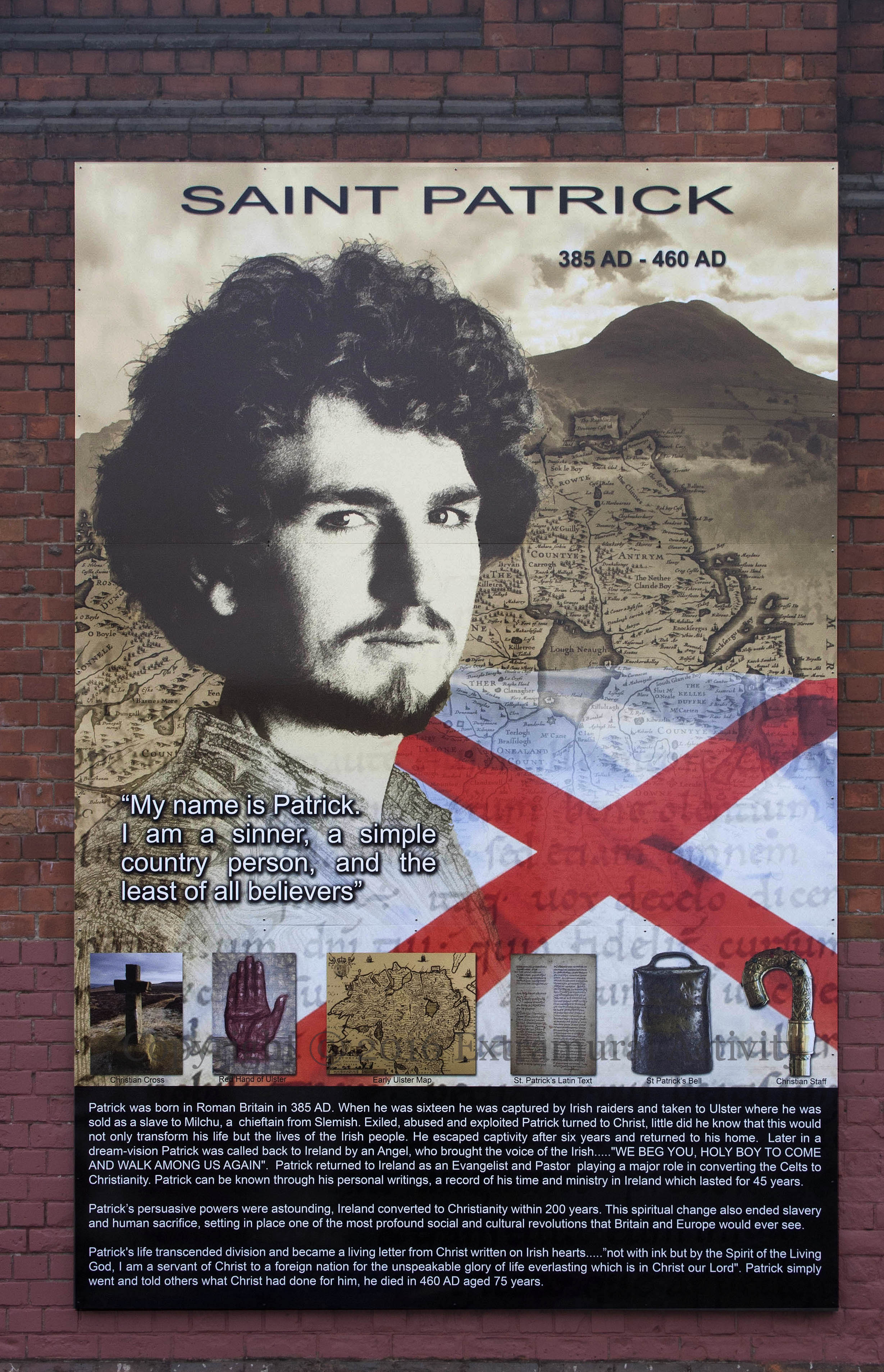
Featured today are two (more) of the boards in a set on Tates Avenue. The central board, shown above, shows a young Patrick (without the clerical garb in which he is often portrayed) against the backdrop of Slemish mountain, where Patrick is thought to have tended sheep as a young slave to a local chieftain, c. 401 AD and developed his Christian faith.
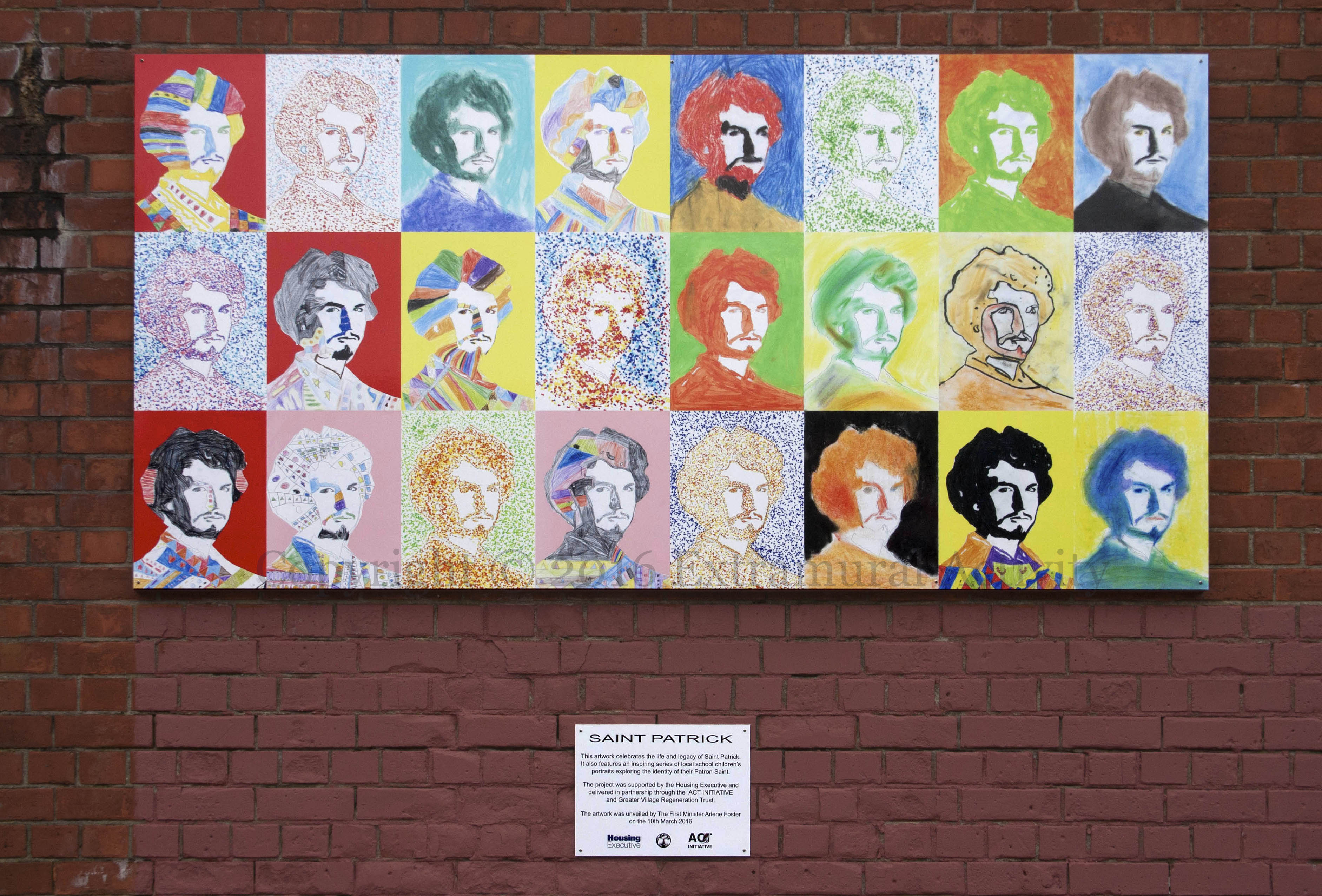
The second image is of colourings of the Saint Patrick profile by children from the nearby Donegall Road Primary School.
The boards were unveiled on March 10th, 2016 by first minister Arlene Foster who remarked that the saint had become “very Gaelicised” and this — and the presence of Irish tricolours at parades — deterred unionists from celebrating “the patron saint of everybody in Northern Ireland” (Belfast Telegraph; also contains video of the launch). Anglicanism venerates saints but Presbyterianism does not, generally taking the “communion of saints” to refer to all members of the church.
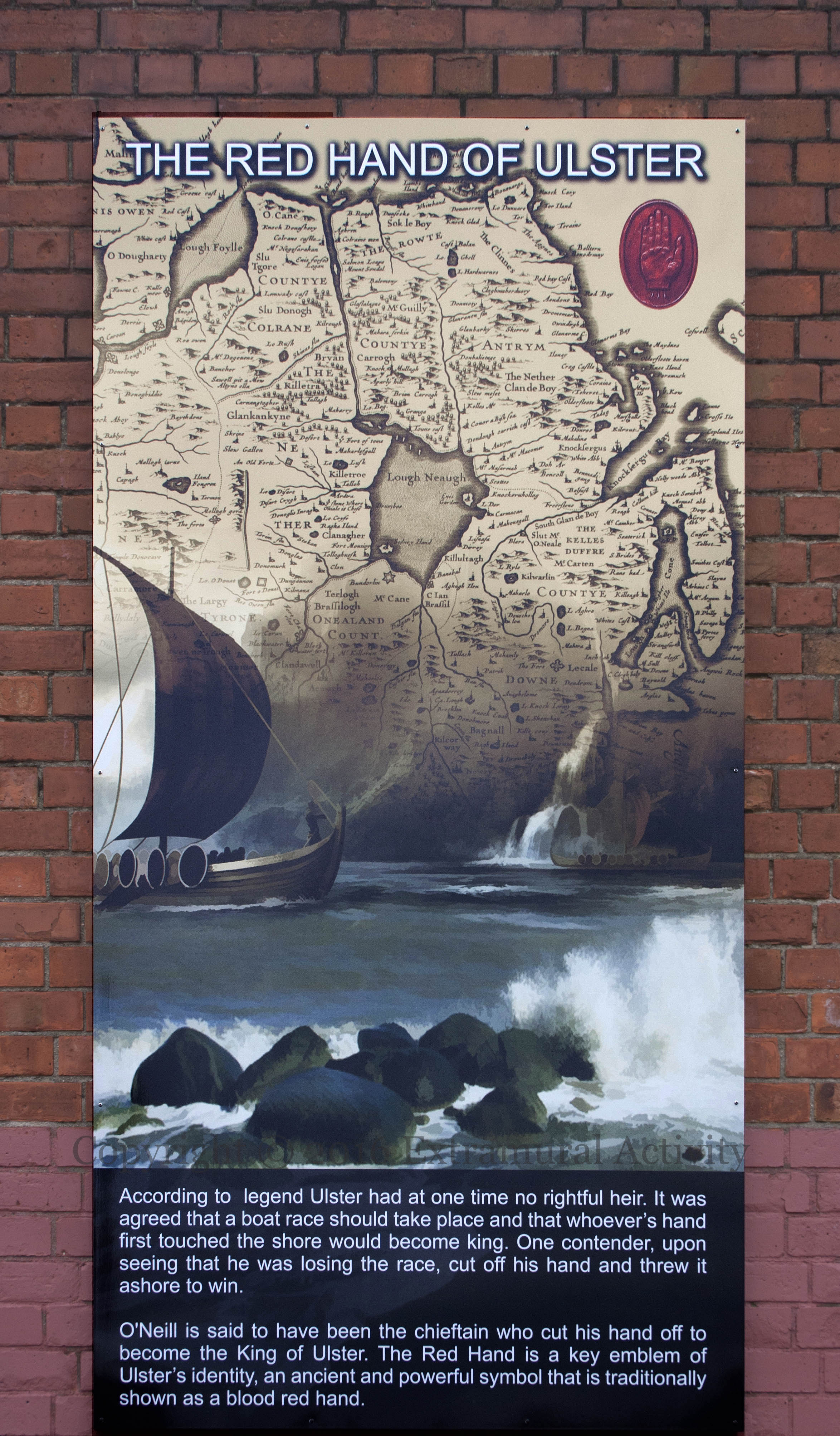
Here is one of the new boards on Tates Avenue (the others will be featured over the next two days). It shows a ship racing towards shore, superimposed over a 1659 map of Ulster by Blaeu.
“The Red Hand Of Ulster: According to legend Ulster had at one time no rightful heir. It was agree that a boat race should take place and that whoever’s hand first touched the shore would become king. One contended, upon seeing that he was losing the race, cut off his hand and threw it ashore to win. O’Neill is said to have been the chieftain who cut his hand off to become the King of Ulster. The Red Hand is a key emblem of Ulster’s identity, an ancient and powerful symbol that is traditionally shown as a blood red hand.”
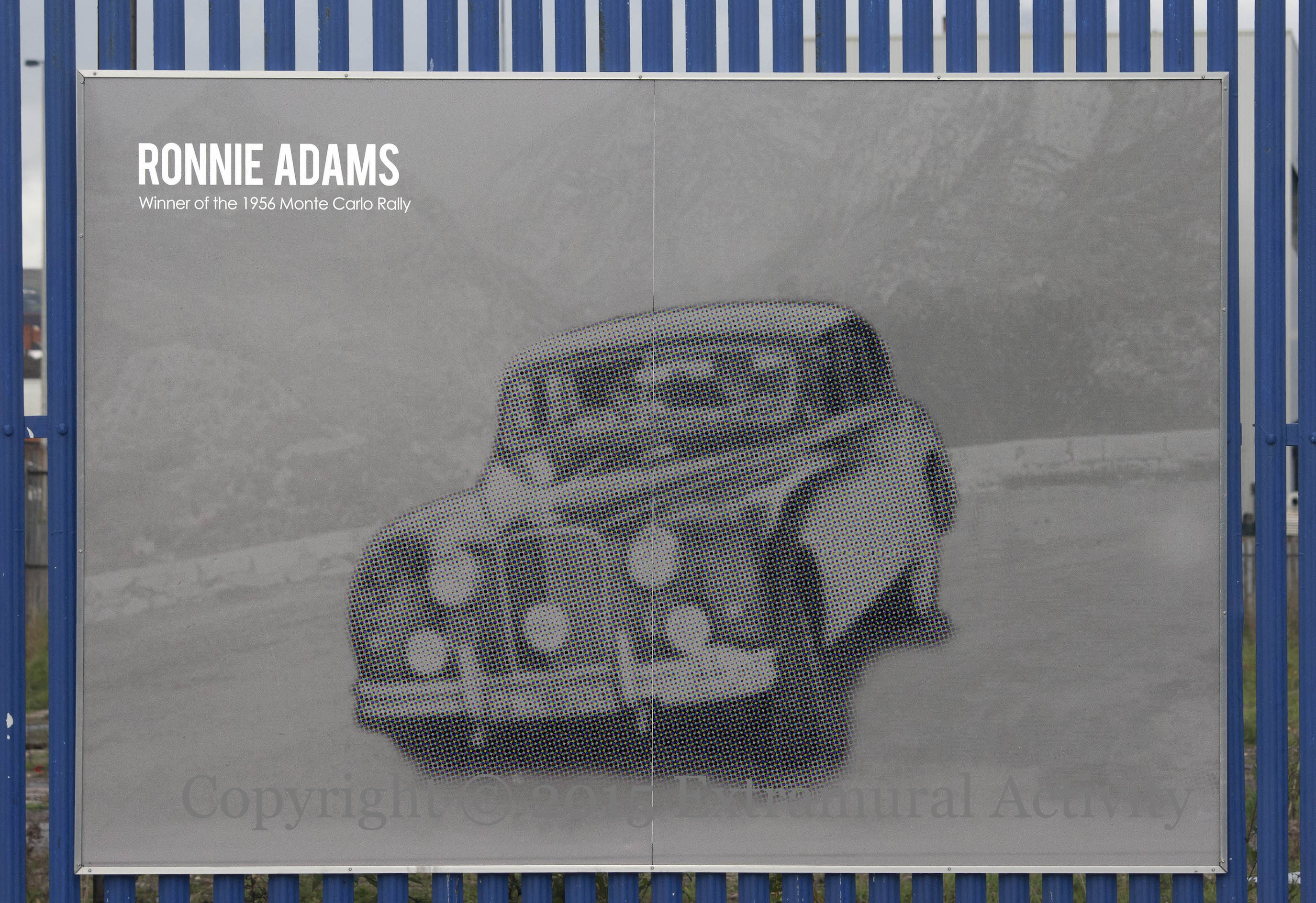
Ronnie Adams was born in Belfast in 1916. He began driving at age 11 and rallying at age 18. He is shown above in a Jaguar Mk. VII, en route to winning the Monte Carlo Rally in 1956, which was also around the time that he took over the family textile business from his deceased father — Adams remained an amateur driver his whole life.
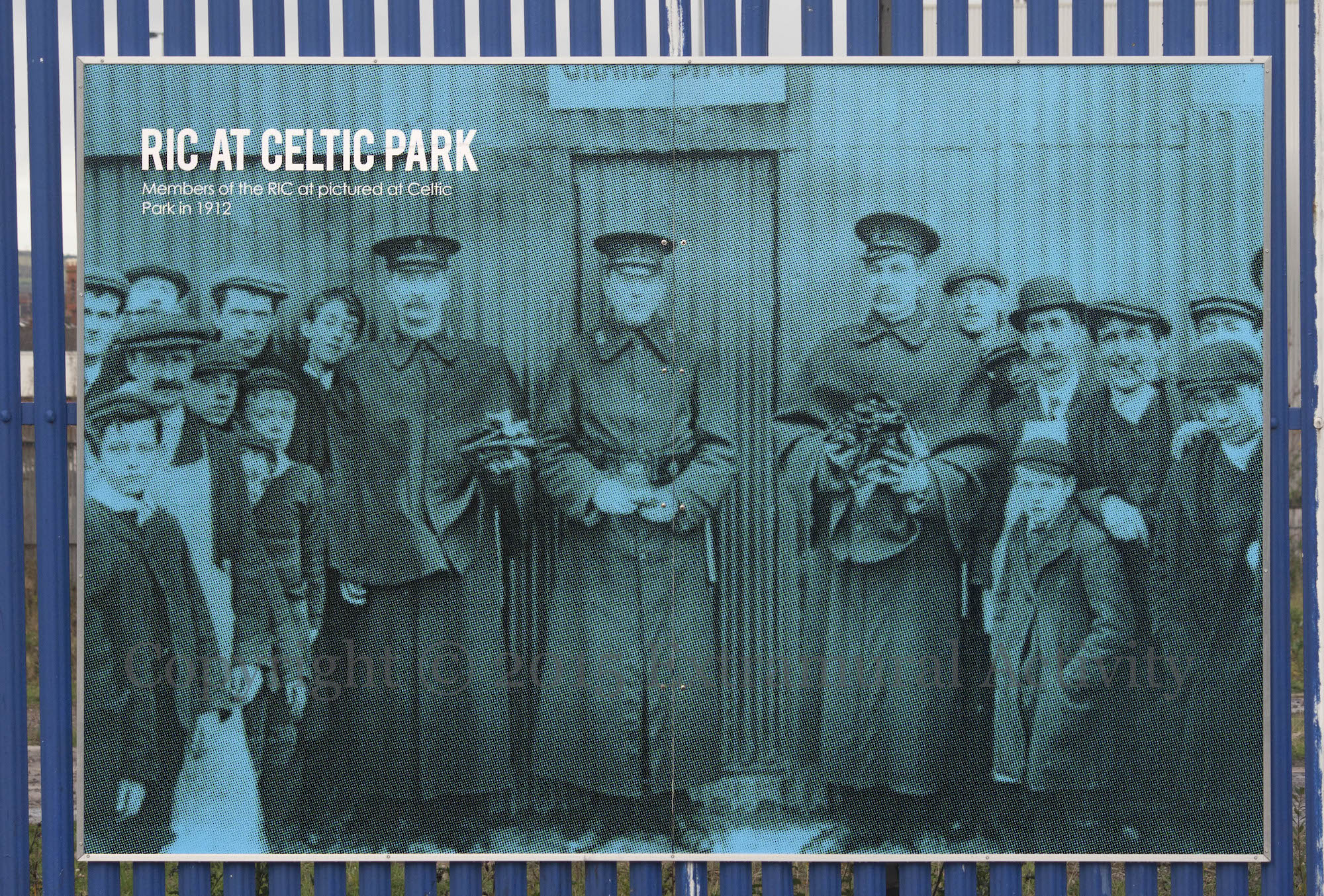
The image above shows three members of the Royal Irish Constabulary outside Belfast’s Celtic Park in 1912. The event is perhaps a visit by Lord Pirrie, Winston Churchill, and John Redmond to speak in favour of the Home Rule bill at a meeting of the Ulster Liberal Association on February 8th. (You can see at ticket for the event at Decade Of Centenaries.) The meeting was originally to be held in the Ulster Hall, but this was blockaded by Unionist protesters (Irish History). According to one site, Churchill was “nearly lynched” by angry Protestants outside the grounds.




 Extramural Activity