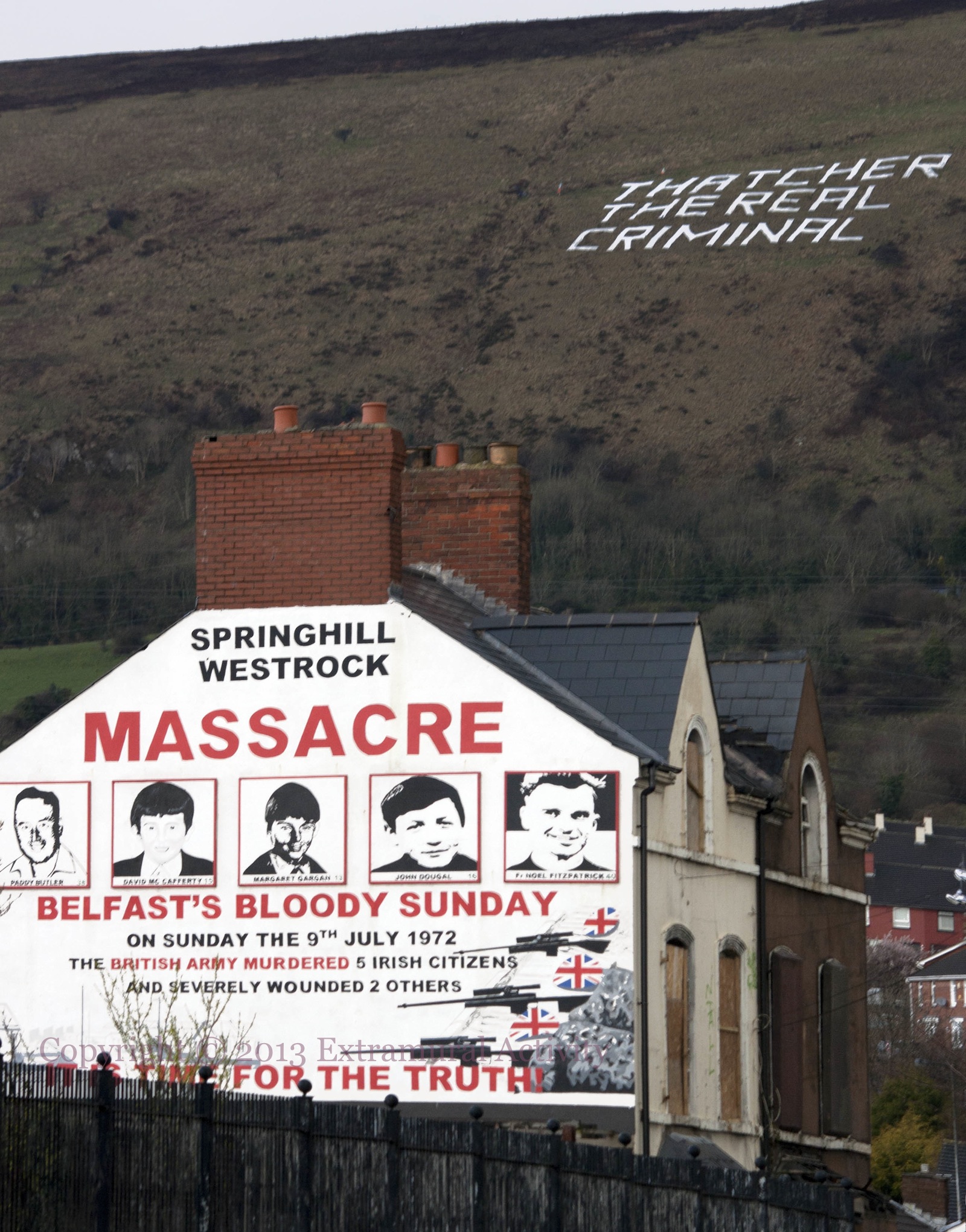
“Thatcher The Real Criminal” on Black Mountain, overlooking the Springfield Road, with a Mo Chara Kelly mural in the foreground, commemorating the deaths of five people shot by British army snipers in 1972.
This picture was taken on April 18th; on April 19th the lettering on the hillside had been removed.
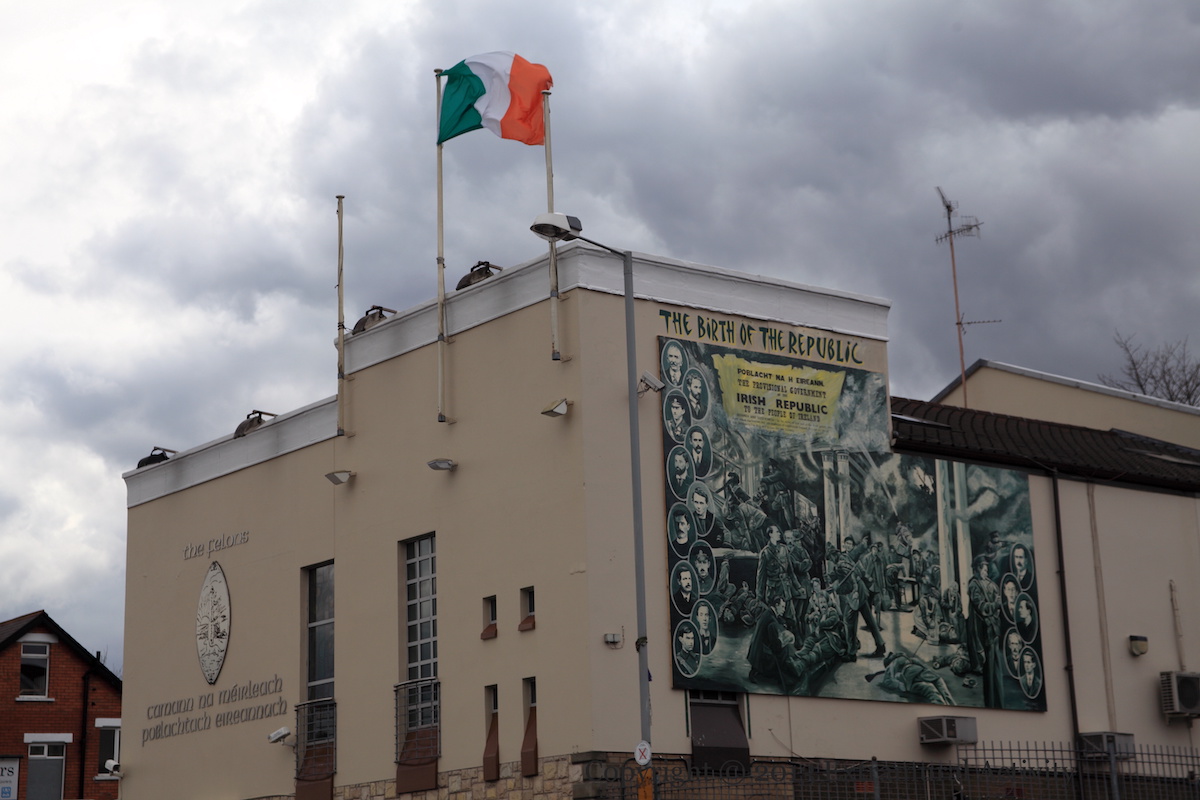
In addition to the seven signatories of the Proclamation of an Irish Republic, 9 other leaders of the Easter Rising were executed in the wake of the rebellion. The portraits of all 16 are part of this new mural (on boards) of Walter Paget’s painting The Birth Of The Irish Republic. (For Paget’s painting, see the painting’s Visual History page.) In order of appearance, the 16 (with links to their WP pages) are …
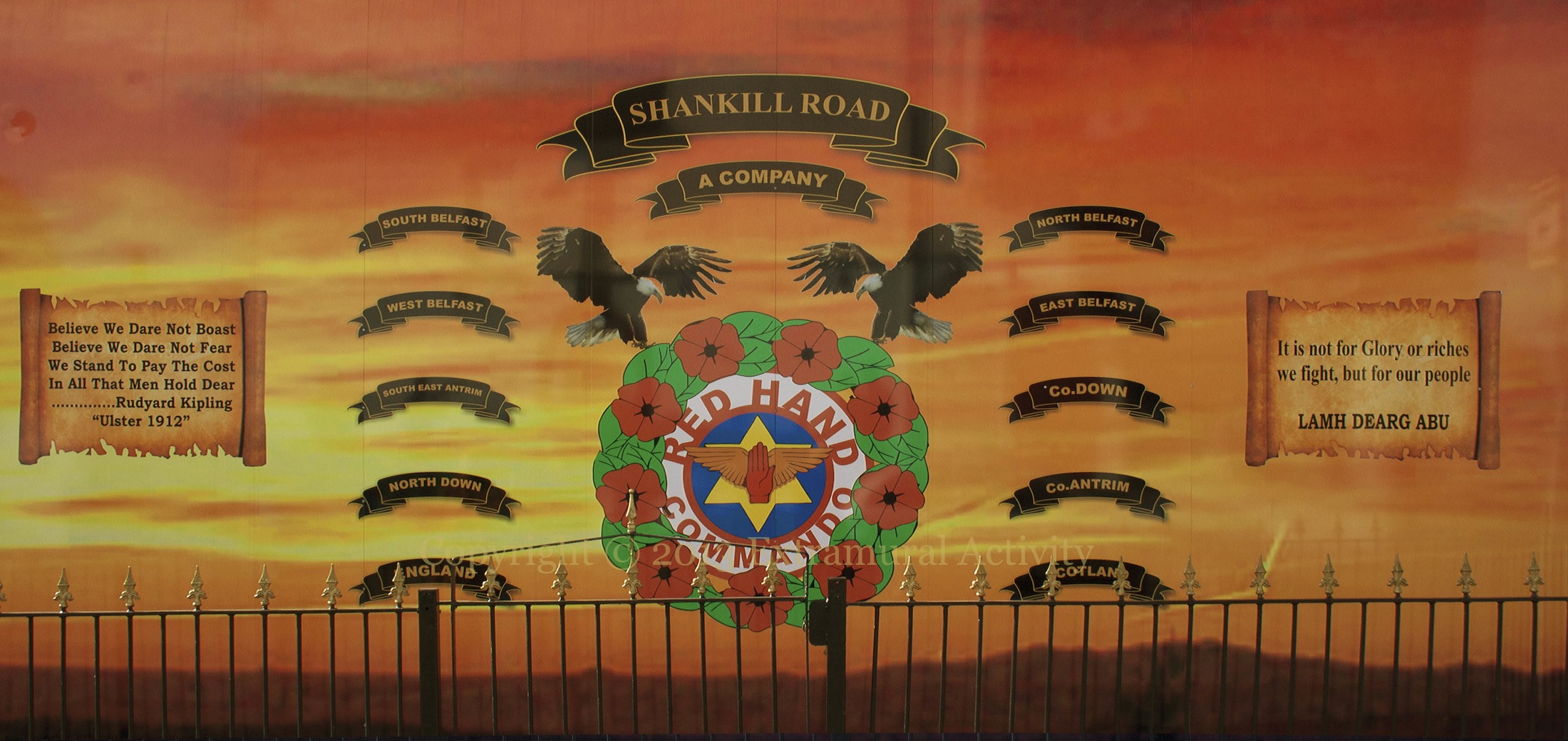
A few words of Irish – “Lamh Dearg Abu” – in a loyalist mural in Glenwood Street, just off the Shankill Road, through strictly it should be “Lámh Dhearg Abú”. “Lámh dhearg” means “red hand”, and this is a Red Hand Commando mural.
The same motto was on the mural that this one replaced, which can be seen at M02433.
The title of the post is the headline of a recent article in the Irish Times, giving an account of Irish language classes in (loyalist) east Belfast. “Tá” is Irish for “yes”.
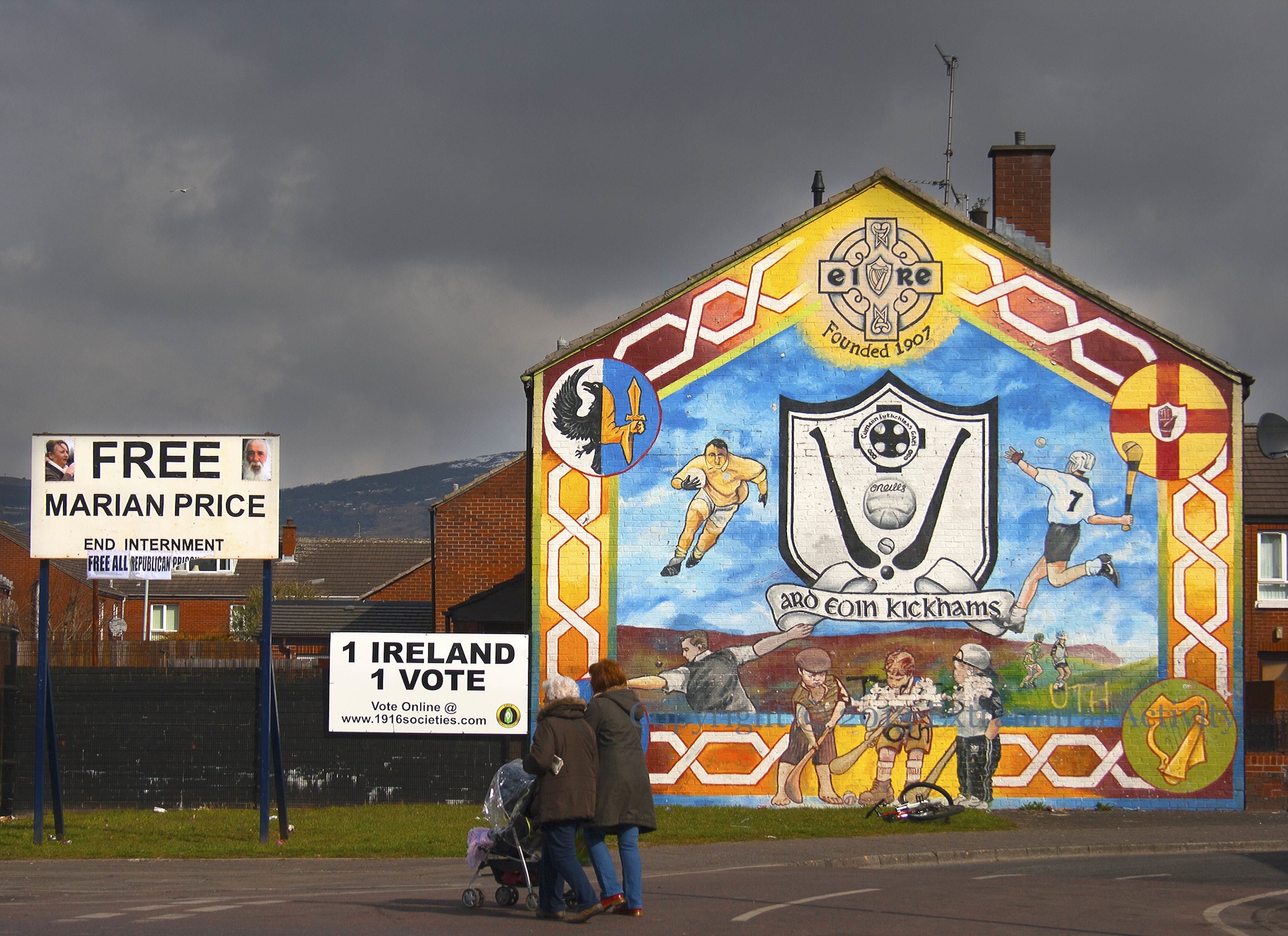
The scene at the top of Bealach Havana/Havana Way in Ard Eoın/Ardoyne. From left to right: a “Free Marian Price – End Internment” board, a “1 Ireland, 1 Vote” board (calling for a 32 county referendum), and a Gaelic games mural featuring hurling, football and handball – seen previously in 2008.
A third piece of Thatcher-related graffiti (one | two), this time in the loyalist Tiger’s Bay area: “If Mr. Sands wants to act like an animal, he can live like one.” Although it is attributed to Mrs. Thatcher here, there does not appear to be any reputable source for the quote. Thatcher’s funeral is tomorrow, Wednesday 17th.
Note the freshly painted kerb stones. Eithne House, one of the New Lodge tower blocks, can be seen in the background of the picture, with a board to hunger-striker Patsy O’Hara on the left-hand side.
Here is another piece of graffiti in response to the death of Margaret Thatcher, outside the Royal Victoria hospital on the Falls Road: “Iron Lady? Rust In Peace”, with “Upara” – Up The (I)RA. Thatcher was given the sobriquet by the Soviet army newspaper Red Starin 1976, apparently in imitation of the “Iron Chancellor”, Otto von Bismarck (WP).
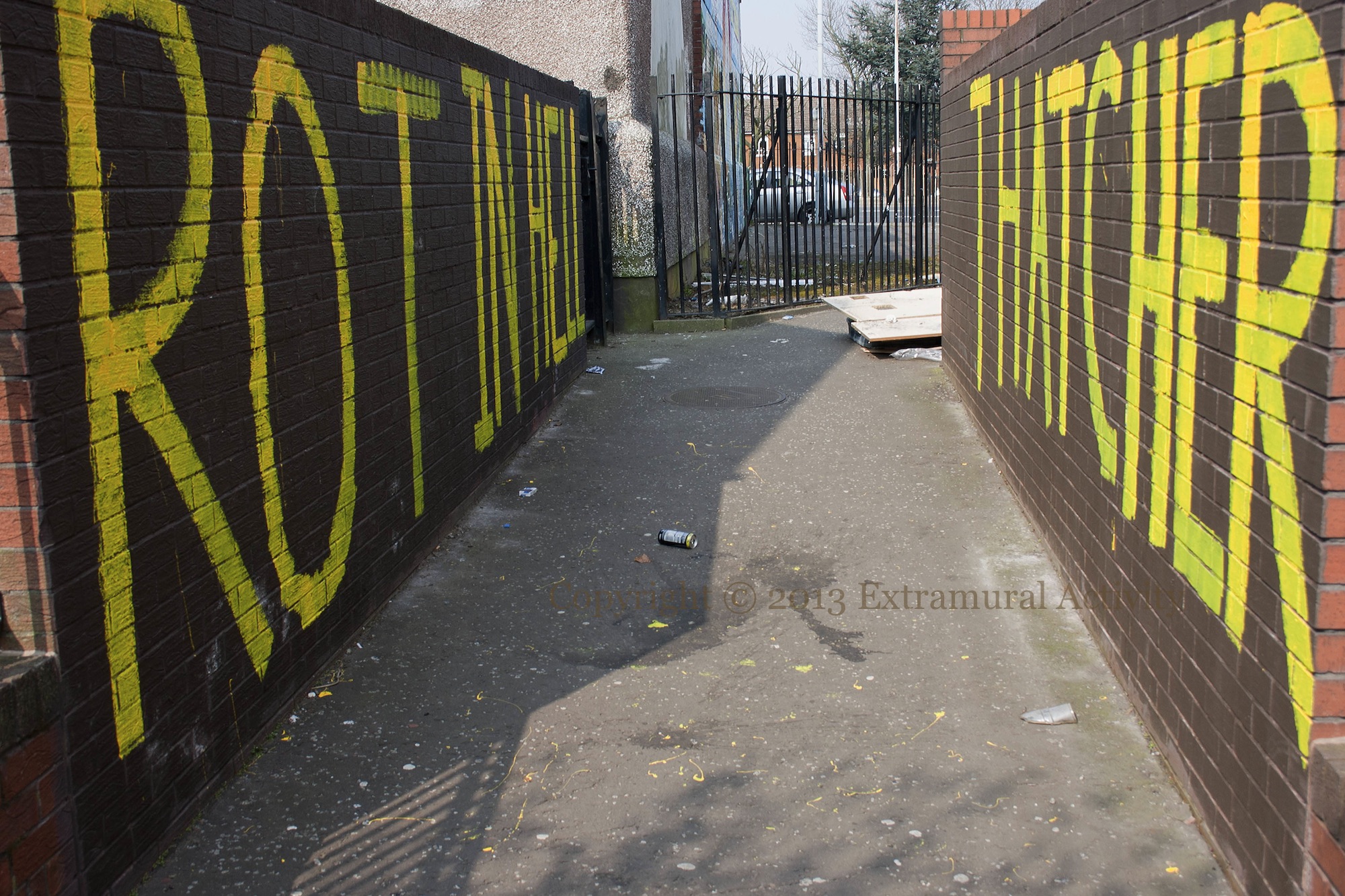
Reaction to the death (on Monday, April 8th) of Margaret Thatcher, U.K. Prime Minister 1979-1990 (WP), in an alley below Divis flats, between Divis Street and Clonfaddan Crescent.
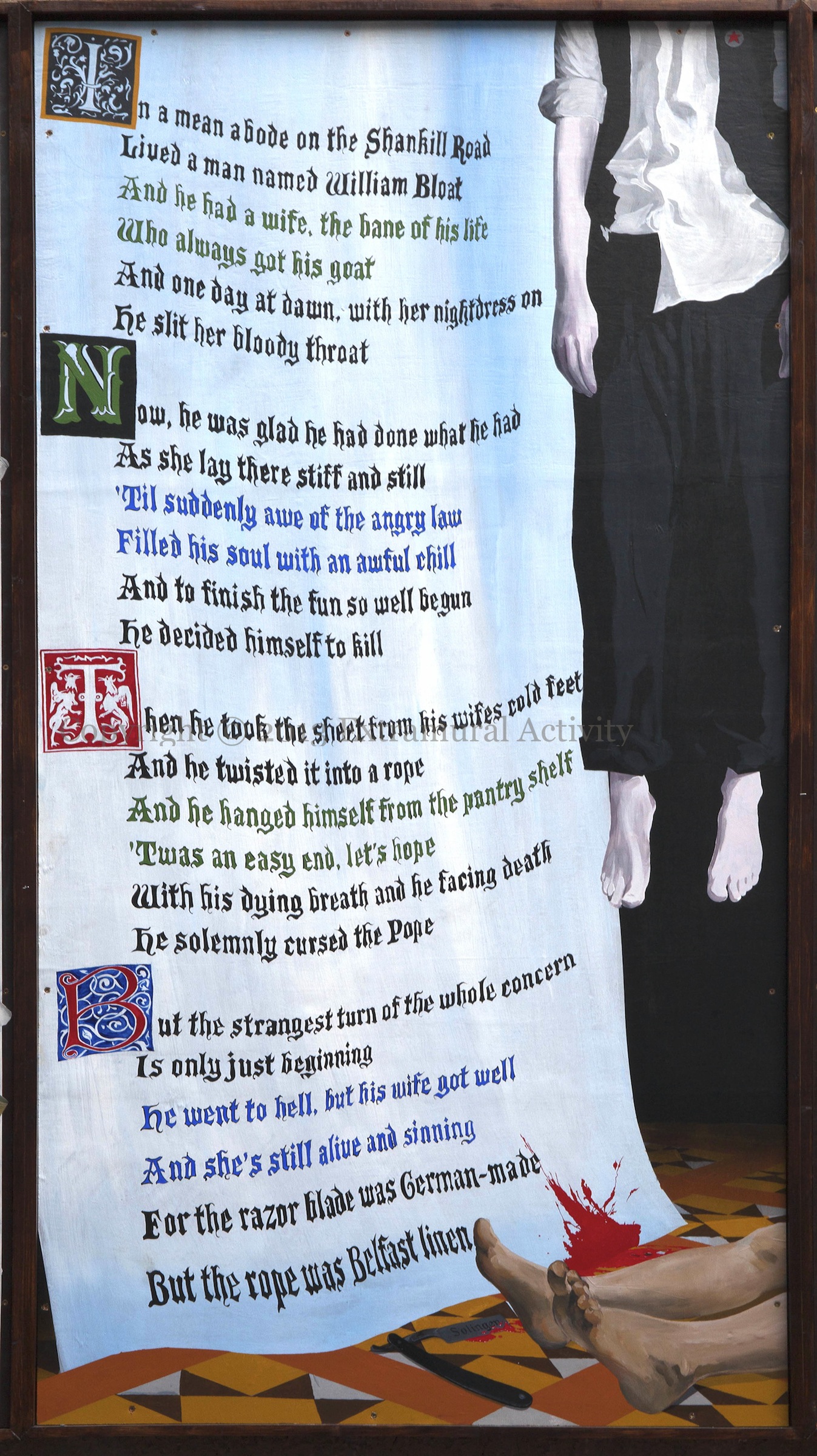
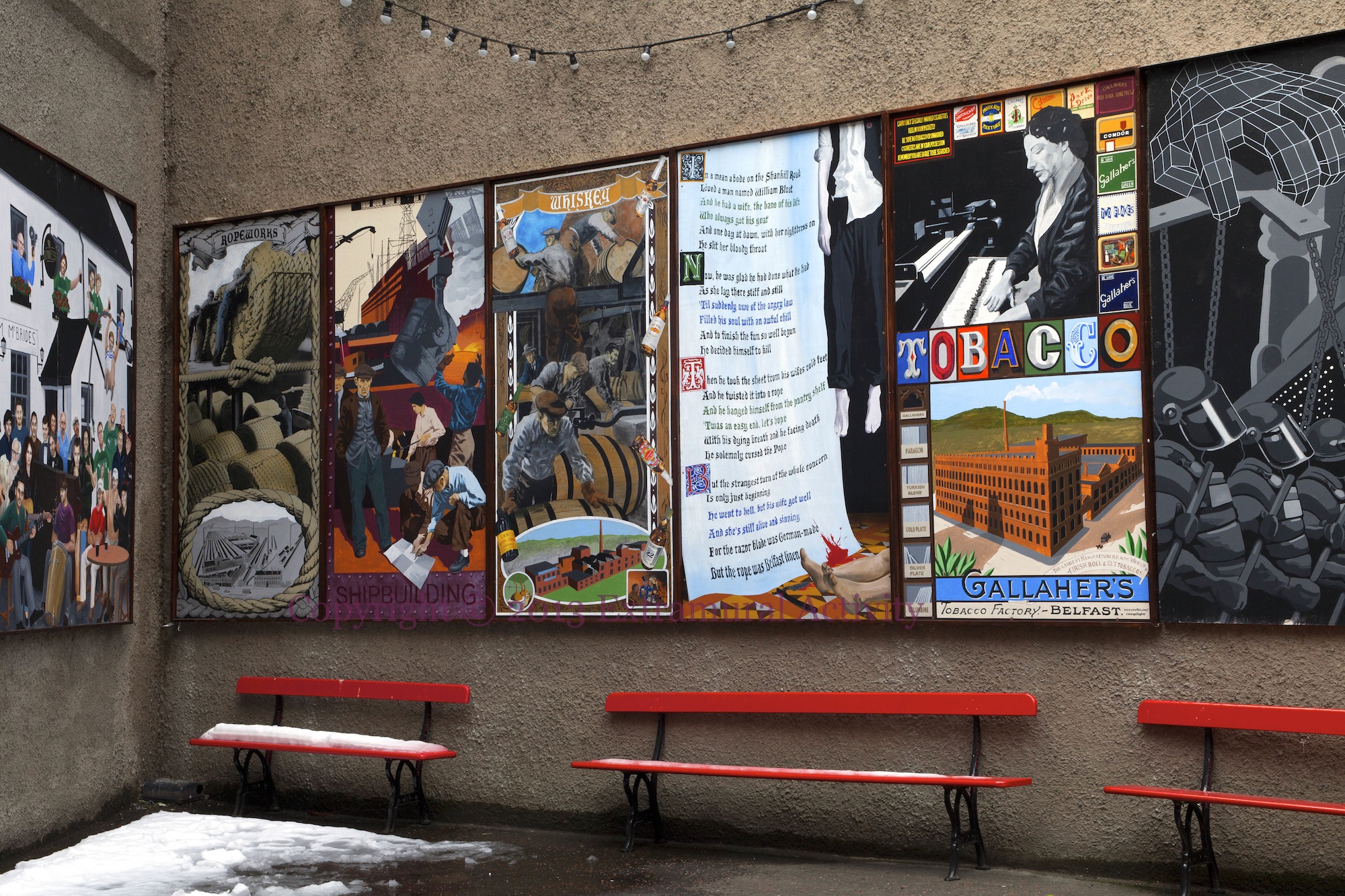
Here is a close-up of the fourth panel of the five-panel piece in the Duke Of York featured yesterday. The four other panels represent the production of rope, ships, whiskey, and tobacco products. The “William Bloat” panel presumably stands for the linen industry, as the star of the tale is the bed sheet that is fashioned into a noose. The words to the song, including an extra verse not shown on the board, can be found below, along with a Tommy Makem performance of the song (from 1973!) in which the blade is Japanese-made.
William Bloat – Raymond Calvert (1926)
In a mean abode on the Shankill Road Lived a man named William Bloat; He had a wife, the bane of his life, Who always got his goat. And one day at dawn, with her nightdress on He slit her bloody throat.
[With a razor gash he settled her hash Never was crime so slick But the drip drip drip on the pillowslip Of her lifeblood made him sick. And the knee-deep gore on the bedroom floor Grew clotted and cold and thick.]
Now, he was glad he had done what he had As she lay there stiff and still ‘Til suddenly awe of the angry law Filled his soul with an icy chill. And to finish the fun so well begun He decided himself to kill.
Then he took the sheet from his wife’s cold feet And he twisted it into a rope And he hanged himself from the pantry shelf, ‘Twas an easy end, let’s hope. With his dying breath and he facing death He solemnly cursed the Pope.
But the strangest turn to the whole concern Is only just beginning. He went to Hell but his wife got well And she’s still alive and sinning, For the razor blade was German made But the rope was Belfast linen.
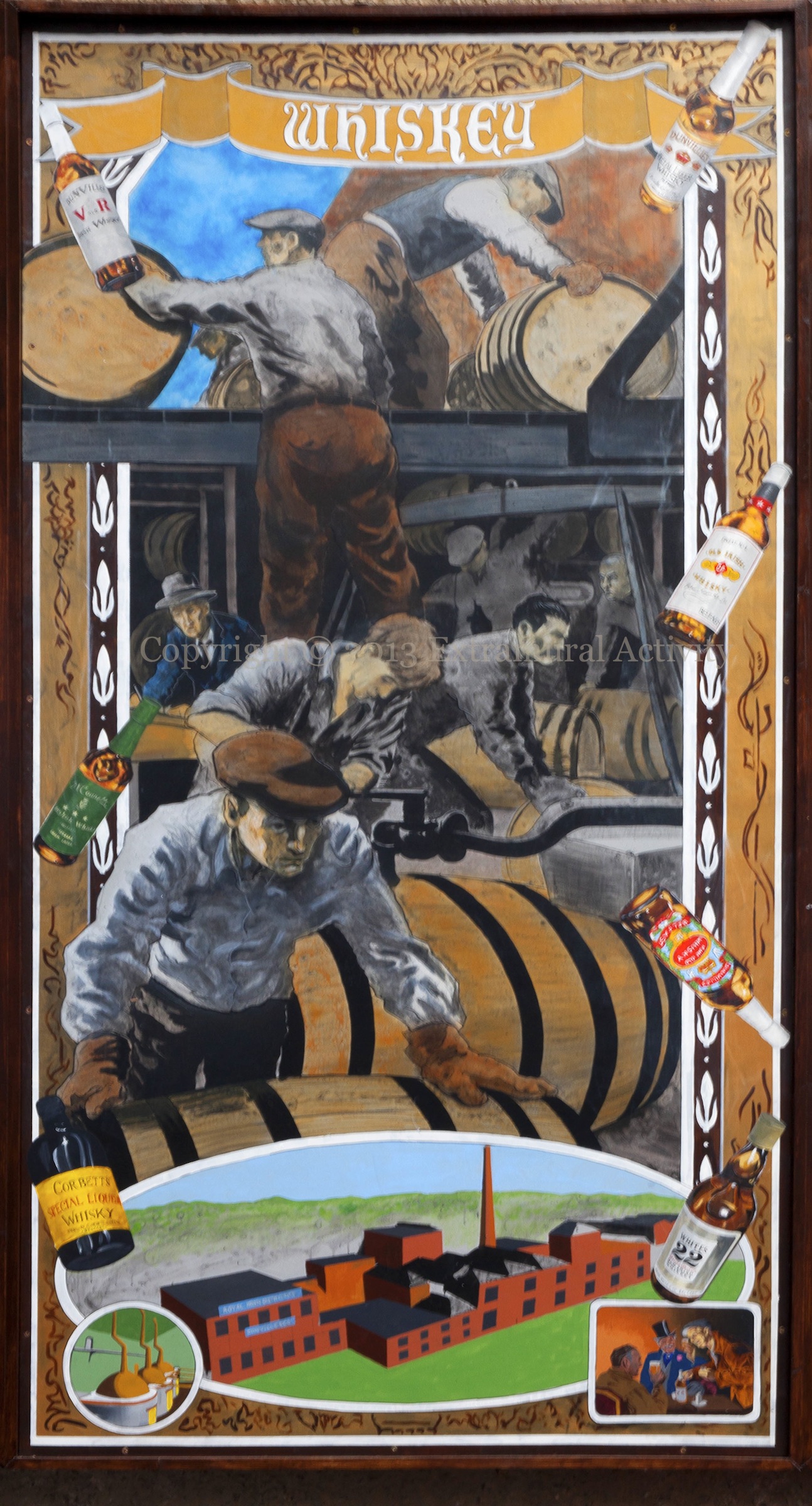
Whiskey, the middle of five panels (see below) in another piece from the Duke Of York pub in the city centre portraying four Northern Irish industries of/in the past – rope, ships, whiskey – the words to the song William Bloat – and tobacco products.



 Extramural Activity