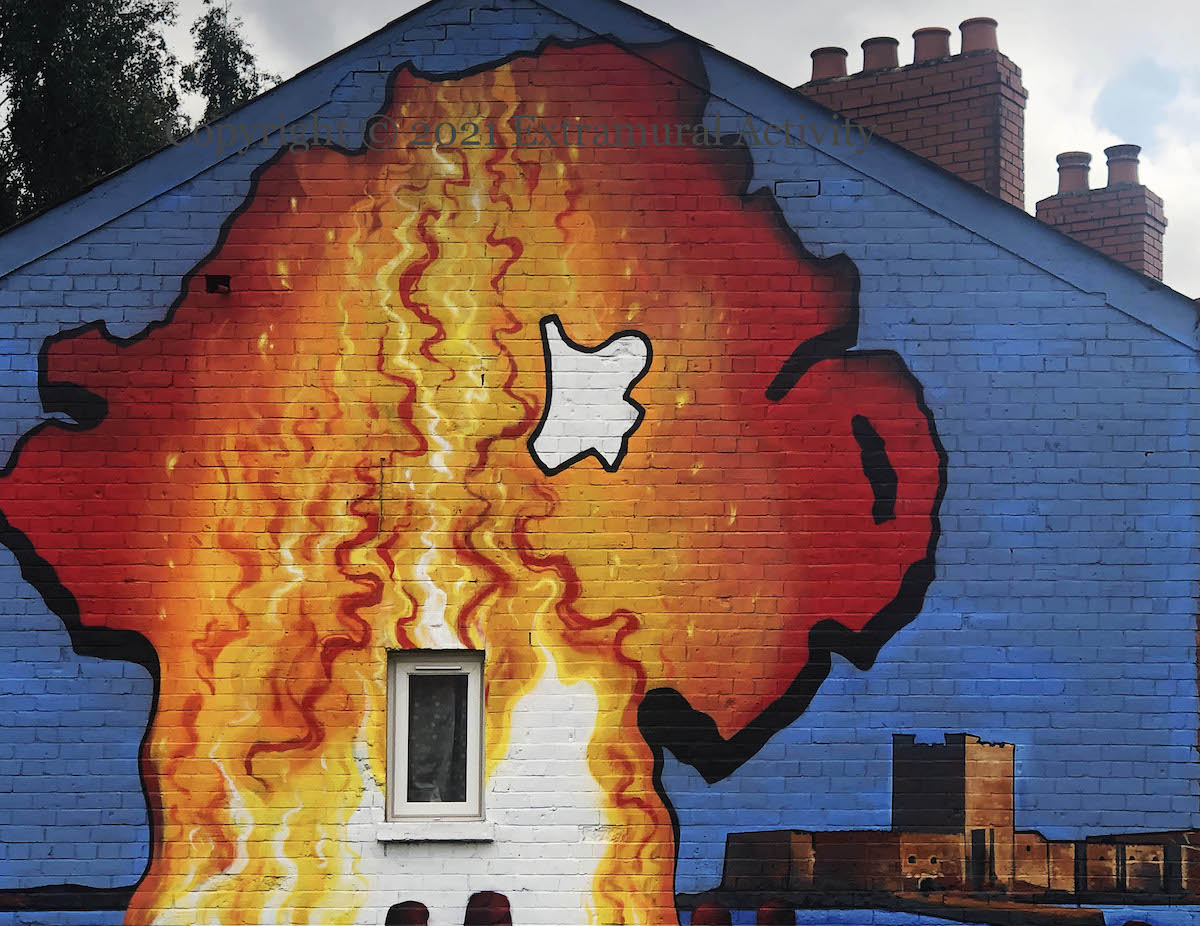
“This site housed the former Mid Donegall Road Bonfire for over two decades, until the expansion and development of the surrounding area including the City Hospital meant that it was no longer viable for a bonfire to remain on this site. Greater Village Regeneration Trust, through its work with The Health Trust, who own the site, and the local community, including the local bonfire builders wanted to have something on the site that could benefit the whole community and agreement was given for it to be transformed into the garden that is here today. Local Artist Johnny [sic] McKerr worked alongside Greater Village Regeneration Trust and the local community and this artwork was designed to depict and celebrate the heritage, history and culture which the people of this area are extremely proud of.”
The info board includes a photograph of the bonfire spilling out towards the car-park for the City. The other image is a photograph from the Peter Moloney Collection, used without permission, and photoshopped to add “DRL” – Donegall Road Loyalists.
According to Eddie Kelly of the GVRT, Carrickfergus castle is included because “This is where King William landed, and the annual bonfire is a symbol of a beacon lit across the coast to guide him” (Belfast Live).
Painted by JMK/Jonny McKerr (tw) at Coolfin St on Donegall Rd.
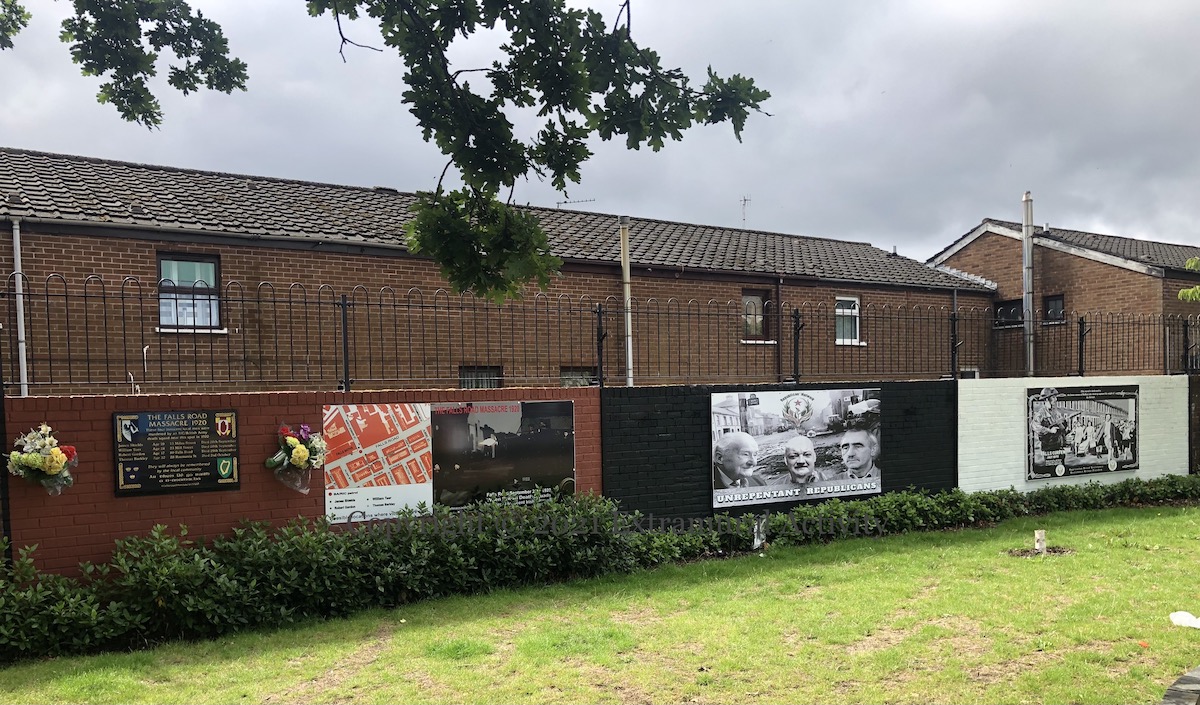
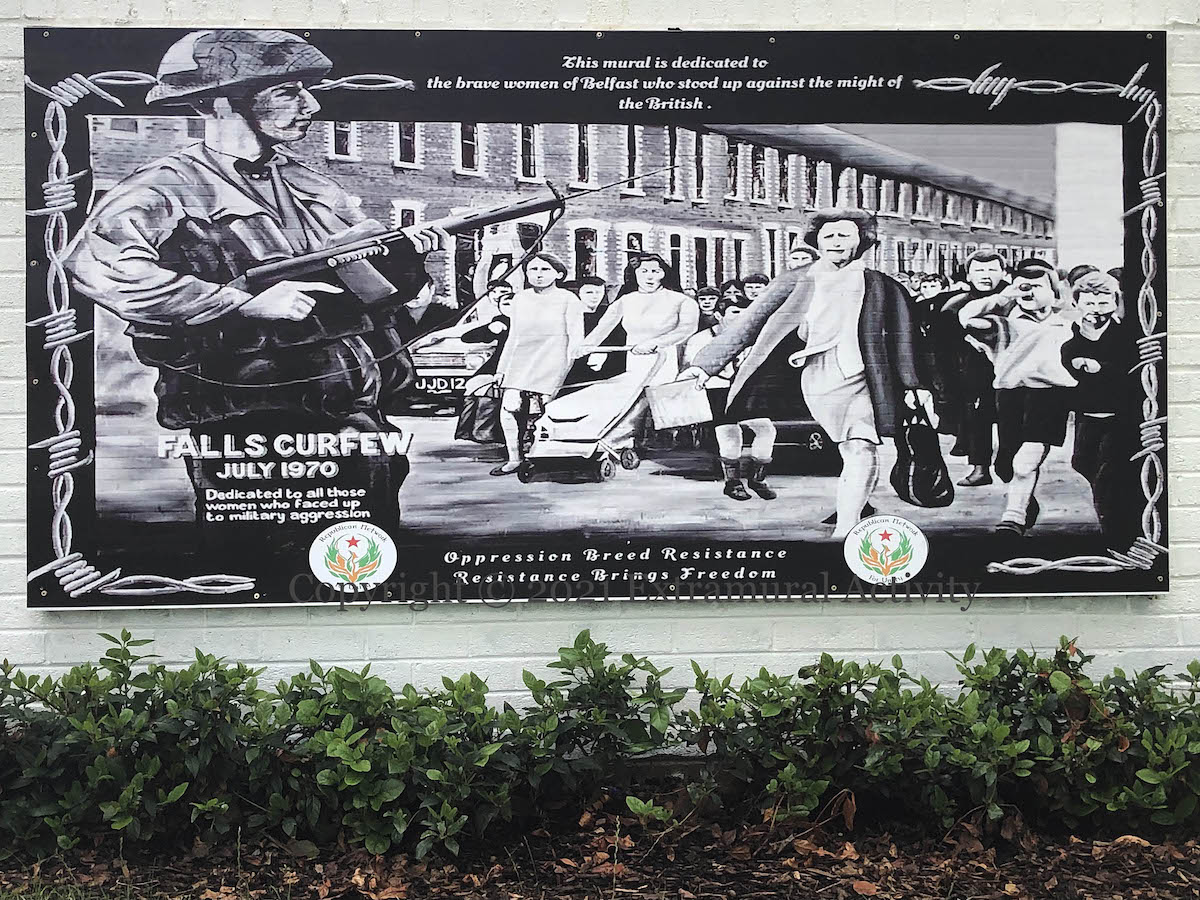
These two new boards along the Falls Road were mounted by Belfast RNU (tw), commemorating the actions of Billy McKee, Alec Murphy, and Brendan Hughes in 1969 at the onset of the Troubles, and of Máıre Drumm and “the brave women of Belfast who stood up against the might of the British” in bringing the Falls Curfew to an end. (This board was previously a mural on Divis Street.)
McKee and Hughes are profiled in a D Company mural in the number one spot of the International Wall. Murphy died in 2019 “unrepentant” of his republicanism (which was prompted by the Falls Curfew) and in particular his conviction along with Harry Maguire for the Corporal Killings (Irish News | BelTel). For a personal obituary, see The Pensive Quill.
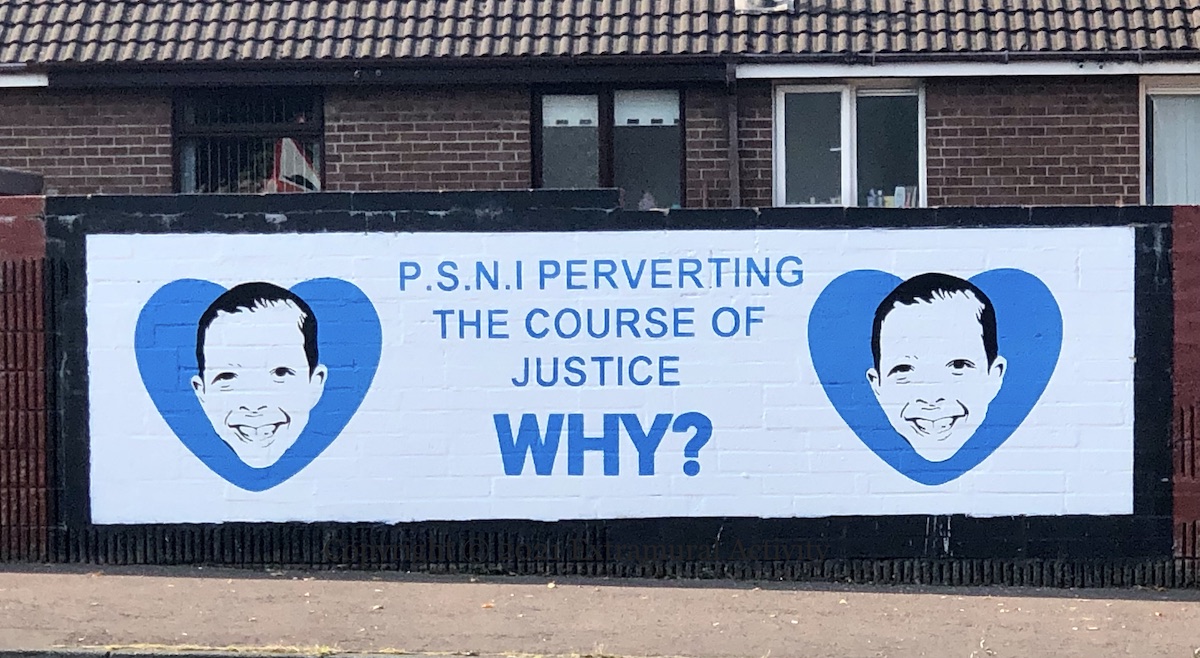
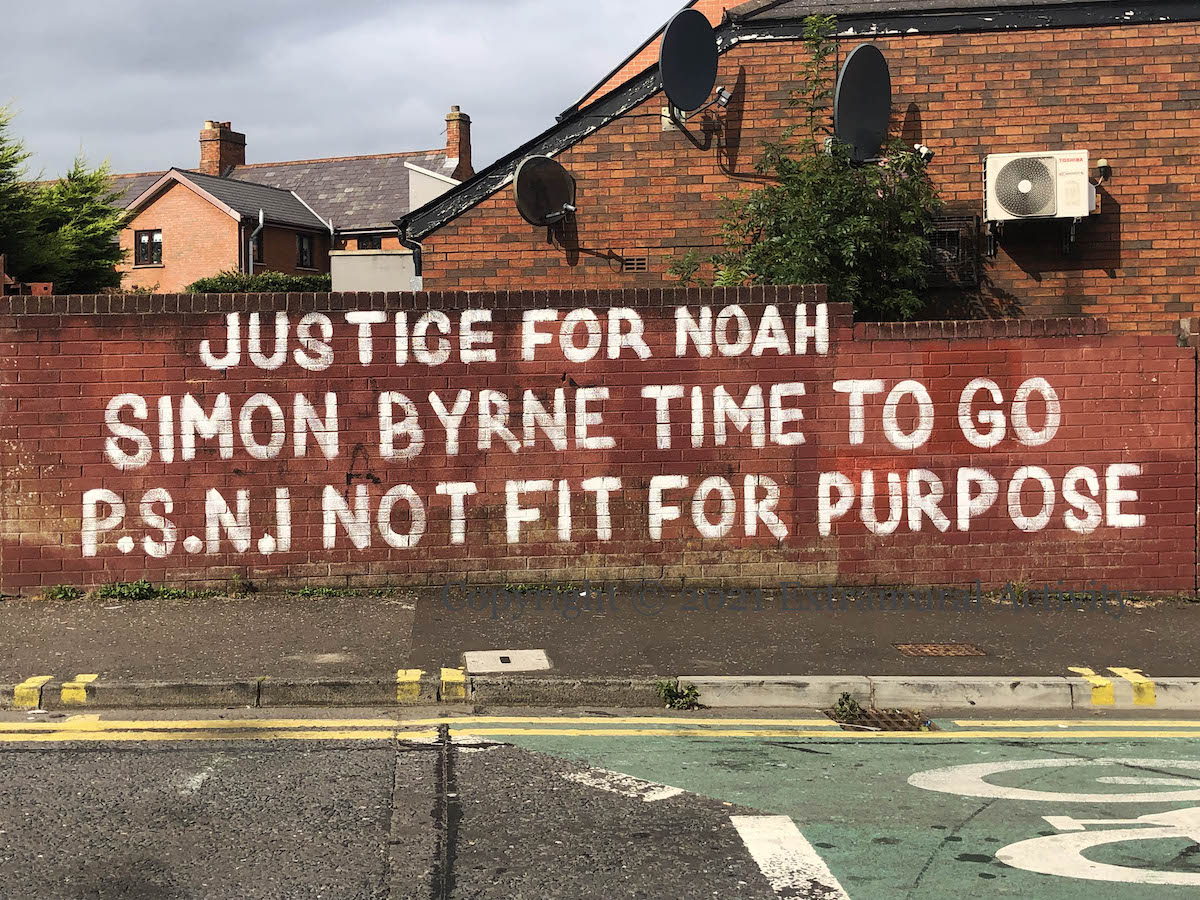
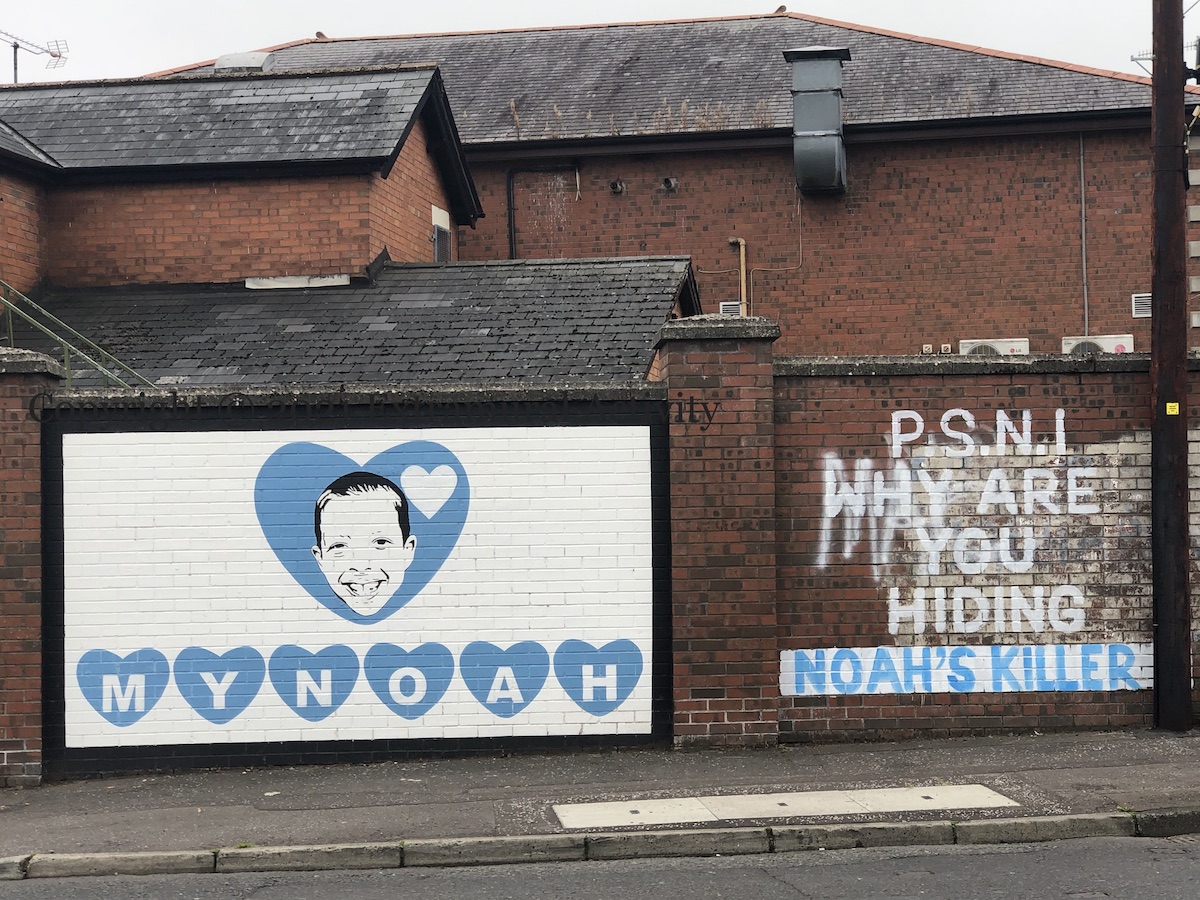
It is now more than a year since teenager Noah Donohoe was found dead in a north Belfast storm drain and the controversy and mystery over his death continues. Police were recently investigating an alleged confession by a prisoner and Noah’s mother Fiona has said that she was told by police of a witness statement that the UDA were called in to dispose of the body (Irish News). She has started a petition calling for Chief Constable Simon Byrne’s resignation. The walls of Belfast have been painted to reflect the persistent dissatisfaction with the investigation. The three shown here are on the Whiterock, Lake Glen, and Springfield roads. For some more examples, see sbear101 on Twitter.
Norah McCabe was shot in the back of the head by a plastic bullet fired from an RUC land rover at around 7:45 a.m. on July 9th, 1981, the day after hunger striker Joe McDonnell died. (Danny Barrett would be killed by a British Army sniper in the evening.) The new boards were mounted to coincide with the fortieth anniversary of McCabe’s death. In 1981, a mural was painted at the same spot (in the old Linden Street) to protest the use of plastic bullets: see Plastic Death.
“Norah McCabe, 1947-1981, murdered by an RUC plastic bullet on 9th July 1981, aged 33 years.” With a poem “Peace” by daughter Áıne McCabe, who was three months old when her mother was killed (Irish News).
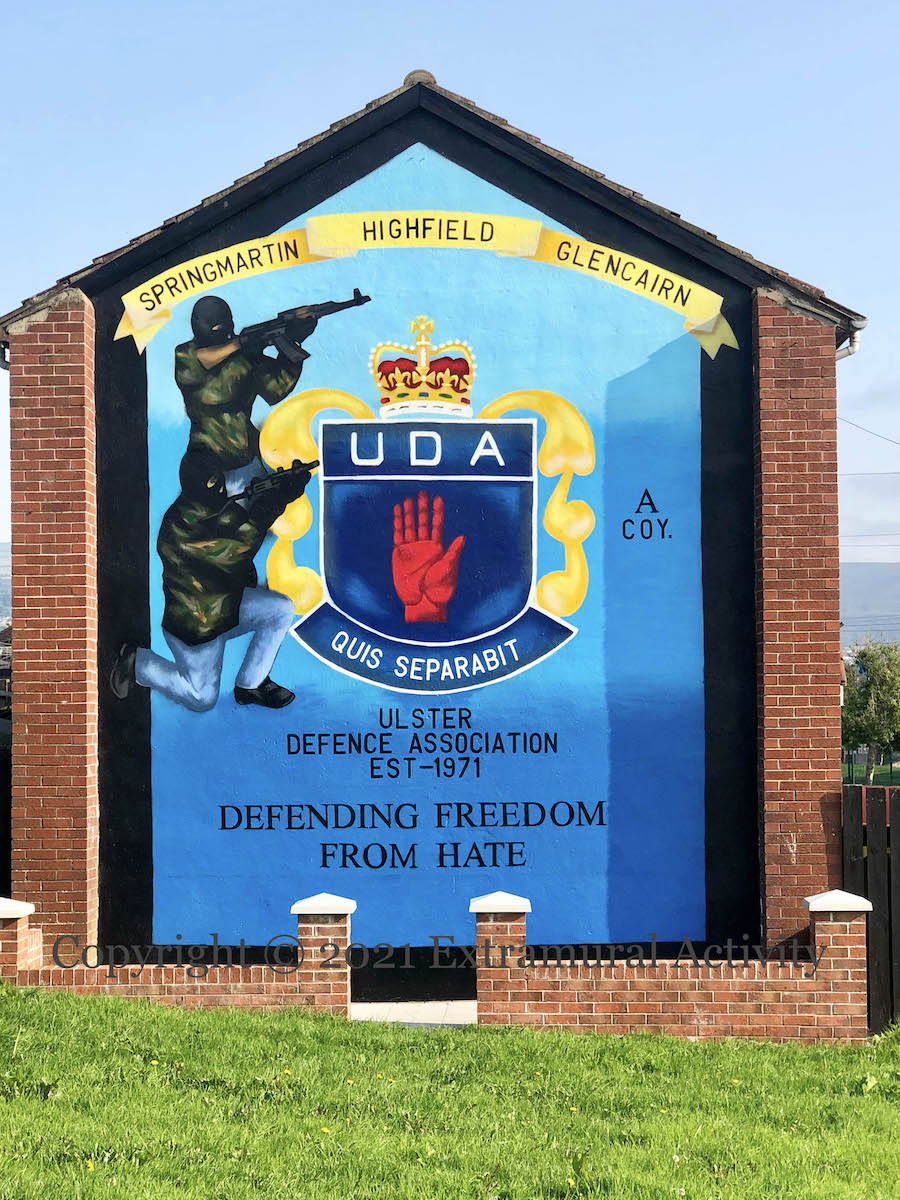
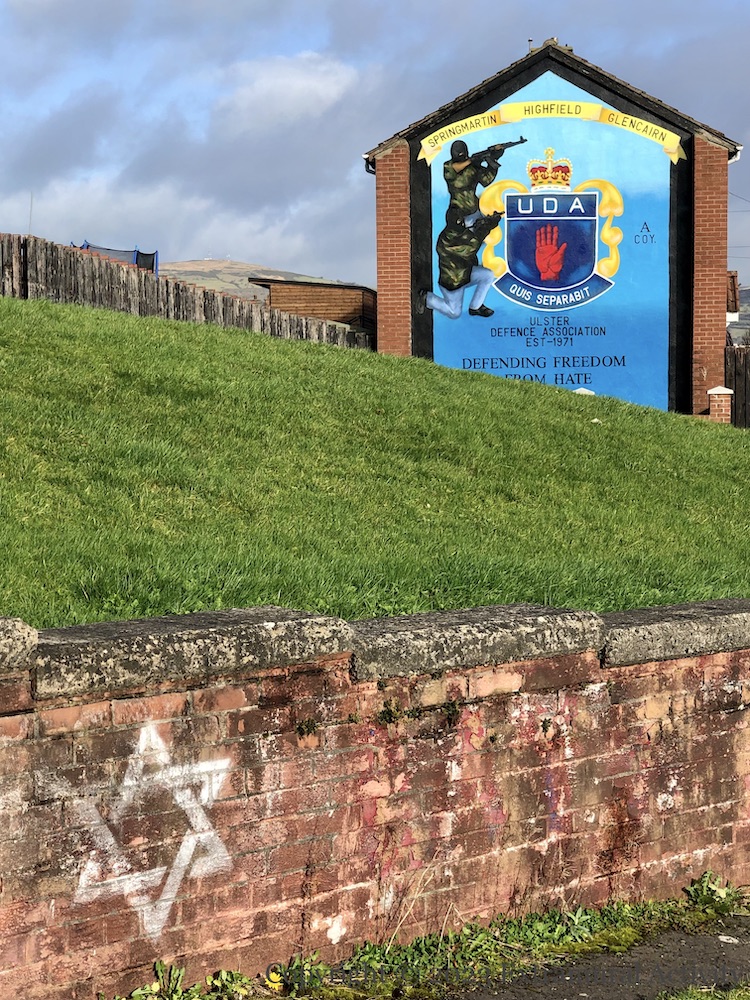
Compared to the UVF, the UDA more strongly detect an existential threat to loyalism and evince a siege mentality that provokes the need for armed resistance. Hence the more frequent presence of armed gunmen in UDA murals (which is also due in part to the UVF being able to “re-image” around the Ulster Volunteers and the Somme). With Brexit and the Protocol, however, armed gunmen have recently been appearing more frequently in UVF murals – see, for example, If Our Shores Are Threatened | Bang Up To Date | Our British Identity.
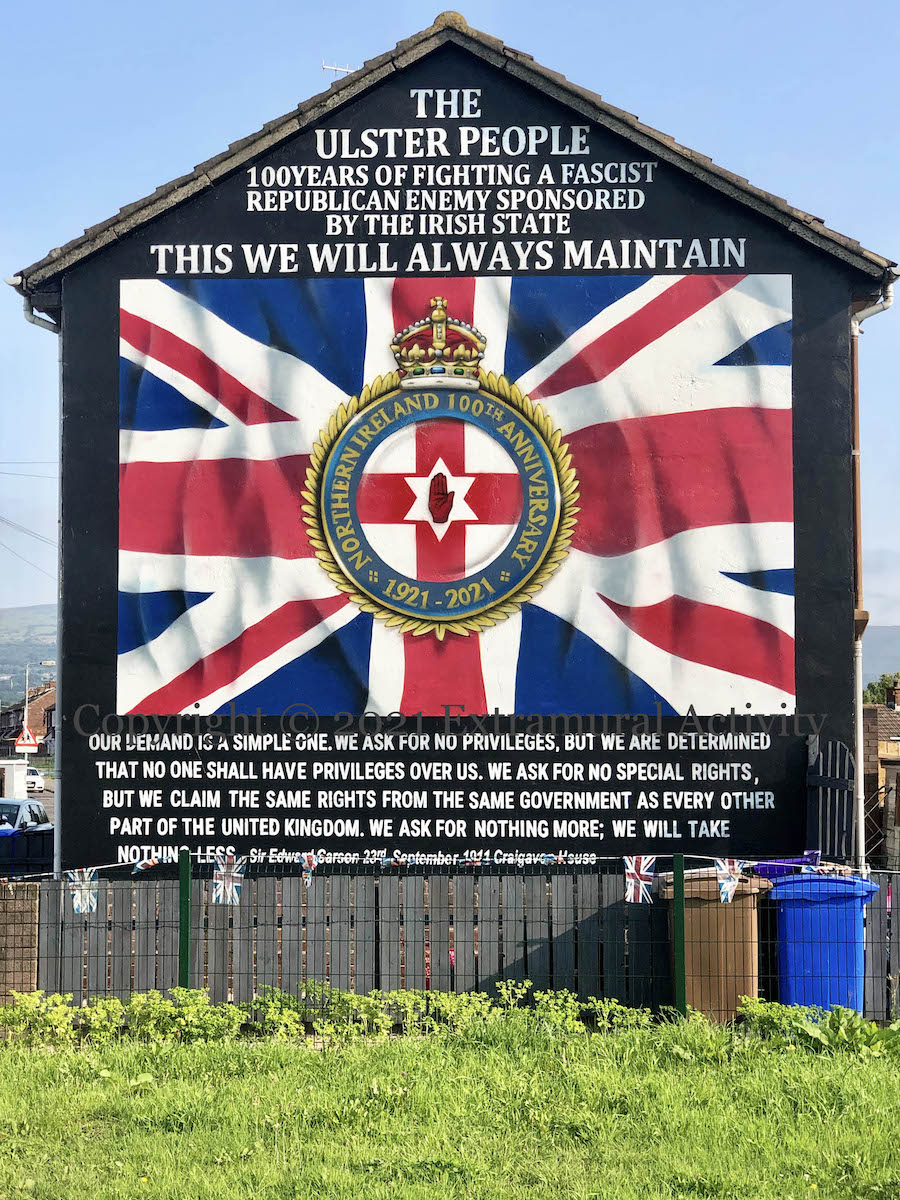
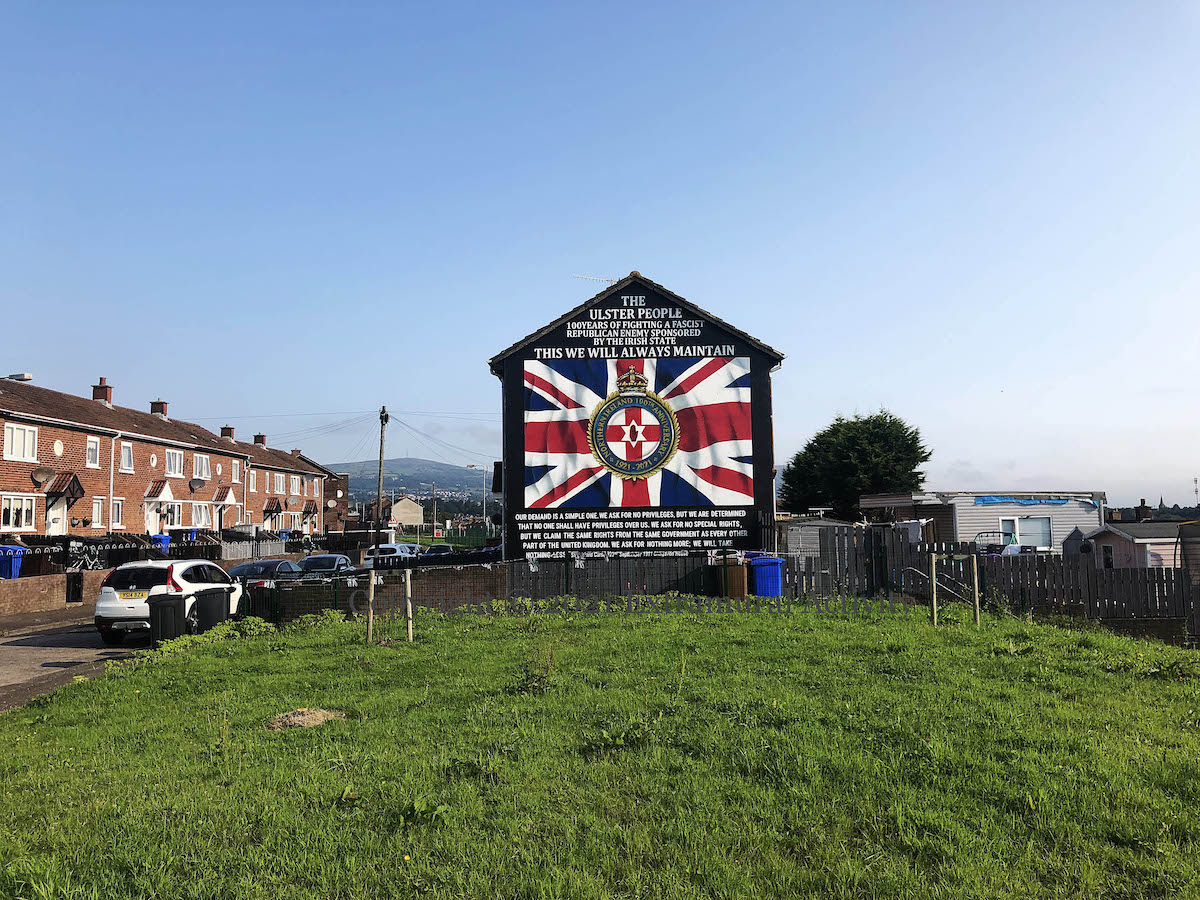
“Springmartin–Highfield–Glencairn Ulster Defence Association est. 1971. Defending freedom from hate.” As the companion mural (We Will Take Nothing Less) makes clear, the hate is coming from a “fascist republican enemy” (“Sinn Fein/IRA”, presumably) and the government of Ireland. Graphically, this mural is the same as the previous one on this wall: Under The Protection Of The UDA.
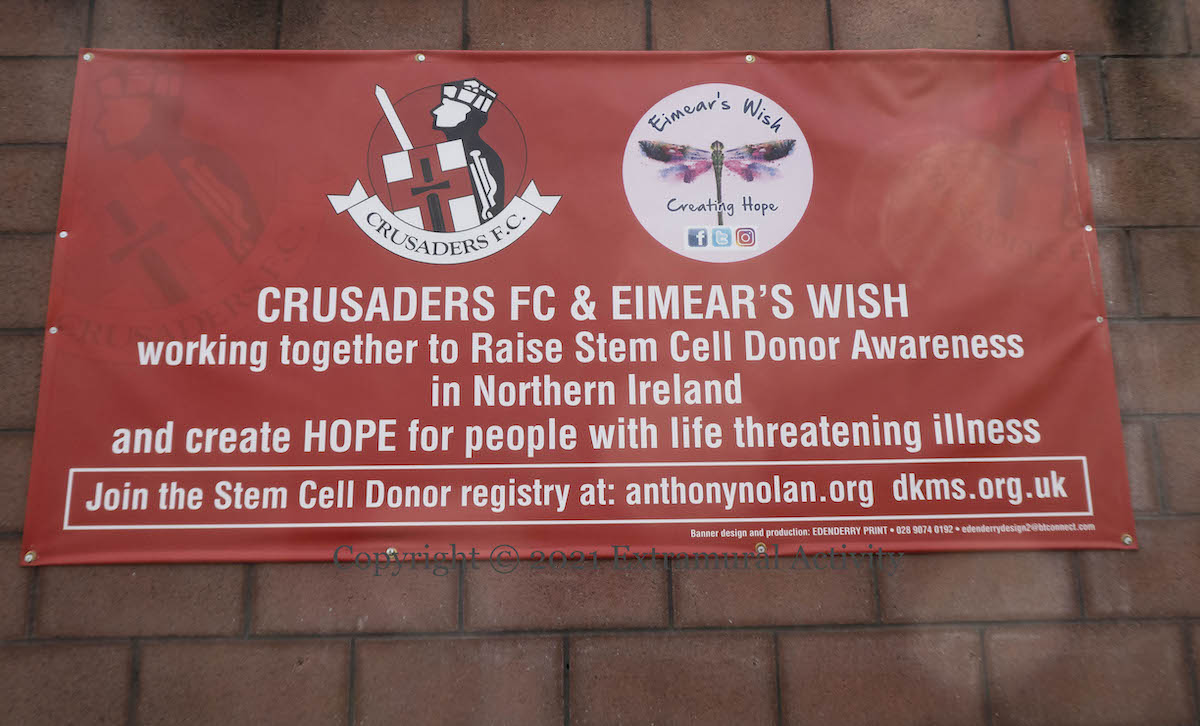
Eimear’s Wish (web | tw) last night launched a fundraising and blood cancer awareness campaign selling gin with a bottle raffled to supporters attending the first Irish League match of the new seasons between Glenavon and Portadown; it has the support of many soccer, rugby, GAA, and bowling clubs – this is the tarp outside Seaview on the Shore Road, Belfast. “Crusaders FC & Eimear’s Wish working together to raise stem cell donor awareness in Northern Ireland and create hope for people with life threatening illness.”
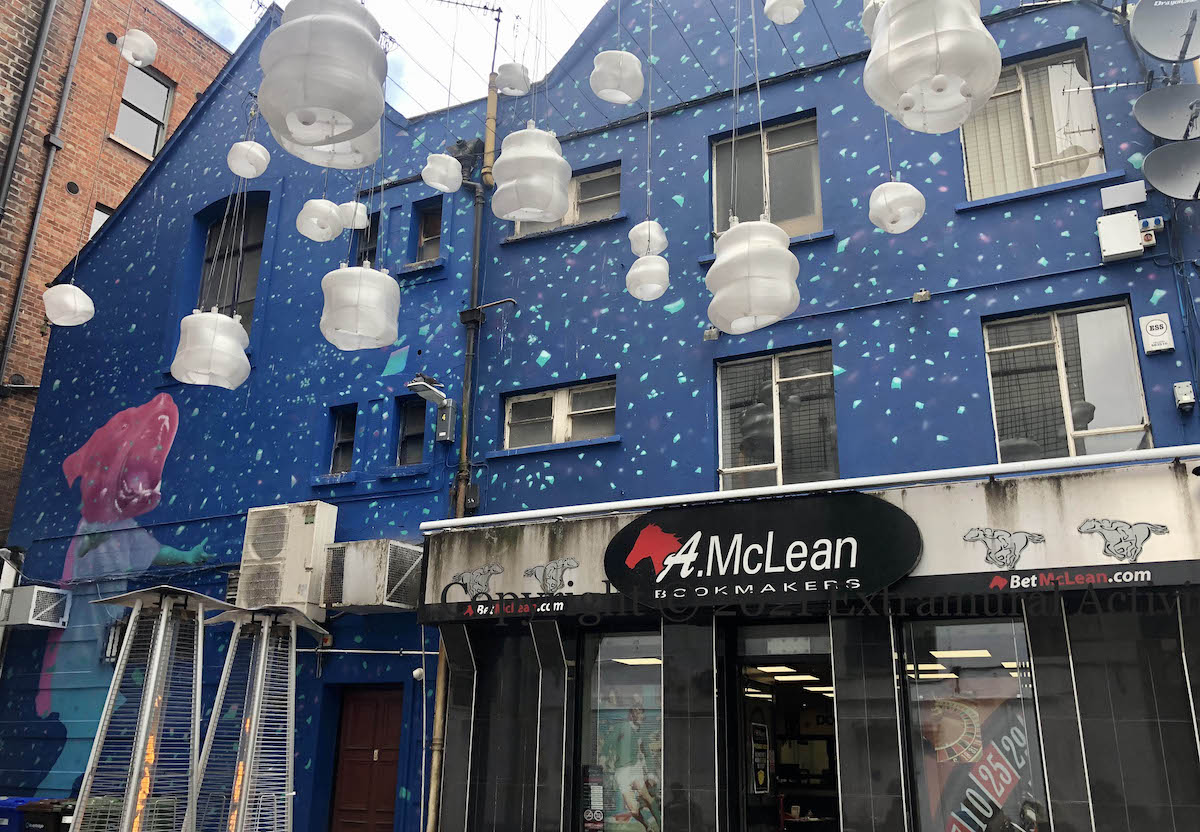
Work by emic (ig) – official title Ffallen [sic] – in Winecellar entry, inspired by Ciaran Carson’s Belfast Confetti, itself inspired by “a public notice from the corporation of Belfast (1678) which highlights a growing problem of Butchers and Tanners mastiff dogs attacking livestock, people, and even young children in the city” (Belfast Walking Tours). The wide shot (below) shows “3D printed floating orbs were created from recycled ocean plastics suspended over the central courtyard” (BCC).
An estimated 100,000 people congregated at Craigavon House on the 23rd of September, 1911, to hear Edward Carson’s inaugural speech as Unionist leader (McNeill Ch. 4). In his speech he said “Our demand is a simple one. We ask for no privileges, but we are determined that no one shall have privileges over us. We ask for no special rights, but we claim the same rights from the same government as every other part of the United Kingdom. We ask for nothing more; we will take nothing less”. Ten years later, in 1921, Northern Ireland was created and it has survived to reach its centenary, despite (according to this mural) “100 years of fighting a fascist republican enemy sponsored by the Irish state.”







 Extramural Activity