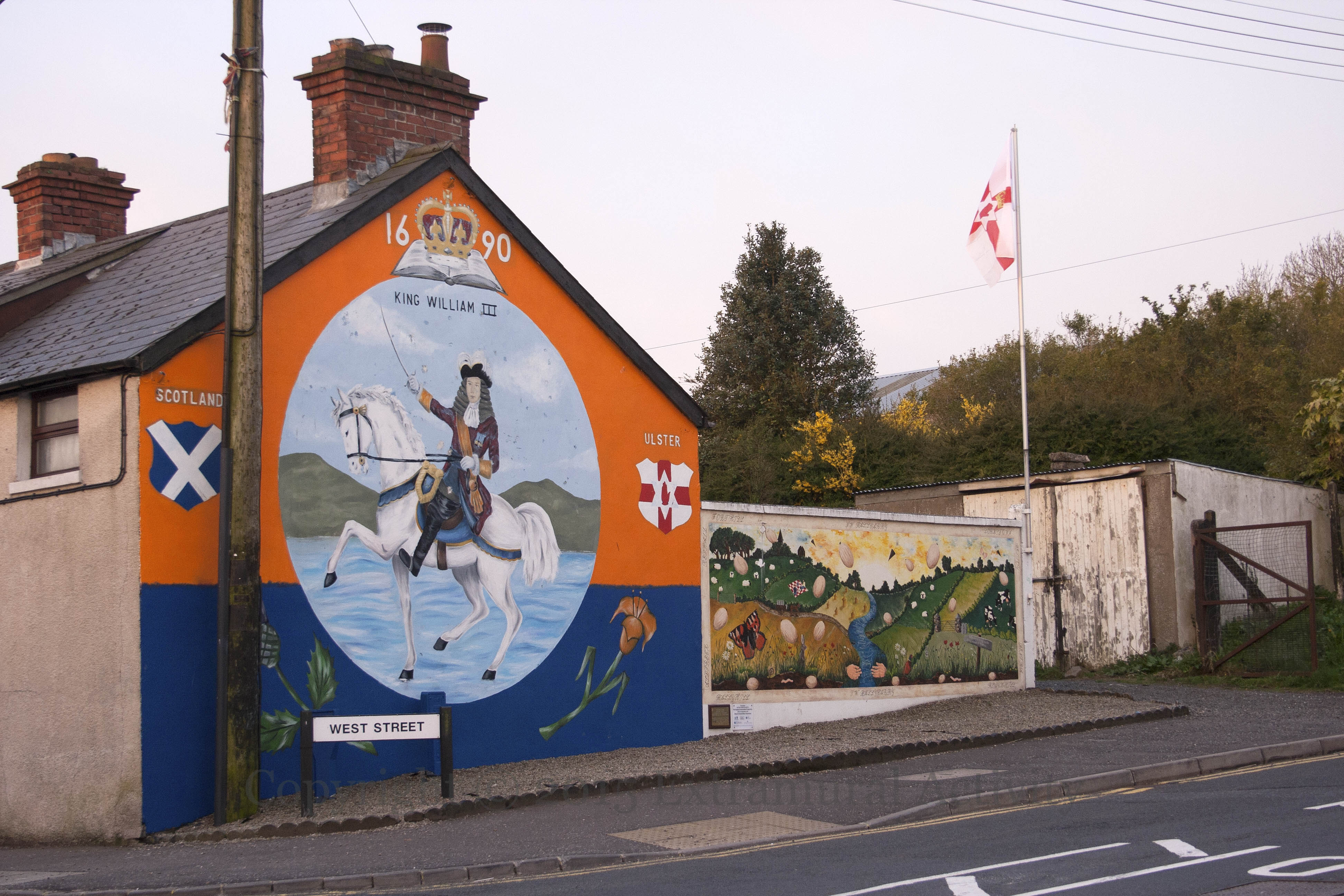
Here’s a PUL mural in classic style, though not seen much of late: King William “Billy” III of Orange crosses the Boyne, sword drawn, on a white steed that walks on water. The crests of Scotland and Northern Ireland (labelled as “Ulster”) and the Scottish thistle and orange lily of the Orange Order fill out the quadrants.
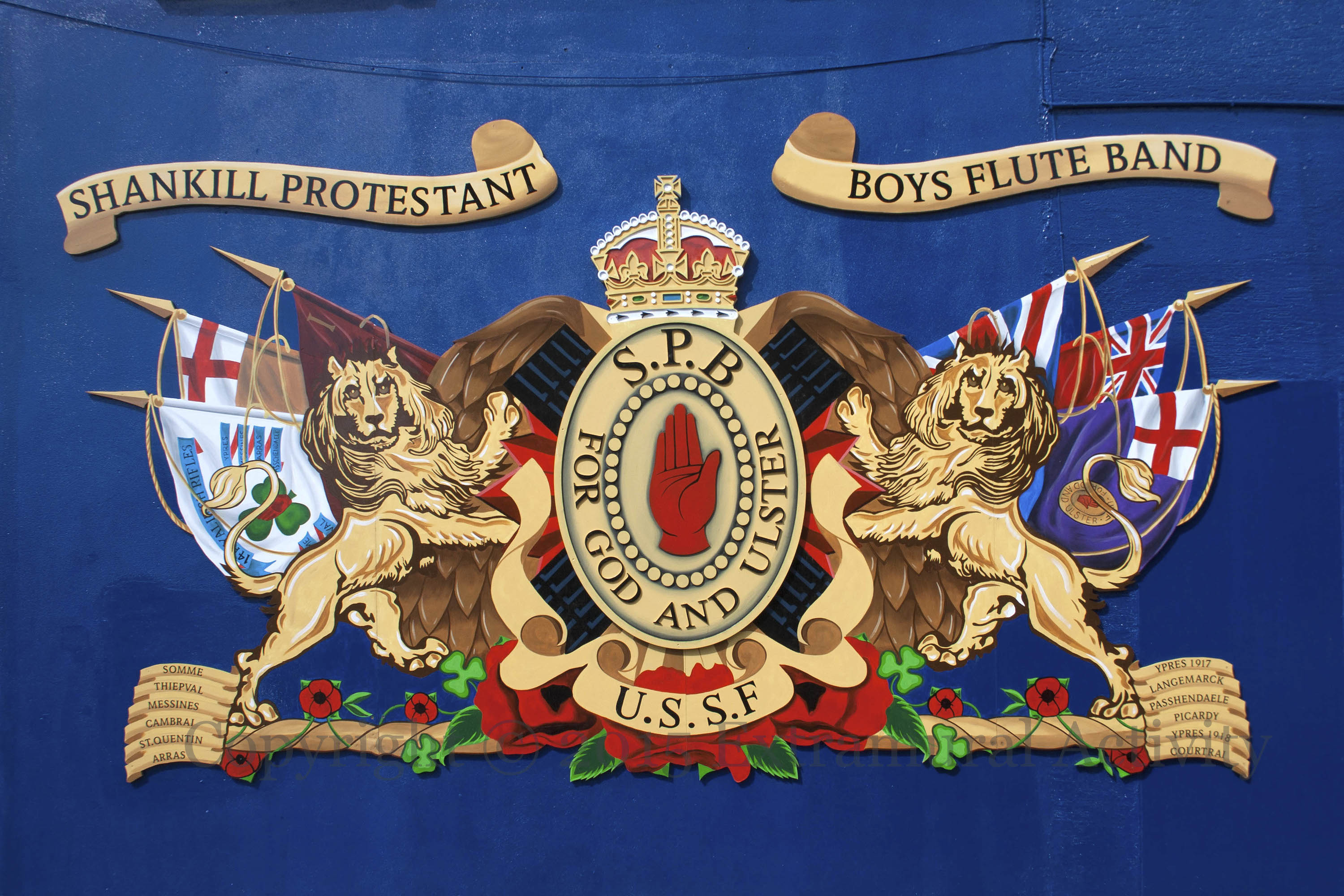
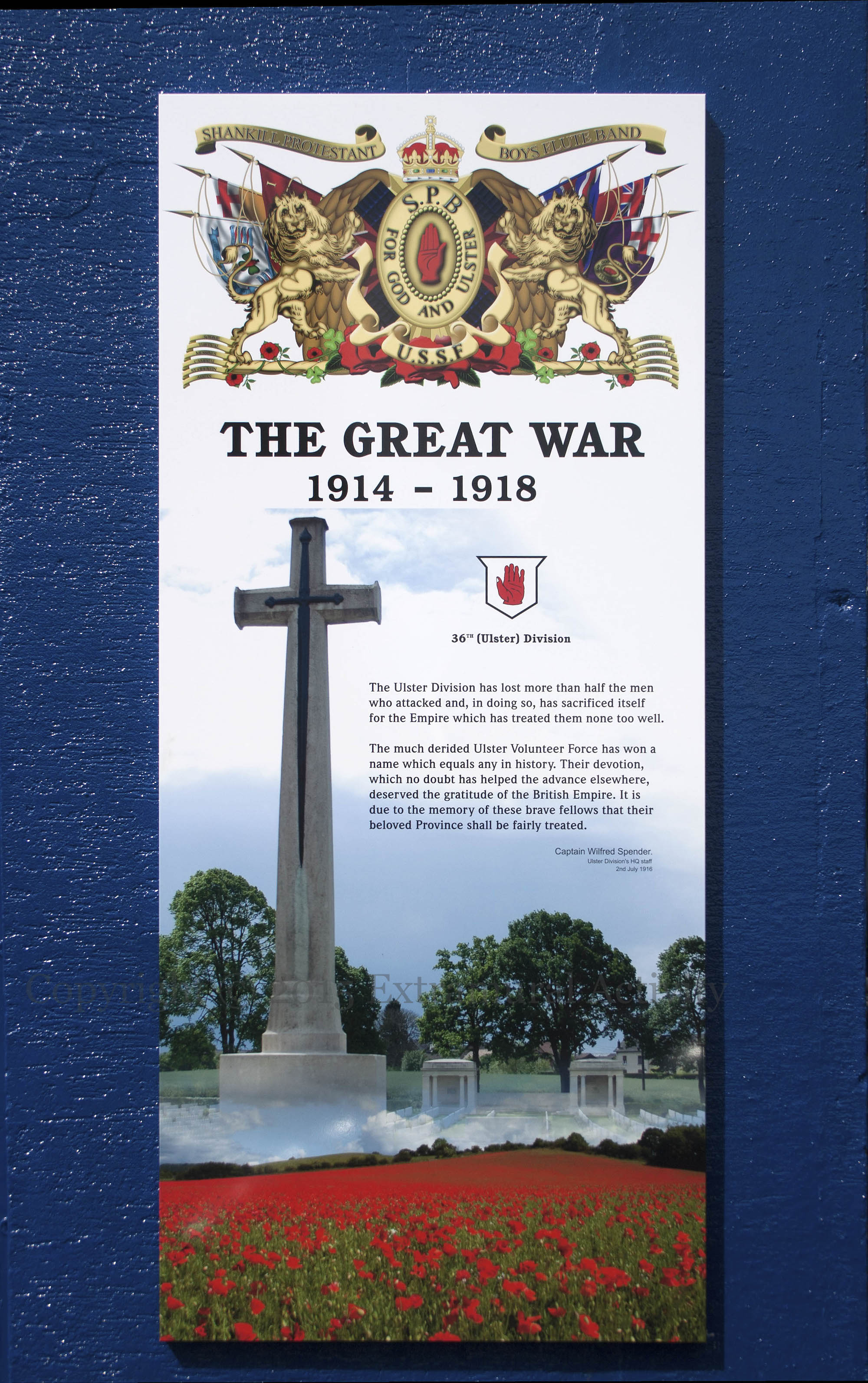
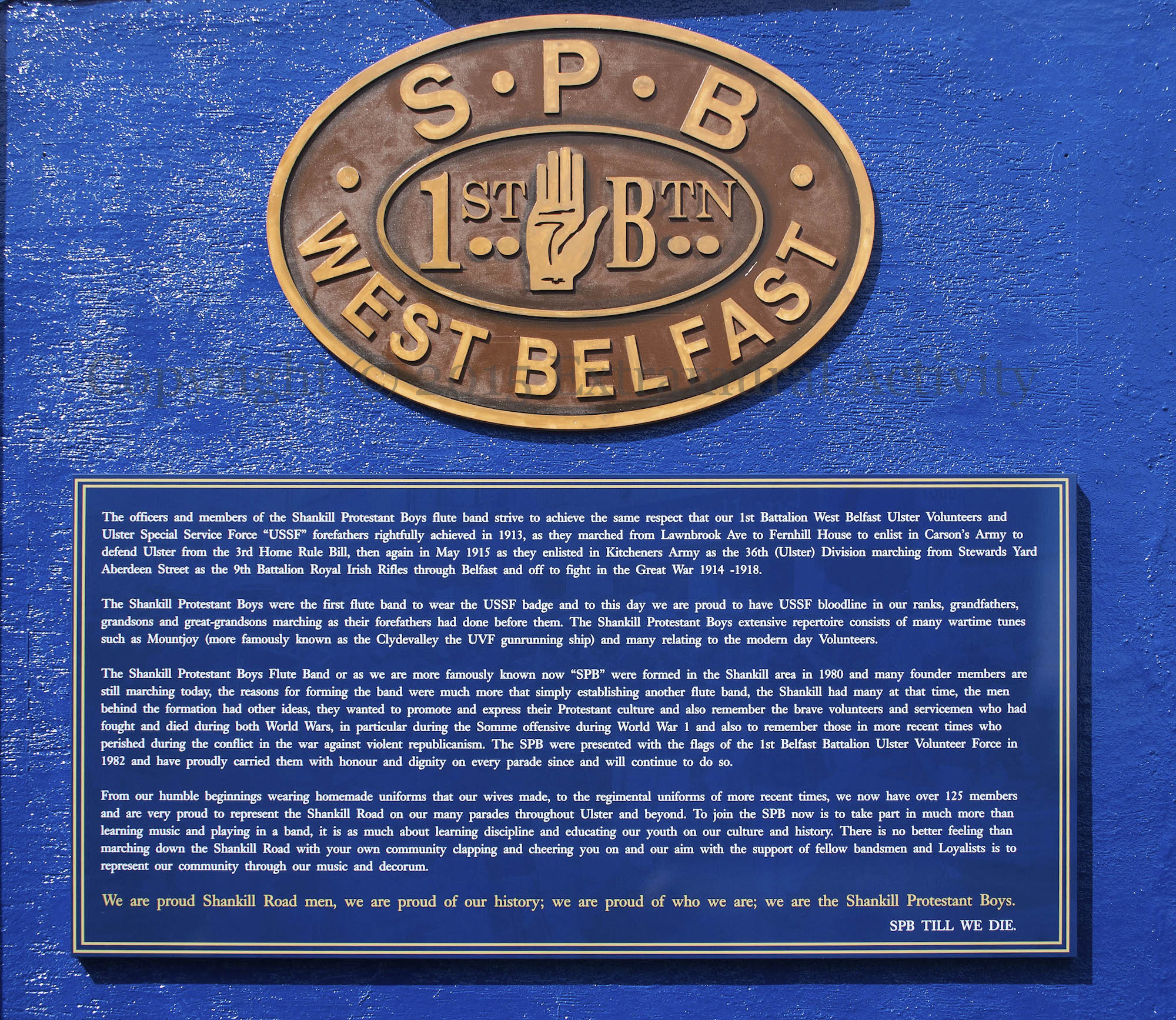
At first glance the piece above looks like a colourful mural but, as the close-up immediately below shows, it is in fact a large painted carving of lions rampant on either side of the emblem of the Shankill Protestant Boys flute band (Fb), named for the Shankill Boys of the original Ulster Volunteers and the Ulster Special Service Force unit within it which was designed to be a unit of “first responders”, ready to react at short notice to action by republicans or British forces anywhere in northern Ireland (historyireland).
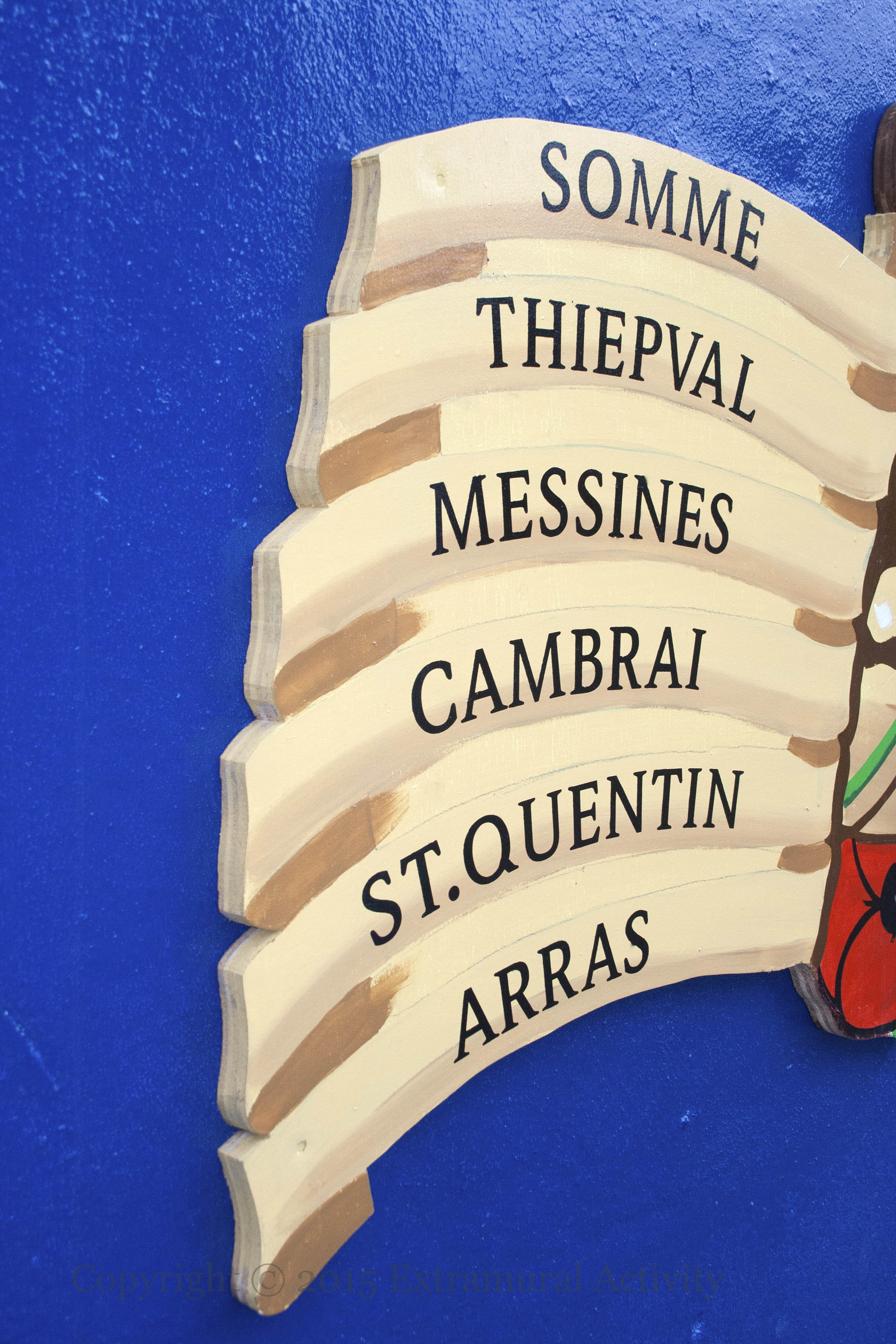
The officers and members of the Shankill Protestant Boys flute band strive to achieve the same respect that our 1st battalion West Belfast Ulster Volunteers and Ulster Special Service Force “USSF” forefathers rightfully achieved in 1913, as they marched from Lawnbrook Ave to Fernhill House to enlist in Carson’s Army to defend Ulster from the 3rd Home Rule Bill, then again in May 1915 as they enlisted in Kitcheners Army as the 36th (Ulster) Division marching from Stewards Yard Aberdeen Street as the 9th Battalion Royal Irish Rifles through Belfast and off to fight in the Great War 1914-1918. wear the USSF badge and to this day we are proud to have USSF bloodline in our ranks, grandfathers grandsons and great-grandsons marching extensive repertoire consists of many wartime tunes such as Mountjoy clydevally the UVF gunrunning ship and many relating to the modern day volunteers SPB were formed in 1980 and many founder members are still marching today the reasons for forming the band were much more simply that establishing another flute band wanted to promote and express culture remember servicemen fought and died during the Somme offensive perished in during the conflict against violent republicanism flags 1982 carried with honour and dignity every parade humble homemade uniforms our wives made regimental uniforms over 125 members join more than learning music discipline educating our youth on our culture and history. no better feeling than marching with your own community clapping and cheering you on fellow bandsmen decorum SPB till we die carnan street c coy thiepval messines cambrai st. quentin arras ypres 1917 langemarck passhendaele passchendaele picary courtrai uvf ycv
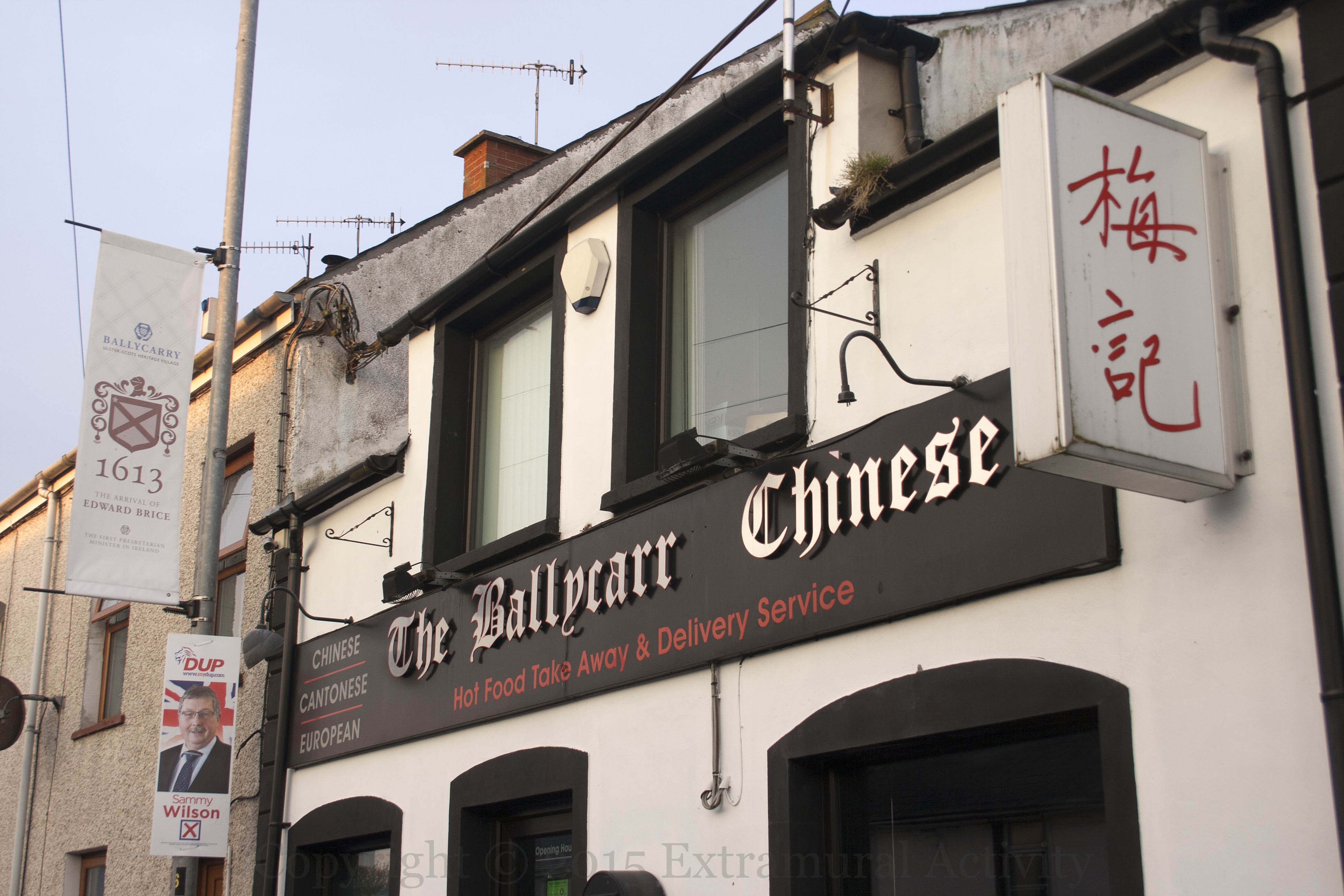
Chinese, Cantonese, European, and Presbyterian. Three signs outside the Chinese take-away in Ballycarry: the Chinese lettering for the restaurant, a DUP poster supporting Sammy Wilson, and an Ulster-Scots heritage banner: “1613 The Arrival of Edward Brice – The first presbyterian minister in Ireland”.
Shepard Fairey used Mannie Garcia’s AP photo of Barack Obama for his ‘Hope’ poster of the 2008 US Presidential election (WP). The three-quarter profile, faraway look and four-tone shading have been repurposed for the board, shown above, in east Belfast: a boy gazes beyond Samson and Goliath, backgrounded by a sunburst: “Dream, Seek, Achieve, Educate, Achieve!”
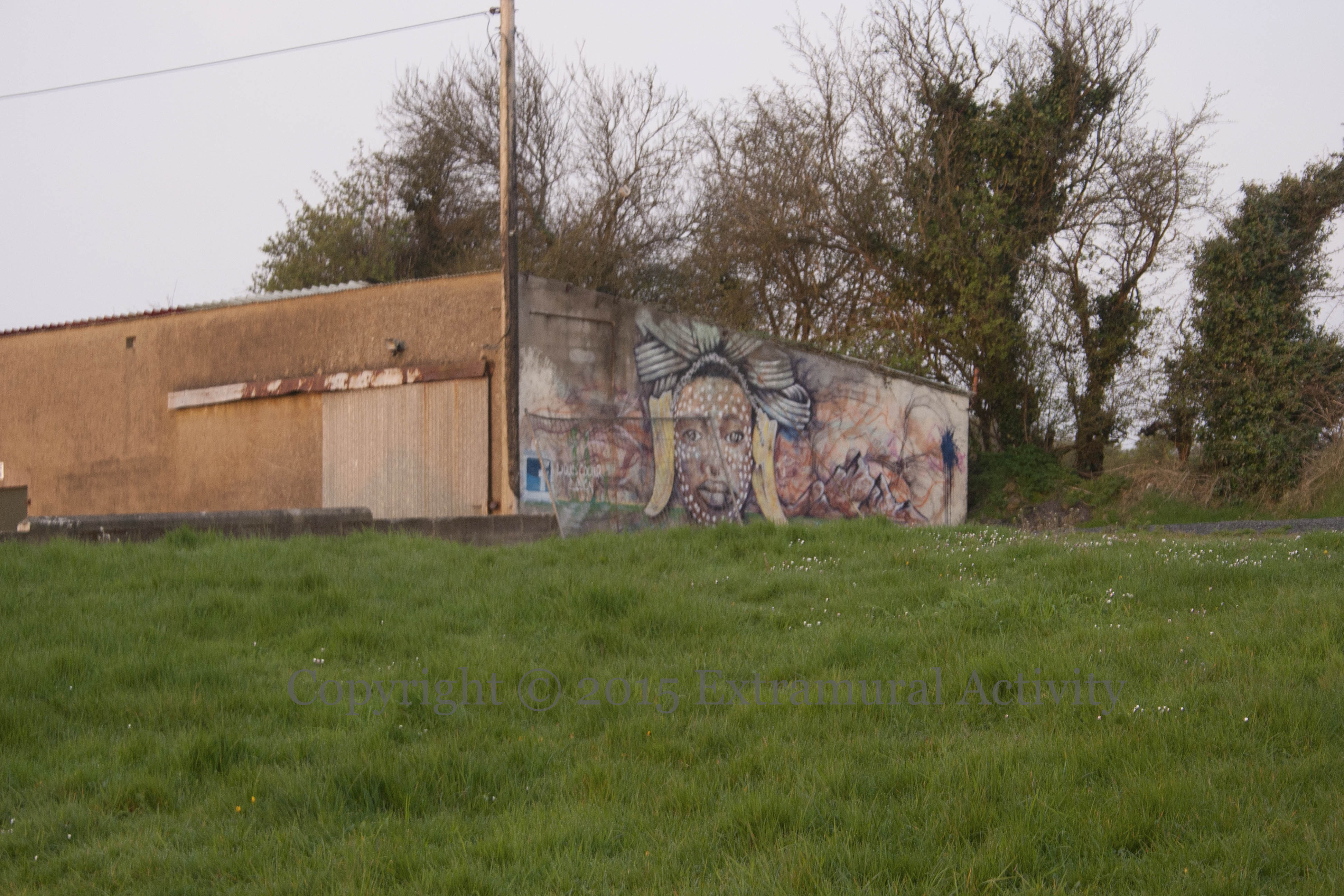
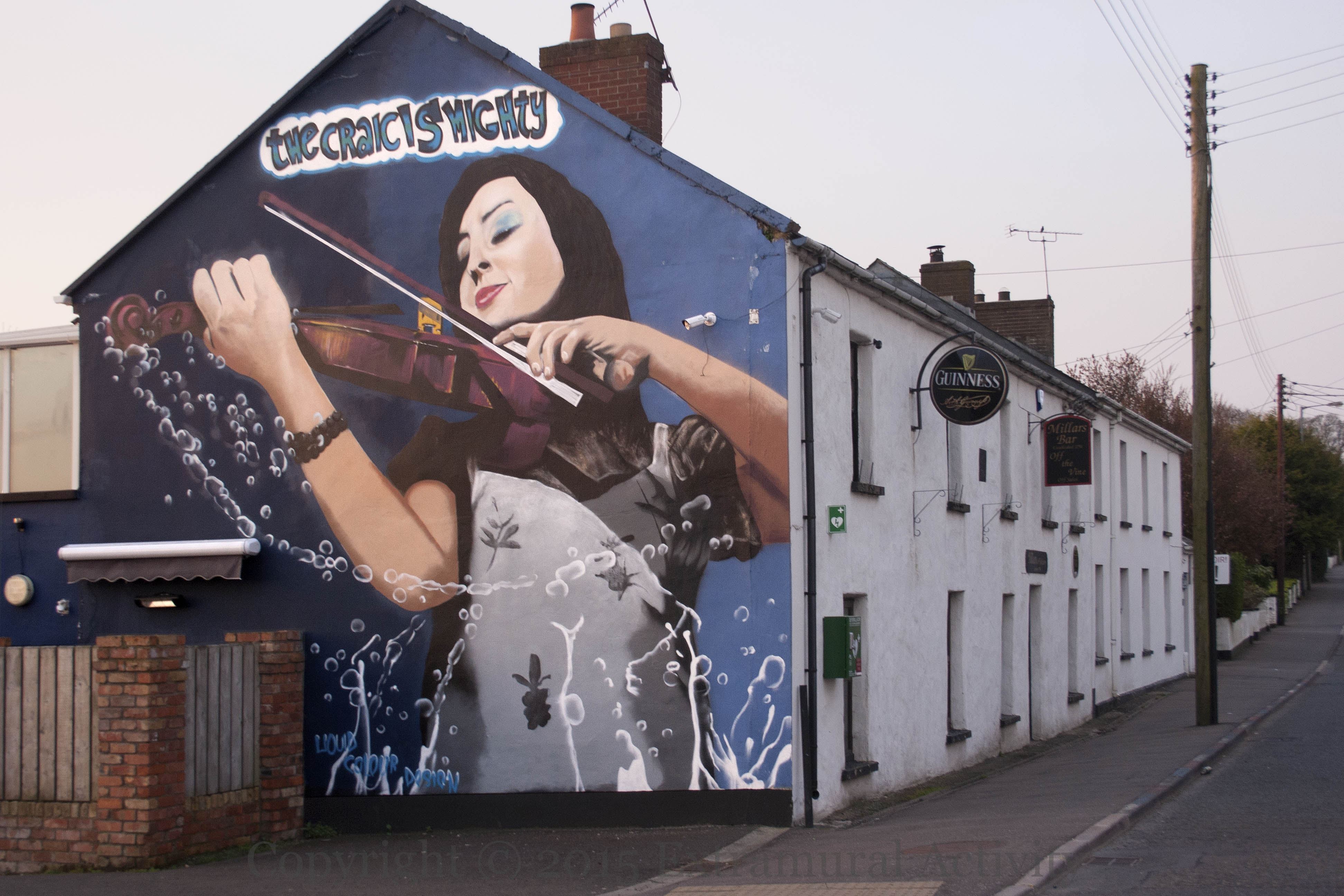
On a barn wall in Ballycarry, County Antrim: a African youth (perhaps Ethiopian Mursi tribe) with painted face and a headdress of warthog tusk and aluminium coils. (By Liquid Colour Design – see also The Craic Is Mighty)
Fiddling in the north of Ireland is common to both Nationalist and Unionist communities and the “old Antrim” style is influenced by Scottish playing (USFO).
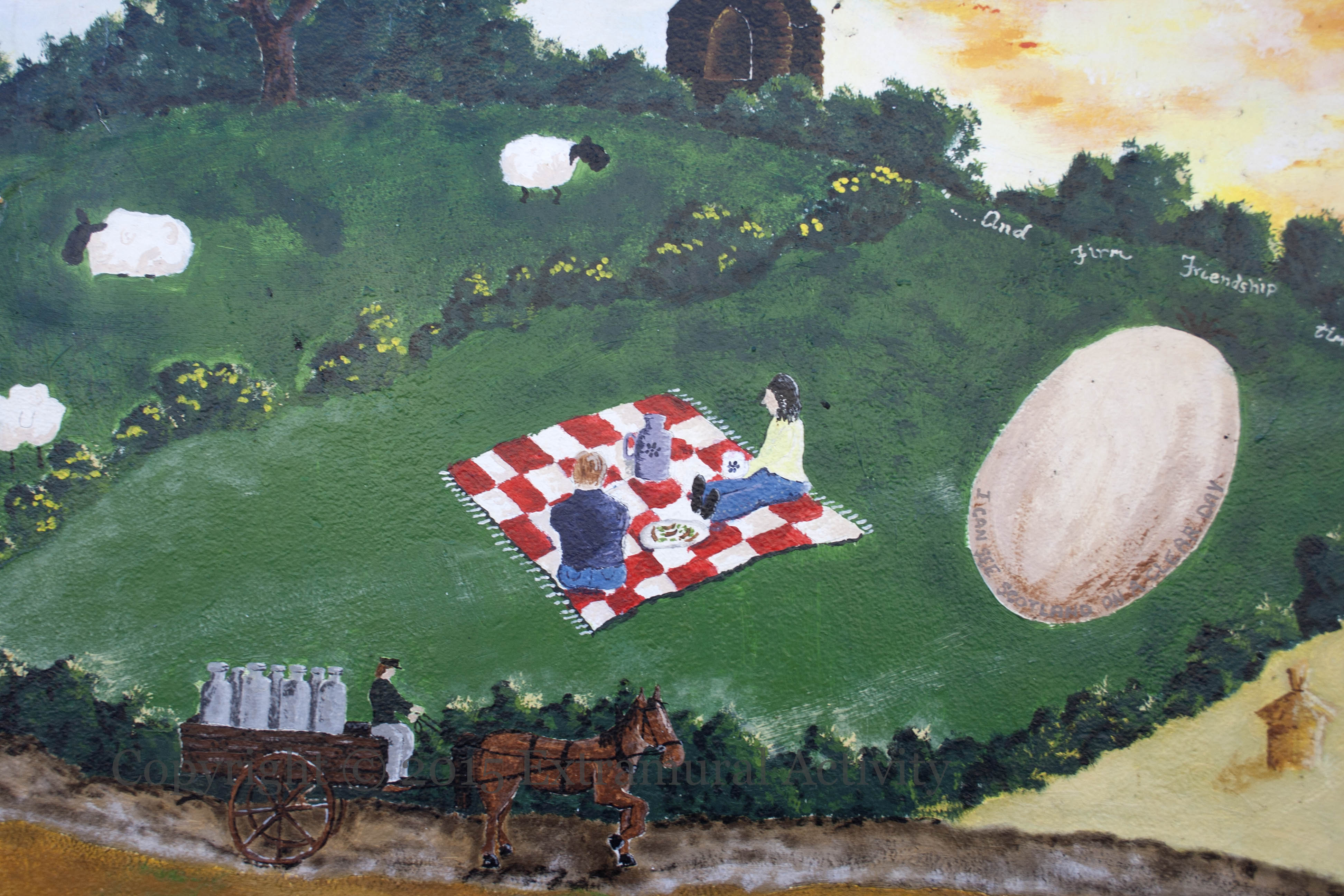
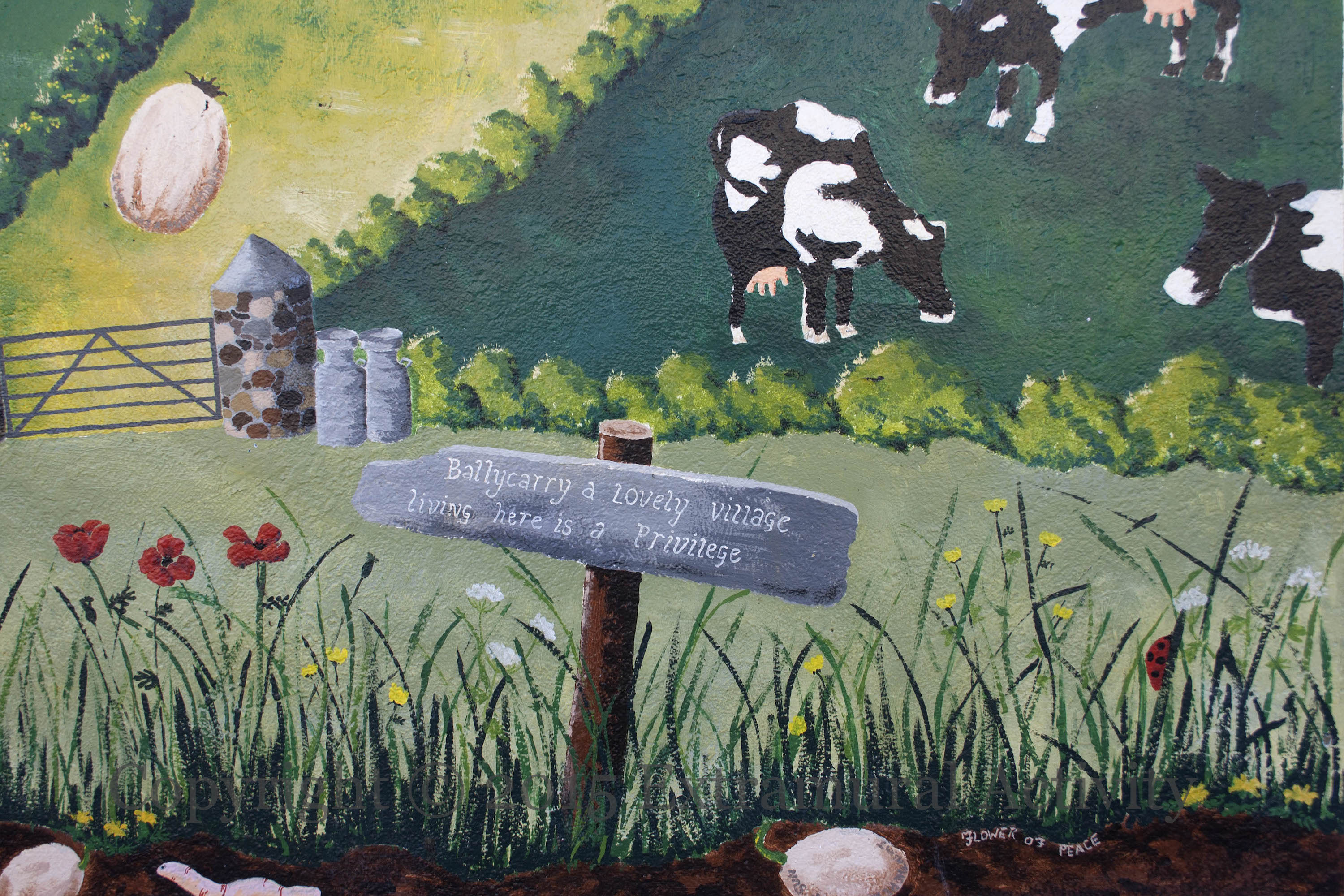
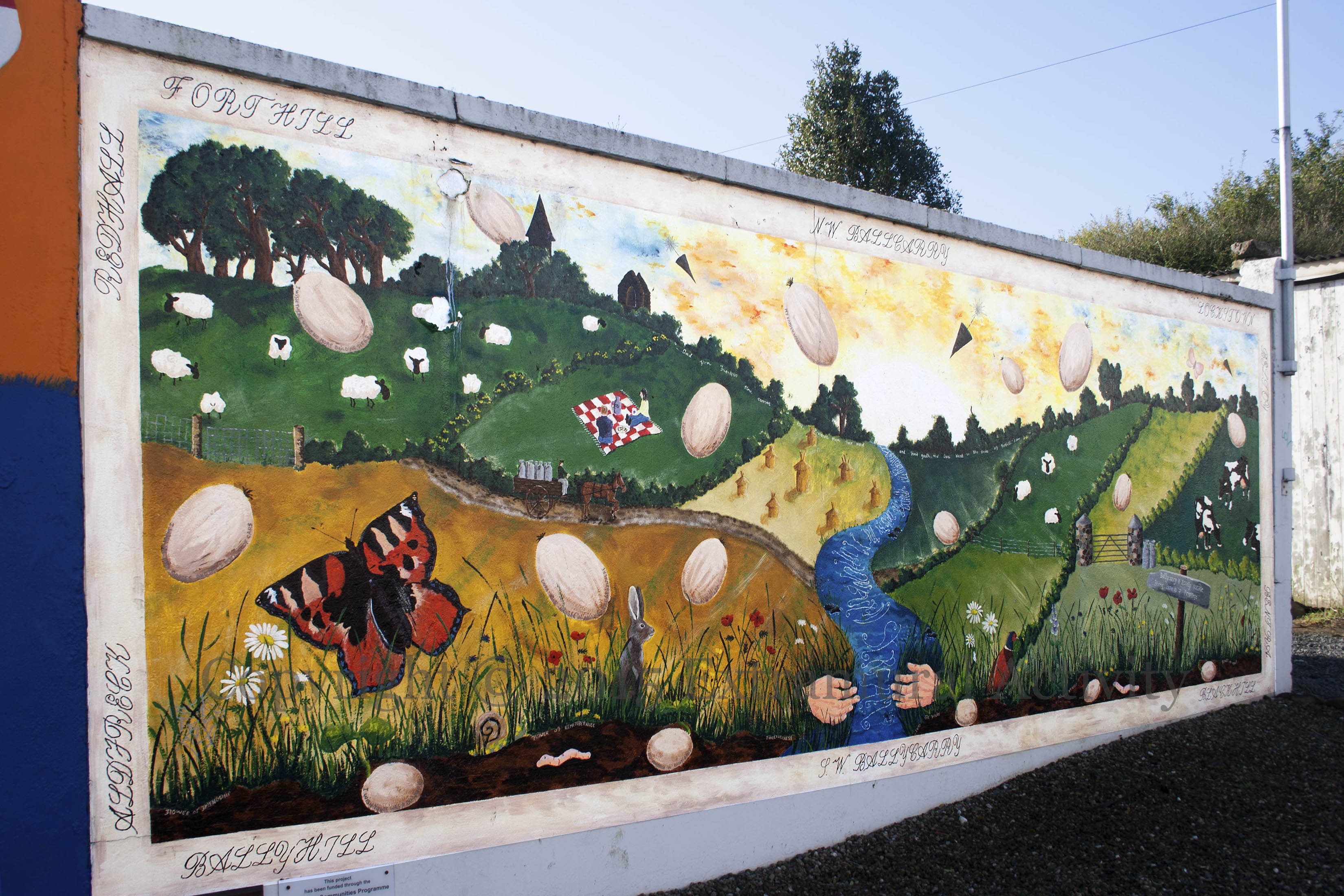
Ballycarry village sits in County Antrim countryside surrounded by the townlands of Ballyhill, Redhall, Forthill, Blackhill, Aldfreck, Lochstown, Beltoy, Bentra. The large pale oval to the right of the picnickers is one of many “seeds” falling from the sky and settling into the earth, which by growing make Ballycarry a pleasant place: “I can see Scotland on a clear day”. The Mutton Burn Stream (lyrics | music from the Ulster-Scots agency) is a song written by Ballycarry resident William Hume (QUB) about the river to the north-west of the village (WP). More about Ballycarry from the BBC’s Ulster-Scots page.
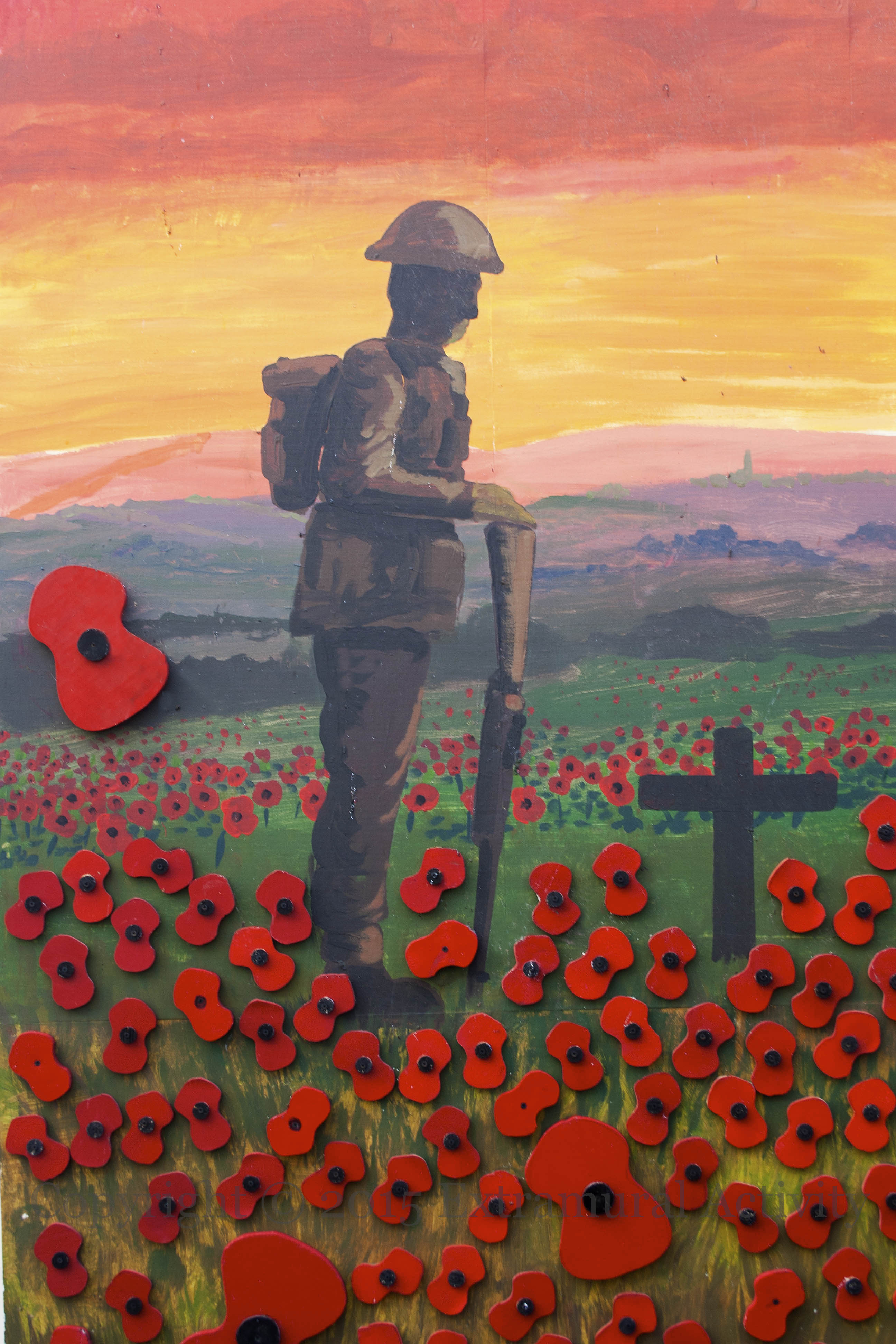
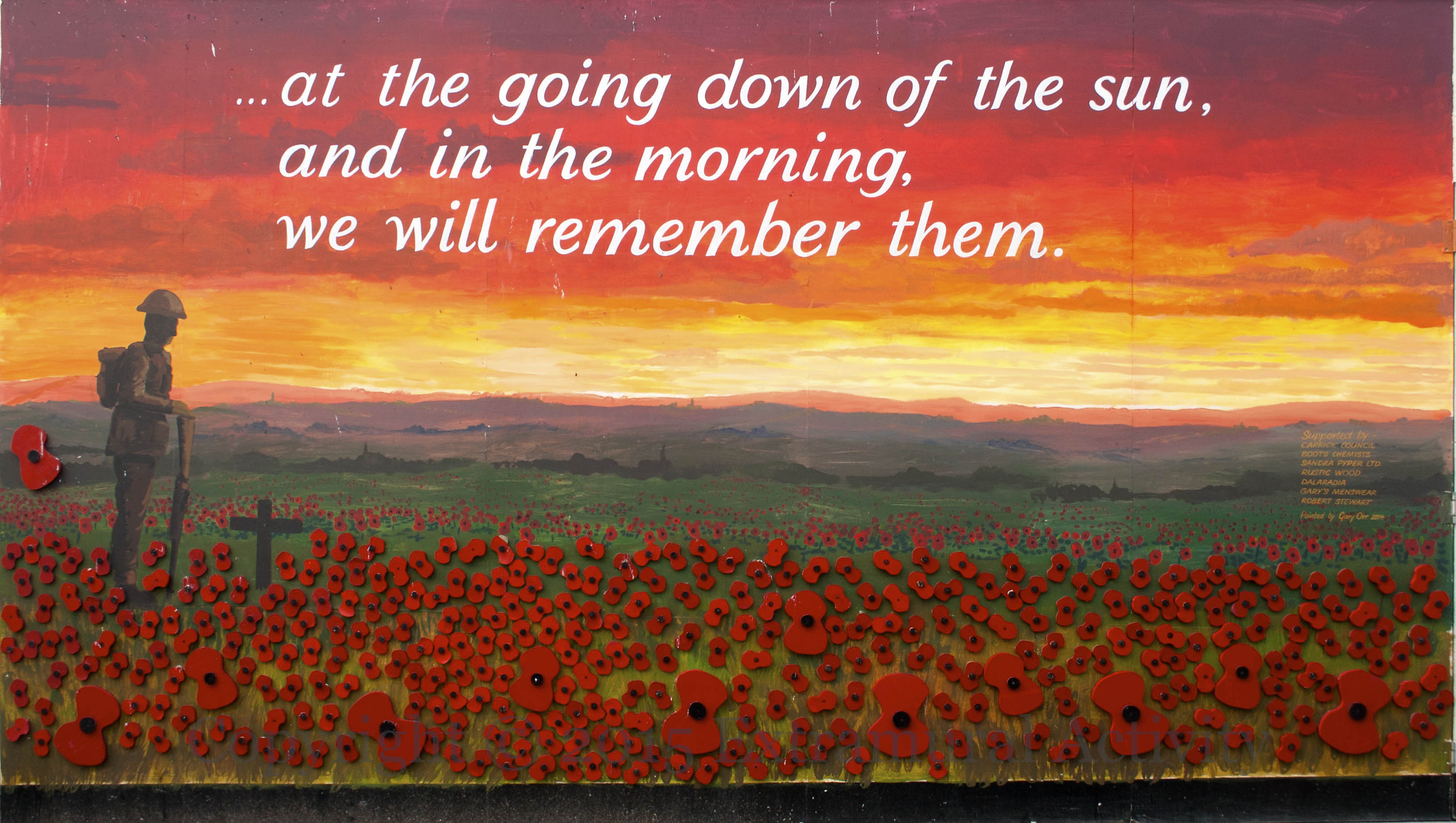
This mural in Carrick has a 3D element: 312 wood poppies were hand-painted and attached to the wall, one for each local man who did not return. By artist Gary Orr. Full shot below.
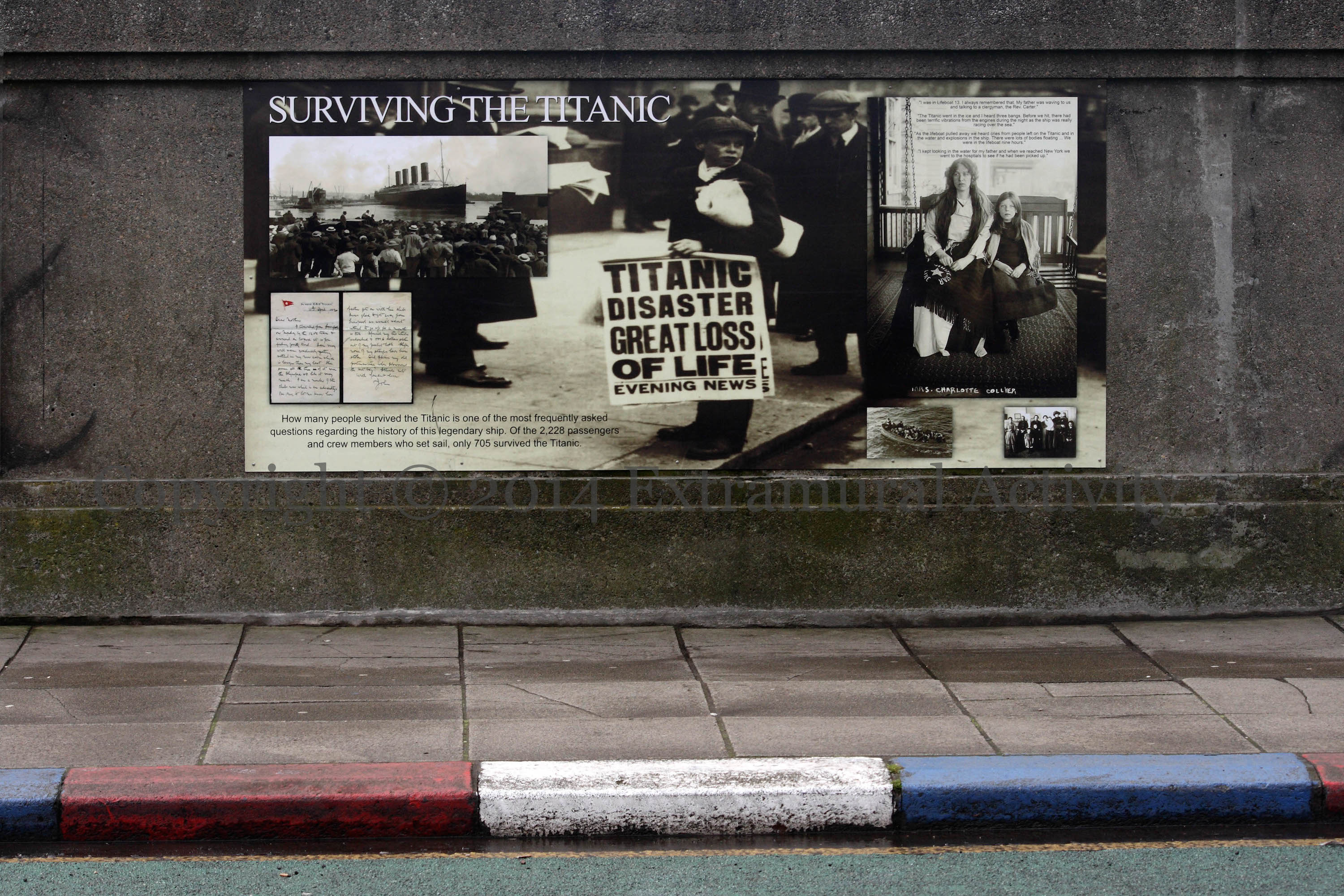
Here are two final images from the south side of the Donegall Road bridge over the Victoria Street line, one about Titanic and the other about locals awarded the MBE.
“I was in Lifeboat 13. I always remember that. My father was waving to us and talking to a clergyman, the Rev. Carter. The Titanic went in the ice and I heard three bangs. Before we hit, there had been terrific vibrations from the engines during the night as the ship was really racing over the sea. As the lifeboat pulled away we heard cries from the people left on the Titanic and in the water and explosions in the ship. There were lots of bodies floating … We were in the lifeboat nine hours. I kept looking in the water for my father and when we reached New York we went to the hospitals to see if he had been picked up.” Mrs. Charlotte Collier
How many people survived the Titanic is one of the most frequently asked questions regarding the history of this legendary ship. Of the 2,228 passengers and crew members who set sail, only 705 survived the Titanic.






 Extramural Activity