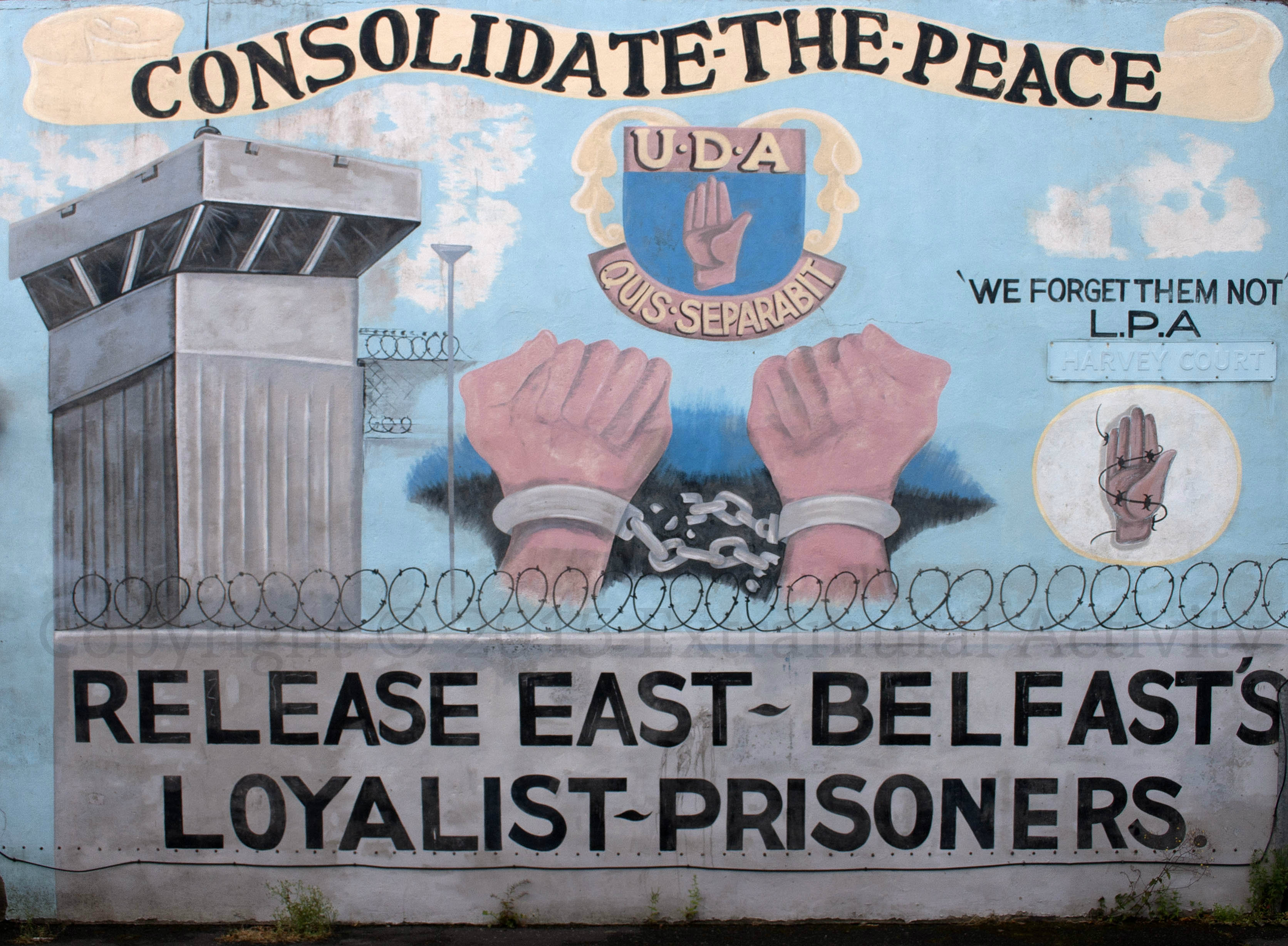
As talks were held at Stormont throughout 1997, (leading to the Good Friday (or: Belfast) Agreement in April 1998) paramilitaries on both sides in the conflict began pressing their case for concessions, including the release of political prisoners. The image above is of a 1997 UDA mural that is still in decent condition in loyalist east Belfast: Consolidate The Peace – Release East Belfast’s Loyalist Prisoners. It shows a Long Kesh tower and barbed wire with red hands breaking the chains between handcuffs. For a similar image (which was painted out this week) in nearby Lord St, see All Gave Some.
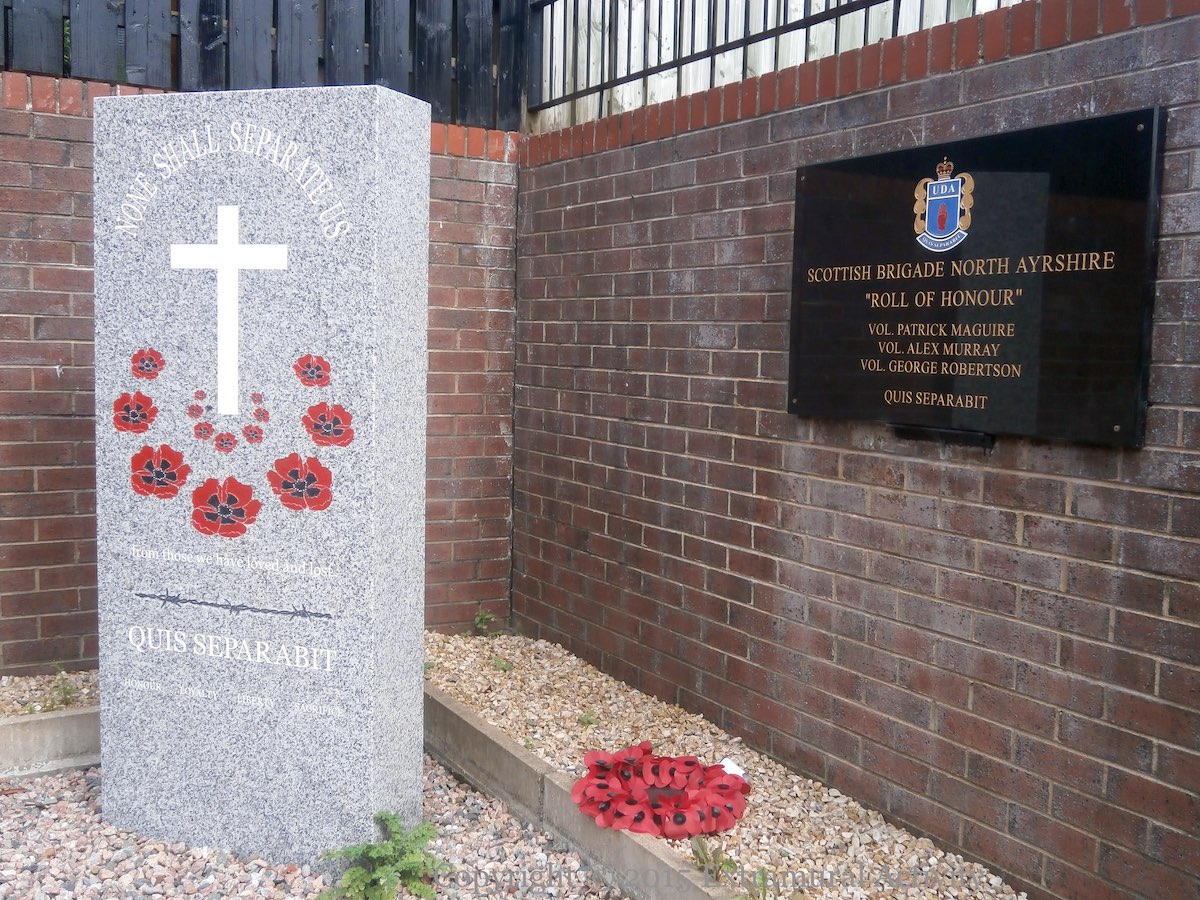
“None shall separate us from those we have loved and lost. Quis separabit. Honour – loyalty – liberty – sacrifice.” A standing stone has been added to the UDA memorial garden in Cosgrave Heights, next to the plaque to the “Scottish Brigade North Ayrshire roll of honour” that was added (circa 2012) to the pair to the North Belfast Brigade that were present in 2008 (see M04397).
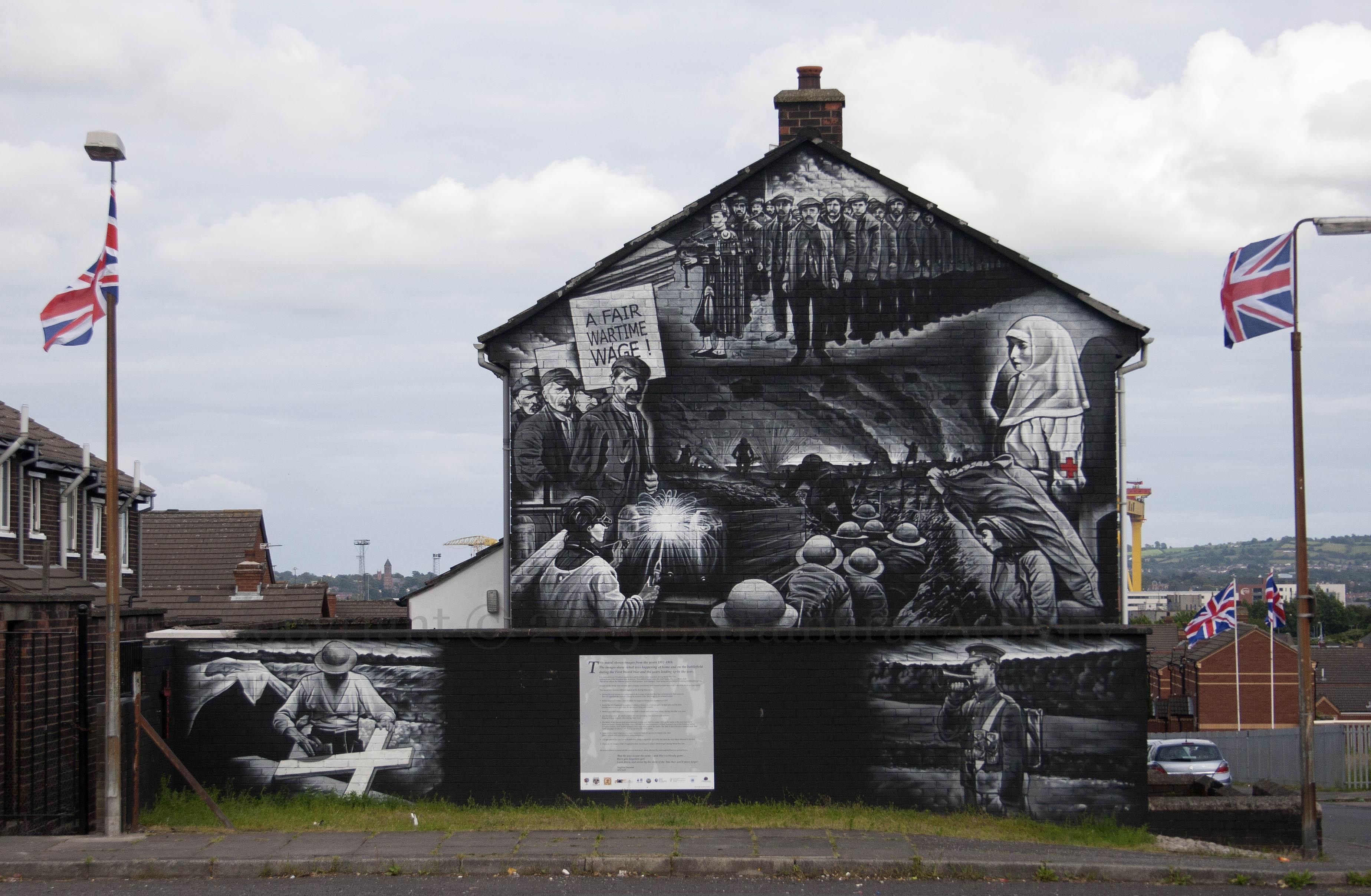
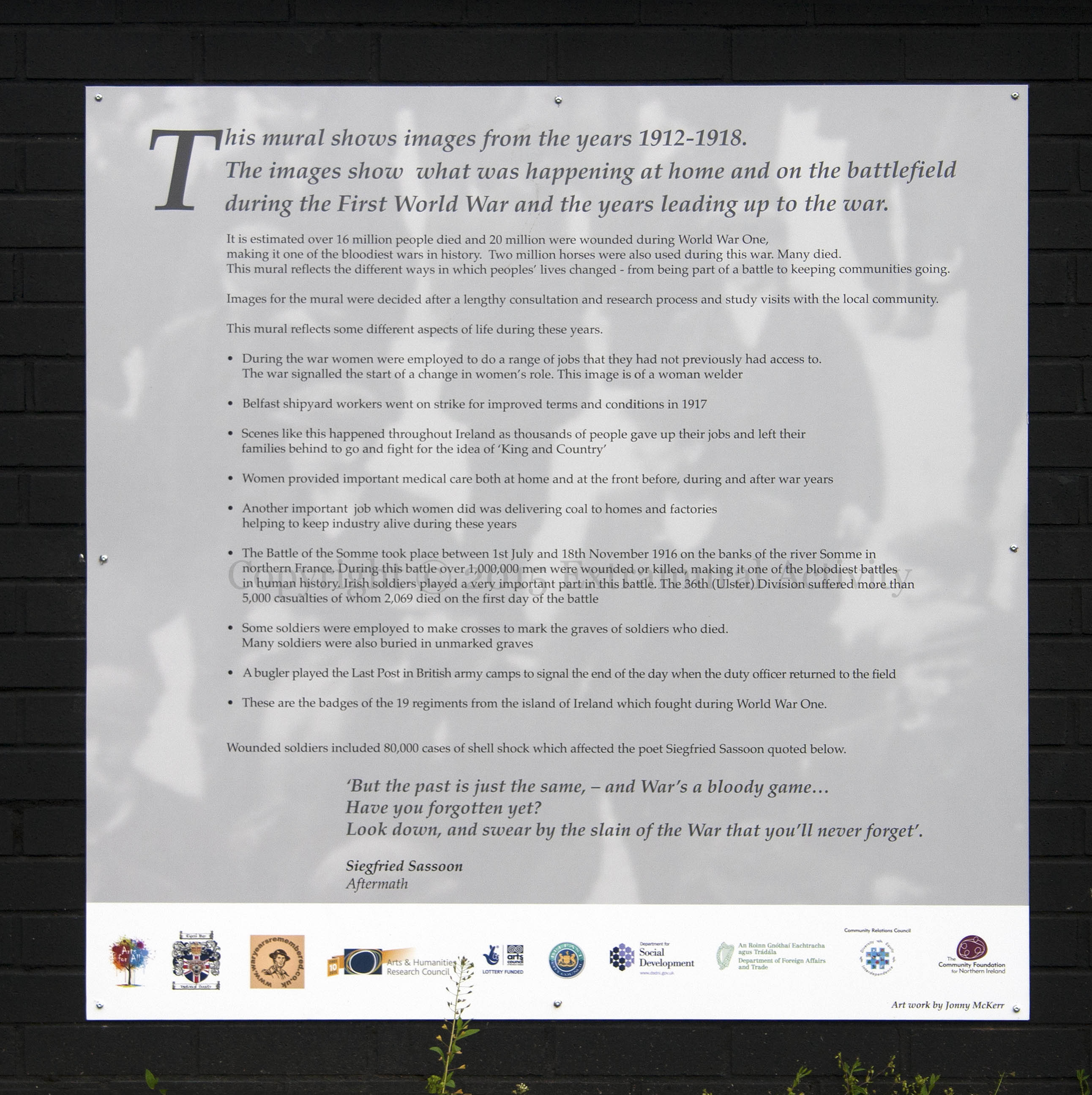
June 15th saw the official ‘Arts For All’ launch of a mural shown all the way back in January. For the launch, artist Jonny McKerr added backgrounds to the cross-maker and bugler on the low wall in front, and the information-board in the centre was added. For background and the images on which the mural is based, see The Home Front (and also The Undertaker).
South Belfast MP Robert Bradford was assassinated by the Provisional IRA in Finaghy at a meeting with constituents; the caretaker of the community centre, Ken Campbell, was also killed by the fleeing attackers. Taking place in late 1981, with the hunger strikes having ended only a month before, the killing was noted around the world and raised fears of broad civil unrest (BBC | NYTimes). The board above serves as a substitute for an earlier mural to Bradford on the adjacent gable wall. See below for a wide shot of Oak Street with the Bradford board between the repainted Cemented With Love and No Surrender Club.
Badger, hedgehog, squirrel, fox, and owl – along with various butterflies and birds – all inhabit the new community garden at Conduit Street in Donegall Pass. (It’s not all make-believe; the bird box on the tree in the middle is in fact real!) The mural above is the work of Nozzle & Brush.
Click here for work-in-progress shots. And for images of the launch (on April 22, 2015) see the Fb page of the Donegall Pass Community Forum.
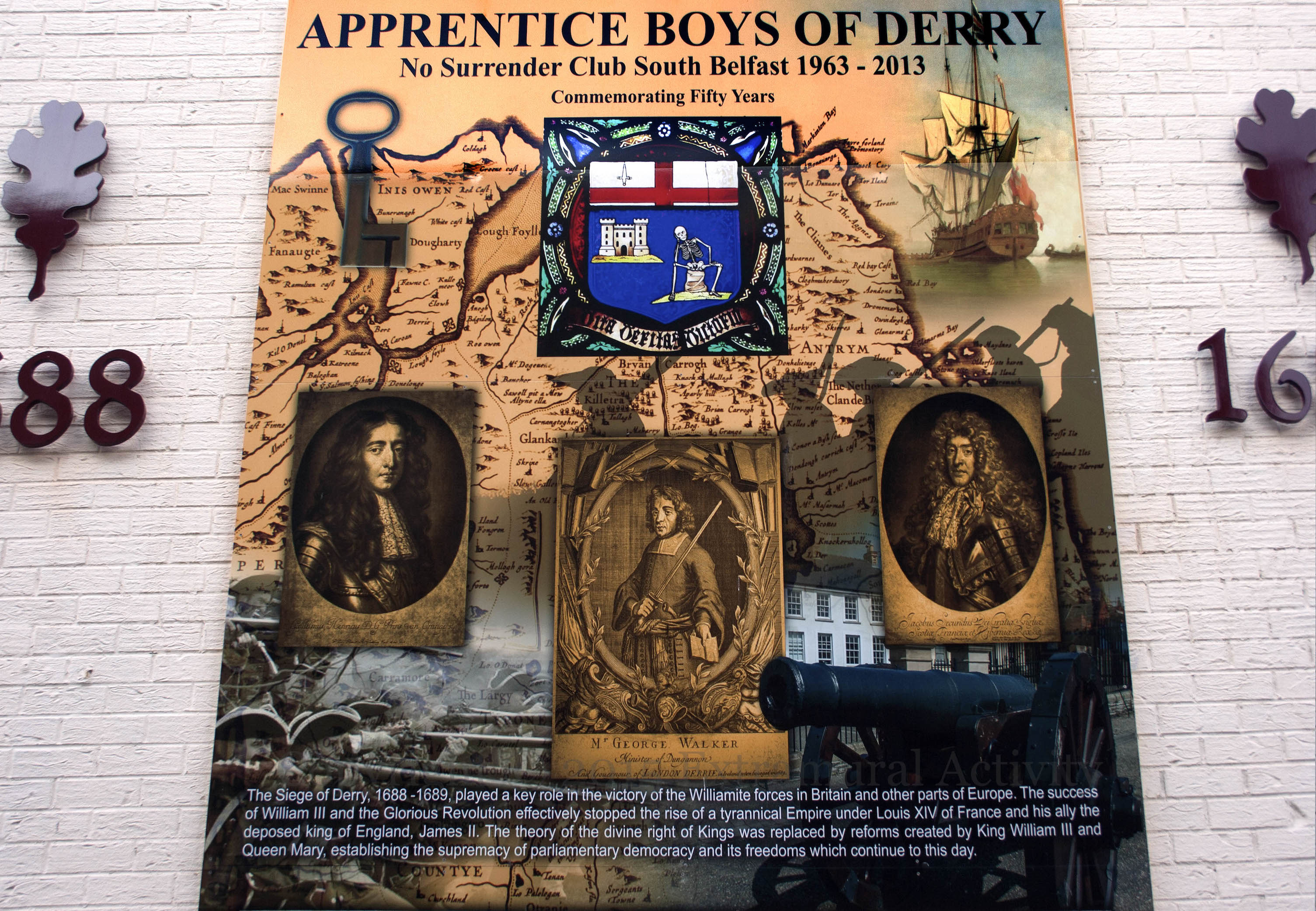
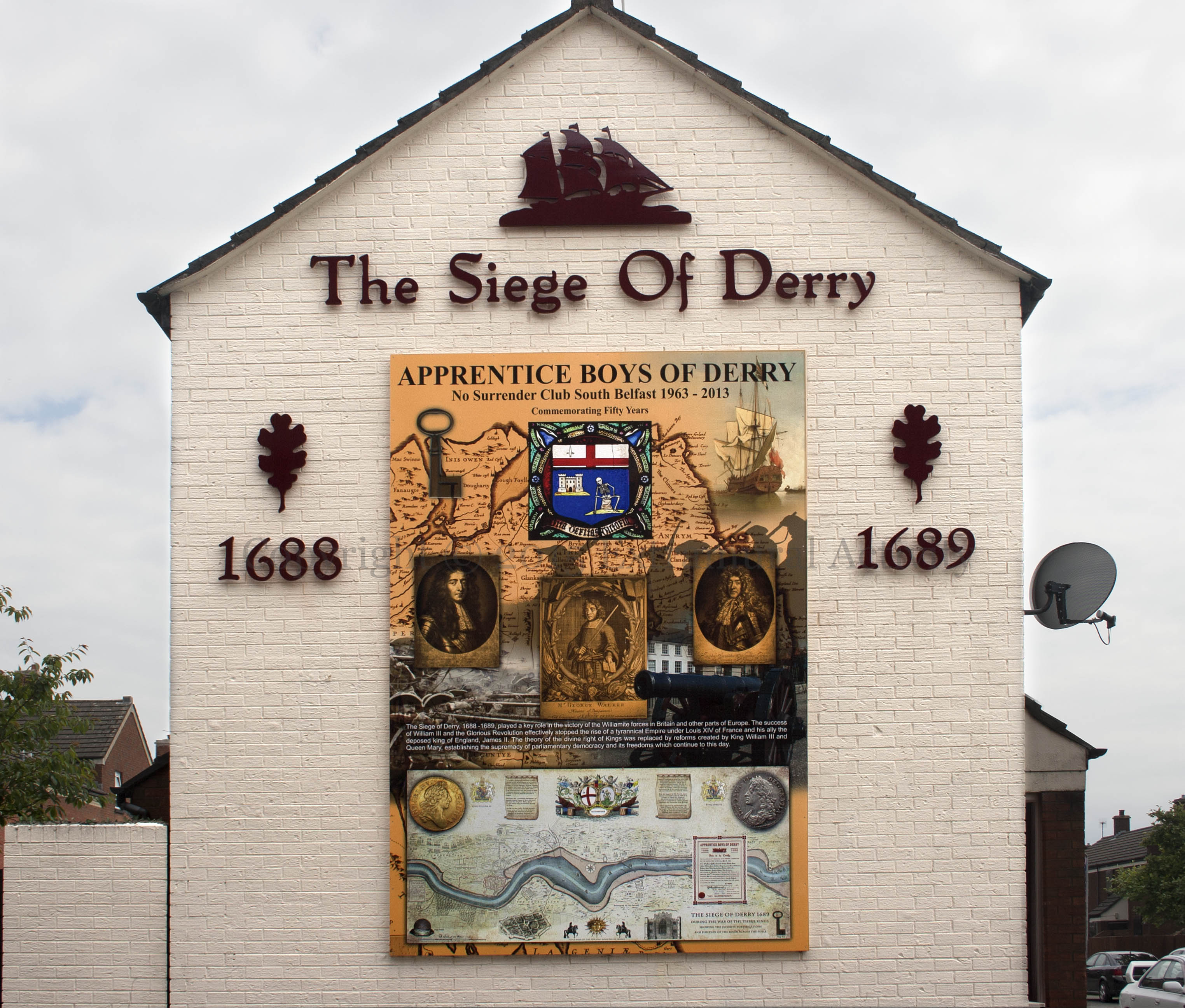
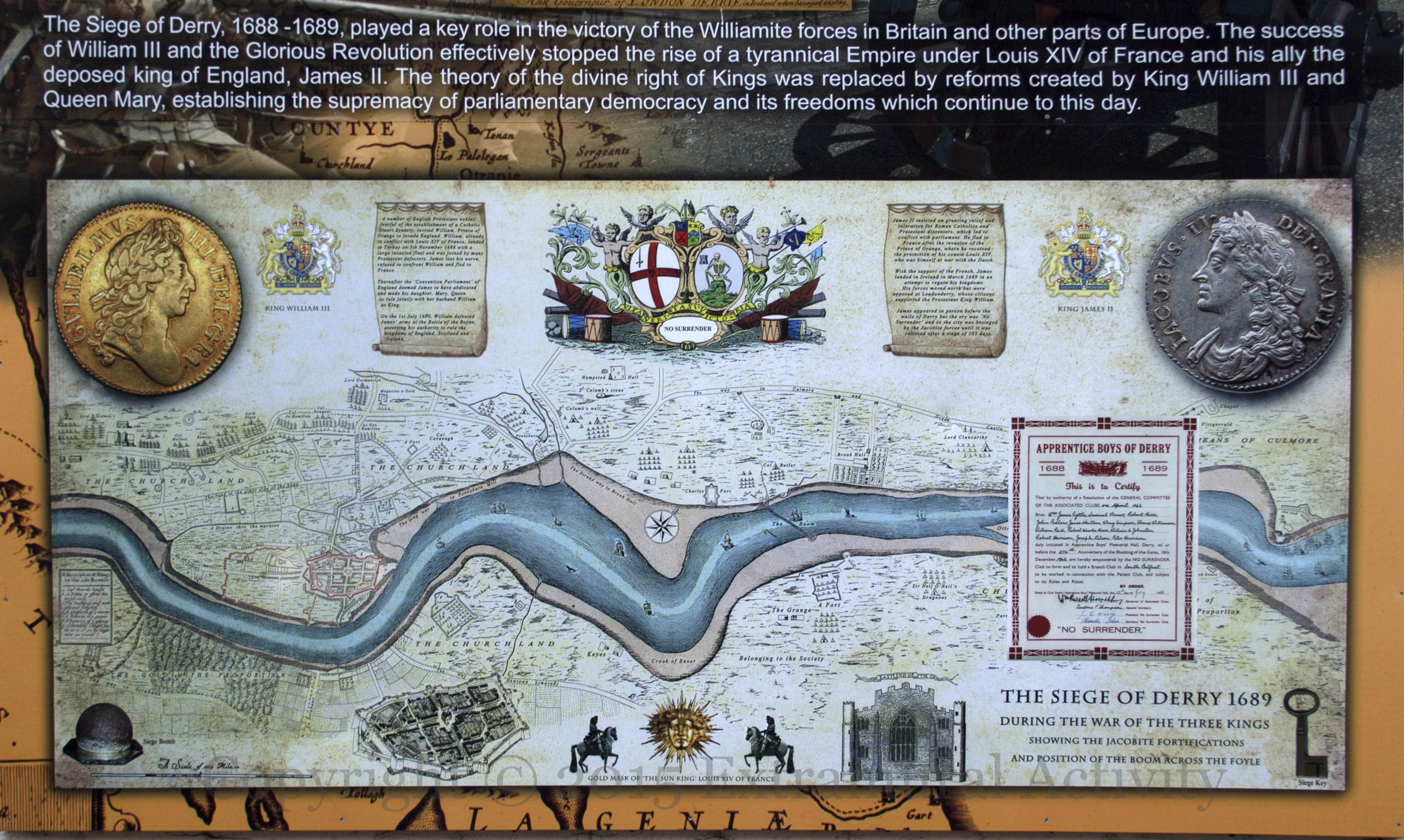
Oak Street is a fitting place for a mural about the Siege of Derry, as the oak leaf, shown to the left and right of the board above (and in the wide shot, below) is a symbol of the town, “doire” meaning an oak grove. The gates to the city were locked by thirteen apprentices, against the wishes of Governor Robert Lundy who wised to surrender the city. When the deposed king James II and his army arrived and demanded the surrender of the city of Derry, the cry from within was “No surrender!” The city was then besieged for 105 days until relief arrived in the form of ships of the navy of the newly crowned William & Mary.
The board shown above celebrates 50 years of the No Surrender Club South Belfast (1963-2013) a club affiliated with the Apprentice Boys Of Derry.
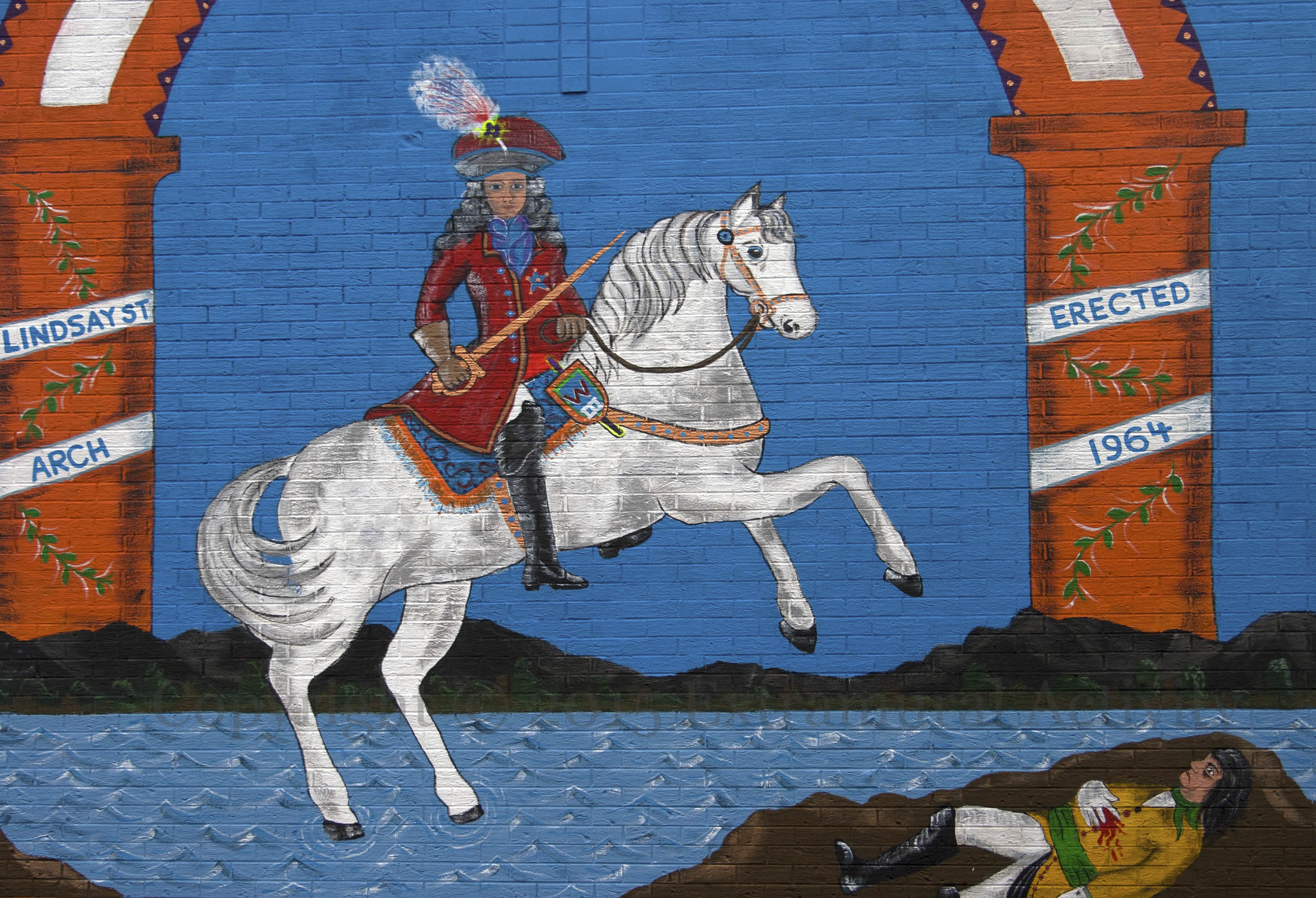
The ‘Cemented With Love’ mural on Oak Street (Donegall Pass) has been repainted for the 2015 marching season. According to the painted note in the bottom left corner, it was originally painted in 1989 on the 25th anniversary of the erection of the arch in nearby Lindsay Street. The mural shows William of Orange rearing back his horse in the Boyne river while a Jacobite soldier in green, white, and gold expires on the shore (shown below along with a close-up of William and horse).
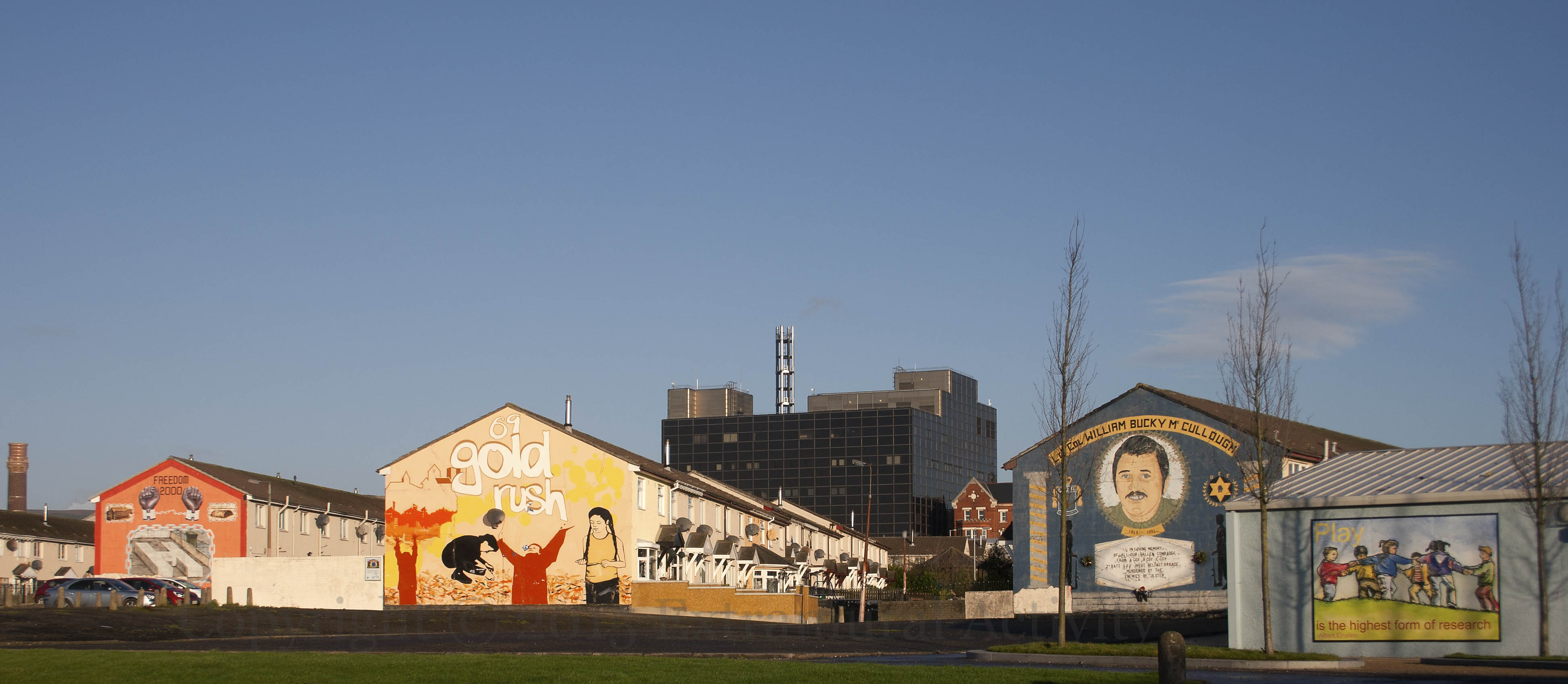
Here’s a wide shot of the right-hand side of the murals in the lower Shankill estate. These gables have remained in place while the estate has been redeveloped, causing the removal of the Red Hand, Martin Luther and Cuchulainn murals.
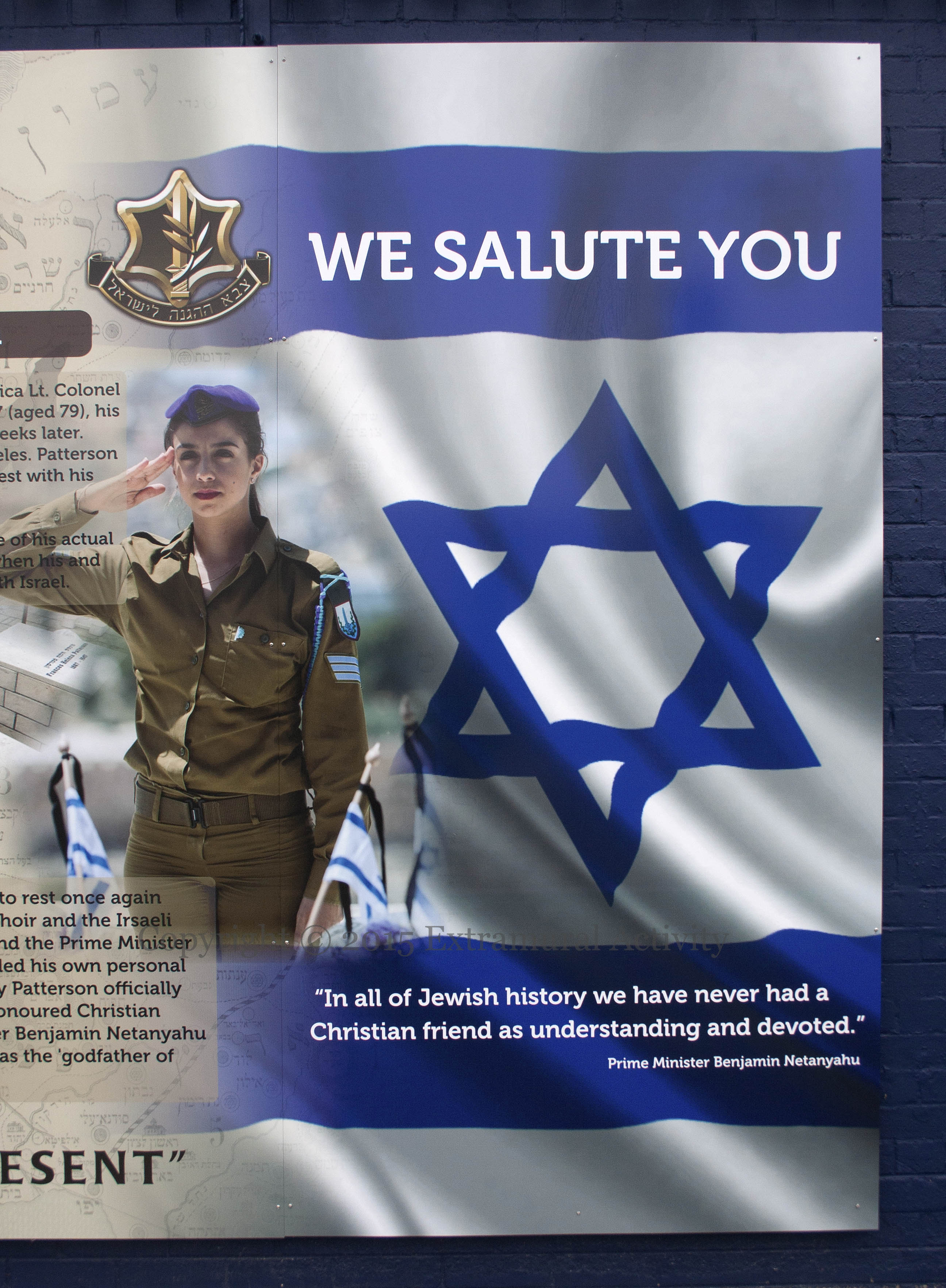
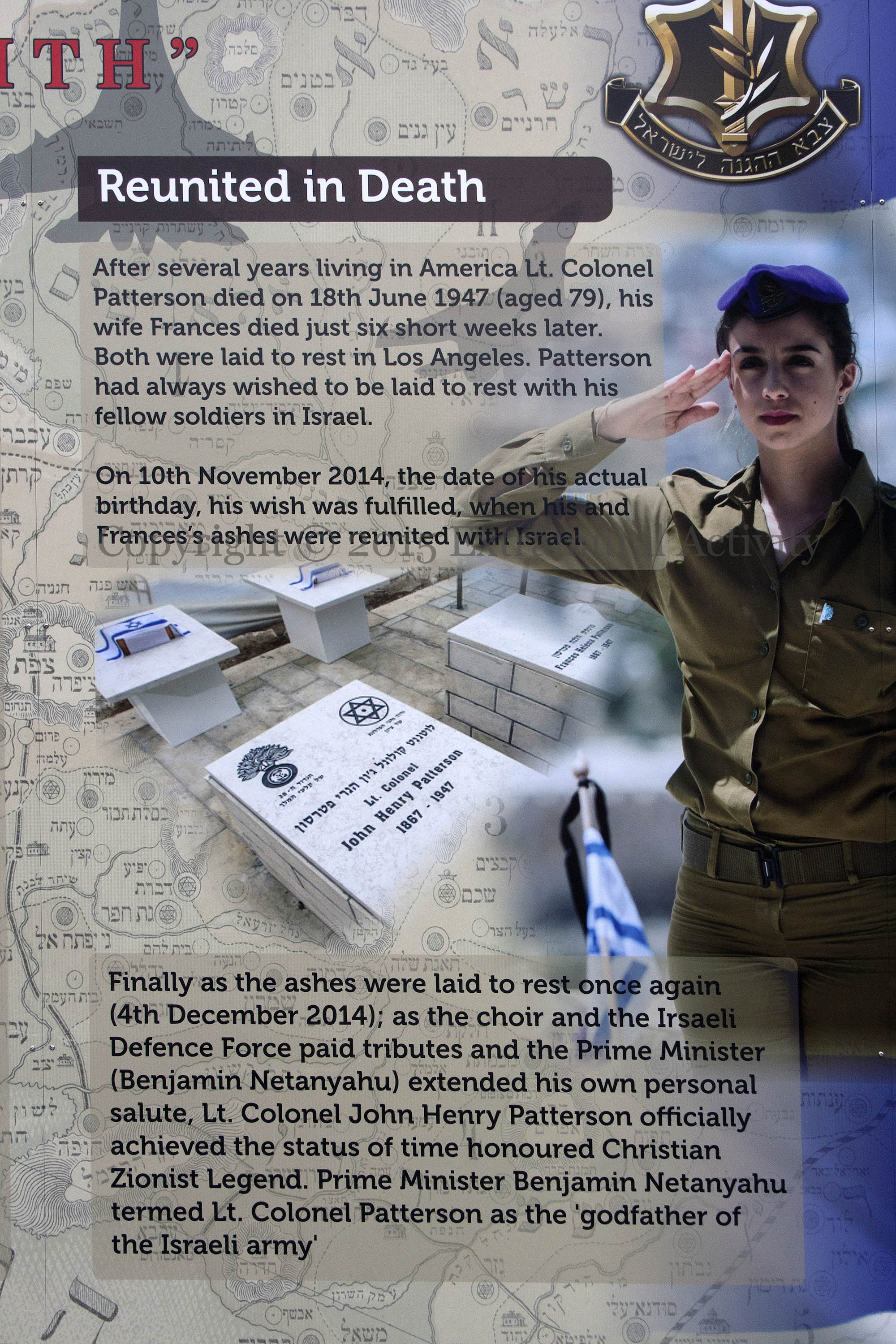
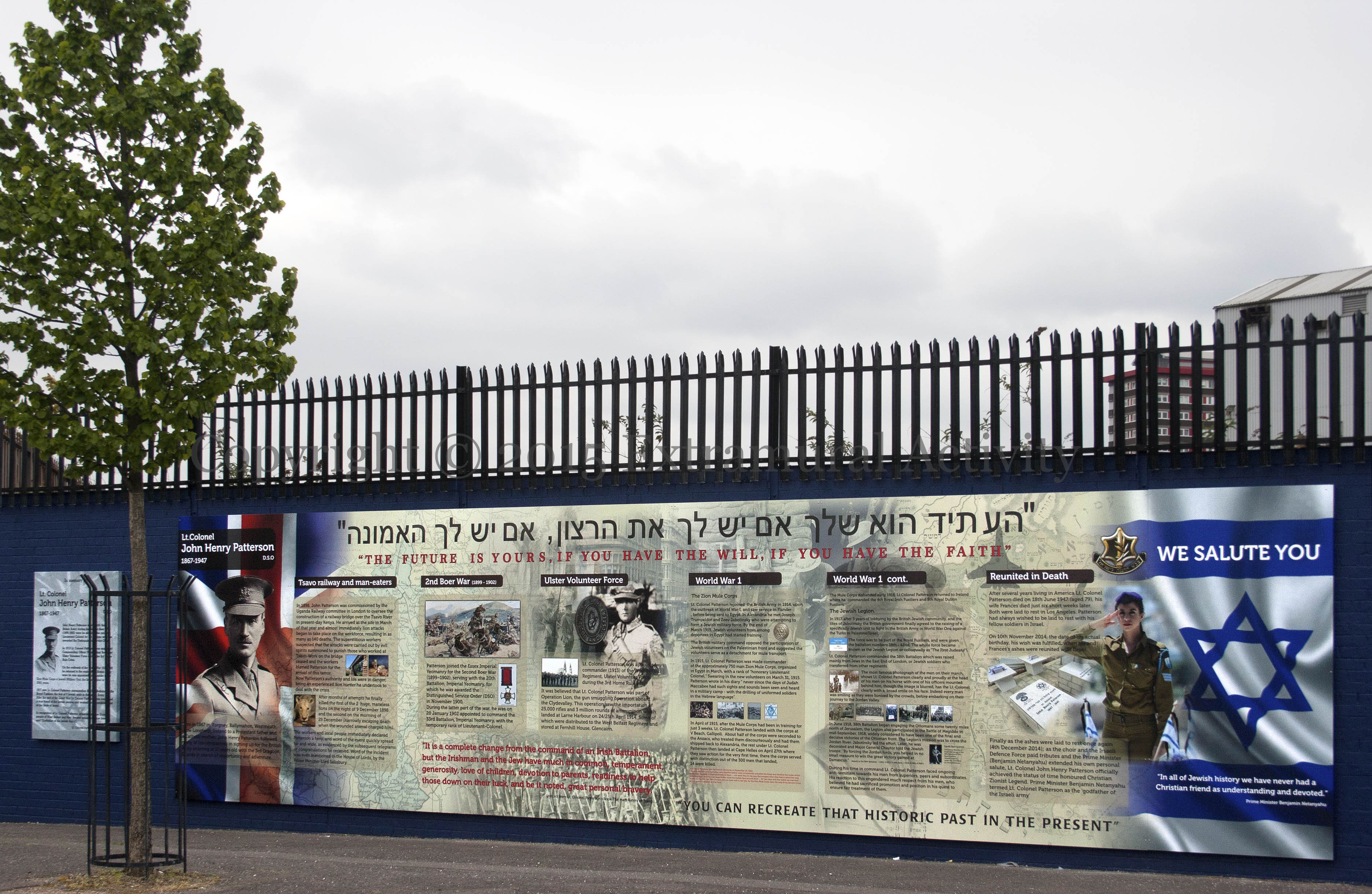
Here are panels 8, 5, 6, and 7 from the Patterson board featured yesterday. The final panel shows the star of David and a quote from Prime Minister Benjamin Netanyahu: “In all of Jewish history we have never had a Christian friend as understanding and devoted.” The interim panels described Patterson’s raising and leading of the Jewish battalions of the Royal Fusiliers in WWI. After dying in obscurity in Los Angeles in 1947, his remains were transported to Israel in December 2014 and reinterred (video). For more, including a recording of Patterson’s voice, see this BBC Magazine article.
Video of the launch:
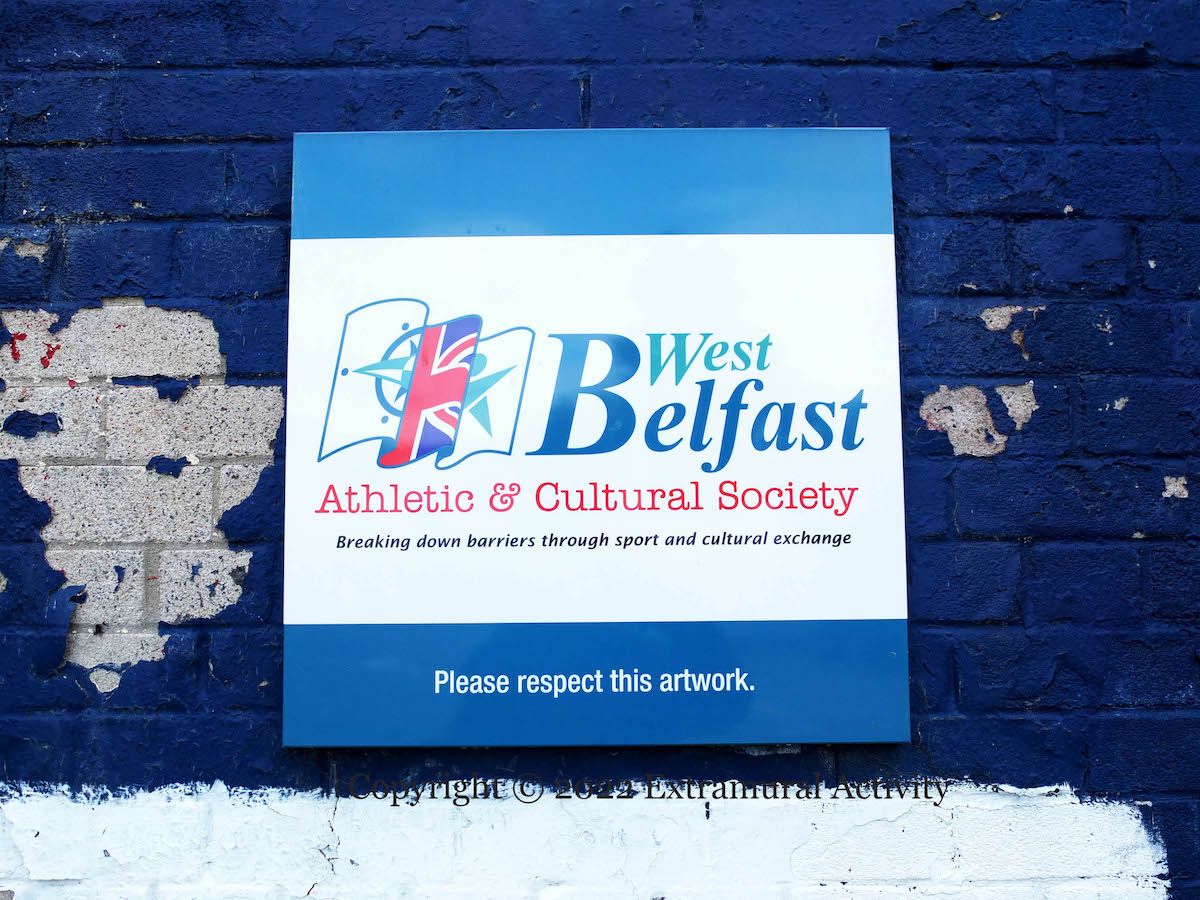
The plaque to the right asks viewers to “please respect this artwork” but a fire was set below it in 2016; see Where Is The Reconciliation?
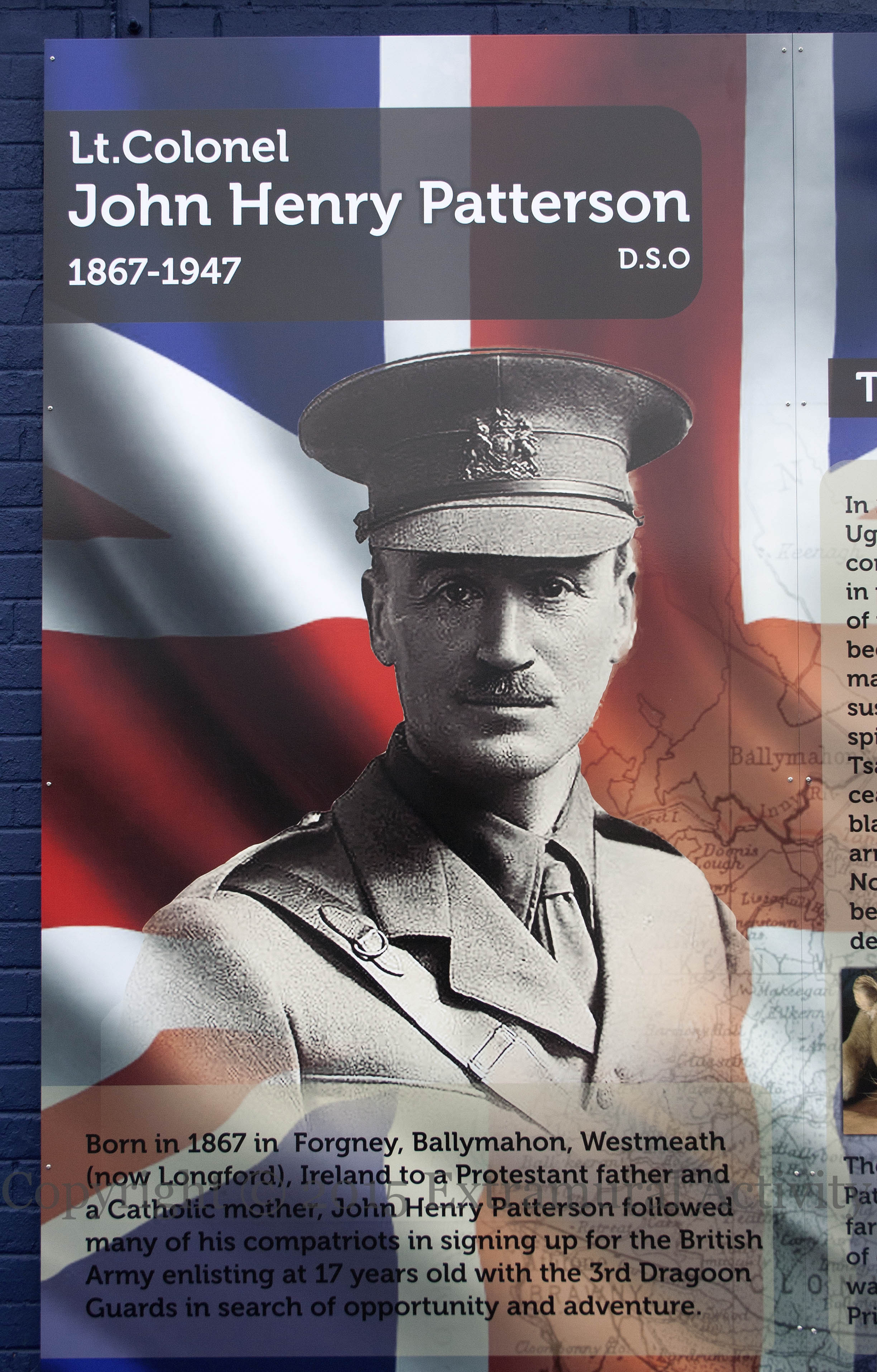
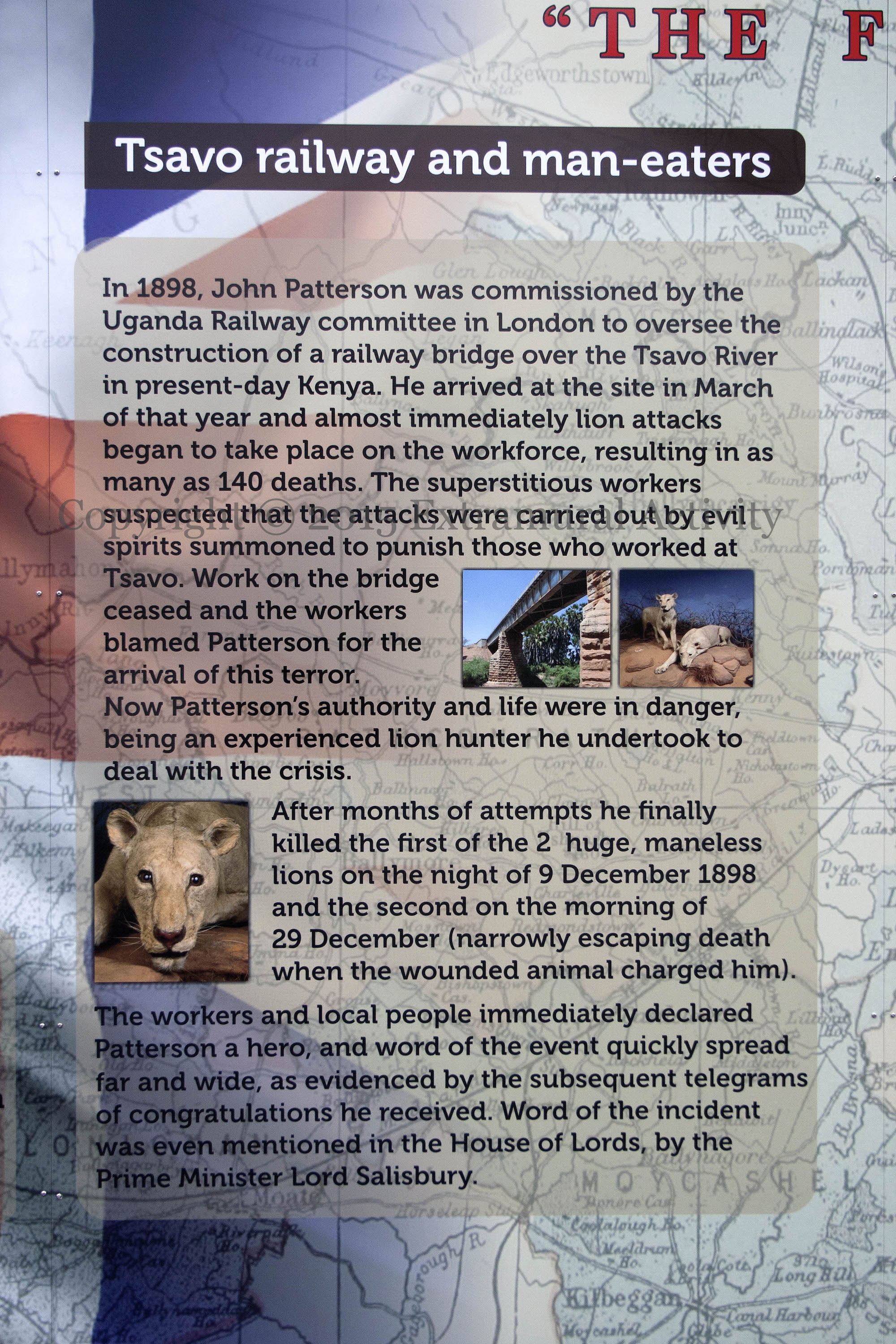
Here are the first four of eight images (plus one wide shot) of the new Patterson memorial at the junction of Northumberland and Beverly Streets. As the text on the board describes, Patterson went from Ireland to Kenya, where he killed several lions after months of hunting. He wrote an account of the hunt ‘The Man-Eaters of Tsavo’ which has inspired three movies; the lions, named The Ghost and The Darkness, were both over nine feet in length. Back in Ireland he commanded a battalion of the UVF and was involved in the Larne gun-running of 1914: Operation Lion.











 Extramural Activity