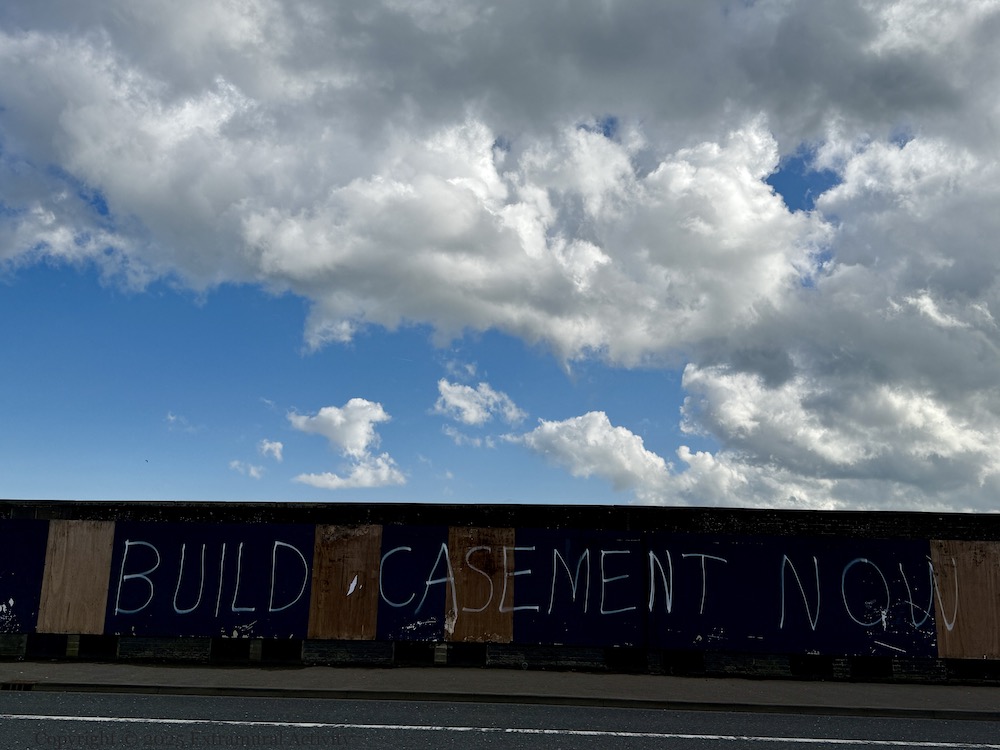
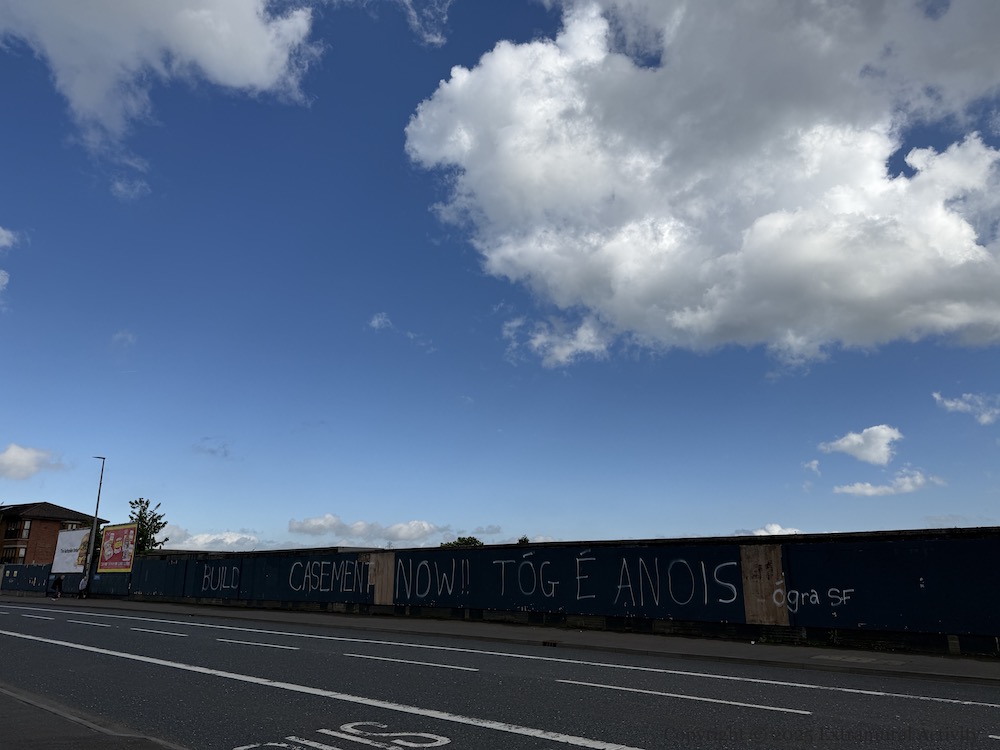
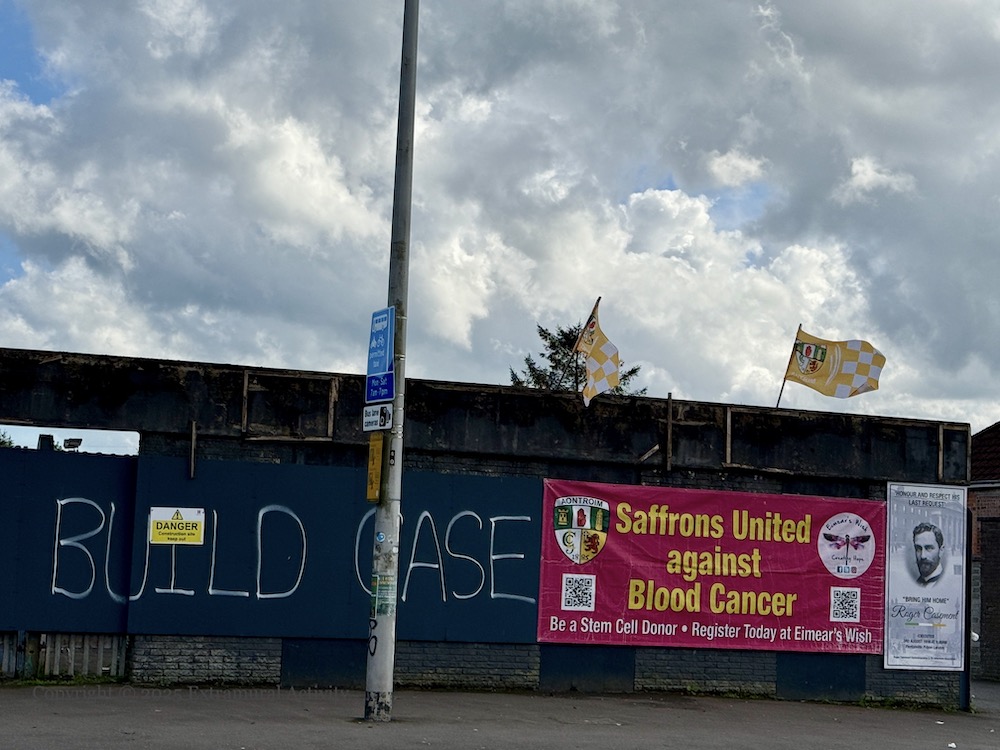
“Build Casement now. Tóg é anoıs [Build it now]. Ógra SF”. Plans to redevelop Casement Park/Paırc Mhıc Ásmaınt go back to 2009 but a series of problems – with planning permission, objections from locals, insufficient funding, and the contractor going bust – has meant that the stadium has been boarded up and deserted since 2013 (balls.ie).
There were hopes that Casement would be renovated in time for the 2028 Euros, but the new Labour government declined to contribute and those plans were shelved. A rally was held last month (April 12th) to put pressure on government ministers – both in Stormont and Westminster – to make Casement’s rehabilitation a priority (BBC | RTÉ).
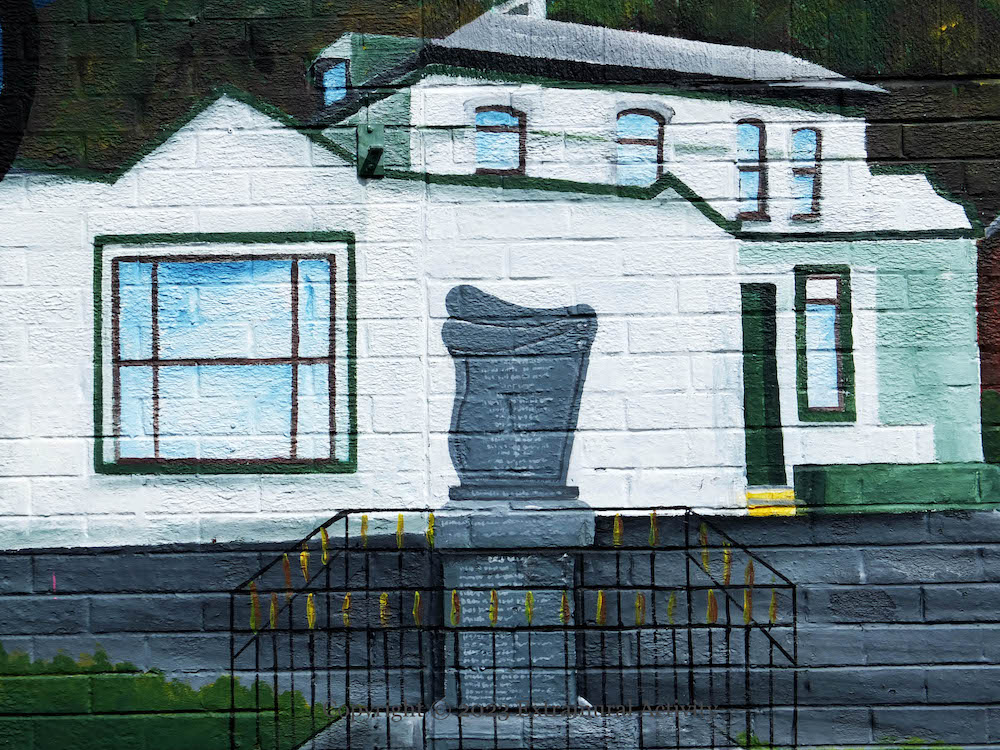
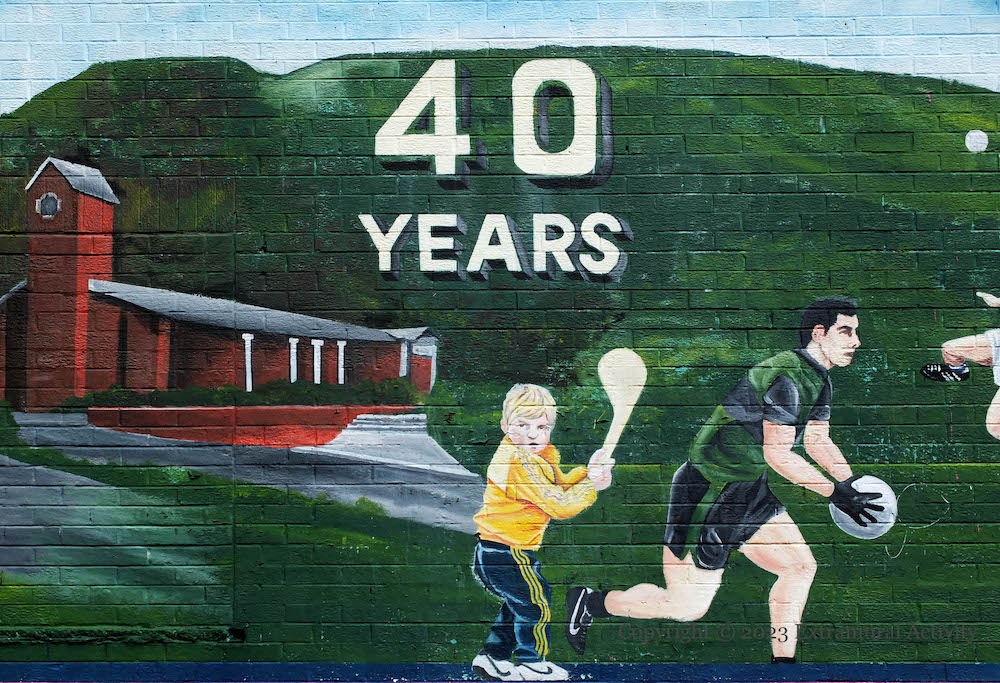
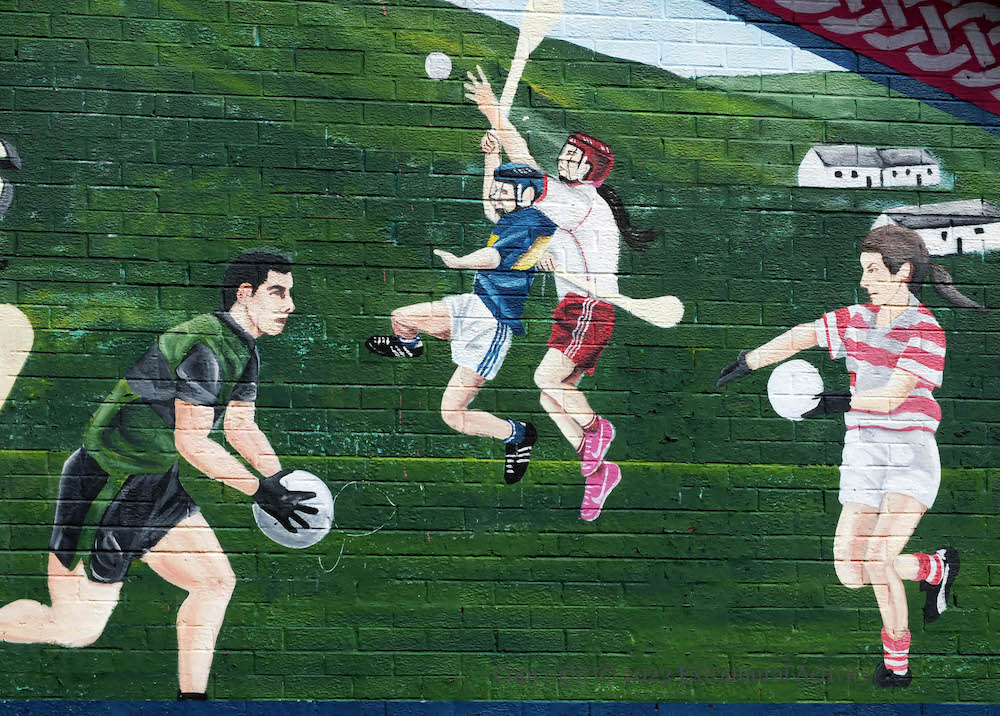
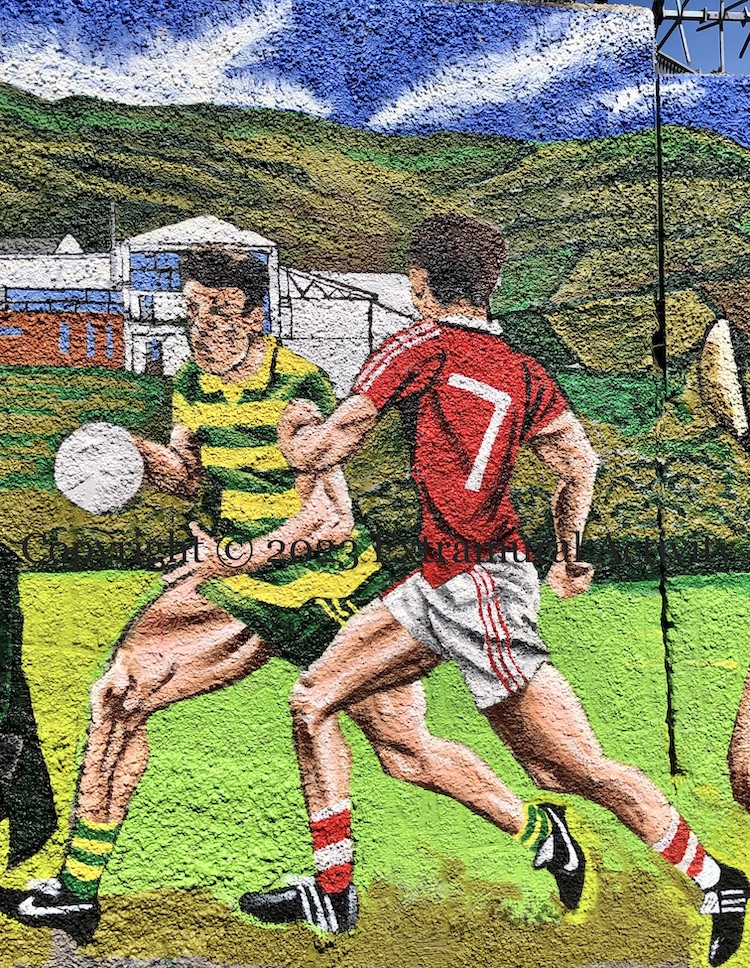
Glencolin estate was built next to Moyard House (which in 1984 became home to the Roddy’s (web), shown in the image directly below) on the Glen Road in 1979 (Belfast Forums). For the fortieth anniversary of “eastát Ghleann Collaınn” the mural at the entrance to the estate was (belatedly) repainted. The composition of the mural remains as in the previous version, with the Roddy’s and Oliver Plunkett church in the shadow of Dubhaıs and Slıabh Dubh; they are now joined by images of Gaelic games. The Bobby Sands quote has been removed.
The 2018 side-wall shows boxer Brendan Irvine — “the wee rooster” — who represented Ireland in the Tokyo (2020) and Rio (2016) Olympics at flyweight (Olympics).
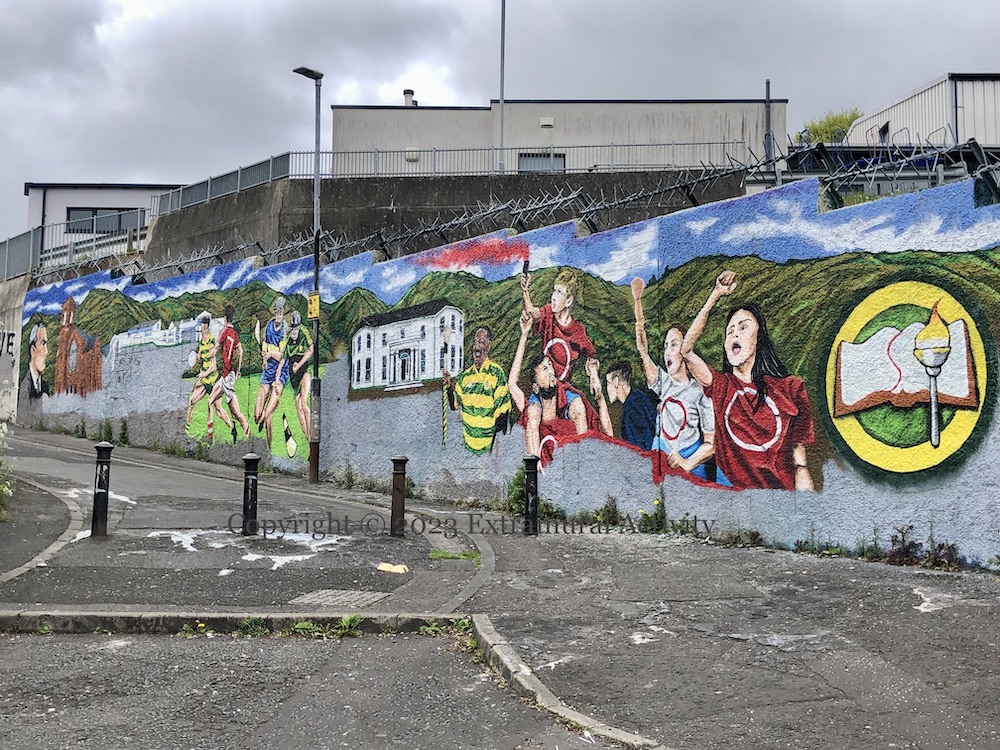
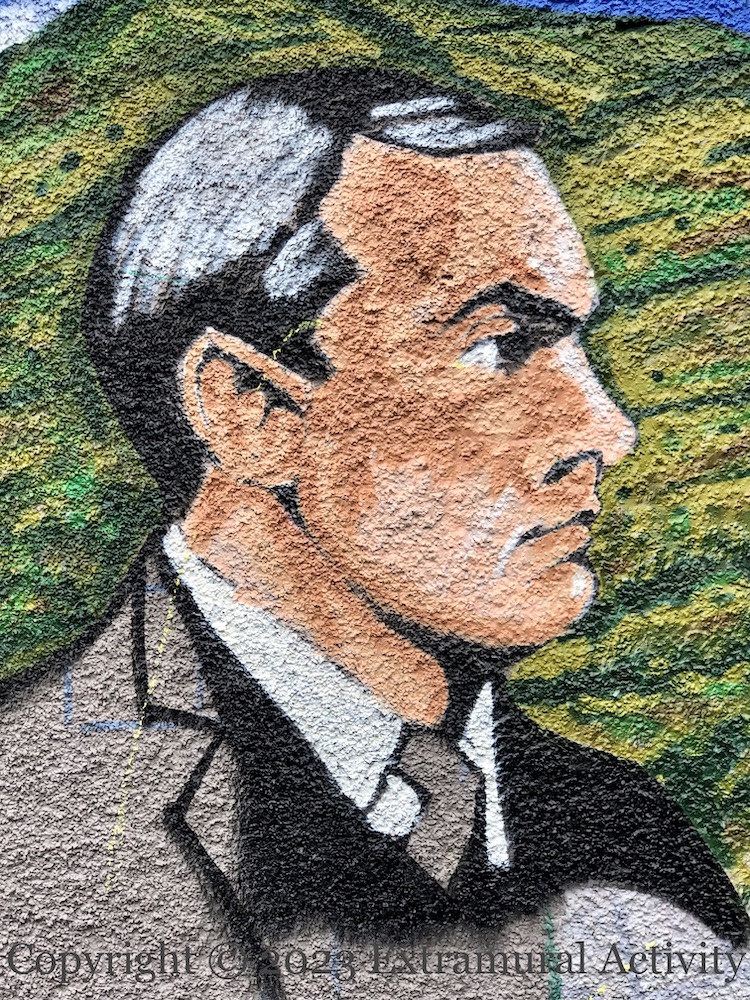
What is now Coláıste Feırste began life as Meánscoıl Feırste in 1991, teaching a group of nine students a curriculum inspired by Patrick Pearse (discussed previously in An Tusa An Chéad Laoch Eıle?) and based in Cultúrlann MacAdam-Ó Fıaıch (Cultúrlann). It moved to Beechmount in 1998 and in 2018 expanded into new buildings that were meant to accommodate 600 pupils (Doherty Architects), which it has now exceeded (BBC) as it enters its thirty-third year in existence.
The theme of preserving and promoting the Irish language occurs in several places in the mural: next to Pearse we see his saying, “Máırtín Ó Chadháın ” [a land without a language [is] a land without a soul], in the classroom scene we have “Labhaır í agus maırfıdh sí” [speak it and it will endure], and finally we see the Dream Dearg protesting for an Irish-Language Act (see previously #AchtAnoıs).
The in-progress images included below among completed detailed shots date from May 6th and 20th.
Giant’s Foot/Beechview Park. Replaces the short-lived mural of Olympians, seen in Sporting Giants.
“Pobal ag foghlaım, pobal ag forbaırt, pobal ag fás” [a community learning, developing, growing]
Students from “Naíscoıl & Gaelscoıl An Lonnáın (Fb) bun[aithe] 1999″ [Nursery-school and Irish-language [primary] school of the loney, founded 1999] are shown playing Gaelic games, Irish dancing, and playing traditional instruments (and the guitar). On the left are representations from Irish mythology: the Children Of Lear and Setanta killing Culann’s hound (and taking the name Cú Chulaınn in taking its place), along with hedge-row school (see Hedge Row School).
The origin of the name is unclear; the nearest loney [lane] was the “Pound” loney, so-called because of the animal pen just outside Barrack Street, used to store livestock before moving on to the markets the following day (Rushlight | Uachtar Na bhFál). (The Pound Loney is included in the mural in Durham Street – see Et In Arcadia Ego.)
The other well-known loney in Belfast is the “buttermilk loney” which was either/both what is now Ballysillan Park (that is, connecting Olpark with the horsehoe bend) or the top part of the loney that connected Wheatfield (the top of Ardoyne) to the Ligoniel junction and on towards the old Ligoneil House (there are a mixture of usages in this Belfast Forum thread); this image from the 1930s might show the lane in (what was still at the time) the hills above Oldpark; a new housing-development towards the top of the Ballysillan Park is euphemistically called “Buttermilk Loney”. (It is also said to have been a prior name of Skegoniell Avenue (Belfast History).)
(The Uachtar Na bhFál page also mentions “Turf” loney, “Mountain” loney, and “Killoney”.)
The history of the Irish word “lonnán” is unclear. Uachtar na bhFál says the word is of Scots origin (perhaps as “loanin”). (See this BelTel article on the opening of the Ulster-Scots centre in 2014.) Spelled “lonnen”, it is also a Geordie word (Heslop’s Northumberland Words | wiktionary). The Irish News and Belfast Live, working from the same (uncited) press-release about Páırc An Lonnáın (which is along the Westlink below Raıdıó Fáılte), state that “loney” comes from the English word “loaning”. The Irish word “lonnán” does not appear in Dinneen 1904; Dinneen 1953 defines it (hyper-specifically) as “a grassy recess running up into high basaltic cliffs”.
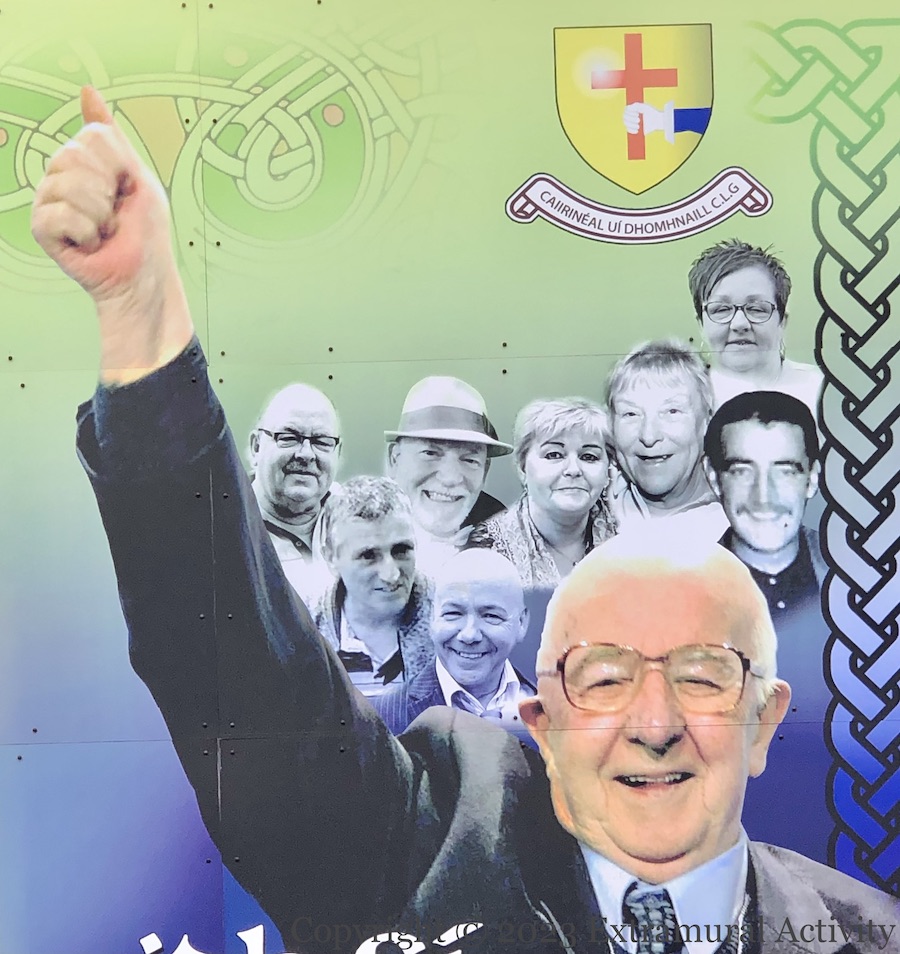
“Mol an óıge agus tıocfaıdh sí [encourage youth and it will flourish, or less literally, youth responds to praise].” The emblems in the corners are of two local GAA clubs “Naomh Eoın” and “Caıırınéal [Caırdınéal] Uí Dhomhnaıll” – the “Joe Cahill Annual Tournament” was held at Easter at their two pitches.
Joe Cahill joined the Fianna in 1937 and was involved in the republican movement from then until his death in 2004, including being in Tom Williams’s company in 1942, and was later a founder member and Chief of Staff of the Provisional IRA.
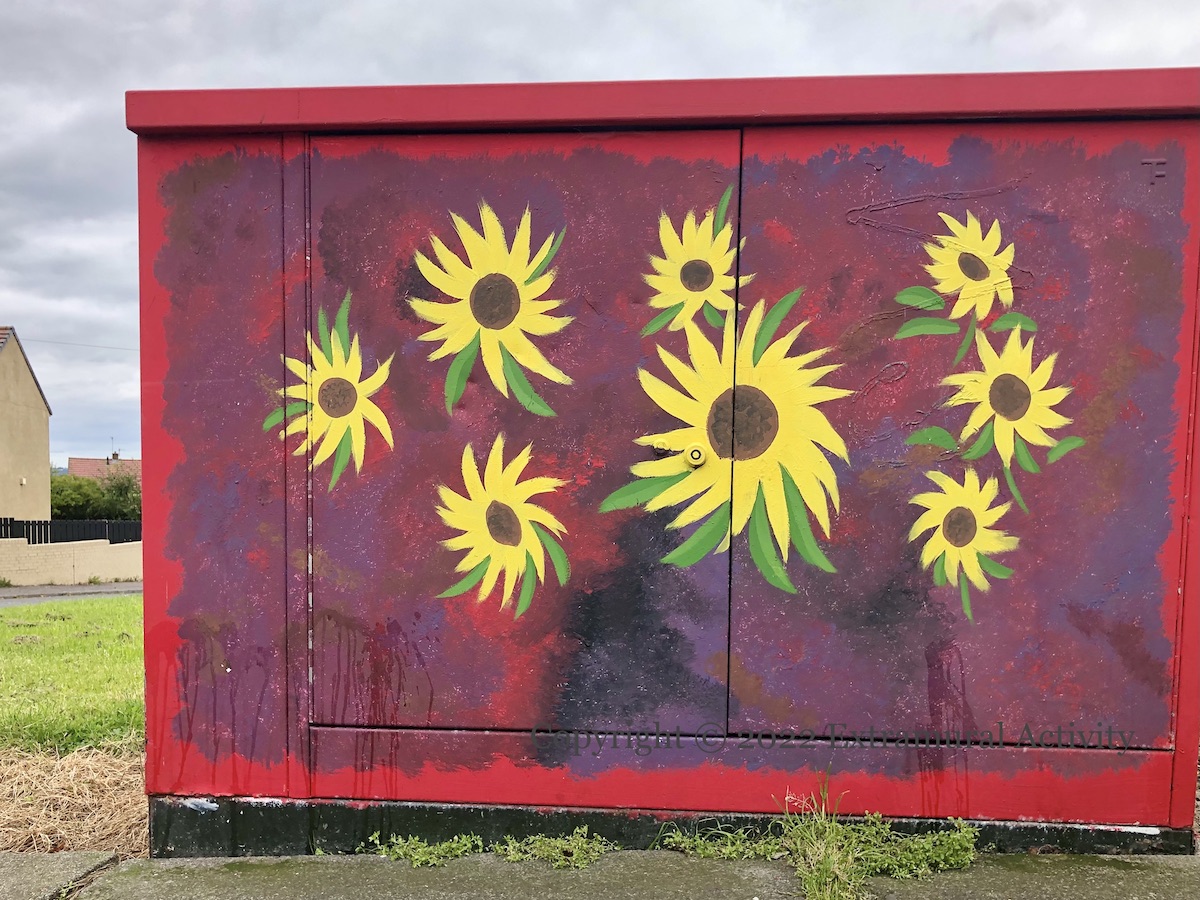
Plants provide symbols of, and metaphors for, rebellion. In America, 1775, Paine wrote of the Liberty Tree which Americans must rise to defend against “Kings, Commons and Lords” and Jefferson would later write (in a 1787 letter) that “The tree of liberty must be refreshed from time to time with the blood of patriots and tyrants.” In Ireland, the tree of liberty was borrowed for the 1798 rebellion (see Where Did The Seeds Fall?“) and although t more familiar symbol of the 1798 Rebellion is the pike, the shamrock is thought to be included as one of the objects in the Wearing Of The Green: Boucicault’s version begins “Oh, Paddy, dear, an’ did you hear the news that’s goin’ round?/The shamrock is forbid by law to grow on Irish ground.” The lily, of course, is a symbol of the 1916 Rising, though it is shown here growing between sunflowers and a rose.
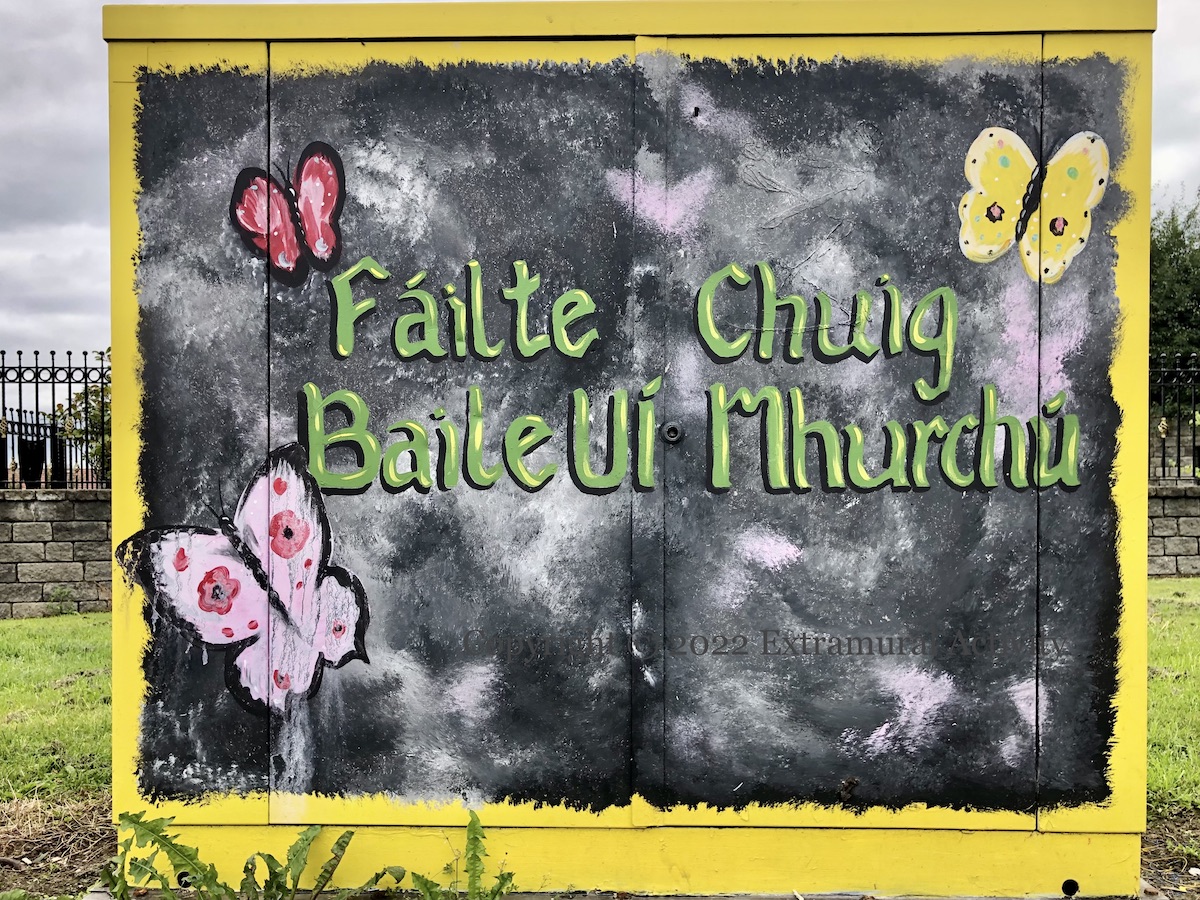
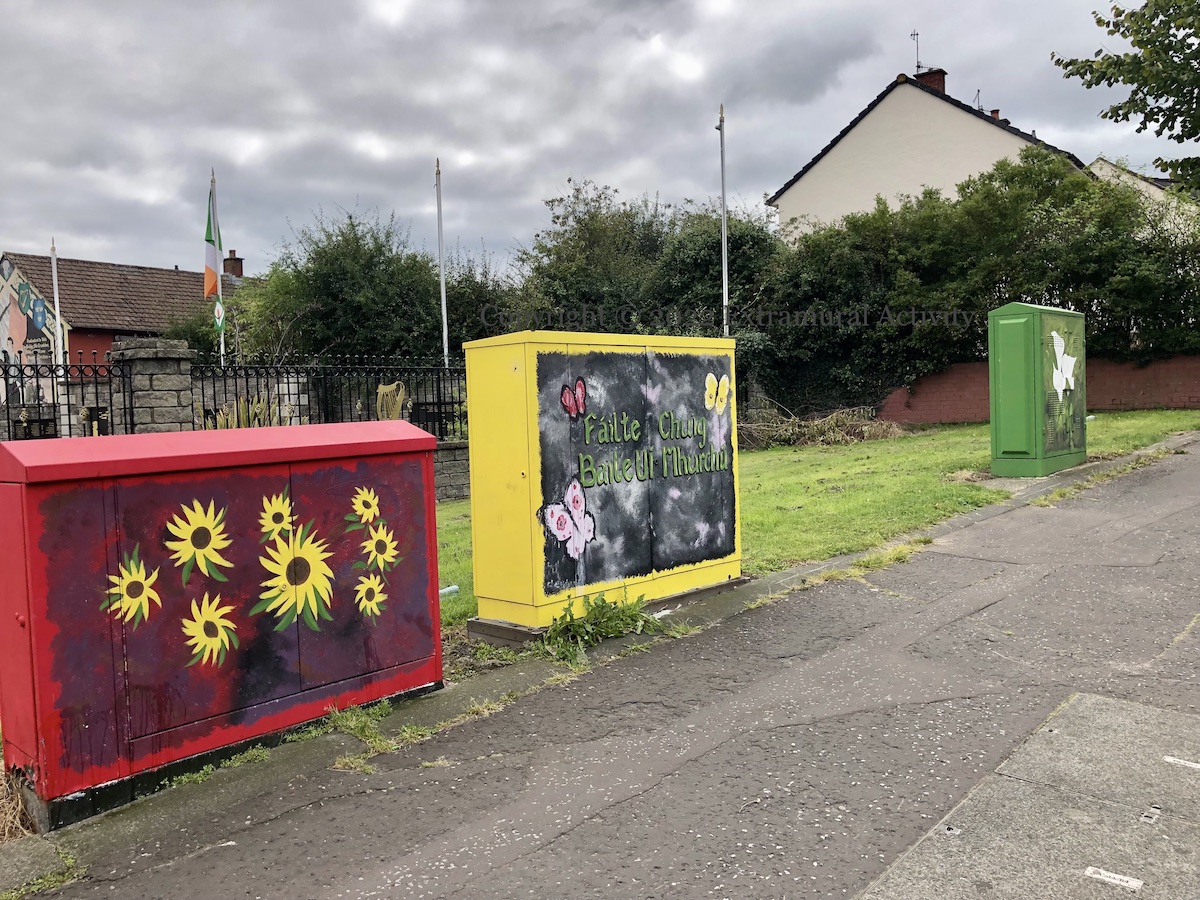
These painted electrical boxes are in Westrock and Ballymurphy (“Fáılte chuıg Baıle Uí Mhurchú”).
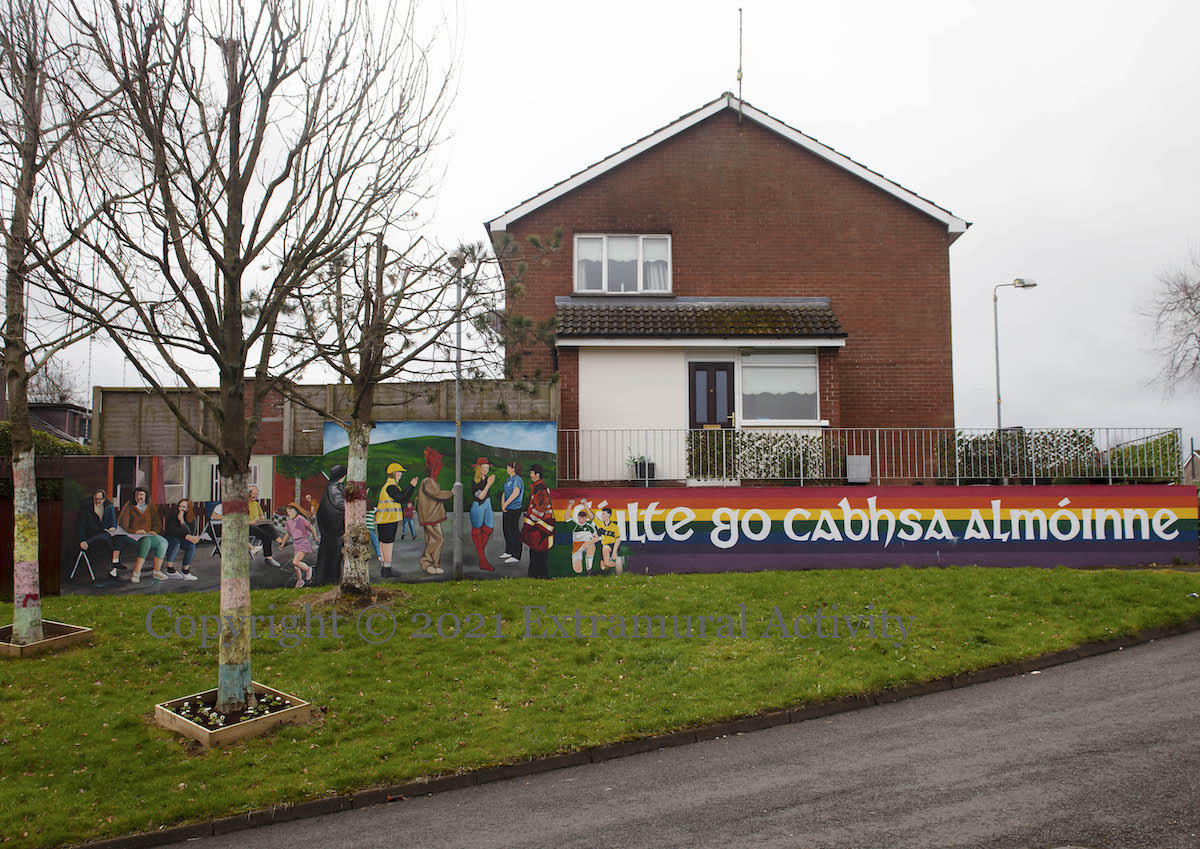
The new Bobby Sands mural is not the only recent addition in Twinbrook. Almond – the middle of the estate – has a ‘before and after’ of the pandemic: on the left, locals sit out in the street watching children play; on the right, frontline personnel.
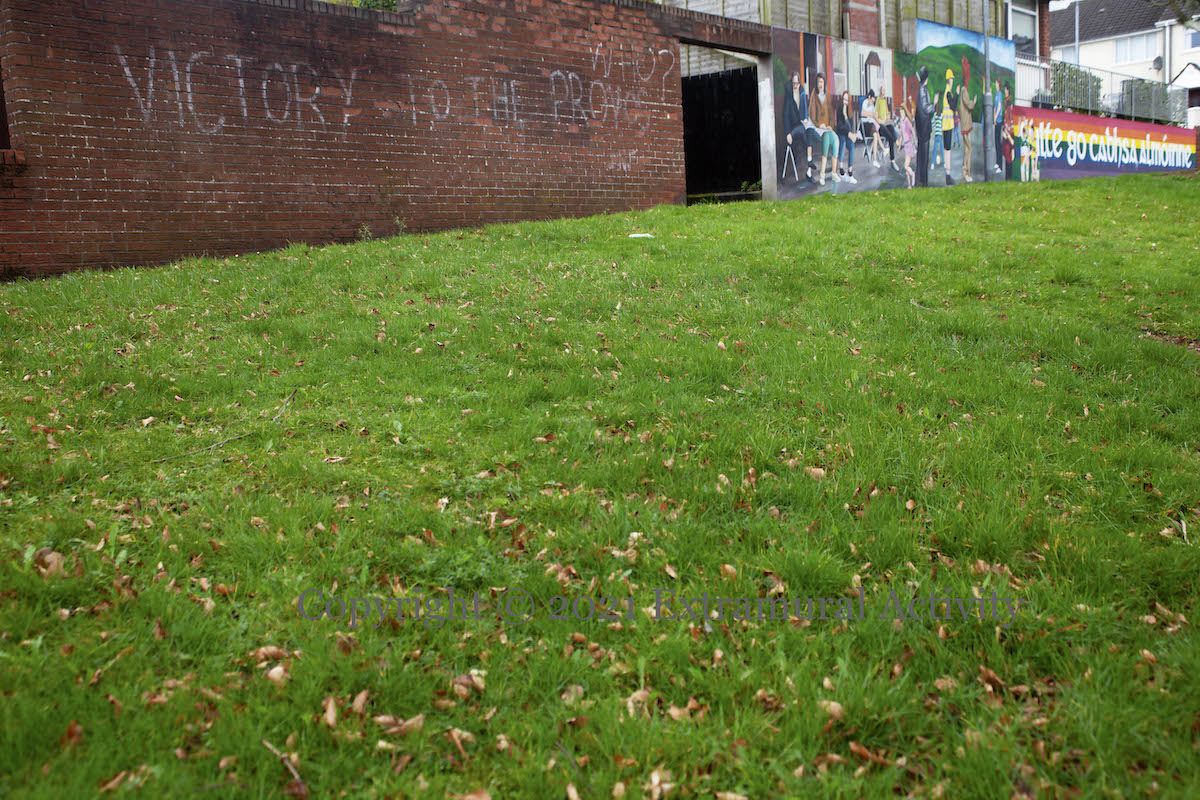
For the ‘Victory To The IRA’ graffiti on the left, see Who.
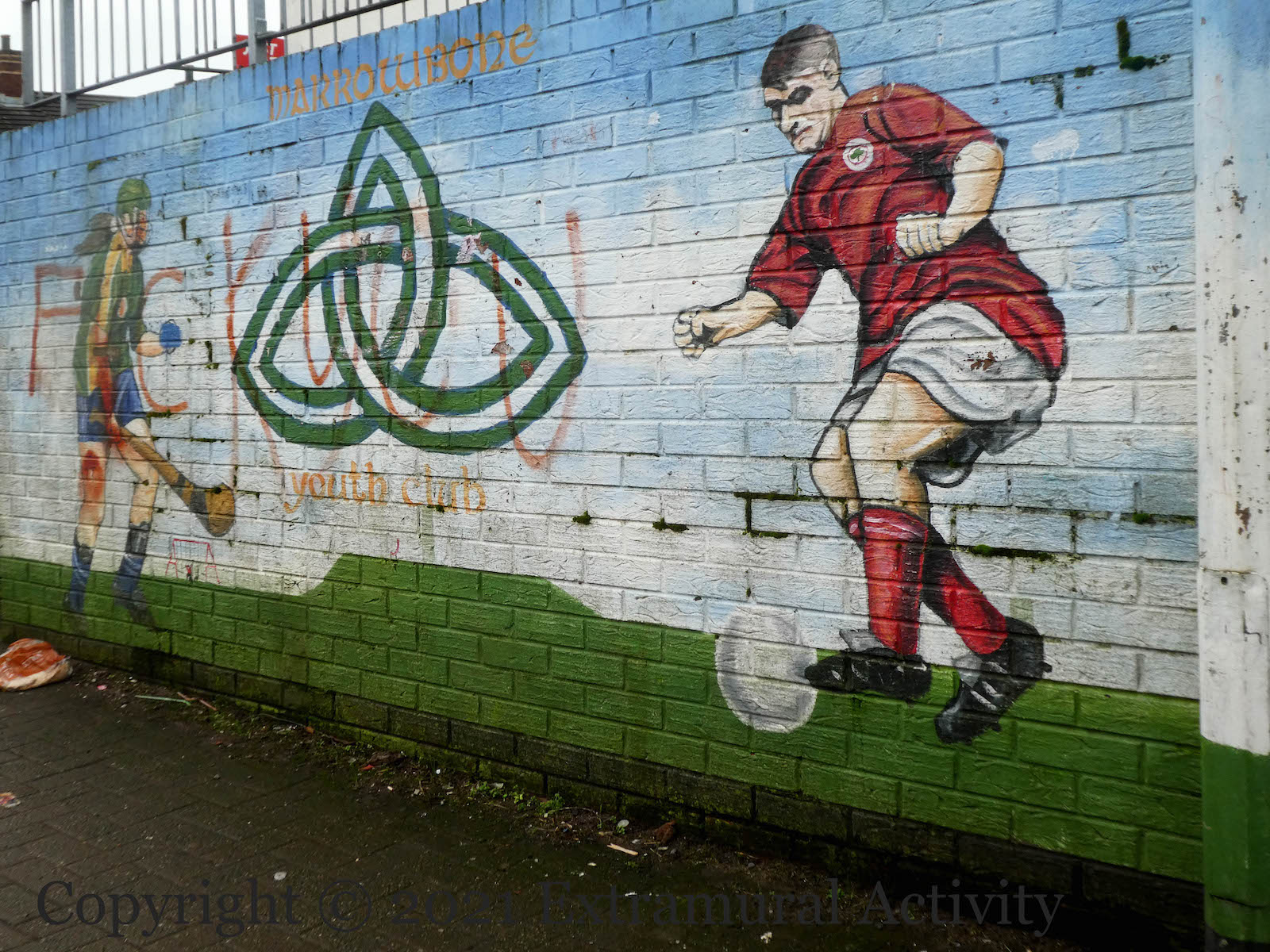
Máirtín Ó Dochartaigh, one of the founders of Club Óıge Mhachaıre Botháın in 2001, died in 2011. The club was renamed in his honour in ?2020? as Cumann Óıge Uí Dhochartaıgh (Fb | ig) (An Phoblacht). The mural, bearing the original name of the club, dates back to 2012.
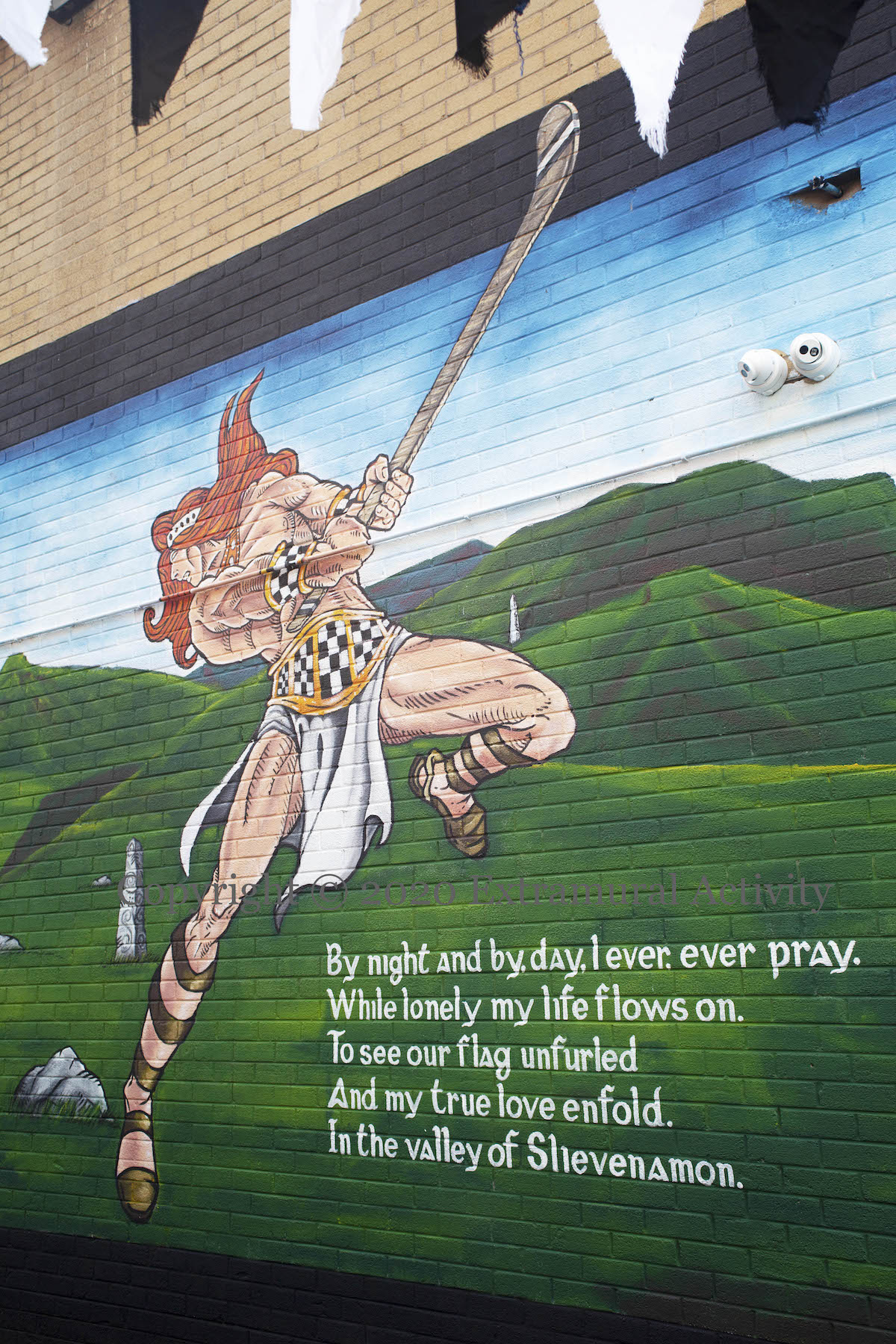
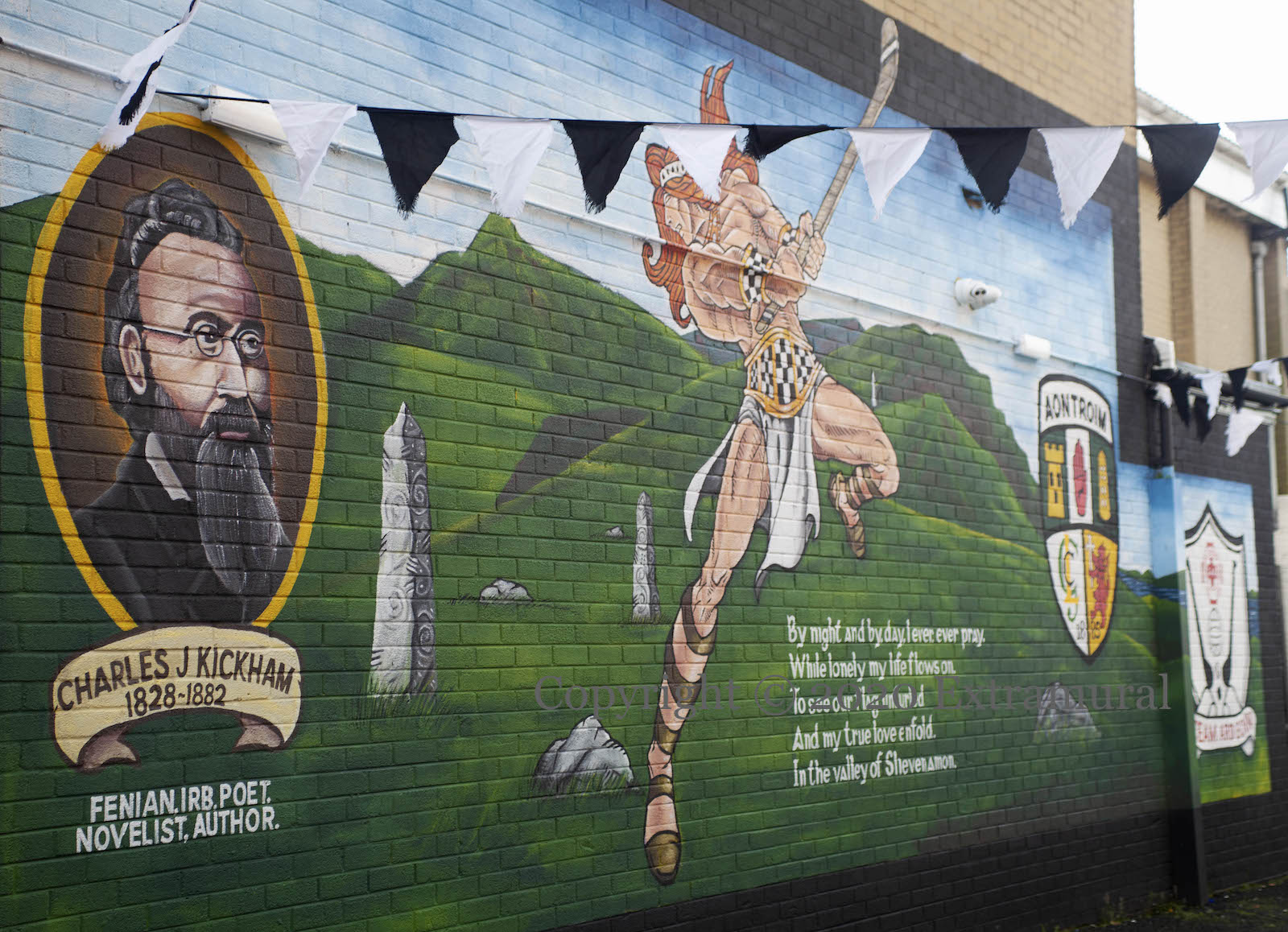
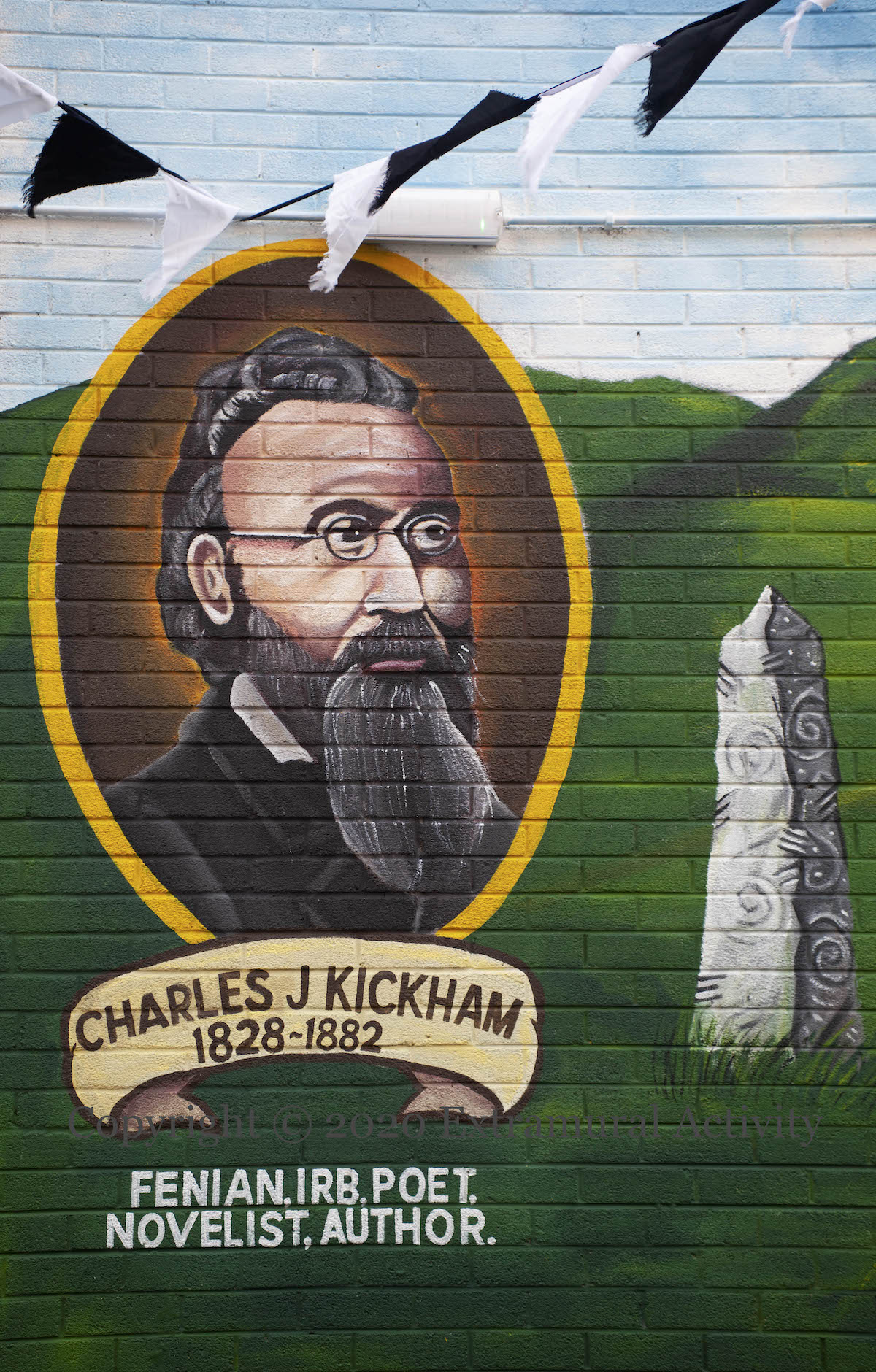
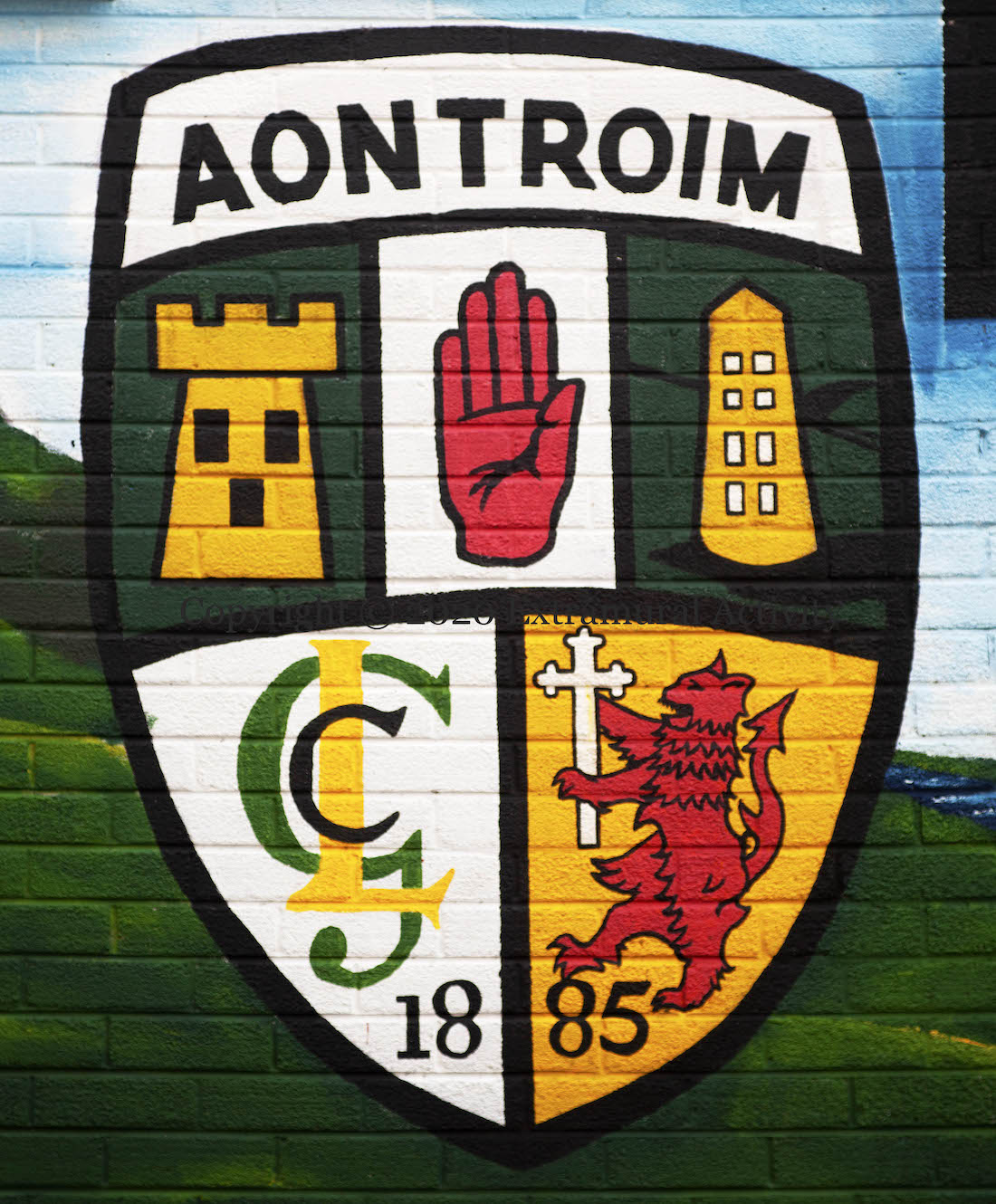
“By night and by day, I ever, ever pray/While lonely my life flows on/To see our flag unfurled/And my true love [to] enfold/In the valley of Slievenamon.” The lyrics are the final lines of The Valley Of Slievenamon, written by Charles J Kickham “fenian, IRB, poet, novelist, author” and much loved in Tipperary. The heroic hurler, however, is Cú Chulainn (rather than the midlands’ Fıonn Mac Cumhaıll). Ardoyne Gaelic games club Cıceam Ard Eoın (tw | Fb) was founded in 1907, 25 years after Kickham’s death.
East Belfast GAA (tw | Fb) was set up at the end of May, with Linda Ervine as club president (video | Irish Times). The ladies football team recorded the club’s first win, on August 16th, with the hurlers winning on September 3rd, and the camógs on September 19th. The emblem (here shown in somewhat blurred stitching) includes a (black) Ulster hand flanked by shamrock and thistle, over Samson and Goliath (the Harland & Wolff cranes) and “together” as Gaeılge, in English, and in Ulstèr-Scots.


















 Extramural Activity