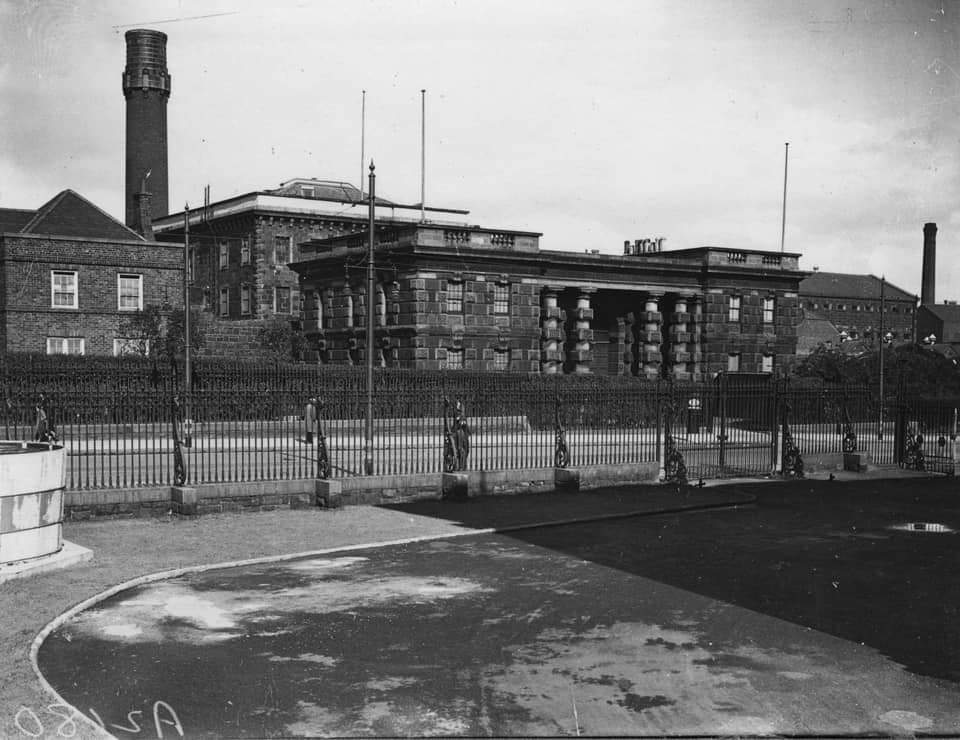
A crude engraving about the size of your hand found on the wall of the B-wing yard in Crumlin Road Gaol (now a tourist attraction and conference centre): a Celtic cross with knot-work and “Jim Keenan – Xmas 1942”.
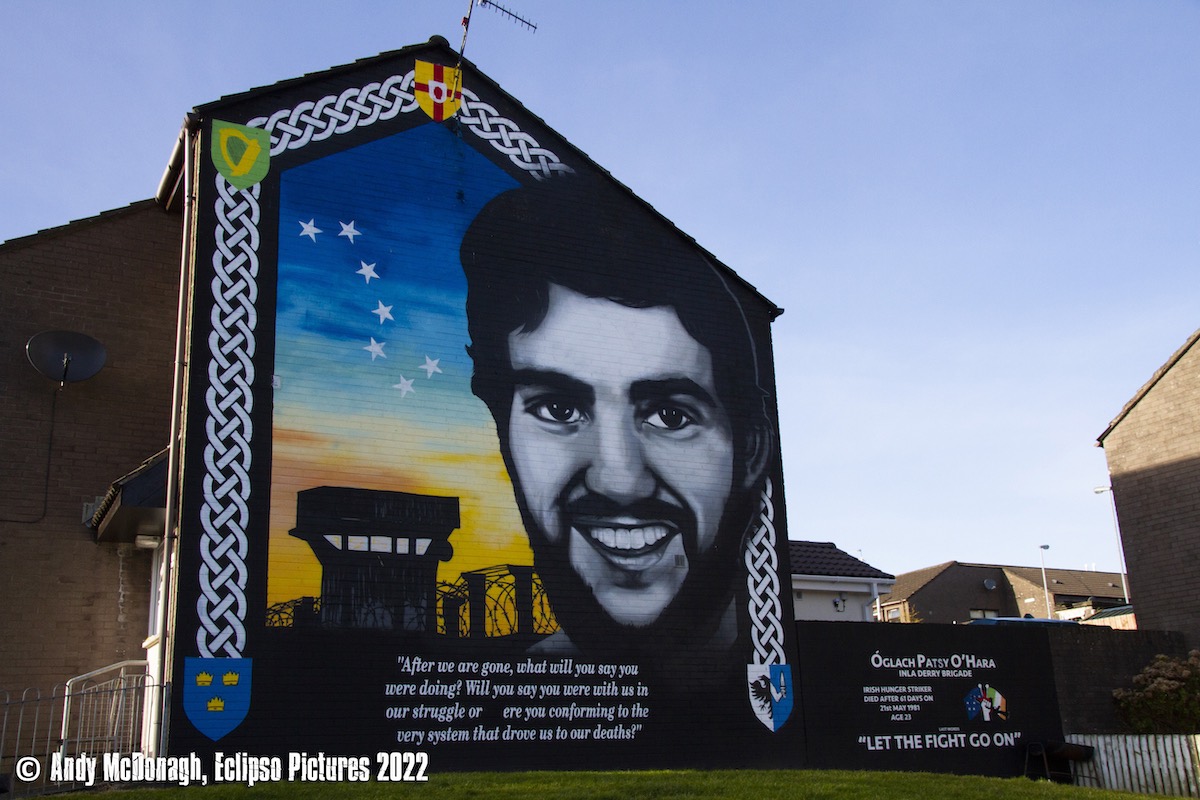
Patsy O’Hara was born in 1957 Bishop Street, Derry, and joined Na Fıanna in 1970 and the local Sınn Féın cumann in 1971 and, in August was shot in the leg by British soldiers. In 1972 he joined the Republican Clubs and in 1975 the IRSP. He was imprisoned multiple times, the final time being in January 1979 for possession of a hand grenade (Bobby Sands Trust). He went on hunger strike 41 years ago tomorrow (March 22nd) and was the first of the three INLA hunger strikers to die in 1981. The long-standing mural in Bishop Street was repainted for the 40th anniversary of his death. (For the previous version, see Let The Fight Go On.)
“Óglach Patsy O’Hara, INLA Derry Brigade, Irish hunger striker, who died after 61 days on 21st May 1981, age 23. Last words ‘Let the fight go on’.”
“After we are gone, what will you say you were doing? Will you say you were with us in our struggle or where you conforming to very system that drove us to our deaths?” – these words also appeared in the 2013 mural to O’Hara on Shaws Road, west Belfast.
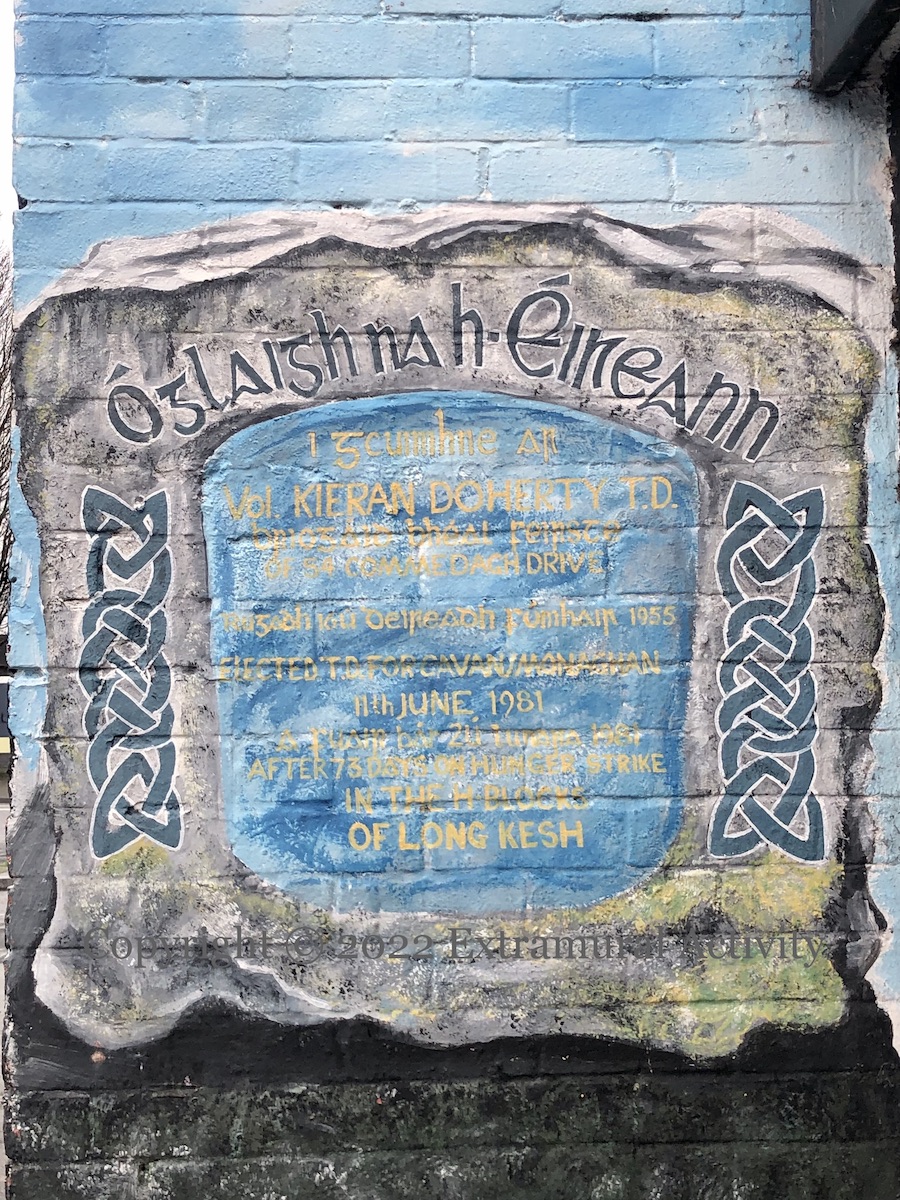
Kieran Doherty’s memorial stone (below) is recreated at the back of the mural of his funeral cortège. “I gcuımhne ar Vol. Kieran Doherty T.D. Brıogáıd Bhéal Feırste [Óglaıgh Na hÉıreann], of 54 Commedagh Drive. Rugadh 16ú Deıreadh Fómhaır 1955, elected T.D. for Cavan/Monaghan 11th June 1981, a fuaır bás 2ú Lúnasa 1981, after 73 days on hunger strike in the H-Blocks of Long Kesh. ‘It is not those who can inflict the most, but those who endure the most, who will conquer in the end’.” (The Terence MacSwiney quote is not included on the painted stone.)
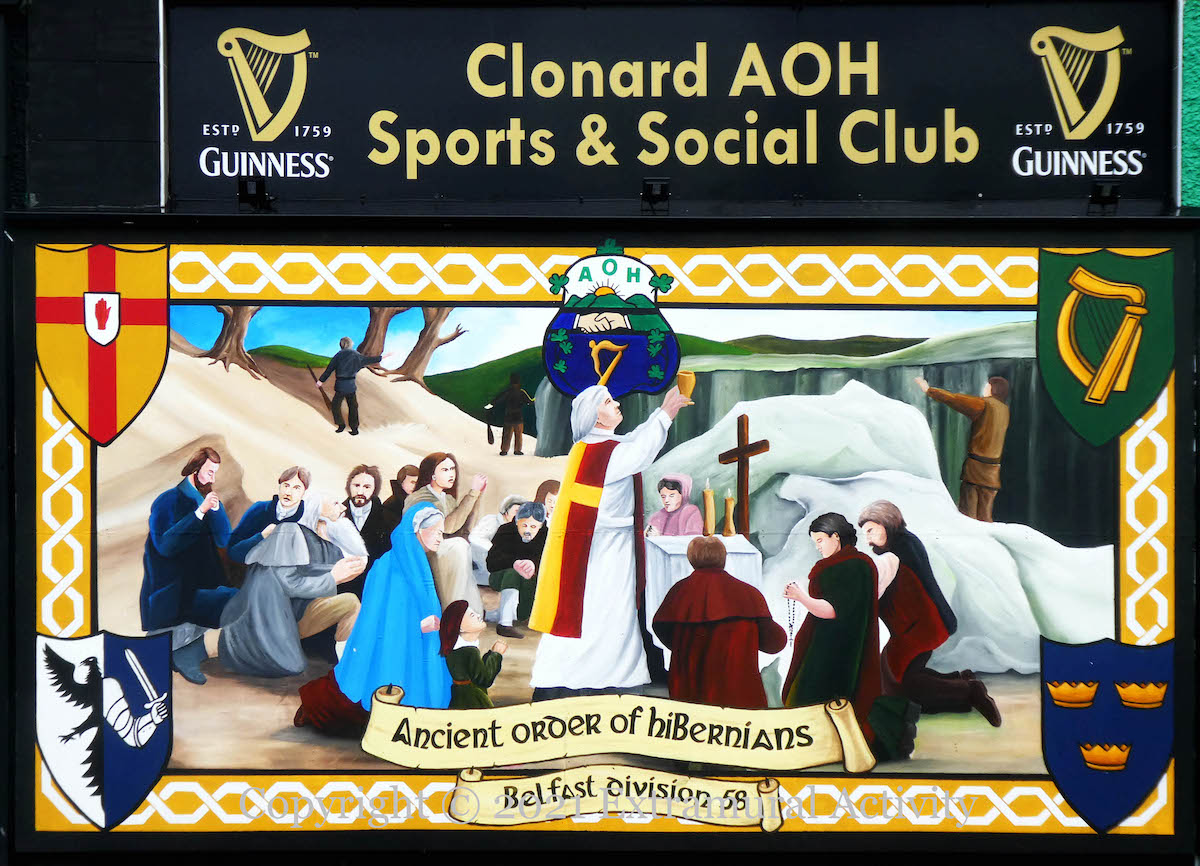
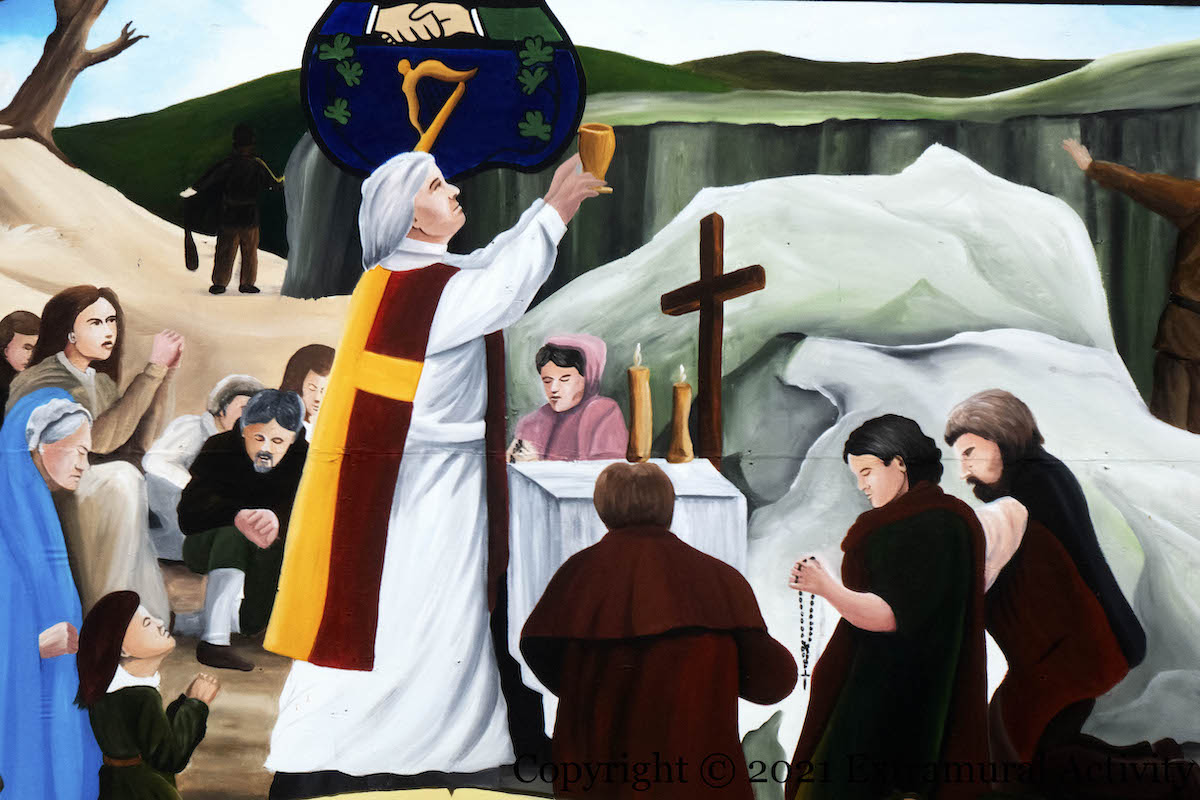
A Penal law of 1695 forbade the practice of Catholicism and “dissenter” forms of Protestantism –anything other than Anglicism, forcing people and priests to worship in secret. Although the precise date of the founding of the Ancient Order Of Hibernians is shrouded by the existence of various other Catholic fraternal and defensive organisations such as St Patrick’s Fraternal Society and the Ribbonmen – the AOH history page gives 1838 in Pennsylvania – the order traces its roots back to Penal times and in particular to the Defenders in 1784, which arose to protect Catholics from the (Protestant) Peep-O-Day Boys and in defiance of Penal laws forbidding Catholics to bear arms (WP). The Belfast division (58) of the AOH is in Clonard Street.
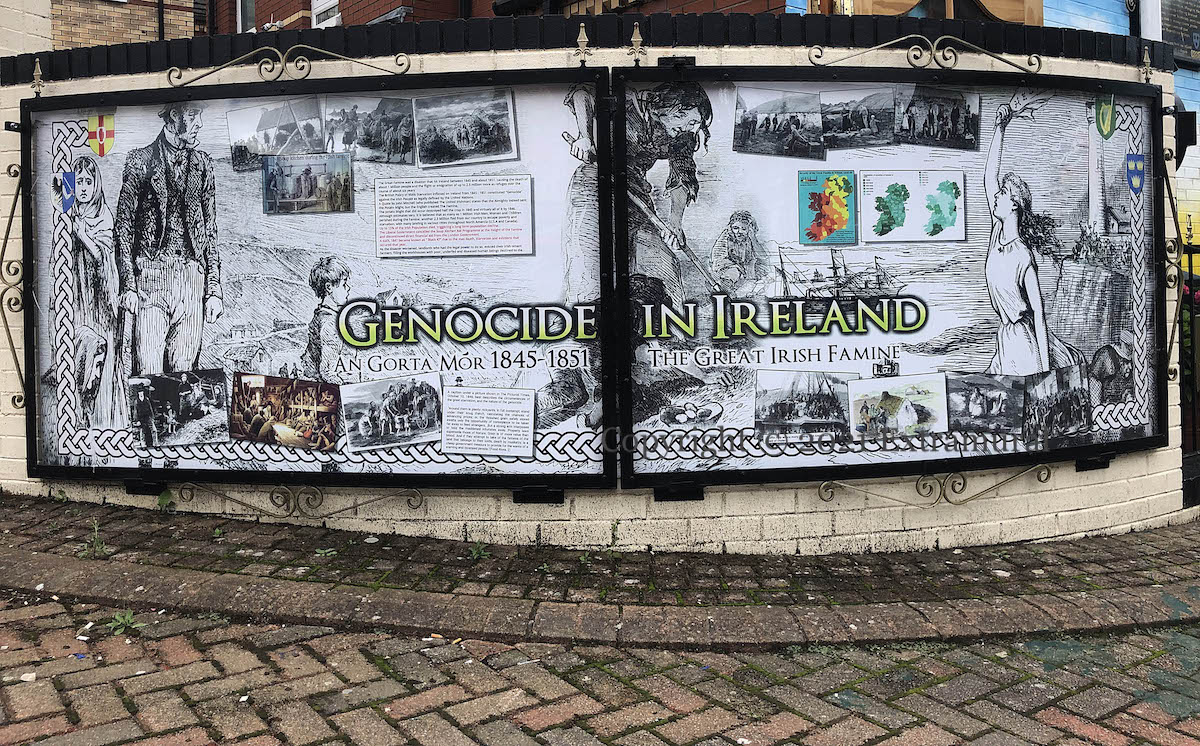
Photography was still in its infancy in 1850 and would not appear in newspapers until the 1880s (LoC). Instead, newspapers used illustrations to bring their stories to life. This board in Ard An Lao (Ardoyne/Bone) – “An Gorta Mór [The Great Hunger] 1845-1851 – The Great Irish Famine” – combines three of them to serve as a background for other images and information.
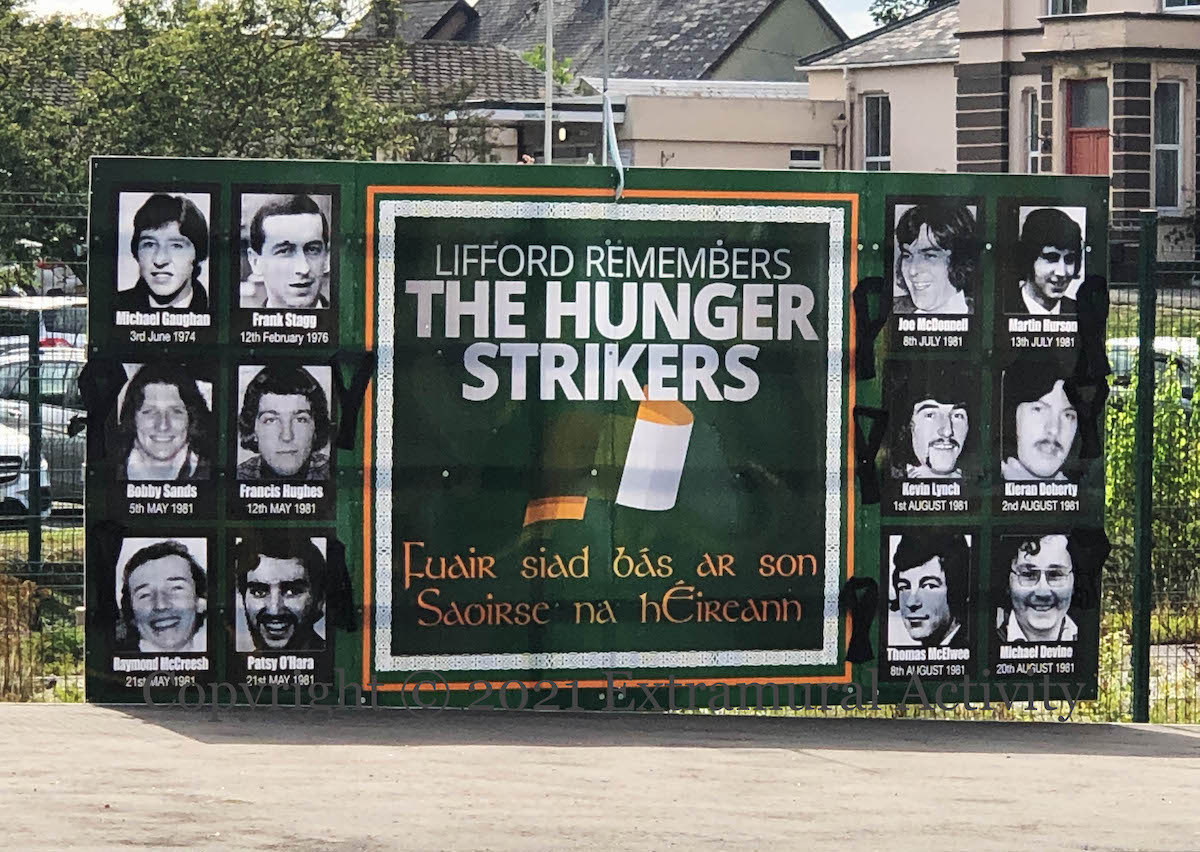
“Fuaır sıad bás ar son saoırse na hÉıreann” [they died for Ireland’s freedom] Although it’s the 40th anniversary of the 1981 hunger strike, this Lifford (Co. Donegal) board includes Michael Gaughan and Frank Stagg who died in English prisons in the 1970s.
If you can explain the flag in the centre, please get in touch. The wide shot, below, includes a call to rally for 100% Redress, No Less.
“History of the death of Sean McCartney. This memorial was placed here on Saturday 8th May 2021 to mark the 100th anniversary of the death of Vol Sean “Johnny” McCartney of no. 55 Norfolk Street, Falls Road, Belfast. Sean was a volunteer of “D” Company 1st battalion Belfast Brigade Oglaigh na hEireann, when he was killed in action, aged 23 years old. He died while on active service with the 3rd Northern Division, 3rd County Cavan Brigade flying column during the Irish Republican War of Independence. He was shot twice during an ambush and gun battle with the British Army RIC and Black and Tans on Sunday 8th May 1921 on Croghan Mountain at the Lappanbane stretch of the Lappanduff Mountain, Co. Cavan. His body was then mutilated by the Black and Tans. Sean’s body was kicked, stamped on, danced on and tied by the ankles and feet to a Crossley Tender military vehicle and dragged along mountain lanes in an attempt to instill fear in the local Co. Cavan community. The 32 county Irish republic based on the self determination of the Irish people which Sean and many others fought and died for has yet to be achieved. Sean will always be proudly remembered by his extended family circle in Ireland and Canada.” McCartney is buried in Milltown cemetery.
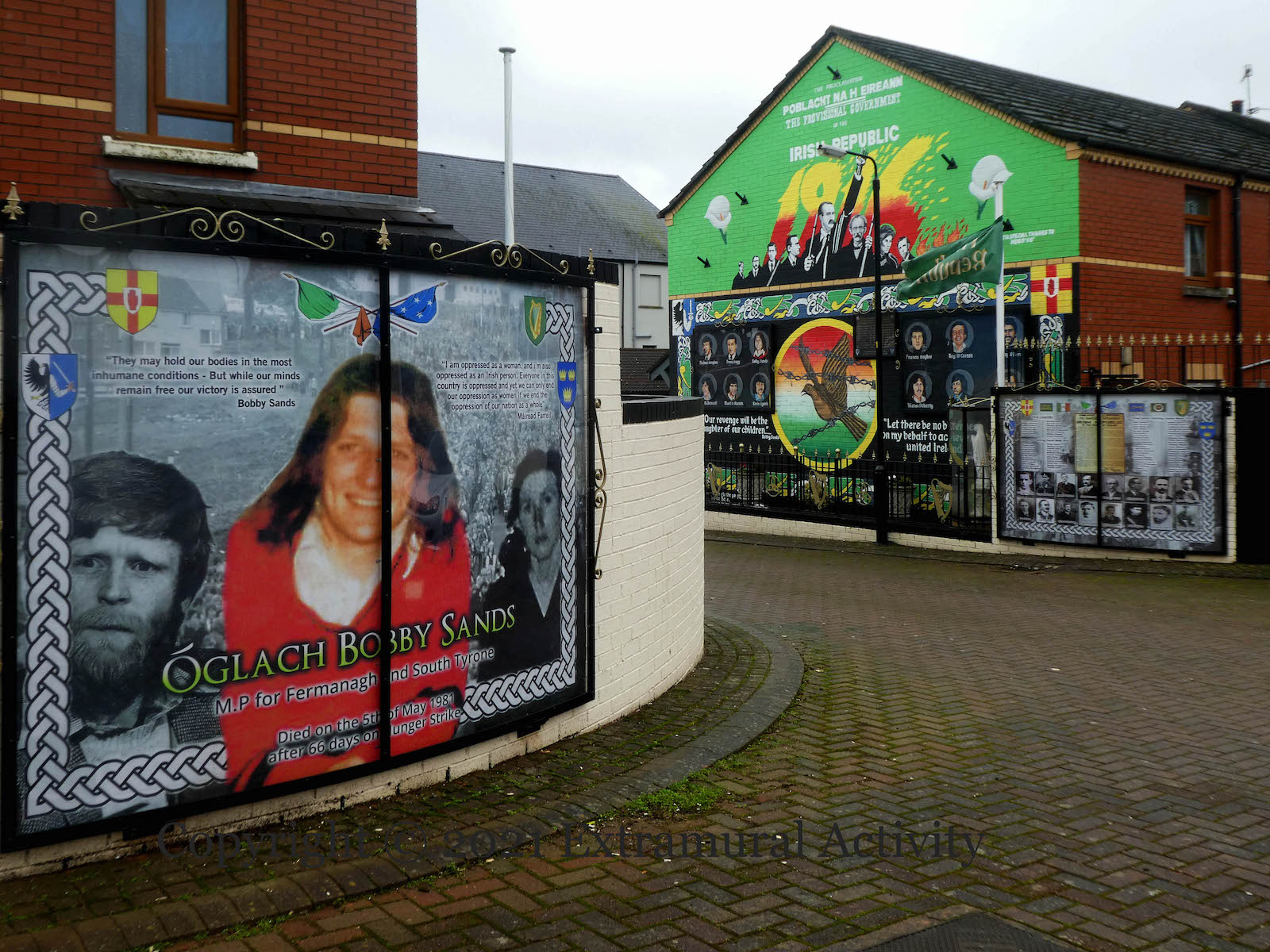
Mairéad Farrell (on the right of the image above) was arrested for planting a bomb at a hotel in Dunmurry in April 1976, one month after Special Category Status for republican prisoners had been revoked. Kieran Nugent (on the left) began the “blanket” protest in September that year and Farrell was the first person to join the protest, when she arrived in Armagh women’s prison to begin her fourteen year sentence. She later took up a dirty protest and joined the 1980 hunger strike. She stood for election in 1981 (in Cork), but, unlike “Óglach Bobby Sands, MP for Fermanagh and South Tyrone”, was not successful. (WP)
“I am oppressed as a woman and I am oppressed as an Irish person. Everyone in this country is oppressed and yet we can only end our oppression as women if we end the oppression of our nation as a whole.” Máiread [sic] Farrell
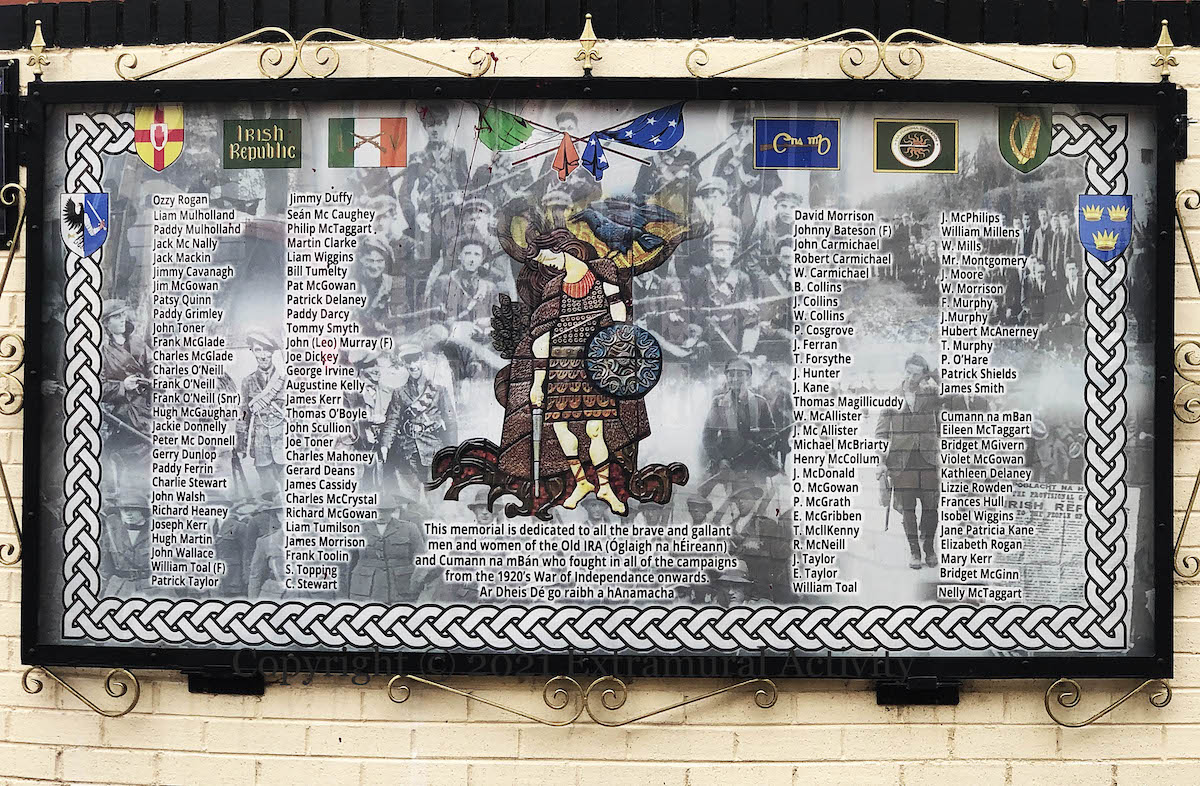
Cú Chulaınn stands dying; the raven on his shoulder will signal his death. “This memorial is dedicated to all the brave and gallant men and women of the Old IRA (Óglaıgh na hÉıreann) and Cumann Na mBán who fought in all of the campaigns from the 1920s War of Independence onwards.”
The Irish tricolour with crossed rifles was the flag of the Irish Volunteers (Óglaıgh na hÉıreann), the splits in which gave rise all the subsequent IRAs.
For a roll of honour 1916-1966, including some profiles, see Treason Felony.








 Extramural Activity