Plans to redevelop Castle Arcade were published in July (NewsLetter). The arcade runs between Castle Lane and Castle Place. The castle of Belfast originally stood at the top of High Street, built by the Normans in the late 12th century and then rebuilt by Arthur Chichester in 1611 but destroyed by fire in 1708 after which the area became commercialised (Belfast Entries | Belfast Castle). If you know the art’s creator, please comment or get in touch.
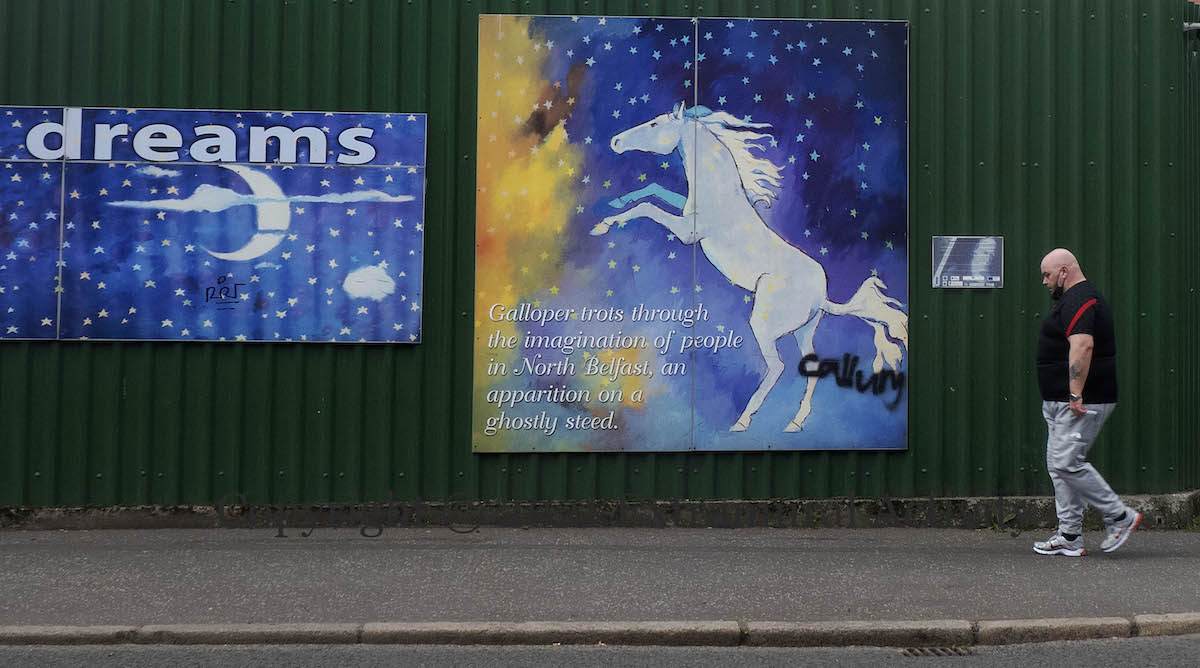
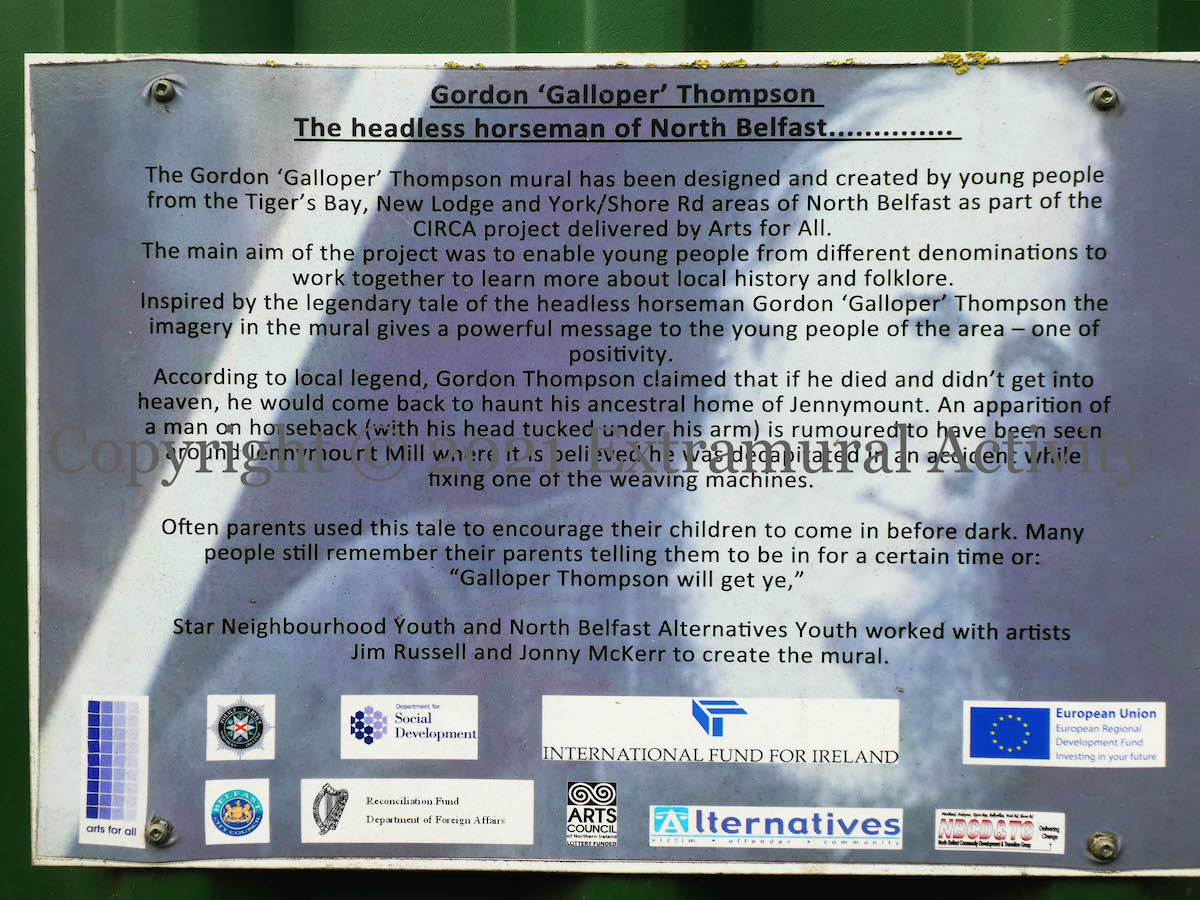
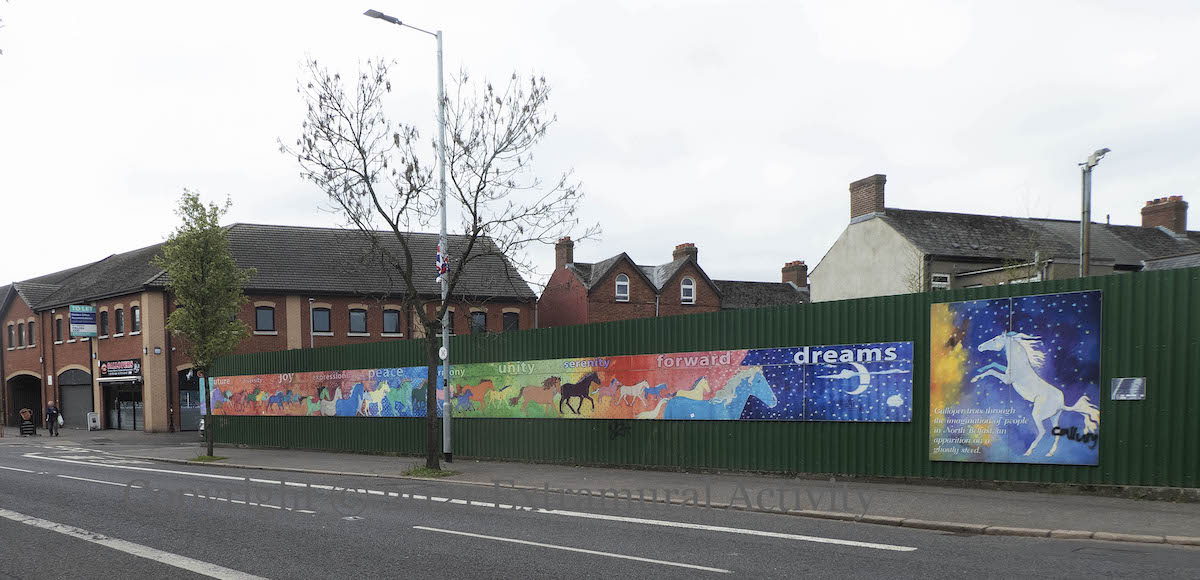
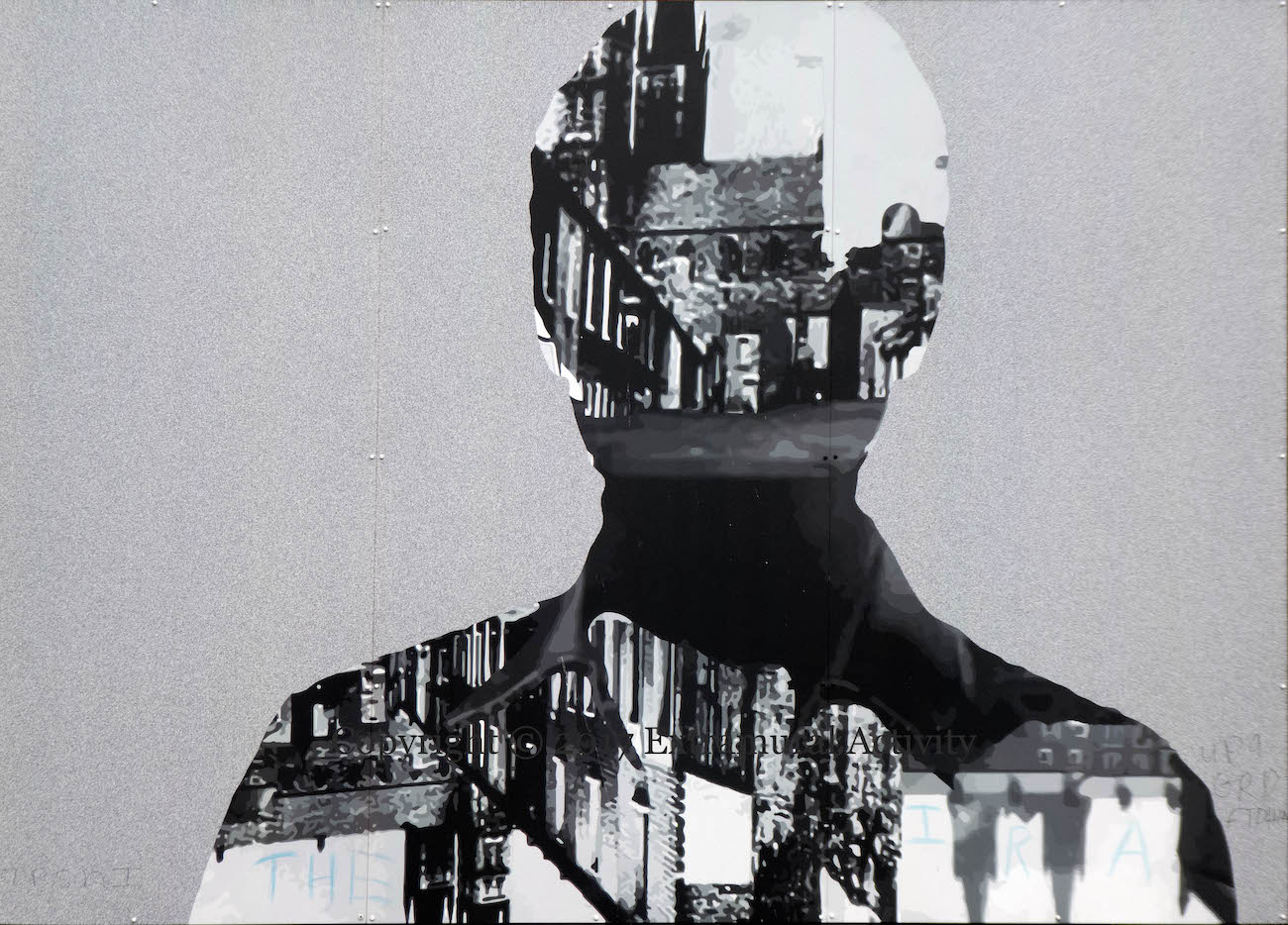
“Gordon ‘Galloper’ Thompson – the headless horseman of North Belfast …. The Gordon ‘Galloper’ Thompson mural has been designed and created by young people from the Tiger’s Bay, New Lodge and York/Shore Rd areas of North Belfast as part of the CIRCA project delivered by Arts for All. … According to local legend, Gordon Thompson claimed that if he died and didn’t get into heaven, he would come back to haunt his ancestral home of Jennymount. An apparition of a man on horseback (with his head tucked under his arm) is rumoured to have been seen around Jennymount Mill where it is believed he was decapitated in an accident while fixing one of the weaving machines. Often parents used this tale to encourage their children to come in before dark. Many people still remember their parents telling them to be in for a certain time or: “Galloper Thompson will get ye.” ” (The text is from Joe Baker’s Haunted Belfast. More info from Walking Tours Belfast.)
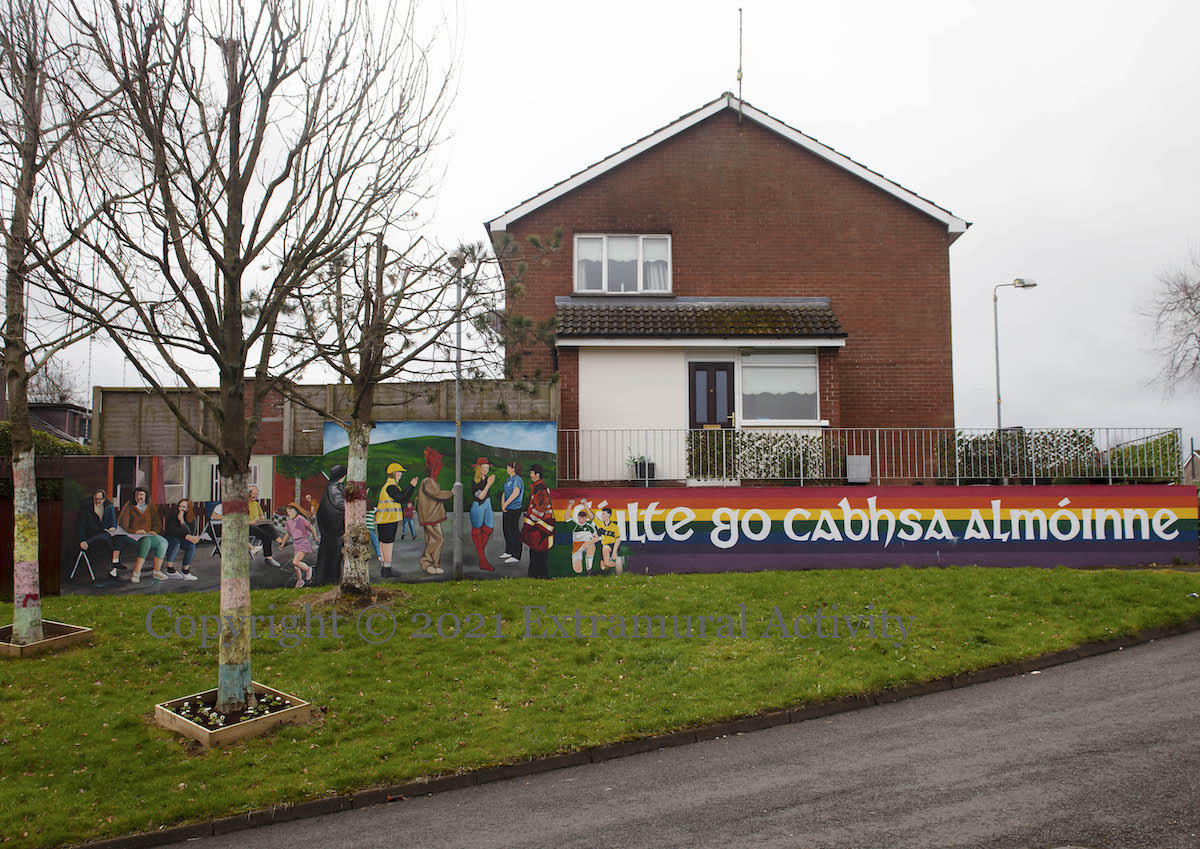
The new Bobby Sands mural is not the only recent addition in Twinbrook. Almond – the middle of the estate – has a ‘before and after’ of the pandemic: on the left, locals sit out in the street watching children play; on the right, frontline personnel.
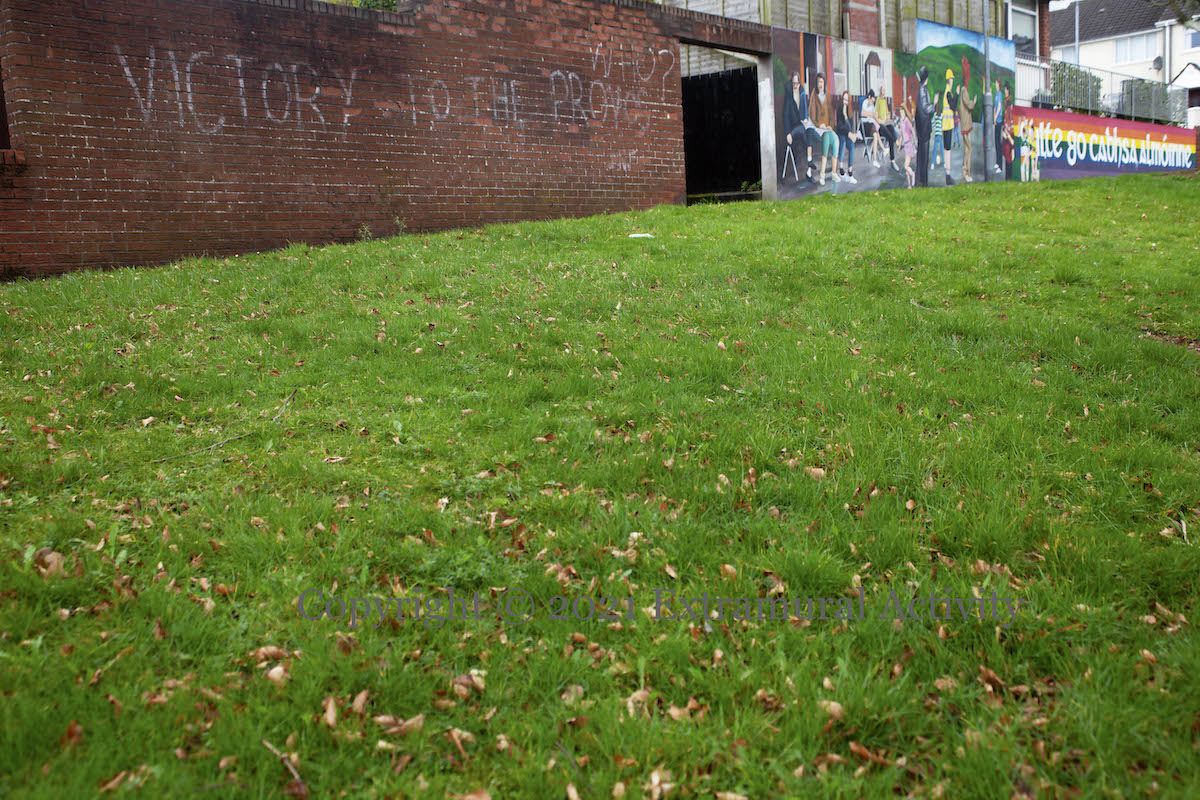
For the ‘Victory To The IRA’ graffiti on the left, see Who.
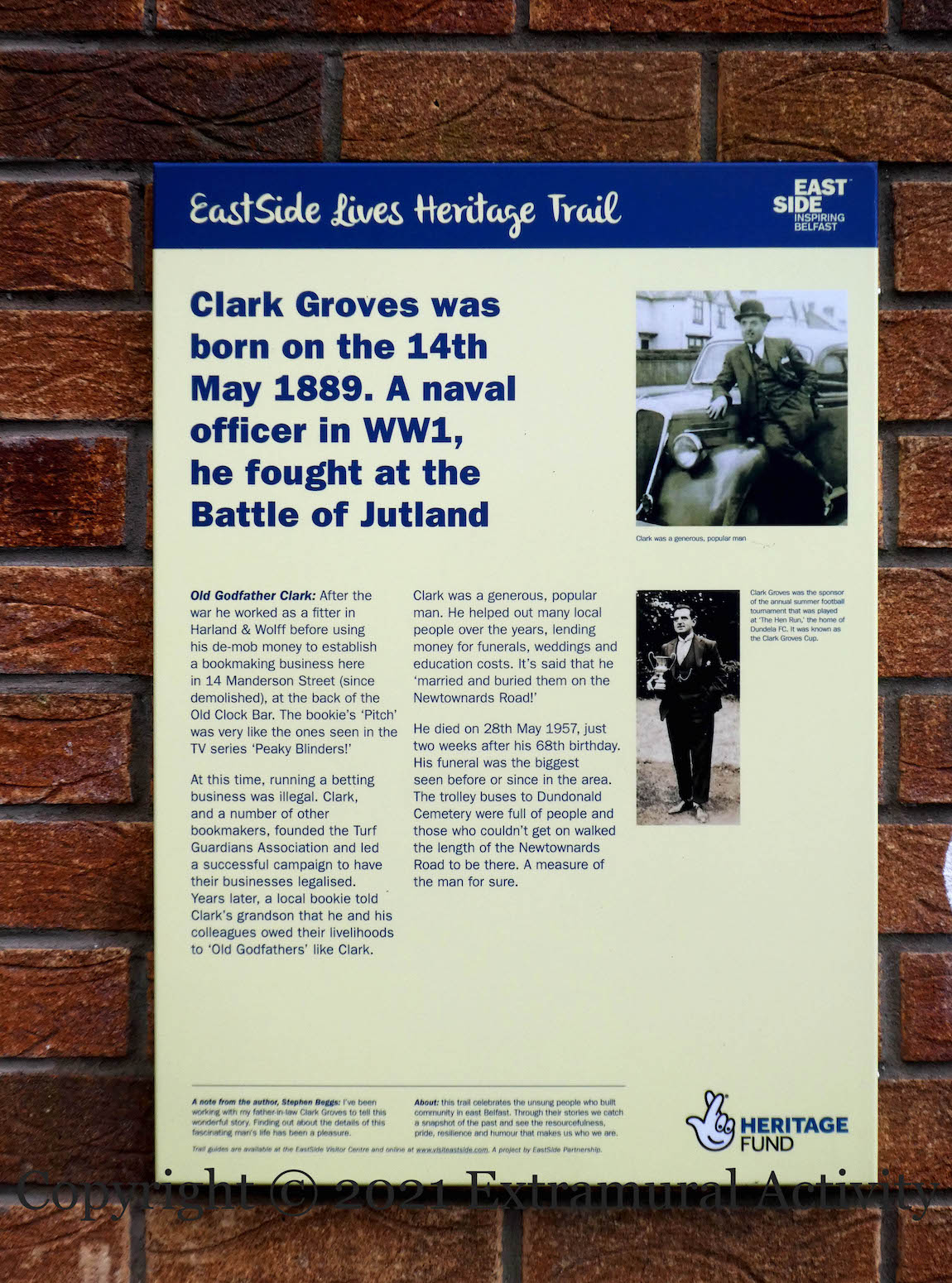
“Clark Groves was born on the 14th May 1889. A naval officer, in WW1, he fought at the Battle of Jutland. After the war he worked as a fitter in Harland & Wolff before using his de-mob money to establish a bookmaking business here in 14 Manderson Street (since demolished), at the back of the Old Clock Bar. The bookie’s ‘Pitch’ was very like the ones seen in the TV series ‘Peaky Blinders!’ At this time, running a betting business was illegal. Clark, and a number of other bookmakers, founded the Turf Guardians Association and led a successful campaign to have their businesses legalised. Years later, a local bookie told Clark’s grandson that he and his colleagues owed their livelihoods to ‘Old Godfathers’ like Clark. Clark was a generous, popular man. He helped out many local people over the years, lending money for funerals, weddings and education costs. It’s said that he ‘married and buried them on the Newtownards Road!’ He died on 28th May 1957, just two weeks after his 68th birthday. His funeral was the biggest seen before or since in the area. The trolley buses to Dundonald Cemetery were full of people and those who couldn’t get on walked the length of Newtownards Road to be there. A measure of the man for sure. Clark Groves was the annual summer football tournament that was played at ‘The Hen Run,’ the home of Dundela FC. It was known as the Clark Groves Cup. – Stephen Beggs”
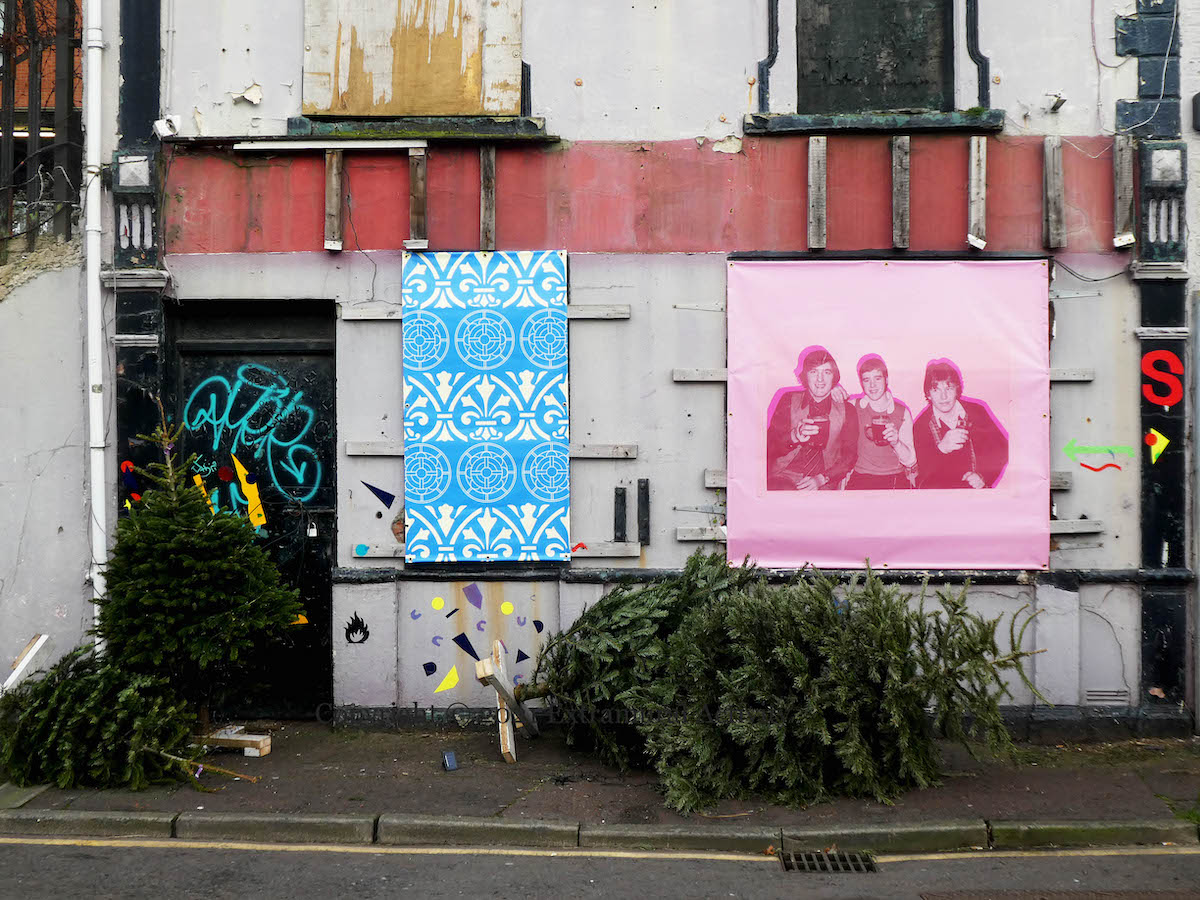
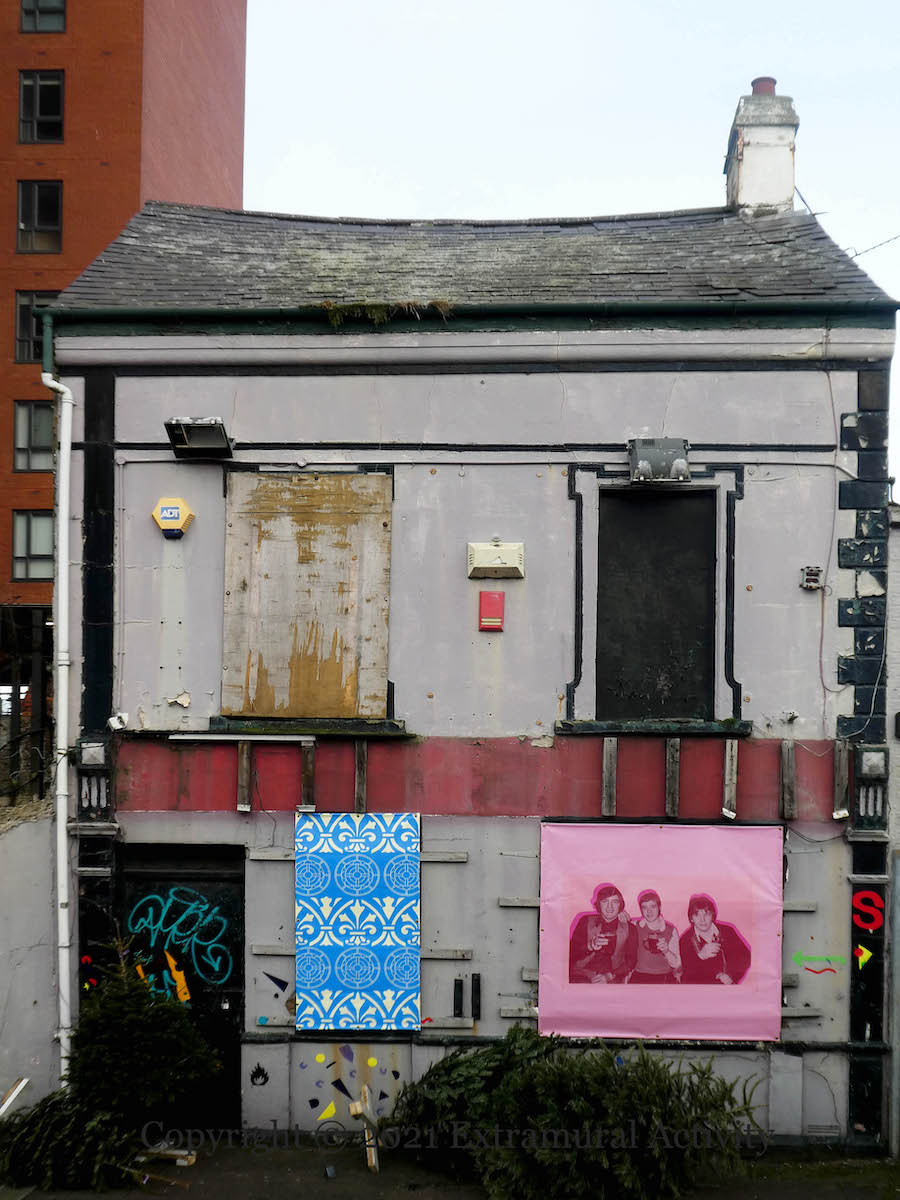
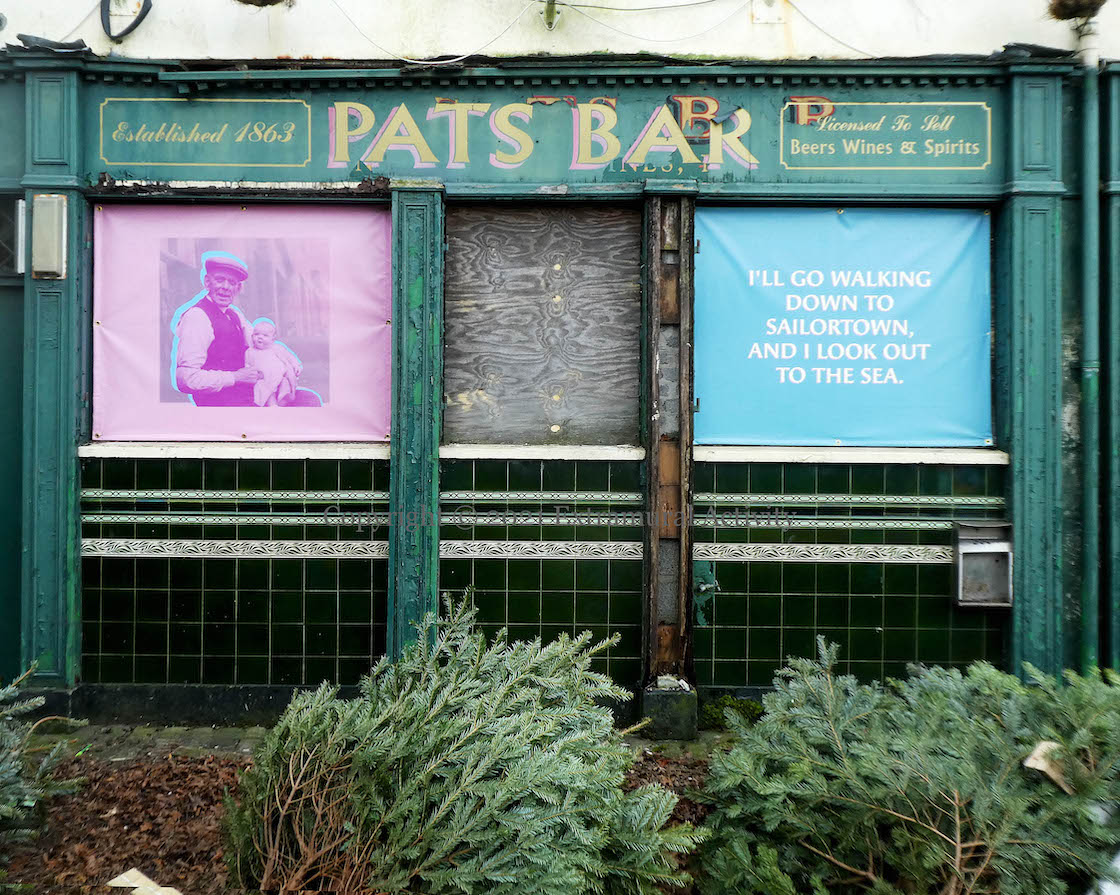
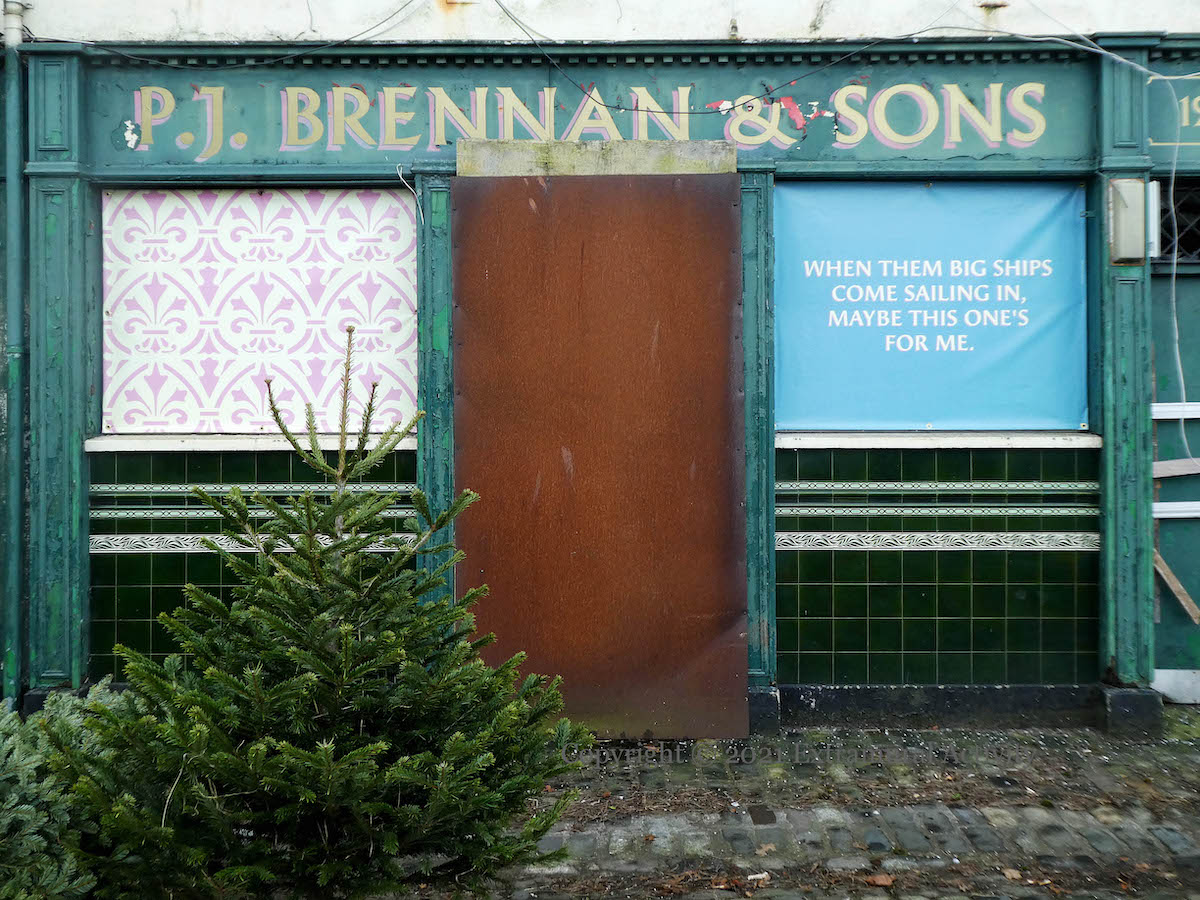
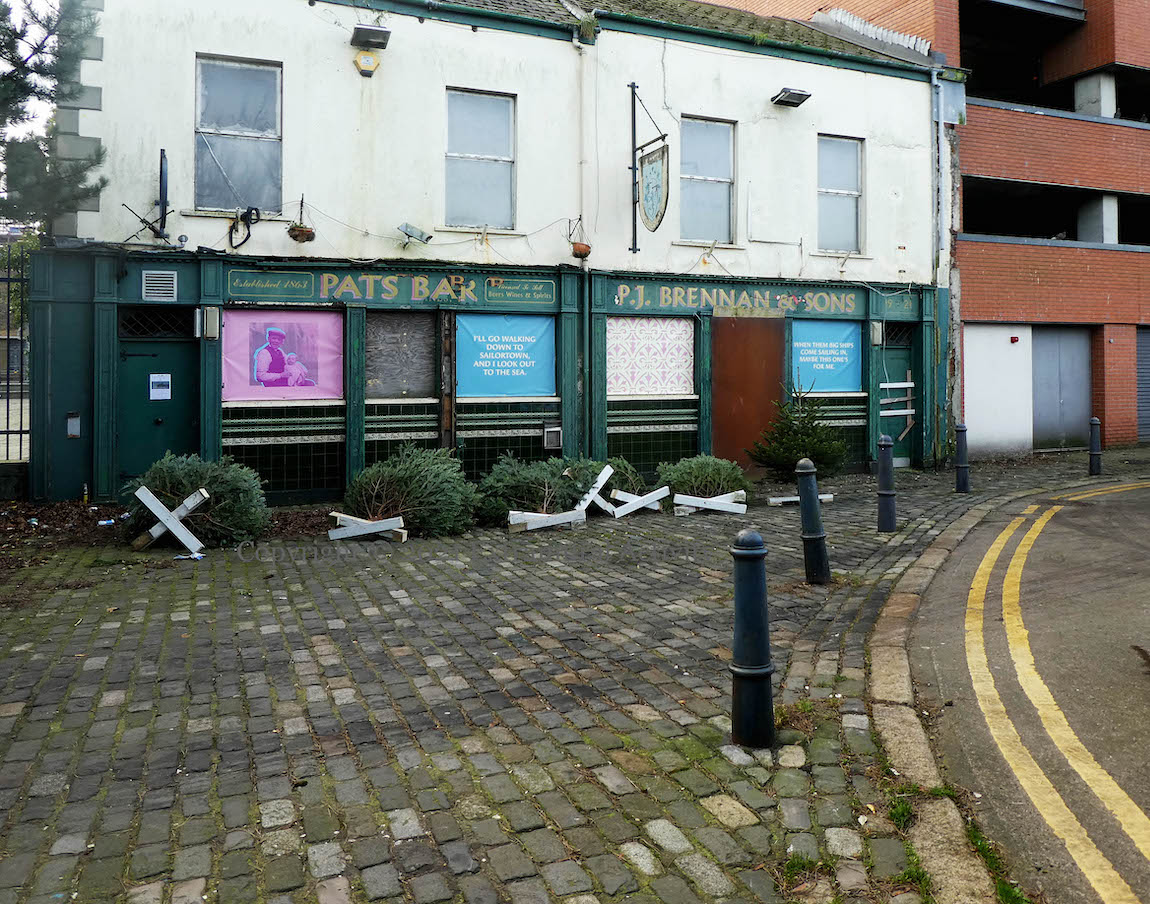
Here are images from Sailortown of the Rotterdam and Pat’s, back to back in Pilot Street and Princes Dock Street, both boarded up well before pandemic closures.
The old Ballymacarrett station was the last stop before Belfast when travelling from points east such as Holywood and Bangor. On the morning of January 10th, 1945, a faulty signal caused the 7:10 from Bangor to be halted at Ballymacarrett, only for it to be hit from behind by the oncoming 7:40 from Holywood. The steel lead-car of the Holywood train ploughed through the whole of the last carriage’s wooden coachwork and on into the penultimate carriage, causing the death of 22 people and injury to another 27 (WP).
Father Des Wilson and Frank Cahill sit together in a Springhill flat overlooking Tara Stores and the Craft Centre, two of the enterprises they helped to establish (along with the Whiterock Industrial Estate) in an attempt to bring employment to the area. Around 1982, they were part of a group that bought Conway Mill for use as a community and business centre; the image above was taken in the contemporary Conway Mill.
On the right, the accomplishments and accolades of Seán MacBride are listed (shown below). During the course of his life, MacBride was an IRA member and imprisoned by the Free State, founder of Clann Na Poblachta and TD, and international politician including a spell as chair of Amnesty International. He was awarded the Nobel Peace Prize in 1974 (WP). The MacBride Principles of 1984 set out nine conditions of fair employment.
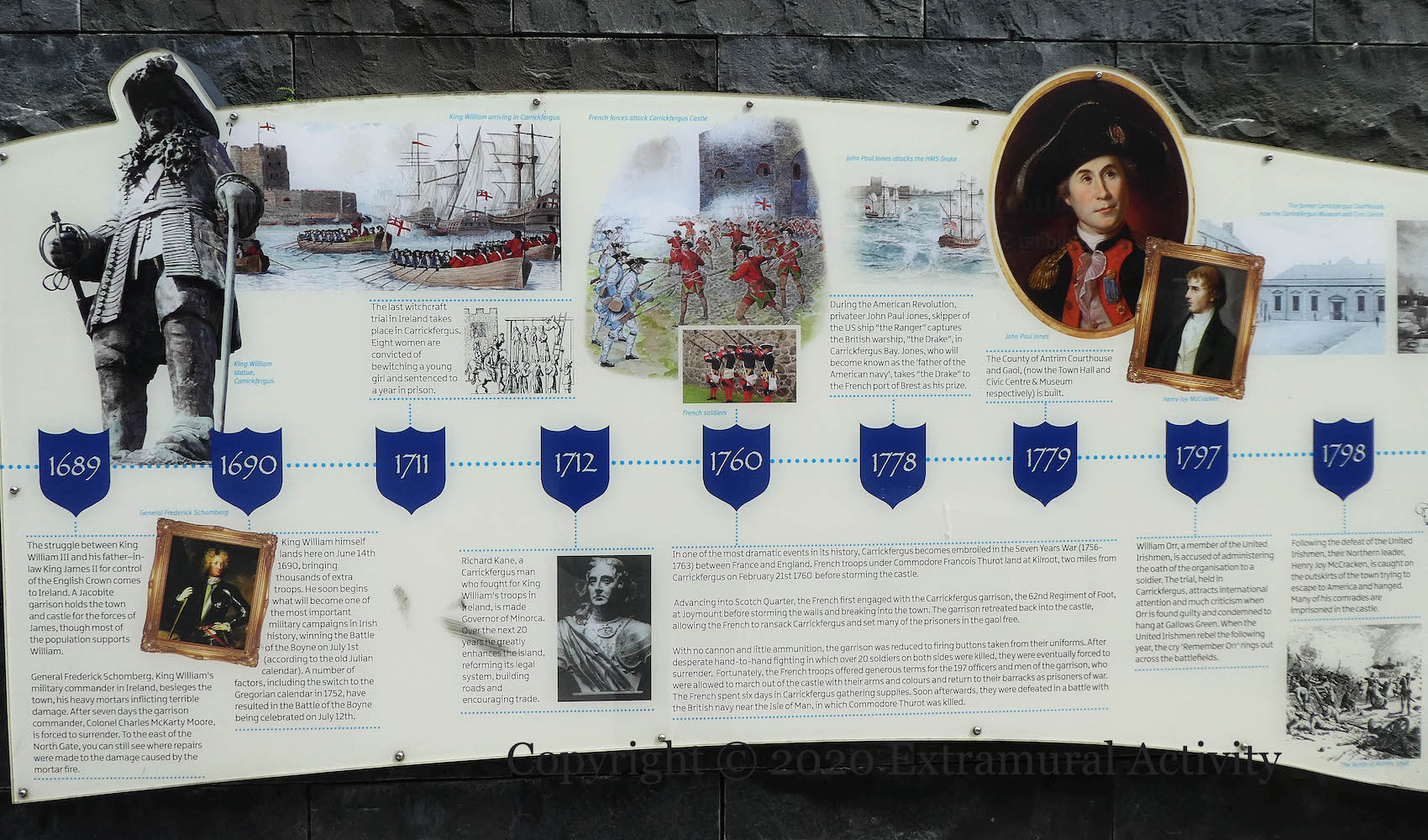
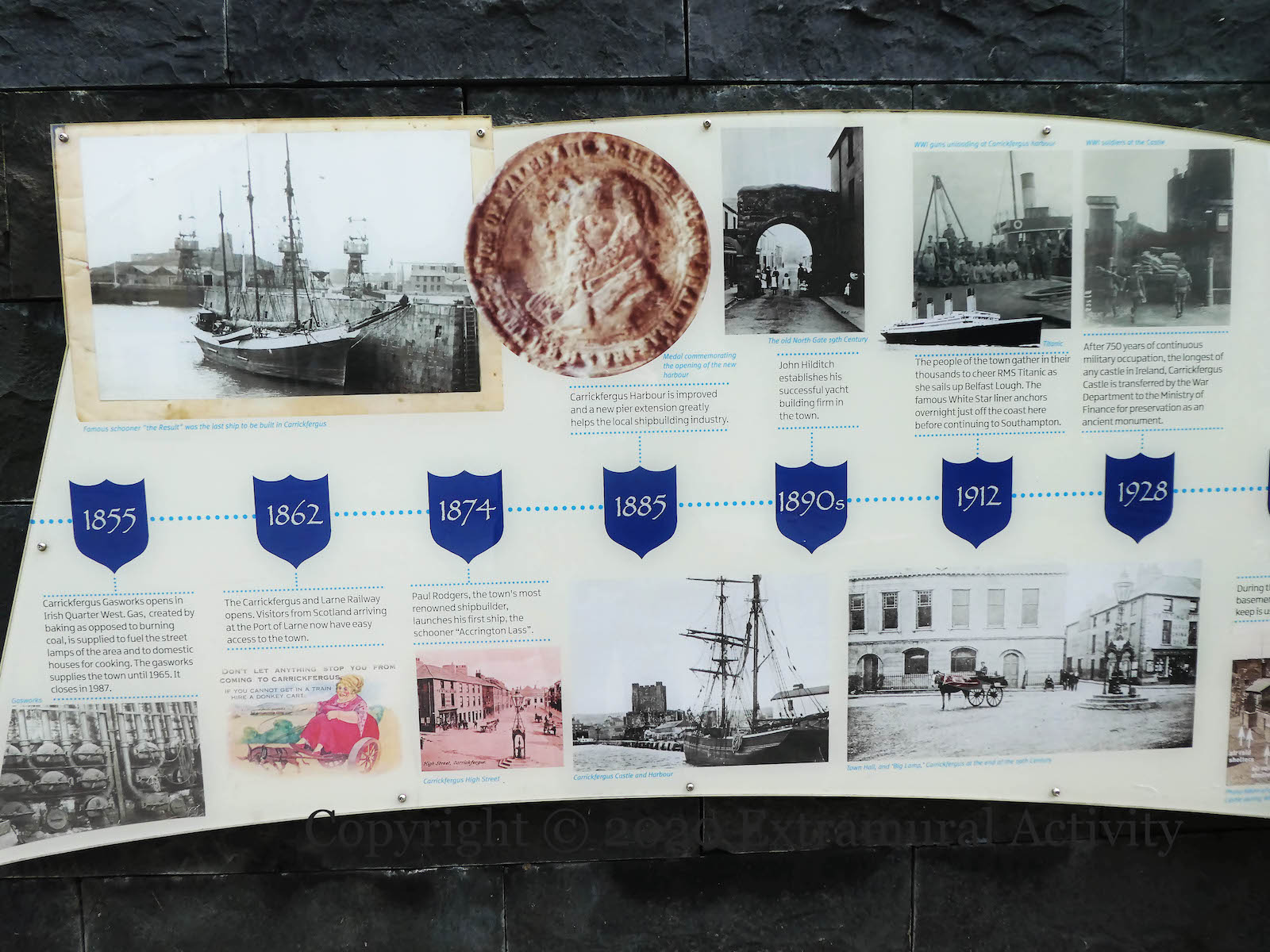
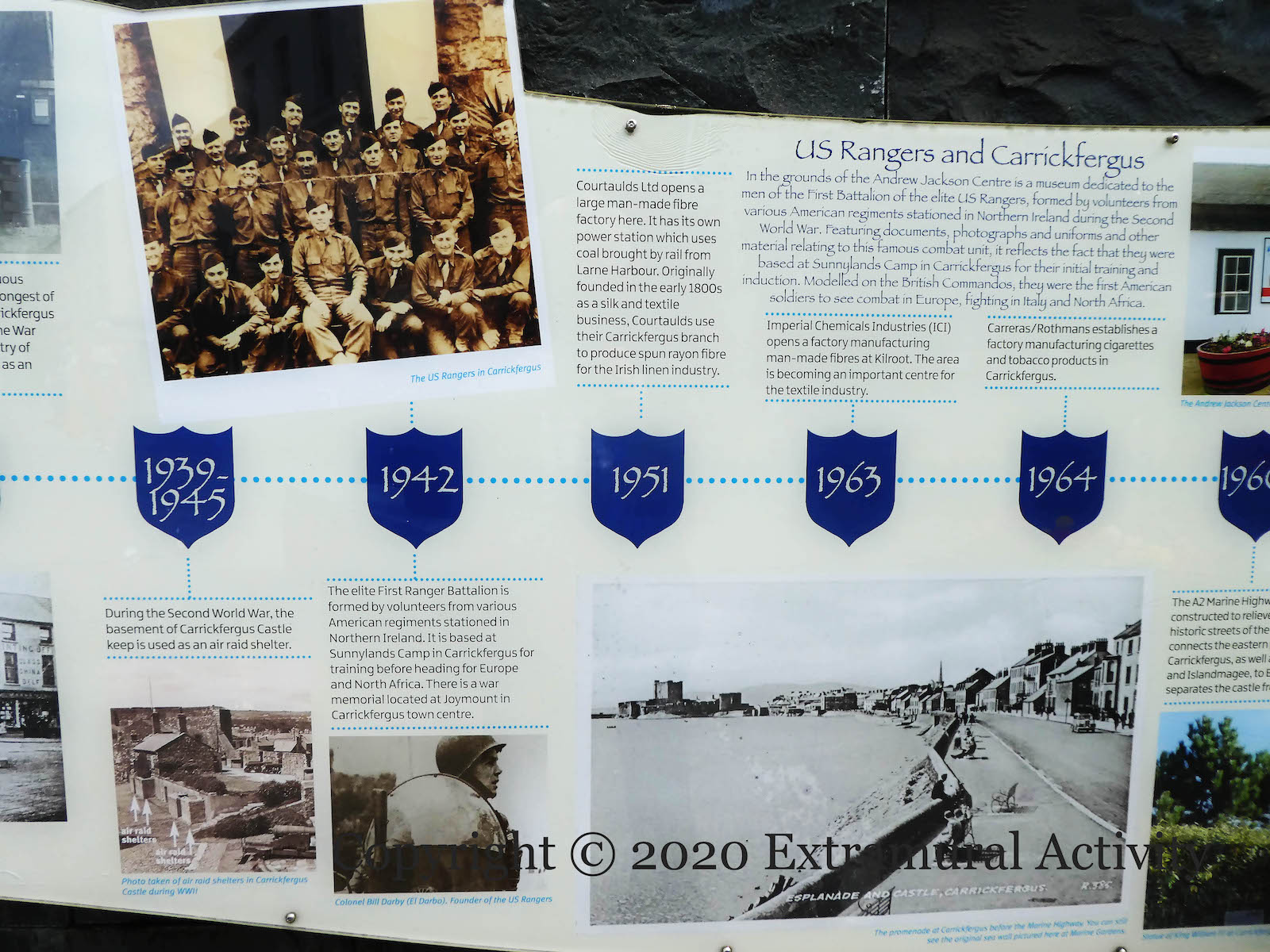
This is the second half of the Carrickfergus Timeline in Market Place, covering the history of the town from arrival of King William and General Schomberg to the modern day, including the last witch trial in Ireland and the construction of a railway allowing tourists sailing into Larne to reach the town easily: “Don’t let anything stop you from coming to Carrickfergus – if you cannot get on a train, hire a donkey cart”. The panels were written by Seth Linder.







 Extramural Activity