16 towns and town-lands of south-east County Antrim are named in this recent UFF mural: Rathcoole, Rathfern, Monkstown, Shore Road, Whitewell, Glengormley, Greenisland, Carrickfergus, Whitehead, Ballycarry, Ballyclare, Larne, Newtownards, Antrim, Antrim, Ballymena, Braidside.
This mural was painted in late summer, 2015, on a wall that had been blank since at least 2008. In 2006, it bore a UDA mural, for which see M03060 (by Peter Moloney).
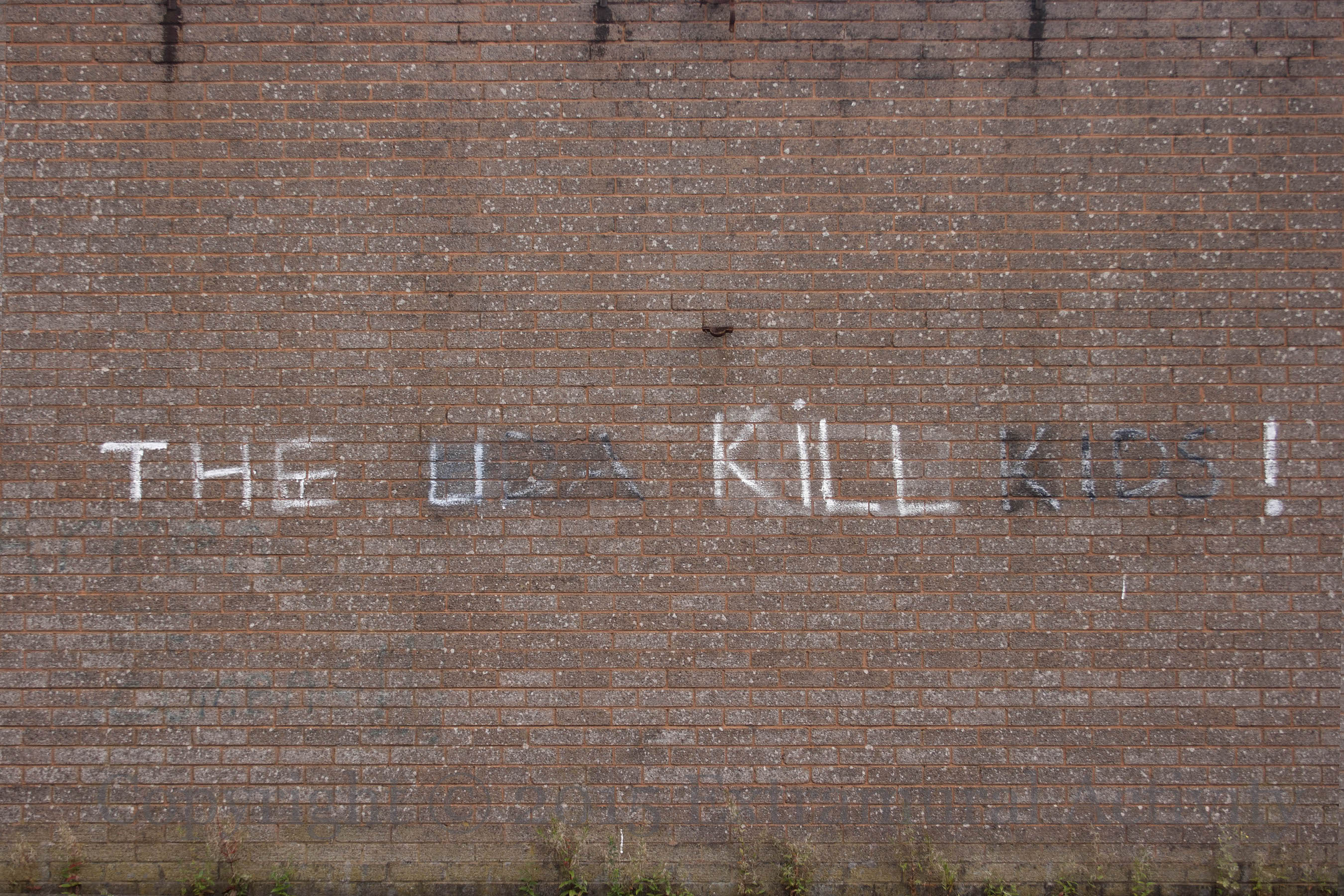
More vintage graffiti, this time in Derry, dating back at least to 2001. It might come from 2001: after the 1998 Good Friday Agreement and its implementation, the IRA moved toward decommissioning its weapons, beginning to do so in October 2001.
Next to the bonfire site at the southern (Drumadoon Drive) entrance to Ballybeen, the banner on the building above proclaims the area’s paramilitary allegiance: East Belfast Ulster Volunteer Force.
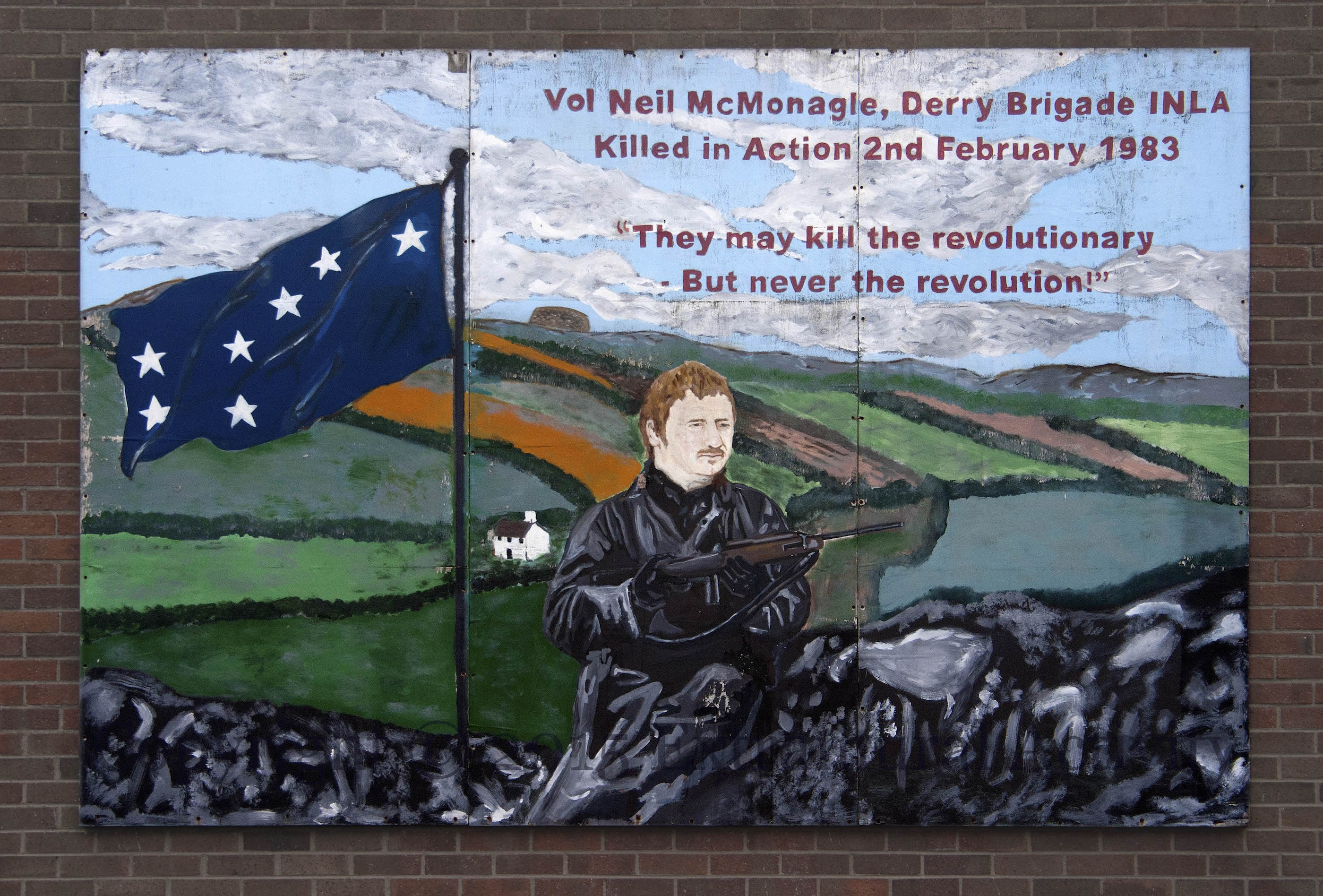
This painted board (shown above) to INLA volunteer Neil McMonagle is in Leafair Park, Derry, close to the spot where McMonagle, aged 23, along with friend Liam Duffy, were shot by undercover British soldiers (specifically Sergeant Paul Oram of 14 Intelligence Company (WP)) on February 2, 1983. McMonagle died instantly while Duffy was wounded but survived. The official account alleged that both McMonagle and Duffy were armed; locals deny this. For an account of the killing and a tribute, see these obituaries from republican publications in 1983.
The board shows an armed McMonagle behind a stone wall with a Plough In The Stars flag with a blue background, with the view towards Buncrana (perhaps).
“Vol Neil McMonagle, Derry Brigade INLA. Killed in action 2nd February 1983. “They may kill the revolutionary but never the revolution.””
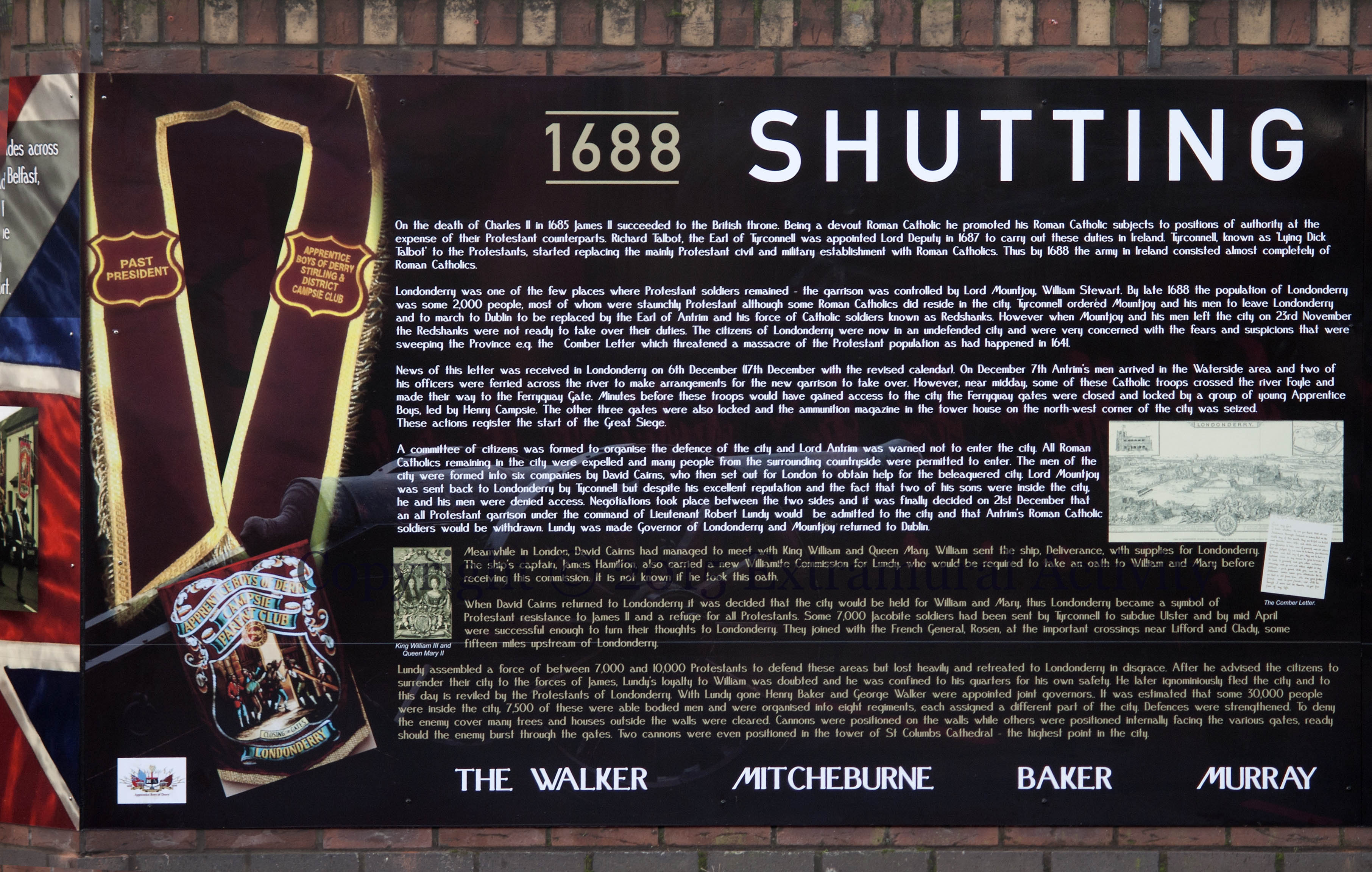
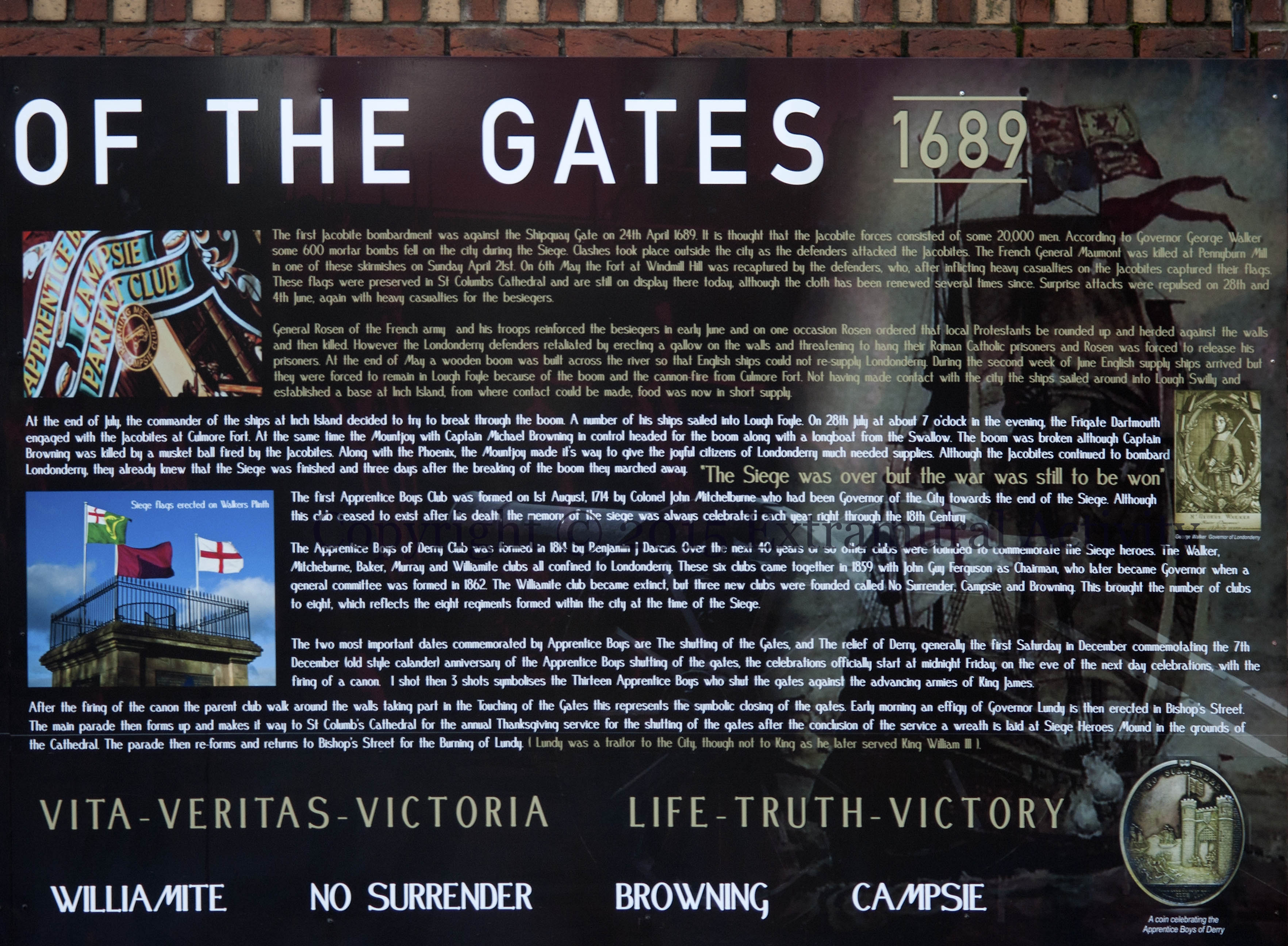
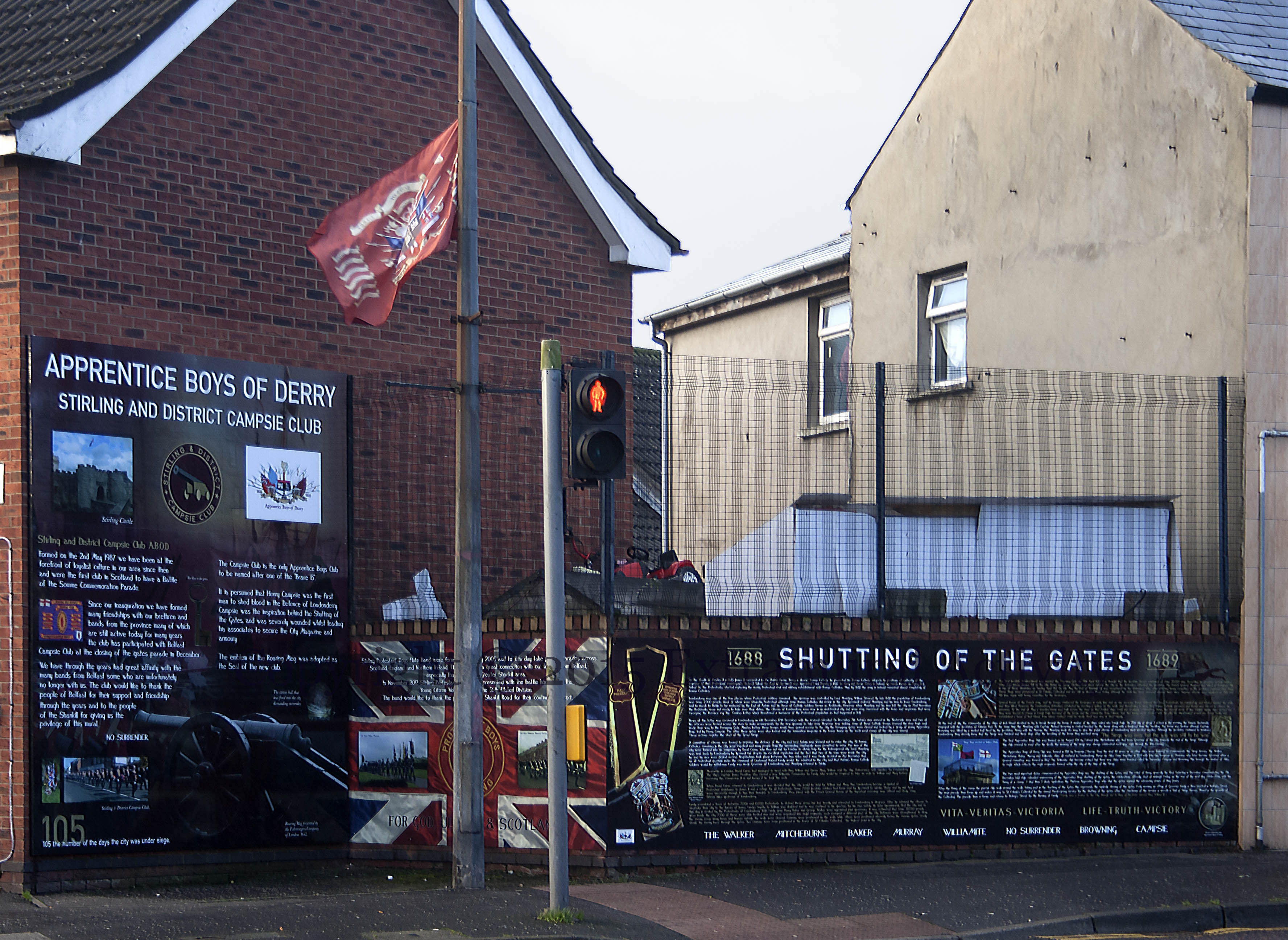
The third of three new panels celebrating the Apprentice Boys contains a long description of the Shutting Of The Gates in December 1688 and the Siege Of Derry, which was ended with the breaking of the boom of the river Foyle in July 1689.
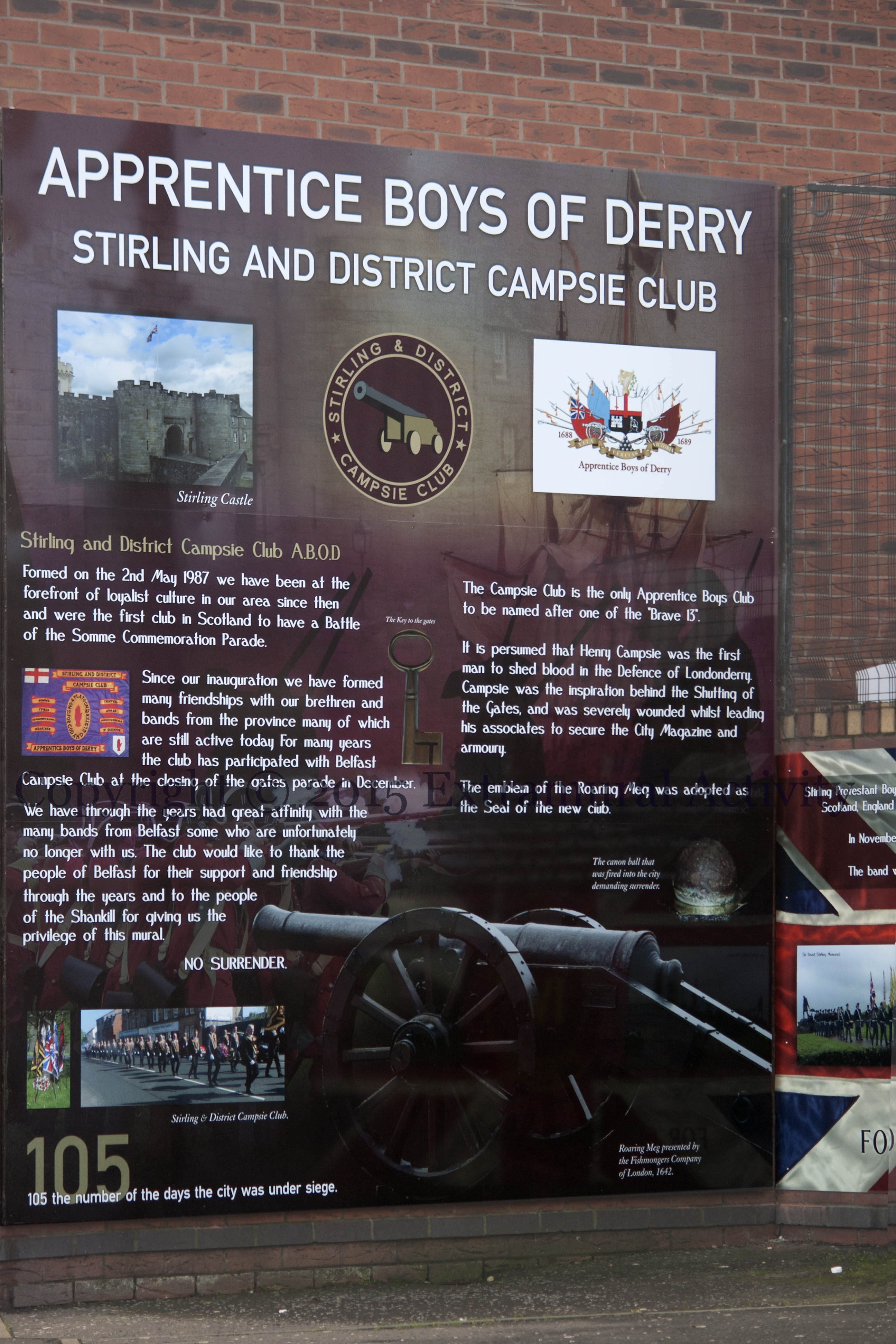
Here is the second of three panels from a new mural on the Shankill Road celebrating the ties between Belfast and the Stirling & District Campsie Club, a branch of one of the associated clubs of the Apprentice Boys Of Derry. It features the cannon “Roaring Meg” (“presented by the Fishmongers Company of London 1642″) which is used as the seal for the club, the club’s flag which includes a red hand of Ulster, the key to the gates, and the emblem and coat of arms of the Apprentice Boys.
“Formed on the 2nd May 1987 we have been at the forefront of loyalist culture in our area since then and were the first club in Scotland to have a Battle of the Somme Commemoration Parade. Since our inauguration we have formed many friendships with our brethren and bands from the province many of which are still active today. For many years the club has participated with Belfast Campsie Club at the closing of the gates parade in December. We have through the years had great affinity with the many bands from Belfast some who are unfortunately no longer with us. The club would like to thank the people of Belfast for their support and friendship through the years and to the people of the Shankill for giving us the privilege of this murals.
No surrender.
The Campsie Club is the only Apprentice Boys Club to be named after one of the “Brave 13″. It is persumed presumed that Henry Campsie was the first man to shed blood in the Defence of Londonderry. Campsie was the inspiration behind the Shutting of the Gates and was severely wounded whilst leading his associates to secure the City Magazine and armoury. The emblem of the Roaring Meg was adopted as the Seal of the new club.”
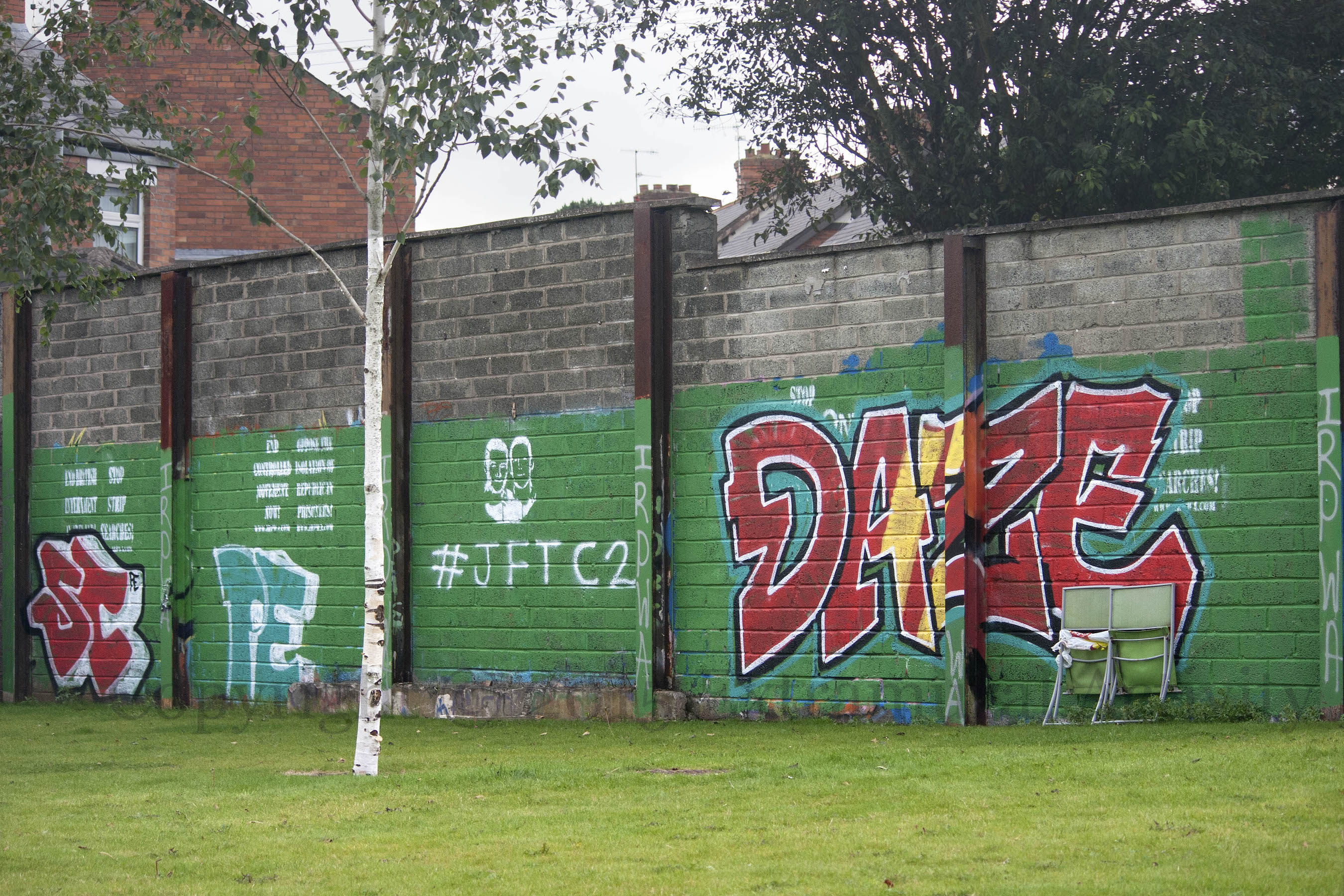
This is the middle wall on the site of the former Andersonstown RUC station, which has undergone three changes in recent months. The longstanding Fıanna sunburst (see X00350) was painted over with IRPWA stencils (Stop strip searches, End Internment, Justice For The Craigavon 2) which in turn were largely covered with writing by DAZE (see the image below). Most recently, a large Fıanna banner, shown above, has been placed over the wall.
This panel (one of three) of a new mural on the Shankill celebrates the Stirling Protestant Boys Flute Band and its association with the Shankill Road: “Stirling Protestant Boys Flute Band [Fb] were formed in February 2003 and to this day take part in parades across Scotland, England and Northern Ireland. The band has a great connection with our friends from Belfast, especially those from the Greater Shankill area. In November 2012 Stirling Protestant Boys were presented with the battle honours of the Young Citizen Volunteers and the 36th (Ulster) Division. The band would like to thank the people of the Shankill Road for their continued support.”
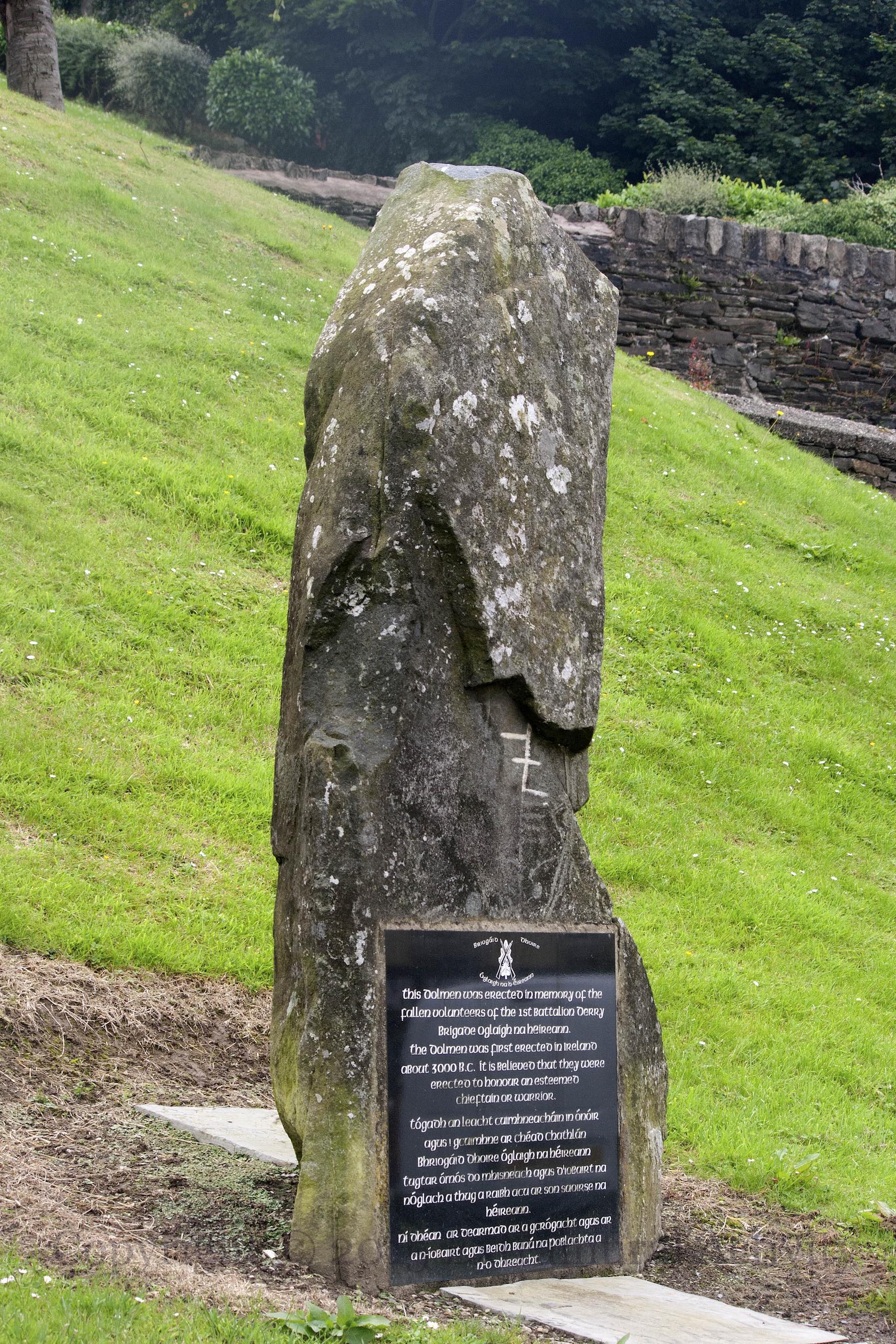
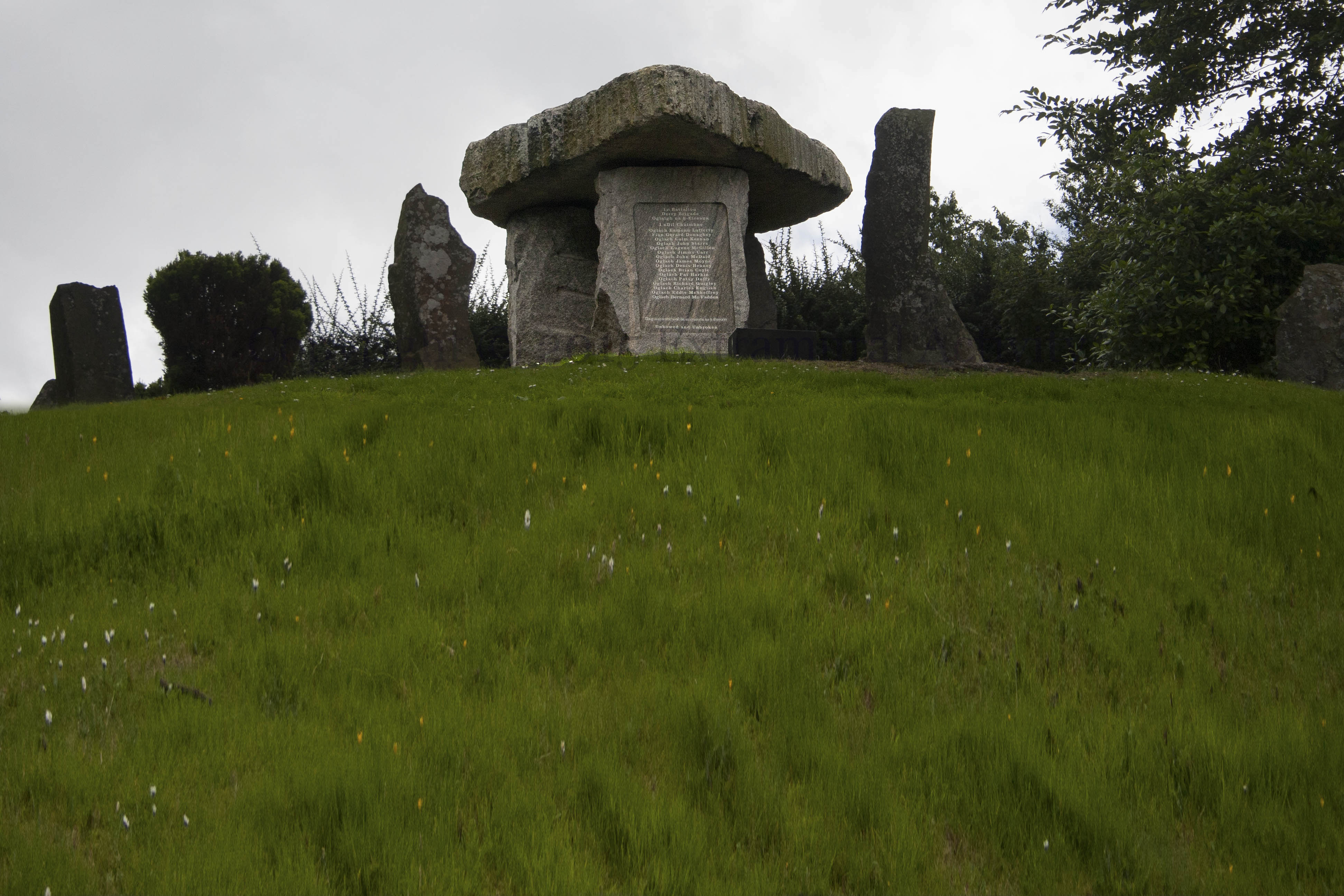
The Provisional IRA emerged from a split in the IRA in the wake of sectarian unrest in 1969. The Derry battalion became the Derry Brigade (An Brıogáıd Dhoıre) in 1972 when the number of people wishing to become volunteers swelled in the aftermath of Bloody Sunday. It is estimated that 1,000 Derry Catholics (2% of the population) were imprisoned for IRA activities in the 70s and 80s. (WP) The image above shows a mural with Cú Chulaınn, an oak leaf with crossed rifles, and a lily. In the centre is a board commemorating volunteers from the 1st battalion — an identical board can be found on Westland Street; see Spirit Of Freedom – and below are a commemorative standing stone and dolmen a short distance away.





 Extramural Activity