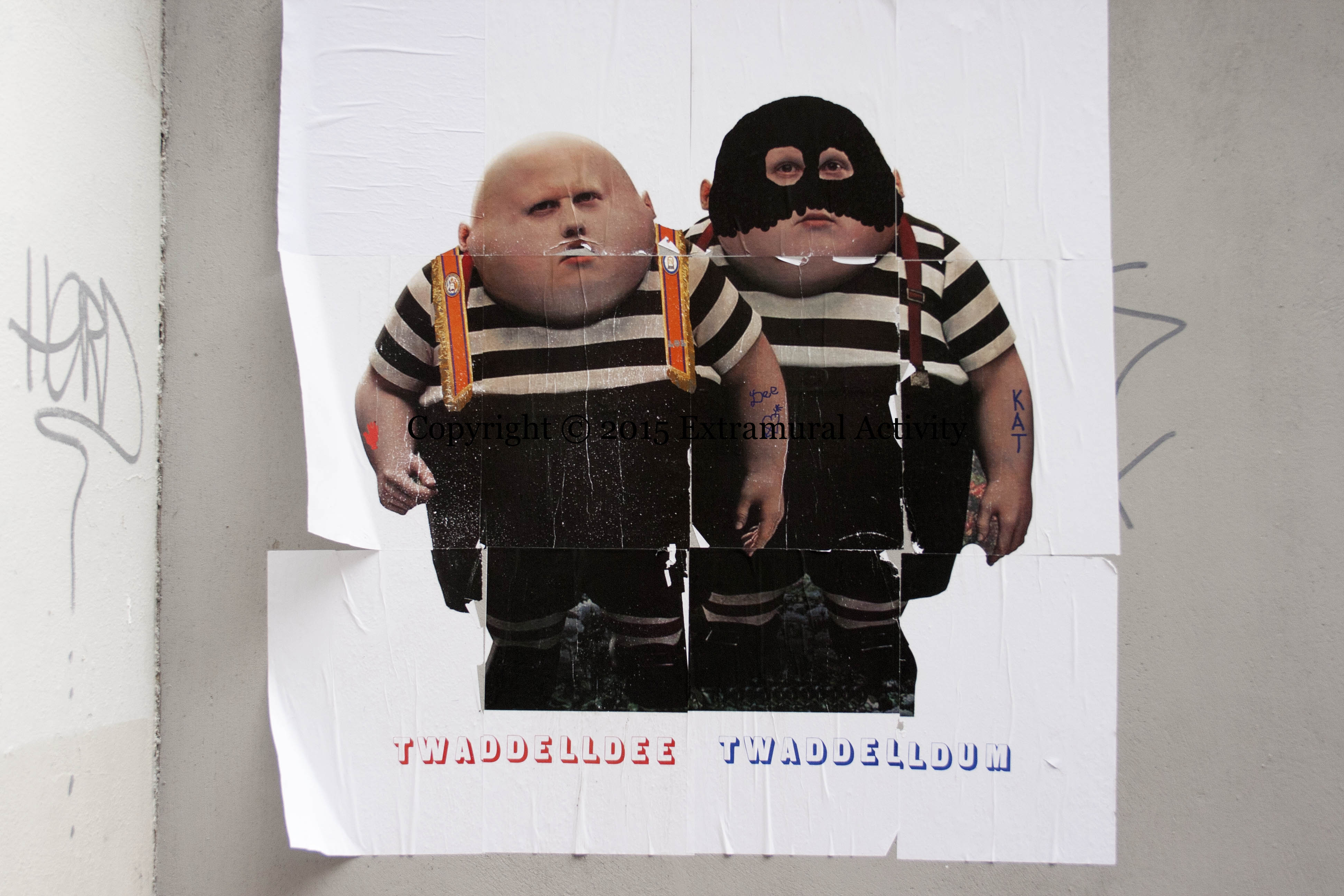
Lewis Carroll’s Tweedledee and Tweedledum (as imagined by Tim Burton for Disney) have been turned into Twaddelldee and Twaddelldum, Twaddelldee using an Orange collarette as braces and Twaddelldum with face-mask, concealed brick, and “KAT” tattoo. The protest at Twaddell Avenue continues, after more than 600 days. For background, see previously: Protest Camp | Civil Rights Camp | Supporters Club | No Surrender
James Connolly was concerned not just with the political independence of Ireland but its economic independence: both political and economic liberty were required in order for the human being to live freely. The quote in the image above comes from Connolly’s 1897 essay “Socialism & Nationalism”. The economic context is clear when we read a little more broadly:
“To the tenant farmer, ground between landlordism on the one hand and American competition on the other, as between the upper and the nether millstone; to the wage-workers in the towns, suffering from the exactions of the slave-driving capitalist to the agricultural labourer, toiling away his life for a wage barely sufficient to keep body and soul together; in fact to every one of the toiling millions upon whose misery the outwardly-splendid fabric of our modern civilisation is reared, the Irish Republic might be made a word to conjure with – a rallying point for the disaffected, a haven for the oppressed, a point of departure for the Socialist, enthusiastic in the cause of human freedom.” (marxists.org)
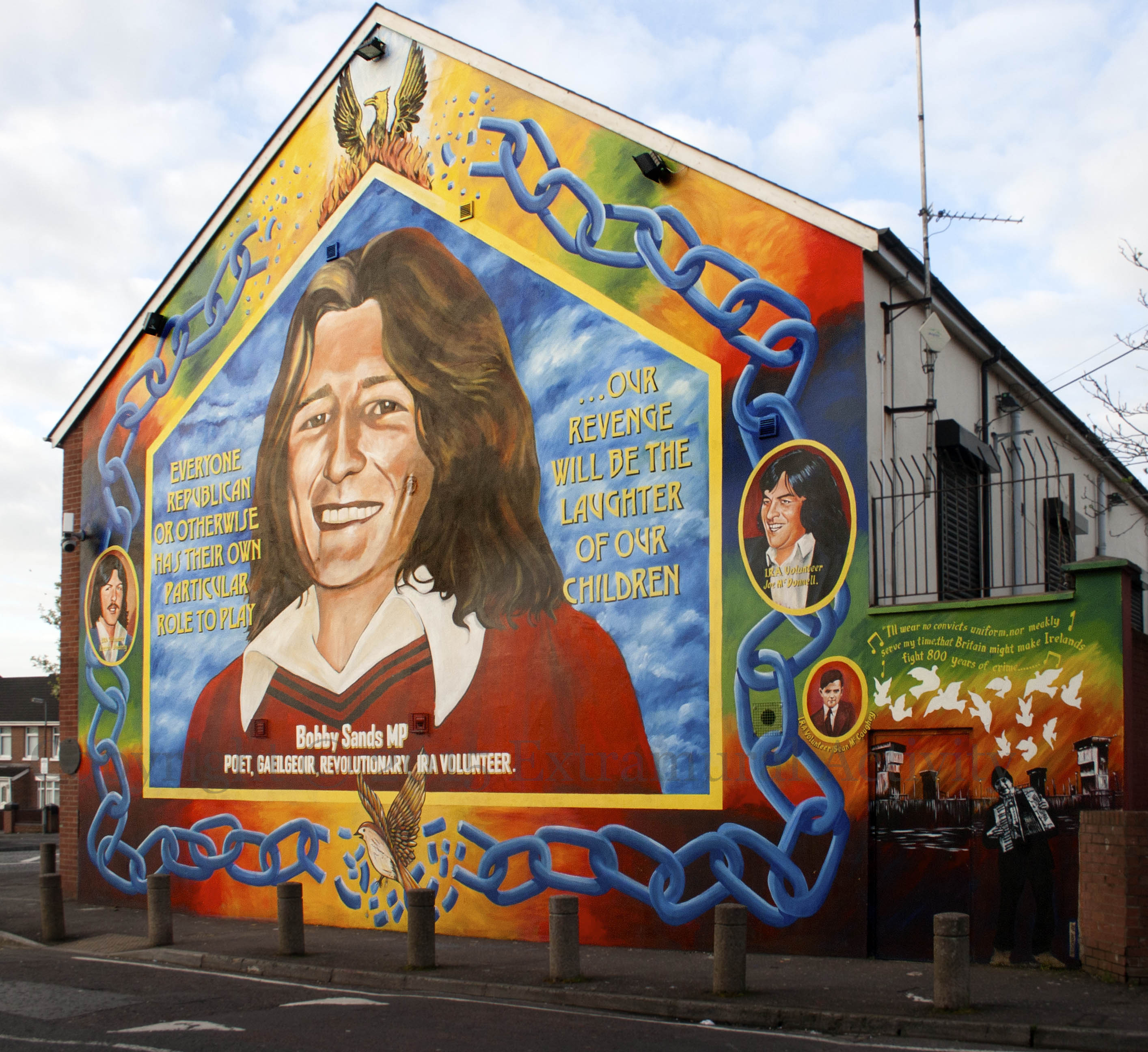
The Bobby Sands mural in Sevastopol Street has been given a facelift, including the blocking-up of a vent on Sands’s left cheek. Kieran Doherty and Joe McDonnell have been added in place of the 1798 medallions on each side. On the side-wall are Sean McCaughey, ten doves representing the 1981 hunger-strikers, and Long Kesh. Aerosol‘s accordion-player stencil has been also been retained.
Ag sráıd Sevastopol cuımhnıtear ar Bobby Sands ı múrmhaısıú a aithnıtear ar fud an domhaın. Ba scrıbhneoır, file, réabhlóıdí agus díograıseoır Gaeılge é Sands. Fuaır sé bas 5 Bealtaıne 1981 tar éıs 66 lá ar stailc ocraıs. As ucht na dıograıse a thaıspeáın Sands agus a chomhchımí ı leıth fhoglaım na teanga faoı choınníollacha uafásacha Bhlocanna H na Ceıse Fada, spreagadh glúın úr chun dul ı mbun athghabháıl na Gaeılge.
Here at Sevastopol Street Bobby Sands is remembered in a mural which has become world-renowned. Sands, a writer, poet, revolutionary and Gaelic enthusiast, died on May 5th 1981 after 66 days on hunger strike. Sands and his fellow prisoners inspired a new generation to reclaim the Irish language enthusing them by the huge efforts they put into learning Irish in the horrendous conditions on the H Blocks of Long Kesh.
The flag of Israel flies beside the flag of the parliament of Northern Ireland and one celebrating “The glorious memory” of William III, crossing the Boyne on his horse. Ballyduff.
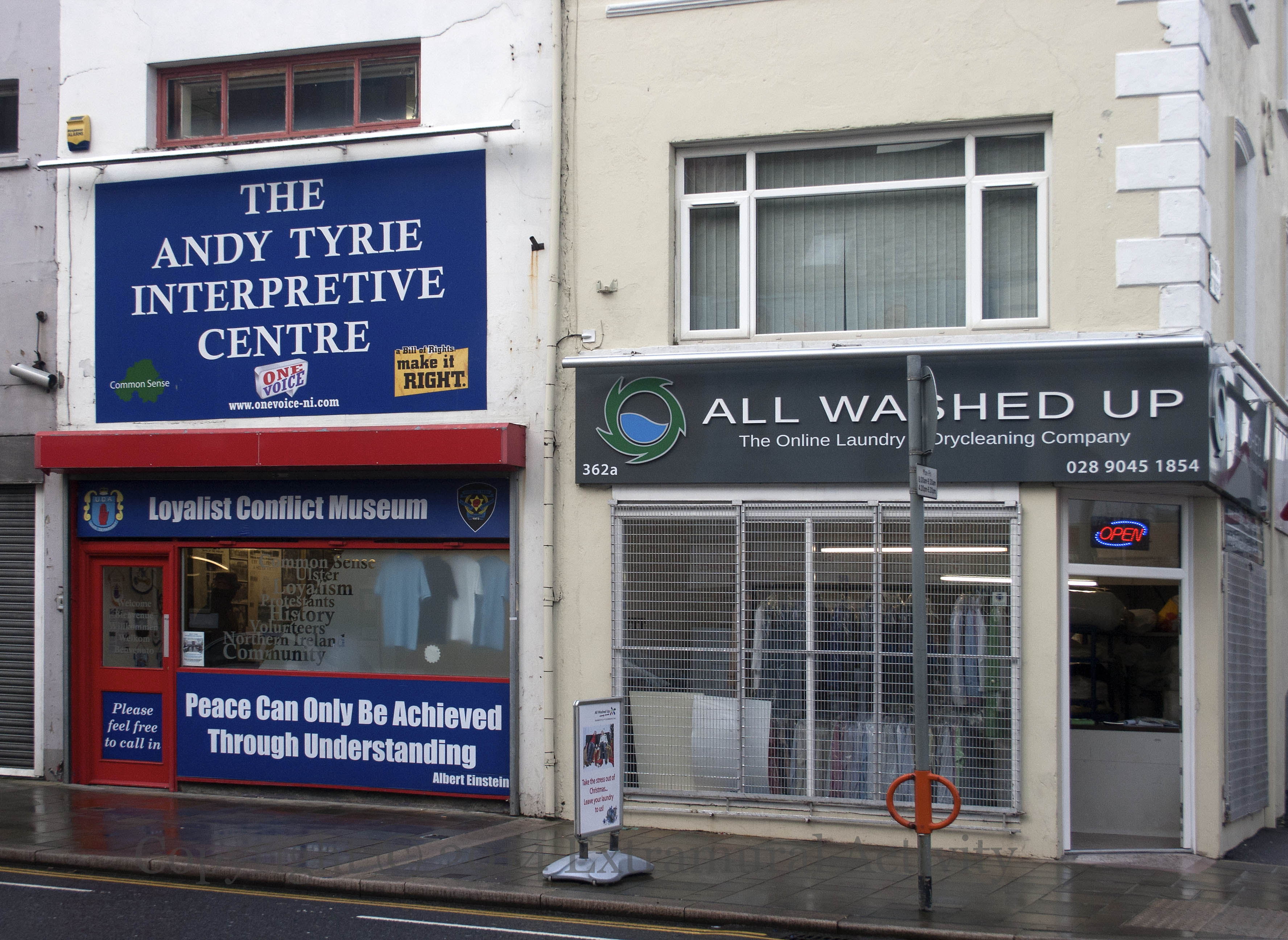
The Andy Tyrie Interpretive Centre on the Newtownards Road was opened on August 31st, 2012 (FB) and includes UDA/UFF memorabilia from troubles, including the 1974 Ulster Workers’ Council Strike in which the centre’s namesake, then head of the UDA, played a large role (WP).
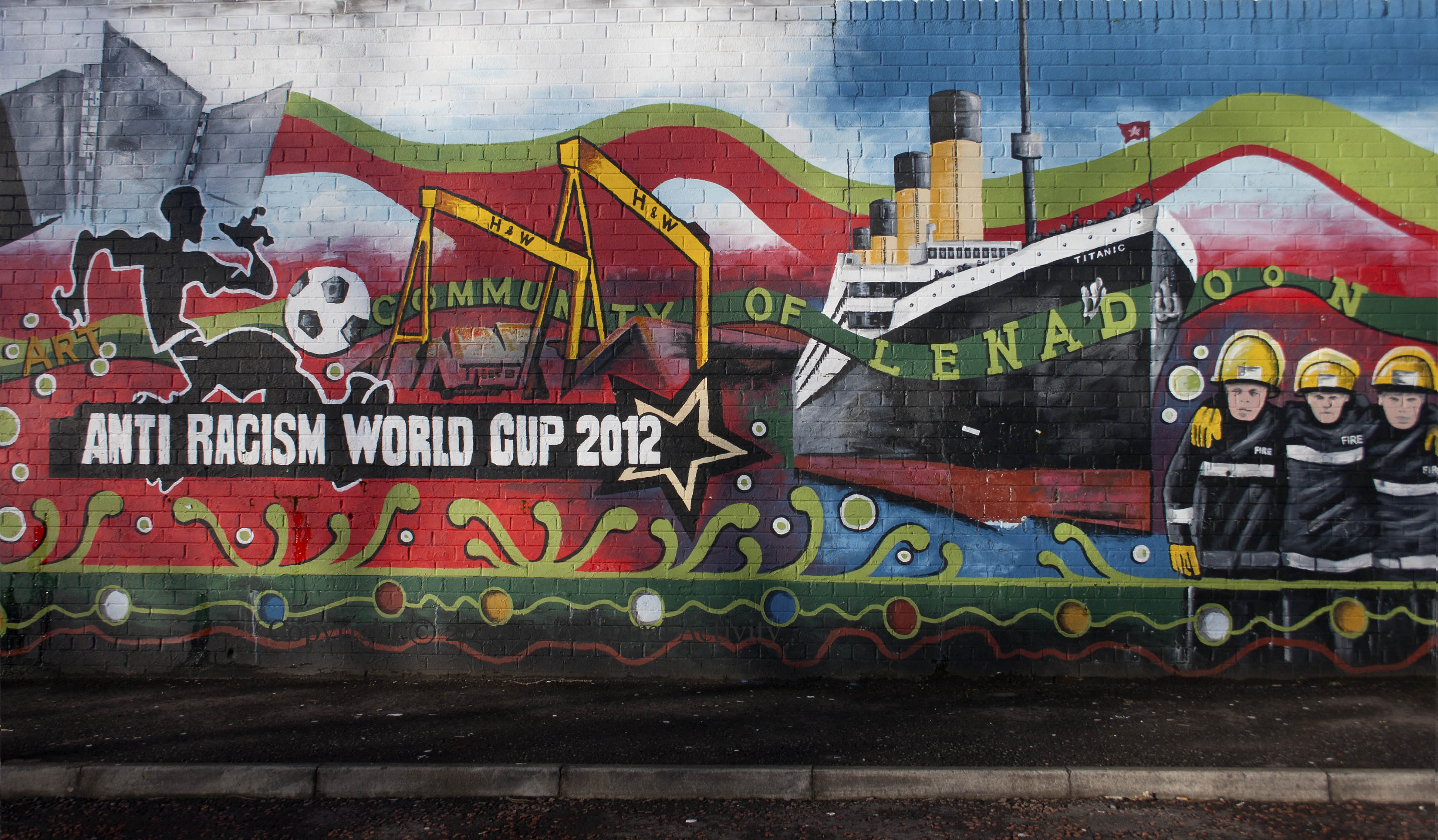
The Anti-Racism World Cup is a seven-a-side soccer tournament held annually at the grounds of Donegal Celtic in west Belfast. East Belfast artist John Stewart painted a mural of east Belfast imagery in 2012, complete with Titanic museum, H & W cranes, Titanic, firemen, and shipyard workers. Being on the side of Ryan’s Newsagents, the mural also features confectionery, vintage brands in old money: Cadbury’s peppermint creme for 2d, 1.4 lb of Fry’s milk chocolate for 4d, Terry’s milk chocolate 5d, Rolos “delicious toffee” for 2d and KitKat chocolate crisp.
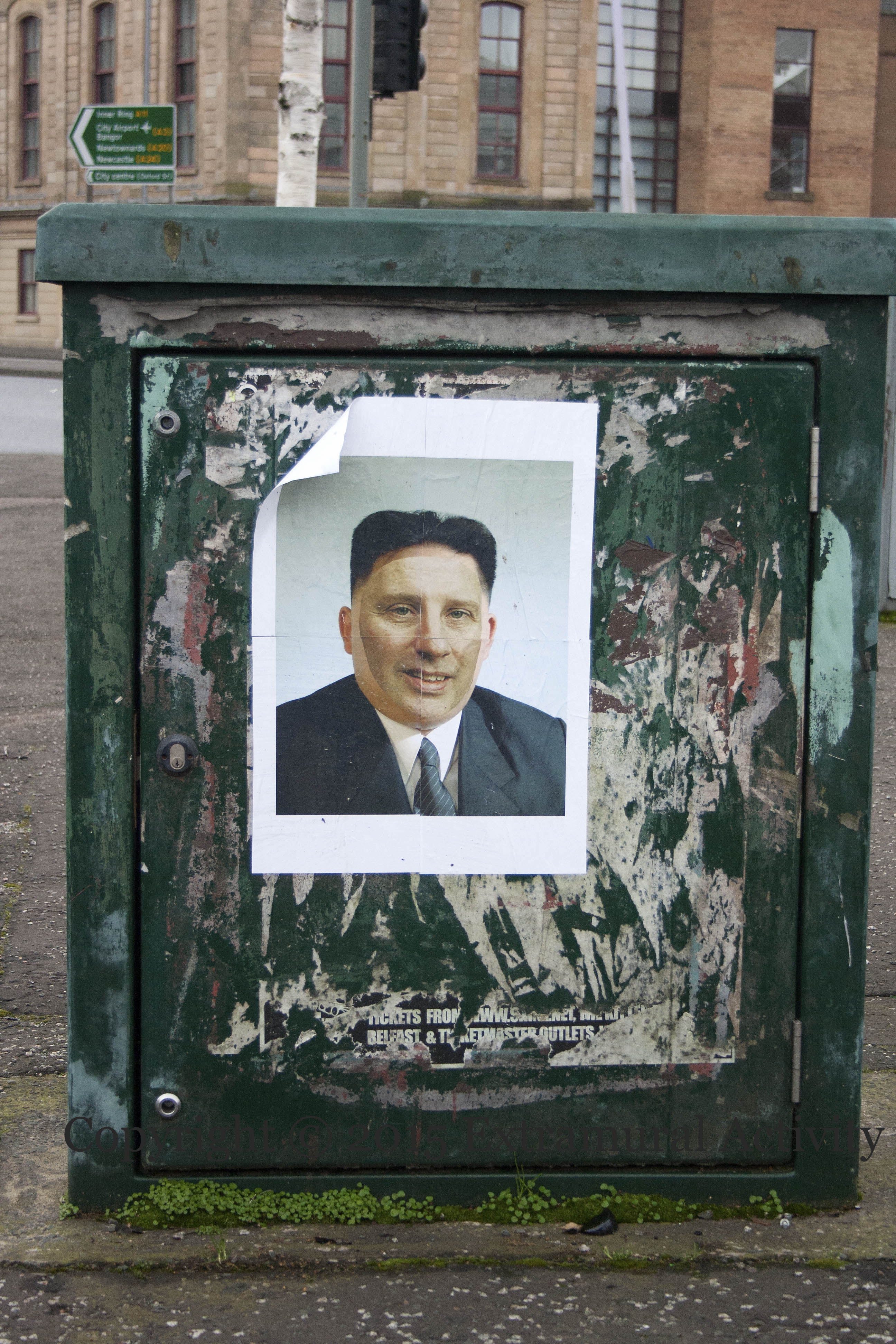
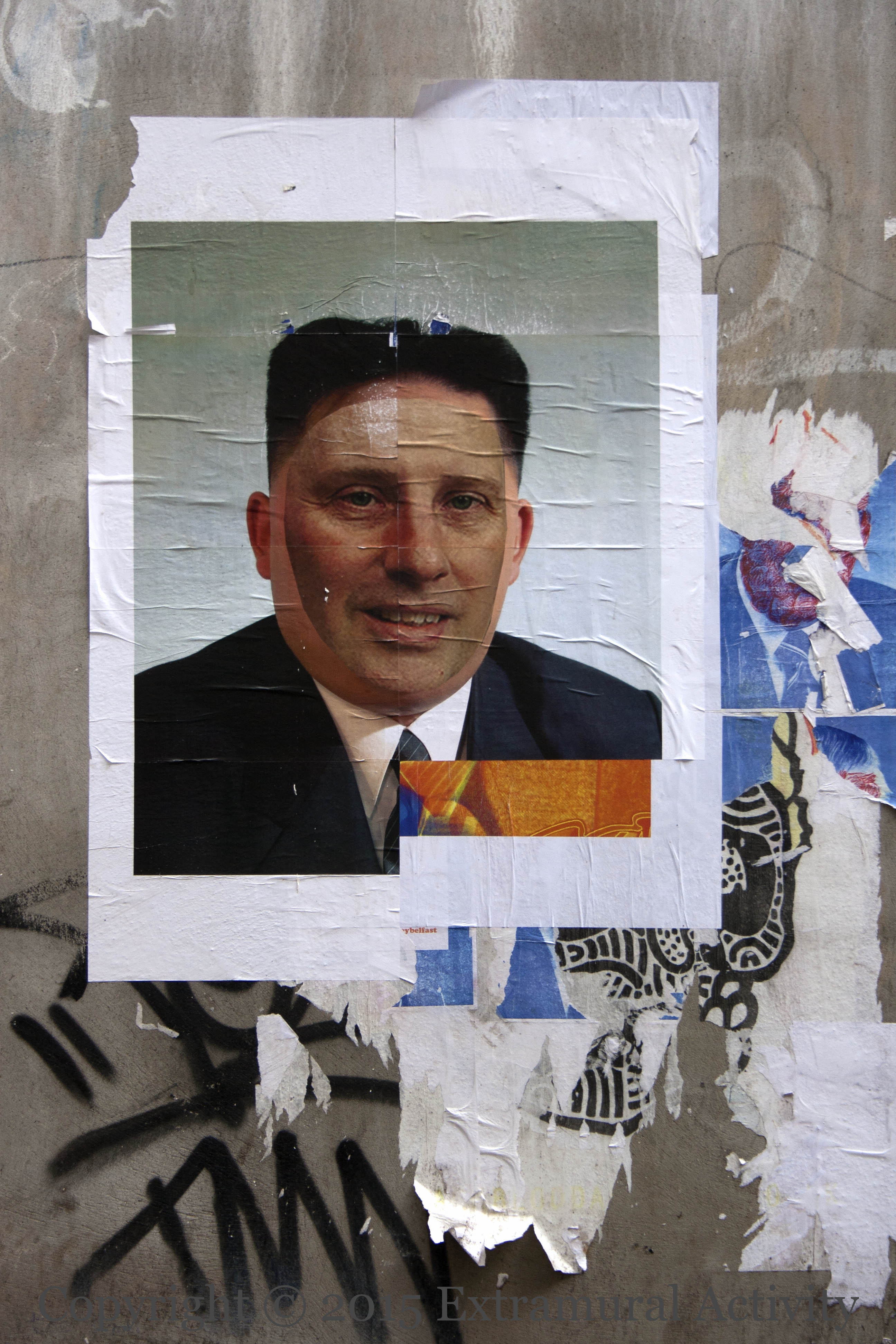
Here are two shots of the mash-up which has appeared in various city-centre locations, of Ian Paisley Jr’s visage superimposed on the bust of Kim Jong-Un. The first (above) is at the junction of Corporation St and Dunbar Link; the second (below) is in Hill Street, and is pasted over the torn remains of the previous generation of Paisley paste-up: Ian senior with a face filled in with the harp-side of pre-Euro Irish coins (see TLO’s “Doctored Paisley” web-site). For other versions of last year’s Paisley posters, see: Three Studies Of Ian Paisley | Demonizing Paisley
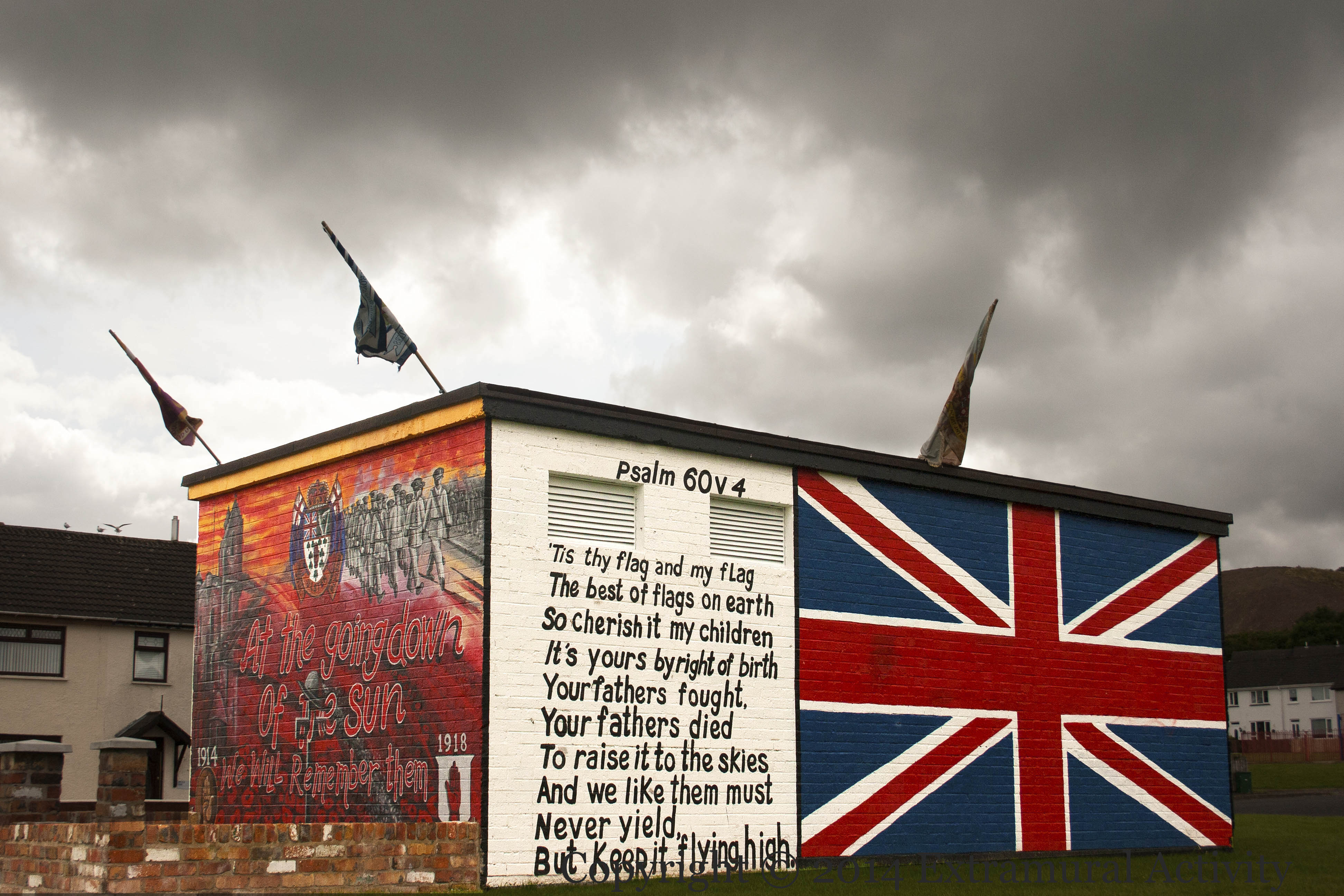
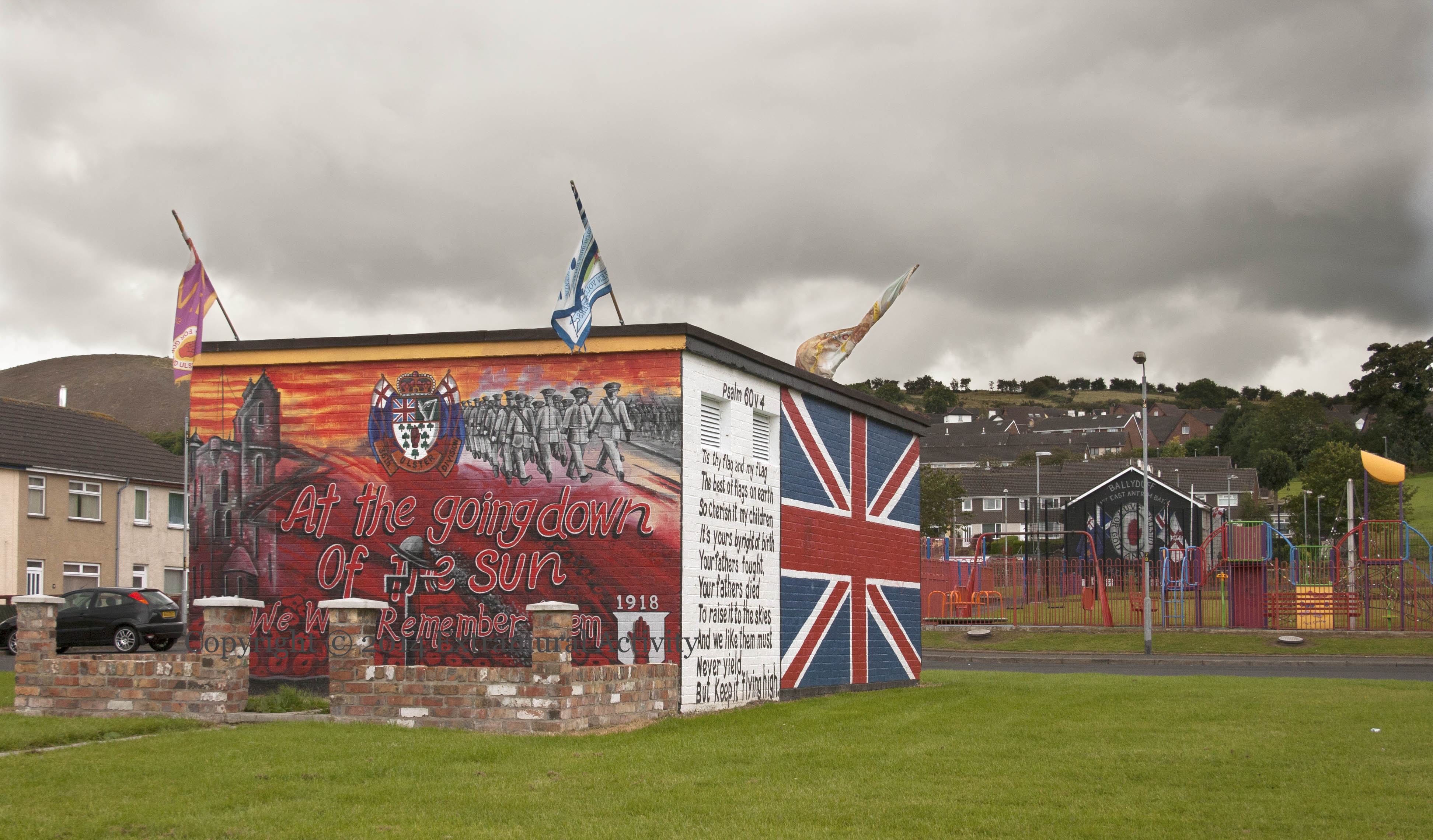
Translations of Psalm 60.4 vary, but it is something like “You (the Lord) have given those who fear you a banner so that they will not flee before your arrows”, which might work quite well alongside a Union jack. But in fact, only one source claims the poetic lines on the side of this Ballyduff electrical sub-station come from Psalm 60.4; they are rather the first stanza of a 1902 poem (earliest found mention), The UnionJack, by Edward Shirley, in Little Poems For Little People:
‘Tis thy flag and my flag, the best of flags on earth;
Oh, cherish it my children, for ’tis yours by right of birth.
Your fathers fought, your fathers died, to rear it to the skies;
And we like them will never yield, but keep it flying high.
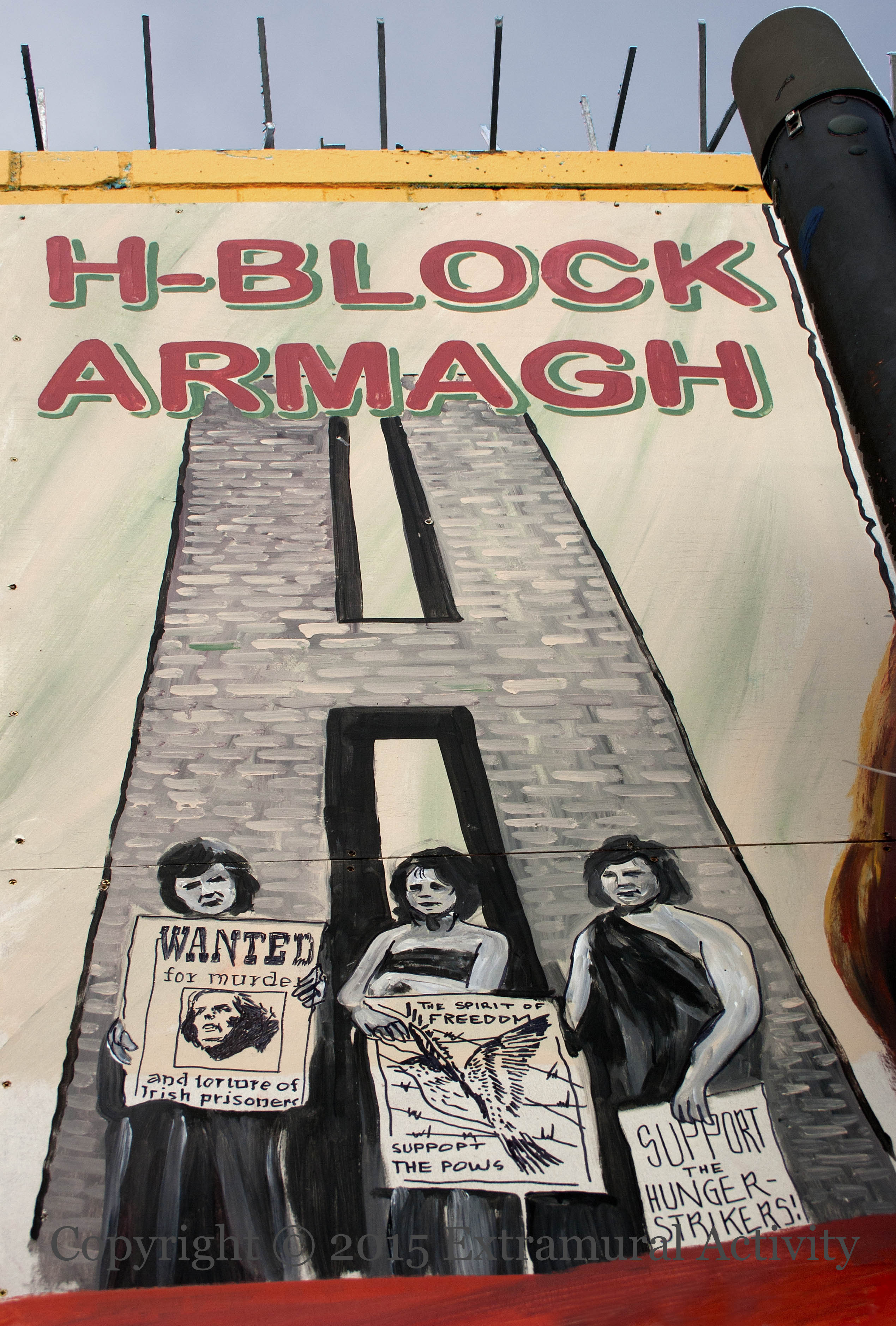
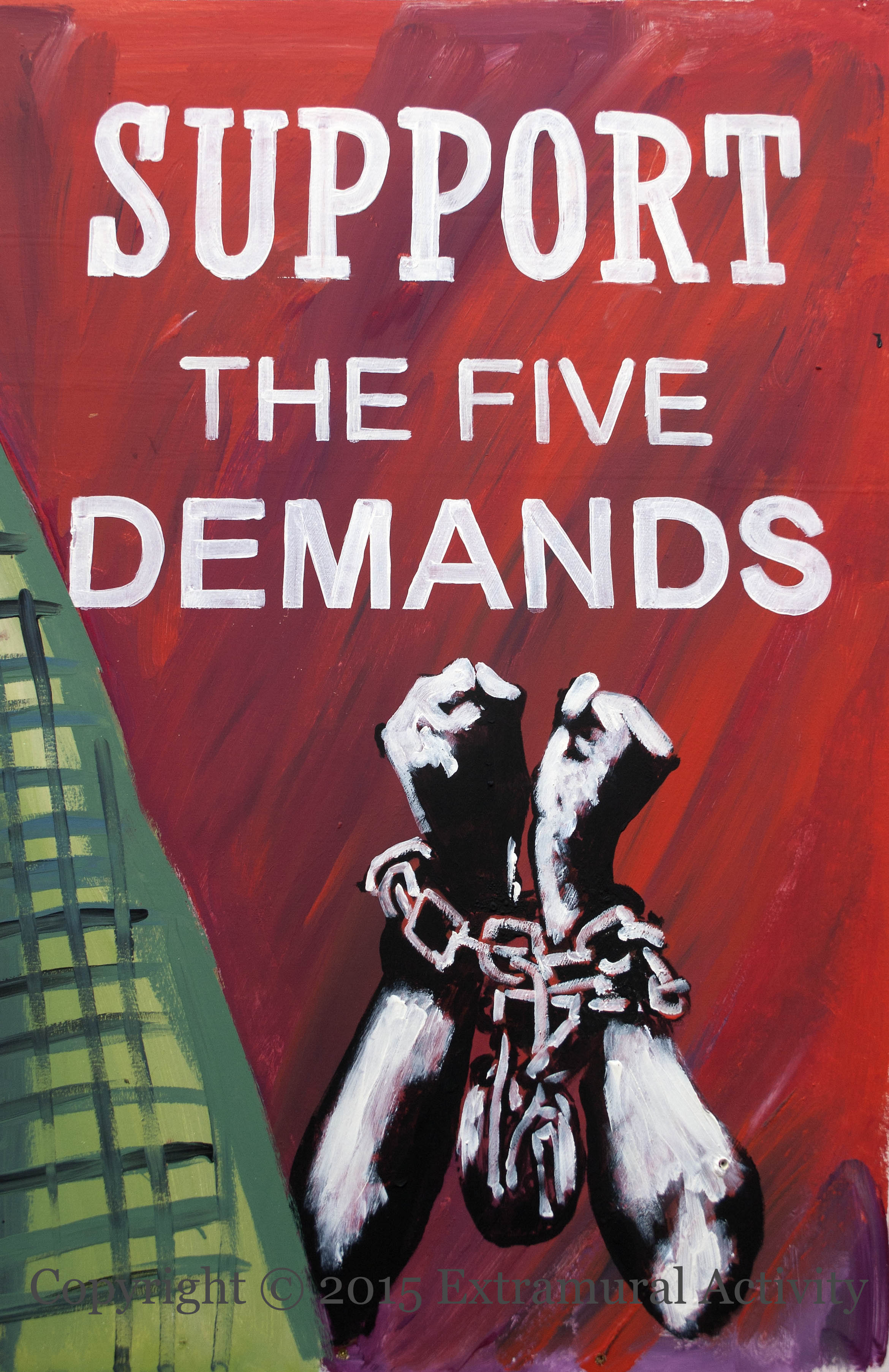
Here are two details from the new Kieran Nugent board along with the “Slí Na Gaeltachta‘ (The Gaeltacht Trail) plaque at its side. The image above shows prisoners “on the blanket” (that is, refusing to wear prison uniforms) in front of a giant brick “H” (for the H-Blocks) which perspective also shapes into an “A” (for Armagh Women’s Prison). They hold placards from the time: Wanted for murder [Margaret Thatcher] and torture of Irish prisoners”; “The spirit of freedom; support the POWs”; “Support the hunger-strikers”. The image below reads “Support the five demands”. These were (1) the right not to wear a prison uniform; (2) the right not to do prison work; (3) the right of free association with other prisoners, and to organise educational and recreational pursuits; (4) the right to one visit, one letter and one parcel per week; (5) restoration of remission lost through the protest.
The text of the Slí Na Gaeltachta plaque can be found at the bottom of this page.
“Slí na Gaeltachta – Abhaınn na Feırste. Cé go bhfuıl sí cludaıthe faoı choıncréıt anoıs agus gan a bheıth le feıceáıl, ıs ag an láthaır seo ar Shráıd Northumberland a chéadtrasnaıonn Abhaınn na Feırste Bóthar na bhFál. Aınmníodh an abhaınn as an fhearsaıd a bhí ag béal na habhann san áıt a dtéann sí ısteach sa Lagán. Baısteadh Béal Feırste ar an lonnaíocht a d’fhás thart ar áth cosanta ag cumar an dá abhaınn. Ba as an lonnaíocht ársa sın a d’eascaır cathaır an lae ınnıu. Here at Northumberland Street the now culverted Farset River first crosses the Falls Road. The river is named from the sandbank (fearsaıd) which was at the mouth (béal) of the river where it joins the Lagan. The settlement that grew up around a defended river ford at this confluence of the two rivers was named Béal Feırste, ‘mouth of the sandbank ford’. It was from this ancient settlement that the present-day city grew.”






 Extramural Activity