In the old style of calendar (prior to 1752), the Battle Of The Boyne took place on July 1st, the same date as the Battle Of The Somme (in the new style of calendar). It is reported that some soldiers from the 36th Division wore their Orange Order collarettes into battle. In the image above, which reproduces a painting by Carol Graham, they defend their trench from a German assault.
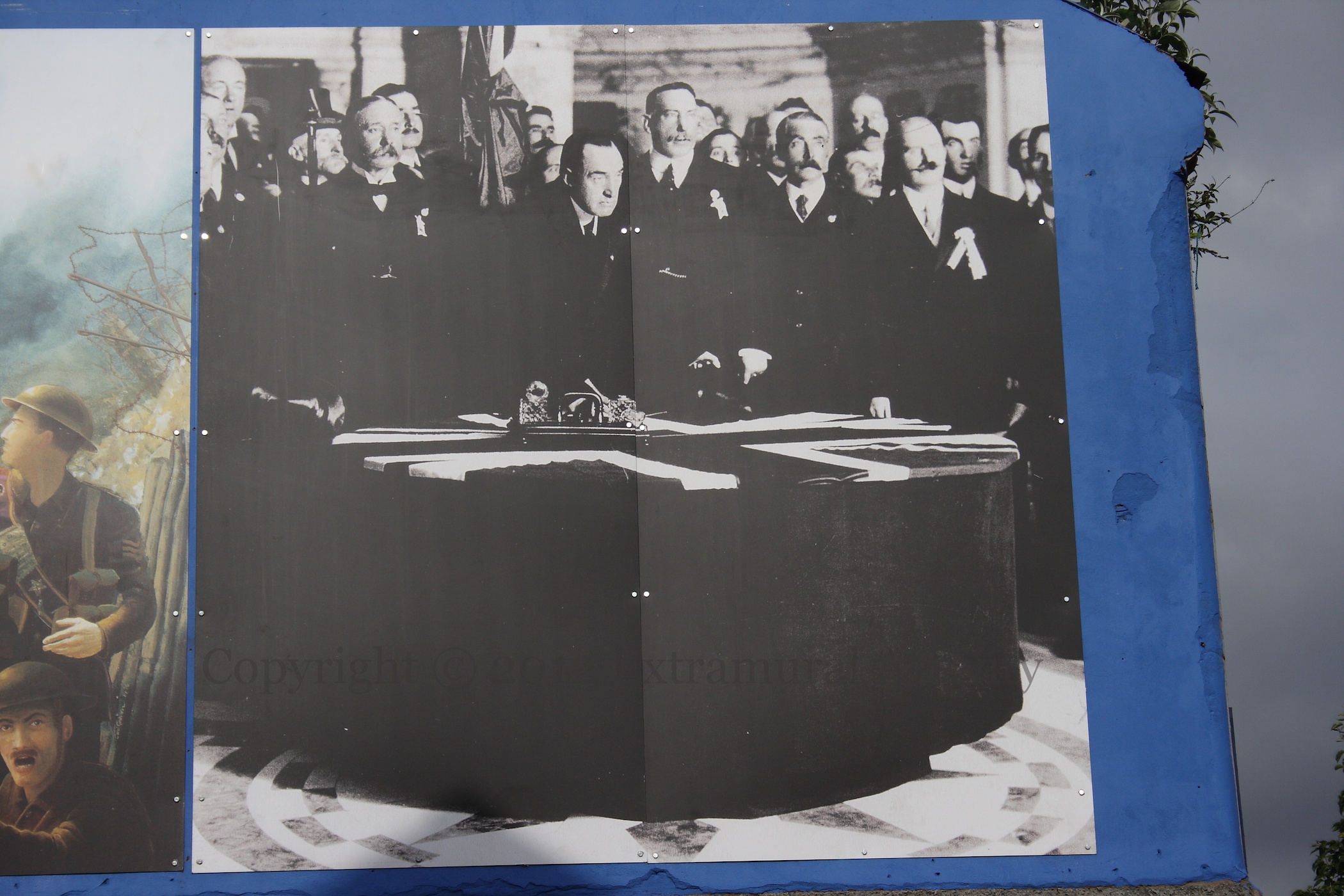
Carson signing the 1912 Covenant is the second of the pair.
“From Sandy Row to the house of Windsor: happy diamond jubilee 1952-2012. God save the Queen.” Although the coronation was held in June 1953, Elizabeth acceded to the throne immediately upon the death of George VI, on February 6th, 1952.
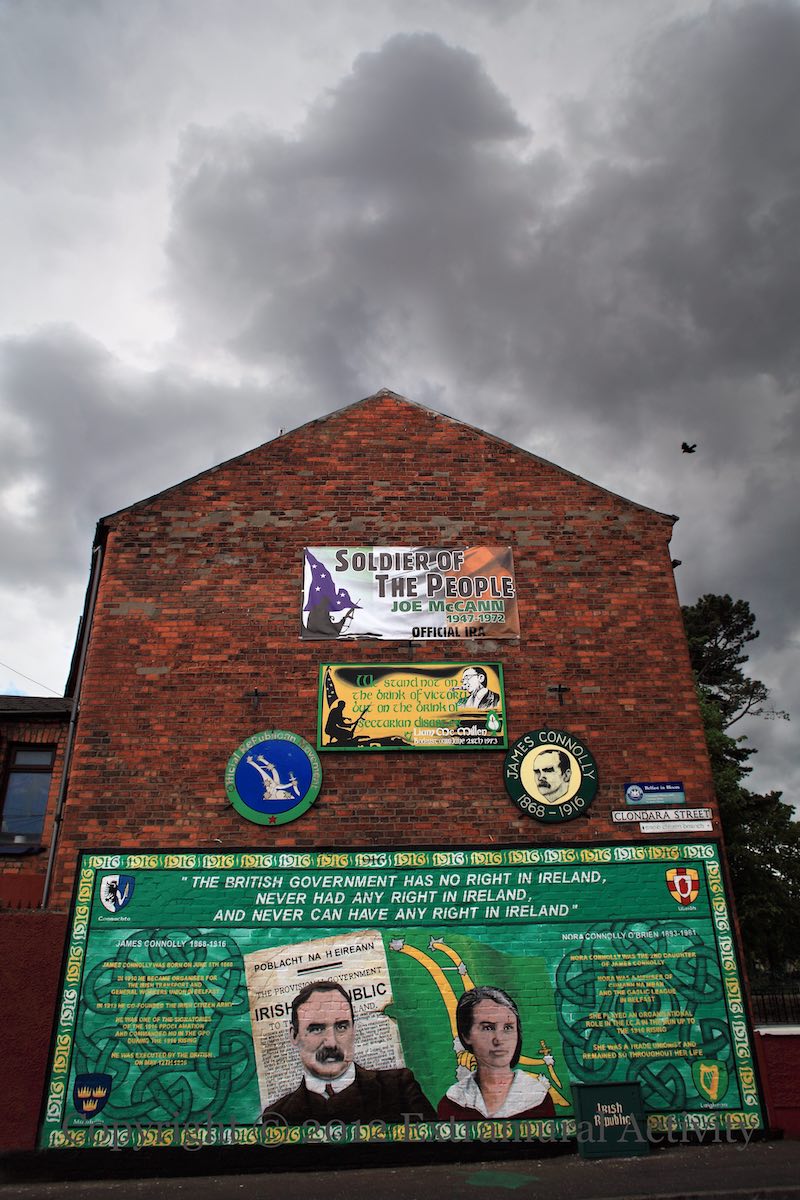
“The British government has no right in Ireland, never had any right in Ireland, and never can have any right in Ireland.” (Last Statement, 1916)
“James Connolly 1868-1916 James Connolly was born in June 5th 1868. In 1810 he became organiser for the Irish Transport And General Workers Union in Belfast. In 1913 he co-founded the Irish Citizen Army. He was one of the signatories of the 1916 Proclamation and commanded HQ in the GPO during the 1916 Rising. He was executed by the British on May 12th 1916.”
“Nora Connolly O’Brien 1893-1981 Nora Connolly was the 2nd daughter of James Connolly. Nora was a member of Cumann Na mBan and the Gaelic League in Belfast. She played an organisational role in the ICA in the run up to the 1916 Rising. She was a trade unionist and remained so throughout her life.”
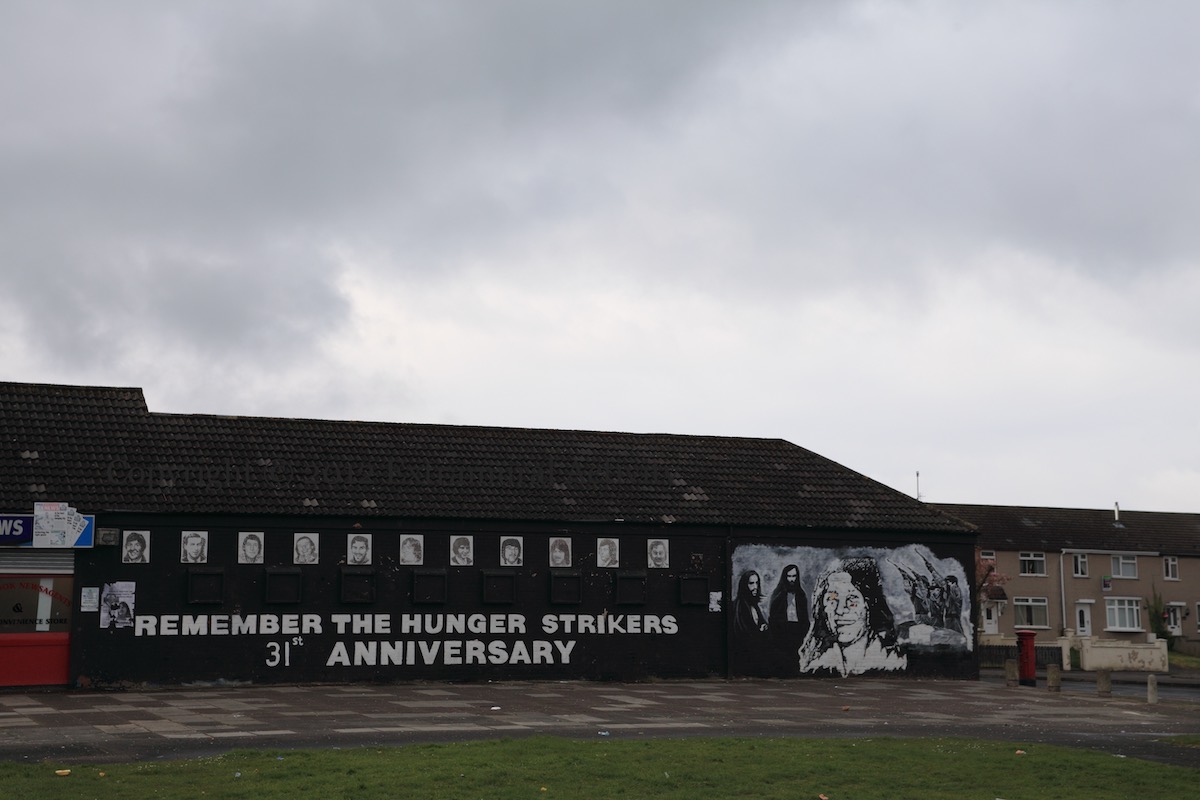
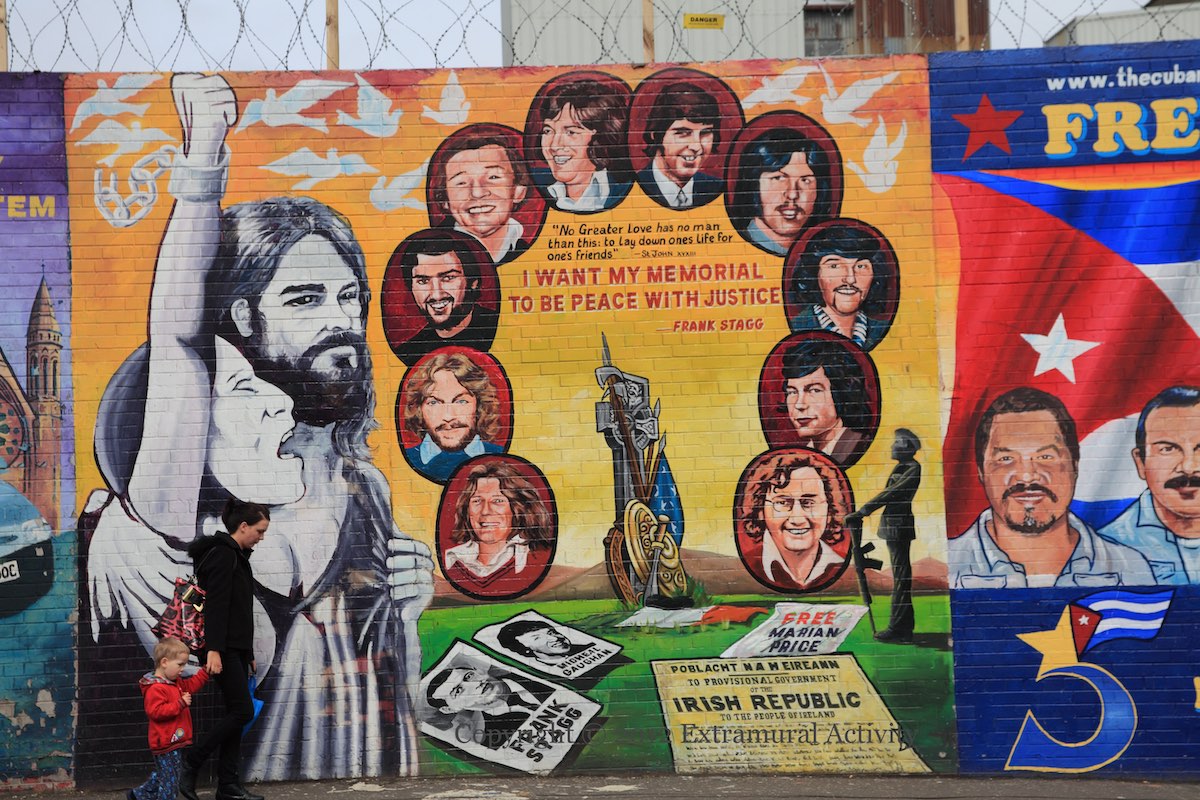
This is the seventh year of the hunger strikers mural in Twinbrook. This is 2012/31st anniversary edition. See previously 2006 and 2008. There is a Marian Price poster on the left, next to Michael Gaughan and Frank Stagg, who died on hunger strikes in 1974 and 1976. Blanket-men Hugh Rooney and Freddie Toal are shown in the large mural on the right hand side, next to Bobby Sands.
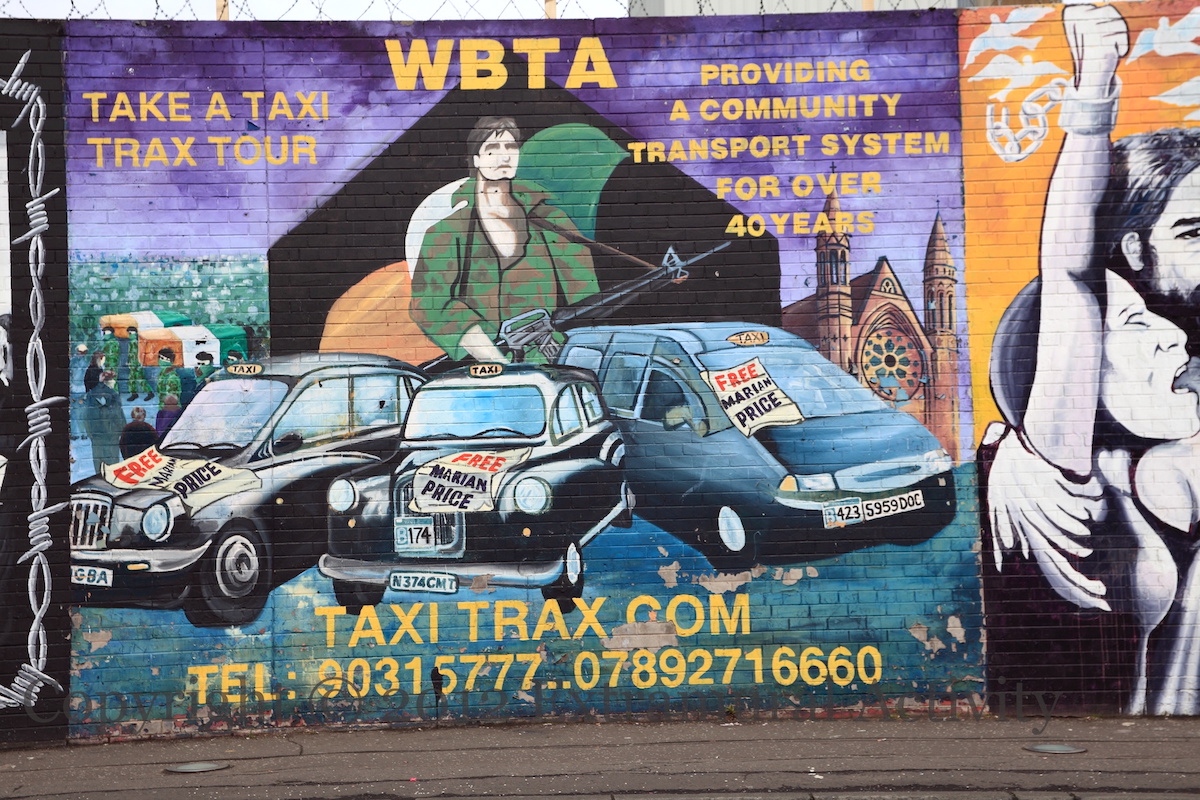
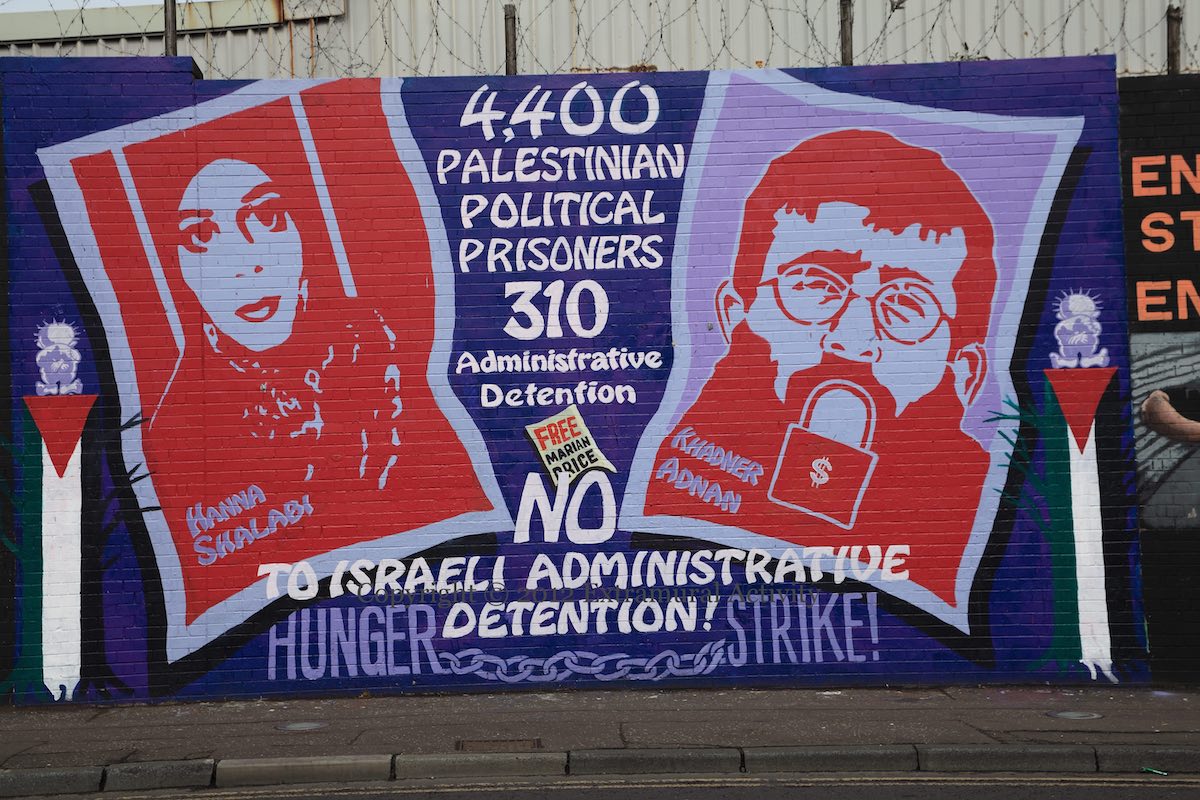
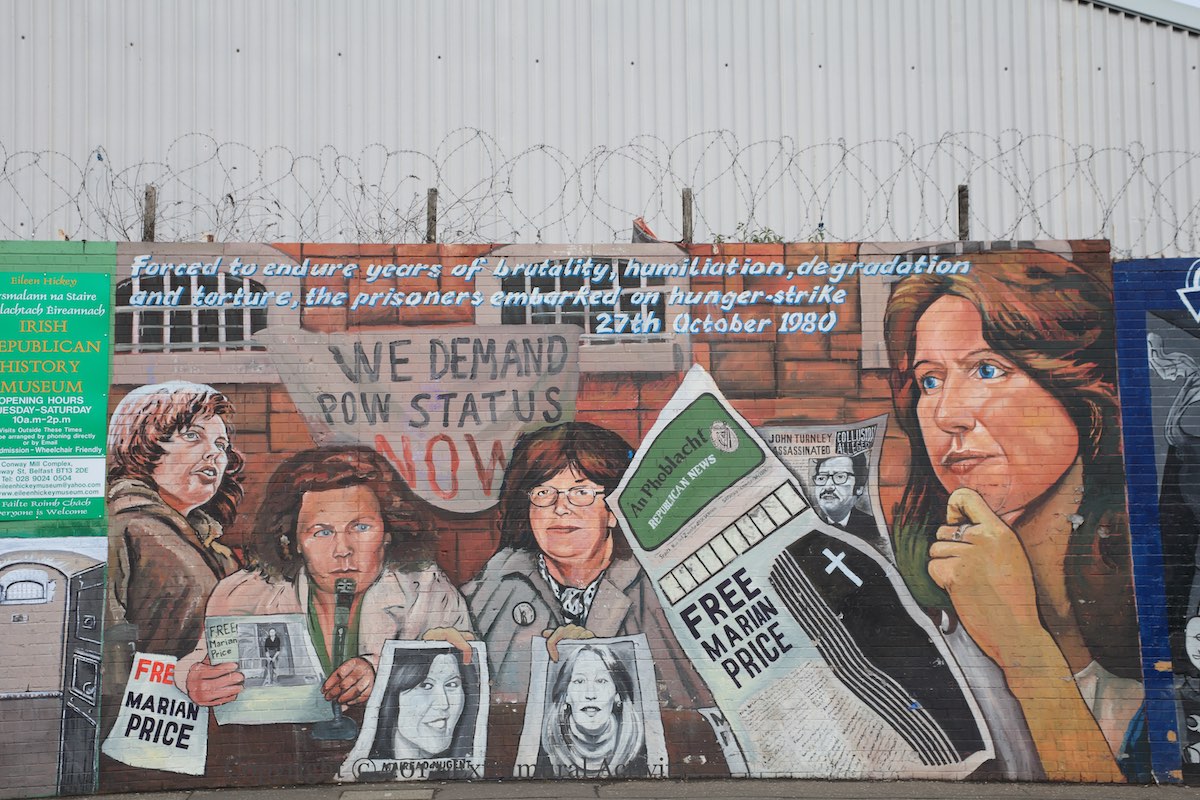
In March or April of 2012, many of the murals on the International Wall were modified to include ‘posters’ for the ‘Free Marian Price’ campaign, including the ’40 year’ black taxi mural shown above. As a member of the IRA, Price was jailed for the Old Bailey bombing in 1973, and her post-Agreement license was revoked in May, 2011, when she was charged, as a member of the Real IRA, in connection with the Massereene Barracks shooting of 2009 – she was sent to Maghaberry. Starting in June, 2011, graffiti and art calling for her release began appearing.
Below are more of the modified murals on the wall. Not included below are the Falls Curfew modification and the Kieran Nugent modification (see M08273).
Two pieces of graffiti art on the Cliftonville “peace” line: “Breakin’ BarrieRs”, as though the “peace” line should come down, but also “Respect R Streets”, if you do break through. With a signature panel on the wall of bubbles (not shown).
“Hang out our banners … The cry is still “They come!”” – Shakespeare, Macbeth Act V, Scene V
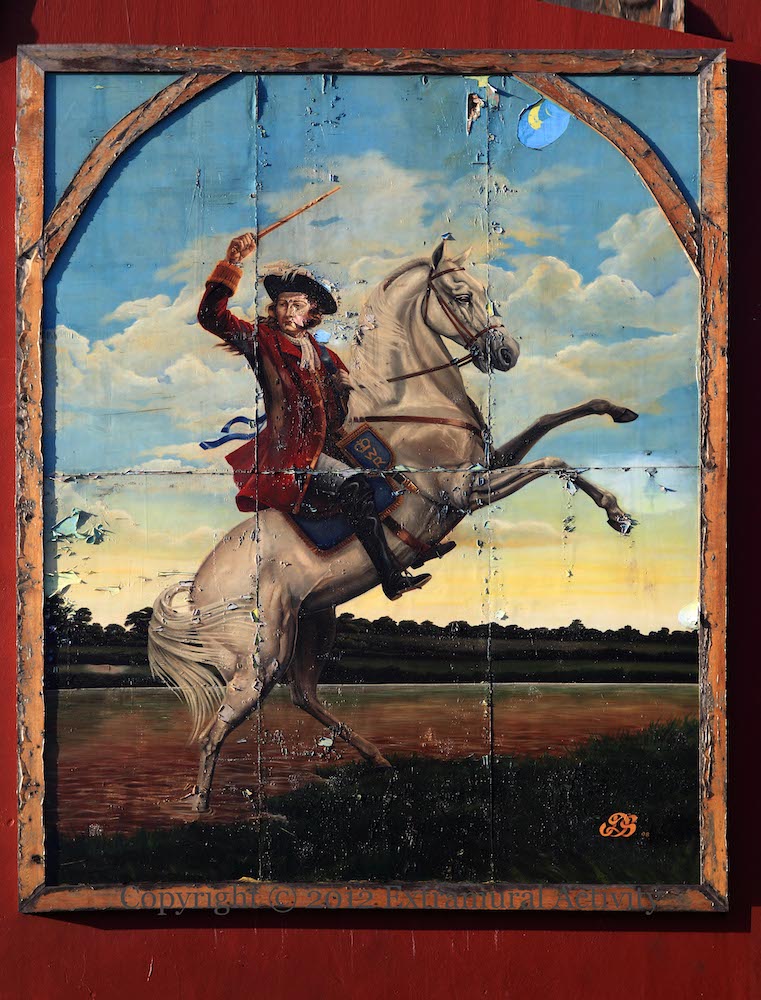
King Billy crossing the Boyne replaces a UFF ‘Eddie’ mural (see M02487) as part of the re-imaging of loyalist murals in 2008. Rolston (2012 p. 455) reports that the Arts Council thought King Billy was too divisive an image to replace the Village Eddie, but lost this particular battle (though Billy does not carry a sword but a stick/crop).
The info board, shown below, places the painting in the history of loyalist muraling as a return to traditional images after a period of paramilitary control.
By John Darren Sutton in Tavanagh Street, Belfast.
“It is our firm conviction that the vast majority of both religious communities long for peace, reconciliation and the chance to create a better future for their children.” UFF volunteers in the previous mural on this wall turn their back on violence and look towards Stormont for a political solution.
Here are two images, from October 2011 and January 2012, of the 1995 “green ribbon” mural by Andrea Redmond in St James’s. It is obscured by fencing and a gate (and a skip) and showing some signs of wear though in quite good shape for its age.











 Extramural Activity