Pro-Palestine mural in Beechmount Avenue/Ascaıll Ard na bhFeá. If there’s a better translation/pronunciation for the Arabic “Tıocfaıdh ár lá”, please let us know.
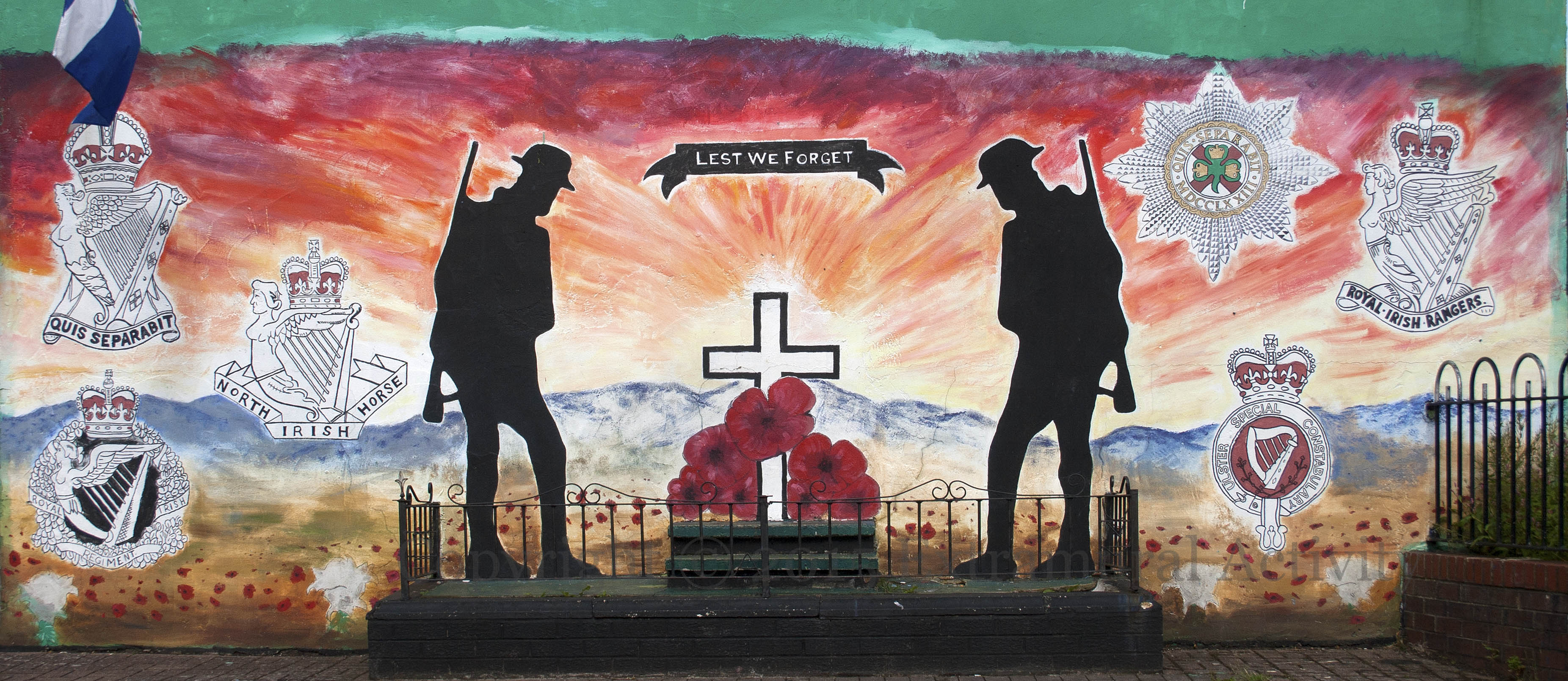
Like yesterday’s array of flags, the adjacent mural of army badges around a burial scene from the first world war features some lesser-seen items. On the left, alongside the Royal Irish Rifles (top left) and the (modern-day) Royal Irish Regiment (at the time of WWI the harp was plain and there was no garland), we see the emblem of the North Irish Horse, a cavalry unit in the Territorial Army. On the right, the emblem of the Royal Irish Rangers (which was folded into the Royal Irish Regiment in 1992) is joined by the star of the Irish Guards (above) and the emblem of the Ulster Special Constabulary or B-Specials (below). Only the Royal Irish Regiment and the Irish Guards remain as regiments of the British Army; “The Horse” now forms squadrons of other units. Of the six, four served in WWI; the B-Specials were formed in 1920 and the Rangers in 1968.
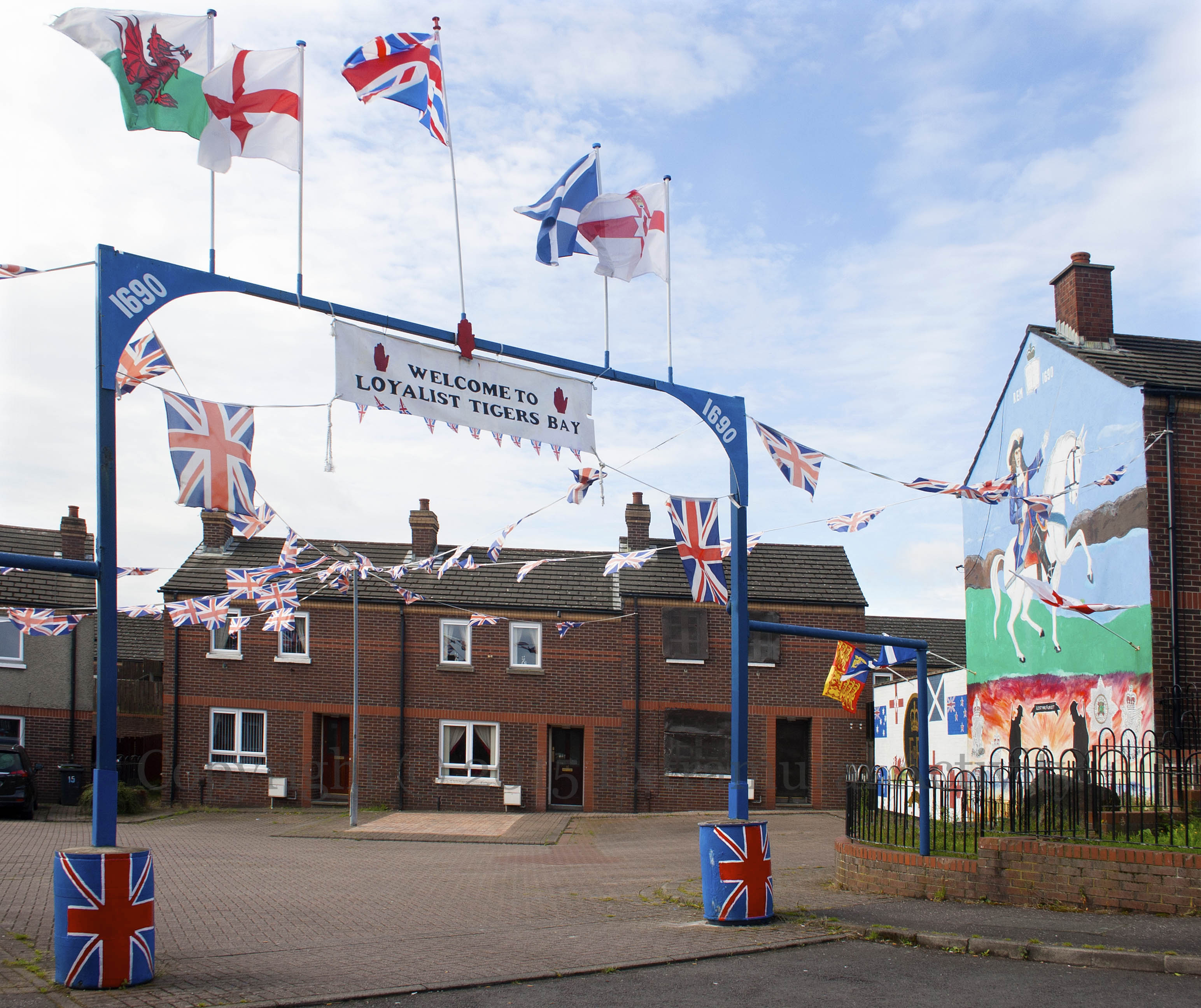
Genesis 35:11 reads (NIV) “And God said to him, “I am God Almighty; be fruitful and increase in number. A nation and a community of nations will come from you, and kings will be among your descendants.” The flags of Northern Ireland, Scotland, Wales, and England are joined in the mural above by those of Australia and (a simplified version of) the Falkland Islands (on the left) and New Zealand and Canada (on the right). The flag flying in the centre is the Royal Standard, flown on the building or vehicle where the monarch – currently EIIR, Elizabeth II Regina, Queen Elizabeth the second – is.
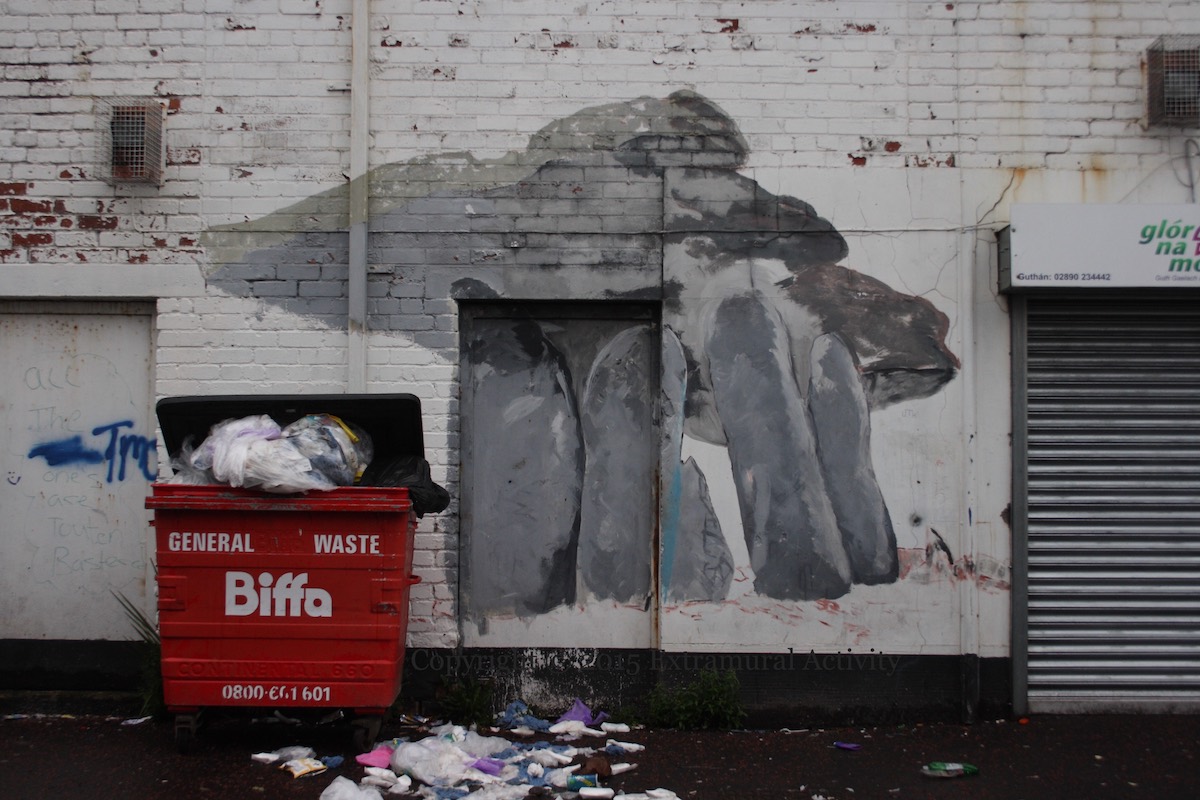
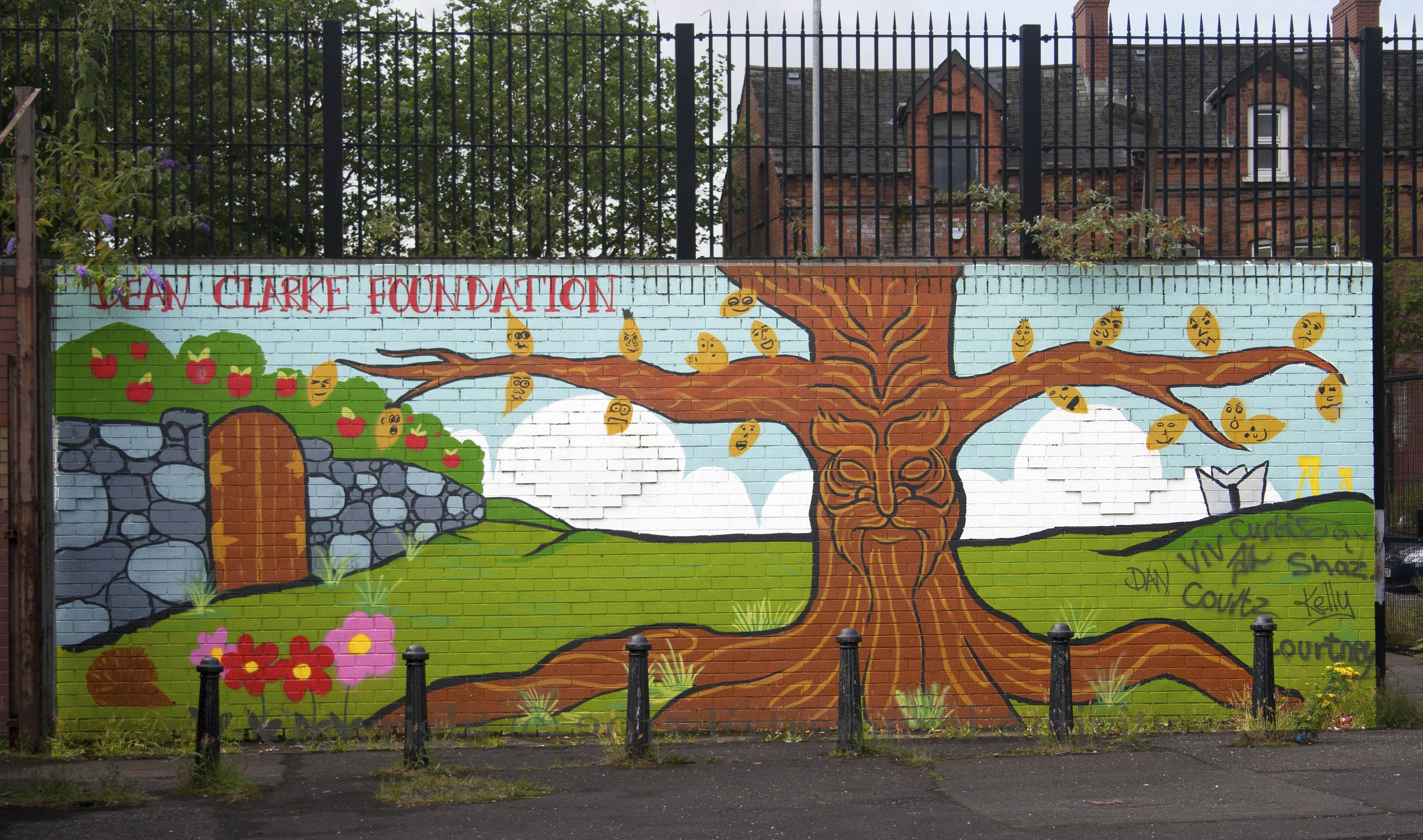
Treebeard the Ent (from Lord Of The Rings) watches over the young people of north Belfast’s Tigers Bay. Dean Clarke, age 16, hanged himself on November 4th, 2007, after a week in hospital recovering from an overdose of ketamine (which he believed to be Valium). The Dean Clarke Foundation (Fb) was founded by his mother Alison in order to provide activities and outings for young people. (BBC-NI | Tele) The foundation is also involved in the Tigers Bay community garden (see Work Ethic).
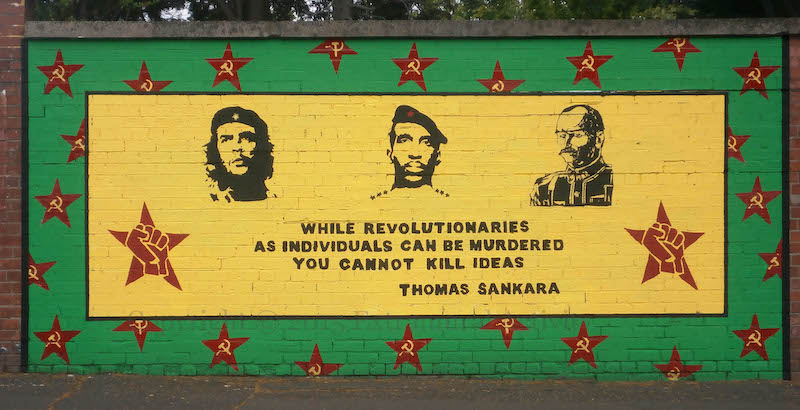
A week before he was assassinated and his government overthrown, Burkina Faso president Thomas Sankara asserted: “While revolutionaries as individuals can be murdered, you cannot kill ideas.” Sankara gained power of Burkina Faso (then Upper Volta) in a 1983 coup and launched an ambitious programme of literacy, feminism, public health, and agricultural self-sufficiency, in addition to launching a drive against corruption and of nationalizing natural resources. He attempted this all without the assistance of foreign aid or the IMF or World Bank. However, he wielded power outside the jurisdiction of the courts and controlled the press. He and twelve colleagues were killed in October 1987.
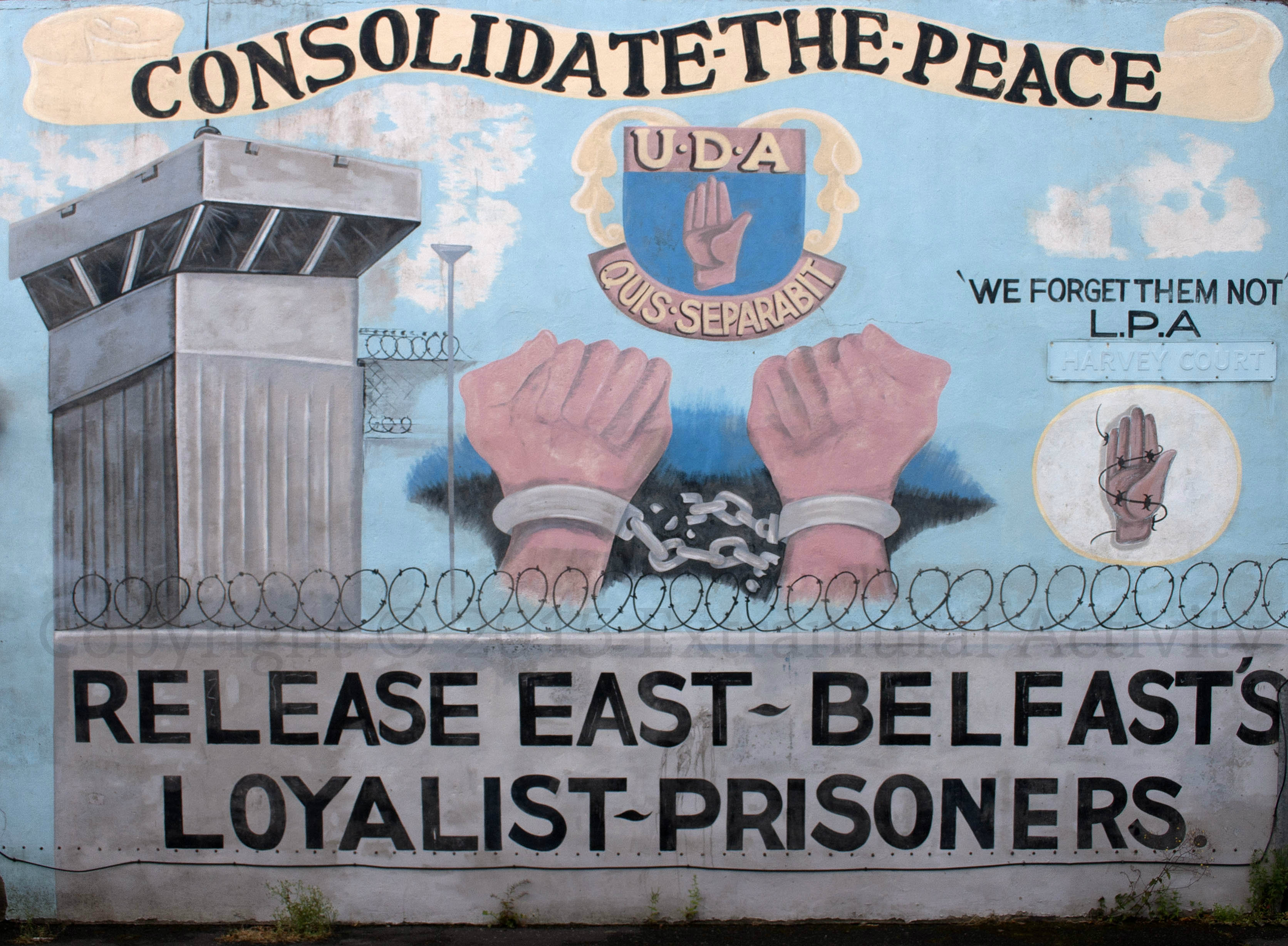
As talks were held at Stormont throughout 1997, (leading to the Good Friday (or: Belfast) Agreement in April 1998) paramilitaries on both sides in the conflict began pressing their case for concessions, including the release of political prisoners. The image above is of a 1997 UDA mural that is still in decent condition in loyalist east Belfast: Consolidate The Peace – Release East Belfast’s Loyalist Prisoners. It shows a Long Kesh tower and barbed wire with red hands breaking the chains between handcuffs. For a similar image (which was painted out this week) in nearby Lord St, see All Gave Some.
The Wolfe Tones will headline the 2015 Ardoyne Fleadh Cheoıl (Fb) on August 15th. Last year, The Druids caused controversy by advising British Army forces and loyalists to go “back to England” (BelTel).
Along the bottom are various of the posters/programme covers from years past: (left to right) the 1998 cover, by Sean Doran, was also painted in Ardoyne Avenue; Cú Chulaınn on the 1999 poster was painted in Ardoyne Avenue (S00089); the fiddler and bodhrán player appeared on a t-shirt; a classic Wolfe Tones poster shows the four faces in profile; Fleadh Érıu on the 1995 poster (under the go-kart’s left wheel) was painted on this wall in 1994; the 1996 Fleadh poster, also by Sean Doran; disappearing on the right is Doran’s 1997 cover.
The Ardoyne Fleadh Cheoıl emblem (on the go-karter’s t-shirt and under the text on the left) was used in Maıreann An Spıorad. The festival began in 1970.
A new mural will be launched as part of this year’s festival: Boxing Champions.
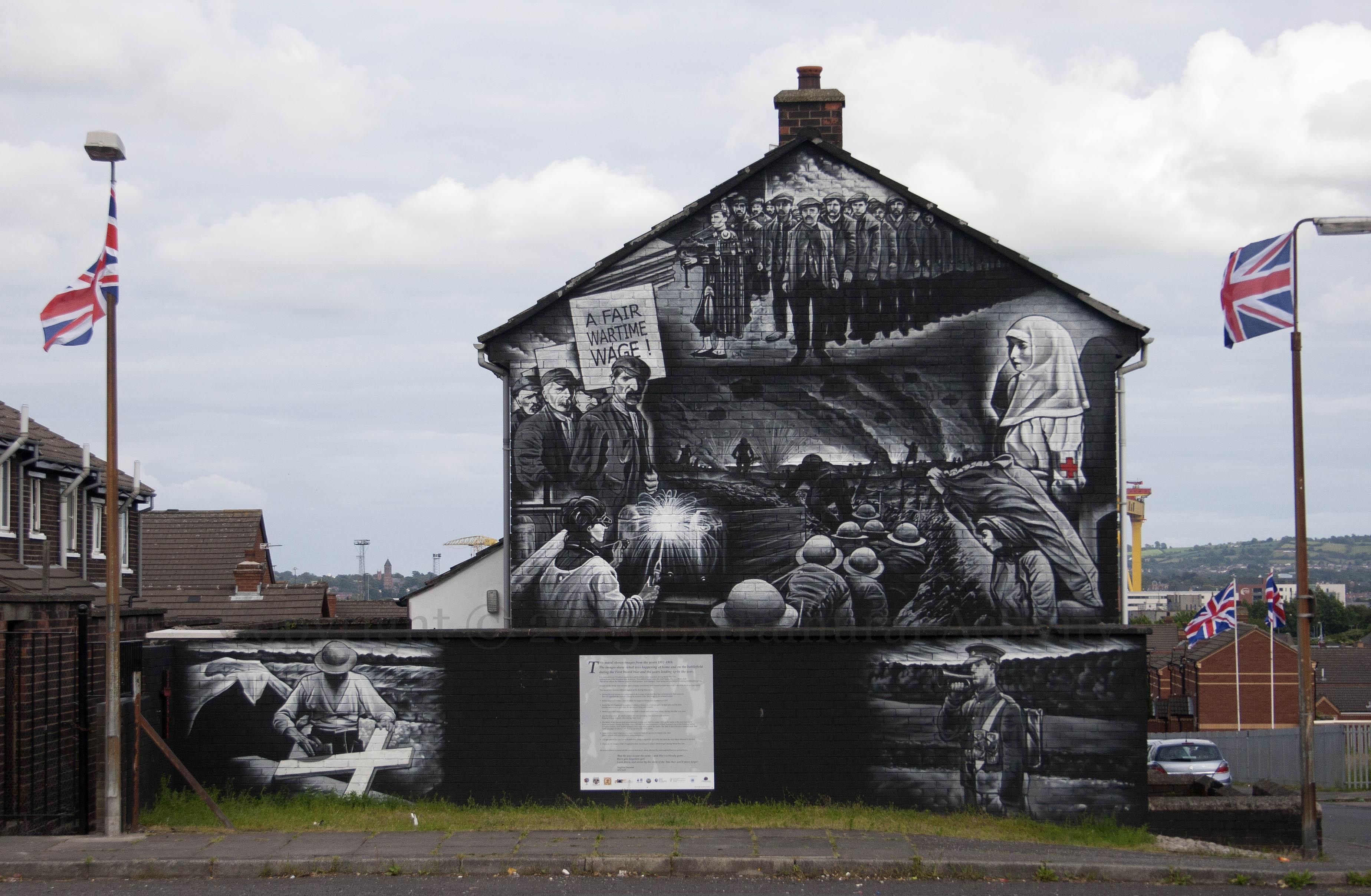
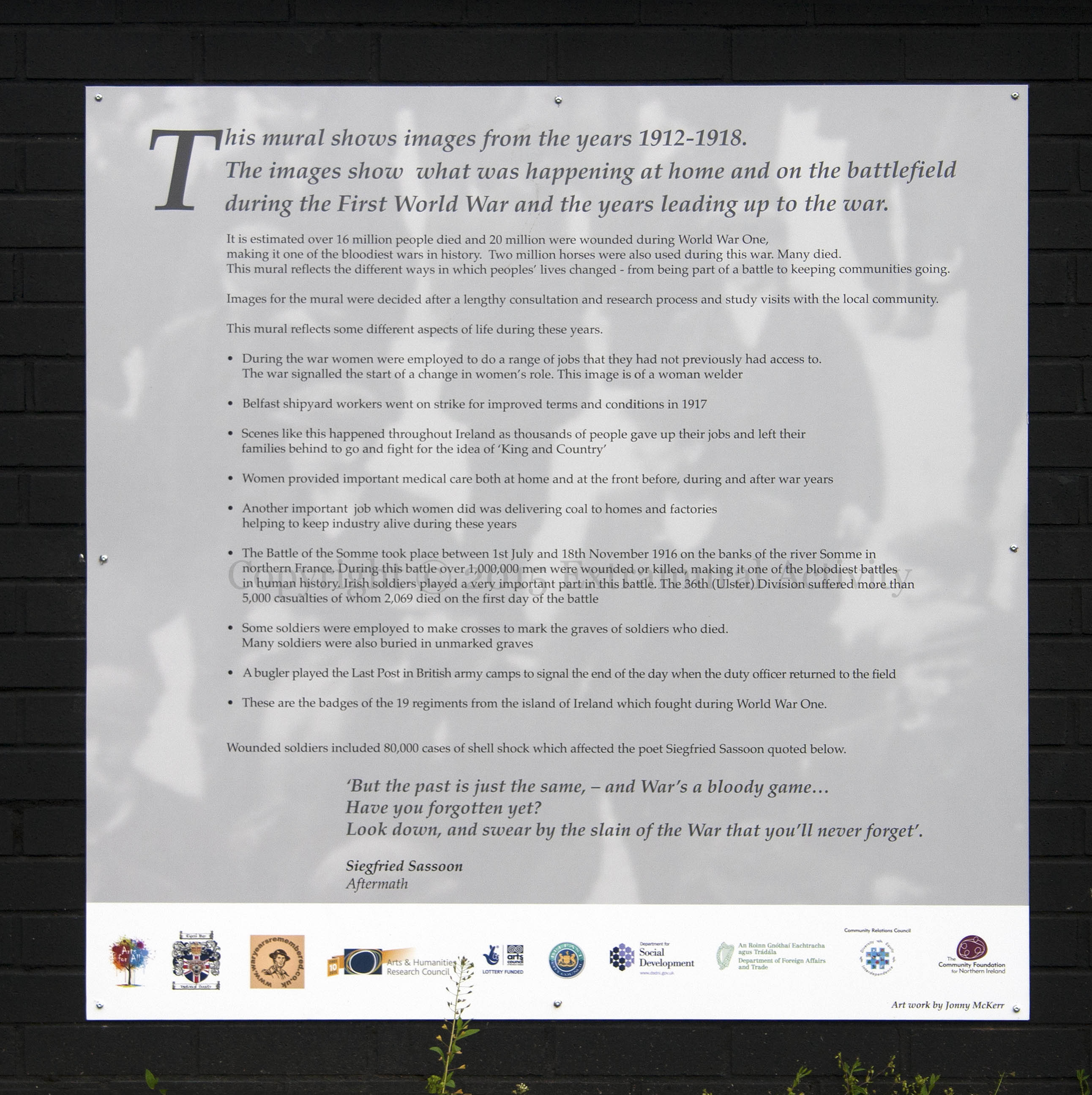
June 15th saw the official ‘Arts For All’ launch of a mural shown all the way back in January. For the launch, artist Jonny McKerr added backgrounds to the cross-maker and bugler on the low wall in front, and the information-board in the centre was added. For background and the images on which the mural is based, see The Home Front (and also The Undertaker).






 Extramural Activity