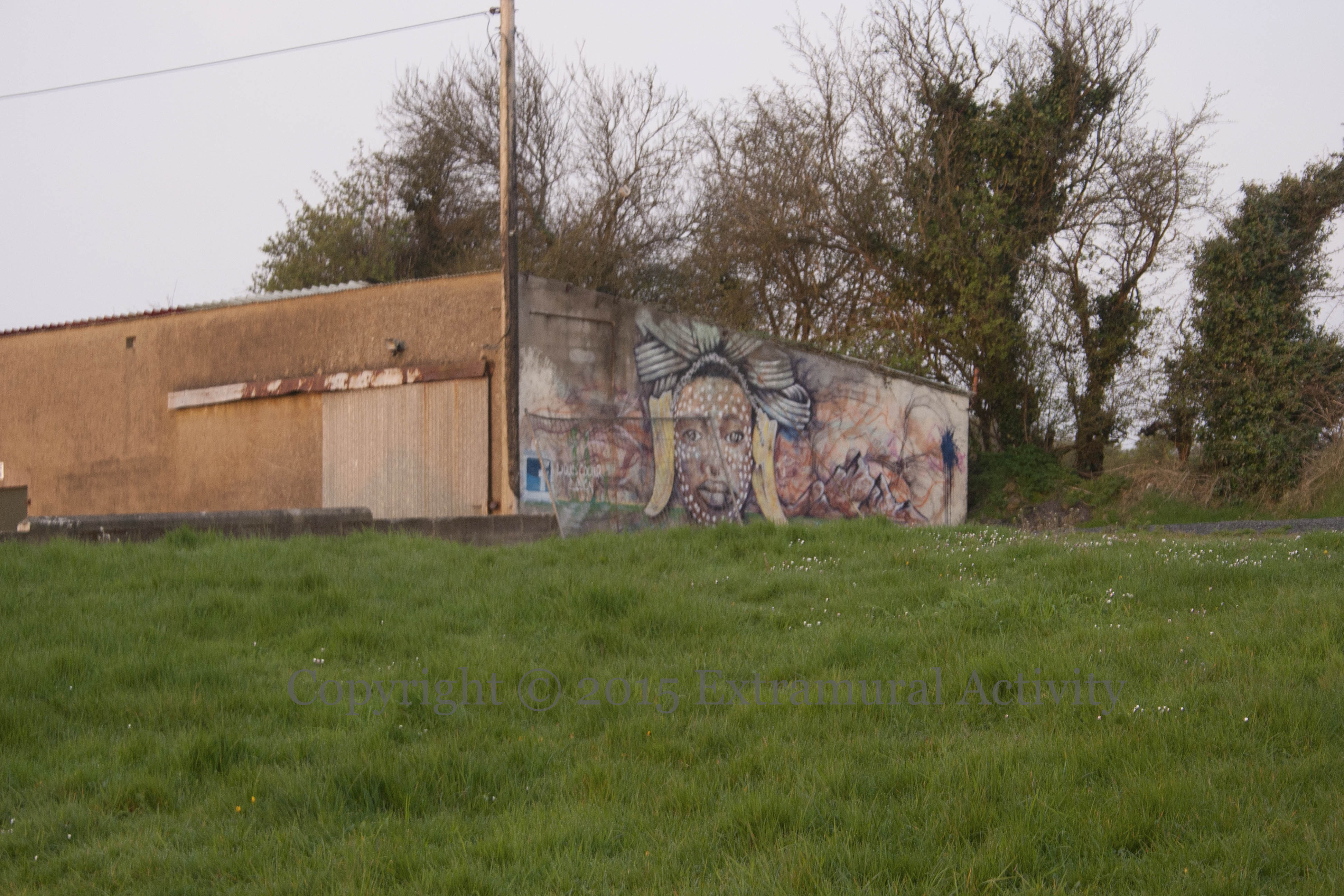
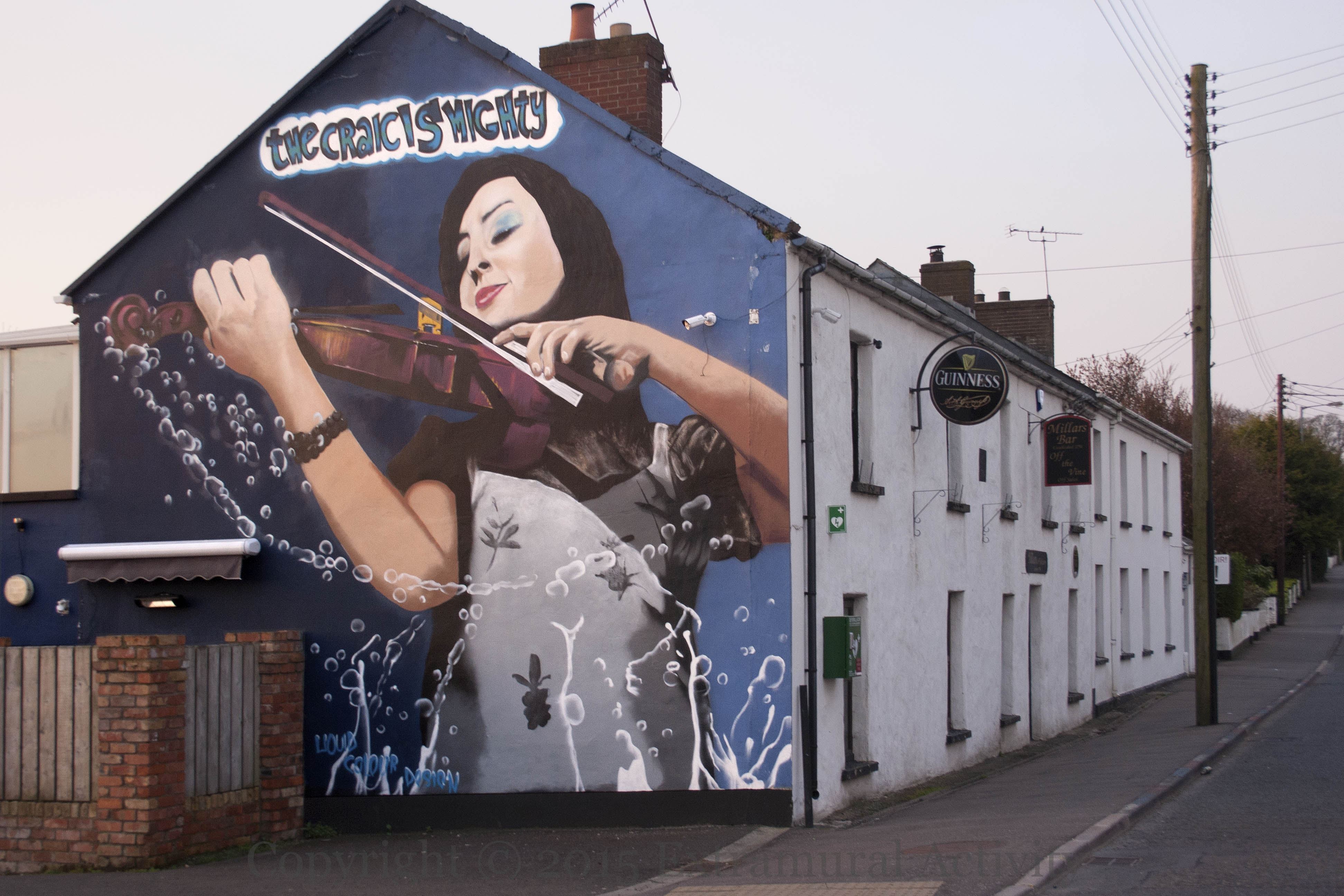
On a barn wall in Ballycarry, County Antrim: a African youth (perhaps Ethiopian Mursi tribe) with painted face and a headdress of warthog tusk and aluminium coils. (By Liquid Colour Design – see also The Craic Is Mighty)
Fiddling in the north of Ireland is common to both Nationalist and Unionist communities and the “old Antrim” style is influenced by Scottish playing (USFO).
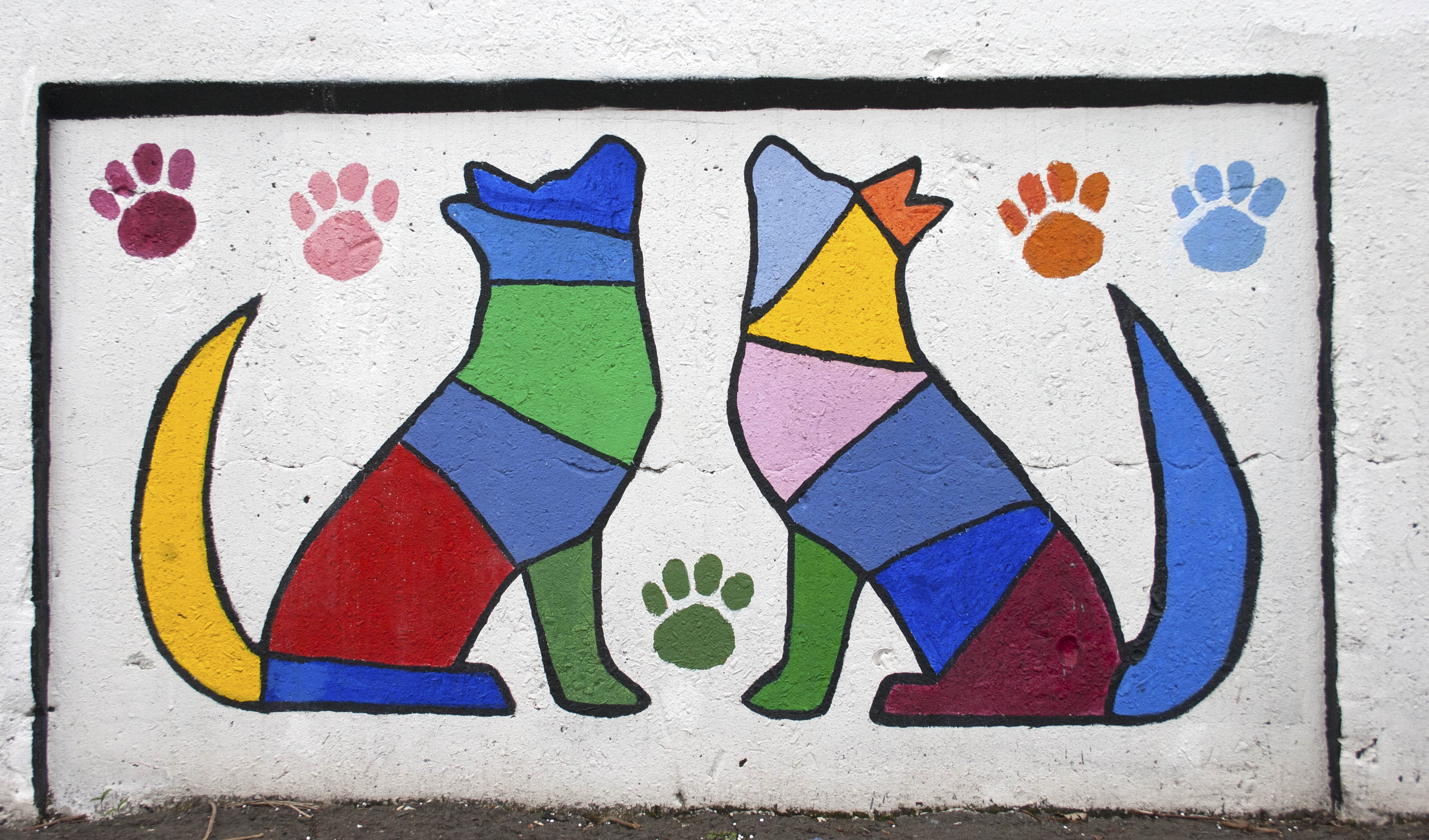
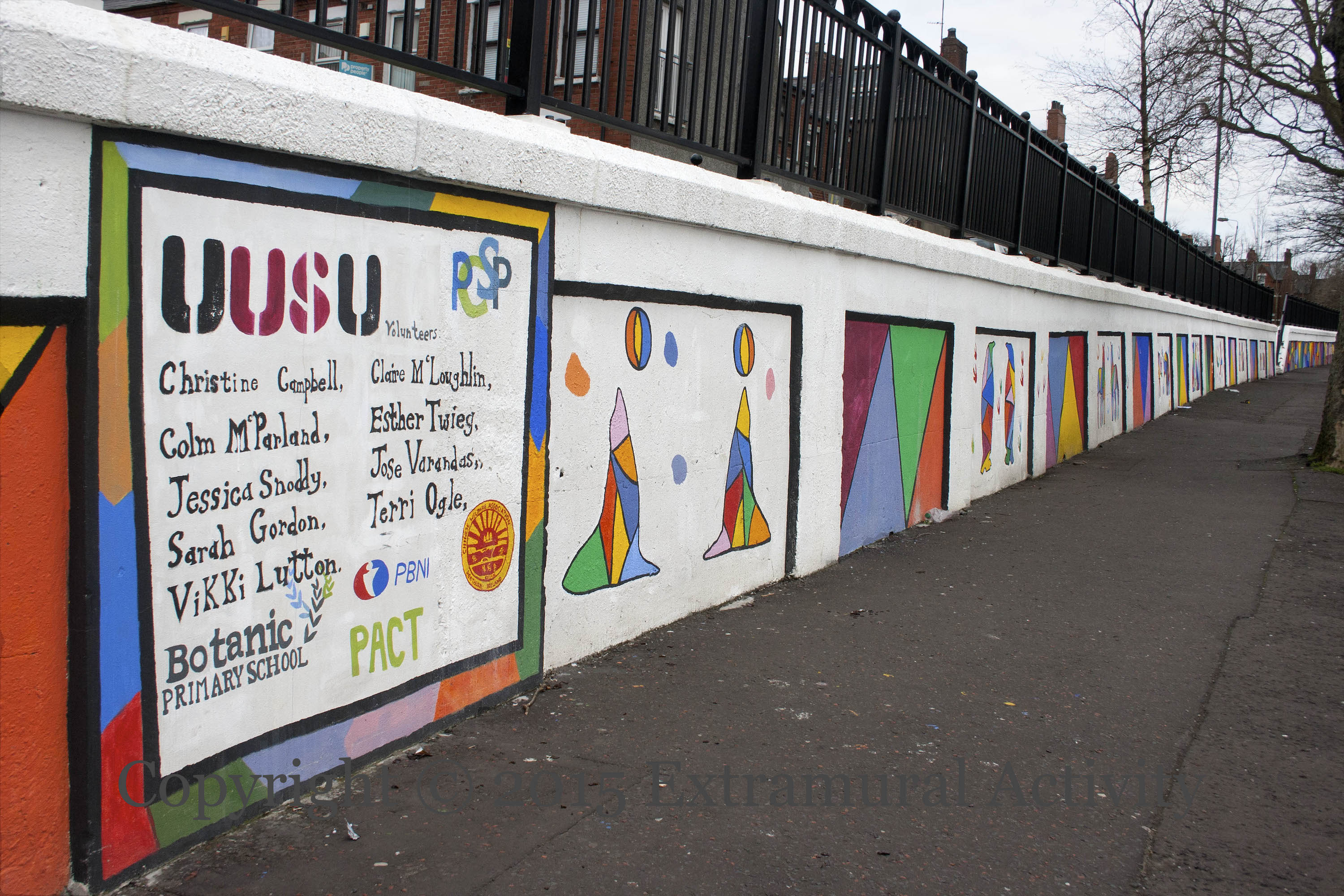
Children from Botanic Primary school and art students from University of Ulster Student Union painted a series of animal pairs (created by Vikki Lutton) and geometric panels on the wall of the Stranmillis embankment. Above we have wolves, below there are elephants, and in the wide shot, sea lions. ‘In progress’ images from UUSU | P4 schoolchildren.
UUSU was also responsible for the Seamus Heaney mural (The Hunting Heart).
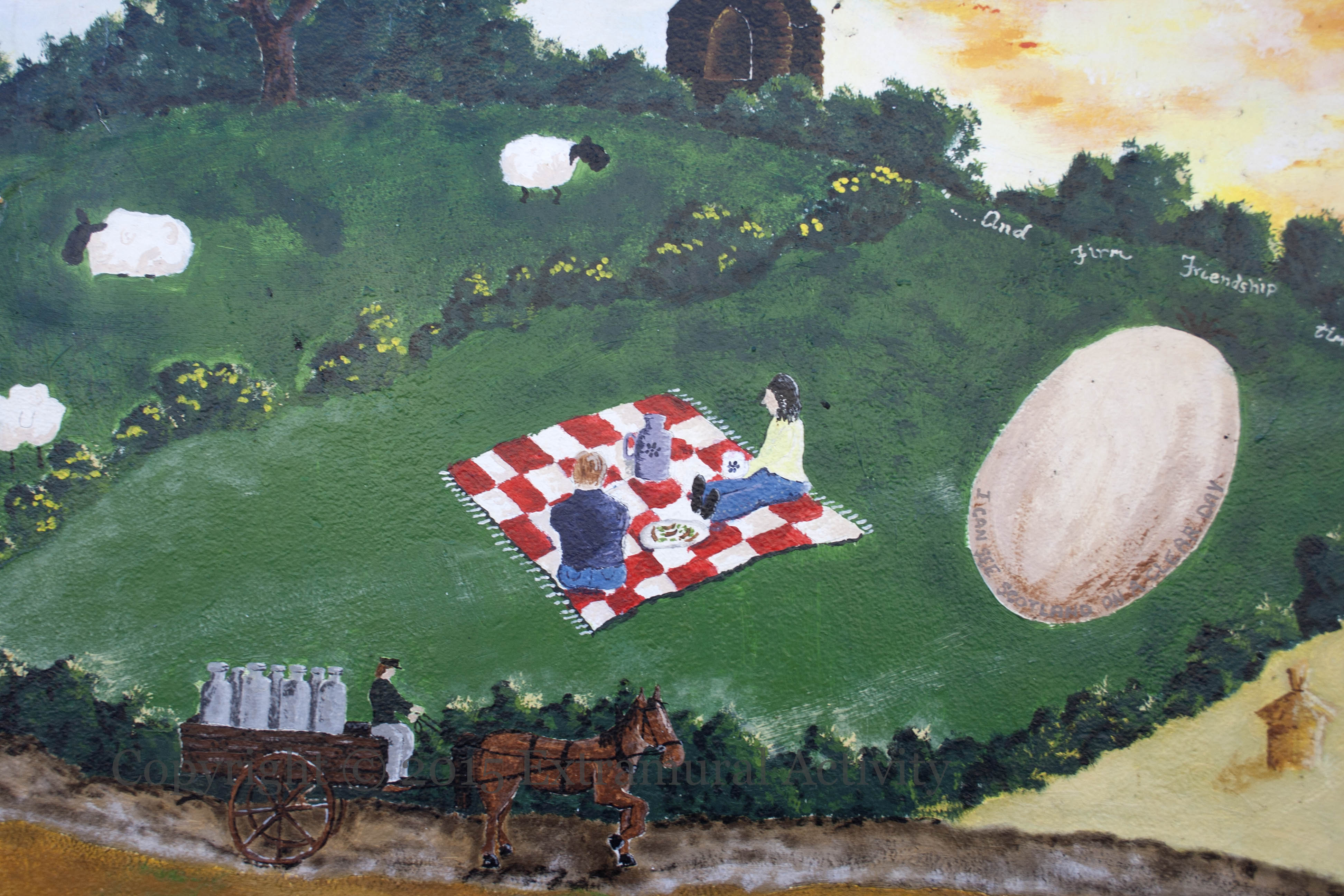
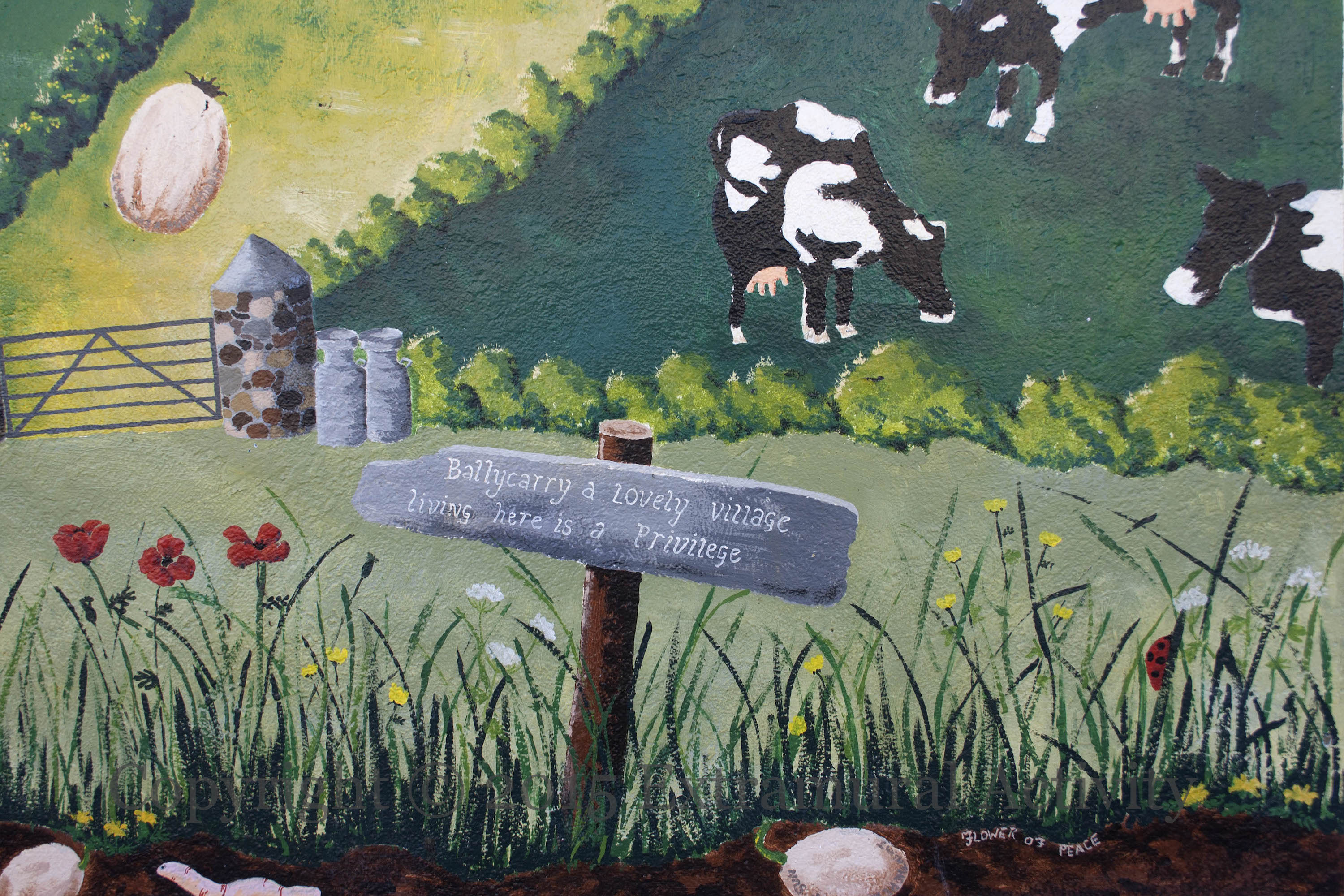
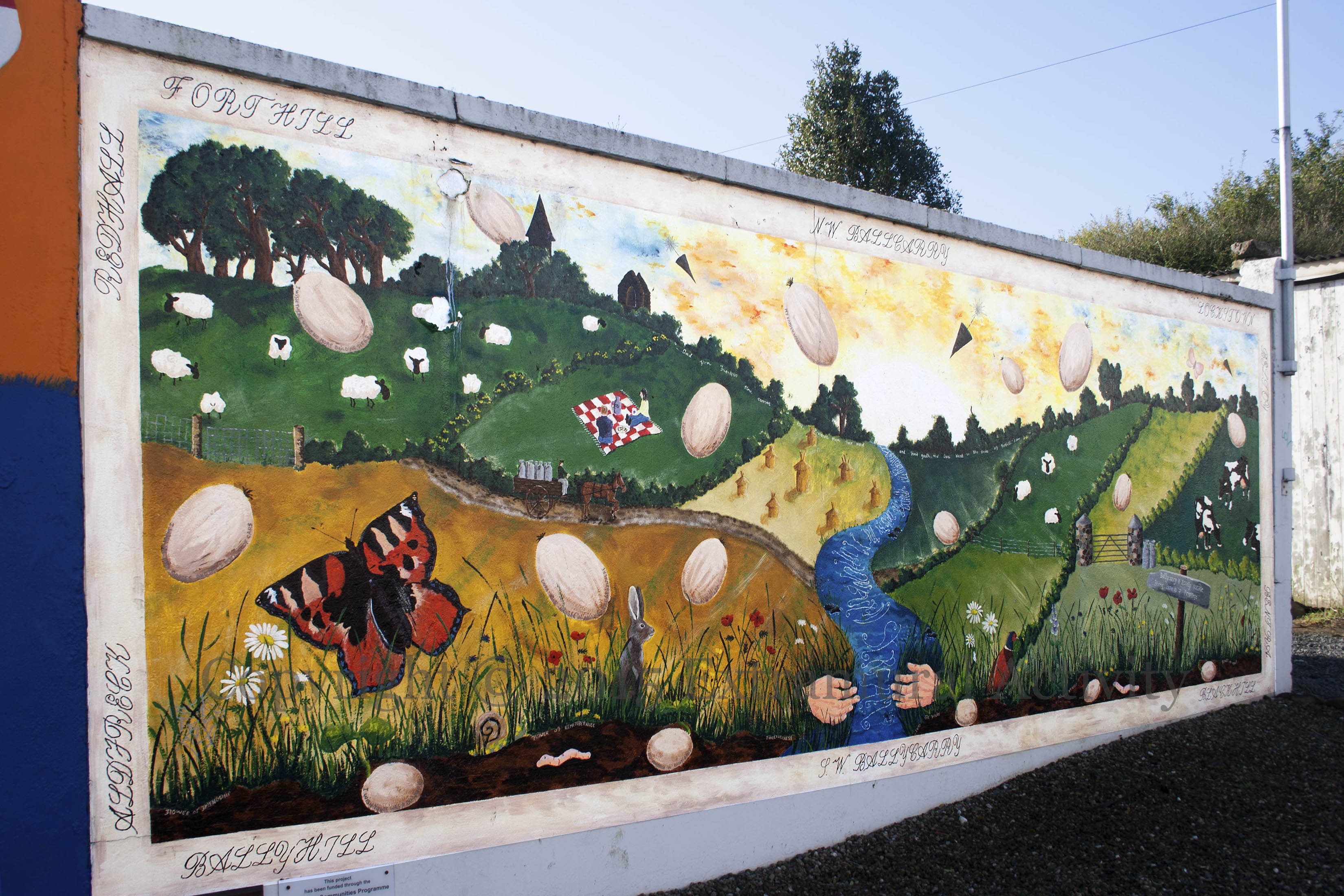
Ballycarry village sits in County Antrim countryside surrounded by the townlands of Ballyhill, Redhall, Forthill, Blackhill, Aldfreck, Lochstown, Beltoy, Bentra. The large pale oval to the right of the picnickers is one of many “seeds” falling from the sky and settling into the earth, which by growing make Ballycarry a pleasant place: “I can see Scotland on a clear day”. The Mutton Burn Stream (lyrics | music from the Ulster-Scots agency) is a song written by Ballycarry resident William Hume (QUB) about the river to the north-west of the village (WP). More about Ballycarry from the BBC’s Ulster-Scots page.
James Connolly was concerned not just with the political independence of Ireland but its economic independence: both political and economic liberty were required in order for the human being to live freely. The quote in the image above comes from Connolly’s 1897 essay “Socialism & Nationalism”. The economic context is clear when we read a little more broadly:
“To the tenant farmer, ground between landlordism on the one hand and American competition on the other, as between the upper and the nether millstone; to the wage-workers in the towns, suffering from the exactions of the slave-driving capitalist to the agricultural labourer, toiling away his life for a wage barely sufficient to keep body and soul together; in fact to every one of the toiling millions upon whose misery the outwardly-splendid fabric of our modern civilisation is reared, the Irish Republic might be made a word to conjure with – a rallying point for the disaffected, a haven for the oppressed, a point of departure for the Socialist, enthusiastic in the cause of human freedom.” (marxists.org)
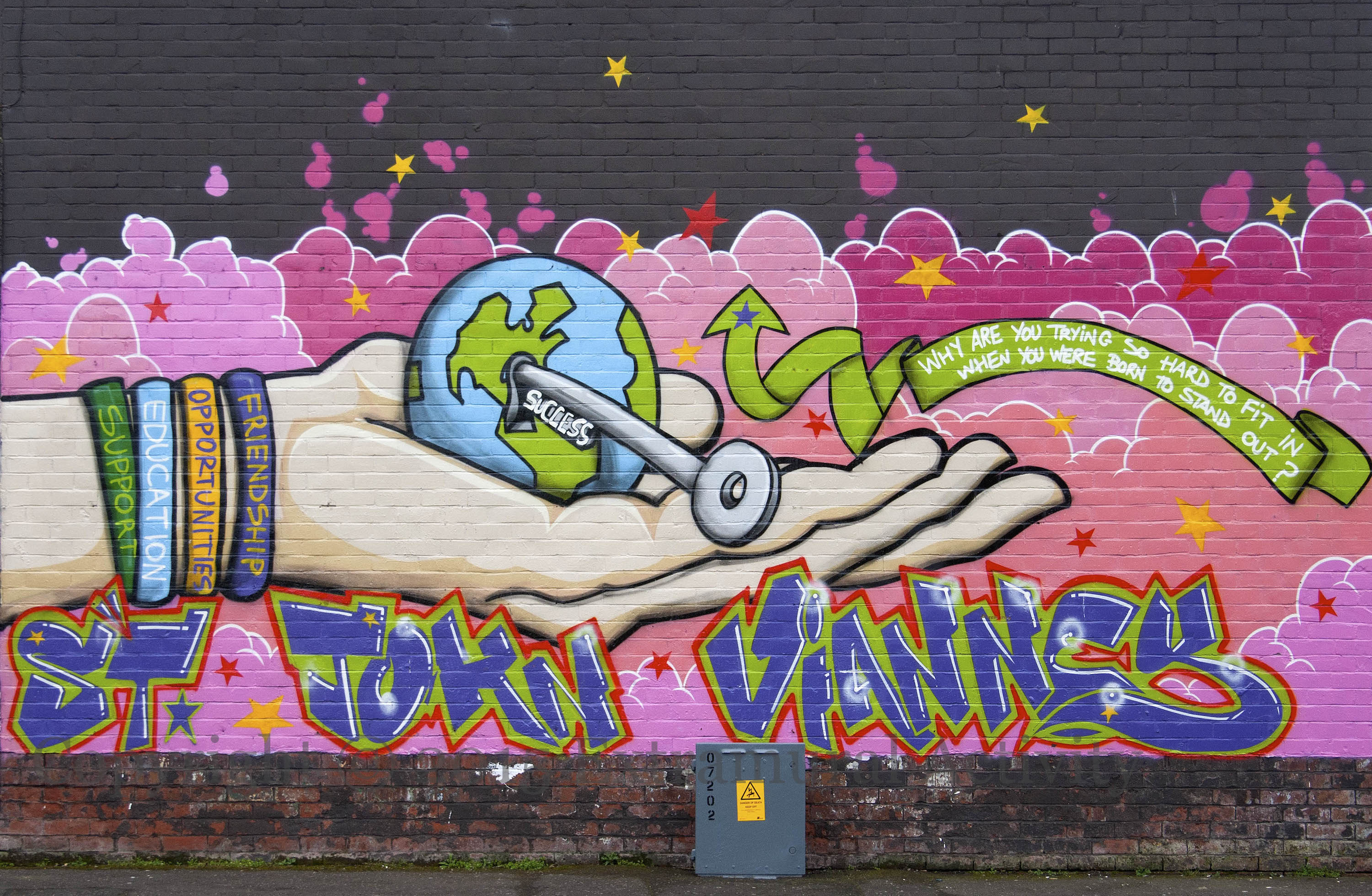
The St. John Vianney youth club board in Cooke Street has been replaced with a mural. The elements are the same – the ‘success’ key still unlocks the world in the palm of a hand and the message is “Why are you trying so hard to fit in when you were born to stand out?” – but the colour-scheme is now various pinks.
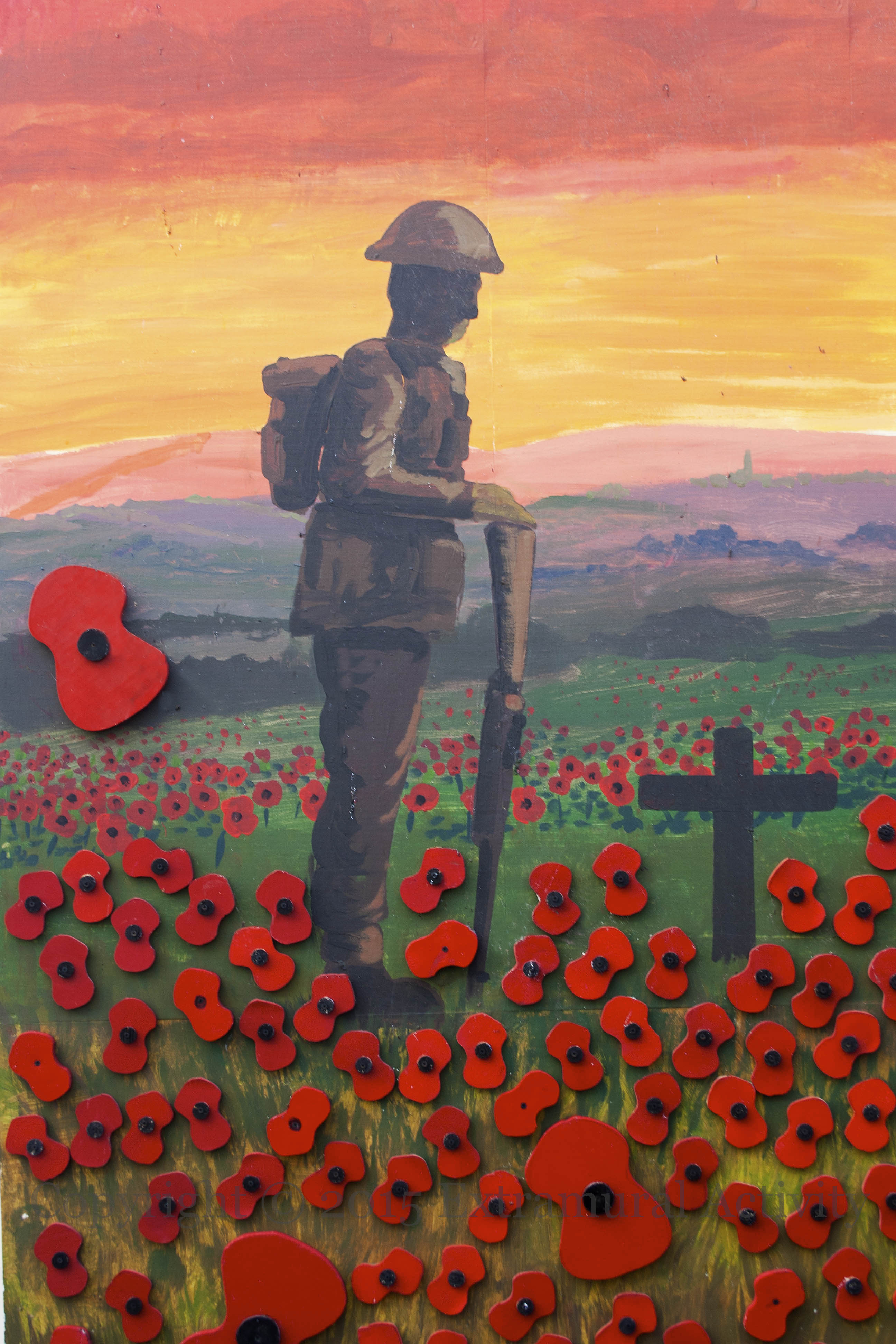
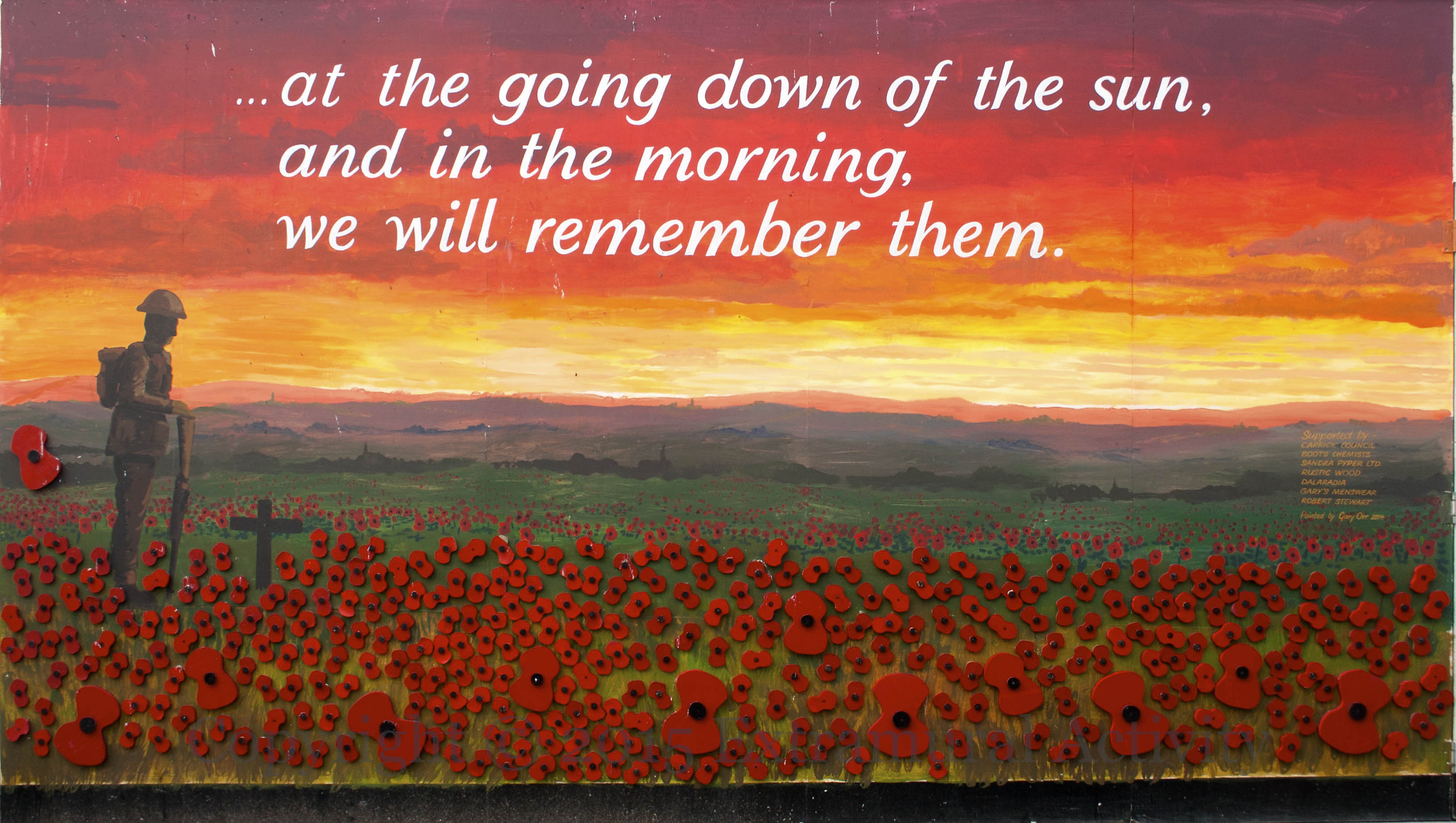
This mural in Carrick has a 3D element: 312 wood poppies were hand-painted and attached to the wall, one for each local man who did not return. By artist Gary Orr. Full shot below.
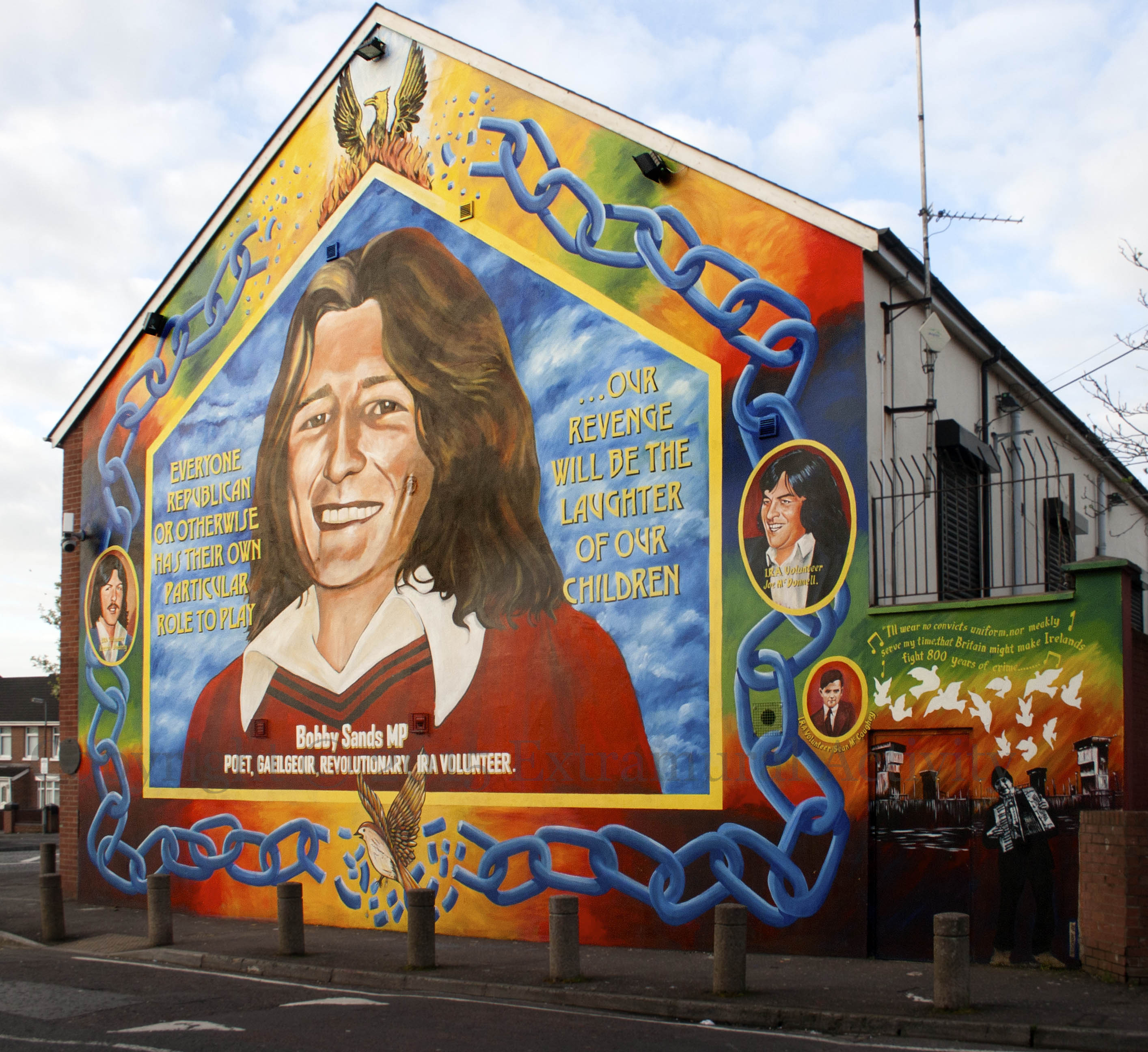
The Bobby Sands mural in Sevastopol Street has been given a facelift, including the blocking-up of a vent on Sands’s left cheek. Kieran Doherty and Joe McDonnell have been added in place of the 1798 medallions on each side. On the side-wall are Sean McCaughey, ten doves representing the 1981 hunger-strikers, and Long Kesh. Aerosol‘s accordion-player stencil has been also been retained.
Ag sráıd Sevastopol cuımhnıtear ar Bobby Sands ı múrmhaısıú a aithnıtear ar fud an domhaın. Ba scrıbhneoır, file, réabhlóıdí agus díograıseoır Gaeılge é Sands. Fuaır sé bas 5 Bealtaıne 1981 tar éıs 66 lá ar stailc ocraıs. As ucht na dıograıse a thaıspeáın Sands agus a chomhchımí ı leıth fhoglaım na teanga faoı choınníollacha uafásacha Bhlocanna H na Ceıse Fada, spreagadh glúın úr chun dul ı mbun athghabháıl na Gaeılge.
Here at Sevastopol Street Bobby Sands is remembered in a mural which has become world-renowned. Sands, a writer, poet, revolutionary and Gaelic enthusiast, died on May 5th 1981 after 66 days on hunger strike. Sands and his fellow prisoners inspired a new generation to reclaim the Irish language enthusing them by the huge efforts they put into learning Irish in the horrendous conditions on the H Blocks of Long Kesh.
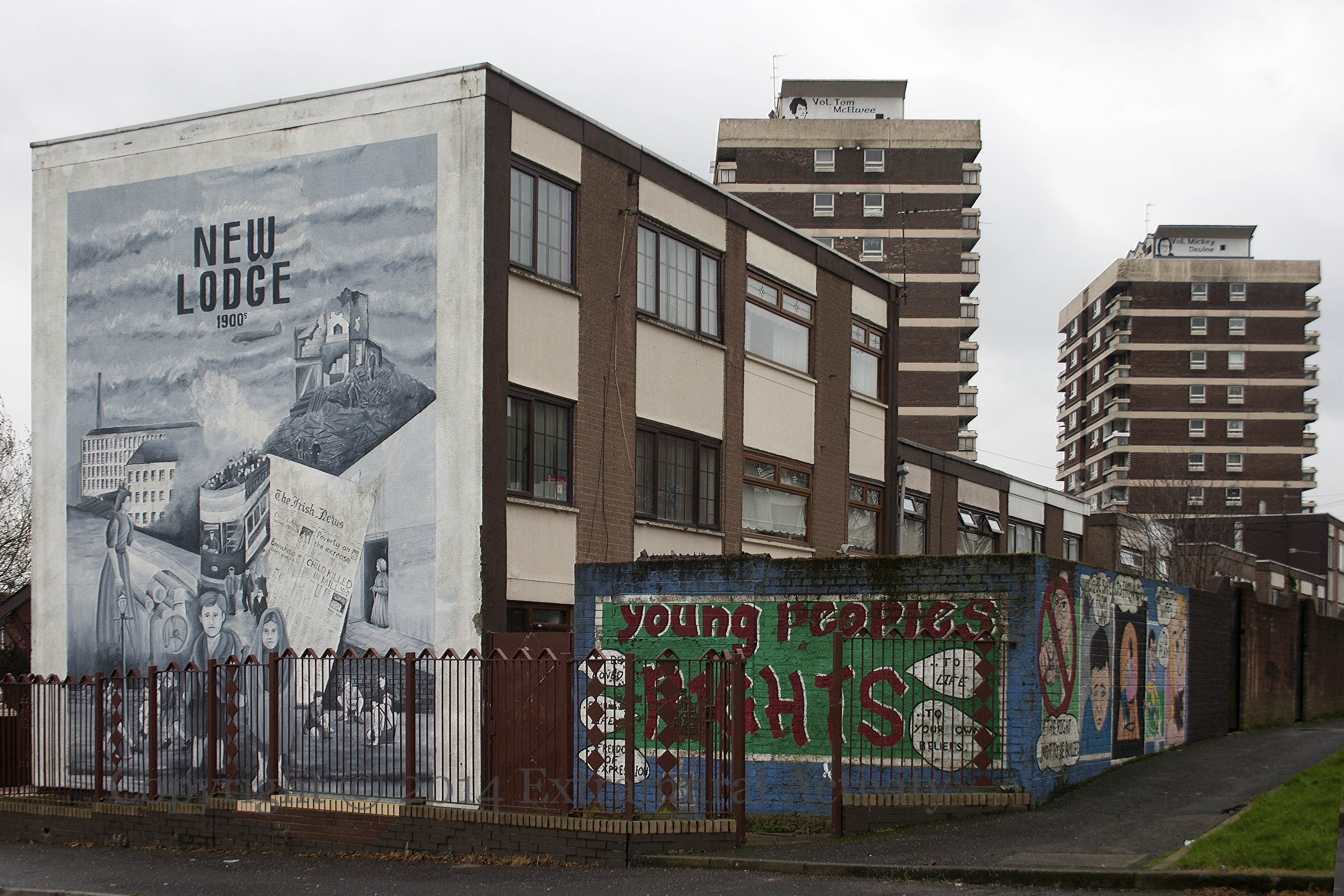
The life of a child in the New Lodge of the 1900s was one of poverty, disease, mill work, and being displaced by German bombers in 1941, with only a lamppost swing and marbles for relief. (It was also in black-and-white.) The struggle for young people’s rights “to be loved, to family life, to freedom of expression, to life, to your own beliefs, not to be bullied, to be safe from war, to privacy, to play, to be happy” continues in the panels on the right-hand side (for a close-up, see Young People’s Rights).
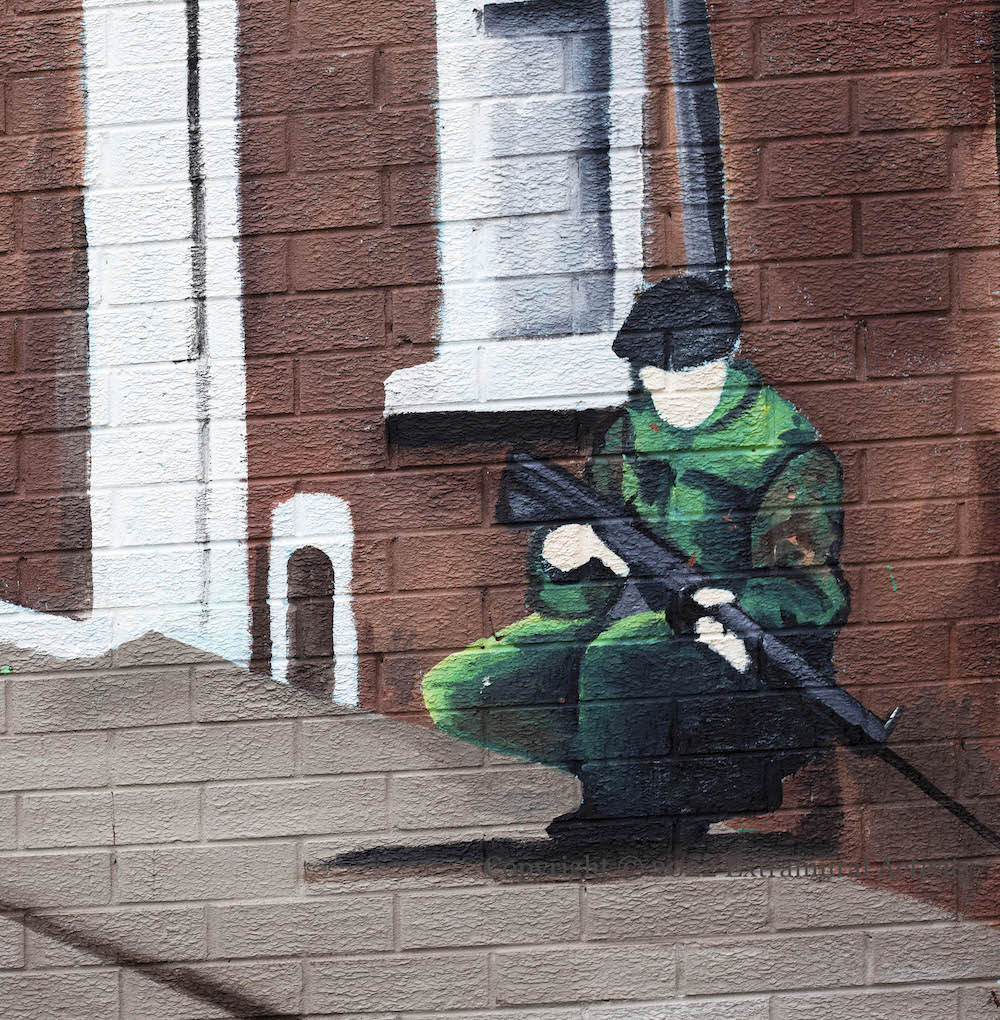
Patrick O’Connor was born on this day in 1924 on the lower Falls but after his father emigrated he spent his early years – until age 5 – with his grandparents in East Street in the Markets. It was as a high-schooler in New York that he adopted the name Pádraıc Fıacc (“fıach dubh” is “raven”) and began writing poetry. He settled in Glengormley upon his second and final return; it is not clear that he ever saw East Street lined with British Army soldiers, as shown in the mural above. He wrote of his early life in ‘First Movement’:
Low clouds, yellow in a mist wind Sift on far-off Ards Drift hazily … I was born on such a morning Smelling of the bone yards The smoking chimneys over the slate top roofs The wayward storm birds And to the east where morning is, the sea And to the west where evening is, the sea Threatening with danger And it would always darken suddenly
Some of Fıacc’s poems are in the TroublesArchive. There are two videos below. The first is an interview with NVTv’s Bernard Conlon; the second is of a reception in Belfast City Hall.







 Extramural Activity