A fire was lit at the base of the John Henry Patterson mural (see Operation Lion | Godfather Of The Israeli Army) on Beverley Street, prompting the notice on the railings above: “Where is the equality? This historically significant artwork, was attacked & defaced by Irish Republican racists? Where is the reconciliation?”
Derry INLA man Neil McMonagle – who died in February 1983 – is placed among the seven signatories of the proclamation of the provisional government of the Irish Republic.
For more information about his life, see previously McMonagle.
The board was launched on January 31st, 2016, just before the anniversary of McMonagle’s death (Derry Now).
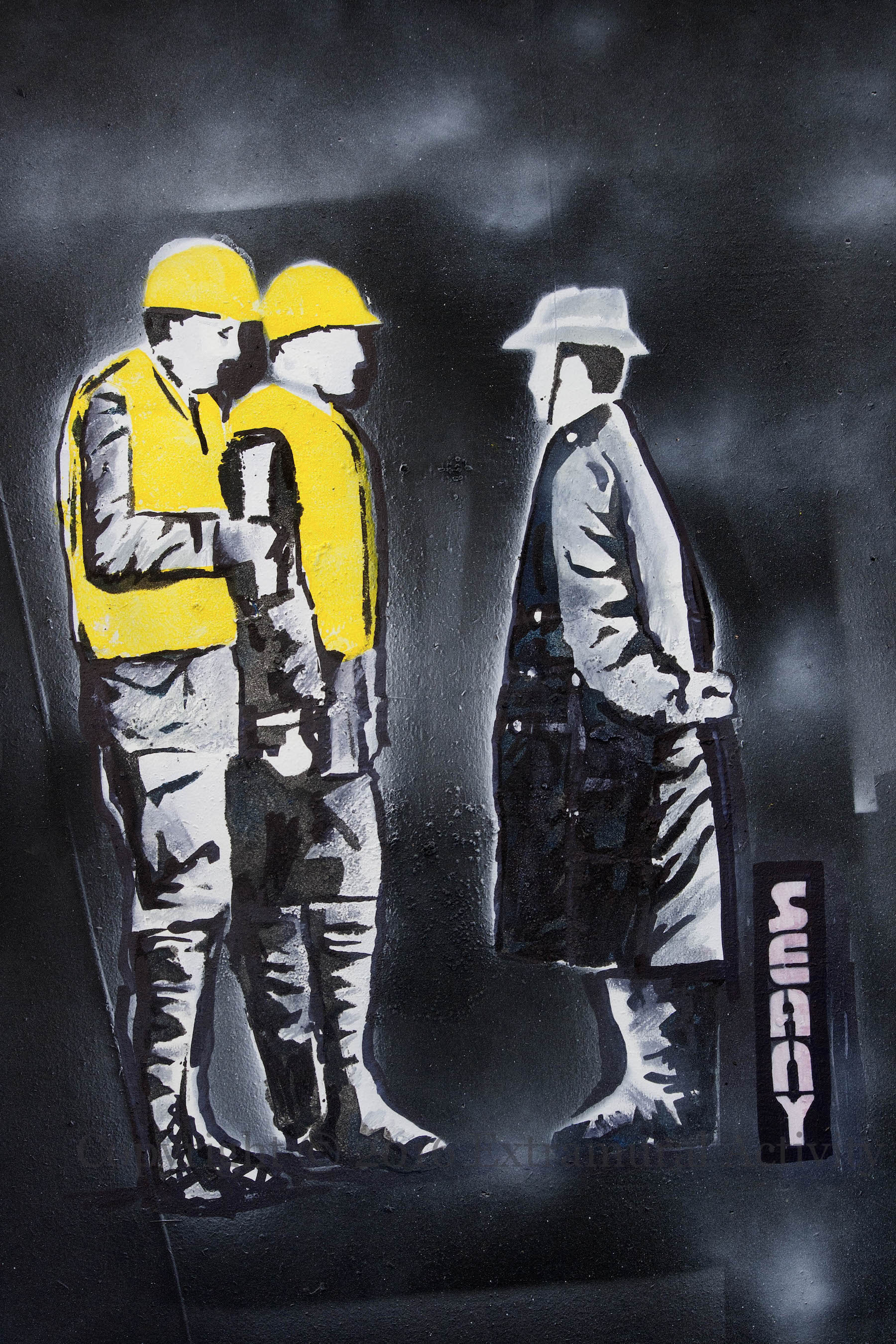
In January (2016) a stencil like the one above appeared in Moore Street, Dublin. Moore Street was the place of the last stand of the Easter Rising after the GPO caught fire and campaigners were thus fighting to save it from redevelopment (Irish Times). (Moore Street’s future is still uncertain at this time, late summer 2016.)
The stencil is based on a photograph of Padraig Pearse and Elizabeth O’Farrell surrendering to the British General Lowe. The piece was ‘signed’ by Banksy, though it was immediately suspected to be not by Banksy, as he had not signed any pieces for some years, and indeed, Banksy denied that it was his (e.g. Irish Times) and Will St Ledger wished that the artist had had the confidence to claim it as their own (RTÉ).
The artist was in fact Short Strand man Séan “Seany” McVeigh, who then died in June. In honour of his life, a fellow Short Strand resident (see second image, below) produced this version of McVeigh’s piece, with the name “Seany” proudly attached. (For his other “Banksy” see a Belfast version of Banksy’s Palestinian “peace” wall stencil.)
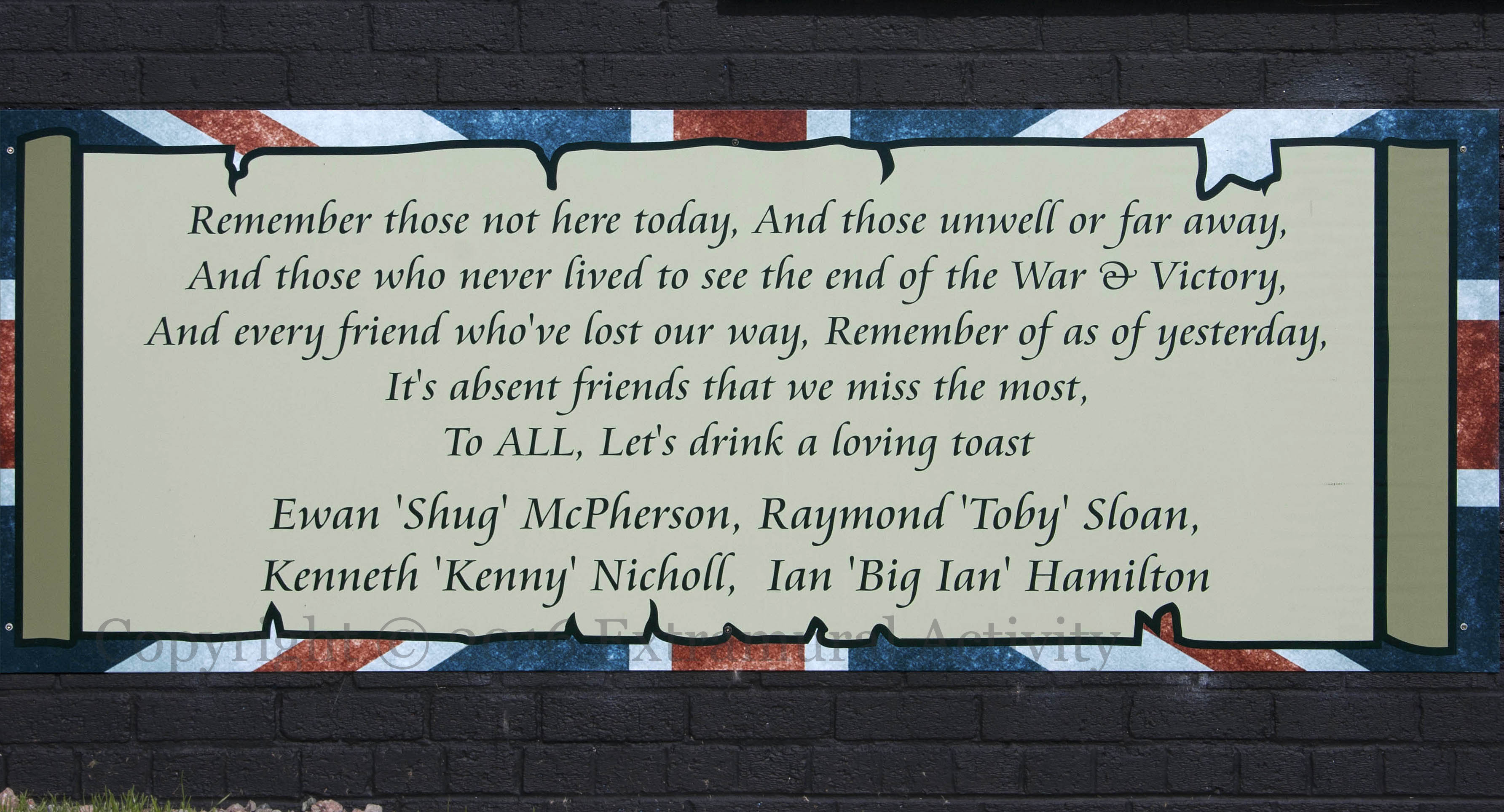
“Remember those not here today, And those unwell or far away, And those who never lived to see the end of the War & Victory, And every friend who’ve lost [or: passed] our way, Remember as of yesterday, It’s absent friends we miss the most, To ALL, Let’s drink a loving toast.”
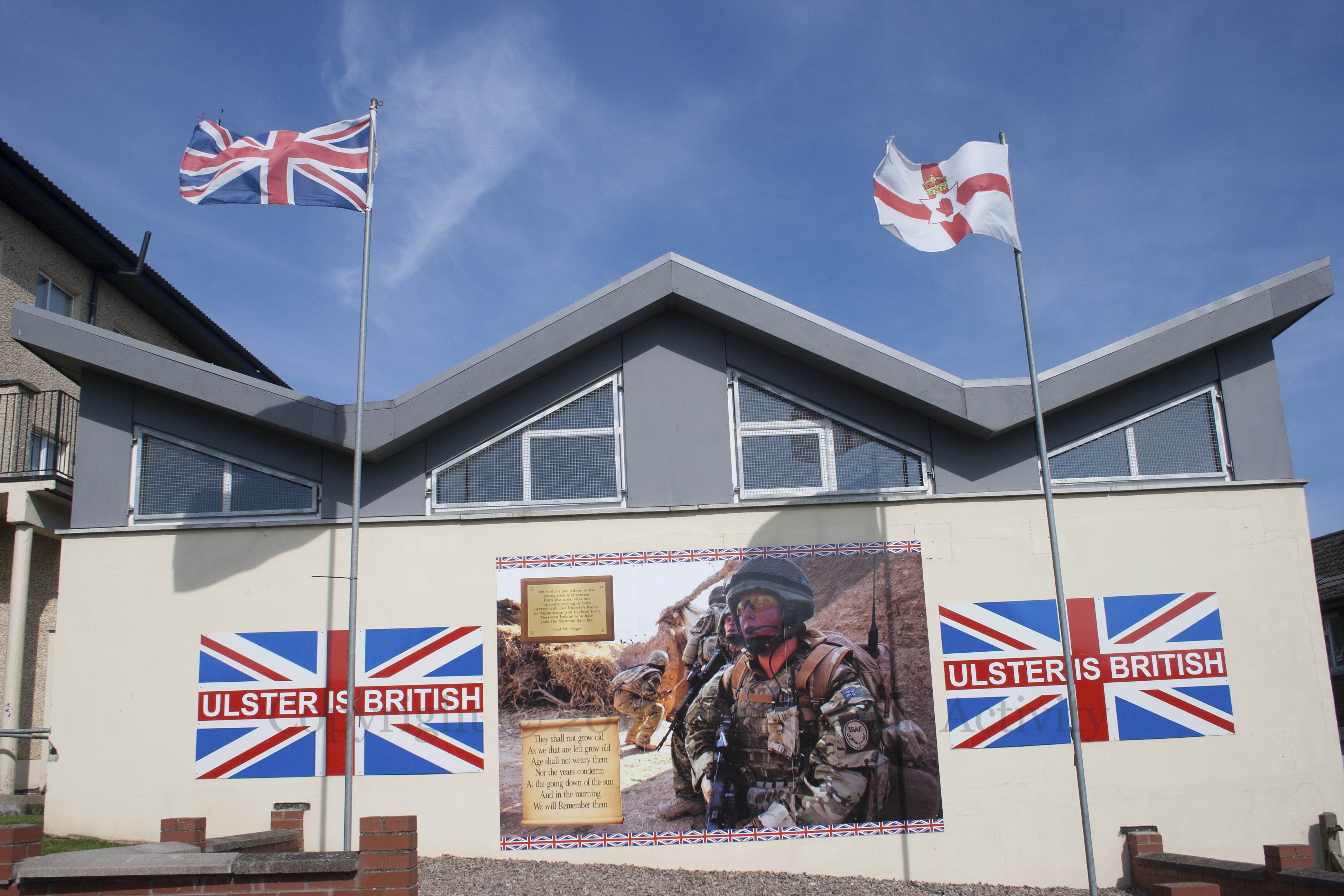
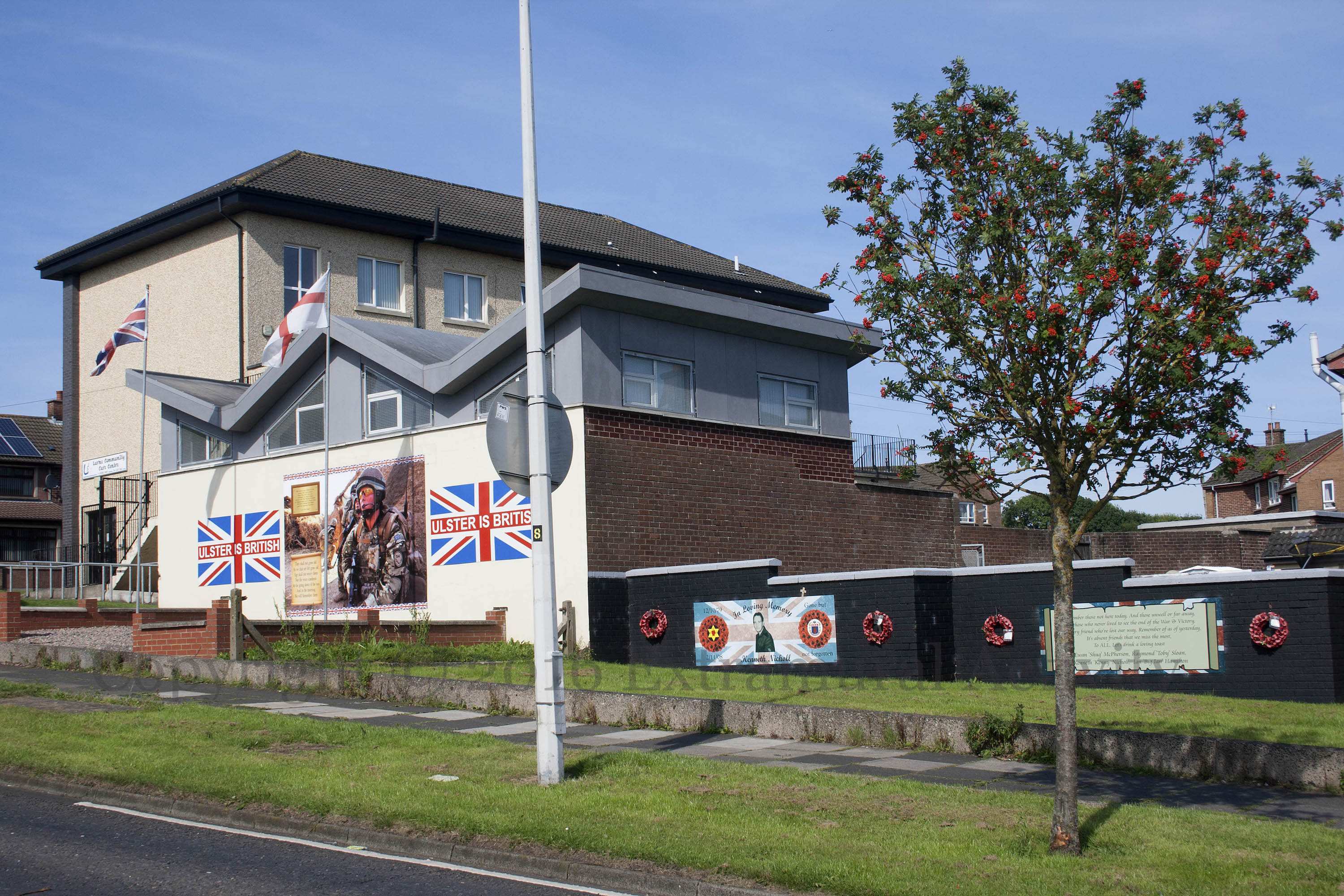
William Walker’s poem Absent Friends is used as a part of UDA/UFF commemoration of various Larne men: “Ewan ‘Shug’ McPherson, Raymond ‘Toby’ Sloan, Kenneth ‘Kenny’ Nicholl (who is featured in a separate board, above; BBC-NI report of his killing), Ian ‘Big Ian’ Hamilton. Walker was a pilot during WWII who wrote poetry and returned to the brewing trade after the war; he died at age 99 in 2012 (Guardian).
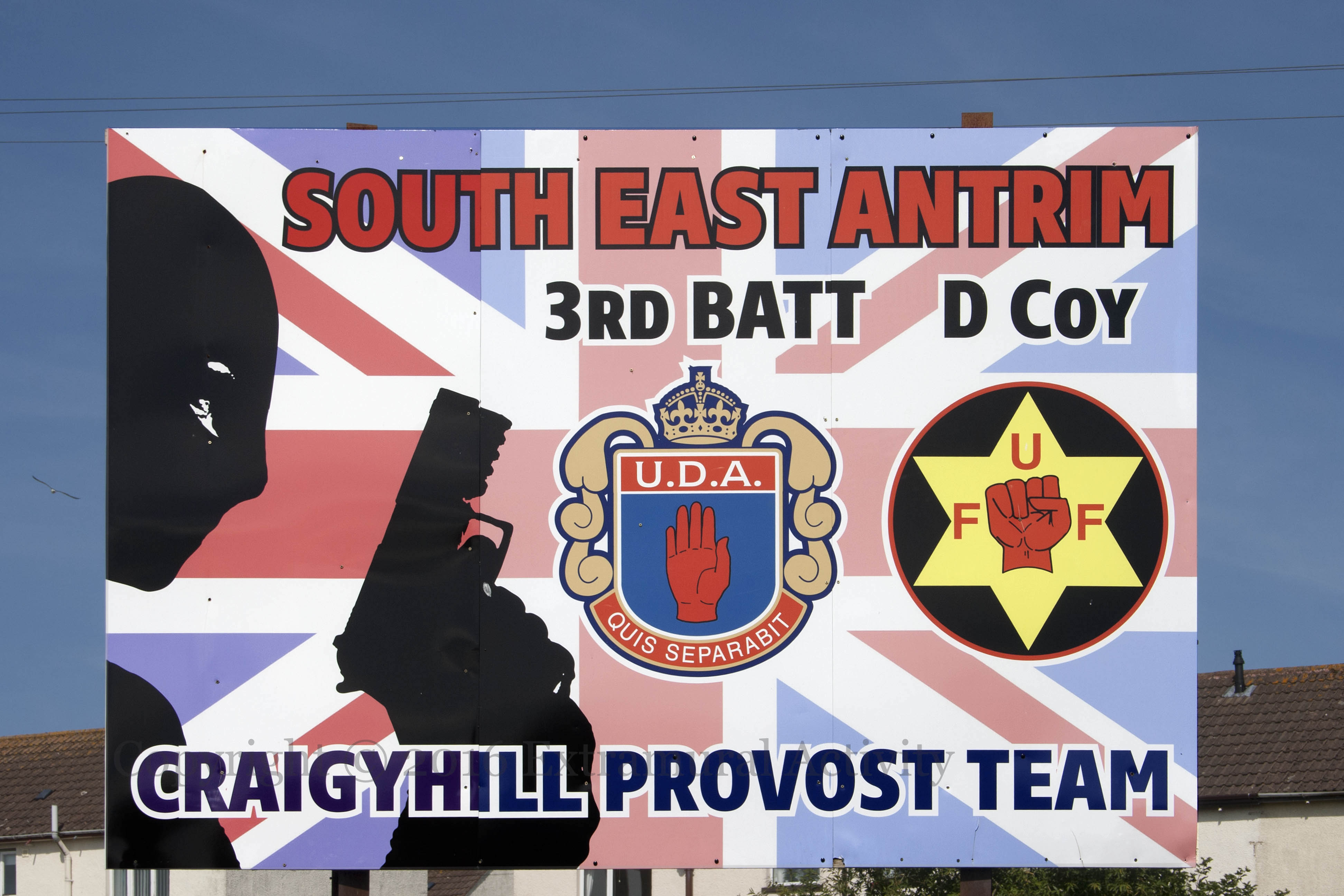
There was some consternation (Larne Times) when the UDA/UFF board (shown above) with a silhouetted paramilitary holding a pistol was set up in late 2014, but the board remains in place in the summer of 2016. “South East Antrim 3rd Batt., D Coy.” If you know what “provost team” means, please let us know.
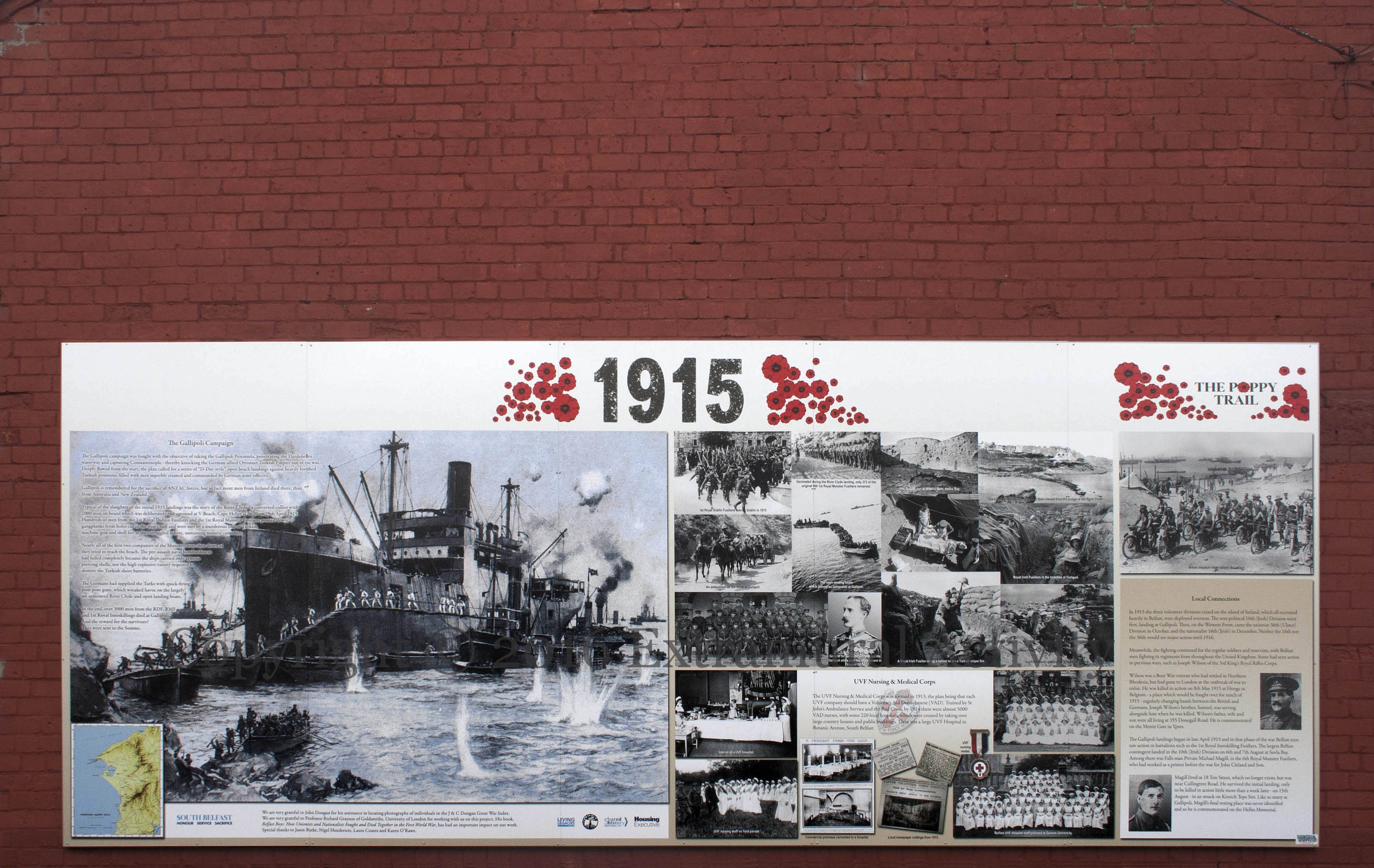
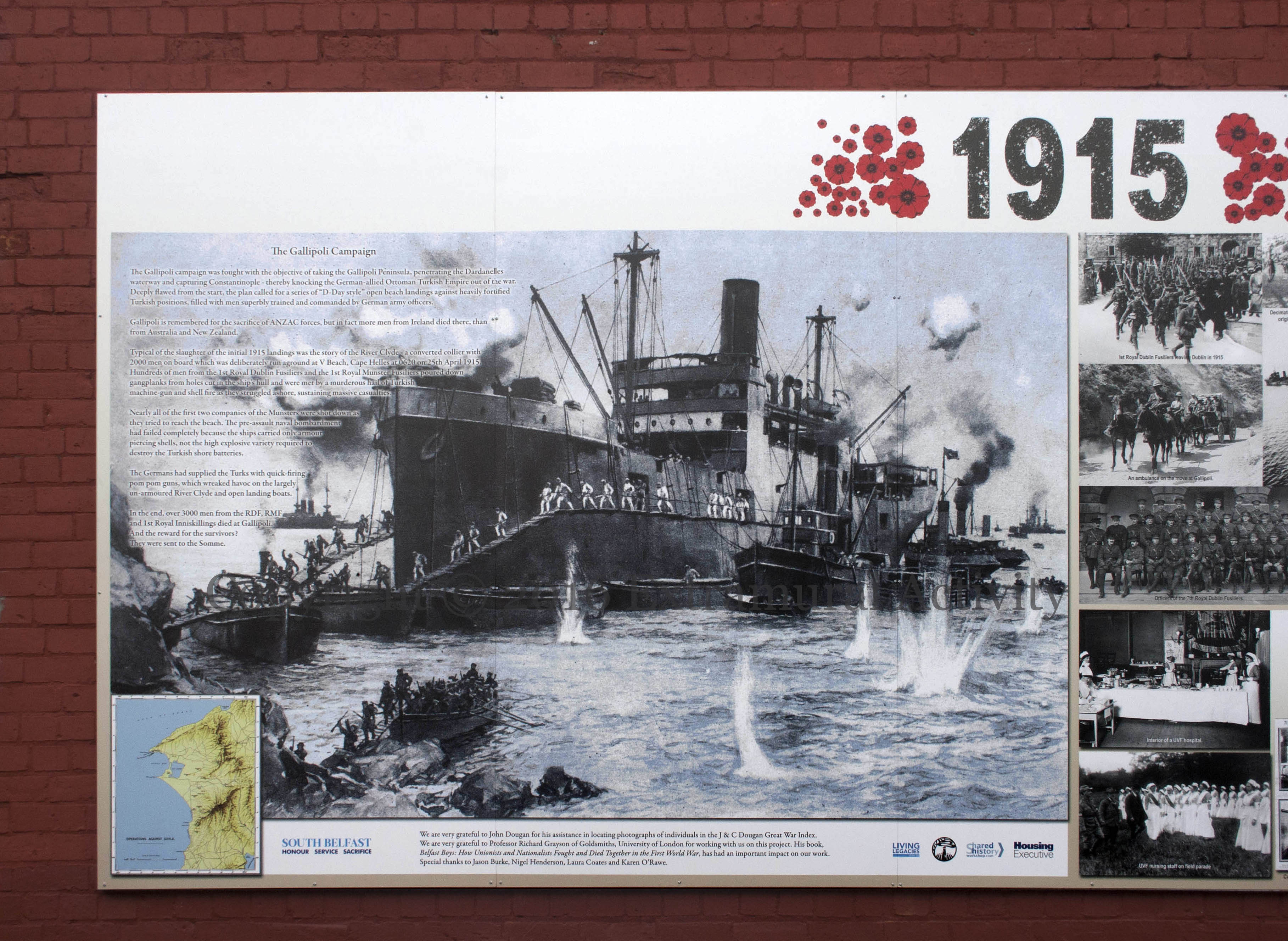
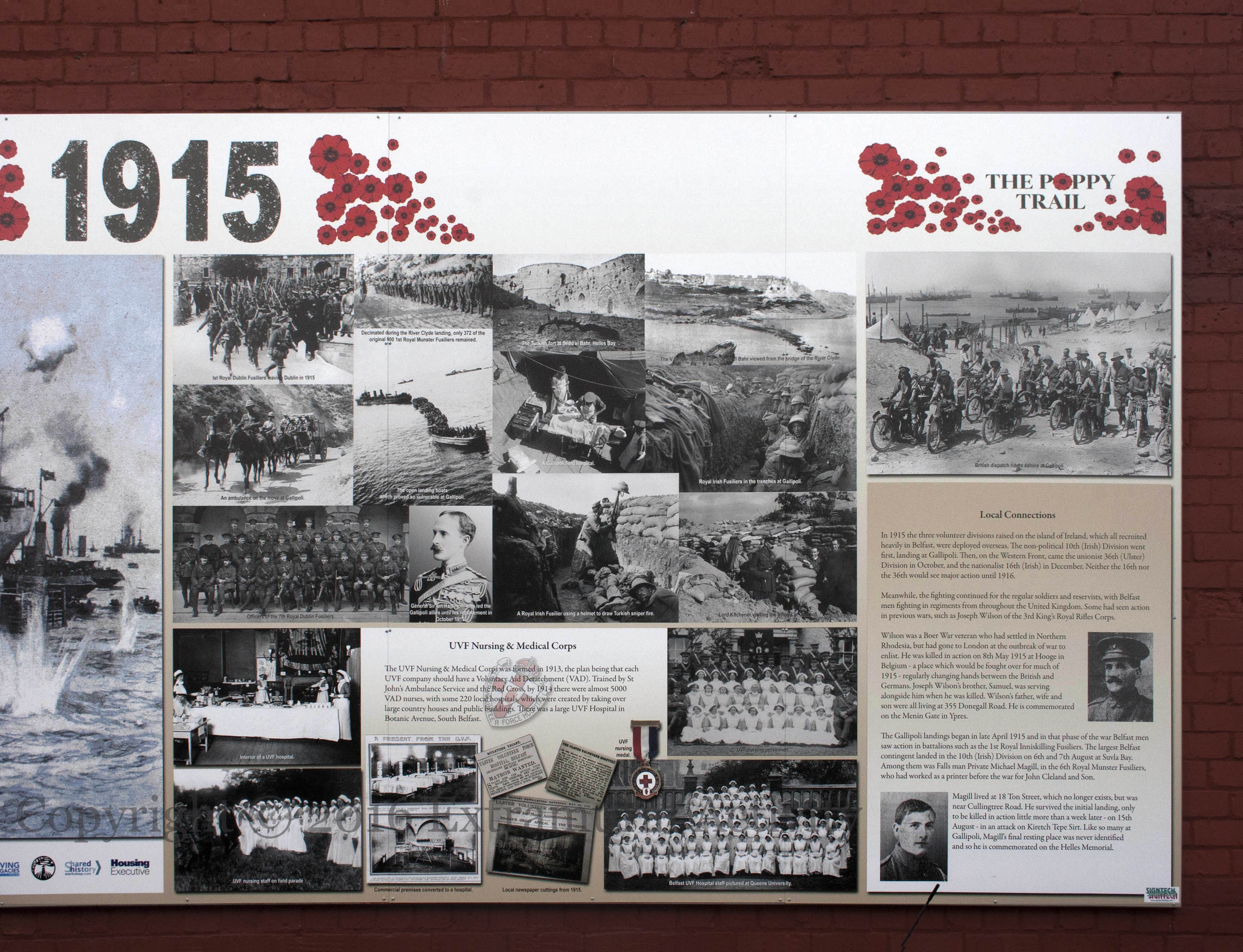
The 1915 board in the ‘Poppy Trail’ series in south Belfast focuses on the Gallipoli campaign, claiming that “more men from Ireland died there than from Australia and New Zealand.” The ship on the left-hand side is the River Clyde, a converted collier, carrying men from the 1st Royal Dublin and 1st Royal Munster Fusiliers, who were decimated as they tried to reach shore — “only 372 of the original 900 1st Royal Munster Fusiliers remained”.
As with the 1914 board, the 1915 board includes the stories of men from both south and west Belfast, in this case, Joseph Wilson, who hailed from Donegall Road and died in Belgium, and Michael Magill, from the Divis area, who died at Gallipoli.
The South Belfast UDA/UFF commander was killed by an IRA car bomb in 1987. In addition to organising a team of assassins in the 70s and 80s, he founded a Political Research Group and wrote two documents proposing an independent Northern Ireland. The memorial garden, shown in full in the image below, is just off Sandy Row, near the John McMichael Centre. The other pieces can be seen in close-up in ‘A’ Batt. See also: We Must Share The Responsibility
“There is no section of this divided Ulster community which is totally innocent or indeed totally guilty, totally right or totally wrong. We all share the responsibility for creating the situation, either by deed or by acquiescence. Therefore, we must share the responsibility for finding a settlement and then share the responsibility of maintaining good government.” (John McMichael 1948-1987)
“An staılc ocraıs 1981 hunger strike – 35th anniversary march – Sunday 14th August – Assemble Divis tower 2pm”. With portraits of the deceased 1981 hunger strikers; Frank Stagg and Michael Gaughan are included even though they died in the 1970s.
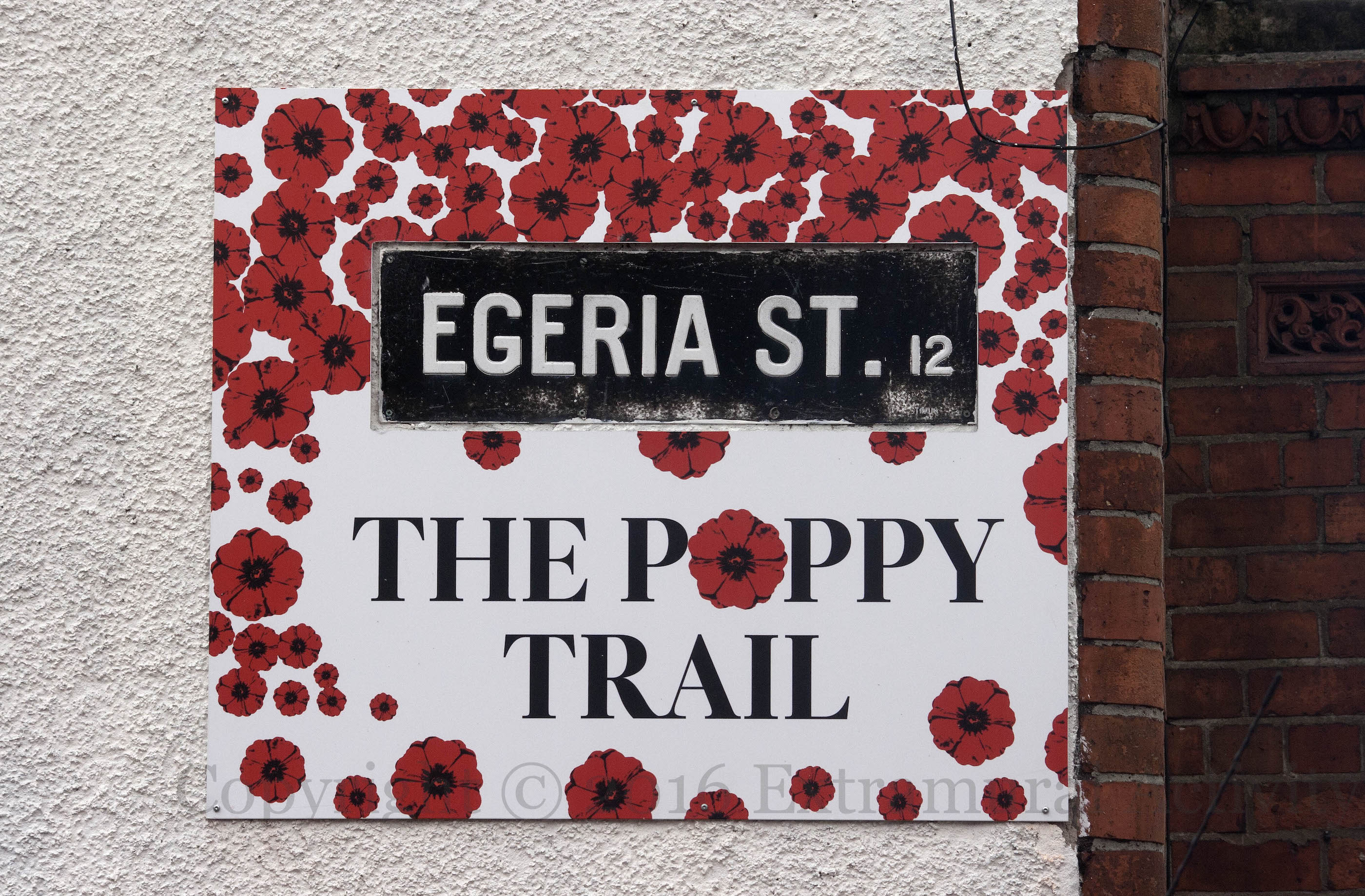
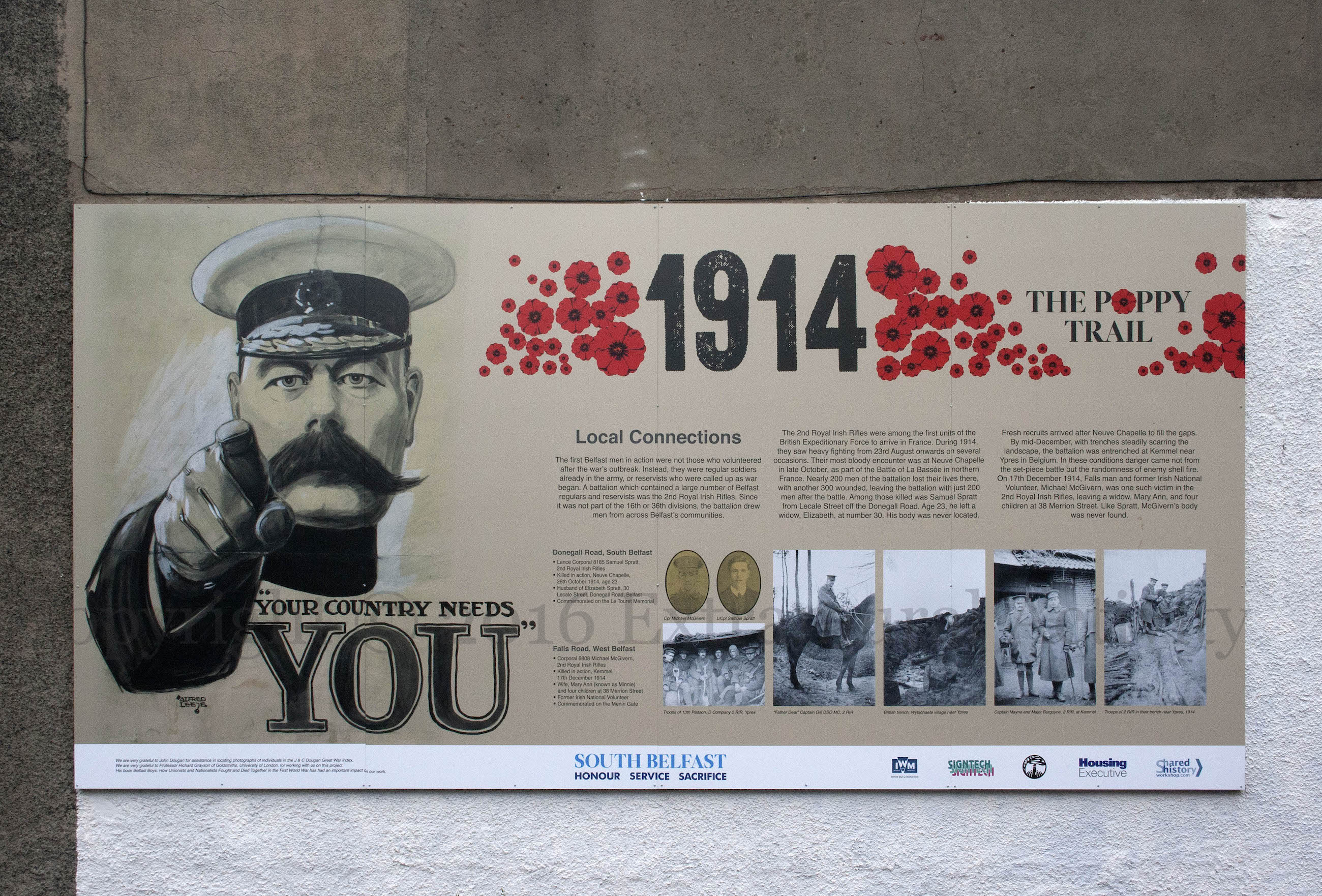
“The first Belfast men in action were not those who volunteered after the war’s outbreak. Instead, they were the regular soldiers already in the army, or reservists who were called up as war began. A battalion which contained a large number of Belfast regulars and reservists was the 2nd Royal Irish Rifles. Since it was not part of the 16th or 36th divisions, the battalion drew men from across Belfast’s communities.” Thus begins the 1914 board on south Belfast’s “Poppy Trail” launched on February 29th. The 1914 board, in Egeria Street, features the stories of Lance Corporal Samuel Spratt (from Lecale Street, off the Donegall Road) who died at Neuve Chappelle in August 1914 and Corporal Michael McGivern (from Merrion Street, off the Falls Road) who died at Kemmel in December.
See also: interviews from the launch on NVTv (starting at 13m44s)
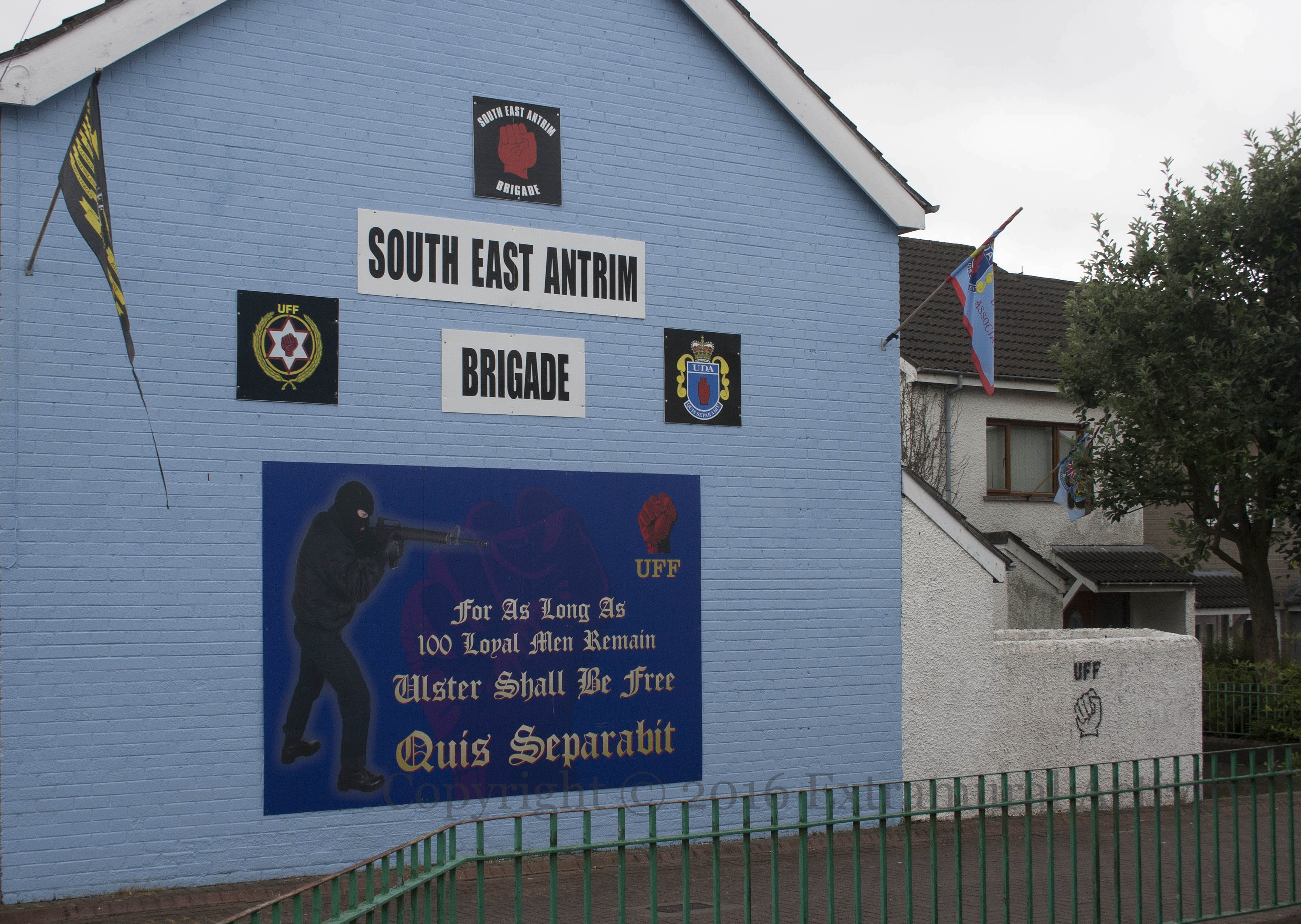
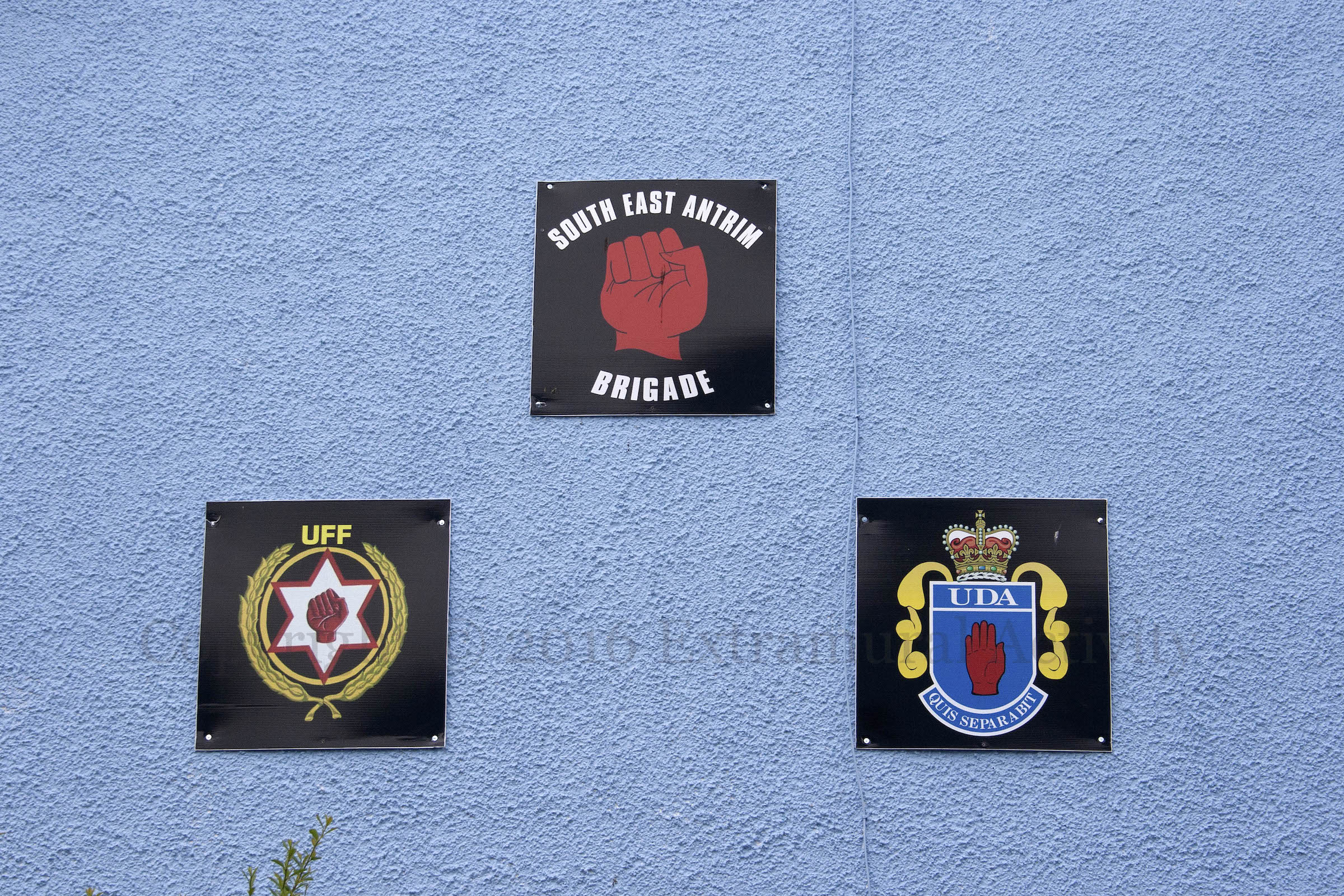
New South East Antrim UDA/UFF mural in Ballyclare, with the usual emblems and a central board featuring a photograph of a balaclava’ed volunteer: “For as long as 100 loyal men remain Ulster shall be free – Quis Separabit”.






 Extramural Activity