Here are three murals/boards by Steven Tunley for the Re-Imaging Communities programme in Dover Place, lower Shankill.
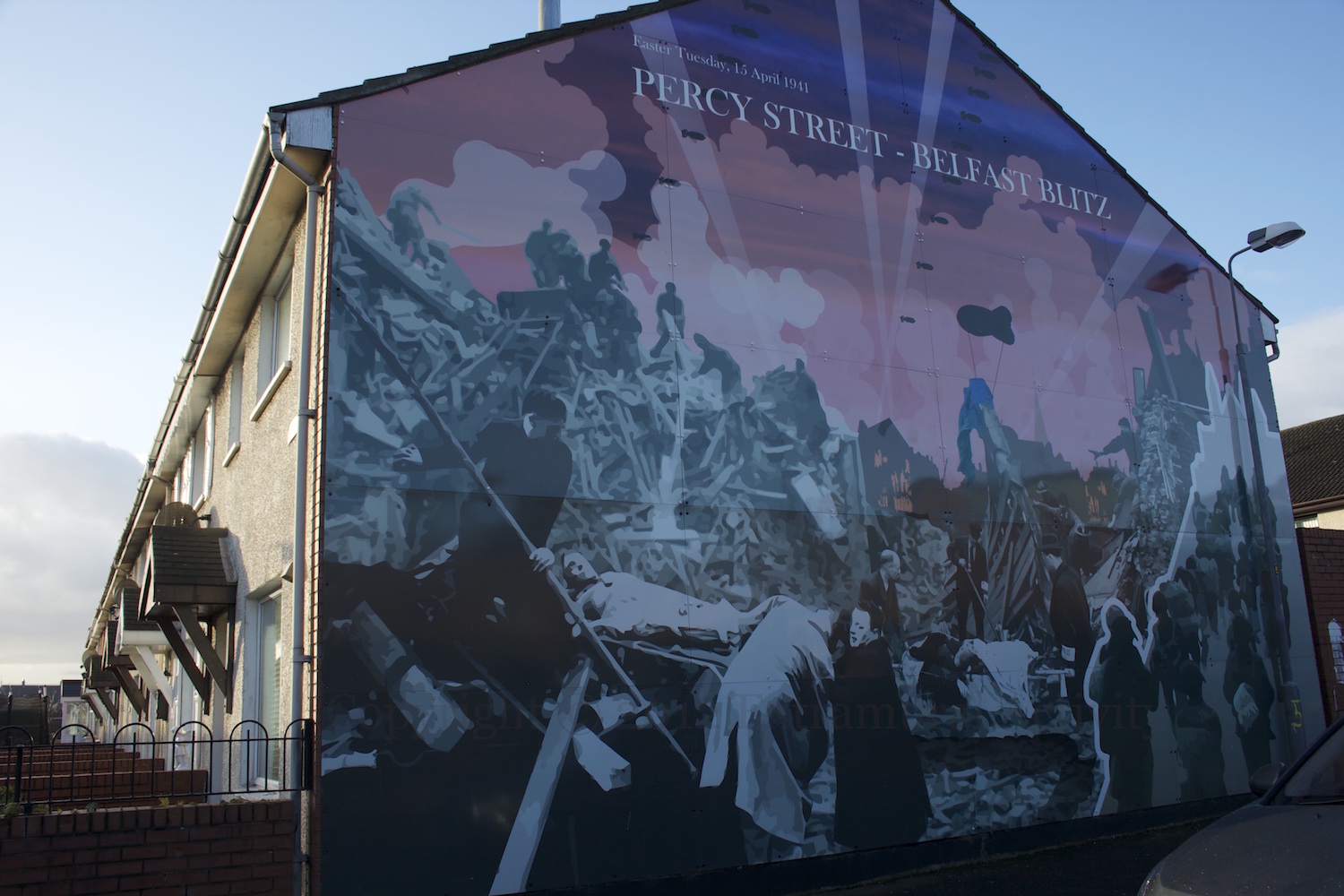
From left to right: “Fathers and sons of the Shankill enlist to fight in World War One”, “Belfast blitz – Easter Tuesday , 15 April 1941”, and “VE Day – 8th May 1945”.
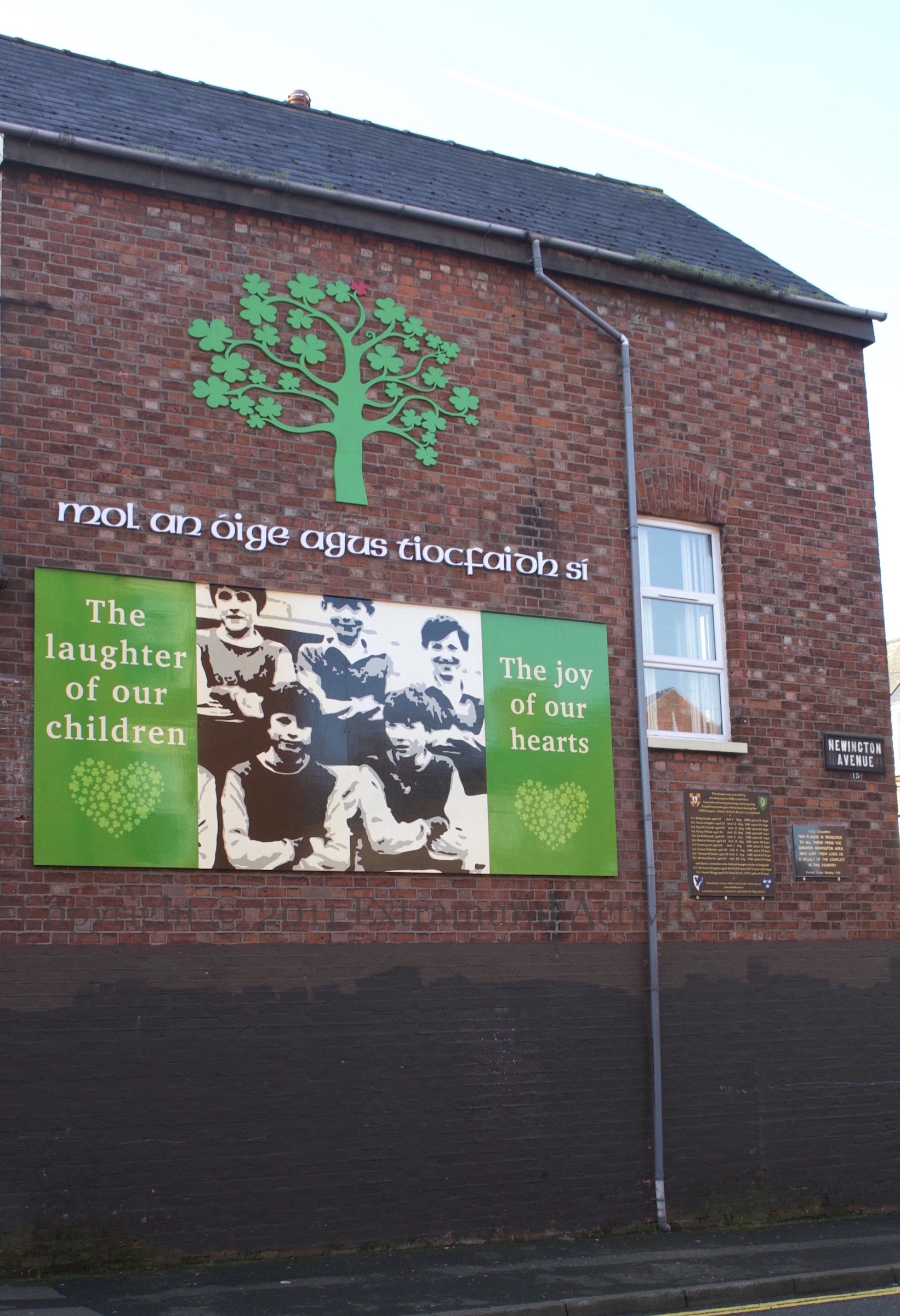
“[Youth responds to praise] – the laughter of our children – the joy of our hearts.” A young Bobby Sands is shown in the front right, part of the Stella Maris soccer squad for 1967; he would later “respond” by becoming an IRA volunteer and hunger striker.
The plaque to the hunger strikers was originally on the left of the previous ‘1798’ mural, and the plaque to the deceased from the “greater Newington area” was embedded in it – see M03672.
“Generations shall remember them and call them blessed.” This is a 2009 repaint of a 2002 mural. It continues to feature Máıre Drumm, Maıréad Farrell and (in the centre) Countess Markievicz outside the GPO, but “Sınn Féın” has disappeared from behind Drumm and there is now only one binlid banger.
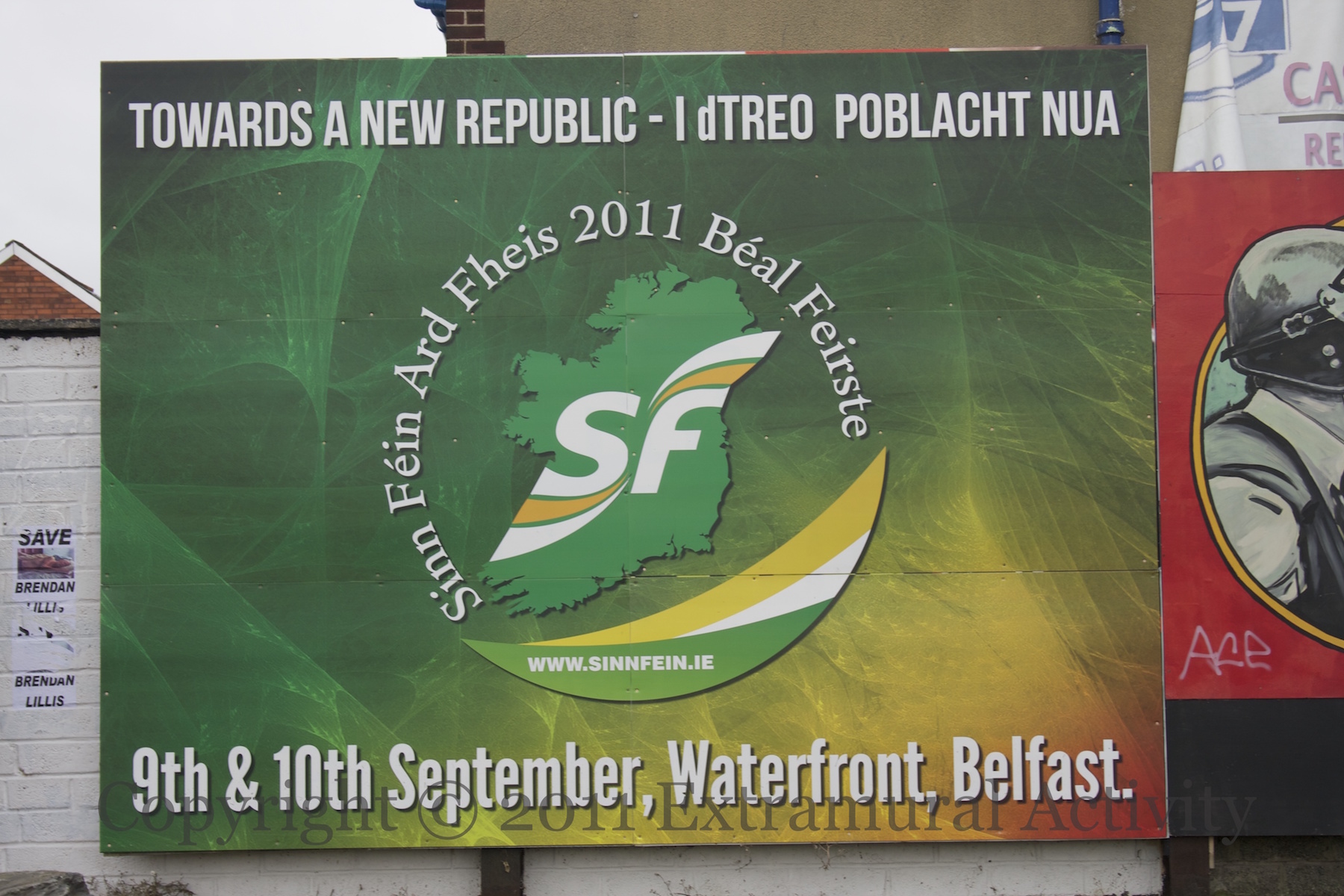
Sinn Féin’s Martin McGuinness was nominated by the party to stand for President Of Ireland. He garnered 13.7% of first preference votes and finished third to winner Michael D. Higgins (WP). For the hunger strikers metalwork, see M03118.
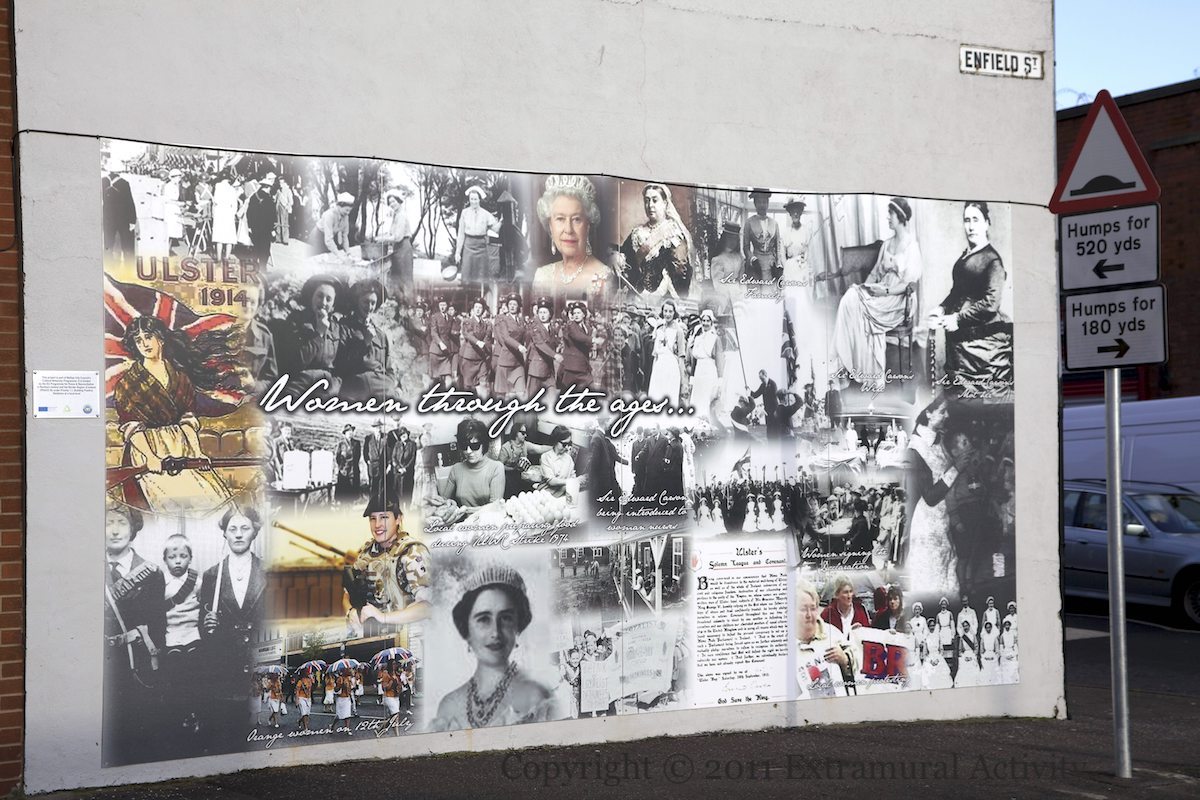
A good part of this Enfield Street, Belfast, mural is in fact dedicated to Edward Carson – in the top left are “Sir Edward Carson’s family”, “Sir Edward Carson’s wife”, and “Sir Edward Carson’s mother” and below them is a photograph of Carson presenting colours to the South Belfast Volunteers (see We Won’t Have Home Rule) and another (to the middle) of “Sir Edward Carson being introduced to woman nurses”. In the centre are “Local women preparaing food during UWC strike 1974”. Other images include English monarchs Victoria (Queen Of Ireland, Empress Of India) and Elizabeth, Ulster 1914, and the signing of the Ulster Covenant by women.
“This project is part of Belfast City Council’s Cultural Networks programme. It is funded by the EU Programme For Peace & Reconciliation In Northern Ireland And The Border Region Of Ireland (Peace III).”
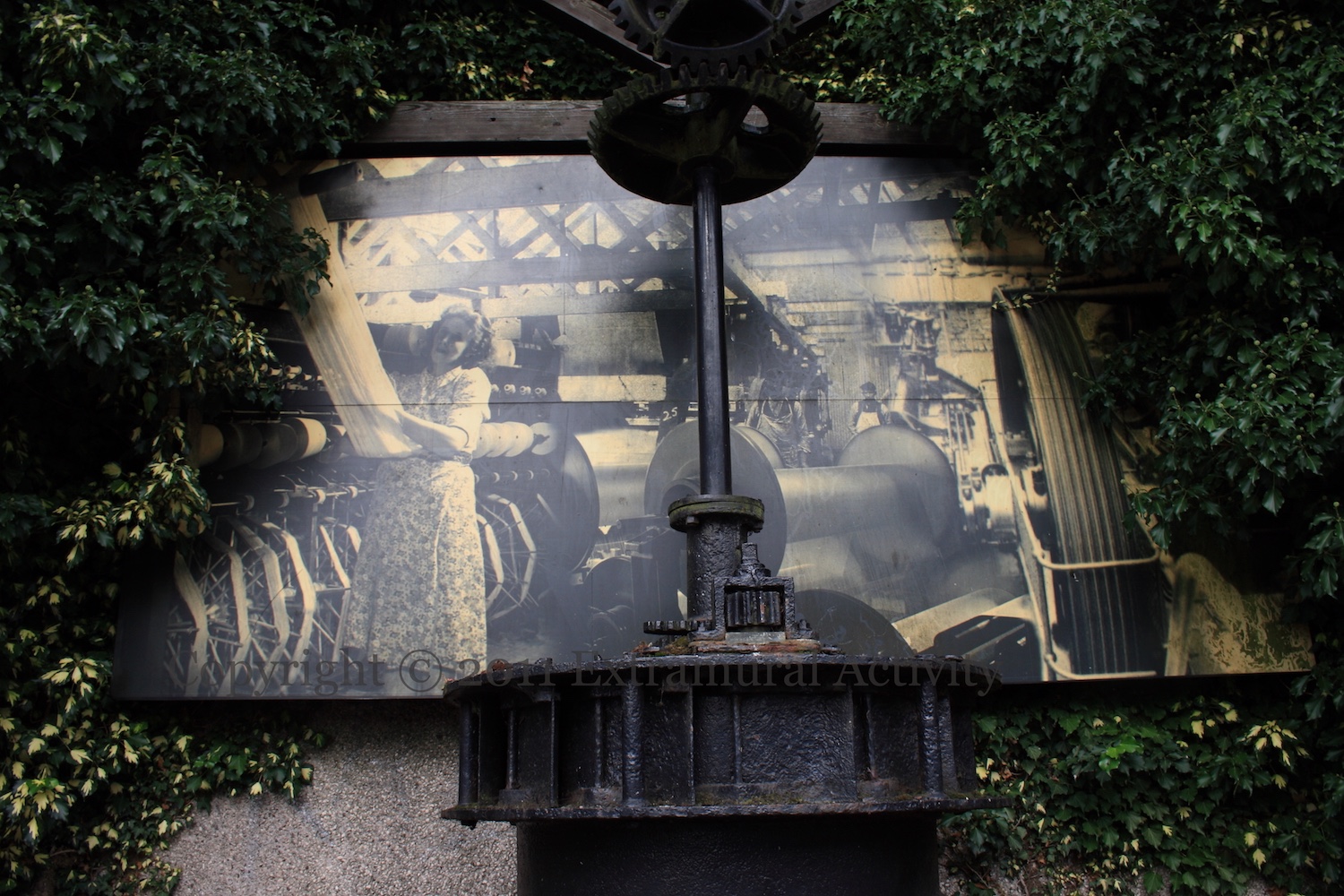
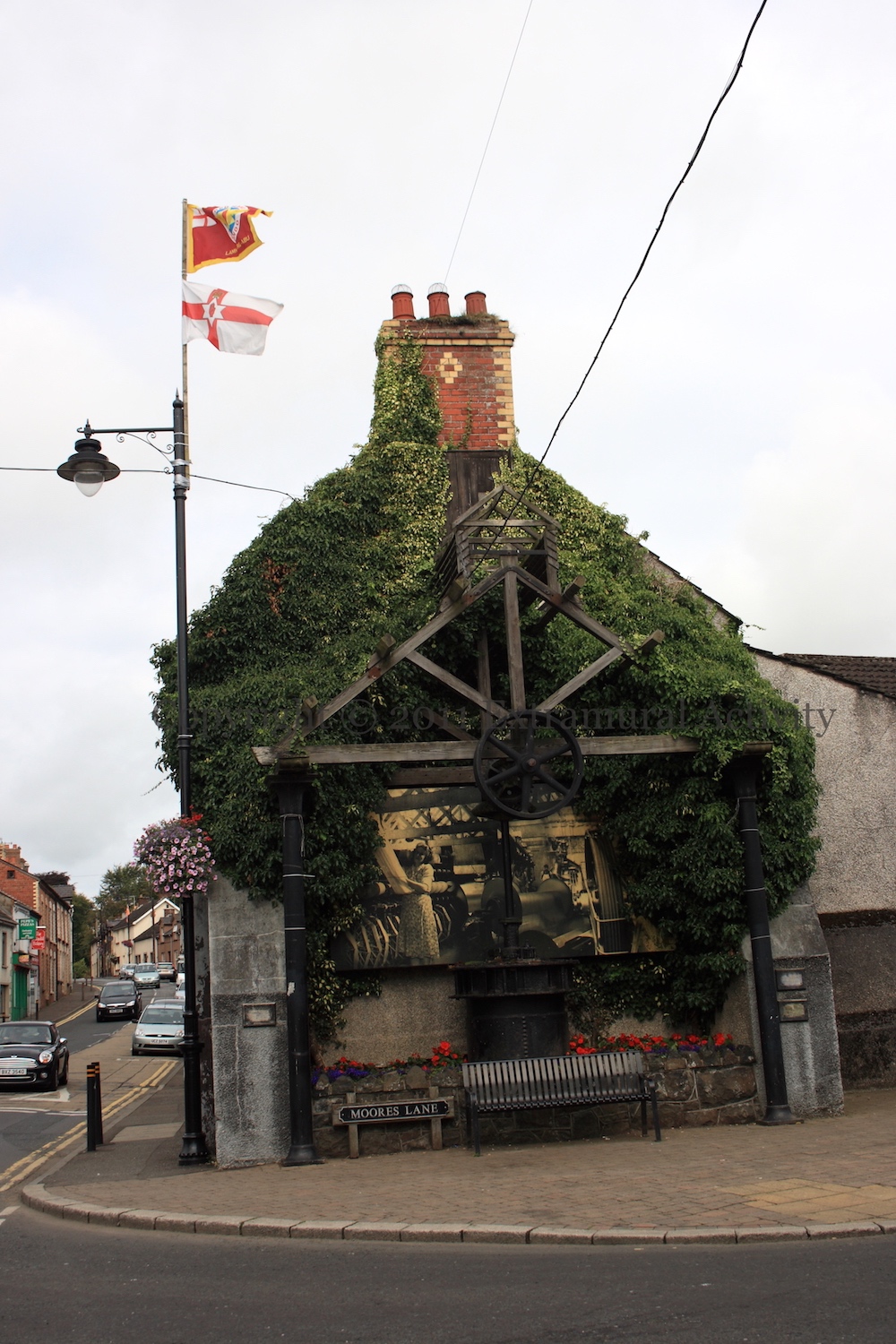
Randalstown remembers its history as an industrial town in the nineteenth and twentieth centuries, with a linen factory that employed a thousand people in the 1930s (BBC). The first Heritage board is in Moore’s Lane; the second is in New Street (at the Market House).
“Only by remembering these men, and others like them, can we ever repay their memory.” Nine Victoria Cross recipients from the 36th (Ulster) Division in World War I are honoured in this board on the Shankill at the Co-Op (which was previously across the road in Crimea Street).
“Lay them away on the hill side/along with the brave and the bold/Inscribe their names on the role [sic] of fame/in letters of purest gold.” The Ulster Tower at Thiepval commemorates the WWI dead of the 36th (Ulster) Division. The words, however, come from a song about James Daly, who was executed by firing squad for taking part in a 1920 mutiny of the Connacht Rangers in India in protest of the activities of the Black and Tans. Above (and below – not shown) are the insignia and names of UVF volunteers from UVF South Belfast 2nd battalion – see Lay Them Away On The Hill Side.
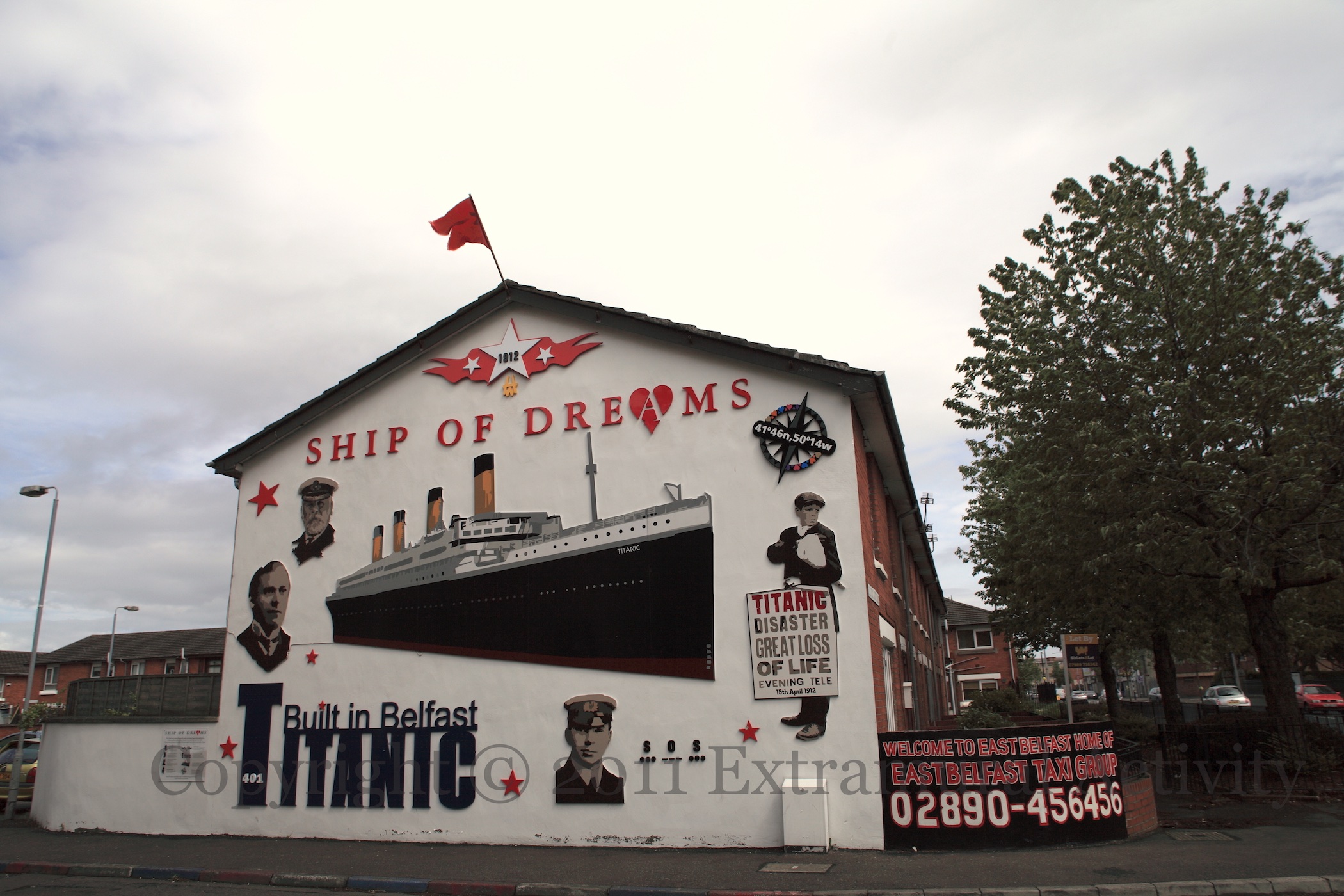
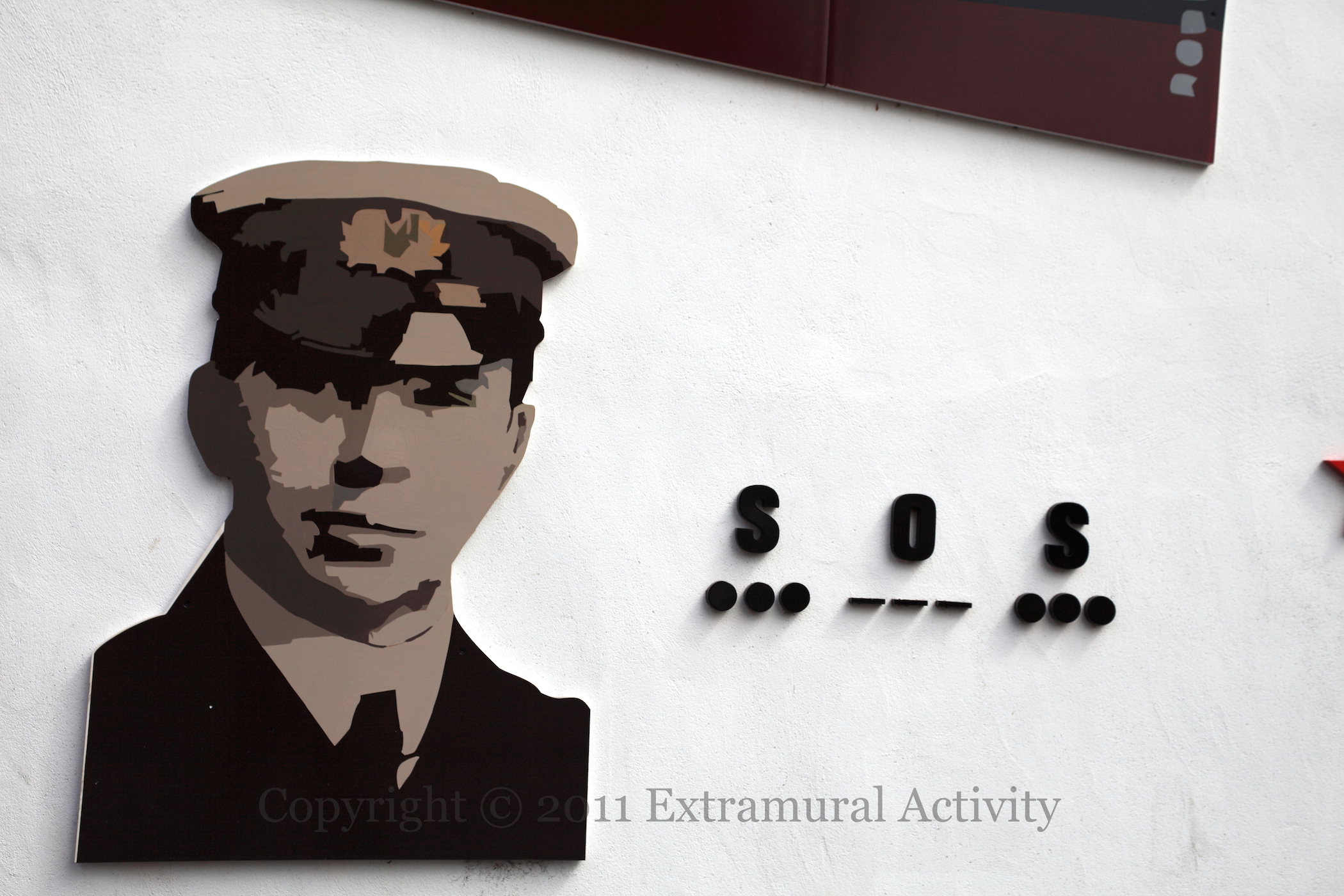
The White Star Line ship Titanic sank in the Atlantic in the early morning of April 15th, 1912, a thousand miles from New York (the co-ordinates are given in the top right), having been launched from Belfast’s Harland & Wolff shipyard, which is near this mural just off the Newtownards Road in east Belfast. The portraits are of Captain Edward Smith, architect Thomas Andrews, Jack Phillips (wireless officer), and paperboy Ned Parfett.







 Extramural Activity