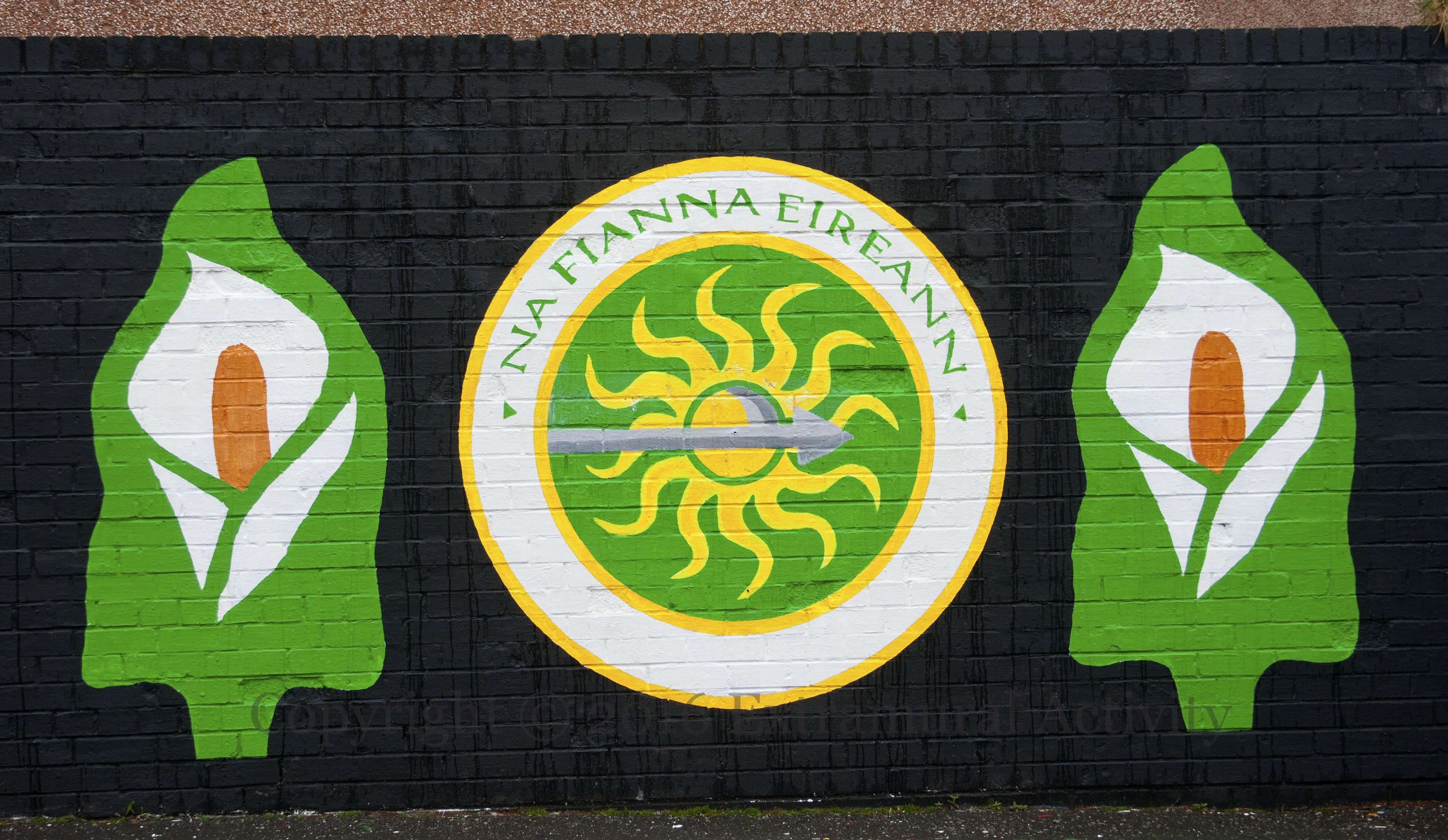
Here is a Na Fıanna Éıreann (tw) mural in Ardoyne with easter lilies on each side of the Fıanna’s ‘sunburst’ (gal gréıne) emblem (which also includes a pike or bill).
For a history of sunburst flags, with lots of images, see An Sıonnach Fıonn. A banner sporting an early version of the emblem, owned by Countess Markievicz during the Rising, was recently returned from London to Dublin (Irish Times).
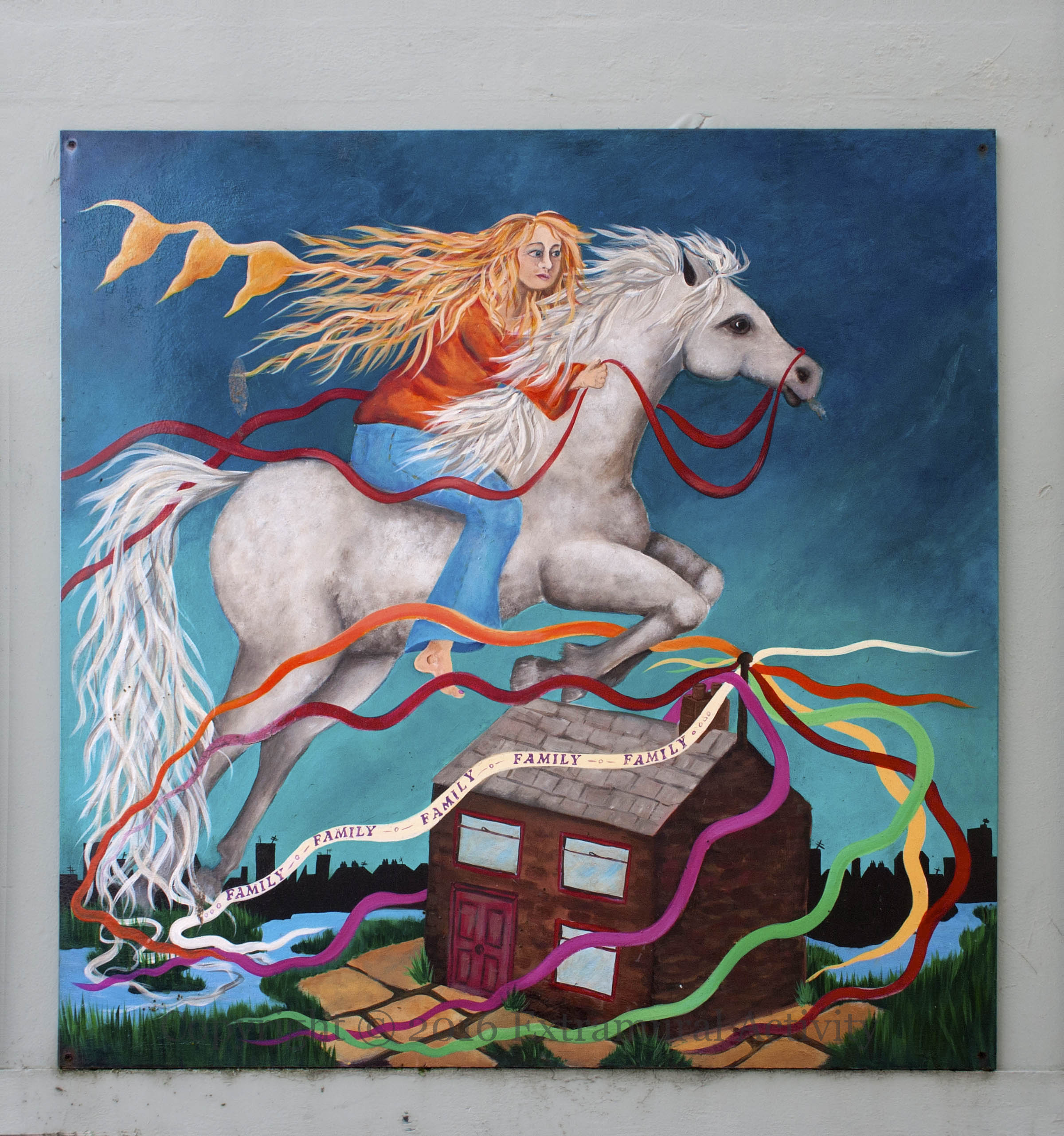
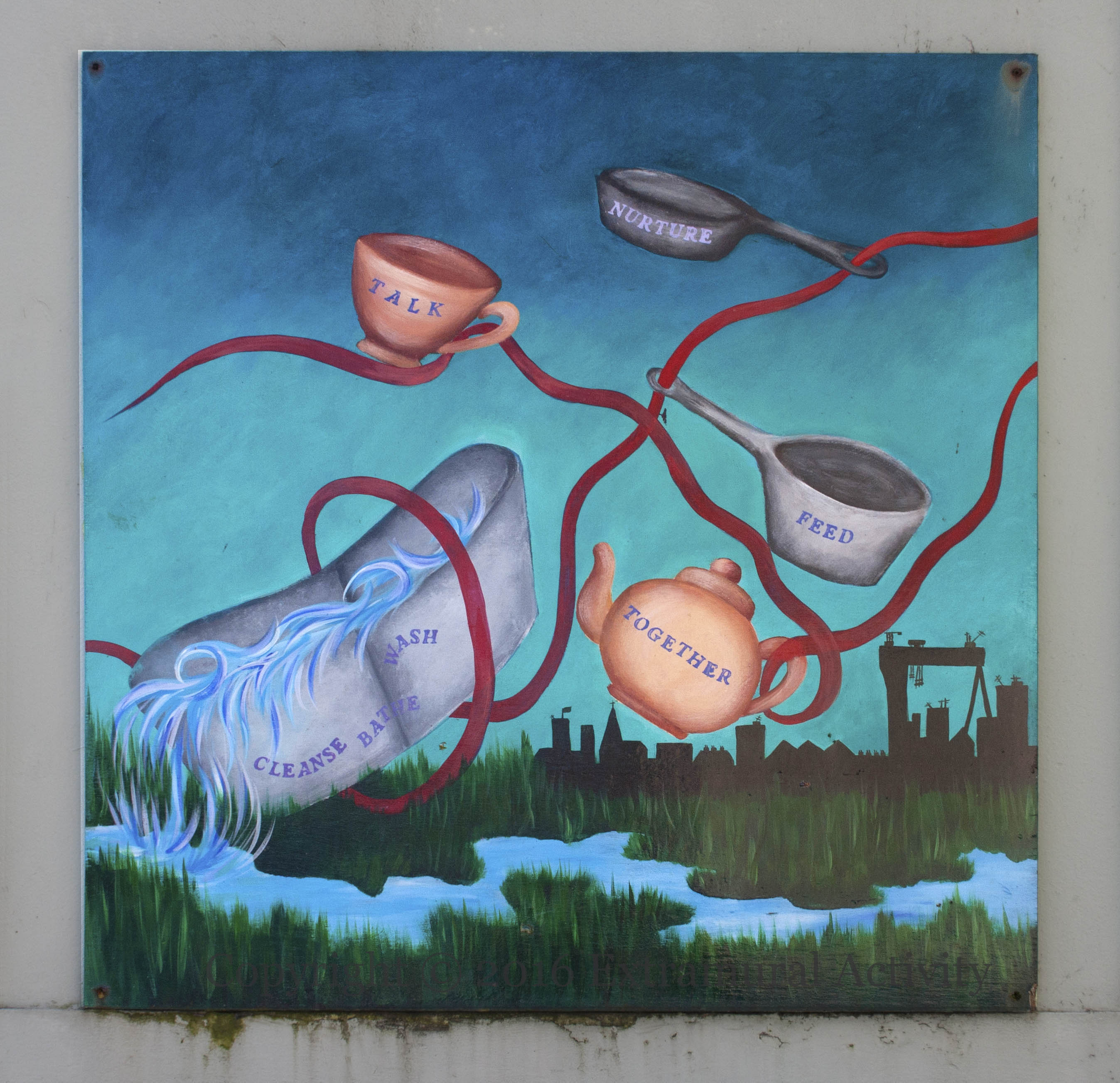
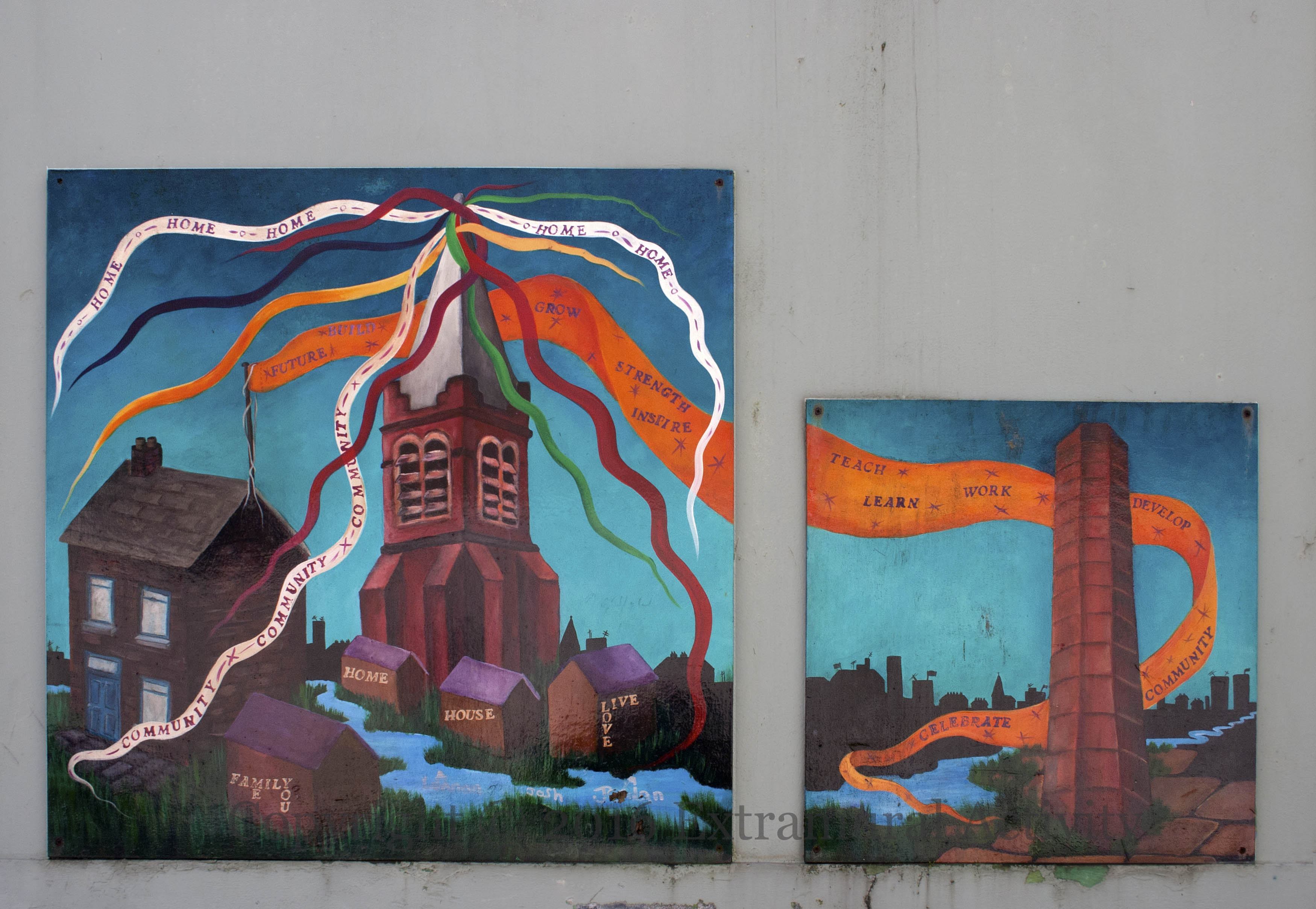
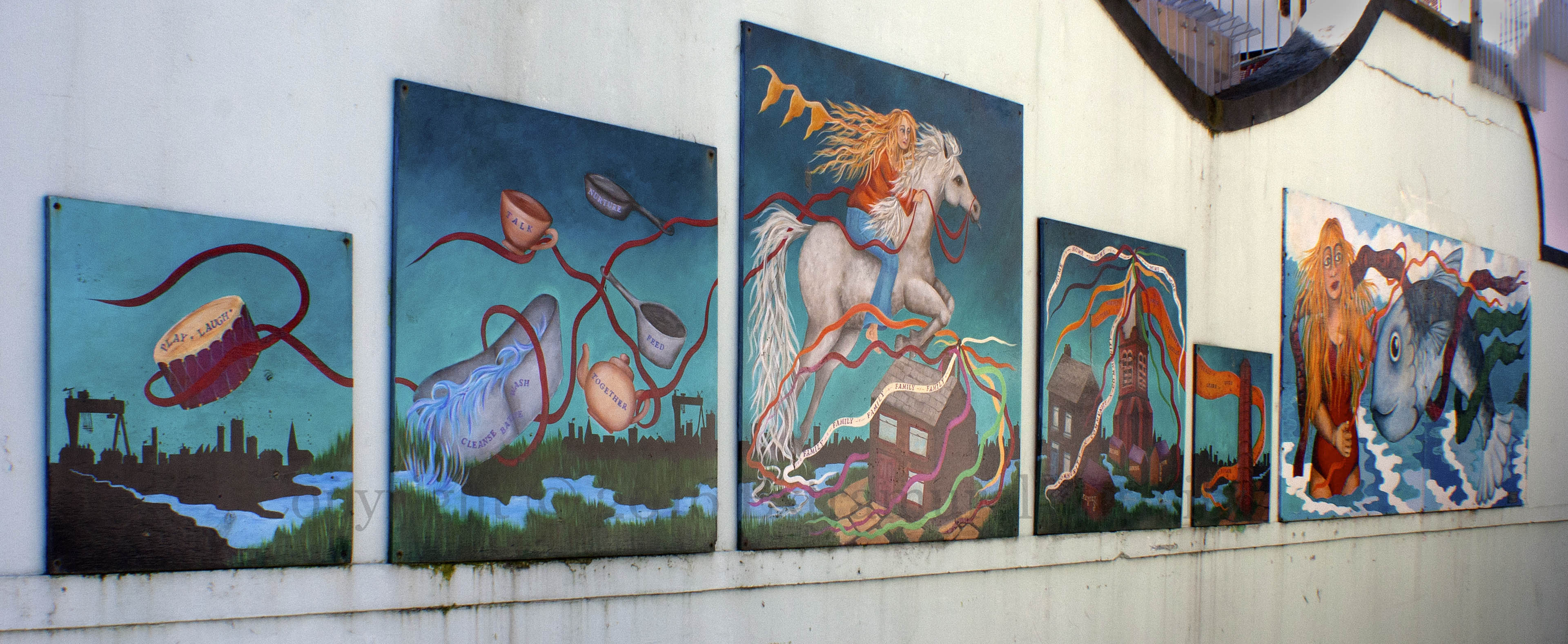
Here are all five panels from Lesley Cherry’s Village Life piece at the rear of the Windsor Women’s Centre in south Belfast (along with the Salmon Of Knowledge piece featured previously). In the first two, wrapped up in the ribbons streaming from a horse in the central panel (shown above) are a drum (against a backdrop of Belfast city, including a Harland & Wolff crane), a bathtub, teapot and teacup, and pot and pan. The fourth shows the spire of a church and the fifth the smokestack from a factory.
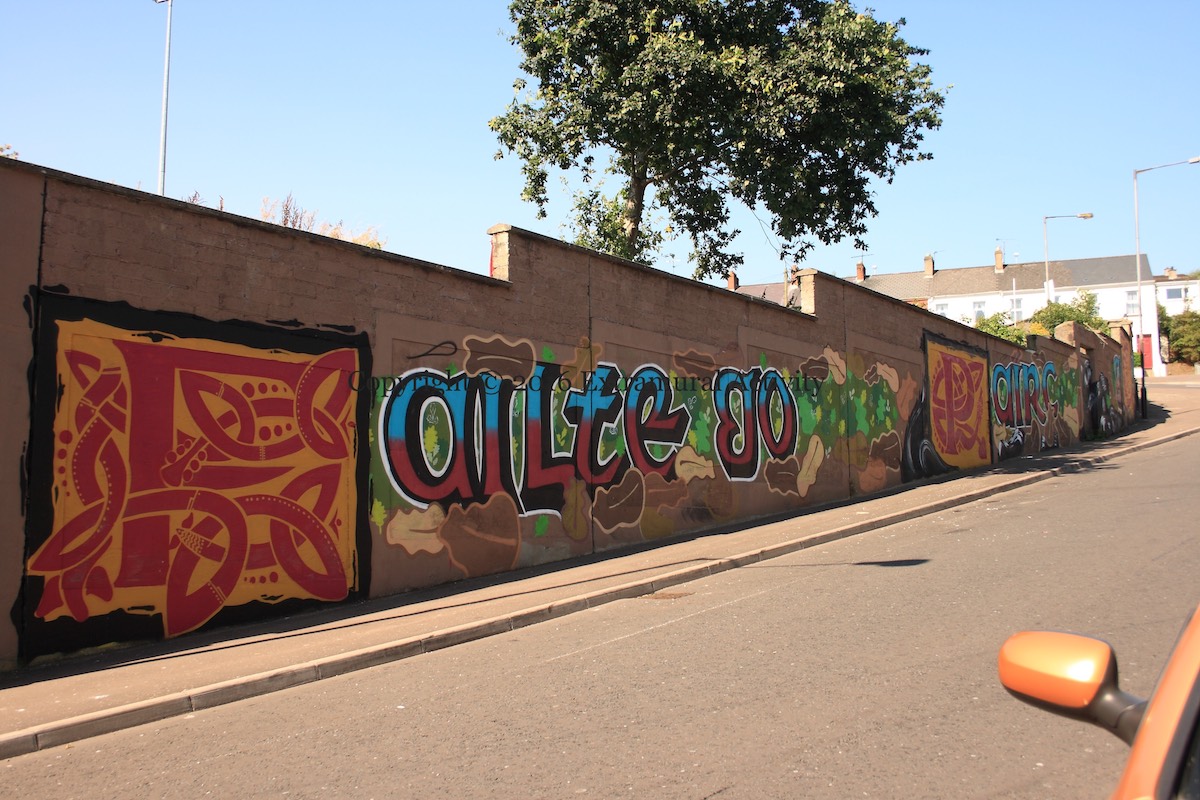
These images all come from Stanley’s Walk, along with eastern side of Celtic Park, which is home to Derry GAA games and has a capacity of 18,000 spectators.
Players from Scottish football team Celtic and local team Cliftonville “do the huddle” together. The mural was painted in 2013 to celebrate the visit by Celtic to Solitude (Cliftonville’s home pitch) for a Champions League tie between the two teams.
A mural outside Solitude was also painted for the occasion – see The Red Army.
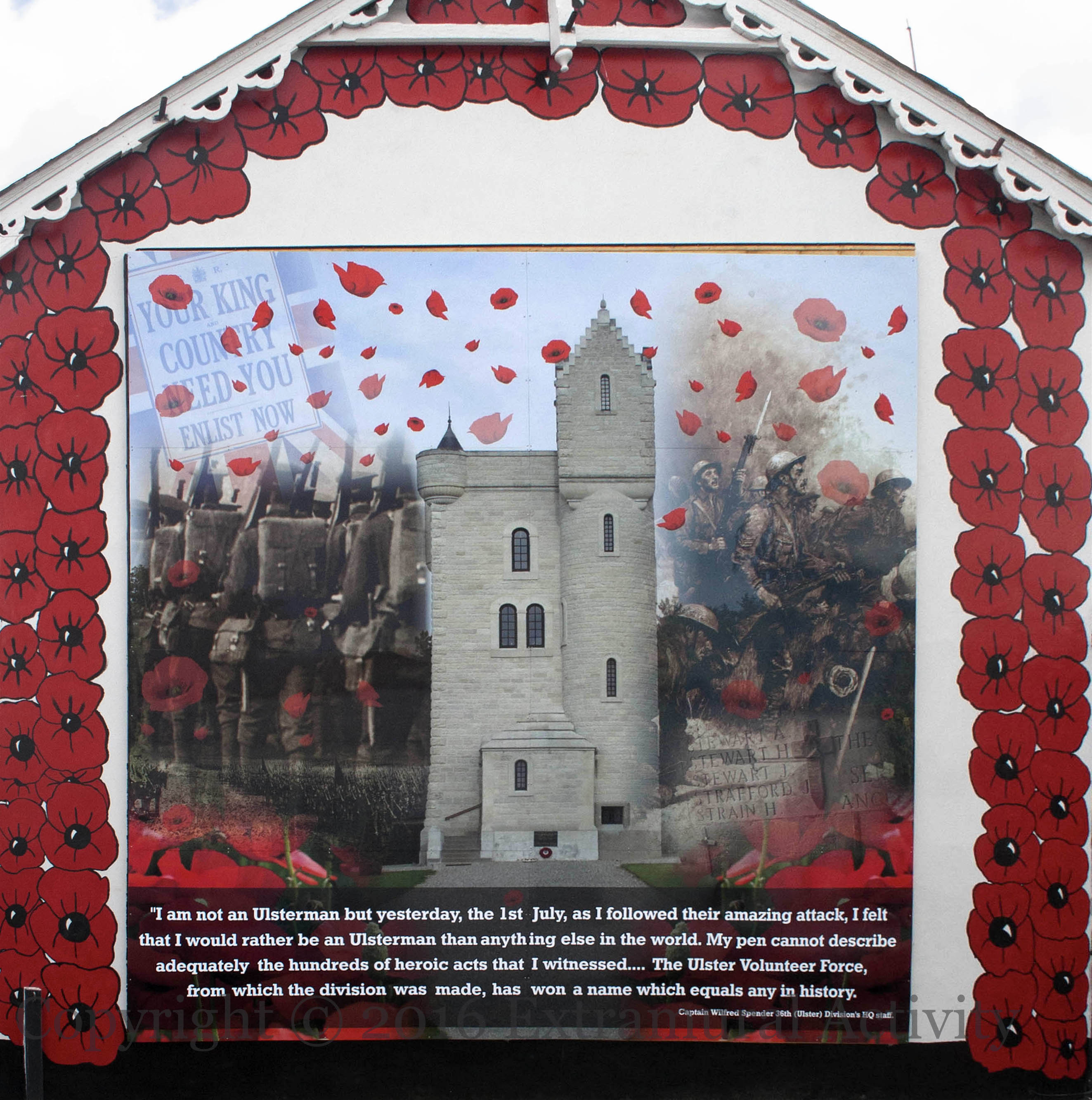
The main part of a Red Hand Commando mural was replaced recently with a board commemorating the action and deaths of the British Army’s 36th (Ulster) Division in World War I’s Battle Of The Somme, of which Captain Wilfrid Spender wrote, “I am not an Ulsterman but yesterday, the 1st July, as I followed their amazing attack, I felt that I would rather be an Ulsterman than anything else in the world. My pen cannot describe adequately the hundreds of heroic acts that I witnessed … The Ulster Volunteer Force, from which the division was made, has won a name which equals any in history.”
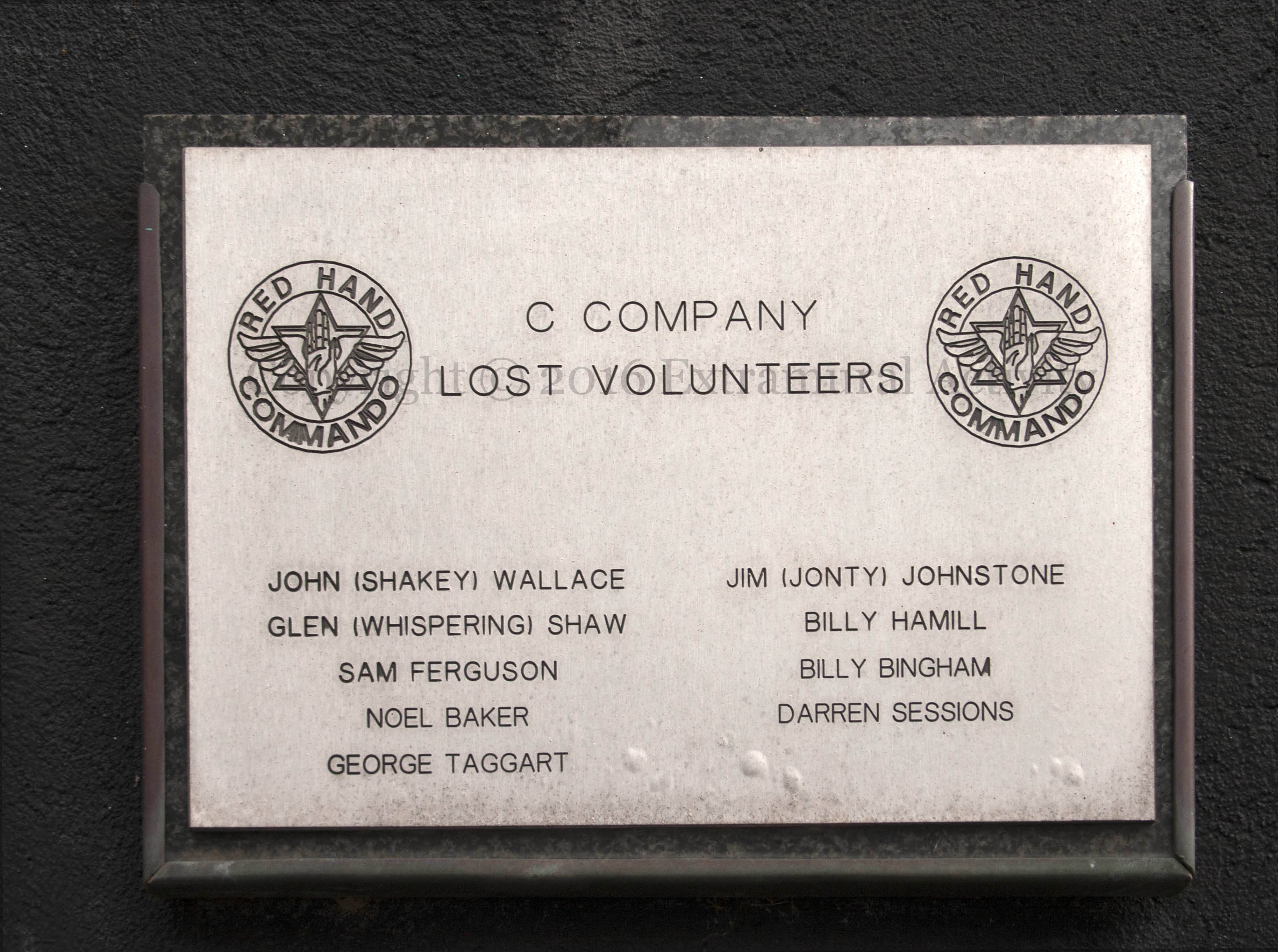
As shown in the three additional images, part of the old mural (and its plaques) remains on the right, “In memory of all loyalists who gave their lives in defence of Ulster – Lest we forget.”
For images of the launch (on 2016-03-08) see Belfast Live.
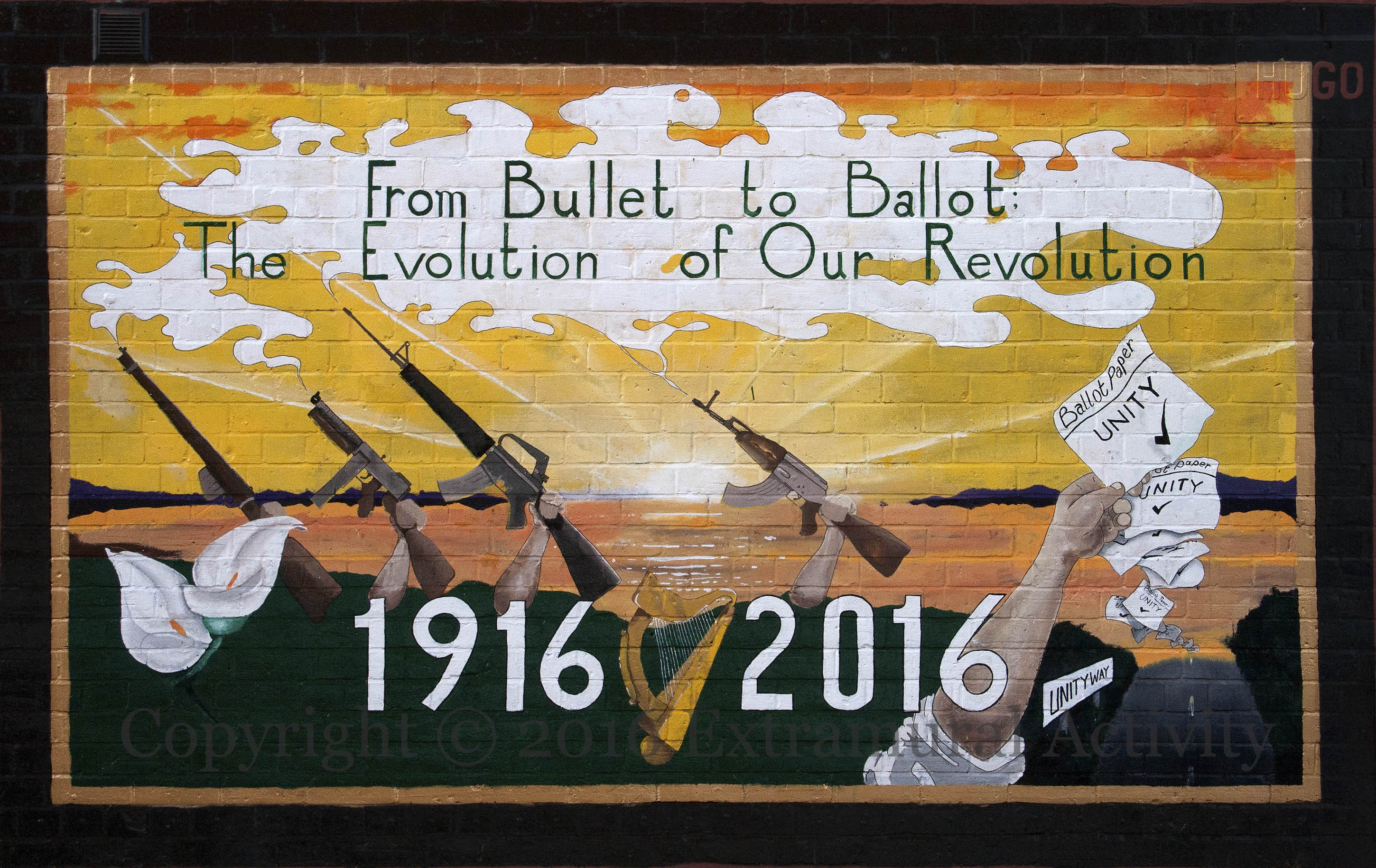
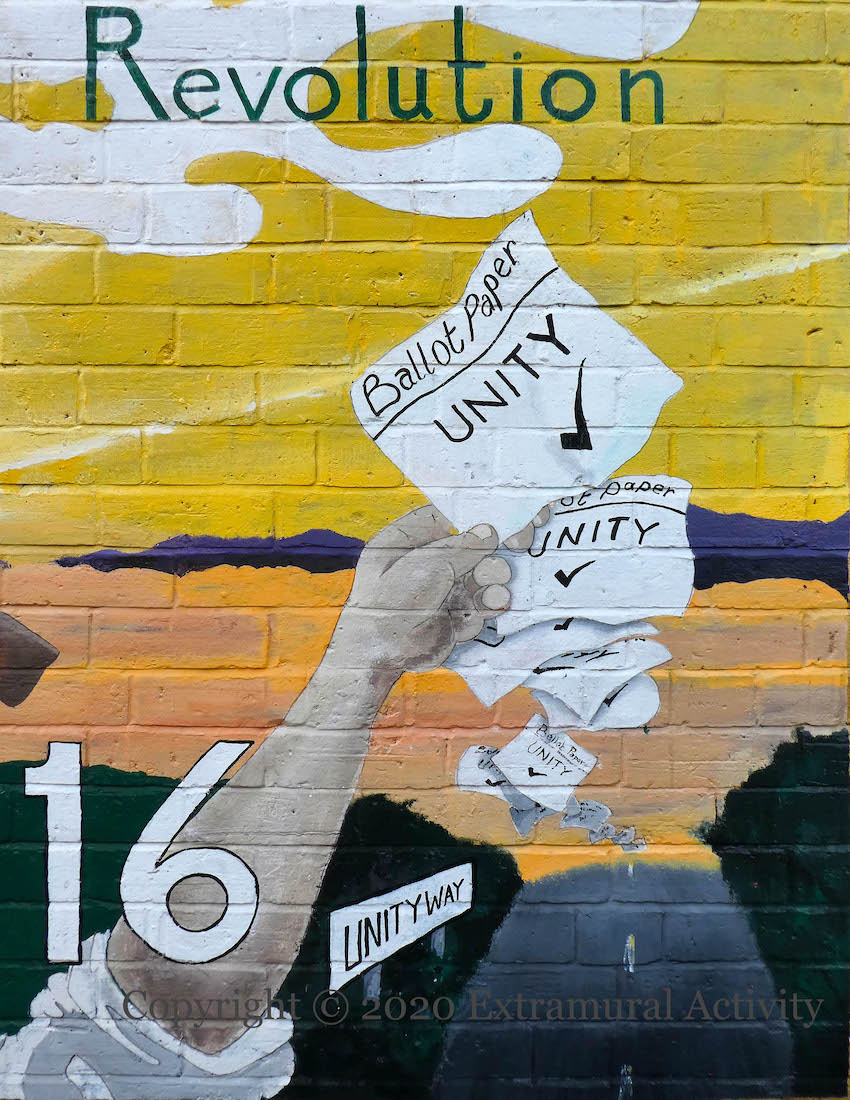
A history of nationalism/republicanism from left to right: a pair of Easter lilies, four generations of rifles, and then a switch to a ballot paper with a check in favour of “unity” and a road named “Unity Way”: “From bullet to ballot: the evolution of our revolution. 1916 – 2016”
This mural is on the north side of Hugo Street – the south side remains exclusively éırígí.
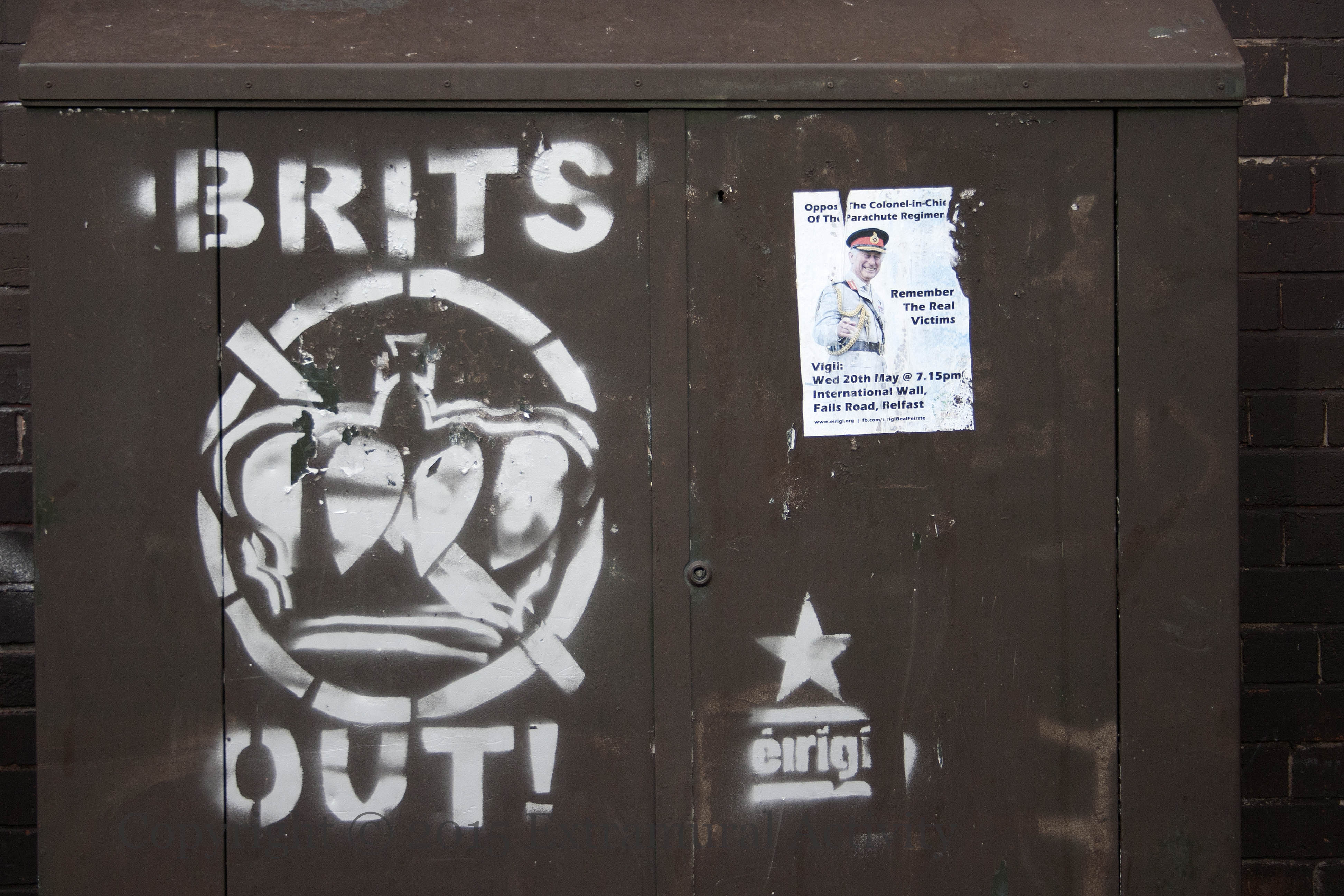
Charles, Prince Of Wales, and Camilla, Duchess Of Cornwall, will visit Ireland north and south this week (beginning in Belfast on Monday 23rd). The éırígí stencil and flyer shown above are from last year’s visit to the north, at the start of which he shook hands with Gerry Adams (BBC-NI). Charles is the titular head of the parachute regiment, which served in Northern Ireland from the late sixties to the nineties, including in Derry during Bloody Sunday.
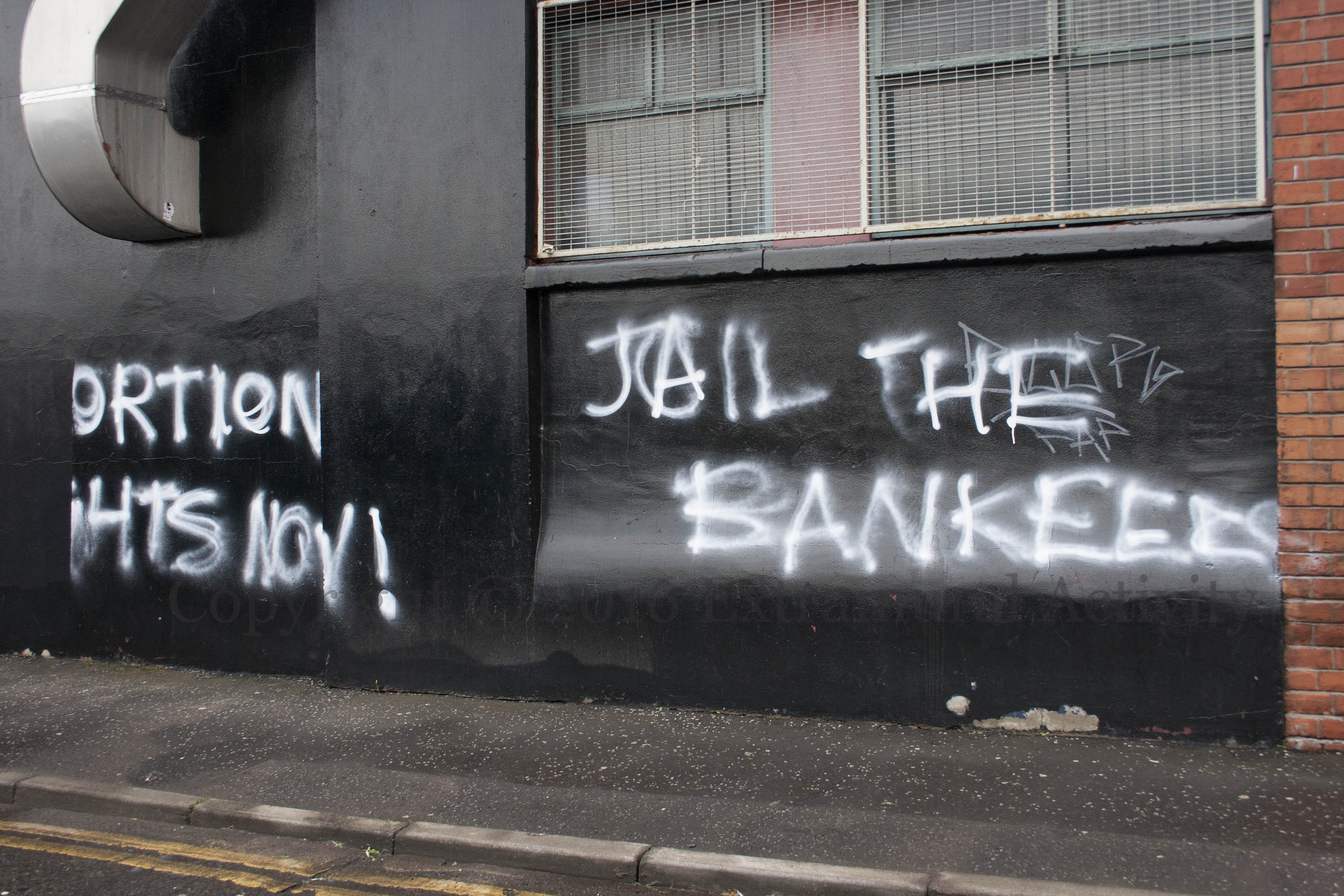
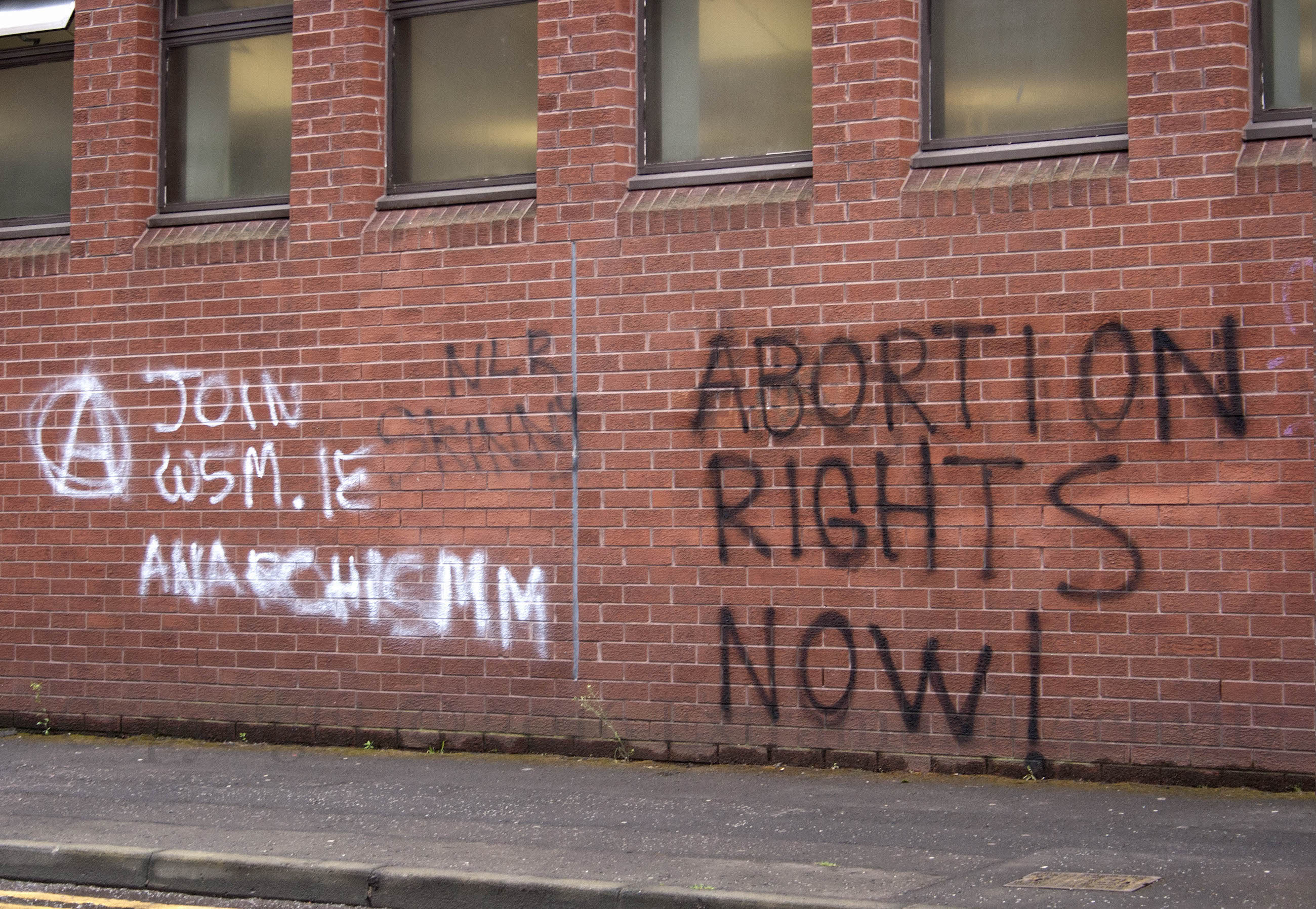
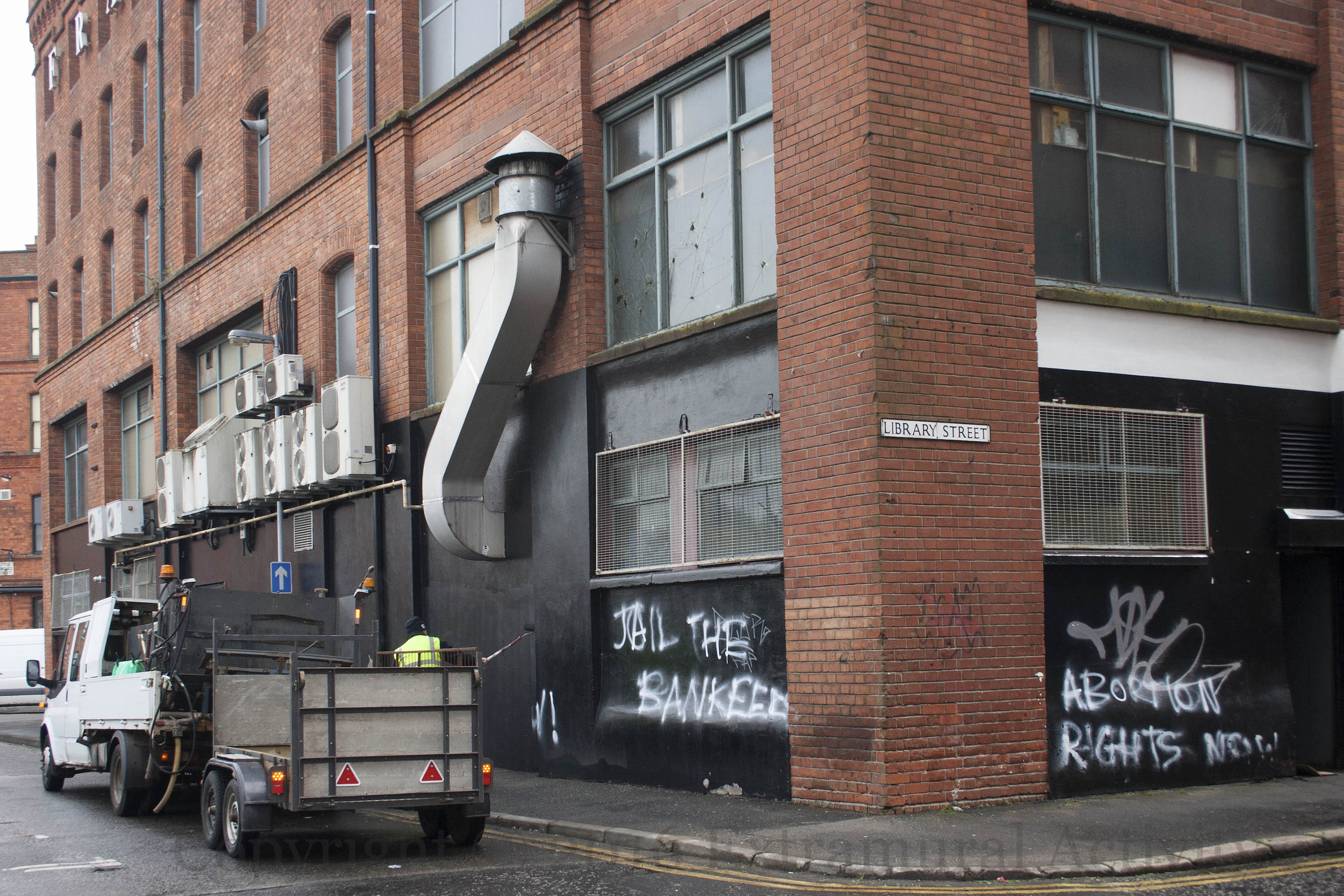
If you’re downtown early in the morning, you might bump into the gents who “clean the streets”, not in the sense of picking up litter but rather in the sense of graffiti (and chewing-gum) removal. They are shown here wiping out “Abortion rights now!” and “Jail the bankers” in Library Street (perhaps from the Workers Solidarity Movement – see the third image, below)
For more information on the removal process, see the first Now You See It.
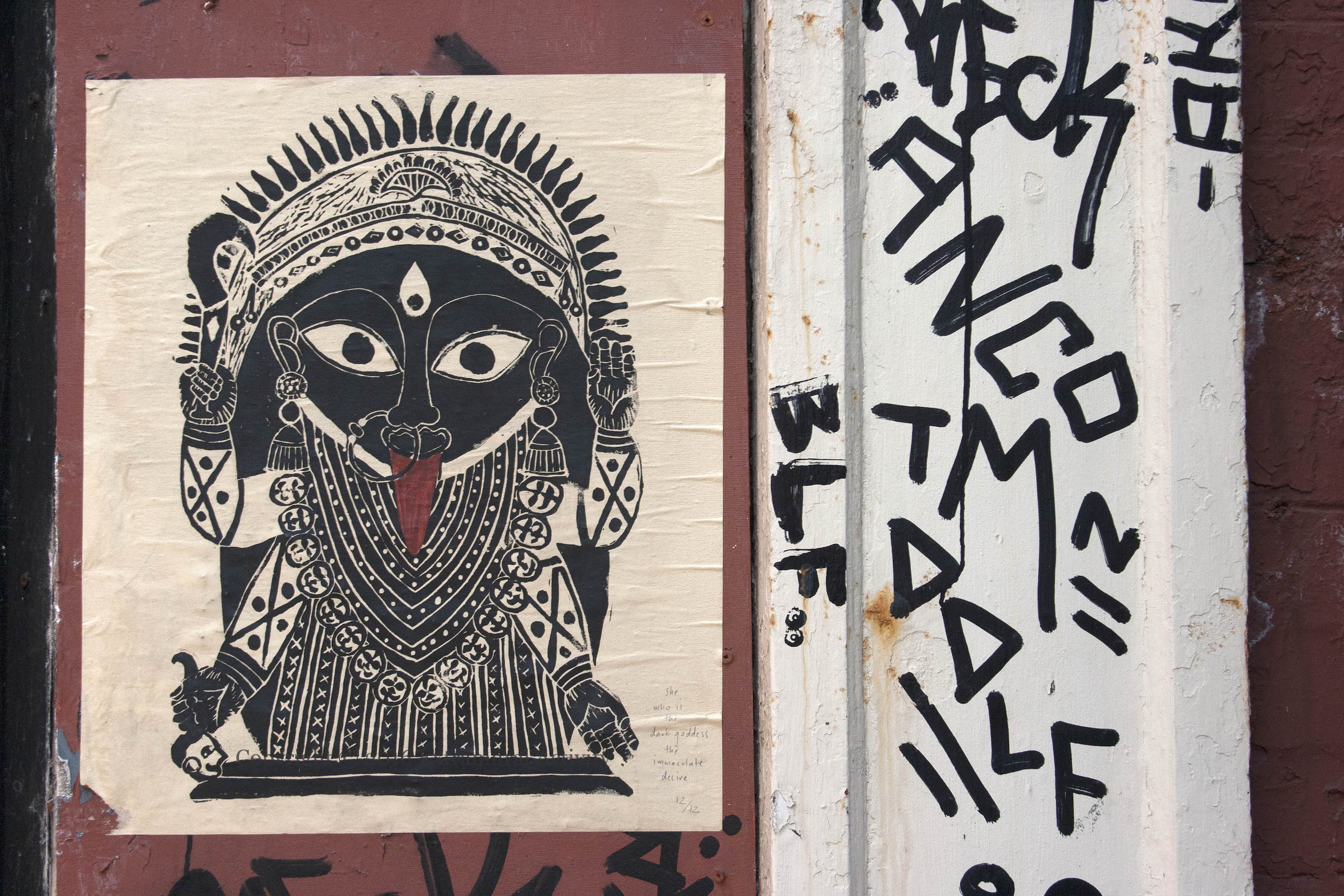
Here is the Hindu goddess Kali, her hair loose, nose pierced, tongue out, a kharga in one hand and the head of a defeated demon in the other. In the corner: “She who is the dark goddess, the immaculate desire. 12/12”. To the right are the hieroglyphic signatures of local writers and TMN crew.
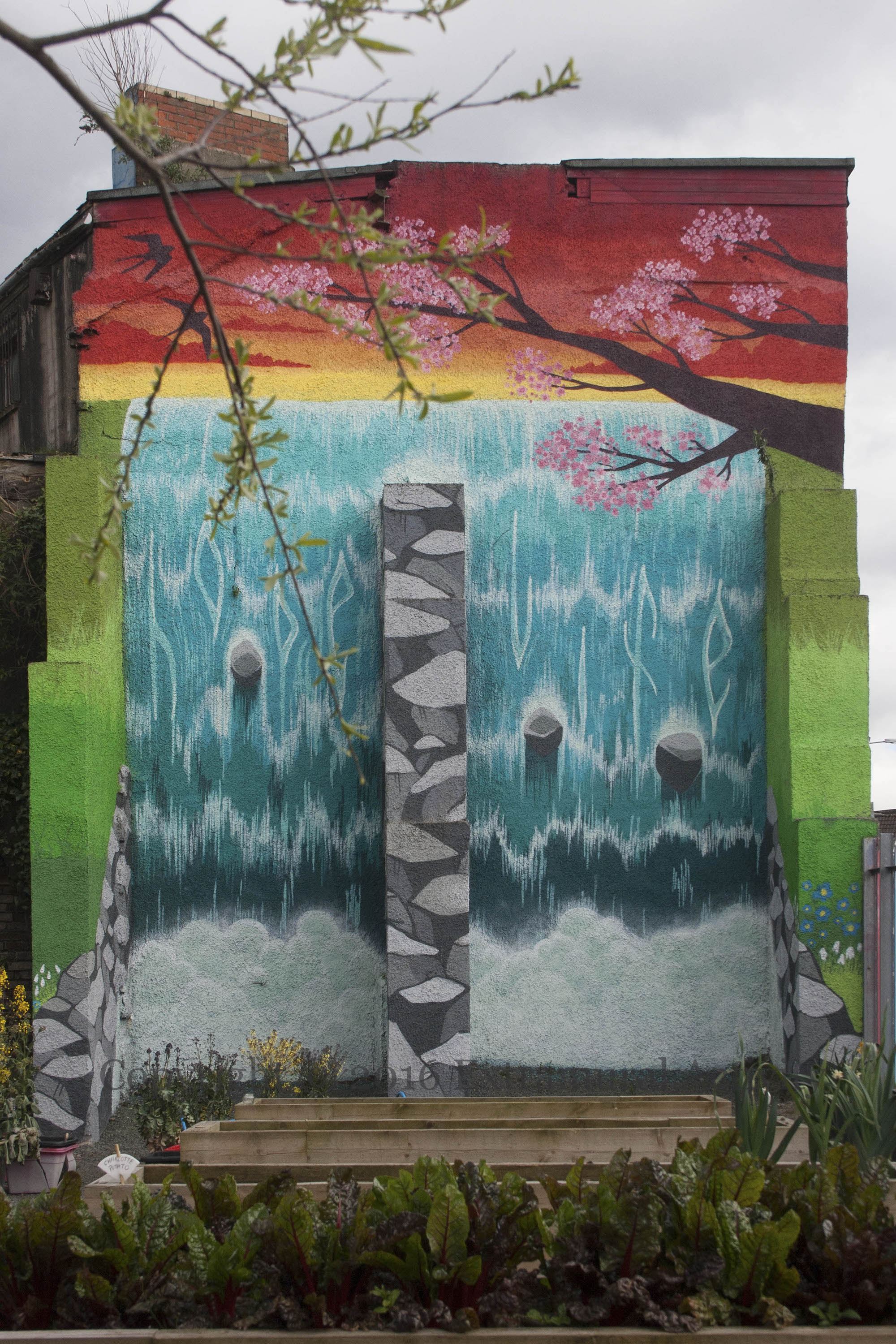
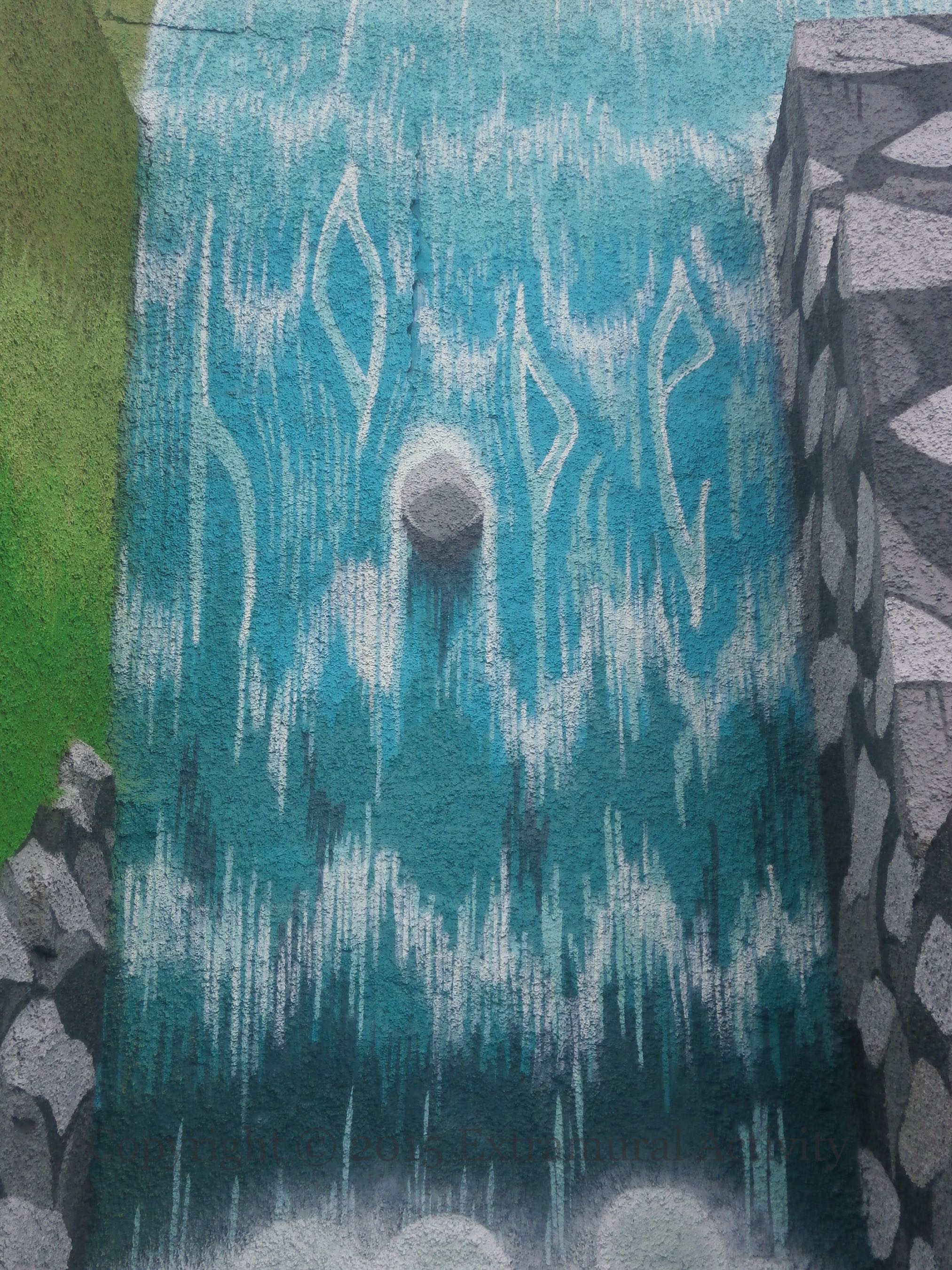
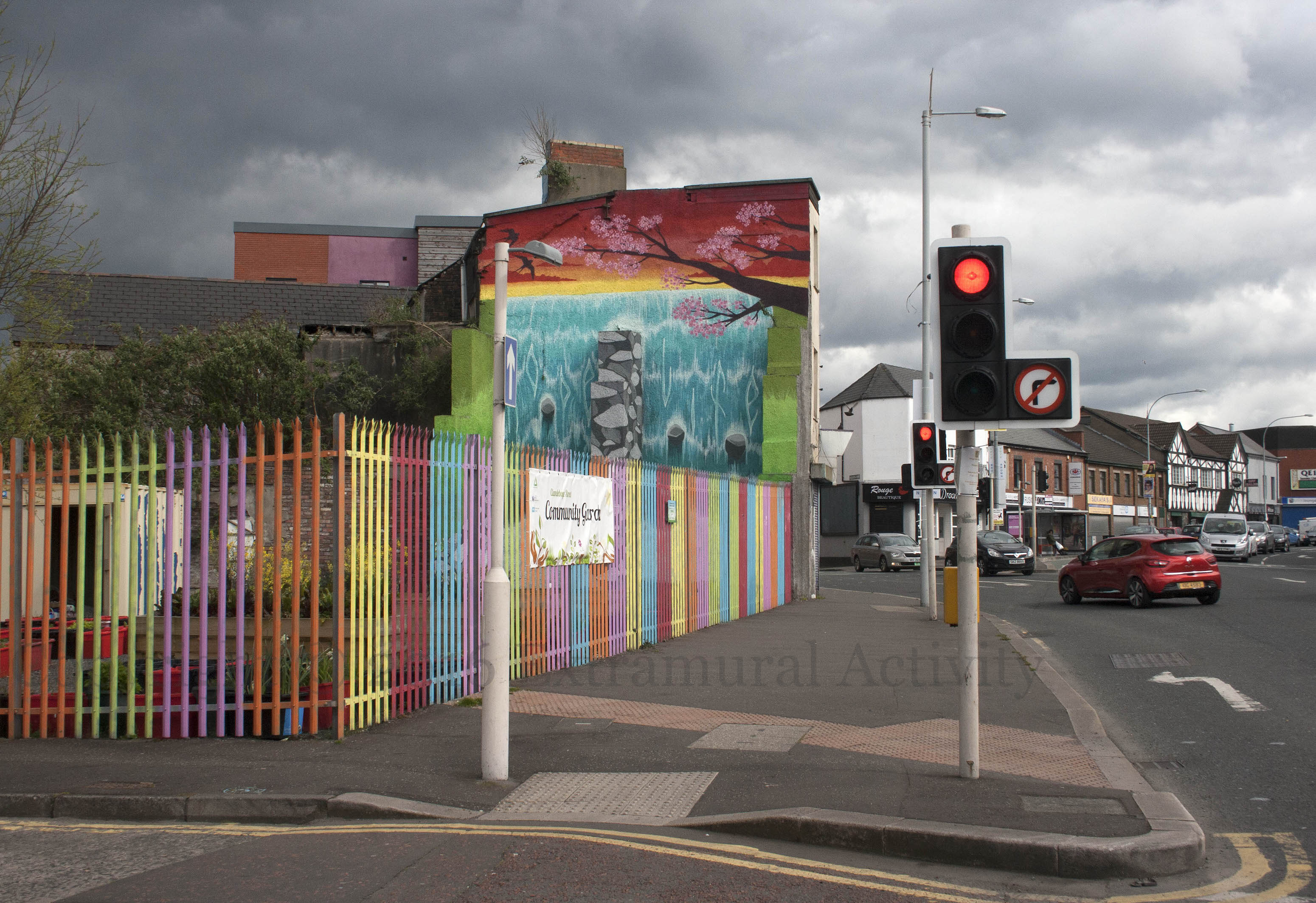
As can be seen above and in the two detail shots, below, the words “hope” and “life” are painted into the two sides of the waterfall that runs down the gable wall in the Clandeboye Street community garden in east Belfast beneath swallows and cherry trees. Painted by Friz (Web | Fb | Tw) in 2015. The final shot shows the similar palette of colours in the railings along the Newtownards Road.










 Extramural Activity