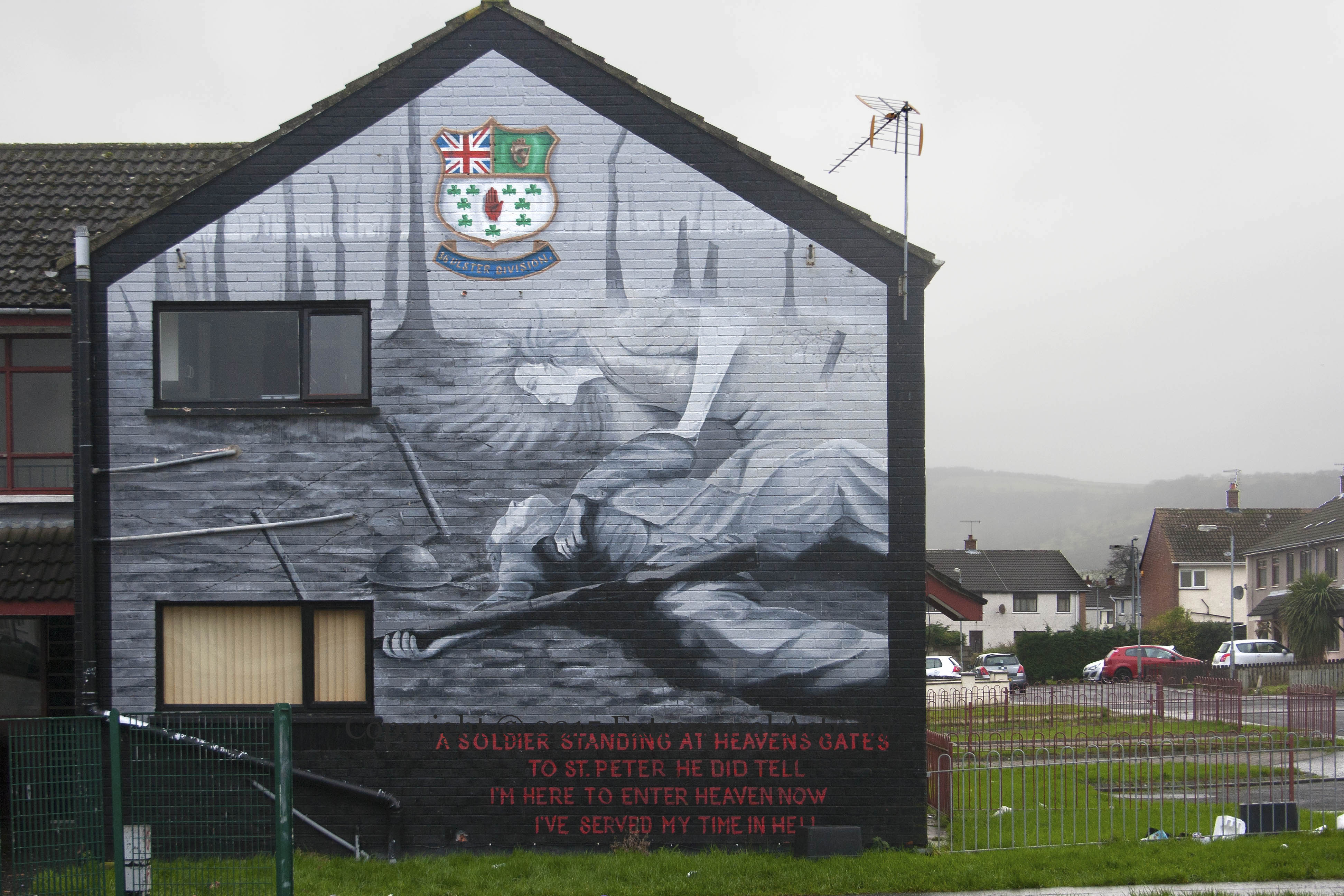
“Sgt. Thomas George Wortley , “D Coy” 14th Btn. Royal Irish Rifles, Service No. 14/17063, Died Messines 07-06-1917, Spanbroekmolen British Cemetary Grave C10″. Wortley was born in Carrickfergus, lived in Belfast, died on the first day of the battle at Messines (findagrave), buried in a small cemetery of British soldiers, many from the 36th (Ulster) Division, in Spanbroekmolen on the Ypres Salient in Flanders (WP) – shown in the mural – and is remembered in Carrickfergus with a parade each year on the date of his death (carrickfergusrollofhonour).
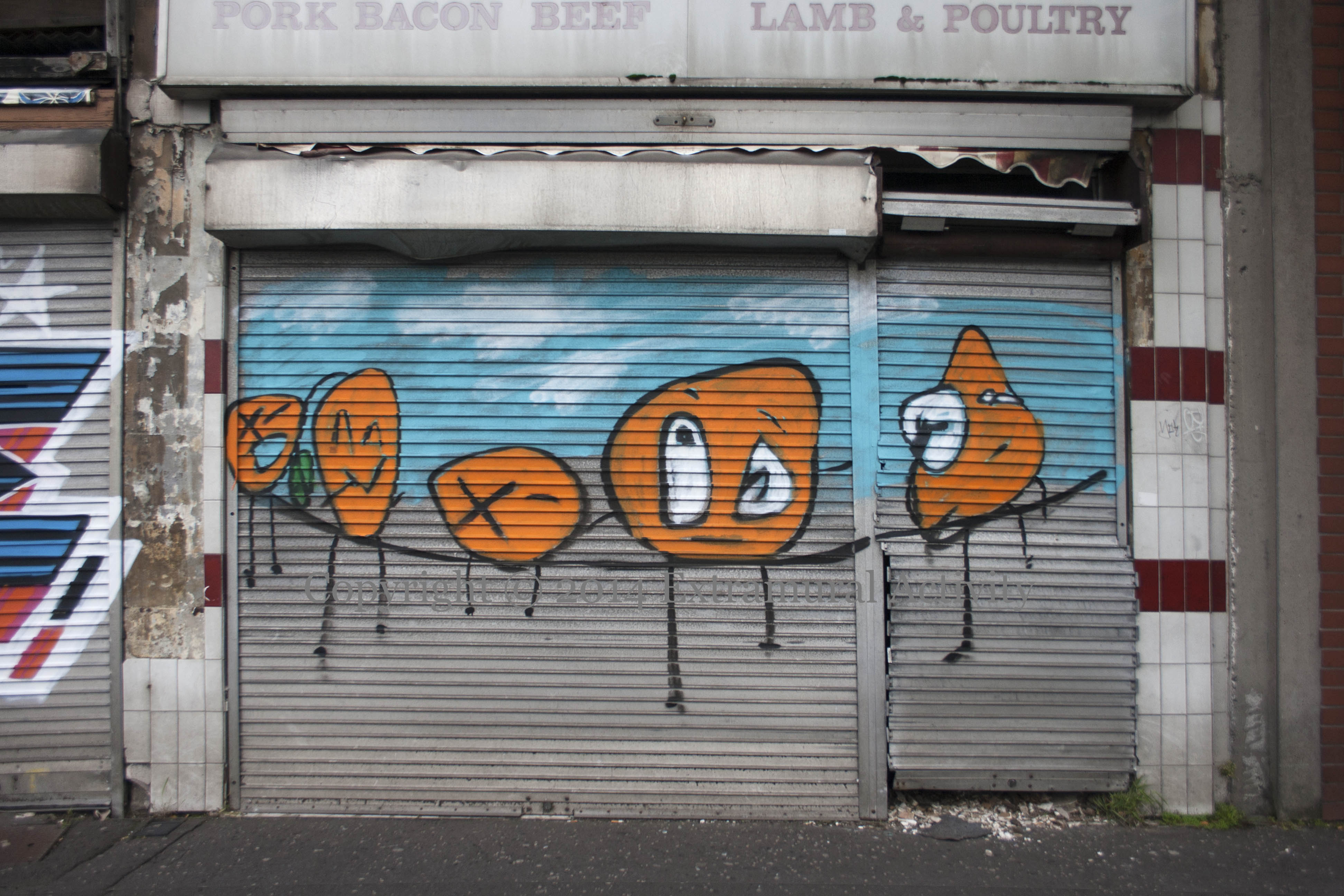
Street art in North Street – oranges on a wire looking none too steady or healthy. The one on the right has gone a bit pear-shaped and appears to holding an ice-pack to its face. Or is it a mobile phone for oranges? Artist unknown (send e-mail or leave a comment). Next to a tag by Inkie.
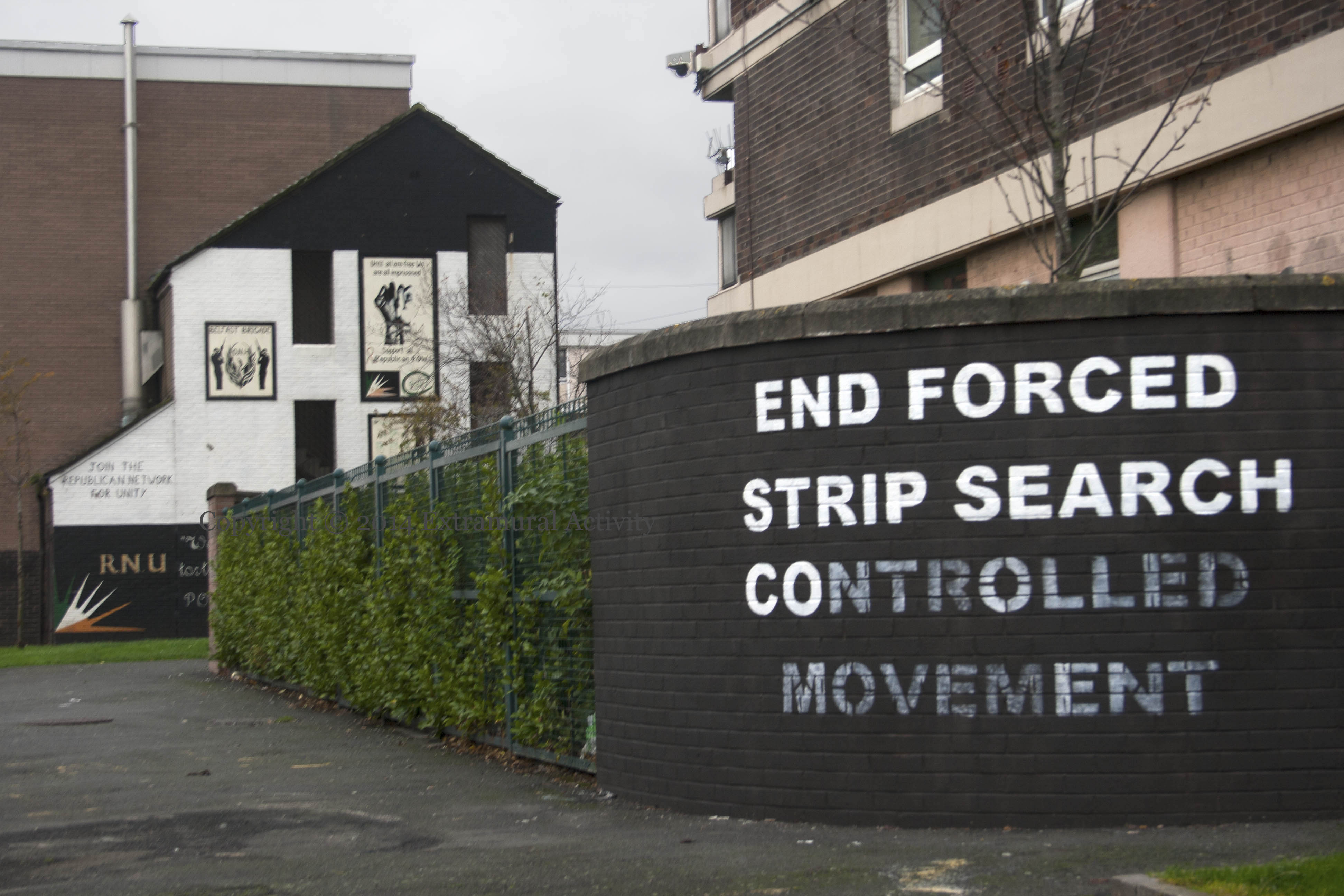
Above, “End forced strip search, controlled movement” RNU/Cogús (web) stencil (“End forced strip search, controlled movement”) in front of a gallery of RNU/Cogús boards (see Until All Are Free We Are All Imprisoned).
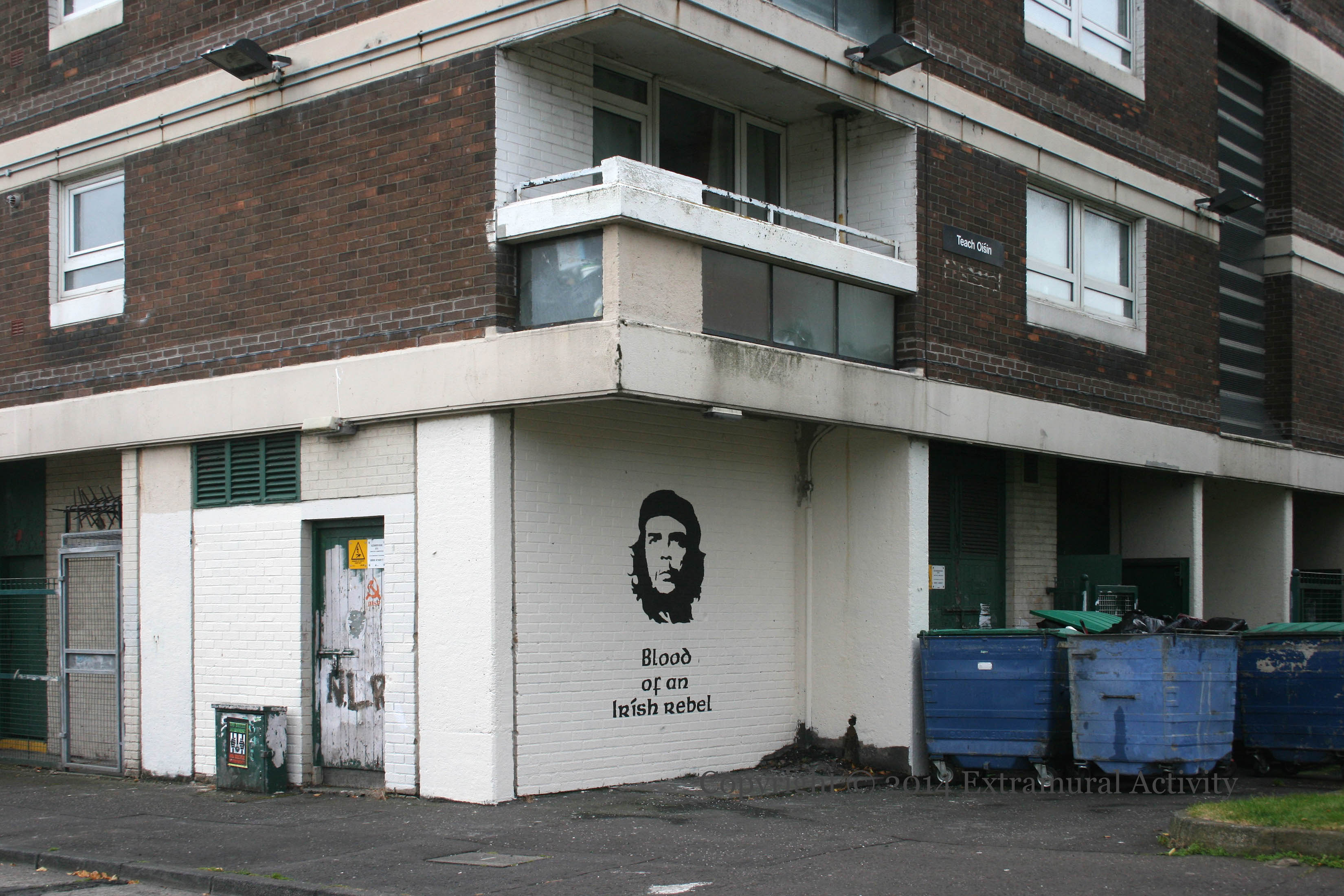
Below, stencil of the iconic Che over his father’s words: “[In my son’s veins flowed the] Blood of an Irish rebel”. (See previously: Che Guevara Lynch)
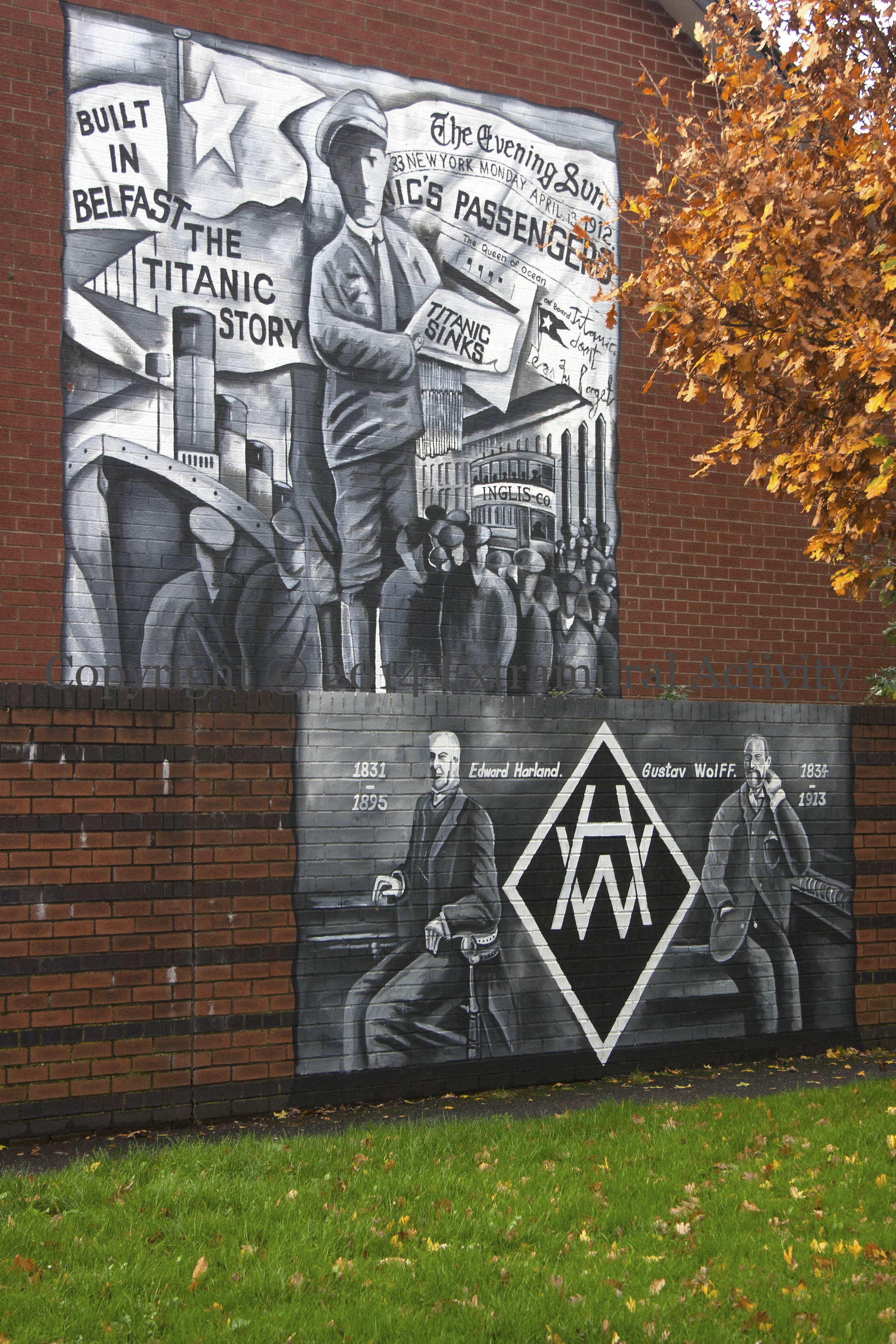
“Titanic Sinks” is the headline of the newspaper in this recent mural in east Belfast. In fact, news was hard to come by in the first few days after the sinking in the early morning of April 15th, 1912, as Titanic sank a thousand miles from New York and wireless was the only means of communication. The Evening Sun’s headline on April 15th (which might be partially reproduced here) announced “All Titanic Passengers Are Safe; Transferred in Lifeboats at Sea” (image at Pratt Library). Here is a NYTimes article about the difficulty in getting reliable news in the days after the sinking. This is new work by John Stewart. (Report on the launch at NIHE.)
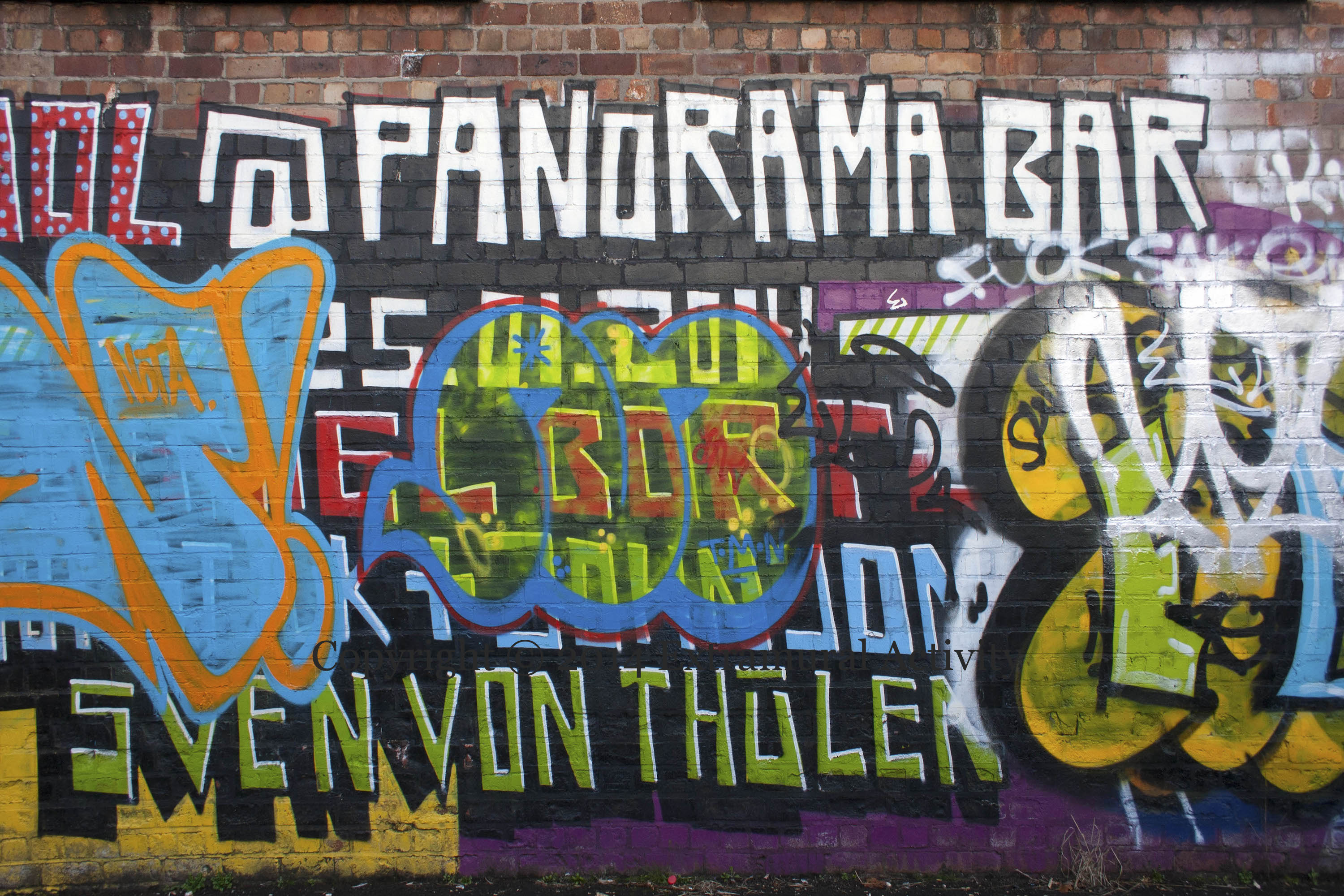
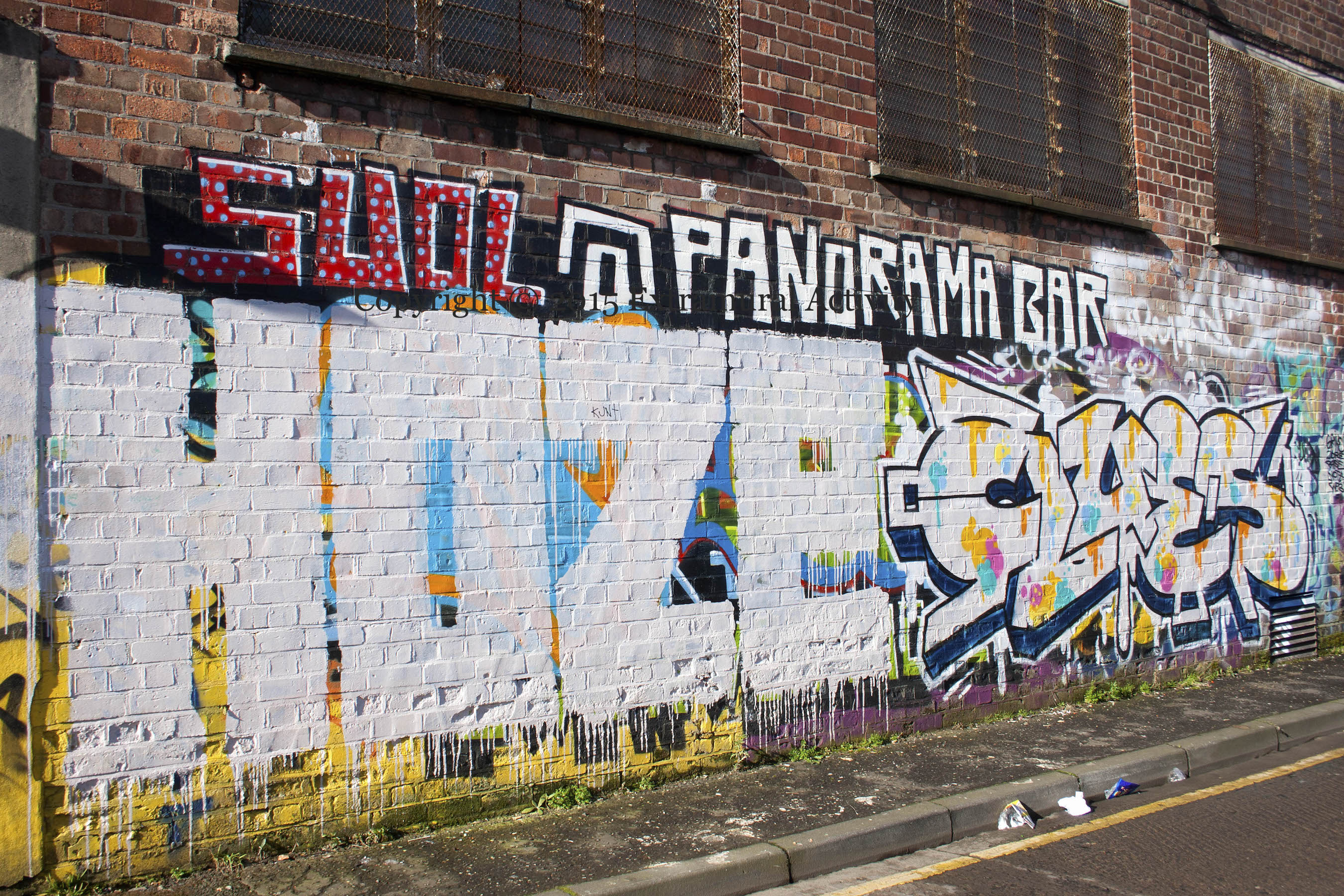
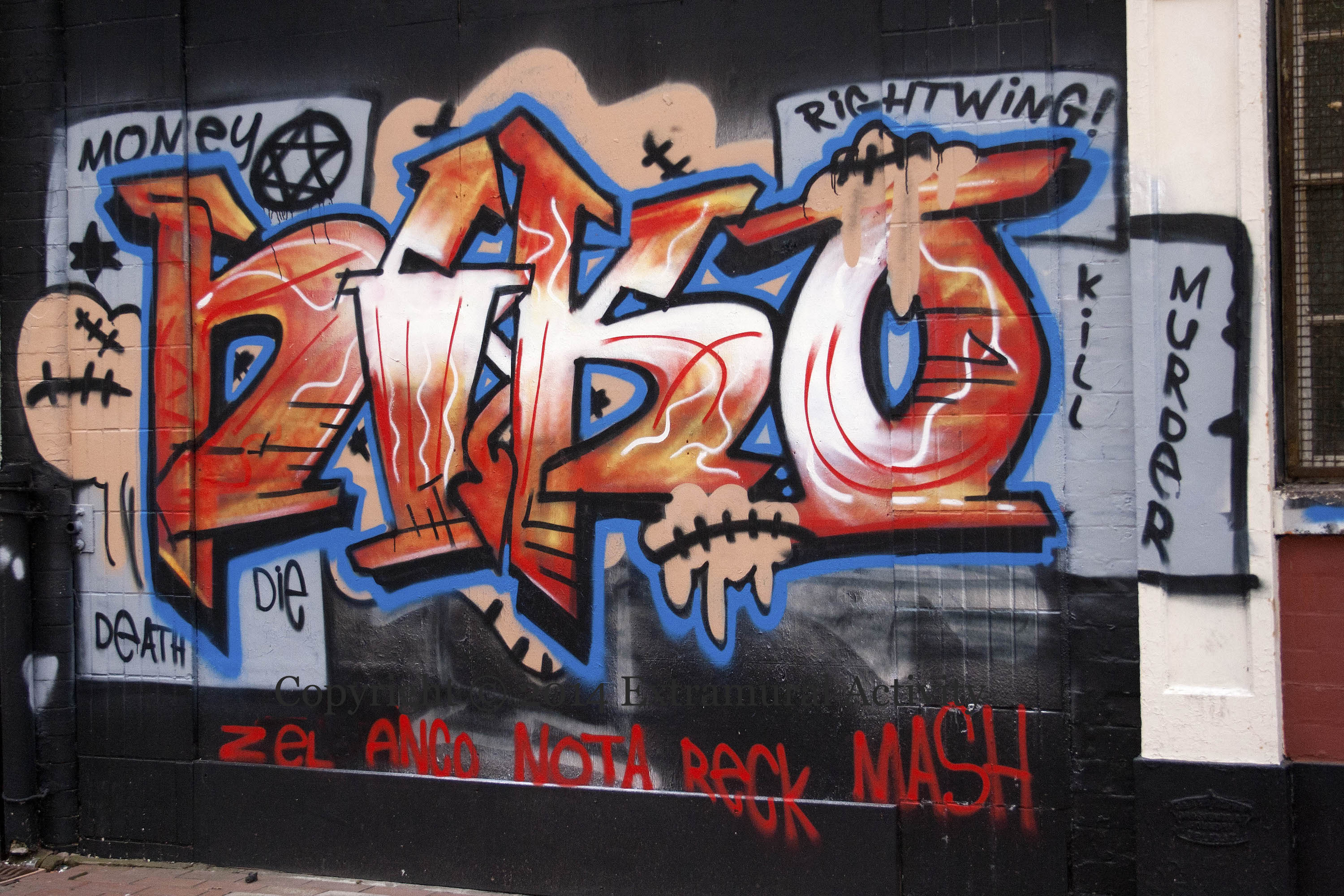
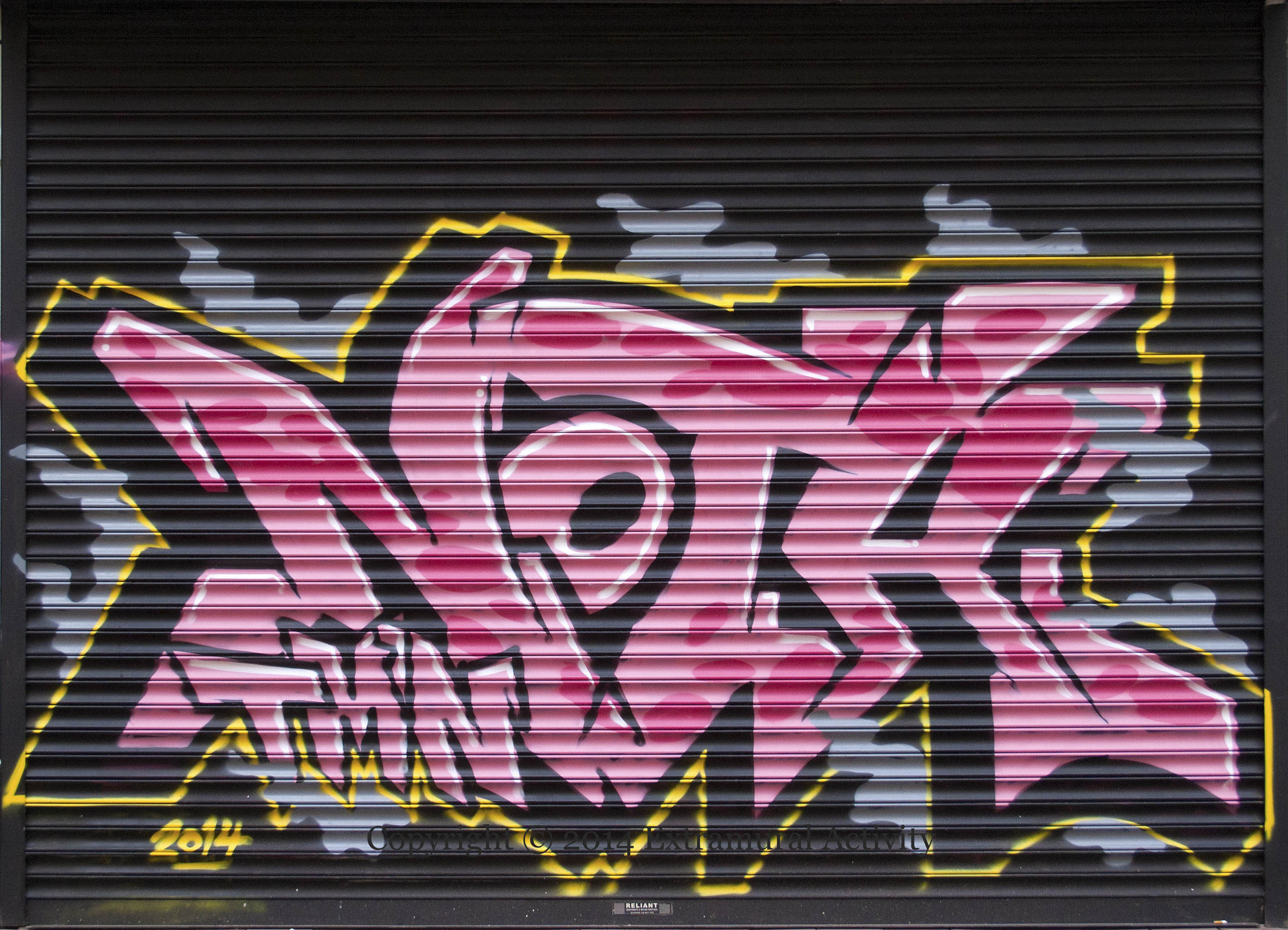
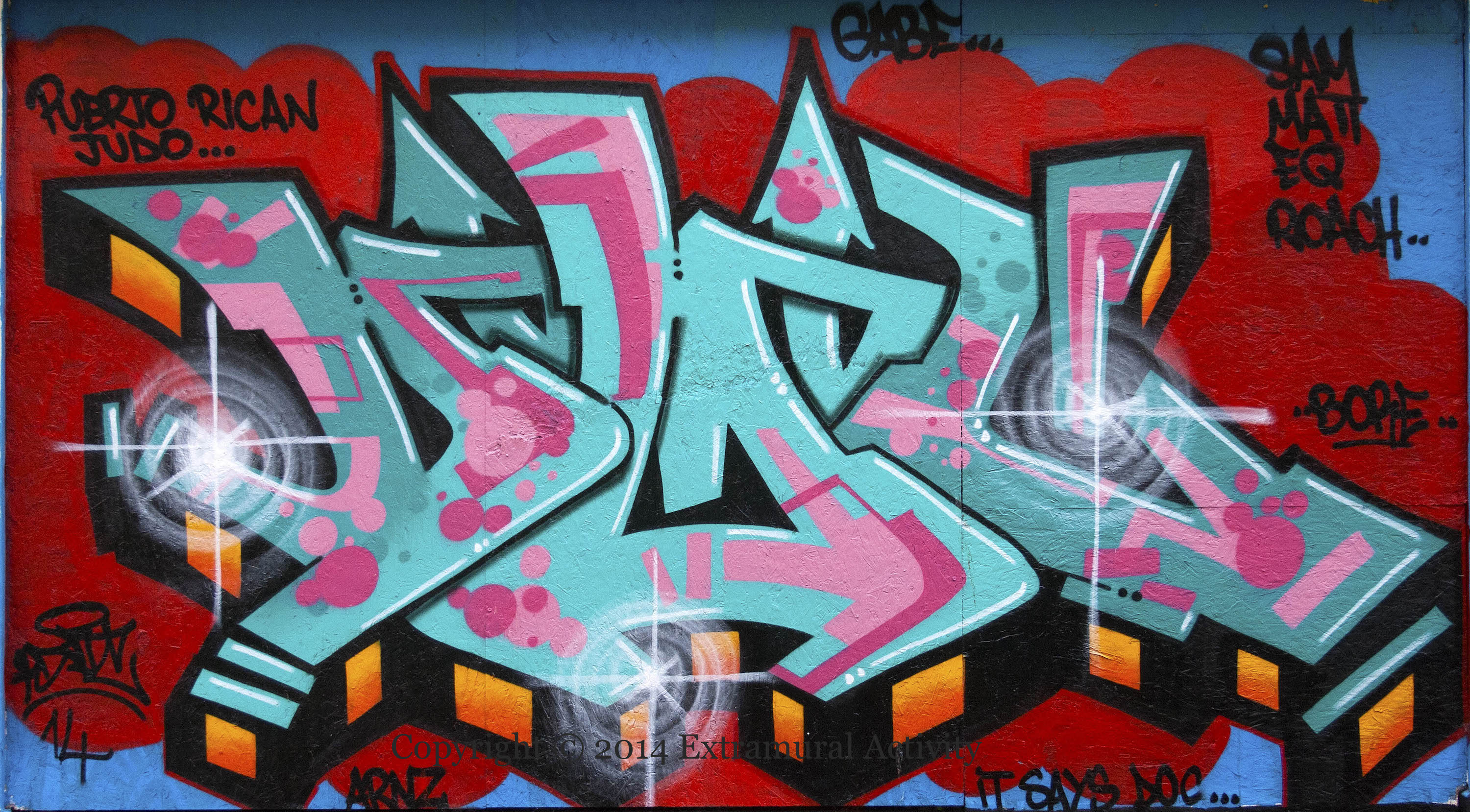
Here is another set of tags (after the selection from the Cupar Way “peace” line in Sign Here), this time from the city centre, specifically Unity Walk and Garfield Street.
A dead WWI soldier in the scorched Belgian countryside is comforted by an ethereal figure who will convey him to heaven: A soldier standing at heaven’s gate/To St. Peter he did tell/I’m here to enter heaven now/I’ve served my time in hell – a variation on James Donahue’s WWII Soldier’s Poem (WP). The poem was previously used of Republicans in a 1981 mural in Derry (see I Refuse To Change/M00151).
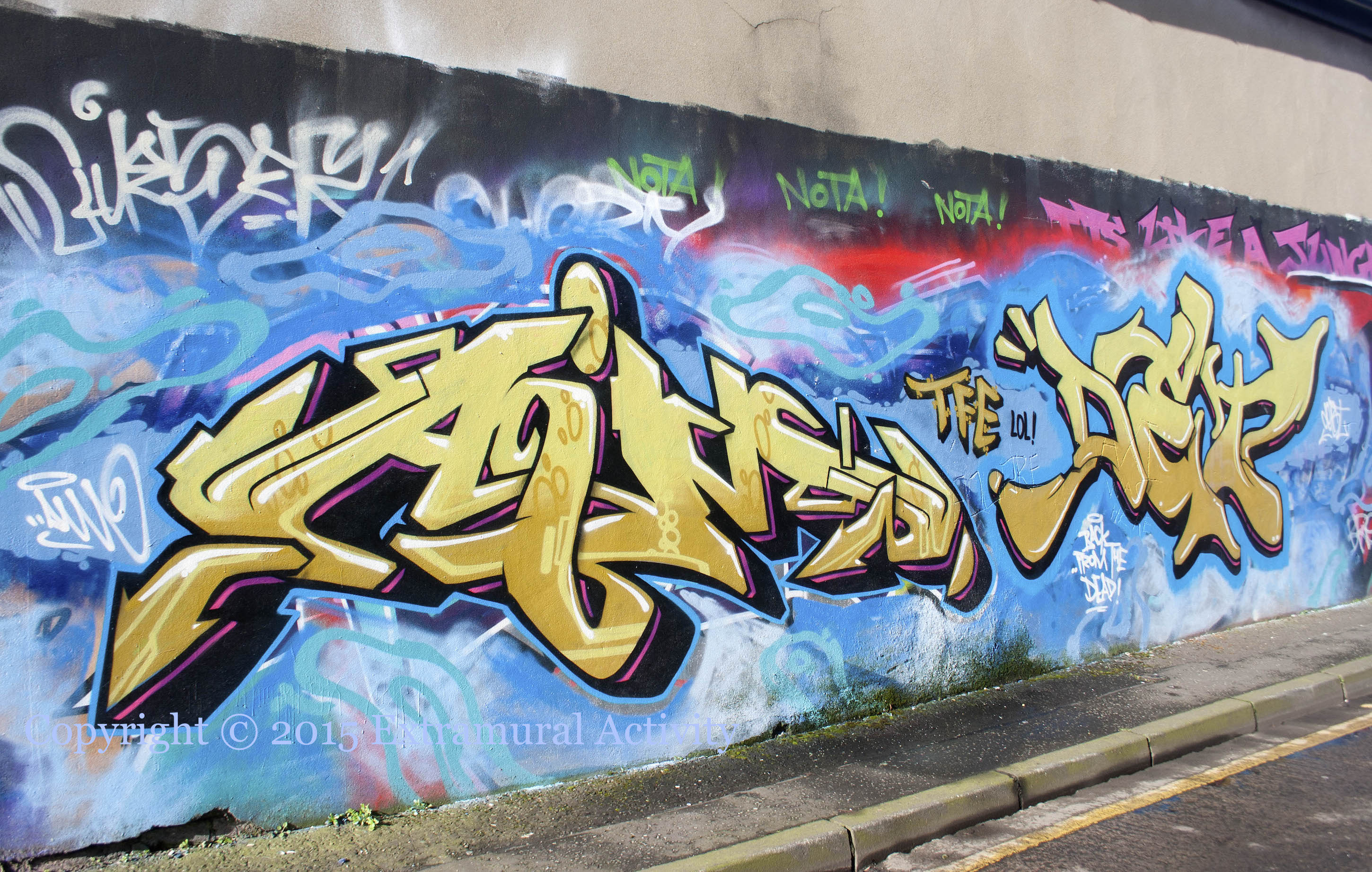
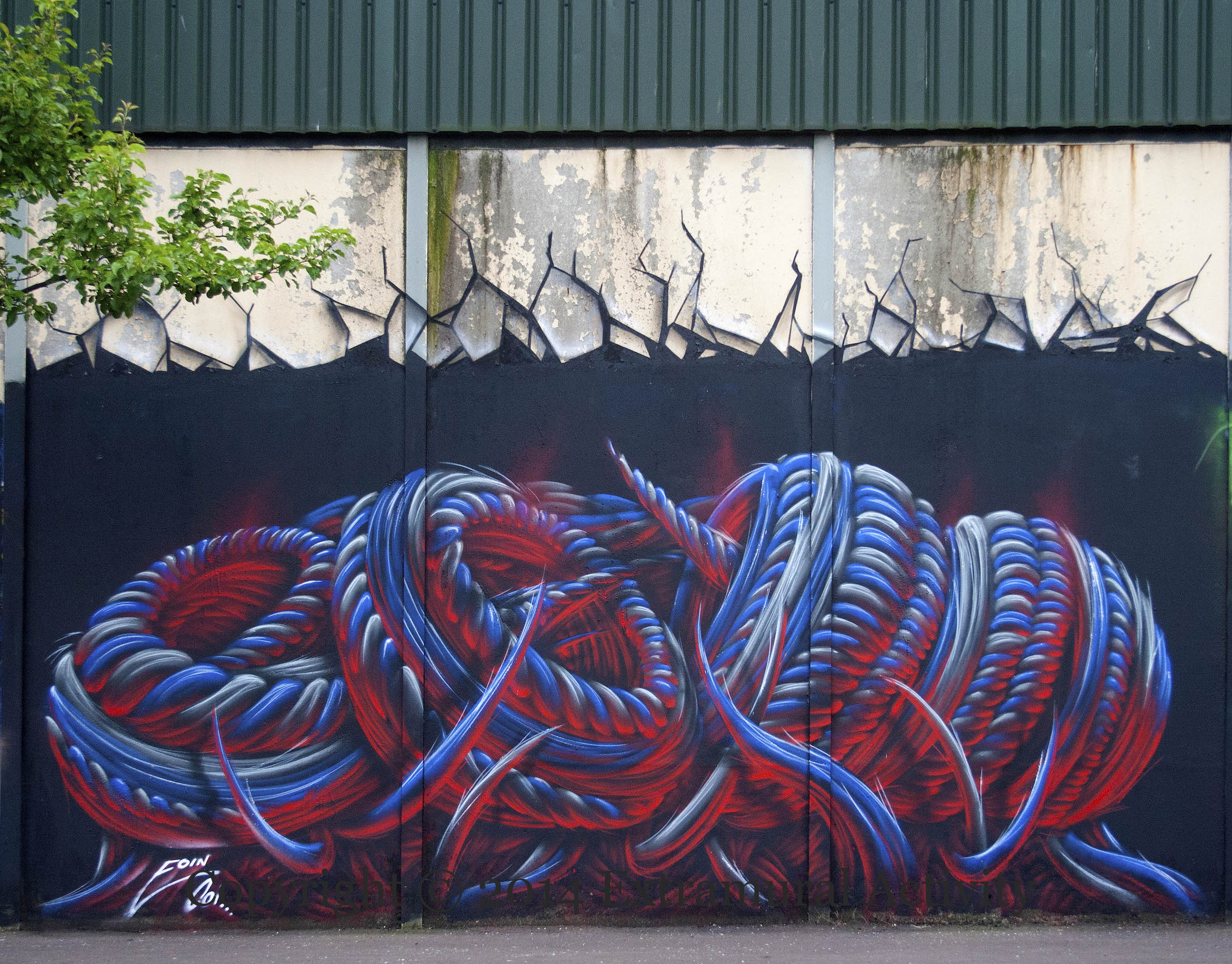
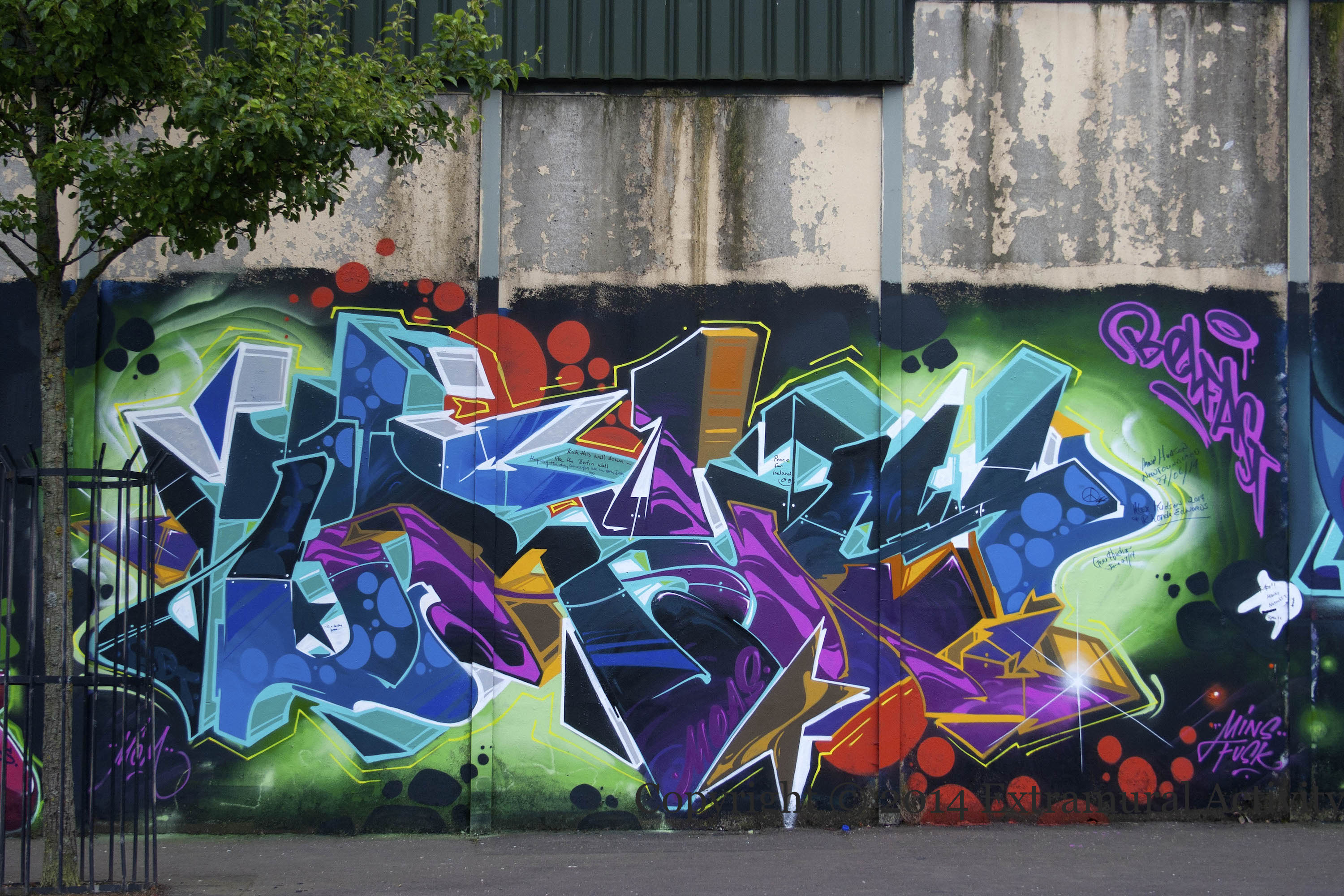
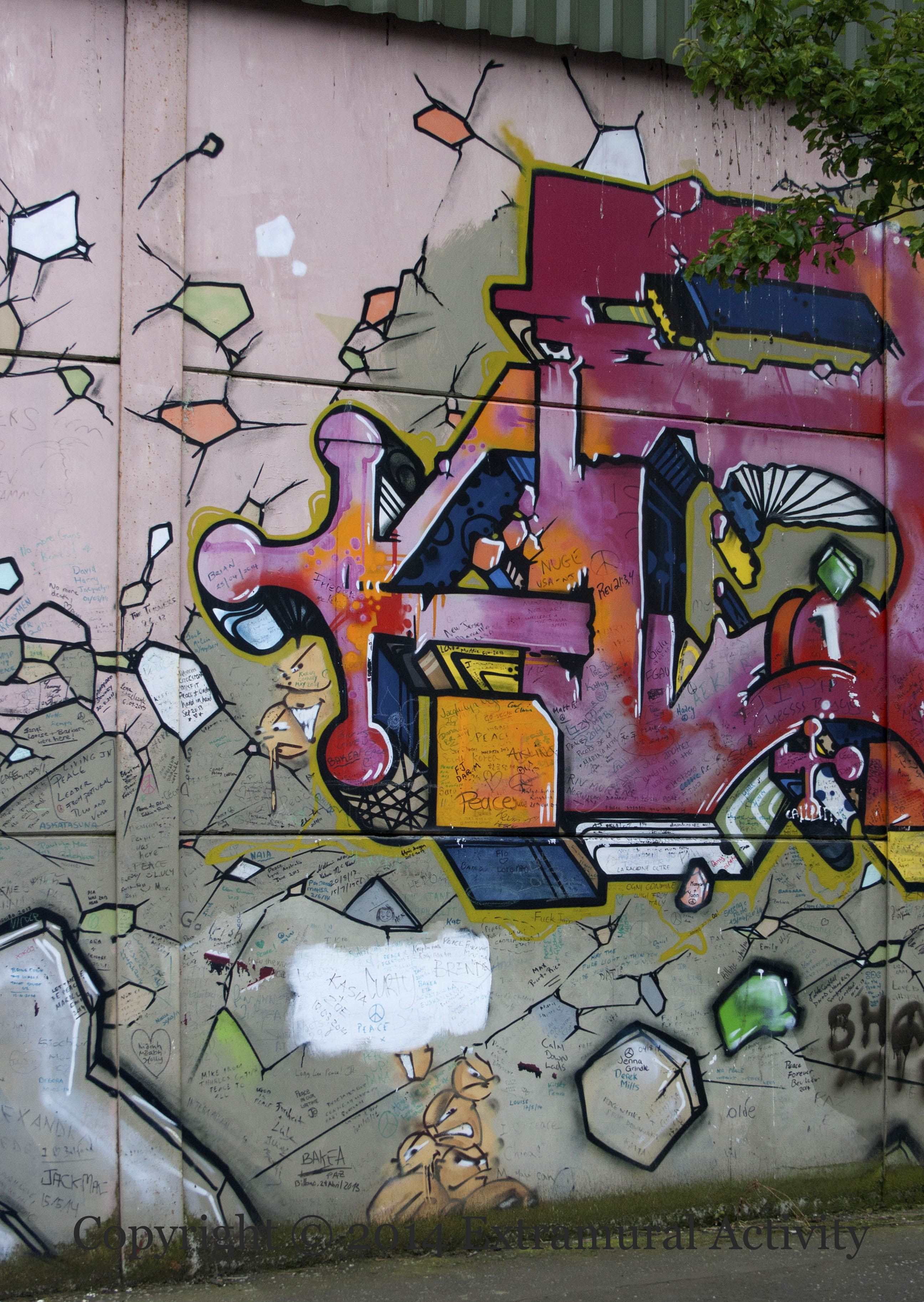
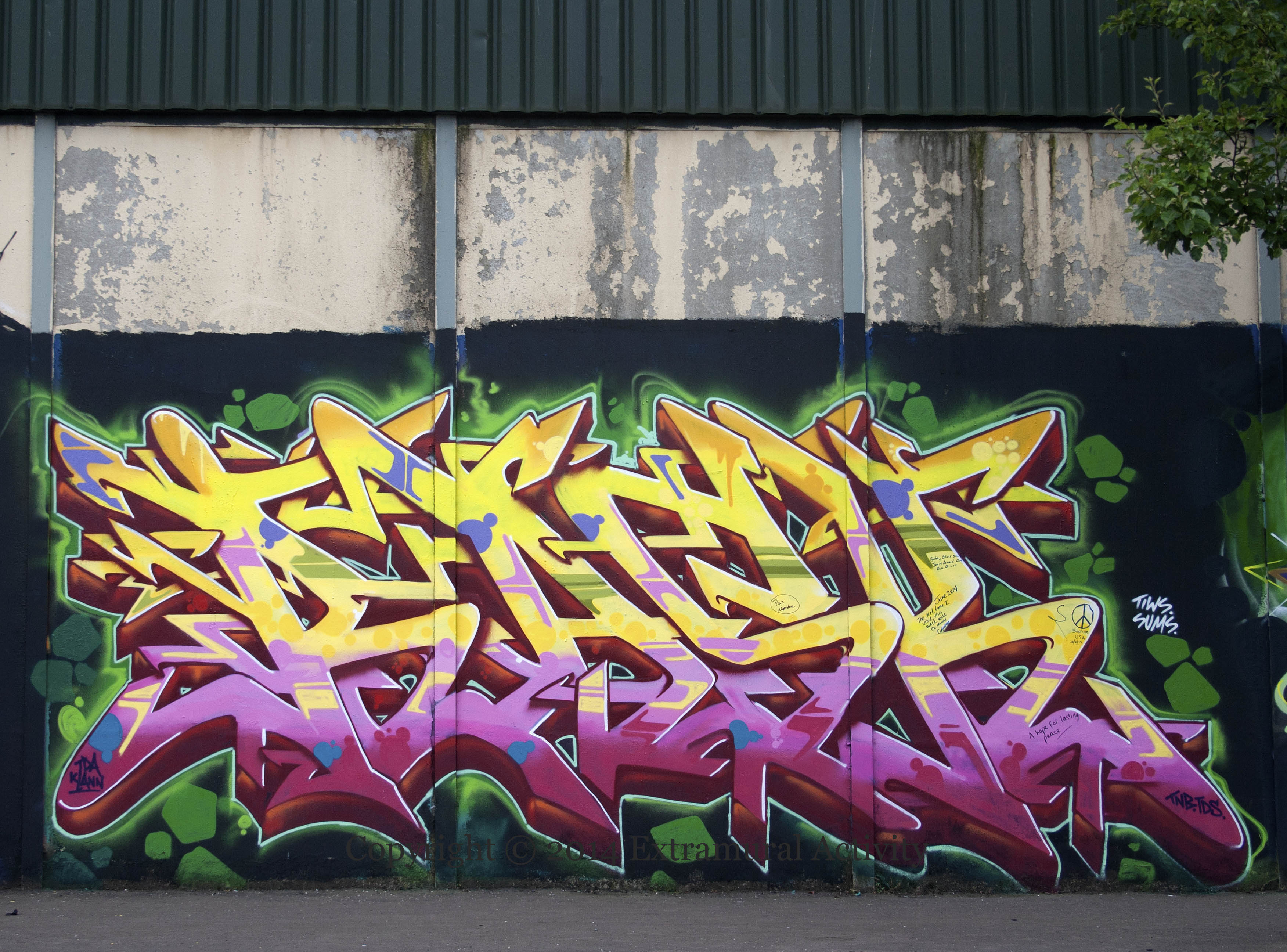
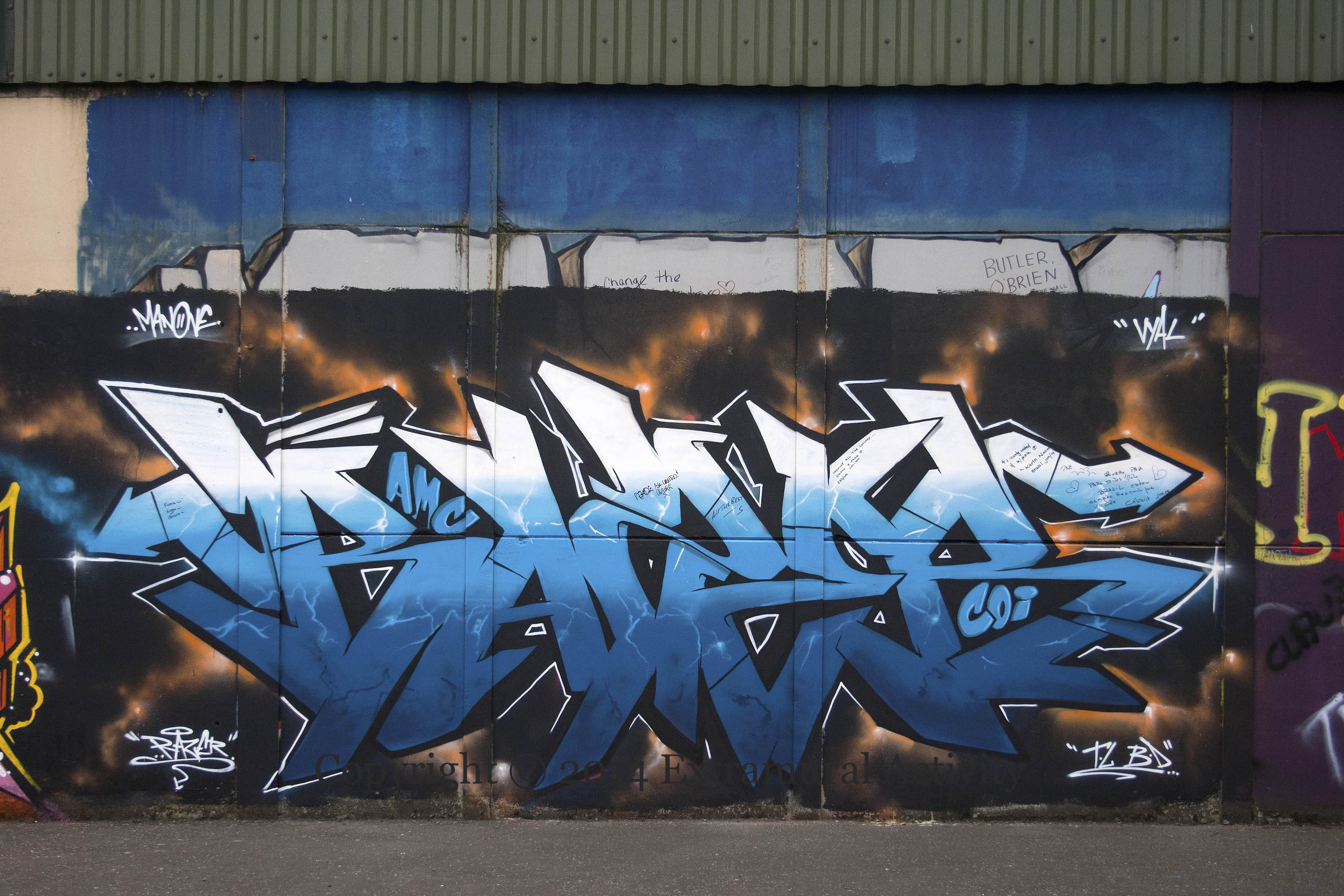
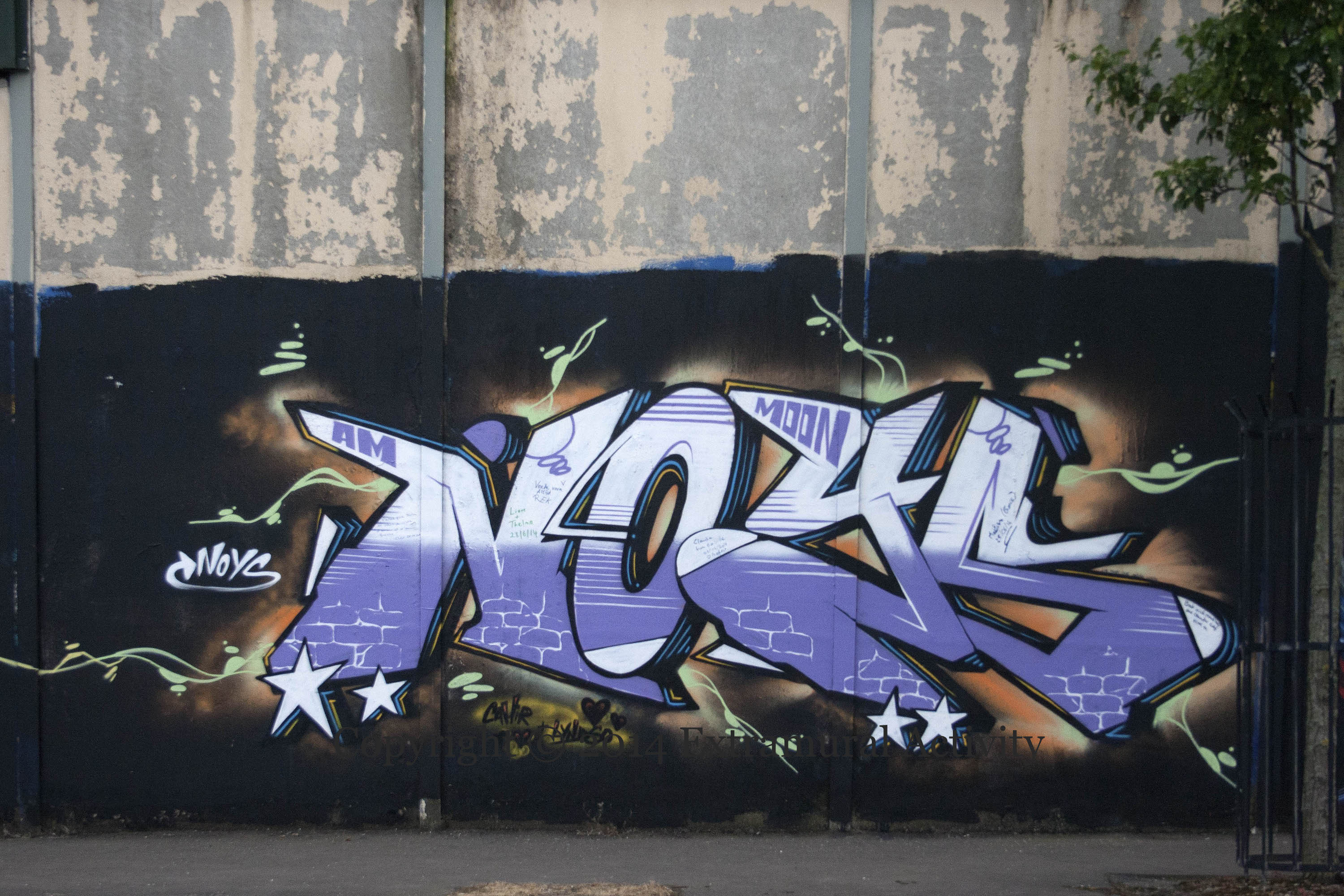
Here is a gallery of seven pieces of street writing from the Cupar Way “peace” line, starting above with Eoin (see previously: Kiss And Make Up) and ending with NOYS. The wall, and the works on it, are covered in the signatures of tourists who come to see the wall and the murals of west Belfast, though these images (taken between June and October of 2014) are mostly of fairly fresh work.
The three-storey mural above is in Ballysillan and replaced a UVF mural when it was added in 2011. The mural is the work of Jim Russell, shown below at Arts For All where he is artist-in-residence. The information below was provided by Arts For All.
The Great War: The first panel commemorates the Great War that ravaged Europe from 1914 to 1918 and shows troops advancing into battle, the Ulster Tower at Thiepval commemorating the sacrifice at the Somme and an image showing one of the war cemeteries and highlighting the true cost of war.
Second World War: The second panel features some of the devastation visited upon Belfast during a series of Luftwaffe raids during the early years of the Second World War. Belfast suffered greatly with over 1,000 people dying in four nights of bombing in April and May of 1941.
The Troubles: In the third panel highlight the dark history known as the Troubles. It features two events from the years of that time – the murder of the three young off-duty Scottish soldiers in 1971 [the monument depicted was featured in The Highland] and the Bloody Friday bombings of July 1972. In the midst of the horror that accompanied the early years of the Troubles these events still caused many to struggle to understand how people could carry out such atrocities.
Present Day Conflict: Panel four brings us up to the present day. Military service is a tradition for many in Northern Ireland and for many their first overseas trip came on the back of an overseas posting whilst serving in one of the Armed Forces. From times past, through the World Wars, the Korean War, to more recent conflicts in Iraq and Afghanistan soldiers and regiments drawn from Norther Ireland continue to play a role.
Here are the three right-most panels from Ciaran Gallagher’s (web) “Upstairs” in the Dark Horse/Duke Of York courtyard:
On the left, a young (and left-handed) Gary Lightbody of Snow Patrol images himself as a future rock star as he plays the broom, beneath an Undertones sign, “Teenage dreams, so hard to beat”, reflected in the mirror. (Drummer Jonny Quinn worked at Good Vibrations as a youth.)
In the middle, a mature Rory McIlroy relives a moment from age nine, when he appeared on the Gerry Kelly show on UTv and chipped balls into a washing machine.
And finally, Carl “The Jackal” Frampton lets out a roar after beating Spaniard Kiko Martinez to become IBF world super-bantamweight champion in September 2014. He defends his title this Saturday (2015-02-28).
In the attic: Deep Throat, not the Watergate scandal but the porno, both 1972.
See previously: Fifty Shades Of Belfast, featuring The Fall (from television) and Romper Room (not from television).



 Extramural Activity