Defender Of Europe

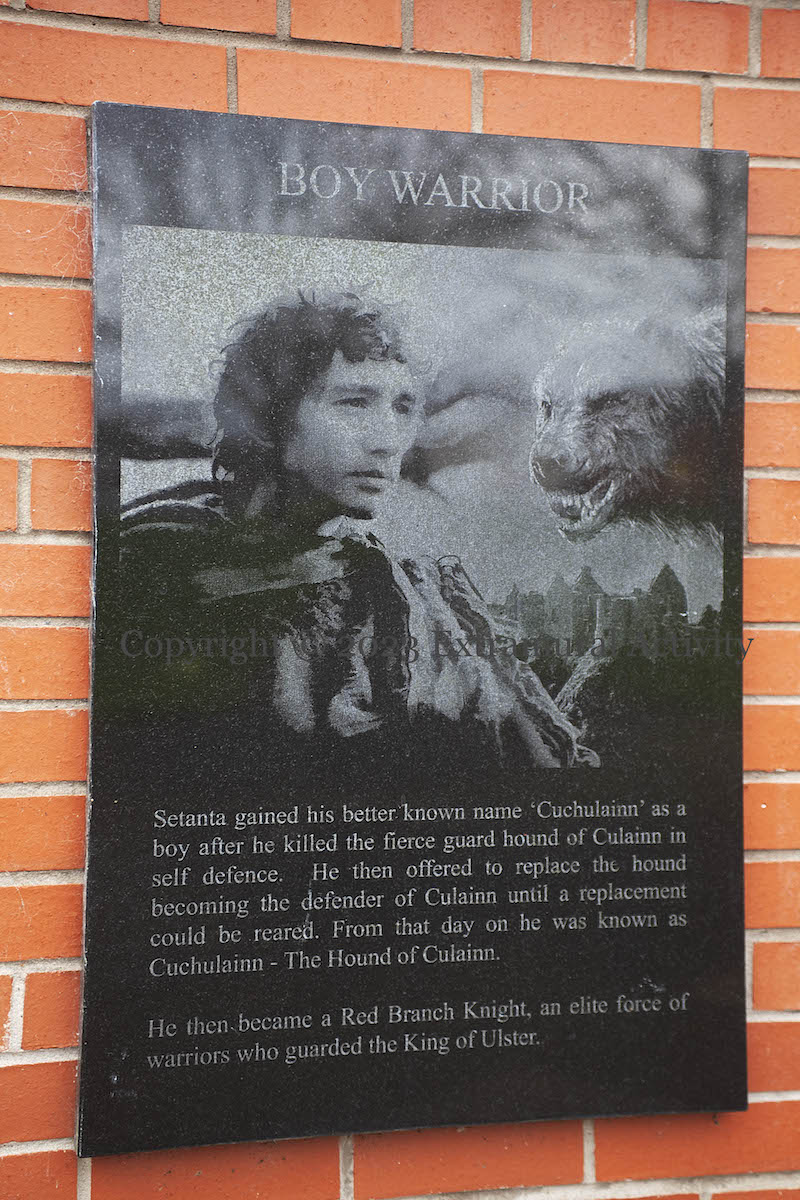
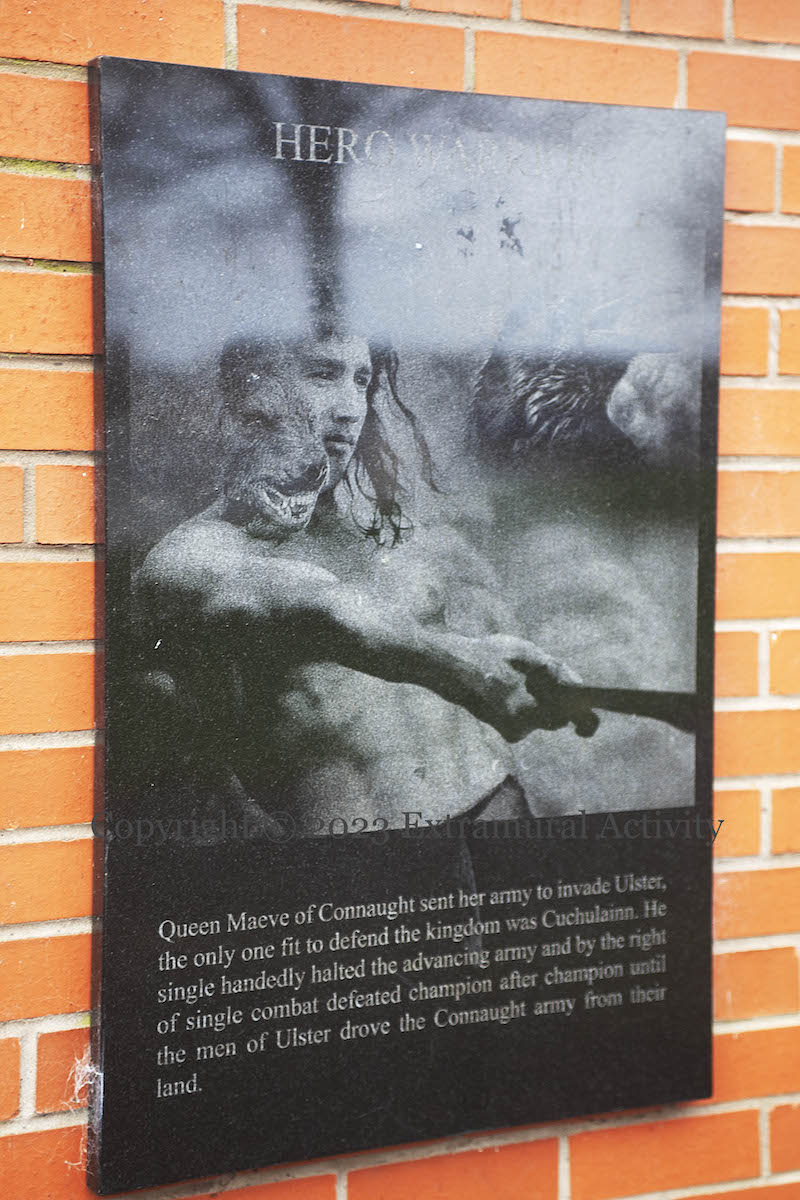
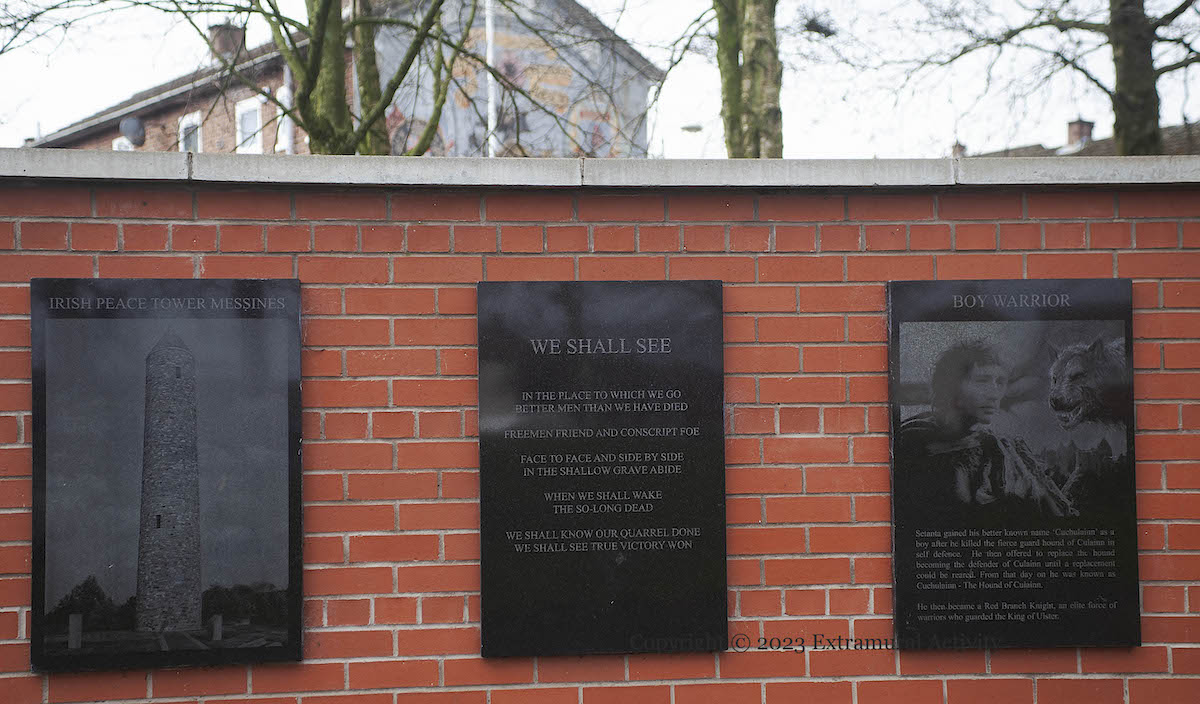
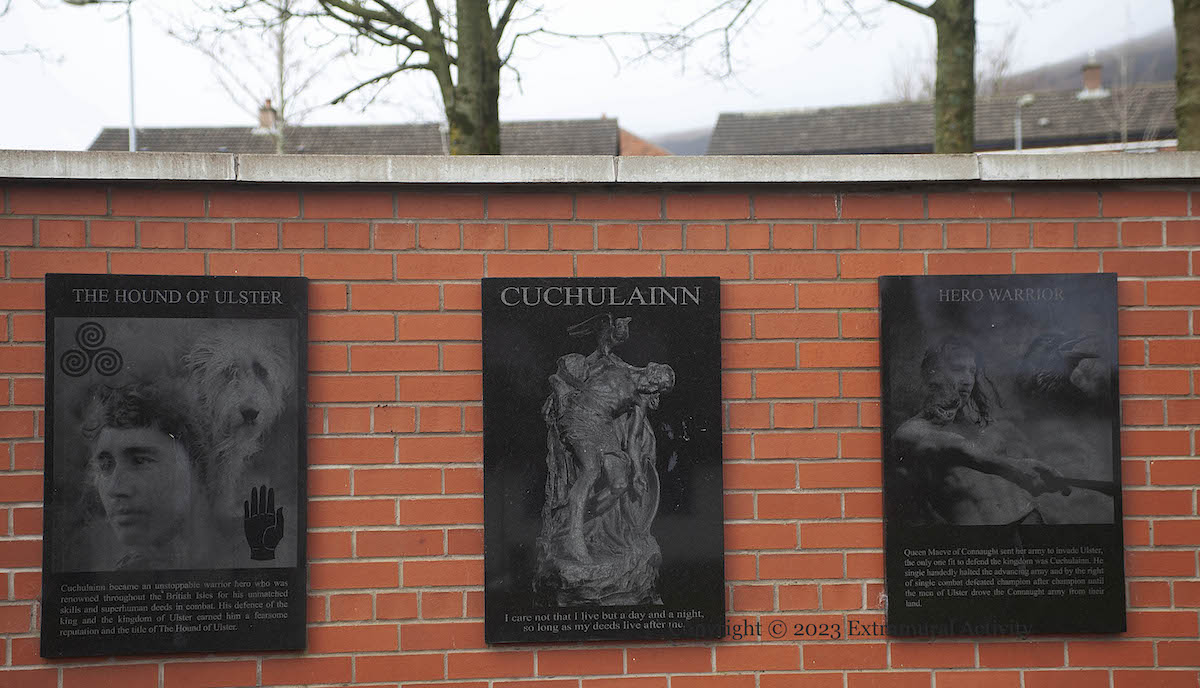
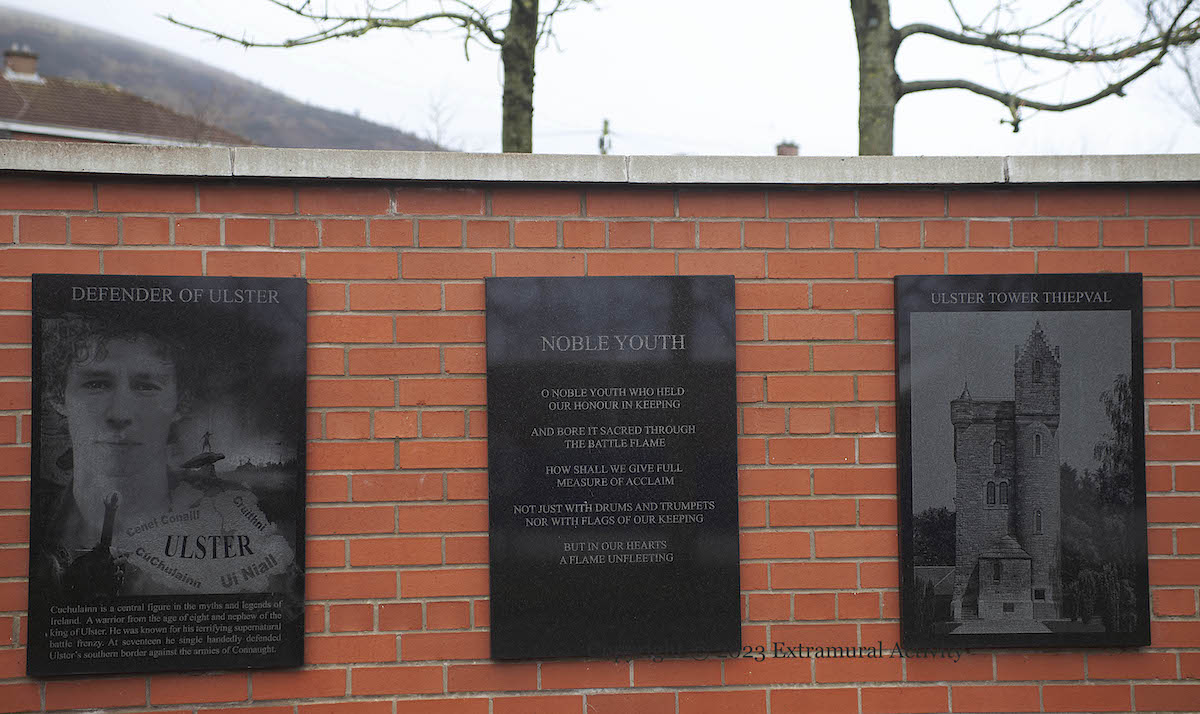
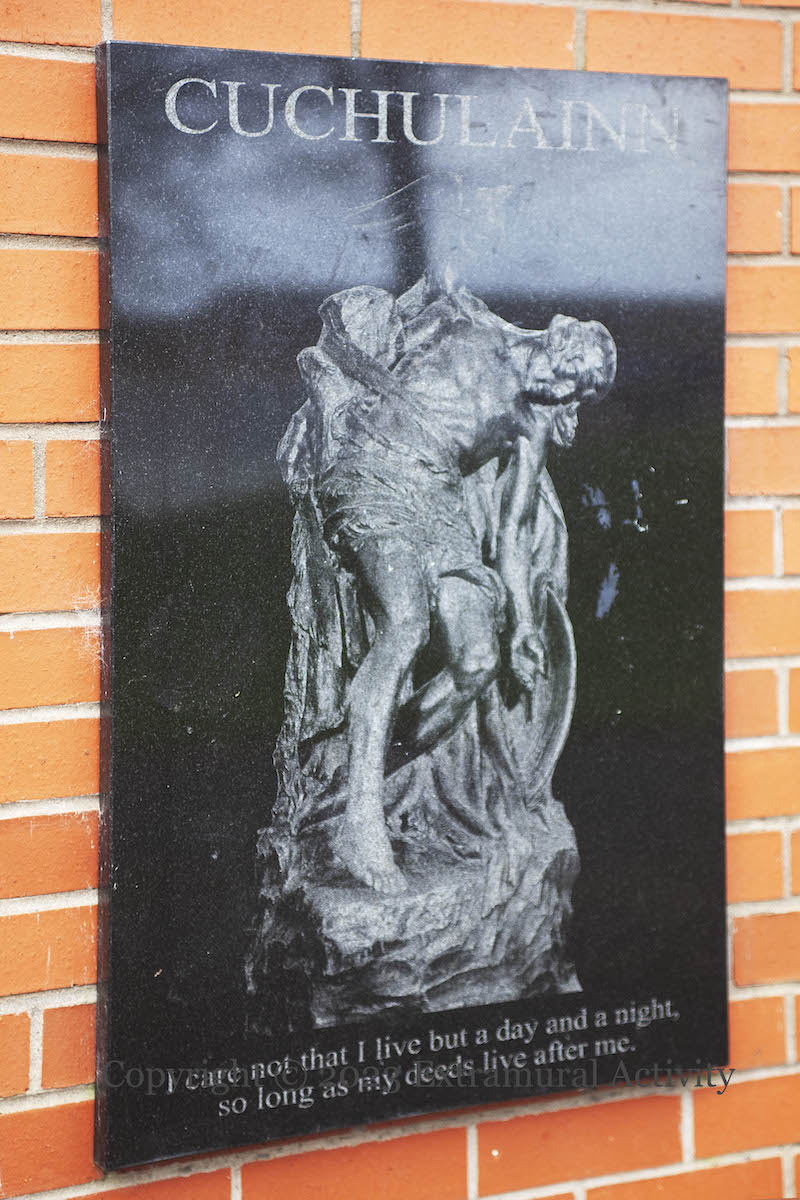
As the Visual History page on the role of Cú Chulaınn makes clear, in PUL muraling and iconography, Cú Chulainn serves as the “ancient defender of Ulster”, and the B Specials, UDR, and loyalist paramilitaries – primarily the UDA but also the UVF – then fit into that tradition. Using Cú Chulaınn as a precursor for service in the Ulster Division of WWI is unique to the panels on Highfield green, five of which are devoted to the hero Cú Chulaınn and four – two on each end – refer to the Great War.

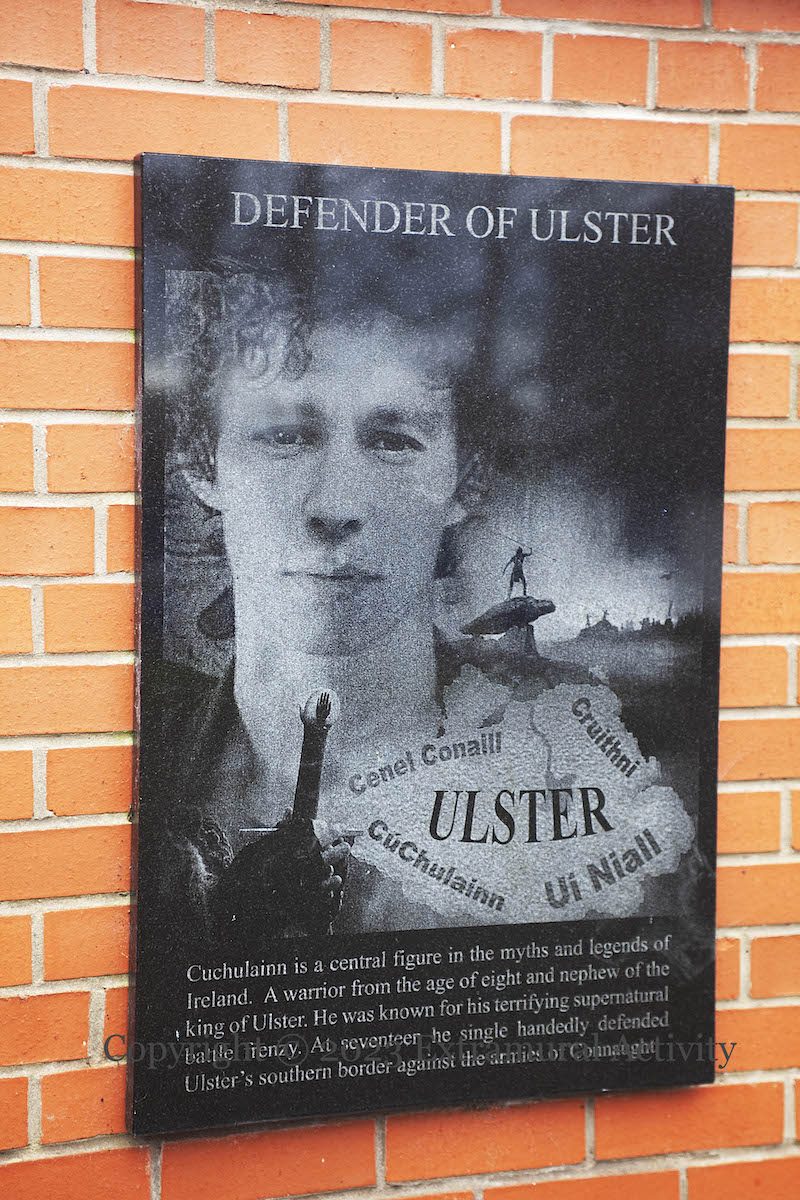
The five Cú Chulaınn panels are (from left to right) Boy Warrior, Hound Of Ulster, Sheppard’s statue, Hero Warrior, and Defender Of Ulster – all shown individually in this post.

On the far left, there are two panels showing Messines tower and a few lines from a Ronald Lewis Carton poem Réveillé (though given a more ‘victorious’ ending) and on the far right, a few lines from Duncan Campbell Scott’s To A Canadian Lad Killed In The War and Thiepval tower. The words to I Vow To Thee My Country (lyrics) are along the bottom (see the wide shot, final image below).

The biographical panels focus on Cú Chulaınn’s age – the sixth panel emphasises that Cú Chulaınn was only 17 when he held off Maeve’s forces – which is perhaps a similarity with those who joined the 36th Division, but how the “defender of Ulster” is connected to the defense of Europe is obscure.

In the background of the wide shot the Cú Chulaınn mural can be glimpsed.

Click image to enlarge
Copyright © 2023 Seosamh Mac Coılle
X12041 X12042 X12043 X12040 [X12039] X12038
X12047 X12046 X12045
X12036 [X12037] [X12044]
X12038

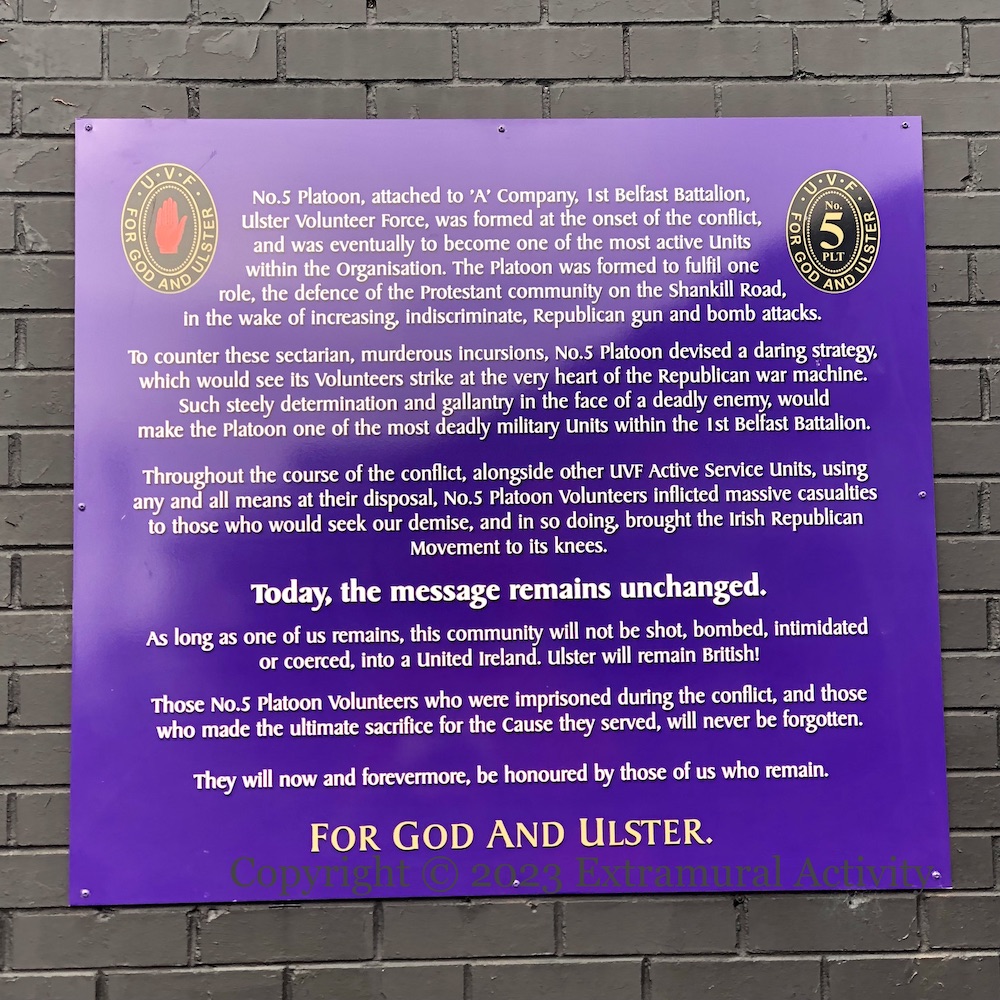
We Will Always Be Ready

There are three hooded gunmen on the main panel of this new installation along Conway Street, Belfast, and the side panel is a gallery of 14 photographs of hooded gunmen, flanked on either by two more hooded gunmen.

Please note: the photograph above has been photoshopped for colour. The true colour (orange) can be seen in the wide shot, below.

“No. 5 Platoon, attached to ‘A’ Company, 1st Belfast Battalion, Ulster Volunteer Force, was formed at the onset of the conflict, and was eventually to become one of the most active Units with the Organisation. The Platoon was formed to fulfil one role, the defence of the Protestant community on the Shankill Road, in the wake of increasing, indiscriminate, Republican gun and bomb attacks. To counter these sectarian, murderous incursions, No. 5 Platoon devised a daring strategy, which would see its Volunteers strike at the very heart of the Republican war machine. Such steely determination and gallantry in the face of a deadly enemy, would make the Platoon one of the most deadly military Units within the 1st Belfast Battalion. Throughout the course of the conflict, alongside other UVF Active Service Units, using any and all means at their disposal, No. 5 Platoon Volunteers inflicted massive casualties to those who would seek our demise, and in so doing, brought the Irish Republican Movement to its knees. Today the message remains unchanged. As long as one of us remains, this community will not be shot, bombed, intimidated or coerced, into a United Ireland. Ulster will remain British! Those No. 5 Platoon Volunteers who were imprisoned during the conflict, and those who made the ultimate sacrifice for the Cause they served, will never be forgotten. They will now and forevermore, be honoured by those of us who remain. For God and Ulster.”

Click image to enlarge
Copyright © 2023 Seosamh Mac Coılle
X12028 X12026 X12025 X12027

Seymour Hill UDA

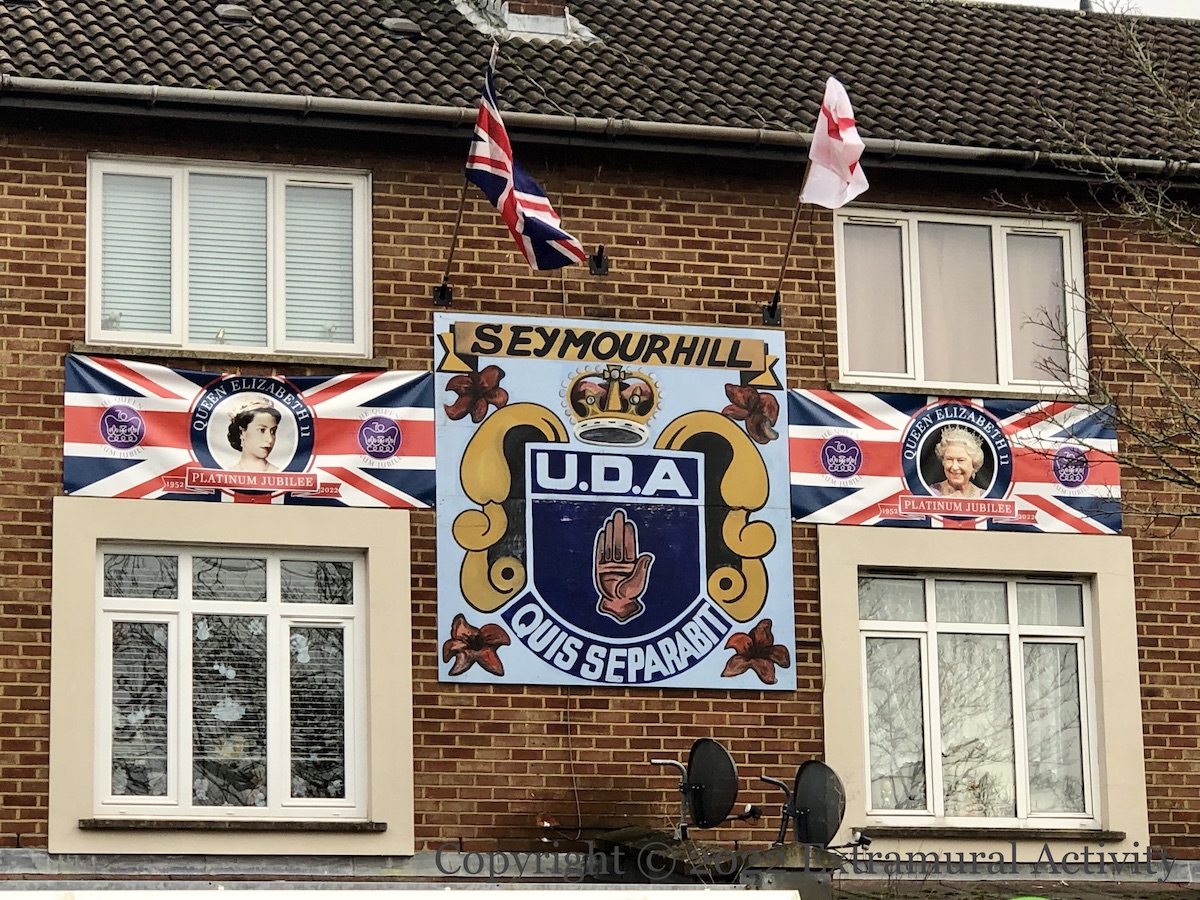
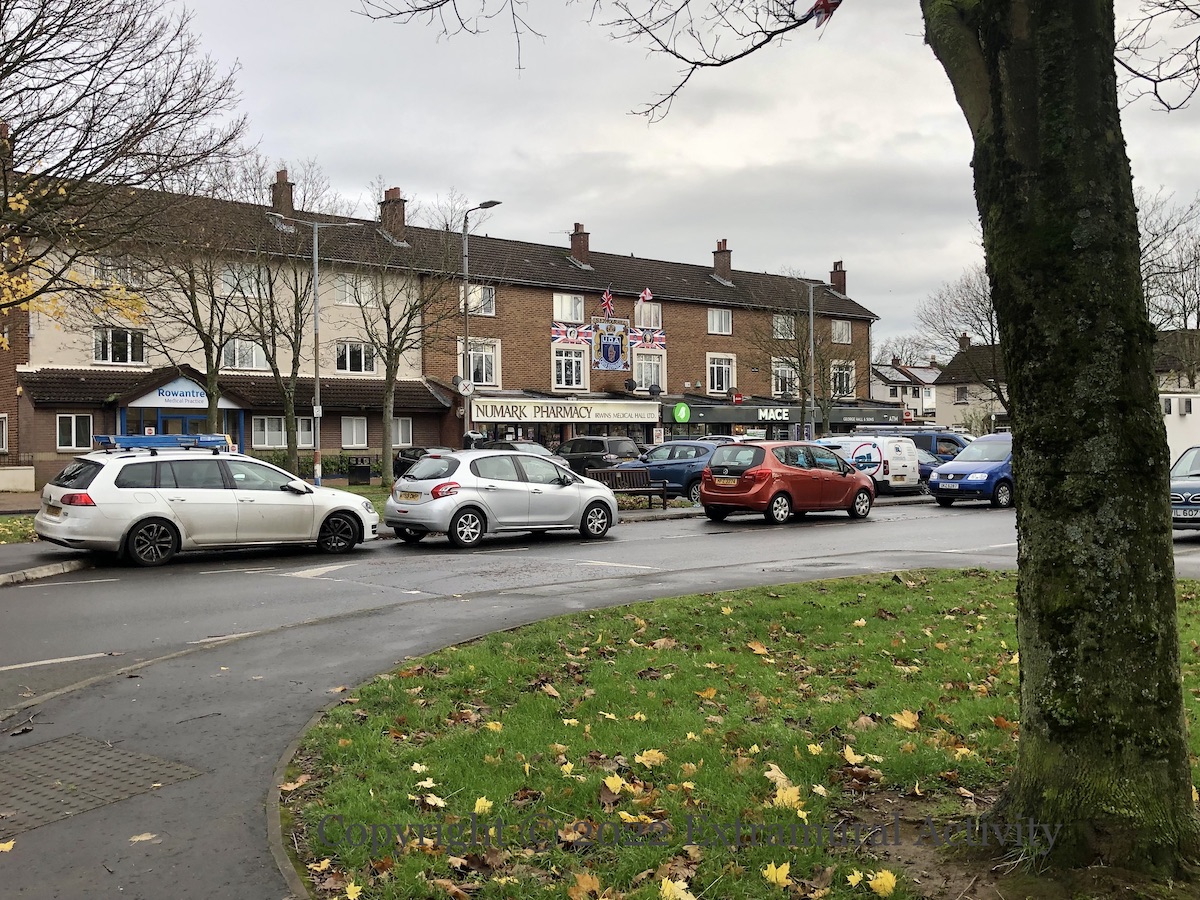
Queen Elizabeth II 70th/platinum Jubilee banners remain on either side of the UDA board above the Seymour Hill shops, even after her death in September (previously there were two NI Centenary banners). There are orange lilies at the four corners of the UDA emblem.

Across the street is a memorial stone to those who died in The Great War And The Recent Conflict.

Click image to enlarge
Copyright © 2022 Seosamh Mac Coılle
X11894 X11893 [X11899]

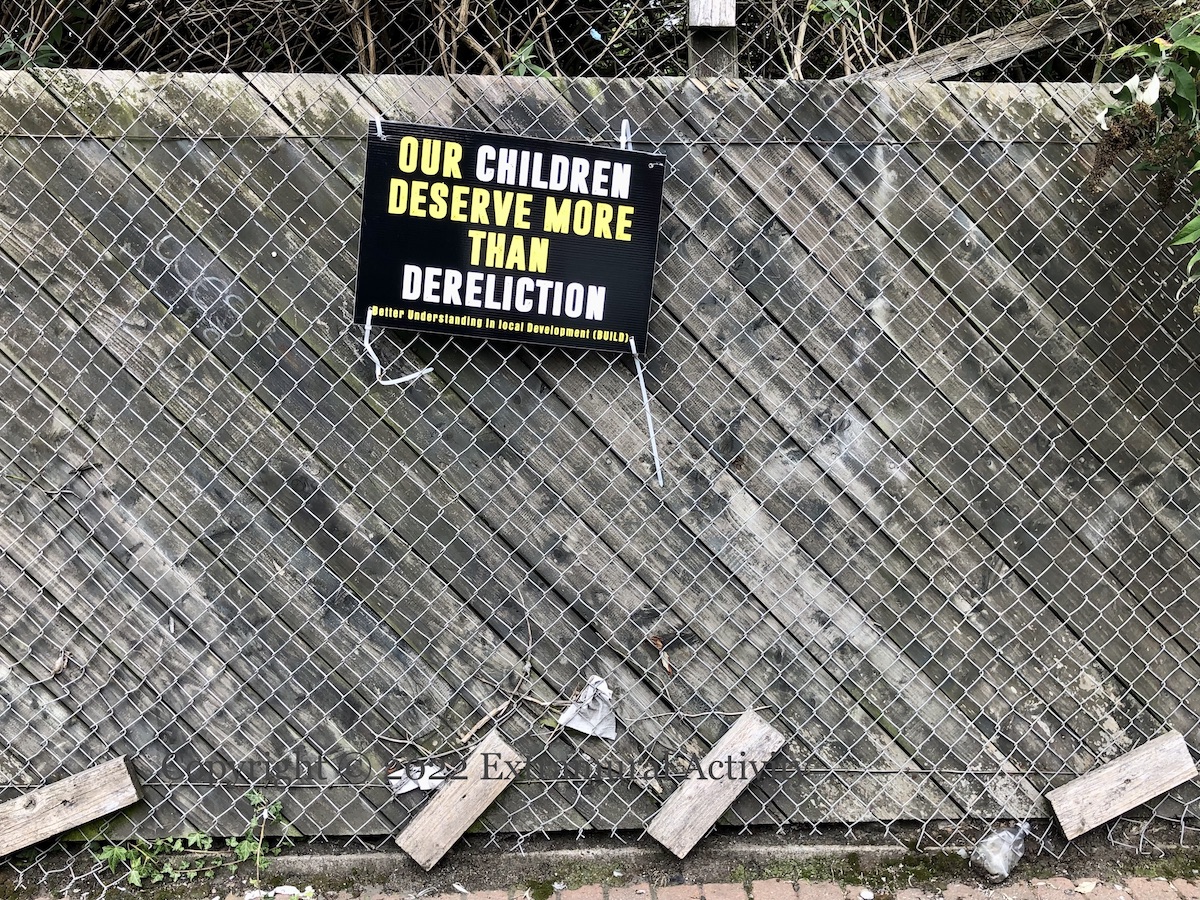
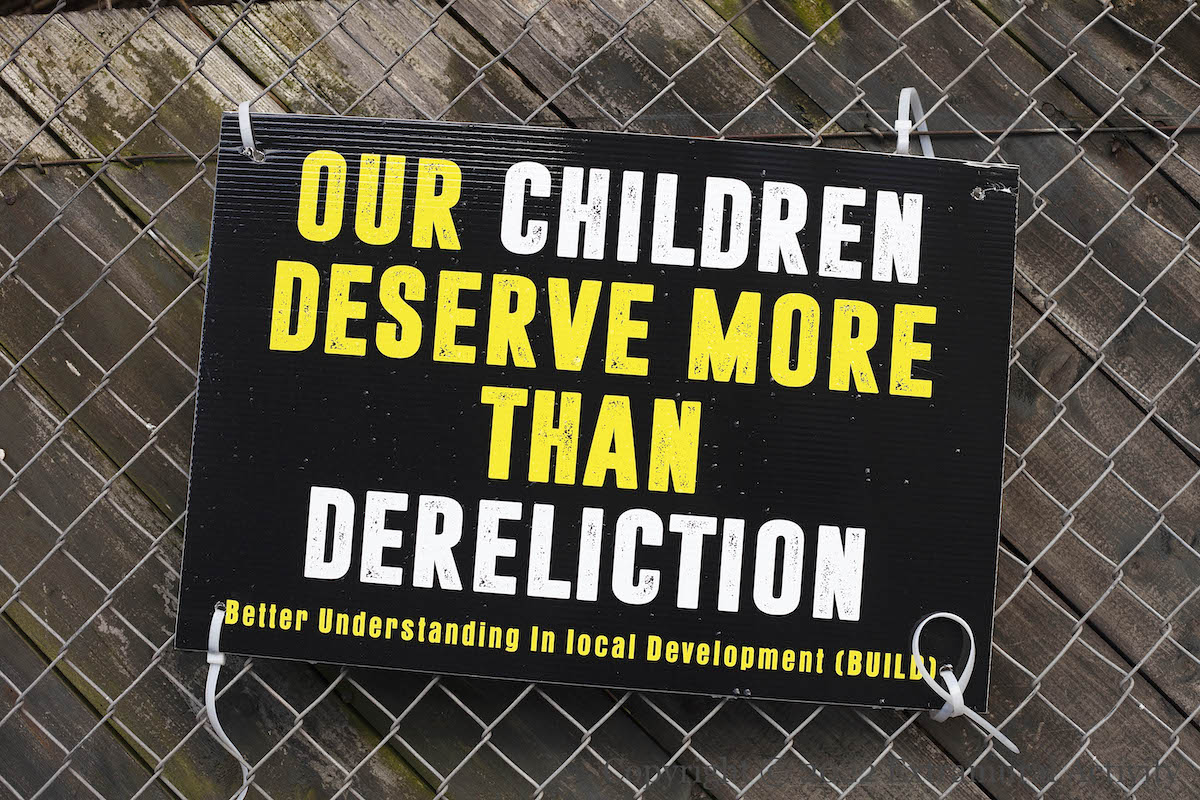
Our Children Deserve More

BUILD Shankill now has a website that promises to provide (in the future) “a full inventory of vacant and derelict land in the area”. In the meantime, the campaign to bring attention to housing issues in the area continues with placards and tarps:

“Our children deserve more than dereliction – Better Understanding In Local Development (BUILD)”

“Did you know? The Shankill has over 80 waste sites the size of 62 football pitches with the space to build 3300 homes. #BuildShankill.” For a mural-sized version of this tarp (in the third image) over one of the pieces of waste ground, see #BuildShankill.

Click image to enlarge
Copyright © 2022 Seosamh Mac Coılle
X11496 X11797 X11497

Men From The Fountain

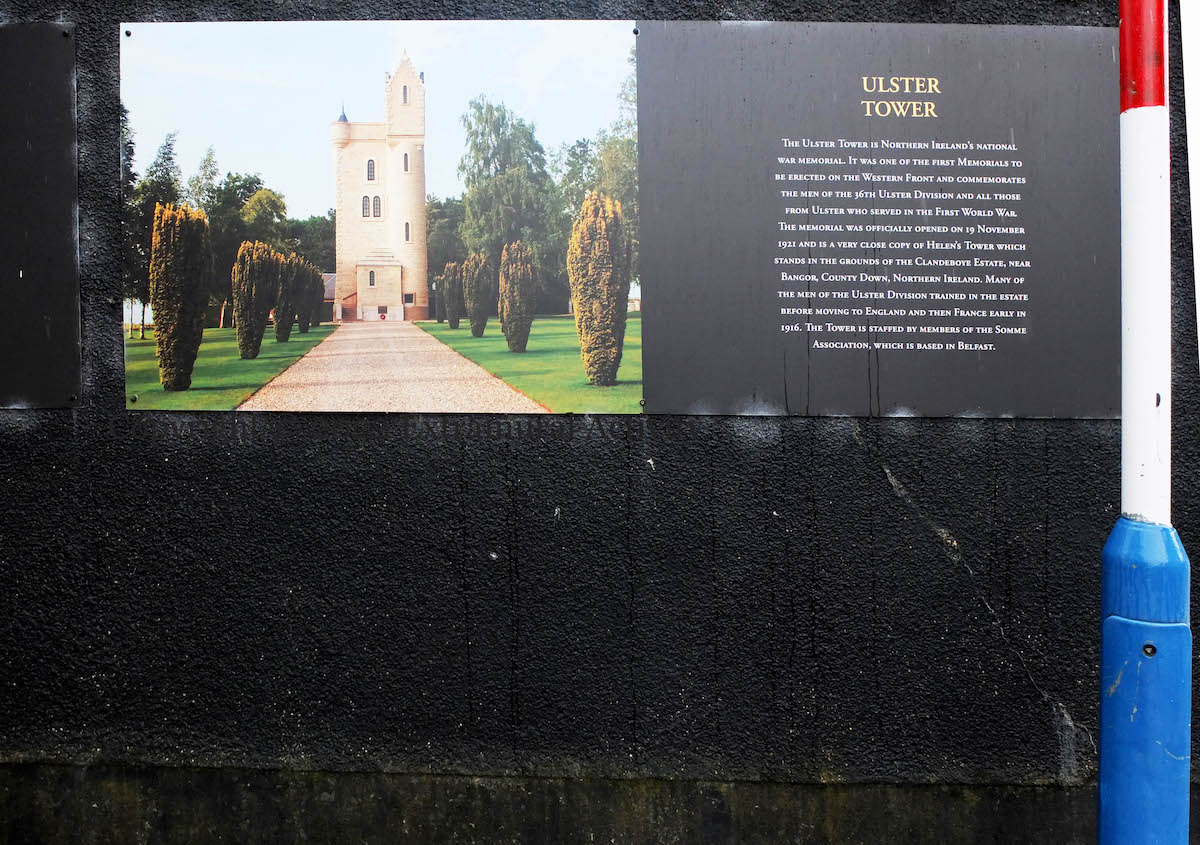
All three major WWI memorials with relevance to Ulster – Thiepval Memorial, Menin Gate, Ulster Tower – are brought together in a gallery in Londonderry’s Fountain as part of a tribute to the “Men from the Fountain who made the supreme sacrifice in the Great War.”

“Thiepval Memorial: The Thiepval Memorial to the missing of the Somme is a war memorial to 72,195 missing British and South African servicemen, who died in the battles of the Somme of the First World War between 1915 and 1918, with no known grave. It was built in red brick and limestone between 1928 and 1932. It is near the village of Thiepval, Picardy in France. A visitors’ centre opened in 2004.”

“Menin Gate: The Menin Gate memorial to the missing is a war memorial in Ypres, Belgium, dedicated to the 54,395 British and Commonwealth soldiers who were killed in the Ypres salient of World War I and whose graves are unknown. The memorial is located at the eastern exit of the town and marks the starting point for one of the main roads out of the town that led Allied soldiers to the front line. The Menin Gate memorial was unveiled on 24 July 1927.”

“Ulster Tower: The Ulster Tower is Northern Ireland’s national war memorial. It was one of the first memorials to be erected on the western front and commemorates the men of the 36th (Ulster) Division and all those from Ulster who served in the First World War. The memorial was officially opened on 19 November 1921 and is a very close copy of Helen’s Tower which stands in the grounds of the Clandeboye estate, near Bangor, County Down, Northern Ireland. Many of the men of the Ulster division trained in the estate before moving to England and then France early in 1916. The Tower is staffed by members of the Somme Association, which is based in Belfast.”

Previously the site of In God We Trust.

Click image to enlarge
Copyright © 2022 Seosamh Mac Coılle
X11066 X11067 X11064 X11065

Fáılte Go ACT

The Irish “Fáılte” is included among the many languages at the entrance to the ACT (Action For Community Transformation) visitor centre on the Shankill. See previously the signage at Boyd’s in the lower Shankill (which does not have a “Fáılte”) and the Coıste claim that All Flags Are Welcome (which does not have a Union Flag).

Click image to enlarge
Copyright © 2022 Seosamh Mac Coılle
X11816 X11483 [X12325]

This Is Ireland

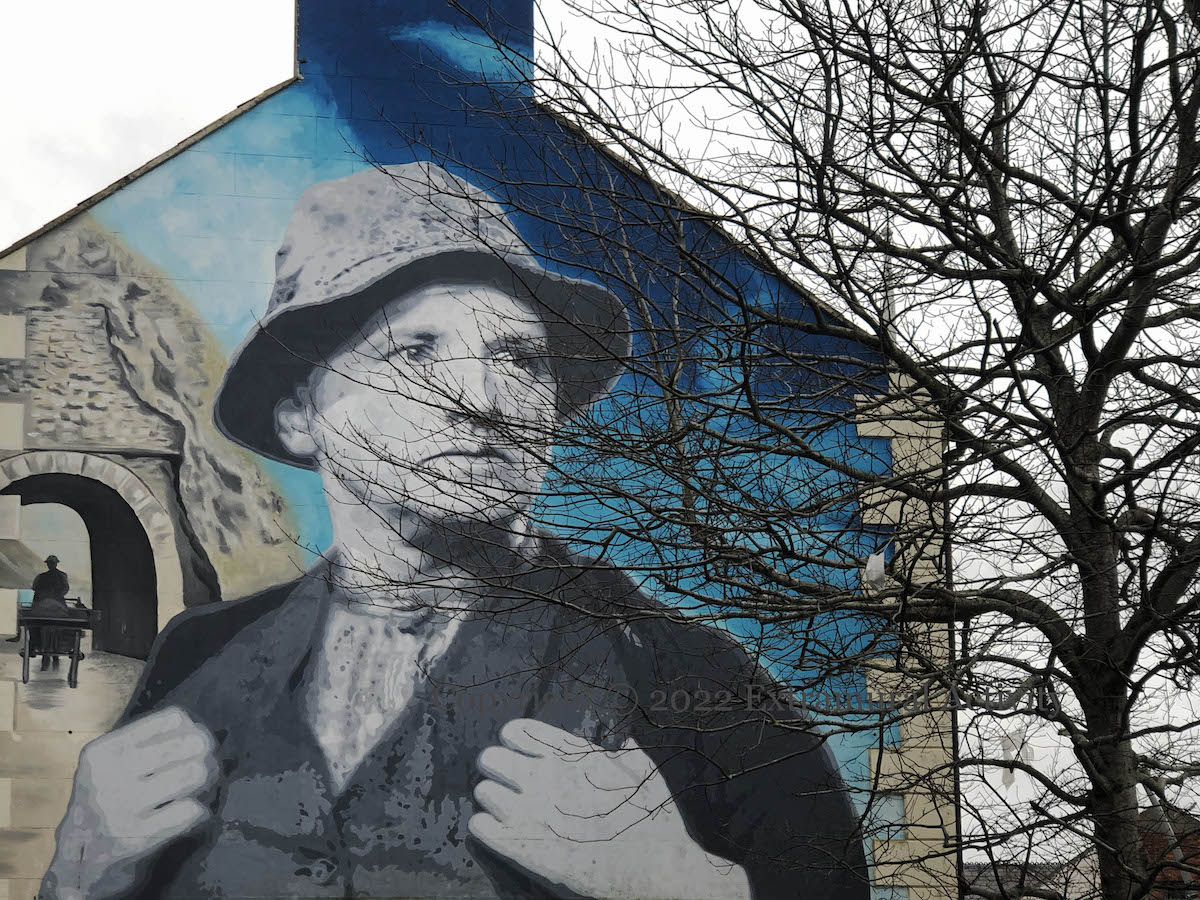
Richard Hayward was born in England but spent his childhood in Larne in a time Henry McNeill was developing the tourist industry (see previously Larne – The Original Tourist Resort and Those Magnificent Men In Their Flying Machines) – the Black Arch on the Coast Road is shown over Hayward’s right shoulder.

He collected songs, both Orange and traditional Irish, and played the harp. He went on to record 156 records, act in at least eight movies and write 11 travel books, the most popular of which was In Praise Of Ulster, with drawings by the landscape artist James Humbert Craig – some images from the book can be seen here.

(Ulster Biography | IMDb | Atlas Obscura)

The mural, in Larne’s Main Street, was designed by emic (ig) and painted by Dee Craig (Fb). Since 2021 you can also follow a trail around Richard Hayward’s East Antrim .

Click image to enlarge
Copyright © 2022 Seosamh Mac Coılle
X09378 Larne Renovation Generation

Ghosts Of The Somme

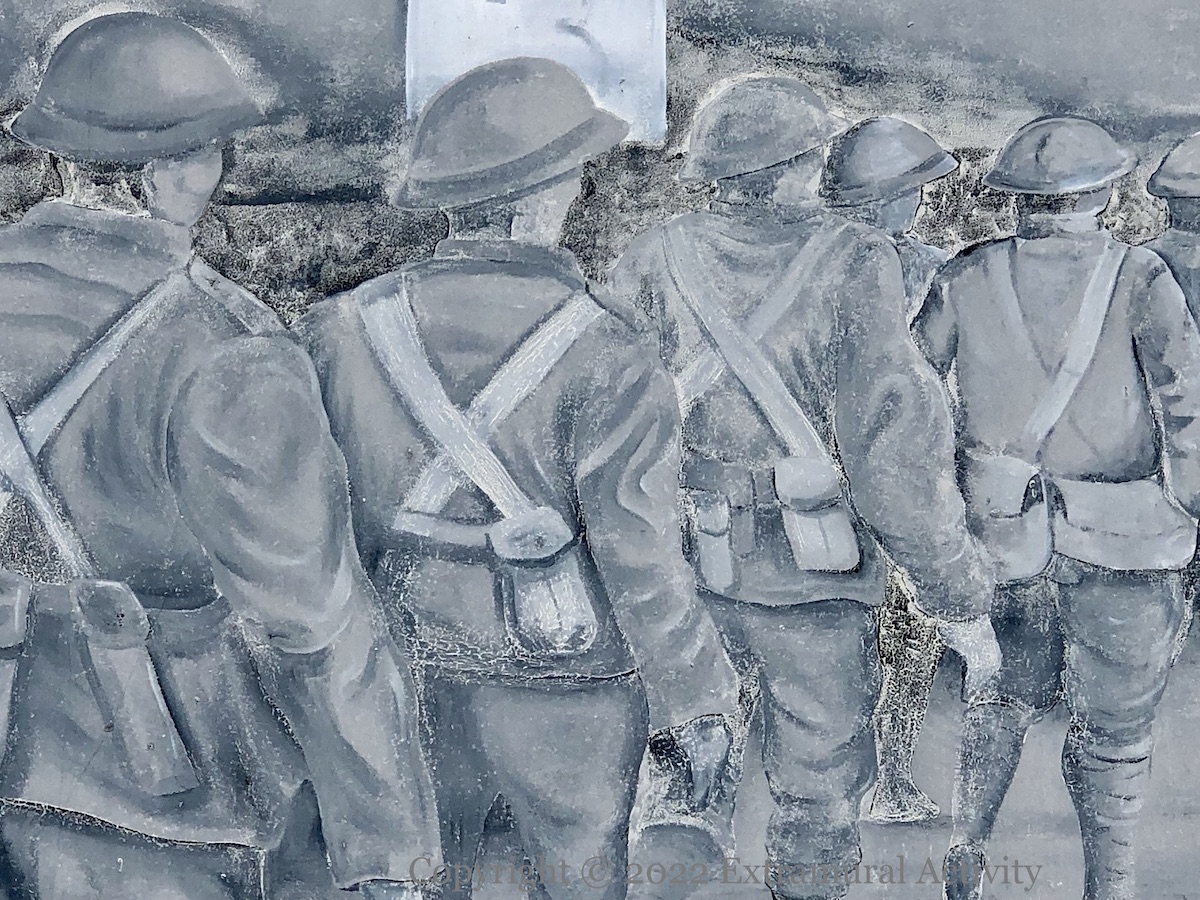
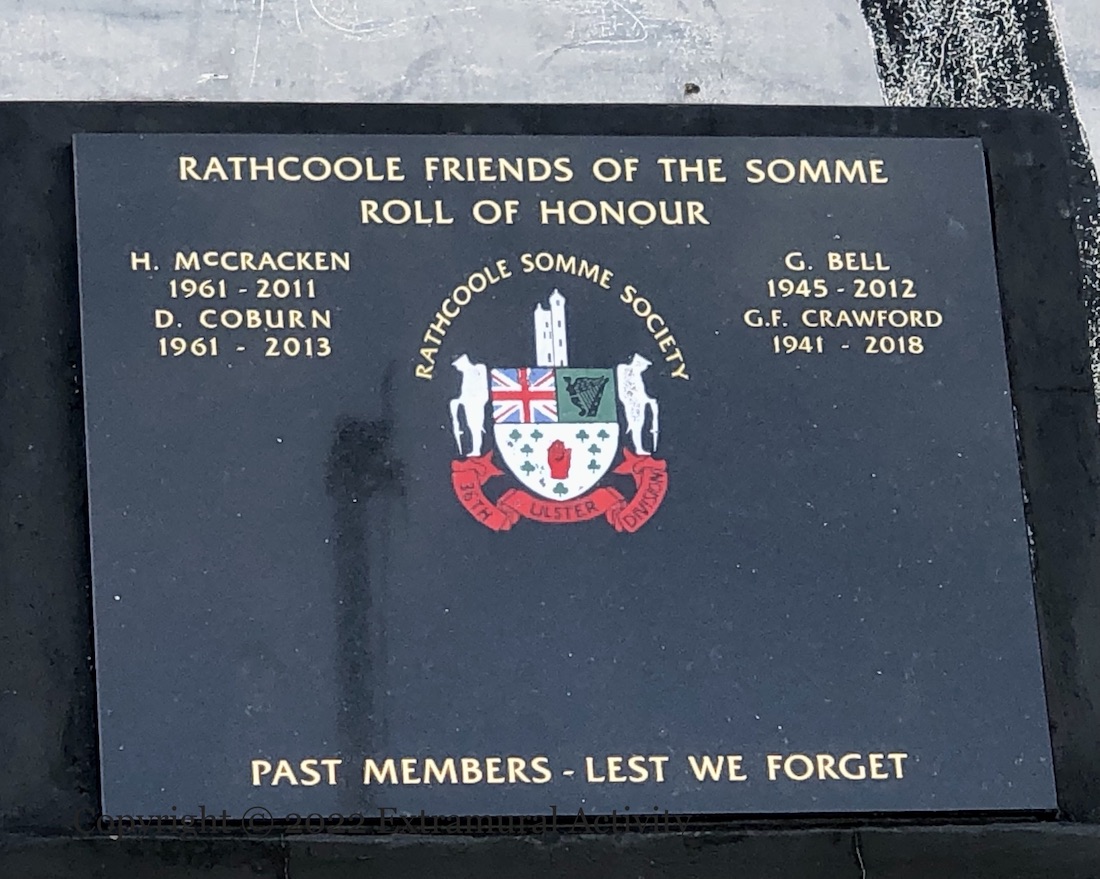
A memorial stone has been added to the fading mural of soldiers of the 15th battalion heading to France in 1915, beginning a list of former members of the Rathcoole Friends Of The Somme (Fb). For the names of the five portraits, and the mural in better condition, see Many Did Not Return.

The title of today’s post is the title of Jonathan Evershed’s book (youtube).

Click image to enlarge
Copyright © 2022 Seosamh Mac Coılle
X11668 [X11683] [X11684] X11682 X11667

Still Ready & Willing

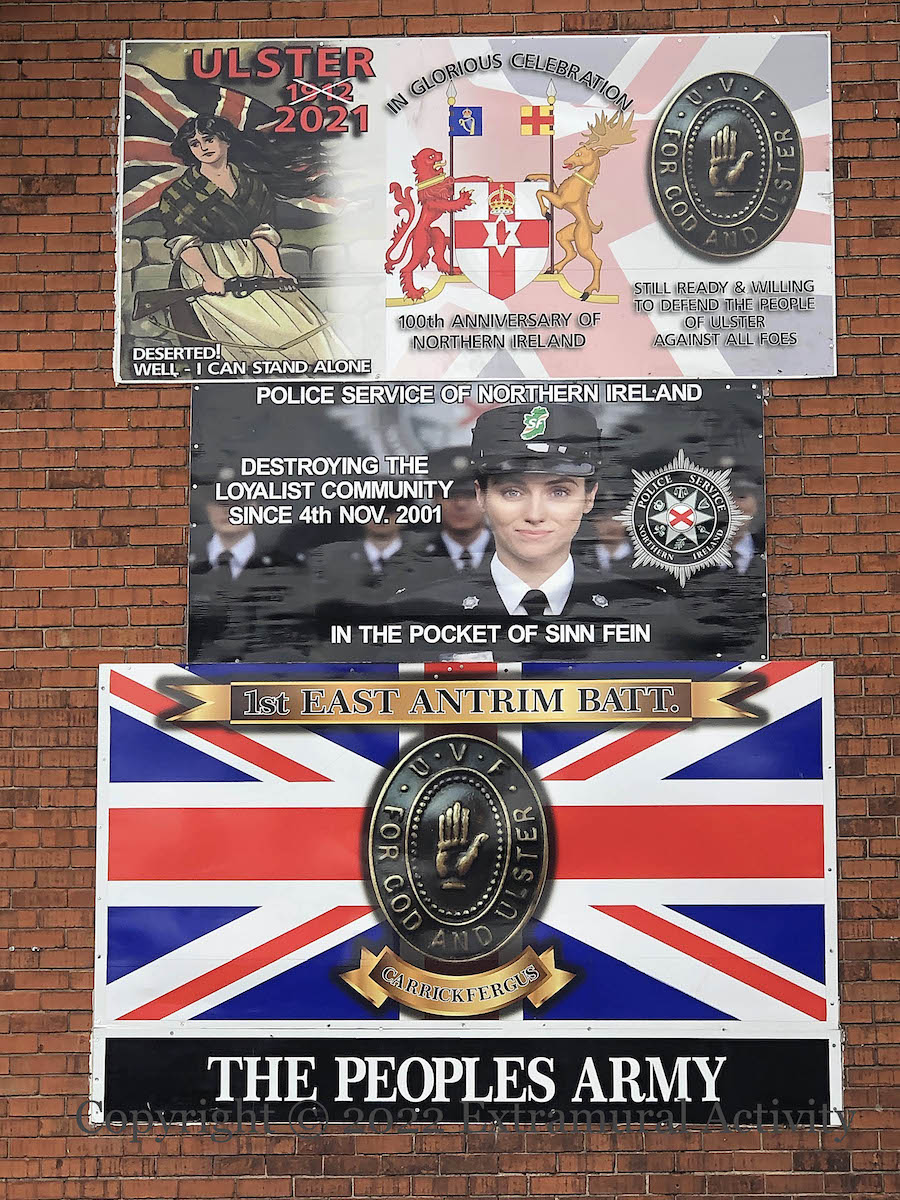
The UVF 1st East Antrim Battalion is “Still ready & willing to defend the people of Ulster against all foes” including the British government that – even as Northern Ireland marks its centenary – has “deserted” it over the NI Protocol that involves checks on goods moving between Britain and Ireland (whether north or south) but no (new) checks on goods moving between north and south (gov.uk). The “still” goes all the way back to 1912, when the British government of the day proposed (for a third time) “Home Rule” for Ireland and the Ulster Volunteers were formed – though the original “deserted” postcard and previous murals show the date as 1914.

The PSNI board was seen previously: In The Pocket Of Sinn Féin.

Davys Street, Carrickfergus. For the same comparison in Belfast see, Deserted! Well, We Can Stand Alone, and in Moygashel, see Belfast Agreement, Null And Void.

Click image to enlarge
Copyright © 2022 Seosamh Mac Coılle
X10659

Seymour Hill In The Wars

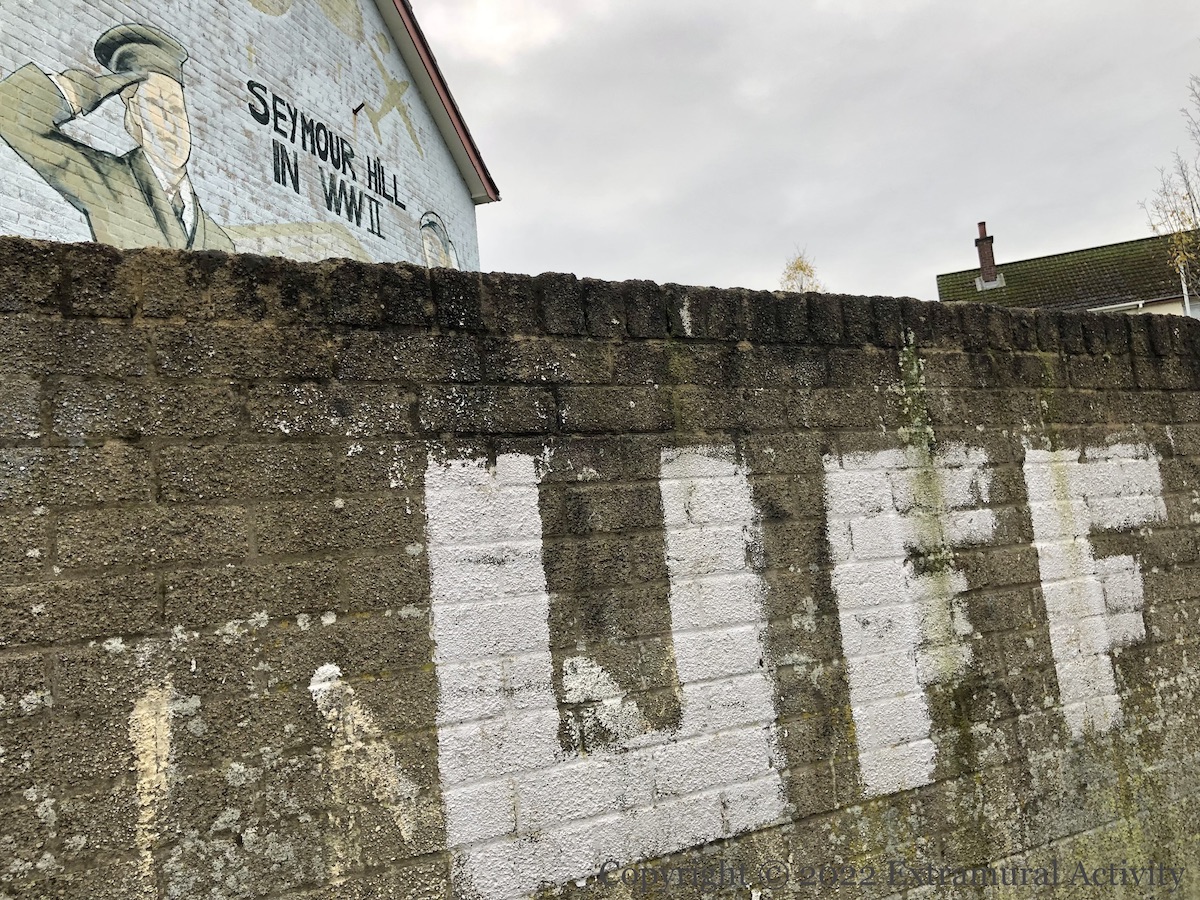
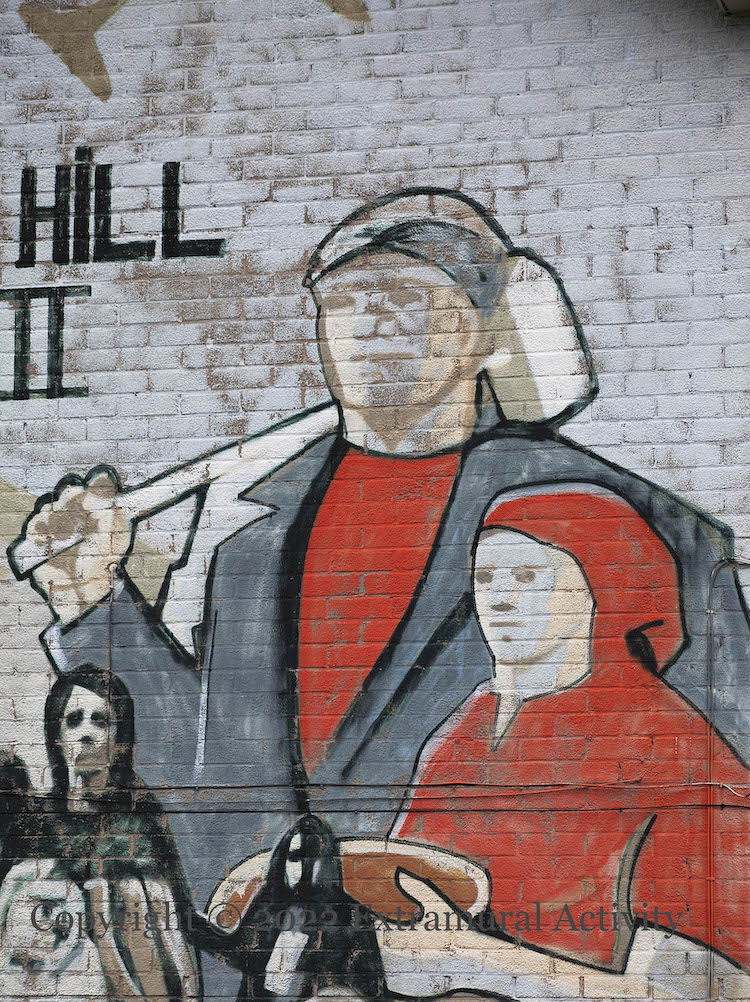
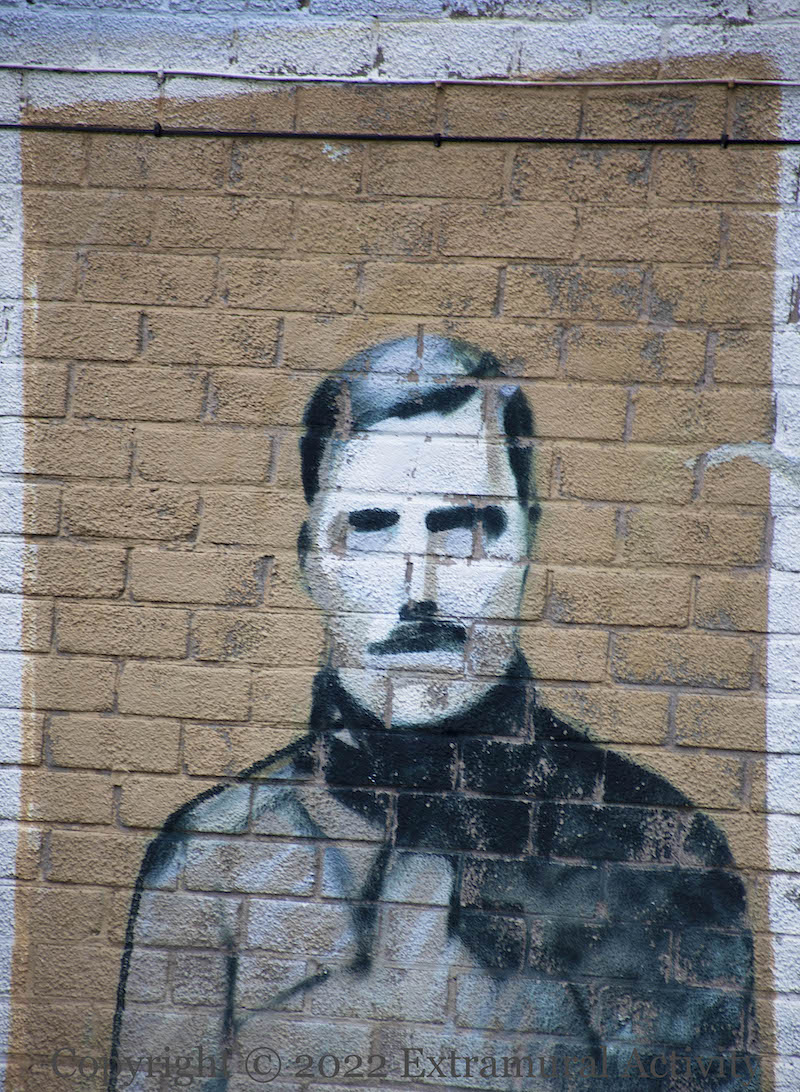
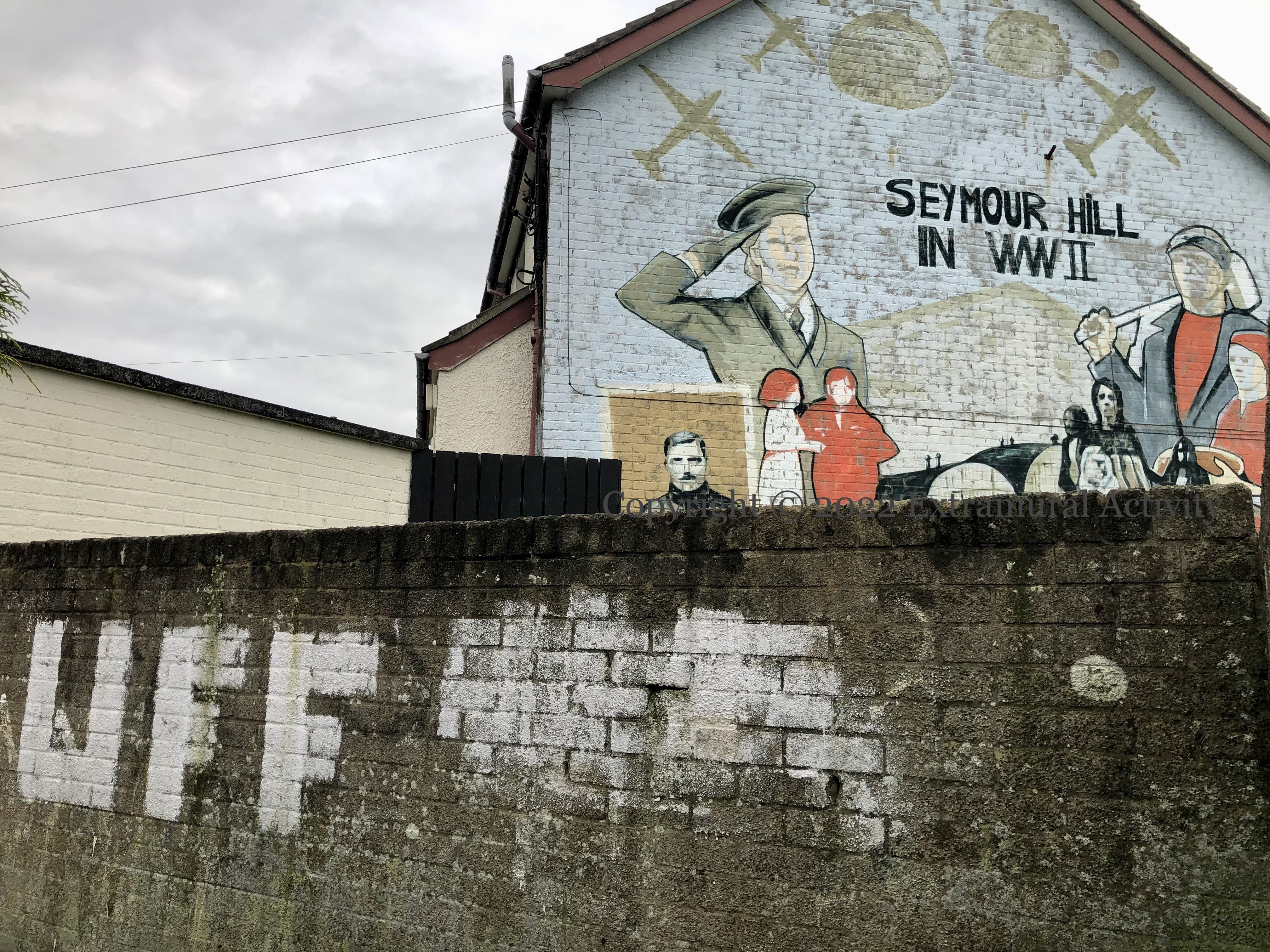
The Seymour Hill WWII mural will be 14 years old this coming July (2023) but it is hanging on fairly well. It is quite faded – especially the parachutes at the top – but there is no graffiti on the wall itself, only on the wall below it. For the mural when new and information about the US camp and portrait of Colditz prisoner William Harbinson, see M04776.

Click image to enlarge
Copyright © 2022 Seosamh Mac Coılle
X11913 X11906 [X11907] [X11908] X11909 X11910 X11911 X11914 [X11912]