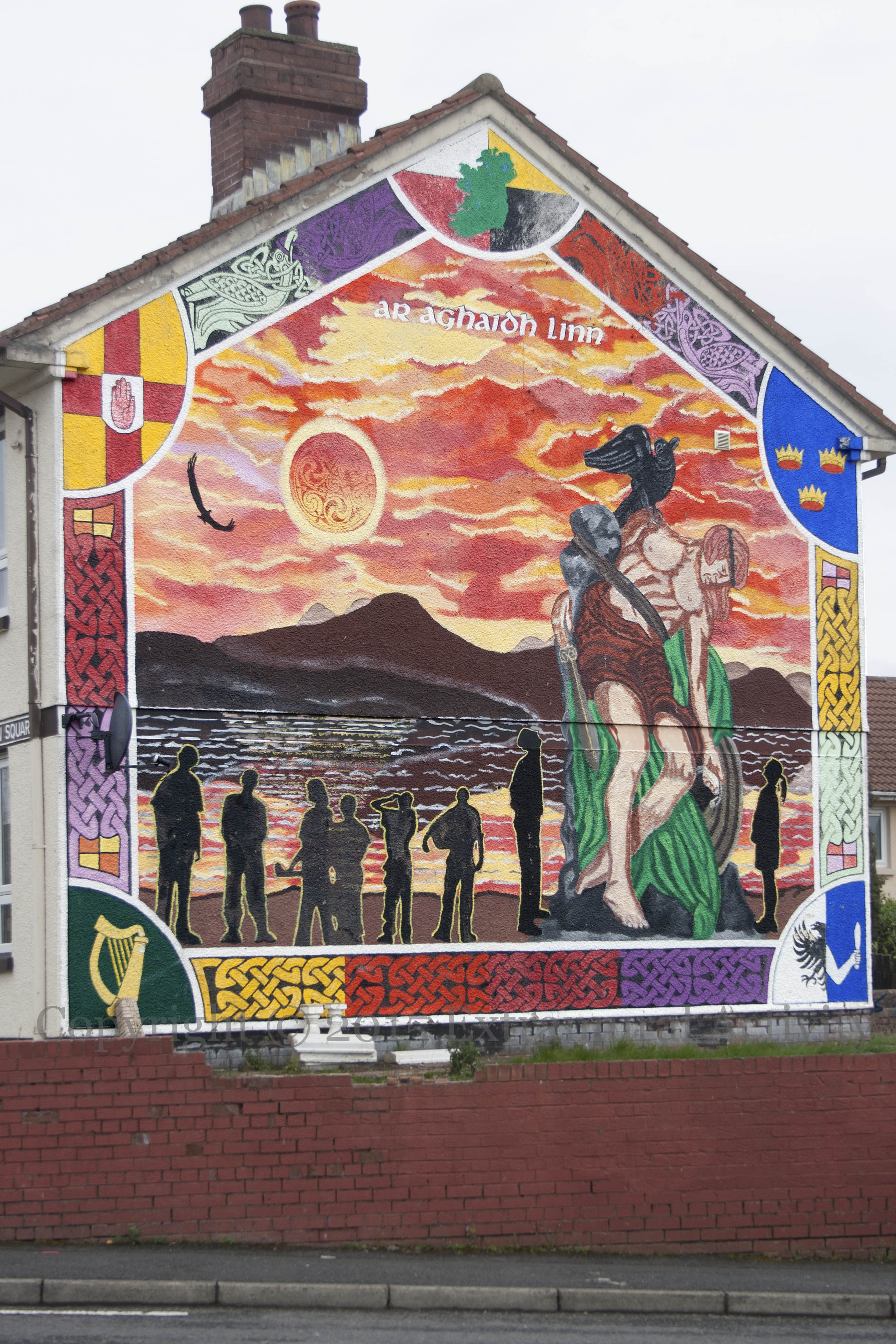
“Ar aghaıdh linn [Onward]” Silhouetted figures, one carrying a hurley, take inspiration from a dying Cú Chulaınn and gaze across a body of water, perhaps Carlingford Lough towards the mountains of Mourne – Cú Chulaınn’s traditional place of death is in County Louth, outside Dundalk. Tuan the hawk historian, who has seen all of the conquests of Ireland, flies overhead.
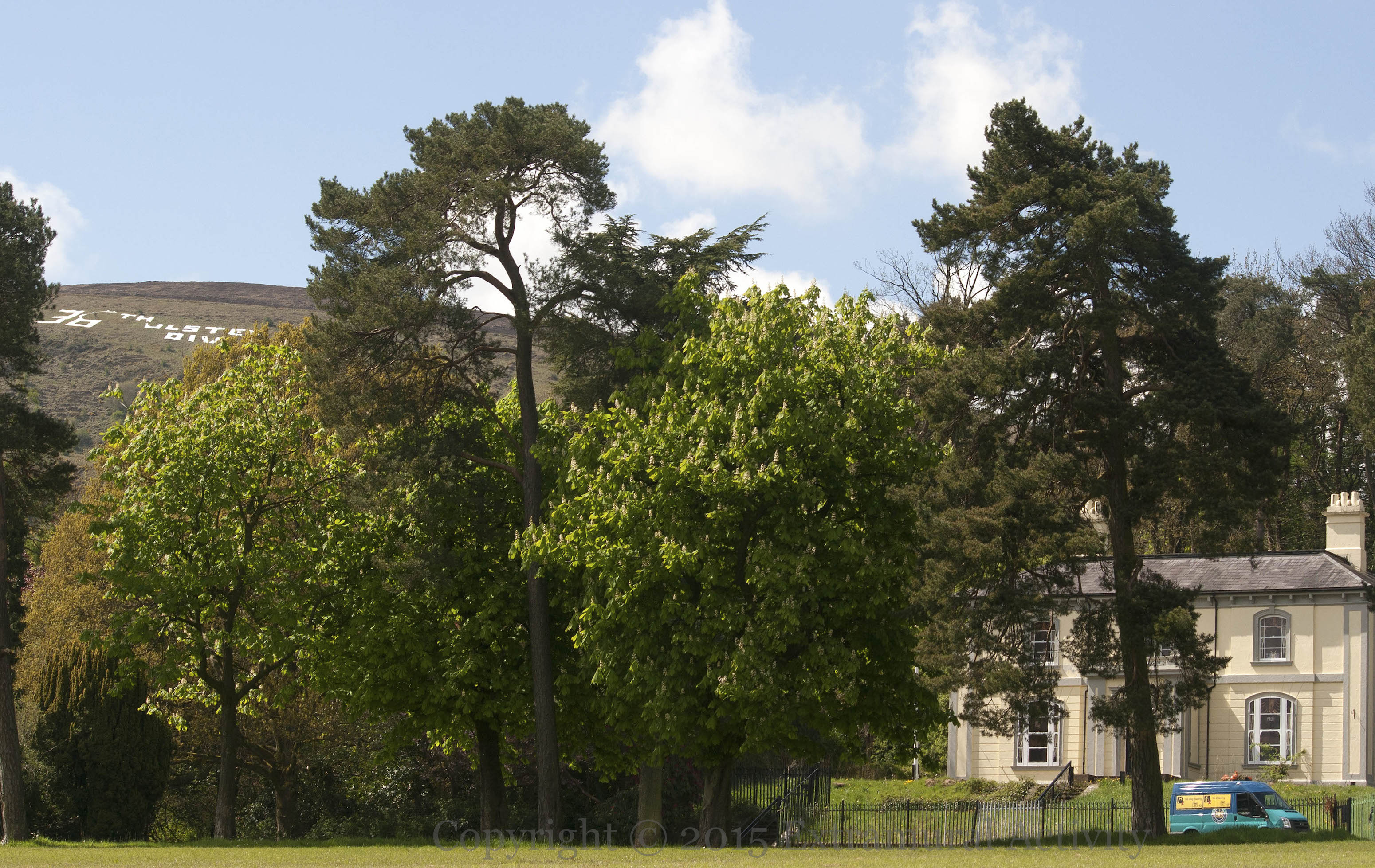
On May 8th, 1915, the various brigades of the 36th (Ulster) Division gathered together from all over the province (including some soldiers from Cavan, Monaghan, and Donegal) to be reviewed by Major General McCalmont in south Belfast; they then paraded to City Hall (South Belfast Friends Of The Somme Association). To commemorate the event the words “36th Ulster Div” have appeared on Black Mountain above Highfield and Ballygomartin (taking a leaf from the Gael Force Art book). The wide shot, below, is taken in front of Fernhill House in the Glencairn estate, where the Ulster Volunteers paraded in 1914. In July 1915 the 36th would leave for Sussex to continue their training and eventually find themselves at the battle of the Somme in 1916.
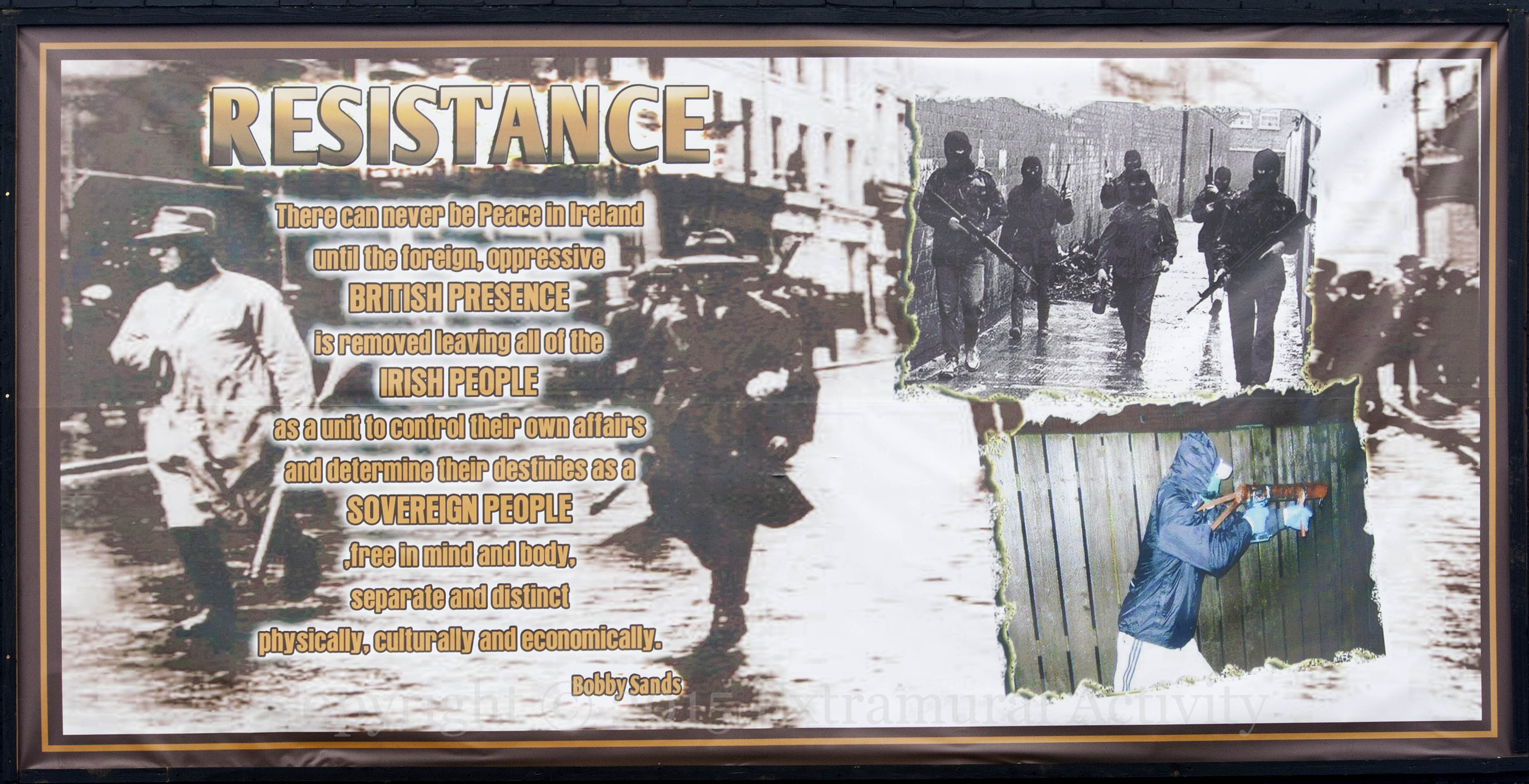
This is a new (2015-04-04) tarp on Ardoyne Avenue showing a scene from Grafton Street in the Battle Of Dublin in the civil war (1922) (irishhistory.blogspot.com), with in-sets featuring PIRA volunteers on patrol in 1987 (BelTel), and a home-made rocket-launcher used in a 2014 attack on police (see, e.g. irishmirror.ie).
“There can never be peace in Ireland until the foreign, oppressive British presence is removed leaving all of the Irish people as a unit to control their own affairs and determine their destinies as a sovereign people, free in mind and body, separate and distinct physically, culturally and economically.” Bobby Sands (Prison Diary May 1st)
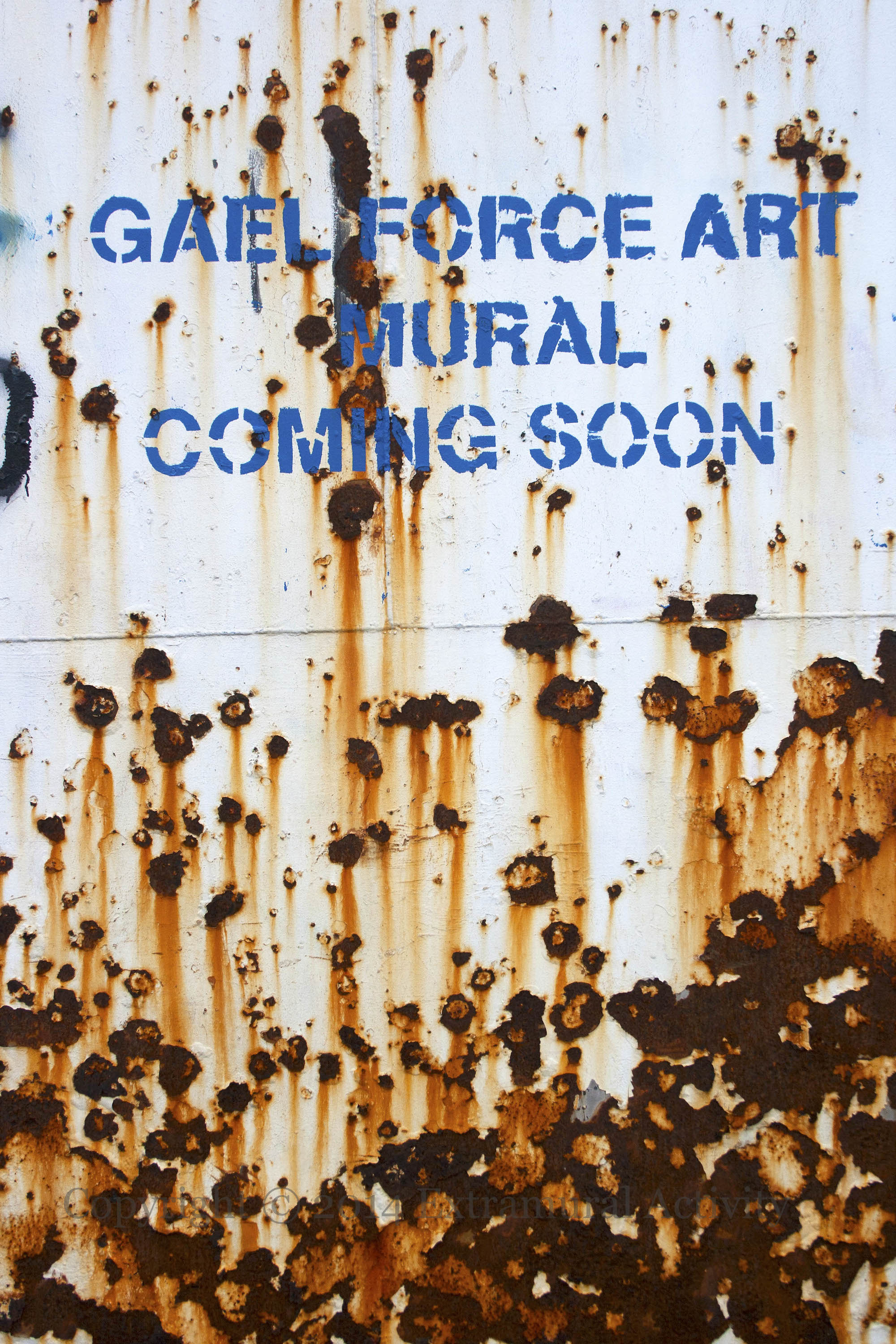
This stencil is at the top of Springhill Avenue, painting grounds of Gerard ‘Mo Chara’ Kelly and Gael Force Art. Mo Chara is in fact currently working on the Falls Road at McQuillan Street, painting a mural of the GPO in flames in 1916.
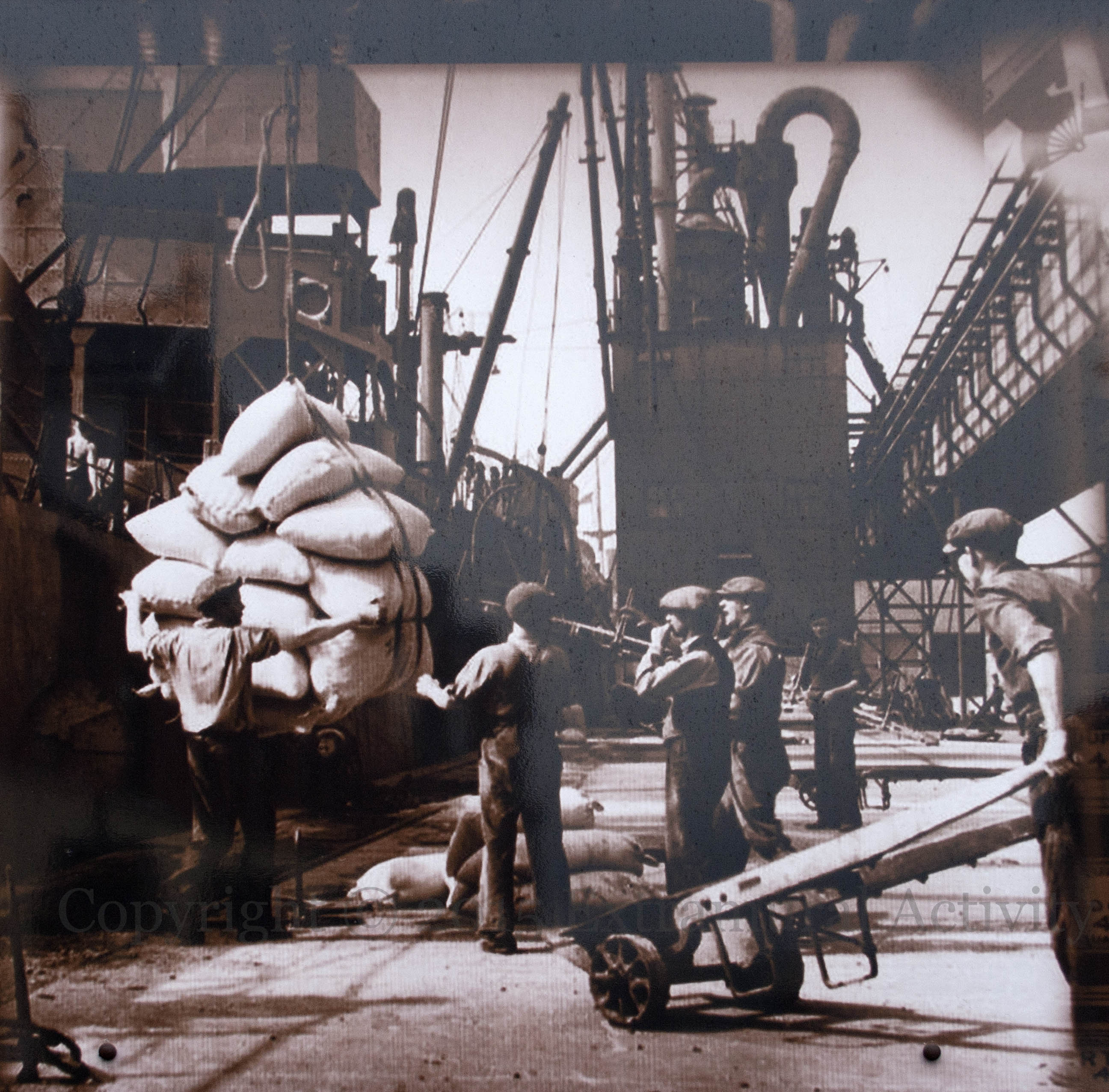
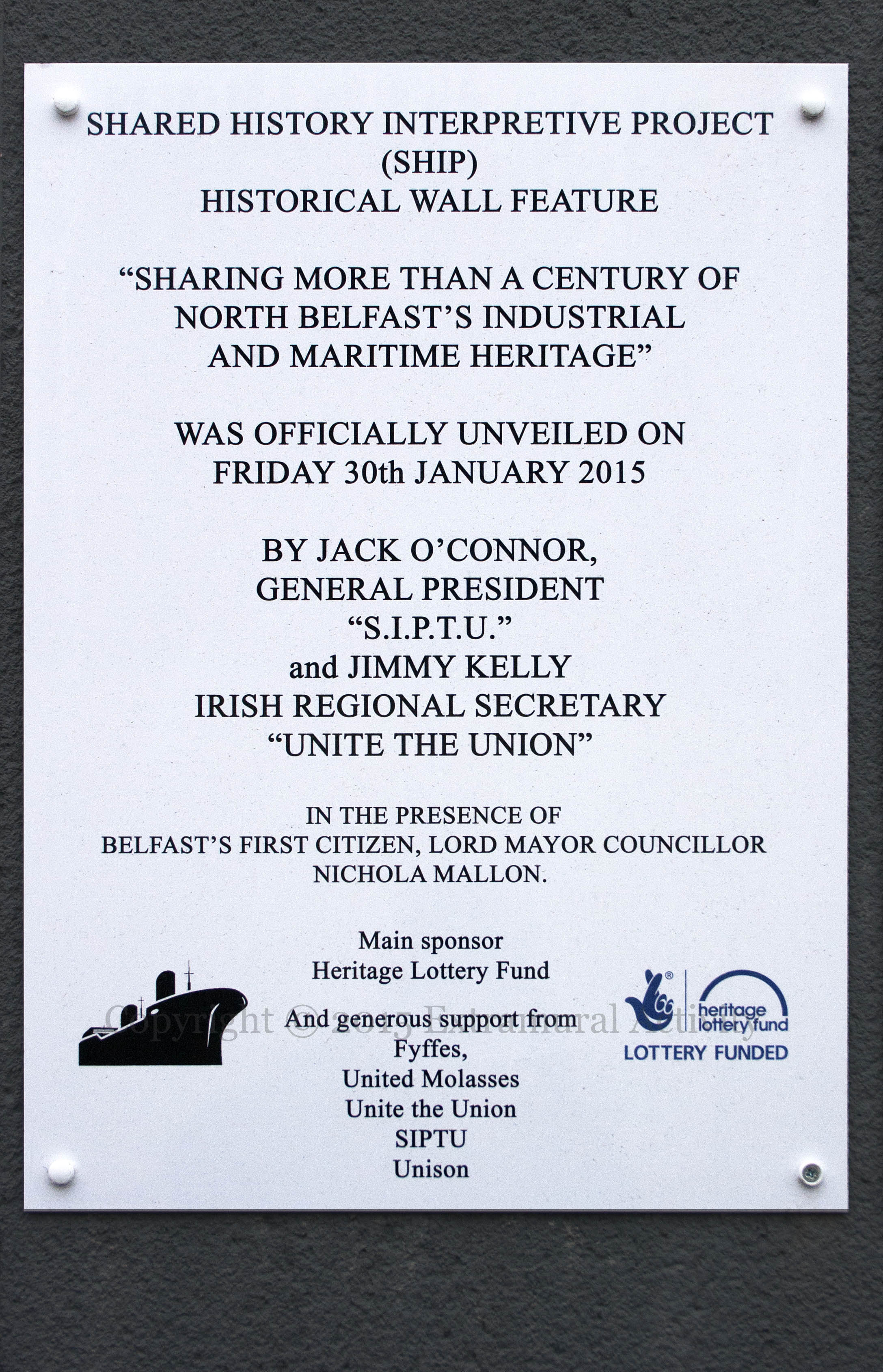
A new “historical wall feature” was unveiled by the Shared History Interpretive Project (SHIP) on the outside of the Dockers Club in Pilot Street in Sailortown. The new piece is a montage of about 60 images of vintage photographs, a census form, and posters of industrial life. In the top-middle (behind the lamppost) there can be seen an image of the board this one replaces, which featured two carters pulling away a heavy load, similar to the carter in the image above. Another addition in the new work is the inclusion of Billy McMullen (1888-1982) and John Quinn (1876-1935) alongside Winifred Carney (1887-1943), James Connolly (1868-1916), and Jim Larkin (1876-1947). Both McMullen and Quinn are Belfast trades unionists. Quinn’s headstone in Milltown Cemetery was featured previously, in Forgotten In Life, Remembered In Death. More information about all five, as well as photographs of dockers and of the unveiling, can be found at the SHIP web site.
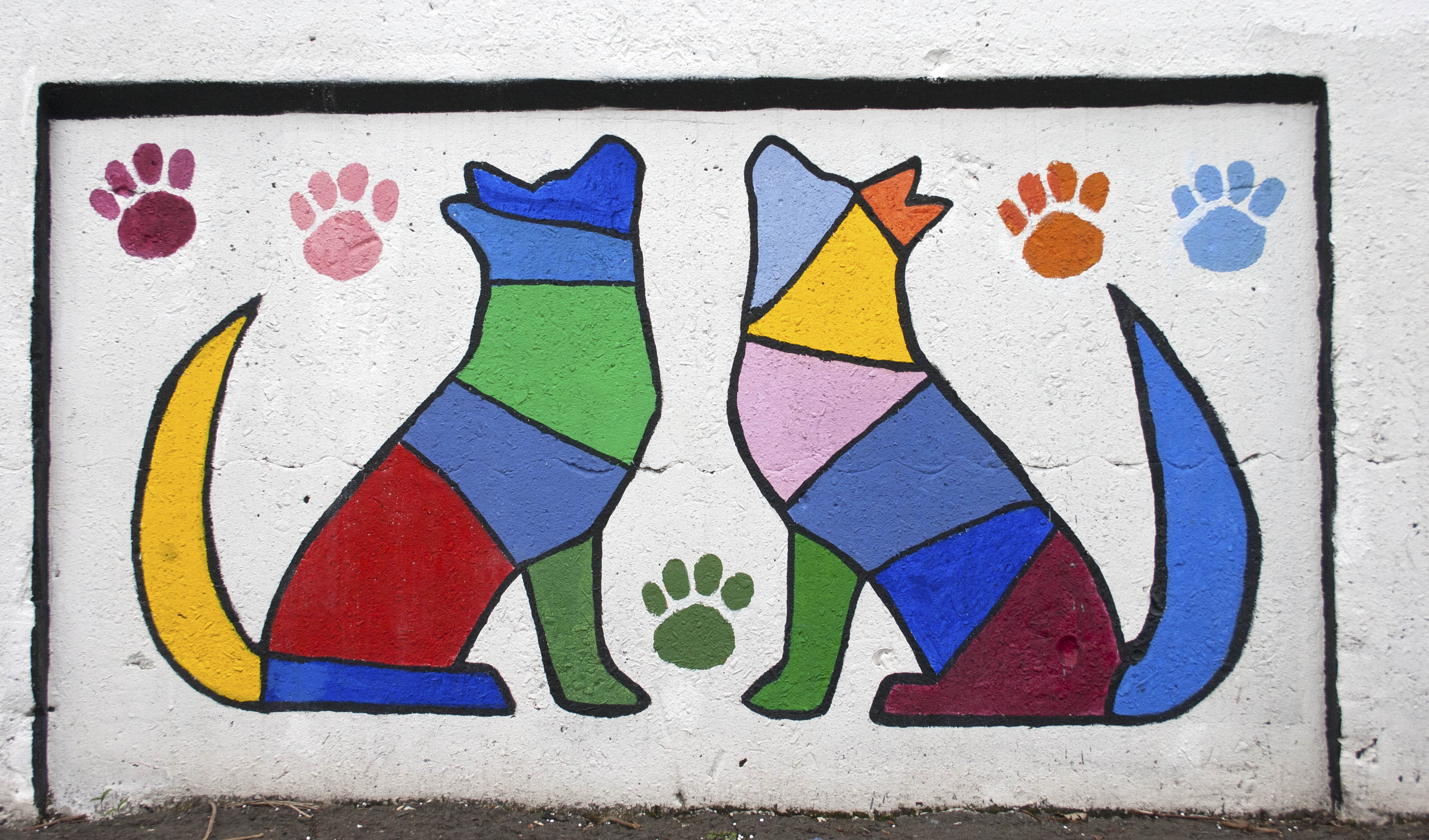
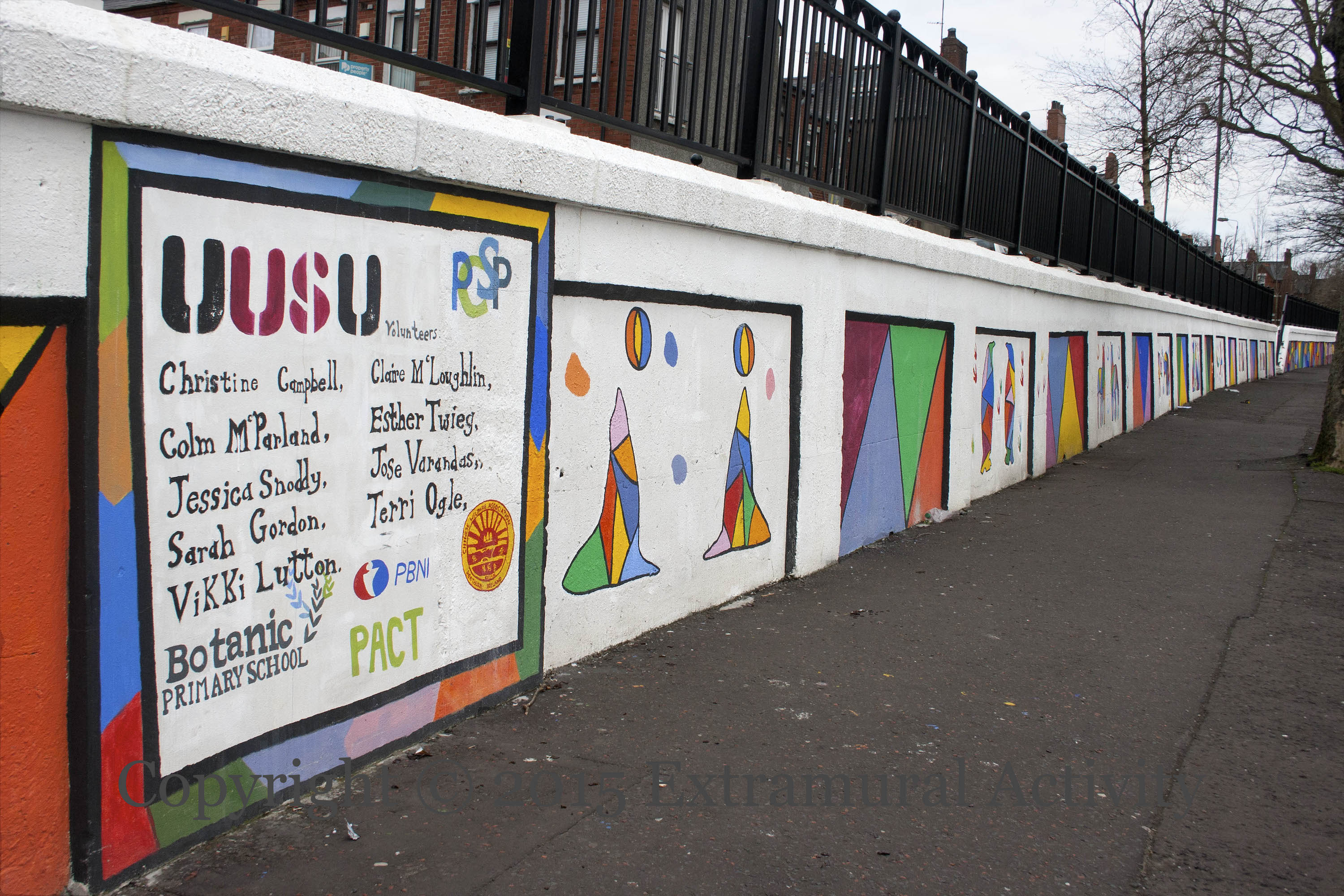
Children from Botanic Primary school and art students from University of Ulster Student Union painted a series of animal pairs (created by Vikki Lutton) and geometric panels on the wall of the Stranmillis embankment. Above we have wolves, below there are elephants, and in the wide shot, sea lions. ‘In progress’ images from UUSU | P4 schoolchildren.
UUSU was also responsible for the Seamus Heaney mural (The Hunting Heart).
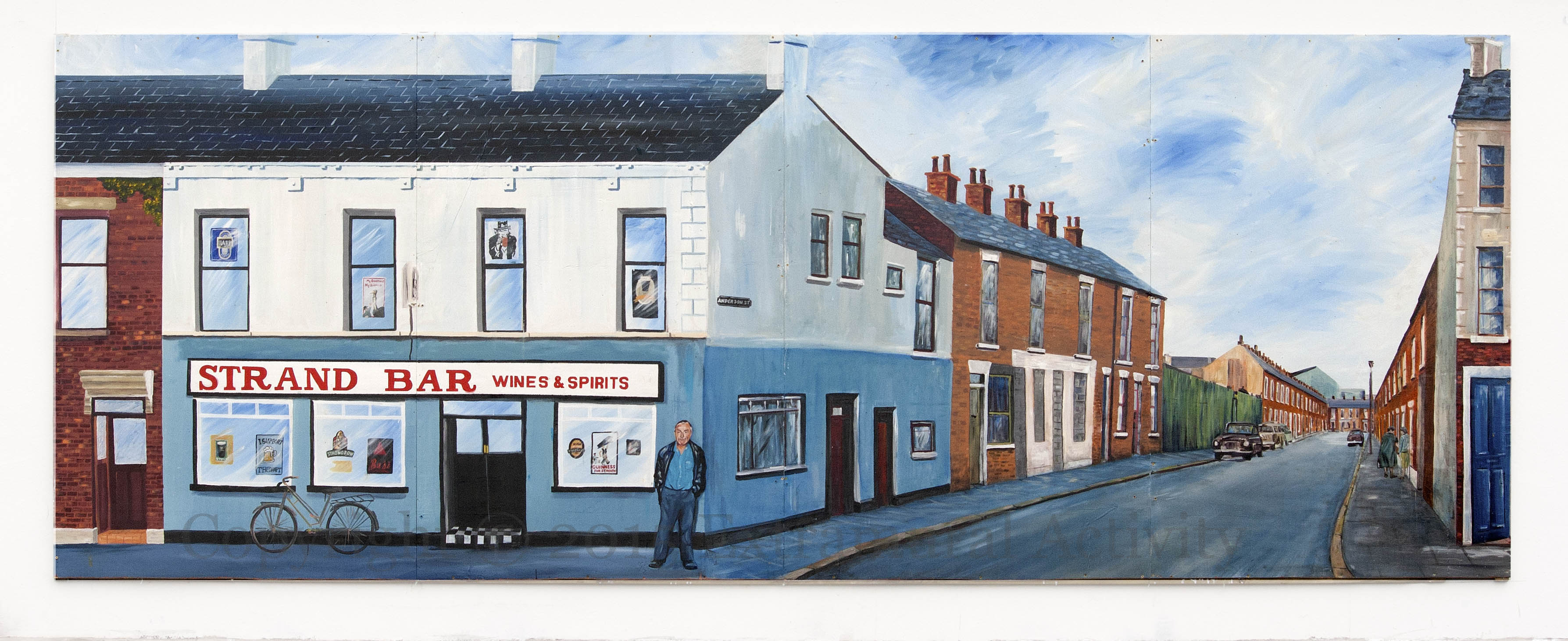
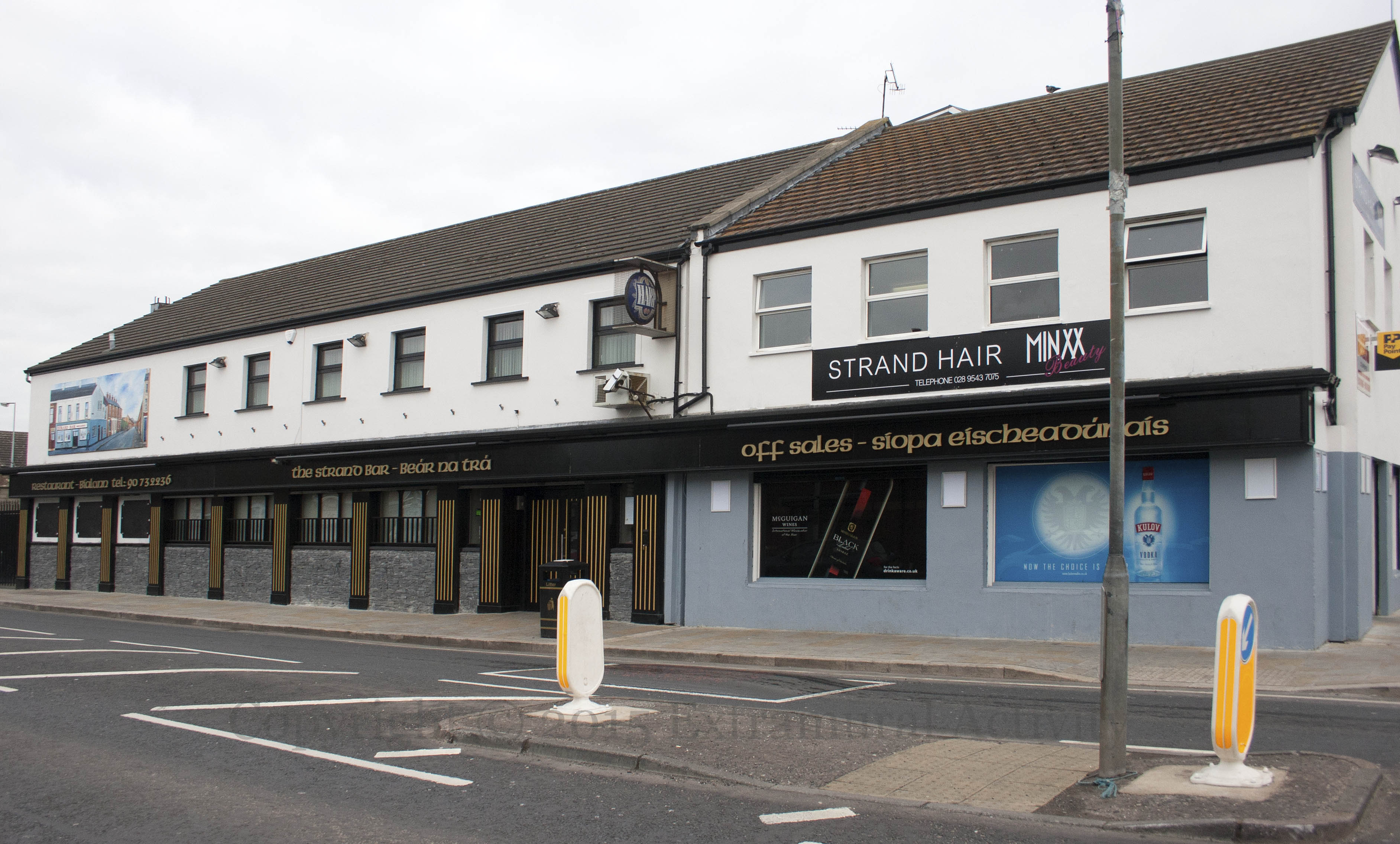
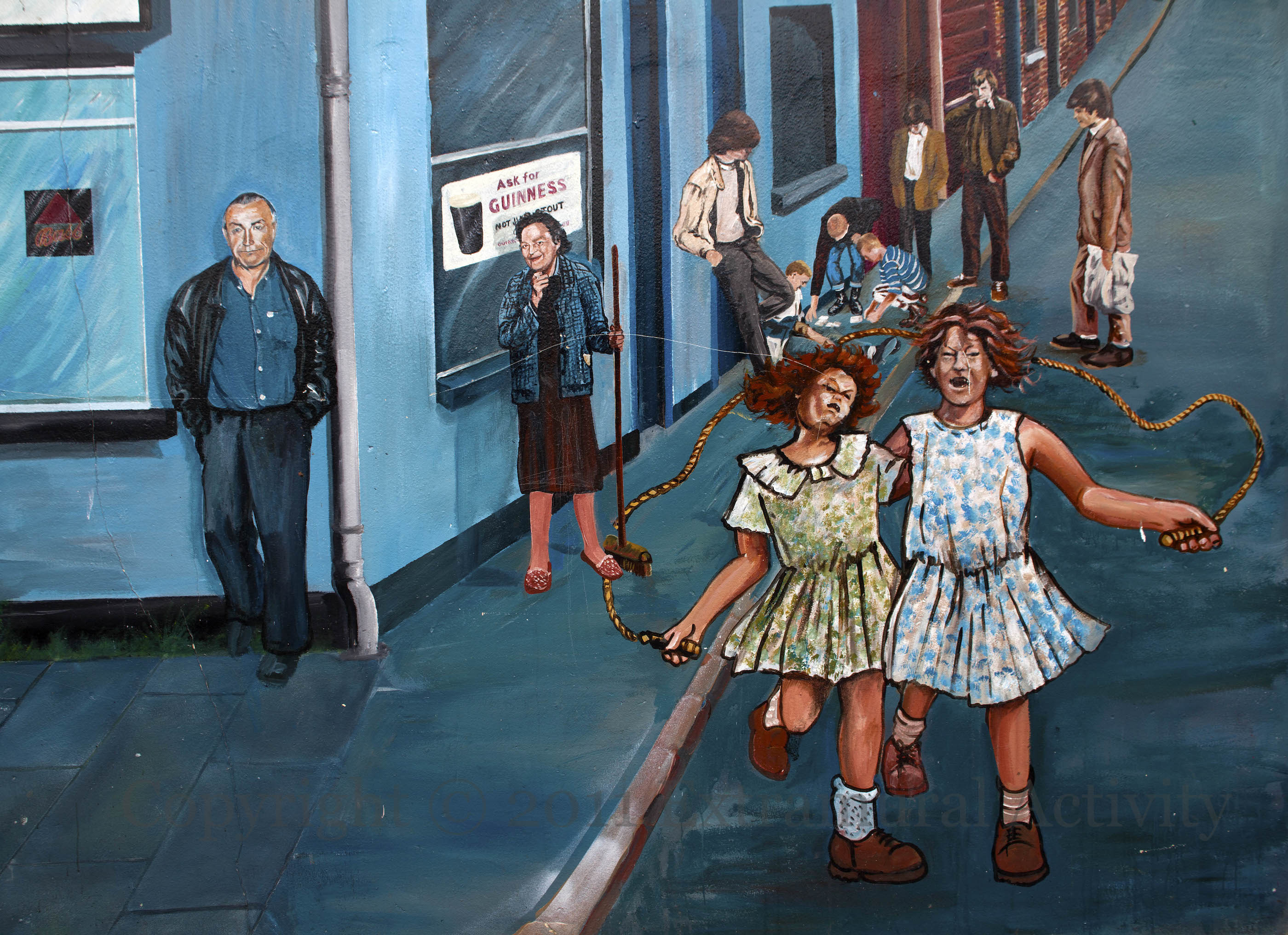
After adding windows to the downstairs, The Strand Bar has reinstated the mural previously at the front in the form of a painted board (above) showing the original bar in Anderson Street (the current Arran Street), which was attacked by the UVF in 1975 with the loss of six lives. The relative size can be gauged from the wide shot, below. The previous mural can be seen in the bottom two images. For photographs of the original bar, see the BelfastForum.







 Extramural Activity