Kragfargus Cultural Corner

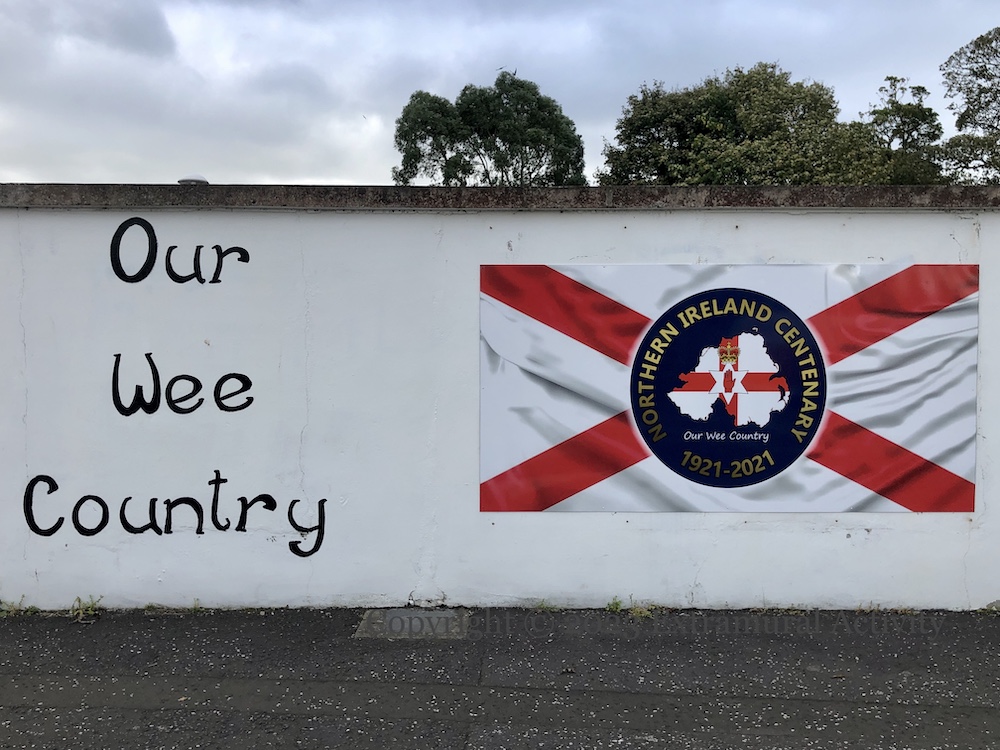
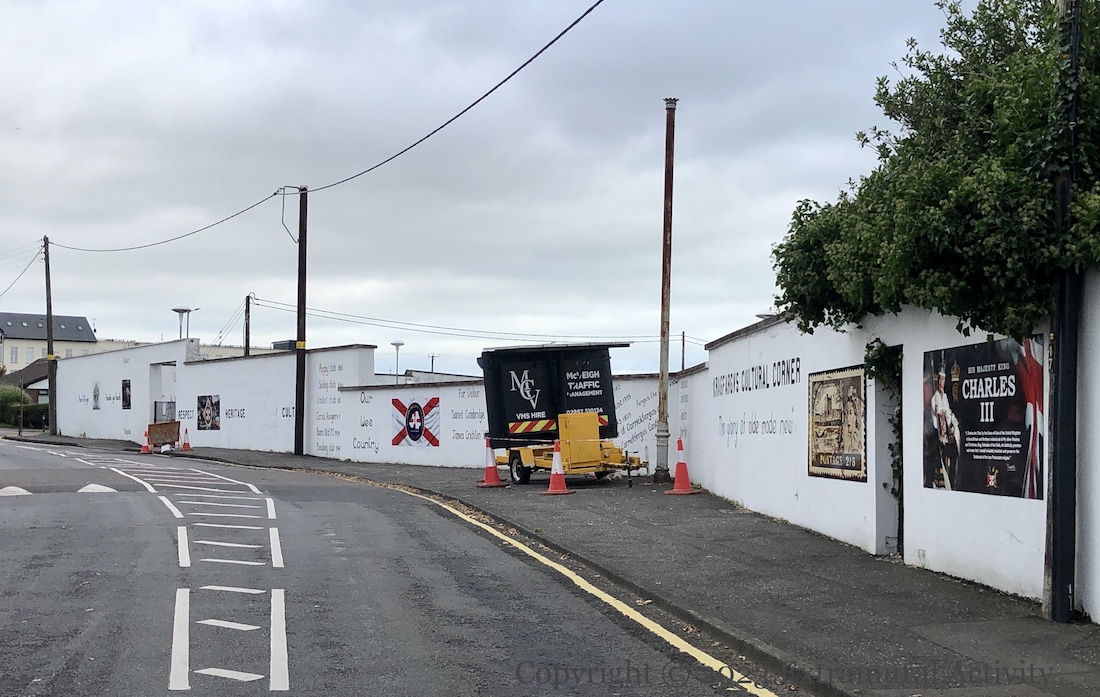
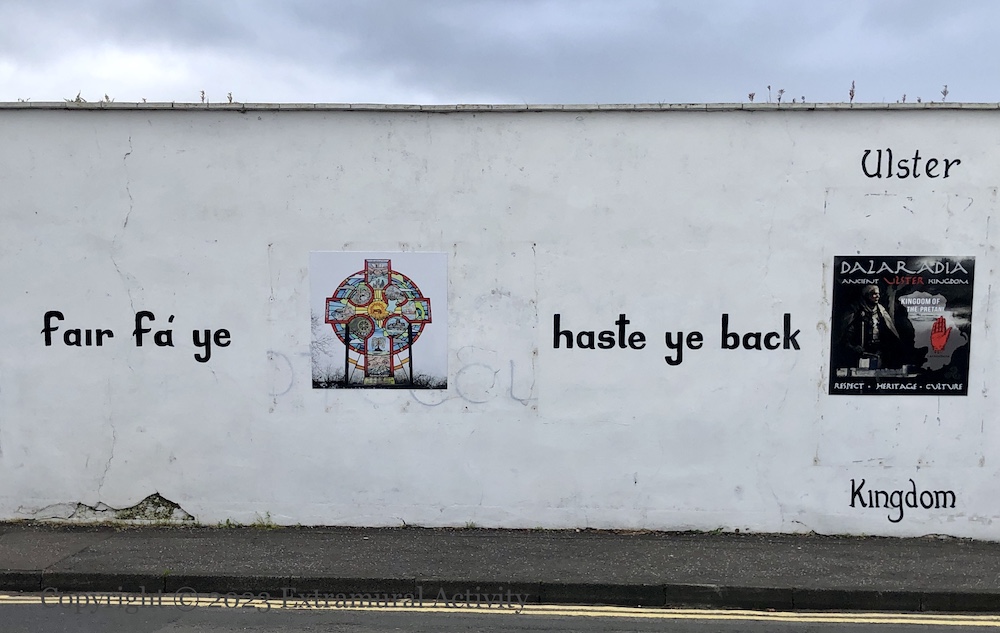
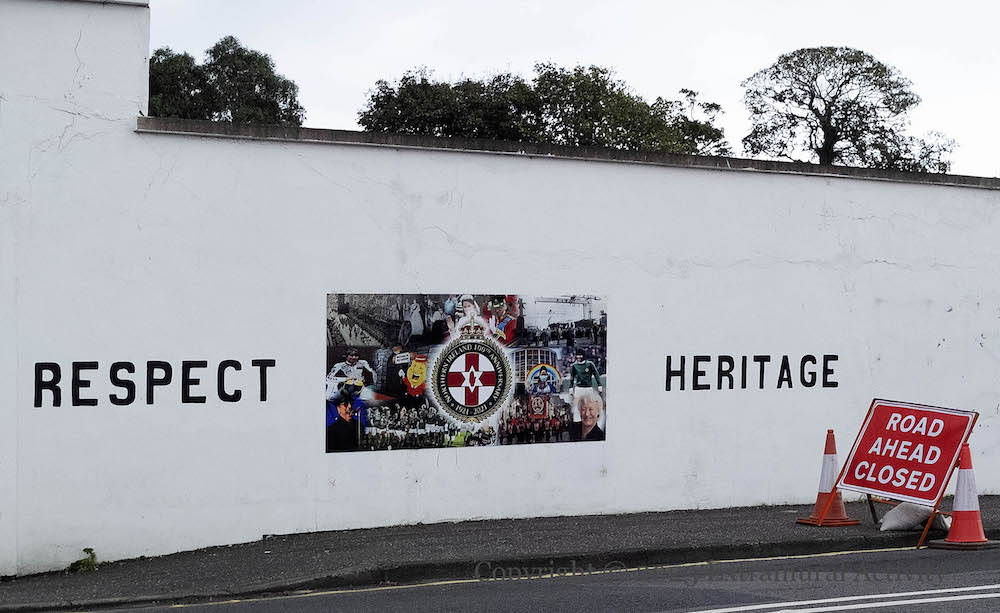
This is the second (at least) iteration of an installation along Taylor’s Avenue, Carrickfergus, showcasing the Ulster-Scots heritage of Carrickfergus and its later contributions to the United Kingdom.

The wall is 60 metres/200 feet in length and can be divided into about ten distinct panels – notes on the different panels are given below, following the order of presentation of images, which show the entire wall moving from left to right.

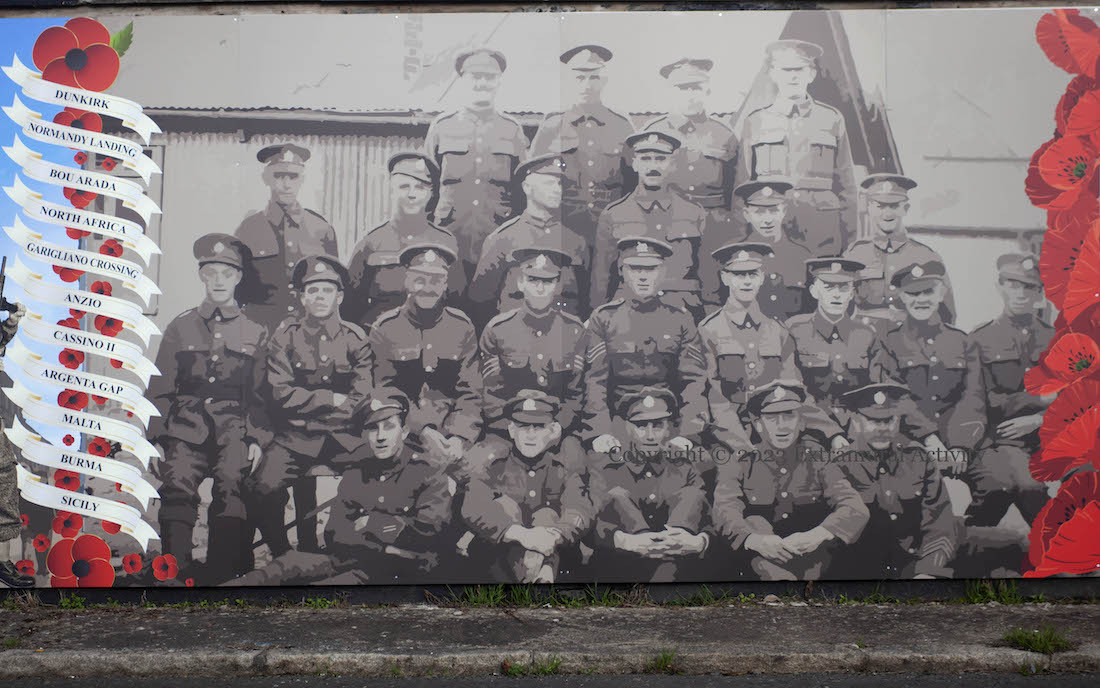
The original, as seen on Street View, included boards showing the Pretani Isles/British Isles, QEII, and Tom Moore. As seen here, there are now boards to King Charles III, a vintage postage stamp, ‘The Siege Of Carrickfergus’ in 1689, and ‘The Barn Mills Fallen’ of WWI.


Fair Fa’ Ye (or “fair faa ye”) is an (Ulster-)Scots blessing, “fair fall you”, meaning roughly “good luck” (Bloggin Fae The ‘Burn | r/scots | Nelson McCausland).

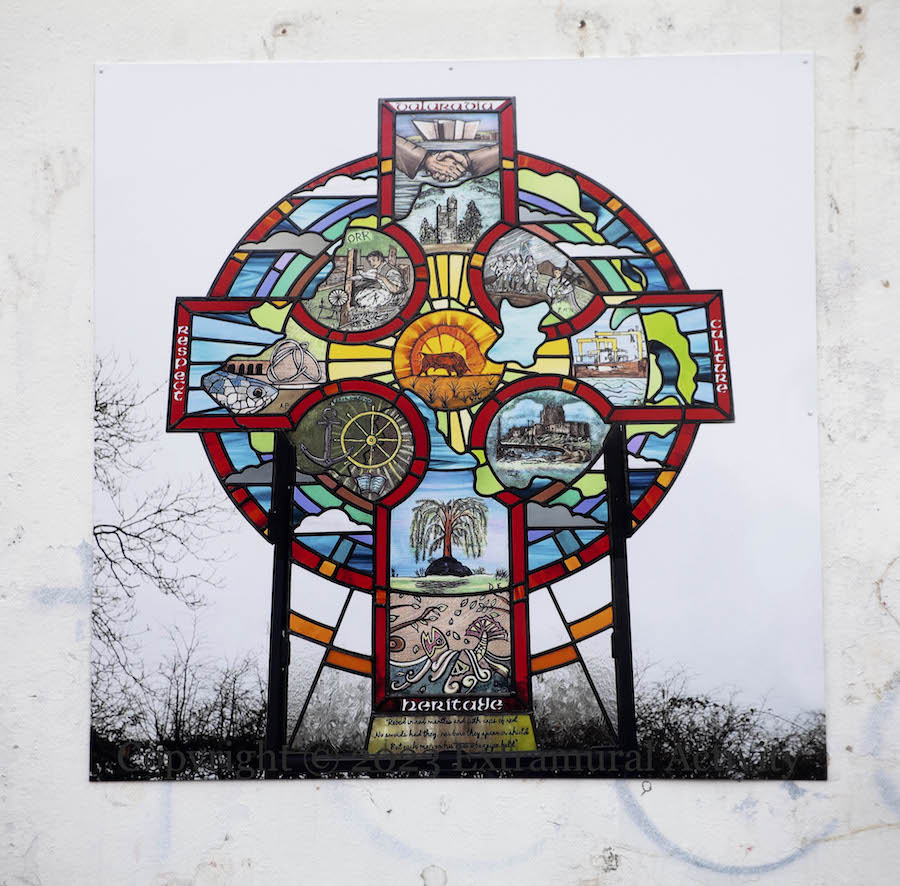
The stained-glass is called the Dalaradia Window. For images and explanation, see Picts Exiled From Alba.

For Dalaradia, see Kingdom Of The Pretani and the Visual History page on Cú Chulaınn.

James Orr, the ‘Bard Of Ballycarry’, was a contemporary of Robert Burns and a United Irishman. It does not appear that he wrote a poem with the line “I wish I was in Carrickfergus”.

Daniel Cambridge won his VC for service in the Crimean War (WP) and James Crichton for service in WWI (WP).

CarrickfergusHistory includes “the oldest know map of Carrickfergus” from 1560, employing the spelling “Kragfargus”.

The 2/6 postage stamp featuring Carrickfergus Castle was one of four in a “Castle series” in 1955 (WP).
Click image to enlarge
Copyright © 2023 Seosamh Mac Coılle
X14358 [X14357]
X14376 [X14359]
X14373 [X14356]
X14355
X14354
X14353
X14350 [X14352]
X14351
T03520c
X14139
X14360 [X14361]
X14348 [X14375]
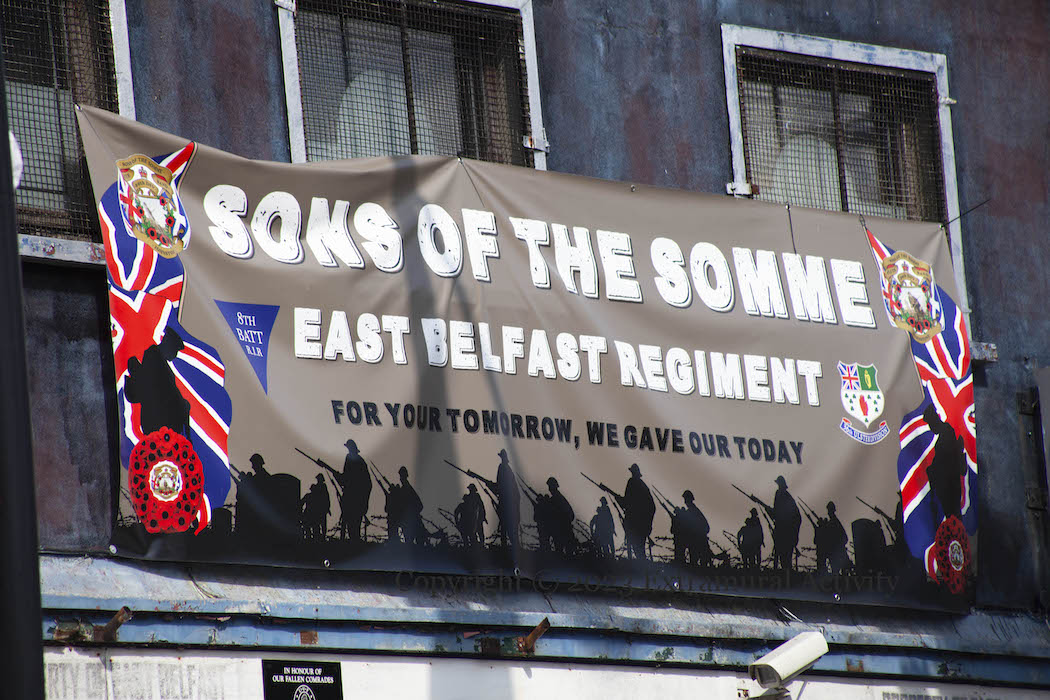
Sons Of The Somme

“For your tomorrow, we gave our today.” On either side of the central text are “8th battalion RIR” and the emblem of the 36th Division. The East Belfast regiment of the (1912) Ulster Volunteers became the 8th battalion of the Royal Irish Rifles and joined the 107th brigade in the 36th Division.

In the corners of the tarp above is the emblem of the Sons Of The Somme flute band, Johnstone (west of Glasgow) (Fb). The tarp is on the (closed) Belvoir Bar on the Newtownards Road. For the “property of East Belfast UVF” stencil and the plaque at the bottom, see Not For Sale.

Click image to enlarge
Copyright © 2023 Seosamh Mac Coılle
X14080

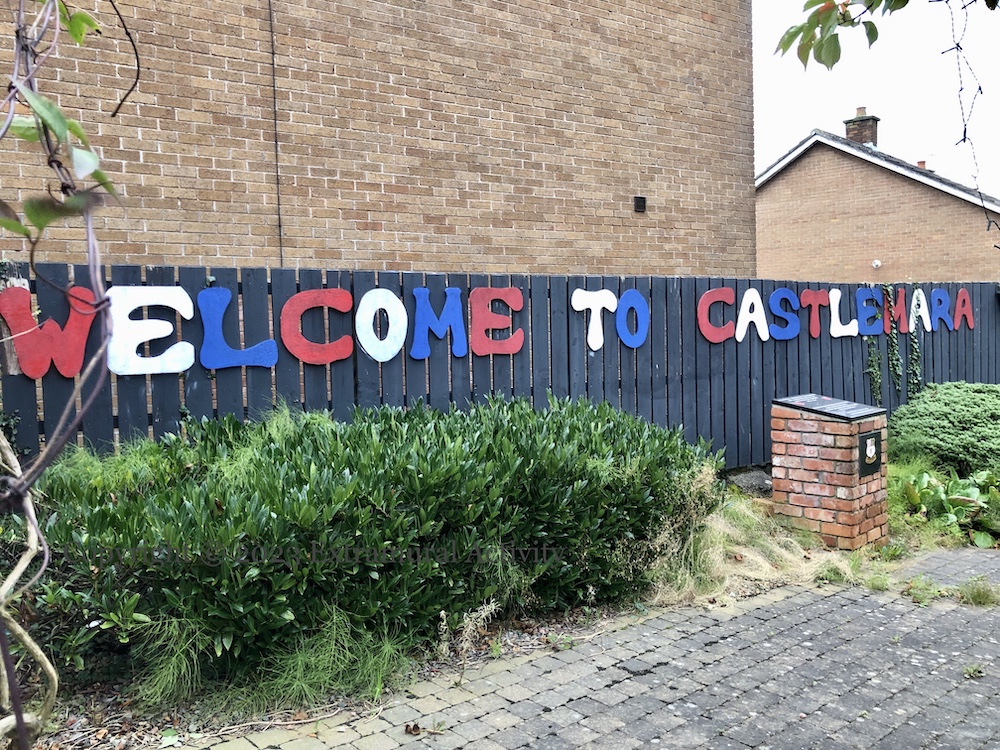
Castlemara Celebrates

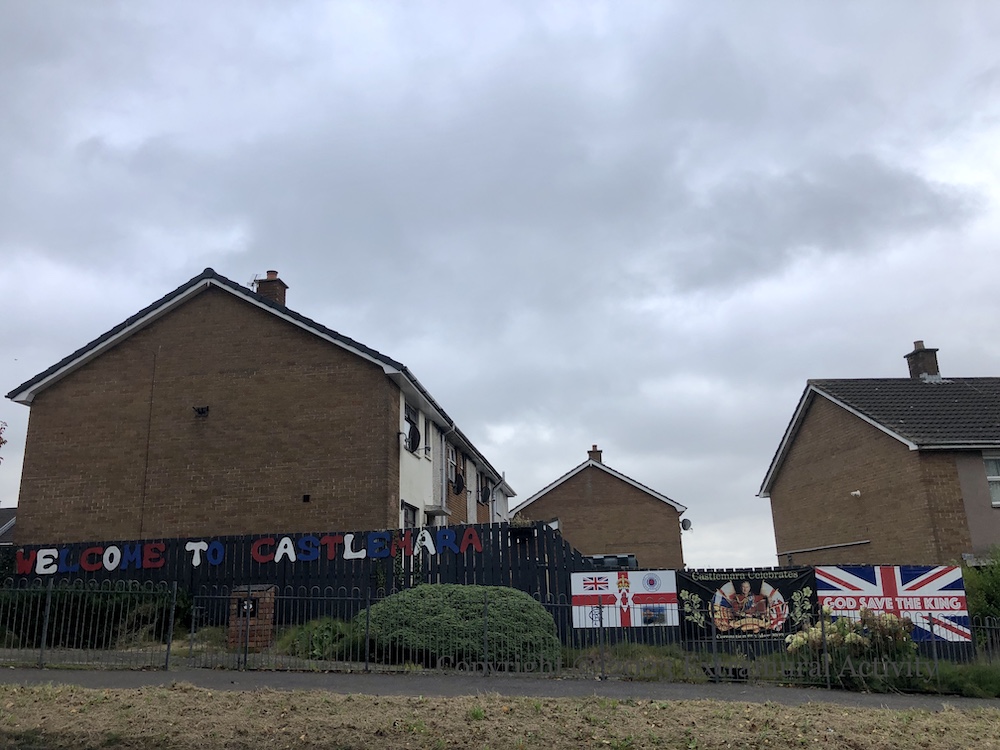
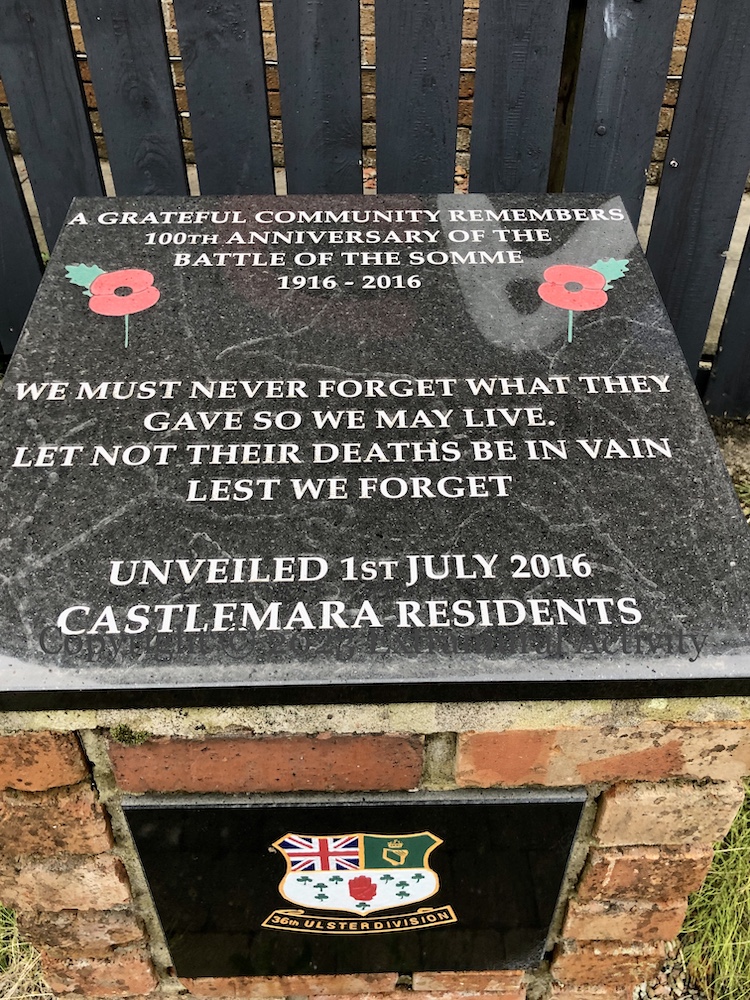
Castlemara residents’ various emotions are on display at the entrace to the estates: celebrating the jubilee of Elizabeth II, the coronation of Charles III, the creation of Northern Ireland in 1921, and Rangers’ 55th league title; saluting Tom Moore; commemorating Prince Philip, 1921-2021; and remembering with gratitude the “100th anniversary of the Battle Of The Somme”: “We must not forget what they gave so we may live. Let not their deaths be in vain. Lest we forget.”

Click image to enlarge
Copyright © 2023 Seosamh Mac Coılle
X14370 X14369 X14371 X14372
X14362 [X14374] god save the king

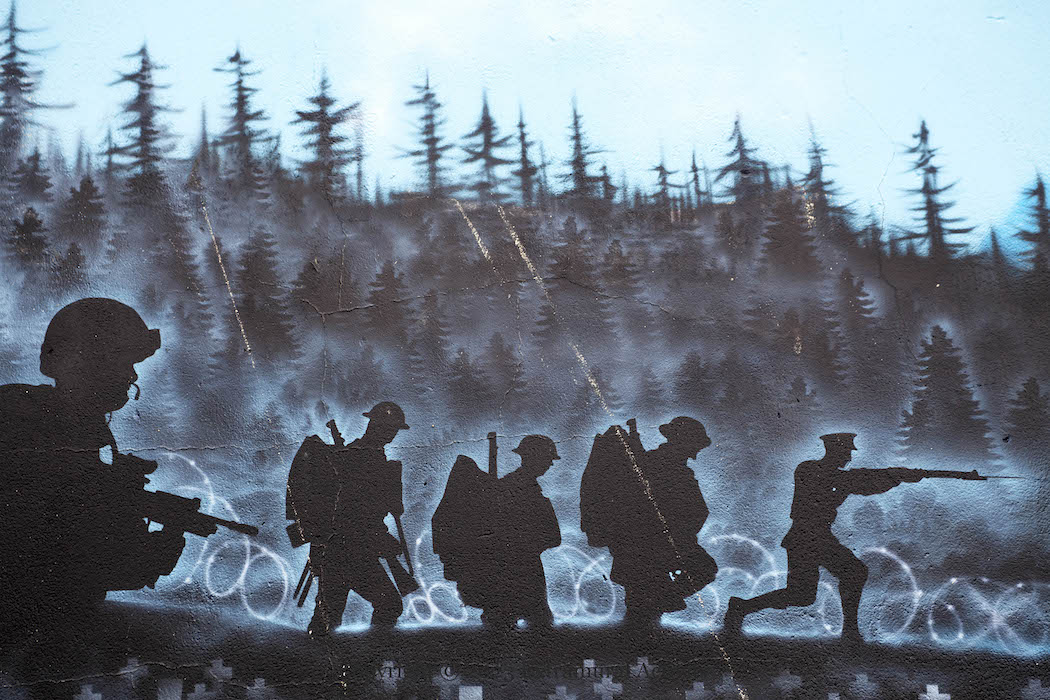
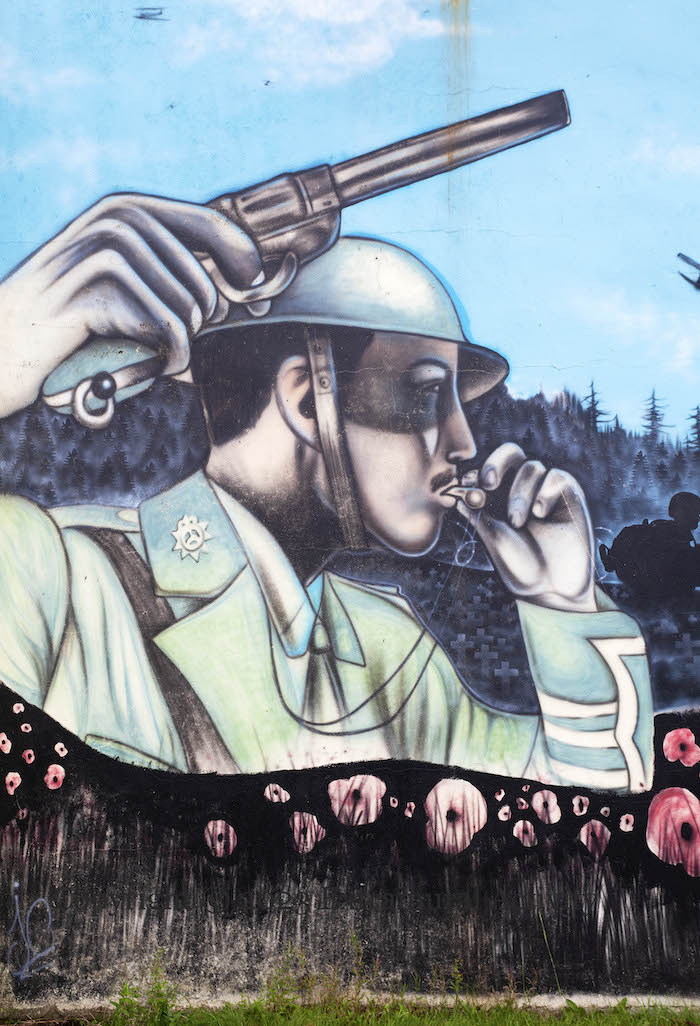
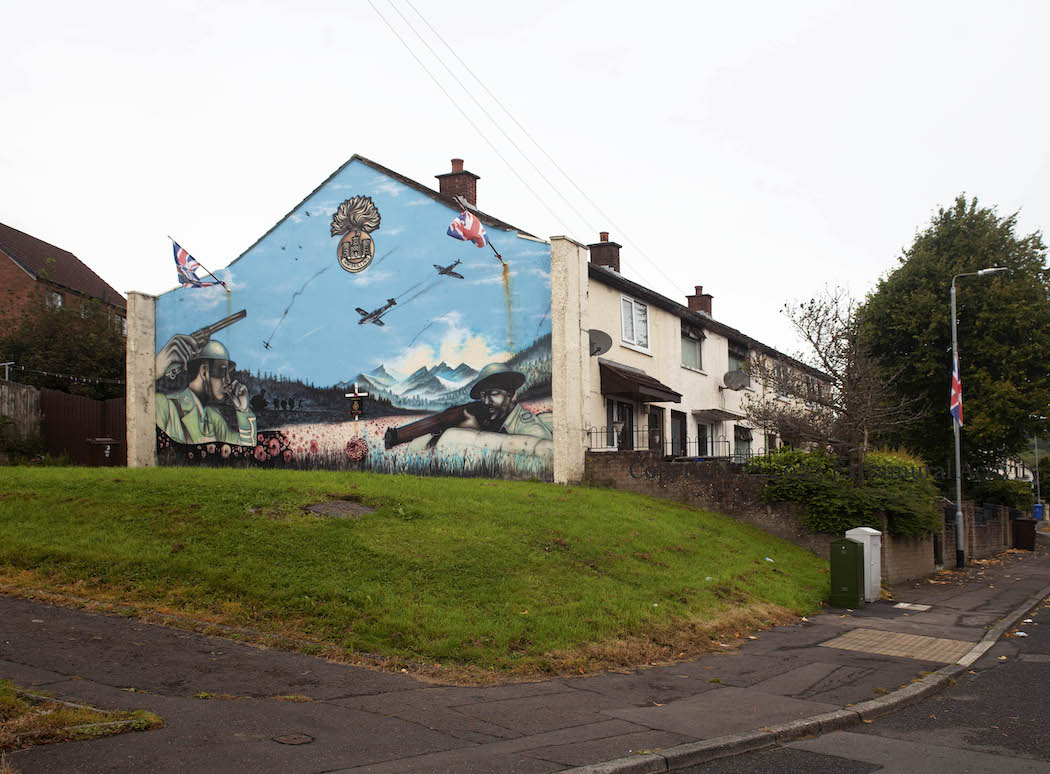
The Skins

The Inniskilling Fusiliers were recruited from the four Ulster counties of Fermanagh, Tyrone, Derry, and Donegal. In WWI, battalions also served in the 4th, 29th, and 10th Divisions, as well as the 109 Brigade of the 36th Division. In WWII (represented here by the Spitfire in pursuit of the Messerschmitt) the Fusiliers served in France, India, and Italy. (Ciroca | Long Trail | WP)

(For a broader history, from the Williamite campaign to modern Afghanistan, see Inniskilling.)

This Tyndale mural appears to have be painted without fanfare in 2022.

Click image to enlarge
Copyright © 2023 Seosamh Mac Coılle
X14232 X14231 X14230 X14229 [X14227] X14228

Royal Irish Rifles

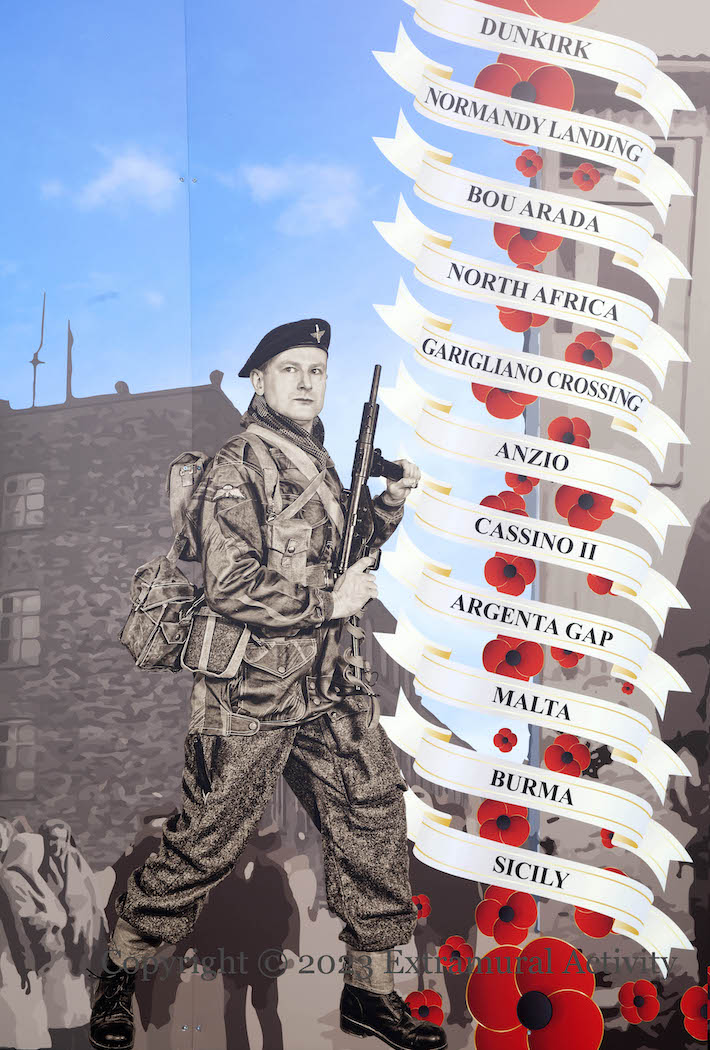
After WWI, the Royal Irish Rifles became the Royal Ulster Rifles (and later became part of the Royal Irish Rangers). This board prioritises WWI as the Rifles were part of the 36th Division. The hero of WWI portrayed in the central panel is William McFadzean, awarded the VC for falling on two live grenades in the trenches on July 1st, 1916. McFadzean is familiar from many previous murals both individually and in the company of other VC winners; for his family home in Cregagh, see Rubicon.

Alongside McFadzean, the hero of WWII is Blair “Paddy” Mayne, who was only briefly in the Ulster Rifles before making his name in the Parachute Unit (later, and better, known as the SAS). His many medals of honour are shown in an old Newtownards mural though he was denied the VC.

Ballysillan Road, north Belfast.

Click image to enlarge
Copyright © 2023 Seosamh Mac Coılle
X14137 [X14133] [X14134] X14136 X14135 X14138 X14131 X14132

Glenbryn Remembers

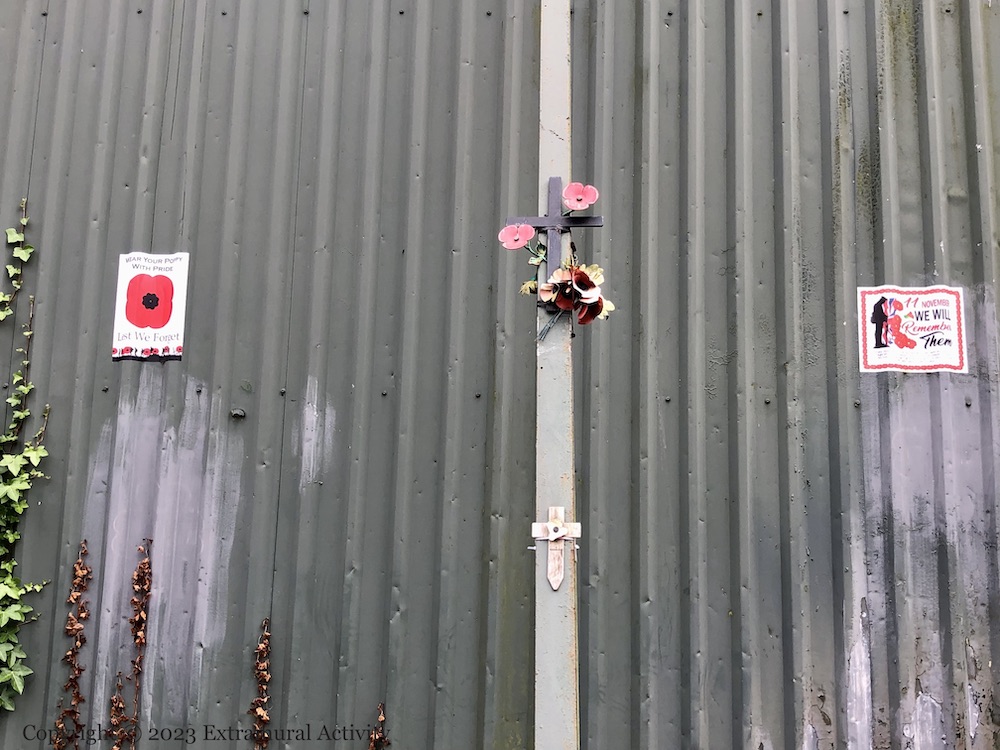
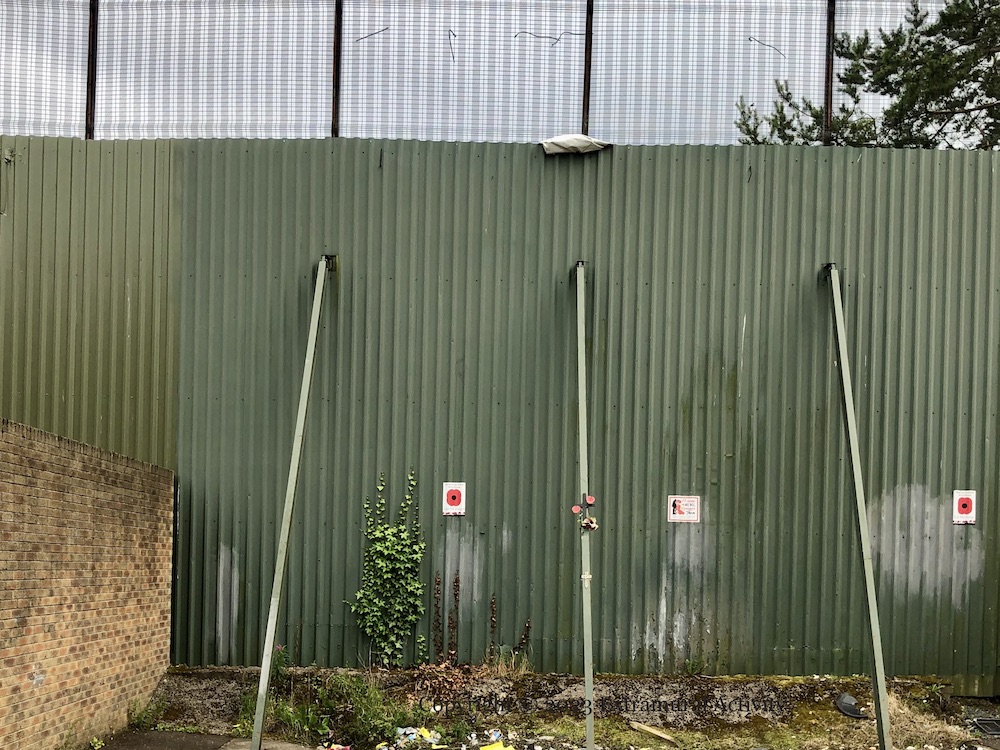
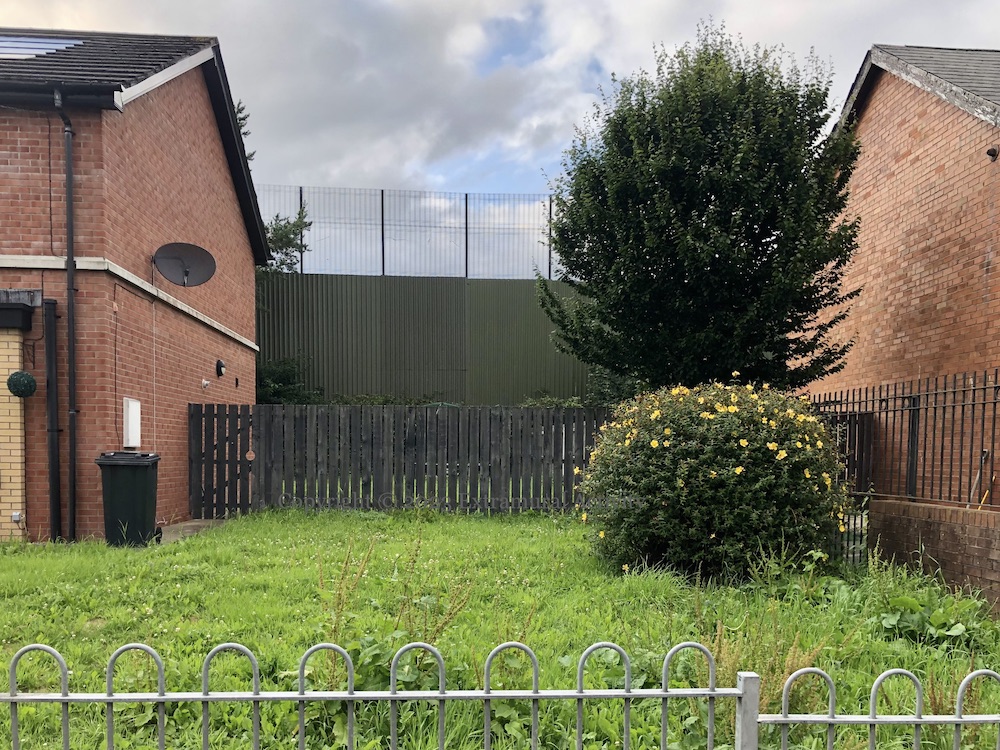
The first “peace” line along Alliance Avenue was a temporary barried constructed by the British Army in 1971 (Heatley at CAIN); parts of it today are nine metrers high (Belfast Interface Project). The central road in Ardoyne, Berwick Road/Paráıd An Ardghleanna was cut off by the line but in the recent redevelopment no house was built in front of the spot where the road ran through. Instead there are now support beams and a small cross in memory of WWI dead.

The final image is of the same spot on the Ardoyne side of the line.

Click image to enlarge
Copyright © 2023 Seosamh Mac Coılle
X12816 X12815 [X12814] [X12817] X12818
X12819 [X12820]


You’ll Know Us By Our Noise

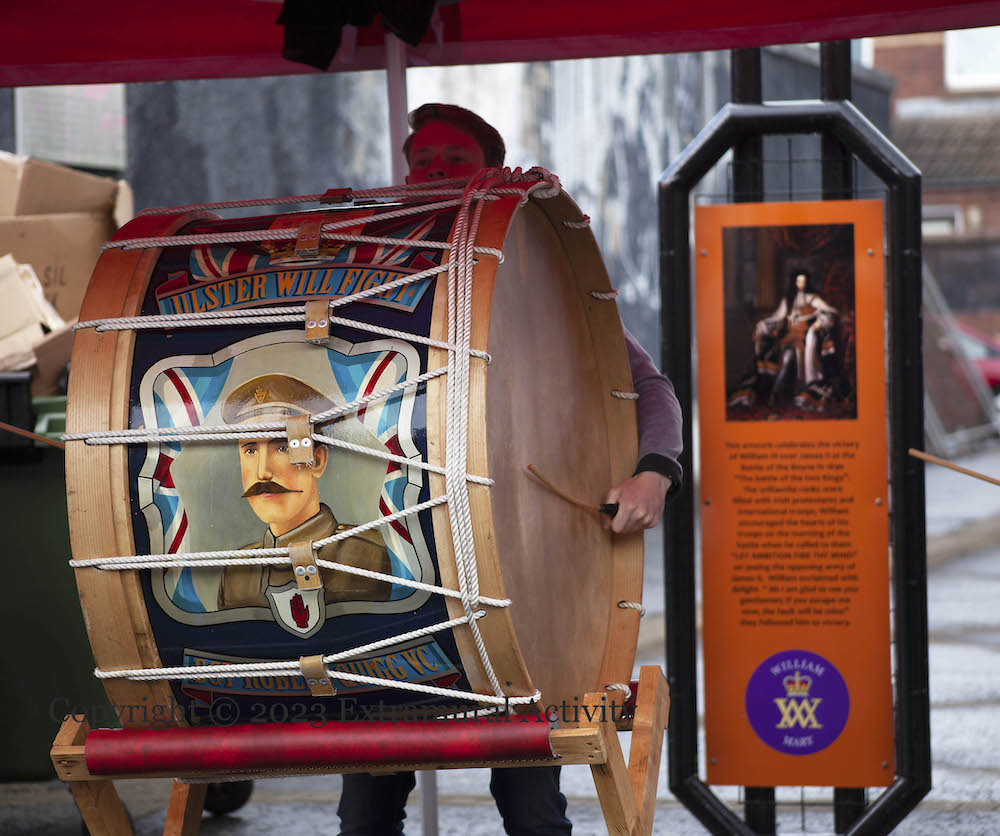
The “Lambeg drum” is named for the village near Lisburn, perhaps invented there to celebrate a visit by King Billy (LAD), or perhaps because it was there that the (already existing) drum was played with canes (WP).

As can be seen from these images, the drums are extemely large – three feet in diameter – which makes them difficult to use in parades, as does their immense noise (up to 120 dB); they are more frequently seen on their own at drumming displays such as this one on the Shankill yesterday (July 11th).

See also: Lambeg drums in Glynn last year (2022) in While I Live I’ll Crow.

For the King William railings, see Let Ambition Fire Thy Mind.

For the Clyde Valley, see An Astounding Achievement.
For Robert Quigg, see Victoria Crosses Of The 36th (Ulster) Division.

Click image to enlarge
Copyright © 2023 Seosamh Mac Coılle
X12758 X12759 X12757 [X12756] X12760

Not In Sorrow But In Pride

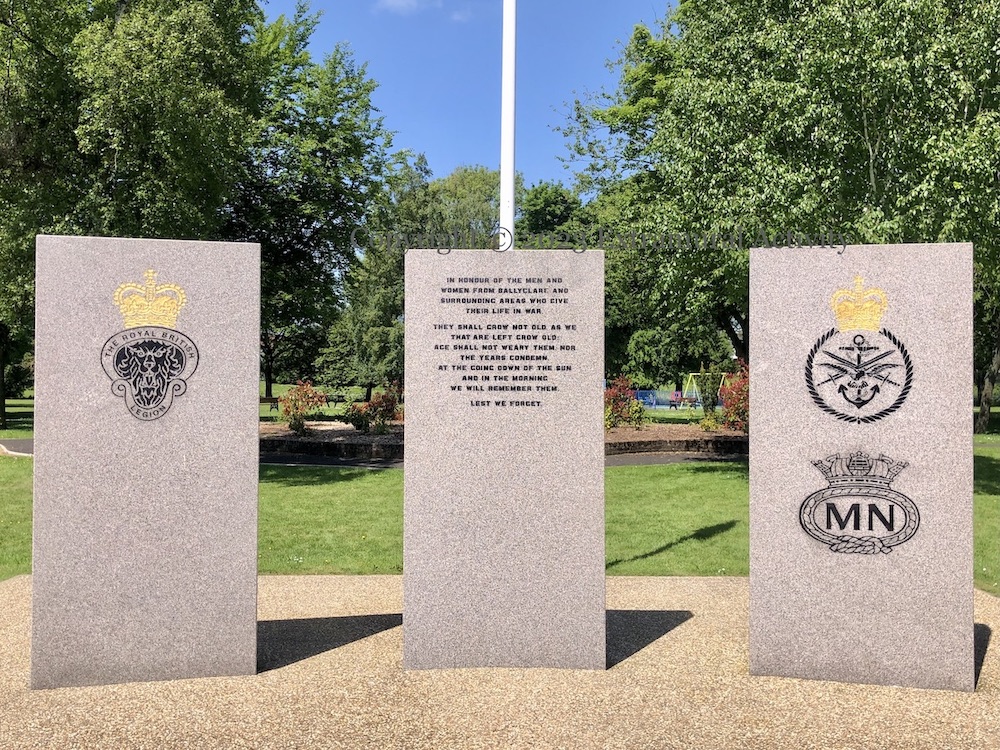
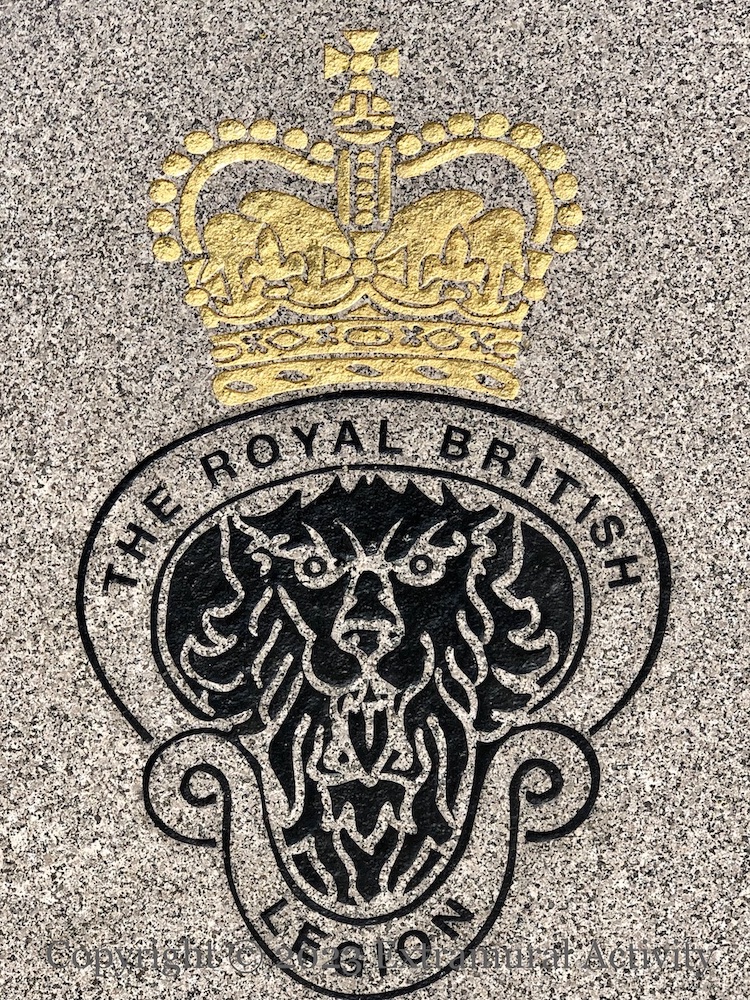
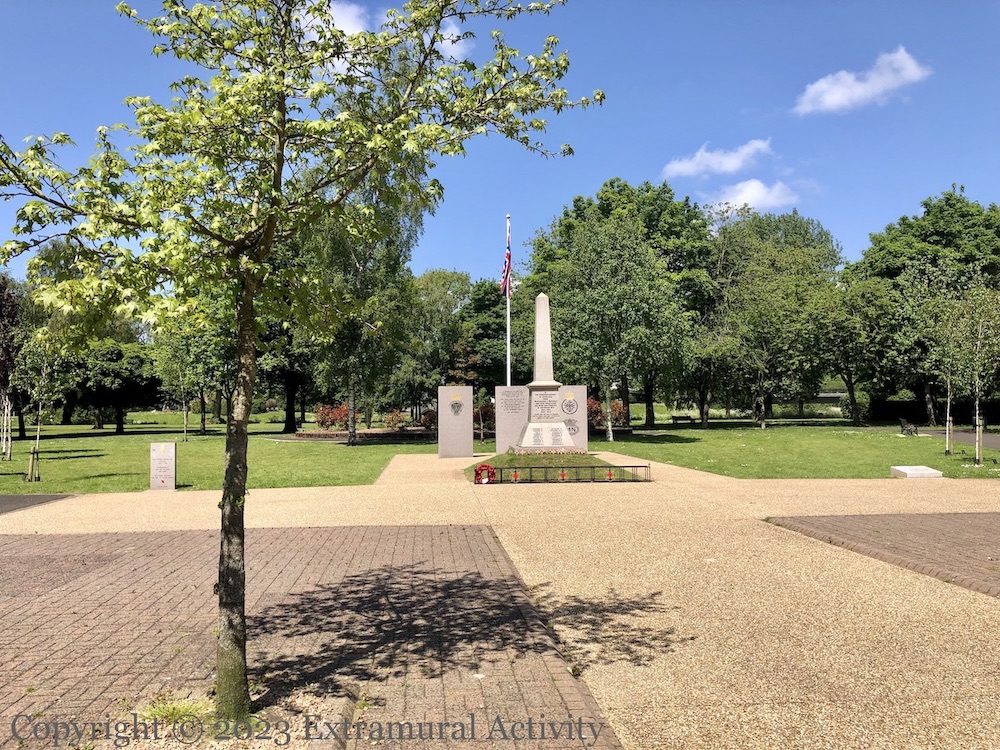
“In honour of the men and women from Ballyclare and surrounding areas who gave their life in war. ‘They shall grow not old as we that are left grow old, age shall not weary them nor the years condemn, at the going down of the sun and in the morning, we will remember them’. Lest we forget.” With emblems of the Royal British Legion (left), Navy and Merchant Navy (right), and a separate stone for the UDR “When danger threatened, some made the supreme sacrifice”.

The main obelisk is dedicated “in the honoured memory of those men from Ballyclare & District who gave their lives for King and country in the Great War 1914-1918, 1939-1945. ‘Look not on this in sorrow but in pride and may ye live as nobly as they died.”

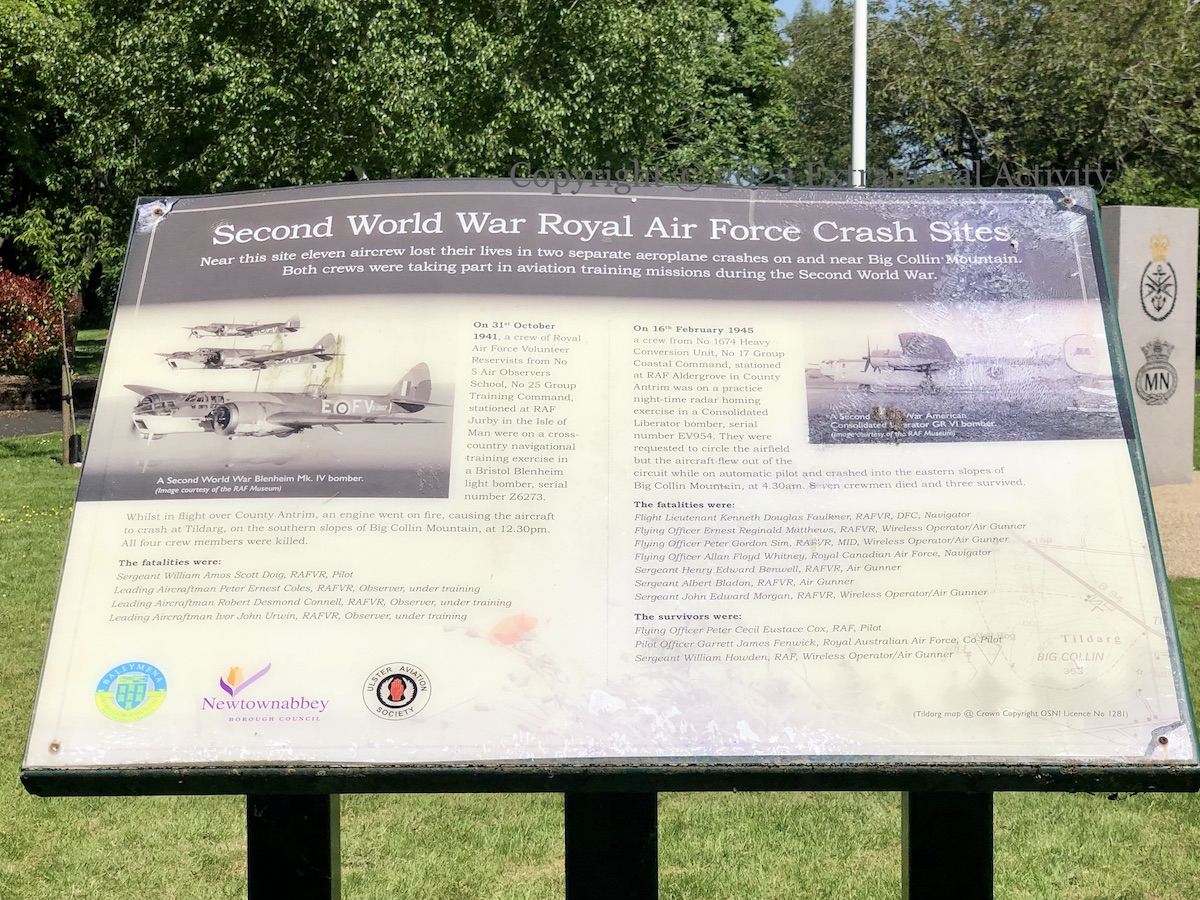
The remaining image shows the info board describing two aeroplane crashes around Big Collin Mountain, in which eleven airmen died while on training flights, one the result of an engine fire, the other crashed into the side of the mountain.

Ballyclare War Memorial Park, Ballyclare Road, Ballyclare. There are also separate murals in Erskine Park to the locals who died in WWI and in WWII.

Click image to enlarge
Copyright © 2023 Seosamh Mac Coılle
X12478 X12476 X12477
X12475 X12479
X12474 X12473 X12480
Bristol Blenheim X6273 Consolidated Liberator bomber EV954

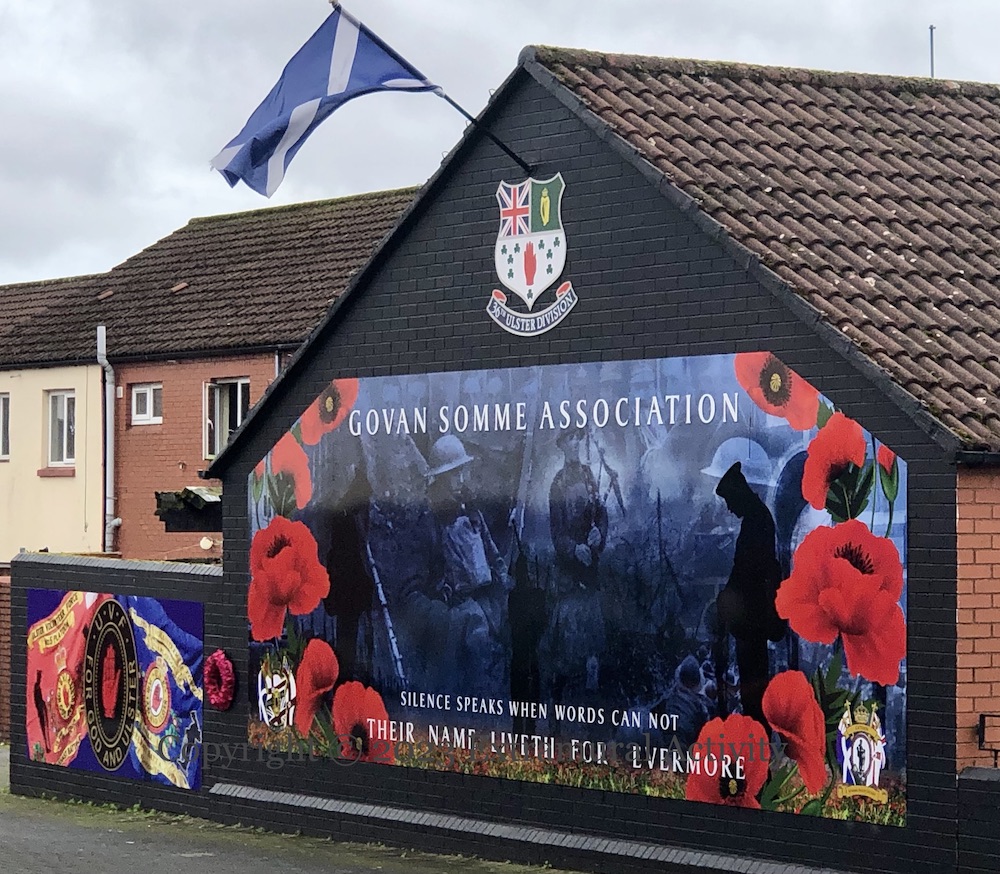
Silence Speaks When Words Can Not

There was previously a (painted) mural on this wall – see Passchendaele Court – but this latest display is a large printed board, with photographs blended together and framed by graveside mourners, poppies, and the emblems of the Pride Of Govan flute band and the Govan Somme Association (Fb), which also supported the previous mural.

To the left, as seen in the final images, is a smaller UVF (1st Battalion) A Company 5th Platoon board – like the other new board in the street We Will Always Be Ready (and on the other side of Conway Street – see When Needed We Shall Rise Again).

Conway Walk, Belfast

Click image to enlarge
Copyright © 2023 Seosamh Mac Coılle
X12023 X12024 X12021 X12022

Defender Of Europe

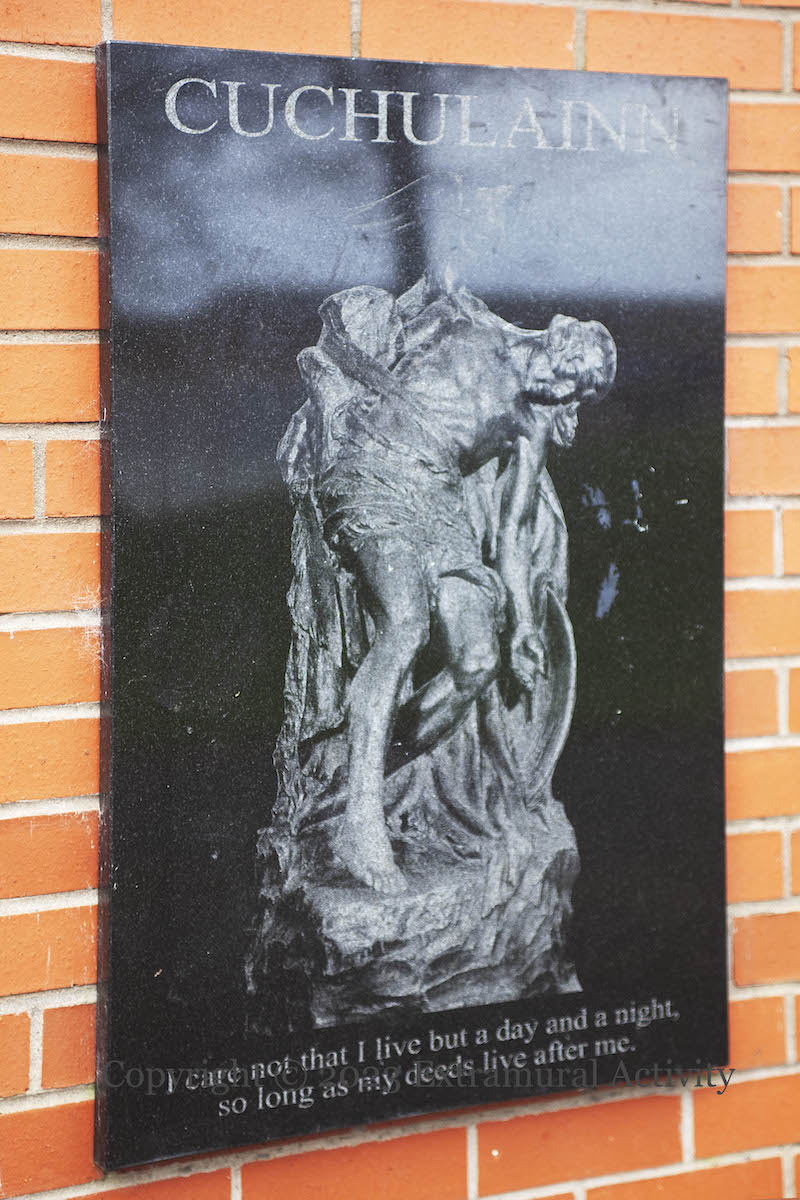
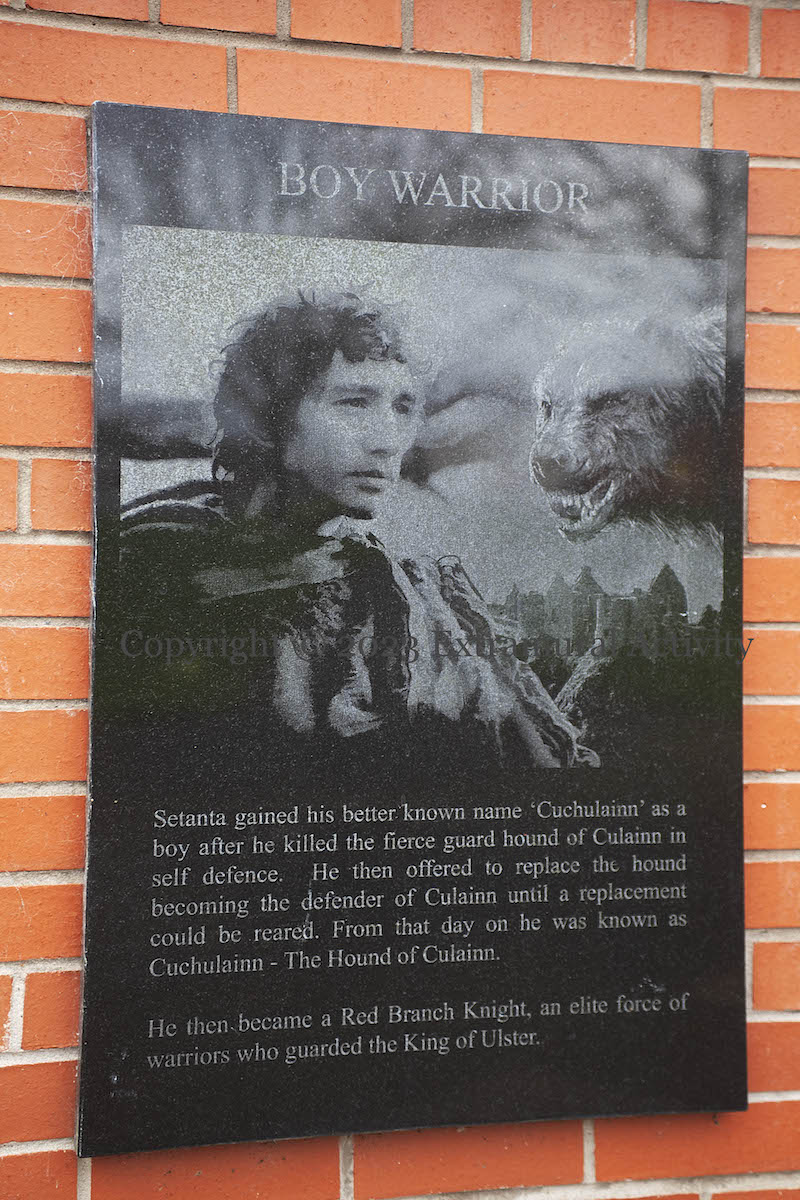
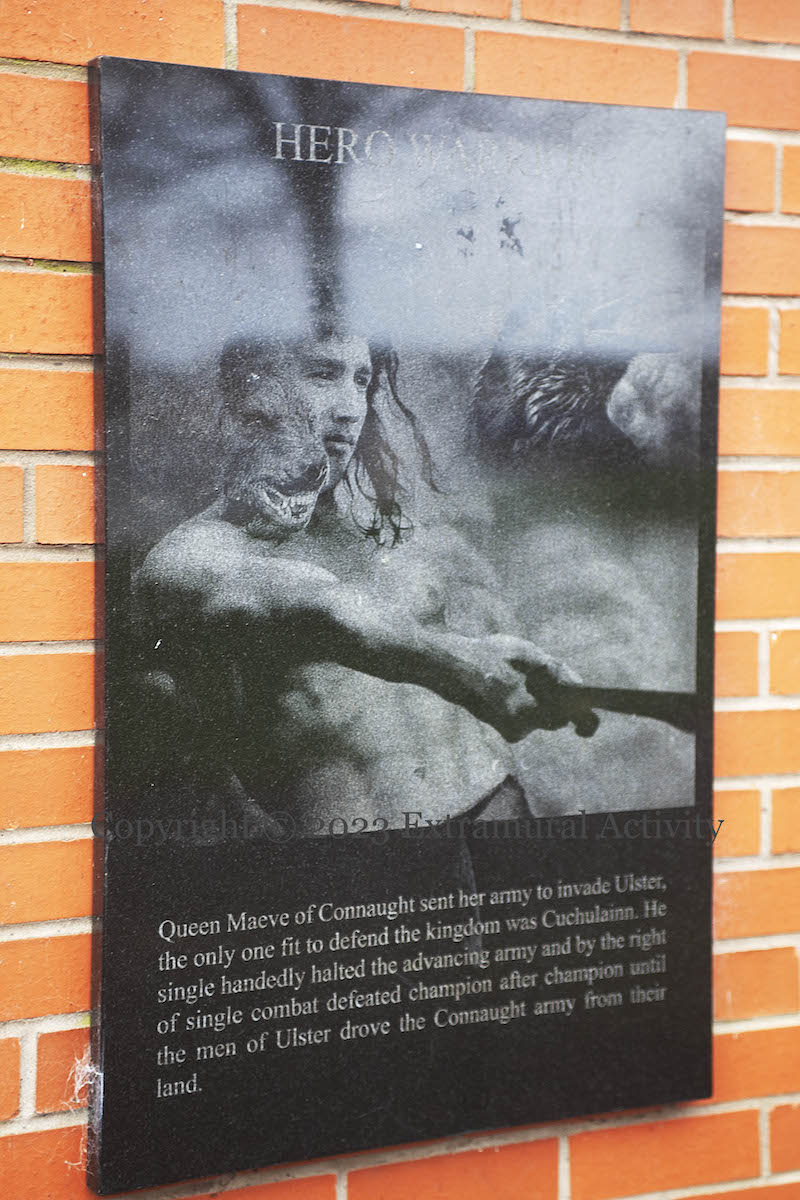
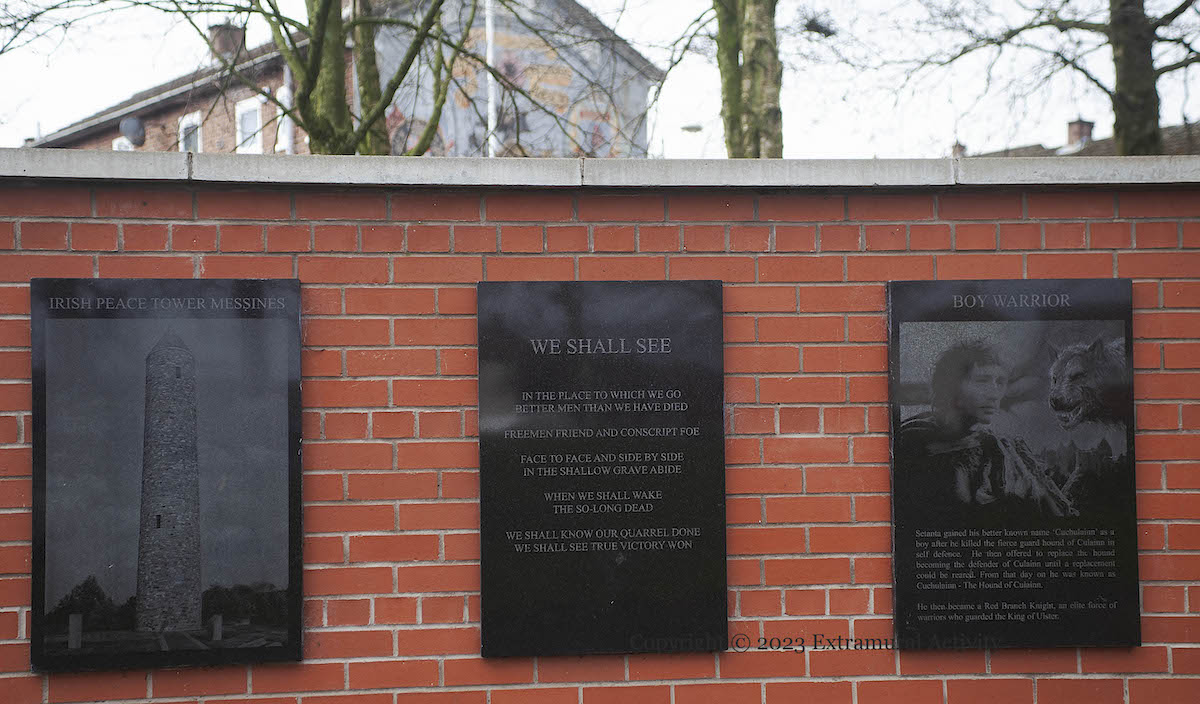
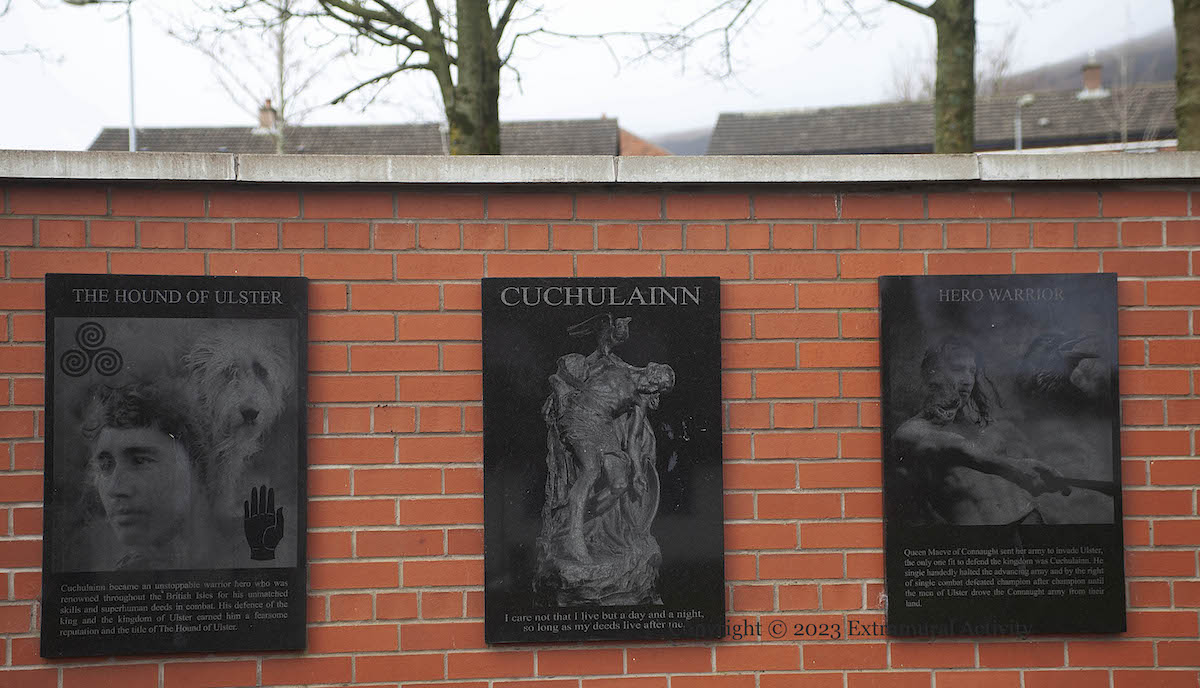
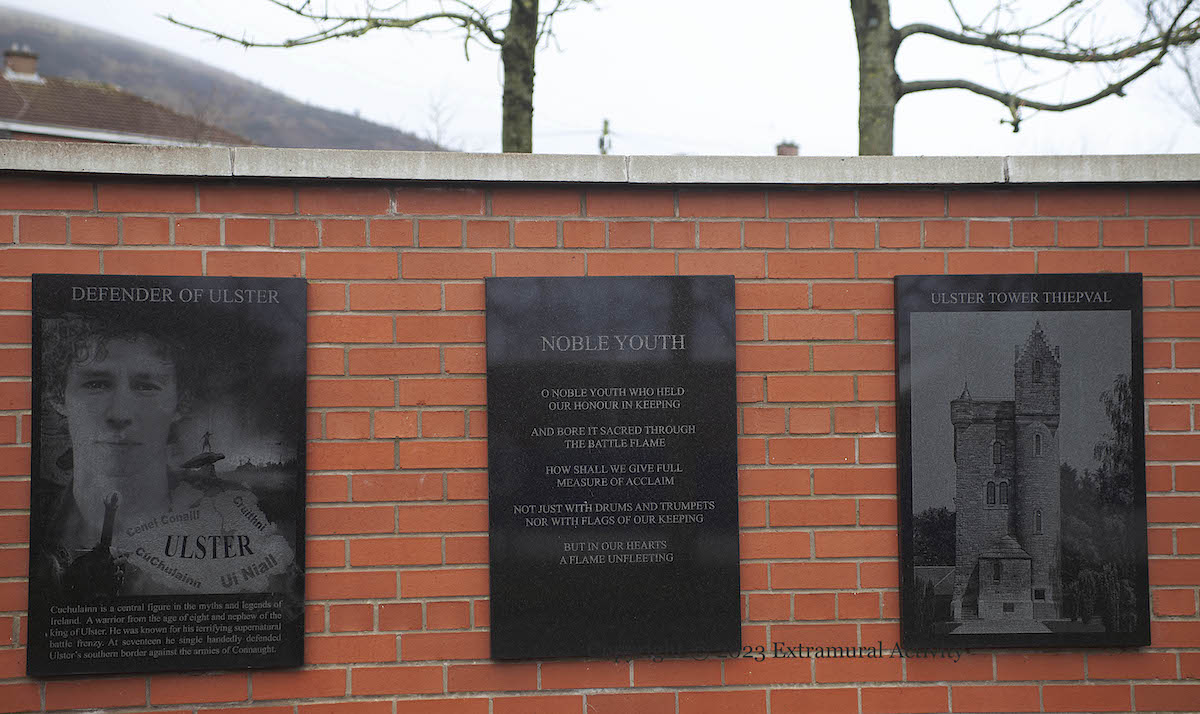
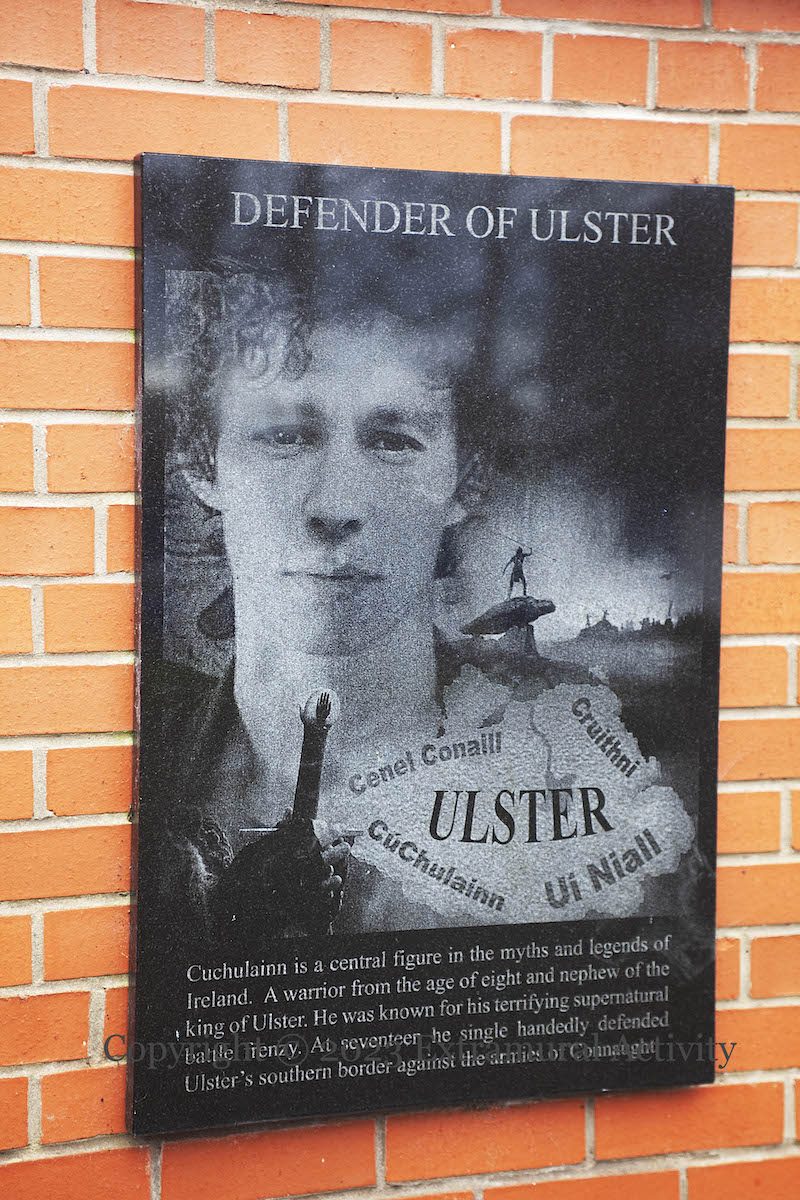
As the Visual History page on the role of Cú Chulaınn makes clear, in PUL muraling and iconography, Cú Chulainn serves as the “ancient defender of Ulster”, and the B Specials, UDR, and loyalist paramilitaries – primarily the UDA but also the UVF – then fit into that tradition. Using Cú Chulaınn as a precursor for service in the Ulster Division of WWI is unique to the panels on Highfield green, five of which are devoted to the hero Cú Chulaınn and four – two on each end – refer to the Great War.

The five Cú Chulaınn panels are (from left to right) Boy Warrior, Hound Of Ulster, Sheppard’s statue, Hero Warrior, and Defender Of Ulster – all shown individually in this post.

On the far left, there are two panels showing Messines tower and a few lines from a Ronald Lewis Carton poem Réveillé (though given a more ‘victorious’ ending) and on the far right, a few lines from Duncan Campbell Scott’s To A Canadian Lad Killed In The War and Thiepval tower. The words to I Vow To Thee My Country (lyrics) are along the bottom (see the wide shot, final image below).

The biographical panels focus on Cú Chulaınn’s age – the sixth panel emphasises that Cú Chulaınn was only 17 when he held off Maeve’s forces – which is perhaps a similarity with those who joined the 36th Division, but how the “defender of Ulster” is connected to the defense of Europe is obscure.

In the background of the wide shot the Cú Chulaınn mural can be glimpsed.

Click image to enlarge
Copyright © 2023 Seosamh Mac Coılle
X12041 X12042 X12043 X12040 [X12039] X12038
X12047 X12046 X12045
X12036 [X12037] [X12044]
X12038