The Irish tricolour flies outside Raymond McCreesh House – his birthplace – at Maryville, Camlough.
“Keep on marching, don’t give up – Raymond McCreesh 1957-81. Died after 61 days hunger-strike, H-Block Long Kesh 1981.” The phrase was spoken at the end of a visit with Jim Gibney.
“Beıdh bua agaınn go fóıll” [victory will be ours yet].
“This stone was erected by the republican movement, south Armagh, in proud and loving memory of the twelve hunger strikers who laid down their lives during this phase of the struggle for Irish freedom.” “Fuaır sıad bás ar staılc ocraıs ar son saoırse na hÉıreann. Go ndéana Dıa trócaıre ar a nanamacha.” “Beıdh an bua agaınn go fóıll (We will win yet) – Raymond McCreesh – two days before he died.”
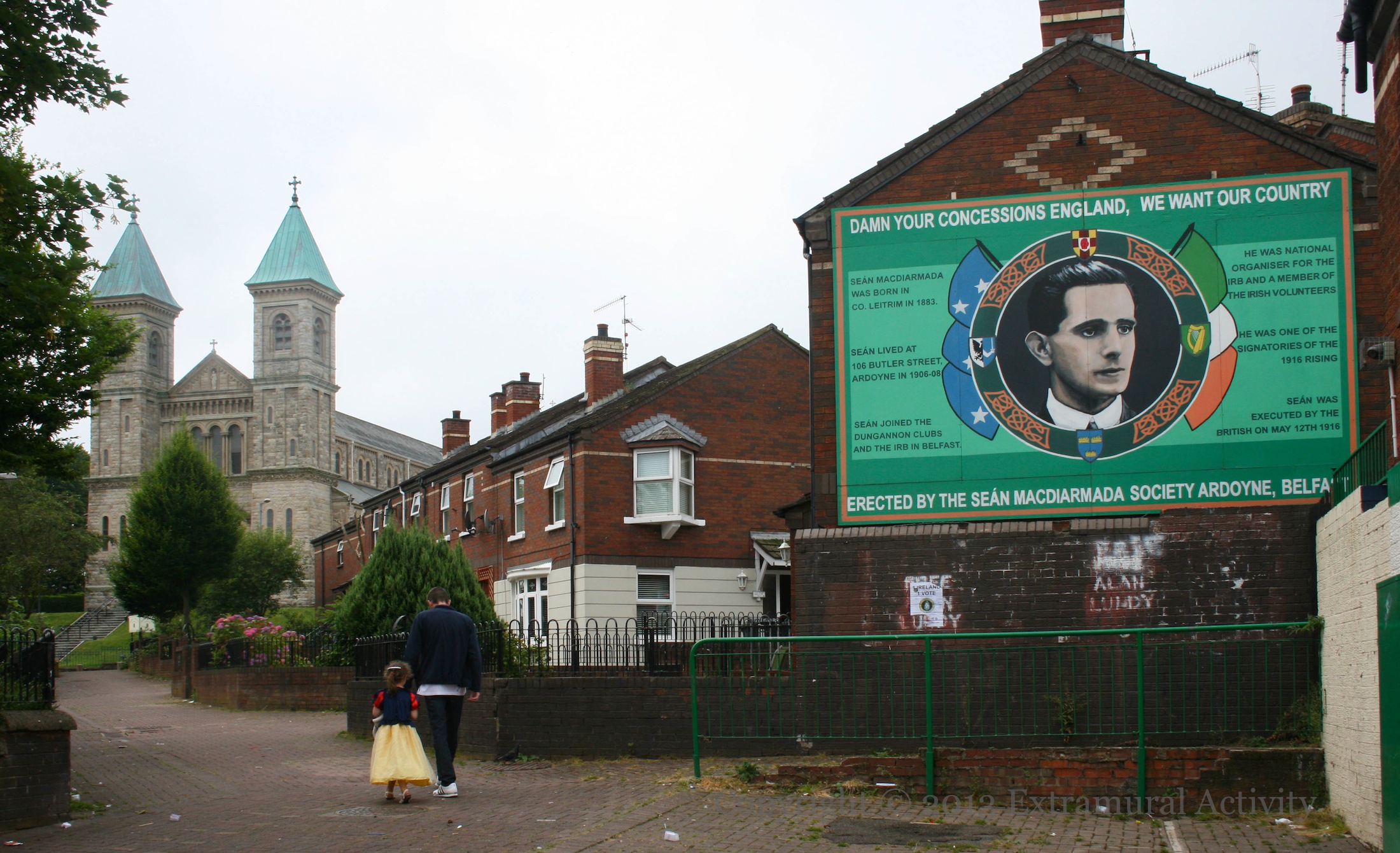
This board to Seán Mac Dıarmada in Ardoyne details his exploits leading up to and including the 1916 uprising and his earlier connection with the local area.
Below, a wide shot showing the end of Butler Walk and the Holy Cross church in the background. Painted by Rısteard ÓMurchú.
This is a memorial stone on Springhill Avenue in Ballymurphy to deceased republican volunteers from the area. This stone can be seen in the middle distance in first image in the post White Line, Black Flag.
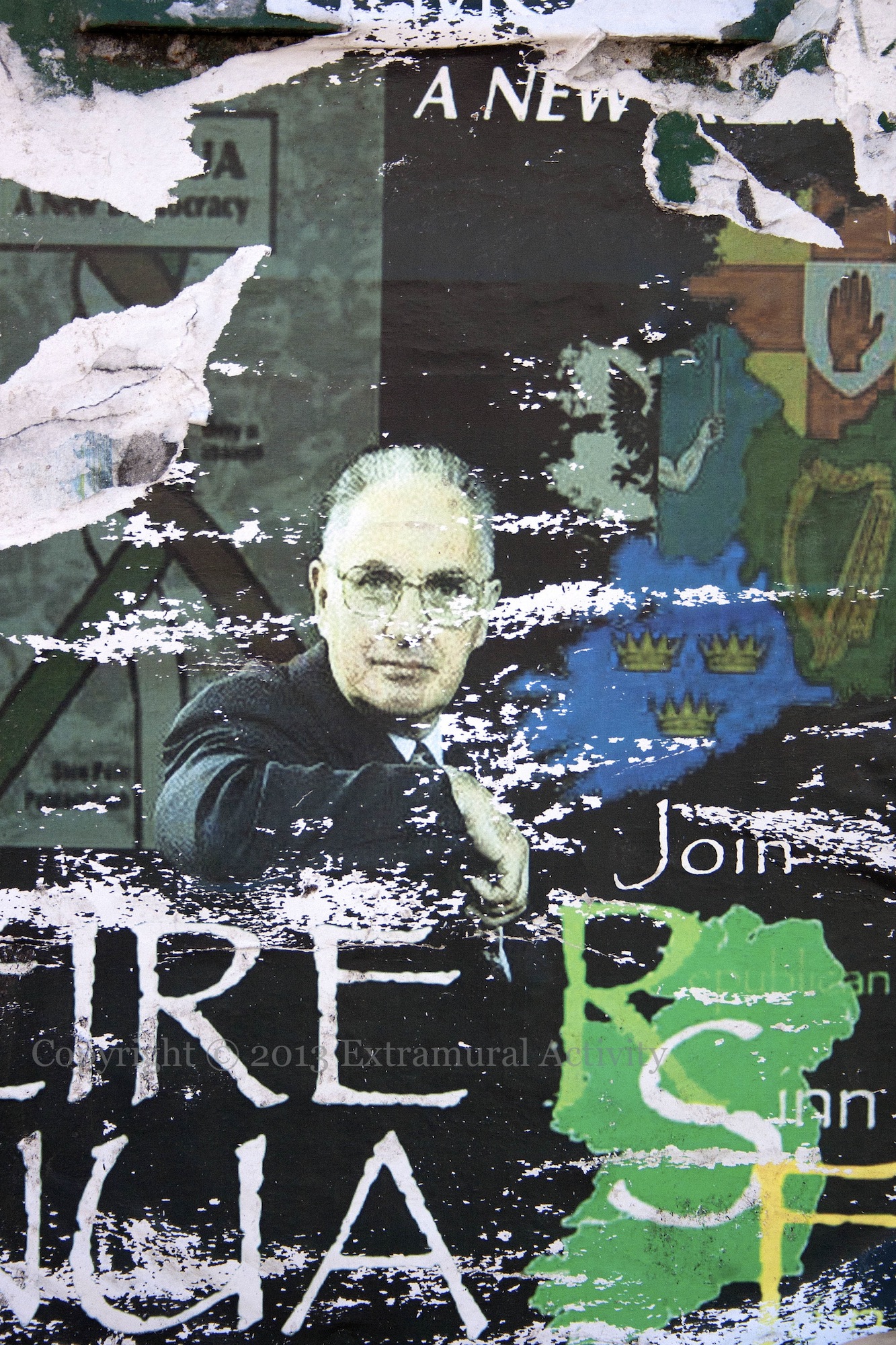
This is a recent poster (this one on the Antrim Road near Carlisle Circus) featuring the “Éıre Nua” plan of the 70s and 80s (which remains policy of Republican Sınn Féın, which split from Sınn Féın in 1986) and one of its authors, Ruaırí Ó Bradaıgh (WP). The plan calls for four parliaments, one in each of the four provinces, with a capital in Athlone. A documentary, Unfinished Business, featuring Ó Bradaıgh, can be seen here.
Update: Ó Bradaıgh died on June 5th, 2013 (Irish Times)
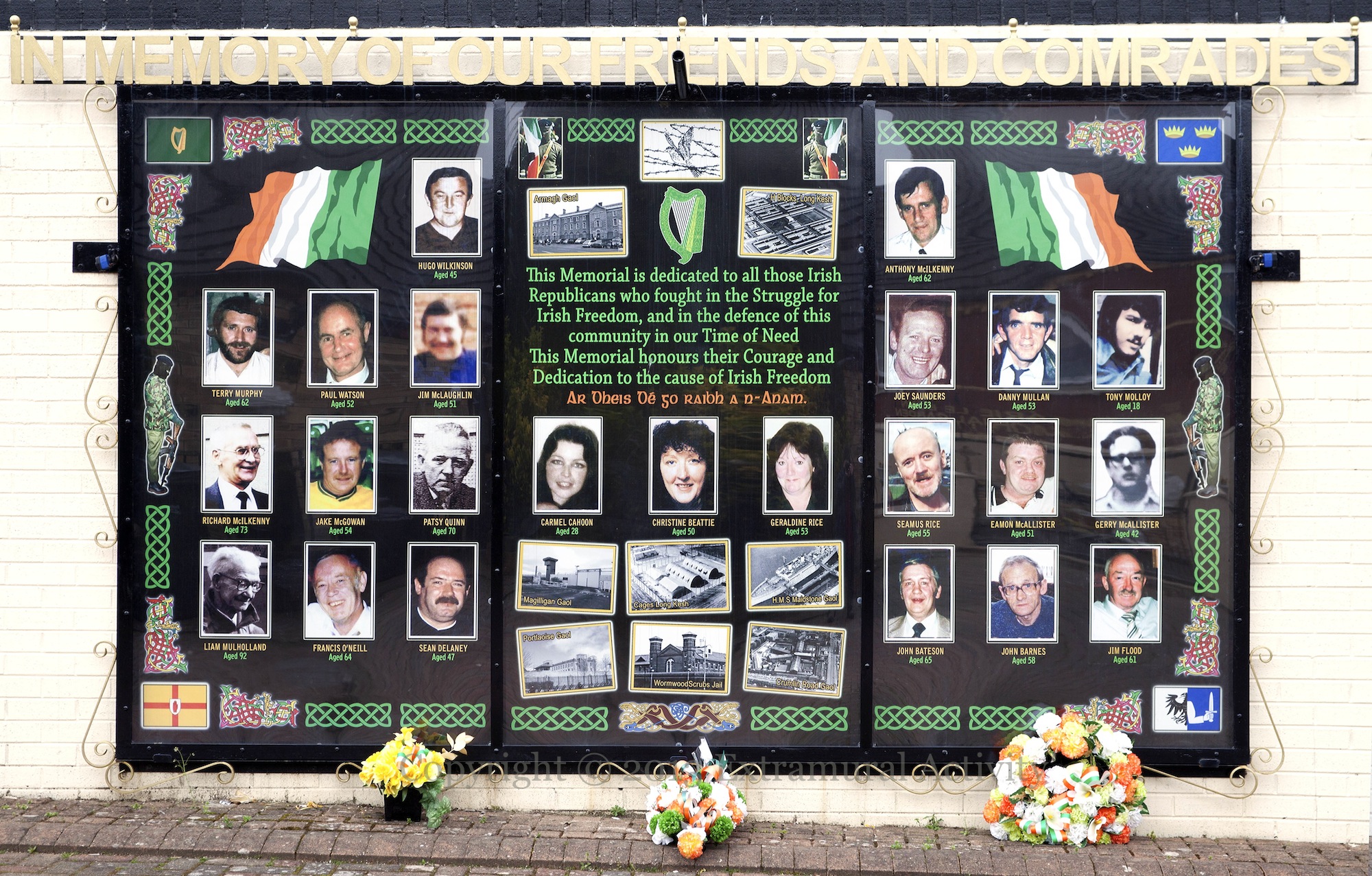
A fourth piece from Clós Ard An Lao/Ardilea Close, a short, dead-end, street in Ard Eoın/Ardoyne. “In memory of our friends and comrades. This memorial is dedicated to all those Irish Republicans who fought in the struggle for Irish freedom and in the defence of this community in our time of need. The memorial honours their courage and dedication to the cause of Irish freedom. Ar dheıs Dé go raıbh a n-anam.”
Two memorial boards in Clós Ard An Lao/Ardilea Close, one to volunteers and the other to victims of violence, from the surrounding areas, the Bone, Ballybone and Cliftonville.
The text on the first read, “In proud and loving memory of the brave volunteers of Óglaıgh na hÉıreann who unselfishly gave their lives for the cause of Irish freedom. Thug sıad gach rud, ní bheanfar dearmad orthu go beo.”
The second read, “In memory of our families, friends and neighbours murdered in the troubles. Dedicated to all the people from the Bone, Ballybone and greater Cliftonville area who lost their lives to the armed forces of Britain and Loyalism. They tried but failed to break their spirits and deny them their rights as equals. Ar dheıs Dé go raıbh a n-anam.”
The Clowney Street phoenix, which dates back to 1981 (see The Oldest Murals), has been repainted, and above, the blanketmen painting (see 1981-2011) has been replaced with a montage of photographs from the period, including prisoners on the blanket and dirty protest, the funeral of Sands and of McDonnell, and three pieces of graffiti: “Thirty thousands can’t be wrong” (Sands’s election to Westminster), “Bobby Sands murdered 1.17 am 5th May 1981”, and “My position is in total contrast to that of an ordinary prisoner. I am a political prisoner.”
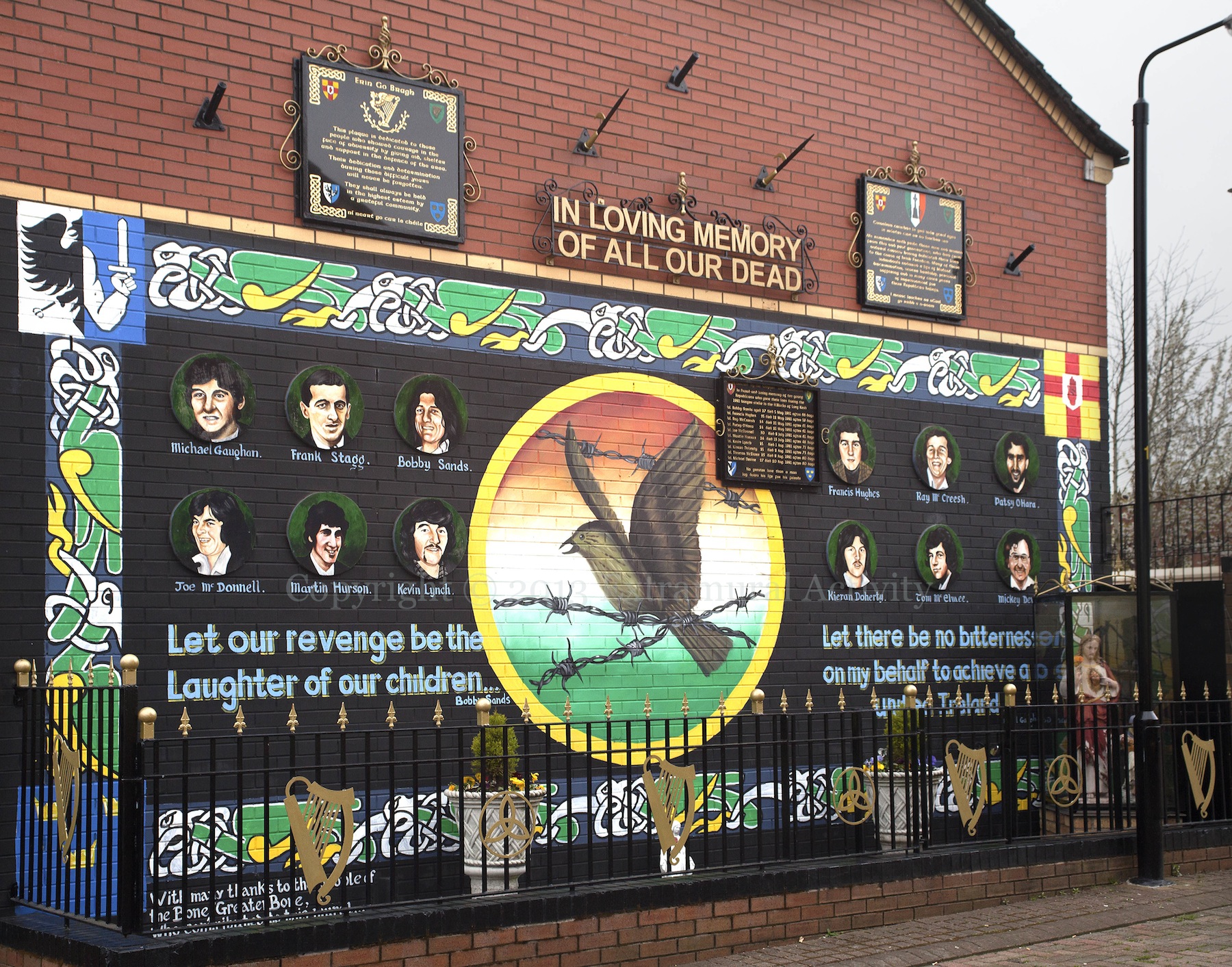
In addition to three plaques, a wrought-iron head-piece, multiple flag-pole holders and railings fencing in a small area (which includes an encased figure of Jesus, at right), this mural in Clós Ard An Lao/Ardilea Close in Ardoyne uses painted discs for each of the twelve hunger strikers (the ten in Long Kesh 1981 and two from the 70s in English prisons, Michael Gaughan and Frank Stagg – the twelve also featured in Derry’s Spirit Of Freedom mural), rather than painting their likenesses directly onto the wall. The items above the mural and the Sacred Heart statue in a glass case are new, compared to 2010.
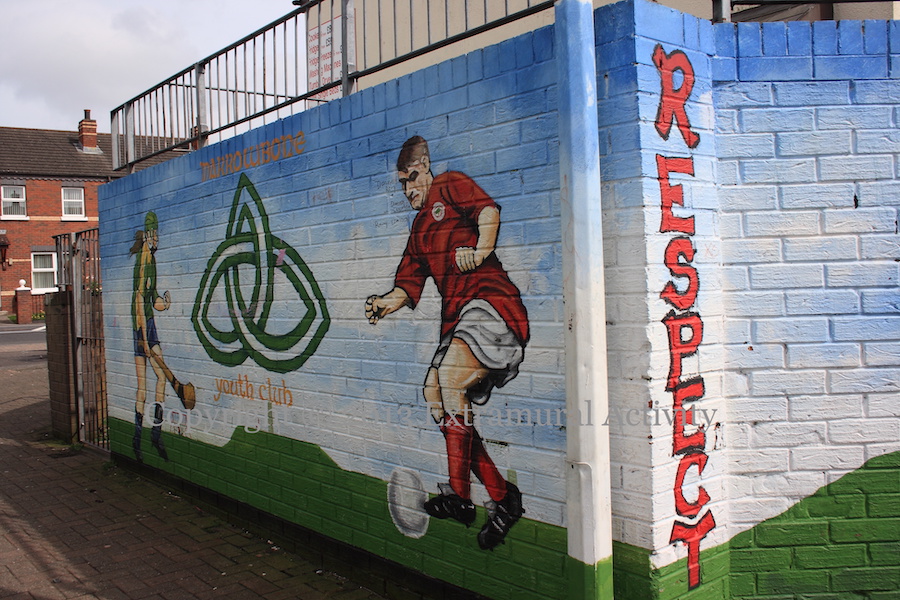
“Machaıre Botháın” [Bothain] (Marrowbone) Youth Club mural just off Oldpark Road, celebrating Gaelic games, Cliftonville soccer, Antrim, and the four provinces of Ireland.







 Extramural Activity