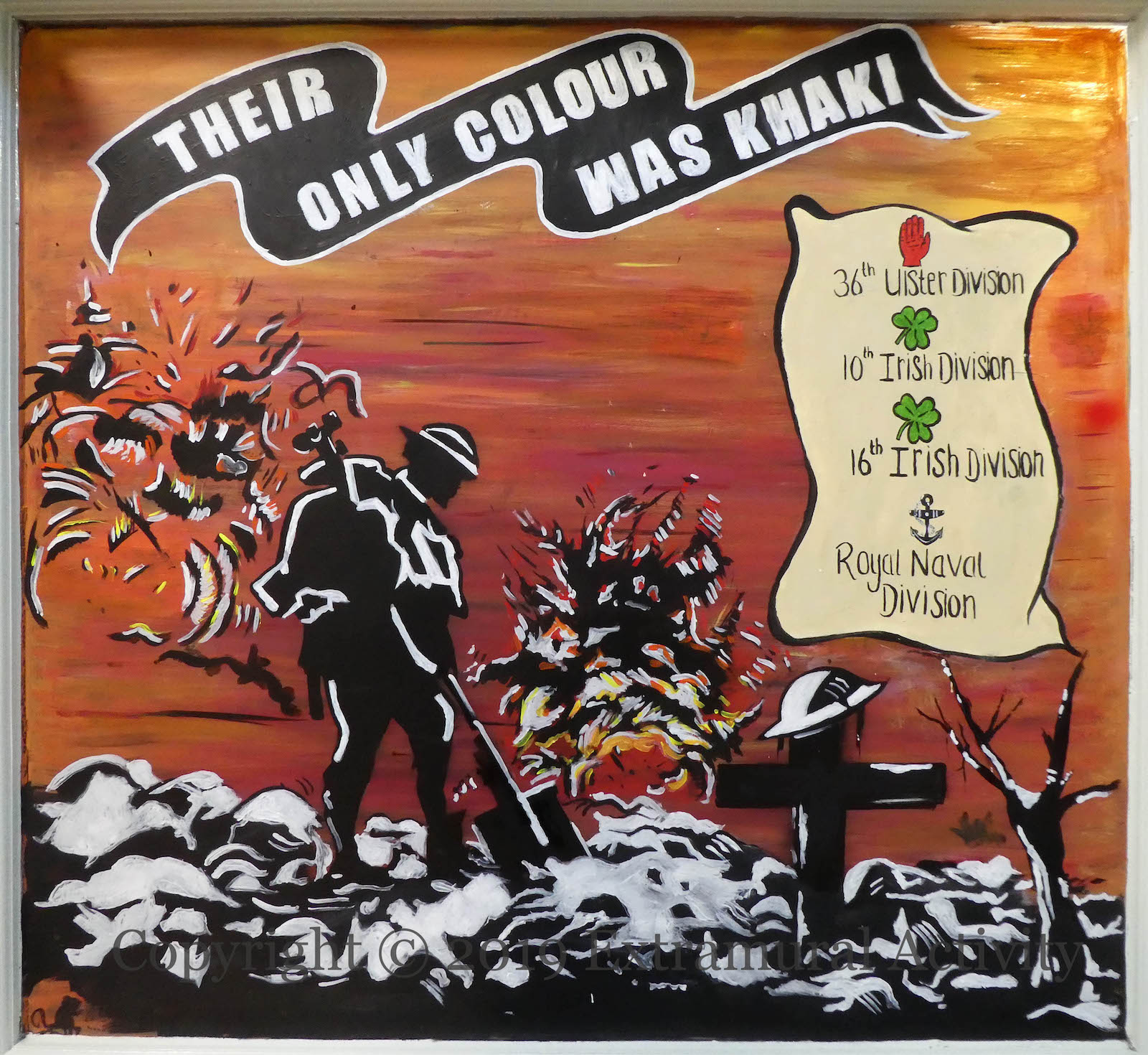
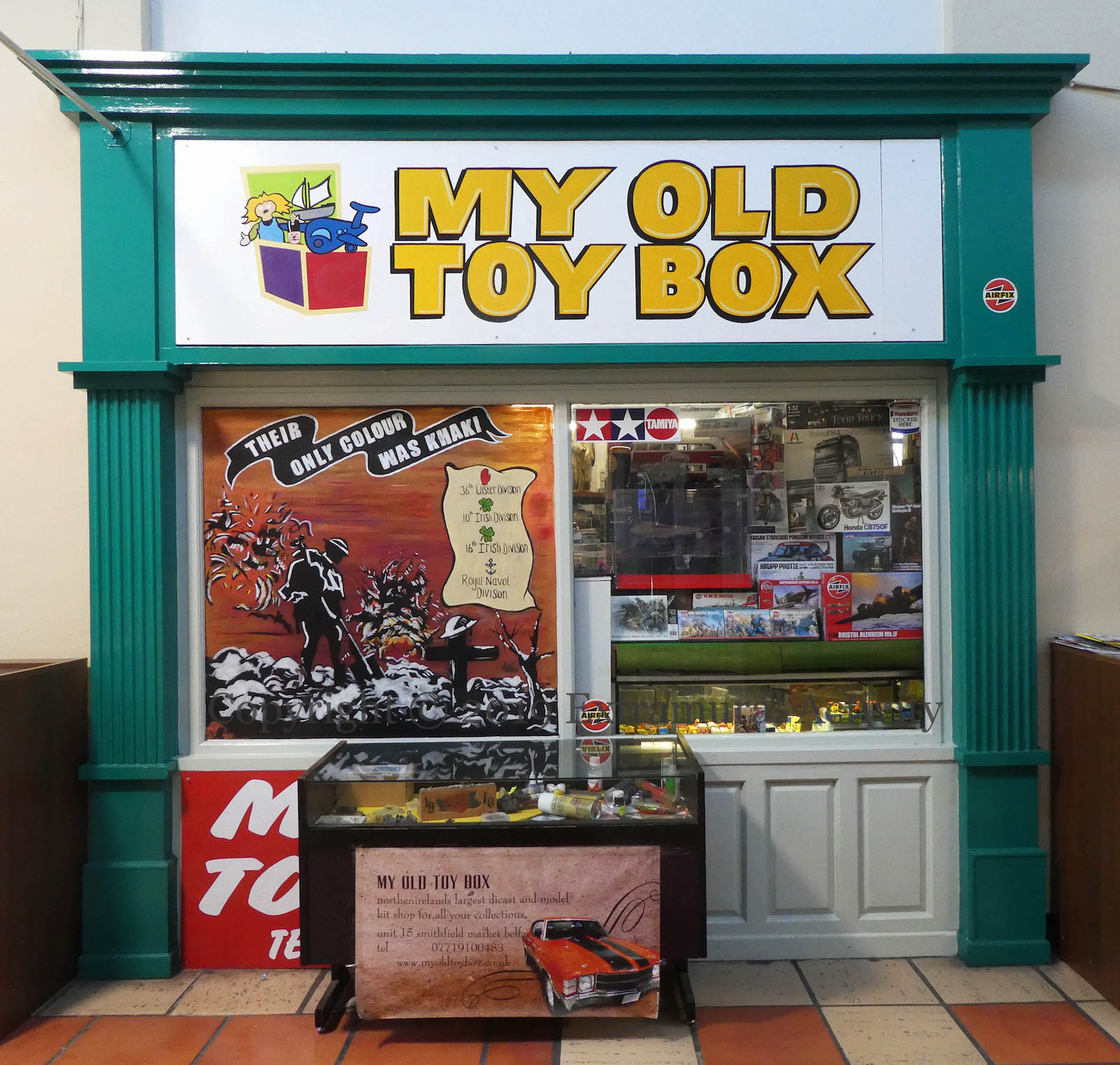
This is a close-up of the painting in the window of My Old Toy Box (Fb) in Smithfield Market (BelfastCity). It includes the 36th (Ulster) Division, and 10th and 16th (Irish) Divisions. It is not clear why the 63rd (Royal Naval) Division (WP) is included as it does not appear to have any connection to Ireland. Please leave a comment if you can explain the connection.
Carrickfergus dates back to the 1100s and contains a well-preserved Norman castle. The mediaeval history of the town is celebrated in a trio of knight statues in Marine Gardens.
Shown today is not the statue itself, but a photographic reproduction on shutters in West Street.
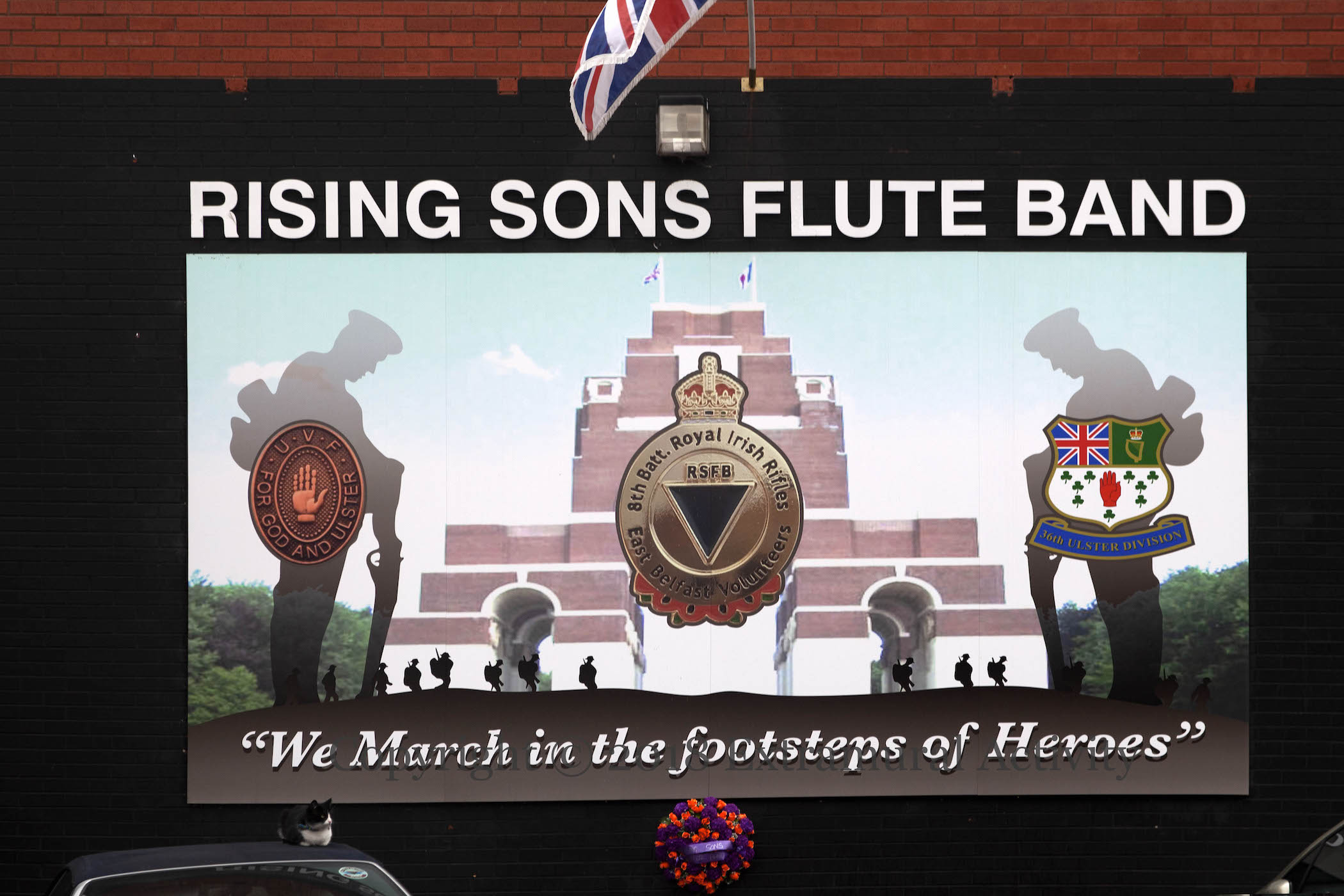
The 8th battalion of the RIR was drawn from east Belfast’s Ulster Volunteers in 1914. The board shown above, on the practice hall of Rising Sons Flute Band (Fb), shows the Thiepval Memorial to the missing of the Somme – the heroes that in whose footsteps the band claim to march.
“Have the talk” is a campaign encouraging people to use and learn Irish/Gaeılge from Conradh Na Gaeılge’s PEIG (Pobal – Eolas – Ilmheáın – Gaeılge) multimedia web site (Fb | tw). This advertising hoarding is in Belfast city centre.
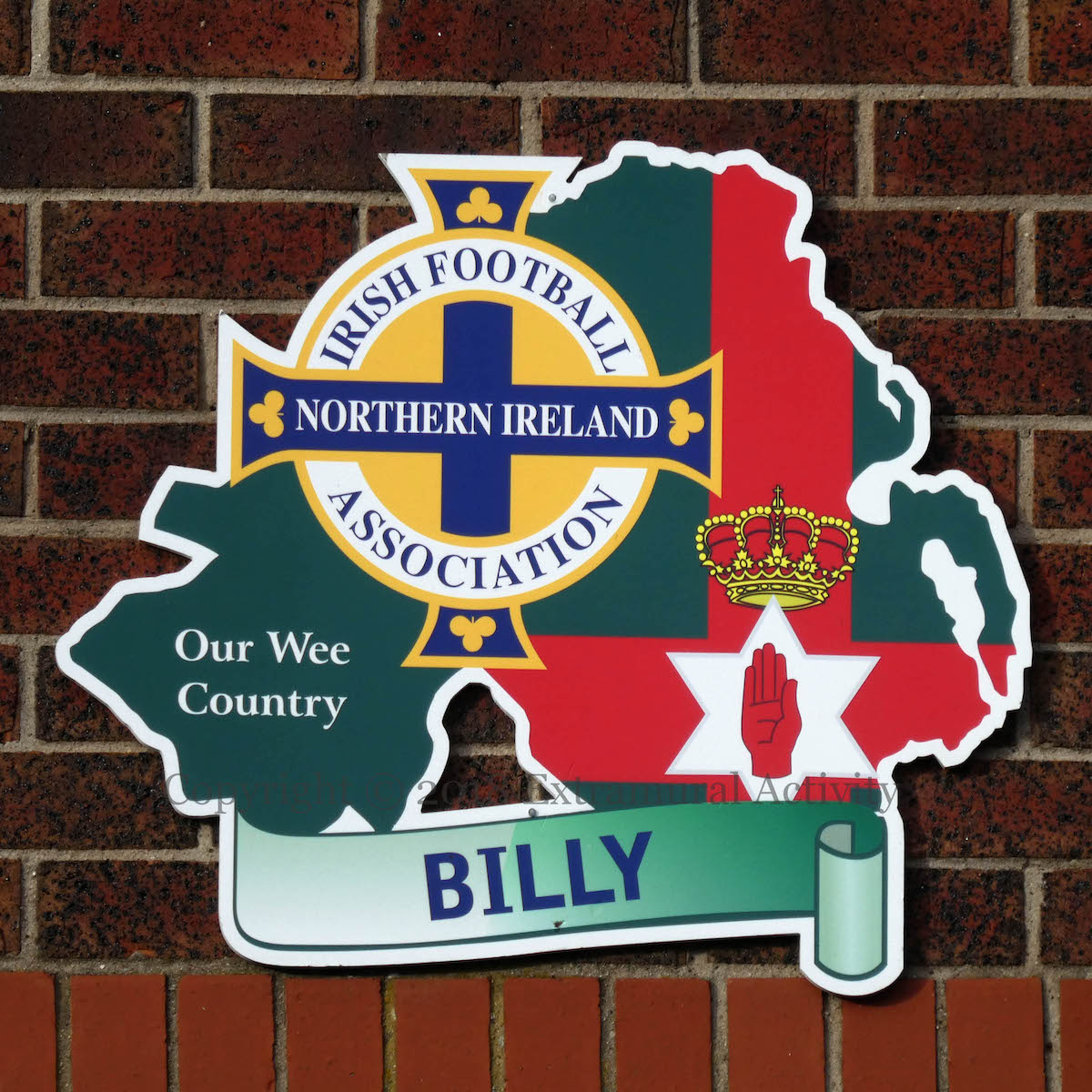
Although not completely visible in the image below, the ‘Britain remembers’ Remembrance Day flag includes the Ulster Banner, the flag of NI parliament until 1972, rather than the St Patrick’s Saltire. This is also the flag used by the Irish Football Association, the governing body of soccer in NI, to represent its teams, as is shown by the personalised supporter’s plaque in Cosgrave Heights. The organisation’s name derives from the fact that the body pre-dates partition and used to govern the whole island and not just “our wee country”.
The Union Flag/UVF side-wall is a new addition to the Ulster Volunteers/UVF memorial in London Road, east Belfast. The main panel shows WWI soldiers going over the top (see Between The Crosses) while the four portraits to its right are of deceased UVF volunteers of the 70s and 80s – Seymour, Long, Cordner, and Bennett – (see Ulster’s Brave).
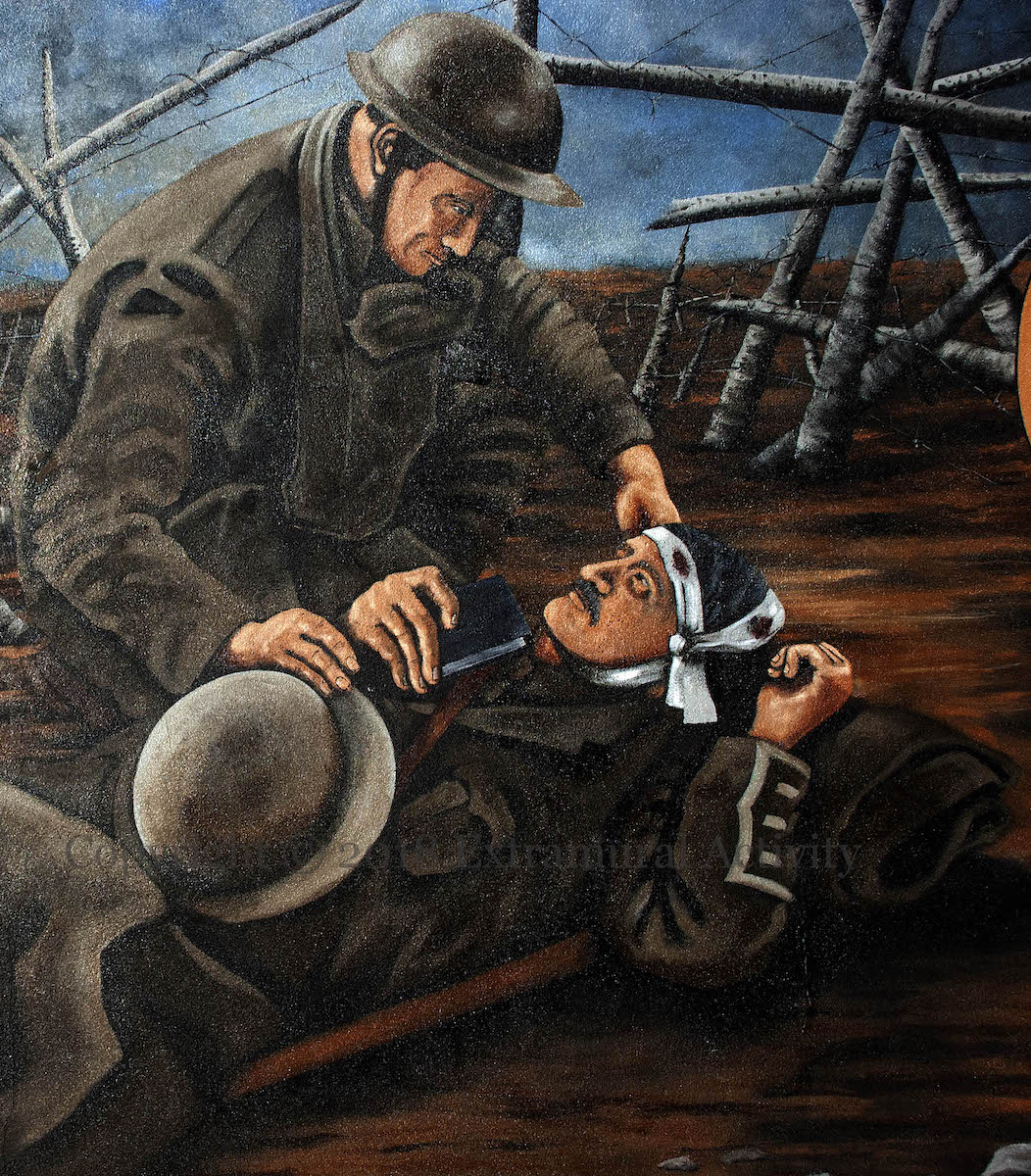
John Meeke signed the Ulster Covenant in Dervock Orange Hall in 1912 and went to war with the Ulster Volunteers. Willie Redmond, brother of John Redmond, had been jailed three times and was a nationalist MP at Westminster when, at age 53, he signed up for service.
Major Redmond went over the top with the 16th (Irish) Division at Messines Ridge and was hit by machine-gun fire. Private Meeke, a stretcher-bearer with the Royal Inniskilling Fusiliers in the 36th (Ulster) Division, found and stayed with Redmond under heavy fire, taking two bullets himself.
Redmond would die that night. He was awarded the Legion Of Honour by the French. His East Clare seat was taken by Éamon de Valera. Meeke survived after several surgeries. He was awarded the Military Medal by the British. After the World War, he joined the Specials and LOL 1001 in Benvarden before dying of TB in 1923 (NALIL | Irish Times | WP | BelTel).
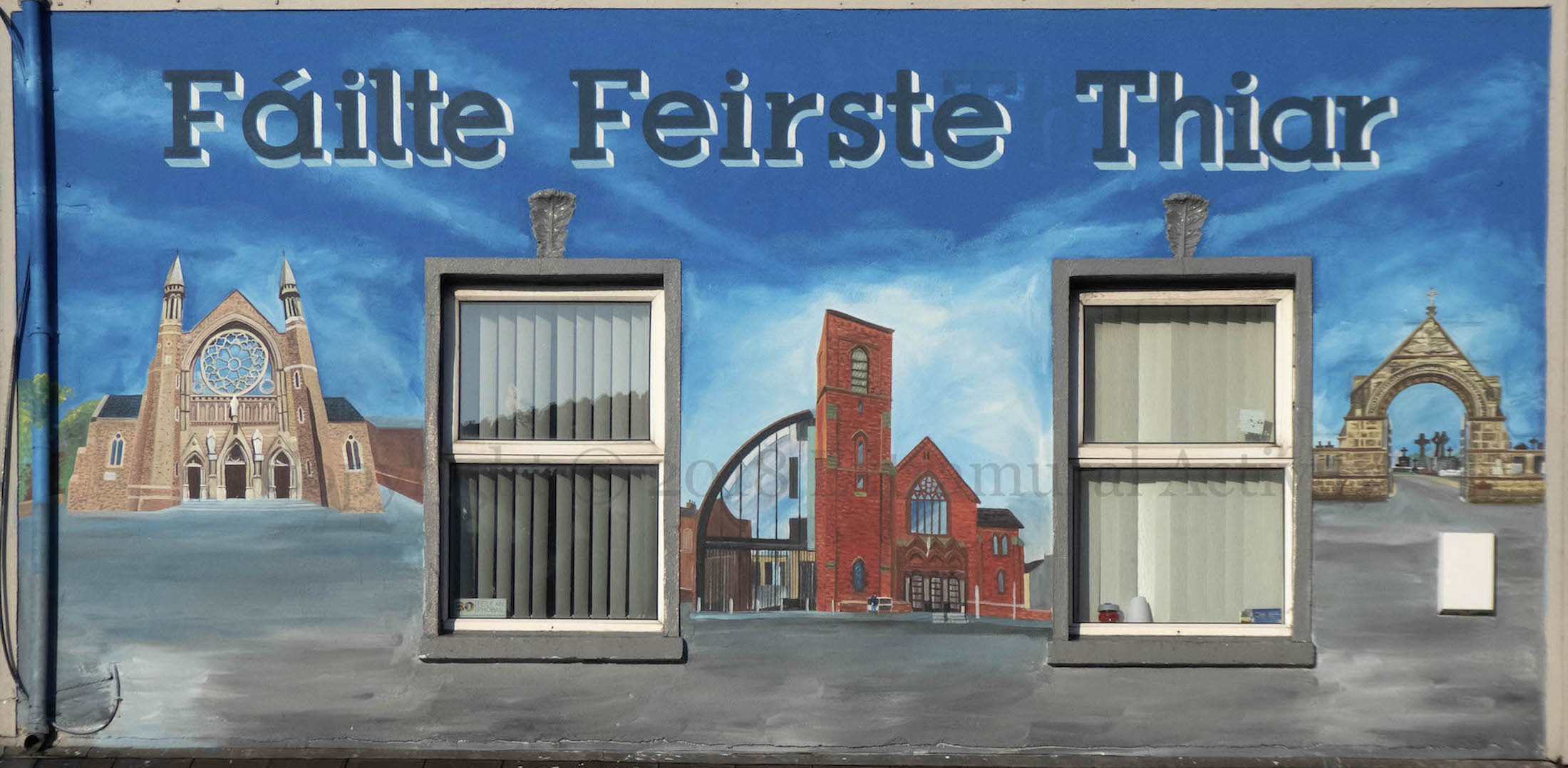
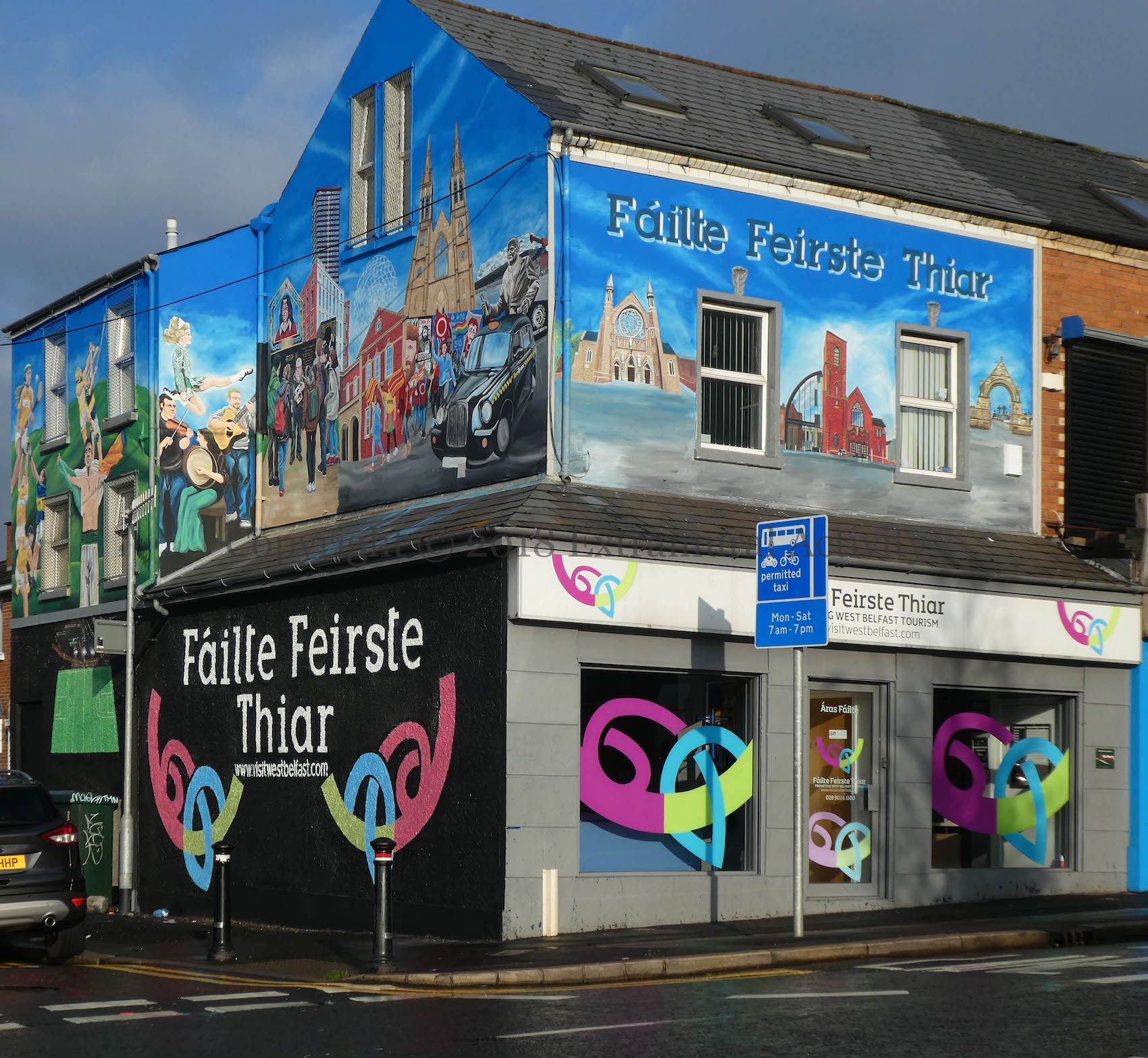
As you head west along Falls Road, you will pass by the three landmark buildings depicted in the mural above: Clonard Monastery, Cultúrlann McAdam-Ó Fıaıch (opposite this mural and the offices of Fáılte Feırste Thıar), and the entrance to Milltown Cemetery at the edge of Andersonstown. For the parts of the mural in Brighton Street, see The Conlan Revolution and Fáılte Feırste Thıar.
This small mural in the car-park of the Waterside Arts Centre, a companion piece to We Are The Dead which lists their battles, gives casualty totals for the 10th (Irish), 36th (Ulster), and 16th (Irish) divisions of the British Army in WWI .
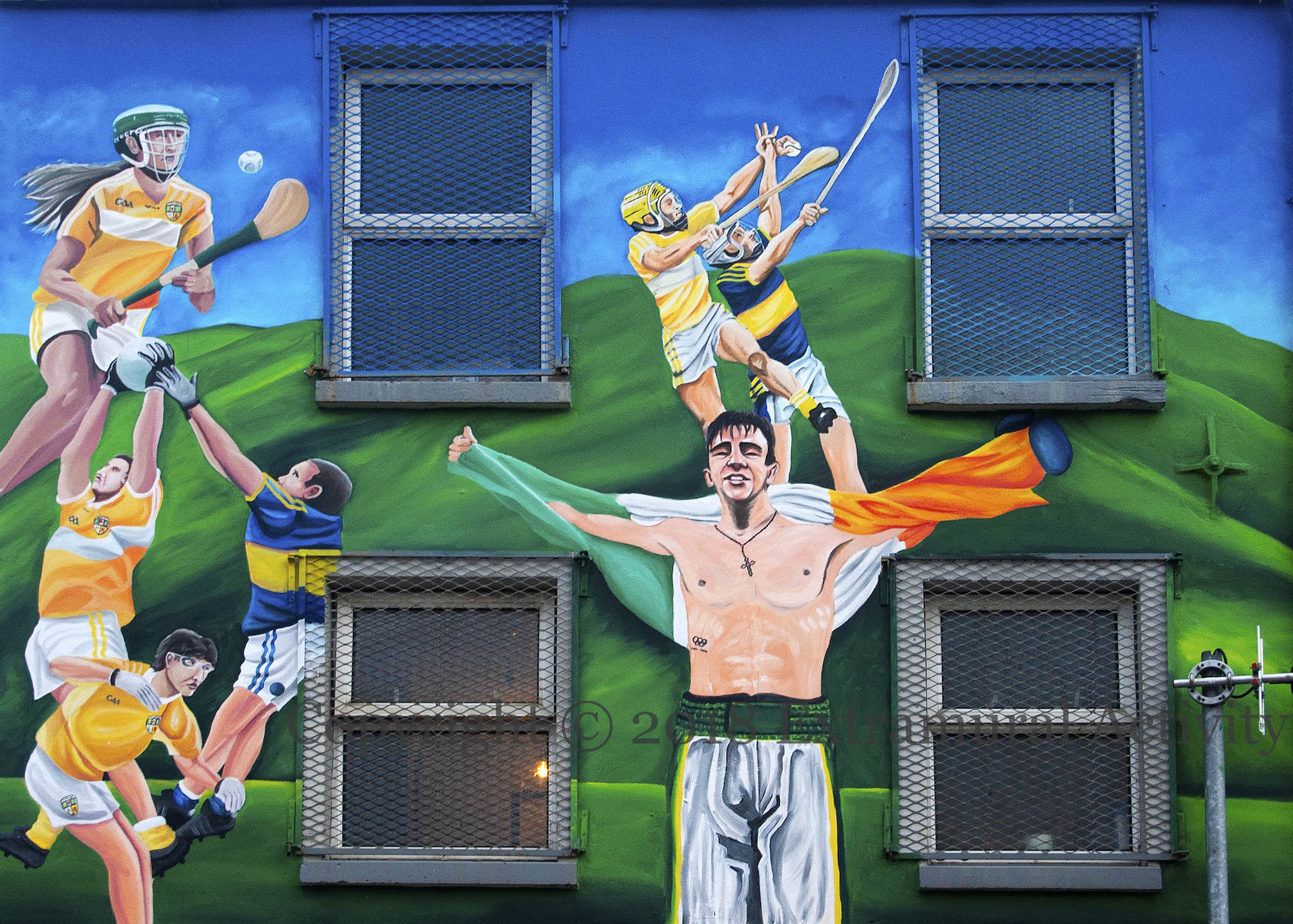
Michael Conlan (tw | ig) won his first title and tenth professional bout on Saturday night (December 22nd), in Manchester, by defeating Englishman Jason Cunningham (BBC). He features here in one of the new murals on the Fáılte Feırste Thıar offices alongside the traditional Gaelic games of hurling, camogie, football, and handball.







 Extramural Activity