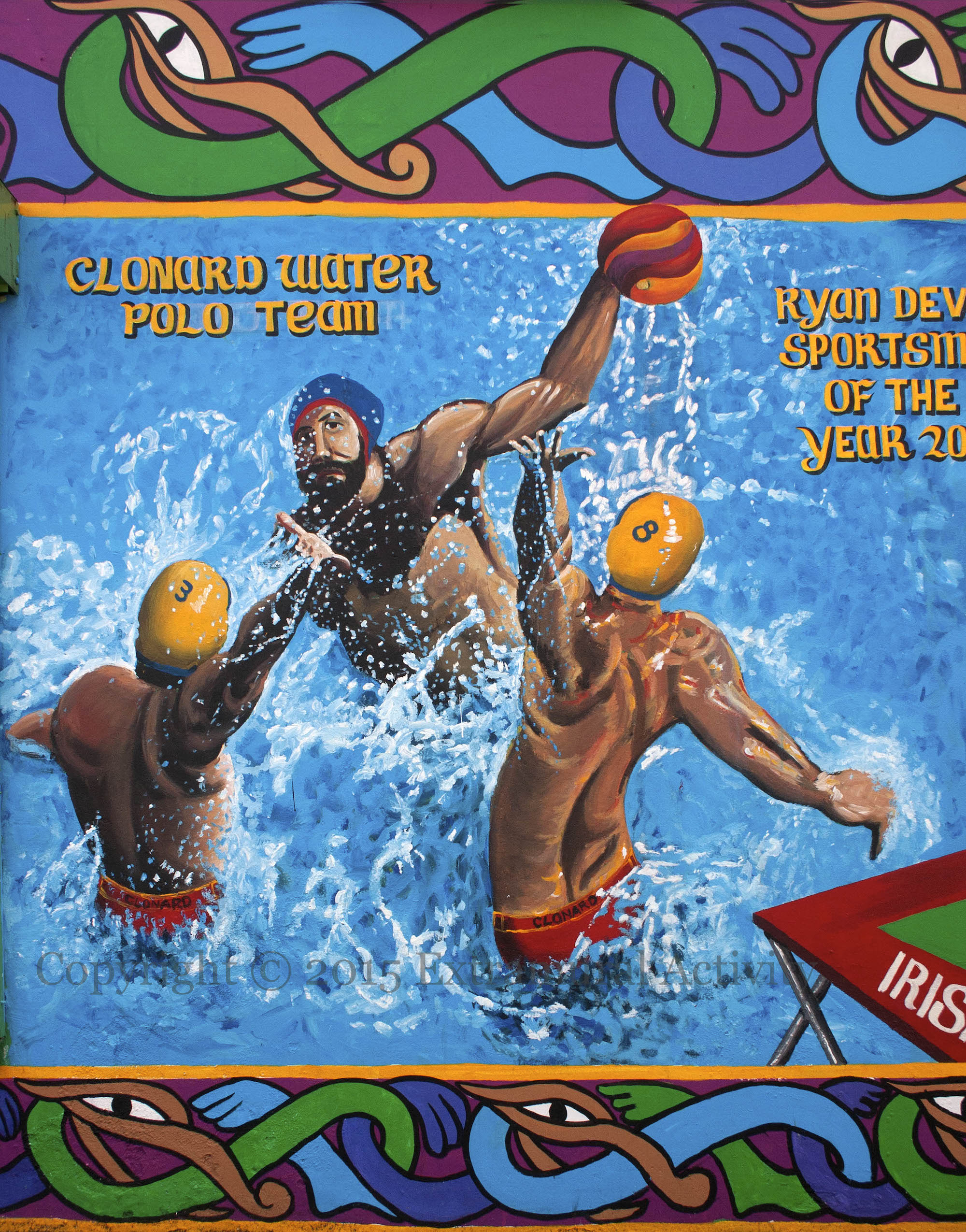
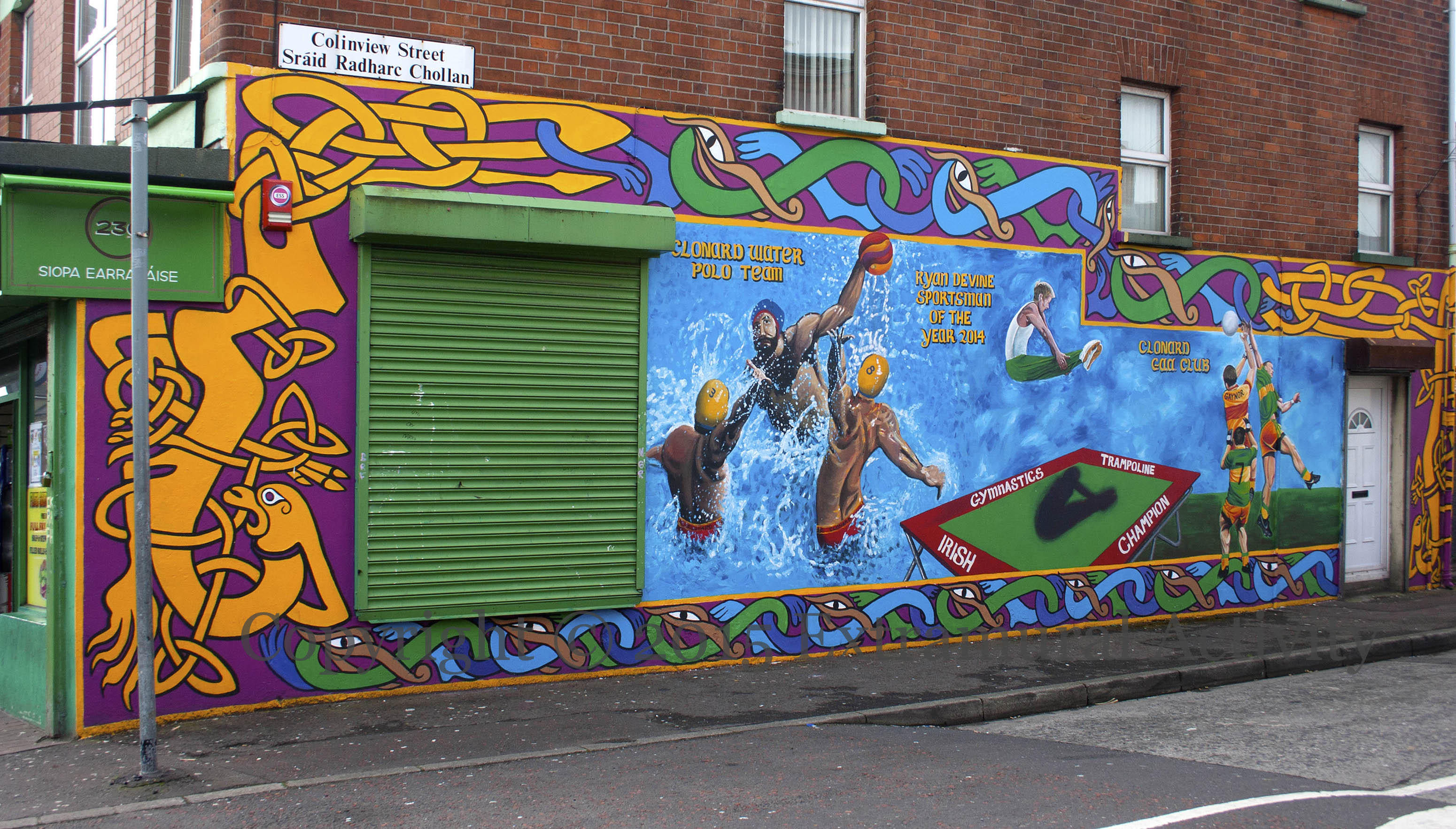
A new mural on Colinview Street/Sráıd Radharc Chollan celebrates local sports: first (shown above) is the Clonard water polo club (Fb), second (in the wide shot, below) is Ryan Devine of Anderstonstown Trampoline Club, junior sportsman of the year, 2014 (Fb), and third, Clonard GAA. The mural is on the side wall of The Flush newsagents, near the former location (above ground) of the Farset and Forth rivers, where dams and races were put in to supply a cotton mill and linen mill and, later, a laundry, a hat-makers, and a biscuit factory. The river, flowing south, then became the Blackie in Beechmount. (Information gleaned from the Belfast Forum).
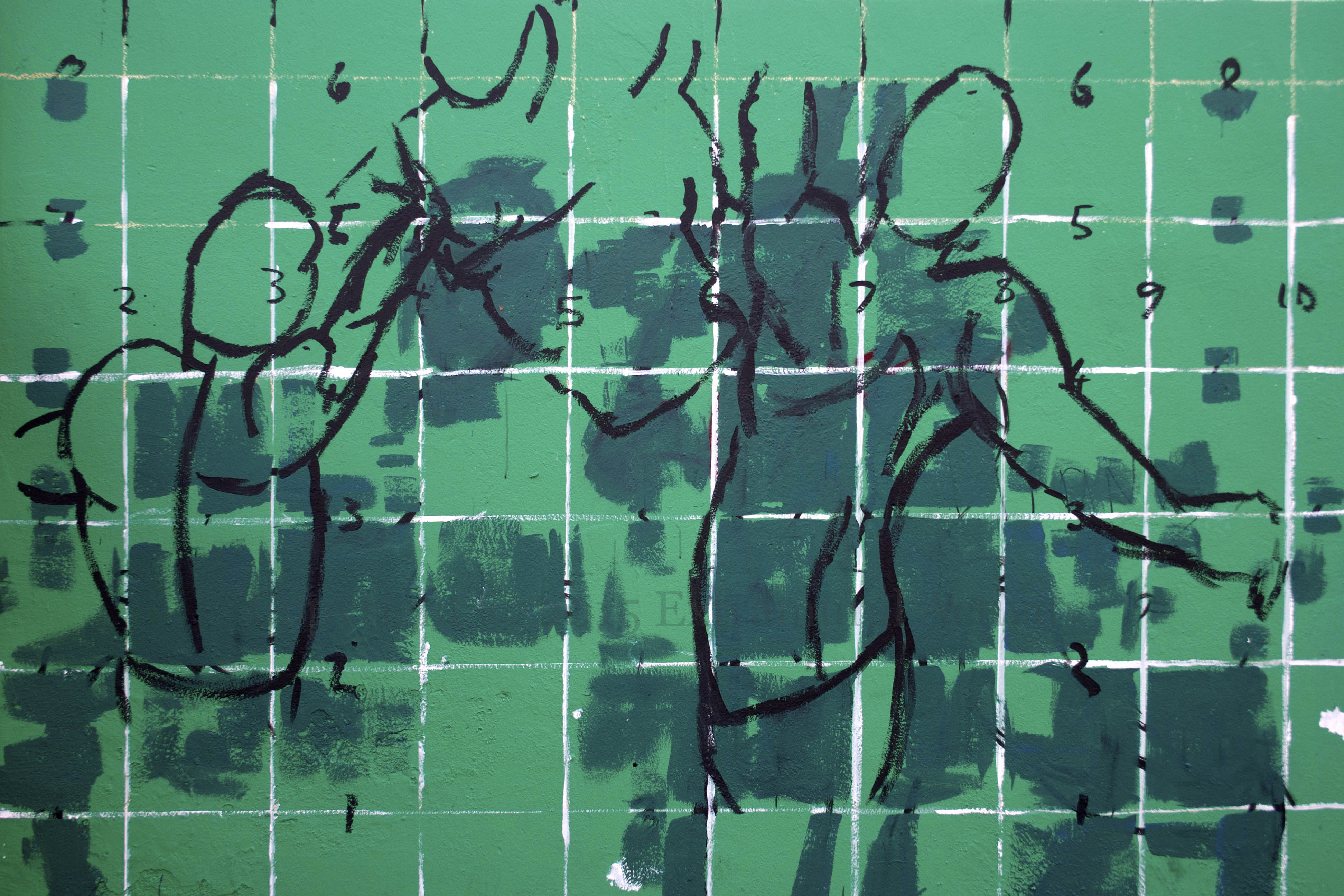
The final image below is the cartoon for the water polo part of mural, which was begun back in February.
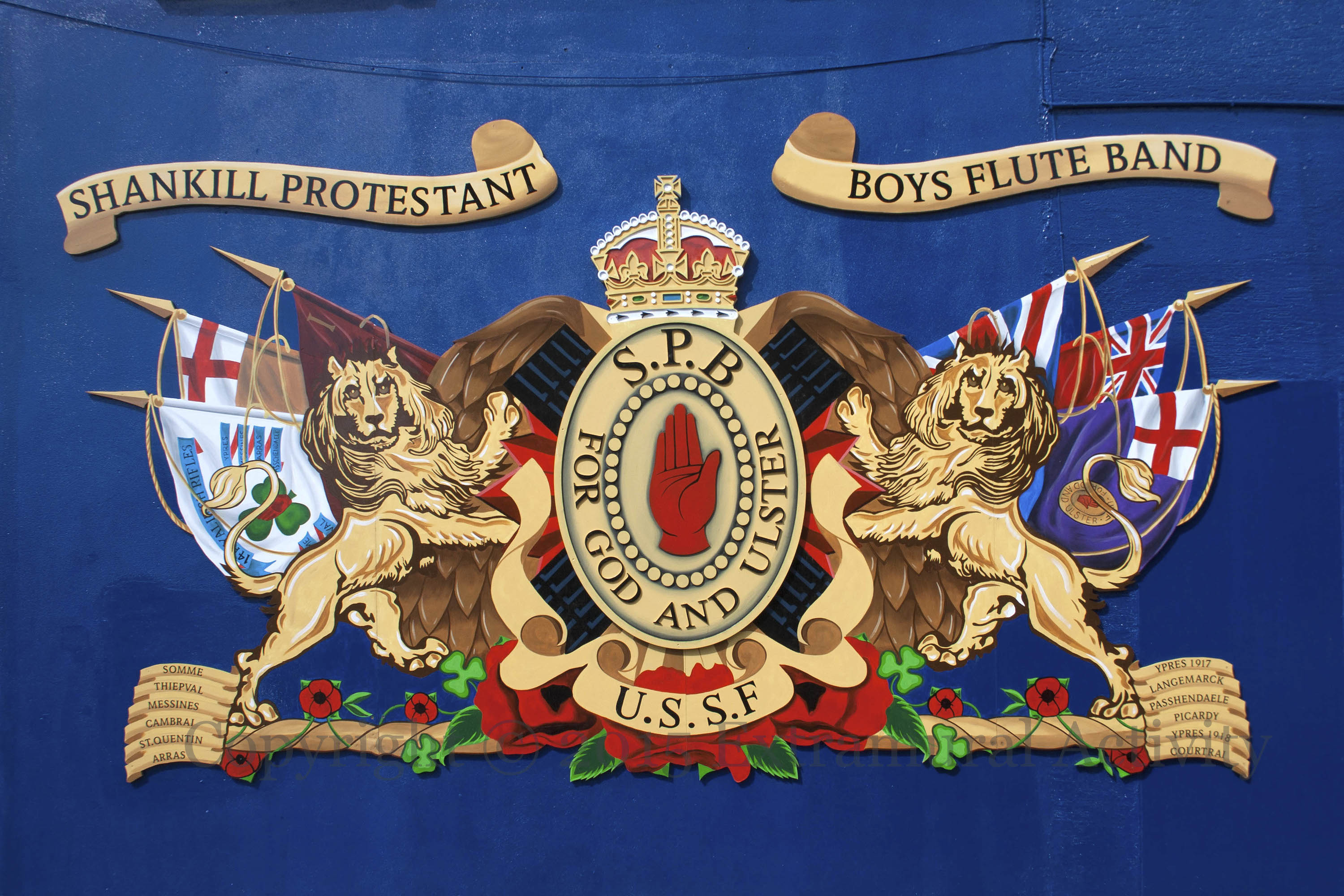
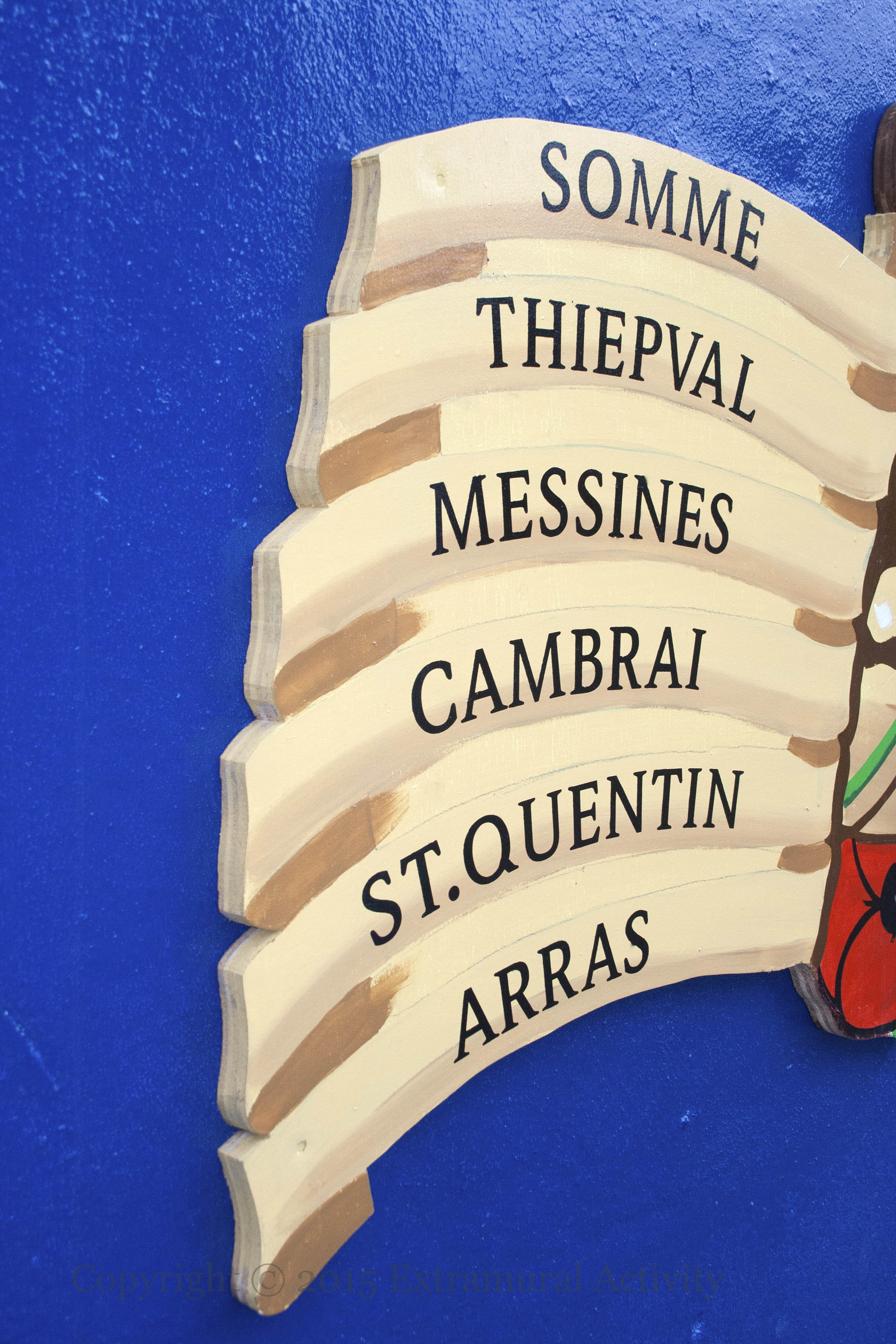
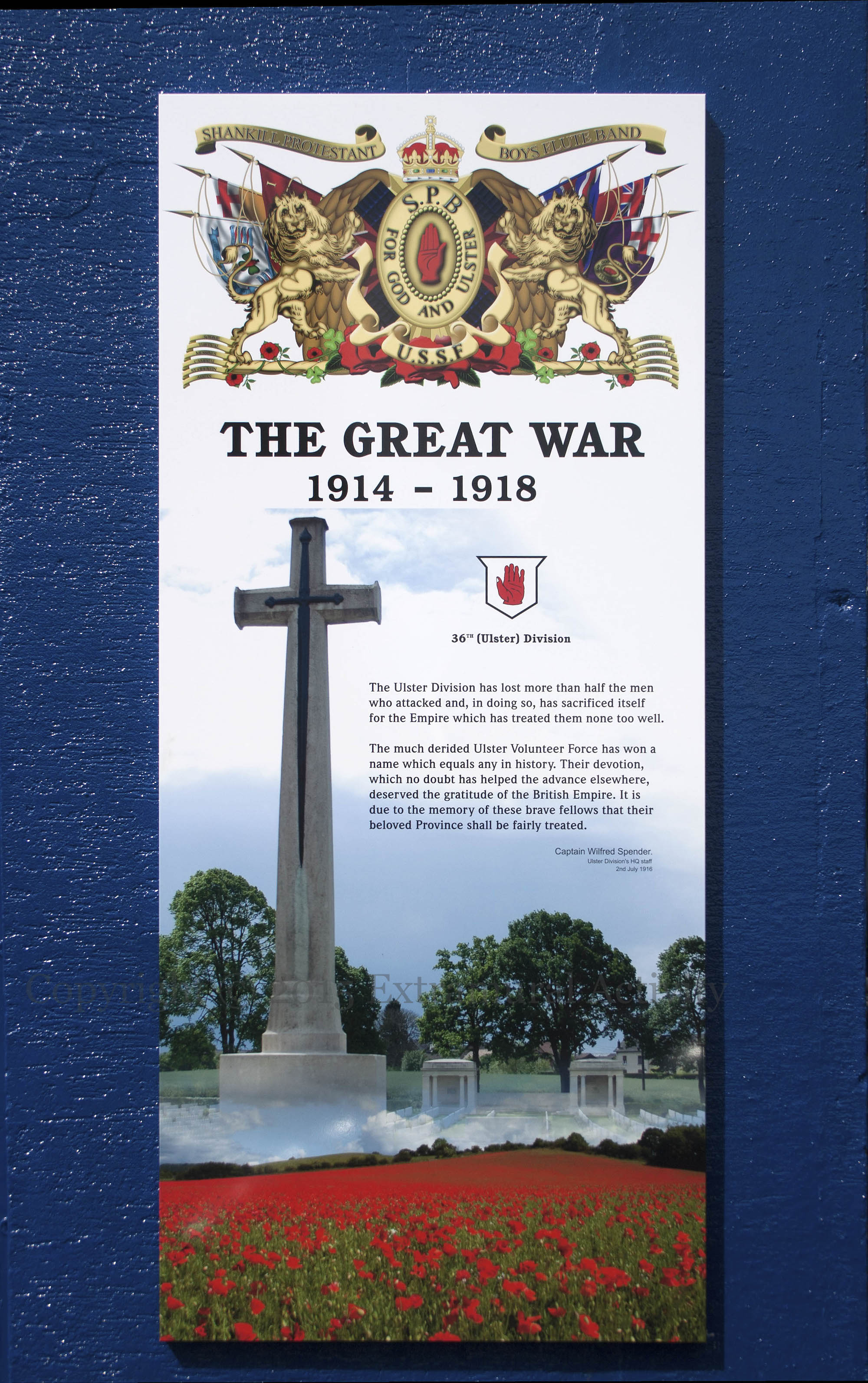
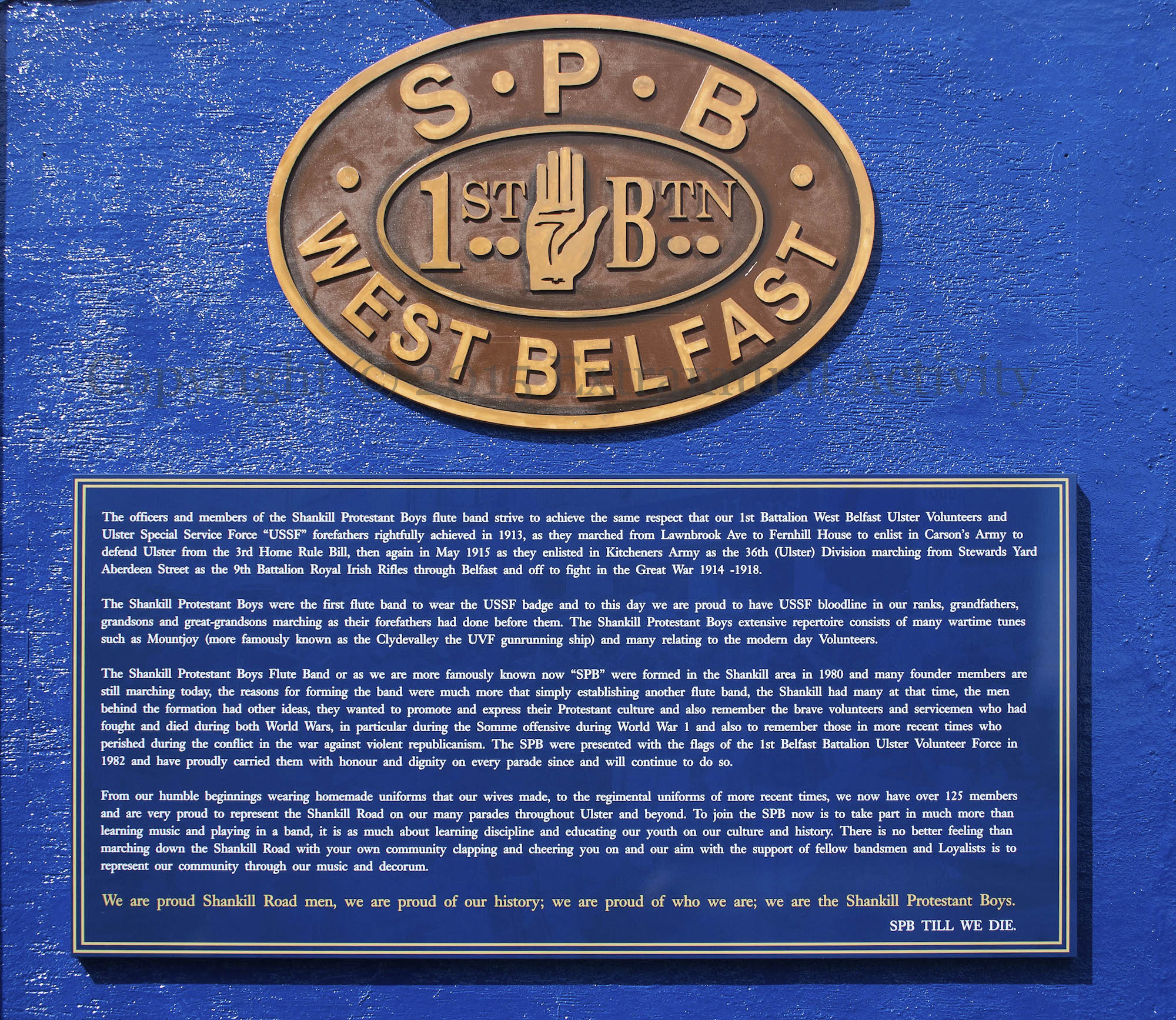
At first glance the piece above looks like a colourful mural but, as the close-up immediately below shows, it is in fact a large painted carving of lions rampant on either side of the emblem of the Shankill Protestant Boys flute band (Fb), named for the Shankill Boys of the original Ulster Volunteers and the Ulster Special Service Force unit within it which was designed to be a unit of “first responders”, ready to react at short notice to action by republicans or British forces anywhere in northern Ireland (historyireland).
The officers and members of the Shankill Protestant Boys flute band strive to achieve the same respect that our 1st battalion West Belfast Ulster Volunteers and Ulster Special Service Force “USSF” forefathers rightfully achieved in 1913, as they marched from Lawnbrook Ave to Fernhill House to enlist in Carson’s Army to defend Ulster from the 3rd Home Rule Bill, then again in May 1915 as they enlisted in Kitcheners Army as the 36th (Ulster) Division marching from Stewards Yard Aberdeen Street as the 9th Battalion Royal Irish Rifles through Belfast and off to fight in the Great War 1914-1918. wear the USSF badge and to this day we are proud to have USSF bloodline in our ranks, grandfathers grandsons and great-grandsons marching extensive repertoire consists of many wartime tunes such as Mountjoy clydevally the UVF gunrunning ship and many relating to the modern day volunteers SPB were formed in 1980 and many founder members are still marching today the reasons for forming the band were much more simply that establishing another flute band wanted to promote and express culture remember servicemen fought and died during the Somme offensive perished in during the conflict against violent republicanism flags 1982 carried with honour and dignity every parade humble homemade uniforms our wives made regimental uniforms over 125 members join more than learning music discipline educating our youth on our culture and history. no better feeling than marching with your own community clapping and cheering you on fellow bandsmen decorum SPB till we die carnan street c coy thiepval messines cambrai st. quentin arras ypres 1917 langemarck passhendaele passchendaele picary courtrai uvf ycv
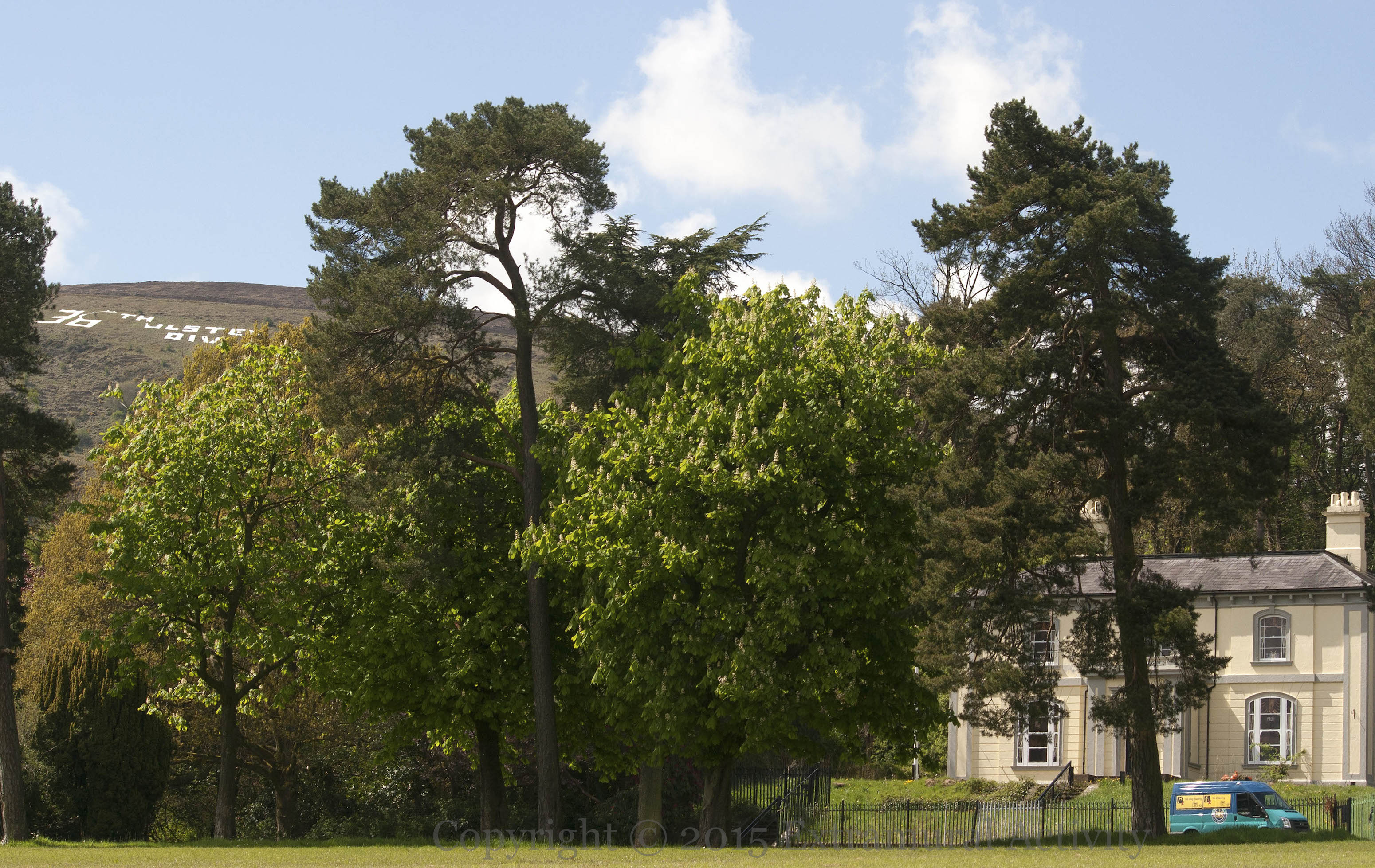
On May 8th, 1915, the various brigades of the 36th (Ulster) Division gathered together from all over the province (including some soldiers from Cavan, Monaghan, and Donegal) to be reviewed by Major General McCalmont in south Belfast; they then paraded to City Hall (South Belfast Friends Of The Somme Association). To commemorate the event the words “36th Ulster Div” have appeared on Black Mountain above Highfield and Ballygomartin (taking a leaf from the Gael Force Art book). The wide shot, below, is taken in front of Fernhill House in the Glencairn estate, where the Ulster Volunteers paraded in 1914. In July 1915 the 36th would leave for Sussex to continue their training and eventually find themselves at the battle of the Somme in 1916.
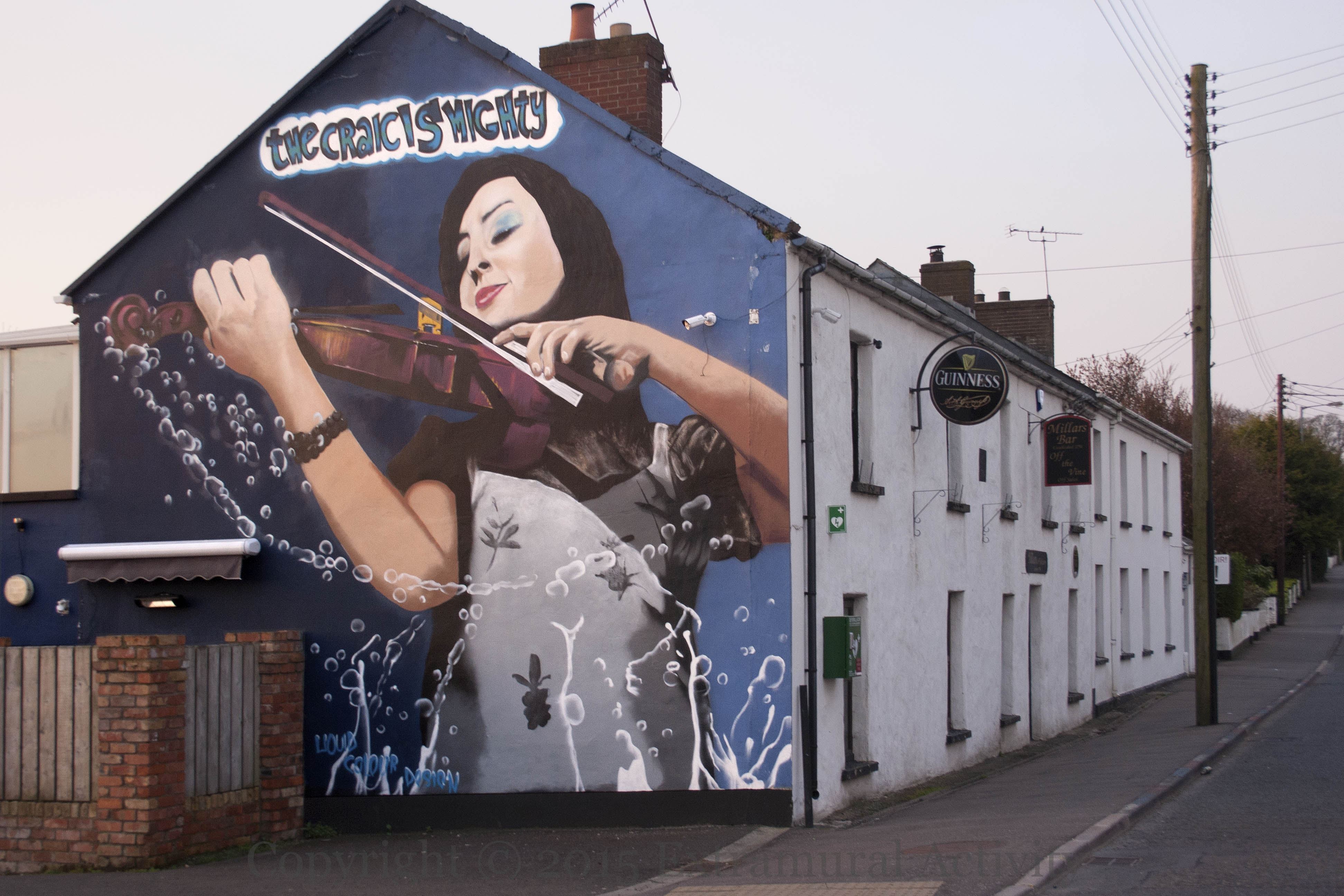
Fiddling in the north of Ireland is common to both Nationalist and Unionist communities and the “old Antrim” style is influenced by Scottish playing (USFO).
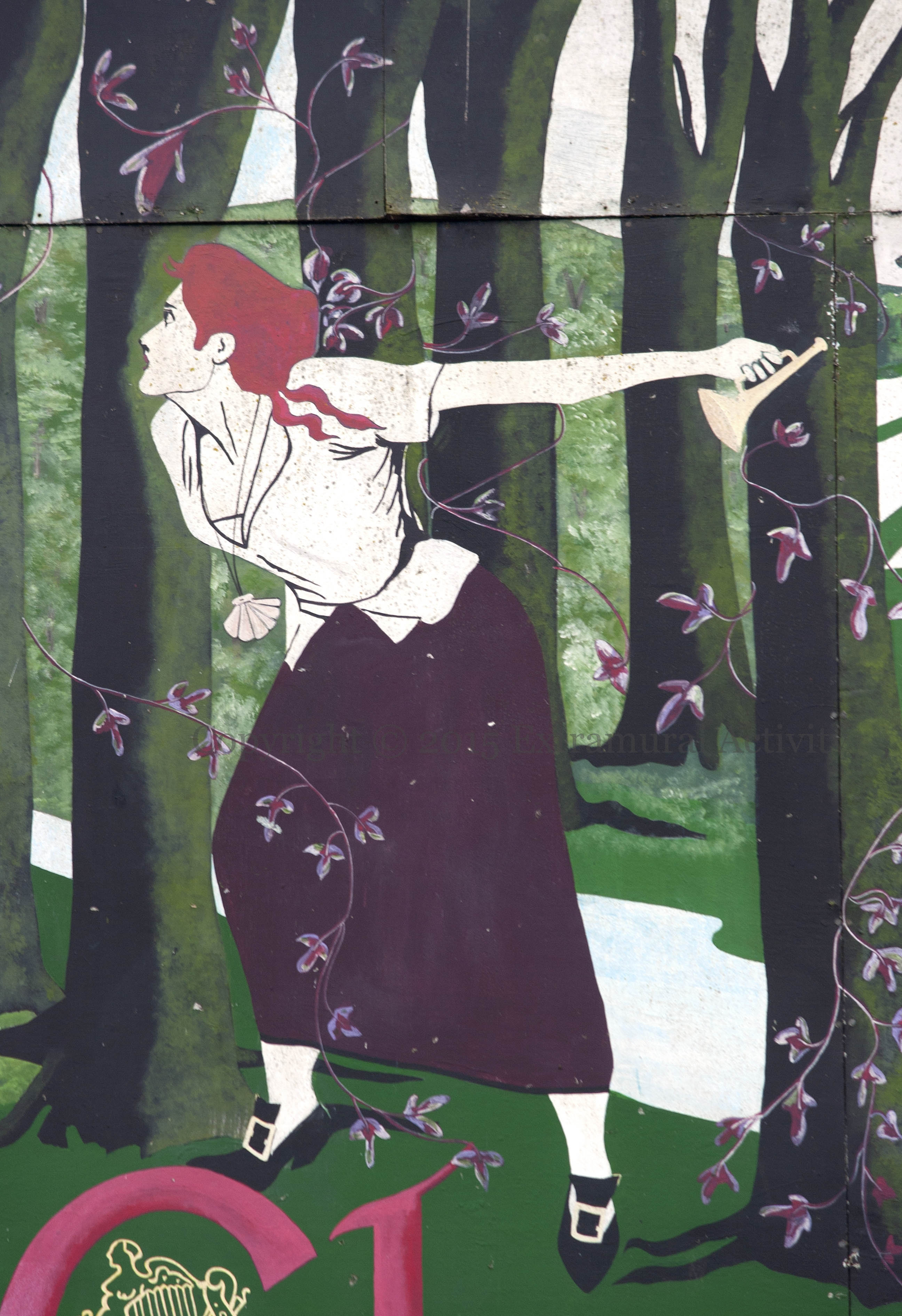
“Were you at the rock?” A red-headed lass (from an illustration in the Weekly Freeman of December 19th, 1891, commemorating 1798) with a horn stands watch for others at a mass rock – a stone in a remote location for Catholic worship, made necessary by a Penal law of 1695 which forbade the religious practice of Catholicism and “dissenter” forms of Protestantism (that is, anything other than Anglicism) (source). The harp, with a “cap of liberty” rather than a crown (WP), together the slogan “Equality – It is new strung and it shall be heard” is the emblem of the Society of United Irishmen (WP). On the other side of the mural (seen below) linen lies in the fields bleaching and a farmer and wife plough the land with a team of horses and distribute seed.
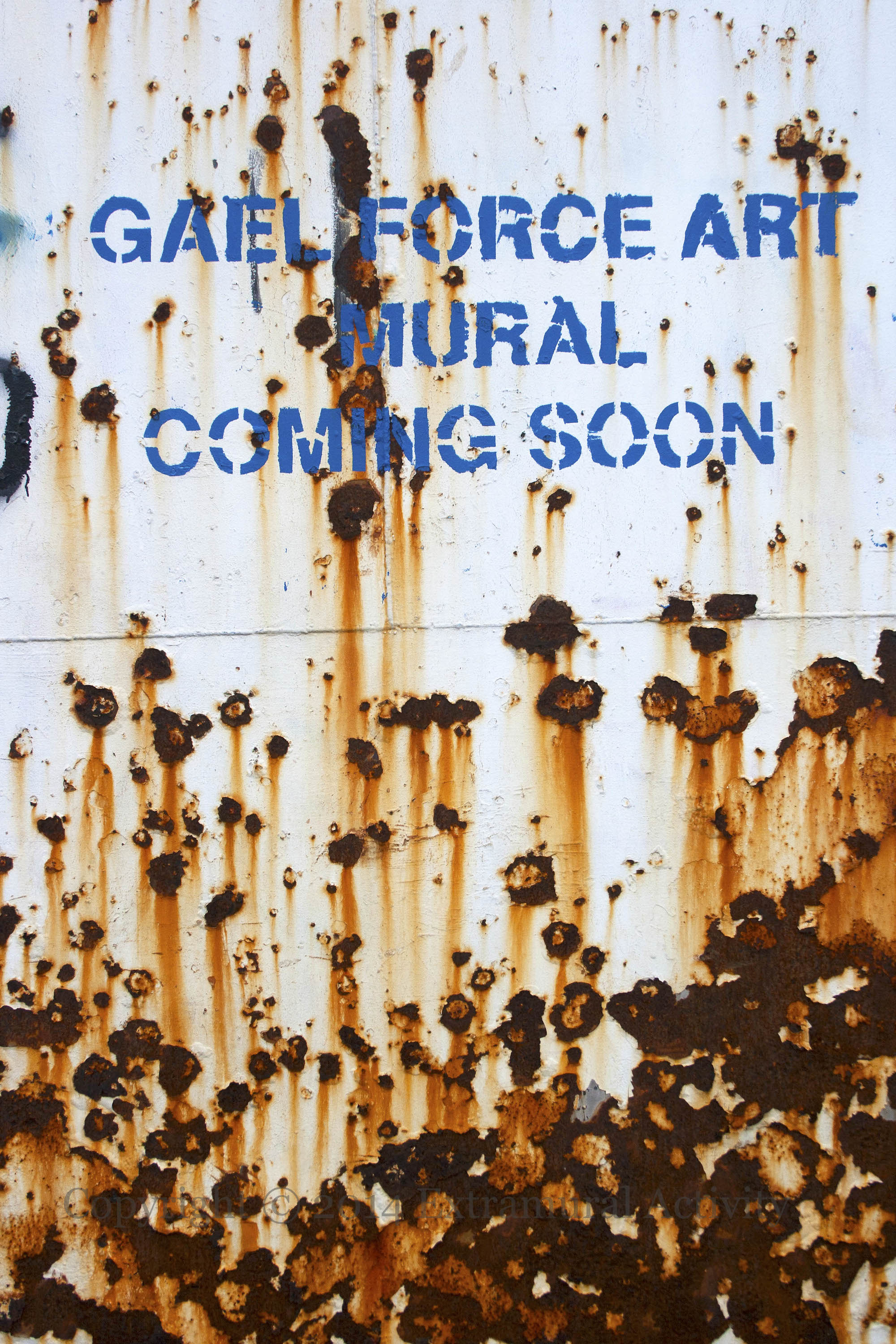
This stencil is at the top of Springhill Avenue, painting grounds of Gerard ‘Mo Chara’ Kelly and Gael Force Art. Mo Chara is in fact currently working on the Falls Road at McQuillan Street, painting a mural of the GPO in flames in 1916.
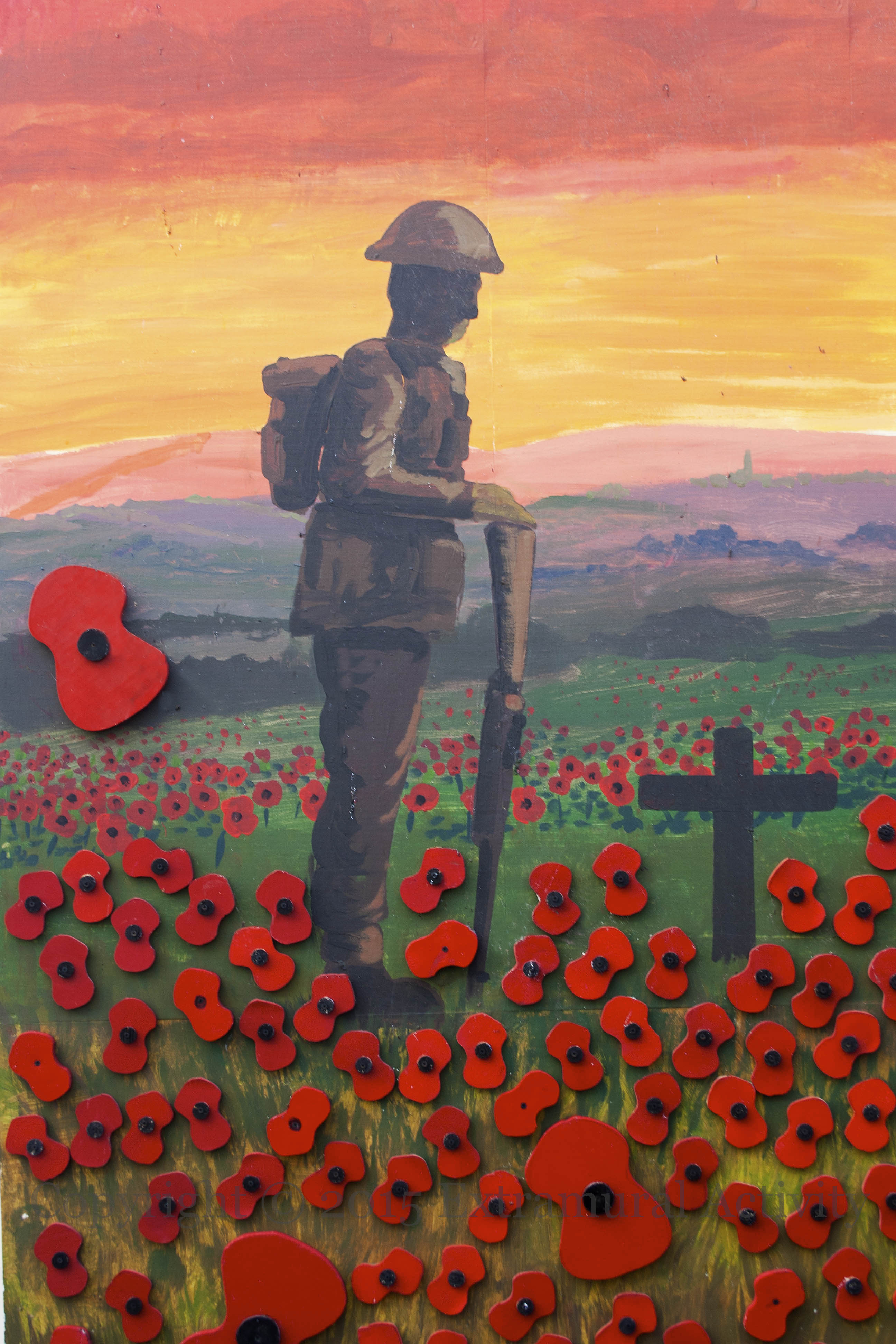
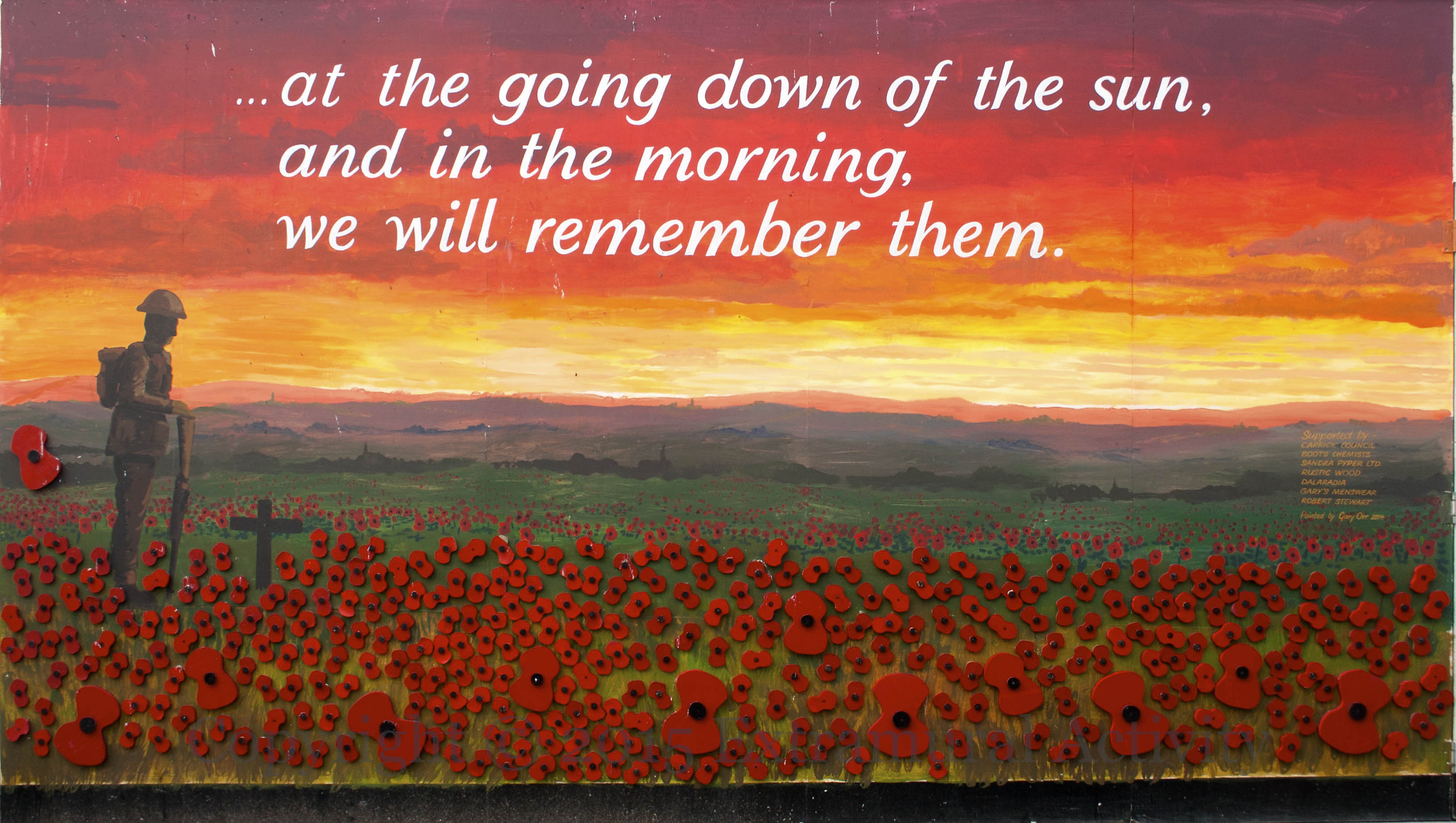
This mural in Carrick has a 3D element: 312 wood poppies were hand-painted and attached to the wall, one for each local man who did not return. By artist Gary Orr. Full shot below.
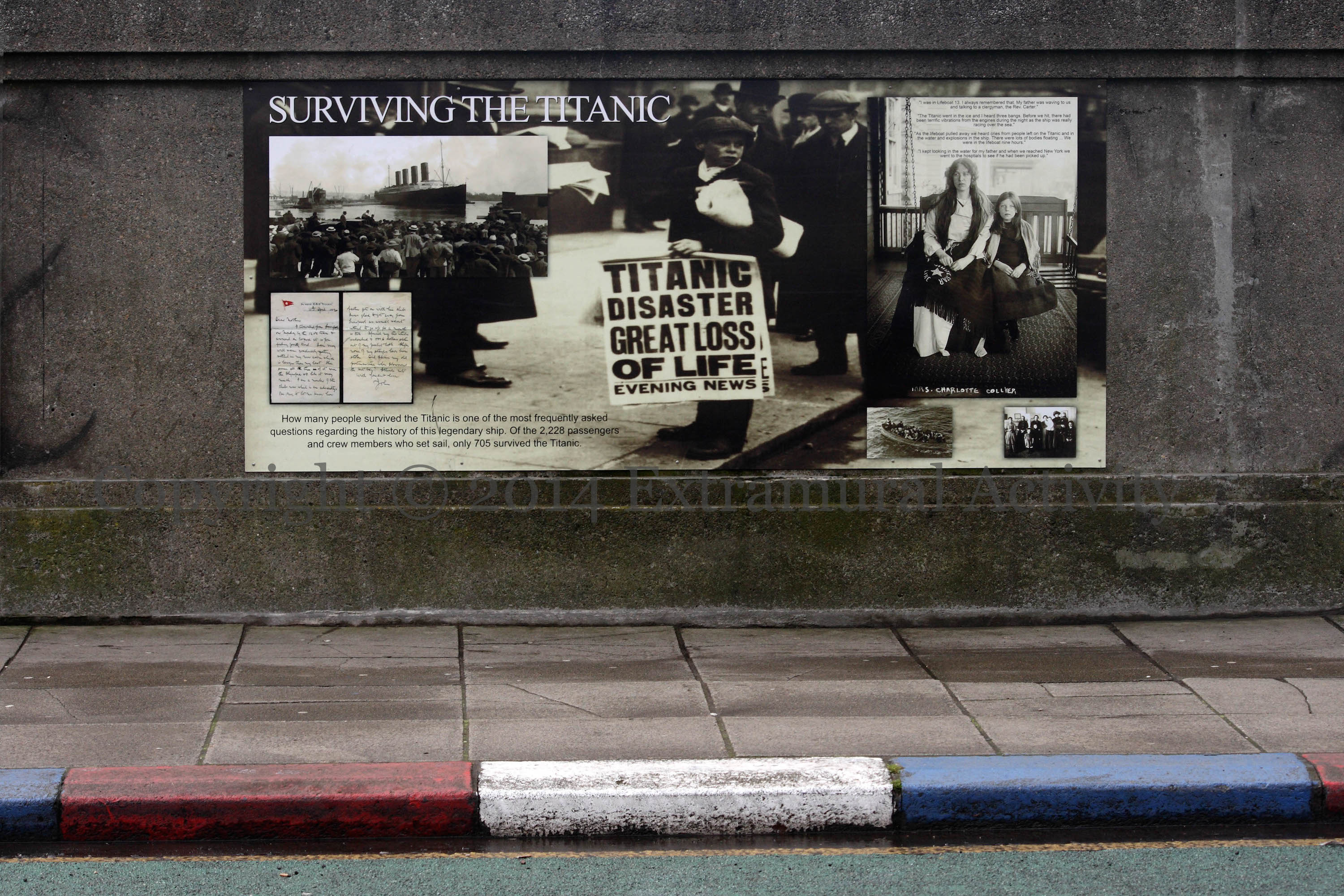
Here are two final images from the south side of the Donegall Road bridge over the Victoria Street line, one about Titanic and the other about locals awarded the MBE.
“I was in Lifeboat 13. I always remember that. My father was waving to us and talking to a clergyman, the Rev. Carter. The Titanic went in the ice and I heard three bangs. Before we hit, there had been terrific vibrations from the engines during the night as the ship was really racing over the sea. As the lifeboat pulled away we heard cries from the people left on the Titanic and in the water and explosions in the ship. There were lots of bodies floating … We were in the lifeboat nine hours. I kept looking in the water for my father and when we reached New York we went to the hospitals to see if he had been picked up.” Mrs. Charlotte Collier
How many people survived the Titanic is one of the most frequently asked questions regarding the history of this legendary ship. Of the 2,228 passengers and crew members who set sail, only 705 survived the Titanic.
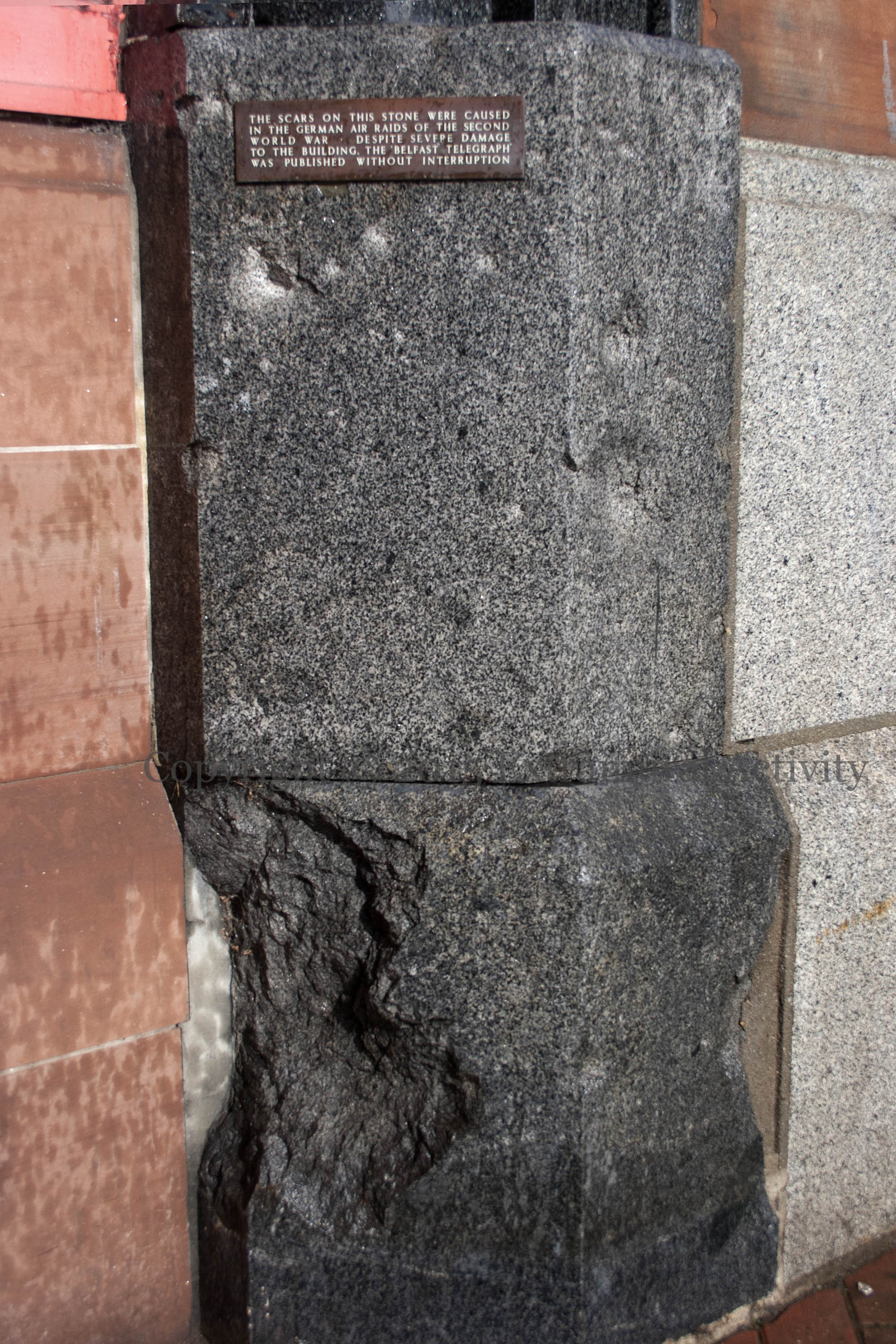
“The scars on this stone were caused in the German air raids of the second world war. Despite severe damage to the building, the Belfast Telegraph was published without interruption.” The masonry above forms part of what was the old front door of the offices, at the corner of Royal Avenue and Library Street.
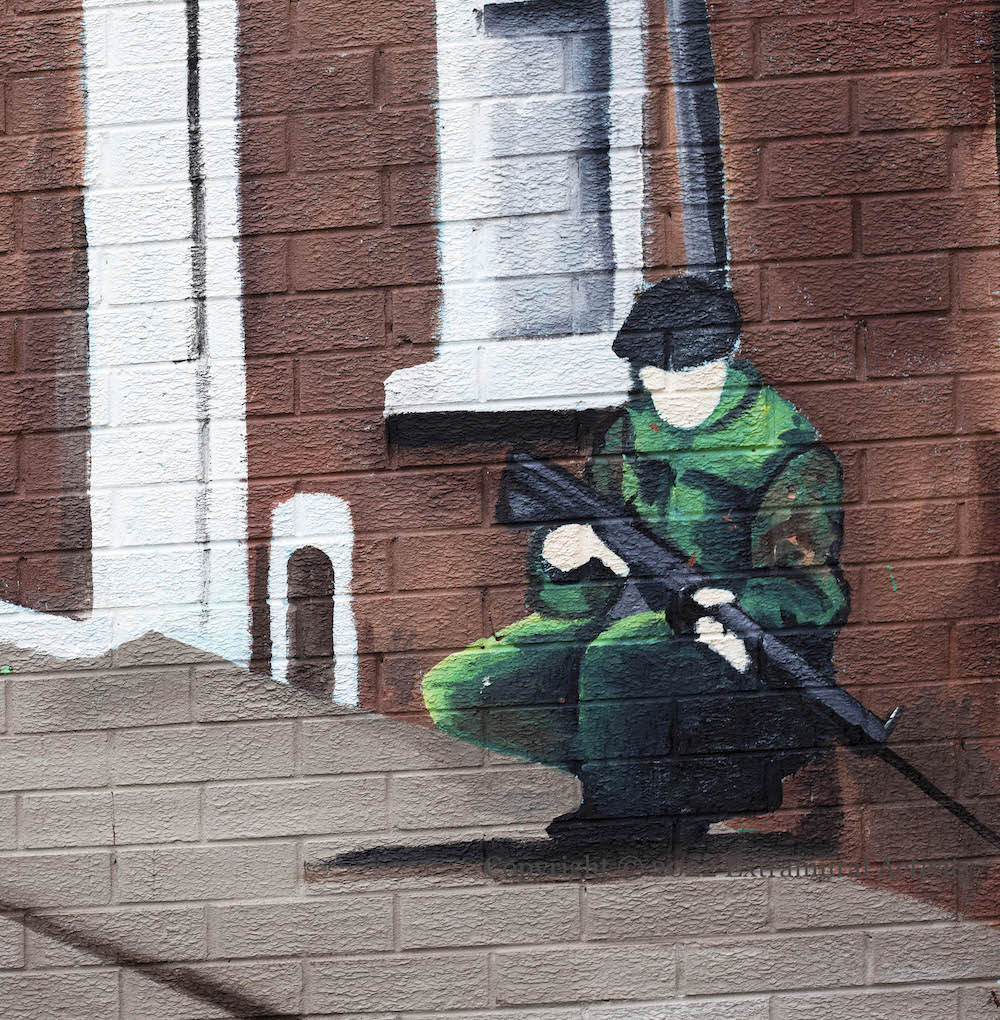
Patrick O’Connor was born on this day in 1924 on the lower Falls but after his father emigrated he spent his early years – until age 5 – with his grandparents in East Street in the Markets. It was as a high-schooler in New York that he adopted the name Pádraıc Fıacc (“fıach dubh” is “raven”) and began writing poetry. He settled in Glengormley upon his second and final return; it is not clear that he ever saw East Street lined with British Army soldiers, as shown in the mural above. He wrote of his early life in ‘First Movement’:
Low clouds, yellow in a mist wind Sift on far-off Ards Drift hazily … I was born on such a morning Smelling of the bone yards The smoking chimneys over the slate top roofs The wayward storm birds And to the east where morning is, the sea And to the west where evening is, the sea Threatening with danger And it would always darken suddenly
Some of Fıacc’s poems are in the TroublesArchive. There are two videos below. The first is an interview with NVTv’s Bernard Conlon; the second is of a reception in Belfast City Hall.






 Extramural Activity