A service was held yesterday in West Kirk Presbyterian to mark the thirtieth anniversary of the bombing of Frizzell’s fish shop on the Shankill Road. As part of the ceremony, wreaths were laid at the new memorial marking the spot on the Shankill where the bomb exploded, killing nine locals — hence the Arabic “9” among the Roman numerals on the clock face — and one of the bombers (ITv footage). The clock shows the date and time that the bomb went off: 1:06 pm on Saturday October 23rd, 1993.
The new ‘clock’ memorial replaces the three plaques seen in Frizzell’s (though the circular plaque might have been incorporated into this new memorial); the board of portraits served as the cover for the memorial in the days prior to unveiling and was placed over the credit union’s ATM.
West Kirk also contains a stone and bench to the victims of the Shankill bombing. Nine trees were also planted in their memory: John Frizzell, Sharon McBride Leanne Murray, Michael Morrison, Evelyn Baird, Michelle Baird, George Williamson, Gillian Williamson, Wilma McKee.
“We remember those who were killed, those who survived and those lives changed forever.”
“‘And God shall wipe away all tears from their eyes; and there shall be no more death, neither sorrow, nor crying, neither shall there be any more pain; for the former things are passed away’ Revelations 21 v4”
A shawlie is a working-class woman wearing a shawl to serve as a coat and hat. In Belfast they are particularly associated with the workers in the linen mills, such as the Brookfield Mill on the Crumlin Road. This statue, designed by Ross Wilson, was inspired by William Conor’s painting of mill workers (and pehaps specifically “Going to the mills, Crumlin Road, 1914” which is included in the info board, below) and installed at the top of Cambrai Street in 2010 (BelTel | BBC).
“The Mill Worker. Belfast was one of the fastest growing urban centres in Europe in the nineteenth-century, with the linen industry a major driver. The city’s status as the world’s biggest linen producer came about partly as a result of the cotton shortages in the 1860s caused by the American Civil War. In 1896, 96,000 people worked in linen in Belfast, making it the city’s biggest employer. The profits enabled other industries to grow, including engineering, shipbuilding, tobacco, whiskey and rope-making. Belfast became a world leader in all of these industries. The recession between the world wars led to a dramatic reduction in the demand for linen, reinforced by changes in fashion, so the industry went into almost terminal decline and nearly disappeared. Today, however, the supreme quality of linen is valued once again – not least on the Milan, Paris and London catwalks.”
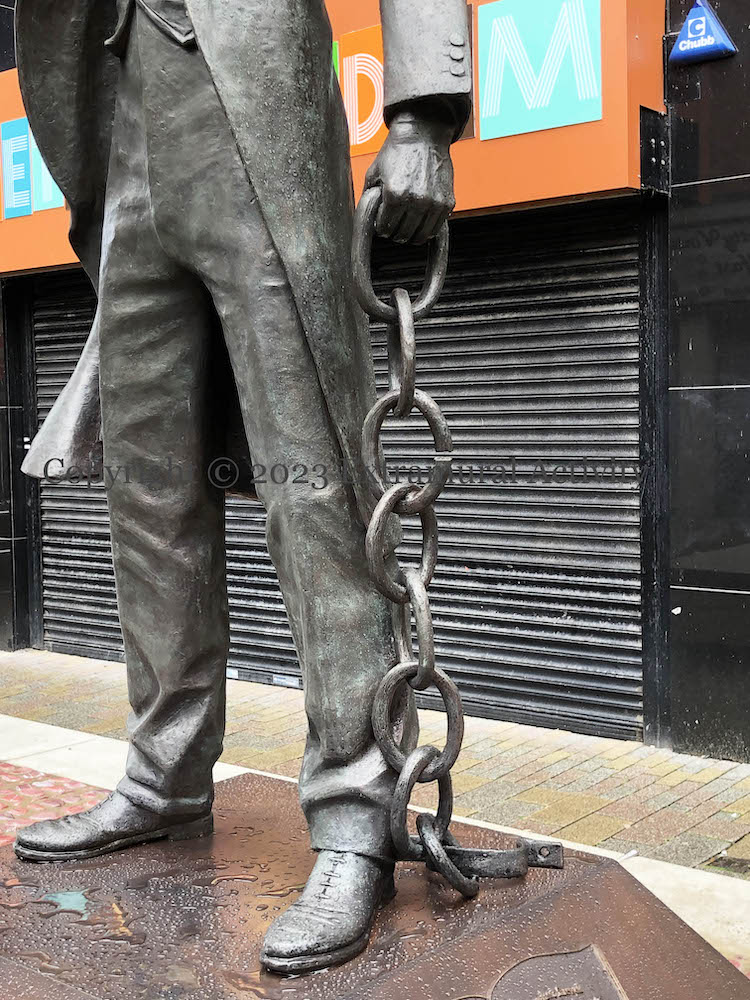
On this day in 1834, the Slavery Abolition Act came into effect (except territories managed by the East India Company), marking the beginning of the end for slavery in the British empire. Enslaved children below the age of six were freed; while enslave adults were designated as apprentices for a period of four or six years; 5% of British GDP went towards reimbursing owners (Independent | WP).
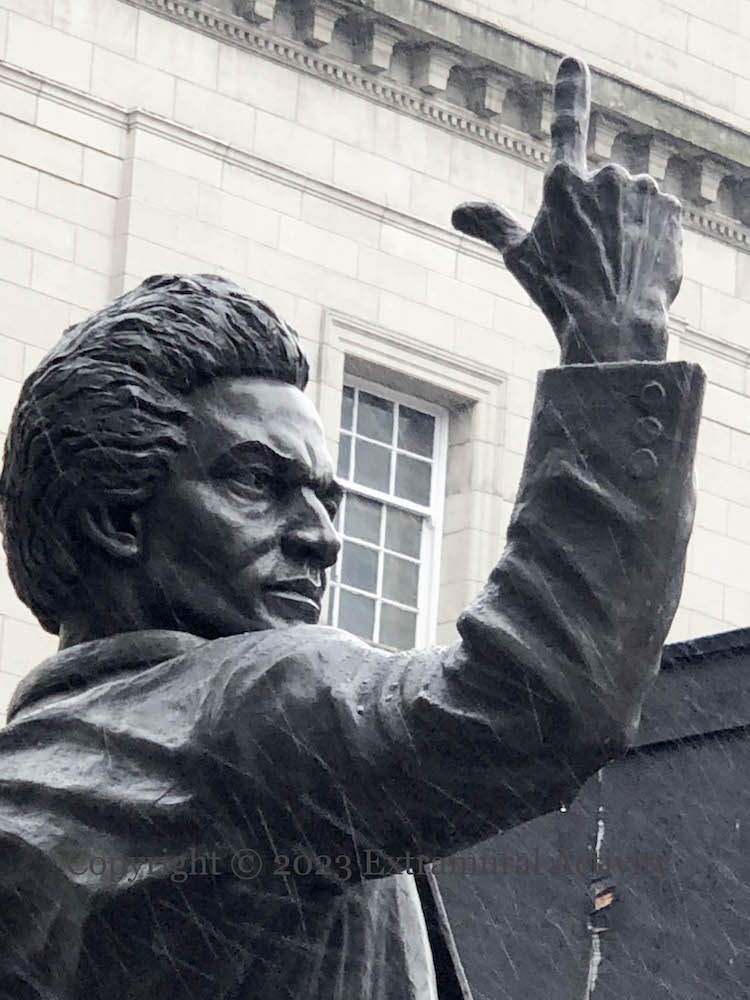
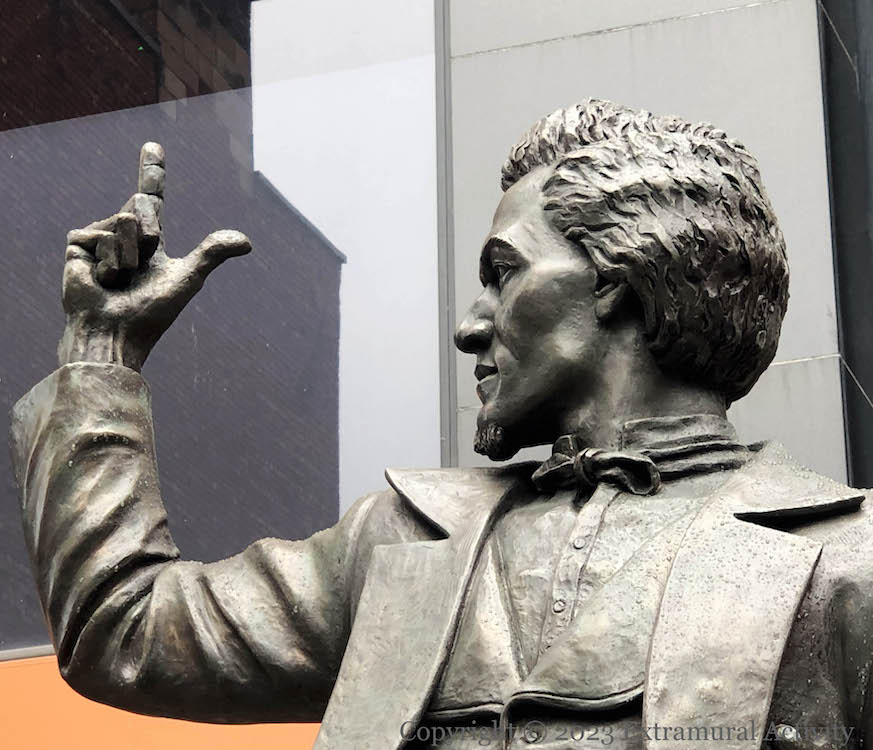
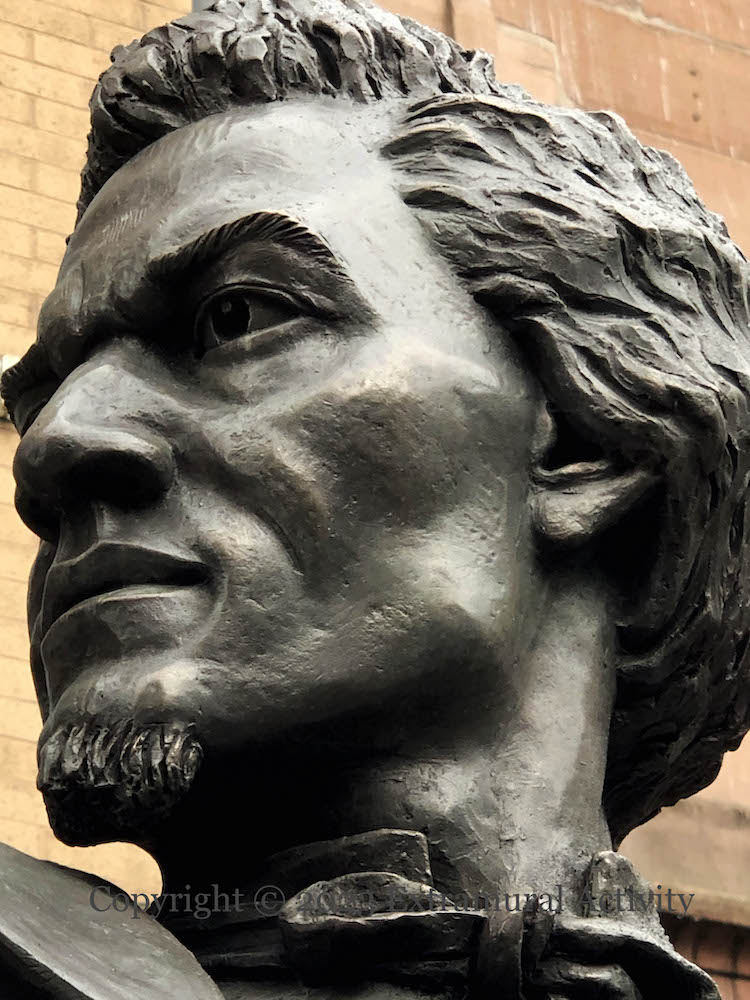
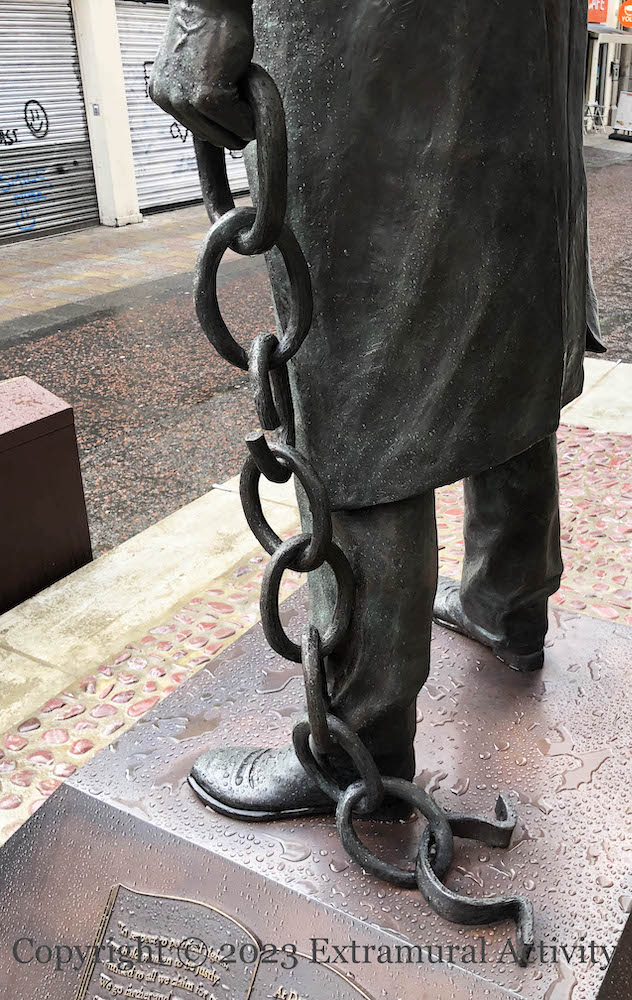
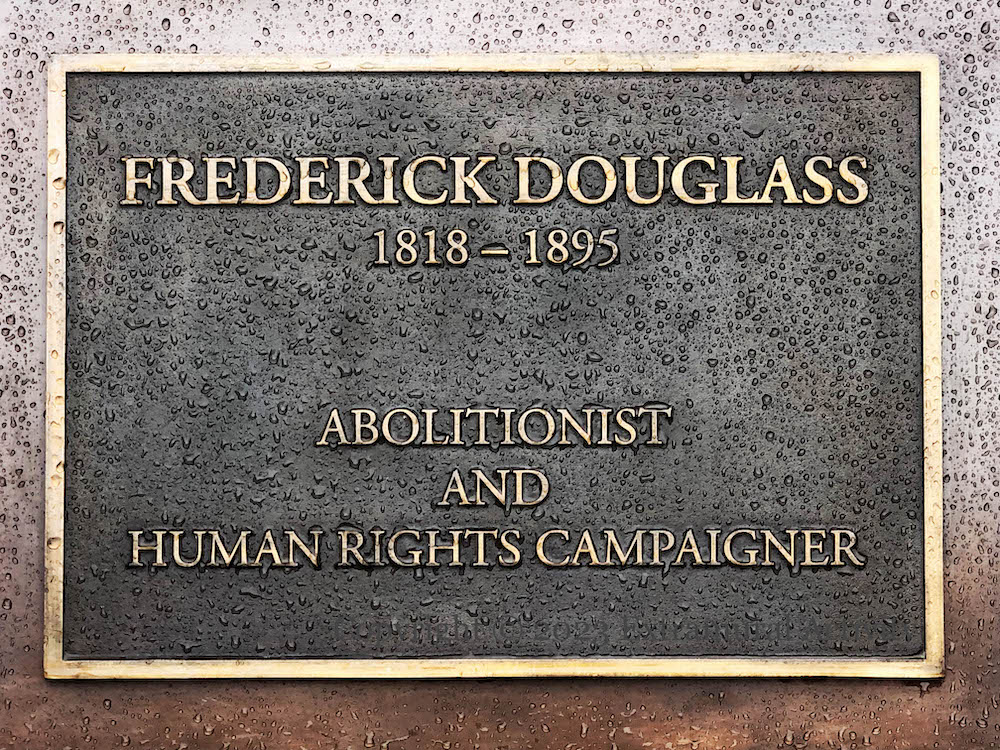
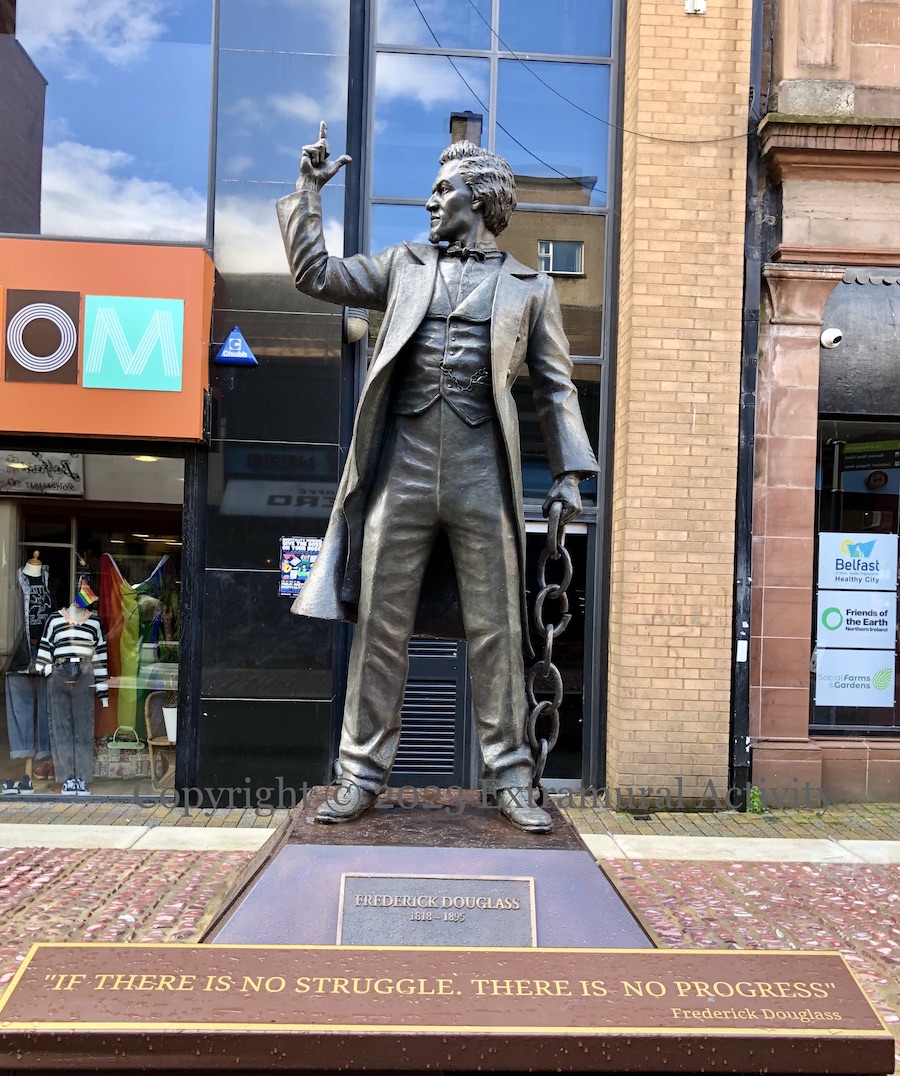
This made it safe for Frederick Douglass – “1818-1895, abolitionist and human rights campaigner” – to tour in Ireland and Britain when the success of his (first) auto-biography, Narrative Of The Life Of Frederick Douglass, might have allowed and encouraged his owner to re-capture him. Douglass had “illegally” escaped slavery in September, 1838, become a preacher in 1839, and by 1843, had joined a six-months-long speaking tour of the United States. (WP)
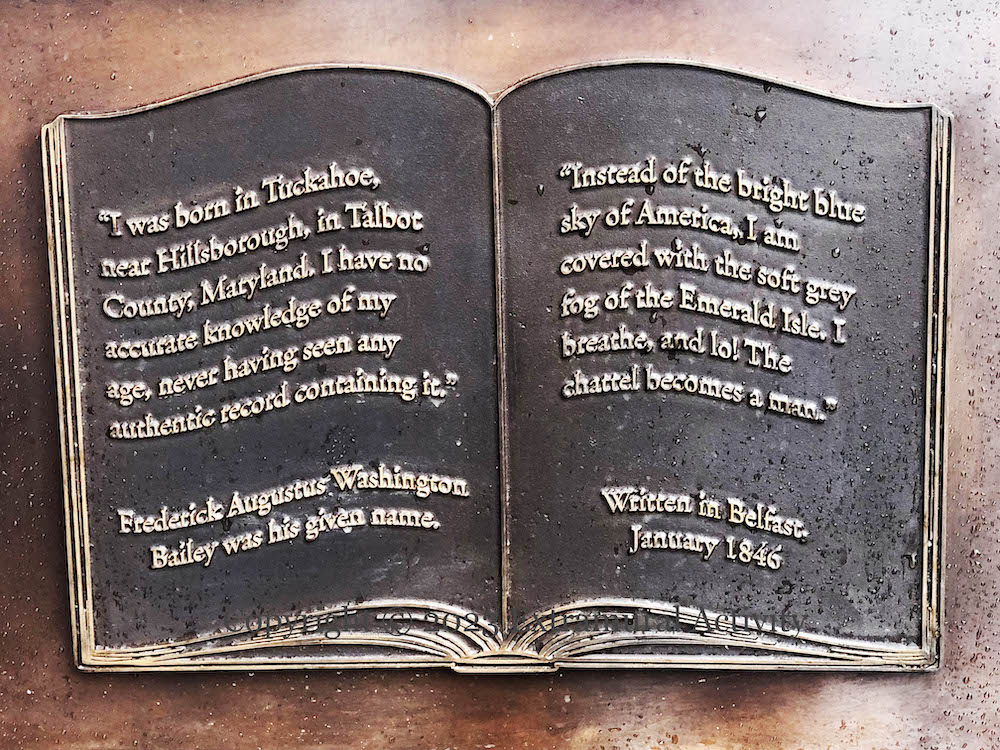
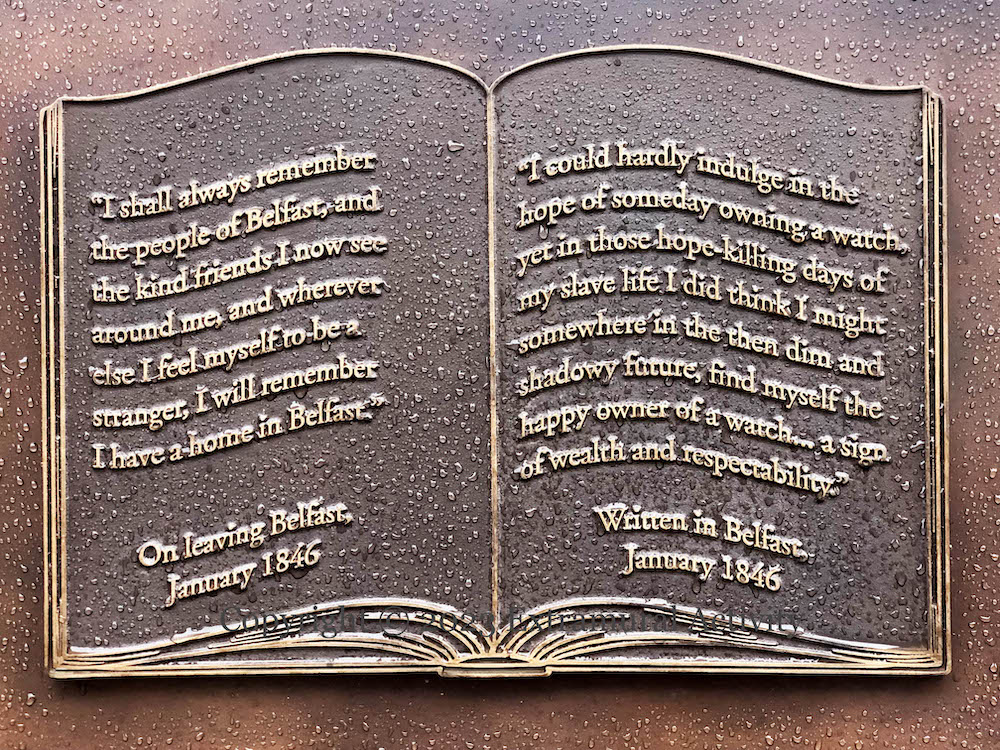
His tour of Ireland and Britain lasted two years and included speeches given in First Presbyterian Church in Rosemary Street and at the Assembly Rooms in Waring Street. In a letter to William Garrison he wrote, “Instead of the bright, blue sky of America, I am covered with the soft, grey fog of the Emerald Isle. I breathe, and lo! the chattel becomes a man.” And when leaving for Britain in January 1846 he wrote, “I shall always remember the people of Belfast, and the kind friends I now see around me, and wherever else I feel myself to be a stranger, I will remember I have a home in Belfast.”
Douglass returned to the US in 1847, where millions were still enslaved (until the 13th Amendment of 1865). In an 1857 address concerning Jamaica and the West Indies, Douglass said, “If there is no struggle, there is no progress. Those who profess to favor freedom and yet deprecate agitation are men who want crops without plowing the ground. They want rain without thunder and lightning. They want the ocean without the roar of its mighty waters. The struggle may be a moral one or it may be a physical one, or it may both moral and physical, but it must be a struggle. Power concedes nothing without a demand. It never has and it never will.” (CUNY)
The piece was sculpted by Alan Beattie Herriot and Hector Guest (BBC) with funding from Belfast City Council and the Department For Communities (BelTel), and stands in Lombard Street. Douglass is presented as a 27-year-old; the old mural on Divis Street and the current mural on Northumberland Street portray him in later years.
Douglass carries a watch in his waistcoat pocket: “I could hardly indulge in the hope of someday owning a watch, yet in those hope-killing days of my slave life I did think I might somewhere in the dim and shadowy future, find myself the happy owner of a watch … a sign of wealth and respectability.”
See also: Olaudah Equiano, who toured in Ireland in 1791-1792, and, for Mary Ann McCracken, The World Affords No Enjoyment Equal To That Of Promoting The Happiness Of Others. “”In respect to political rights, we hold woman to be justly entitled to all we claim for man. We go farther and express our conviction that all political rights which it is expedient for man to exercise, it is equally so for women … Our doctrine is that ‘Right is of no sex’.” At Douglass’s farewell breakfast in January 1846, a Belfast Ladies Anti-Slavery Society was formed. Mary Ann McCracken was a founding member.”
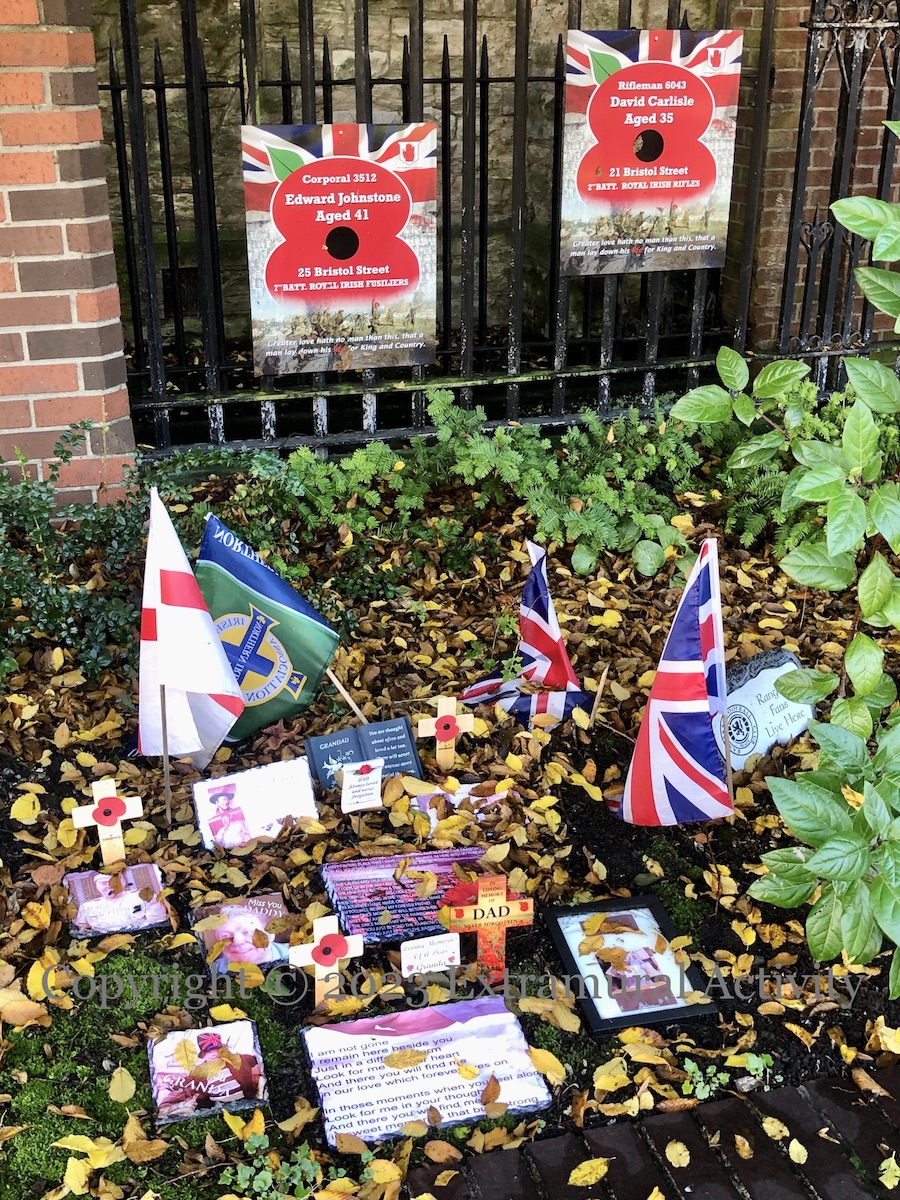
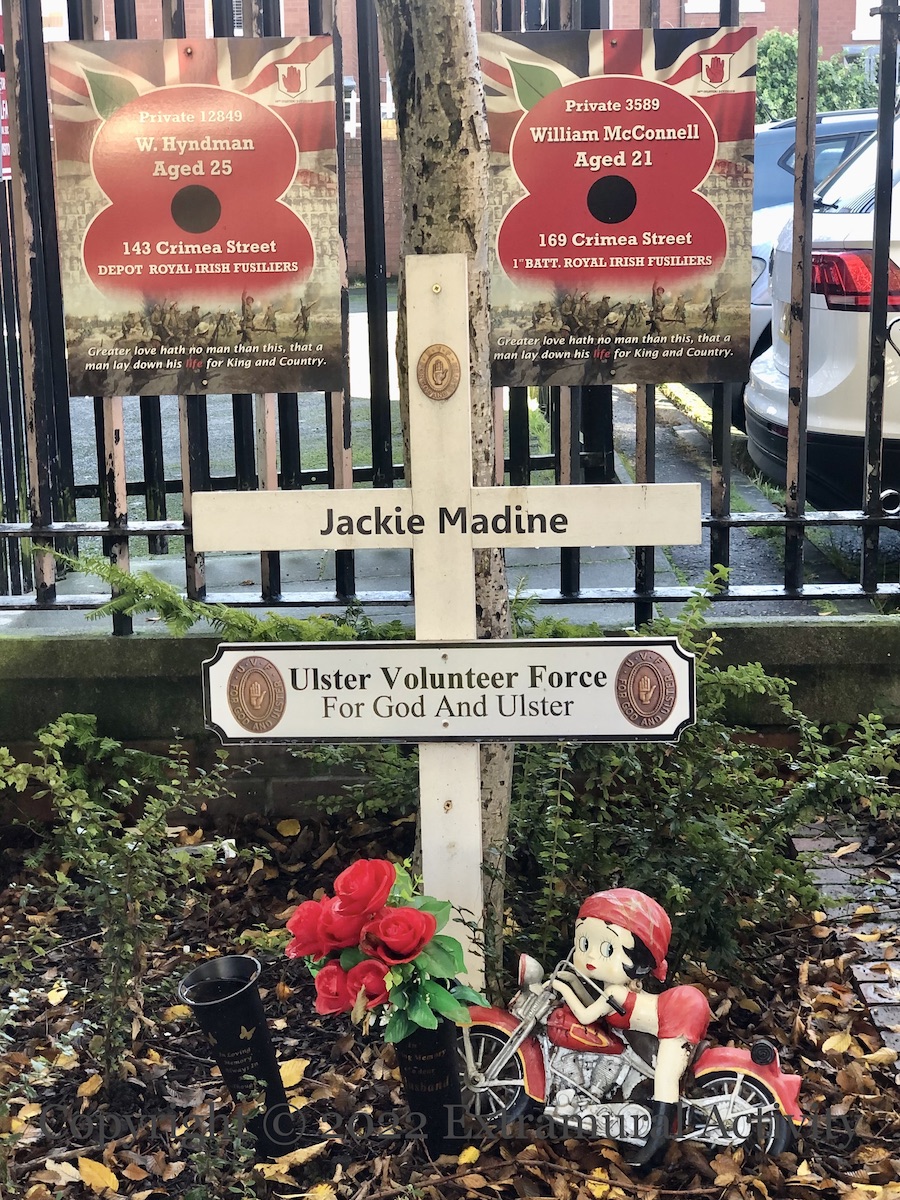
The Shankill Memorial Garden next to West Kirk Presbyterian is home to memorials to WWI (see Who Went To War And Never Returned) and the Shankill Bombing (see In The Shadow Of Death) . It has also become the site of many small memorials to local people, including volunteers in the UVF. For “S Company” see S Company, C Company.
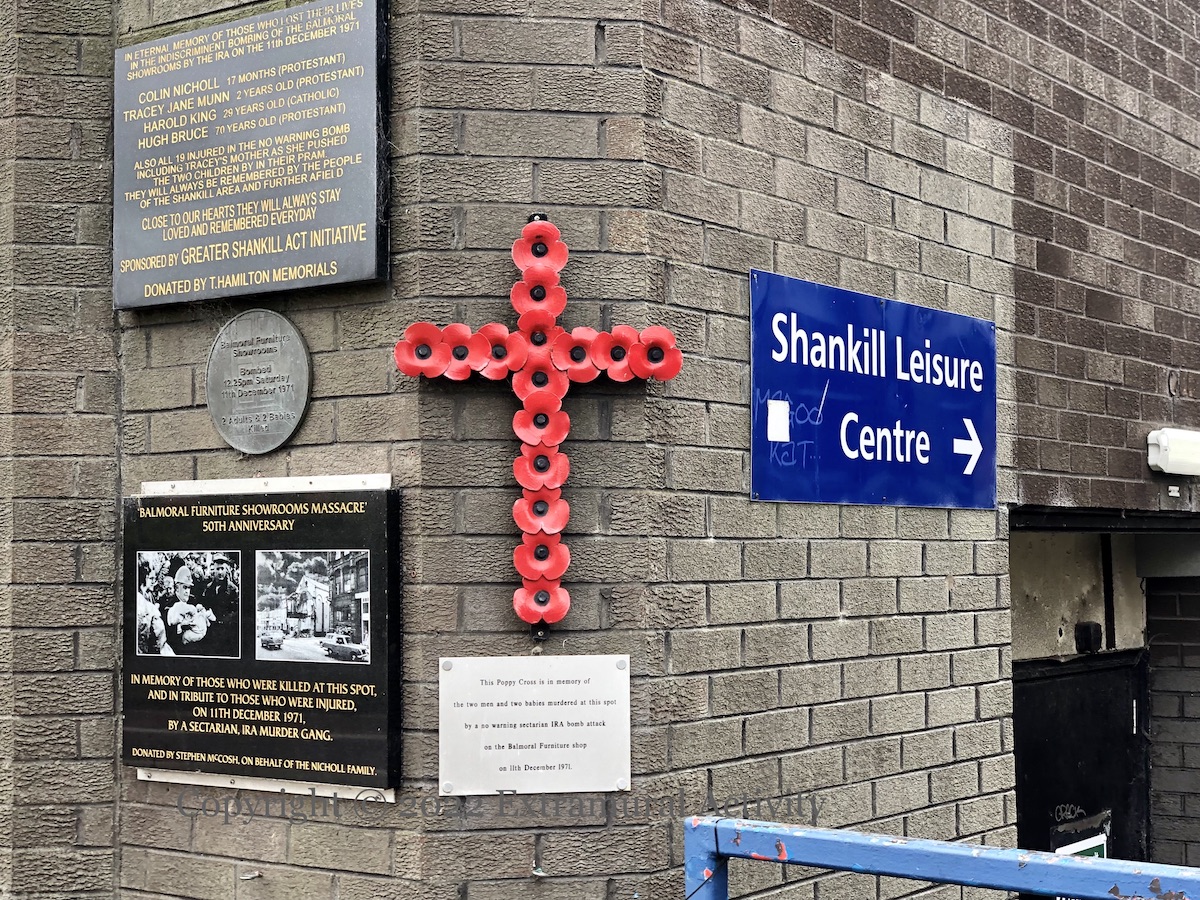
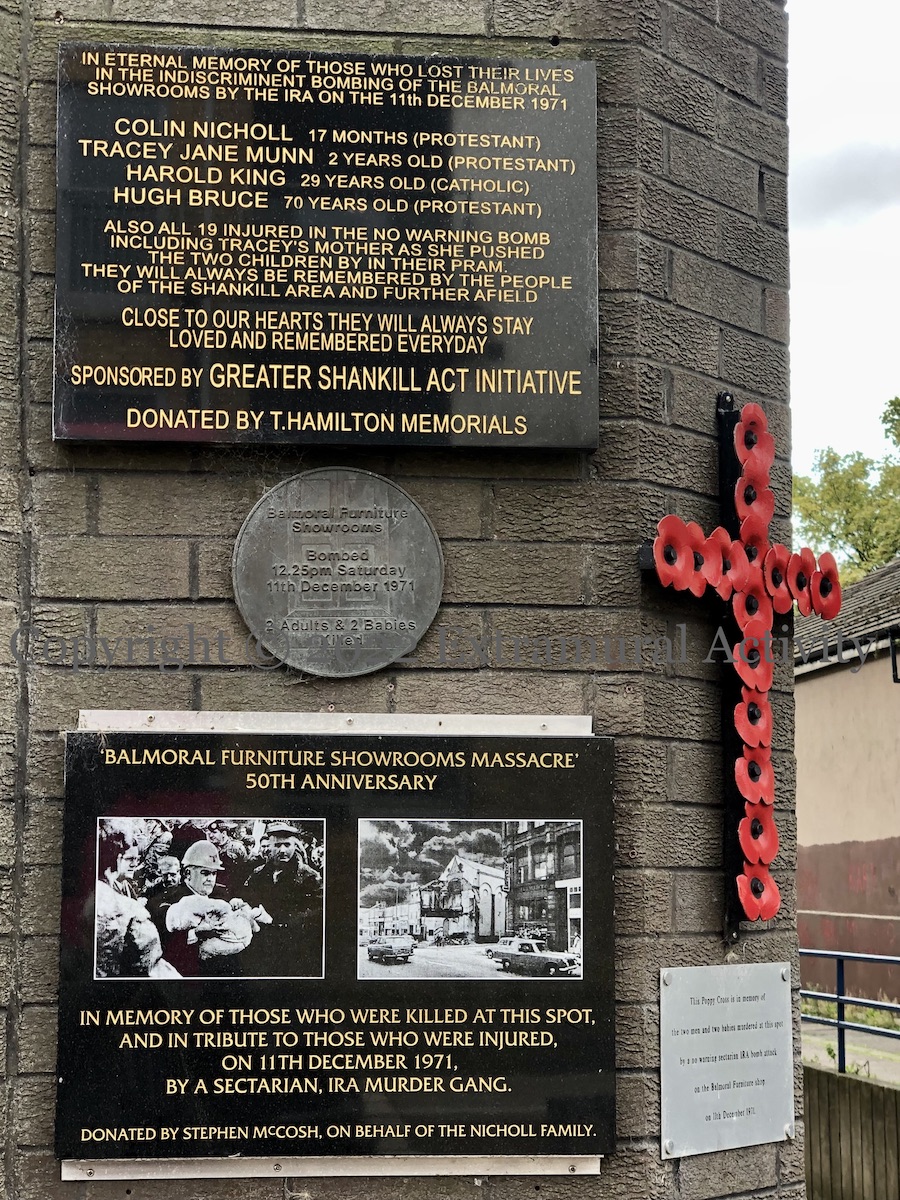
A fourth memorial was added to the side of the Shankill Leisure Centre for the 50th anniversary of the bombing of the Balmoral Furniture Showrooms on the Shankill Road, with two photographs from the aftermath. The one on the left, of a fireman carrying the body of Colin Nichol/Nicholl, was reproduced in the old mural in Bellevue Street and in Dundee Street in successive printed murals (one | two) of the four “Shankill atrocities”.
“In eternal memory of those who lost their lives in the indiscriminate bombing of the Balmoral Showrooms by the IRA on the 11th December 1971. Colin Nicholl 17 months (Protestant), Tracey Jane Munn 2 years old (Protestant), Harold King 29 years old (Catholic), Hugh Bruce 70 years old (Protestant). Also all 19 injured in the no warning bomb including Tracey’s mother as she pushed the two children by in their pram. They will always be remembered by the people of the Shankill area and further afield. Close to our hearts they will always stay/Loved and remembered everyday. Sponsored by Greater Shankill ACT Initiative. Donated by T. Hamilton Memorials.”
“Balmoral Furniture Showrooms massacre, 50th anniversary. In memory of those who were killed at this spot, and in tribute to those who were injured, on 11th December 1971, by a sectarian, IRA murder gang. Donated by Stephen McCosh, on behalf of the Nicholl family.”
“This poppy cross is in memory of the two men and two babies murdered at this spot by a no warning IRA bomb attack on the Balmoral Furniture shop on 11th December 1971.”
An arch of a different kind in the Kilcooley estate: a reflective steel arc overlooking a circular mosaic.
“This steel and ceramic sculpture was created by the residents, children and young people from the Kilcooley Community, working in collaboration with visual artists Duncan Ross and Helen Sharp. The sculpture was created as part of the North Down Borough Council Art of Regeneration Project. The sculpture was officially launched by the Chair of the Art of Regeneration Partnership Councillor Alan Leslie on the 28th April 2009. Funded by the Art Council of NI, NI Housing Executive, North Down Local Strategy Partnership through Peace II, Department for Social Development and North Down Borough Council. Tiles printed and supplied by Edinburgh Ceramics.”
The war memorial in Redburn Square, Holywood, was removed in 2017 while the square was redeveloped (Belfast Live). It returned that November (County Down Spectator Fb) with a new base and several additions have been made since then, including the bench above (with art deco styling), a NI Centenary stone (below), and reproduction photographs from the period covering the utility box (final image), including one of the statue many years previously – it was sculpted by Leonard Merrifield and unveiled January, 1922, with the dedication a few months later (History Hub Ulster video | Wartime NI). In addition to the names of 110 locals who perished in the Great War, there are 28 names from WWII (Ulster War Memorials) and one from the Korean War (Traces Of War).
Before he died (in 2005), George Best asked that people “remember me for my football” and the phrase became the title of a Best retrospective. It is also inspired the life-size title of the statue of created by Tony Currie and funded by fans (Belfast Live) in front of Windsor Park (and the Glen Molly (ig) mural in Hill Street). When it was launched, the statue drew criticism for not looking like its subject (BBC | Newsletter). Soccer star sculptures are perhaps hard to do: here’s a list of ten questionable statues of soccer stars, including Maradona in Kolkata (Guardian) and Ronaldo in Madeira (BBC), but missing Mo Salah in Sharm al-Sheikh (BBC).
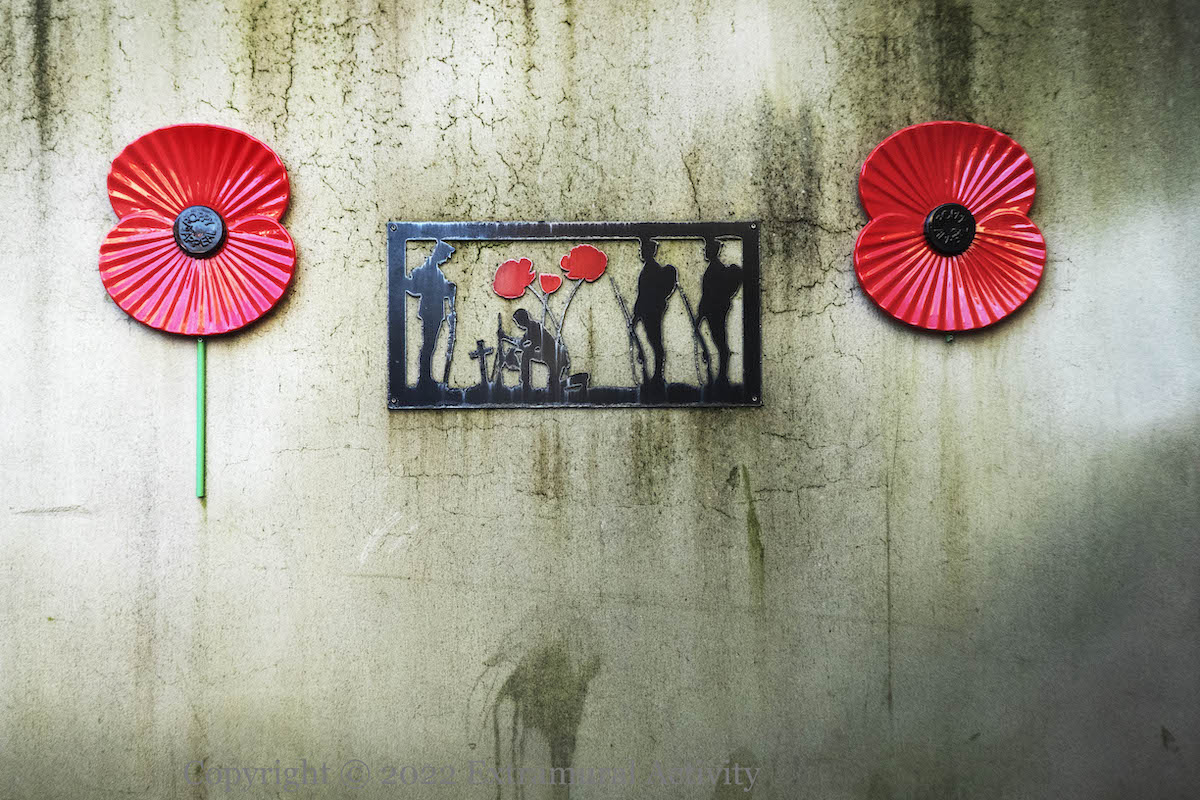
This is a small memorial to the fallen British soldiers tucked away in Ogilvie Street, Belfast, that serves to remind the locals always to keep the sacrifice of the 36th Division always in mind. Below is the board next to it, originally seen in 2013.
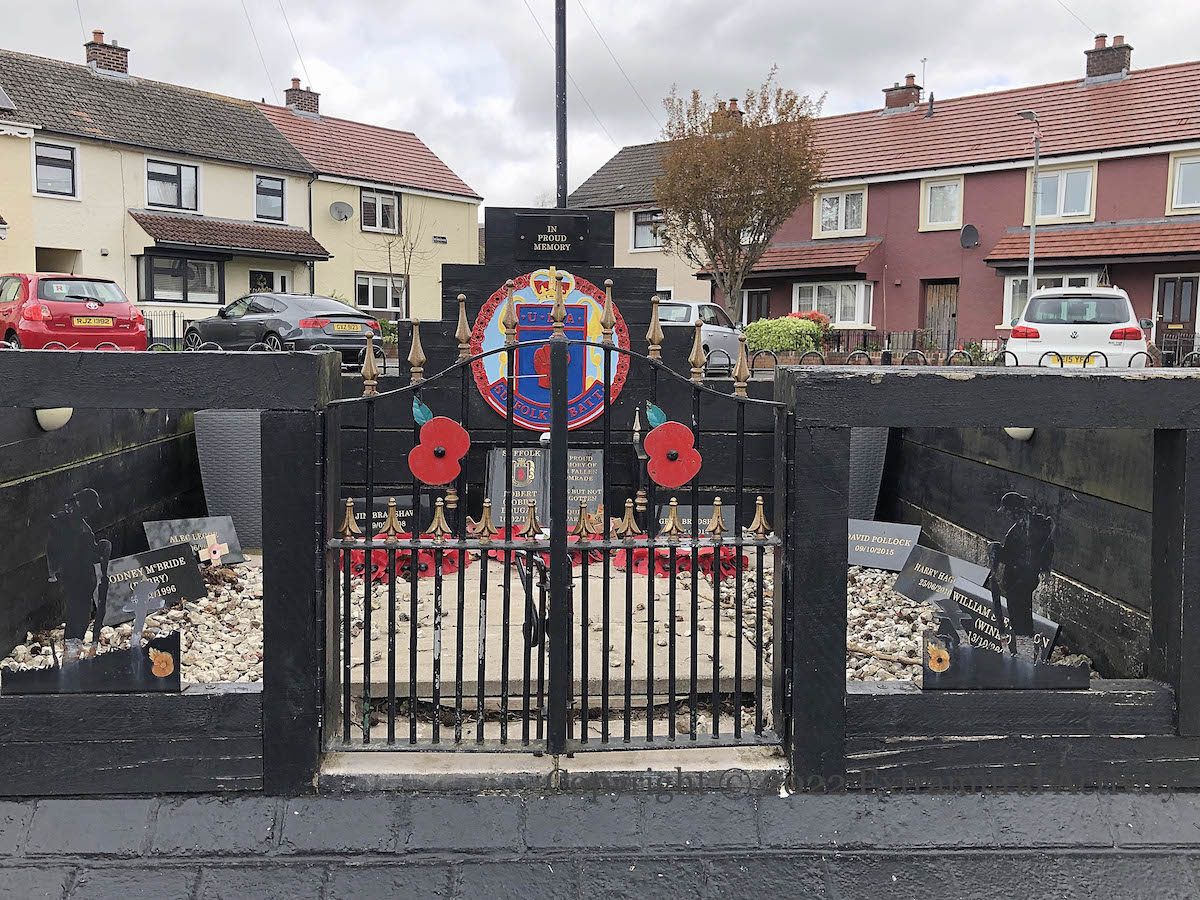
Robert Dougan was commander of the UDA South Belfast Brigade and lived Oranmore Drive (BelTel). He was killed by the IRA on February 10th, 1998 while sitting in a car outside Balmoral Textiles in Dunmurry, which led to a month-long expulsion of Sinn Féin from the peace talks taking place at the time (L.A. Times); two months later the Good Friday Agreement was signed. There had been attempts on his life in 1993 and 1994 (Irish Times).
The plaques, from left to right, are to Rodney McBride (1996), Alec Legge (2007), Jim Bradshaw (2008), Robert Dougan (1998), Greg Bradshaw (2014), David Pollock (2015). Harry Haggan (2010), William Stevenson (2008).
Tildarg Avenue. There is a mural to Dougan on Sandy Row – see Everyone’s Friend.













 Extramural Activity