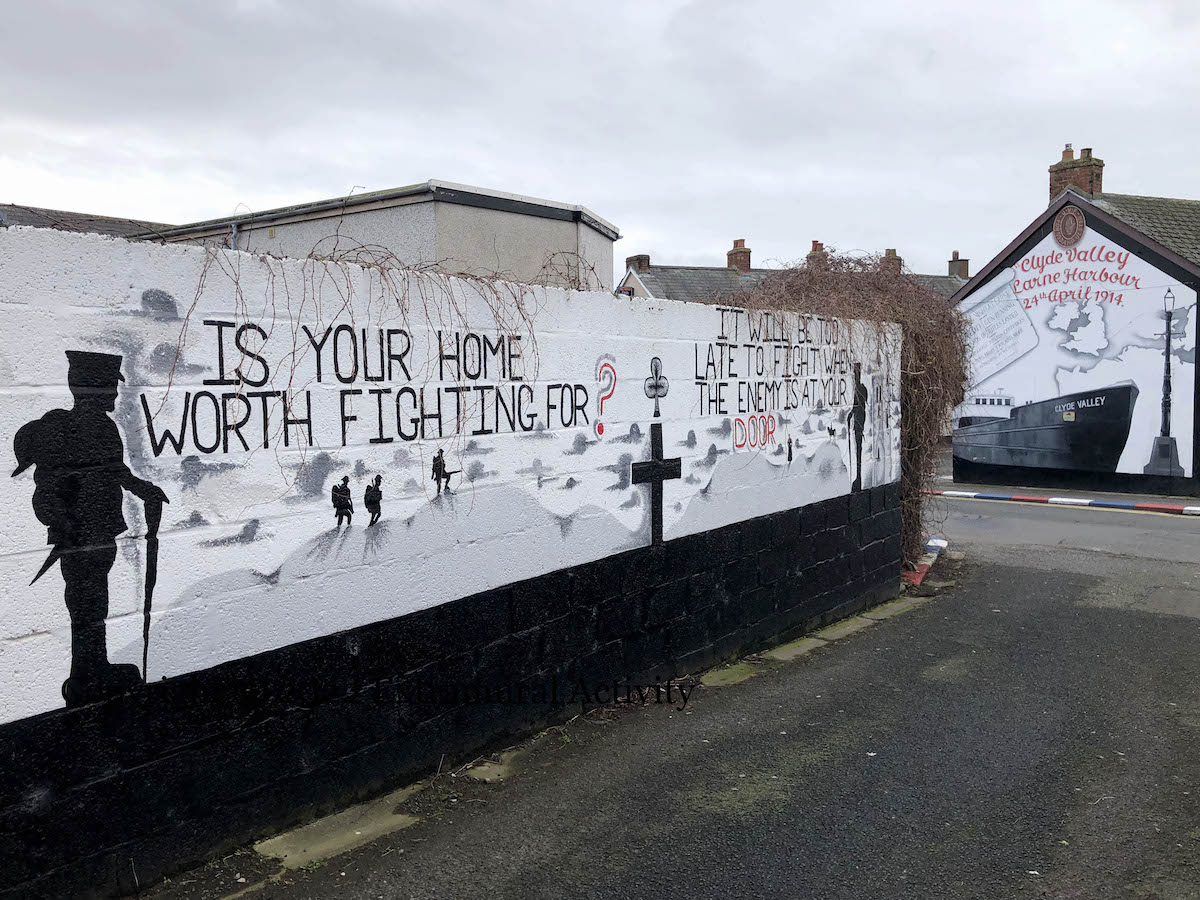
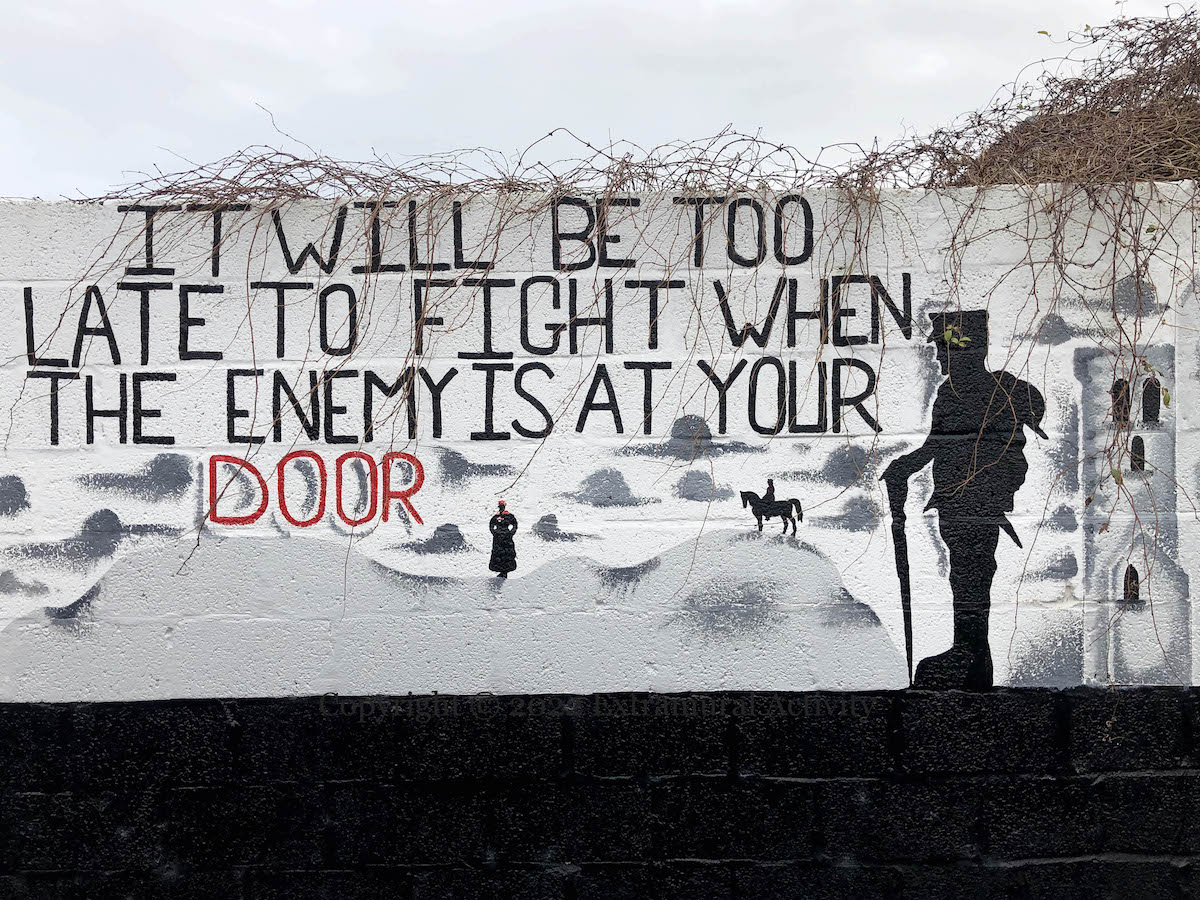
“… It will be too late to fight when the enemy is at your door.” In 1914, at the time of the Larne gun-running – see the mural in the second image and (previously) Amazing Night At Larne – the enemy was the threat of Home Rule and its enforcement by British Army forces and RIC that would remain under British control for at least three years after the commencement of home rule (Home Rule And Ulster’s Resistance p. 9). A bill to amend home rule by excluding some or all of the Ulster counties was introduced in July, 1914 (WP), but both Home Rule and the amendment were put aside when the Great War began; the enemy of Unionists then became the Central Powers. The contemporary enemy is the NI Protocol and Brexit, with the powers in Westminster again suggesting a separation of Britain and (Northern) Ireland.
Three Jimmys by Glen Molloy (ig): comedian James Young (WP), actor James Nesbitt (IMDb), and comedian Jimmy Cricket (web | tw) with “sadly no room for Jimmy ‘Rock’n’roll’ Symmington”.
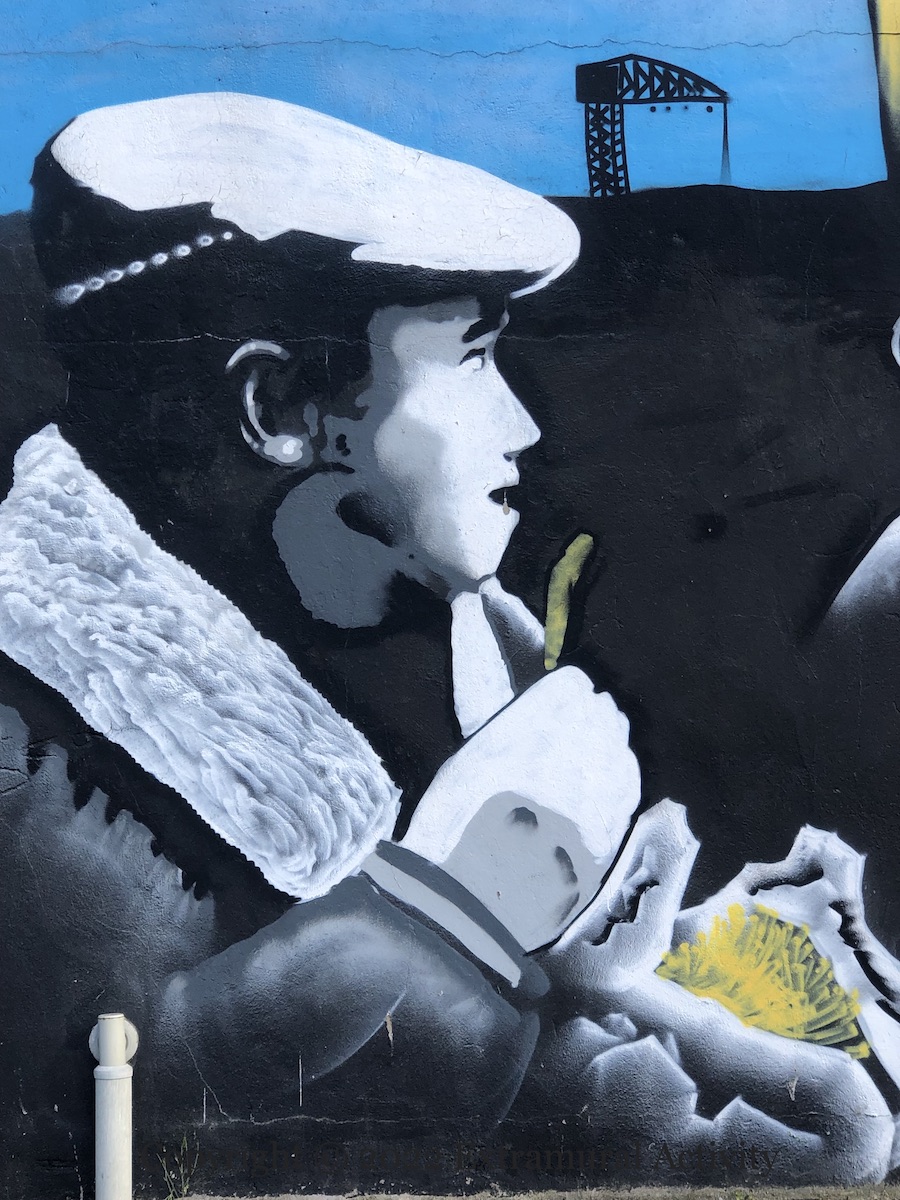
It’s been a long time since workers walked en masse from east Belfast to the shipyard, but fish and chips remain popular, though the number of chippies has fallen from about 35,000 in 1920 to 10,500 today (BBC | Dockside). This mural is on the side of the ‘Chipyard’ in Strandtown.
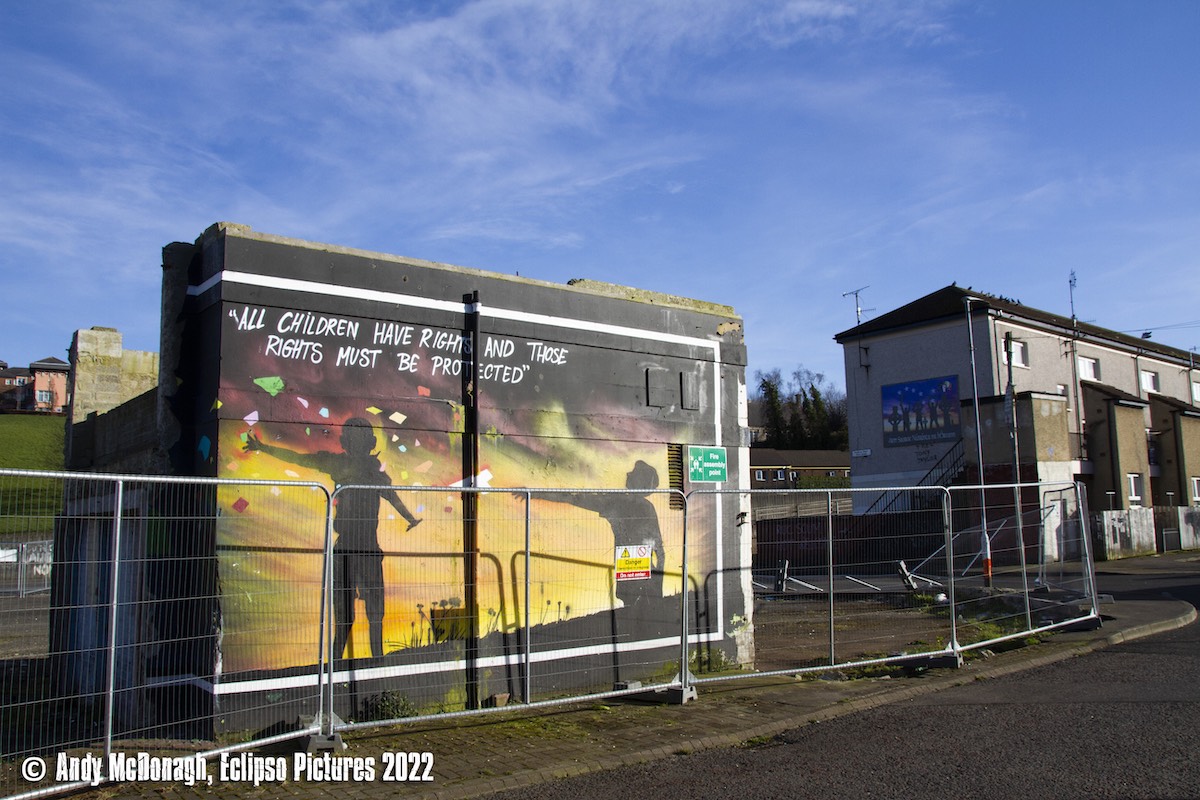
The Bogside Inn and bogside shops have been razed and “exciting plans” made for a new development (Derry Journal). All that remains at present is the electrical station near Durrow Park, and all that remains of the murals along Meenan Square is the final panel shown above: “All children have rights and these rights must be protected.”
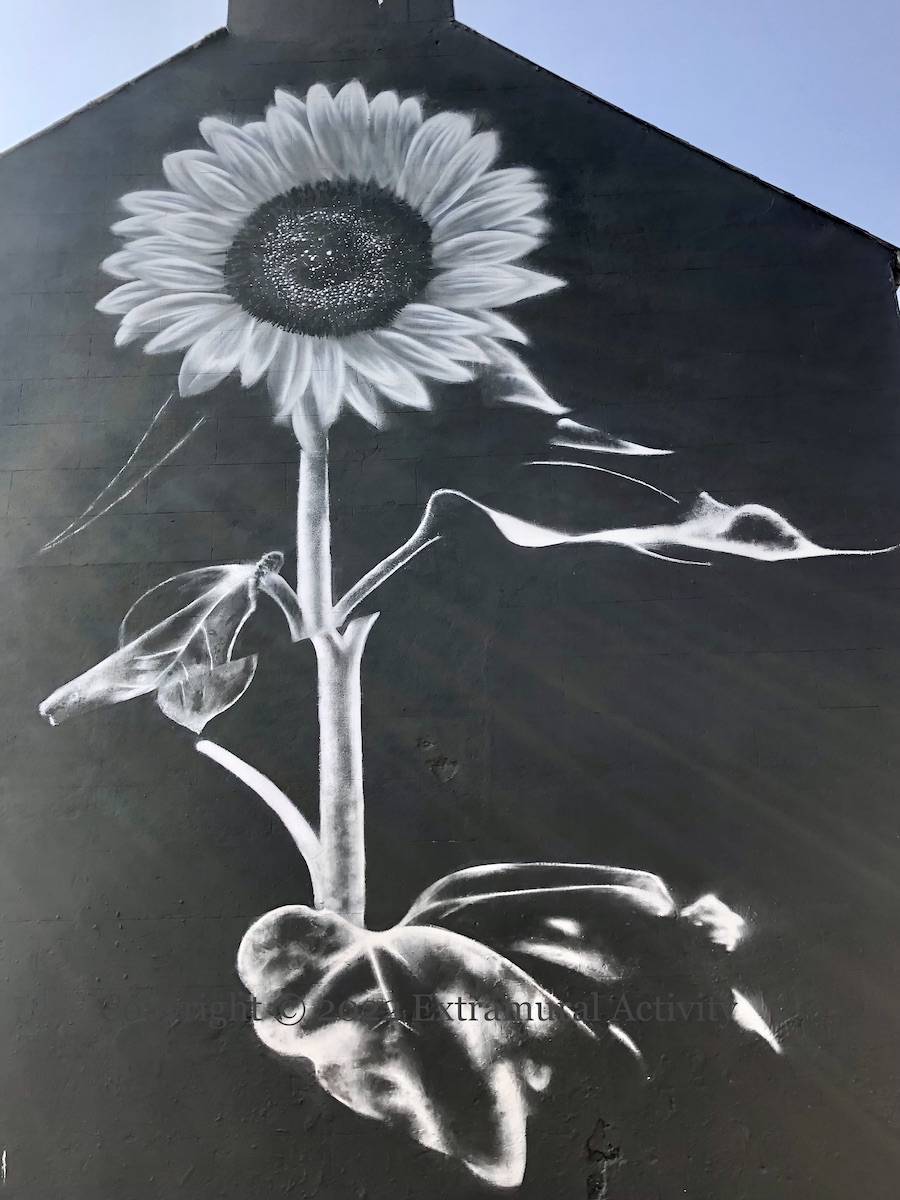
A Ukrainian woman in Heniches’k (just north of Crimea) (tw | with subtitles) became famous for berating an invading Russian soldier with the words “Take these seeds and put them in your pockets so at least sunflowers will grow here when you all die here.” Ukraine is the world’s largest producer of sunflower oil (WP) and since the Russian invasion began on February 24th, prices have increased – so far – by about 70% (Money Control), sending countries (especially India – Reuters | Bloomberg) and companies around the globe scrambling for alternatives, such as the replacement of sunflower oil by rapeseed oil in the making of crisps in Ireland (The Journal). The sunflower has become a symbol of solidarity with Ukraine, along with the Ukrainian flag. This giant sunflower was painted by emic (web | tw | ig) in Harrow Street.
Update: added to the side wall “Ar scáth a chéıle a mhaıreann na daoıne”, here translated as “People live in each other’s shadows.” See the images in the Paddy Duffy collection.
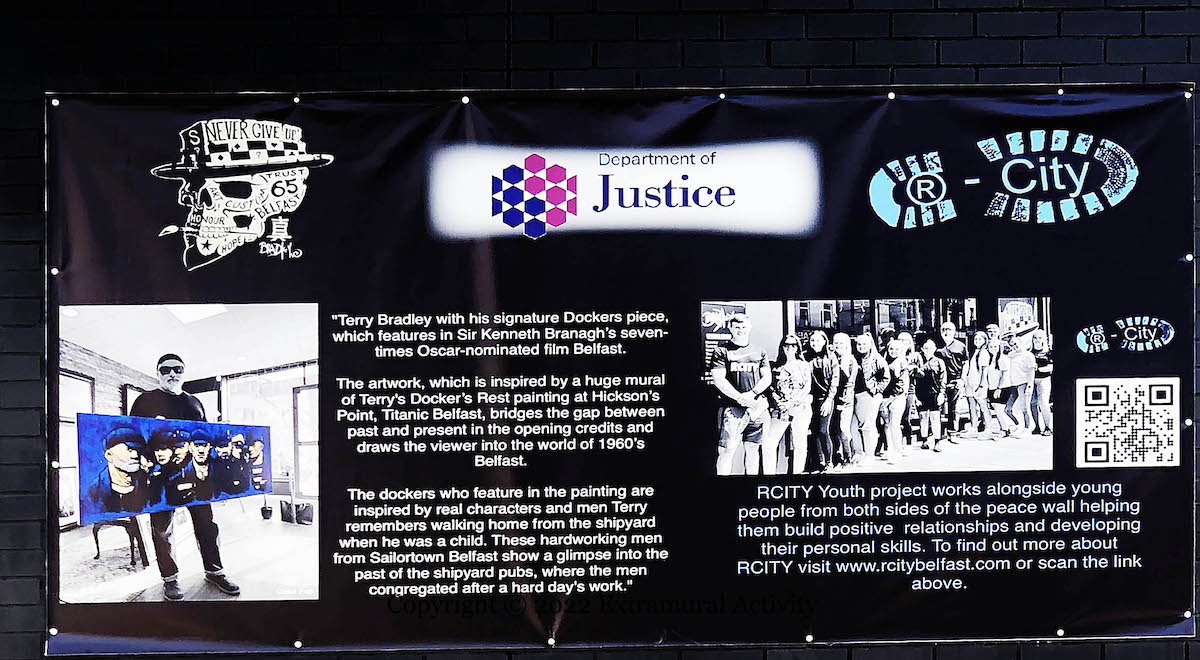
This is a mural of a painting of a mural of a mural. The original is the piece by Terry Bradley (web) and Friz (web) at the Titanic museum’s pub (see Dockers’ Rest), which was then reproduced in a different colour for the opening montage of the Kenneth Branagh film Belfast. The success of the film prompted the Department Of Justice to commission Bradley for a painting that could be turned into a mural and he reproduced the film version (BelTel). The mural that enlarges that painting was painted by DMC on Lanark Way, just above the security gates (Belfast Live).
“The dockers who feature in the painting are inspired by real characters and men Terry remembers walking home from the shipyard when he was a child. These hardworking men from Sailortown, Belfast, show a glimpse into the past of the shipyard pubs, where the men congregated after a hard day’s work.”
One goal of the voluntary group Larne Renovation Generation (Fb) is to bring “Main Street alive with community spirit in the evenings”. To this end, they are supporting various murals along the street, with this Irish dancer providing a bookmark at the eastern end on the side of the Silver Lounge Café (Fb).
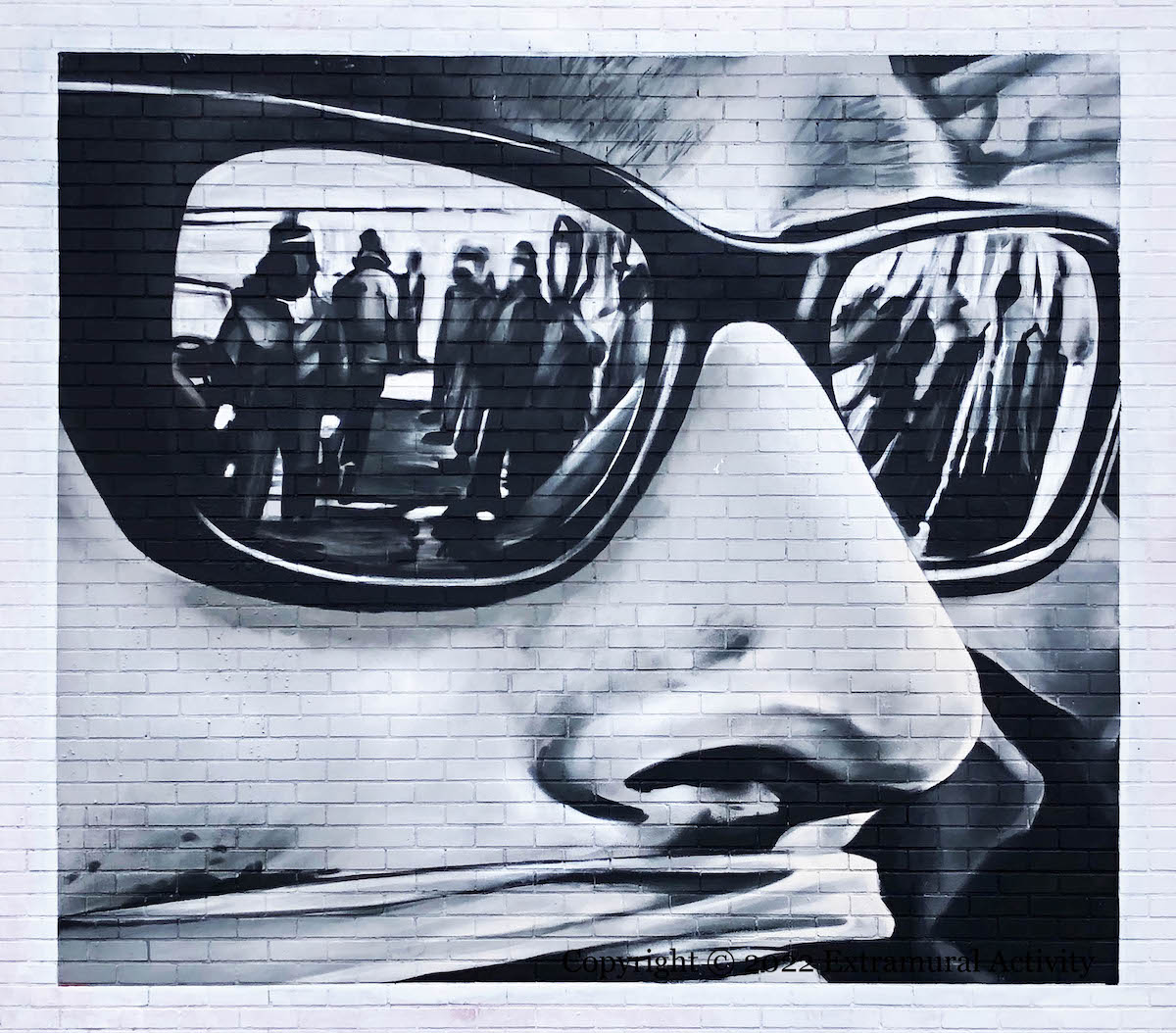
Perhaps because of the Covid pandemic, this mural of UDA volunteers on parade reflected in the sunglasses of one of their comrades took months to complete (it was started in late 2020 and was still unfinished last summer). It replaces the previous “UFF Formed 1973” mural – see Northern Island.
The photograph reproduced is from the 1974 Ulster Workers’ Strike; it appeared on the cover of Don Anderson’s Fourteen May Days (CAIN).










 Extramural Activity