Positive thinking in a suicide-prevention poster from the Republican Network for Unity (RNU) in Ardoyne: Place your hand over your heart, can you feel it? This is called purpose! Your’re [sic] alive for a reason! … Don’t ever give up
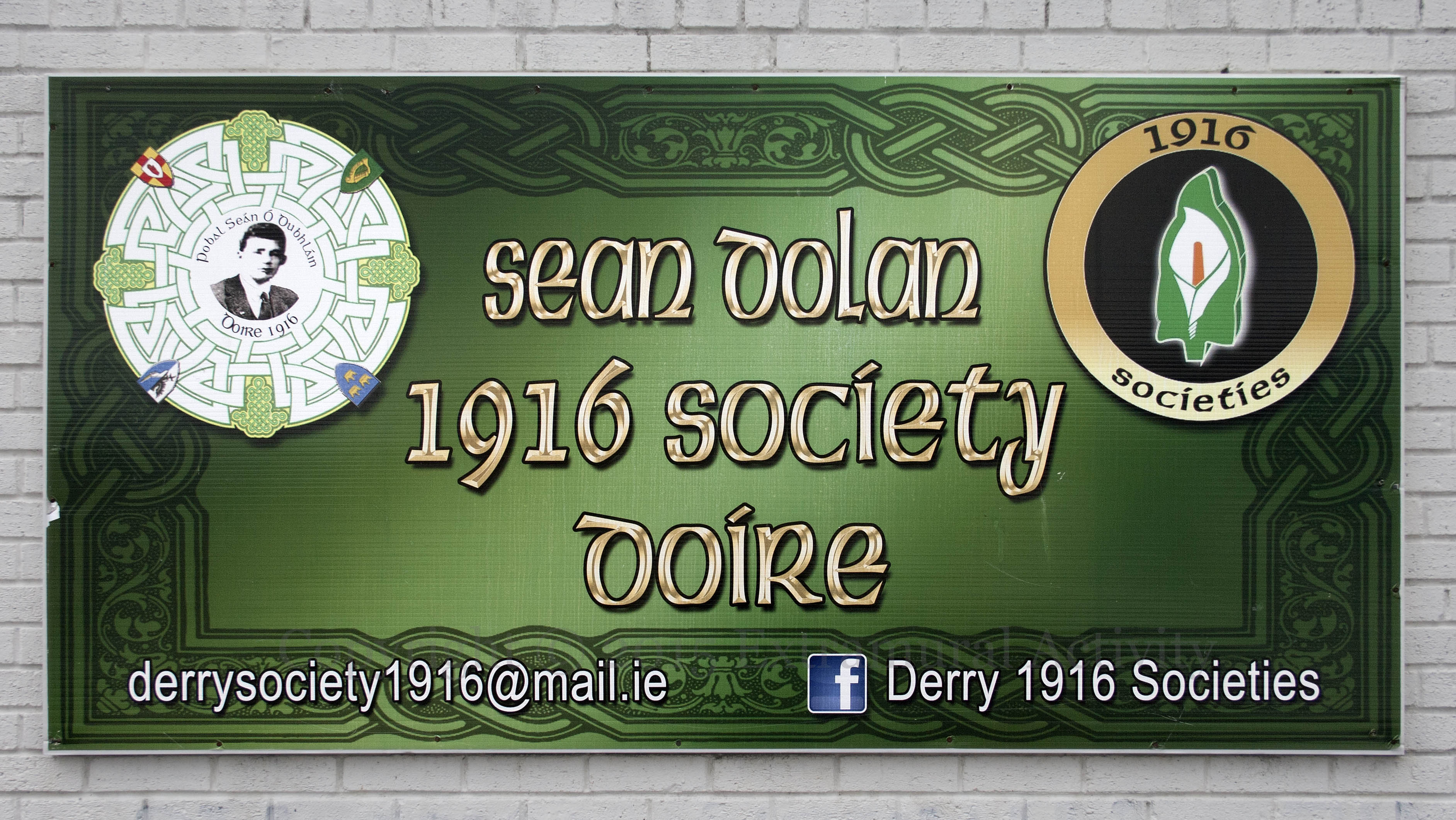
The Derry branch of the 1916 Societies (Fb) is named after Sean Dolan, an IRA volunteer interned at the outbreak of WWII on the prison ship Al Rawdah (WP | saoırse32) before being moved to Crumlin Road gaol. He was released on grounds of ill health shortly before dying in 1941 at age 28 in Derry. The title of today’s post comes from Dolan’s gravestone, which is in Ardmore (findagrave).
It was the 1916 Societies that hoisted an Irish tricolour from the roof of Stormont in June 2015 (BBC).
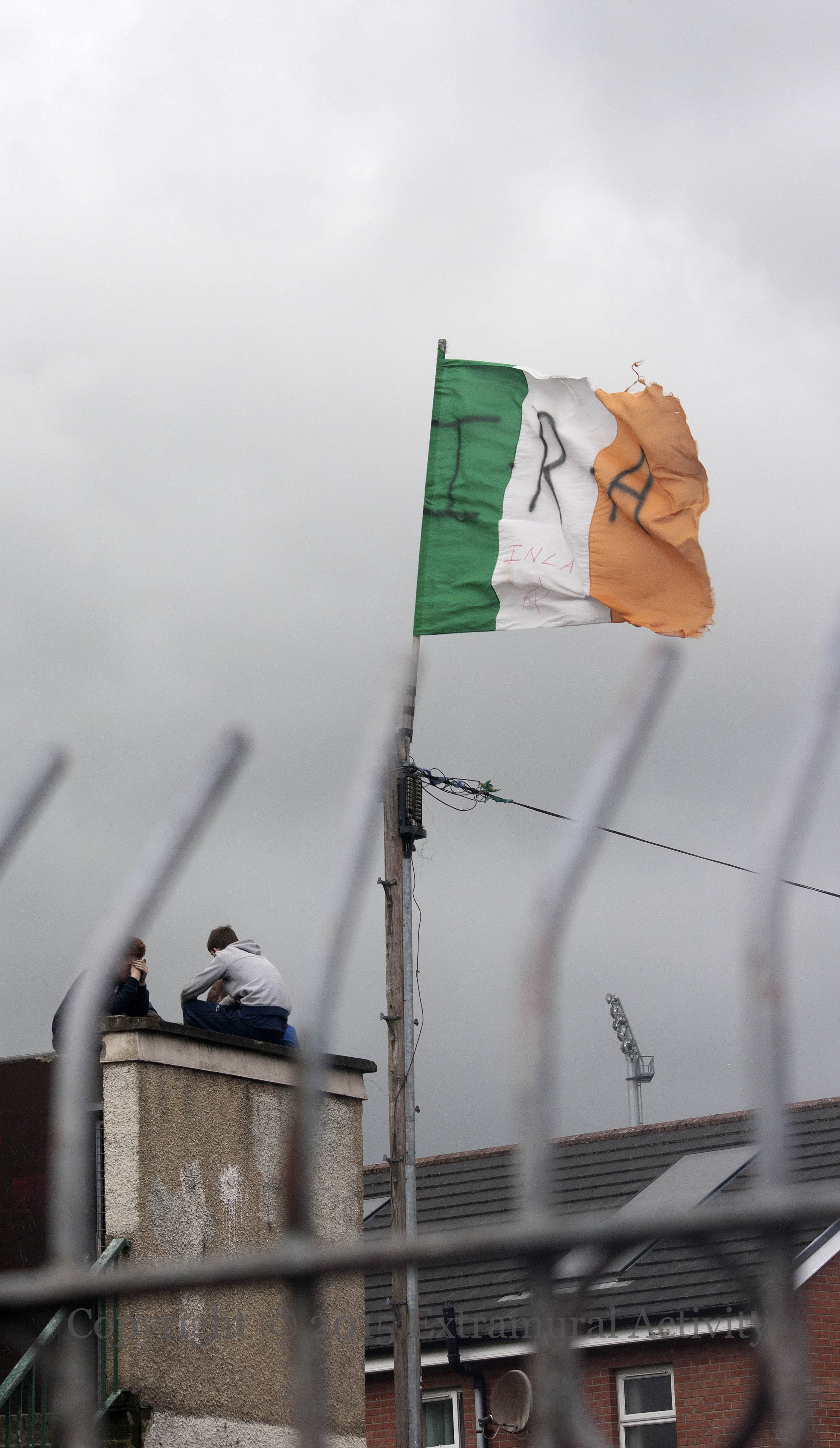
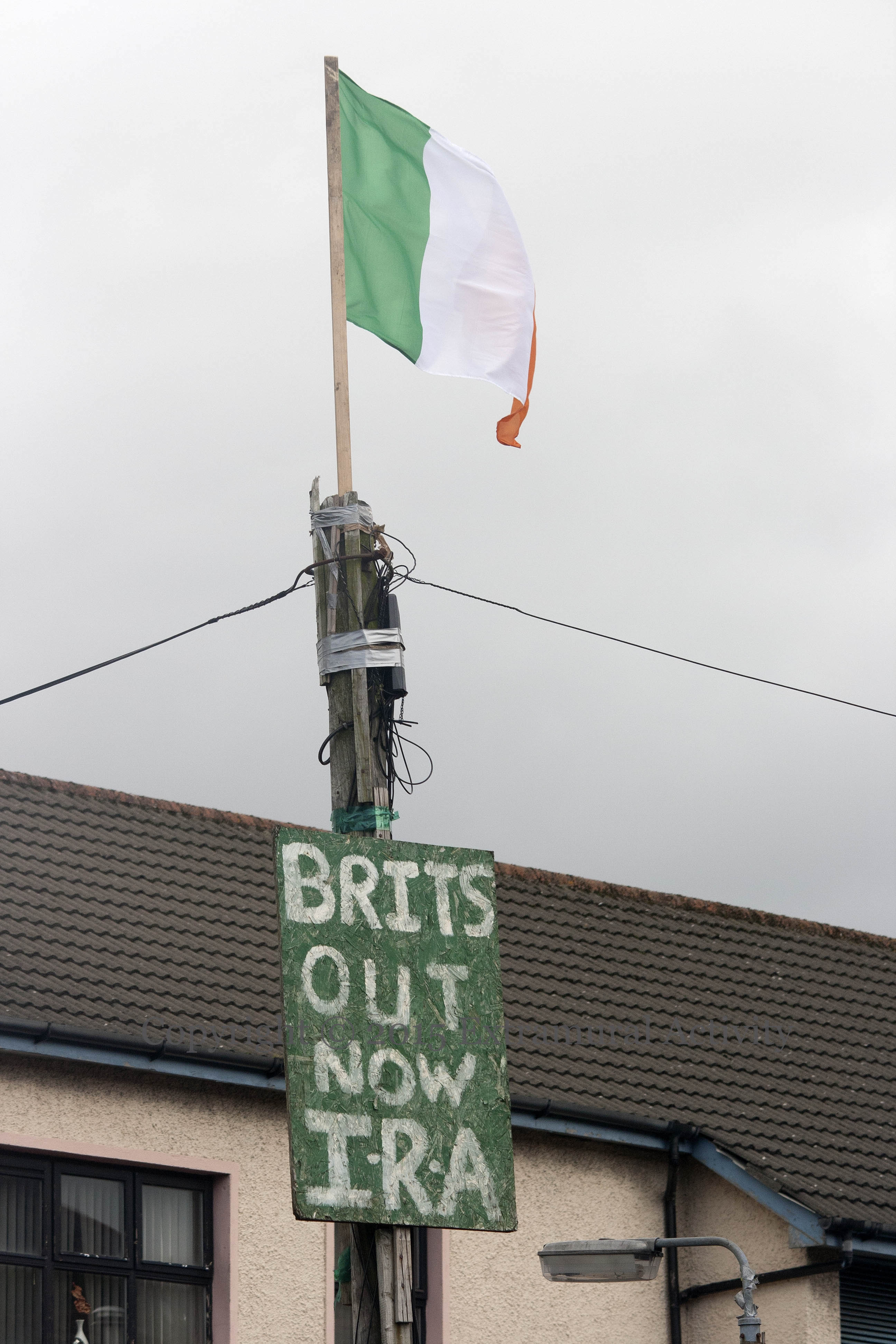
The crew whiles away the hours sitting atop a Bogside stairwell, with IRA-emblazoned tricolour fluttering overhead, keeping an eye on a heap of bonfire wood. Below: another tricolour in the same area, with “Brits out now – IRA” board beneath.
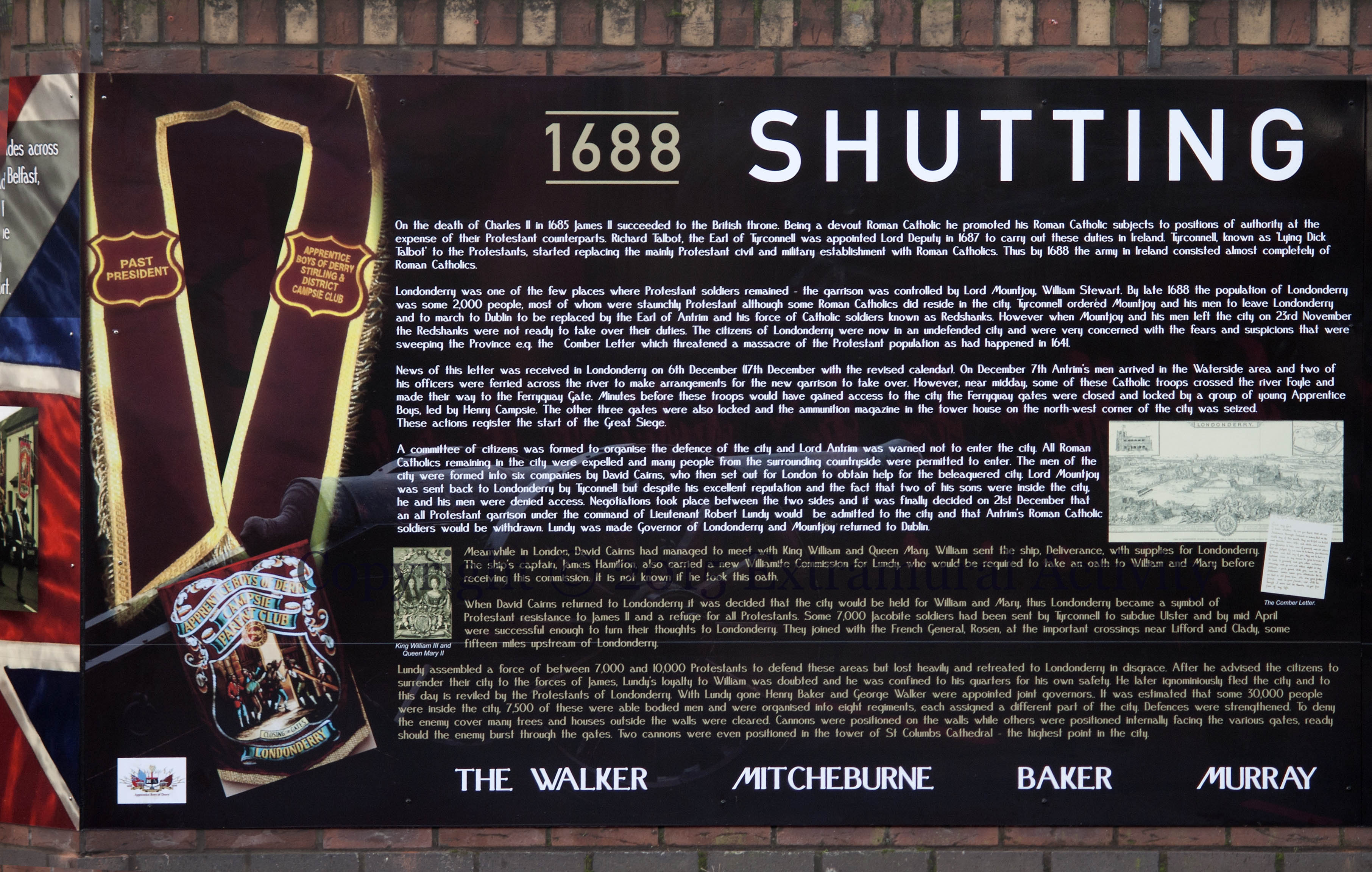
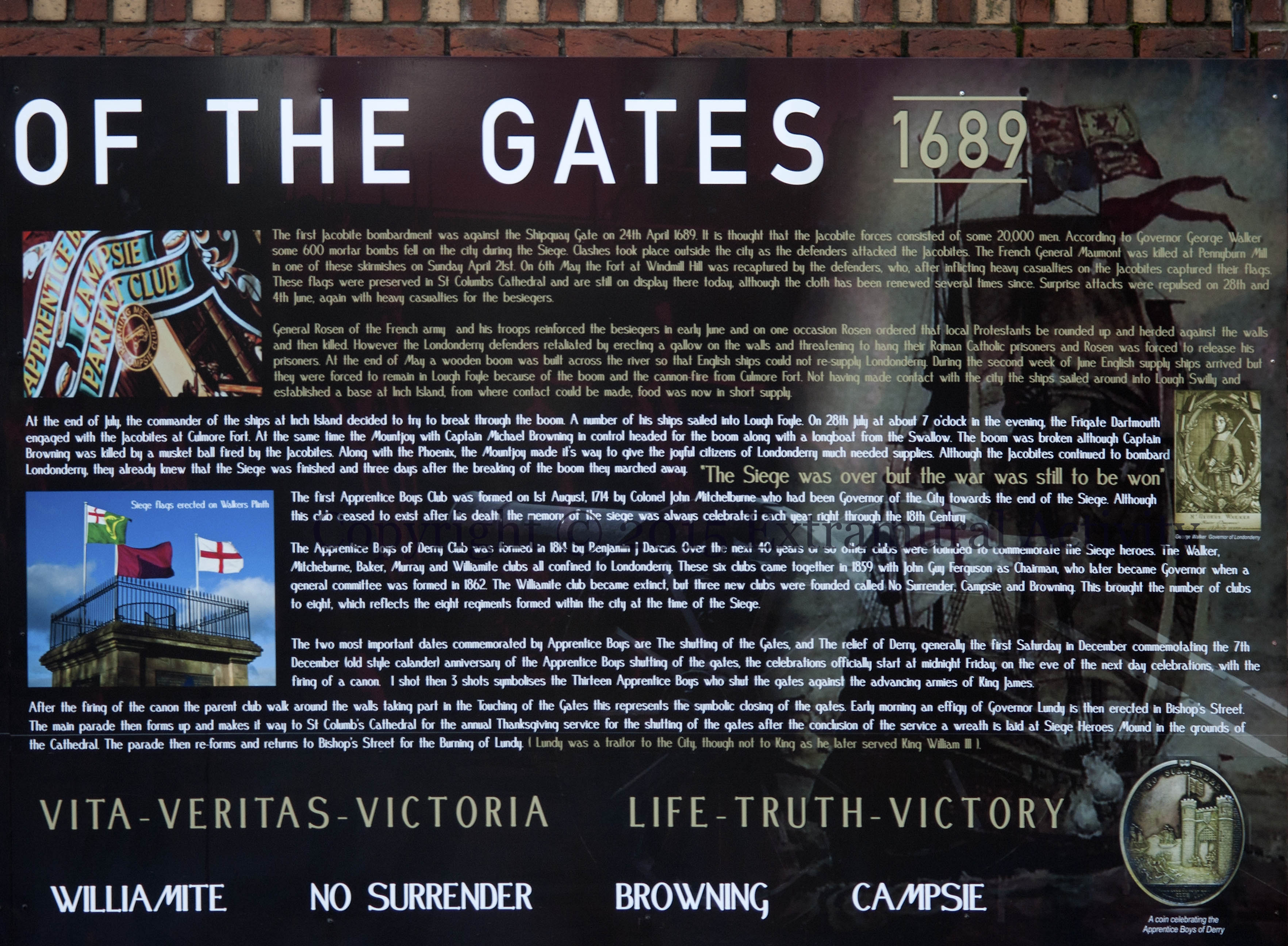
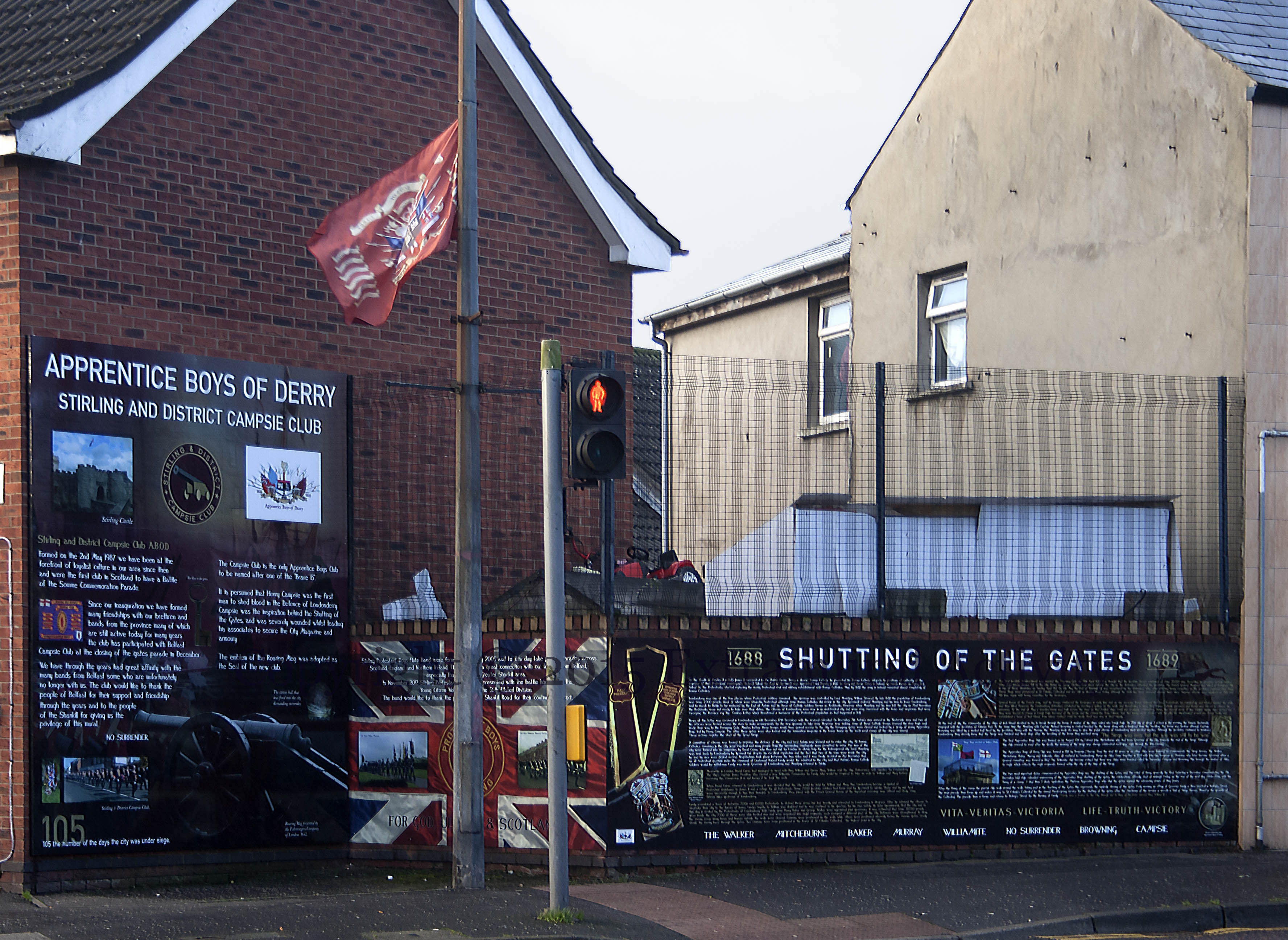
The third of three new panels celebrating the Apprentice Boys contains a long description of the Shutting Of The Gates in December 1688 and the Siege Of Derry, which was ended with the breaking of the boom of the river Foyle in July 1689.
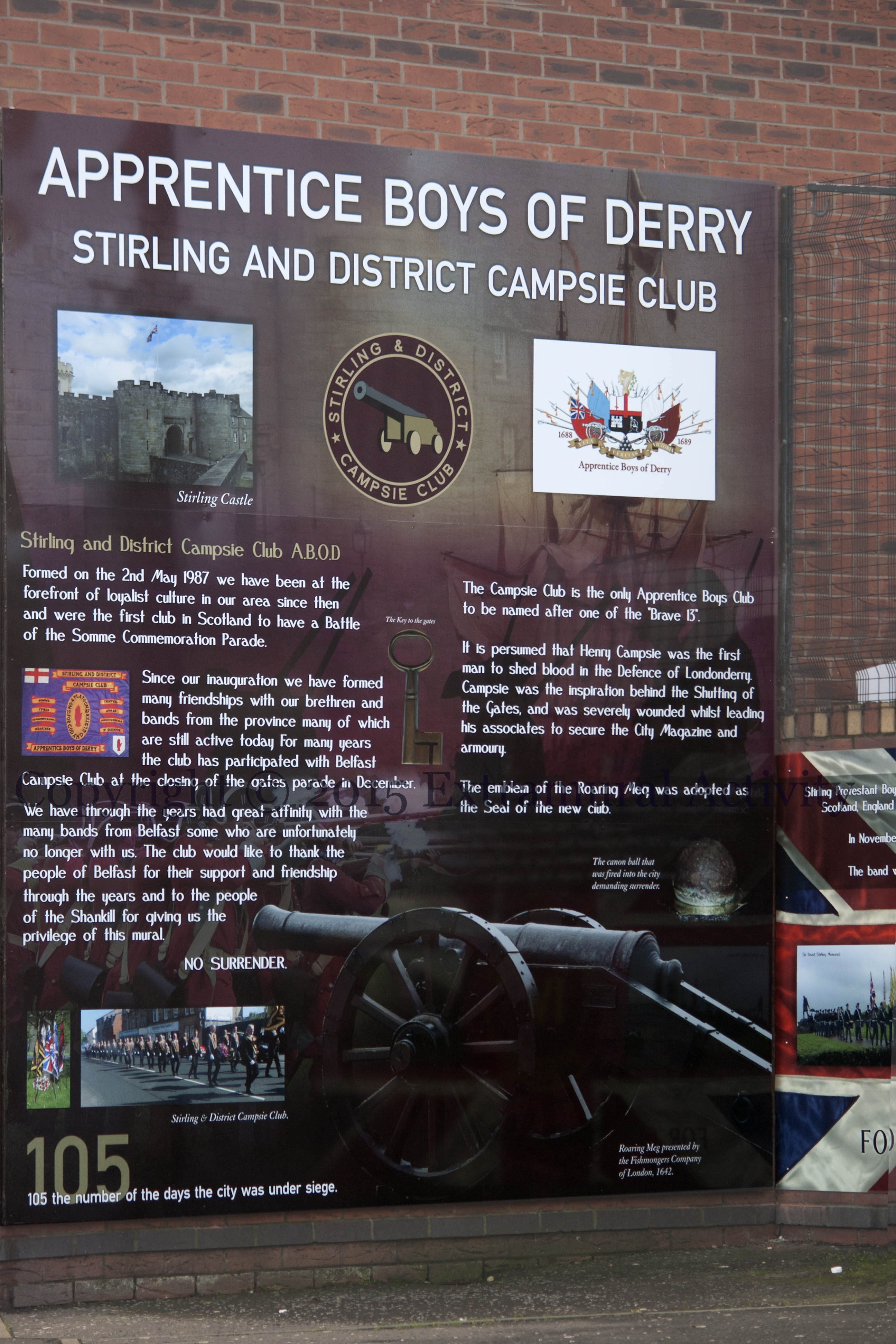
Here is the second of three panels from a new mural on the Shankill Road celebrating the ties between Belfast and the Stirling & District Campsie Club, a branch of one of the associated clubs of the Apprentice Boys Of Derry. It features the cannon “Roaring Meg” (“presented by the Fishmongers Company of London 1642″) which is used as the seal for the club, the club’s flag which includes a red hand of Ulster, the key to the gates, and the emblem and coat of arms of the Apprentice Boys.
“Formed on the 2nd May 1987 we have been at the forefront of loyalist culture in our area since then and were the first club in Scotland to have a Battle of the Somme Commemoration Parade. Since our inauguration we have formed many friendships with our brethren and bands from the province many of which are still active today. For many years the club has participated with Belfast Campsie Club at the closing of the gates parade in December. We have through the years had great affinity with the many bands from Belfast some who are unfortunately no longer with us. The club would like to thank the people of Belfast for their support and friendship through the years and to the people of the Shankill for giving us the privilege of this murals.
No surrender.
The Campsie Club is the only Apprentice Boys Club to be named after one of the “Brave 13″. It is persumed presumed that Henry Campsie was the first man to shed blood in the Defence of Londonderry. Campsie was the inspiration behind the Shutting of the Gates and was severely wounded whilst leading his associates to secure the City Magazine and armoury. The emblem of the Roaring Meg was adopted as the Seal of the new club.”
This panel (one of three) of a new mural on the Shankill celebrates the Stirling Protestant Boys Flute Band and its association with the Shankill Road: “Stirling Protestant Boys Flute Band [Fb] were formed in February 2003 and to this day take part in parades across Scotland, England and Northern Ireland. The band has a great connection with our friends from Belfast, especially those from the Greater Shankill area. In November 2012 Stirling Protestant Boys were presented with the battle honours of the Young Citizen Volunteers and the 36th (Ulster) Division. The band would like to thank the people of the Shankill Road for their continued support.”
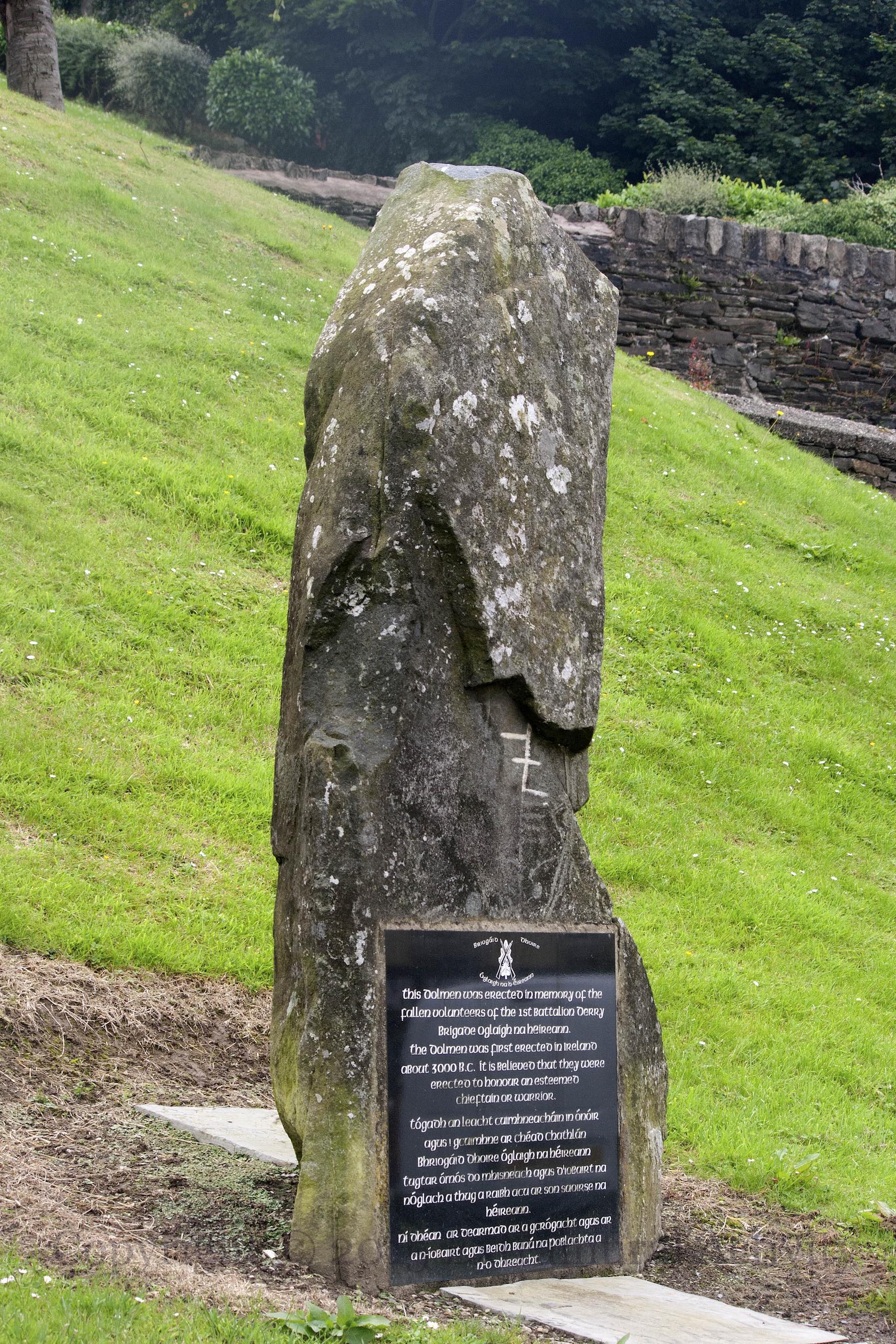
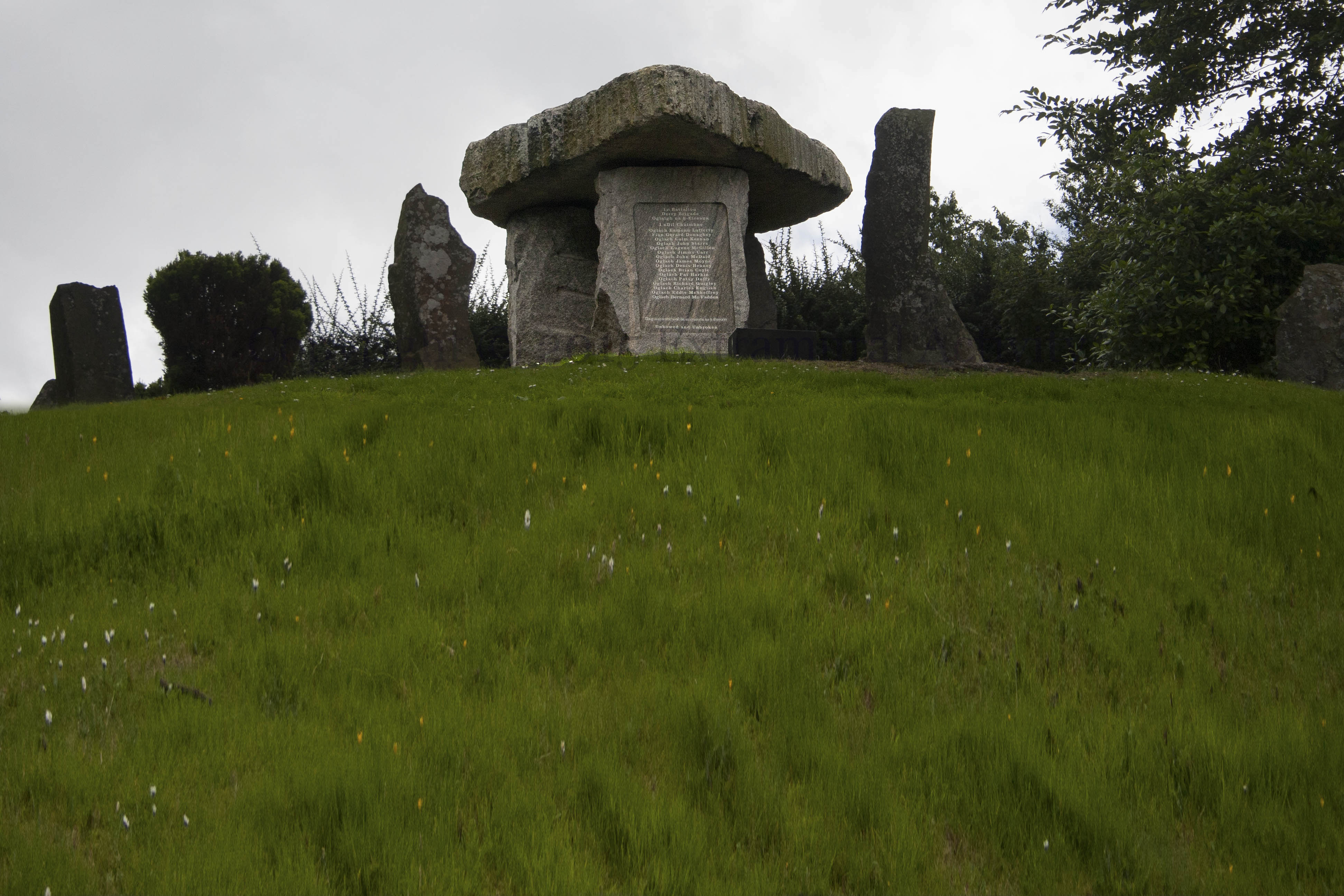
The Provisional IRA emerged from a split in the IRA in the wake of sectarian unrest in 1969. The Derry battalion became the Derry Brigade (An Brıogáıd Dhoıre) in 1972 when the number of people wishing to become volunteers swelled in the aftermath of Bloody Sunday. It is estimated that 1,000 Derry Catholics (2% of the population) were imprisoned for IRA activities in the 70s and 80s. (WP) The image above shows a mural with Cú Chulaınn, an oak leaf with crossed rifles, and a lily. In the centre is a board commemorating volunteers from the 1st battalion — an identical board can be found on Westland Street; see Spirit Of Freedom – and below are a commemorative standing stone and dolmen a short distance away.
Today’s image is of the final new mural in the recent re-imaging of the Lower Shankill estate. It shows a patchwork quilt of word related to women and the roles they play in families and communities, such as “aunt”, “mother”, “sister”, “granny”, and “caring”, “diverse”, “strong”, and “unheard voices”.








 Extramural Activity