Wreaths were laid for Remembrance Sunday at the base of the stone on Marine Highway in Carrickfergus, “erected in A.D. 1972 as a memorial to those citizens of the borough who gave their lives in two World Wars, 1914-1918, 1939-1945 and in subsequent conflicts.”
Among those laying wreaths were Mid- And East-Antrim Borough Council, UDR Veterans’ Association, RBP 17, PSNI, Woodburn junior LOL 258, Retired Police Officers’ Association, Ulidia Integrated College, DUP, PUP, UUP, ABOD, Royal Arch Purple, and others.
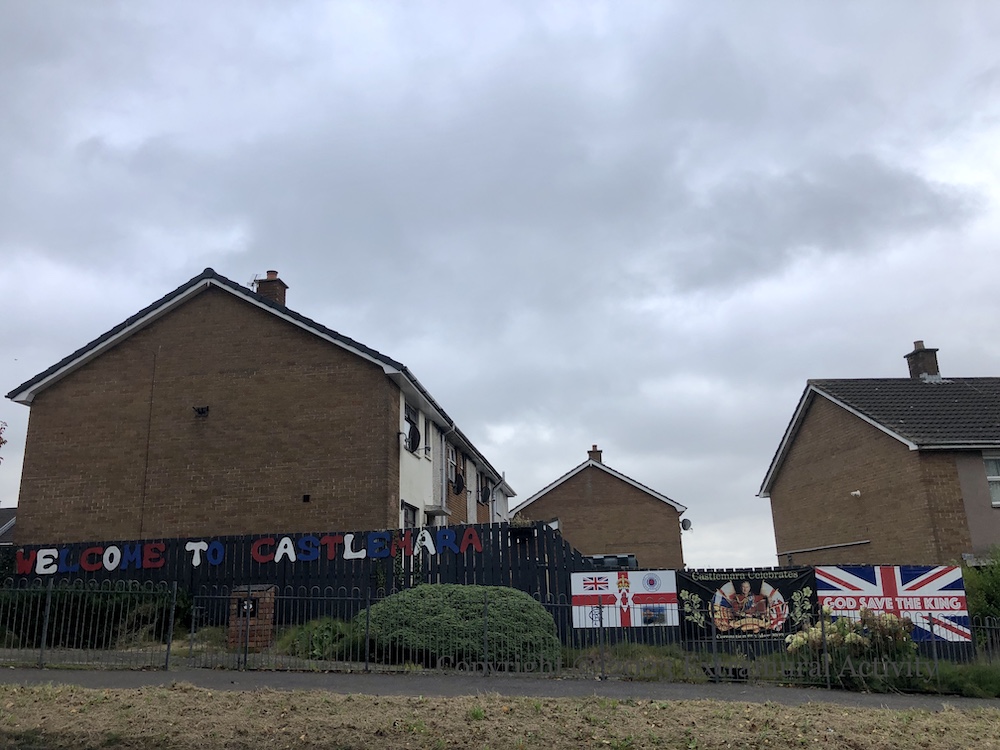
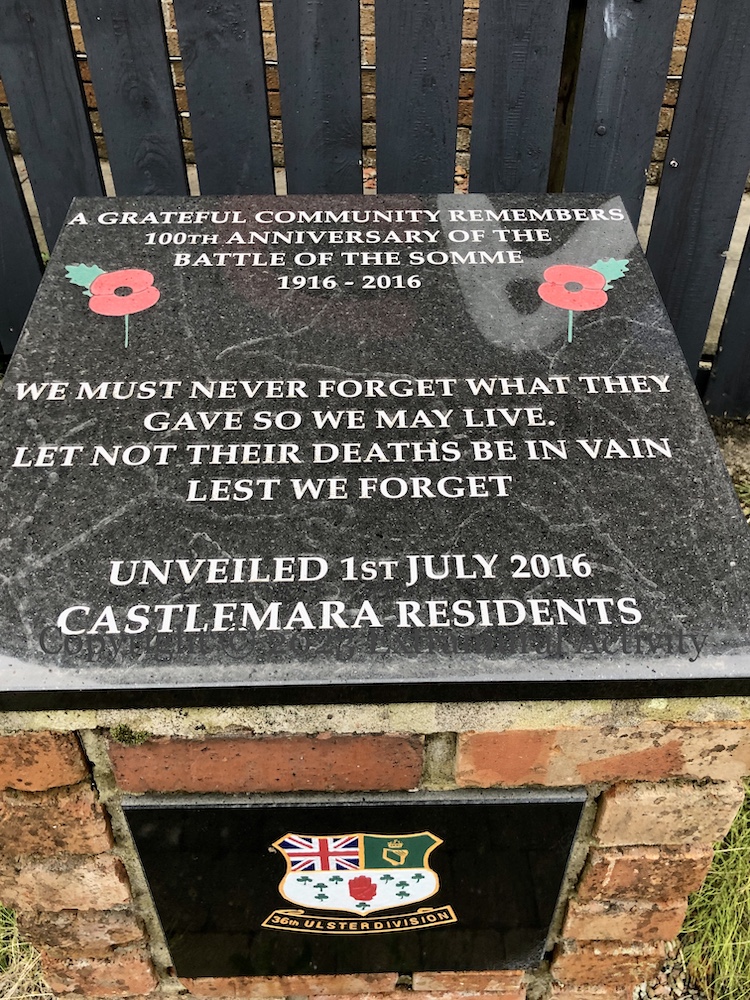
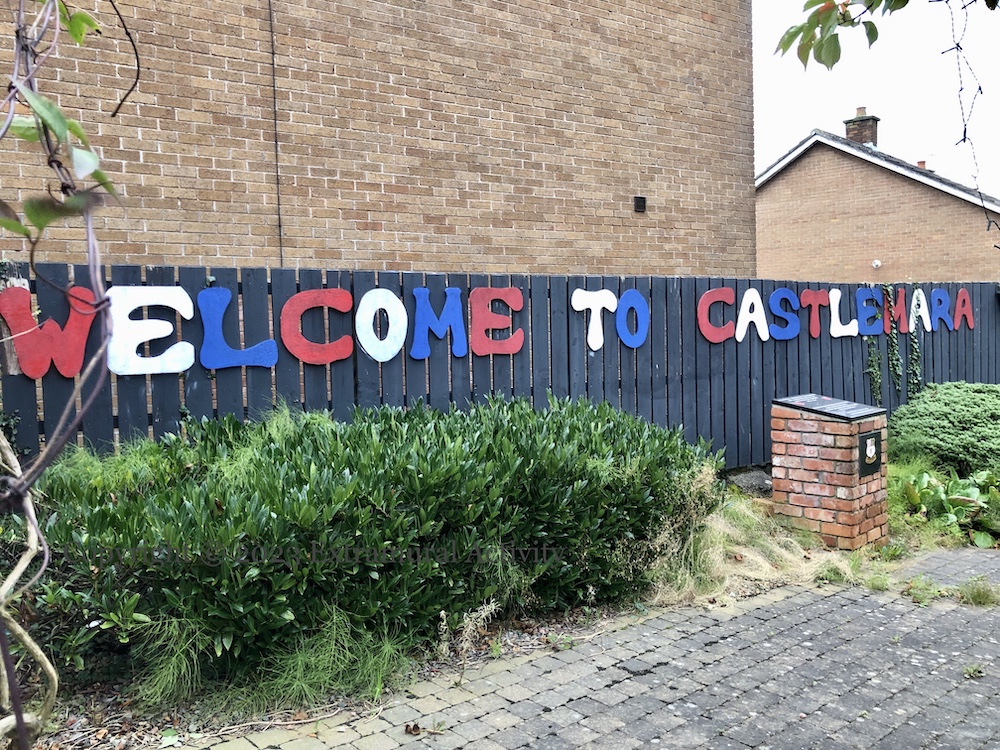
Castlemara residents’ various emotions are on display at the entrace to the estates: celebrating the jubilee of Elizabeth II, the coronation of Charles III, the creation of Northern Ireland in 1921, and Rangers’ 55th league title; saluting Tom Moore; commemorating Prince Philip, 1921-2021; and remembering with gratitude the “100th anniversary of the Battle Of The Somme”: “We must not forget what they gave so we may live. Let not their deaths be in vain. Lest we forget.”
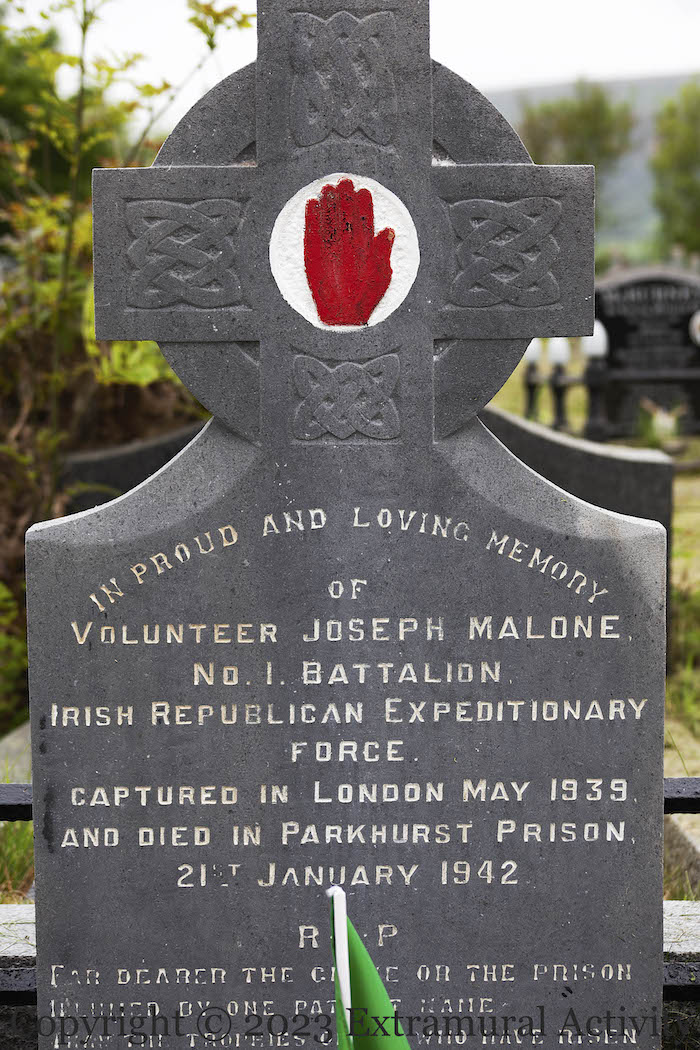
“Far dearer the grave or the prison, Illumed by one patriot name, Than the trophies of all who have risen On Liberty’s ruins to fame.”
Thomas Moore’s lyrics were written for the air The Lamentation of Aughrim, in honour of the Jacobites who died on 12 July, 1691, but they are applied here to Joe Malone of the IRA’s “Expeditionary Force”.
In January 1939 the IRA declared war against Britain and carried out a bombing campaign called the “sabotage plan” (WP S-Plan). Malone was arrested in May when a tear-gas bomb intended for the New Victoria cinema in London exploded prematurely in the cloakroom, injuring his arm and wrist (Belfast Battalion p. 103 | West Australian).
Malone and other prisoners refused to co-operate with prison authorities and began a hunger strike in January 1941; on day five of the strike, force-feeding began and Malone was injured and ordered off the strike by OC Conor McNessa; despite stomach surgery, he died a year later. (Belfast Battalion p. 126, 136)
“In proud and loving memory of Volunteer Joseph Malone, No. 1 battalion, Irish Republican Expeditionary Force. Captured in London May 1939 and died in Parkhurst prison 21st January 1942. RIP.”
As the info board points out, the red hand is used to denote the graves in Milltown of volunteers from the 1920s to 1940s.
“1891-1949” are the dates of the operation of Belfast Celtic, not the dates of forward Jimmy Ferris, who lived from 1894 to 1932. Ferris played for the club for nine years, and for various British clubs during the pogroms. He quit playing in 1930 because of a heart condition and died two years later, at the age of 37. The Ferris family grave, shown in today’s images, is in Milltown Cemetery. (Belfast Celtic | WP)
“Jimmy Ferris, known as Belfast Celtic’s ‘brilliant schemer’, he was on the team, which won four Irish League titles in the 1920s, for the loss of only one match. Also played for Chelsea and Preston North End.” With funding from the “European Regional Development Fund”.
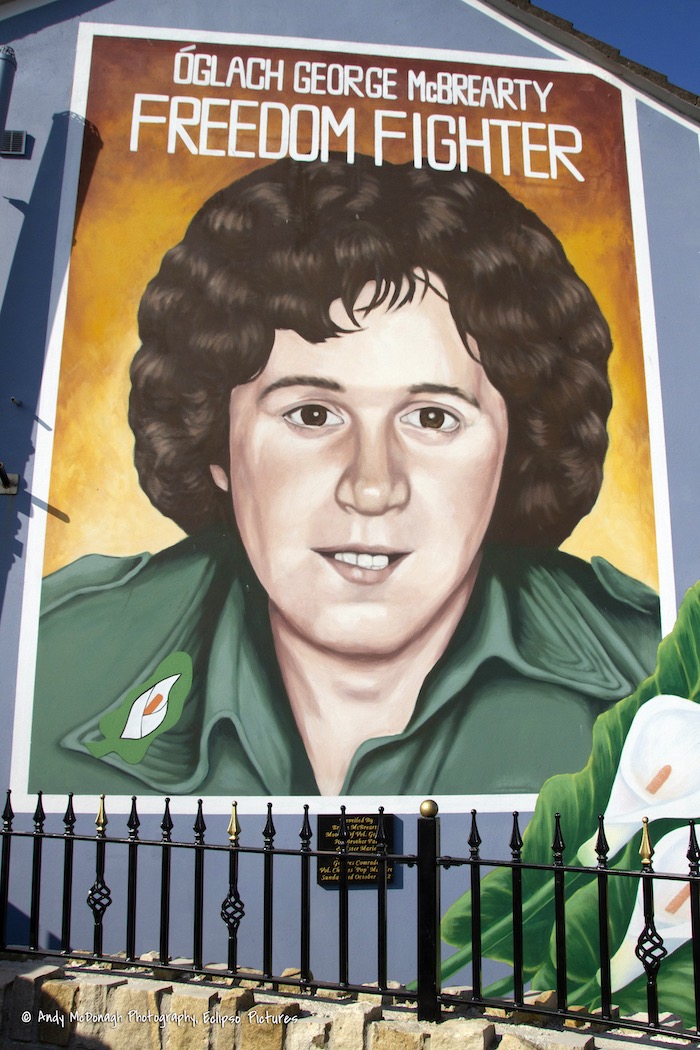
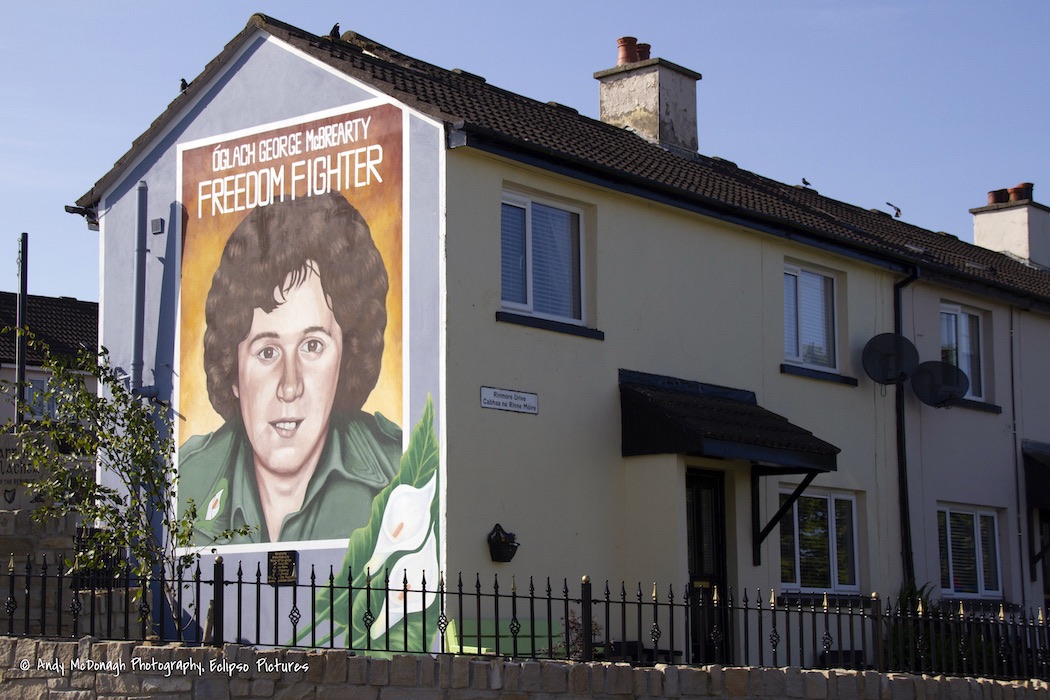
A ceremony to mark the forty-second anniversary of the deaths of IRA volunteers George McBrearty and Charles “Pop” Maguire – shot by the SAS on May 28th, 1981 – was held last Sunday (May 28th) in the garden of remembrance in Linsfort Drive, Creggan (Derry Now). On patrol in Creggan with two other IRA men, McBrearty and Maguire pursued and a car whose driver they suspected of being an SAS soldier and eventually stopped it at the bottom of Couch Road/Southway at the edge of the Brandywell. The driver shot McBrearty as he approached the car and Maguire was shot by the driver and/or by other undercover soldiers from 14th Intelligence who emerged from two other cars. A third volunteer was injured. (Lost Lives 2330)
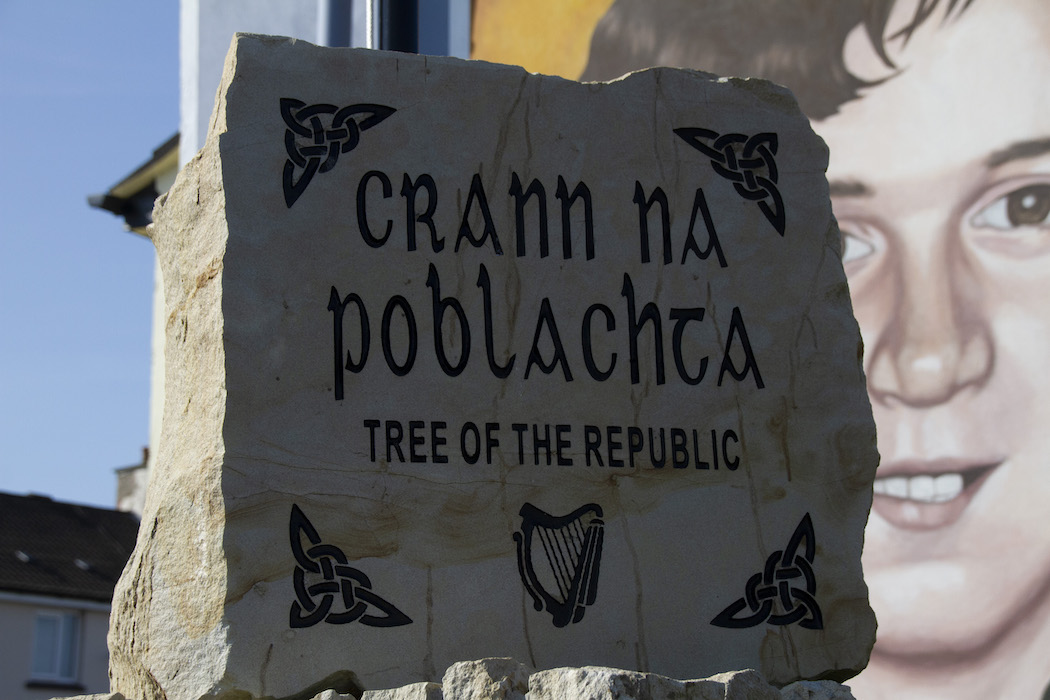
The “Crann Na Poblachta”/”Tree Of The Republic” – a silver birch – was originally planted in front of the previous mural to George McBrearty mural in Rathkeele Way (see Freedom Fighter For The Republic) (Derry Journal). Both that mural and this one were painted by ‘Bogside Artist‘ Kevin Hasson.
There is a plaque to McBrearty & Maguire near the spot where they were killed on Coach Road/Southway (see M01544).
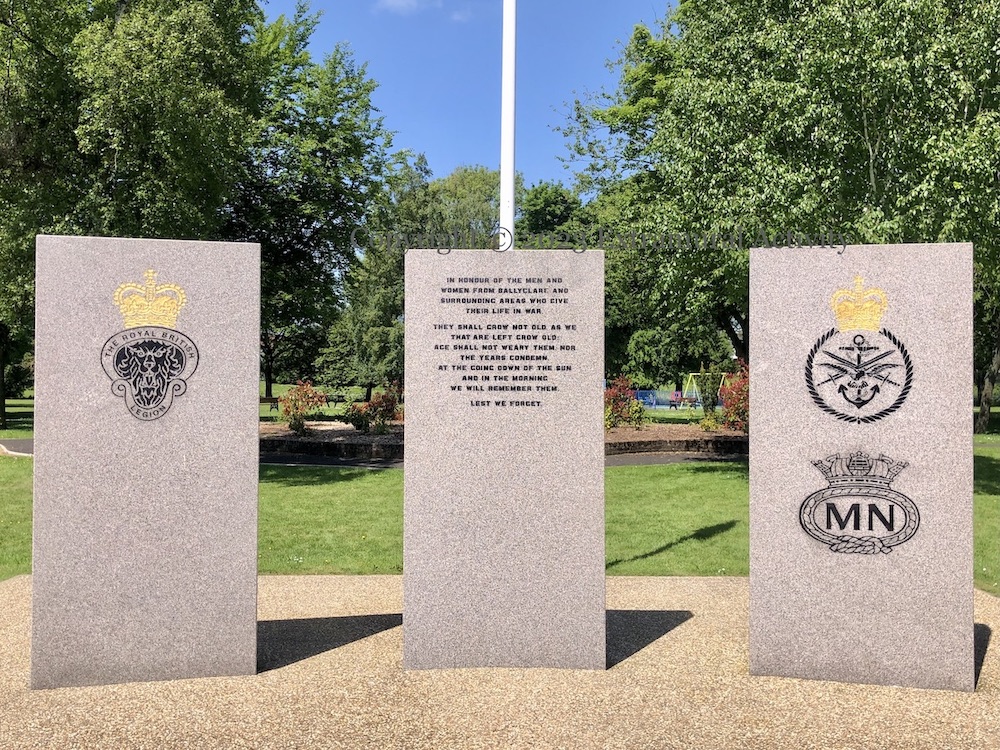
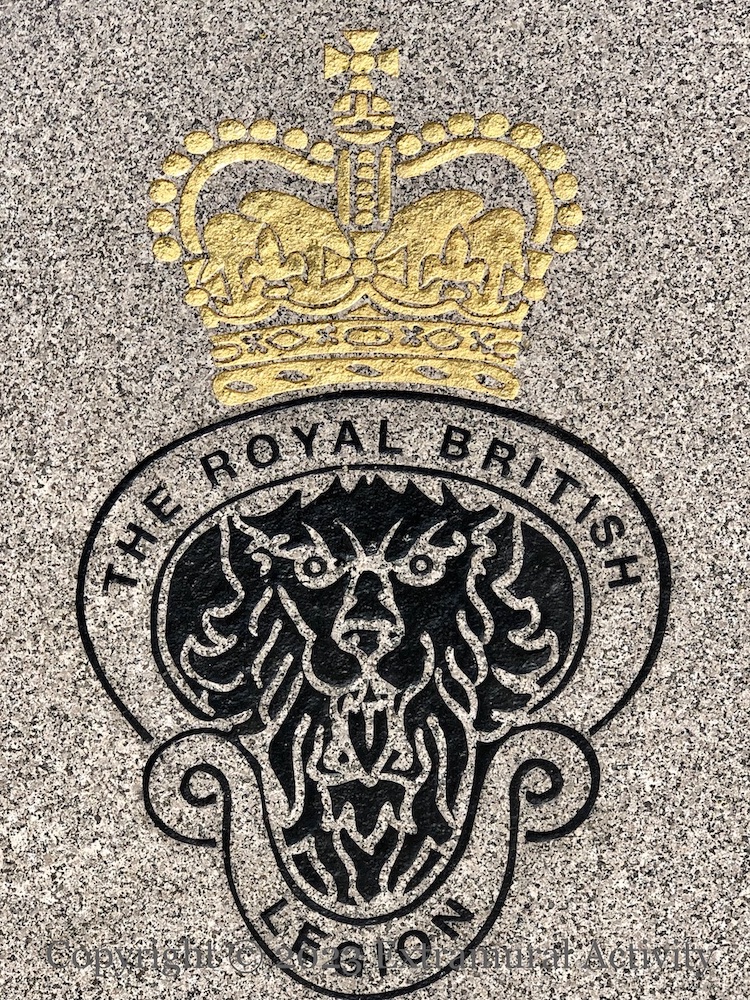
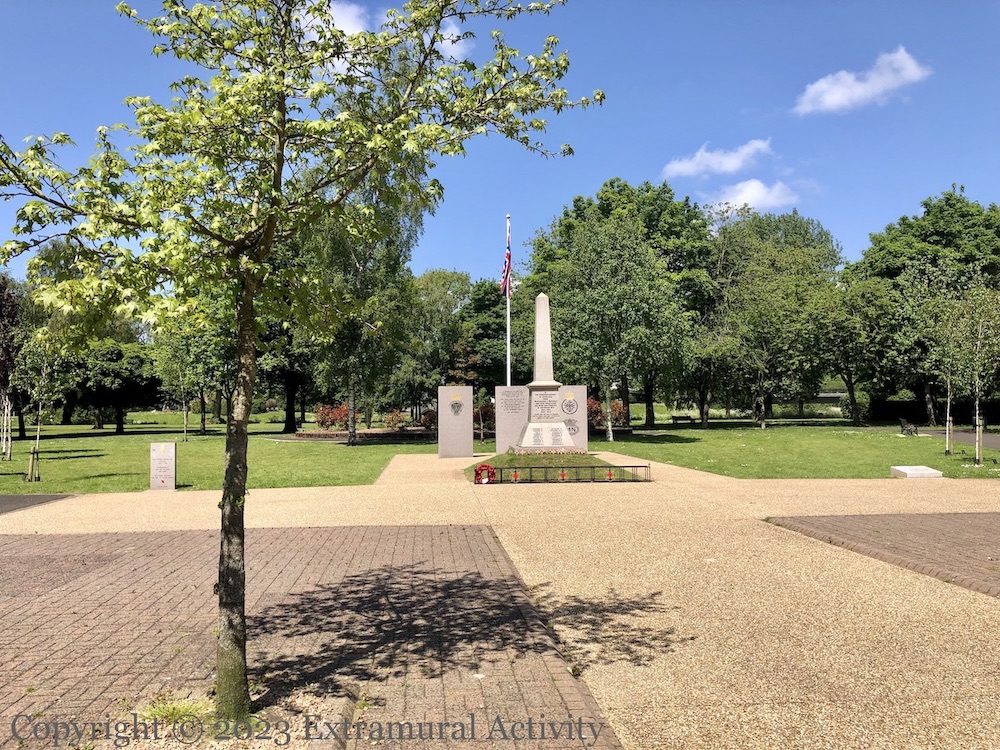
“In honour of the men and women from Ballyclare and surrounding areas who gave their life in war. ‘They shall grow not old as we that are left grow old, age shall not weary them nor the years condemn, at the going down of the sun and in the morning, we will remember them’. Lest we forget.” With emblems of the Royal British Legion (left), Navy and Merchant Navy (right), and a separate stone for the UDR “When danger threatened, some made the supreme sacrifice”.
The main obelisk is dedicated “in the honoured memory of those men from Ballyclare & District who gave their lives for King and country in the Great War 1914-1918, 1939-1945. ‘Look not on this in sorrow but in pride and may ye live as nobly as they died.”
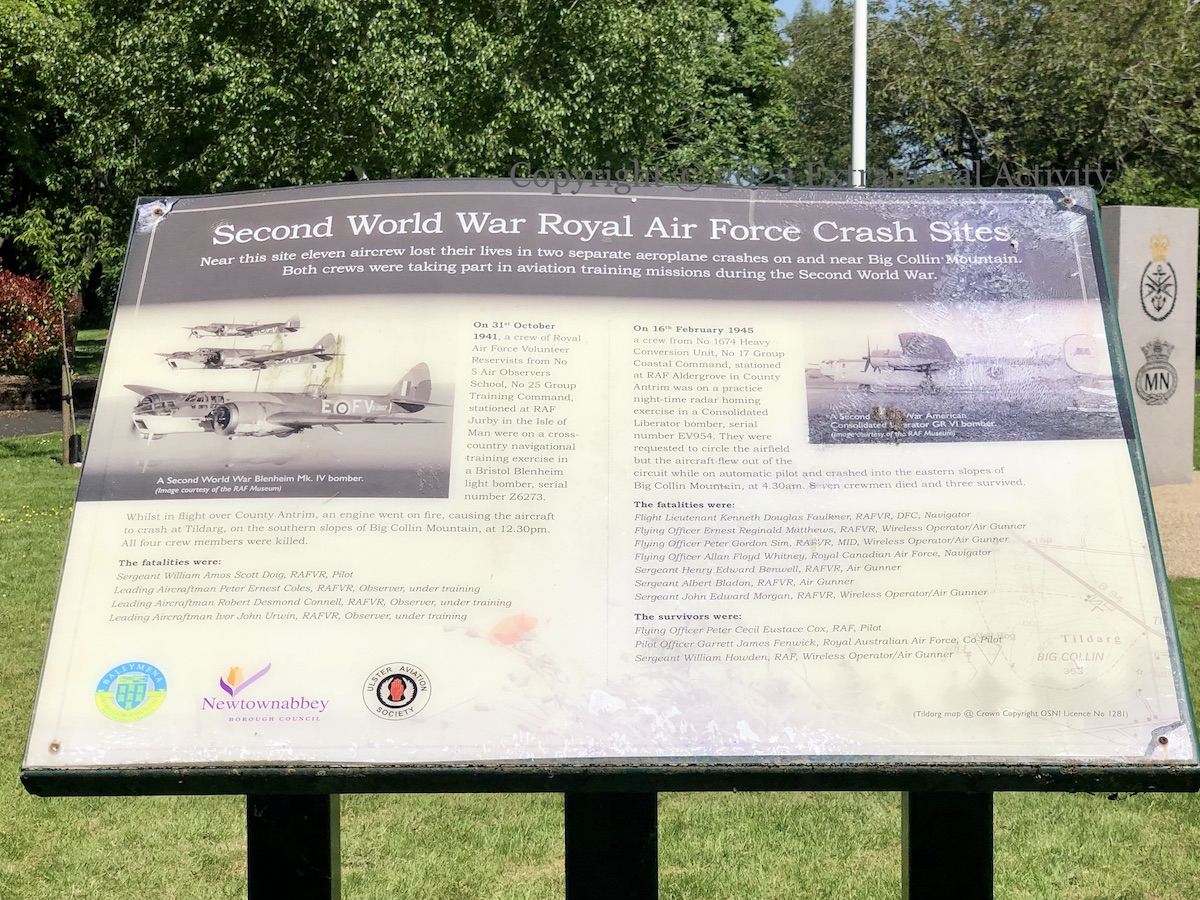
The remaining image shows the info board describing two aeroplane crashes around Big Collin Mountain, in which eleven airmen died while on training flights, one the result of an engine fire, the other crashed into the side of the mountain.
Ballyclare War Memorial Park, Ballyclare Road, Ballyclare. There are also separate murals in Erskine Park to the locals who died in WWI and in WWII.
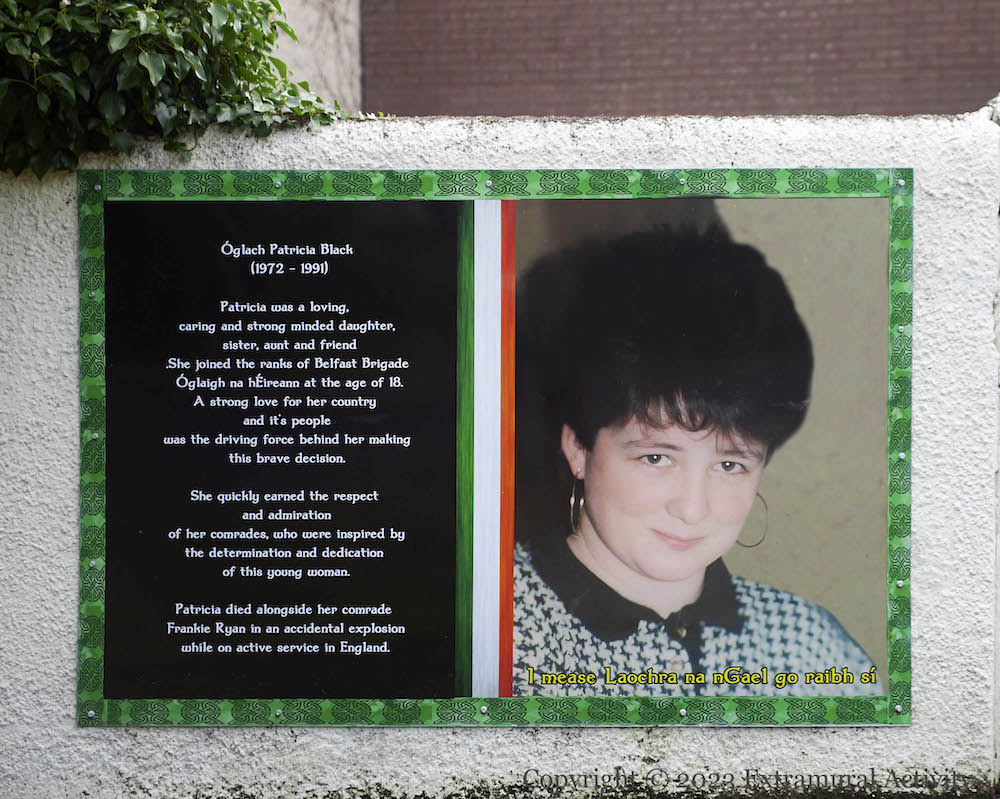
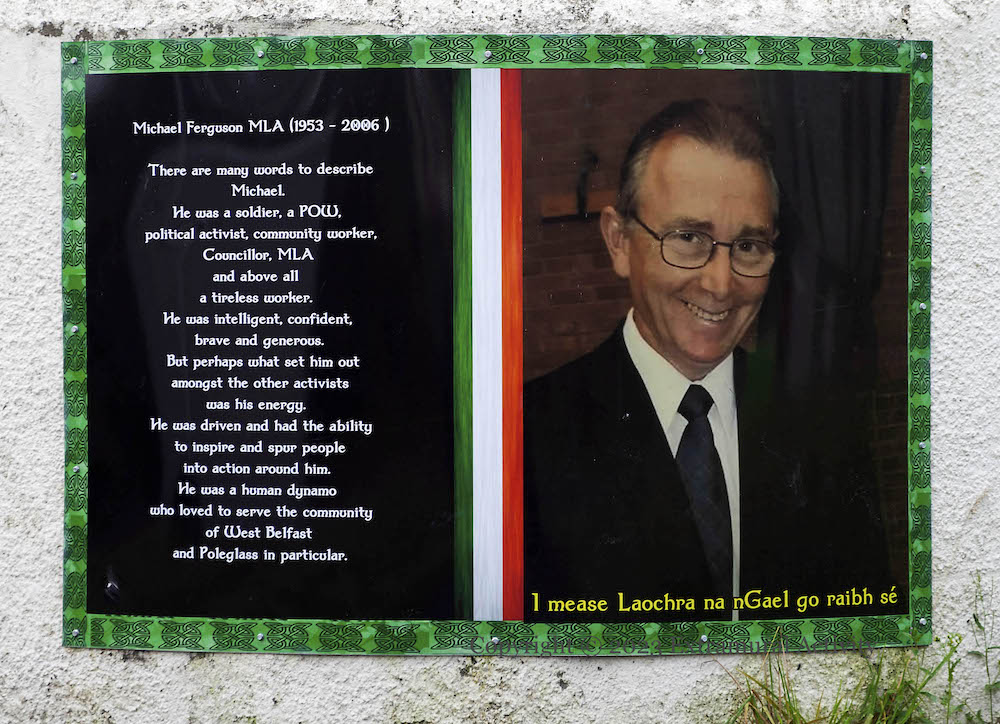
“I measc laochra na nGael go raıbh sıad.” Profiles of Patricia Black, Frankie Ryan, Michael Ferguson, and Sean Keenan were added in late 2021 (video of launch) to the pair of existing monuments that memorialise them in Colin/Poleglass (for which see The Undauntable Thought on Peter’s site).
Black and Ryan were IRA volunteers killed by in a premature bomb explosion near London (An Phoblacht).
Michael Ferguson and Seán Keenan were activists and Sınn Féın councillors. Both died in 2006 of cancer (Irish Times | Bel Tel).
On Pantridge Road, which runs down to Michael Ferguson roundabout (An Phoblacht).
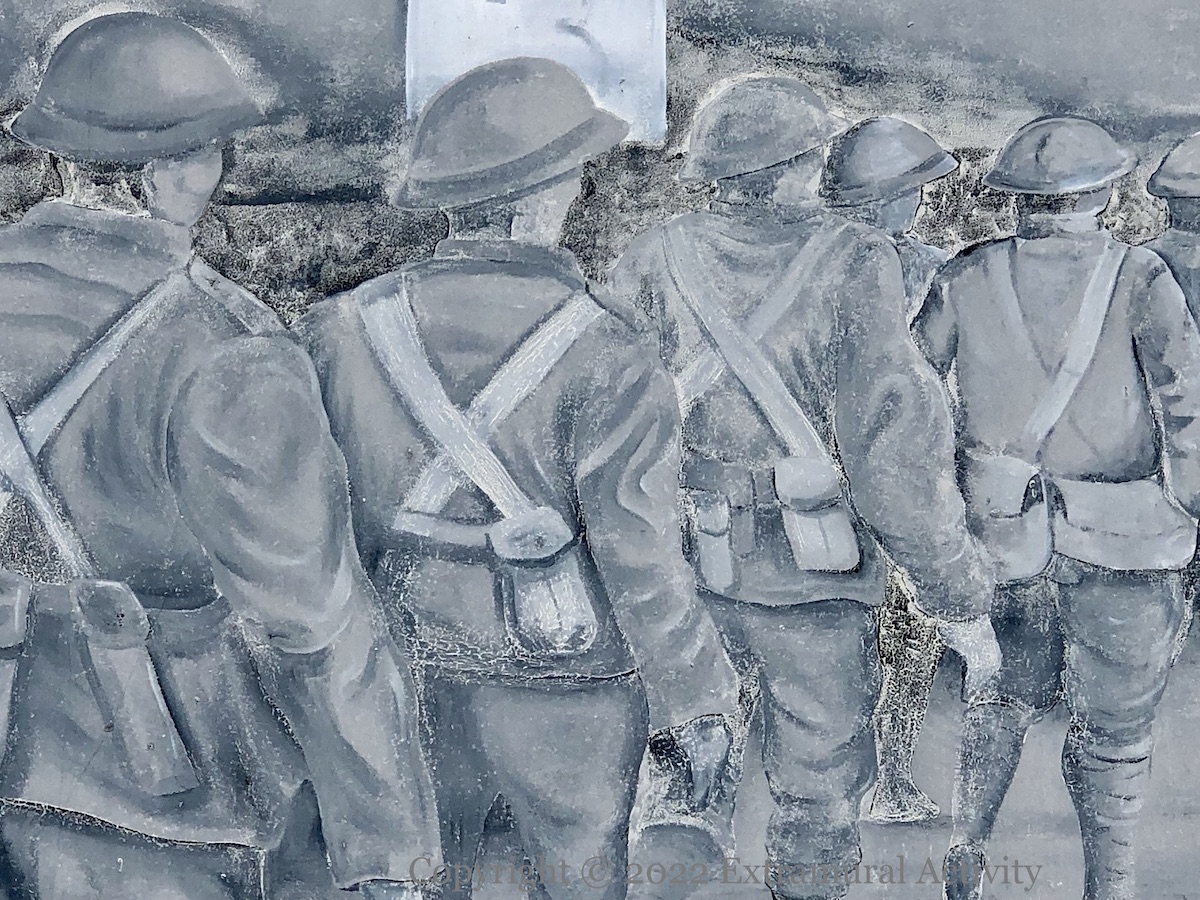
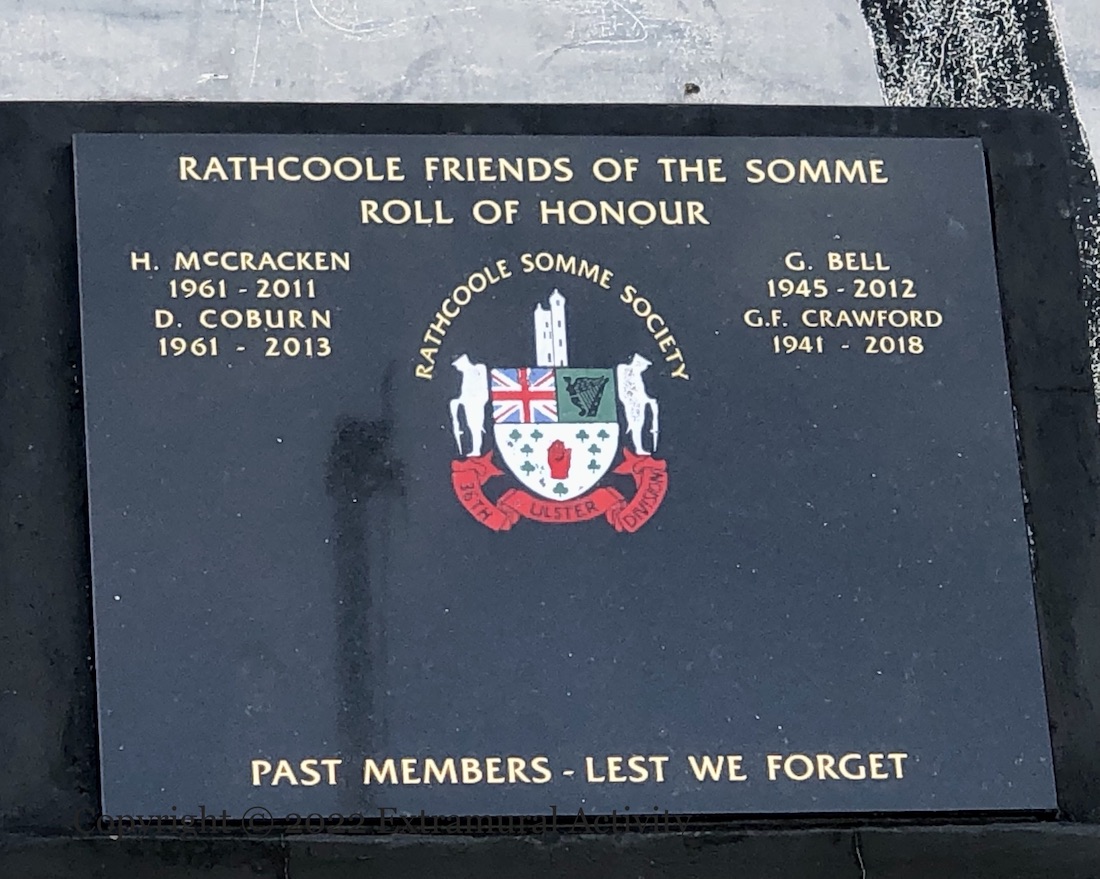
A memorial stone has been added to the fading mural of soldiers of the 15th battalion heading to France in 1915, beginning a list of former members of the Rathcoole Friends Of The Somme (Fb). For the names of the five portraits, and the mural in better condition, see Many Did Not Return.
The title of today’s post is the title of Jonathan Evershed’s book (youtube).
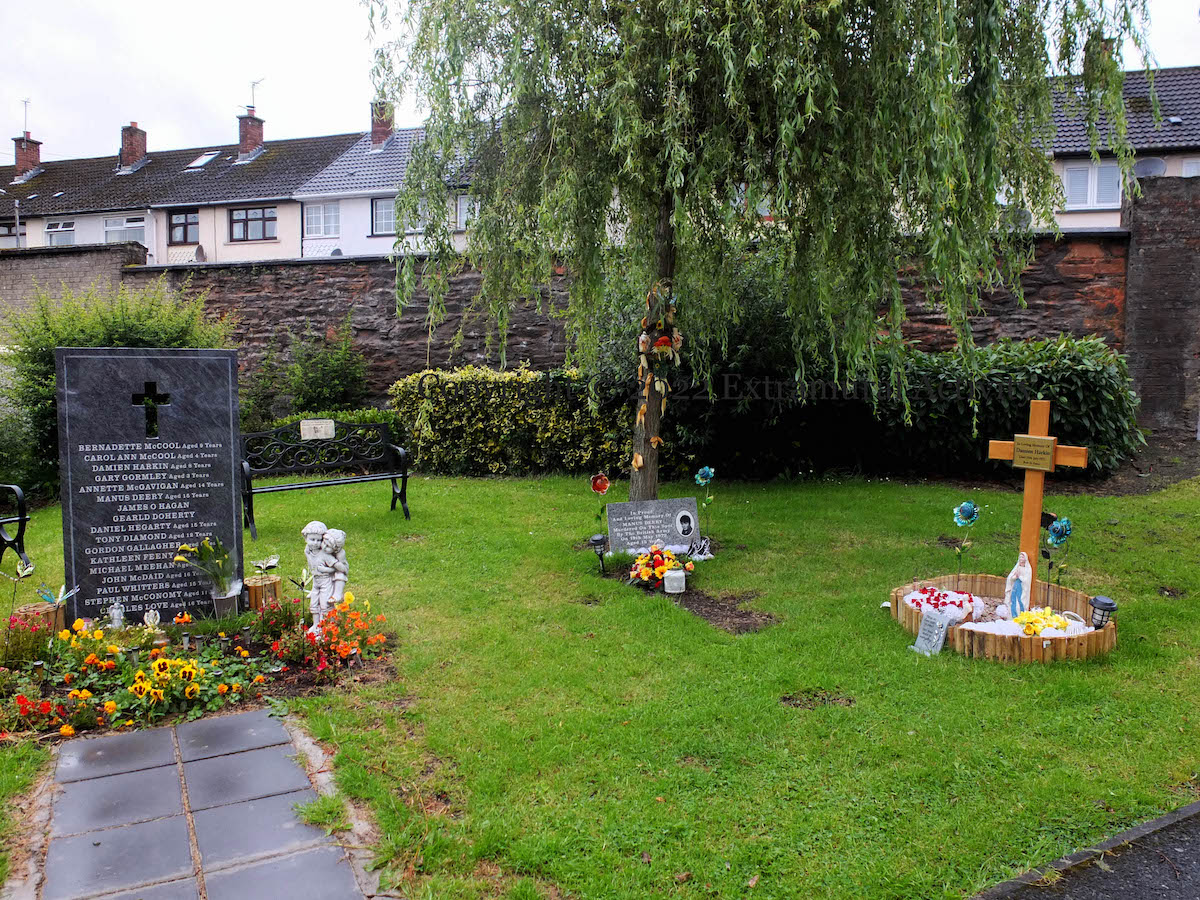
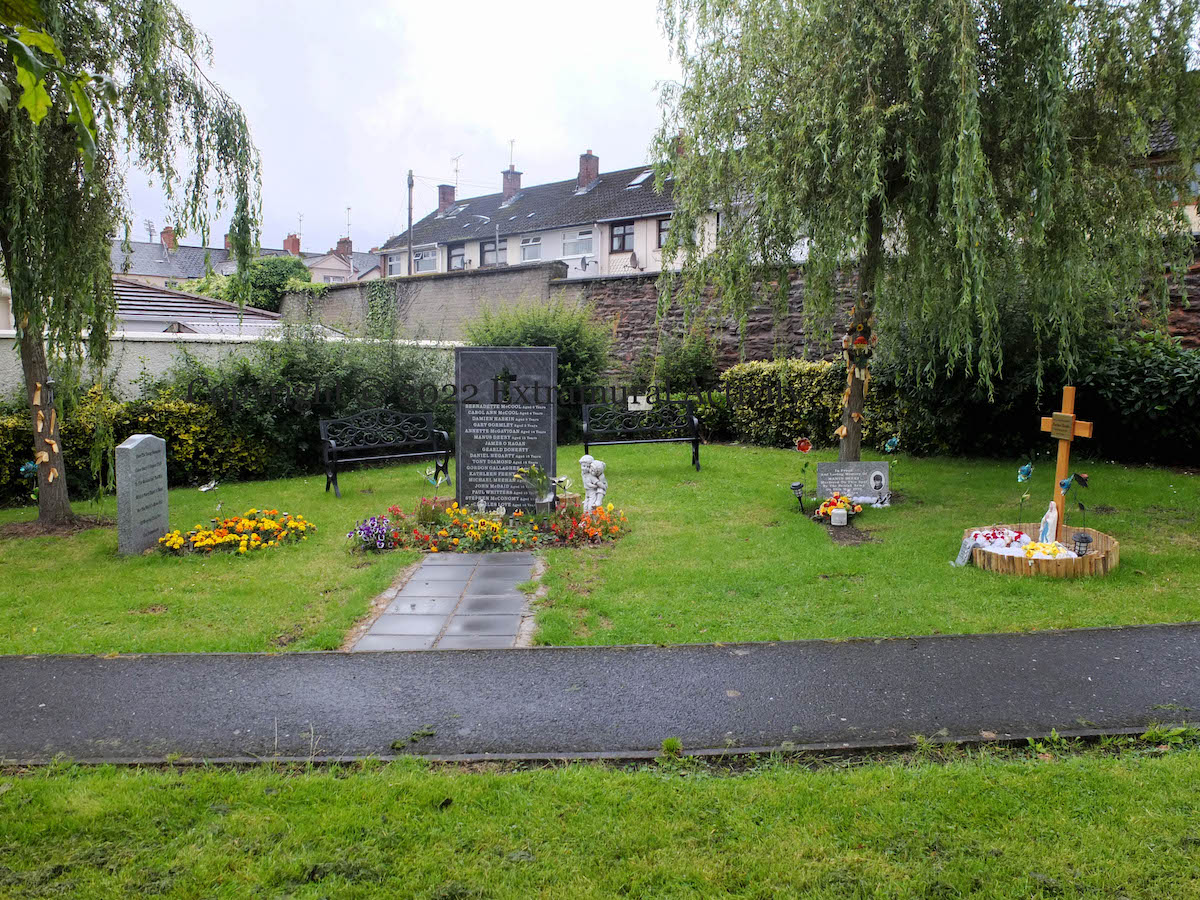
This is a memorial garden in Westland Street, Derry, in remembrance of children who have died during the Troubles.
They are listed in the following order on the main stone: Bernadette McCool, Carol Ann McCool, Damien Harkin, Gary Gormley, Annette McGavigan, Manus Deery, James O’Hagan, Gerald Doherty, Daniel Hegarty, Tony Diamond, Gordon Gallagher, Kathleen Feeny, Michael Meenan, John McDaid, Paul Whitters, Stephen McConomy, Charles Love.
McGavigan was the first to die at the hands of British forces, in September 1971, though the cross on the right is to nine-year-old Damien Harkin, who was crushed in July 1971 by a British Army lorry accident in the Bogside (MFD). Gary Gormley was also crushed by an armoured car (MFD). McGavigan is depicted in one of the murals in the ‘Bogside Gallery‘ series: The Death Of Innocence.
Other deaths were earlier but did not involve British forces: the McCool sisters died in a premature explosion in Creggan in 1970 and James (Jim) O’Hagan was killed in August 1971 by a fellow IRA member.
Gerry Doherty, Kathleen Feeney, Tony Diamond, Gordon Gallagher, Michael Meenan, John McDaid, and Charles Love also died accidentally by their own or IRA actions (MFD profiles, which lists 20 children, adding David Devine, Joseph Connolly, and Kathryn Eakin). Charles Love was killed by flying masonry from an IRA bomb; he is remembered by a plaque in Fahan Street. There is also a plaque to Stephen McConomy in Fahan Street and long ago he was depicted in a mural in Glenfada Park.
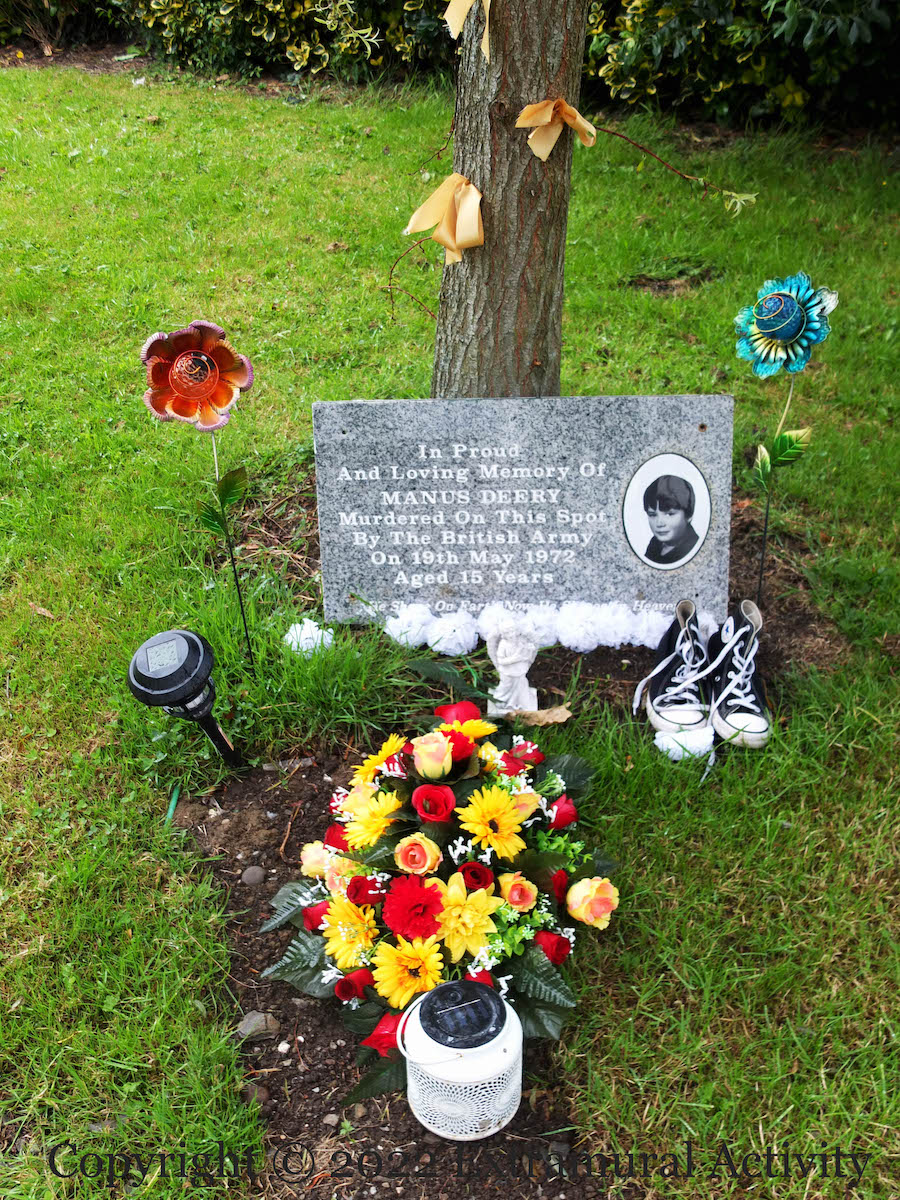
The Manus Deery plaque under the tree to the right was previously on a wall behind the Bogside Inn, before the pub was torn down – see M01919.
The war memorial in Redburn Square, Holywood, was removed in 2017 while the square was redeveloped (Belfast Live). It returned that November (County Down Spectator Fb) with a new base and several additions have been made since then, including the bench above (with art deco styling), a NI Centenary stone (below), and reproduction photographs from the period covering the utility box (final image), including one of the statue many years previously – it was sculpted by Leonard Merrifield and unveiled January, 1922, with the dedication a few months later (History Hub Ulster video | Wartime NI). In addition to the names of 110 locals who perished in the Great War, there are 28 names from WWII (Ulster War Memorials) and one from the Korean War (Traces Of War).

















 Extramural Activity