Ruling By Fooling

The line “Yes, ruling by fooling, is a great British art – with great Irish fools to practice on” comes from a piece by a James Connolly article in The Irish Worker in 1914. It is used here in the context of what the “Good Friday [Agreement] has delivered: the copper fastened partition through the consent principle & triple locking border poll provision; gerrymandering using peace walls for population control; 70% Protestant, 100% unionist police force; internment by remand; revoking of licences; and miscarriages of justice; sectarianism; total polarisation of mindset; 18 peace walls in 1998 59 peace walls in 2018; sectarian allocation of social housing; almost 500 lives lost to suicide.” In contrast, 32CSM declares that the Declaration Of Independence (in English | as Gaeilge | it was also translated into French) by the Dáil in 1919 is “the only mandate the Irish people need”.

Click image to enlarge
Copyright © 2018 Seosamh Mac Coılle
X06127 X06128
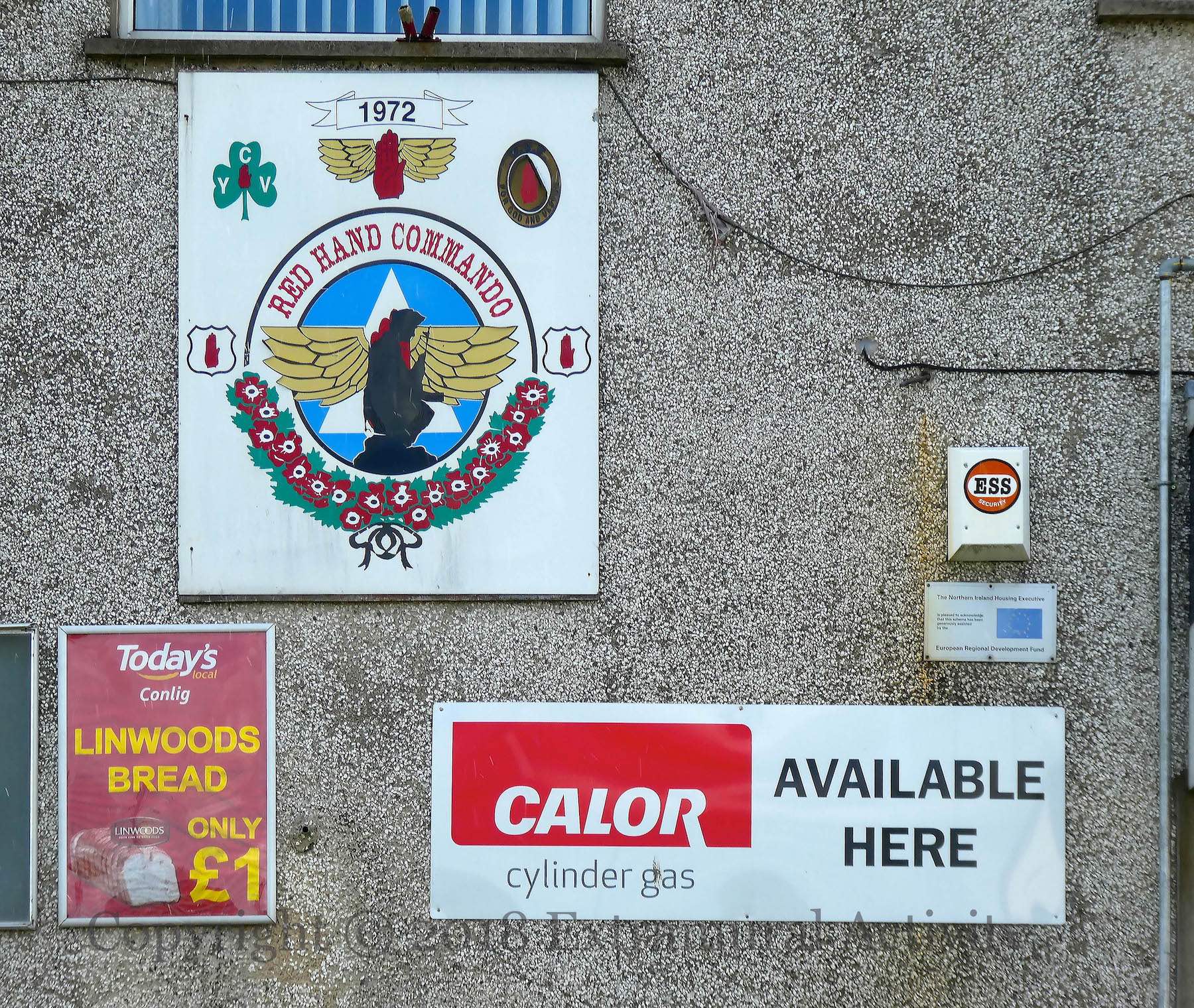
Available Here

On the right of this image there is a European Regional Development Fund plaque (dating back to at least 2008) but we do not have any record of a previous piece in this spot (Main Street, Conlig). It is not likely that it is referring to the Red Hand Commando board. Please get in touch if you have any information. See also the UVF board on the Today’s Local in the Glen estate, Newtownards.

Click image to enlarge
Copyright © 2018 Seosamh Mac Coılle
X06085

The Proclamation

Robert Ballagh’s 1916 Proclamation was first painted as a mural by Mo Chara Kelly and Rısteard Ó Mhurchú in 1991 for the 75th anniversary of the Easter Rising (see Cáısc 1916 which also contains the Ballagh piece). That version stood for ten years on the Whiterock Road. It has reproduced again in Ard An Lao above the hunger strikers, after the removal of several plaques (see All Our Dead). “With special thanks to Hugo Óg Wilkinson”.

Click image to enlarge
Copyright © 2018 Seosamh Mac Coılle
X06110 our revenge will be let there be no bitterness

Resurfacing

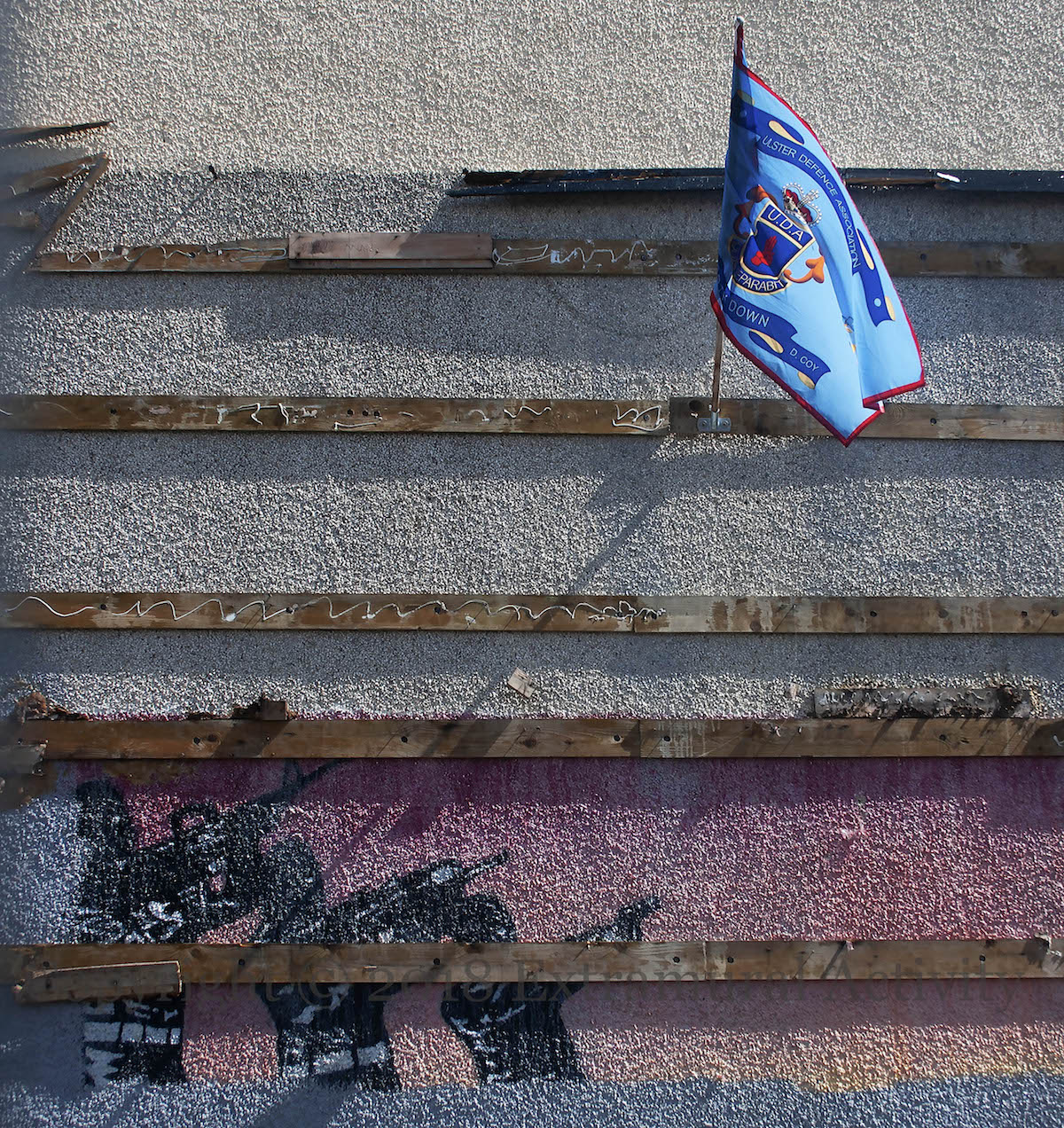
The Blair Mayne mural in Queen Street, Newtownards, which dates back to 2008, has fallen down, revealing the remnants of mural it replaced, a UVF firing party (J1754). A UDA flag, however, has been placed on the mounts.

Click image to enlarge
Copyright © 2018 Seosamh Mac Coılle
X06064 [X06063]

North Down UVF

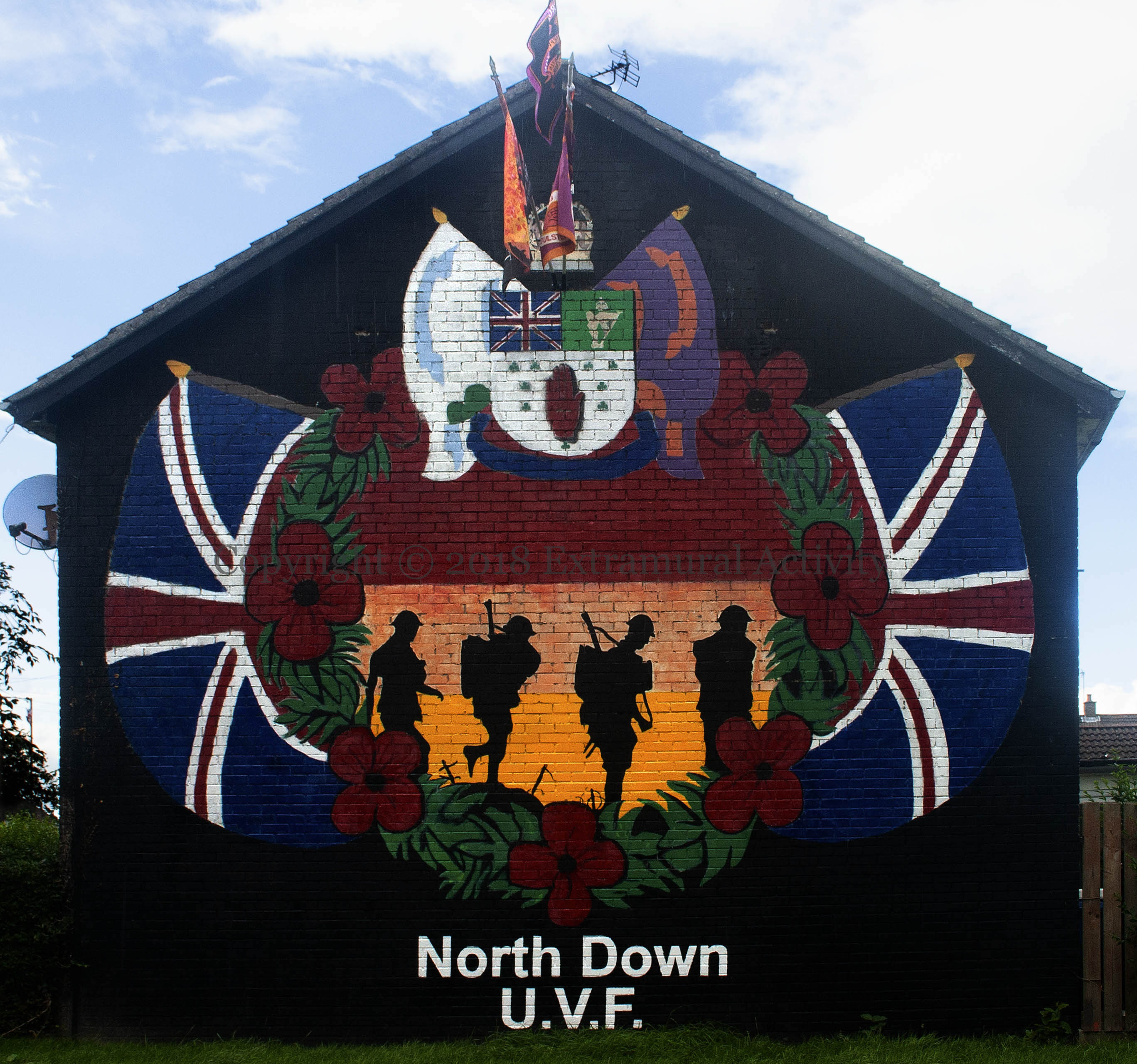
This mural at the bottom of Kilcooley estate in Bangor has recently been repainted, with the main alteration being the “North Down UVF” replaces “1st July 1916”, focusing attention on the locals from battalion that joined the 36th and away from the Somme. (See the previous mural in 1st July 1916.)

Click image to enlarge
Copyright © 2018 Seosamh Mac Coılle
X06077 clandeboye rd

Messines 1917

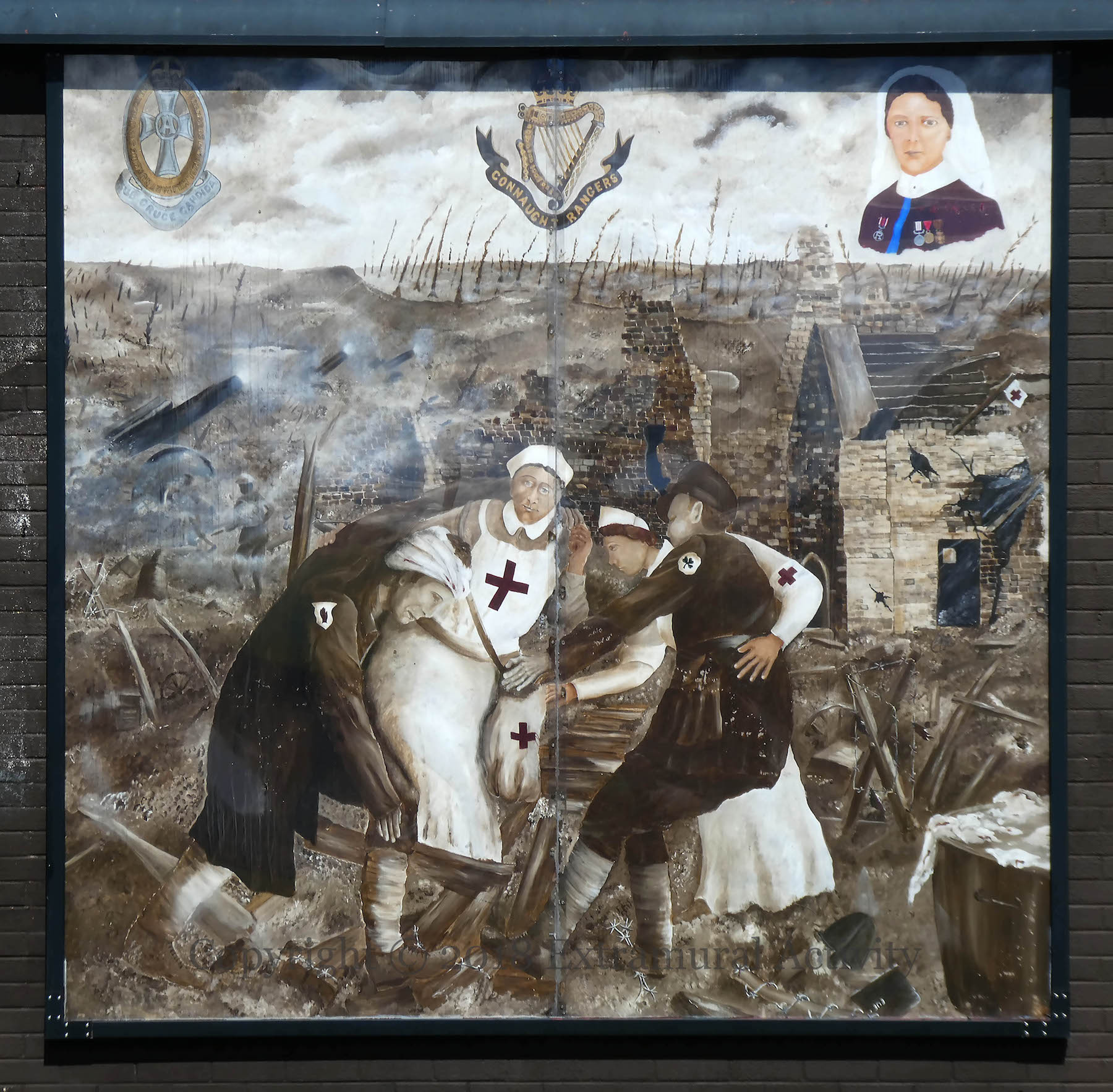
Two panels commemorate the Battle Of Messines in 1917 and the role of nurses in attending to the wounded. This NIHE article says that the two nurses depicted are Annie Colhoun from London-/Derry and Margaret Dewar from Glasgow. “Margaret Dewar lost her life during the battle whilst Annie Colhoun survived and was decorated for her work during the war by the French, Serbian and British Governments.” (This presumably makes her the decorated nurse in the right-hand panel.) An Army Nursing Service page says, however, that they were nurses at Monastir in Macedonia.

“Sub cruce candida” (“under a white cross”) is the motto of the Queen Alexandra’s Royal Army Nursing Corps, though at the time of WWI it was Queen Alexandra’s Imperial Military Nursing Service. “VAD” stands for “voluntary aid detachment” of the British Red Cross.

The soldiers wear red hands or shamrocks on their arms. The red hand is for the 36th (Ulster) Division and the cap badge in the left panel is of the 36th. The shamrock is the symbol of the 16th (Irish) Division, and the right panel shows the cap badge of the Connaught Rangers whose battalions served in both the 10th (Irish) and 16th (Irish) Divisions in WWI. Both the 36th and 16th fought at the Somme and at Messines (WP).

Click image to enlarge
Copyright © 2018 Seosamh Mac Coılle
X06067 X06066 X06065 abbot gdns

The Ghosts Of The Martyrs

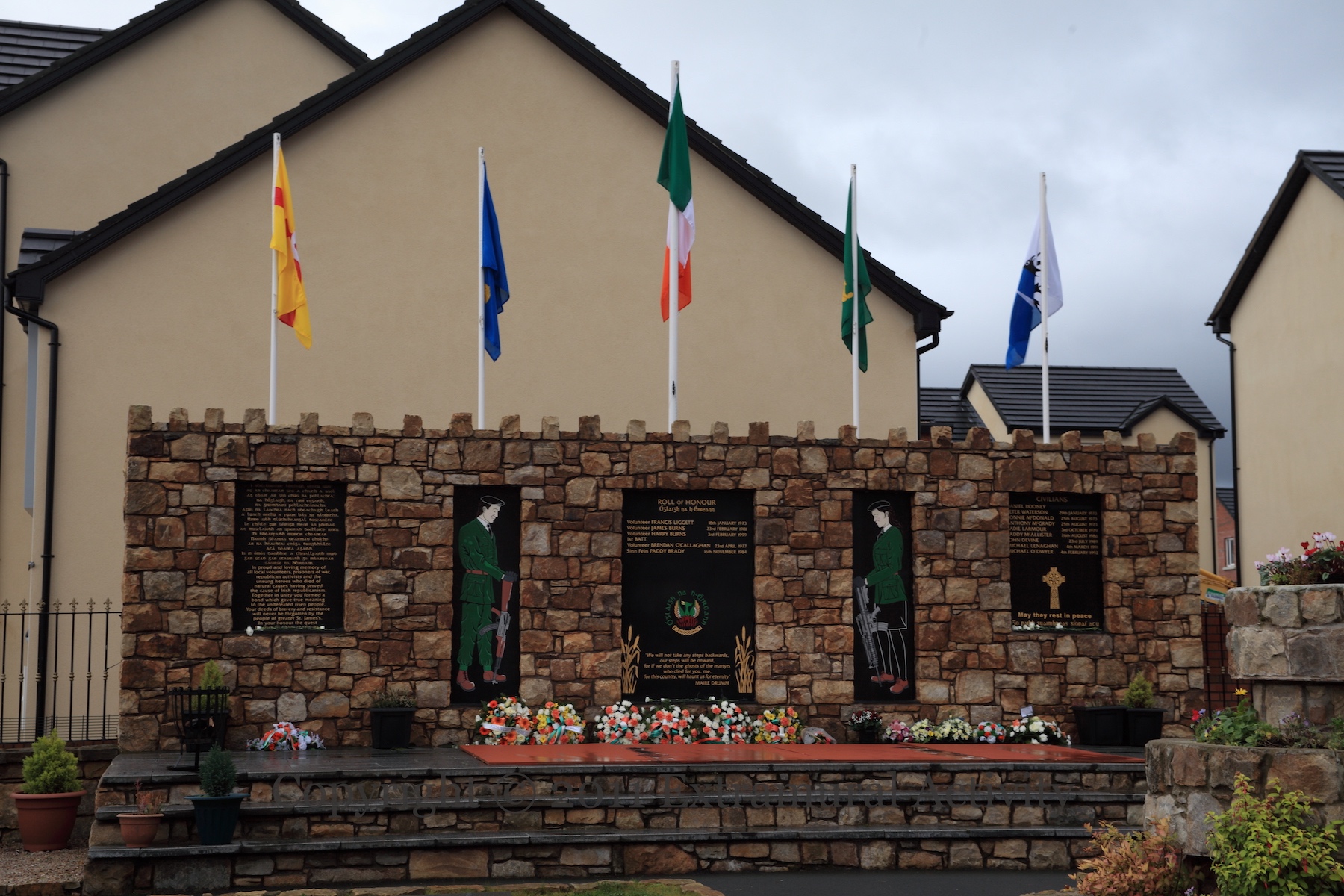
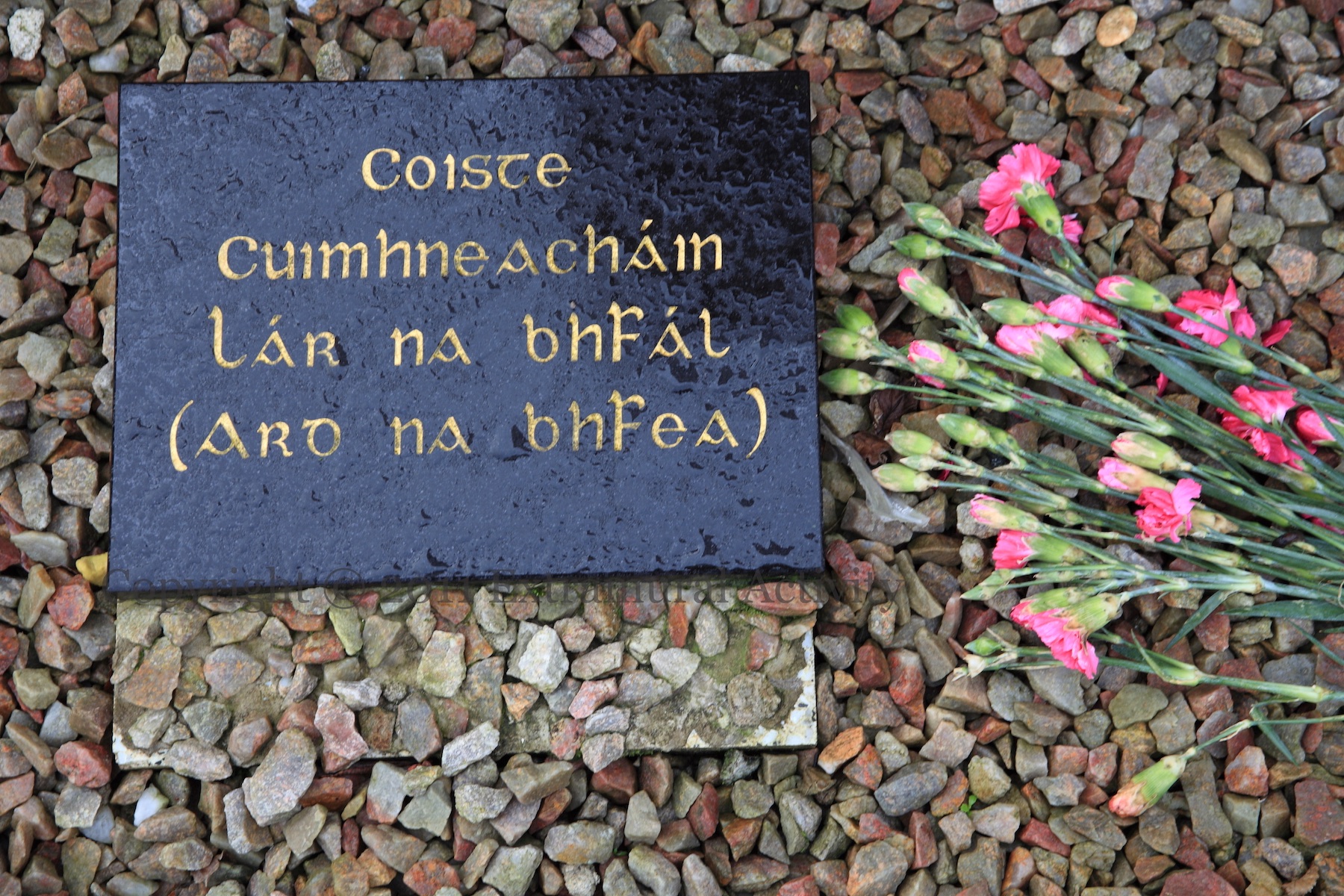
“In proud and loving memory of all local volunteers, prisoners of war, republican activists and the unsung heroes who died of natural causes having served the cause of Irish republicanism [“sean óglach” on the individual plaques]. Together in unity you formed a bond which gave true meaning to the undefeated risen people. Your deeds of bravery and resistance will never be forgotten by the people of greater St. James’s. In your honour the quest for Irish freedom continues.” With the famous “our steps will be onward” quote from Máire Drumm at an anti-internment rally in Dunville Park on 10th August, 1975 (RN). Coıste Cuımhneacháın Lár Na bhFál/Ard Na bhFeá [Memorial committee of mid-Falls/Beechmount]. For some more of the plaques, see The Unsung Heroes.

Click image to enlarge
Copyright © 2011 Seosamh Mac Coılle
X05152 [X05153] [X05154] X05155 X05156

Join Republican Sınn Féın

This vintage nail-up is in Thames Street, next to the Red Devil urges people to join Sınn Féın Poblachtach, which split from (Provisional) Sınn Féın in 1986 over the decision to take seats in the Dáıl.

Click image to enlarge
Copyright © 2018 Seosamh Mac Coılle
X04769

Heaven When I Die

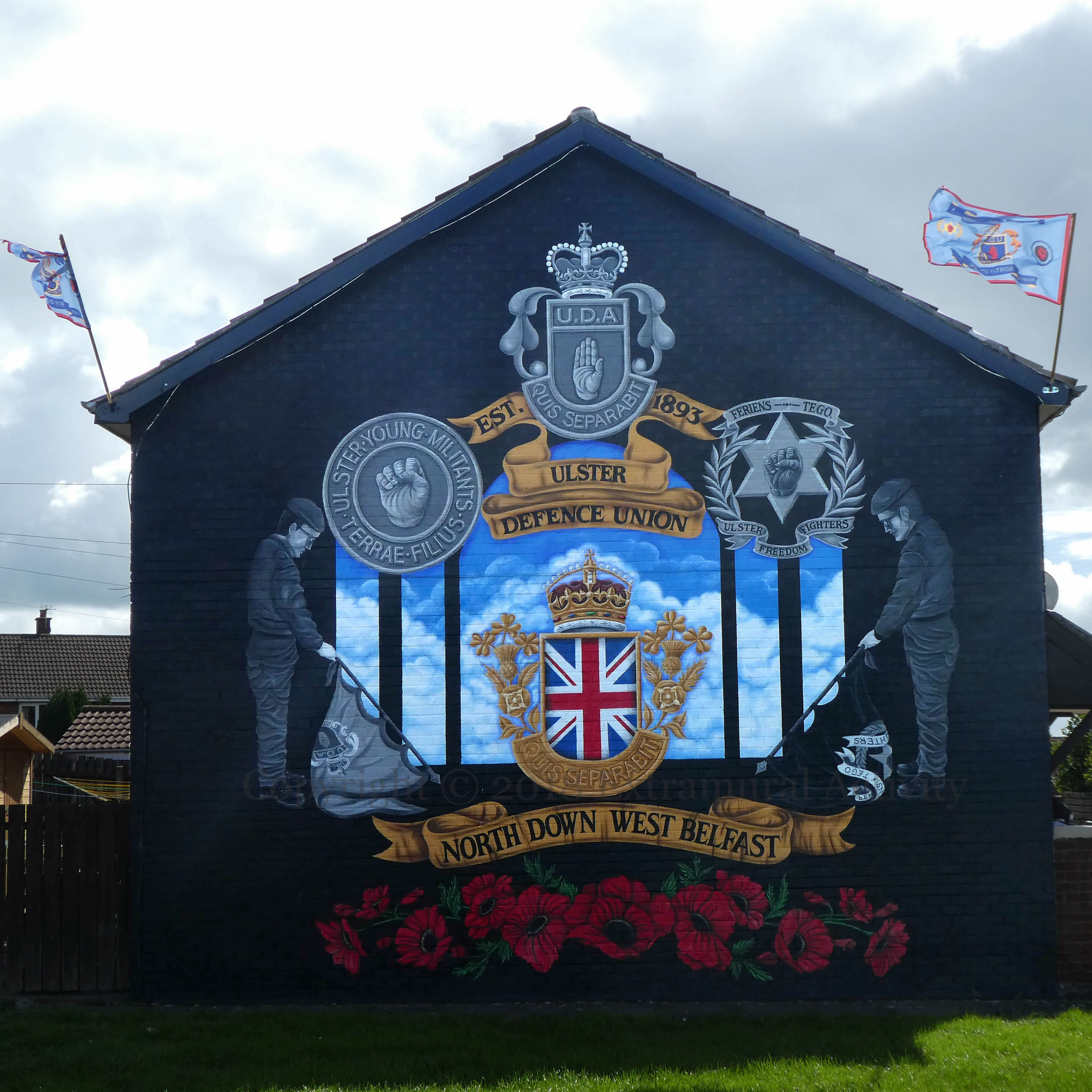
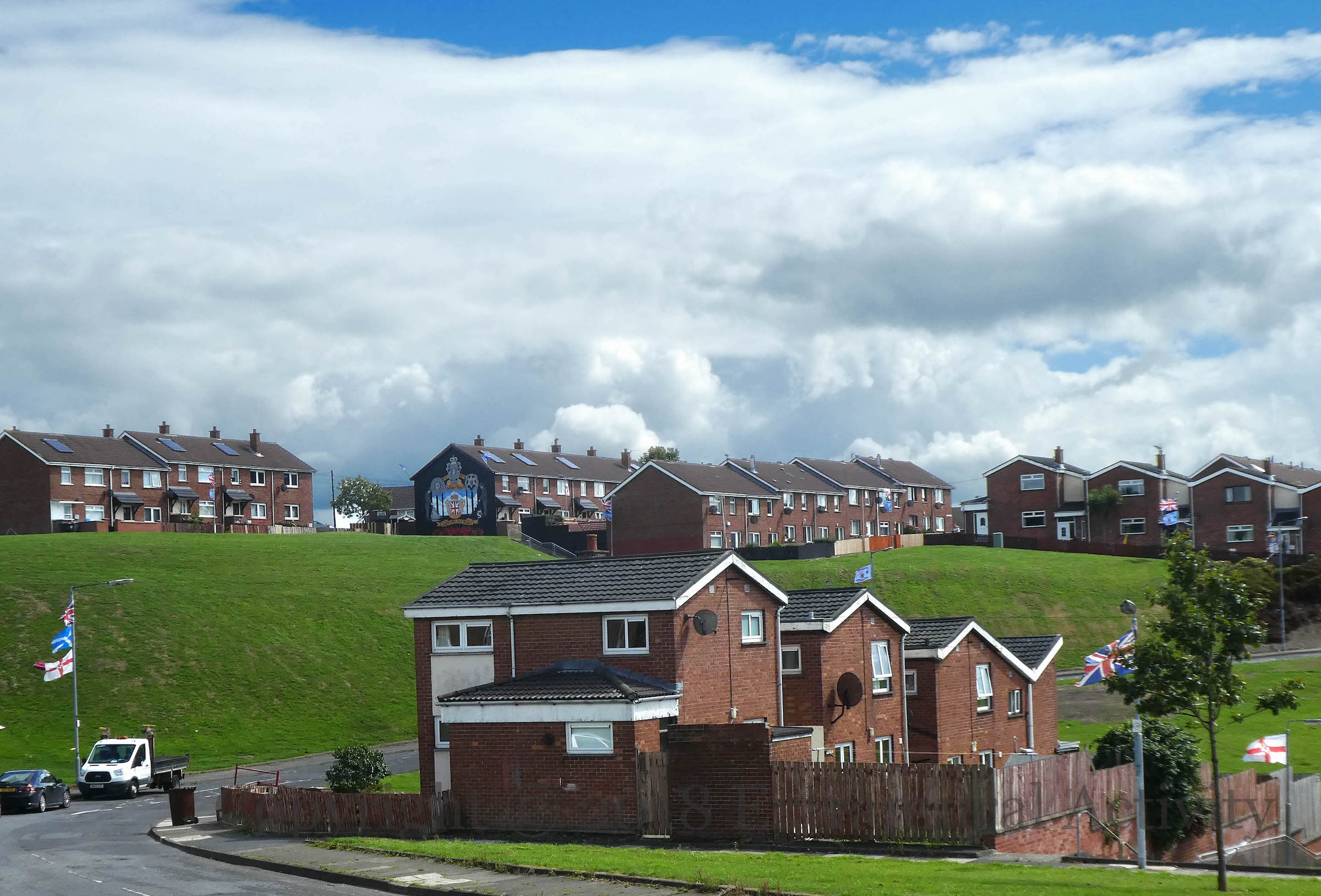
The poppy was used exclusively by the UVF (because of their shared named with the Ulster Volunteers, which became the 36th Division, which served on the western front in WWI, but in the last few years (2016-2018) it has been used frequently by the UDA in memorial murals (e.g. onetwo | three), indicated here by the lowered flags and absence of weapons. (The first UDA poppy, however, dates back to the 2012 (if not earlier) tribute to Benson Kingsberry.) For background on the inclusion of “West Belfast” alongside “North Down” in a Newtownards mural, see Ulster Defence Unions, which also contains poppies (and which in turn links to information about the Ulster Defence Union of 1893). “UDU” seems to be used here to represent a desire for greater unity among (at least some parts) of the UDA.

Click image to enlarge
Copyright © 2018 Seosamh Mac Coılle
X06046 X06047 Glenburn Rd

Our Heritage In Your Hands

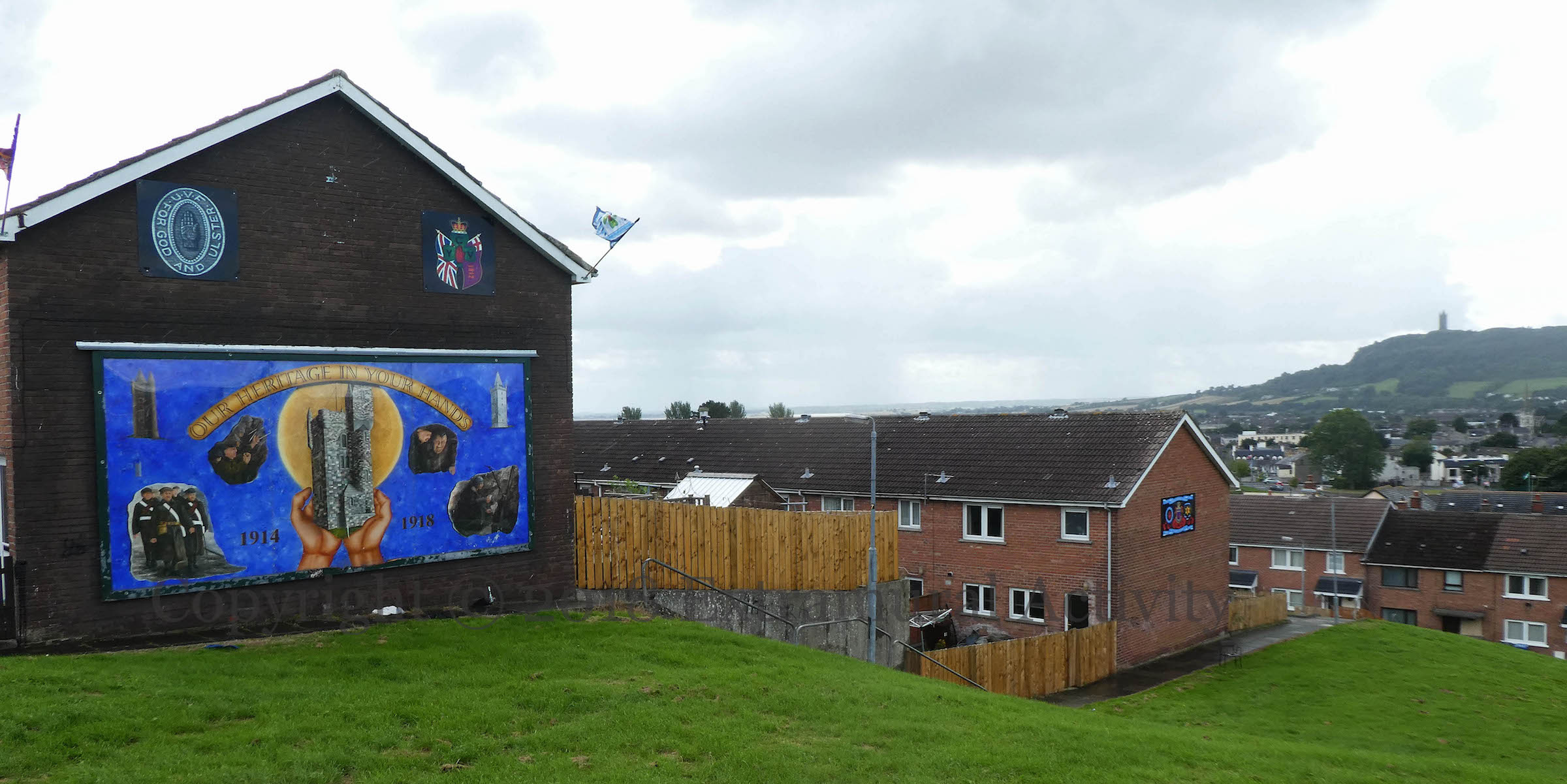
The Ulster Tower at Thiepval, France, is a replica of Helen’s Tower in Clandeboye, around which the 36th (Ulster) Brigade, formed in August 1914 from the Ulster Volunteers and Young Citizen Volunteers, began their training (see this gallery of images from North Down Museum at BBC-NI). After a year of training in Ireland and England, the Division was deployed to France in September 1915.

In the top corners are two views of the local Scrabo Tower, which can be seen to the right in the wide shot, below. Produced by muraltec.

X06057 2018-08-21 North Down West Belfast+

Click image to enlarge
Copyright © 2018 Seosamh Mac Coılle
X06049 [X06050] X06051 [X06052] [X06053] X06057 Ilex Ave