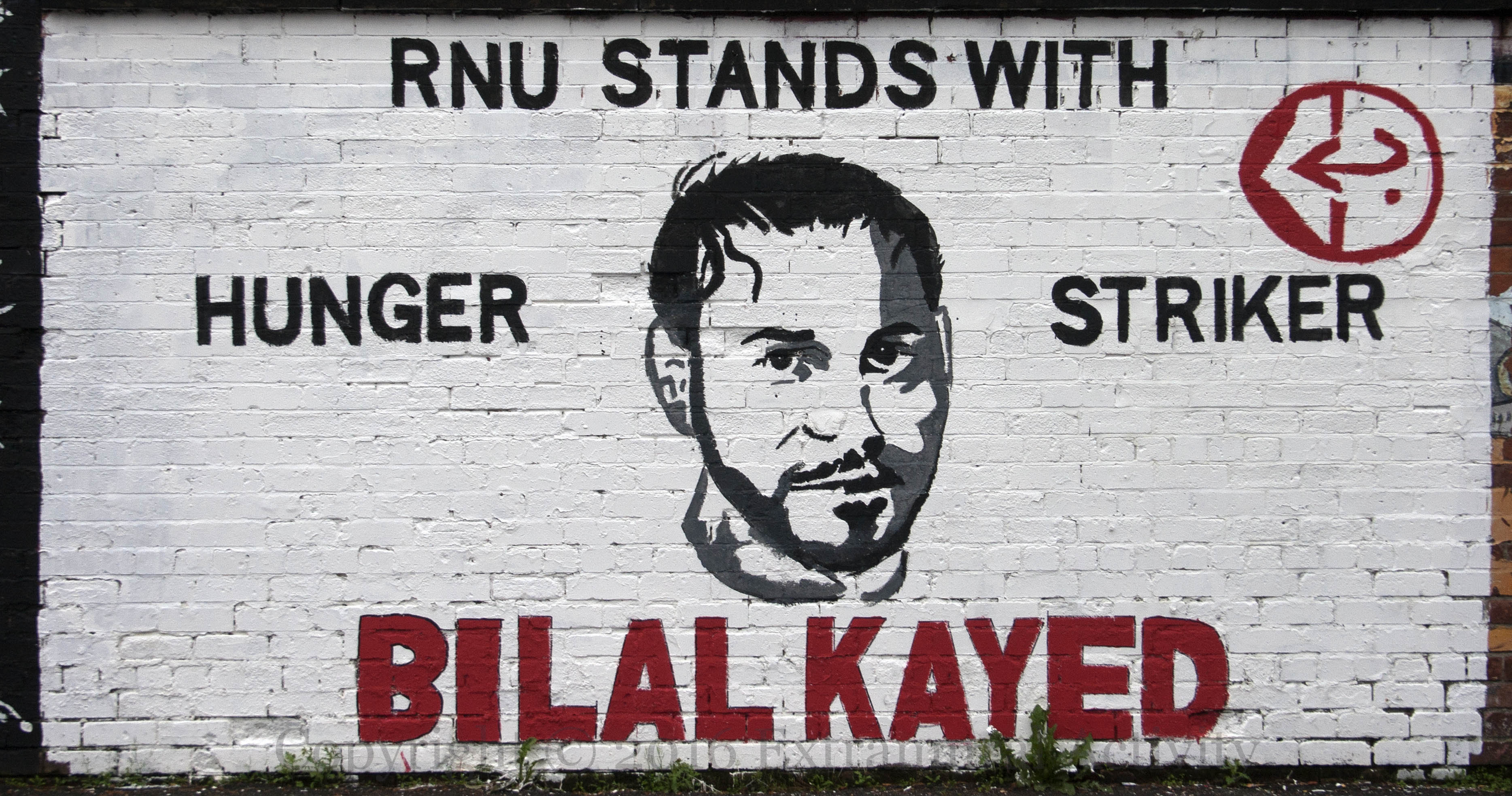
“RNU stands with hunger striker Bilal Kayed”. For more information on this Palestinian prisoner who recently ended his hunger strike, see Administrative Detention. Update: released 2016-12-12.
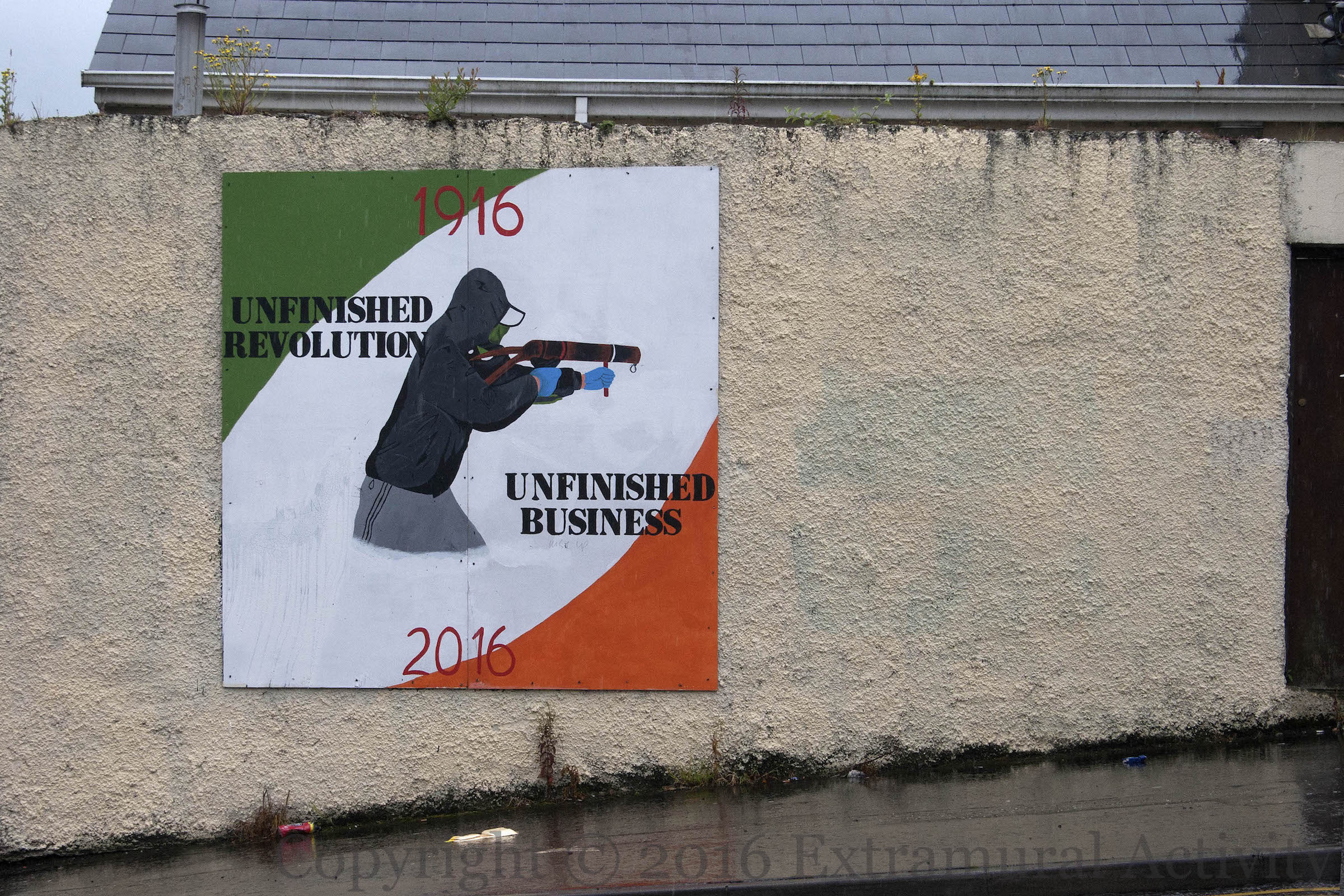
The centenary of the Easter Rising, 1916 – 2016, serves as a touchstone for the painters of this mural in Derry who hold that the work of the rebellion is incomplete: “Unfinished revolution, unfinished business”. The same slogan and image of a hoodied volunteer appears in two murals both entitled Resistance, one in Belfast, one in Derry.
Update: In the last 24 hours, the papers are reporting that “Join the IRA” has been added to the board, which has been condemned as a hate crime by local DUP politician Gary Middleton. For more, and a pic, see Derry Journal.
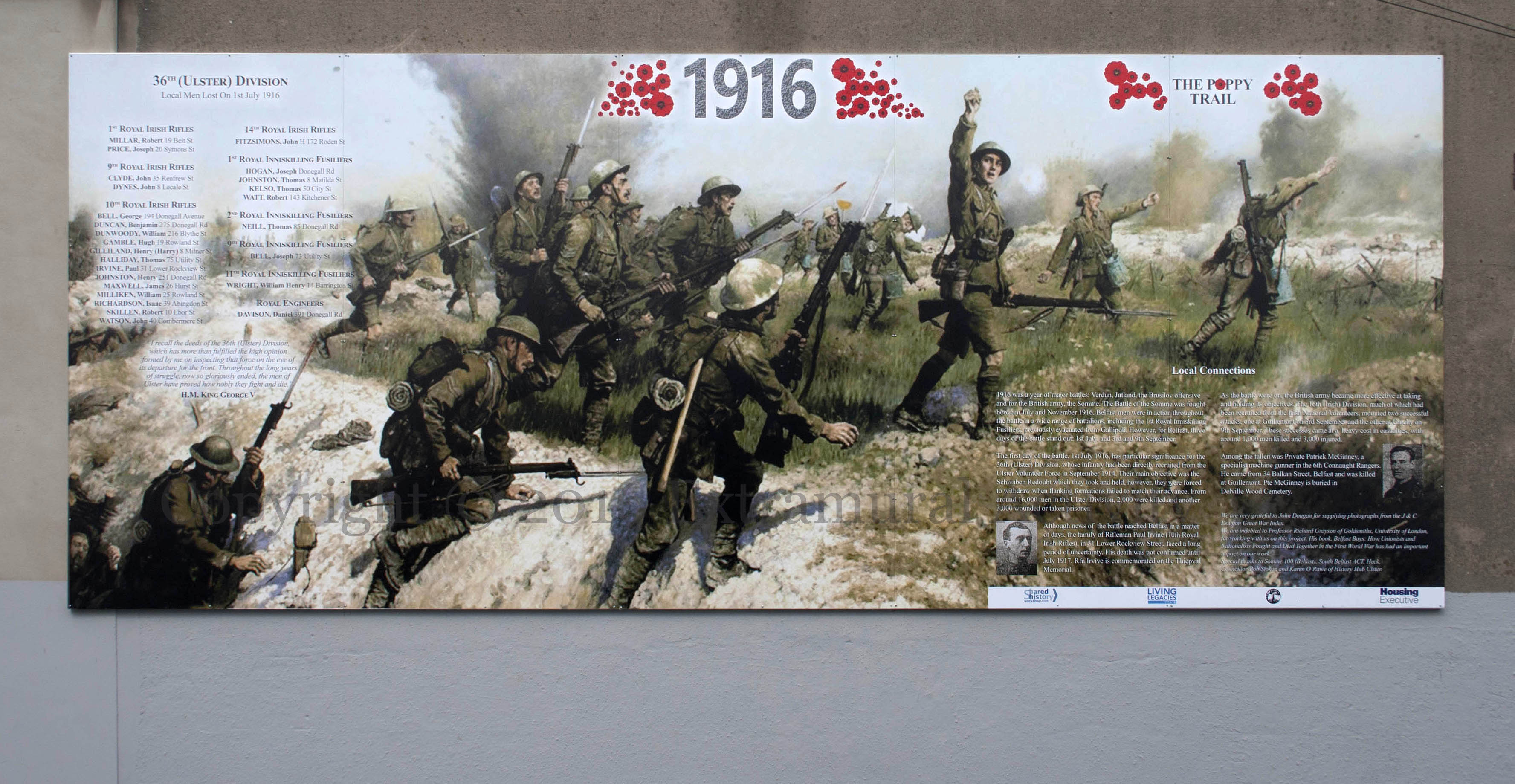
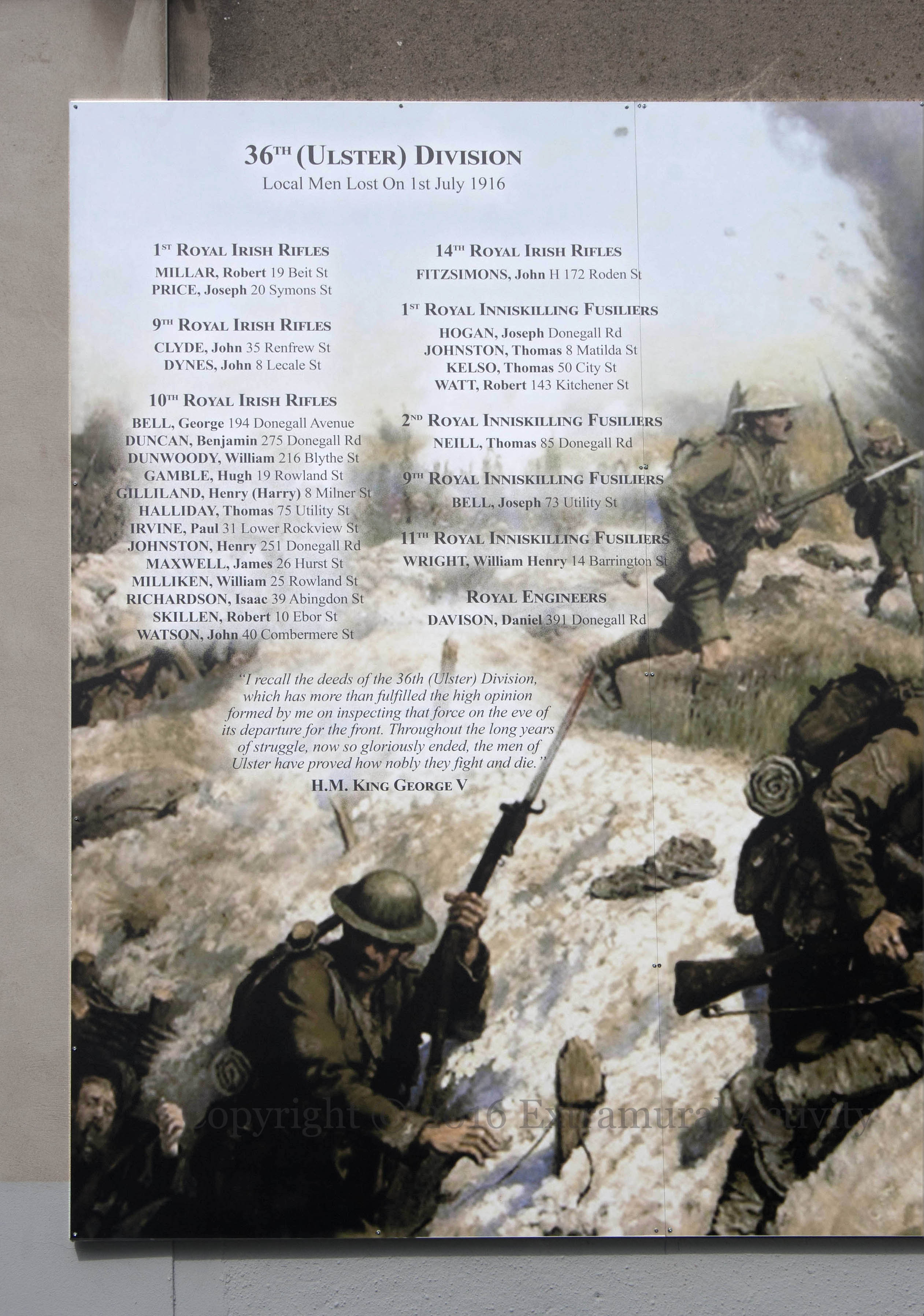
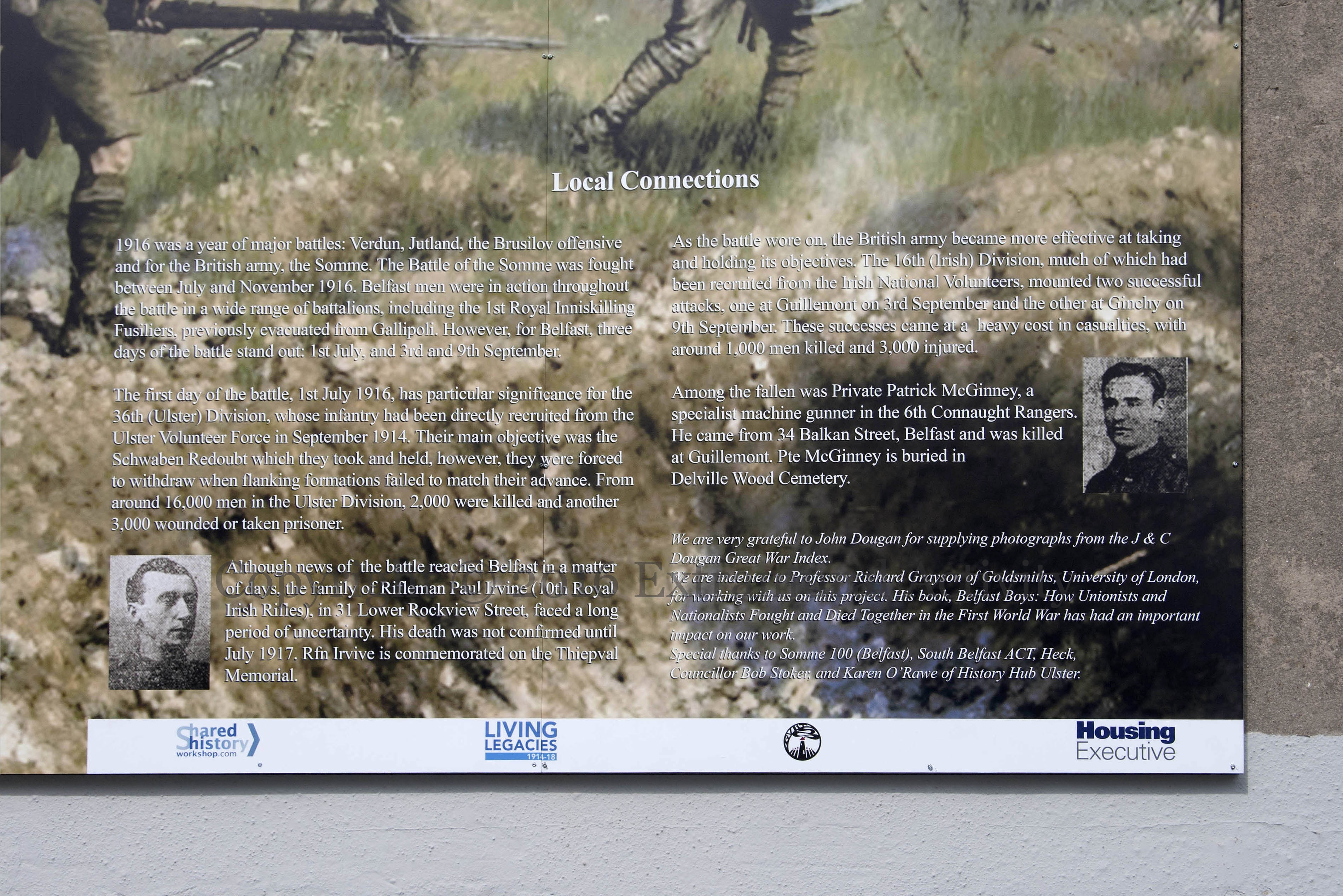
JP Beadle’s Battle Of The Somme, Attack Of The Ulster Division is reproduced in the 1916 installment of the Poppy Trail in south Belfast. (For more on the painting, see belfastsomme.com.) In addition to listing local men lost in on July 1st – from places such as Roden, Matilda, Kitchener, Barrington, Blythe, Ebor, Rowland, Abingdon, and Combermere Street – it also features an individual from each community who served and died, in this case, Rifleman Paul Irvine from Lower Rockview Street and Private Patrick McGinney from Balkan Street (in the Divis area).
Shown above is the first of three new boards at Casement Park in west Belfast, named for Roger Casement. Working for the British Colonial Services, Roger Casement wrote extensive reports on the abuse of indigenous people in Congo Free State (1904) and in Peru (1910).
In Congo Free State, King Leopold II of Belgium was using a private force to suppress the locals while extracting rubber; Casement’s report (archive.org) led to the Belgian government taking over Leopold’s operation and creating the Belgian Congo.
In Peru, Casement investigated abuses against the Putumayo indians at the hands of the Peruvian Amazon Company. As a result of his report, the PAC gradually lost business and folded. (WP) Casement was knighted in 1911 for his human rights work, though this title would be stripped shortly before his execution.
A fire was lit at the base of the John Henry Patterson mural (see Operation Lion | Godfather Of The Israeli Army) on Beverley Street, prompting the notice on the railings above: “Where is the equality? This historically significant artwork, was attacked & defaced by Irish Republican racists? Where is the reconciliation?”
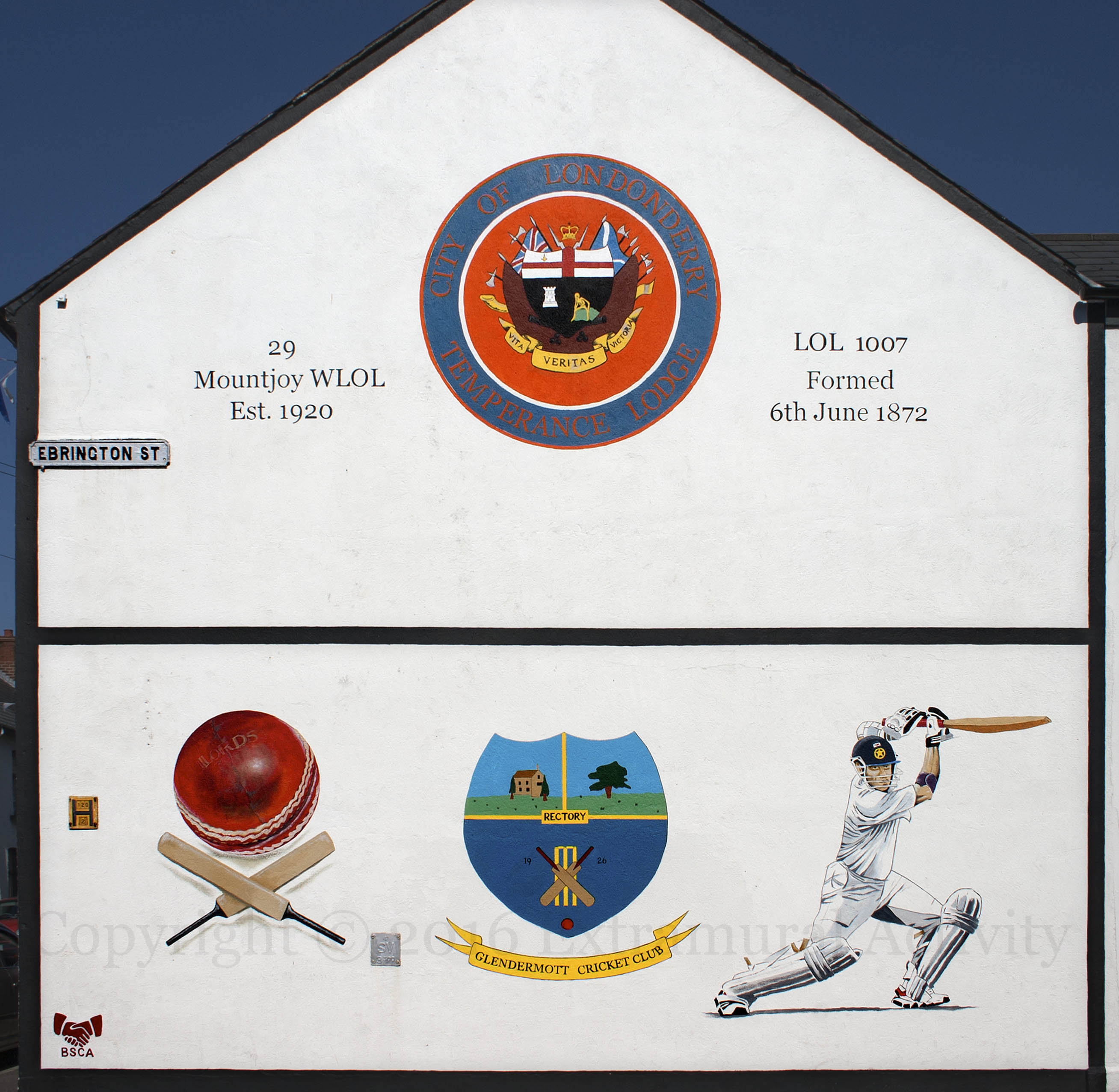
The mural above in Londonderry’s Ebrington Street celebrates three local organisations: in the upper portion, Orange Lodge #1007 “City Of Temperance” lodge (web) and Women’s Lodge #29 “Mountjoy”; in the lower portion, Glendermott Cricket Club (Tw), whose home pitch is Rectory Field (shown on the shield in the middle).
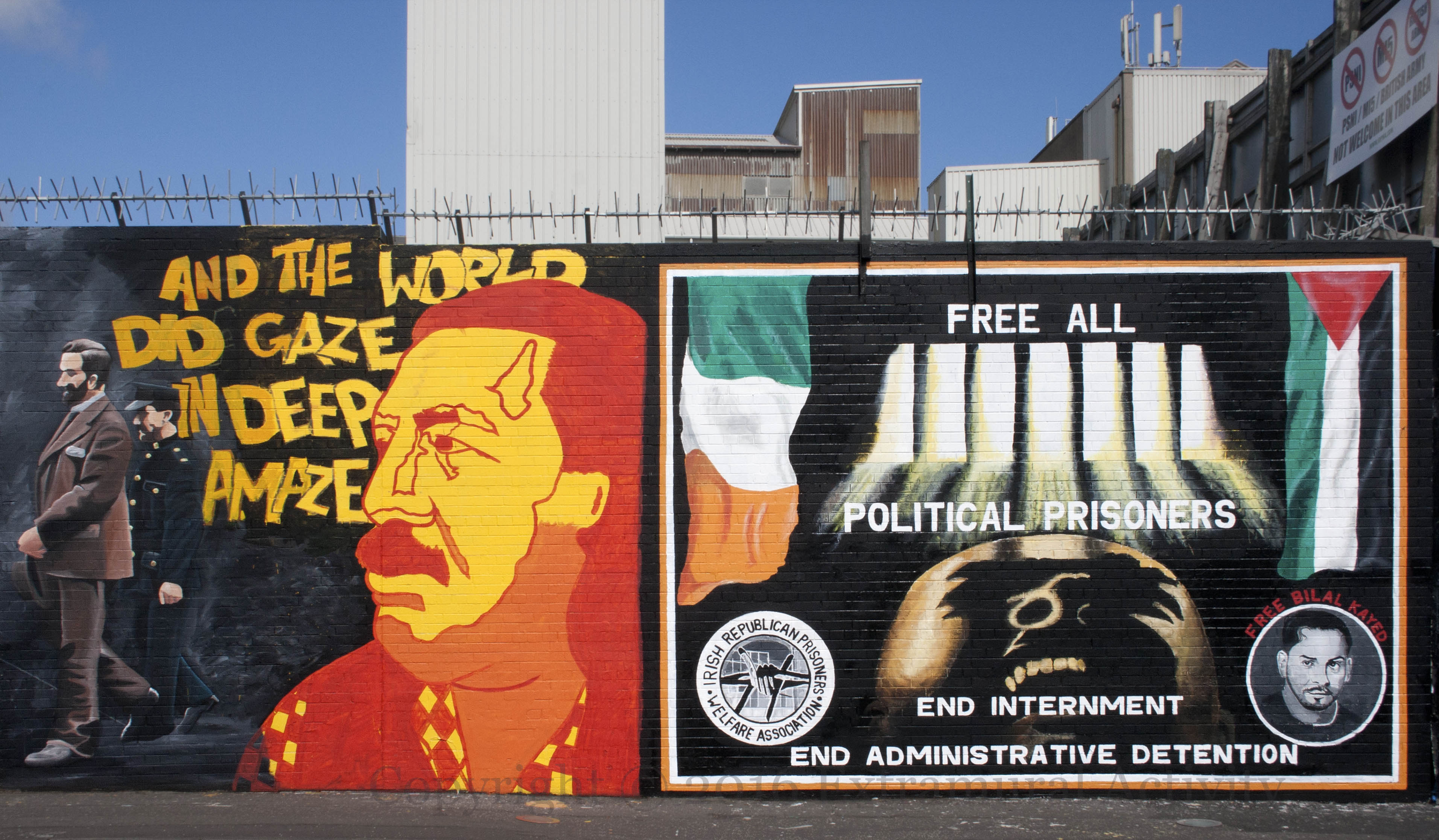
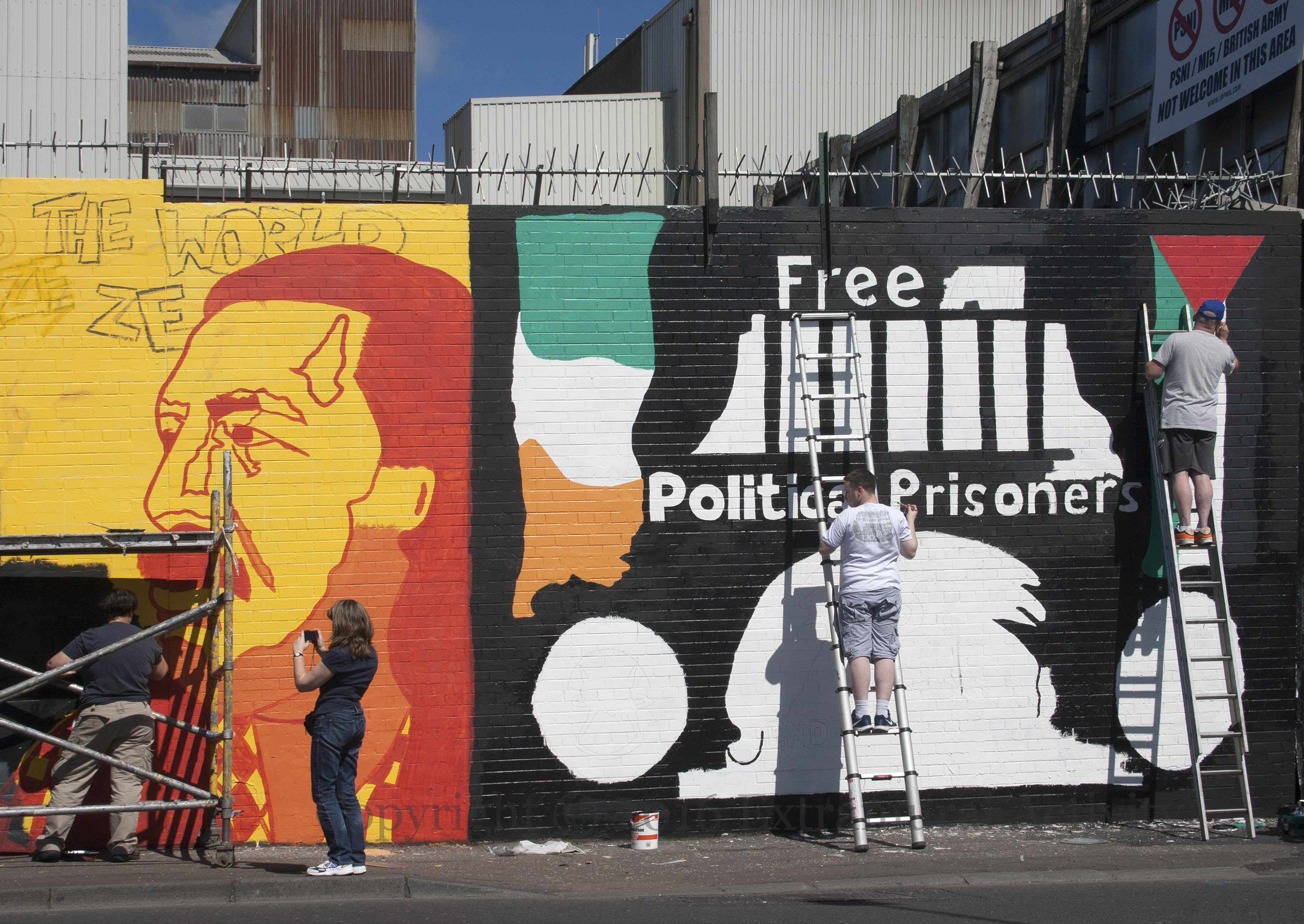
Palestinian prisoner and hunger striker Bilal Kayed last week called off his hunger strike after 71 days of fasting, after reaching an agreement with his Israeli captors for his release in December, after a six-month “administrative’ extension to his original 14.5 year sentence (Alternative News). Hence the slogan “End internment, end administrative detention” (alongside “Free all political prisoners” and the IRPWA emblem). Update: Kayed released 2016-12-12.
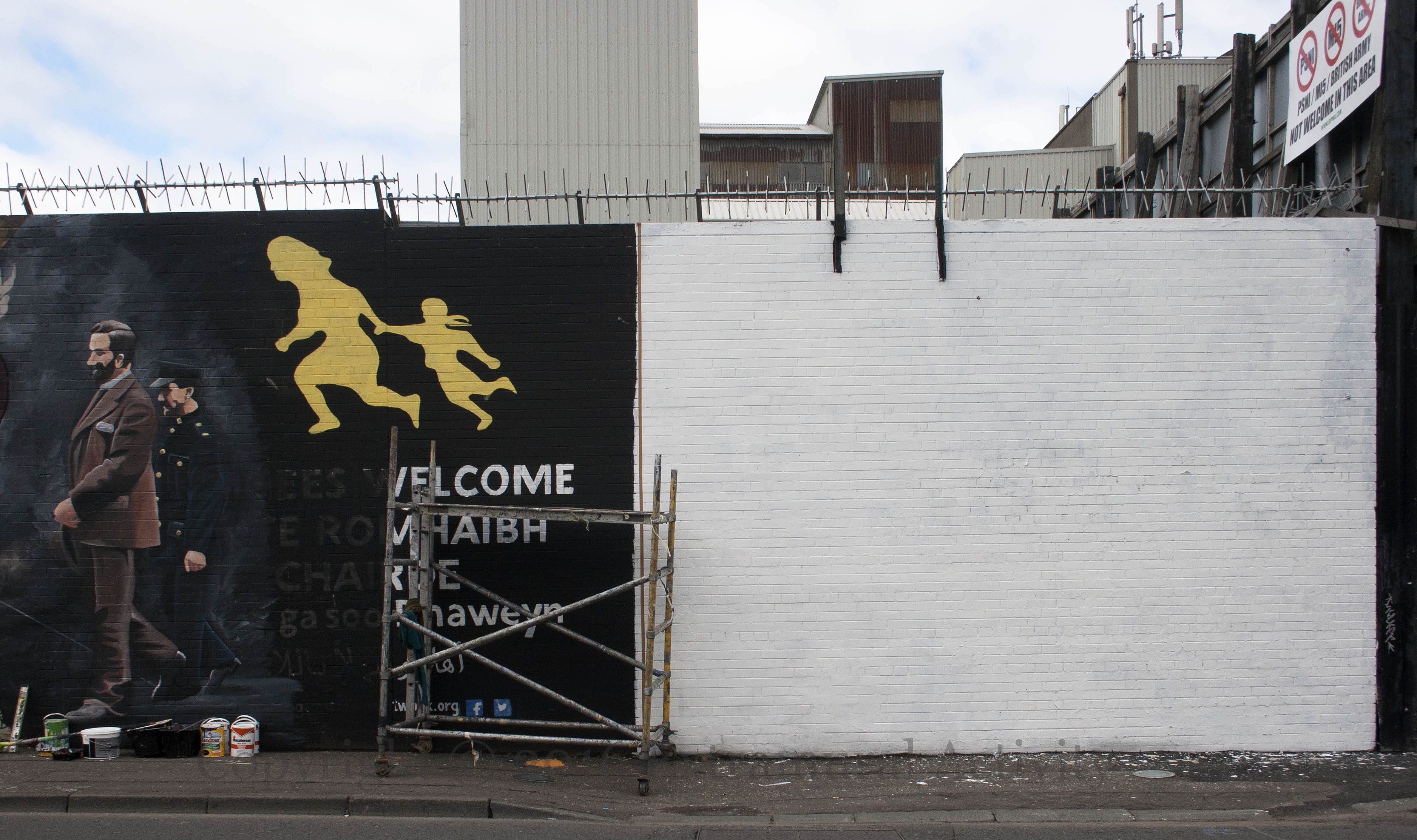
The mural is at the right-hand end of the so-called International Wall in west Belfast. For the controversy over the painting of the mural adjacent to the historical panels on the rest of the wall, see The World Did Gaze In Deep Amaze.
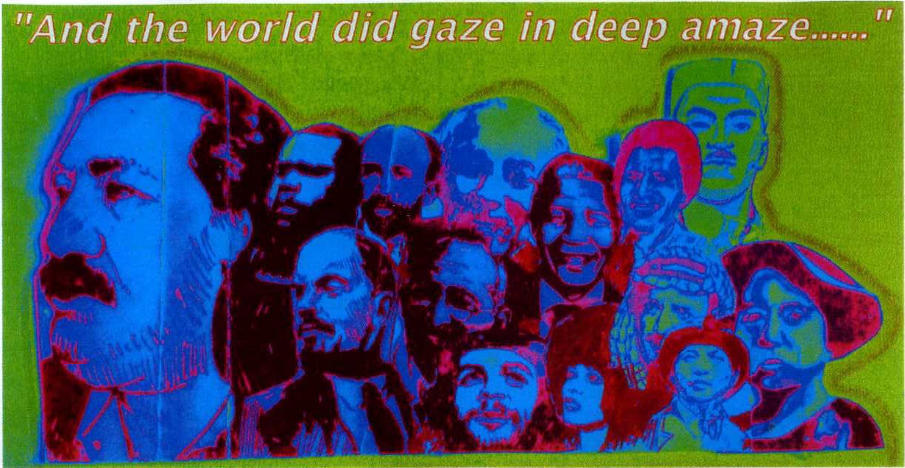
Towards the end of July, the IRPWA began painting a POW mural for the right end of the wall, space that the historical painters hoped to use for a gallery of international figures inspired by Irish resistance — Leonard Peltier, Marcus Garvey, V.I. Lenin,W.E.B. DuBois, Mahatma Gandhi, Ho Chi Minh, Che Guevara, Nelson Mandela, Angela Davis, Muammar Gaddafi, Yassar Arafat, General Giap, and Sukhdev Thapar (see the final image, below) — under the title “And the world did gaze with deep amaze” (a line from the song The Foggy Dew).
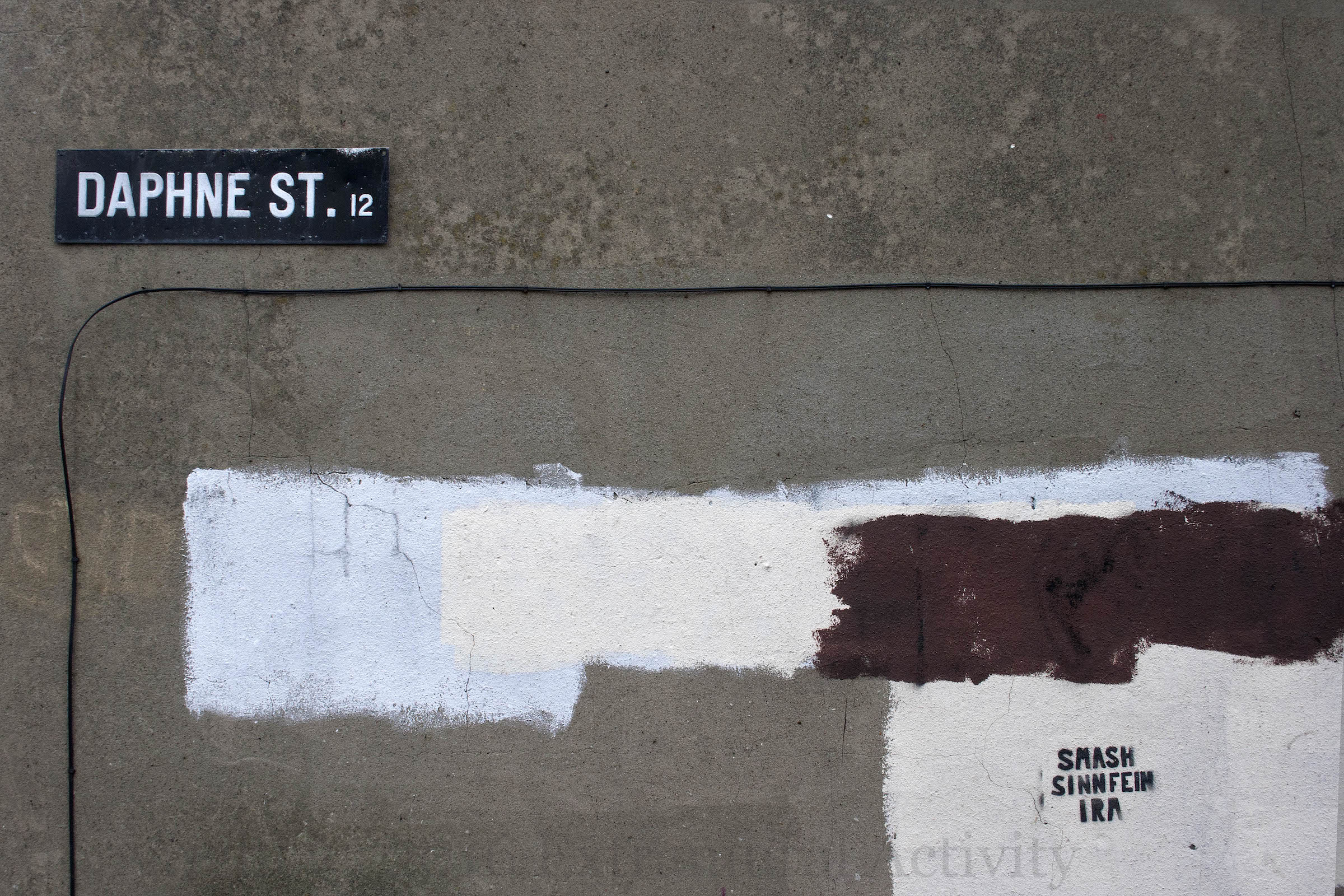
This would have provided a book-end to the mural similar to the gallery of early nationalist figures at the left-hand end. The IRPWA whitewashed the end of the wall (see the third image, below) and commenced work on a POW mural (leading to two sets of painters working at the wall in late July (second image)). In the end, only Leonard Peltier was painted, in the same style as Wolfe Tone. And later, Seany McVeigh’s Pearse Surrenders To The Developers was added (see the fourth image).






 Extramural Activity