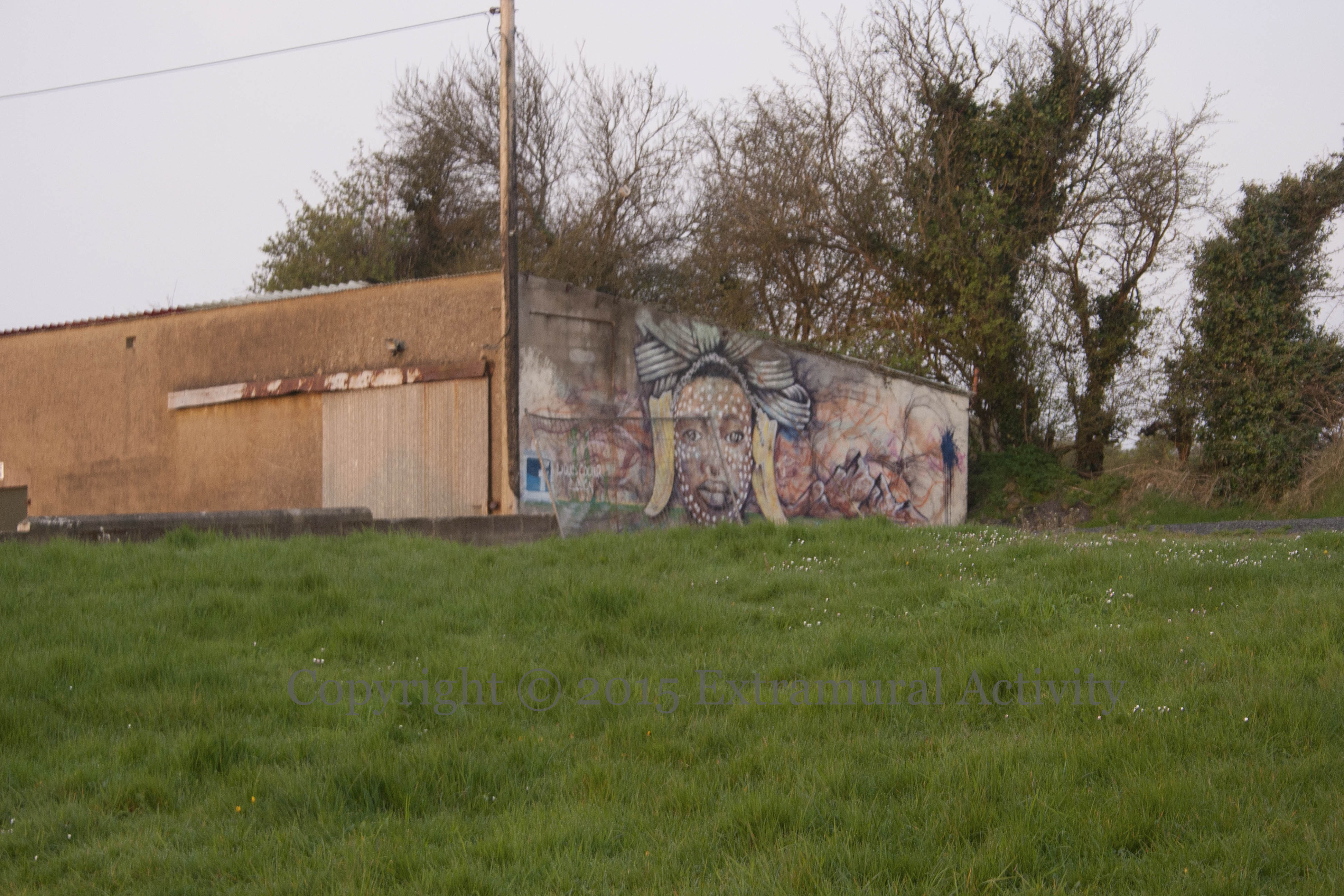
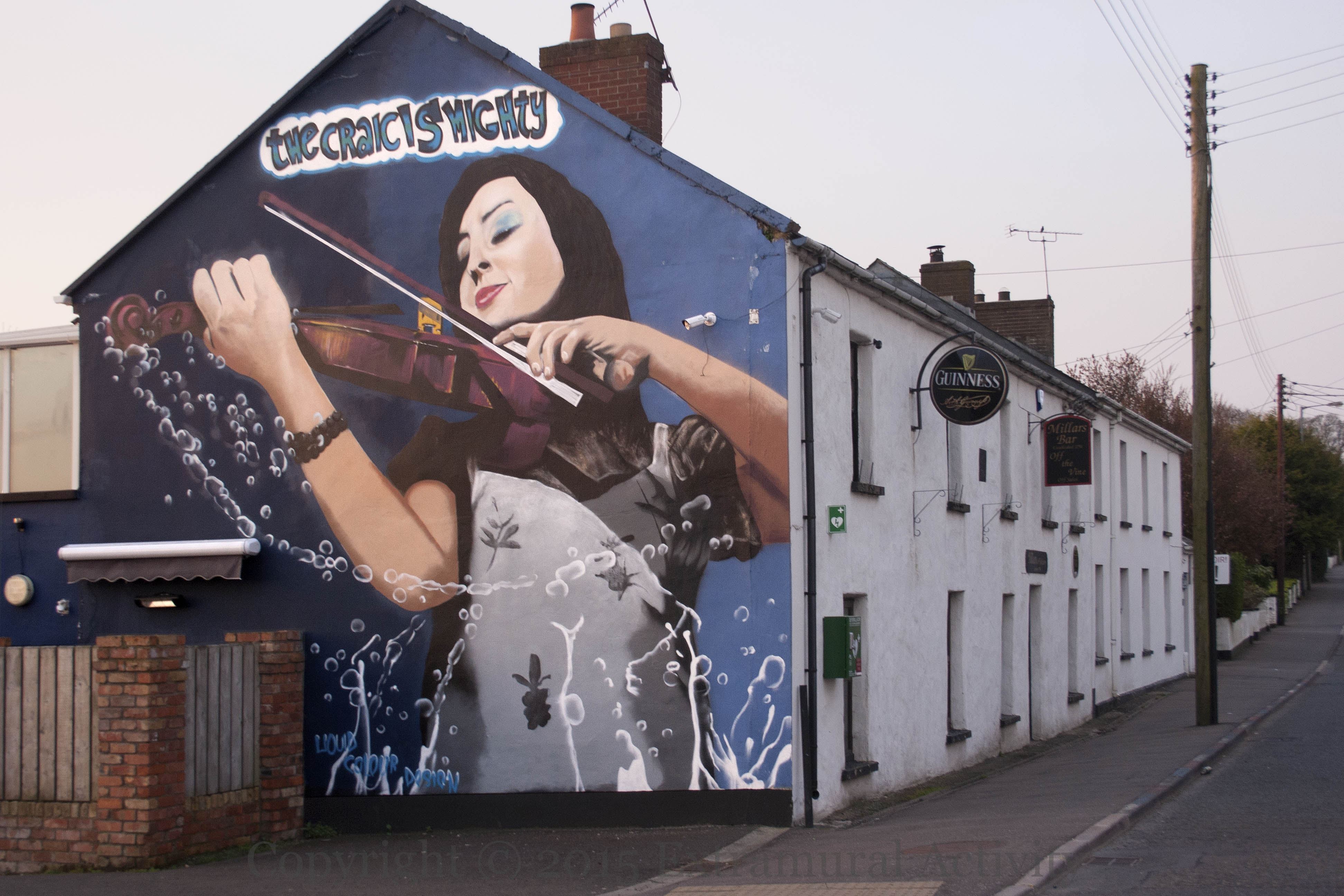
On a barn wall in Ballycarry, County Antrim: a African youth (perhaps Ethiopian Mursi tribe) with painted face and a headdress of warthog tusk and aluminium coils. (By Liquid Colour Design – see also The Craic Is Mighty)
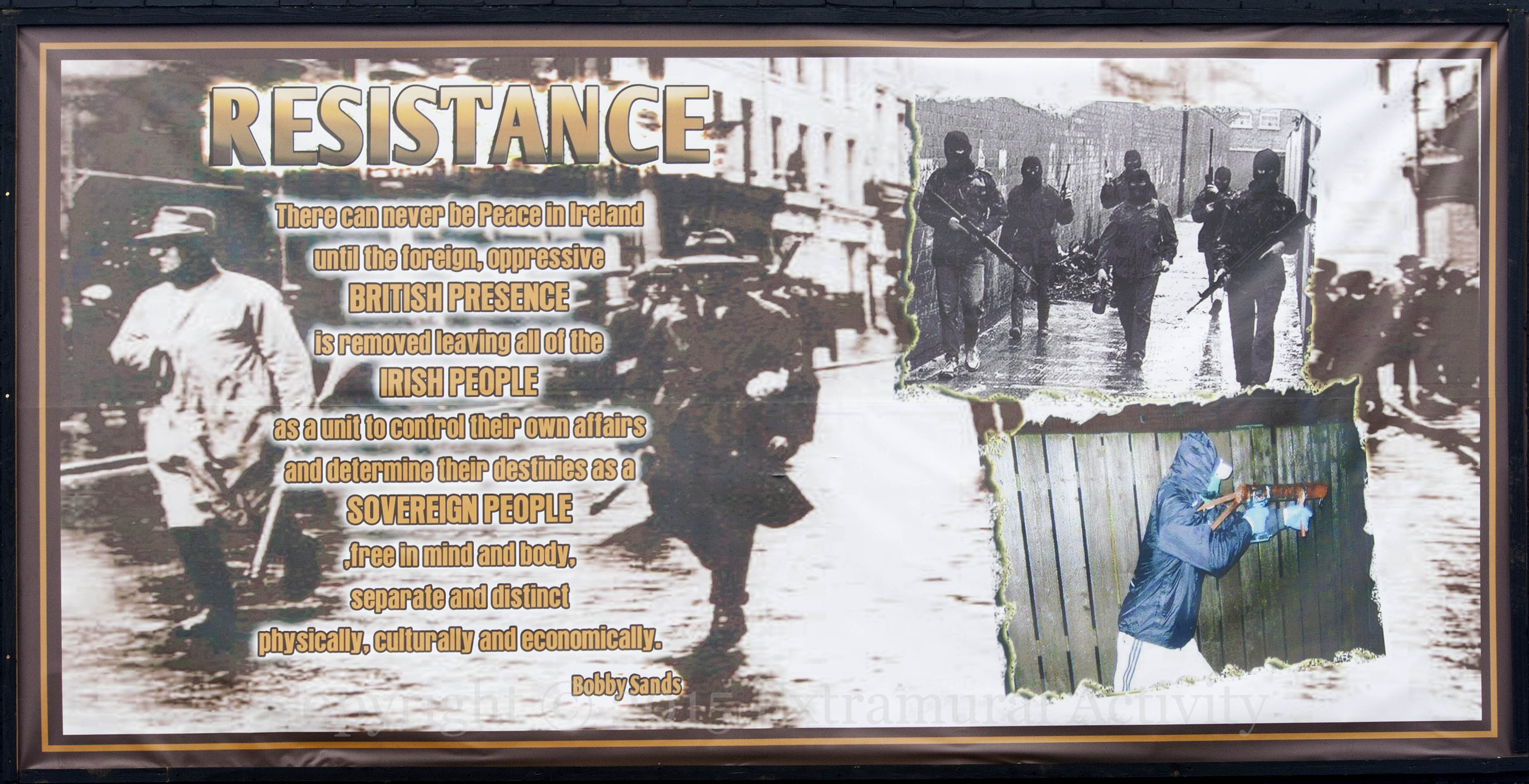
This is a new (2015-04-04) tarp on Ardoyne Avenue showing a scene from Grafton Street in the Battle Of Dublin in the civil war (1922) (irishhistory.blogspot.com), with in-sets featuring PIRA volunteers on patrol in 1987 (BelTel), and a home-made rocket-launcher used in a 2014 attack on police (see, e.g. irishmirror.ie).
“There can never be peace in Ireland until the foreign, oppressive British presence is removed leaving all of the Irish people as a unit to control their own affairs and determine their destinies as a sovereign people, free in mind and body, separate and distinct physically, culturally and economically.” Bobby Sands (Prison Diary May 1st)
Fiddling in the north of Ireland is common to both Nationalist and Unionist communities and the “old Antrim” style is influenced by Scottish playing (USFO).
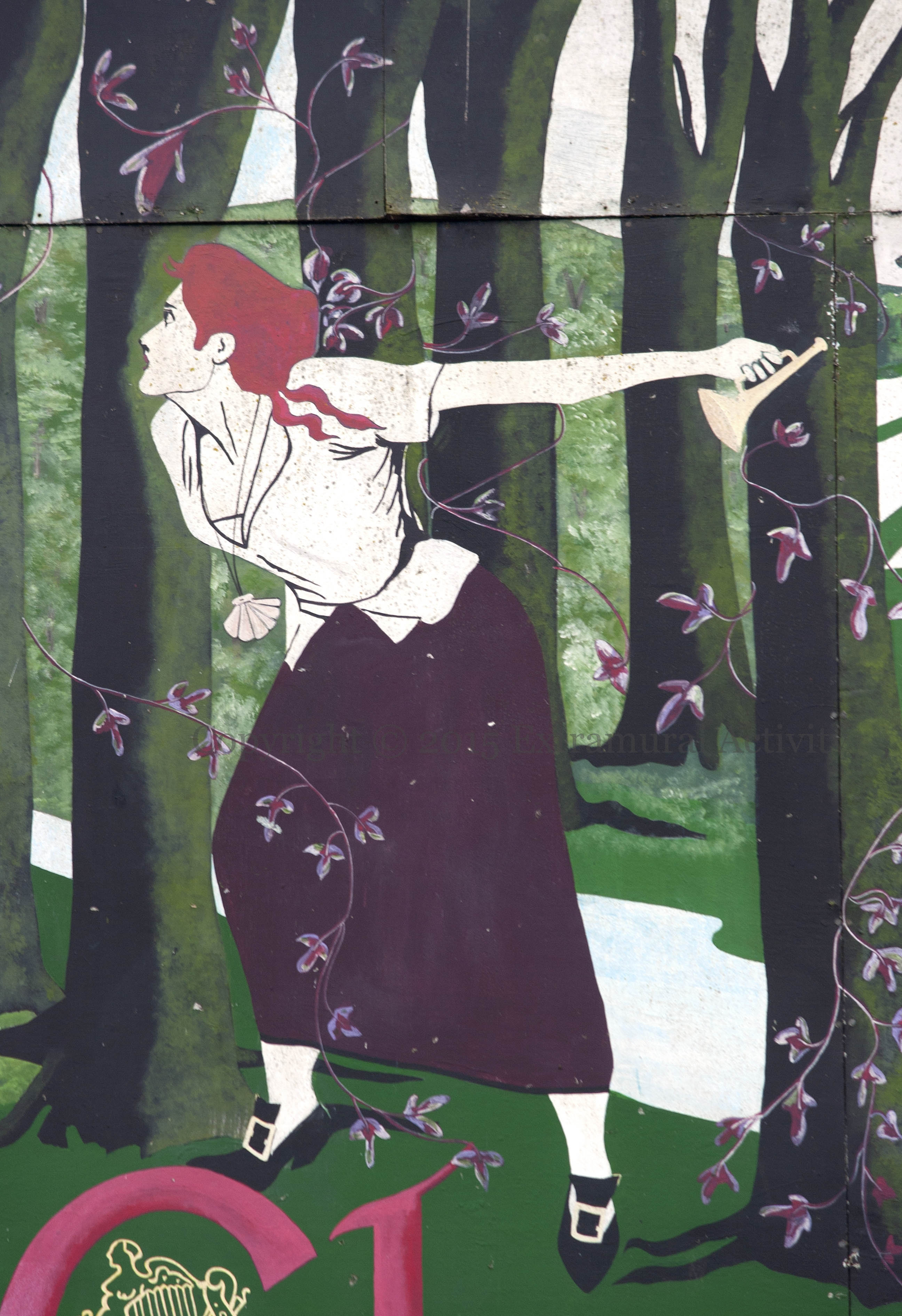
“Were you at the rock?” A red-headed lass (from an illustration in the Weekly Freeman of December 19th, 1891, commemorating 1798) with a horn stands watch for others at a mass rock – a stone in a remote location for Catholic worship, made necessary by a Penal law of 1695 which forbade the religious practice of Catholicism and “dissenter” forms of Protestantism (that is, anything other than Anglicism) (source). The harp, with a “cap of liberty” rather than a crown (WP), together the slogan “Equality – It is new strung and it shall be heard” is the emblem of the Society of United Irishmen (WP). On the other side of the mural (seen below) linen lies in the fields bleaching and a farmer and wife plough the land with a team of horses and distribute seed.
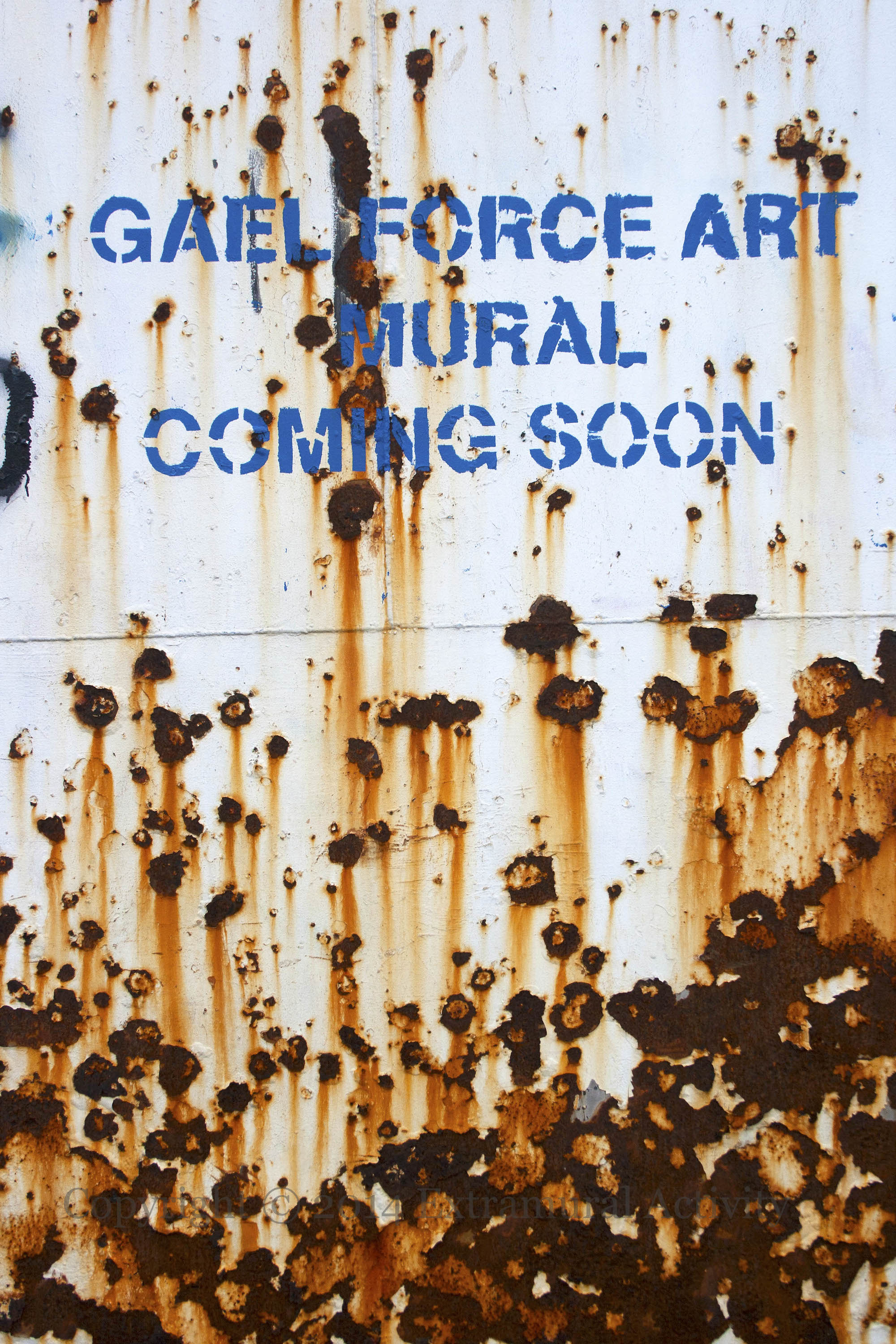
This stencil is at the top of Springhill Avenue, painting grounds of Gerard ‘Mo Chara’ Kelly and Gael Force Art. Mo Chara is in fact currently working on the Falls Road at McQuillan Street, painting a mural of the GPO in flames in 1916.
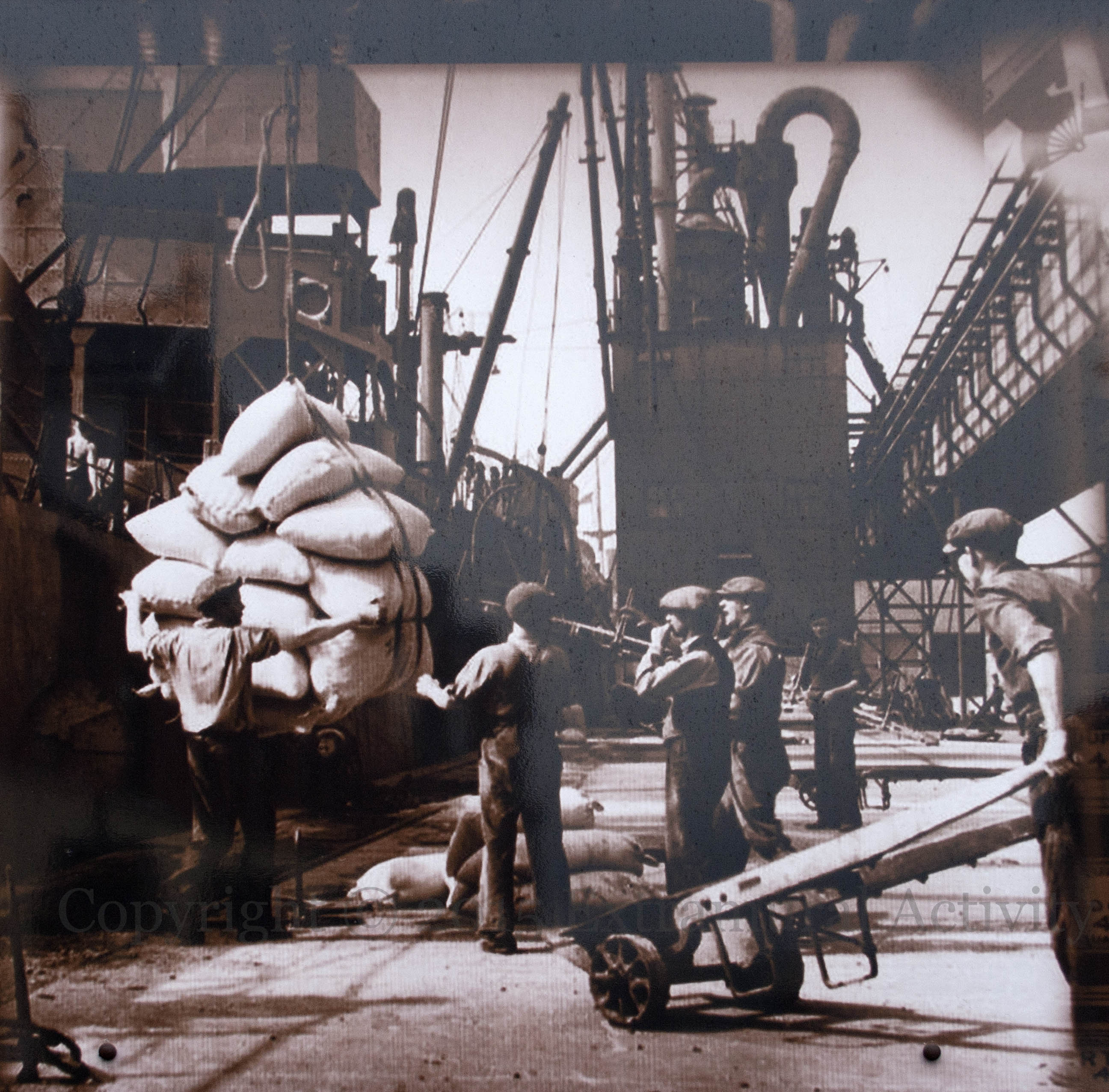
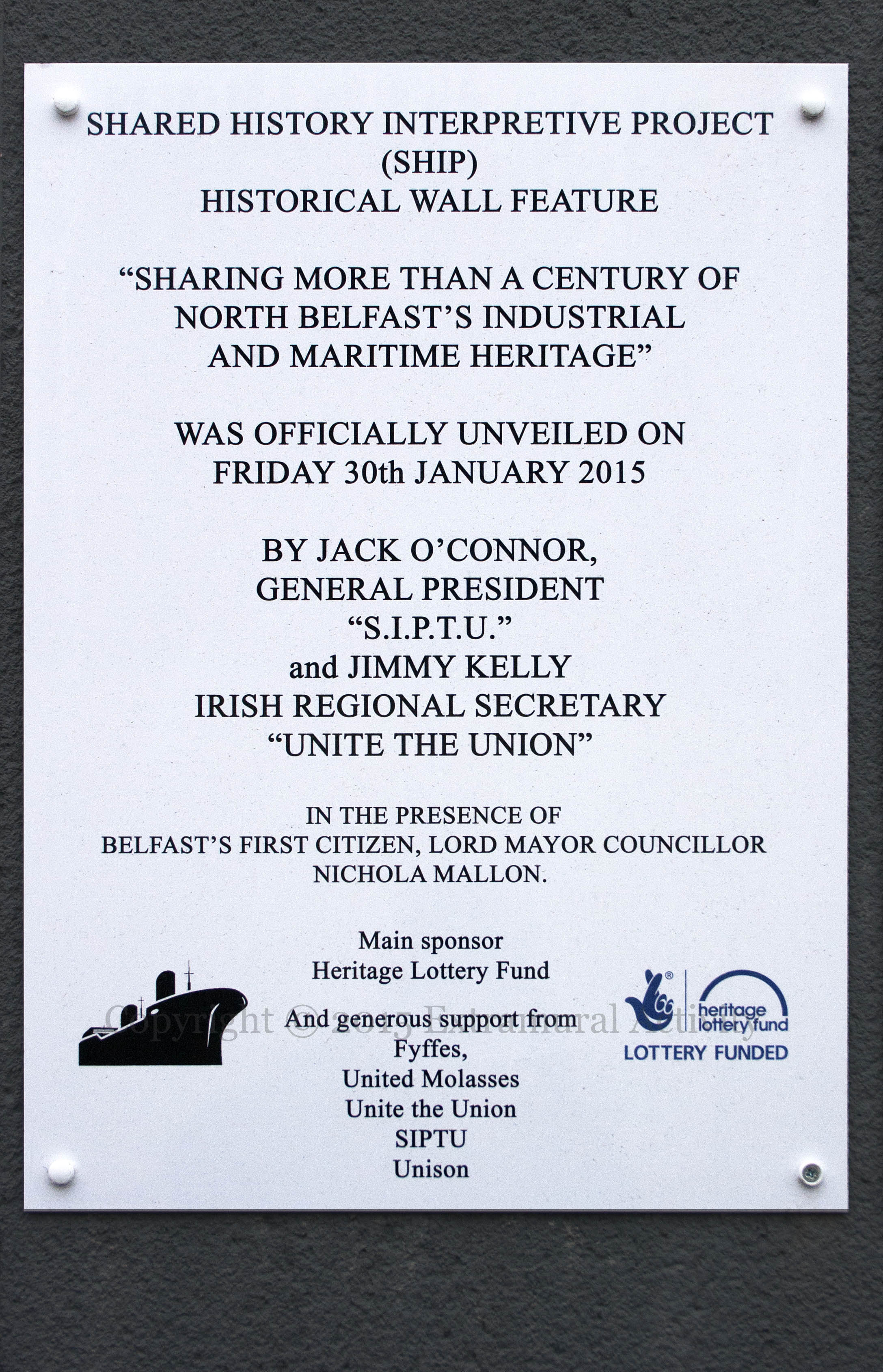
A new “historical wall feature” was unveiled by the Shared History Interpretive Project (SHIP) on the outside of the Dockers Club in Pilot Street in Sailortown. The new piece is a montage of about 60 images of vintage photographs, a census form, and posters of industrial life. In the top-middle (behind the lamppost) there can be seen an image of the board this one replaces, which featured two carters pulling away a heavy load, similar to the carter in the image above. Another addition in the new work is the inclusion of Billy McMullen (1888-1982) and John Quinn (1876-1935) alongside Winifred Carney (1887-1943), James Connolly (1868-1916), and Jim Larkin (1876-1947). Both McMullen and Quinn are Belfast trades unionists. Quinn’s headstone in Milltown Cemetery was featured previously, in Forgotten In Life, Remembered In Death. More information about all five, as well as photographs of dockers and of the unveiling, can be found at the SHIP web site.
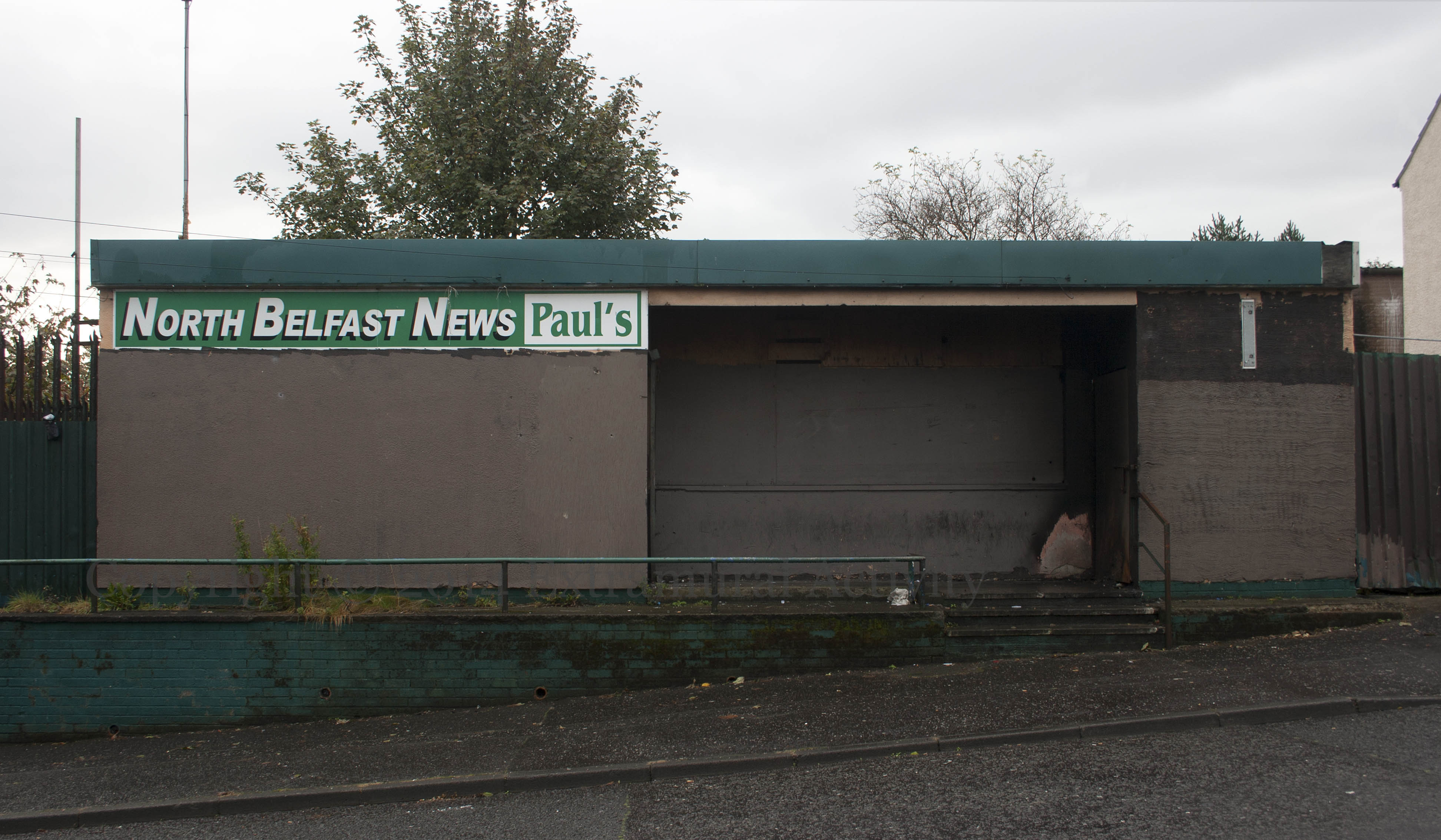
The Bawnmore area lies just beyond the border of Belfast, north of the city council along the Shore Road. While the area has seen many large retail chains erect stores over the last few decades, the local businesses have closed. Above, the Boundary Bar, which was burnt out in 2007, now with fake window dressing; below, Paul’s newsagents around the corner in Mount Street.





 Extramural Activity