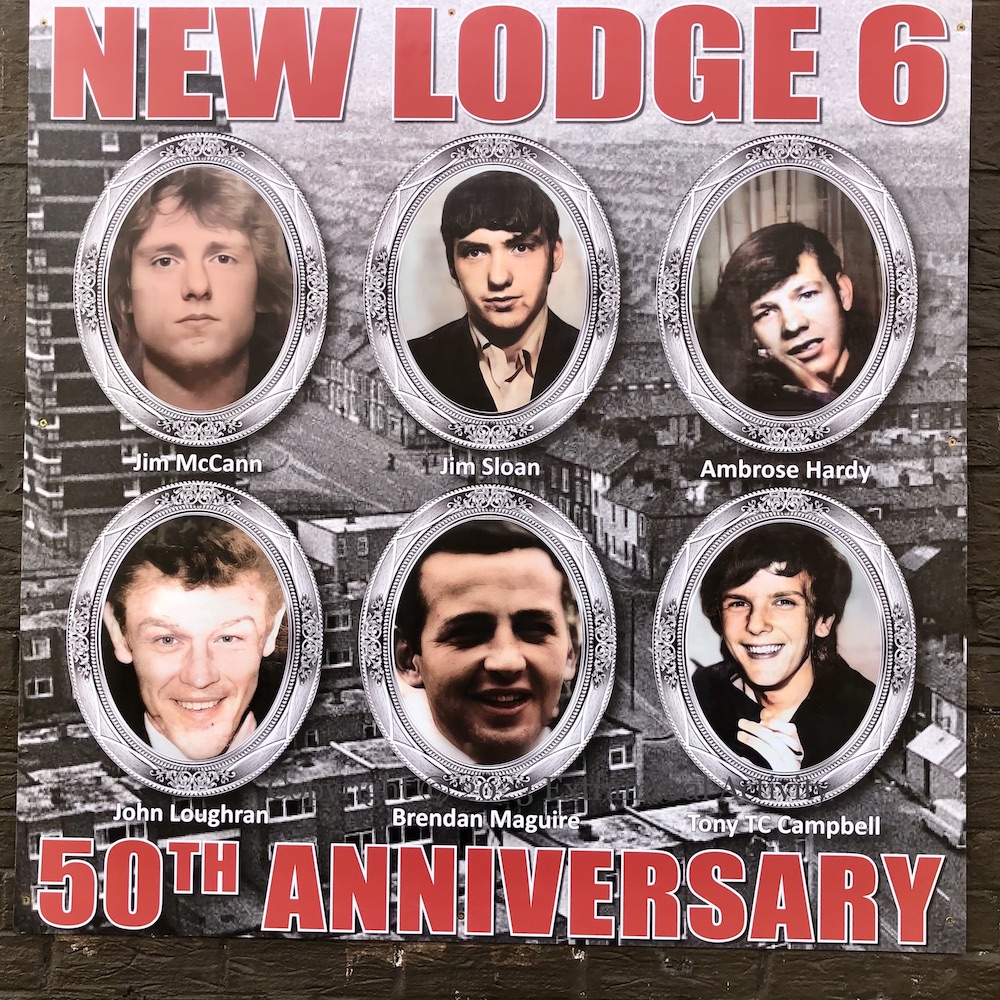
A memorial stone has been added to the fading mural of soldiers of the 15th battalion heading to France in 1915, beginning a list of former members of the Rathcoole Friends Of The Somme (Fb). For the names of the five portraits, and the mural in better condition, see Many Did Not Return.
The title of today’s post is the title of Jonathan Evershed’s book (youtube).
There is now a mural in Stanhope Street of “Carrick Hill in the old days”, of two women talking in the street, to complement the four printed boards.
Below are two of the fifteen boards around the corner in Regent Street, showing the Carrick Castle public house and the old Unity flats.
Other boards in the collection (not shown) show street games, street parties, and Alton United football club, a team founded in 1921 that played in the Falls League and won the 1923 Free State Cup Final (Bohs Sporting Life).
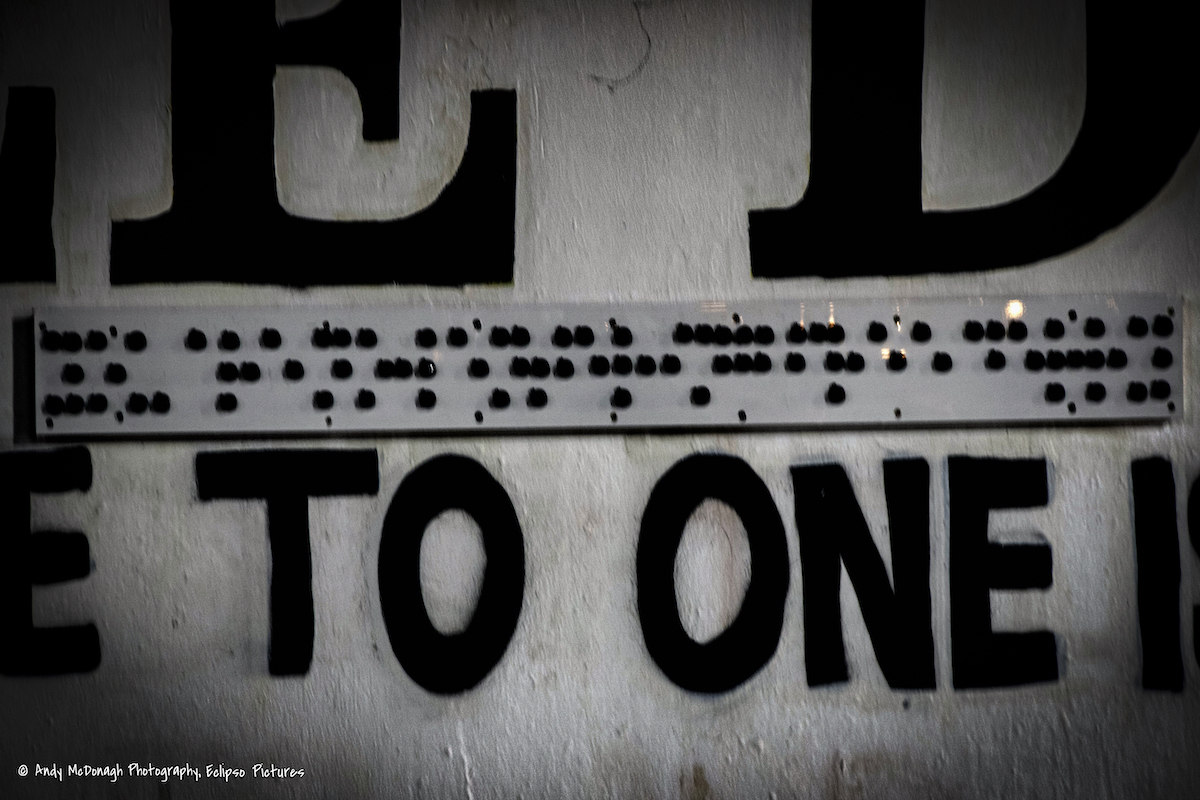
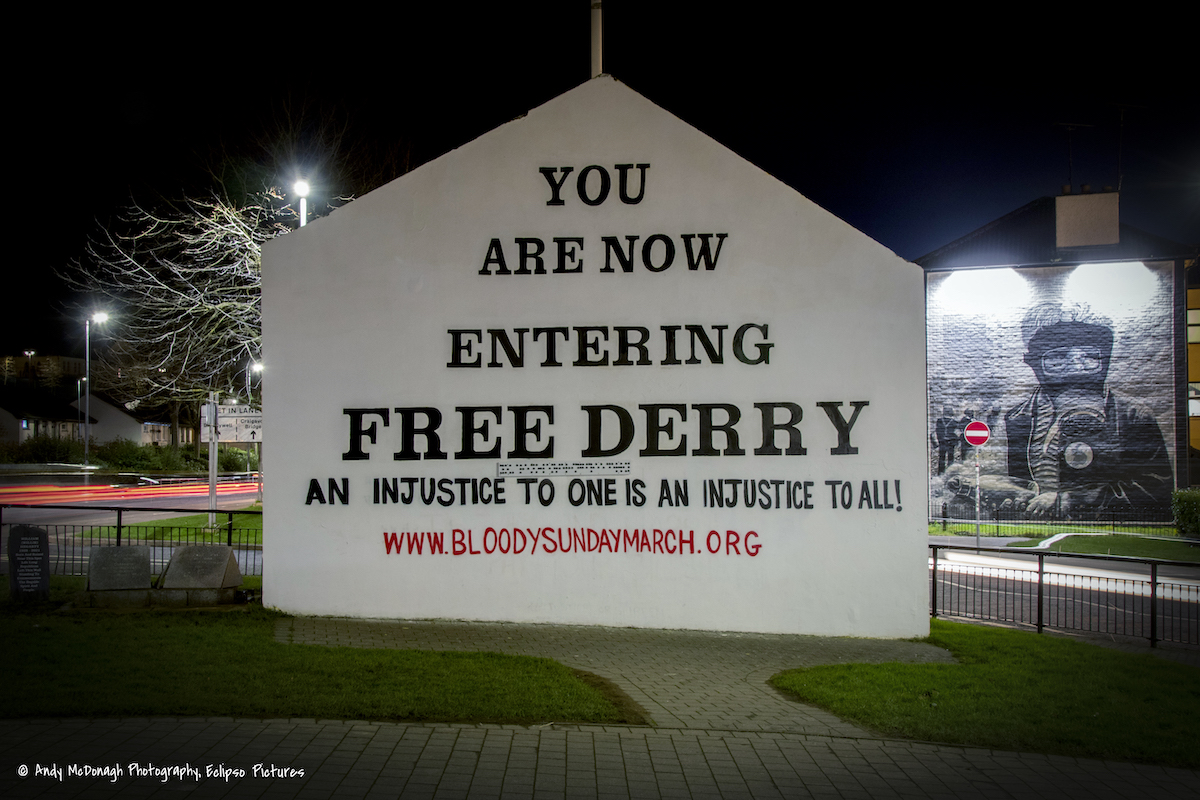
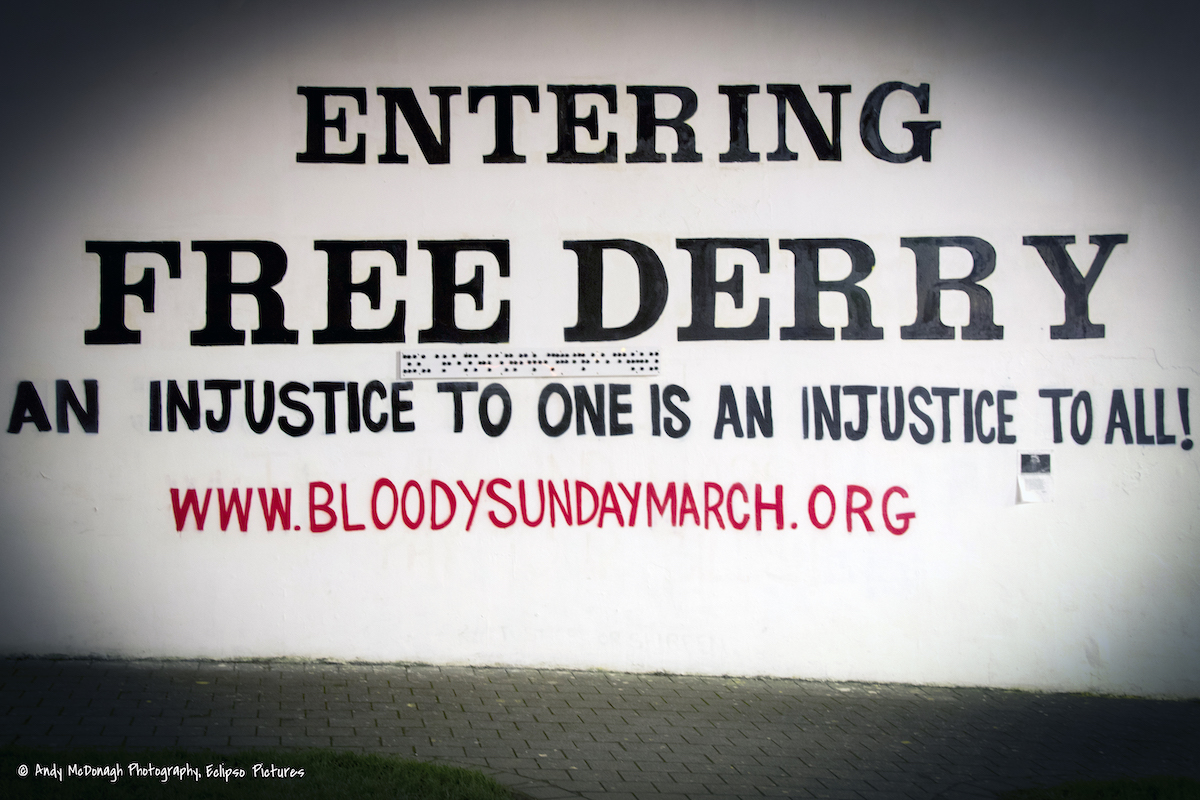
We have featured this ‘bookmark’-dimensioned mural on the so-called “International Wall” before (in 2018) but today include an image (the third one, below) of the replica cell inside the museum itself; a sharper image (and the source for the painting) can be seen on the home page of the Museum’s web site.
The UVF 1st East Antrim Battalion is “Still ready & willing to defend the people of Ulster against all foes” including the British government that – even as Northern Ireland marks its centenary – has “deserted” it over the NI Protocol that involves checks on goods moving between Britain and Ireland (whether north or south) but no (new) checks on goods moving between north and south (gov.uk). The “still” goes all the way back to 1912, when the British government of the day proposed (for a third time) “Home Rule” for Ireland and the Ulster Volunteers were formed – though the original “deserted” postcard and previous murals show the date as 1914.
The Seymour Hill WWII mural will be 14 years old this coming July (2023) but it is hanging on fairly well. It is quite faded – especially the parachutes at the top – but there is no graffiti on the wall itself, only on the wall below it. For the mural when new and information about the US camp and portrait of Colditz prisoner William Harbinson, see M04776.
There are Orange Order lodges in Ghana and Togo and there were previously lodges in South Africa and Nigeria (History Ireland | WP). A photo of the Ghanaian representative in the mural – Dennis Tette Tay – is included in this BBC article. The Canadian representative is perhaps from “Mohawk Loyal Orange Lodge No. 99” on the Mohawk Reservation at Desoronto, Ontario, Canada (Fb).
Enniskillen singer John Garrity (ig | Fb) is a familiar face in Belfast city centre, often seen busking in Castle Place and Cornmarket. He drew criticism in September 2021 for singing the ballad ‘Grace’ – about the hours-long bride of James Plunkett, executed after the 1916 Rising – while an Orange Order parade passed by. Garrity claims he was already singing the song when the parade happened to come by (Belfast Live). (Here is a rendition from another occasion – youtube.) He then gained a persistent heckler (Irish News). Now he is the subject of a mural by Glen Molloy (ig) in Donegall Street, Belfast, on the wall of the long-ago burned-out North Street Arcade, where Matt Sewell’s Carnival Of The Animals was.
The stencil is in Mount Vernon, which is also home to a series of metalworks – see They Sleep Beyond Ulster’s Foam. That title, as well as the title of today’s post, comes from Binyon’s poem For The Fallen, the fourth stanza of which is often cited in memorial for the dead of the Great War: “They shall grow not old, as we that are left grow old; / Age shall not weary them, nor the years condemn. / At the going down of the sun and in the morning / We will remember them.”
The stencil is perhaps not only a memorial to the dead of WWI – the planes appear to be WWII models such as the Hurricane or Spitfire on the electrical box (and in A Miracle of Deliverance); most WWI planes were biplanes.
Here are six pieces on the fence above the Townsend Street gates in the west Belfast “peace” line (seen previously Da War Is Not Over Yet and Mickey Marley’s Roundabout) depicting life in years gone by in the Townsend Street/Brown’s Square area. The six are (from left to right on the street/top to bottom on this page):
Messages – “Doing” or “running” “messages” means grocery shopping.
Half Moon – the “half moon” was the semi-circular area on the pavement outside a terraced house that would become shiny with repeated washing. Here are some descriptions and memories from Belfast Forum.
Born, Wed And Buried On Townsend St
Atlas & Soho: The Soho iron foundry in Townsend Street was owned and managed by Robert Shipboy McAdam and his brother James (Ricorso | Grace’s); the Atlas foundry was at 73 Townsend Street and owned by Victor C Taylor (Lennon Wylie).
Dog Walking Man
These appear to be prints or photographs on boards, rather than stone casts as on the CNR side of the gates: see The Oasis.