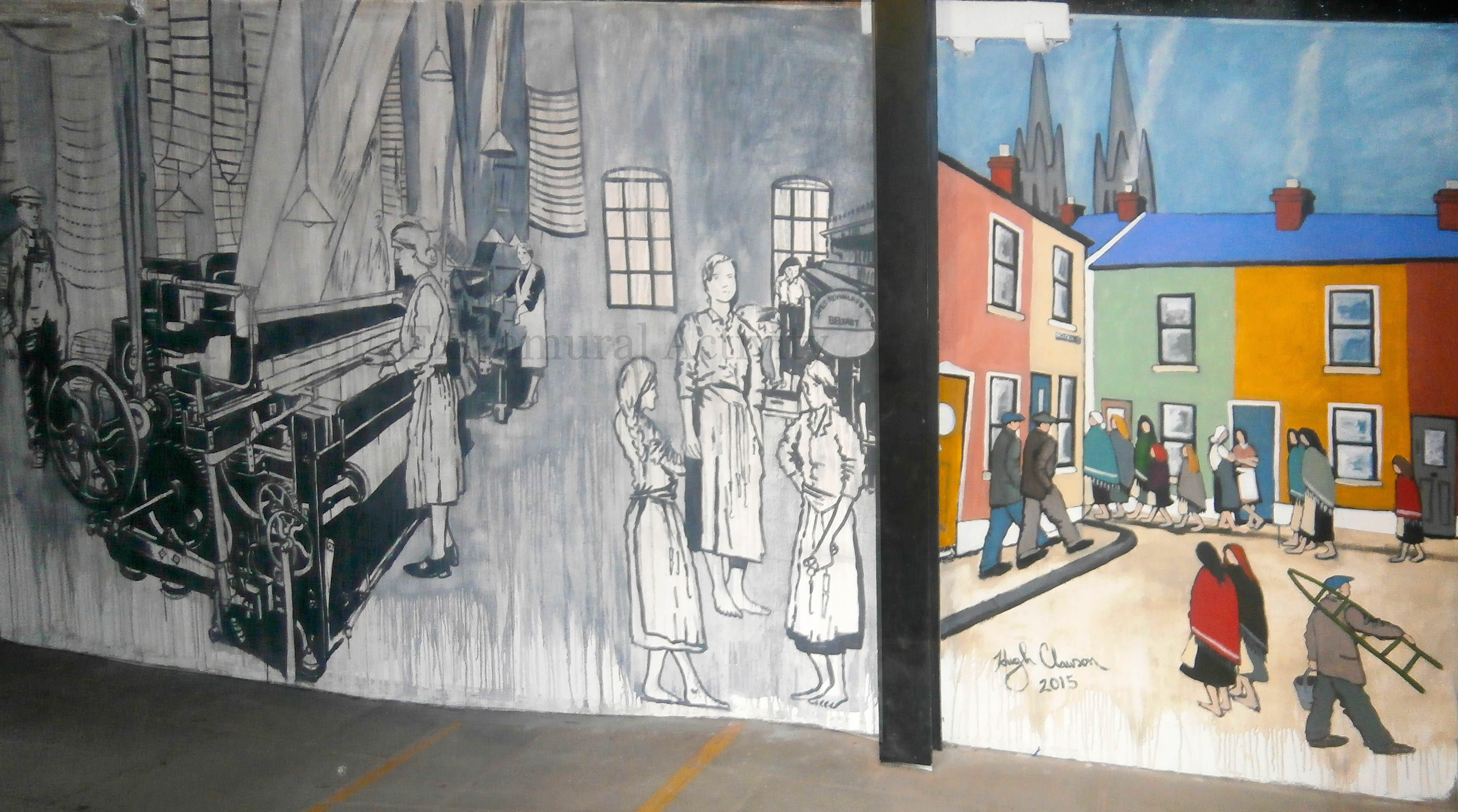
Work by artist Hugh Clawson (whose web presence is extremely modest) inside Conway Mill showing life in the mill and the lower Falls/Clonard area from years gone by. Painted directly onto an interior wall.
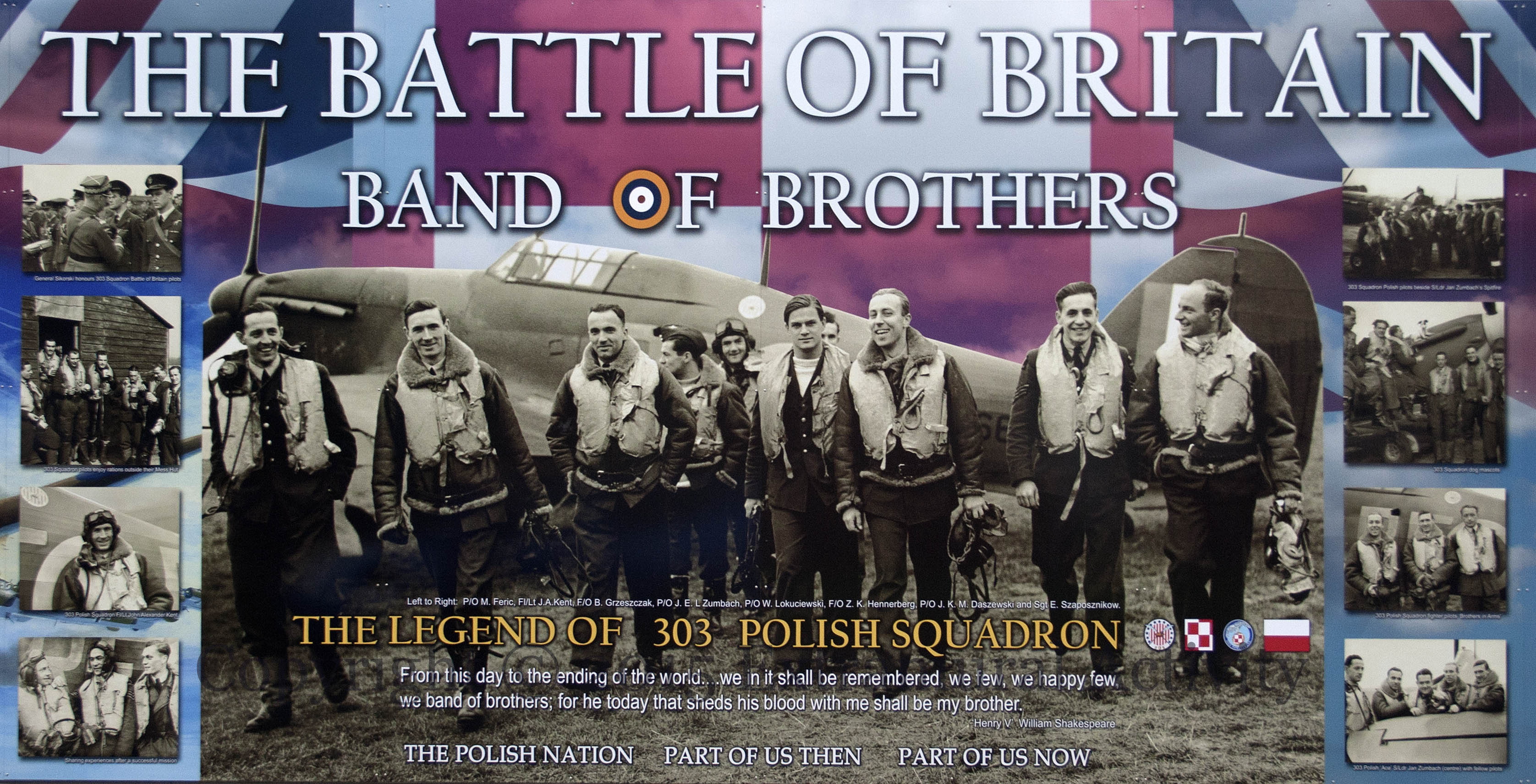
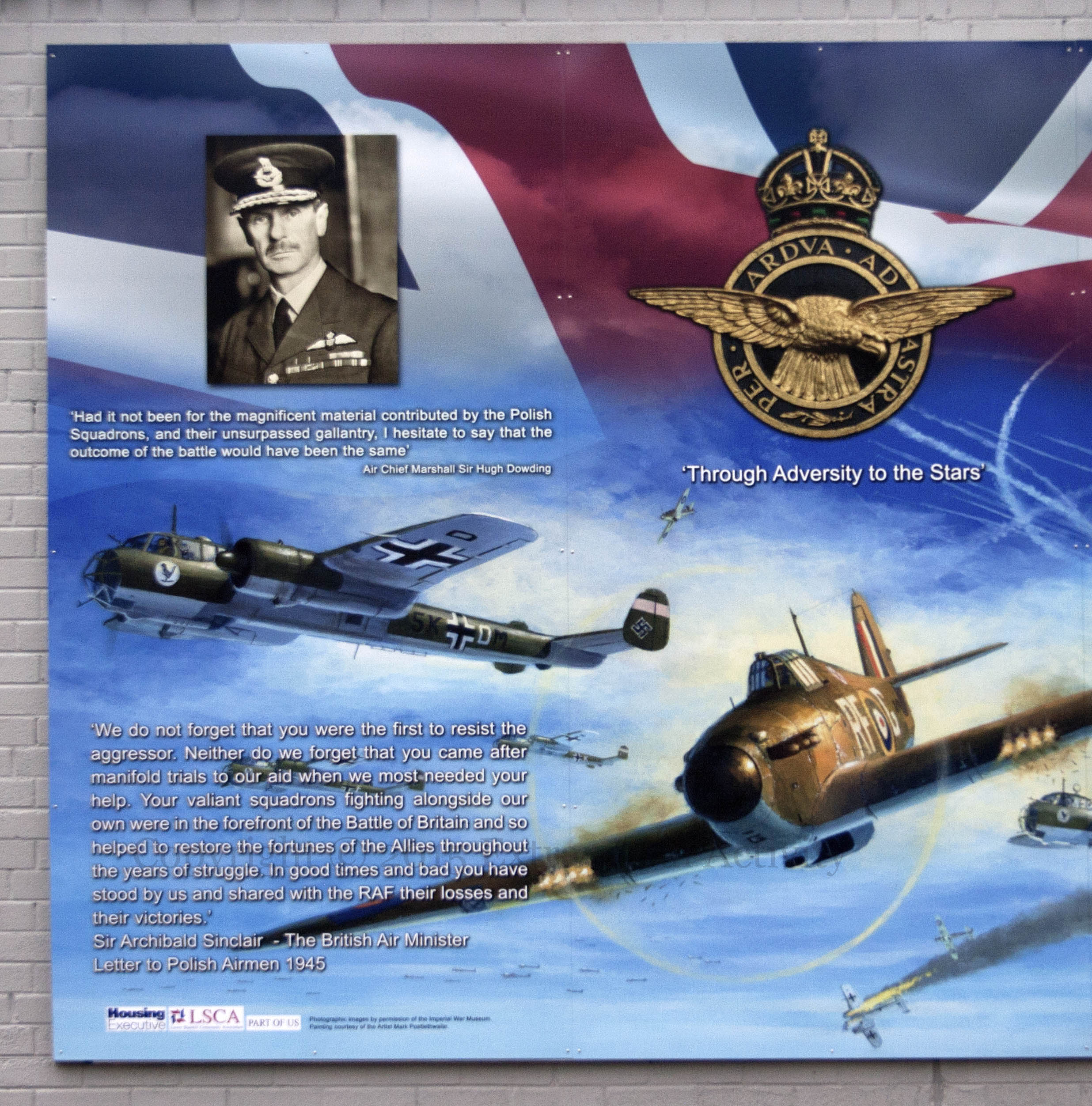
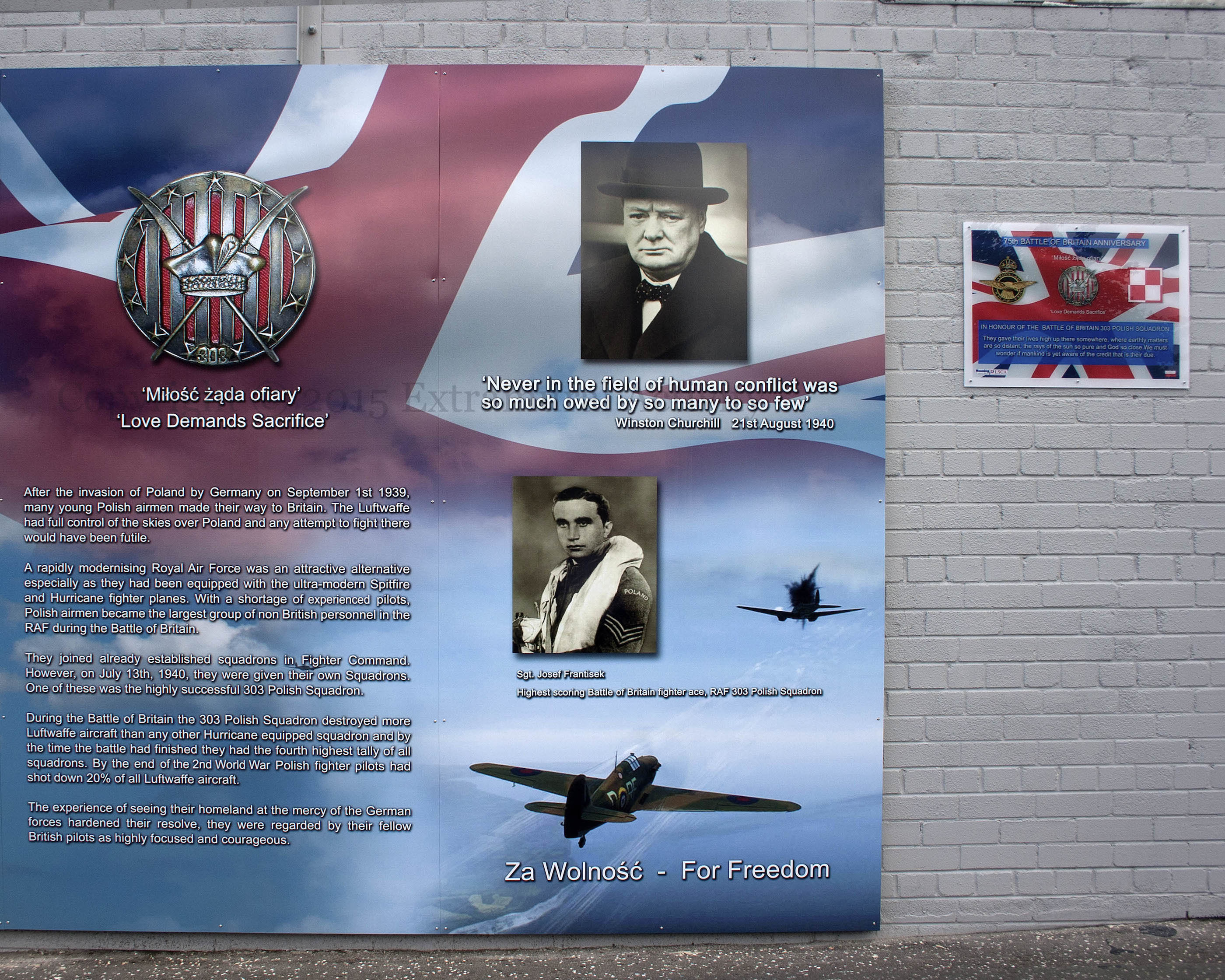
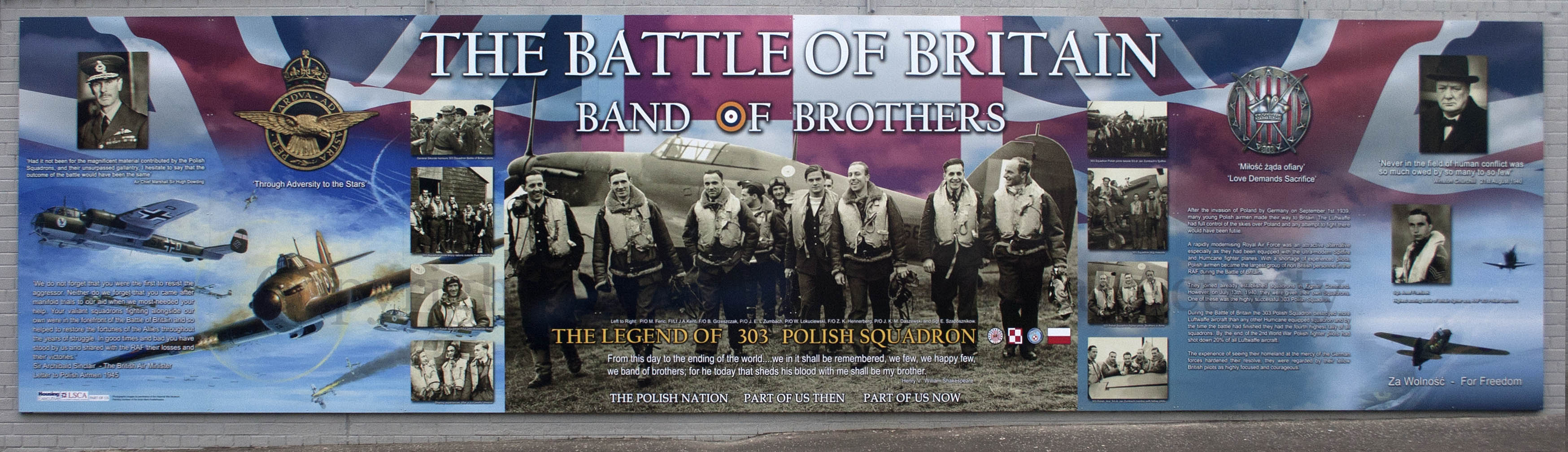
The board featured here (above and three shots below) has a dual purpose. On the one hand, it is part of celebrations marking the 75th anniversary of the Battle Of Britain, which was waged from July to October in 1940. On the other, it is part of an anti-racism project, celebrating in particular the contributions to the Battle made by roughly 145 Polish aviators (WP) and especially the 303 squadron: “The Polish nation – part of us then, part of us now”. The 303 was later stationed in Northern Ireland for a time. (BBC-NI)
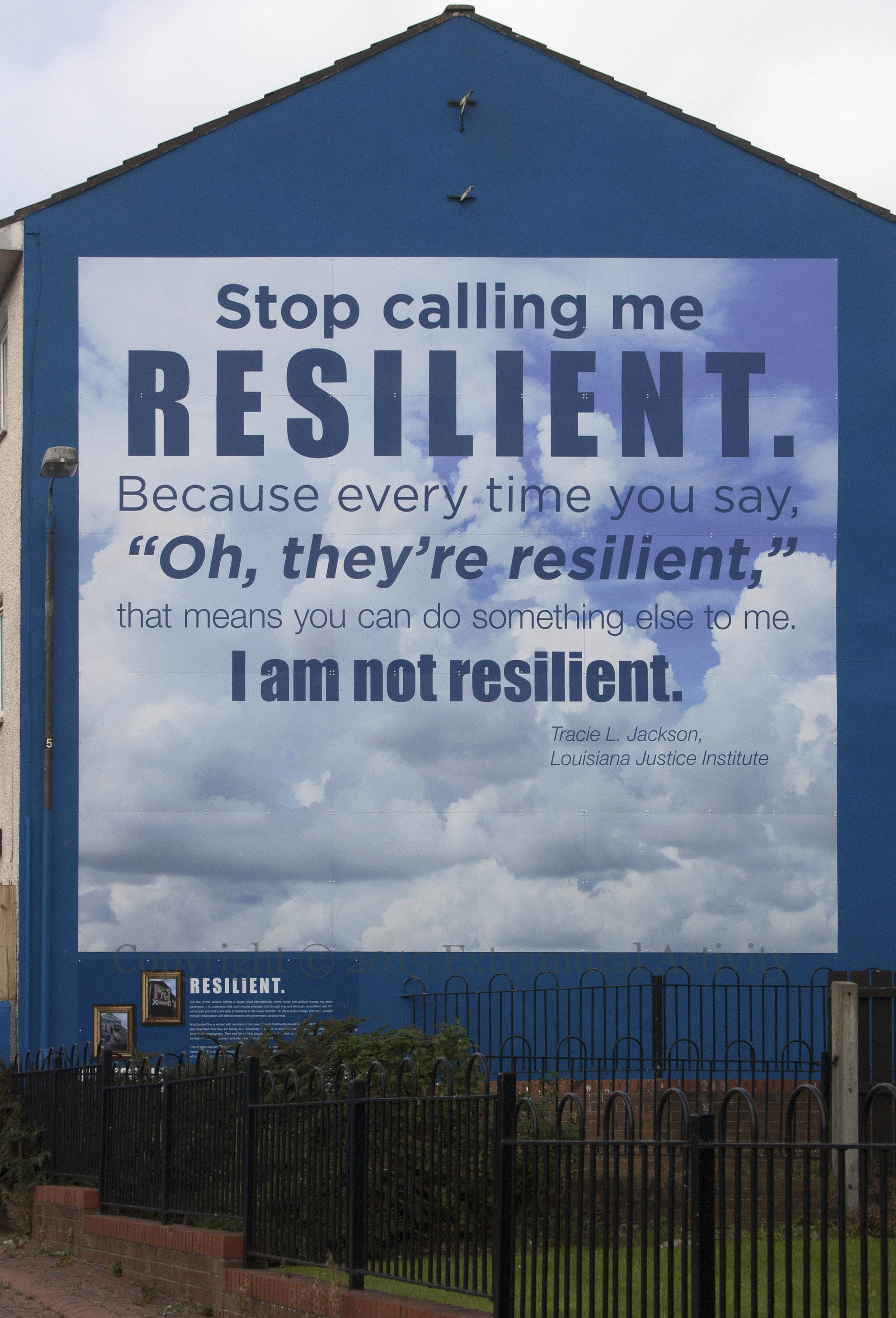
The lower Shankill estate has been re-imaged (again). The history of re-imaging in the lower Shankill is told by the new piece at Boundary Way: the wall first sported a mural critiquing Sinn Féin’s role in the peace process (see this 2004 image) before being replaced around 2007 by a mural celebrating Andrew Jackson’s Ulster-Scots heritage (see X00285). The new work sends a mixed message: the word “resilient” is in large letters and is the title of the piece, but the quote reads “Stop calling me “resilient”. Because every time you say “Oh, they’re resilient,” that means you can do something else to me. I am not resilient.” The quote would seem to be by Tracie Washington (not: Tracie Jackson) of the Louisiana Justice Institute. The left-hand side wall, which read “UDA Est. 1971” was painted over. For a description of the launch, see this Housing Executive report. Five printed pieces (four of them new this year) have replaced various murals in the area.
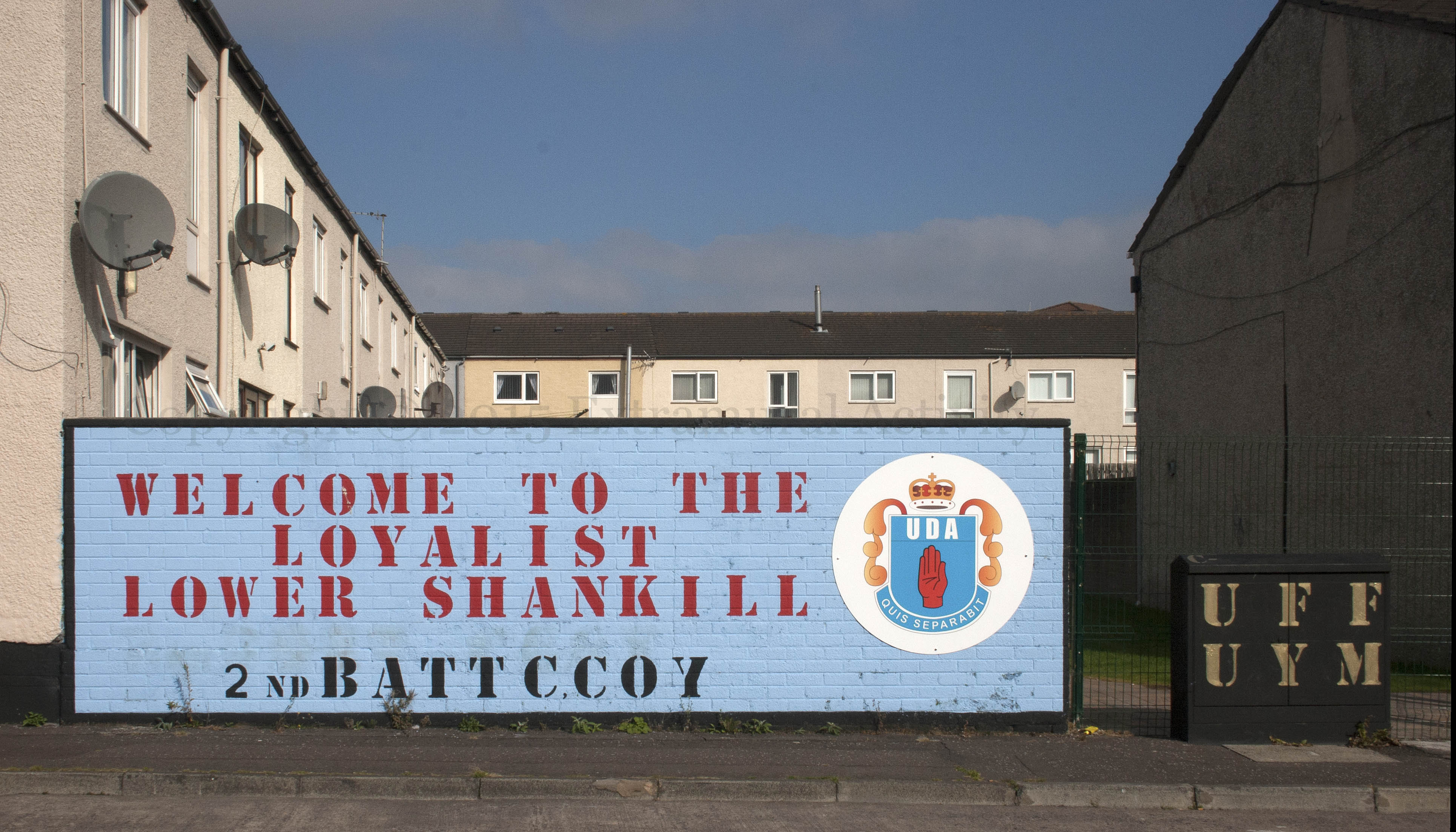
The South Belfast UDA this week issued a statement that they “won’t be leaving any stage whilst republicans of any faction still exist”. As the Newsletter article notes, the South Belfast branch of the UDA does not speak for the whole organization. Until confirmed, then, the new mural above – “Welcome to the loyalist Lower Shankill – UDA 2nd Batt. C. Coy” – provides only circumstantial evidence …
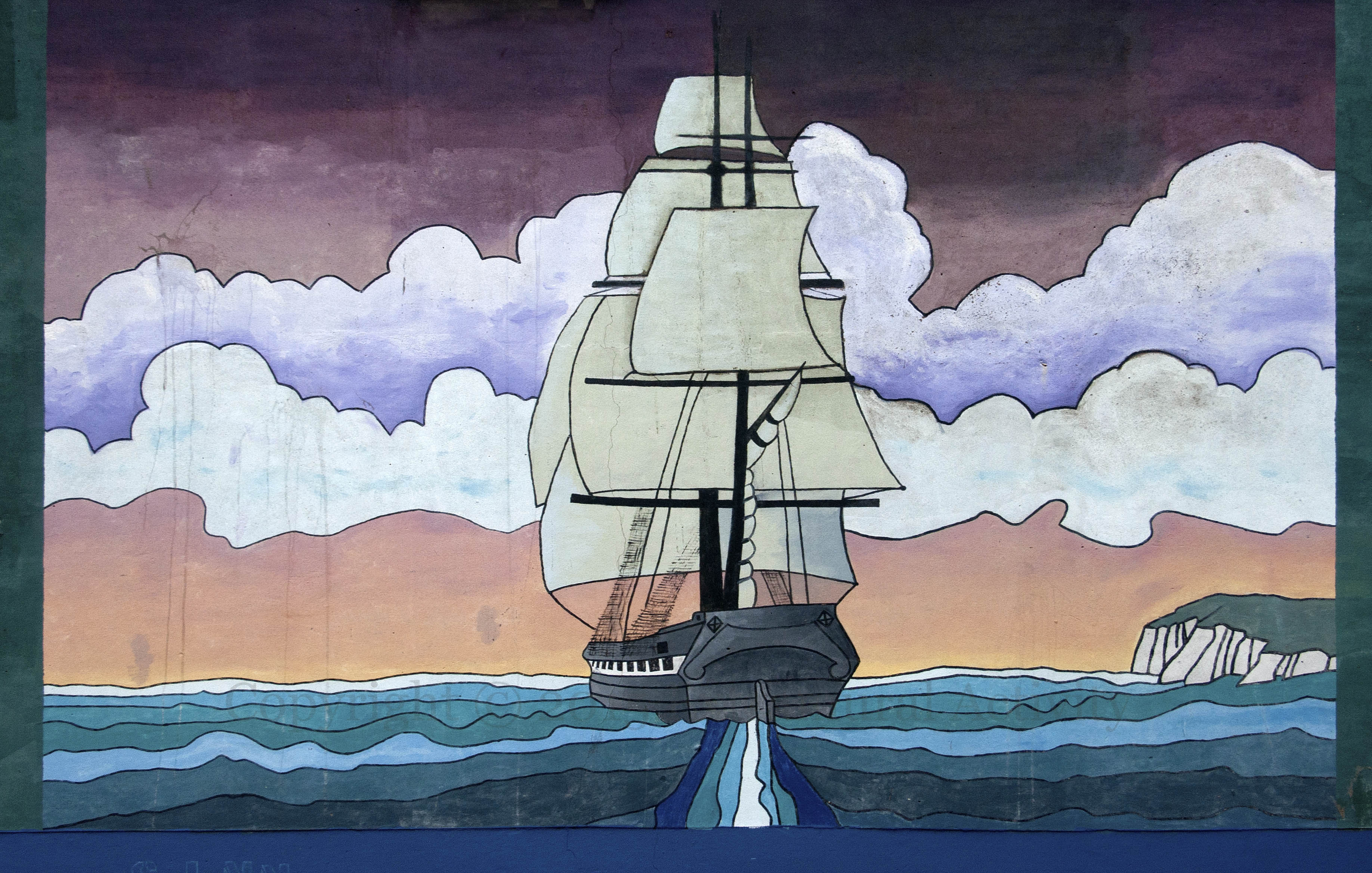
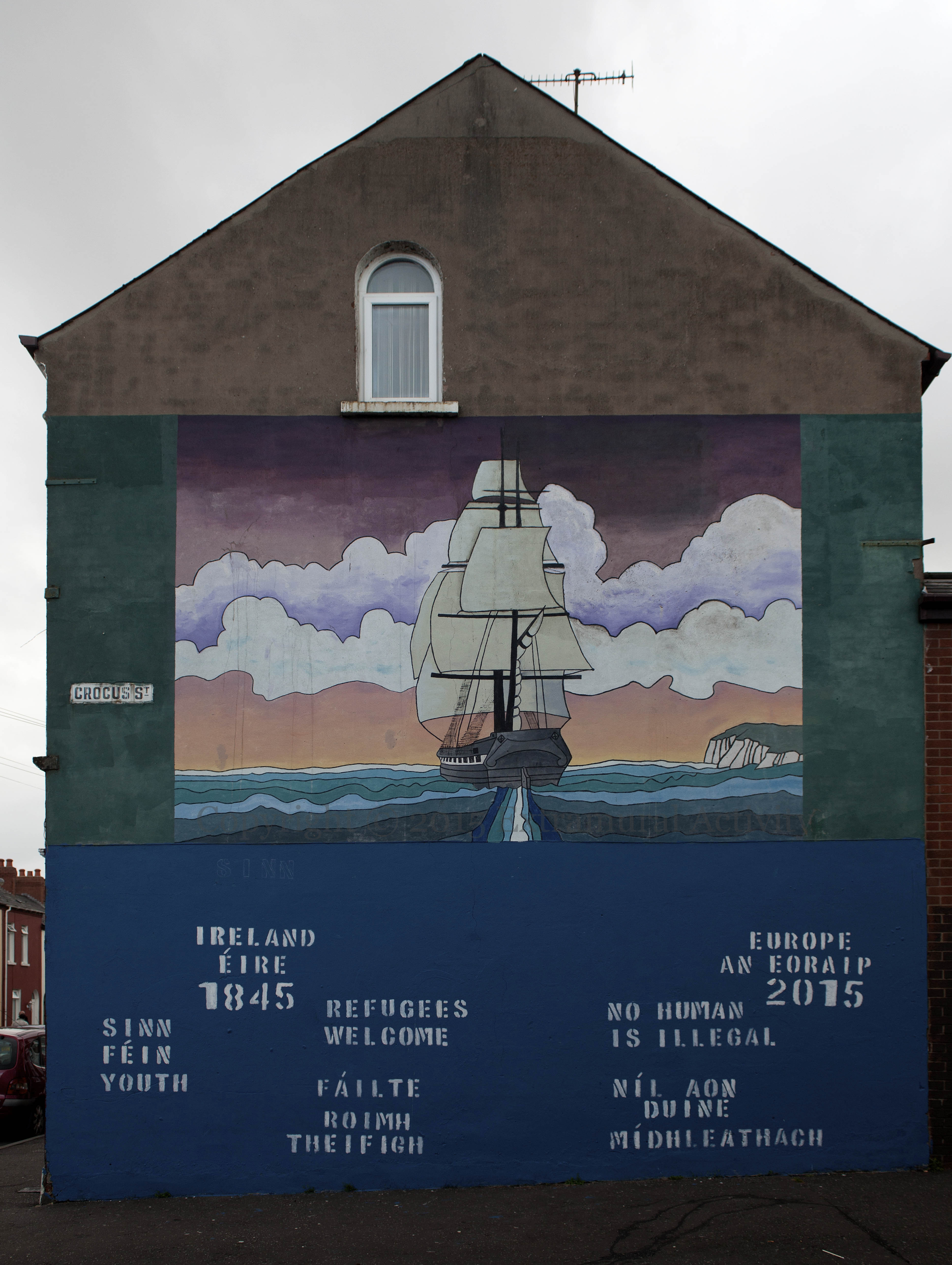
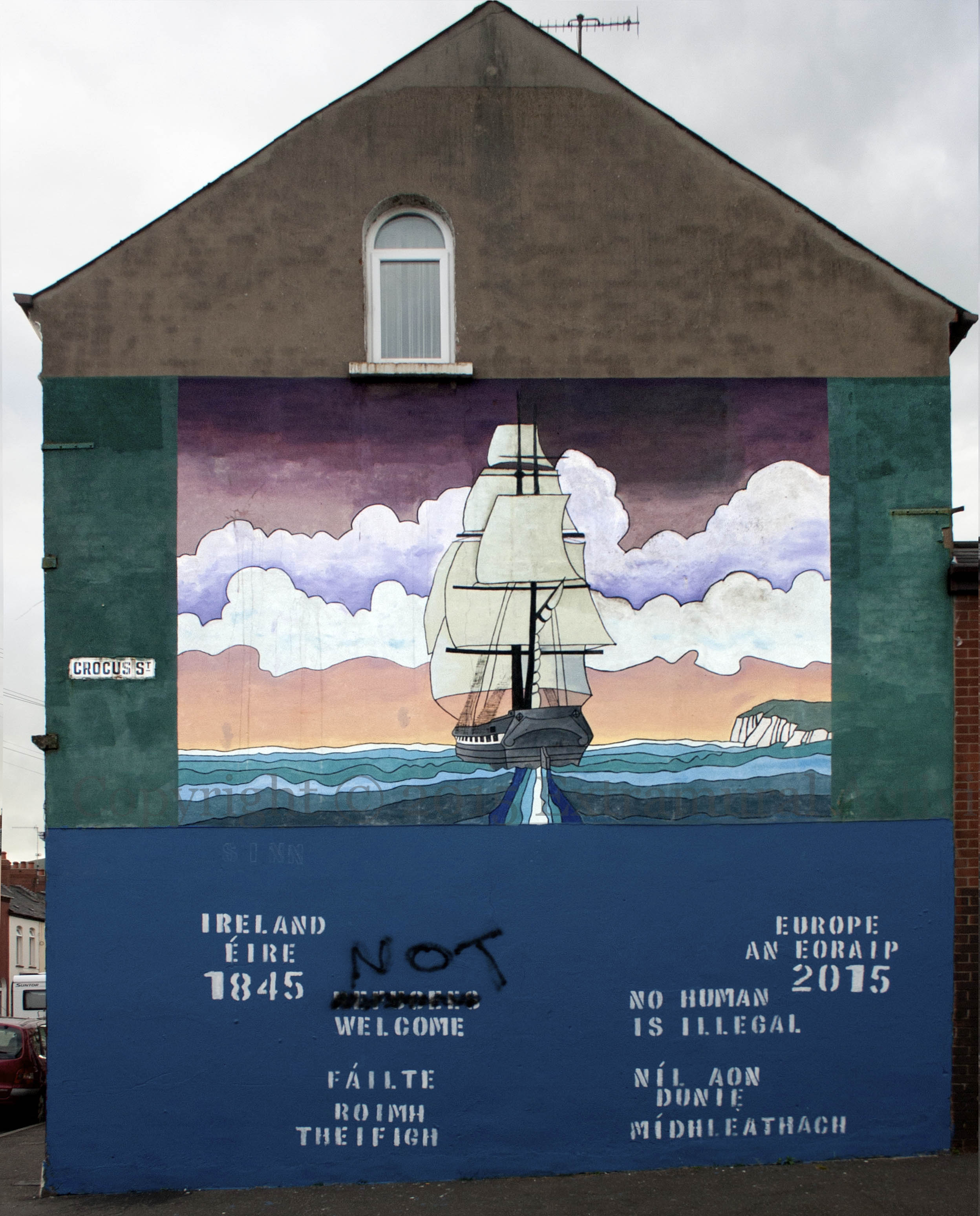
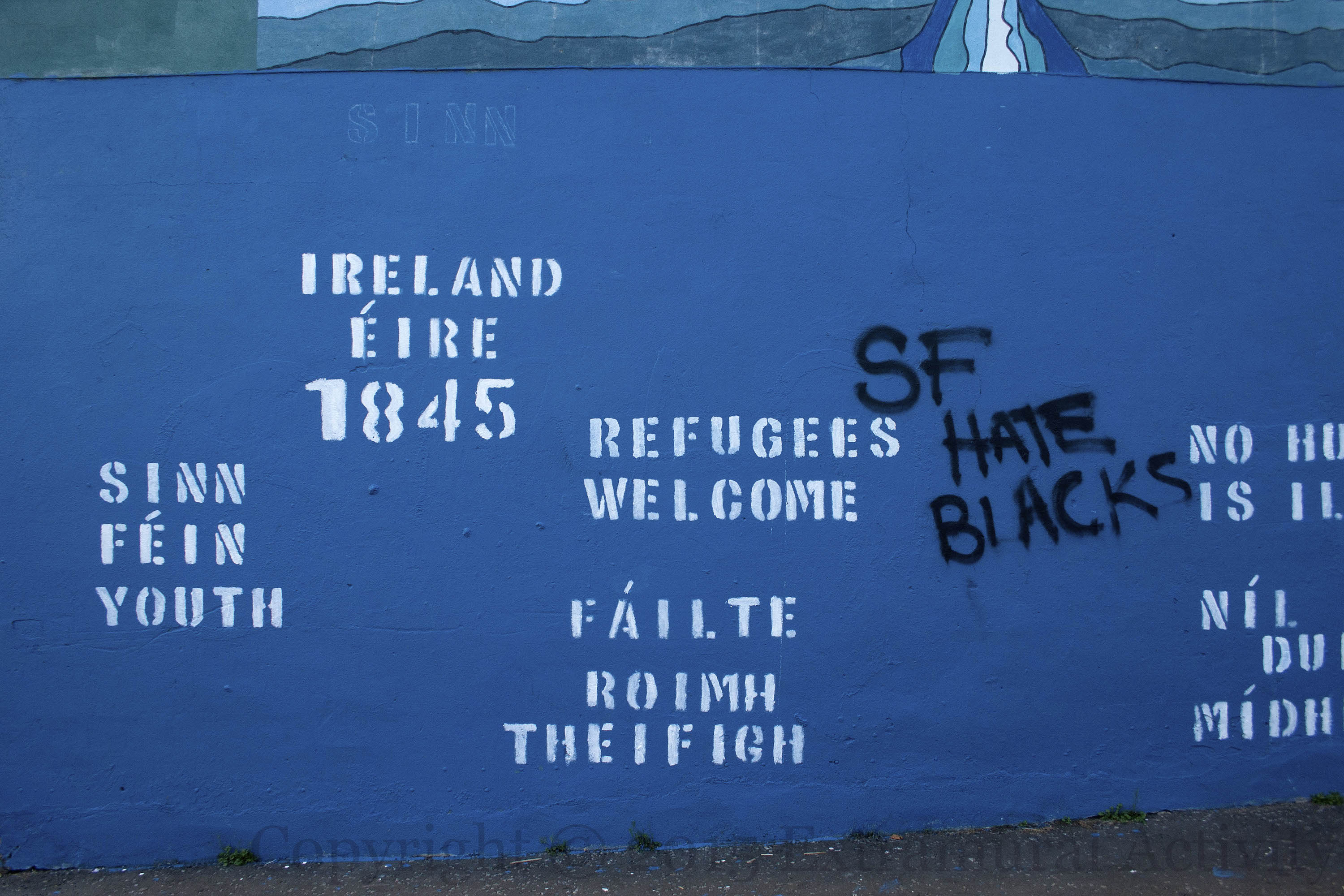
Incidents involving ships of African emigrants seeking refuge in Europe are so many that there is a separate Wikipedia page for them. In response to the crisis, an old mural in Crocus Street (see M01486) remembering the emigration of Irish to North America during the Great Hunger was repainted and the lower part (which had images of the Great Hunger) replaced by stencilling which makes reference to the 2015 situation: “Ireland/Éıre 1845 – Europe/An Eoraıp 2015”, “Refugees welcome – Fáılte roımh theıfıgh”, and “No human is illegal – Níl aon dunıe [duıne] mídhleathach”. It was immediately vandalized with a “not” (see the final image, below; Fb) but has now been repaired, along with the mis-spelling.
Update 2015-10-19: the mural has been graffitied with “SF hate blacks” – see the fourth image, below.
Paul “Maxi” McVeigh scored over 200 goals during his career at Donegal Celtic – “The Wee Hoops” – the team he played his entire career with before retiring at the end of the 2012-2013 season. (Sunday World) The club grounds, and the mural shown above and below, are at the top of the Suffolk Road in west Belfast.
The wave of people seeking asylum from political strife in Europe continues.”Fáılte romhaıbh a chaırde” is Irish for “Welcome, friends” while “Qaxootiga soo Dhaweyn” is Somali for “Refugees welcome”. Somalis make up about 9% of the current wave of migrants from Africa and Syrians 33%. (Irish Times) 2,000 refugees are to be settled in Northern Ireland. (belfastlive) The yellow-on-black outline of parents and daughter running originates in the United States, used on ‘caution’ signs along highways near the US-Mexico border. For images of the mural’s launch on September 12th, see the WARN twitter feed.
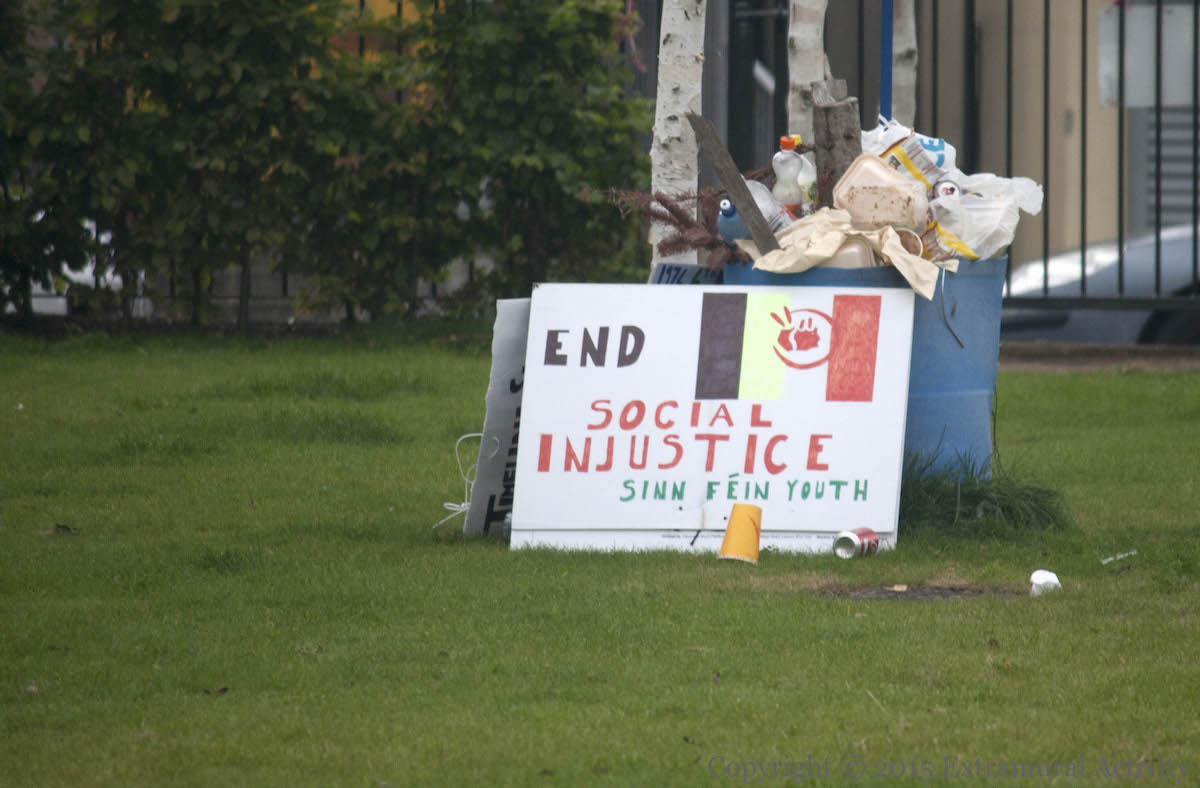
Among the sweepings at the site of the former RUC barracks are placards from Sinn Féin Youth (Fb), one bearing a (never-before-seen) Red Power flag (WP). “End social injustice”.
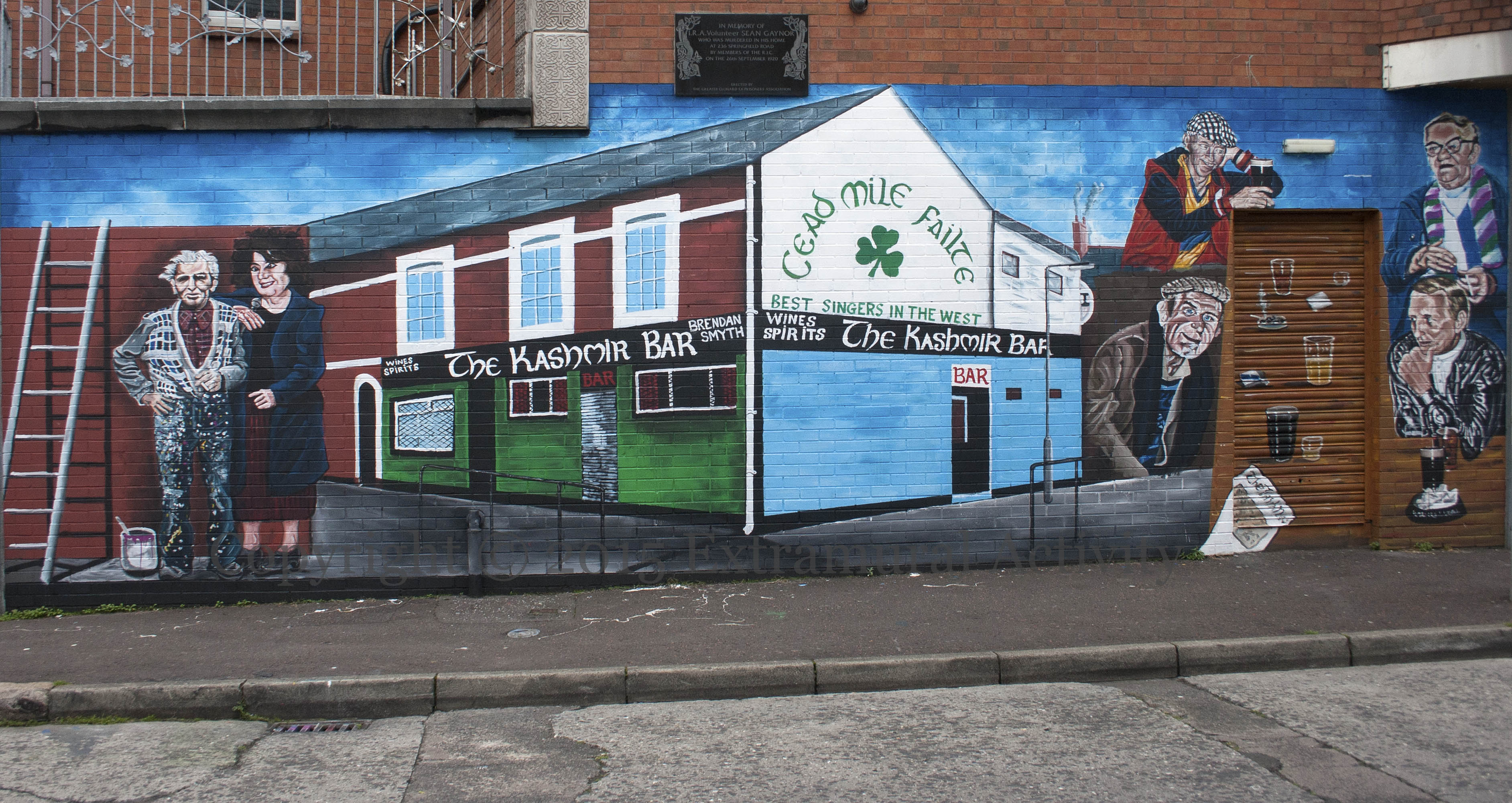
The Kashmir Bar on the Springfield Road gets a face-lift with a mural of the old Kashmir Bar, including the boast that it was home to the best singers in the west. A look at the Kashmir Bar Facebook page reveals that pool seems to be the foremost activity. For a photo of the old (green-fronted) bar, see D00283. (There is also a small image on the Belfast Forum.) If you can identify any of the locals pictured, please comment or e-mail.
Black taxis were first brought from England to Belfast in 1970 by locals who wanted to provide an alternative, and locally-based, transport system to augment the Citybuses which were sometimes cancelled and sometimes burned out. The board above commemorates eight drivers who were killed during the troubles: Michael Duggan, Jim Green, Harry Muldoon, Paddy McAllister, Caoimhín Mac Brádaigh, Thomas Hughes, Hugh Magee, and Paddy Clarke.






 Extramural Activity