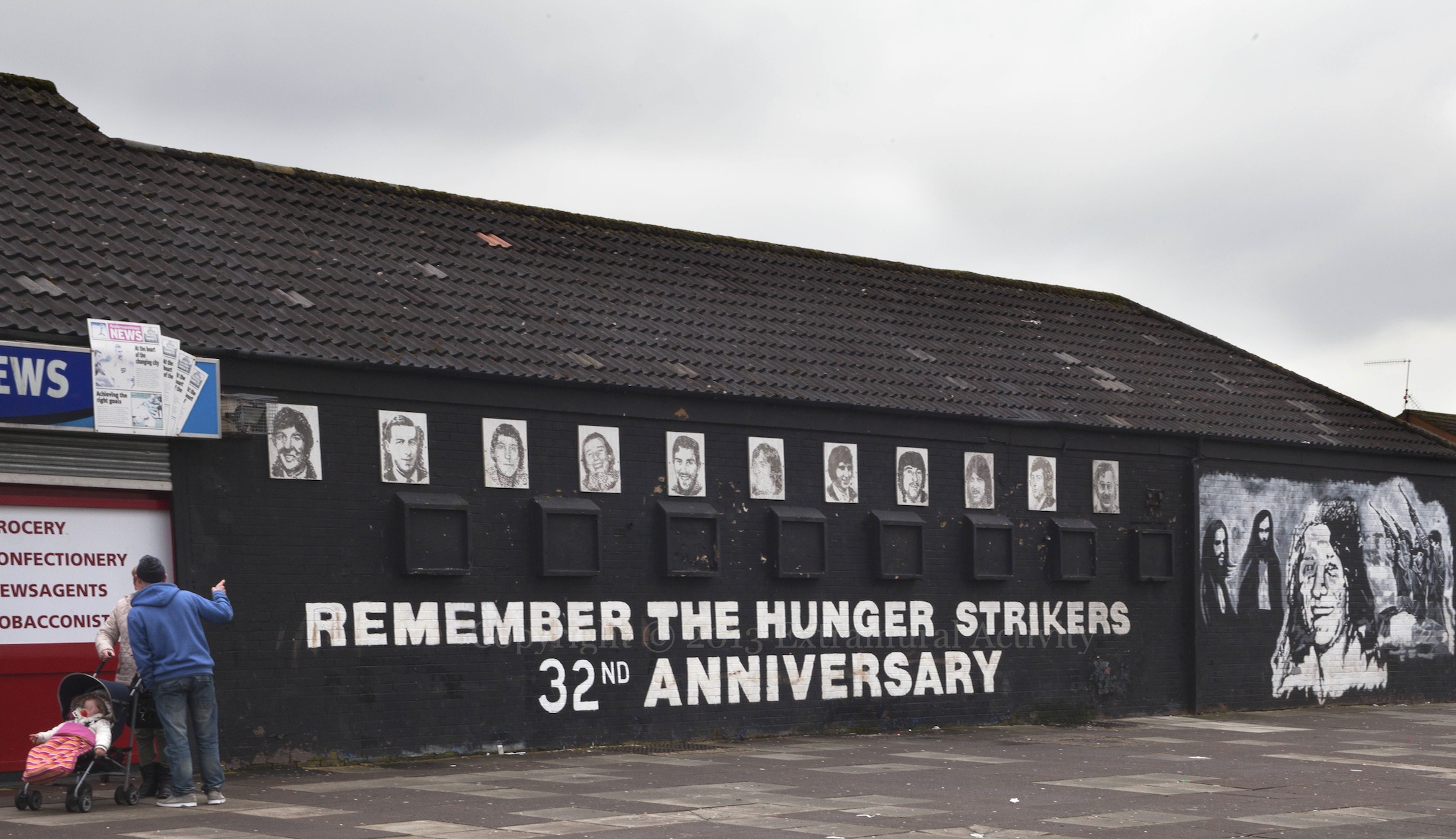
“Remember the Hunger Strikers – 32nd Anniversary”. Twinbrook memorial to the hunger strikers of 1981, updated annually. Bobby Sands, featured on the right, and who lived a stones-throw away from this mural, was the first to die, on May 5th. Seen previously in 2008.
This is a mural in his home town to rear admiral Sir Edward (“Barry”) Bingham, OBE, born in Bangor and recipient of the Victoria Cross (featured in the apex of the roof) for service in WWI.
“Rear Admiral Edward Bingham VC OBE, son of Lord Clanmorris, was born in Bangor and served in the Royal Navy during the First World War. He was awarded the Victoria Cross for his actions in engaging the German fleet during the battle of Jutland. The Bingham family name adorns various settings in the town where he is remembered with pride. Rear Admiral Bingham’s Victoria Cross was purchased by North Down borough council and is on display at the North Down museum.”
The context shot, below, shows the two together, as viewed through the uprights of a community monument just across the road, featuring old photographs and documenting the history of the local community.
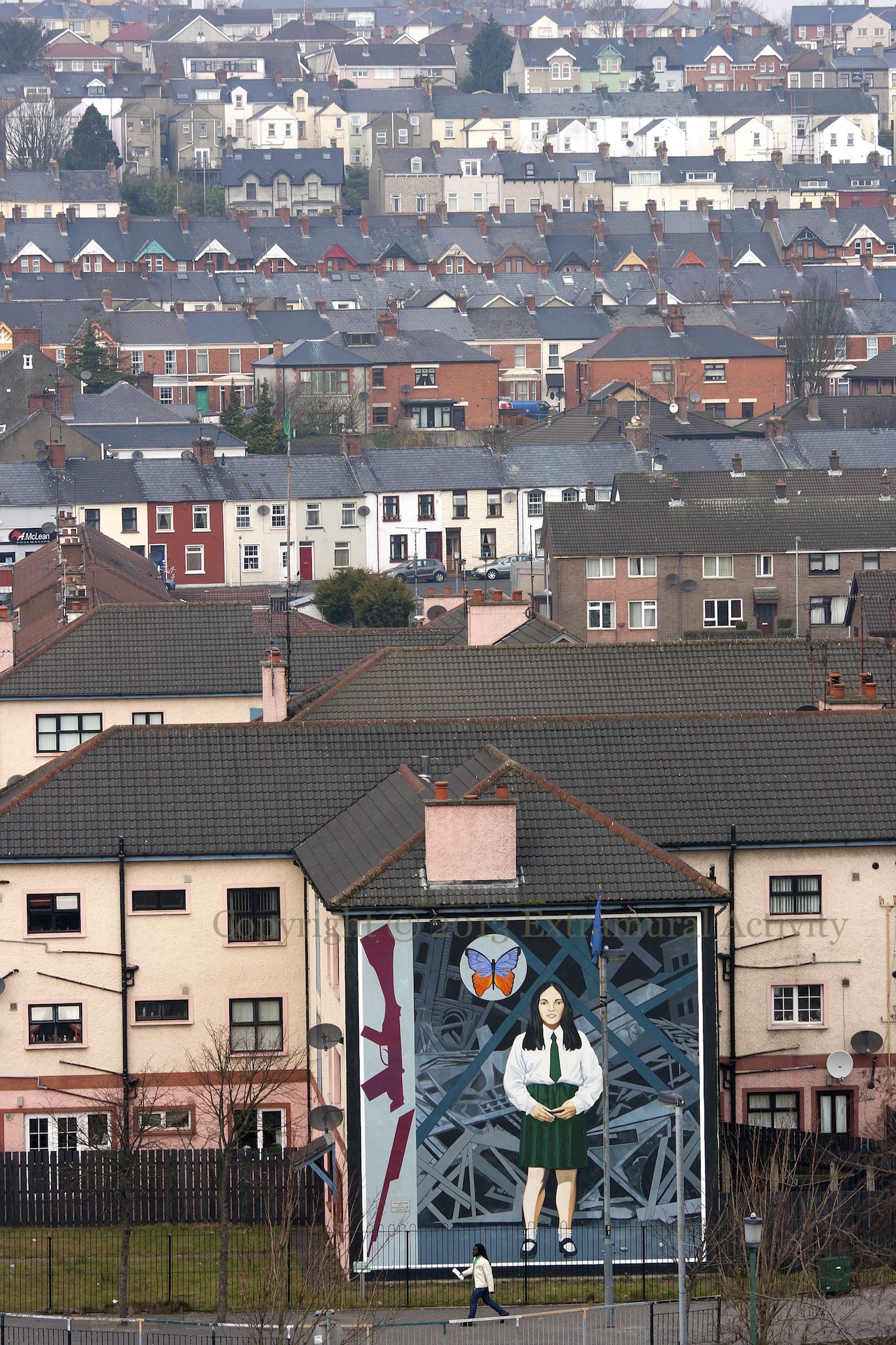
The Bogside Artists’ ‘The Death Of Innocence’ at the bottom of Westland Street in Derry. The mural features Annette McGavigan, who died on September 6th, 1971, at age 14, shot by a British Army soldier. The mural is three storeys high; its height can be judged in comparison with the pedestrian walking below it. Above the mural, the streets of the bogside stand row upon row.
In the video below, one of the artists, Kevin Hasson discusses the mural, including the later alterations to the coloured butterfly and the broken rifle. The original version can be seen in M02053.
Two small pieces side by side on the Ballysillan Road in north Belfast. First a “Mural done by Carly and the boys …” showing the IFA’s crest over a banner reading “our wee country”. (Previously: Our Wee Country 1 | 2 )
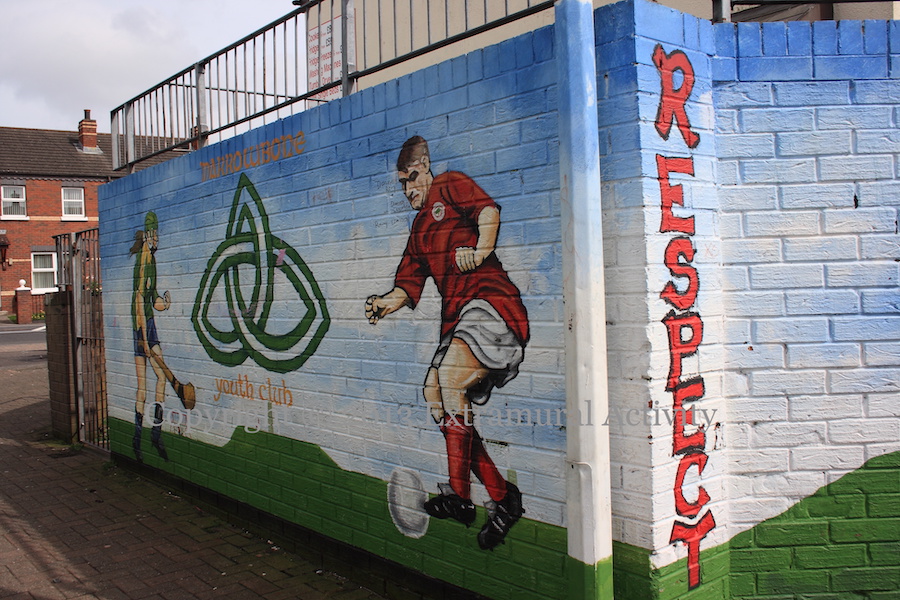
“Machaıre Botháın” [Bothain] (Marrowbone) Youth Club mural just off Oldpark Road, celebrating Gaelic games, Cliftonville soccer, Antrim, and the four provinces of Ireland.
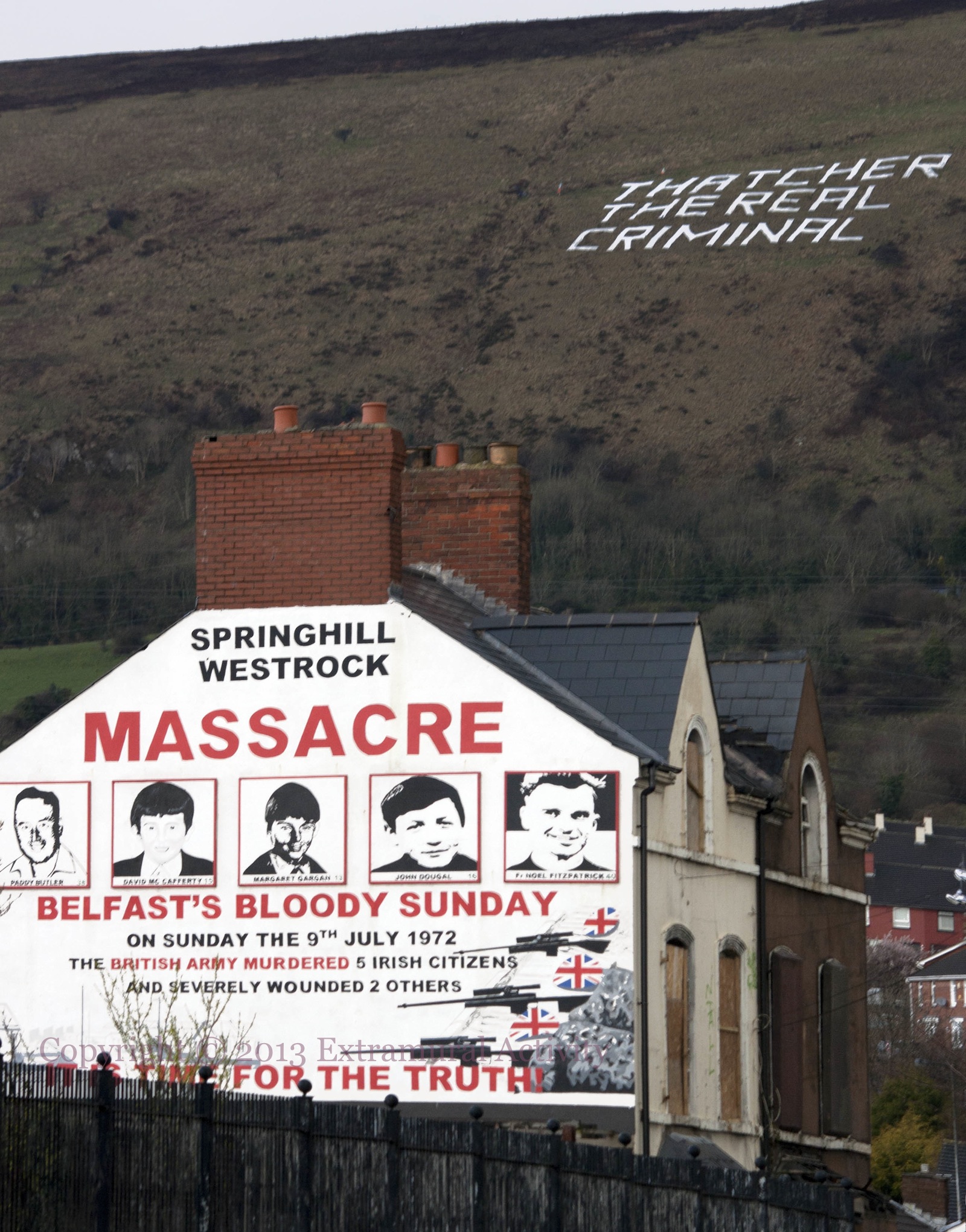
“Thatcher The Real Criminal” on Black Mountain, overlooking the Springfield Road, with a Mo Chara Kelly mural in the foreground, commemorating the deaths of five people shot by British army snipers in 1972.
This picture was taken on April 18th; on April 19th the lettering on the hillside had been removed.
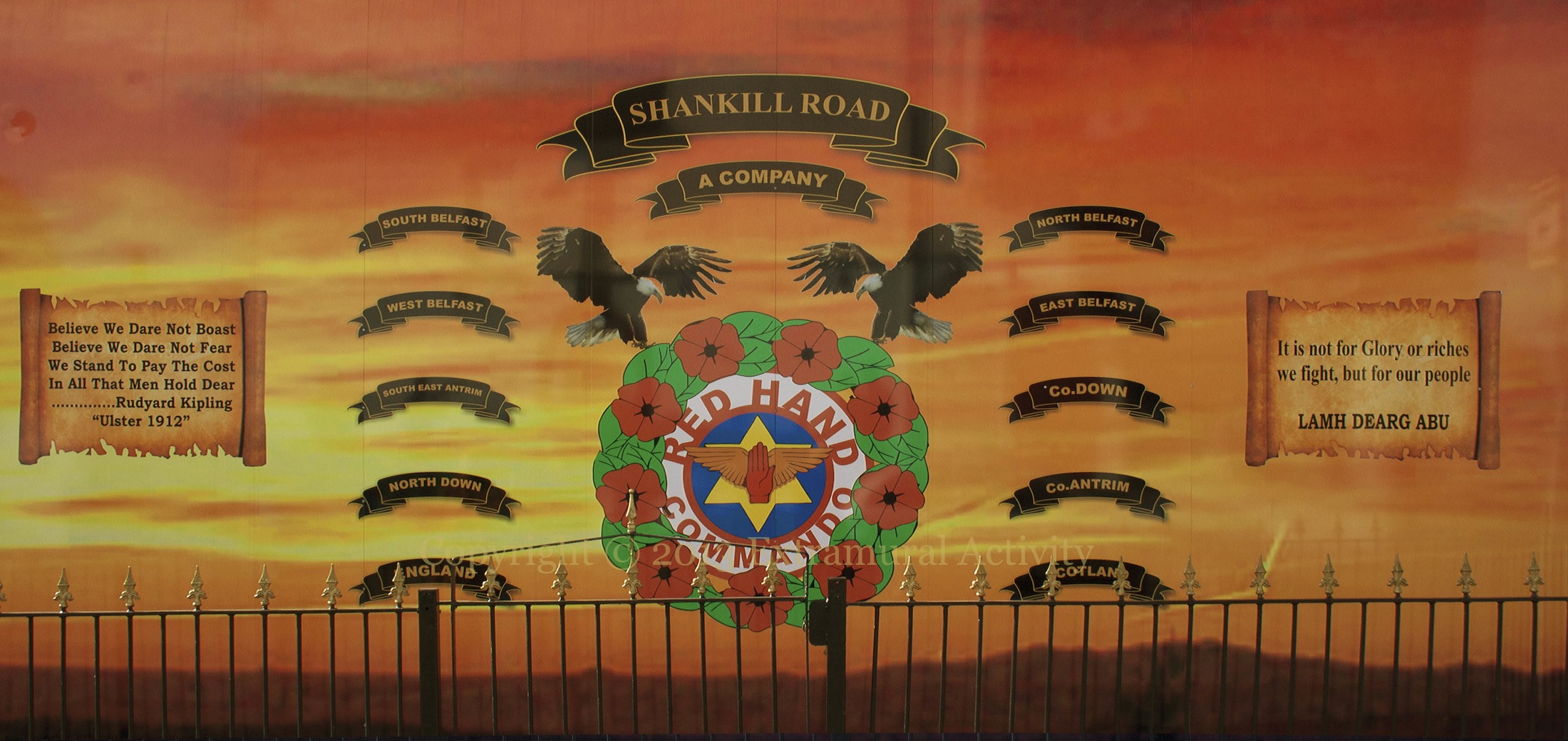
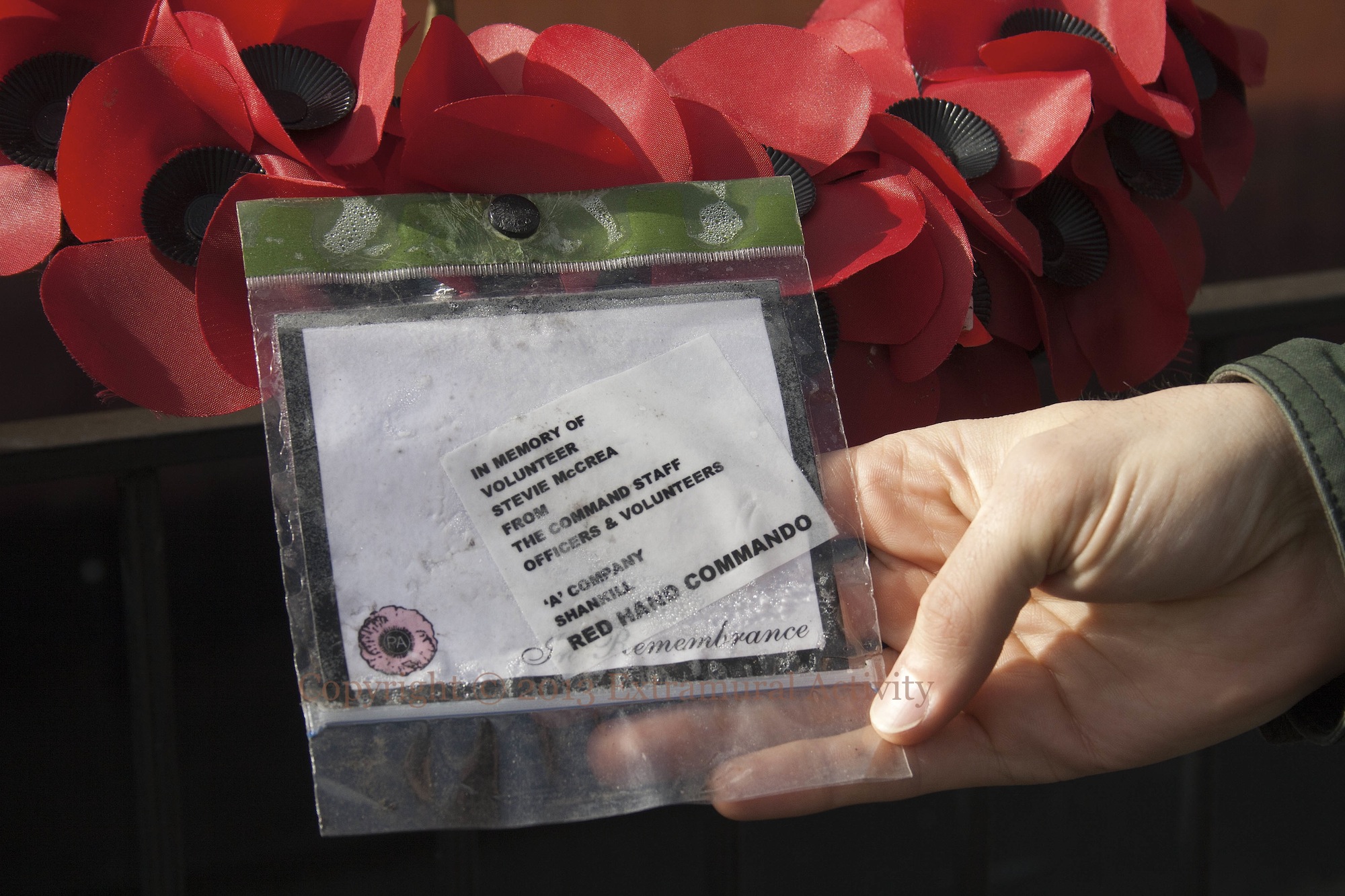
A few words of Irish – “Lamh Dearg Abu” – in a loyalist mural in Glenwood Street, just off the Shankill Road, through strictly it should be “Lámh Dhearg Abú”. “Lámh dhearg” means “red hand”, and this is a Red Hand Commando mural.
The same motto was on the mural that this one replaced, which can be seen at M02433.
The title of the post is the headline of a recent article in the Irish Times, giving an account of Irish language classes in (loyalist) east Belfast. “Tá” is Irish for “yes”.
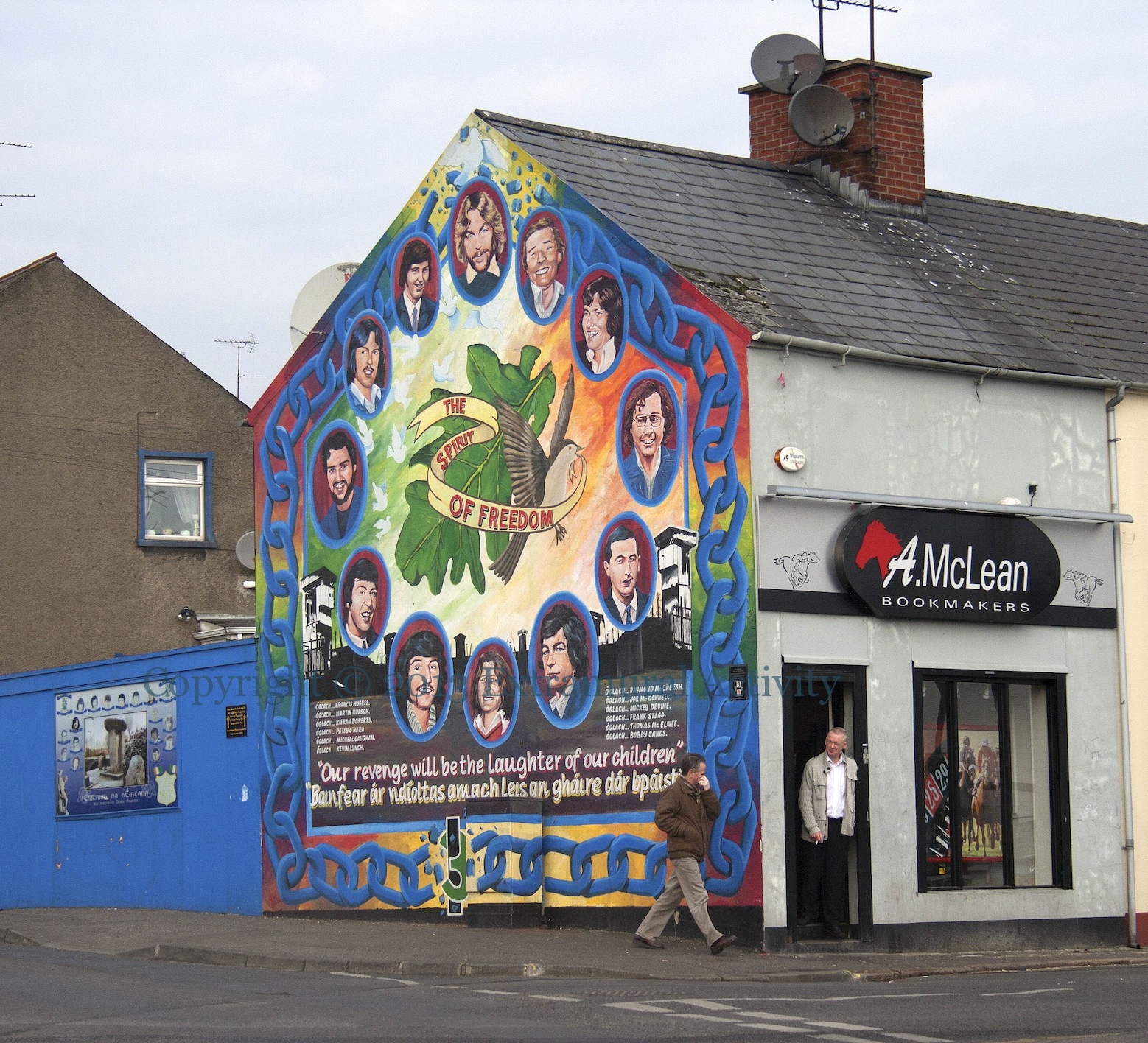
This is a 2011 mural in the Bogside of Derry/Doıre featuring republican hunger-strikers (the ten who died in the Maze, along with Frank Stagg and Michael Gaughan, who died in English prisons in the 70s), along with an oak leaf symbolizing the city of Derry. Chains, rather than a Celtic knot-work, serve as a frame for the main mural.
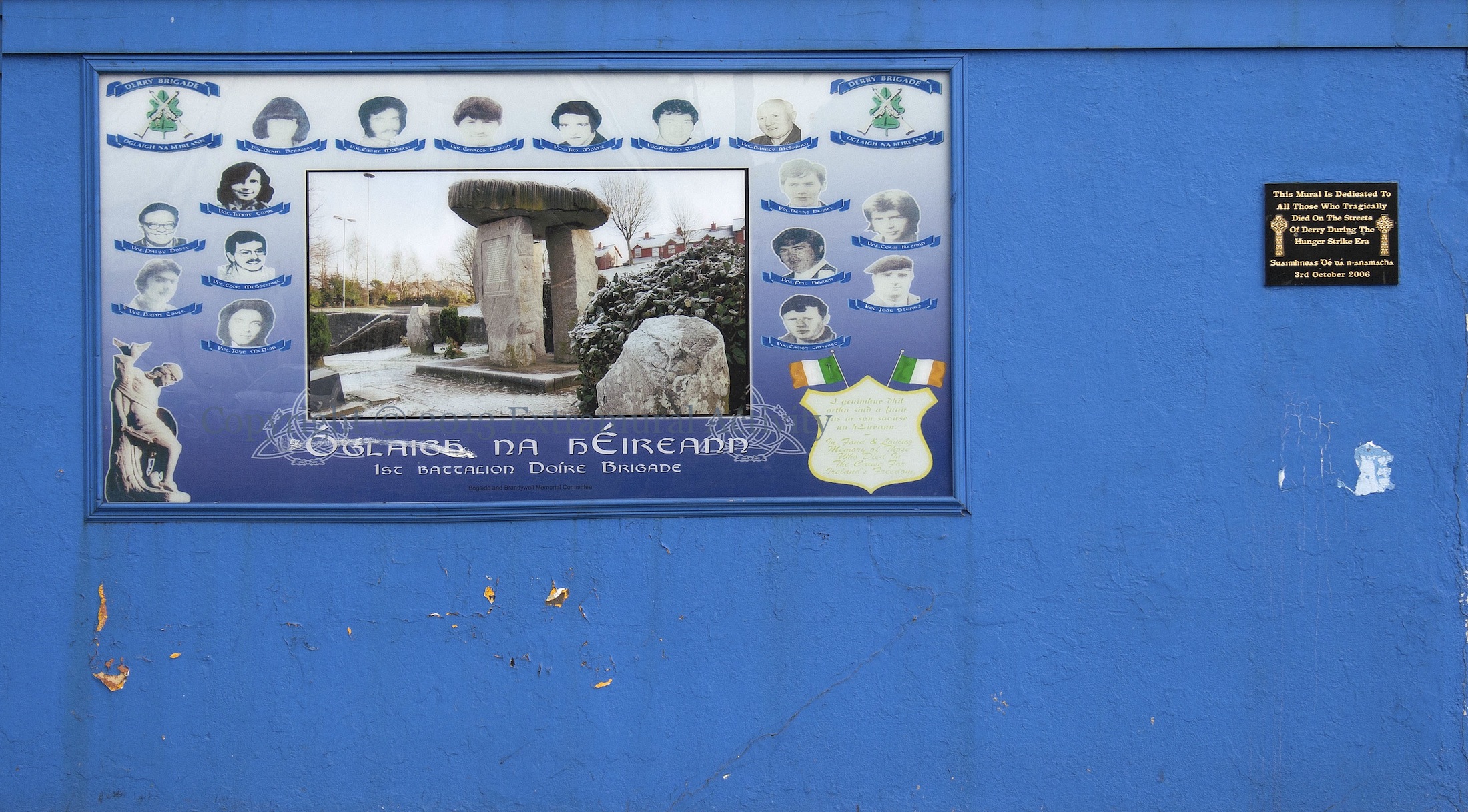
A close-up of the piece to the left, which “is dedicated to all those who tragically died on the streets of Derry during the hunger strike era” and features head-shots of various Óglaıgh Na hÉıreann volunteers, can be found below.
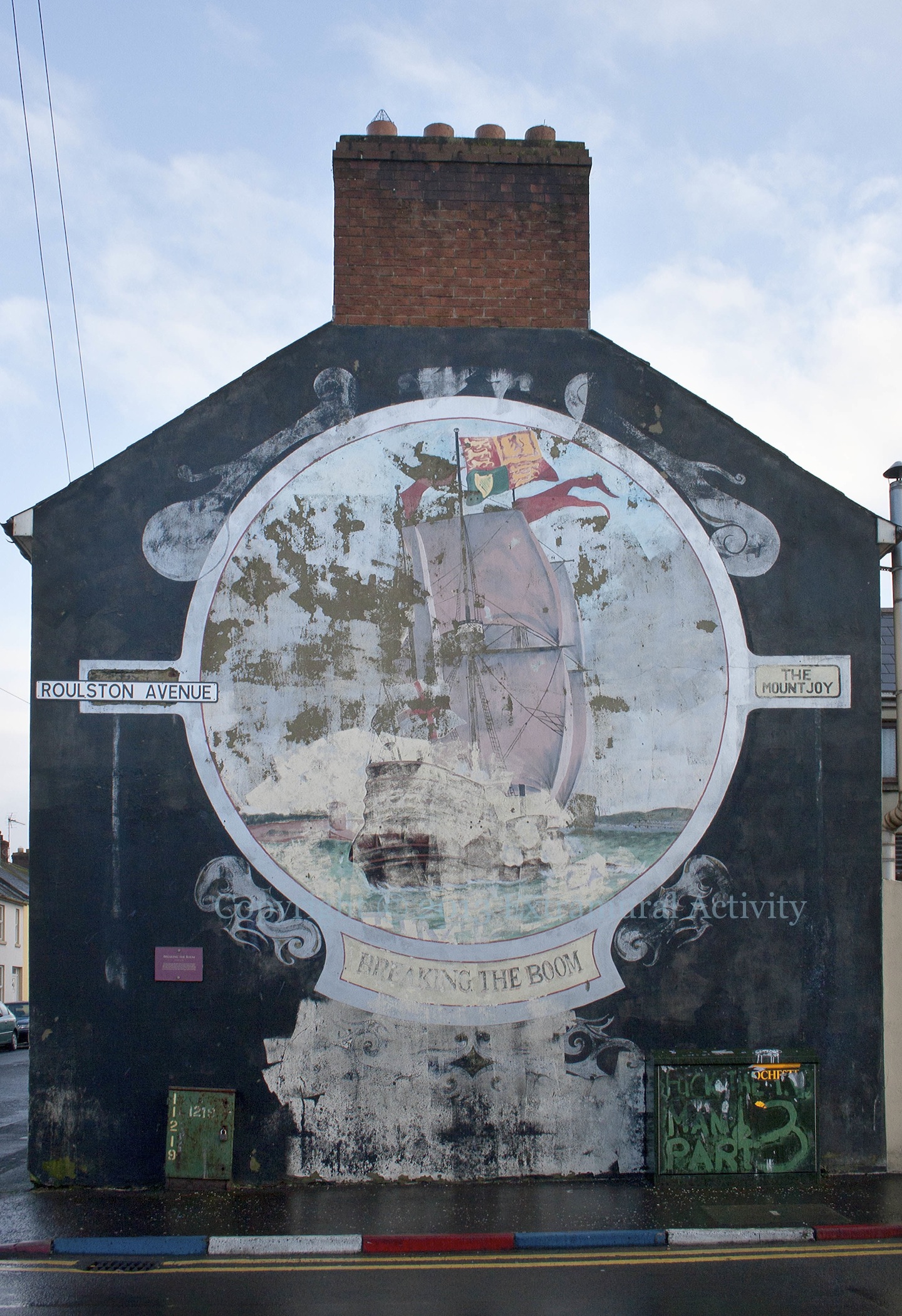
The mural of the Mountjoy, taking part in the Breaking of the Boom that ended the Siege of Derry in 1689, has seen better days, in part because of the replacement of the original two-line street sign with a modern single-line one which does not fit into the mural.







 Extramural Activity