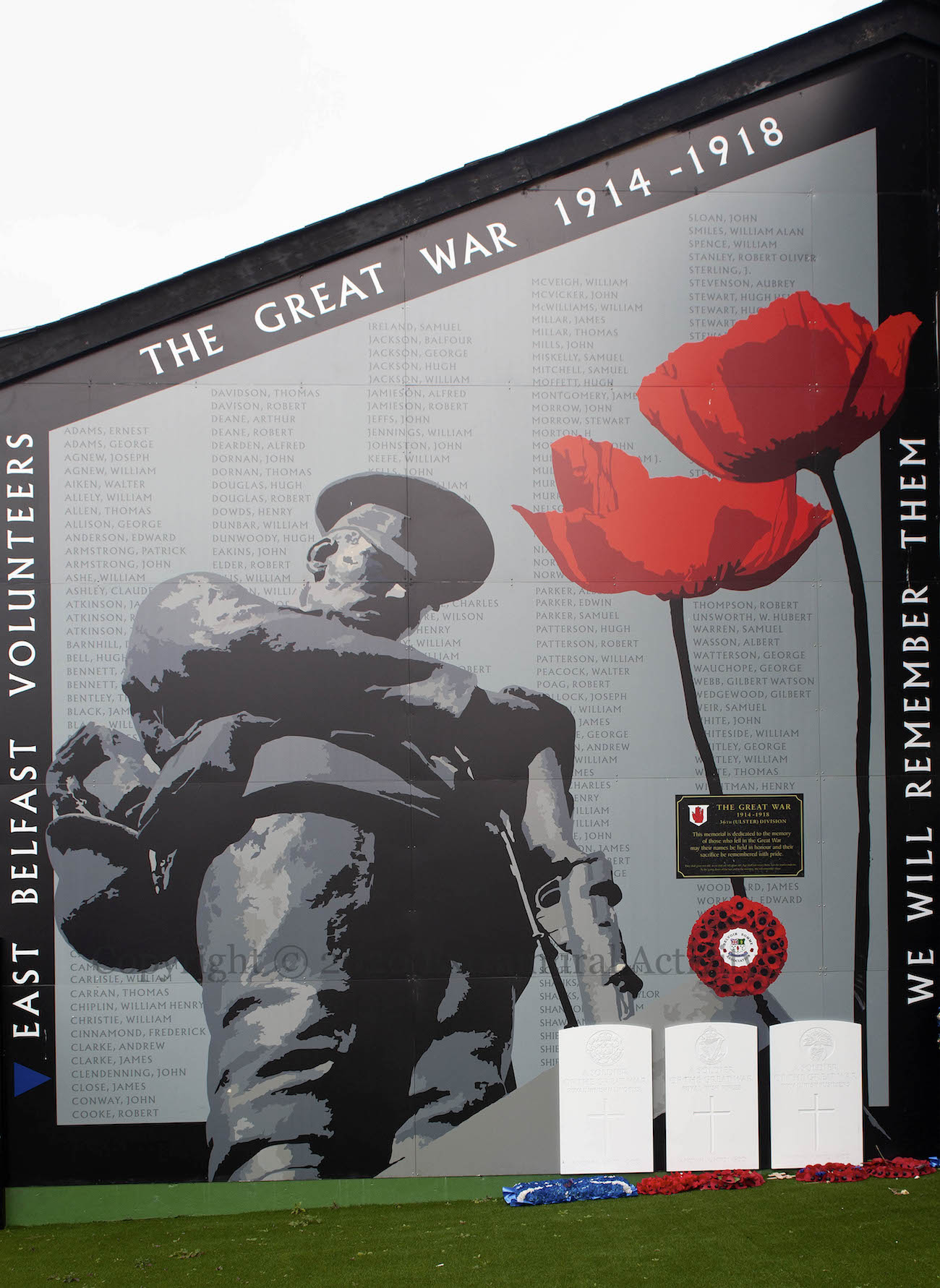
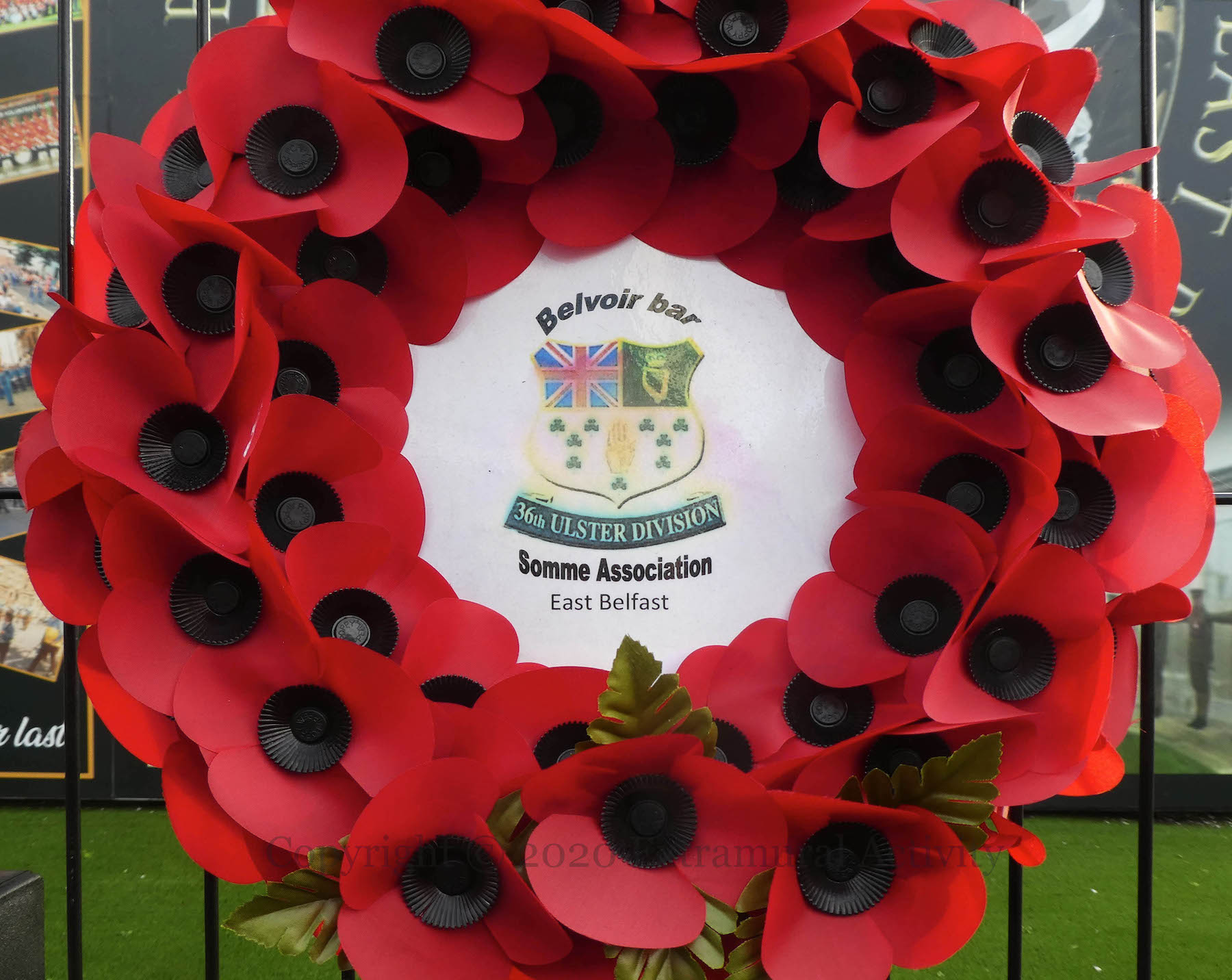
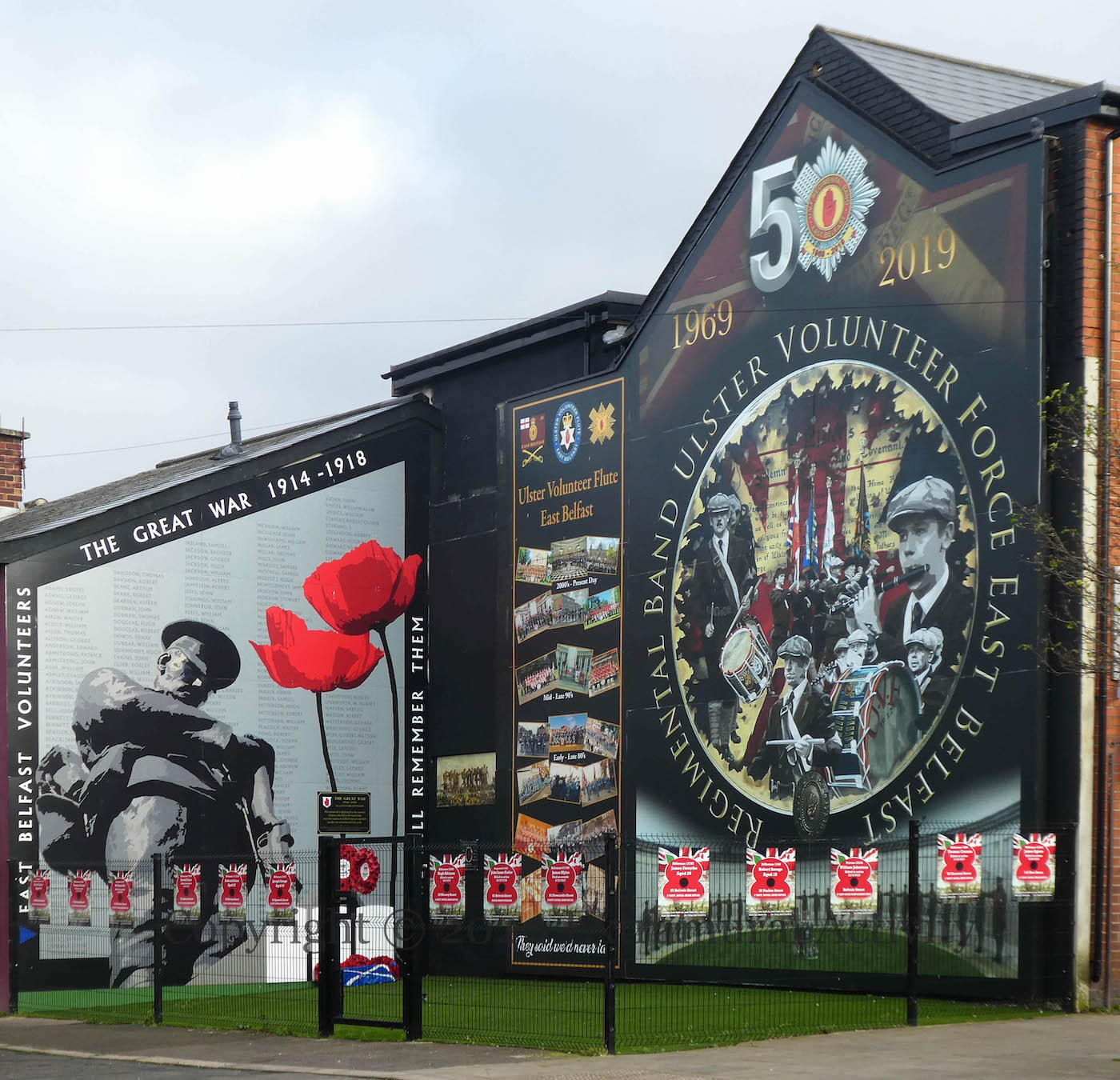
“The Great War (1914-1918) 36th (Ulster) Division. This memorial is dedicated to the memory of those who fell in the Great War. May their names be held in honour and their sacrifice be remembered with pride.” Next to to the UVF Flute Band 50th anniversary mural and the Singer Sergeant painting (Observe The Sons Of Ulster).
This is a new INLA board to deceased volunteers Danny Loughran and Matt McLarnon, Paul (“Bonanza”) McCann, Martin McElkerney, and Gino Gallagher. The new addition here is Martin McElkerney, who died from a self-inflicted gunshot wound in March last year (2019) (Guardian). Shots were fired over McElkerney’s coffin (tw). He was released under the terms of the Belfast/Good Friday Agreement after 12 years for his part in a booby-trap bombing of two British soldiers, one of whom died, in which two children also died.
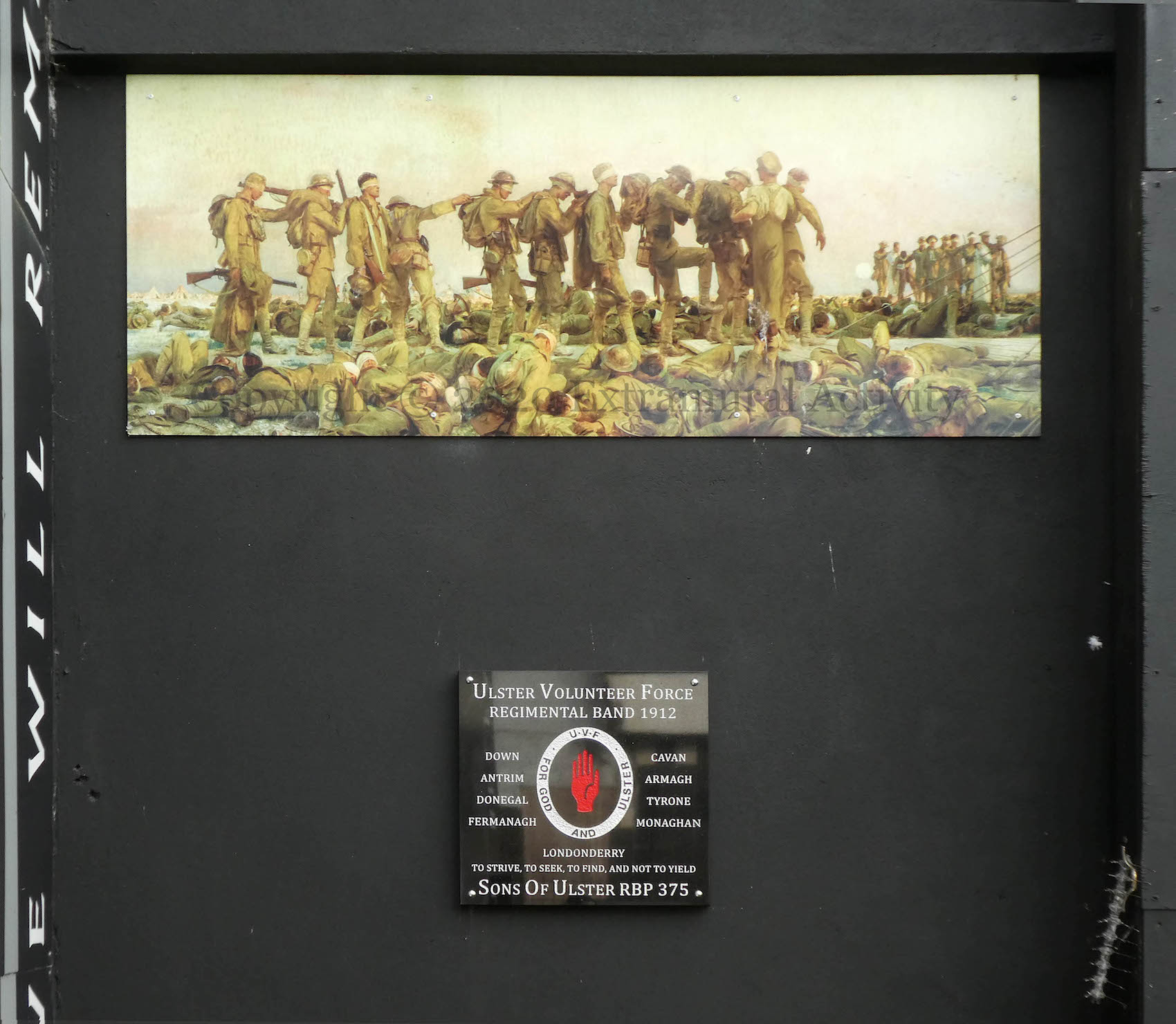
The 62 year-old painter John Singer Sergeant went to the western front in 1918 to find a scene suitable for painting on the theme of Anglo-American co-operation during the war. On the 21st of August, however, he witnessed at Arras British soldiers blinded by a German mustard gas attack, one following behind the other in a human chain, each group being directed by an orderly towards a dressing station. The War Memorials Committee agreed to change its commission and Sergeant received 600 pounds (about 34,000 in today’s money) for his painting, Gassed (WP).
This copy is in St Leonard’s Crescent, part of the 50th anniversary garden and mural for the UVF regimental band and memorial for east Belfast volunteers who joined the 36th Division (which did not fight at Arras as it had been disbanded in May, 1918). The plaque below list the nine counties of Ulster and reads “To strive, to seek, to find and not to yield. Sons Of Ulster RBP 375.”
Here is a final image from the election campaign for the December 12th Westminster elections, a plastic board on the fence around the construction site on Alliance Avenue, inviting voters to “make history” by returning a nationalist MP in Belfast North, specifically Sinn Féin’s John Finucane.
Ballyclare Comrades football club – motto is ‘Nihil nisi optimi’ [nothing but the best] – was founded in 1919 by members of the local Great War ‘comrades’ association. That heritage is used here for the Ballyclare Protestant Boys flute band. In the centre, between images from WWI, the flowers of the four ‘home nations’ are joined by orange lilies, and in the shield are the lion and the unicorn from the coat of arms of the UK.
“To Flanders fields some men in our town were sent and along their way many would repent their priority goal to keep Ulster free that we may have freedom both you and me as part of Great Britain they fought and died and their names we will remember and remember with pride. Lest we forget. Comrades from Ballyclare. Nihil nisi optimi. The Comrades.” “Ballyclare Protestant Boys Est. 2004”
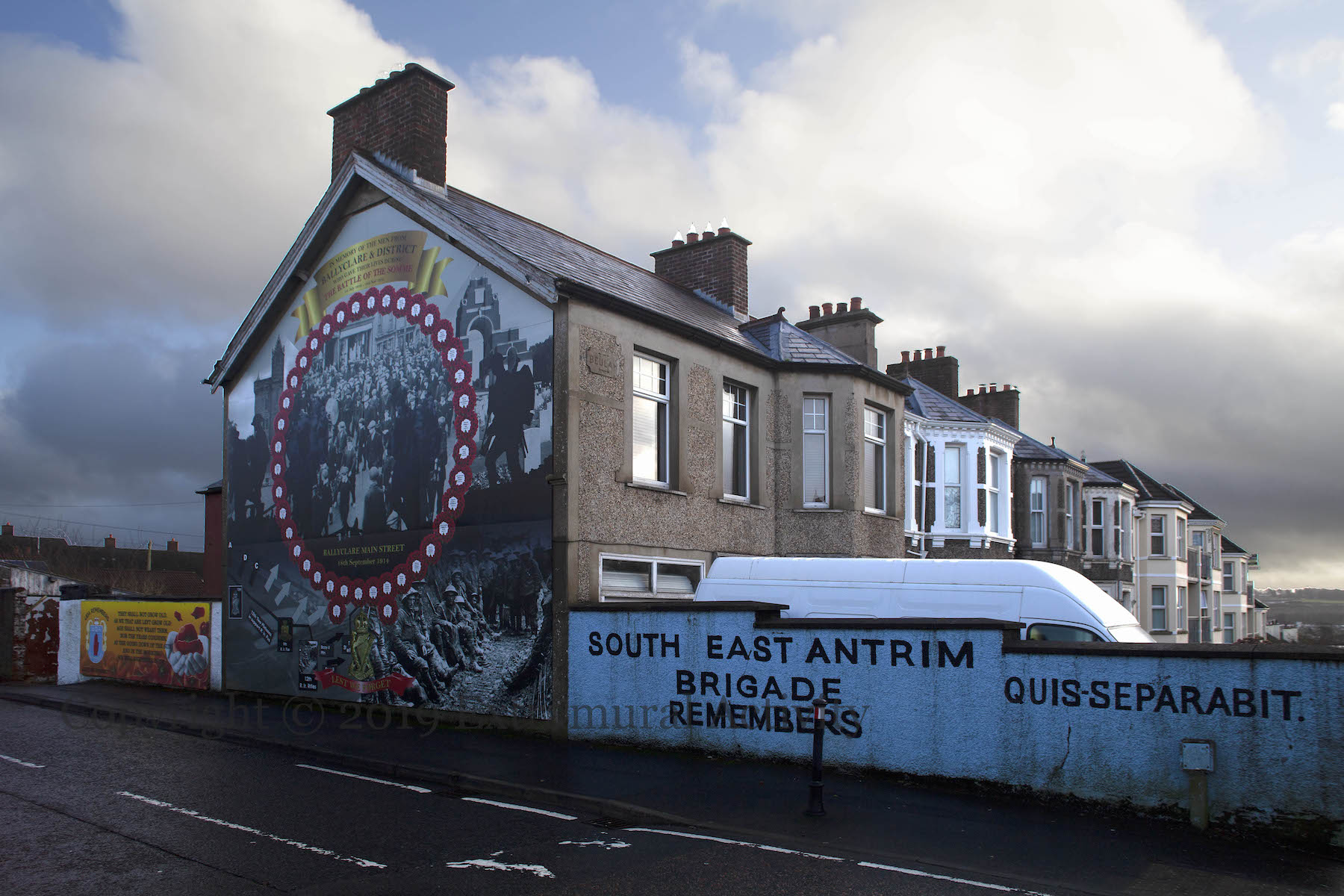
“[South East Antrim] UDA remembers. ‘They shall not grow old/As we that are left grow old/Age shall not wary them/Nor the years condemn/At the going down of the sun/And in the morning/We will remember them’ [The Fallen]” For the large mural, see The Men From Ballyclare & District.
“We support all Ulster’s soldiers.” The UDA and the UDR brought under the same umbrella of “Ulster’s defenders” in Charles Drive, Ballyclare. The UDR was established in 1970 to relieve the RUC and B Specials of military operations and was disbanded in 1992, in part because it was only 3% Catholic and 5-15% of members had links to loyalist paramilitaries (Irish News).
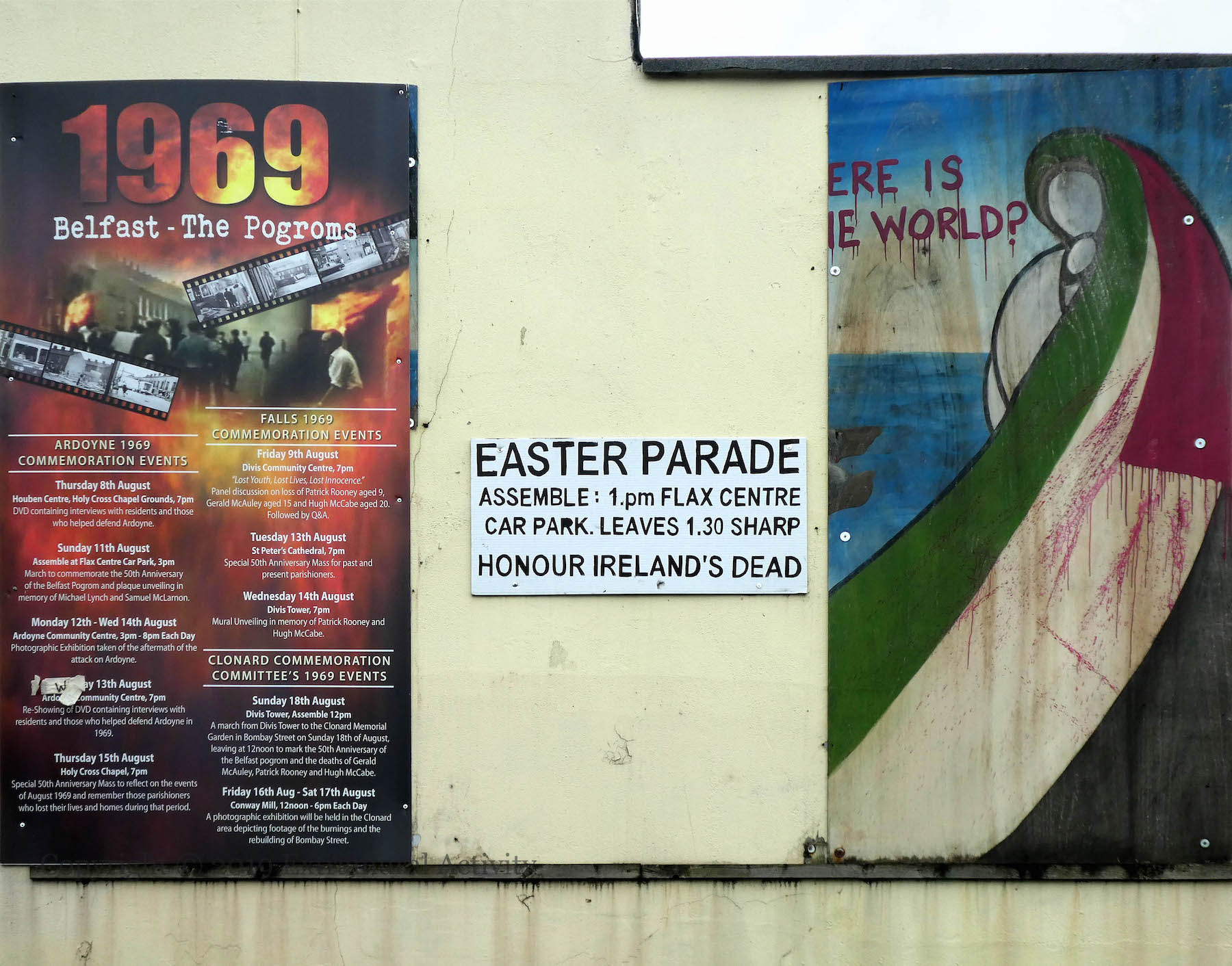
2019 was the 50th anniversary of the beginning of the Troubles and commemoration events were held in Ardoyne, Clonard, and Divis – the sites that saw the most fierce fighting during the summer. The programme board above is at the entrance to Brompton Park entrance of Ardoyne, next to the remains of Stad An Slad.









 Extramural Activity