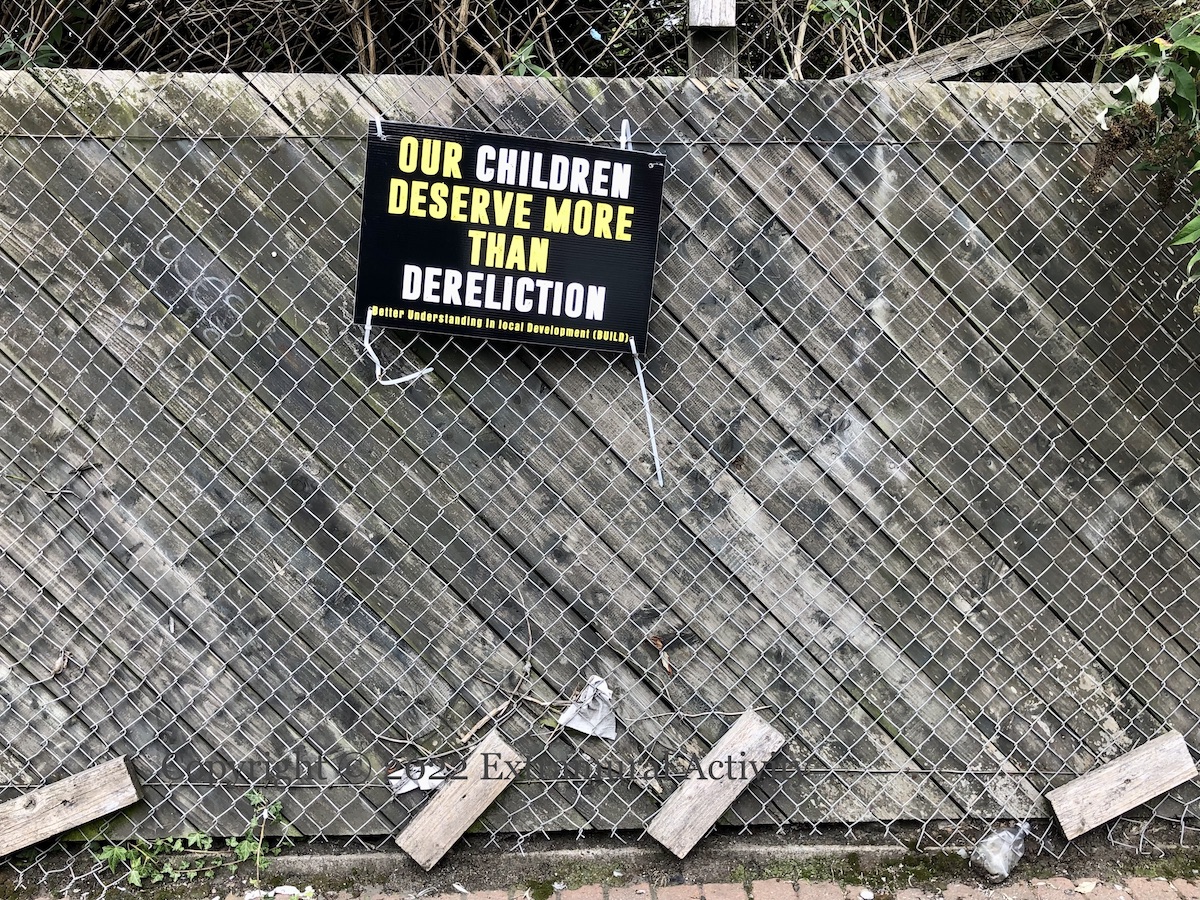
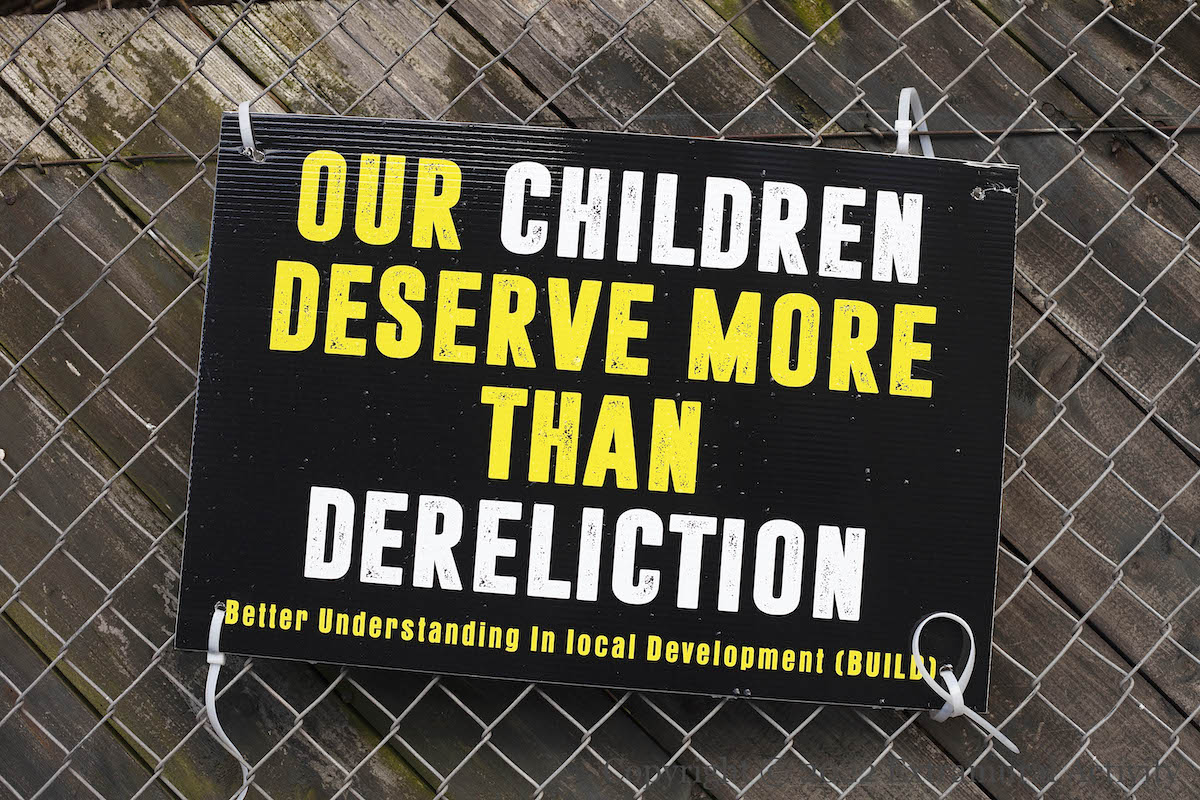
BUILD Shankill now has a website that promises to provide (in the future) “a full inventory of vacant and derelict land in the area”. In the meantime, the campaign to bring attention to housing issues in the area continues with placards and tarps:
“Our children deserve more than dereliction – Better Understanding In Local Development (BUILD)”
“Did you know? The Shankill has over 80 waste sites the size of 62 football pitches with the space to build 3300 homes. #BuildShankill.” For a mural-sized version of this tarp (in the third image) over one of the pieces of waste ground, see #BuildShankill.
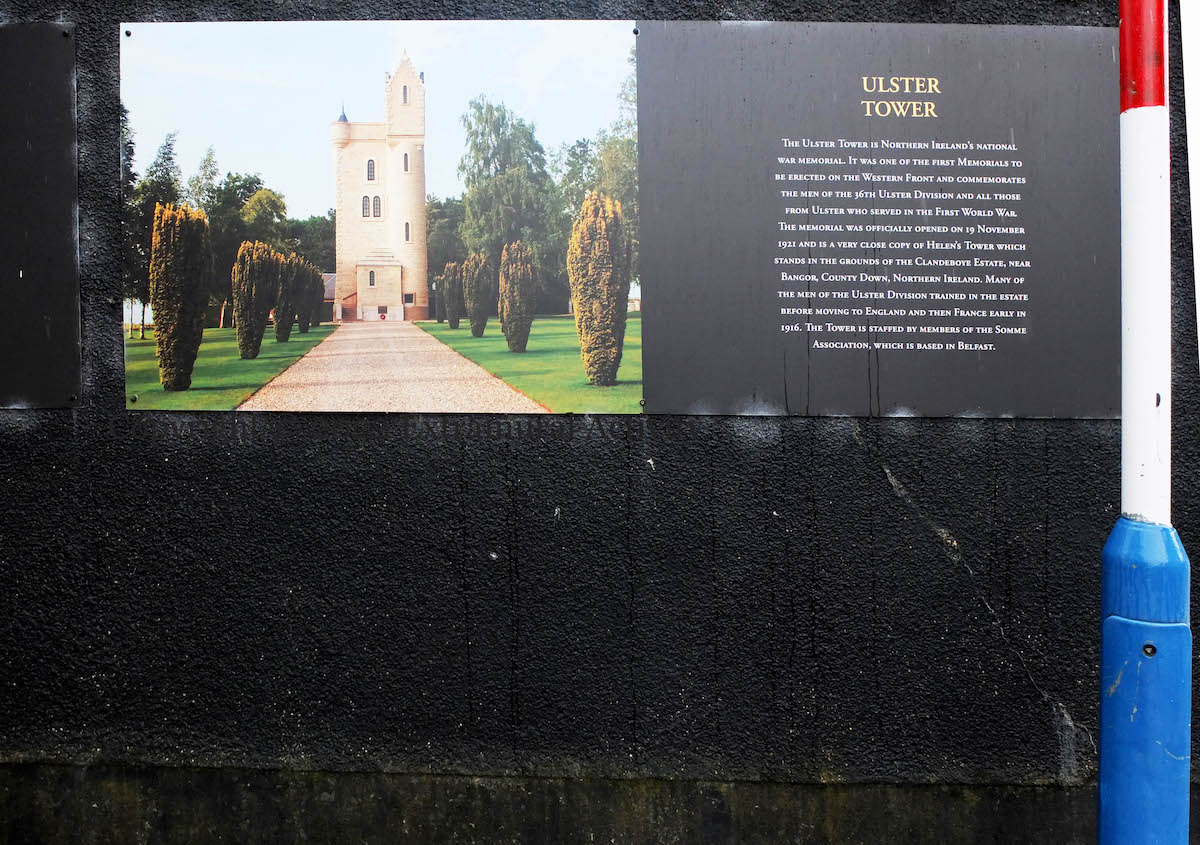
All three major WWI memorials with relevance to Ulster – Thiepval Memorial, Menin Gate, Ulster Tower – are brought together in a gallery in Londonderry’s Fountain as part of a tribute to the “Men from the Fountain who made the supreme sacrifice in the Great War.”
“Thiepval Memorial: The Thiepval Memorial to the missing of the Somme is a war memorial to 72,195 missing British and South African servicemen, who died in the battles of the Somme of the First World War between 1915 and 1918, with no known grave. It was built in red brick and limestone between 1928 and 1932. It is near the village of Thiepval, Picardy in France. A visitors’ centre opened in 2004.”
“Menin Gate: The Menin Gate memorial to the missing is a war memorial in Ypres, Belgium, dedicated to the 54,395 British and Commonwealth soldiers who were killed in the Ypres salient of World War I and whose graves are unknown. The memorial is located at the eastern exit of the town and marks the starting point for one of the main roads out of the town that led Allied soldiers to the front line. The Menin Gate memorial was unveiled on 24 July 1927.”
“Ulster Tower: The Ulster Tower is Northern Ireland’s national war memorial. It was one of the first memorials to be erected on the western front and commemorates the men of the 36th (Ulster) Division and all those from Ulster who served in the First World War. The memorial was officially opened on 19 November 1921 and is a very close copy of Helen’s Tower which stands in the grounds of the Clandeboye estate, near Bangor, County Down, Northern Ireland. Many of the men of the Ulster division trained in the estate before moving to England and then France early in 1916. The Tower is staffed by members of the Somme Association, which is based in Belfast.”
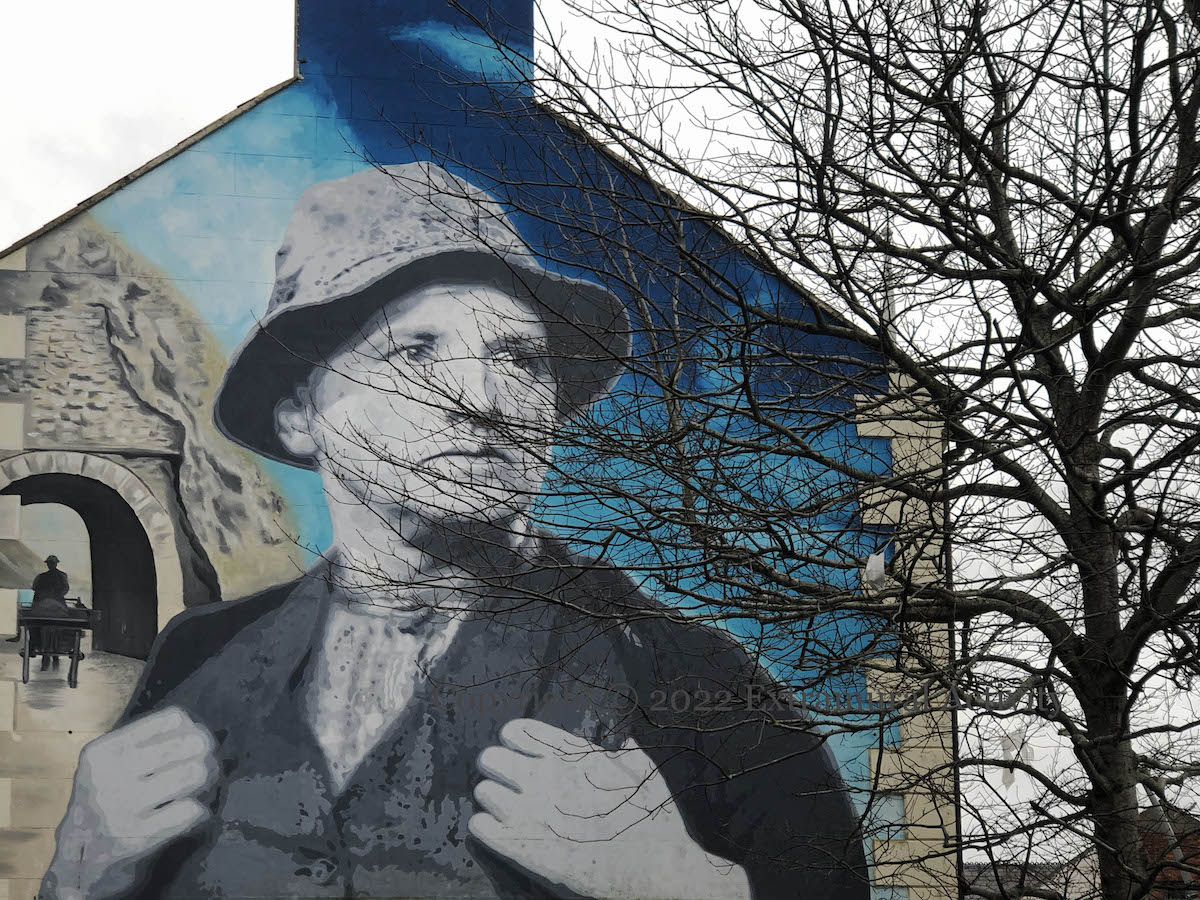
He collected songs, both Orange and traditional Irish, and played the harp. He went on to record 156 records, act in at least eight movies and write 11 travel books, the most popular of which was In Praise Of Ulster, with drawings by the landscape artist James Humbert Craig – some images from the book can be seen here.
The mural, in Larne’s Main Street, was designed by emic (ig) and painted by Dee Craig (Fb). Since 2021 you can also follow a trail around Richard Hayward’s East Antrim .
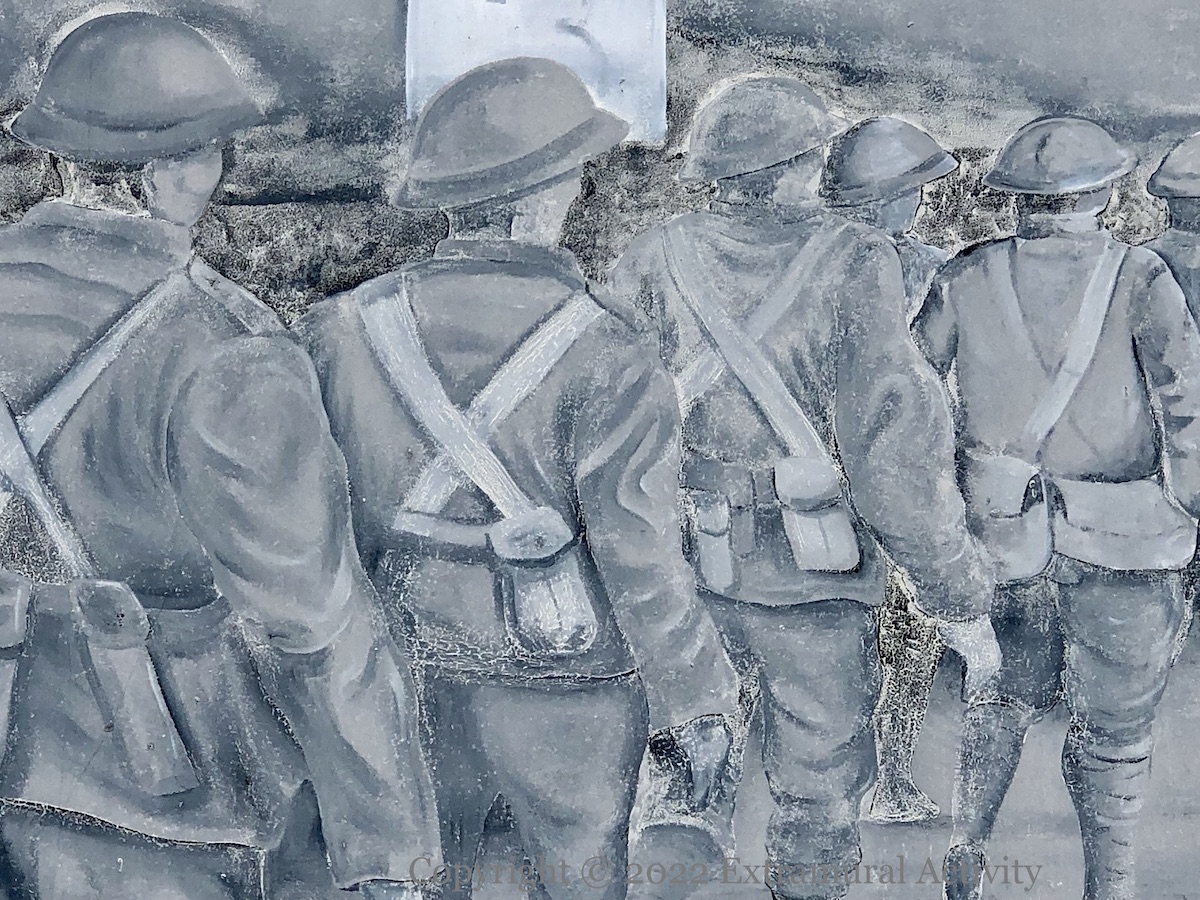
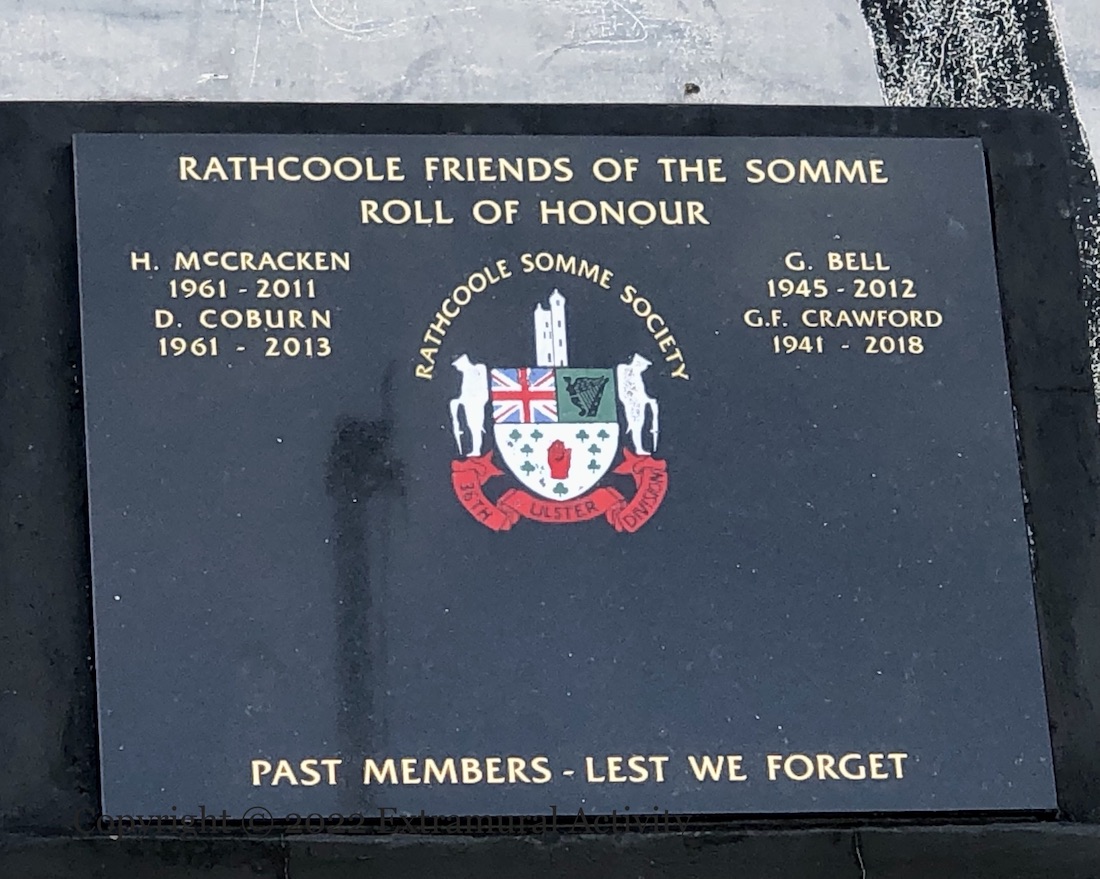
A memorial stone has been added to the fading mural of soldiers of the 15th battalion heading to France in 1915, beginning a list of former members of the Rathcoole Friends Of The Somme (Fb). For the names of the five portraits, and the mural in better condition, see Many Did Not Return.
The title of today’s post is the title of Jonathan Evershed’s book (youtube).
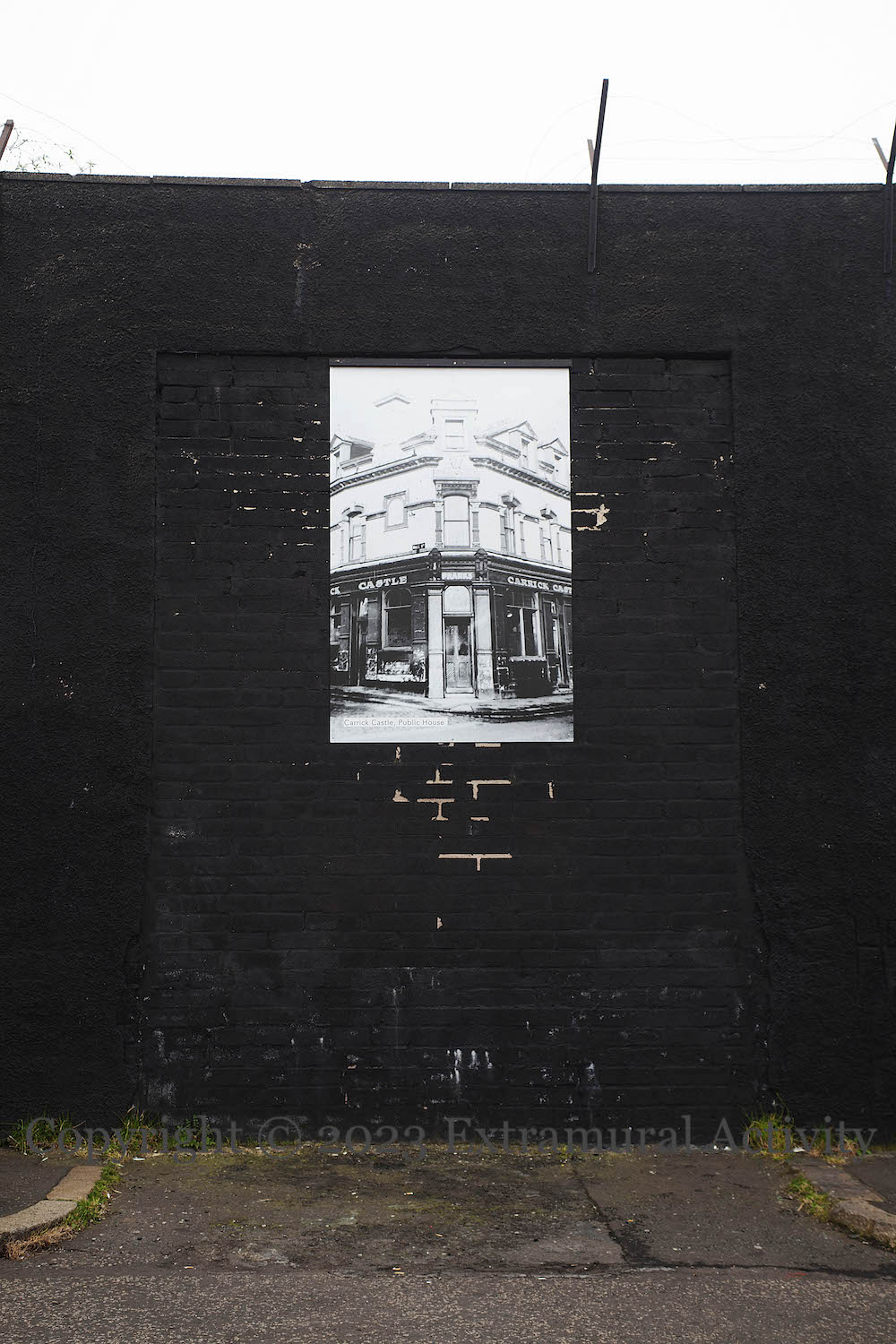
There is now a mural in Stanhope Street of “Carrick Hill in the old days”, of two women talking in the street, to complement the four printed boards.
Below are two of the fifteen boards around the corner in Regent Street, showing the Carrick Castle public house and the old Unity flats.
Other boards in the collection (not shown) show street games, street parties, and Alton United football club, a team founded in 1921 that played in the Falls League and won the 1923 Free State Cup Final (Bohs Sporting Life).
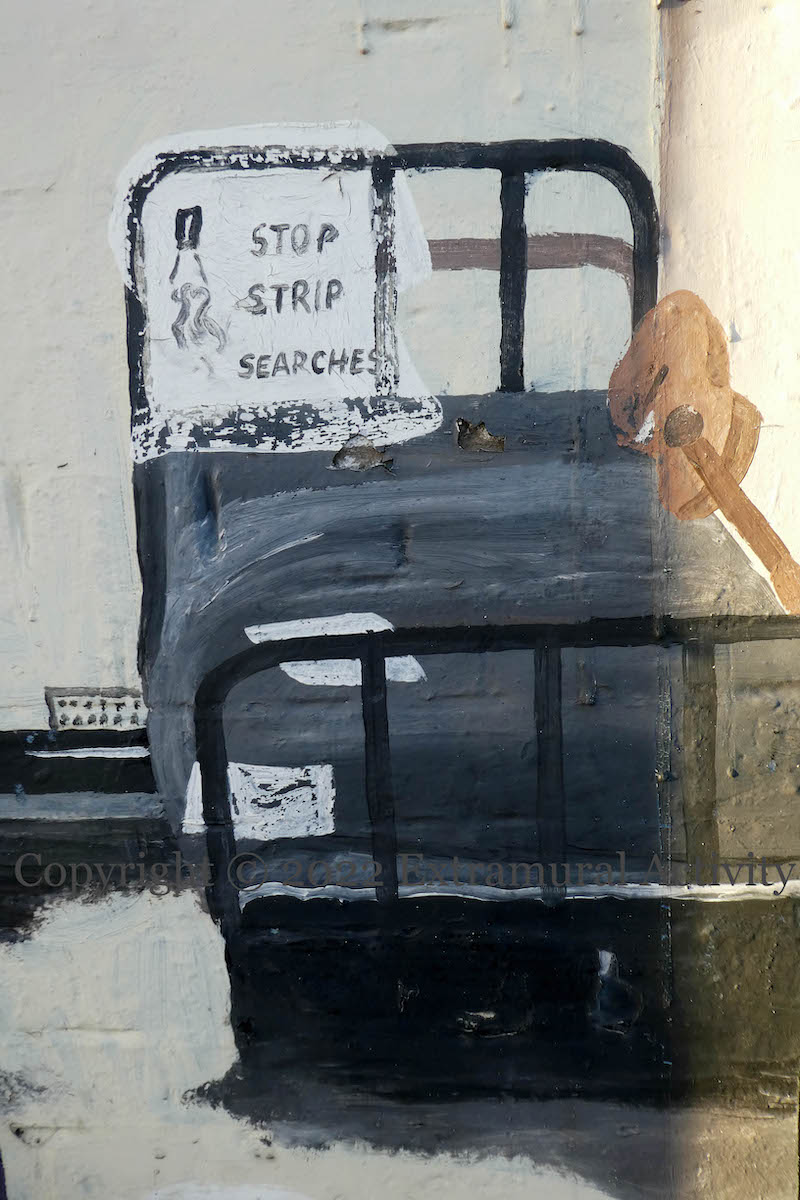
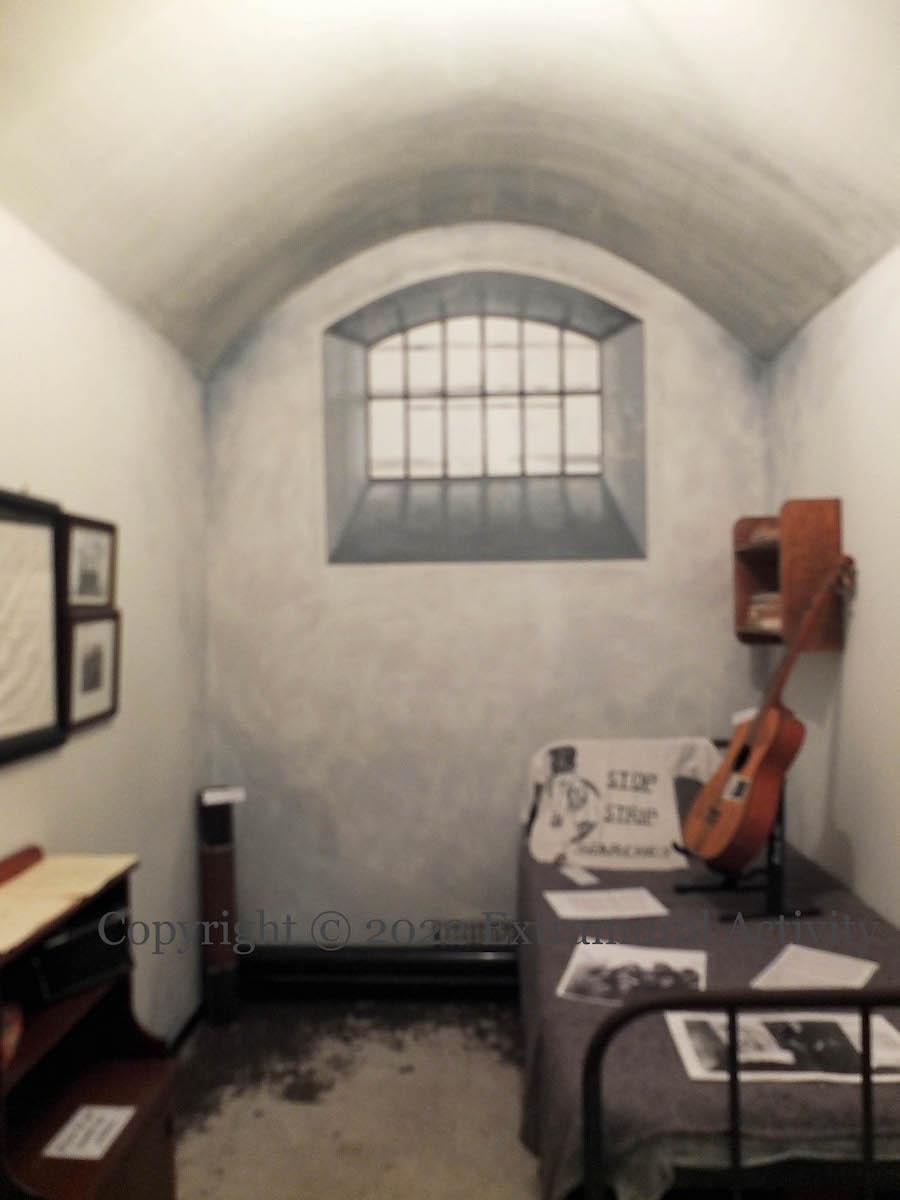
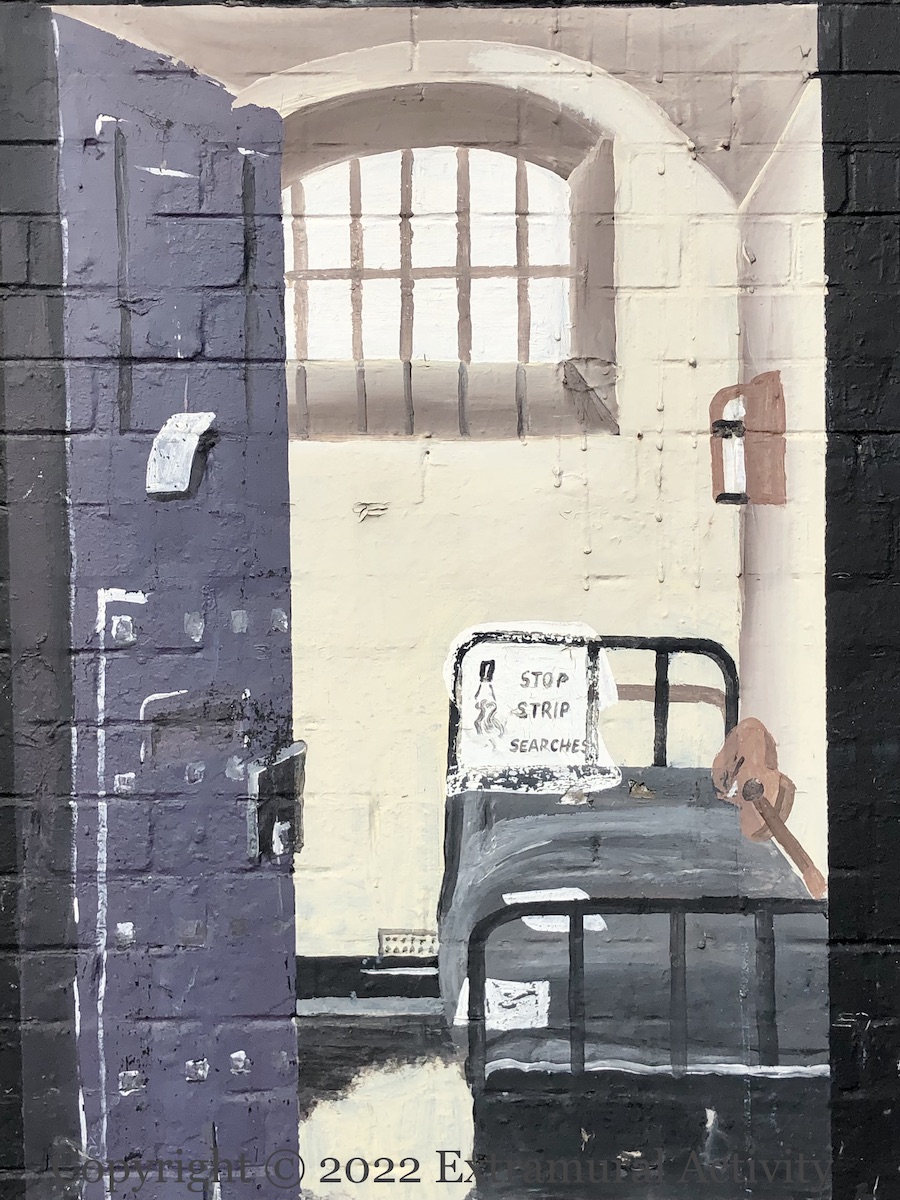
We have featured this ‘bookmark’-dimensioned mural on the so-called “International Wall” before (in 2018) but today include an image (the third one, below) of the replica cell inside the museum itself; a sharper image (and the source for the painting) can be seen on the home page of the Museum’s web site.
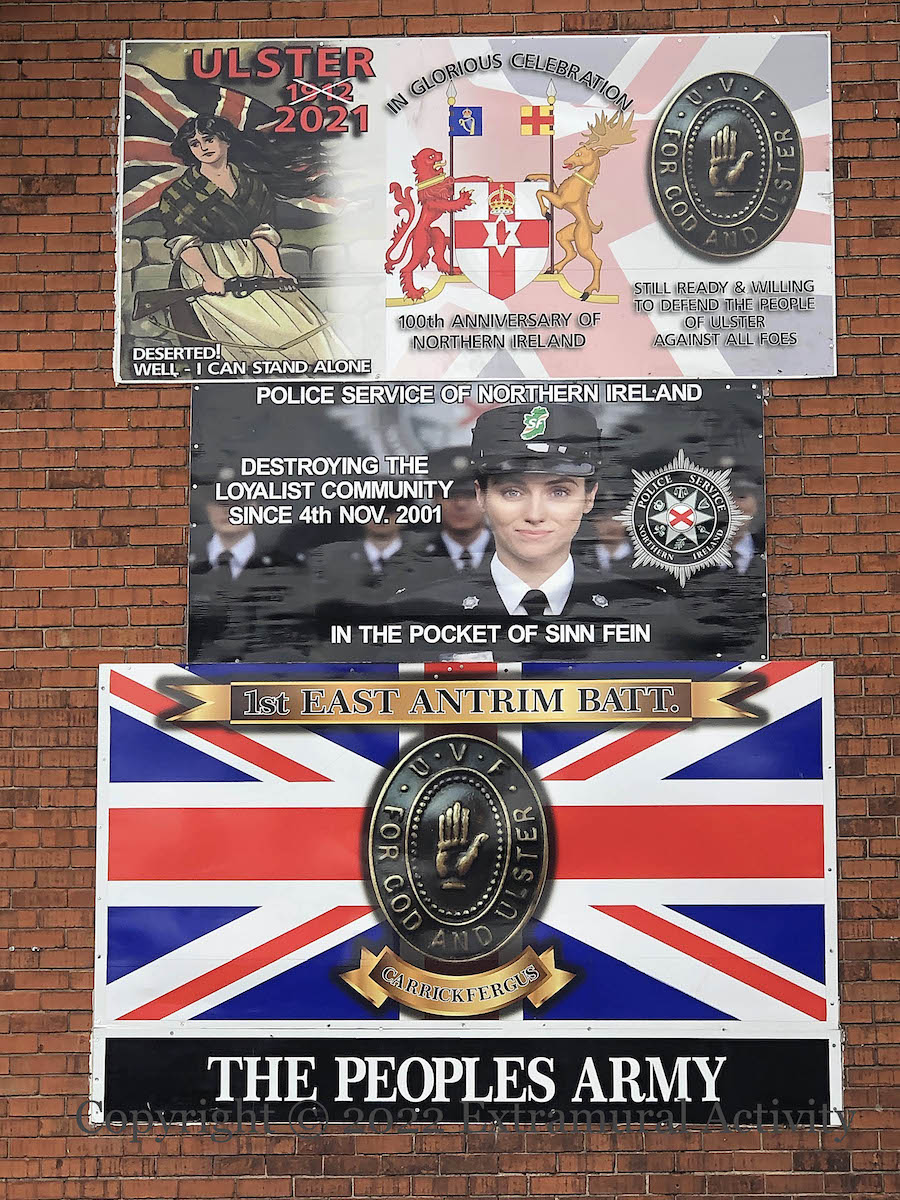
The UVF 1st East Antrim Battalion is “Still ready & willing to defend the people of Ulster against all foes” including the British government that – even as Northern Ireland marks its centenary – has “deserted” it over the NI Protocol that involves checks on goods moving between Britain and Ireland (whether north or south) but no (new) checks on goods moving between north and south (gov.uk). The “still” goes all the way back to 1912, when the British government of the day proposed (for a third time) “Home Rule” for Ireland and the Ulster Volunteers were formed – though the original “deserted” postcard and previous murals show the date as 1914.
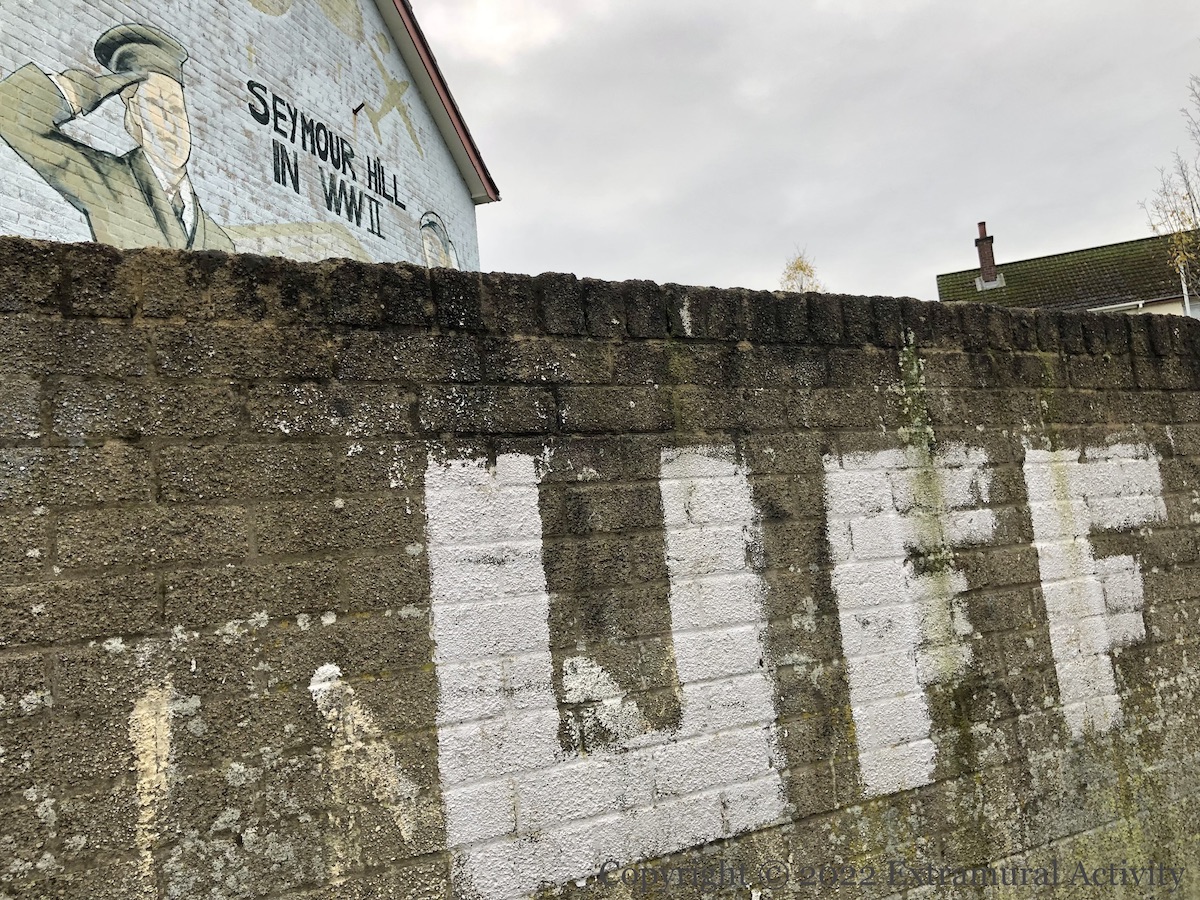
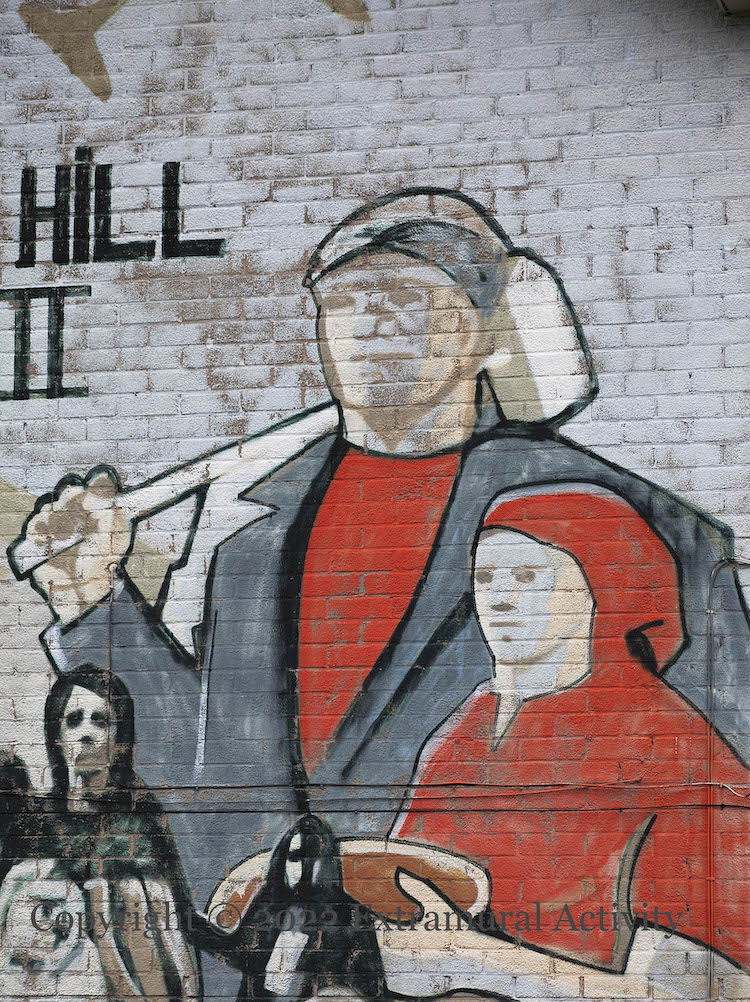
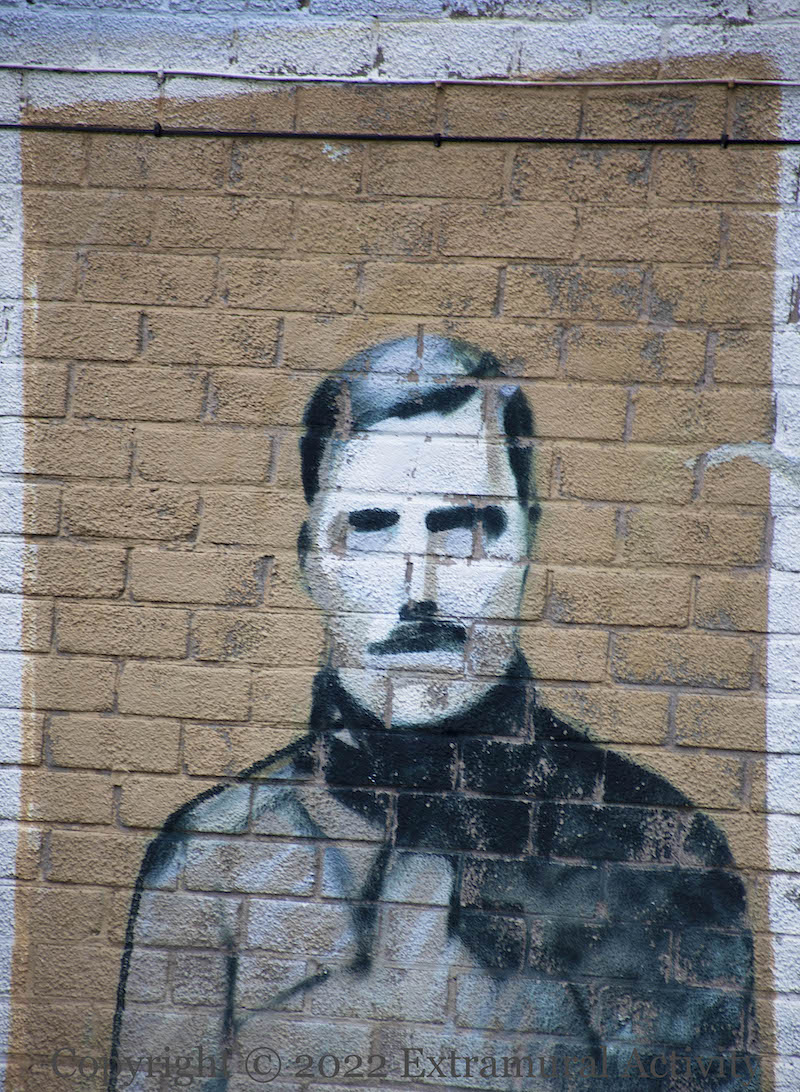
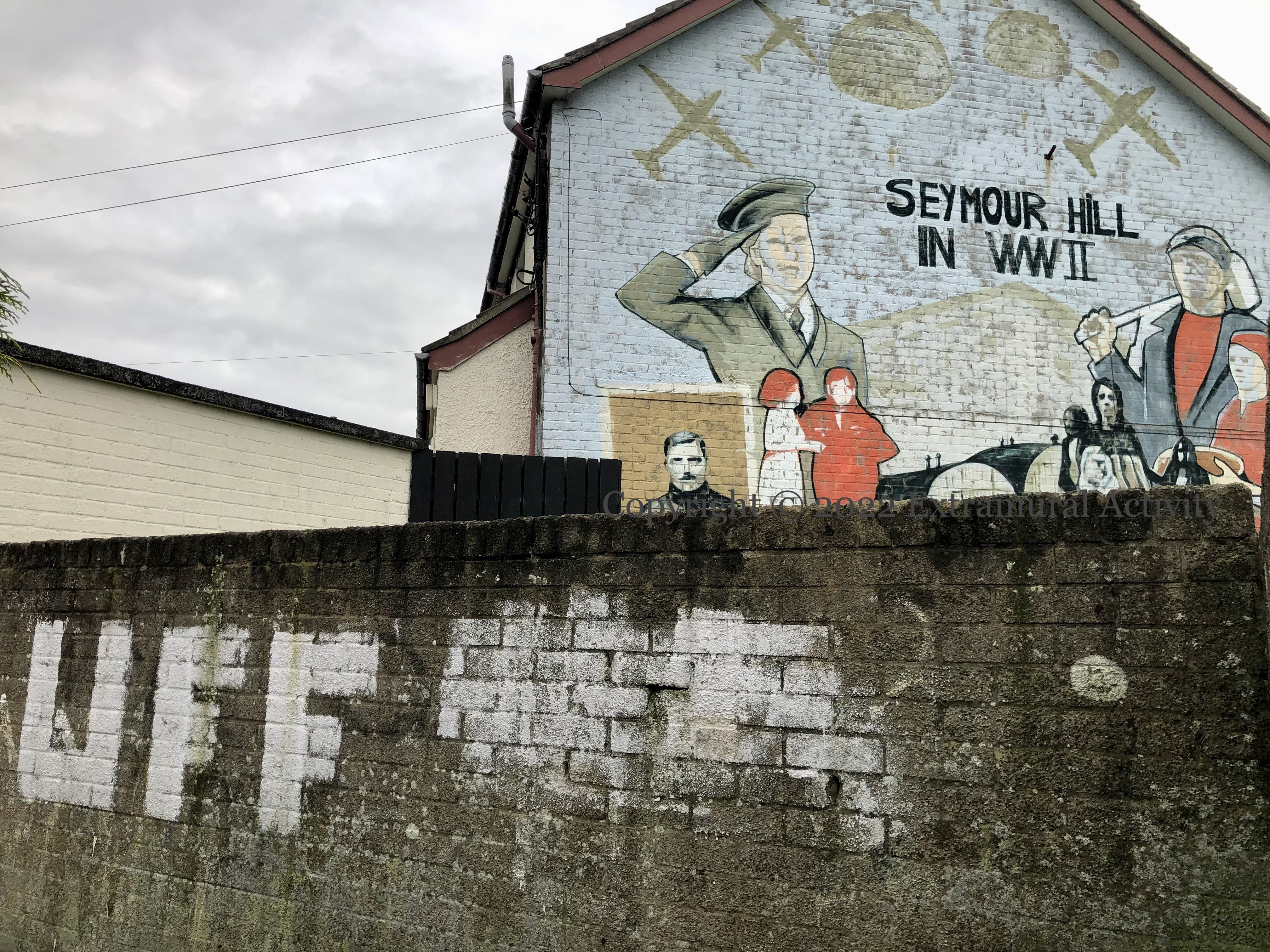
The Seymour Hill WWII mural will be 14 years old this coming July (2023) but it is hanging on fairly well. It is quite faded – especially the parachutes at the top – but there is no graffiti on the wall itself, only on the wall below it. For the mural when new and information about the US camp and portrait of Colditz prisoner William Harbinson, see M04776.











 Extramural Activity