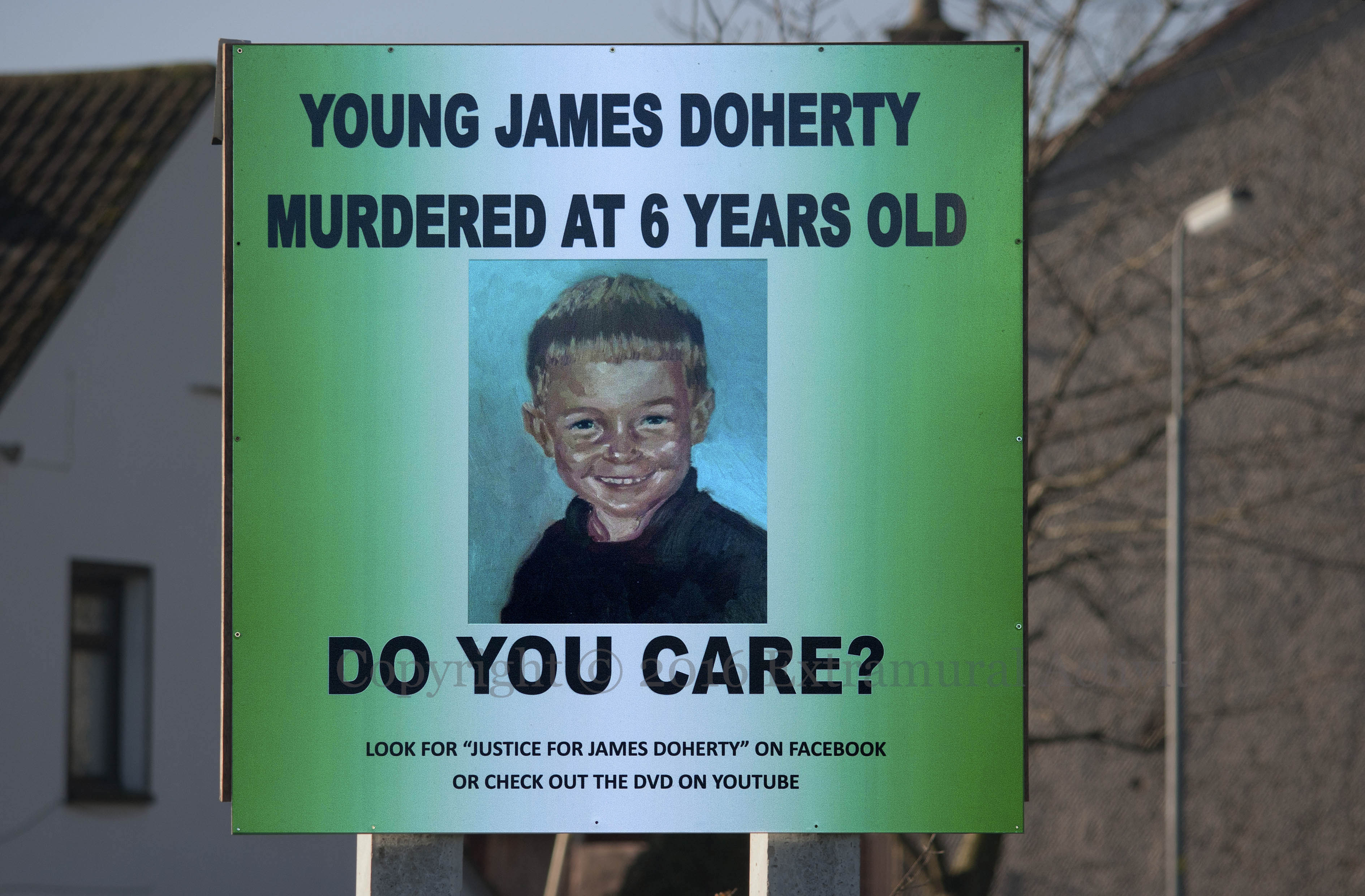
James “Jim” Doherty was six years old when he was shot while playing in the front garden of his Turf Lodge home in 1972. Relatives For Justice and the family launched the board shown above at the entrance to the estate last October in order to push for a new inquiry into the death due to the insufficiency of the original investigation and the disappearance of the bullet taken from the body. (Belfast Media Group)
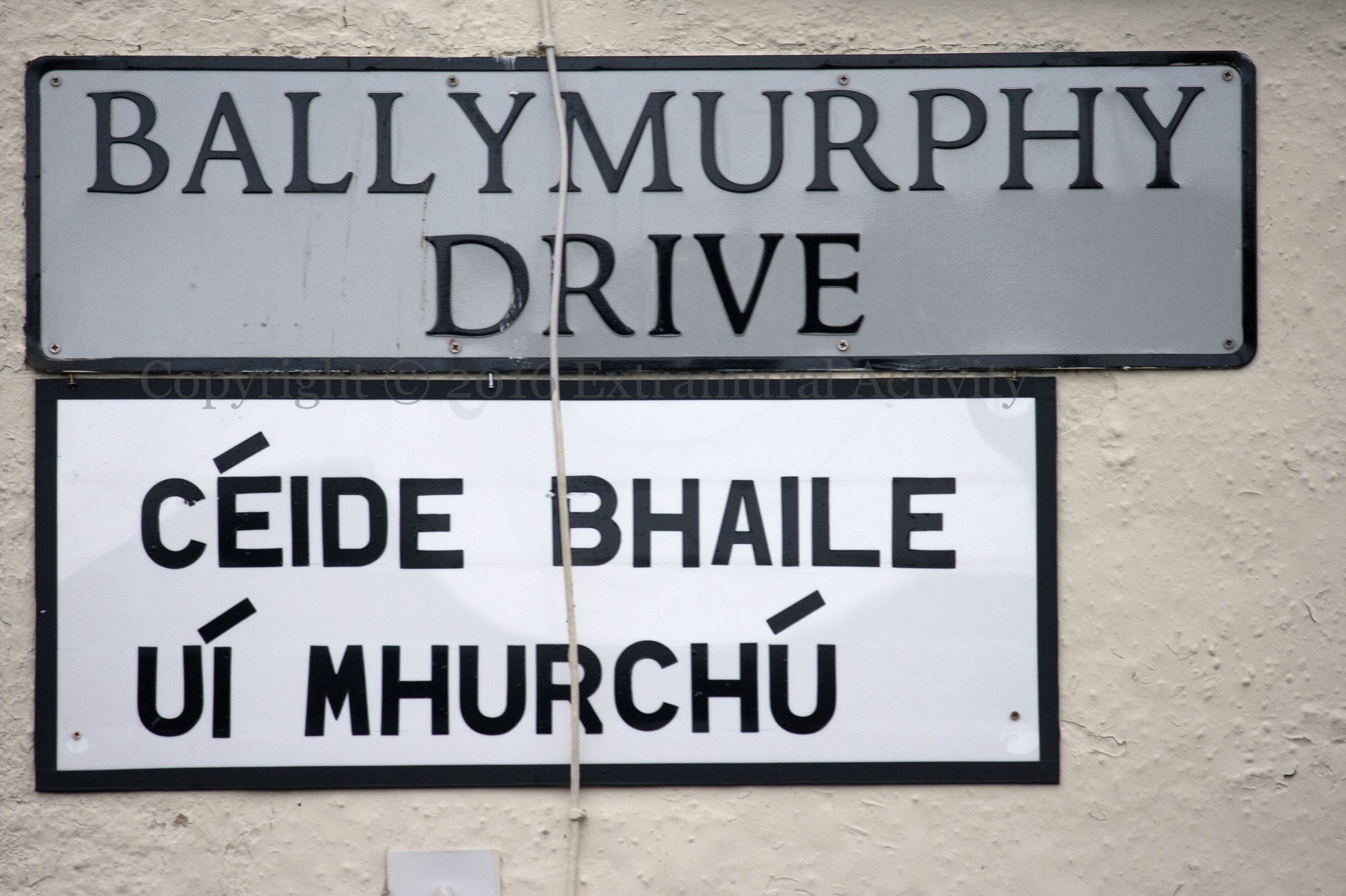
Some residents of Ballymuprhy Drive have erected their own Irish-language street sign. The council has not erected one because a substantial number of residents did not respond to a survey. The primary resident behind the move, Eileen Reid, contends that the 2/3rds is unreasonable. (Irish Times | Belfast Live | Irish News)
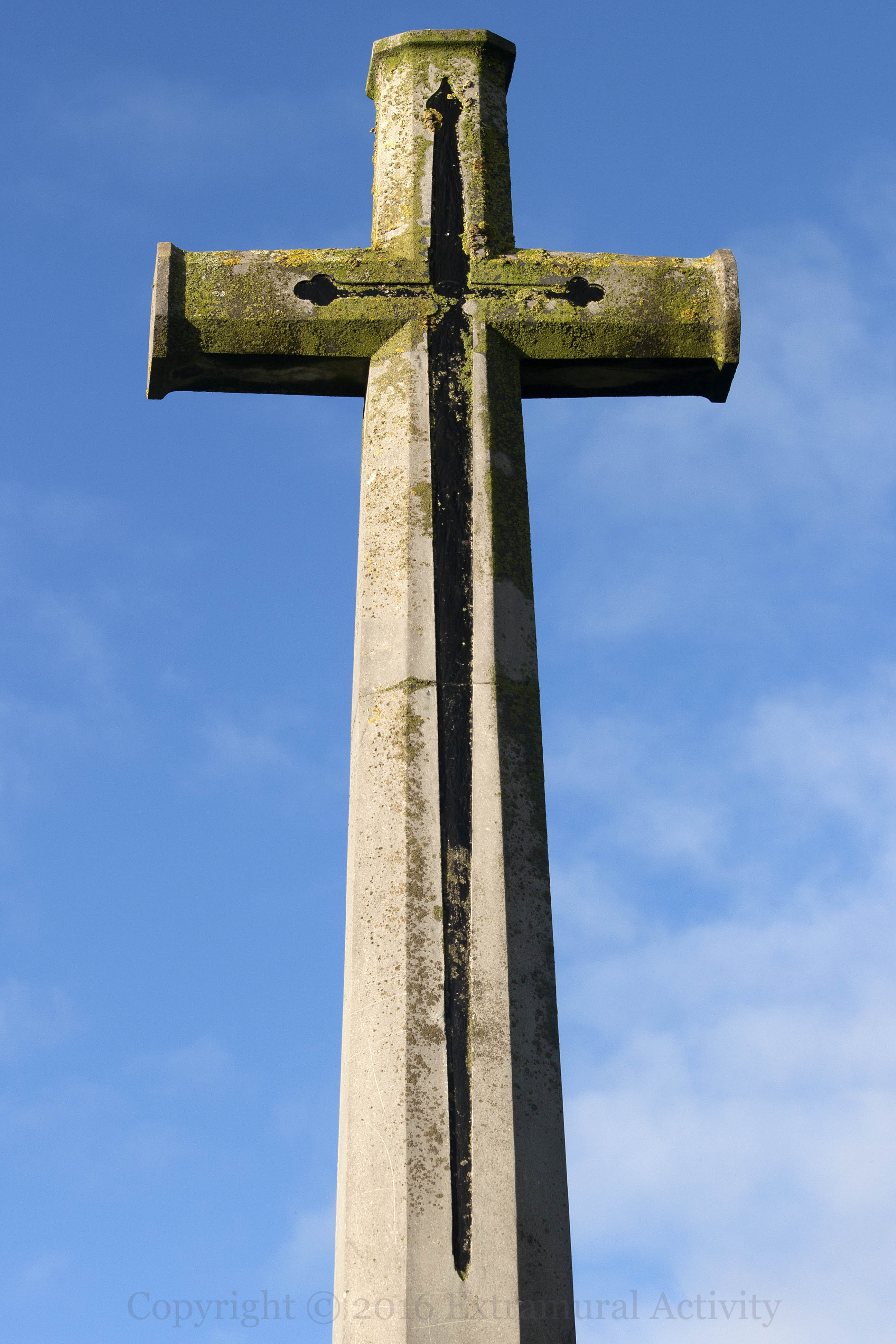
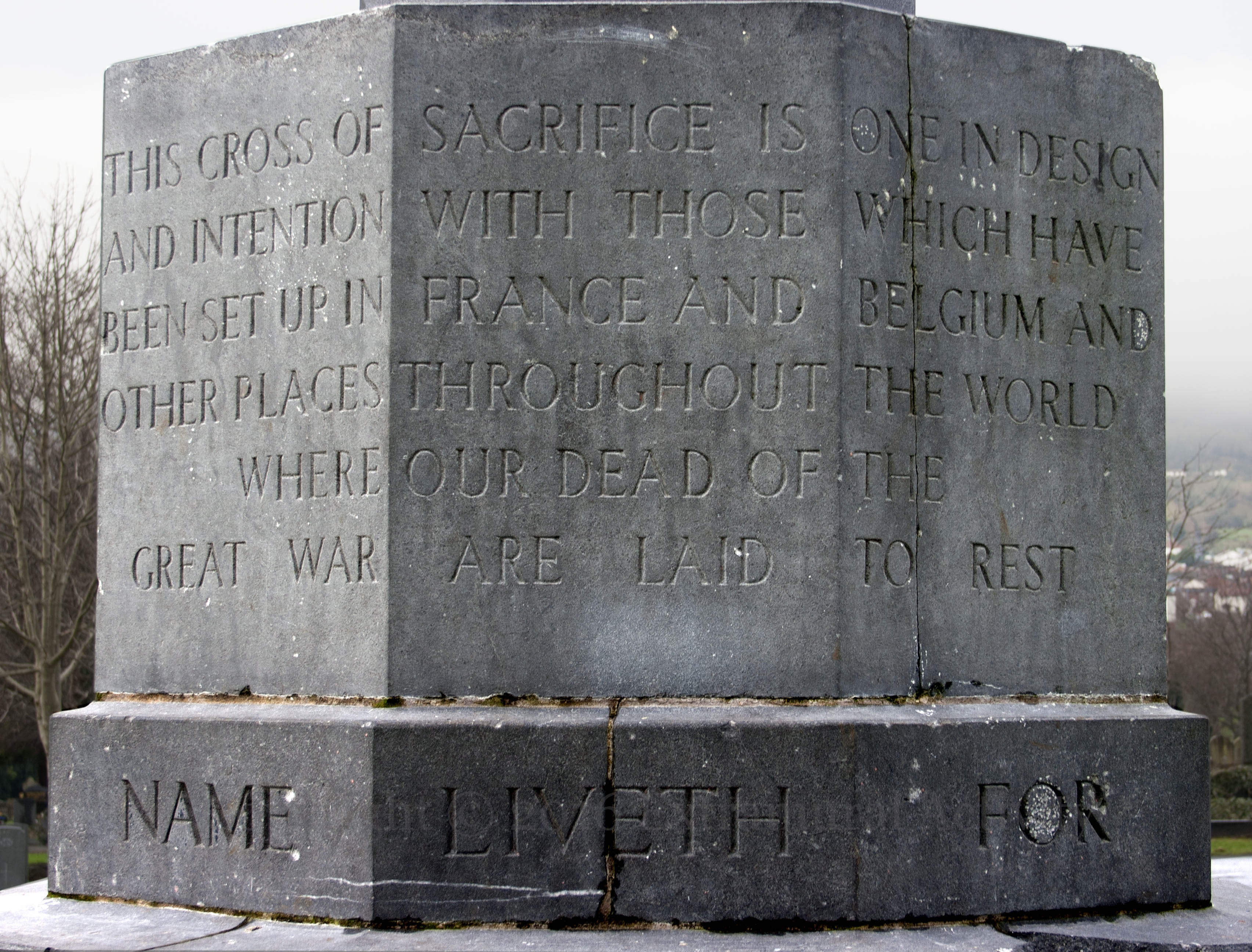
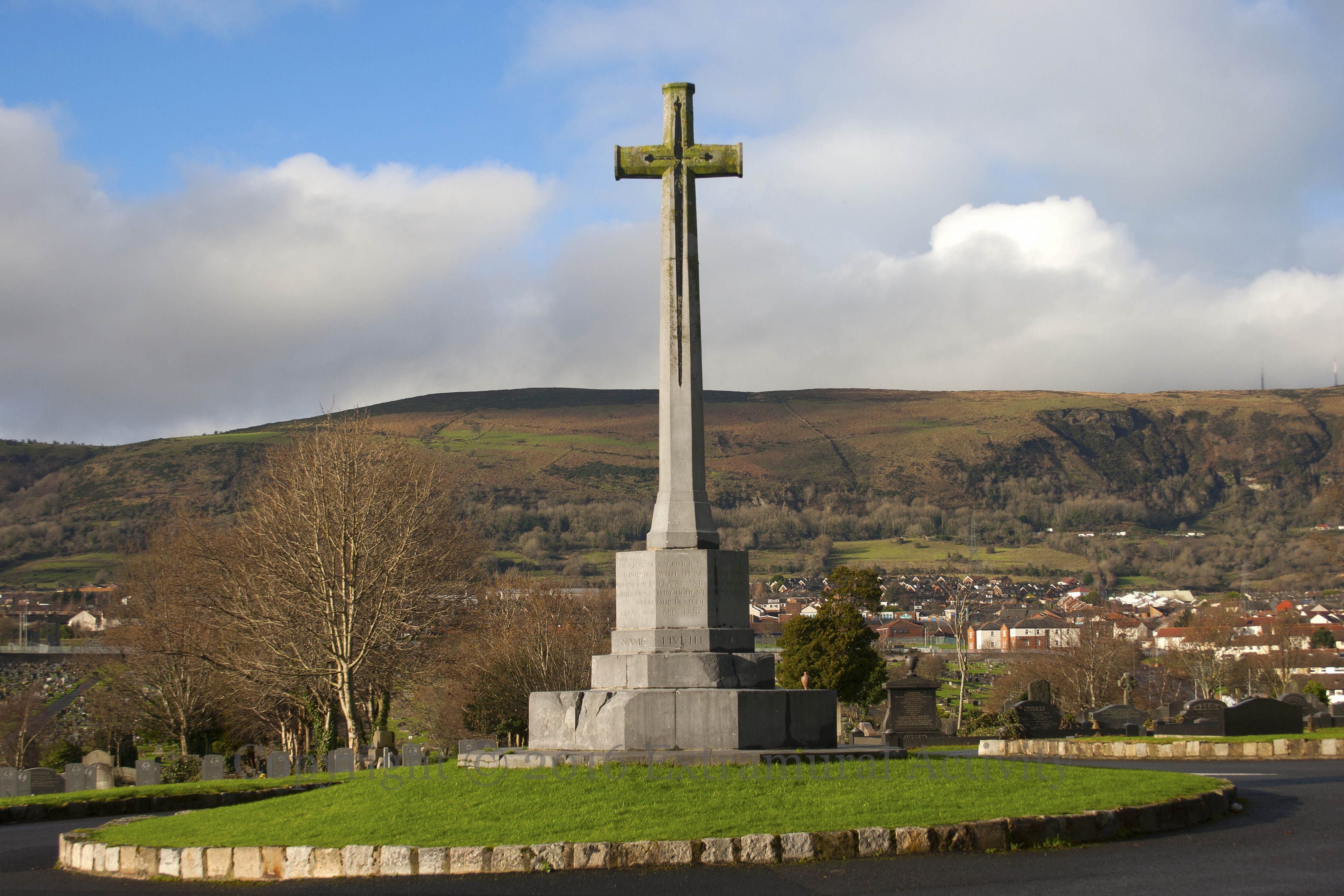
Religion and military might are one in this giant (see the wide shot, below) cross in Belfast’s City Cemetery, which commemorates the dead of World War I. The base (shown below) reads: The cross of sacrifice is one in design and intention with those which have been set up in France and Belgium and other places throughout the world where our dead of this great war are laid to rest. Their name liveth for ever more.” There is a similar memorial in Dundonald Cemetery. According to the Commonwealth War Graves Commission, “There are now 296 Commonwealth burials of the 1914-1918 war and 274 of the 1939-1945 war commemorated here.”
“Revolution 1916” is an exhibition of uniforms, weapons, medals, and other memorabilia from the 1916 Easter Rising. It will open in Dublin’s Ambassador Theatre on February 27th but before then it some of the items have been on tour, including stops in the Andersonstown Social Club (poster shown above | youtube video) and Gaelscoil Éanna in Glengormley (images). As a juxtaposition, “CIRA” (Continuity IRA) is on the electrical box to the left.
The Green Brigade, founded in 2006, (Web | WP) is an ultra-fanatical supporters club for Scottish football team Celtic. The poster above, which shows a supporter with scarf over the lower part of his face and aiming a slingshot, is in the Clonard area of west Belfast.
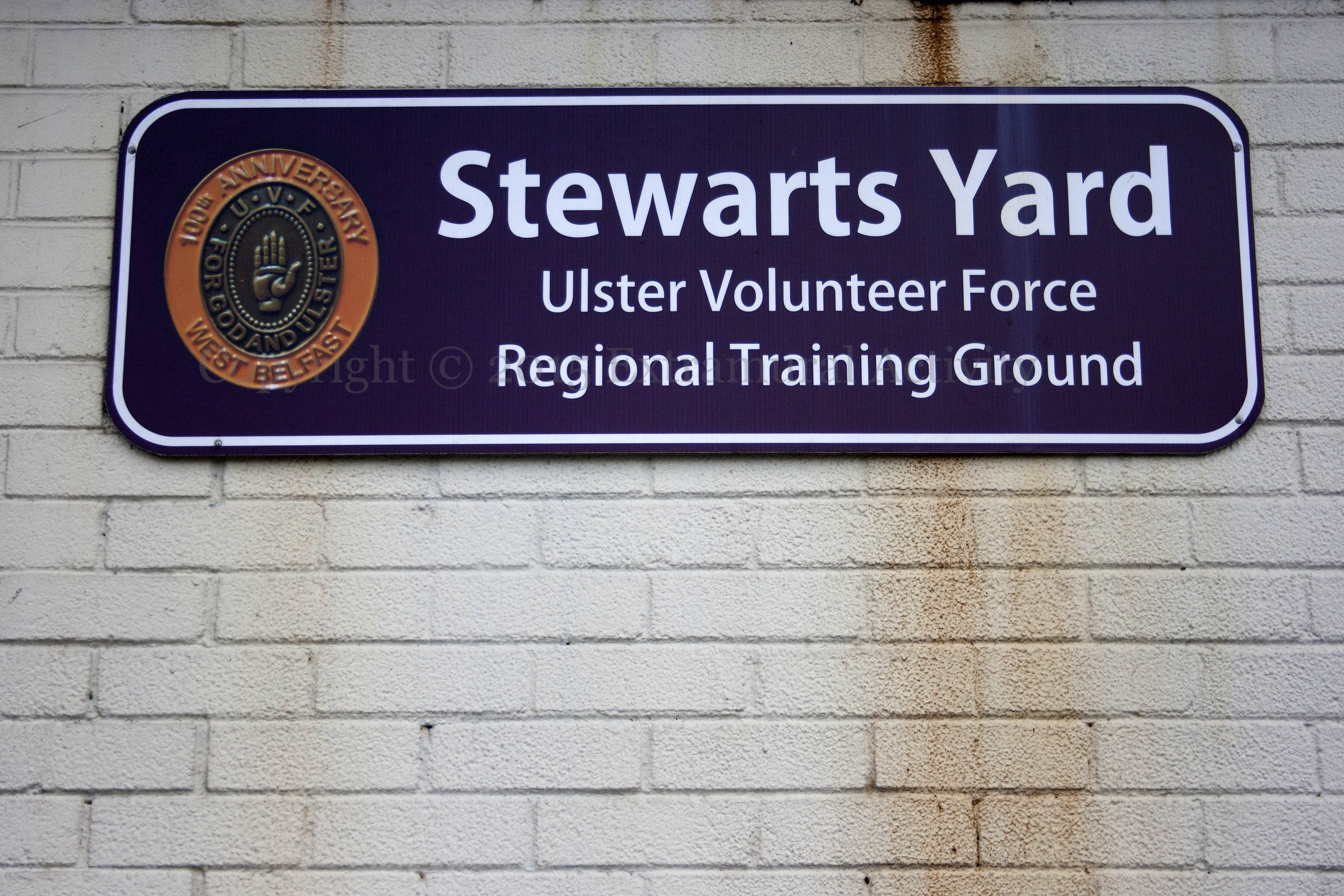
As the sign says, the area of what is now an Iceland supermarket on the Shankill Road was, at the time of World War I, a training ground for the Ulster Volunteers. The sign was erected to commemorate the 100th anniversary of the force, which then became the Ulster Volunteer Force which served in the war. “On the first day of enlistment for the West Belfast UVF, volunteers assembled at Stewart’s Yard in the Shankill Road. They were addressed by Colonel T. E. Hickman, the Conservative MP for Wolverhampton and a senior UVF figure who had become the Recruiting Officer for the whole of Ulster. Joining Hickman were James Craig MP, plus Stewart Blacker Quin, who was the Unionist candidate for West Belfast and the commander of the 1st Battalion West Belfast UVF.” (Richard S. Grayson, Belfast Boys: How Unionists and Nationalists Fought and Died Together in First World War, p. 12) “The day following the opening of enlistment for the Division, 360 men assembled at the same yard, where after being presented with a box of cigarettes, they marched to the railway station to board trains for Donard Camp near Newcastle. These men became the corps of the 9th Battalion Royal Irish Rifles.” (Bygone Days)
Seán Mac Dıarmada was born in Leitrim, left for Glasgow at age 15, and after two years returned to Belfast in 1905 and – according to the new mural above – spoke from the back of a coal lorry in Clonard Street, outside the Clonard branch of the Ancient Order Of Hibernians. Mac Dıarmada was for a short time an AOH member, before moving on to the Irish Republican Brotherhood and Irish Volunteers, which led to his participation in the 1916 Easter Rising and execution on May 12th of that year.
The title of today’s post is historian F.X. Martin’s assessment of Mac Dıarmada, quoted in a pamphlet on Mac Dıarmada from the National Library Of Ireland. The NLI made many letters from and to Mac Dıarmada available in 2016. (See also this Irish Times write-up).
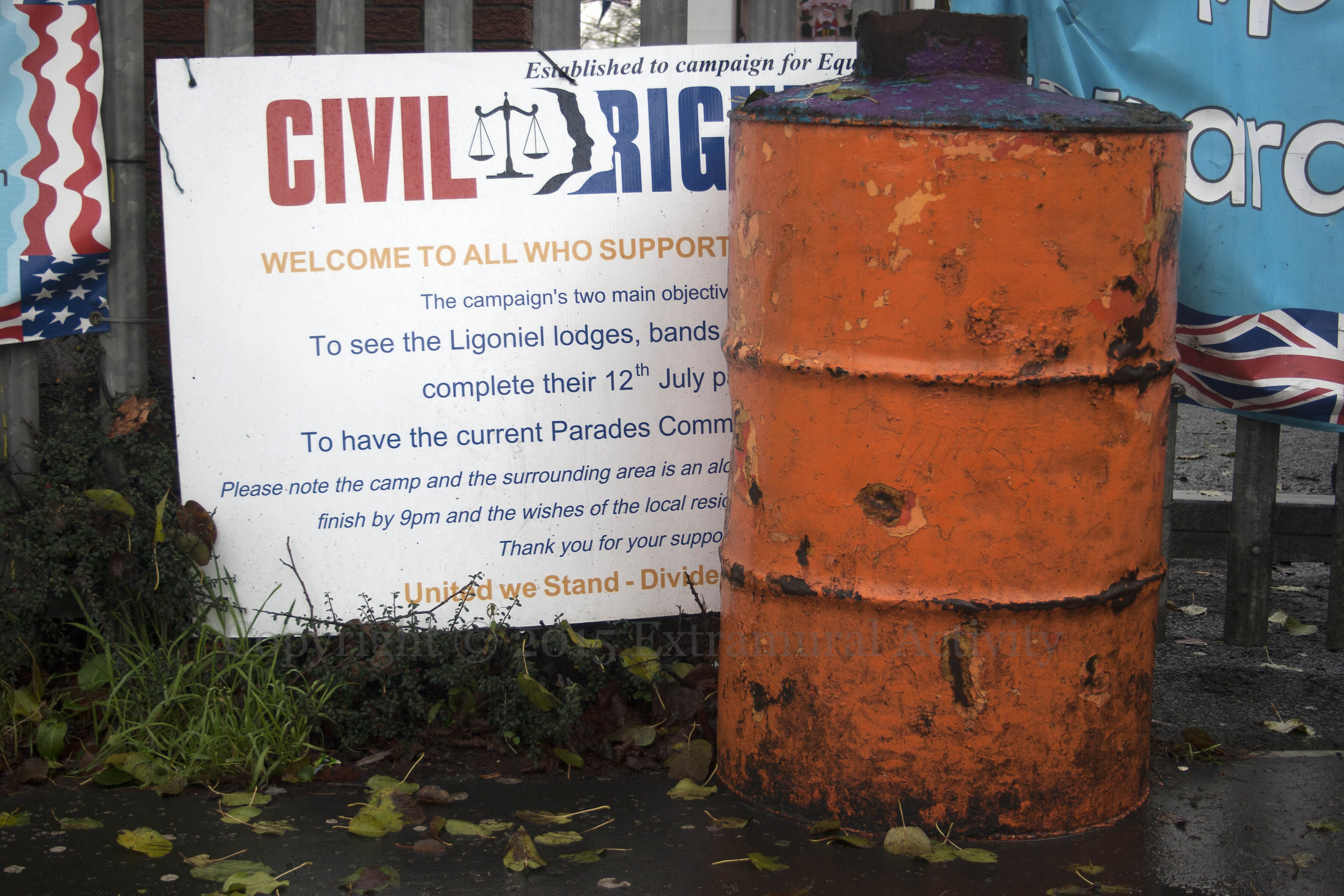
Here is a snapshot from the protest camp at Twaddell Avenue, established in July 2013, which remains in place at the junction with the Crumlin Road. The most recent newspaper mention of the protest appears to be this December 29th report in the Newsletter.
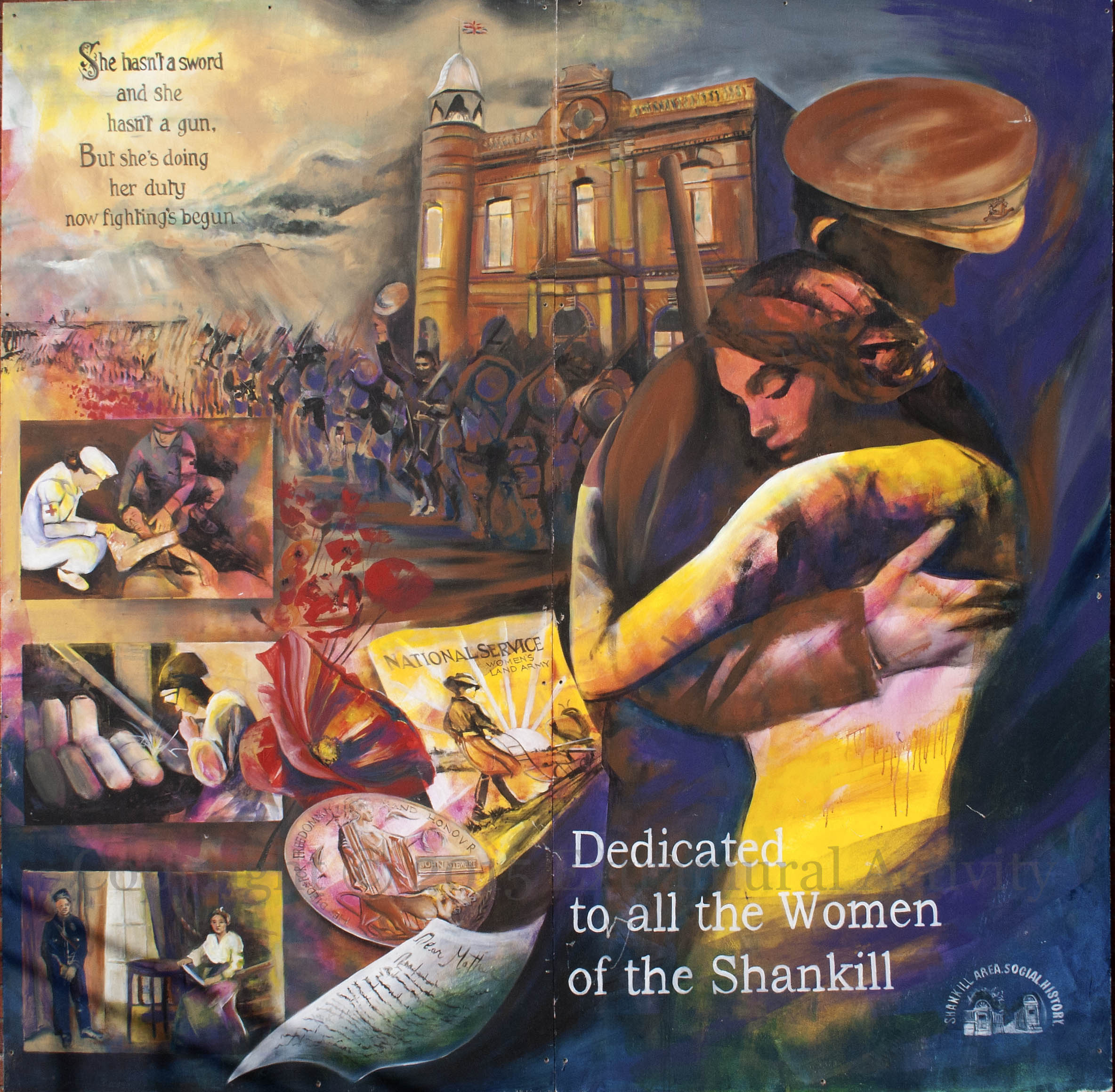
Here is a board from outside the Ulster Rangers Supporters Club (Fb) on the Shankill Road. It highlights the roles played by women during WWI as nurses and welders and in the Land Army. “She hasn’t a sword and she hasn’t a gun. But she’s doing her duty now fighting’s begun.”
The forces are shown gathered outside the West Belfast Orange Hall, on the Shankill at Brookmount Street.






 Extramural Activity