The Green Brigade, founded in 2006, (Web | WP) is an ultra-fanatical supporters club for Scottish football team Celtic. The poster above, which shows a supporter with scarf over the lower part of his face and aiming a slingshot, is in the Clonard area of west Belfast.
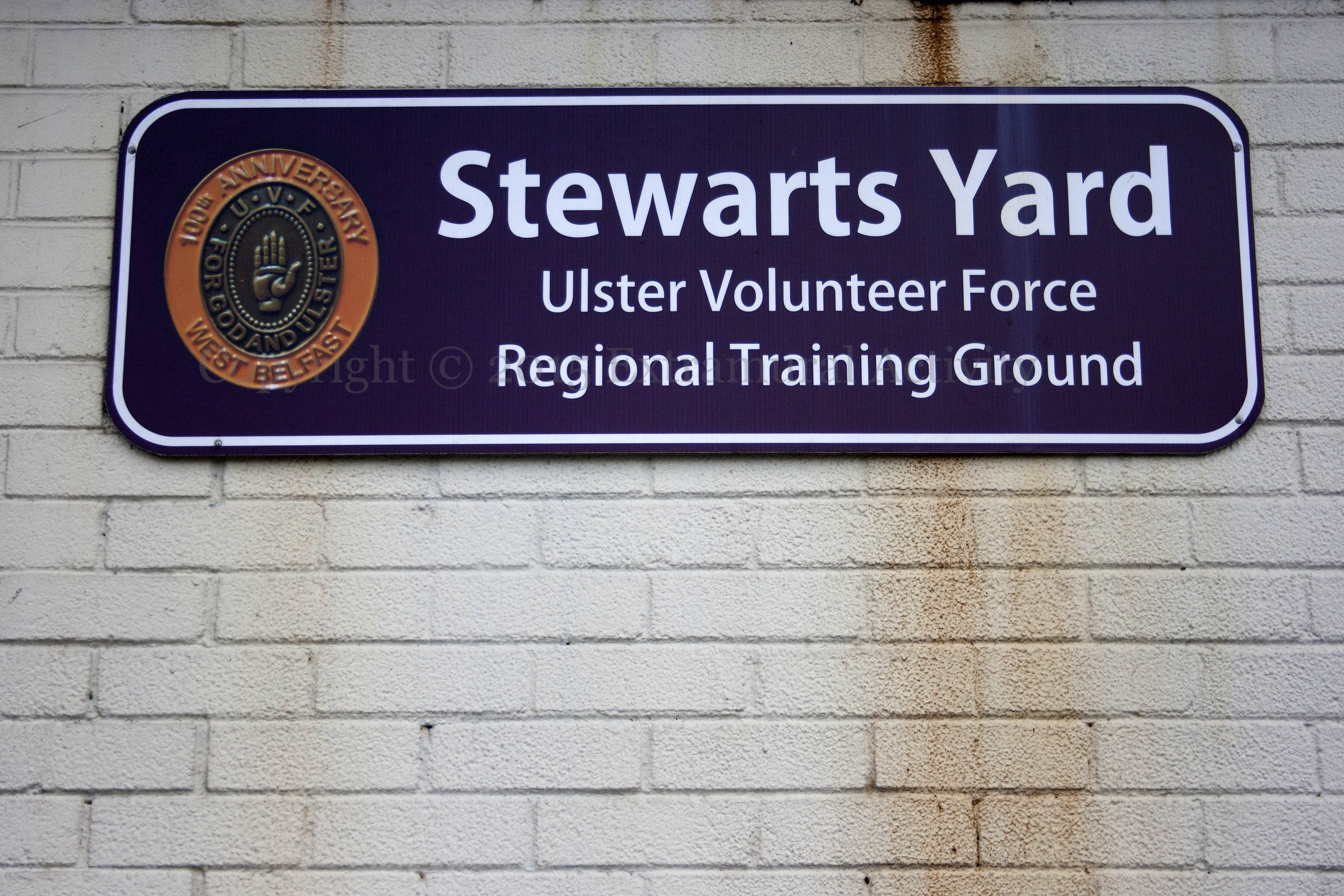
As the sign says, the area of what is now an Iceland supermarket on the Shankill Road was, at the time of World War I, a training ground for the Ulster Volunteers. The sign was erected to commemorate the 100th anniversary of the force, which then became the Ulster Volunteer Force which served in the war. “On the first day of enlistment for the West Belfast UVF, volunteers assembled at Stewart’s Yard in the Shankill Road. They were addressed by Colonel T. E. Hickman, the Conservative MP for Wolverhampton and a senior UVF figure who had become the Recruiting Officer for the whole of Ulster. Joining Hickman were James Craig MP, plus Stewart Blacker Quin, who was the Unionist candidate for West Belfast and the commander of the 1st Battalion West Belfast UVF.” (Richard S. Grayson, Belfast Boys: How Unionists and Nationalists Fought and Died Together in First World War, p. 12) “The day following the opening of enlistment for the Division, 360 men assembled at the same yard, where after being presented with a box of cigarettes, they marched to the railway station to board trains for Donard Camp near Newcastle. These men became the corps of the 9th Battalion Royal Irish Rifles.” (Bygone Days)
Seán Mac Dıarmada was born in Leitrim, left for Glasgow at age 15, but after two years returned to Belfast in 1905 (working on the trams) and – according to the new mural above – spoke from the back of a coal lorry in Clonard Street, outside the Clonard branch of the Ancient Order Of Hibernians. Mac Dıarmada was for a short time an AOH member, before moving on to the Irish Republican Brotherhood and Irish Volunteers, which led to his participation in the 1916 Easter Rising and execution on May 12th of that year.
The title of today’s post is historian F.X. Martin’s assessment of Mac Dıarmada, quoted in a pamphlet on Mac Dıarmada from the National Library Of Ireland, which includes reproductions of letters from and about Mac Dıarmada. The NLI made more letters available today (2016-02-08). (See also this Irish Times write-up).
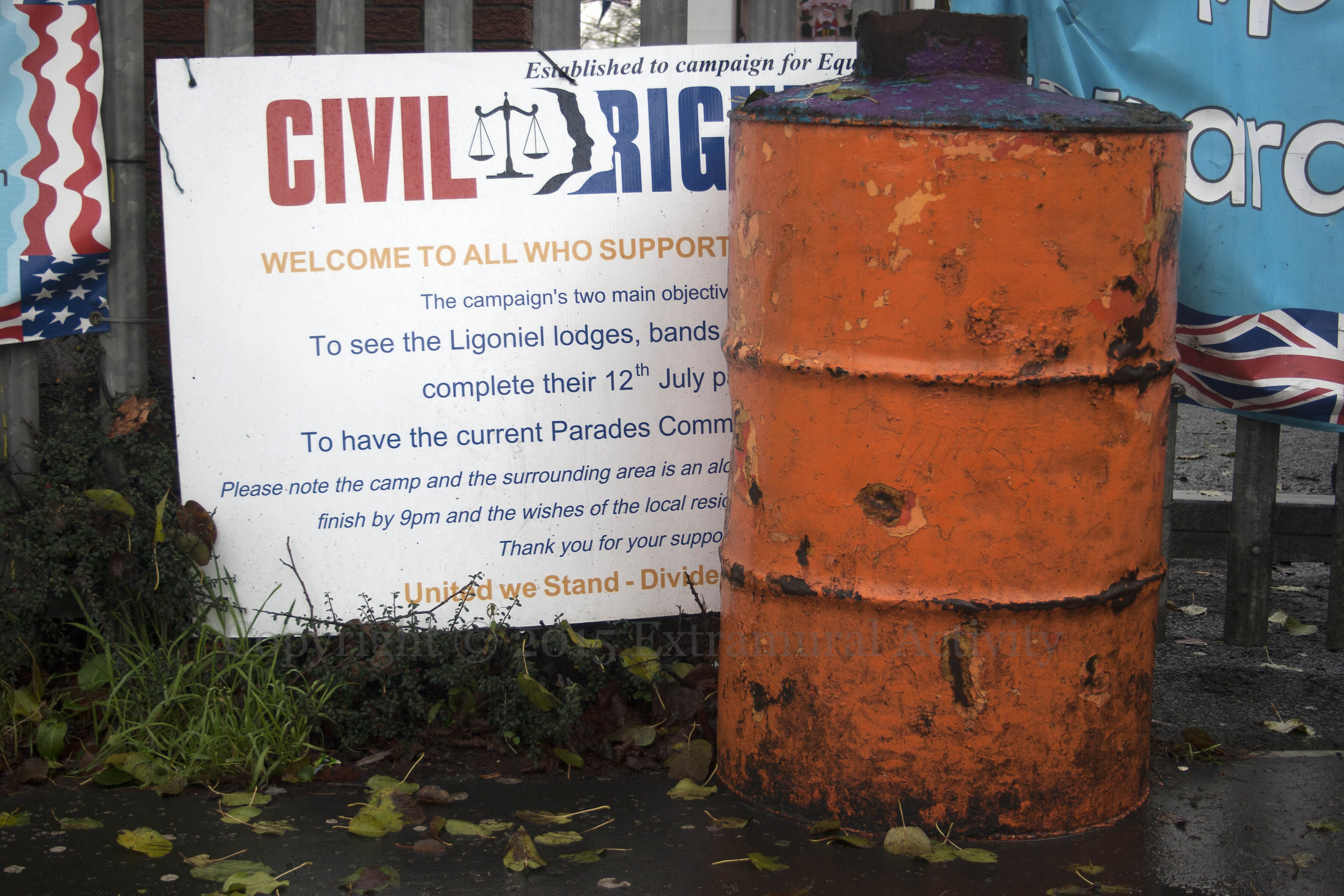
Here is a snapshot from the protest camp at Twaddell Avenue, established in July 2013, which remains in place at the junction with the Crumlin Road. The most recent newspaper mention of the protest appears to be this December 29th report in the Newsletter.
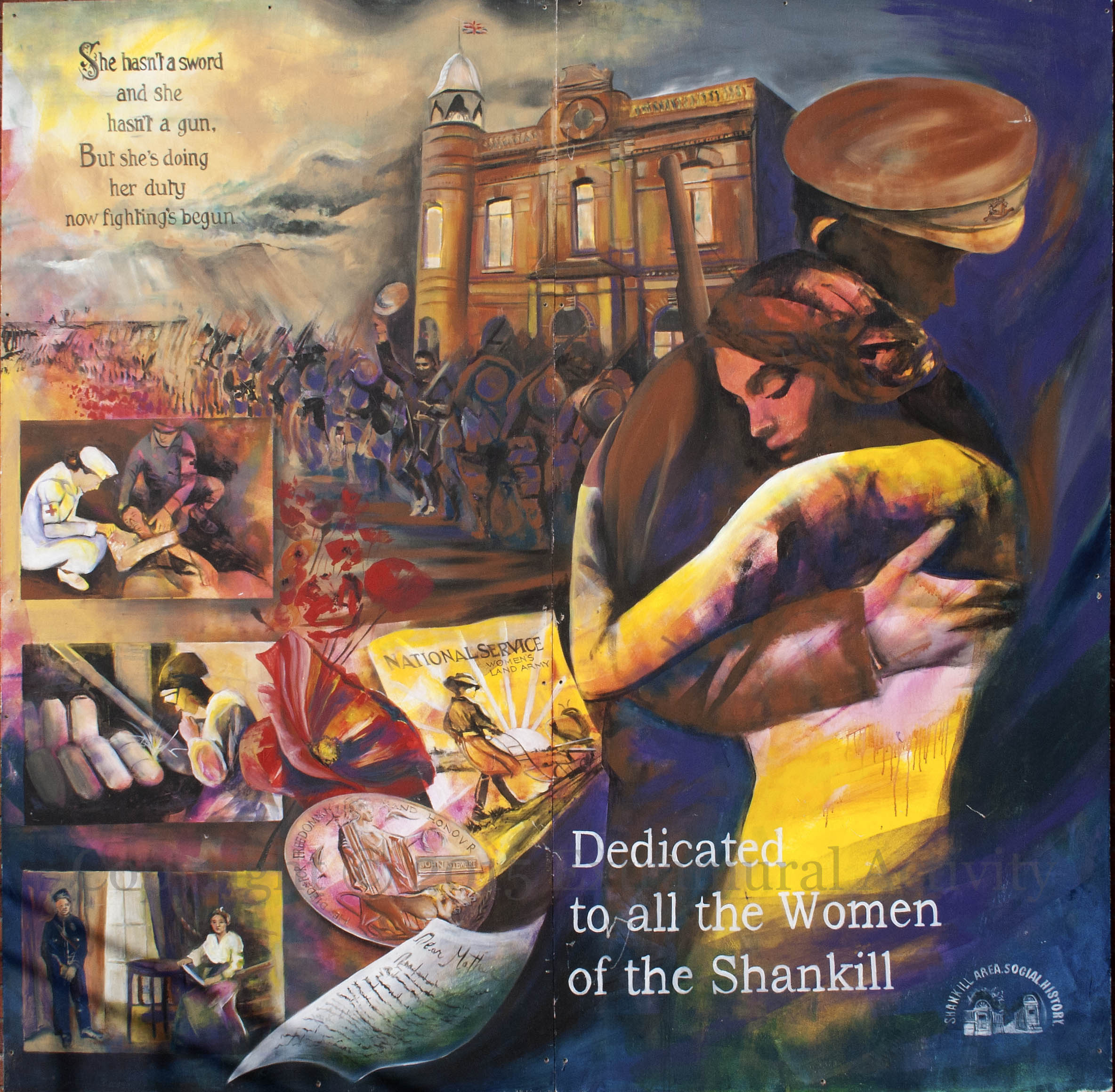
Here is a board from outside the Ulster Rangers Supporters Club (Fb) on the Shankill Road. It highlights the roles played by women during WWI as nurses and welders and in the Land Army. “She hasn’t a sword and she hasn’t a gun. But she’s doing her duty now fighting’s begun.”
The forces are shown gathered outside the West Belfast Orange Hall, on the Shankill at Brookmount Street.
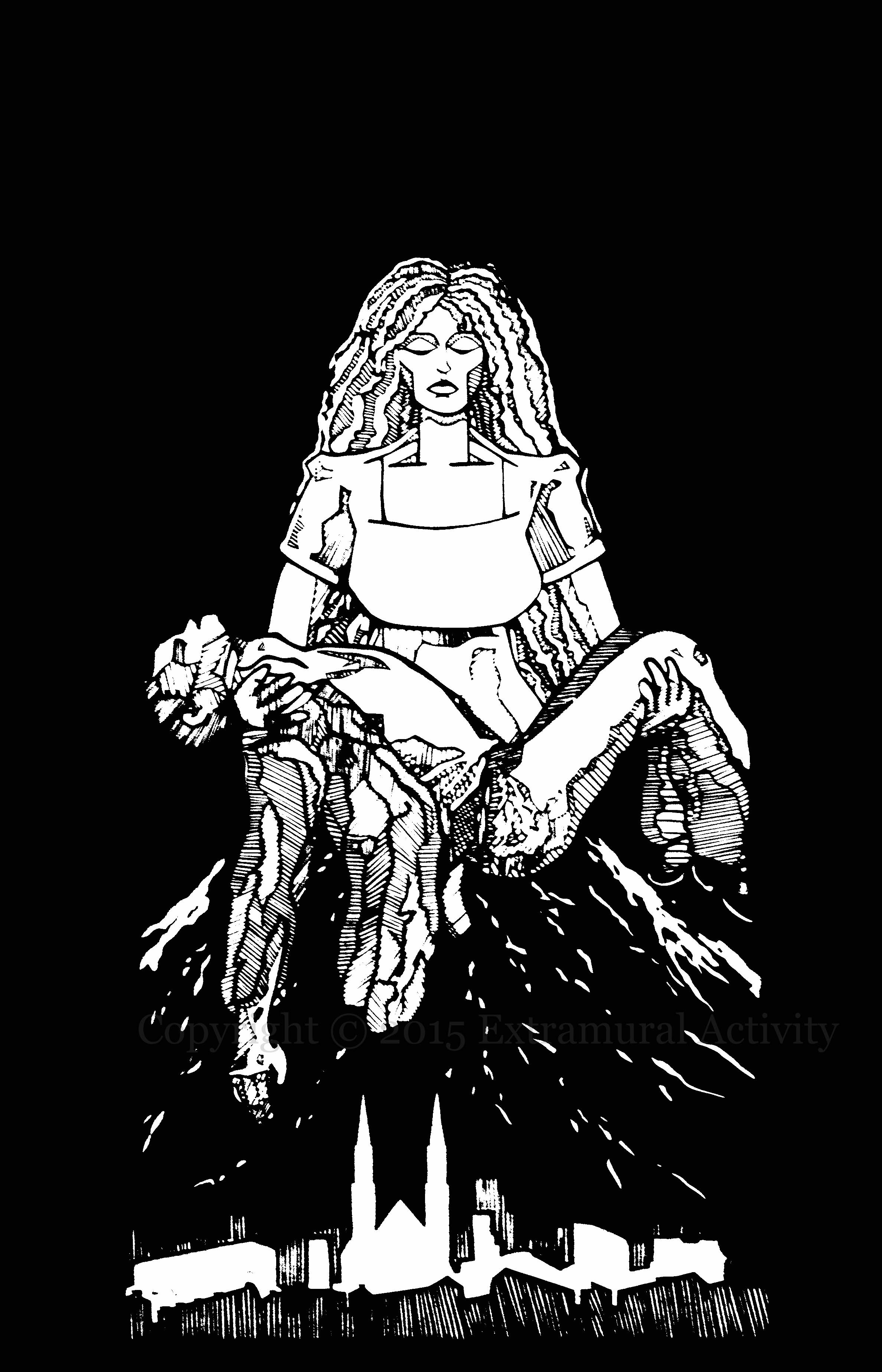
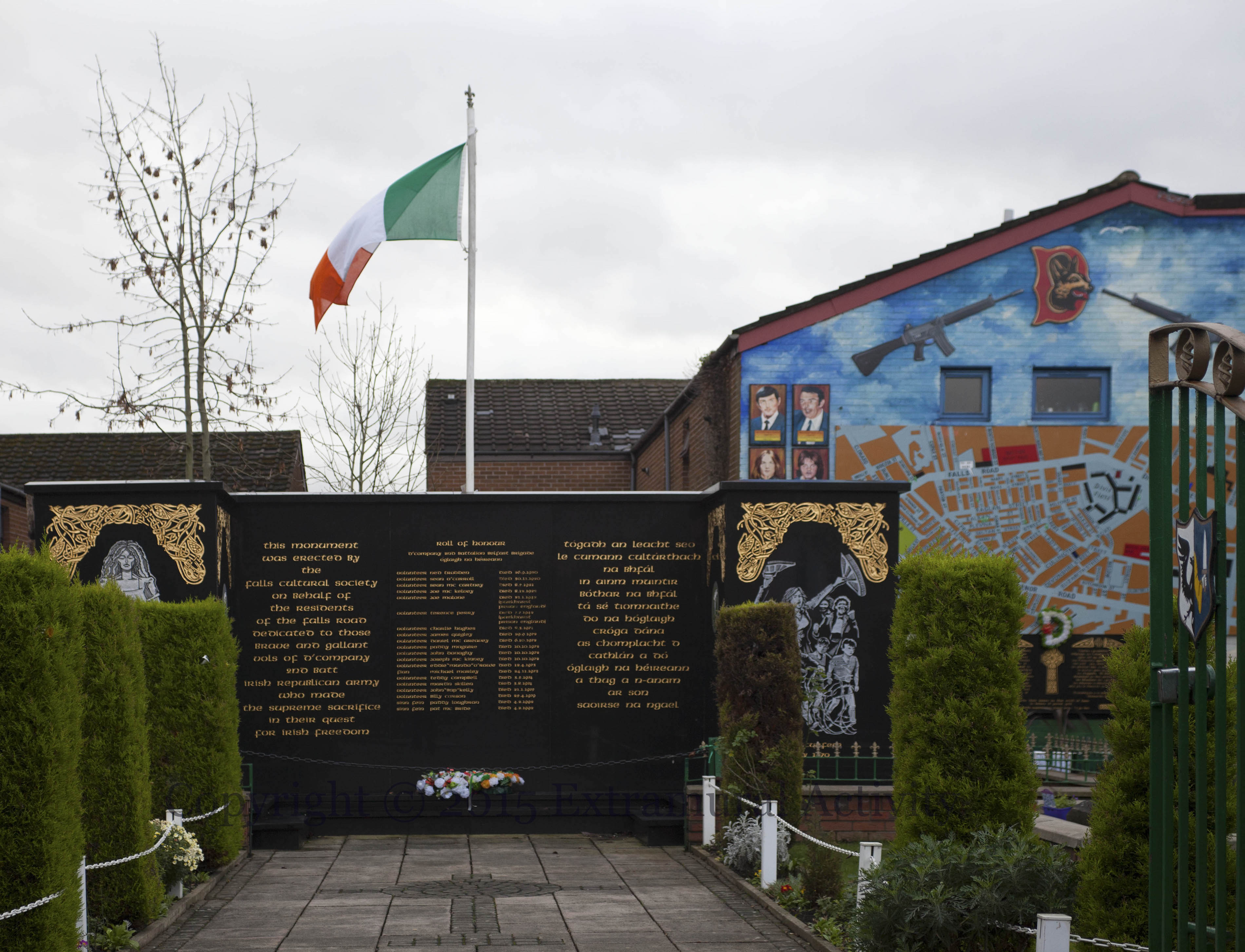
The two images featured today are of carved panels in the Falls Garden Of Remembrance (with the gold-plated surround removed). The garden commemorates fallen members of (IRA) D company but the panels suggest a wider appreciation of lower Falls residents. The same is also true of the mural in the background of the wide shot (third image, below), for which see Cry “Havoc”.
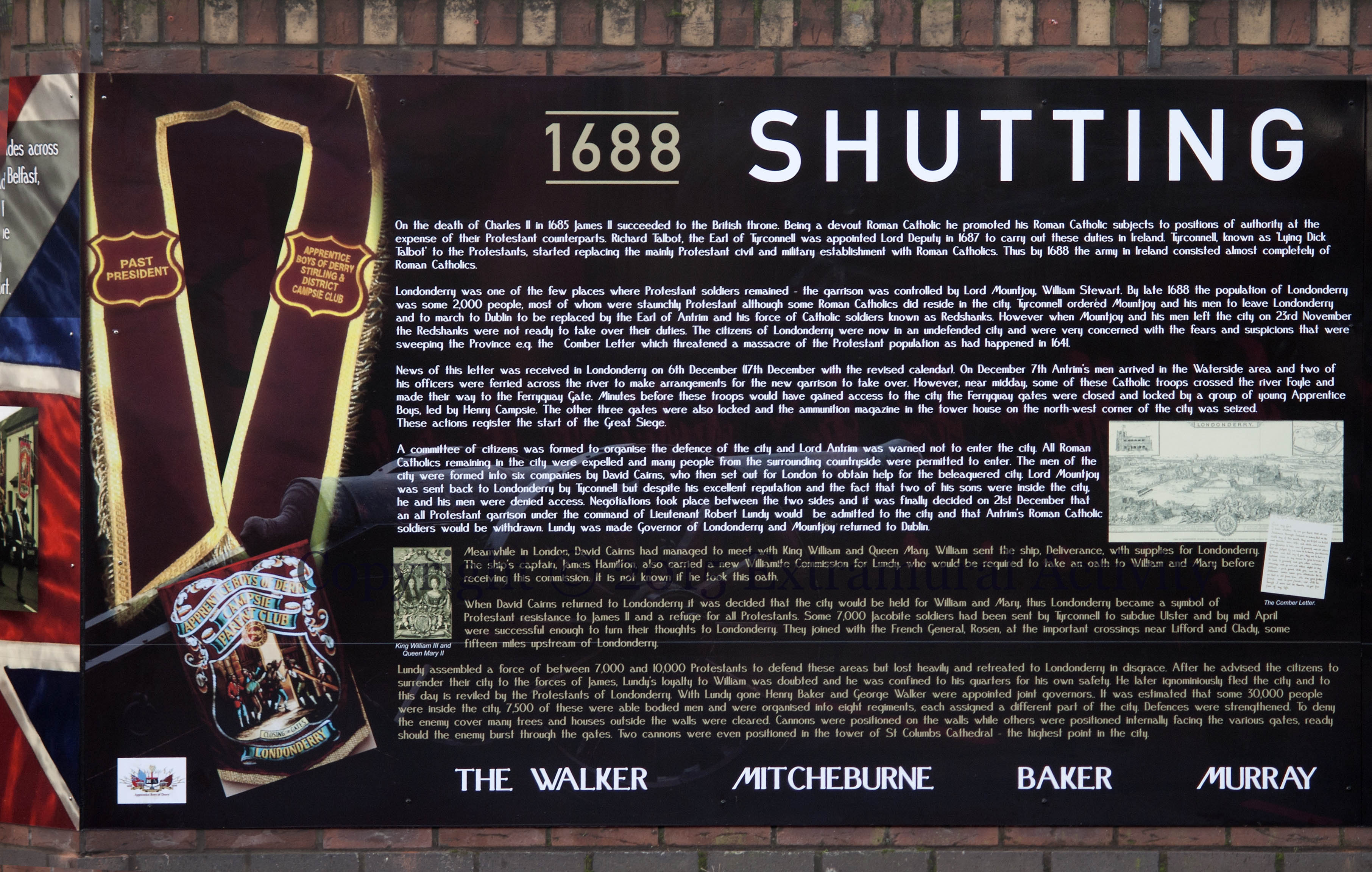
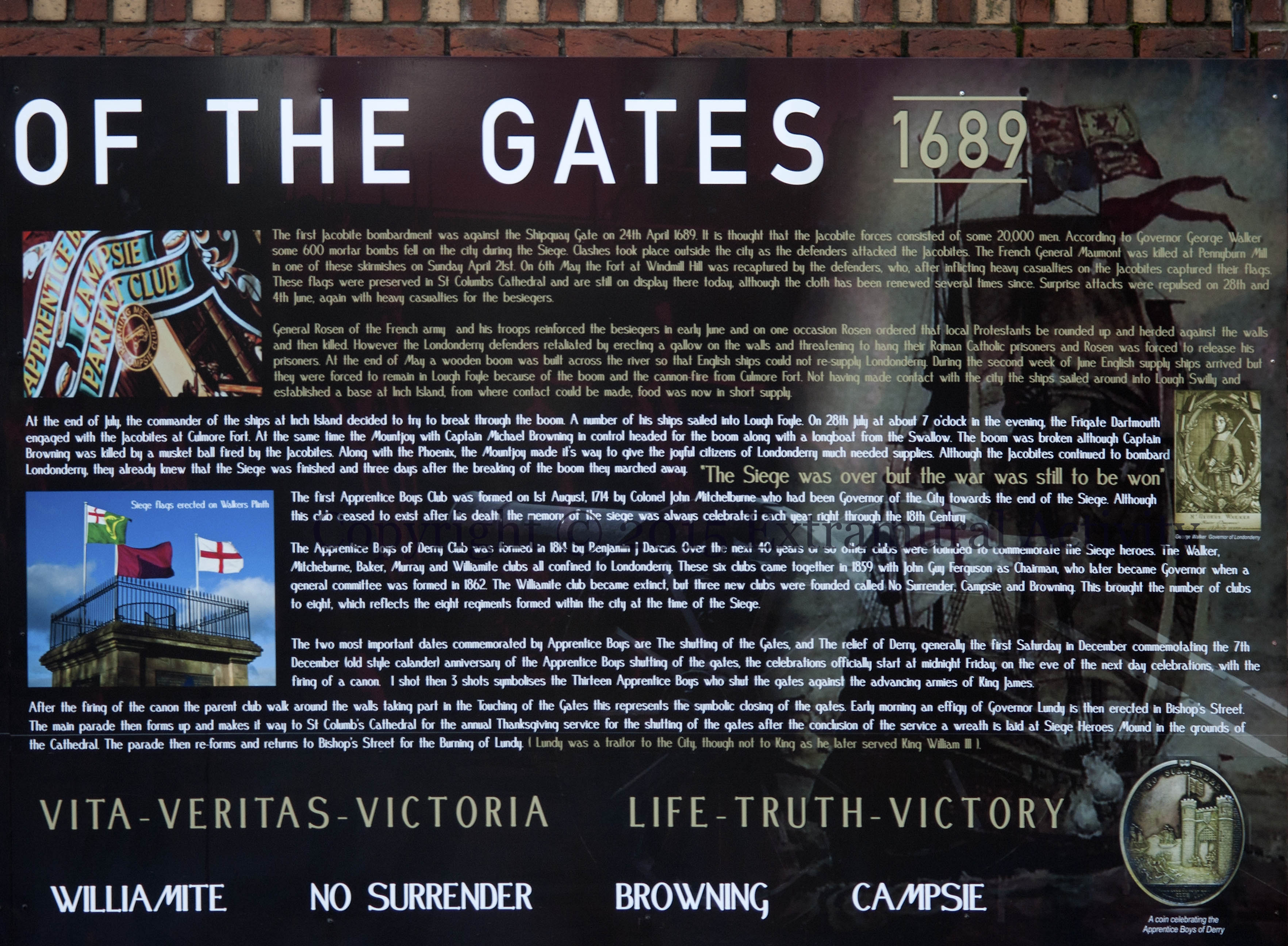
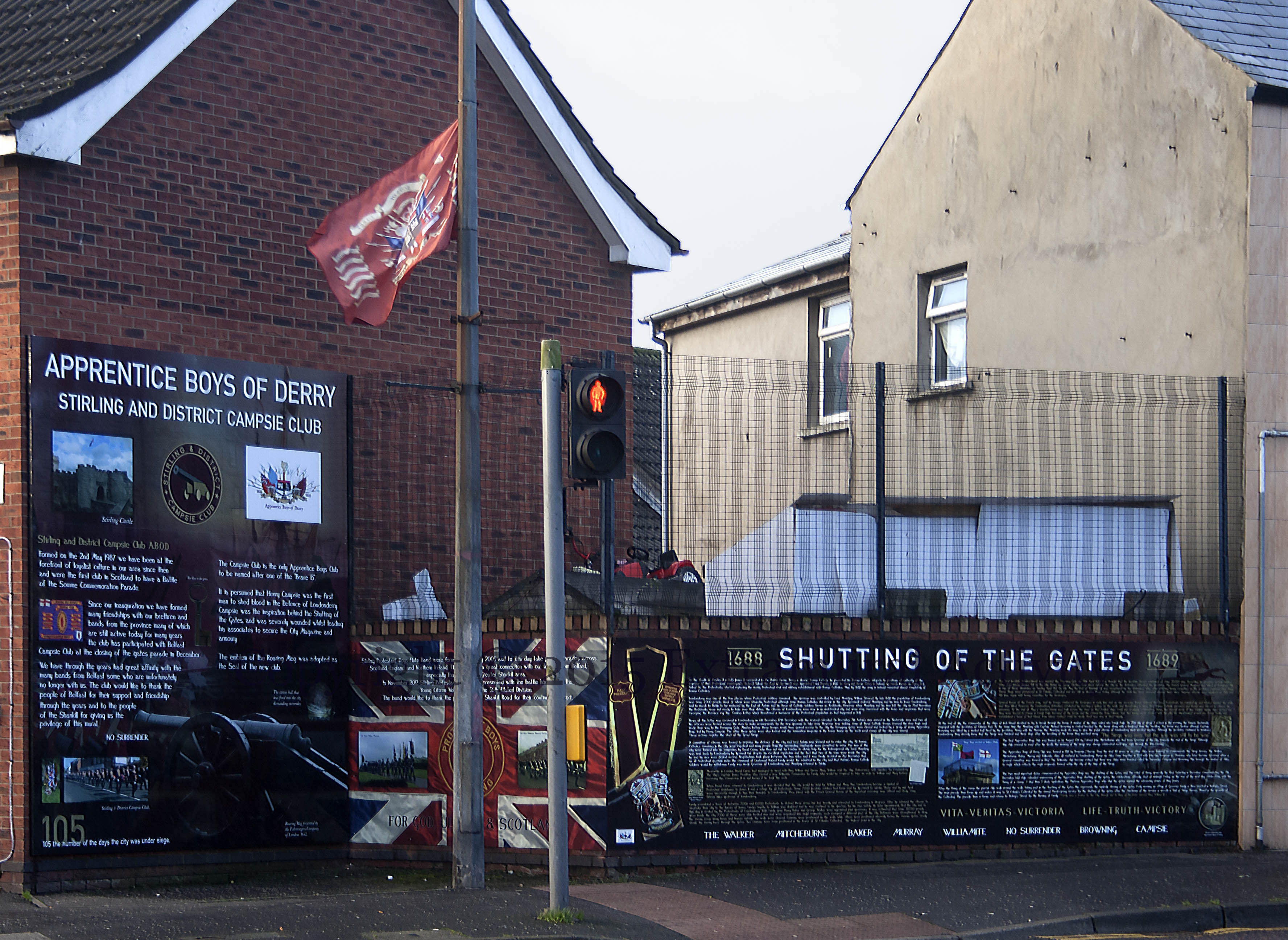
The third of three new panels celebrating the Apprentice Boys contains a long description of the Shutting Of The Gates in December 1688 and the Siege Of Derry, which was ended with the breaking of the boom of the river Foyle in July 1689.
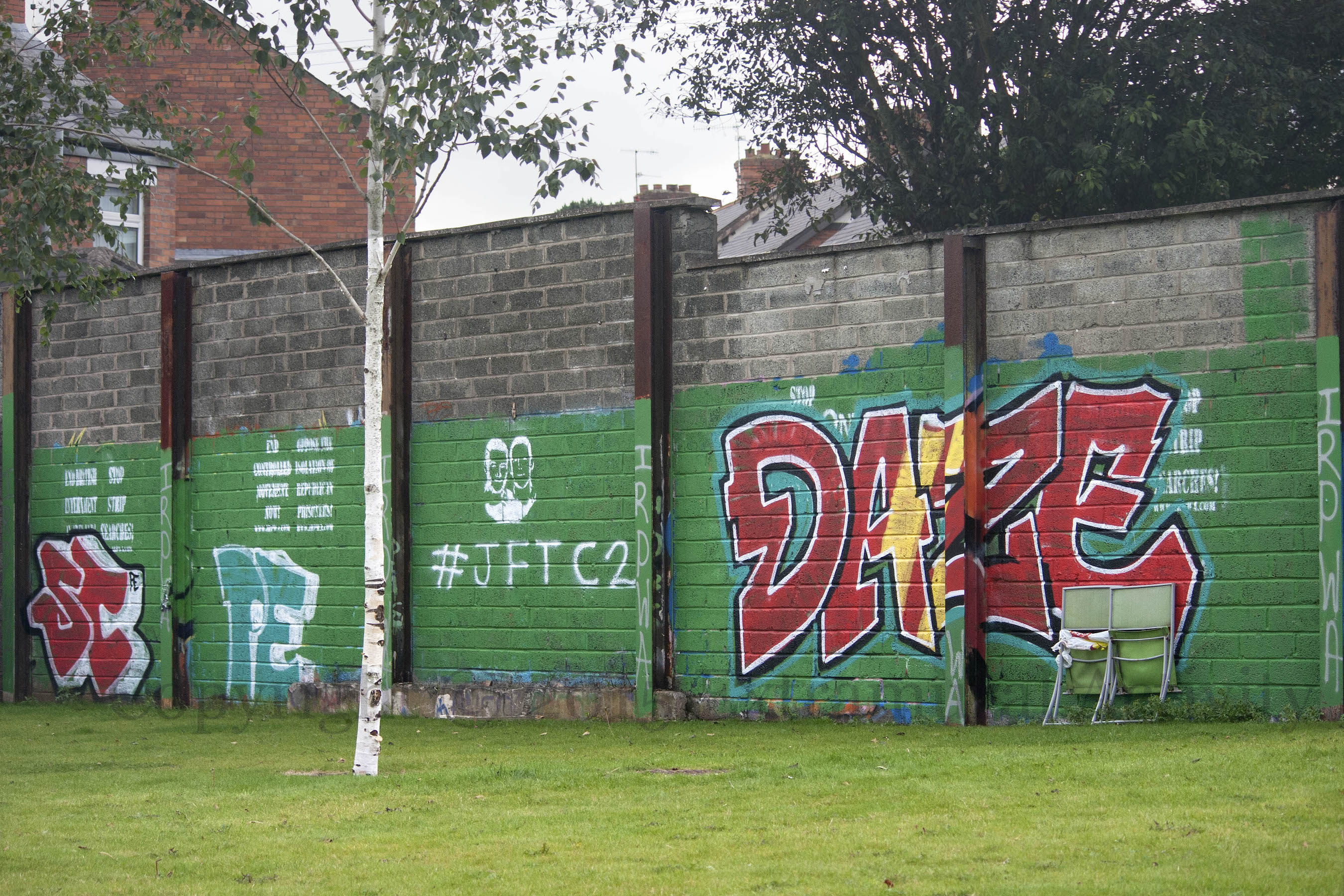
This is the middle wall on the site of the former Andersonstown RUC station, which has undergone three changes in recent months. The longstanding Fıanna sunburst (see X00350) was painted over with IRPWA stencils (Stop strip searches, End Internment, Justice For The Craigavon 2) which in turn were largely covered with writing by DAZE (see the image below). Most recently, a large Fıanna banner, shown above, has been placed over the wall.







 Extramural Activity